Rábano Picante
Una verdura de raíz perenne con sabor picante.





En esta páginaResumen
Conoce Rábano Picante
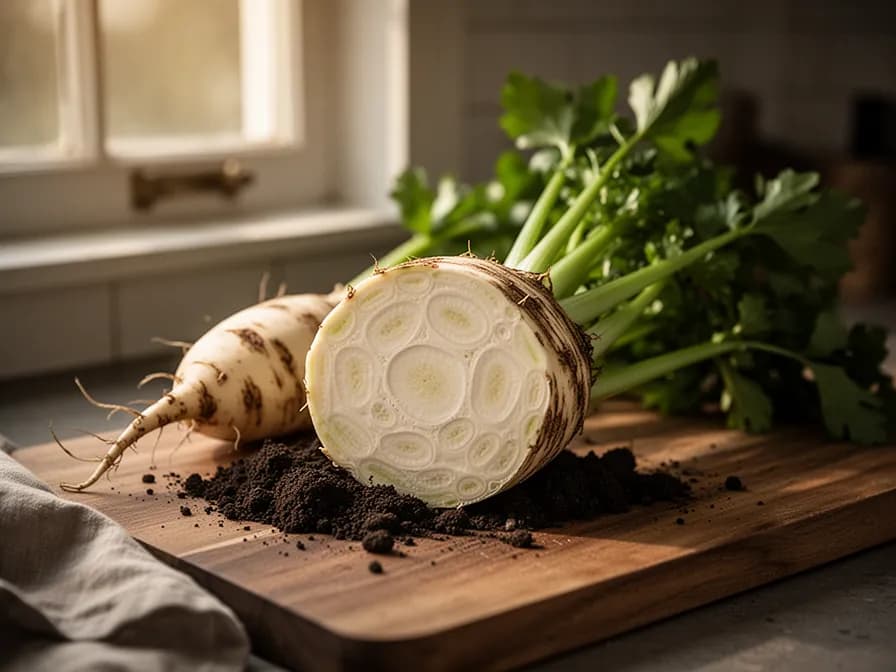
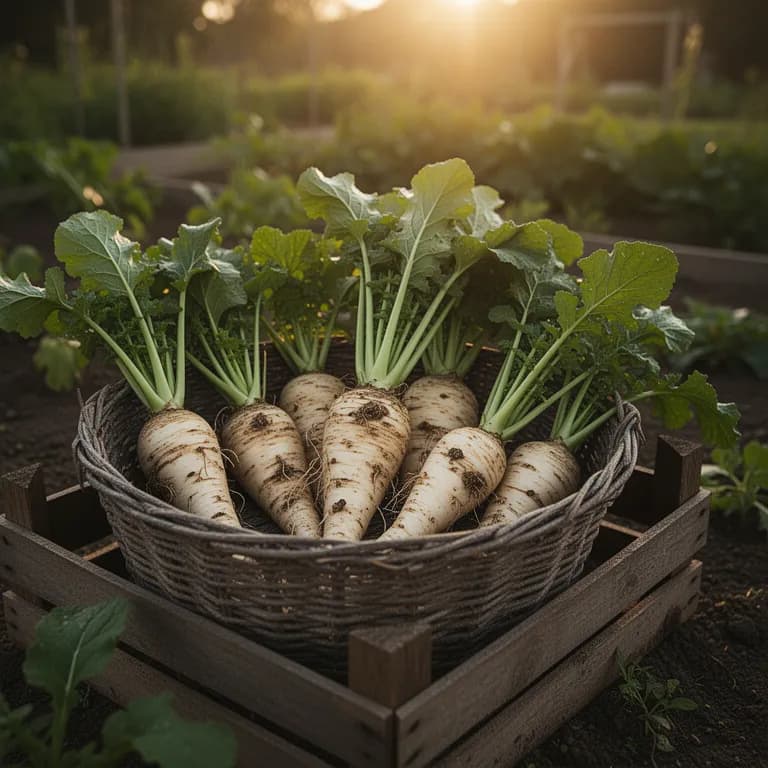
Una verdura de raíz perenne con sabor picante. La raíz se usa como condimento.
Cuándo plantar Rábano Picante
Plante esquejes de raíz en primavera.
Tu año de Rábano Picante
Ajustado a Zona 7 · temporada típica · la helada se va hacia el 2 abr y vuelve hacia el 1 nov
Planta Rábano Picante Mar – Abr y cosecha Oct – Nov. Consulta los métodos de plantación y elige tu clima para adaptar los periodos.
Cómo cultivar Rábano Picante
El rábano picante es muy robusto y puede volverse invasivo. Plante en contenedores para control.
Plante esquejes de raíz en primavera.
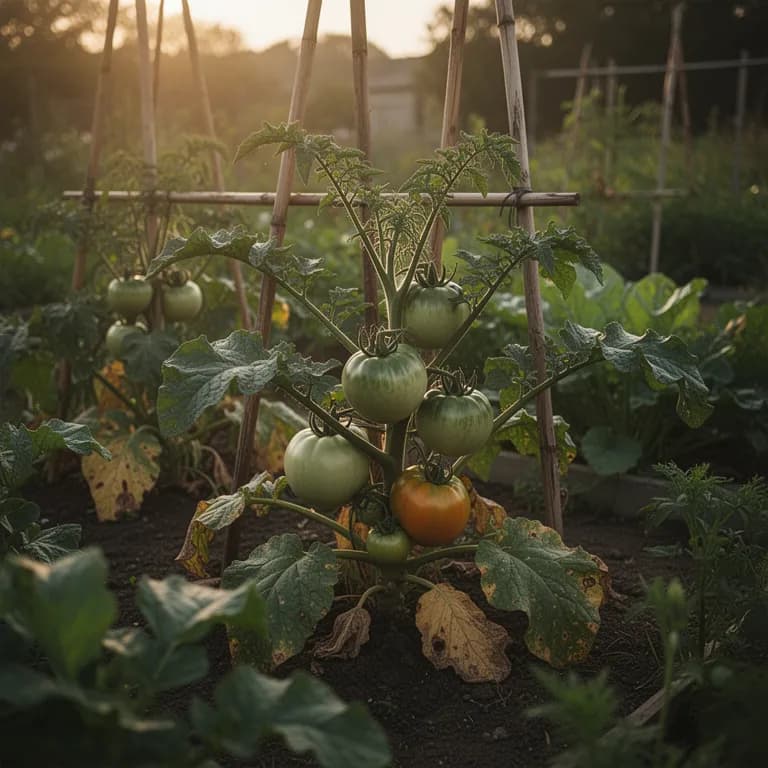
10 plantas caben en un bancal de 120 × 240 cm
Cada Rábano Picante pide 45 cm de margen. El planificador guarda ese marco por ti — cada planta, cada bancal.
Los mejores vecinos de Rábano Picante
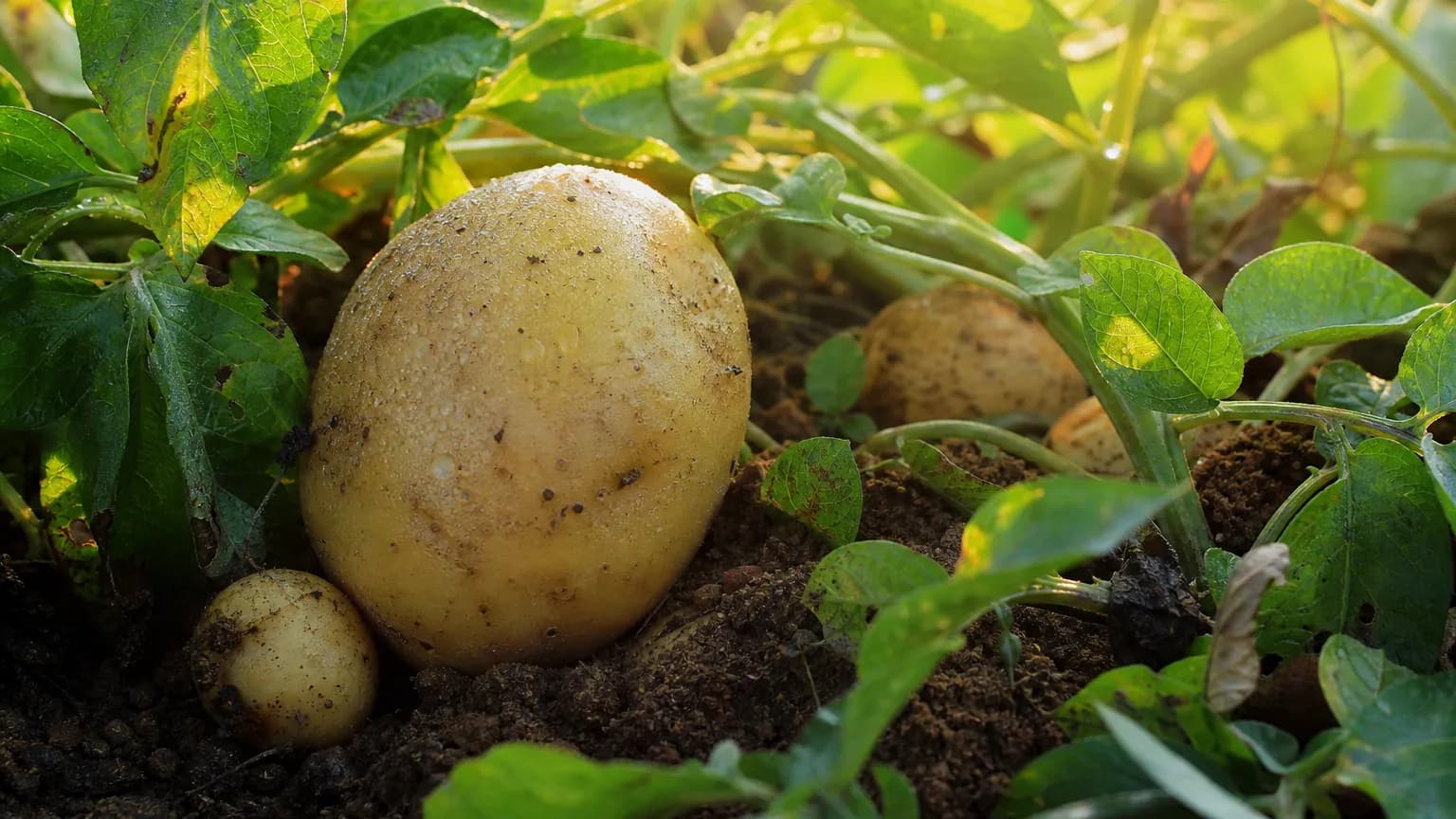
Papas y remolachas.
Papa va a su lado.
Saber de huerto de siempre, cotejado con la tabla real de Rábano Picante — prueba cualquier planta que cultives.
Prueba Rábano Picante en un bancal, aquí mismo
Un bancal real del planificador con Rábano Picante ya plantado. Toca una planta compañera para colocarla y mira cómo responde la comprobación de vecinos: verde para buenos vecinos, rojo si hay conflicto.


Guías de cultivo relacionadas
Abónalo bien
Suelo profundo y suelto, pH 6,0-7,0.
Temperatura ideal
Compatibilidad de zonas de rusticidad
De la semilla a la cosecha, etapa por etapa
Establecimiento de la raíz
Los esquejes de raíz plantados a 45 grados a comienzos de la primavera empiezan a emitir finas raíces blancas absorbentes en cuestión de días. La energía almacenada en el trozo de raíz impulsa el crecimiento inicial antes de que aparezca el follaje sobre la superficie del suelo. Las temperaturas del suelo por encima de 7 °C son suficientes para que comience la actividad radicular.
Emergencia de las hojas
Grandes hojas verdes oscuras, brillantes y con bordes arrugados asoman por la superficie del suelo y se despliegan con rapidez. Las hojas son sorprendentemente grandes para el tamaño del esqueje de raíz y a menudo alcanzan 30–45 cm de largo en pocas semanas. La planta canaliza su energía para construir capacidad fotosintética.
Crecimiento vegetativo
La planta entra en una fase de crecimiento aéreo vigoroso y produce un grupo denso de hojas basales grandes que pueden alcanzar 60–90 cm de altura. El sistema radicular se expande rápidamente, con la raíz principal engrosándose y las raíces laterales extendiéndose hacia afuera. Pueden aparecer tallos florales y deben eliminarse.
Engrosamiento de la raíz
A medida que se acerca el otoño, la planta desvía la energía de la producción de hojas al almacenamiento en la raíz. La raíz principal se engrosa notablemente y almacena los carbohidratos y compuestos glucosinolatos que dan al rábano picante su característico picor. El crecimiento de las hojas se ralentiza a medida que los nutrientes se trasladan hacia abajo.
Dormancia y cosecha
Después de la primera helada fuerte, las hojas se secan y la planta entra en dormancia. El frío desencadena una conversión final de almidones en azúcares e intensifica los compuestos picantes de la raíz. Esta es la mejor ventana de cosecha, cuando las raíces tienen el máximo sabor y picor.
Planta los esquejes de raíz en cuanto se pueda trabajar la tierra en primavera. Asegúrate de que el extremo superior de corte plano quede orientado hacia arriba y a 5 cm por debajo de la superficie del suelo. Riega bien después de plantar, pero evita el exceso de agua.
Cuidar Rábano Picante mes a mes
Qué hacer cada mes para tu Rábano Picante
Octubre
Mes actualPrimary harvest month. After the first hard frost, dig roots with a garden fork, working carefully to extract the full taproot. Save pencil-thick side roots for spring replanting. Process harvested roots immediately for the strongest flavor.
Ten claro qué hacer en tu huerto, cada mes
Un correo al empezar cada mes: qué sembrar, plantar y hacer ahora mismo — para tu Rábano Picante y todo lo que crece alrededor. Más un breve curso inicial para esquivar los errores clásicos.
- Qué hacer ahora mismo
- Ajustado a tu temporada
- Curso inicial incluido
Cosechar Rábano Picante
Coseche en otoño después de la primera helada.
se supone que plantas al comenzar el periodo — indica tu fecha real
A finales del otoño, después de la primera helada fuerte, o a comienzos de la primavera antes de que empiece el nuevo crecimiento; también se pueden cosechar raíces en cualquier momento de plantas ya establecidas.
Almacenamiento y conservación
Almacene raíces en arena fresca. Congele rallado.
Qué falla — y cómo solucionarlo
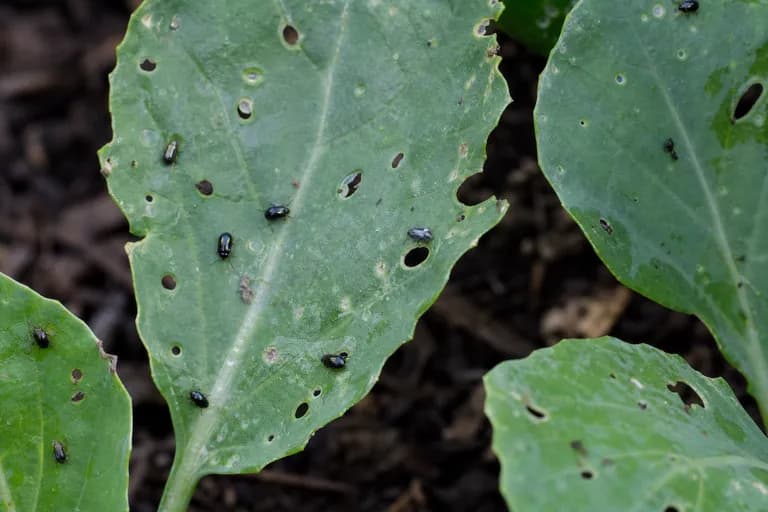
Pulgones
PlagaEn hojas.
Solución de problemas comunes
Puede expandirse agresivamente.
Consejos de cultivo
- Containment is the single most important consideration. Plant horseradish in a bottomless 5-gallon bucket sunk into the ground, a raised bed with solid sides, or an isolated corner of the garden. Any root fragment left in open soil will produce a new plant, and established patches become virtually impossible to remove.
- Deep, loose soil is the secret to thick, straight roots. Double-dig the planting area to at least 45 cm (18 inches) and amend heavy clay with generous compost and coarse sand. Compacted or rocky soil produces forked, thin, and difficult-to-harvest roots.
- Strip the lateral side roots from the main taproot in midsummer for the best harvest. Pull back soil from the top third of the root and snap off all side branches, then re-cover with soil. This forces the plant to develop one thick, easy-to-process main root instead of a tangle of thin ones.
- Wait for frost before harvesting. Roots harvested in summer are noticeably milder and less complex in flavor. One or two hard frosts trigger enzymatic changes that intensify the pungent compounds, producing a significantly hotter and more flavorful root.
- Process roots outdoors or with good ventilation. Grating fresh horseradish releases allyl isothiocyanate, which is far more potent than onion fumes. A food processor makes quick work of grating, but open the lid at arm's length and avert your face — the first blast of fumes is powerful.
- Control the heat level with vinegar timing. Adding vinegar immediately after grating produces a milder prepared horseradish. Waiting 3-5 minutes before adding vinegar allows the enzymatic reaction to proceed further, resulting in a significantly hotter product. Experiment to find your preferred intensity.
- Divide and replant every 2-3 years for the best root quality. Old, undivided plants develop a dense mass of thin, woody roots instead of the thick, pungent taproots you want. Dig up the entire clump in early spring, select the best pencil-thick side roots, and replant in refreshed soil.
- Horseradish leaves are edible and can be used young in salads or cooked like other brassica greens. They have a mild horseradish flavor and are nutritious, though most gardeners grow the plant exclusively for the root.
Cultiva tu mejor Rábano Picante — y todo lo que la rodea.
Empieza un plan gratis hoy. Diseña tus bancales, coloca tu Rábano Picante y deja que PlotMyGarden gestione el momento, el espaciado, las asociaciones y los recordatorios de la semilla a la cesta.
Elige tu Rábano Picante
Common
Muy picante.
A single horseradish root set costs $3-5, or is often free from a gardening neighbor, and produces a perennial plant that yields fresh root indefinitely with zero ongoing cost. A small jar of prepared horseradish sells for $4-7 at grocery stores, and premium fresh root commands $8-15 per pound at farmers markets. One established plant produces 1-3 pounds of root per year — enough to make 6-12 jars of prepared horseradish worth $24-84. Over multiple years, the savings are substantial since the plant returns every spring without replanting. The flavor of freshly grated homegrown horseradish is vastly superior to commercial products, which lose pungency rapidly after processing.
Recetas rápidas
Classic Prepared Horseradish
15 minThe essential homemade condiment — freshly grated horseradish preserved in vinegar with a clean, sinus-clearing heat far superior to anything store-bought. The timing of vinegar addition controls the final heat level.
4 ingredientesCreamy Horseradish Sauce
10 minA silky, tangy sauce that pairs perfectly with roast beef, smoked salmon, or grilled steak. The cream tempers the raw heat into a smooth, lingering warmth that complements rich proteins beautifully.
6 ingredientesHorseradish and Beet Relish (Chrain)
20 minA vibrant magenta condiment from Eastern European Jewish tradition — roasted beets mellow the fierce heat of horseradish into a sweet, earthy, tangy relish perfect for holiday tables and everyday sandwiches alike.
6 ingredientesUsos culinarios
Rallado como condimento, en salsas.
Qué contiene
Beneficios para la salud
- Rich in glucosinolates, sulfur-containing compounds that break down into isothiocyanates with demonstrated antibacterial, antifungal, and potential anti-cancer properties in laboratory studies — horseradish contains 10 times more glucosinolates than broccoli by weight.
- High vitamin C content (28% DV per 100g) supports immune system function, collagen synthesis, and acts as a powerful antioxidant that helps protect cells from oxidative damage.
- Traditional use as a natural decongestant is well-founded — the volatile allyl isothiocyanate stimulates mucous membranes in the nasal passages, helping to clear sinus congestion during colds and respiratory infections.
- Contains peroxidase enzymes that have been studied for their ability to help the body detoxify and eliminate potentially harmful compounds, supporting the liver's natural detoxification processes.
- Provides meaningful amounts of calcium, potassium, magnesium, and phosphorus that support bone density, muscle function, and electrolyte balance — particularly notable for a condiment used in small quantities.
- The antibacterial properties of horseradish compounds have been shown to inhibit the growth of foodborne pathogens including E. coli and Listeria, which partly explains its traditional use as a preservative accompaniment to raw and cured meats.
De dónde viene Rábano Picante
Horseradish (Armoracia rusticana) is native to southeastern Europe and western Asia, with its wild origins traced to the region spanning modern-day Ukraine, Russia, and Hungary. Archaeological evidence suggests it was gathered from the wild long before deliberate cultivation began. The ancient Egyptians were aware of the plant by 1500 BCE, and early Greek physicians including Dioscorides documented its medicinal uses for coughs, digestive complaints, and as a topical rubefacient for muscle pain.
Cultivation of horseradish as a food crop began in earnest in Central and Eastern Europe during the Middle Ages. By the 13th century, it was widely grown in Germany, Austria, and the Scandinavian countries, primarily as a condiment for meat and fish. The plant spread to England by the late 1500s, where it was initially considered a medicine rather than a food — it took another century before the English adopted the German and Polish custom of grating the root as a table condiment. The British initially called it 'red cole' before the name 'horseradish' became standard.
European colonists brought horseradish to North America in the 1600s, where it naturalized readily in the temperate climate of the northeastern and midwestern United States. Commercial horseradish cultivation in America began in the 1850s when German immigrants settled in the Mississippi River bottomlands of southwestern Illinois. The deep, fertile alluvial soil proved ideal for producing the long, straight roots that processors preferred. By the early 1900s, the Collinsville, Illinois, region had become the dominant commercial horseradish producer in the world — a position it maintains today, supplying roughly 60% of global demand. The crop remains closely tied to its Central European heritage, and the finest prepared horseradish is still produced using methods essentially unchanged from those of 19th-century German and Polish kitchens.
Rábano Picante: ¿sabías que?
Datos fascinantes sobre Rábano Picante
Horseradish contains allyl isothiocyanate, the same volatile compound found in mustard gas — when you grate the root, cell walls break and the enzyme myrosinase converts sinigrin into this potent lachrymatory agent, which is why grating horseradish can make you cry harder than cutting onions.
Rábano Picante: preguntas frecuentes
¿Cuándo debo plantar Rábano Picante?
¿Cuáles son buenas plantas acompañantes para Rábano Picante?
¿En qué zonas de rusticidad puede crecer Rábano Picante?
¿Cuánto sol necesita Rábano Picante?
¿A qué distancia debo espaciar Rábano Picante?
¿Qué plagas y enfermedades afectan a Rábano Picante?
¿Cómo almaceno Rábano Picante después de la cosecha?
¿Cuáles son las mejores variedades de Rábano Picante para cultivar?
¿Qué suelo necesita Rábano Picante?
How do I keep horseradish from taking over my entire garden?
Why is my homegrown horseradish root not as hot as I expected?
Can I grow horseradish in a container on a patio or balcony?
Is horseradish truly perennial, and will it survive harsh winters?
When is the best time to harvest, and can I harvest year-round?
Acabas de leer la teoría. Ahora cultívala en piloto automático.
Todo lo que hace que Rábano Picante sea delicado — el momento, el espaciado, las asociaciones, la ventana de cosecha — es justo lo que PlotMyGarden resuelve por ti, para cada planta de tu huerto.
Un plan que conoce tu clima
Indica tu ubicación una vez. Recibe fechas de siembra, abonado y cosecha basadas en tu última helada real y el pronóstico en vivo — sin adivinar con un sobre genérico.
De la sección “Cuándo plantar”Planificador de bancales de arrastrar y soltar
Diseña bancales sobre una cuadrícula. Cada planta encaja con su espaciado correcto y ves toda la temporada antes de gastar un céntimo en semillas.
De la sección “Cultivo”Conflictos de asociación, detectados a tiempo
Más de 200 buenas y malas combinaciones comprobadas en vivo mientras plantas — para que un error que arruine la temporada nunca llegue a la tierra.
De la sección “Asociaciones”Recordatorios que sí vas a seguir
“Riega las judías.” “Recoge hoy antes de que se pase.” Oportunos, concretos y ligados a las plantas que de verdad cultivas.
De la sección “Cosecha”Escalonado, programado
¿Quieres cosechar seis semanas en vez de seis días? Reparte tus siembras automáticamente y te avisa cuando toca el siguiente lote.
De la sección “Cuándo plantar”Un registro que se vuelve más listo
Cada cosecha que registras le enseña tu huerto. El plan del año que viene parte de lo que de verdad funcionó en tu suelo, no en un manual.
De la sección “Resumen”Planta estos junto a Rábano Picante
Más Crucíferas
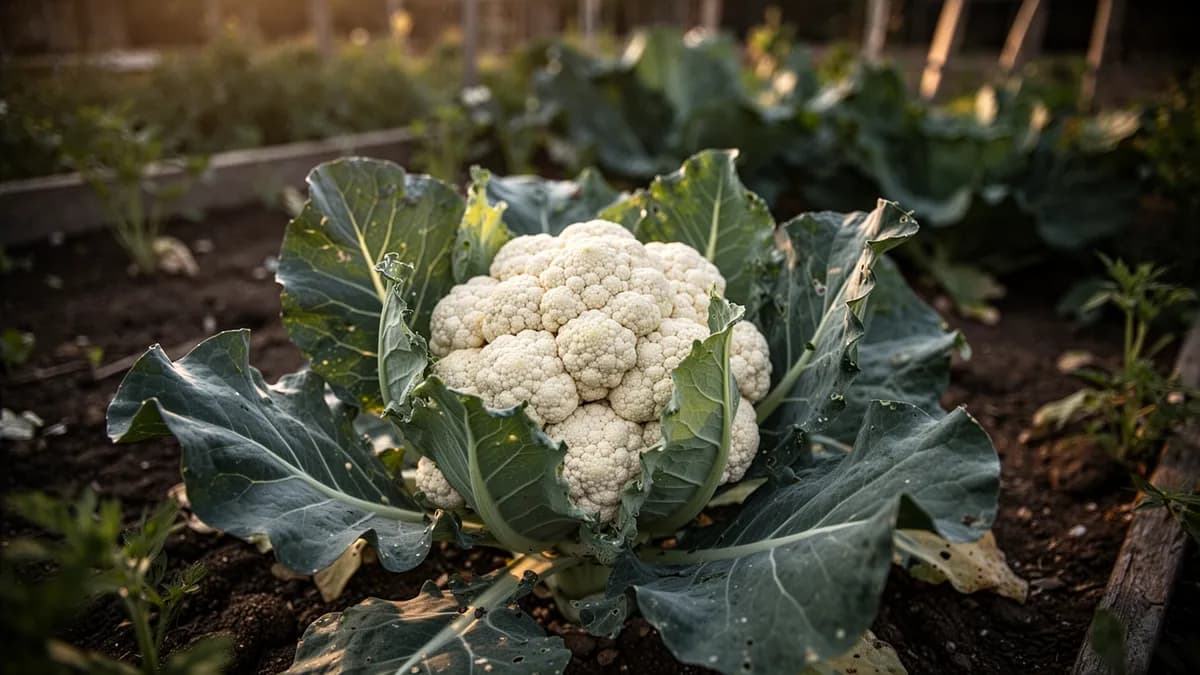
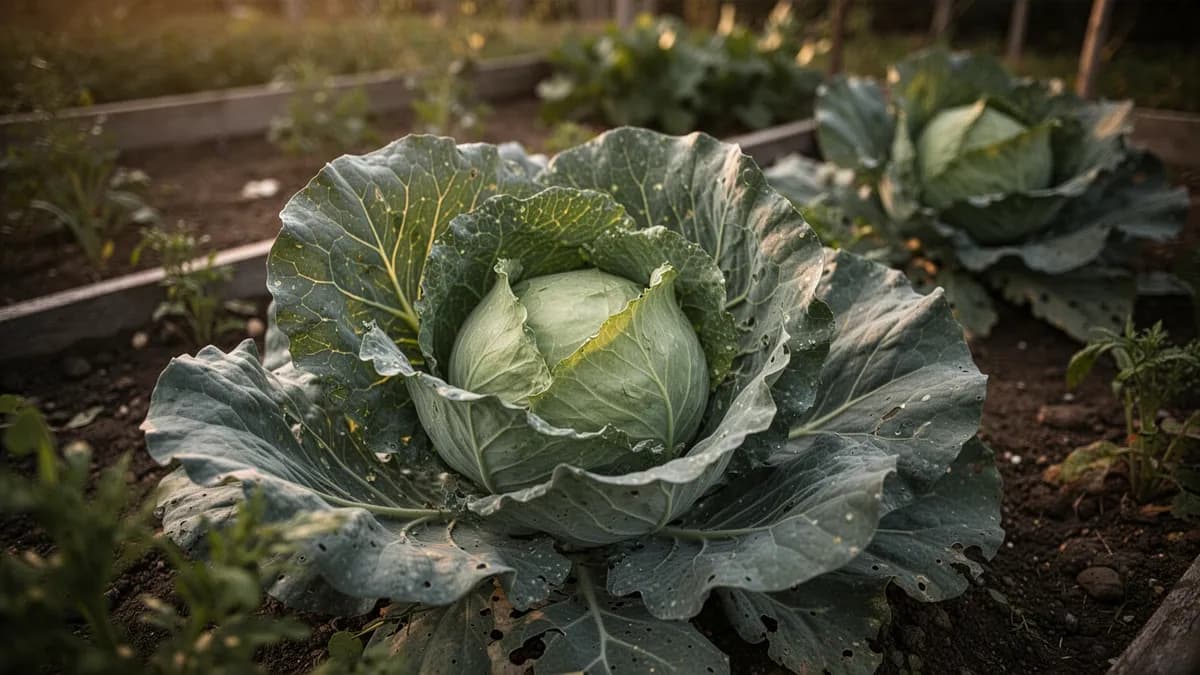
Diseños de jardín con Rábano Picante
Cultiva tu mejor Rábano Picante — y todo lo que la rodea.
Empieza un plan gratis hoy. Diseña tus bancales, coloca tu Rábano Picante y deja que PlotMyGarden gestione el momento, el espaciado, las asociaciones y los recordatorios de la semilla a la cesta.