Brotes de Lúpulo
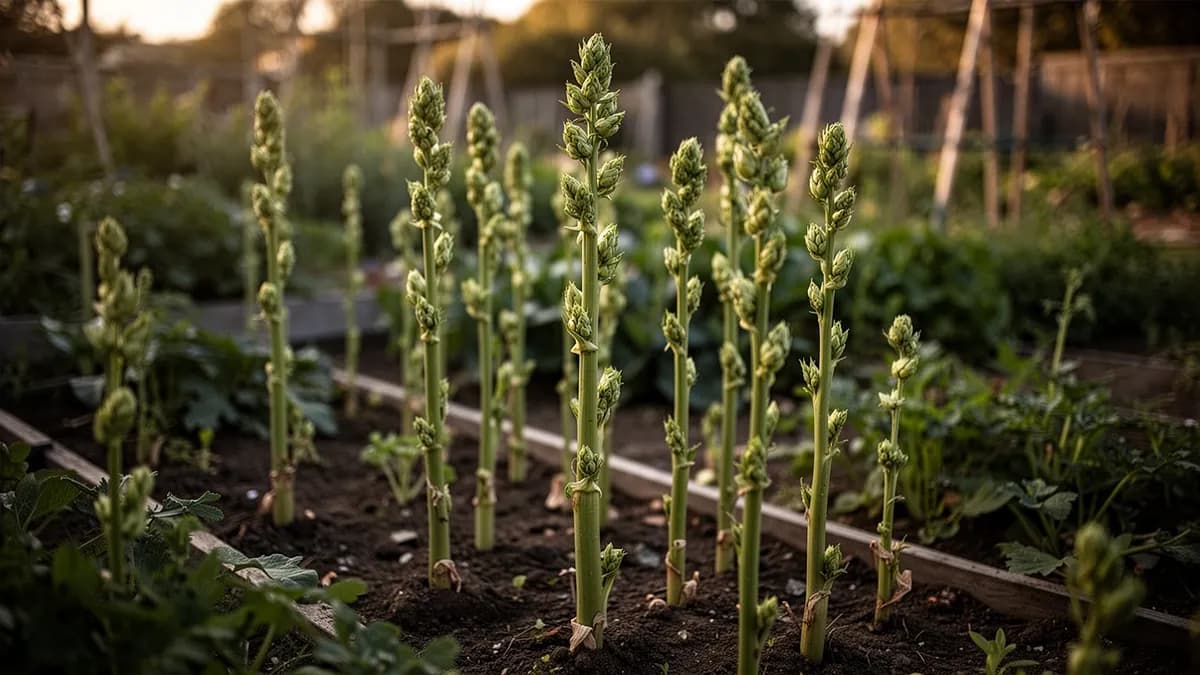
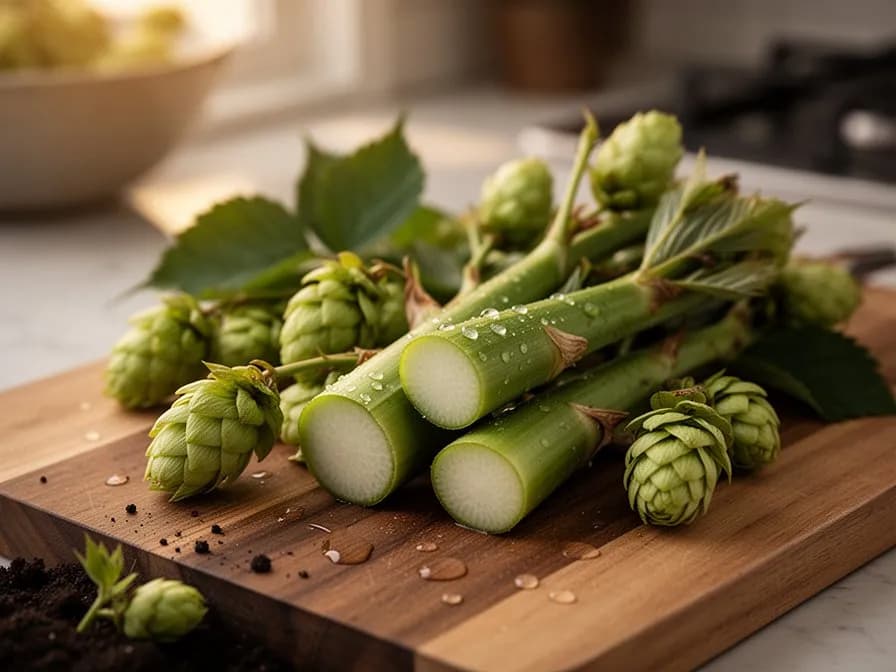
Los brotes de lúpulo son los tallos jóvenes y tiernos de la planta de lúpulo (Humulus lupulus), cosechados en primavera antes de que la enredadera comience su rápido crecimiento trepador.





En esta páginaResumen
Conoce Brotes de Lúpulo
Los brotes de lúpulo son los tallos jóvenes y tiernos de la planta de lúpulo (Humulus lupulus), cosechados en primavera antes de que la enredadera comience su rápido crecimiento trepador. Considerados uno de los vegetales más exclusivos y caros del mundo, ofrecen un sabor delicado que recuerda al espárrago con notas herbáceas y ligeramente amargas.
Cuándo plantar Brotes de Lúpulo
Planta rizomas dormidos en primavera temprana a 10-15 cm de profundidad con las yemas hacia arriba. Los rizomas deben tener al menos 2-3 nudos visibles. Riega bien después de plantar y mantén el suelo húmedo pero no encharcado. Los primeros brotes aparecen en 2-4 semanas. También se pueden propagar por esquejes de tallo en primavera enraizados en sustrato húmedo.
Tu año de Brotes de Lúpulo
Ajustado a Zona 7 · temporada típica · la helada se va hacia el 2 abr y vuelve hacia el 1 nov
Planta Brotes de Lúpulo Mar – Abr y cosecha Abr – May. Consulta los métodos de plantación y elige tu clima para adaptar los periodos.
Cómo cultivar Brotes de Lúpulo
El lúpulo es una enredadera perenne extremadamente vigorosa que puede alcanzar 6-9 metros de altura en una sola temporada. Para producción de brotes, planta rizomas en primavera temprana a 10-15 cm de profundidad y 90 cm de separación en un lugar soleado con suelo fértil y soporte vertical robusto.
Durante el primer año, permite que todas las plantas crezcan libremente para establecer un sistema radicular fuerte. A partir del segundo año, puedes cosechar los primeros brotes primaverales cuando emerjan del suelo con 15-25 cm de longitud. Cosecha solo un tercio de los brotes de cada planta para no debilitarla.
Aplica compost abundante alrededor de las coronas cada otoño y una capa de acolchado para proteger las raíces del frío invernal. En primavera, fertiliza con un abono rico en nitrógeno para estimular la producción de brotes vigorosos. Las plantas mejoran su producción con la edad, alcanzando plena capacidad a los 3-4 años.
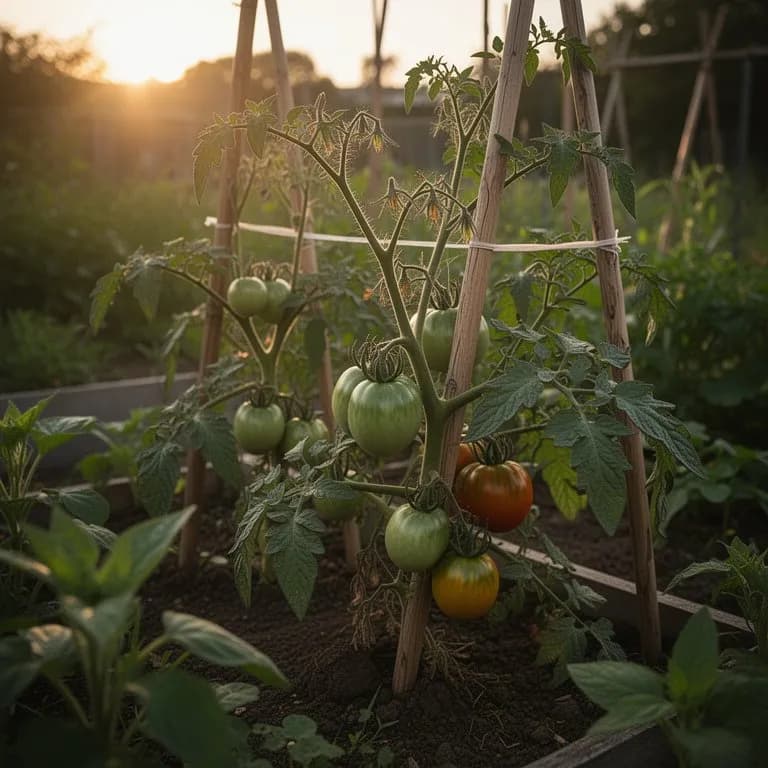
2 plantas caben en un bancal de 120 × 240 cm
Cada Brotes de Lúpulo pide 90 cm de margen. El planificador guarda ese marco por ti — cada planta, cada bancal.
Guías de cultivo relacionadas
Abónalo bien
El lúpulo prospera en suelo profundo, fértil y bien drenado con pH entre 6,0 y 7,5. Incorpora abundante compost o estiércol bien descompuesto antes de la plantación y aplica una capa generosa cada otoño alrededor de las coronas. Fertiliza en primavera con un abono rico en nitrógeno para estimular la producción de brotes vigorosos y carnosos.
Temperatura ideal
Compatibilidad de zonas de rusticidad
De la semilla a la cosecha, etapa por etapa
Reposo y plantación del rizoma
Los lúpulos crecen a partir de rizomas perennes que se plantan a comienzos de la primavera, en cuanto se puede trabajar la tierra. El rizoma se coloca en horizontal a 10-15 cm de profundidad con las yemas hacia arriba. Durante las primeras 1-2 semanas, el sistema radicular se establece mientras la energía almacenada en el rizoma impulsa el crecimiento inicial bajo tierra.
Emergencia de brotes (ventana de cosecha)
Los brotes tiernos emergen de la corona a medida que el suelo se calienta en primavera, atravesando la superficie como lanzas de color verde pálido a tonos violáceos con puntas fuertemente enrolladas. Esta es la codiciada ventana de cosecha: los brotes se cortan cuando miden 15-20 cm antes de que se abran las hojas. Una corona establecida produce decenas de brotes durante un periodo de 3-4 semanas.
Entrenamiento de los bines
Los brotes que no se cosechan se convierten rápidamente en bines vigorosos que trepan enrollándose en sentido horario alrededor de los soportes. En clima cálido, los bines pueden crecer 15-30 cm por día y alcanzar enseguida la parte superior de un emparrado. A lo largo del bine se despliegan hojas grandes de tres a cinco lóbulos, y empiezan a ramificarse brazos laterales.
Crecimiento vegetativo
Los bines alcanzan su altura total y desarrollan densas ramas laterales. La planta crea una copa frondosa de hojas profundamente lobuladas y comienza a formar botones florales en los nudos de los brazos laterales. El sistema radicular se expande con fuerza bajo tierra, almacenando energía para la producción de brotes del año siguiente.
Floración y desarrollo de los conos
Las plantas hembras producen los característicos conos verdes papiráceos a lo largo de las ramas laterales. Estos conos contienen glándulas de lupulina, pequeños puntos resinosos de color amarillo brillante que producen los ácidos amargos y los aceites aromáticos apreciados en la elaboración de cerveza. Los conos se desarrollan durante 4-6 semanas, se van rellenando gradualmente y se vuelven papiráceos al tacto cuando maduran.
Senescencia y dormancia
A medida que disminuyen las horas de luz y bajan las temperaturas, el crecimiento aéreo amarillea y muere. La planta redirige toda la energía restante hacia la corona de rizomas para almacenarla durante el invierno. El sistema radicular subterráneo sigue vivo y se expande ligeramente, preparando las yemas para la emergencia de brotes de la próxima primavera.
Planta los rizomas en un suelo suelto y bien drenado, enriquecido con compost. Riega bien al plantar y mantén el suelo constantemente húmedo, pero nunca encharcado. En plantas ya establecidas, esta fase ocurre de forma natural cuando la dormancia invernal termina con el aumento de la temperatura del suelo por encima de 5 °C.
Cuidar Brotes de Lúpulo mes a mes
Qué hacer cada mes para tu Brotes de Lúpulo
Octubre
Mes actualAbove-ground growth yellows and begins to die back. Allow the plant to senesce naturally — this process returns nutrients to the crown for winter storage. Stop fertilizing. Prepare mulch materials for winter protection.
Ten claro qué hacer en tu huerto, cada mes
Un correo al empezar cada mes: qué sembrar, plantar y hacer ahora mismo — para tu Brotes de Lúpulo y todo lo que crece alrededor. Más un breve curso inicial para esquivar los errores clásicos.
- Qué hacer ahora mismo
- Ajustado a tu temporada
- Curso inicial incluido
Cosechar Brotes de Lúpulo
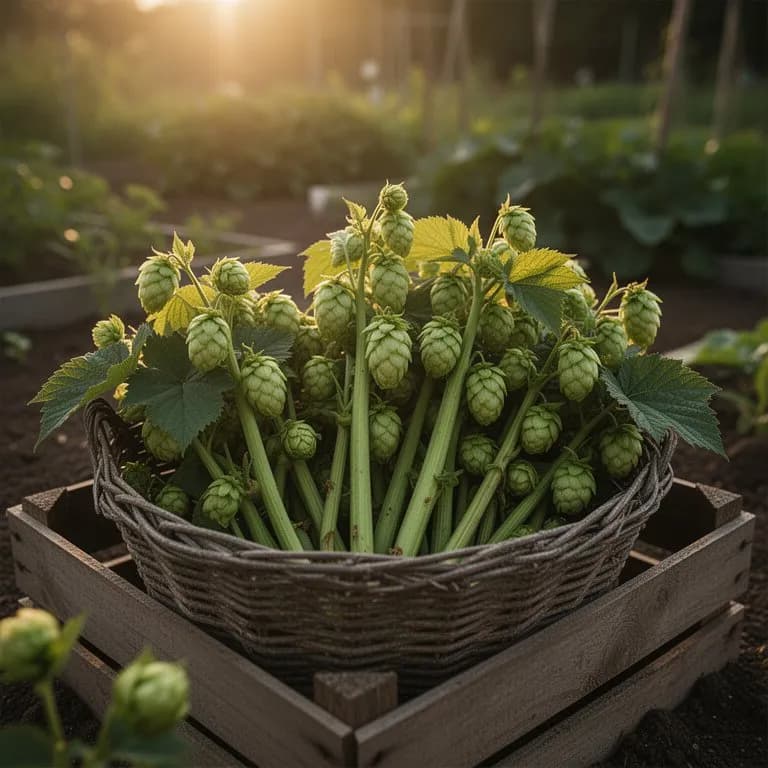
Cosecha los brotes de lúpulo cuando emergen del suelo y alcanzan 15-25 cm de longitud, durante una ventana de solo 2-3 semanas en primavera temprana. Corta o quiebra los brotes a nivel del suelo cuando estén tiernos y antes de que empiecen a endurecerse. Cosecha por la mañana temprano cuando los brotes están más turgentes y jugosos.
se supone que plantas al comenzar el periodo — indica tu fecha real
Cuando los brotes sean gruesos, pálidos y tengan las puntas bien cerradas; cosecha a comienzos de la primavera mientras sigan tiernos.
Almacenamiento y conservación
Los brotes de lúpulo son extremadamente perecederos y deben consumirse idealmente el mismo día de la cosecha. Envueltos en papel húmedo en el refrigerador aguantan un máximo de 2-3 días. Para conservar su delicado sabor, pueden blanquearse 1 minuto y congelarse en porciones pequeñas, aunque la textura se pierde parcialmente al descongelar.
Qué falla — y cómo solucionarlo
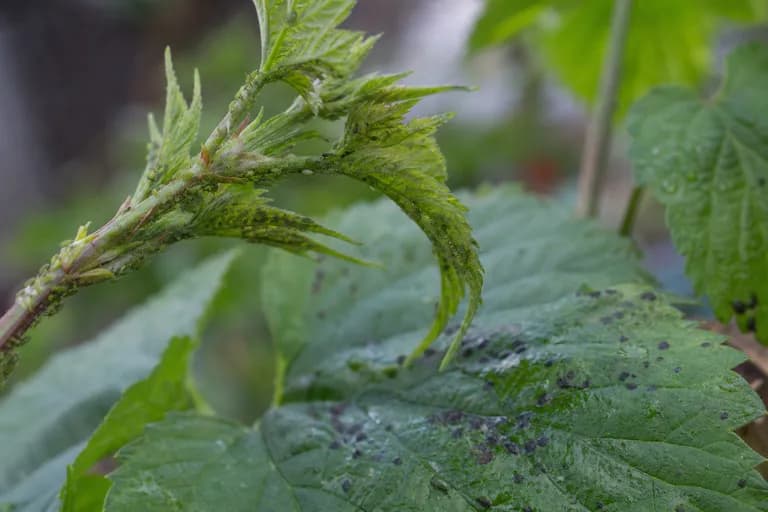
Pulgón del lúpulo
PlagaColonias densas de insectos verdes o rosados que se concentran en los brotes jóvenes y el envés de las hojas nuevas, causando enrollamiento, deformación y debilitamiento del crecimiento primaveral.
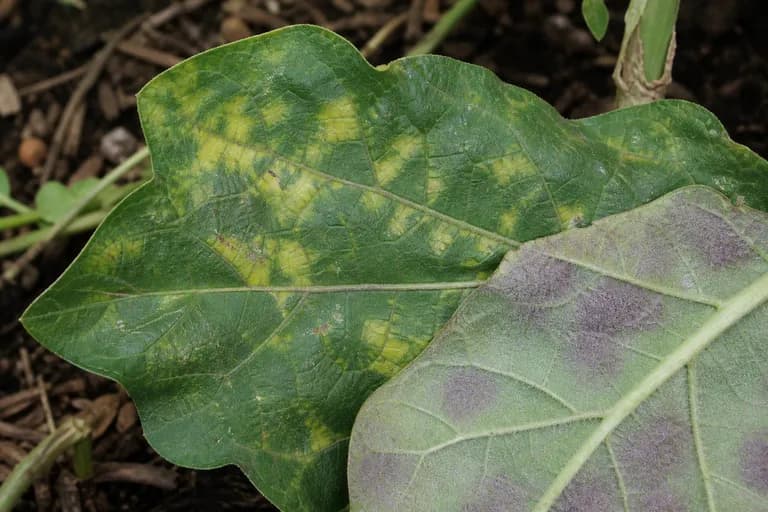
Mildiú velloso del lúpulo
EnfermedadBrotes deformados y raquíticos con hojas enrolladas hacia abajo de color plateado en el envés. En condiciones húmedas aparece esporulación grisácea que se extiende rápidamente a brotes sanos.
Solución de problemas comunes
El principal error es sobre-cosechar los brotes, lo que debilita las plantas y reduce la producción en años siguientes. Nunca cosechas más de un tercio de los brotes de cada planta. El lúpulo puede volverse invasivo si no se controla, extendiéndose mediante rizomas subterráneos. Instala barreras radiculares de 60 cm de profundidad para contener su expansión.
Consejos de cultivo
- Start with rhizomes, not seeds. Hop seeds are unreliable and produce a mix of male and female plants — only female plants produce cones, and seedling quality is unpredictable. Purchase named-variety rhizomes from reputable hop suppliers for consistent results.
- Do not harvest any shoots in the first year after planting. The crown needs a full season of unrestricted growth to establish a strong root system that will support decades of production. Begin light harvesting in year two and full harvesting from year three onward.
- Plant hop crowns where they will stay permanently — they are extremely difficult to remove once established. The rhizome system spreads aggressively underground and can send up shoots 2-3 meters from the original planting. Install root barriers or plant in raised beds to contain spread.
- Provide the tallest support you can manage. Hops naturally climb 5-8 meters, and plants that reach their full height produce the strongest crowns and the most shoots the following spring. A simple pole-and-twine system works well for home gardeners.
- Harvest shoots early and often during the 3-4 week spring window. Cut or snap shoots at ground level when they reach 15-20 cm — once leaves begin to unfurl, the stems become fibrous. Use hop shoots within hours of cutting, as they wilt faster than asparagus.
- Always leave at least 3-5 strong shoots per crown to develop into bines. These bines produce the foliage that photosynthesizes energy back into the rhizome, directly determining next spring's shoot production. Overharvesting weakens the crown.
- Hops are heavy feeders with deep root systems. Incorporate generous amounts of compost at planting and side-dress annually. The most productive hop gardens receive a thick compost mulch every autumn after the bines are cut back.
- Choose a site with full sun and excellent drainage. Hops tolerate many soil types but rot in waterlogged conditions. A south-facing wall or fence provides ideal conditions — reflected warmth encourages earlier spring shoot emergence and the structure doubles as a trellis.
Cultiva tu mejor Brotes de Lúpulo — y todo lo que la rodea.
Empieza un plan gratis hoy. Diseña tus bancales, coloca tu Brotes de Lúpulo y deja que PlotMyGarden gestione el momento, el espaciado, las asociaciones y los recordatorios de la semilla a la cesta.
Elige tu Brotes de Lúpulo
Cascade
Variedad americana clásica que produce abundantes brotes vigorosos de sabor floral y cítrico. Muy resistente y productiva, alcanzando plena producción al tercer año. Perenne, brotes en 20-30 días primaverales.
Fuggle
Variedad inglesa tradicional con brotes de sabor más terroso y herbáceo. Planta vigorosa con buena resistencia a enfermedades y excelente para clima templado húmedo. Perenne, brotes a los 25-35 días.
Saaz
Variedad checa noble con brotes de sabor delicado y ligeramente especiado. Crecimiento menos agresivo que otras variedades, adecuada para jardines pequeños. Perenne, brotes a los 25-30 días.
Nugget
Variedad de alto rendimiento con brotes gruesos y carnosos de sabor ligeramente amargo y herbáceo. Excelente vigor y resistencia al mildiú. Ideal para producción abundante de brotes. Perenne, brotes a los 20-25 días.
Hop shoots are virtually impossible to buy at regular grocery stores and command extraordinary prices when available — specialty markets and restaurants pay 100-300 euros per kilogram in Europe, and similar premium prices apply in the United States. A single hop rhizome costing $5-12 produces shoots worth $50-150 per year at market prices once established, and the crown produces for 25-50 years with minimal care. Growing your own is essentially the only way to enjoy this ultra-premium vegetable regularly, as commercial production is tiny and the harvest window is measured in weeks, not months.
Recetas rápidas
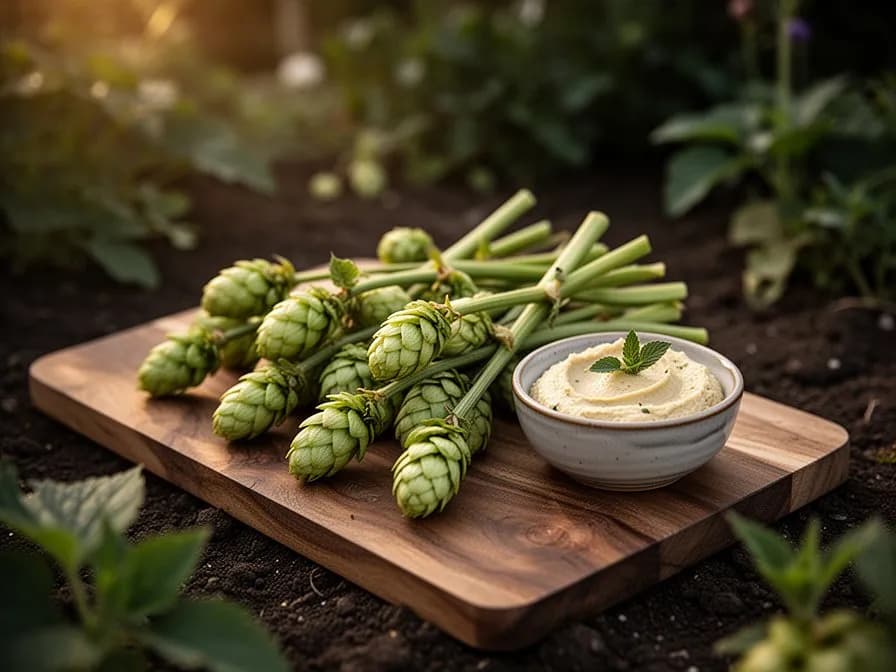
Butter-Sauteed Hop Shoots
10 minThe simplest and most traditional preparation — tender hop shoots quickly sauteed in butter until just wilted, finished with a squeeze of lemon. This method highlights the unique bitter-sweet, asparagus-like flavor that makes hop shoots one of the world's most coveted spring vegetables.
6 ingredientesHop Shoot and Ricotta Frittata
25 minA springtime frittata that pairs the gentle bitterness of hop shoots with creamy ricotta and fresh herbs. This Italian-inspired dish celebrates the fleeting hop shoot season and makes an elegant brunch or light supper.
8 ingredientesHop Shoot and Asparagus Spring Risotto
40 minA luxurious risotto showcasing two of spring's finest shoots. The hop shoots are stirred in at the end to preserve their delicate texture and pleasantly bitter edge, which contrasts beautifully with the creamy, starchy rice.
10 ingredientesUsos culinarios
Los brotes de lúpulo se preparan como espárragos de lujo: al vapor, salteados con mantequilla y ajo, o como ingrediente estrella en risottos primaverales y pastas frescas. En la cocina belga y holandesa son un manjar estacional servidos con huevos pochados y salsa holandesa. Su sabor delicado combina con quesos frescos, salmón ahumado y trufas.
Qué contiene
Beneficios para la salud
- Contains xanthohumol, a unique prenylated flavonoid found almost exclusively in hops, which has shown promising anti-cancer, anti-inflammatory, and cardiovascular protective properties in laboratory and animal studies.
- The mild bitter compounds in hop shoots (related to the alpha acids in hop cones) stimulate digestive enzyme production and may improve appetite and nutrient absorption when consumed as a starter or side dish.
- Rich in antioxidant polyphenols that help neutralize free radicals and reduce oxidative stress, potentially lowering the risk of chronic diseases including cardiovascular disease and certain cancers.
- Contains naturally occurring sedative compounds (particularly 2-methyl-3-buten-2-ol produced from hop acids) that may support relaxation and sleep quality — traditional European herbalism has long used hops for calming and sleep aid.
- Good source of dietary fiber that supports digestive regularity and feeds beneficial gut microbiota, contributing to a healthy intestinal microbiome.
- Provides anti-inflammatory flavonoids including quercetin and kaempferol that may help reduce chronic low-grade inflammation associated with metabolic syndrome and autoimmune conditions.
De dónde viene Brotes de Lúpulo
The hop plant (Humulus lupulus) is native to the temperate regions of Europe, western Asia, and North America, where wild hops still grow along riverbanks, forest edges, and hedgerows. The species has been used by humans for thousands of years — first as a food and medicinal plant, and only later as the essential bittering and preserving agent in beer that it is known for today. Archaeological evidence suggests that wild hop shoots were gathered as a spring vegetable by Mesolithic and Neolithic peoples across Europe long before any form of agriculture.
The earliest written reference to hop shoots as food comes from Pliny the Elder, who described them as a garden vegetable in his Natural History around 77 AD, comparing their preparation to that of asparagus. Throughout the medieval period, hop shoots remained a valued spring delicacy in monasteries and rural communities across central and western Europe, even as the plant's cones became increasingly important for brewing. Monks who cultivated hop gardens for their breweries also harvested the tender spring shoots for the kitchen — a dual-purpose tradition that continues in Belgium's Trappist monasteries today.
The eating of hop shoots as a luxury vegetable reached its peak in Belgium and the Netherlands, where the tradition has been maintained without interruption since at least the 16th century. The town of Poperinge in West Flanders, the historic center of Belgian hop cultivation, holds an annual hop shoot festival and the first shoots of the season are sold at premium prices. Today, hop shoots are experiencing a global culinary renaissance as chefs and food enthusiasts rediscover this ancient delicacy. Small-scale growers in the United States, United Kingdom, Germany, and Japan are now cultivating hops specifically for shoot production, and the ingredient appears on menus at top restaurants worldwide during its brief spring season.
Brotes de Lúpulo: ¿sabías que?
Datos fascinantes sobre Brotes de Lúpulo
Hop shoots hold the record as one of the most expensive vegetables in the world — in Belgium and the Netherlands, the first spring harvest has been sold at auction for over 1,000 euros per kilogram, rivaling the price of high-quality saffron or white truffles.
Brotes de Lúpulo: preguntas frecuentes
¿Cuándo debo plantar Brotes de Lúpulo?
¿En qué zonas de rusticidad puede crecer Brotes de Lúpulo?
¿Cuánto sol necesita Brotes de Lúpulo?
¿A qué distancia debo espaciar Brotes de Lúpulo?
¿Qué plagas y enfermedades afectan a Brotes de Lúpulo?
¿Cómo almaceno Brotes de Lúpulo después de la cosecha?
¿Cuáles son las mejores variedades de Brotes de Lúpulo para cultivar?
¿Qué suelo necesita Brotes de Lúpulo?
Why are hop shoots so expensive to buy?
What do hop shoots taste like?
Can I eat hop shoots from any hop variety?
How do I stop hop plants from spreading and taking over my garden?
Do I need both male and female hop plants?
How long does it take before I can harvest hop shoots from a new planting?
Acabas de leer la teoría. Ahora cultívala en piloto automático.
Todo lo que hace que Brotes de Lúpulo sea delicado — el momento, el espaciado, las asociaciones, la ventana de cosecha — es justo lo que PlotMyGarden resuelve por ti, para cada planta de tu huerto.
Un plan que conoce tu clima
Indica tu ubicación una vez. Recibe fechas de siembra, abonado y cosecha basadas en tu última helada real y el pronóstico en vivo — sin adivinar con un sobre genérico.
De la sección “Cuándo plantar”Planificador de bancales de arrastrar y soltar
Diseña bancales sobre una cuadrícula. Cada planta encaja con su espaciado correcto y ves toda la temporada antes de gastar un céntimo en semillas.
De la sección “Cultivo”Conflictos de asociación, detectados a tiempo
Más de 200 buenas y malas combinaciones comprobadas en vivo mientras plantas — para que un error que arruine la temporada nunca llegue a la tierra.
De la sección “Asociaciones”Recordatorios que sí vas a seguir
“Riega las judías.” “Recoge hoy antes de que se pase.” Oportunos, concretos y ligados a las plantas que de verdad cultivas.
De la sección “Cosecha”Escalonado, programado
¿Quieres cosechar seis semanas en vez de seis días? Reparte tus siembras automáticamente y te avisa cuando toca el siguiente lote.
De la sección “Cuándo plantar”Un registro que se vuelve más listo
Cada cosecha que registras le enseña tu huerto. El plan del año que viene parte de lo que de verdad funcionó en tu suelo, no en un manual.
De la sección “Resumen”Más Tallos y brotes
Cultiva tu mejor Brotes de Lúpulo — y todo lo que la rodea.
Empieza un plan gratis hoy. Diseña tus bancales, coloca tu Brotes de Lúpulo y deja que PlotMyGarden gestione el momento, el espaciado, las asociaciones y los recordatorios de la semilla a la cesta.