Calabaza Bellota
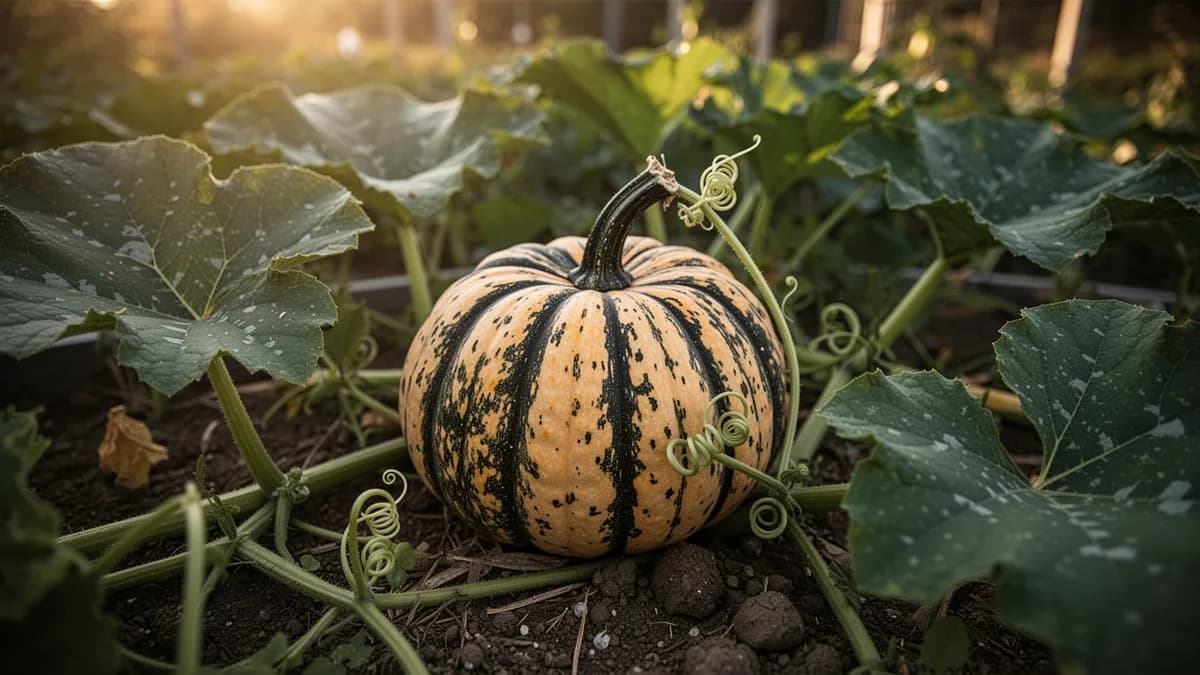
La calabaza bellota (Cucurbita pepo) es una calabaza de invierno compacta y acanalada, originaria de América del Norte.





En esta páginaResumen
Conoce Calabaza Bellota
La calabaza bellota (Cucurbita pepo) es una calabaza de invierno compacta y acanalada, originaria de América del Norte. Su forma acorazonada con crestas profundas la distingue de otras calabazas, y su pulpa anaranjada de sabor dulce y ligeramente anuezado la convierte en un ingrediente versátil en la cocina otoñal e invernal.
Cuándo plantar Calabaza Bellota
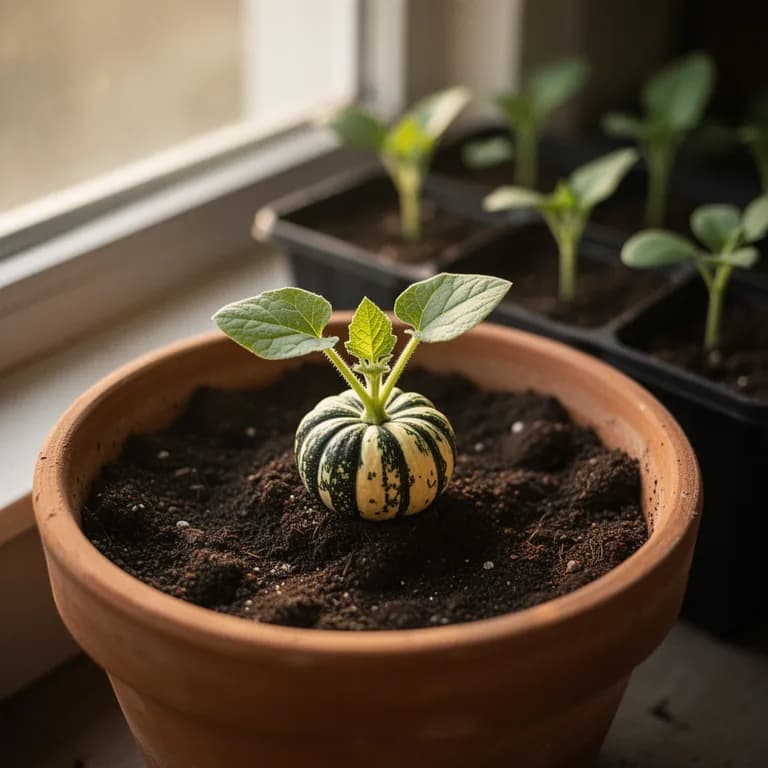
Siembre directamente al aire libre cuando la temperatura del suelo supere los 18 °C, generalmente 2-3 semanas después de la última helada. Para adelantar la temporada, inicie en interiores 3-4 semanas antes en macetas de turba biodegradables para minimizar la alteración de las raíces al trasplantar. Siembre 2-3 semillas a 2,5 cm de profundidad y aclare a la más vigorosa. La germinación ocurre en 7-10 días a 21-27 °C.
Tu año de Calabaza Bellota
Ajustado a Zona 7 · temporada típica · la helada se va hacia el 2 abr y vuelve hacia el 1 nov
Planta Calabaza Bellota May – Jun y cosecha Sep – Oct. Consulta los métodos de plantación y elige tu clima para adaptar los periodos.
Cómo cultivar Calabaza Bellota
Plante en un lugar soleado con al menos 6-8 horas de sol directo diario. El suelo debe ser fértil, bien drenado y rico en materia orgánica, con pH entre 6,0 y 7,0. Prepare el terreno incorporando abundante compost maduro antes de la siembra. Las variedades arbustivas son ideales para espacios reducidos.
Siembre 2-3 semillas a 2,5 cm de profundidad en montículos espaciados 90-120 cm para variedades trepadoras, o 60-90 cm para tipos arbustivos. Aclare dejando la plántula más vigorosa. La temperatura del suelo debe superar los 18 °C para una germinación óptima.
Riegue profundamente con 3-4 cm semanales, preferiblemente con riego por goteo o en la base para evitar enfermedades foliares. Aplique acolchado orgánico para conservar la humedad y suprimir malezas. Fertilice con un abono rico en potasio cuando comiencen a formarse los frutos para mejorar el dulzor y la conservación.
2 plantas caben en un bancal de 120 × 240 cm
Cada Calabaza Bellota pide 100 cm de margen. El planificador guarda ese marco por ti — cada planta, cada bancal.
Los mejores vecinos de Calabaza Bellota
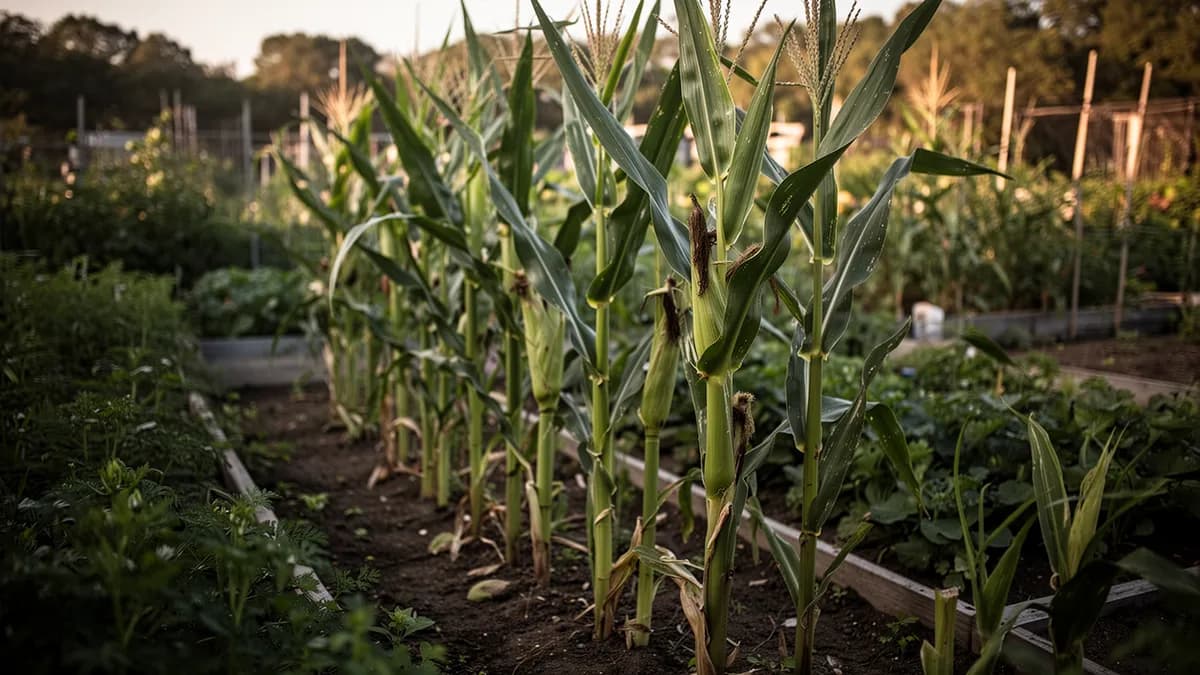
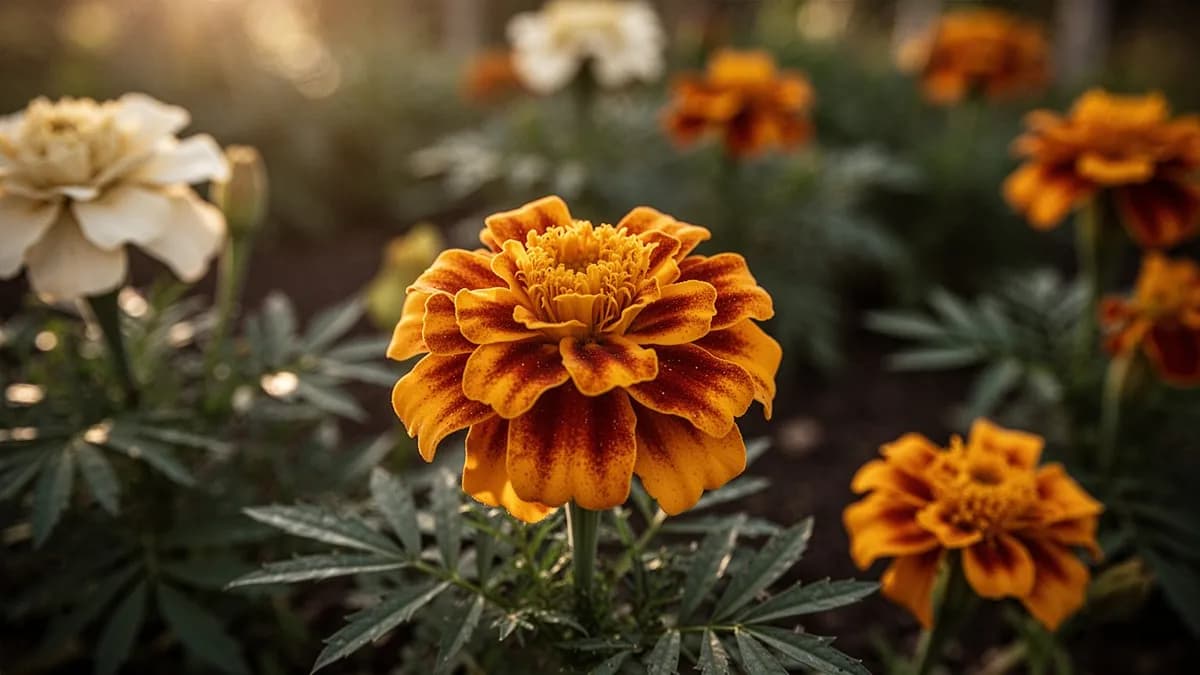
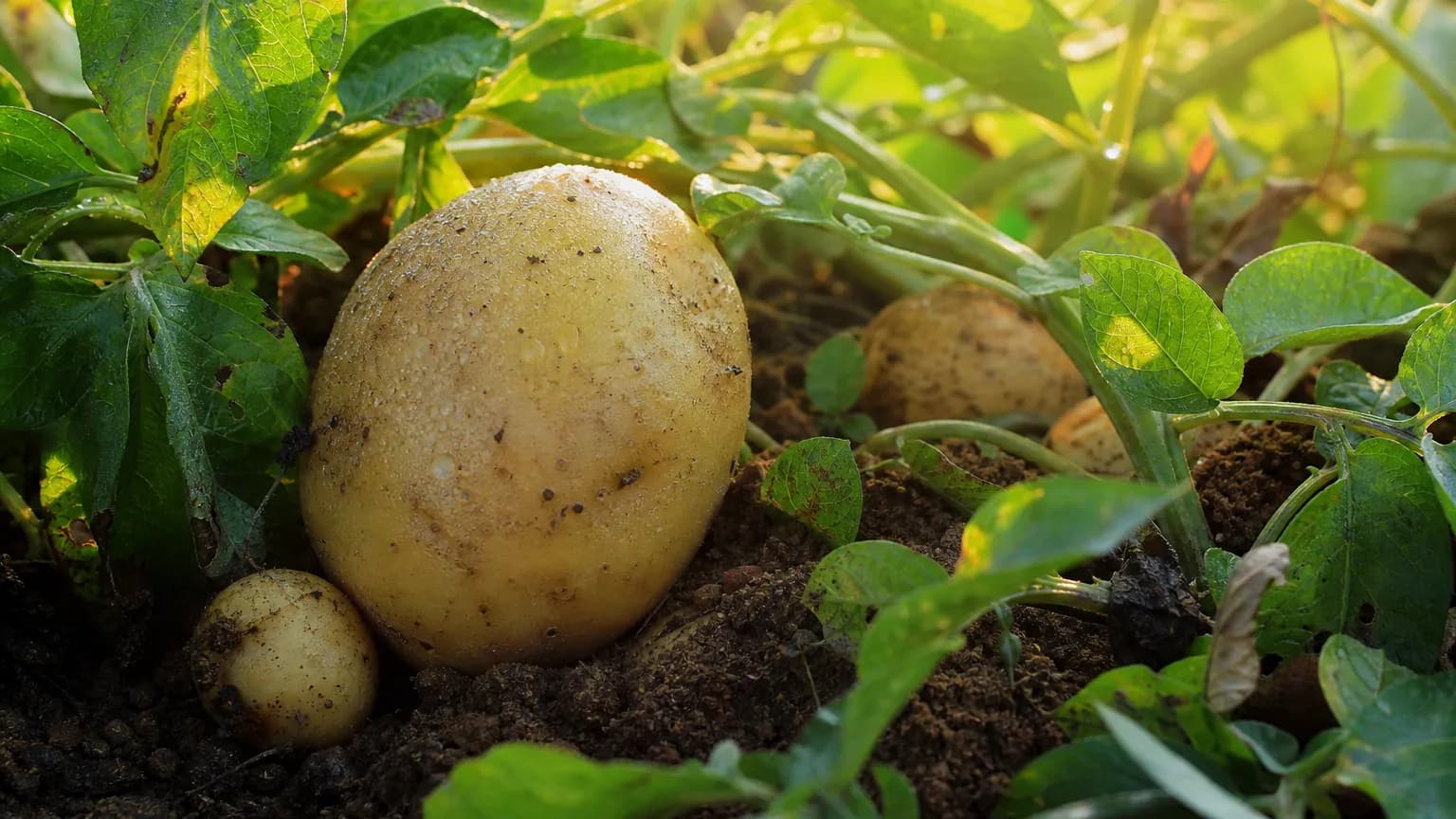
Forma parte de la clásica asociación de las Tres Hermanas junto con el maíz y los frijoles, donde el maíz proporciona soporte, los frijoles fijan nitrógeno y la calabaza cubre el suelo suprimiendo malezas. Las caléndulas y capuchinas plantadas cerca ayudan a repeler escarabajos y otras plagas. Evite plantar cerca de patatas.
Maíz va a su lado. Papa no.
Saber de huerto de siempre, cotejado con la tabla real de Calabaza Bellota — prueba cualquier planta que cultives.
Prueba Calabaza Bellota en un bancal, aquí mismo
Un bancal real del planificador con Calabaza Bellota ya plantado. Toca una planta compañera para colocarla y mira cómo responde la comprobación de vecinos: verde para buenos vecinos, rojo si hay conflicto.


Guías de cultivo relacionadas
Abónalo bien
Requiere suelos fértiles, profundos y bien drenados con pH entre 6,0 y 7,0. Incorpore abundante compost maduro o estiércol bien descompuesto antes de la siembra. Aplique un fertilizante equilibrado al trasplantar y cambie a uno rico en fósforo y potasio cuando aparezcan las primeras flores para favorecer la fructificación y el dulzor de la pulpa.
Temperatura ideal
Compatibilidad de zonas de rusticidad
De la semilla a la cosecha, etapa por etapa
Germinación de las semillas
Las semillas se hinchan y se abren en un suelo cálido y húmedo. Primero emerge la radícula blanca y gruesa, que se ancla en la tierra, seguida por el hipocótilo que empuja las grandes y redondeadas hojas cotiledonares por encima de la superficie. Las semillas de calabaza acorn germinan mejor con temperaturas del suelo de 70-85°F.
Desarrollo de las guías
Aparecen las primeras hojas verdaderas con la forma lobulada y ligeramente espinosa característica de las cucurbitáceas. Las guías comienzan a extenderse por el suelo y crecen rápidamente con el clima cálido. Se forman raíces secundarias en los nudos de las guías cuando tocan suelo húmedo, reforzando la absorción de agua y nutrientes de la planta.
Floración
Las grandes flores de color amarillo dorado se abren por la mañana. Primero aparecen las flores masculinas en tallos largos y delgados, seguidas una o dos semanas después por las flores femeninas, identificables por el pequeño fruto que se hincha en la base. Cada flor permanece abierta solo un día, por lo que la polinización oportuna es fundamental.
Maduración y cosecha
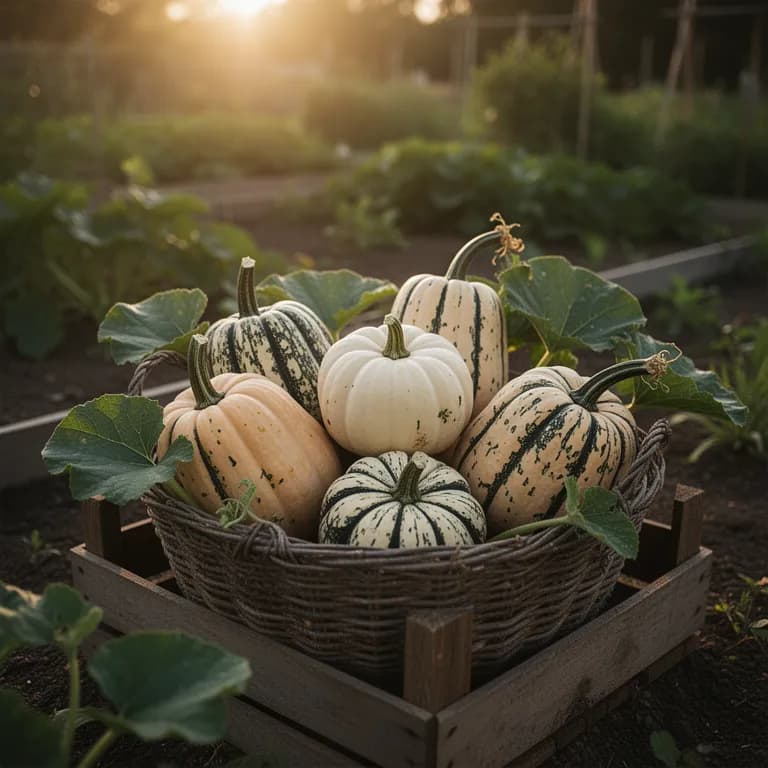
La piel pasa de brillante a mate, señalando la madurez. La mancha de apoyo se vuelve de un naranja intenso y el tallo se seca y adquiere un color marrón corchoso. La piel se endurece lo suficiente como para no hundirse con la uña. Una helada ligera incluso puede endulzar la pulpa al convertir los almidones en azúcares.
Cosechado
Después de la cosecha, la calabaza acorn es un cultivo estacional que no pasa el invierno en el jardín. El curado y el almacenamiento adecuados ayudan a prolongar su uso durante los meses de invierno.
Mantén el suelo constantemente húmedo, pero nunca encharcado durante la germinación. Si empiezas en interior, usa una manta térmica ajustada a 80°F y macetas biodegradables grandes para minimizar el daño a las raíces al trasplantar.
Cuidar Calabaza Bellota mes a mes
Qué hacer cada mes para tu Calabaza Bellota
Octubre
Mes actualComplete main harvest before hard frost, though light frosts actually sweeten the flesh. Cure all harvested squash in a warm, dry spot at 80°F for 10-14 days. Remove spent vines and compost healthy material — discard any diseased plant matter.
Ten claro qué hacer en tu huerto, cada mes
Un correo al empezar cada mes: qué sembrar, plantar y hacer ahora mismo — para tu Calabaza Bellota y todo lo que crece alrededor. Más un breve curso inicial para esquivar los errores clásicos.
- Qué hacer ahora mismo
- Ajustado a tu temporada
- Curso inicial incluido
Cosechar Calabaza Bellota
Coseche cuando la cáscara esté completamente dura y no ceda a la presión de la uña, generalmente a los 75-100 días de la siembra. El color de la piel debe ser verde oscuro uniforme con un punto amarillo-anaranjado en la zona de contacto con el suelo. Corte dejando 5-7 cm de pedúnculo intacto para prolongar la conservación. Cure al sol durante una semana antes de almacenar.
se supone que plantas al comenzar el periodo — indica tu fecha real
Cosecha cuando la piel esté opaca y dura, con un tallo seco y marrón; el fruto debe estar completamente coloreado, resistir una presión con la uña y mostrar una mancha de suelo de color naranja intenso. Recoge antes de las heladas fuertes, aunque soporta una helada ligera.
Almacenamiento y conservación
Almacene en un lugar fresco, seco y bien ventilado a 10-15 °C con humedad relativa del 50-70 %. Las calabazas bien curadas se conservan 1-3 meses dependiendo de la variedad. La pulpa cocida puede congelarse en porciones durante 6-8 meses. También es posible preparar purés y conservarlos en frascos al baño maría.
Qué falla — y cómo solucionarlo
Escarabajo del pepino (Acalymma vittatum)
PlagaAgujeros en hojas y flores, cicatrices en los frutos jóvenes. Puede transmitir la marchitez bacteriana de planta en planta.
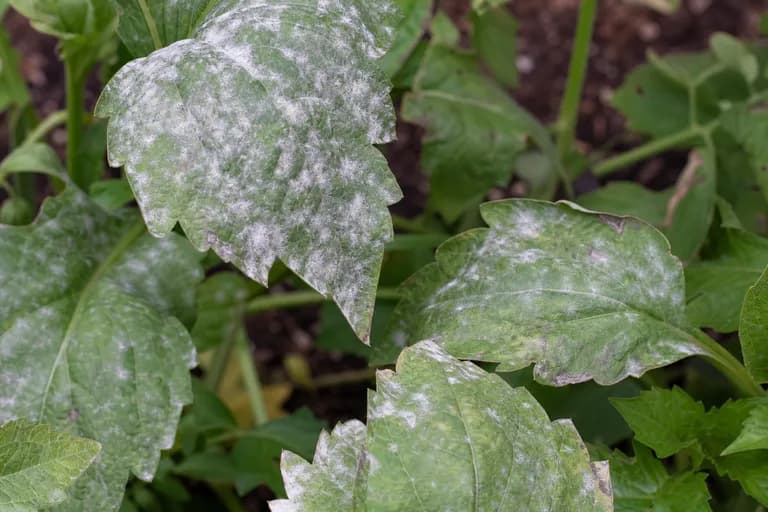
Oídio (Podosphaera xanthii)
EnfermedadPolvo blanco harinoso en las hojas que avanza hasta cubrir toda la superficie foliar, provocando amarillamiento y caída prematura de las hojas.
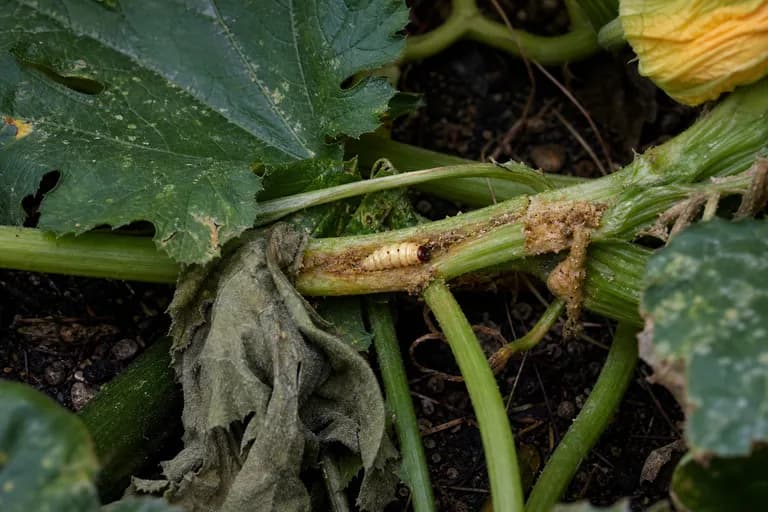
Barrenador de la vid (Melittia cucurbitae)
PlagaMarchitez repentina de secciones de la planta, excremento amarillento-verdoso en la base del tallo, larvas blancas dentro del tallo.
Solución de problemas comunes
El tiempo de almacenamiento es inferior al de otras calabazas de invierno como butternut o hubbard, por lo que conviene consumirlas primero. La polinización deficiente causa frutos deformes o que abortan; si hay pocos polinizadores, realice polinización manual por la mañana. El exceso de riego o el mal drenaje favorecen la pudrición del pedúnculo y de los frutos en contacto con el suelo.
Consejos de cultivo
- Acorn squash is a warm-season crop that absolutely cannot tolerate frost. Wait until soil temperatures reach at least 70°F (21°C) before direct sowing. In zones 3-5, start seeds indoors 3-4 weeks before the last frost to ensure enough growing days for the 85-100 day maturity period.
- Build raised hills or mounds of compost-enriched soil for planting. Mounds warm faster in spring, improve drainage (critical for preventing root rot), and give vines an elevated starting point. Make mounds 12 inches high and 24 inches wide, enriched with 4-6 inches of aged compost.
- Water deeply and consistently — 1-1.5 inches per week — but always at soil level using drip irrigation or a soaker hose. Overhead watering promotes powdery mildew, the most common acorn squash disease. Reduce watering frequency as fruits approach maturity to concentrate sugars and toughen the rind.
- Acorn squash vines spread 8-12 feet, but can be trained vertically on a sturdy trellis to save space in small gardens. Support developing fruits with cloth slings or old pantyhose tied to the trellis structure to prevent them from snapping off the vine under their own weight.
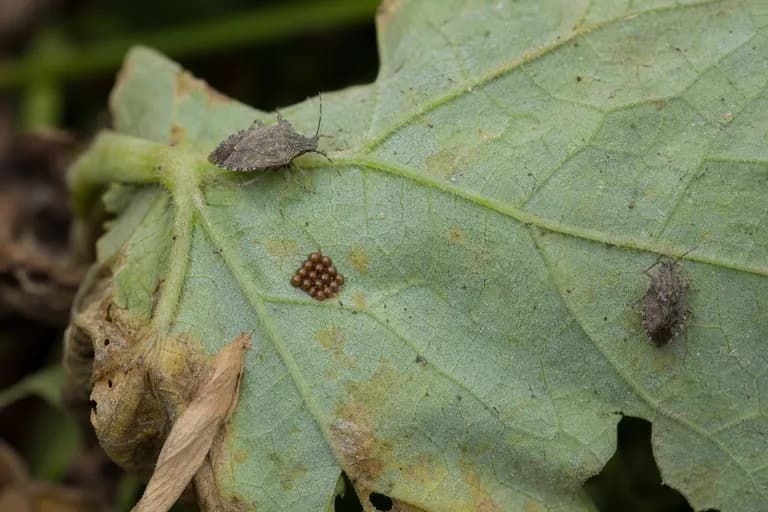
- Check leaf undersides weekly for the copper-colored egg clusters of squash bugs. Crush eggs immediately and hand-pick adults. Squash bugs are far easier to manage through early detection than through treatment once populations explode.
- Protect vine bases from squash vine borers by wrapping the lower 6 inches of the main stem with aluminum foil or floating row cover fabric. This physical barrier prevents the adult moth from laying eggs at the base, where larvae bore into and kill the vine.
- Harvest timing is critical for storage success. Wait until the rind is completely dull (not glossy), the ground spot is deep orange, and the stem is dry and corky. Cut — never pull — fruits from the vine, leaving a 2-inch stem. Squash without stems rot within weeks.
- After harvest, cure fruits in a warm (80°F), dry, well-ventilated spot for 10-14 days. Curing hardens the rind, heals minor scratches, and dramatically extends storage life from weeks to months. Store cured squash at 50-55°F with good air circulation.
Cultiva tu mejor Calabaza Bellota — y todo lo que la rodea.
Empieza un plan gratis hoy. Diseña tus bancales, coloca tu Calabaza Bellota y deja que PlotMyGarden gestione el momento, el espaciado, las asociaciones y los recordatorios de la semilla a la cesta.
Elige tu Calabaza Bellota
Table Queen
Variedad clásica de color verde oscuro con pulpa anaranjada dulce. Frutos de 500 g-1 kg, ideales para porciones individuales asadas. Madura en 80-85 días.
Table Gold
Variación dorada de la calabaza bellota con cáscara amarillo-anaranjada brillante. Pulpa más dulce y textura más cremosa que la verde. 75-80 días hasta cosecha.
Carnival
Variedad multicolor espectacular con manchas verdes, crema y anaranjadas. Excelente sabor dulce y textura fina. Buena capacidad de almacenamiento. 85-90 días.
Honey Bear
Variedad arbustiva compacta ideal para huertos pequeños. Frutos pequeños de 300-500 g con pulpa excepcionalmente dulce. Resistente a oídio. 85 días.
Acorn squash seeds cost $2-4 per packet (enough for 15-25 plants), and a single vine produces $8-15 worth of organic winter squash at typical grocery prices of $2-3 per pound. Growing just 3-4 plants can yield 8-16 squash worth $25-50 — all from a few dollars in seeds. The real savings come from the storage life: homegrown acorn squash stored in a cool spot provides fresh, local produce well into winter when grocery prices peak. Unlike many vegetables, winter squash requires very little ongoing labor once established.
Recetas rápidas
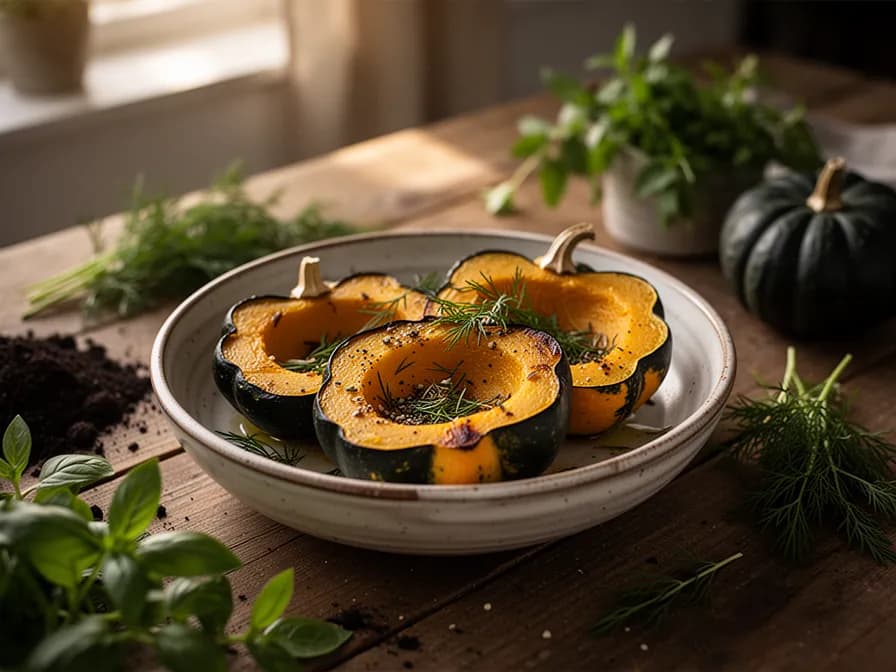
Classic Roasted Acorn Squash
45 minThe quintessential autumn side dish. Halved acorn squash roasted cut-side down until caramelized, then flipped and filled with butter, brown sugar, and a pinch of cinnamon. The natural bowl shape makes each half a perfect individual serving.
7 ingredientes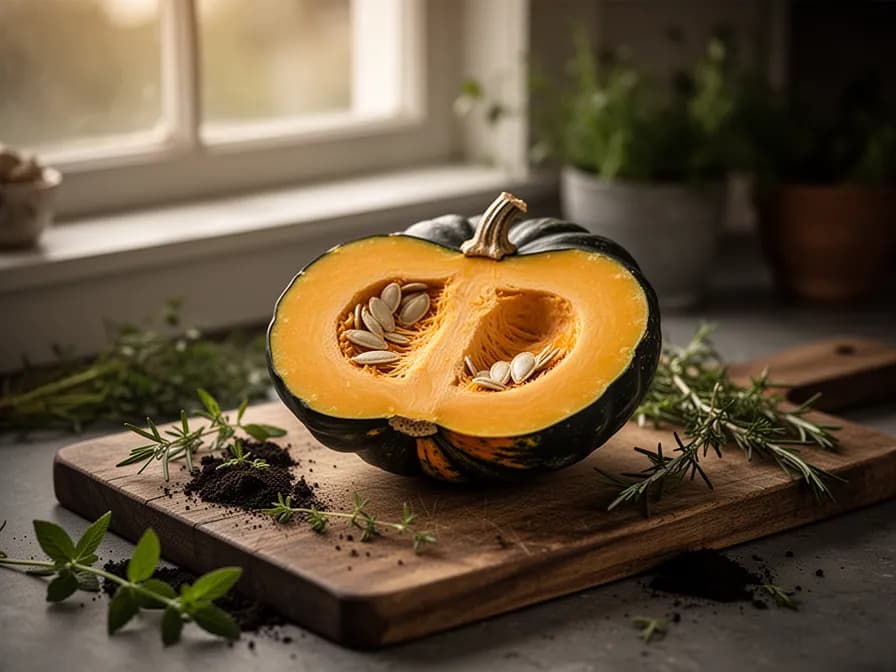
Sausage and Apple Stuffed Acorn Squash
55 minA hearty autumn meal in its own edible bowl. Roasted acorn squash halves filled with a savory-sweet mixture of browned sausage, diced apple, dried cranberries, and sage. Perfect for fall dinner parties and holiday tables.
8 ingredientesAcorn Squash Soup with Ginger
40 minA silky, warming soup that highlights the sweet nuttiness of acorn squash. Roasted squash blended with sauteed onion, fresh ginger, and a touch of cream creates a velvety bowl perfect for chilly evenings. The ginger adds a subtle warmth that complements the natural sweetness.
8 ingredientesUsos culinarios
Ideal para asar cortada por la mitad con mantequilla y especias como canela o nuez moscada. Se presta perfectamente para rellenar con mezclas de cereales, carne picada o verduras salteadas. La pulpa cocida sirve para preparar sopas cremosas, purés y gratinados. También puede usarse en repostería para tartas y panes dulces otoñales.
Qué contiene
Beneficios para la salud
- Exceptionally rich in beta-carotene and other carotenoid antioxidants that the body converts to Vitamin A, supporting immune function, skin health, and night vision. The deep orange flesh indicates high carotenoid concentration.
- One of the best vegetable sources of potassium — a single cup of cooked acorn squash provides about 26% of the daily value, helping regulate blood pressure and reduce stroke risk.
- High in soluble and insoluble dietary fiber, which supports digestive health, feeds beneficial gut bacteria, promotes regular bowel function, and helps maintain healthy cholesterol levels.
- Contains significant B-complex vitamins including thiamine (B1), niacin (B3), pantothenic acid (B5), and pyridoxine (B6), which are essential for energy metabolism and nervous system health.
- Rich in manganese and magnesium — trace minerals critical for bone health, enzyme function, and blood sugar regulation. A single serving provides roughly 18% of daily manganese needs.
- Low calorie density (about 56 calories per cup cooked) combined with high fiber and water content makes acorn squash an excellent food for weight management and satiety without caloric excess.
De dónde viene Calabaza Bellota
Acorn squash traces its ancestry to the wild cucurbits of Central America and Mexico, where archaeological evidence of squash cultivation dates back over 8,000 years — predating both corn and beans as one of the first domesticated crops in the Americas. Ancient Mesoamerican farmers selected for larger fruit size, thicker flesh, and sweeter flavor over thousands of generations.
The squash family, including acorn squash, formed one-third of the legendary 'Three Sisters' agricultural system practiced by Indigenous peoples across North America. In this ingenious polyculture, corn stalks provided climbing support for beans, beans fixed atmospheric nitrogen to feed the heavy-feeding squash, and the sprawling squash vines shaded the soil to suppress weeds and retain moisture. This system sustained civilizations from the Haudenosaunee of the Northeast to the Pueblo peoples of the Southwest.
European colonists encountered acorn squash through Indigenous agriculture and quickly adopted it for its remarkable storage qualities. In an era before refrigeration, a crop that could be harvested in autumn and eaten through winter was invaluable. The compact, ribbed fruits became a staple of colonial American root cellars. Today, acorn squash remains one of the most popular winter squash varieties in North America, prized for its manageable size, natural bowl shape, and sweet, nutty flavor that needs little embellishment.
Calabaza Bellota: ¿sabías que?
Datos fascinantes sobre Calabaza Bellota
Acorn squash belongs to the species Cucurbita pepo — the same species as zucchini, yellow summer squash, and pumpkins. Despite being called a 'winter squash', it is actually a summer-growing crop stored for winter eating.
Calabaza Bellota: preguntas frecuentes
¿Cuándo debo plantar Calabaza Bellota?
¿Cuáles son buenas plantas acompañantes para Calabaza Bellota?
¿En qué zonas de rusticidad puede crecer Calabaza Bellota?
¿Cuánto sol necesita Calabaza Bellota?
¿A qué distancia debo espaciar Calabaza Bellota?
¿Qué plagas y enfermedades afectan a Calabaza Bellota?
¿Cómo almaceno Calabaza Bellota después de la cosecha?
¿Cuáles son las mejores variedades de Calabaza Bellota para cultivar?
¿Qué suelo necesita Calabaza Bellota?
How do I know when acorn squash is ripe and ready to harvest?
Can I grow acorn squash in a small garden or in containers?
Why are my acorn squash plants producing flowers but no fruit?
How long does acorn squash last in storage, and what is the best way to store it?
Is the skin of acorn squash edible?
Acabas de leer la teoría. Ahora cultívala en piloto automático.
Todo lo que hace que Calabaza Bellota sea delicado — el momento, el espaciado, las asociaciones, la ventana de cosecha — es justo lo que PlotMyGarden resuelve por ti, para cada planta de tu huerto.
Un plan que conoce tu clima
Indica tu ubicación una vez. Recibe fechas de siembra, abonado y cosecha basadas en tu última helada real y el pronóstico en vivo — sin adivinar con un sobre genérico.
De la sección “Cuándo plantar”Planificador de bancales de arrastrar y soltar
Diseña bancales sobre una cuadrícula. Cada planta encaja con su espaciado correcto y ves toda la temporada antes de gastar un céntimo en semillas.
De la sección “Cultivo”Conflictos de asociación, detectados a tiempo
Más de 200 buenas y malas combinaciones comprobadas en vivo mientras plantas — para que un error que arruine la temporada nunca llegue a la tierra.
De la sección “Asociaciones”Recordatorios que sí vas a seguir
“Riega las judías.” “Recoge hoy antes de que se pase.” Oportunos, concretos y ligados a las plantas que de verdad cultivas.
De la sección “Cosecha”Escalonado, programado
¿Quieres cosechar seis semanas en vez de seis días? Reparte tus siembras automáticamente y te avisa cuando toca el siguiente lote.
De la sección “Cuándo plantar”Un registro que se vuelve más listo
Cada cosecha que registras le enseña tu huerto. El plan del año que viene parte de lo que de verdad funcionó en tu suelo, no en un manual.
De la sección “Resumen”Planta estos junto a Calabaza Bellota
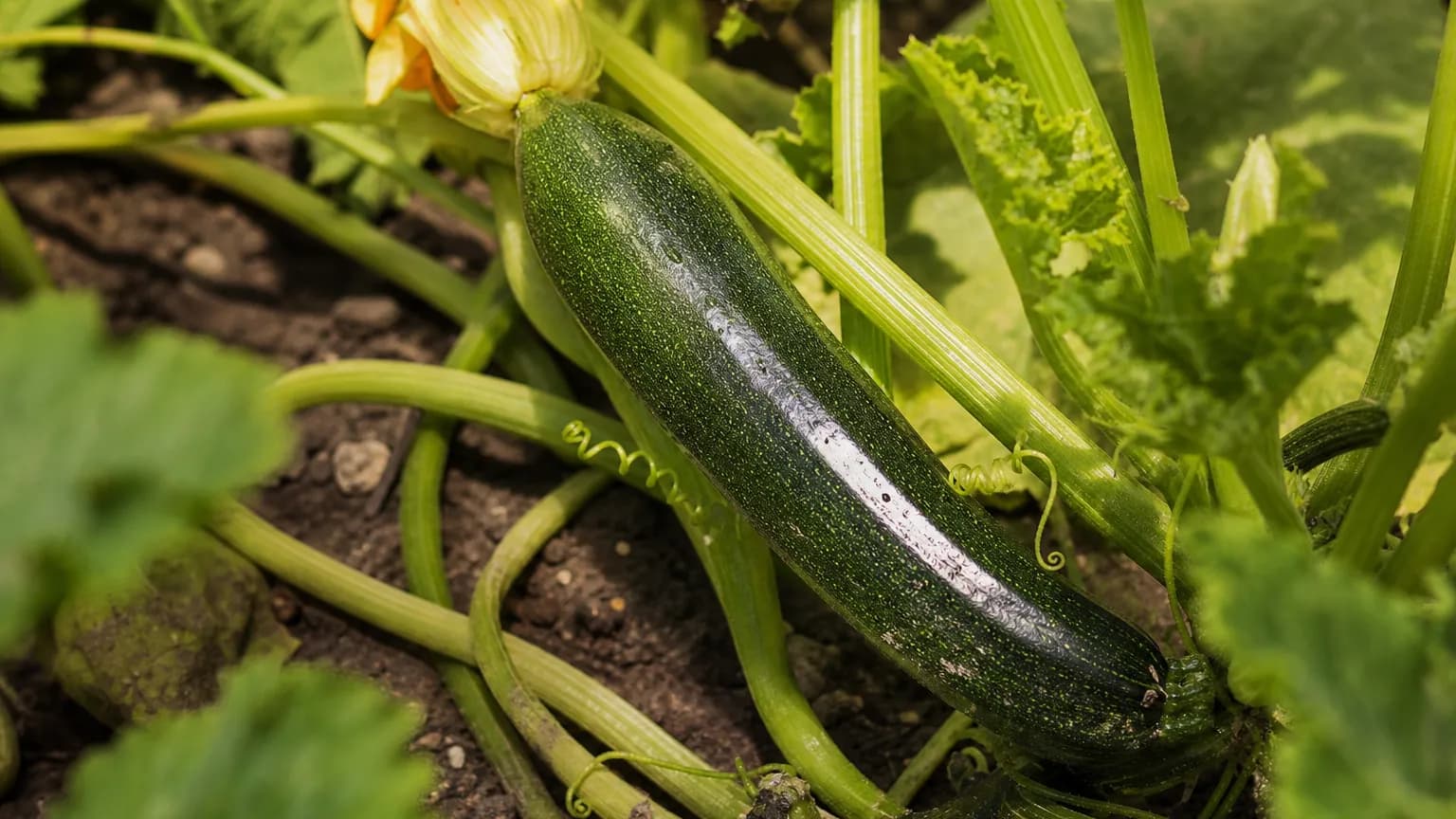
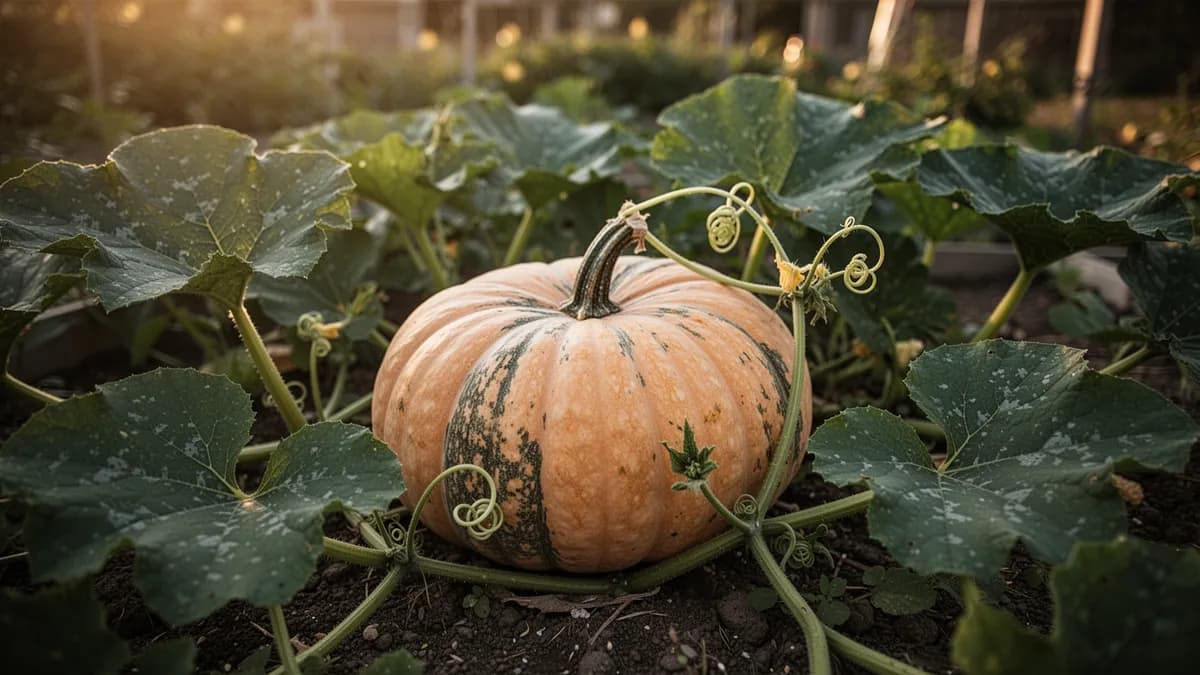
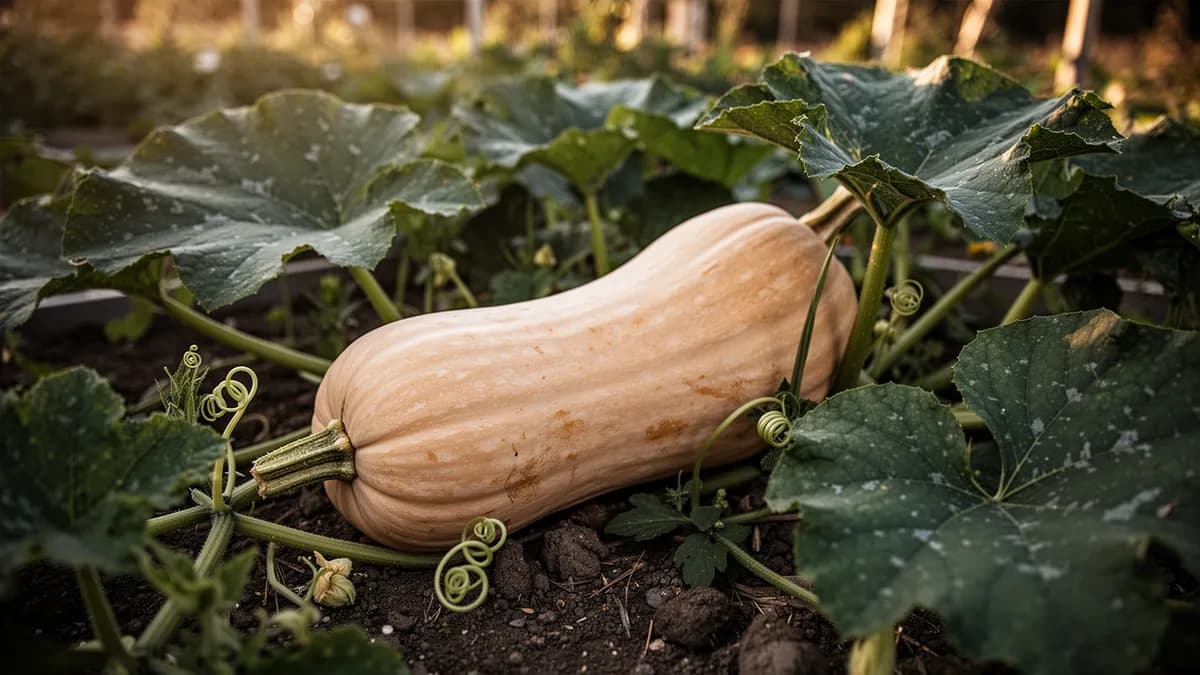
Más Cucurbitáceas
Mantén Calabaza Bellota lejos de estos
Diseños de jardín con Calabaza Bellota
Cultiva tu mejor Calabaza Bellota — y todo lo que la rodea.
Empieza un plan gratis hoy. Diseña tus bancales, coloca tu Calabaza Bellota y deja que PlotMyGarden gestione el momento, el espaciado, las asociaciones y los recordatorios de la semilla a la cesta.