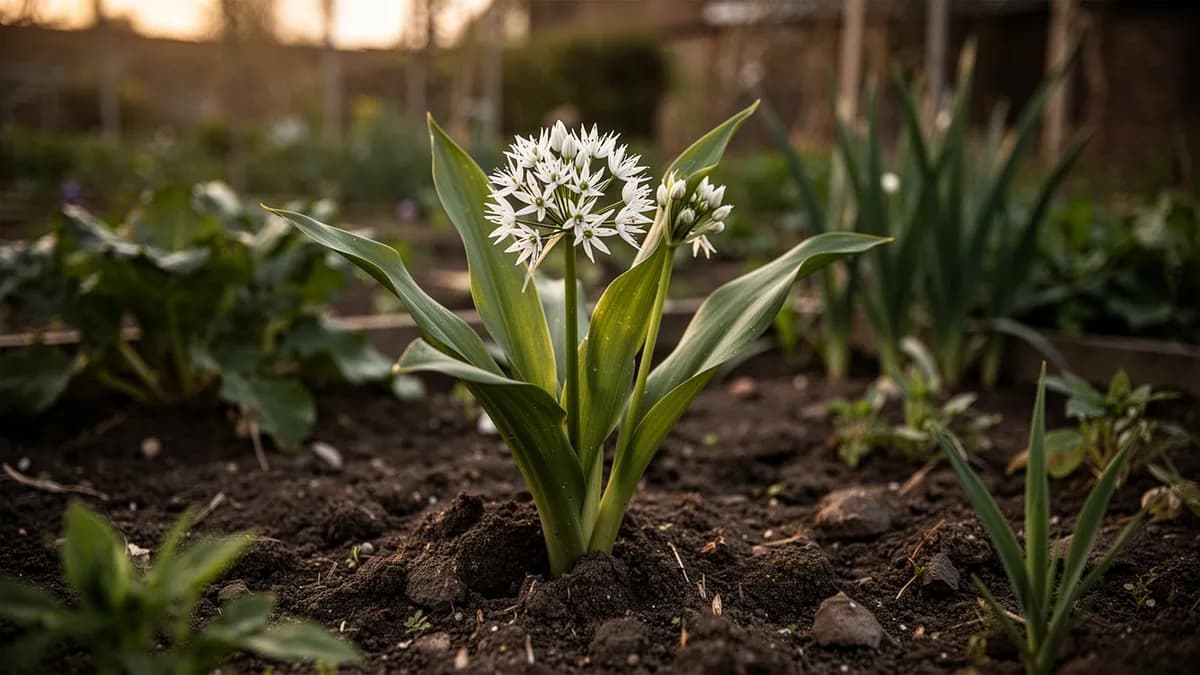
Wild Garlic
Allium ursinum
At a Glance
A shade-loving woodland perennial also known as ramsons, producing broad, lily-like leaves with intense garlic flavor in early spring. One of the first wild greens to emerge in late winter, carpeting forest floors with pungent, garlicky leaves before trees leaf out. Leaves, flowers, and bulbs are all edible and make exceptional pesto, compound butter, and soup. Plant bulbs in autumn in moist, shaded areas that mimic the woodland understory habitat.
Planting & Harvest Calendar
Growth Stages
From Seed to Harvest
Dormancy & Bulb Rest
Days 0–60
The small white bulbs rest underground through winter, protected by the insulating leaf litter of the woodland floor. Root activity begins in late winter as soil temperatures rise above 5°C (41°F), drawing moisture and nutrients in preparation for the rapid spring emergence.
💡 Care Tip
In garden settings, ensure the planting area stays mulched with leaf mould through winter. Do not disturb the soil — the bulbs sit just 3-5 cm below the surface and are easily damaged by digging.
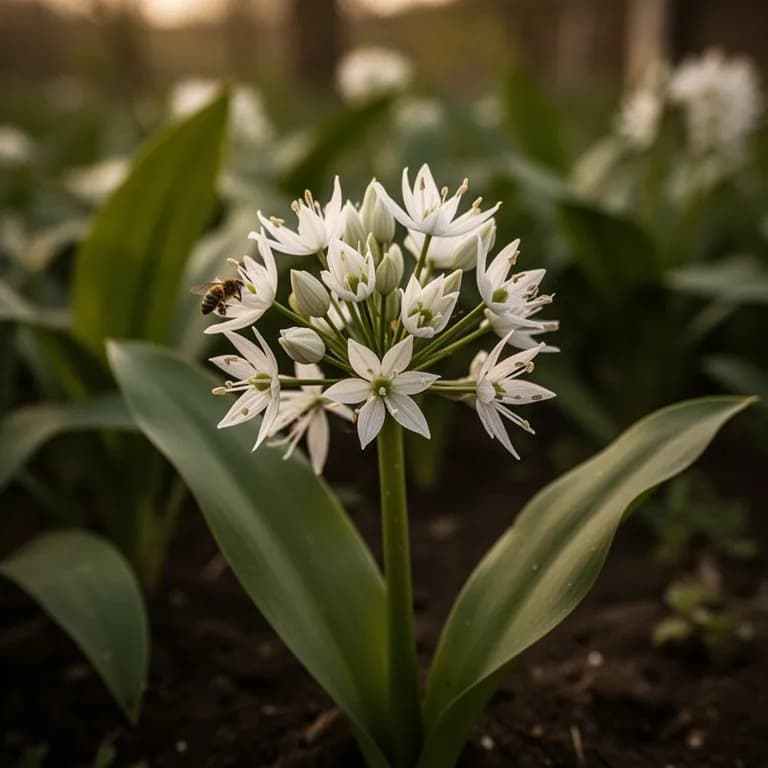
Each flower head carries 6-20 star-shaped white florets that attract pollinators in late spring
Monthly Care Calendar
What to do each month for your Wild Garlic
June
You are hereSeed capsules ripen from green to black. Collect ripe seeds for sowing in new locations. Leaves begin to yellow as the canopy closes overhead. Stop all harvesting to let plants complete their energy storage cycle.
Did You Know?
Fascinating facts about Wild Garlic
Wild garlic (Allium ursinum) gets its Latin species name 'ursinum' meaning 'of bears' — legend holds that brown bears seek out the leaves to eat after emerging from hibernation, using the plant as a restorative spring tonic.
Wild garlic, or ramsons, is a woodland bulb that thrives in conditions most alliums would reject: shade, moisture, and cool temperatures. Plant small bulbs in autumn, setting them 5 cm deep and 15 cm apart in a shaded location with moist, humus-rich soil. Under deciduous trees is ideal, as wild garlic completes its entire growth cycle in the brief window before trees fully leaf out, then goes dormant for the rest of the year.
Once planted, wild garlic requires almost no care. Keep the planting area moist during the active growth period from late winter through spring. A light mulch of leaf mold mimics the natural woodland floor habitat and maintains soil moisture. Do not fertilize heavily, as the rich organic matter from annual leaf fall provides sufficient nutrition. Wild garlic spreads both by bulb division and by self-sowing from seed, gradually forming dense colonies that carpet the ground each spring.
Patience is required in the first year or two as the colony establishes. Avoid harvesting more than a third of the leaves from any clump until the planting is well-established, typically after three years. Once mature, a wild garlic colony can be harvested sustainably for decades. The white, star-shaped flowers appear in late April through May and are equally edible, with a delicate garlic flavor. Allow some flowers to set seed to expand the colony naturally.
Wild garlic forms lush green carpets across the woodland floor from March to May
Wild garlic (Allium ursinum) is native to Europe and northern Asia, ranging from the Atlantic coasts of Ireland and Portugal east through the Caucasus to western Siberia. It has been a part of the human diet since at least the Mesolithic period — charred wild garlic bulbs have been found in settlement sites dating back over 8,000 years in Denmark and Switzerland, making it one of the oldest documented food plants in European history.
The plant held an important place in folk medicine throughout medieval Europe. Anglo-Saxon herbals prescribed wild garlic as a treatment for infections, digestive complaints, and respiratory ailments. In Germanic tradition, it was believed to purify the blood after winter and was gathered in great quantities during spring. The common German name 'Barlauch' derives from Old High German and has been in continuous use for over a thousand years. Celtic peoples associated wild garlic with protection and planted it near their dwellings to ward off evil spirits.
Wild garlic experienced a dramatic culinary renaissance beginning in the 1990s, driven by the New Nordic cuisine movement and a broader European interest in foraged wild foods. Chefs across Britain, Germany, Austria, and Scandinavia elevated the humble woodland plant to fine-dining status, and its fleeting spring season became a celebrated annual event. Today, wild garlic pesto, butter, and soup are springtime staples across much of Europe. Conservation-minded foragers follow sustainable harvesting practices — taking only one leaf per plant and never uprooting bulbs — to ensure that these ancient woodland carpets continue to thrive for future generations.
Wild garlic can be grown from both bulbs and seed, though bulbs establish more quickly. Plant bulbs in autumn, 5 cm deep and 15 cm apart, in a shaded location with moist soil. Fresh seed sown in autumn germinates the following spring after a period of cold stratification. Seed can also be cold-stratified in the refrigerator for six to eight weeks and sown in spring in trays of damp compost. Germination is slow and erratic, taking three to six weeks. Grow seedlings on in a shaded cold frame for the first year before planting out. Expect three to four years from seed to a harvestable colony. For fastest results, obtain divisions from an established colony and plant immediately in prepared soil.
Wild garlic demands moist, humus-rich soil that mimics a woodland floor. The ideal growing medium is leafy, well-drained soil with high organic content and a slightly acidic to neutral pH of 5.5 to 7.0. Work in generous amounts of leaf mold, composted bark, or well-rotted garden compost before planting. Do not add lime, as wild garlic prefers slightly acidic conditions. Annual mulching with leaf mold or composted leaves provides all the nutrition needed. No supplemental fertilizer is required. Good moisture retention is essential, so heavy clay soils can work well if they are not waterlogged, while sandy soils may need extra organic matter to hold moisture.
Check Your Zone
See if Wild Garlic is suitable for your location.
7°C – 18°C
45°F – 64°F
Wild garlic is a cool-season woodland plant perfectly adapted to the brief spring window between winter cold and summer canopy closure. Active growth occurs at 7-18°C (45-64°F), with peak leaf production around 10-15°C (50-59°F). The plant has excellent frost tolerance and survives winter temperatures well below -20°C (-4°F) as dormant bulbs. Heat above 22°C (72°F) triggers premature dormancy and leaf dieback — wild garlic simply cannot grow in warm or hot conditions.
Common issues affecting Wild Garlic and how to prevent and treat them organically.
The primary challenge is getting wild garlic established, as newly planted bulbs may take two to three years to produce vigorous growth. Patience is essential. Planting in too much sun causes leaves to scorch and stunts growth, so ensure at least partial shade. Dry soil during the active spring growth period weakens bulbs and reduces future harvests. Once established, wild garlic can spread aggressively and colonize areas where it is not wanted. Contain by harvesting heavily, removing flower heads before seed set, or planting in contained raised beds. Confusion with toxic lookalikes is a serious risk when foraging wild populations.
- 1Mimic the woodland floor. Wild garlic evolved under deciduous trees — it needs moist, humus-rich soil in dappled shade. Plant under oaks, beeches, or hazels where it receives winter and spring sunlight before the canopy leafs out and shades it in summer.
- 2Never plant in full sun or dry soil. Wild garlic will fail completely in exposed, sunny, or drought-prone positions. The ideal spot receives morning or filtered light and stays cool and moist throughout the growing season.
- 3Patience is essential. Wild garlic colonies build slowly — expect 2-3 years before a new planting is established enough to harvest from, and 5+ years before the colony is truly impressive. Do not harvest from new plantings for the first two seasons.
- 4Enrich soil with leaf mould, not manure. Wild garlic thrives in the acidic to neutral, humus-rich soil of deciduous woodlands. Work in generous amounts of leaf mould or well-rotted compost rather than animal manure, which can be too rich in nitrogen.
- 5Plant bulbs in autumn at 3-5 cm depth and 10-15 cm spacing. The bulbs are small and desiccate quickly once lifted — plant them within a day or two of receiving them. If you cannot plant immediately, store in barely damp peat in the refrigerator.
- 6Allow self-seeding for natural colony expansion. Wild garlic spreads by both bulb division and seed dispersal. Leave flower heads to set seed and let the ants carry seeds to new spots — this slow, natural colonization creates the most beautiful, naturalistic drifts.
- 7Be absolutely certain of your identification before eating wild-foraged leaves. Wild garlic leaves can be confused with lily of the valley (toxic) and autumn crocus (deadly). The crush test is definitive — wild garlic always smells strongly of garlic; the poisonous lookalikes never do.
- 8Harvest sustainably. Never take more than one leaf per bulb from wild populations. In your own garden colony, you can harvest more freely once established, but always leave enough foliage for the bulbs to photosynthesize and recharge for next year.
Harvest wild garlic leaves from late February through May, depending on your climate. Pick individual leaves rather than uprooting entire plants to ensure the colony persists. Take no more than one-third of the leaves from any single clump. Younger leaves have the most tender texture and intense flavor. Harvest flowers when they first open for the mildest, most delicate garlic flavor. Small bulbs can be dug in autumn but this reduces the colony, so do so sparingly. Always positively identify wild garlic before harvesting, as the leaves can resemble toxic plants like lily of the valley.
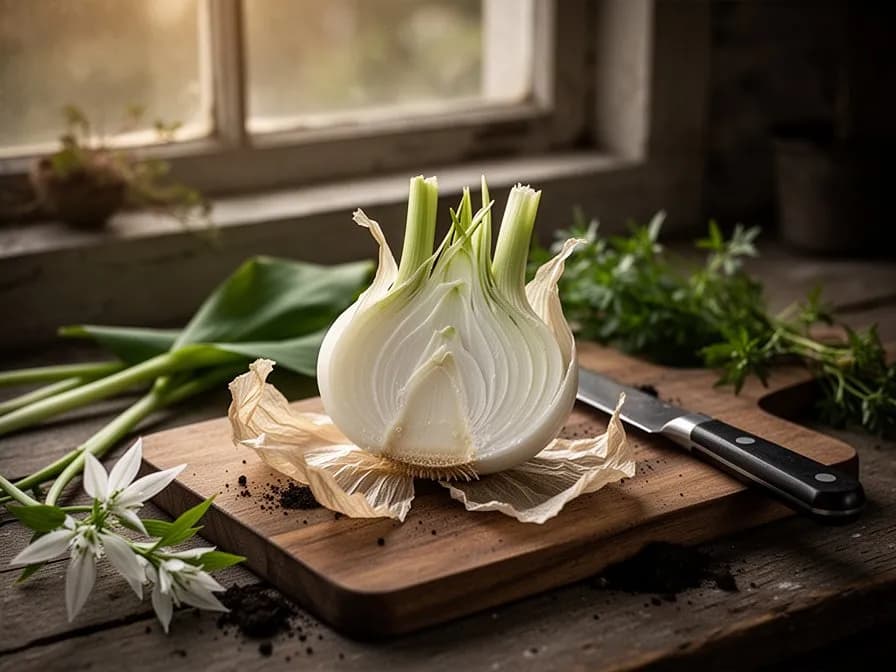
The slender white bulbs sit just below the surface — harvest sparingly to preserve wild colonies
Fresh wild garlic leaves wilt quickly and are best used within two to three days of harvest. Store in the refrigerator wrapped in damp paper towels inside a plastic bag. The most popular preservation method is wild garlic pesto, blending leaves with olive oil, nuts, and hard cheese, then freezing in ice cube trays for year-round use. Leaves can be blanched briefly and frozen flat for adding to soups and stews. Wild garlic butter made by blending chopped leaves into softened butter freezes well for months. Infuse olive oil with wild garlic leaves for a fragrant cooking oil, using within a week if refrigerated.
Plan your garden with ease
Love growing Wild Garlic? Use our free garden planner to design your beds, track planting dates, and get personalized care reminders.
Nutritional Info
Per 100g serving
34
Calories
Health Benefits
- Exceptionally rich in vitamin C — 100g of leaves provides nearly 89% of the daily value, significantly more than cultivated garlic cloves
- High in vitamin A from beta-carotene and other carotenoids, supporting eye health and immune function
- Contains allicin and other organosulfur compounds with well-documented antimicrobial, antifungal, and cardiovascular benefits
- Good source of iron and manganese, important for oxygen transport and antioxidant enzyme function
- Provides folate (B9), supporting cell division and DNA synthesis — historically an important spring tonic after vitamin-depleted winters
- Rich in chlorophyll and flavonoid antioxidants that help reduce inflammation and oxidative stress in the body
💰 Why Grow Your Own?
Fresh wild garlic leaves sell for $15-30 per kilogram at farmers markets and specialty grocers during the brief spring season, making it one of the most expensive seasonal greens available. A packet of 25 bulbs ($8-12) planted in a shady garden corner can produce harvestable leaves within two years and expand into a self-sustaining colony. Within 5 years, a single planting can yield 500g+ of leaves annually — a value of $10-15 per harvest with zero ongoing cost. Wild garlic pesto sells for $8-15 per small jar at artisan shops, and a single batch made from garden-grown leaves costs under $3 in additional ingredients.
Quick Recipes
Simple recipes using fresh Wild Garlic
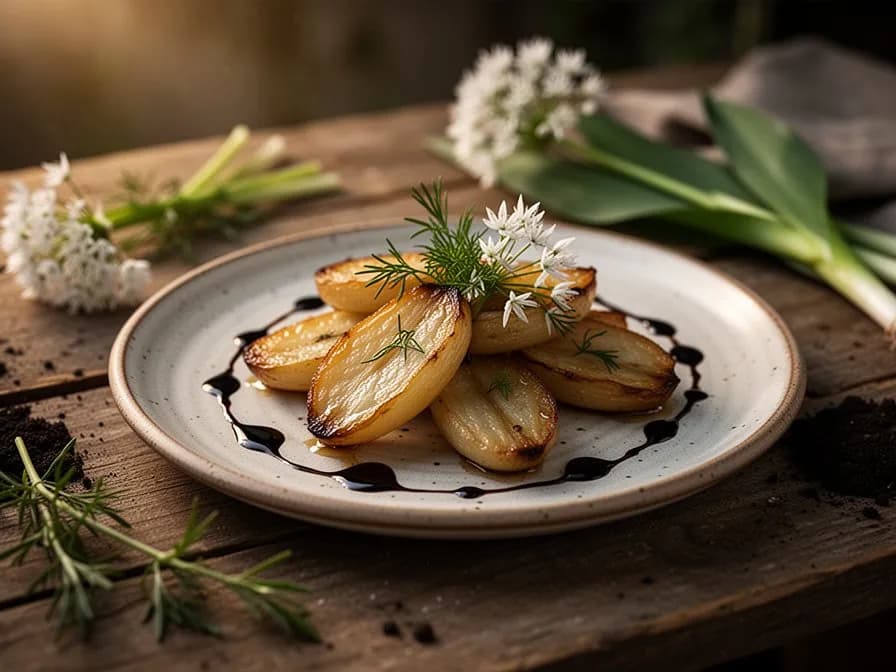
Wild Garlic Pesto
10 minA vibrant, intensely flavoured spring pesto that captures wild garlic's fleeting season in a jar. Toss with pasta, spread on bruschetta, or swirl into risotto for an instant burst of woodland spring flavour.
Wild Garlic Compound Butter
10 minA simple but transformative way to preserve wild garlic flavour — melt over grilled steak, toss with new potatoes, or spread on crusty bread. Rolls can be frozen for up to six months, giving you a taste of spring all year round.
Wild Garlic and Potato Soup
30 minA silky, deeply savoury soup that celebrates the pairing of earthy potatoes with pungent wild garlic. The leaves are stirred in at the end to preserve their bright green colour and fresh garlic bite.
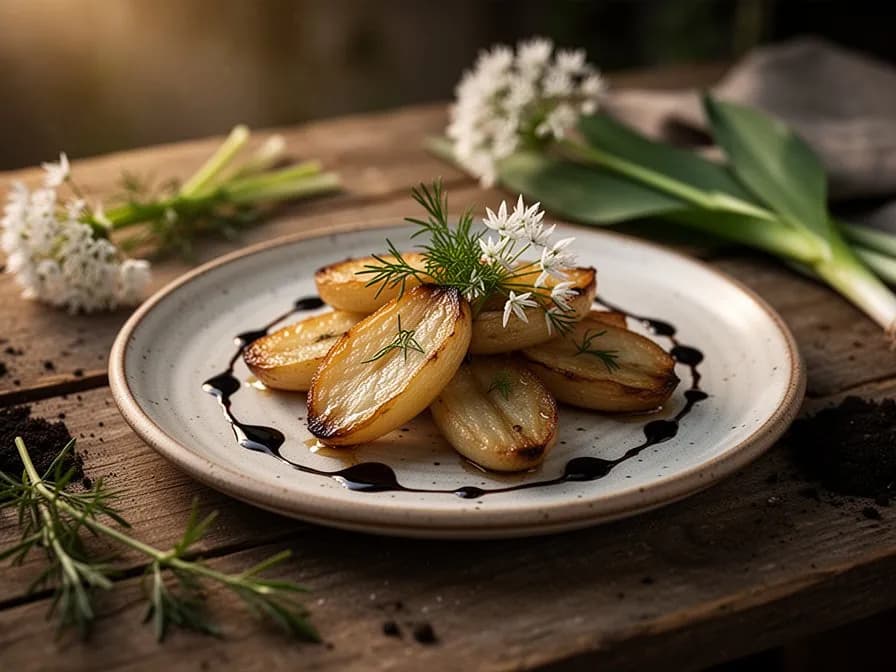
Wild garlic pesto — the most popular way to preserve the fleeting spring harvest
Yield & Spacing Calculator
See how many Wild Garlic plants fit in your garden bed based on the recommended 15cm spacing.
64
Wild Garlic plants in a 4×4 ft bed
8 columns × 8 rows at 15cm spacing
Popular Varieties
Some of the most popular wild garlic varieties for home gardeners, each with unique characteristics.
Allium ursinum
The European wild garlic or ramsons, with broad, flat leaves and white star-shaped flowers. The most commonly cultivated species for culinary use.
Allium tricoccum (Ramps)
The North American cousin with broader, more substantial leaves tinged with red at the base. Stronger flavor than European ramsons.
Allium vineale
Wild garlic or crow garlic, a grassier species with thin, hollow leaves. More invasive than ramsons but useful as a chive substitute.
Allium paradoxum
Few-flowered garlic with drooping white bells and bulbils. Spreads aggressively but produces abundant, flavorful foliage for harvesting.
Wild garlic is a seasonal springtime delicacy celebrated across European cuisines. The leaves make outstanding pesto when blended with pine nuts, Parmesan, and olive oil. Stir chopped leaves into risotto, pasta, and scrambled eggs at the last moment. Use as a wrap for soft cheeses or fish en papillote. The flowers make an elegant, mild-flavored garnish for salads and soups. Blend into spring soups with potato and leek. Fold into bread dough for fragrant wild garlic focaccia. The flavor is best enjoyed raw or barely cooked to preserve its fresh, pungent character.
When should I plant Wild Garlic?
Plant Wild Garlic in September, October, November. It takes approximately 150 days to reach maturity, with harvest typically in March, April, May.
What hardiness zones can Wild Garlic grow in?
Wild Garlic thrives in USDA hardiness zones 3 through 9. With greenhouse protection, it may be grown in zones 1 through 10.
How much sun does Wild Garlic need?
Wild Garlic requires Partial Sun (3-6h). This means 3-6 hours of sunlight, ideally morning sun with afternoon shade.
How far apart should I space Wild Garlic?
Space Wild Garlic plants 15cm (6 inches) apart for optimal growth and air circulation.
What pests and diseases affect Wild Garlic?
Common issues include Slugs and Snails, Rust, Lily Beetle. Prevention through good garden practices like crop rotation, proper spacing, and companion planting is the best approach. See the detailed pests and diseases section above for symptoms, prevention, and treatment for each.
How do I store Wild Garlic after harvest?
Fresh wild garlic leaves wilt quickly and are best used within two to three days of harvest. Store in the refrigerator wrapped in damp paper towels inside a plastic bag. The most popular preservation method is wild garlic pesto, blending leaves with olive oil, nuts, and hard cheese, then freezing in...
What are the best Wild Garlic varieties to grow?
Popular varieties include Allium ursinum, Allium tricoccum (Ramps), Allium vineale, Allium paradoxum. Each has unique characteristics suited to different growing conditions and culinary preferences. See the varieties section above for detailed descriptions.
What soil does Wild Garlic need?
Wild garlic demands moist, humus-rich soil that mimics a woodland floor. The ideal growing medium is leafy, well-drained soil with high organic content and a slightly acidic to neutral pH of 5.5 to 7.0. Work in generous amounts of leaf mold, composted bark, or well-rotted garden compost before plant...
Can I grow wild garlic in my garden even if I do not have woodland?
Yes, absolutely. Any shady, moist spot will work — under a hedge, along a north-facing fence, beneath a large deciduous tree, or in a shady border. The key requirements are dappled or partial shade, soil that stays consistently moist, and humus-rich earth amended with leaf mould. Avoid full sun and dry positions. Even a large pot in a shady courtyard can support a small colony if kept moist.
How do I tell wild garlic apart from poisonous lookalikes?
The definitive test is smell — crush a leaf between your fingers and wild garlic produces an unmistakable strong garlic odour. Lily of the valley (Convallaria majalis) and autumn crocus (Colchicum autumnale) are toxic lookalikes but neither smells of garlic. Additional checks: wild garlic leaves grow singly from the base on individual stalks, while lily of the valley leaves grow in pairs. When in doubt, do not eat it — use smell as your primary and most reliable identification method.
How long does it take for wild garlic to establish and spread?
Planted bulbs typically produce harvestable leaves in their second spring. Meaningful colony expansion takes 3-5 years through bulb division (each bulb splits into 2-3 daughter bulbs annually) and seed dispersal. Wild garlic colonies expand at roughly 1 metre per year from seed. A planting of 25 bulbs can grow into a carpet of several hundred plants within 5-7 years if left undisturbed in good conditions.
What is the best way to preserve wild garlic for use after the season ends?
Wild garlic pesto freezes beautifully for up to 12 months — make large batches and freeze in ice cube trays, then transfer cubes to freezer bags. Wild garlic butter can be rolled in parchment, frozen, and sliced as needed for 6+ months. Leaves can be blanched and frozen flat on trays, then bagged. Flower buds pickled in cider vinegar keep for a year and make an excellent wild garlic caper substitute. Drying is not recommended as it destroys most of the flavour.
Is it legal to forage wild garlic from the countryside?
Laws vary by country. In England and Wales, you may pick leaves and flowers for personal use under the Wildlife and Countryside Act 1981, but uprooting the entire plant (including the bulb) without landowner permission is illegal. In many European countries, foraging for personal use is permitted in public forests, but commercial harvesting requires permits. In protected nature reserves, no foraging is allowed. Always check local regulations, forage sustainably, and get permission on private land.
Will wild garlic take over my entire garden?
Wild garlic spreads steadily but slowly — it is not an aggressive thug like some alliums. It expands about 1 metre per year from seed dispersal and gradually fills shady areas through bulb division. It will not invade sunny borders or dry areas. If it begins to spread beyond where you want it, simply mow or pull the advancing edges in spring. The shallow bulbs are easy to remove. In most gardens, the challenge is getting wild garlic to establish, not controlling it.
Ready to Grow Wild Garlic?
Add Wild Garlic to your garden plan and start designing your perfect layout.

Vladimir Kusnezow
Gardener and Software Developer
Zone 6b gardener. Growing vegetables and fruits in soil and hydroponics for 6 years. I built PlotMyGarden to plan my own gardens.
Jump to Section