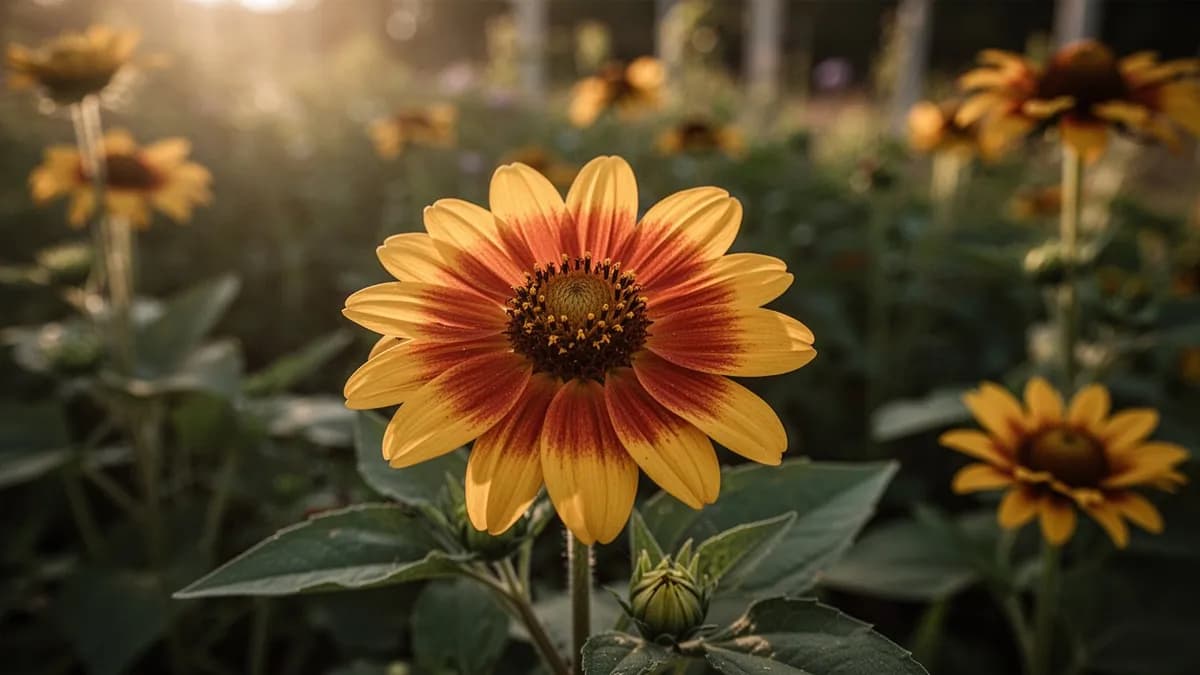
Mexican Sunflower
Tithonia rotundifolia
At a Glance
It's planting season for Mexican Sunflower! Start planning your garden now.
A bold, heat-loving annual producing vivid orange-red daisy flowers on tall, sturdy plants that are irresistible to butterflies and hummingbirds. Mexican sunflower thrives in hot, dry conditions and poor soil, growing rapidly to six feet or more. Plant at the back of borders and handle cut stems carefully as they are hollow and fragile.
Planting & Harvest Calendar
Growth Stages
From Seed to Harvest
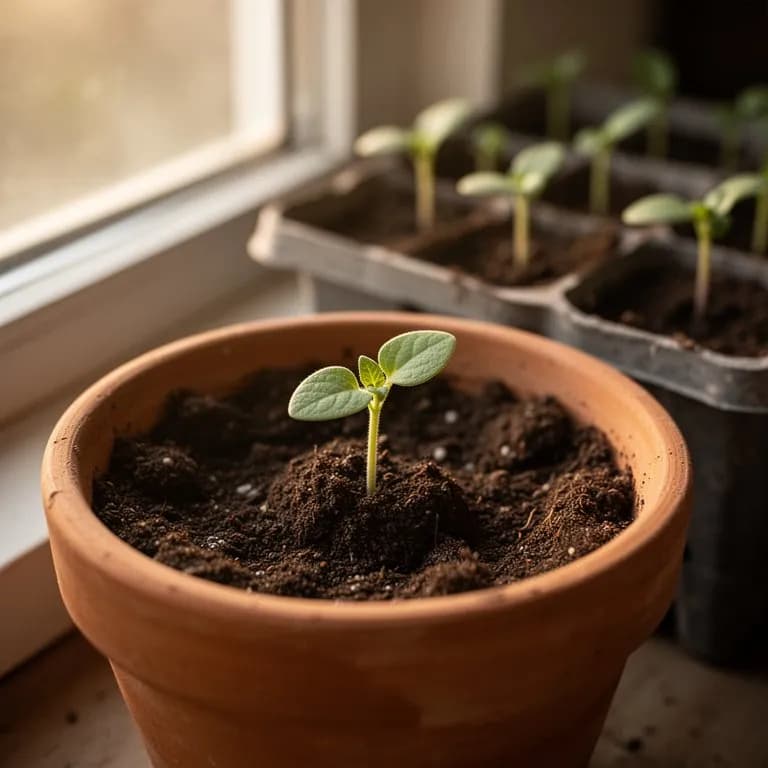
Seed Germination
Days 0–10
Tithonia seeds germinate quickly in warm soil, typically within five to ten days. Seeds should be sown shallowly at about one-quarter inch deep, as they benefit from some light exposure. Soil temperature should be at least 65°F (18°C) for reliable germination.
💡 Care Tip
Keep the soil consistently moist but not waterlogged during germination. Starting seeds indoors four to six weeks before the last frost date gives plants a head start in shorter growing seasons.
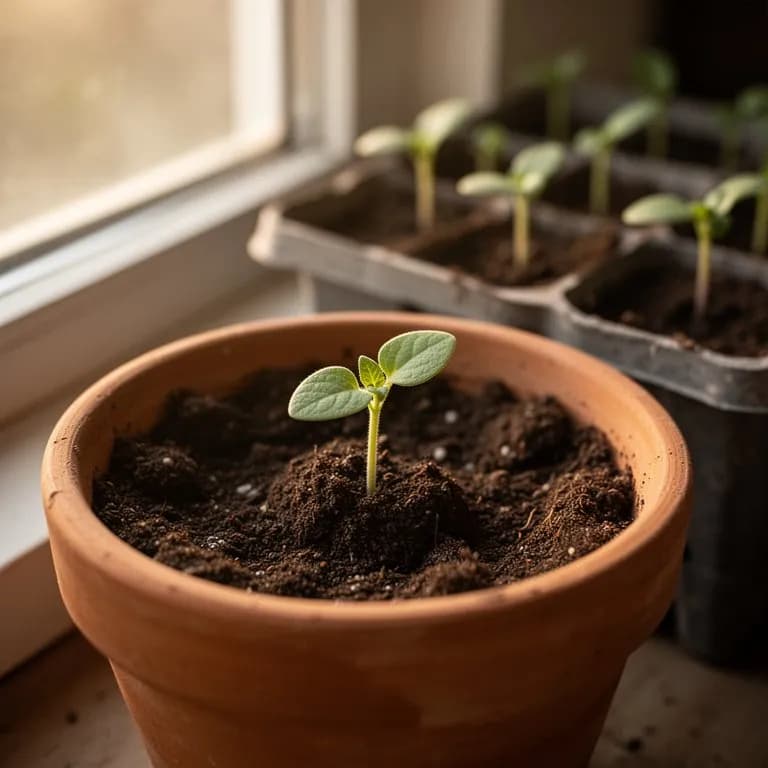
Young tithonia seedling showing its characteristic broad first leaves
Monthly Care Calendar
What to do each month for your Mexican Sunflower
May
You are hereTransplant hardened-off seedlings into the garden after the last frost date. Space plants 24 to 36 inches apart in full sun with well-drained soil. Install stakes or supports in windy areas
Did You Know?
Fascinating facts about Mexican Sunflower
Tithonia rotundifolia is native to Mexico and Central America, where it has been cultivated for centuries both as an ornamental and for its agricultural benefits as a green manure crop.
Monarch butterflies are frequent visitors to Mexican sunflower blooms
Mexican sunflower is a spectacular, fast-growing annual that creates a bold tropical presence in the garden, quickly reaching 4-6 feet tall and wide. Direct sow seeds after all danger of frost when soil has warmed to 65°F (18°C). Press seeds 1/4 inch into warm soil and thin seedlings to 24-36 inches apart—these plants need room.
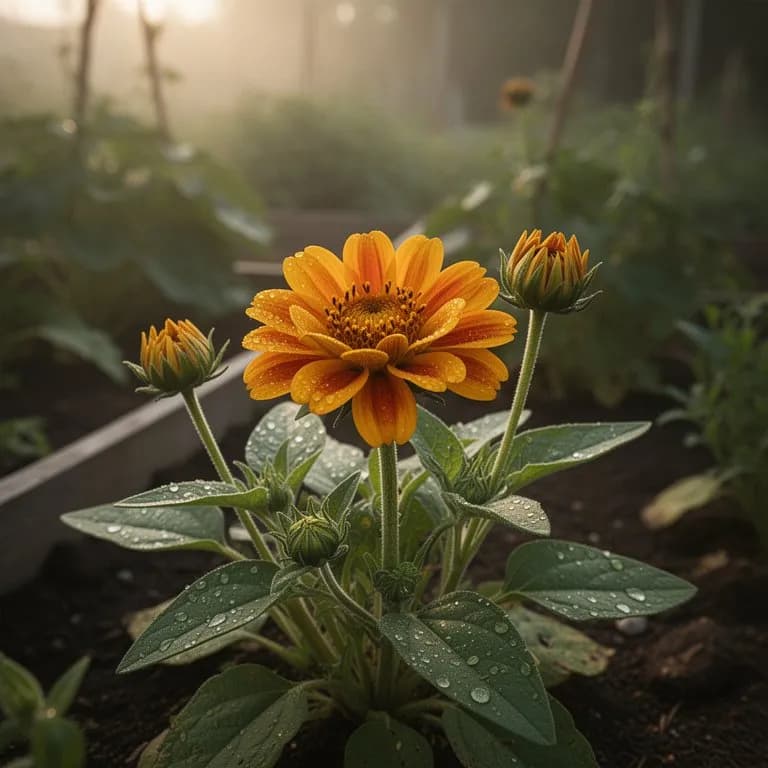
Choose the hottest, sunniest spot in the garden. Mexican sunflower thrives in intense heat and poor, dry soil where most other plants struggle. Rich soil and excess fertilizer produce enormous plants that may topple. The vivid orange-red daisy flowers appear from midsummer through frost, each bloom lasting several days before being replaced by new ones.
Butterflies, particularly monarchs, swallowtails, and painted ladies, are irresistibly attracted to the nectar-rich flowers. Hummingbirds also visit frequently. Mexican sunflower is one of the best butterfly-attracting plants available, and a single plant can draw dozens of butterflies at once during peak migration periods.
Tithonia rotundifolia, commonly known as the Mexican sunflower, is a vigorous annual flowering plant native to Mexico and Central America, where it thrives in warm tropical and subtropical climates. The plant belongs to the Asteraceae family and has been cultivated by indigenous peoples of Mesoamerica for centuries, both as an ornamental and for practical agricultural applications. Spanish explorers encountered the plant during the colonial period and were struck by its brilliant orange flowers and rapid growth habit. The genus name Tithonia was assigned by the French botanist Joseph de Jussieu in the eighteenth century, drawing from the Greek mythological figure Tithonus, who was associated with the dawn and its warm golden colors. Over the following centuries, tithonia spread throughout the tropical world, finding particular success in sub-Saharan Africa and Southeast Asia. In East Africa, agricultural researchers discovered that tithonia leaves contain remarkably high concentrations of nitrogen, phosphorus, and potassium, making the plant an invaluable green manure for smallholder farmers who cannot afford synthetic fertilizers. Studies conducted in Kenya, Tanzania, and Uganda demonstrated that incorporating fresh tithonia biomass into soil before planting could dramatically increase yields of staple crops such as maize, beans, and kale. In North American and European gardens, tithonia gained popularity during the twentieth century as gardeners recognized its exceptional value as a pollinator plant, particularly for attracting monarch butterflies, swallowtails, and various native bee species. Modern cultivars such as Torch, with its tall stature reaching six feet, and the compact Fiesta del Sol, which stays under three feet, have expanded the plant's versatility in garden design from cottage borders to container plantings.
Peak bloom with dozens of fiery orange flowers attracting pollinators
Direct sow seeds after the last frost in warm soil (65°F/18°C or above). Press seeds 1/4 inch deep and water lightly. Germination is quick—5-7 days in warm soil. Thin to 24-36 inches apart. For earlier blooms, start indoors 4-6 weeks before the last frost in individual pots. Do not start too early, as large seedlings are difficult to transplant. Handle transplants gently to avoid breaking the fragile stems.
Mexican sunflower thrives in poor to average, well-drained soil with a pH of 6.0-8.0. Rich soil produces enormous plants with excessive foliage and fewer flowers. Fertilizer is unnecessary in most garden soil—this plant actually performs better with neglect. In very poor, sandy soil, a single application of balanced fertilizer at planting may be beneficial, but err on the side of underfeeding.
Check Your Zone
See if Mexican Sunflower is suitable for your location.
15°C – 35°C
59°F – 95°F
Tithonia thrives in warm conditions and is highly heat tolerant. It performs best when daytime temperatures are between 24°C and 35°C (75°F to 95°F). Growth slows significantly below 15°C (59°F) and the plant is killed by frost. Seeds require soil temperatures of at least 18°C (65°F) to germinate reliably. Mexican sunflower is well suited to USDA hardiness zones 4 through 11 as a warm-season annual.
Common issues affecting Mexican Sunflower and how to prevent and treat them organically.
The biggest challenge is the sheer size—plants can reach 6 feet tall and wide, overwhelming small gardens. Compact varieties like 'Fiesta del Sol' solve this. Hollow stems are fragile and snap in strong winds; stake or plant in sheltered locations. When cutting for vases, the hollow stems must be cauterized to prevent air bubbles that block water uptake. Overwatering and rich soil produce rank, floppy growth.
Mexican sunflower is the anchor of any butterfly garden, attracting more butterfly species than almost any other annual. Plant alongside zinnias, lantana, verbena, and butterfly bush for a complete butterfly habitat. The bold orange flowers contrast dramatically with purple ageratum and blue salvia. Use at the back of borders with cosmos and sunflowers for a towering, wildlife-friendly display.
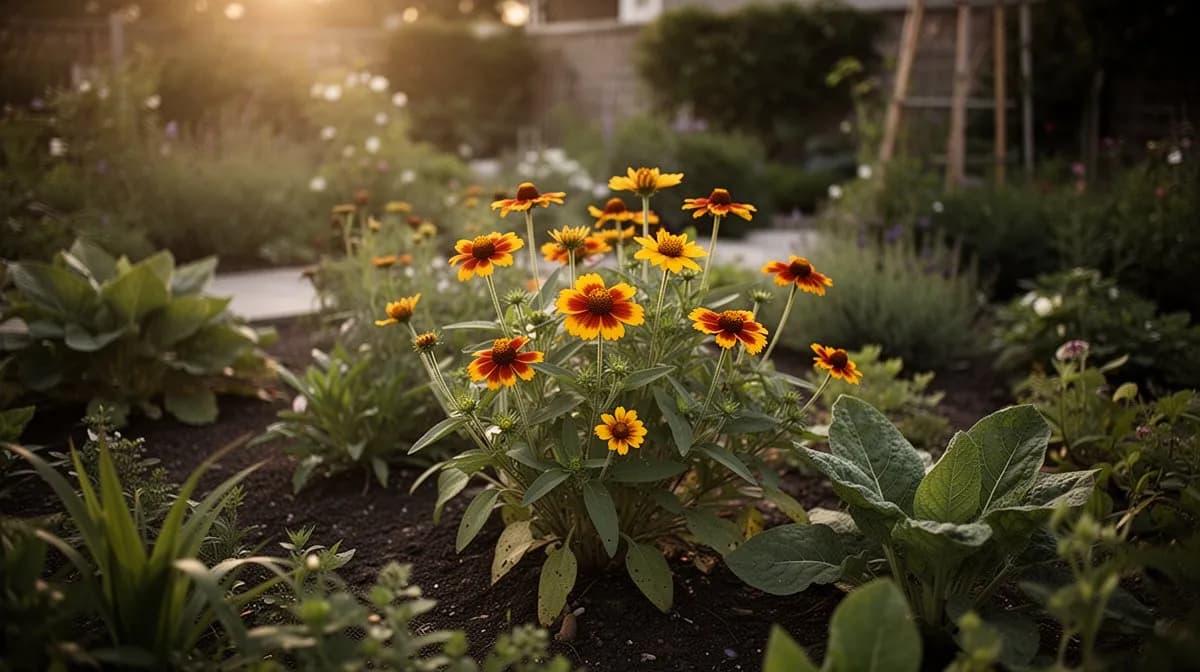
Mexican sunflowers make excellent companions by attracting beneficial insects to the vegetable garden
- 1Sow seeds indoors four to six weeks before your last frost date for the earliest blooms, or direct sow after frost danger has passed for a simpler approach.
- 2Choose the sunniest spot in your garden as tithonia requires at least six to eight hours of direct sunlight daily to reach its full flowering potential.
- 3Avoid rich or heavily amended soil as tithonia actually flowers more prolifically in lean to average soil conditions with moderate fertility.
- 4Space plants 24 to 36 inches apart to allow for their wide branching habit and to promote good air circulation that prevents foliar diseases.
- 5Install sturdy stakes or grow plants along a fence for support, as the hollow stems can snap in strong winds or heavy rain, especially when the plant is top-heavy with blooms.
- 6Deadhead spent flowers every three to four days to keep the plant producing new blooms rather than directing energy into seed production.
- 7Water deeply once per week rather than frequent shallow watering to encourage a strong deep root system that improves drought tolerance.
- 8Handle cut stems carefully when making bouquets as they are hollow and brittle. Cut at an angle and immediately place in hot water to sear the stem and prevent wilting.
- 9Allow a few late-season flower heads to dry completely on the plant to collect seeds for next year. Store seeds in labeled paper envelopes in a cool dry location.
- 10Chop and compost all plant material after the first frost. Tithonia biomass breaks down quickly and adds valuable phosphorus and potassium to your compost pile.
Cut Mexican sunflower blooms for arrangements when flowers are fully open and the central disk is still tight. Handle stems very carefully—they are hollow and brittle, snapping easily if bent. Use a sharp knife rather than scissors, and cut stems at a node (where a leaf meets the stem) for the strongest point. Sear the cut end with a flame or dip in boiling water for 10 seconds before placing in a vase. Flowers last 4-6 days in water.
Mexican sunflower does not dry well for preserved arrangements due to its large, heavy flower heads. As an annual, it does not store as bulbs. Save seed by allowing some flower heads to dry on the plant until the seeds are dark and loose. Shake into an envelope and store in a cool, dry place. Seeds remain viable for 2-3 years. Self-sowing is common in mild climates.
Plan your garden with ease
Love growing Mexican Sunflower? Use our free garden planner to design your beds, track planting dates, and get personalized care reminders.
Nutritional Info
Per 100g serving
32
Calories
Health Benefits
- Young tithonia leaves are consumed as cooked greens in parts of Central America and West Africa
- Leaves are a good source of beta-carotene and vitamin A precursors
- Contains notable levels of calcium and iron compared to other leafy greens
- Rich in phenolic compounds and flavonoids with antioxidant activity
- Traditionally used in herbal preparations for digestive and liver support
- Leaf tea has been consumed in Mexican folk medicine for its purported anti-inflammatory effects
💰 Why Grow Your Own?
Tithonia is one of the most cost-effective plants for the home garden. A single packet of seeds costing two to four dollars can produce 30 to 50 plants, each generating over 100 blooms throughout the season. The plants self-sow readily, providing free plants in subsequent years. Additionally, using tithonia leaves as homemade compost tea fertilizer can replace commercial organic fertilizers that typically cost 15 to 25 dollars per bag, saving gardeners 30 to 60 dollars per growing season on soil amendments alone.
Quick Recipes
Simple recipes using fresh Mexican Sunflower
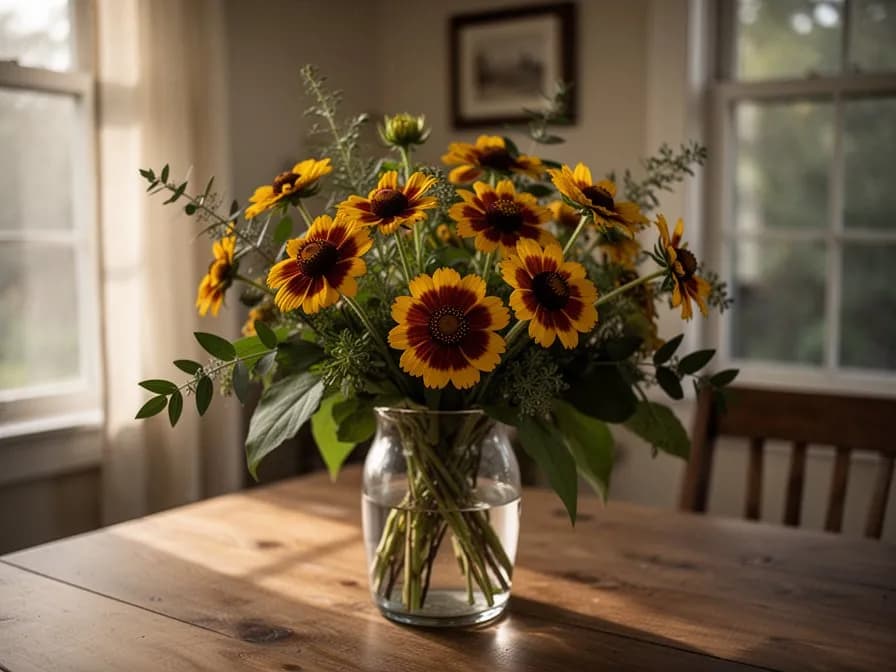
Tithonia Leaf Compost Tea Fertilizer
20 minutes plus 3 days steepingA nutrient-rich liquid fertilizer made by steeping tithonia leaves in water. This homemade plant food is packed with phosphorus, nitrogen, and potassium, making it an excellent organic alternative to synthetic fertilizers for vegetable gardens and container plants.
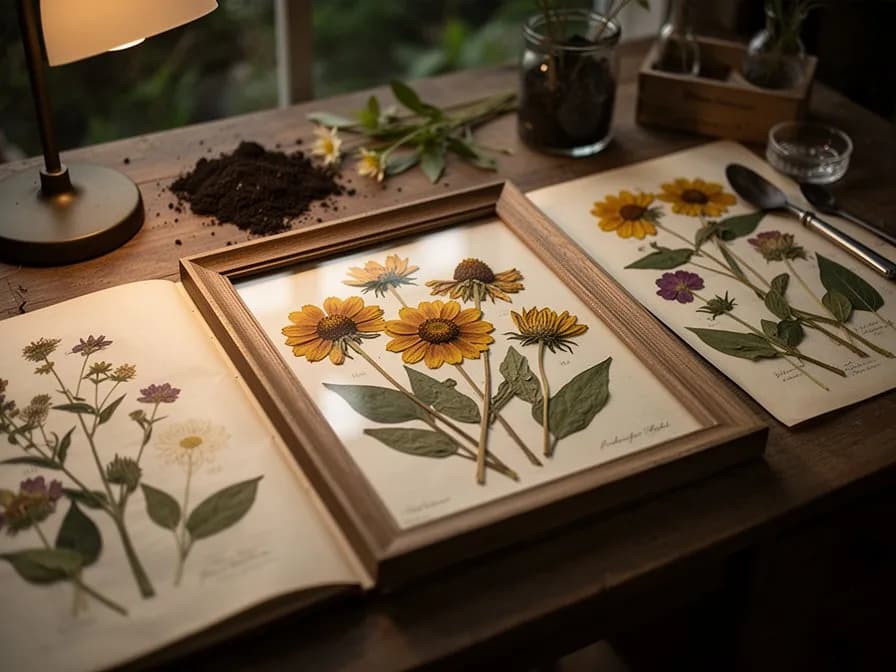
Tithonia Petal Natural Dye Bath
45 minutes active time plus overnight soakThe vibrant orange petals of Mexican sunflower produce a warm golden-yellow to soft orange natural dye suitable for cotton and silk fabrics. This simple dye bath uses fresh or dried petals and common kitchen mordants to create beautiful earthy tones.
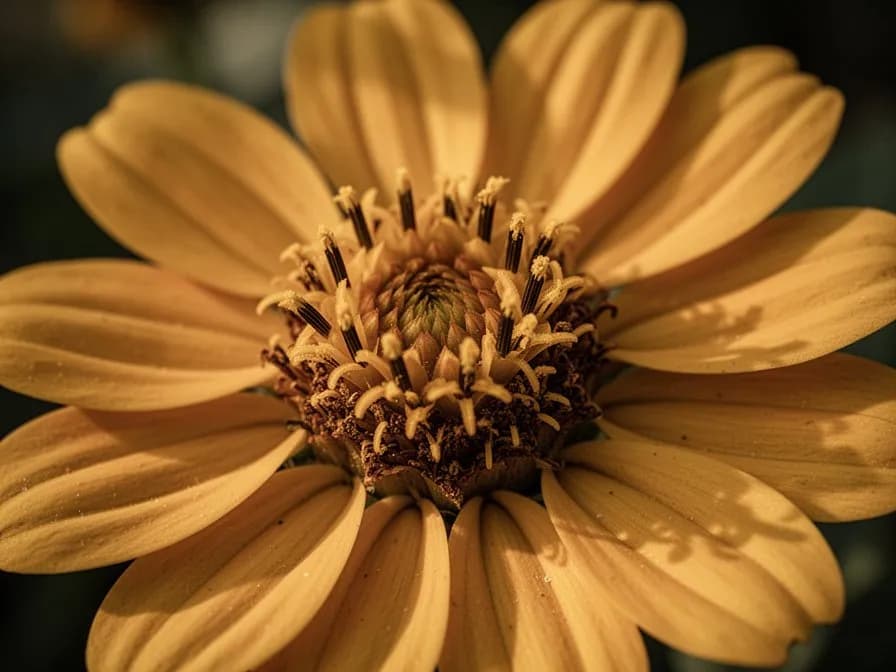
Dried Tithonia Flower Arrangement
15 minutes plus 2 weeks drying timeWhile tithonia flowers are best known for their fresh beauty, the seed heads and partially dried blooms can be preserved for rustic autumn arrangements. Harvesting at the right stage and drying properly produces long-lasting decorative elements with warm earthy tones.
Yield & Spacing Calculator
See how many Mexican Sunflower plants fit in your garden bed based on the recommended 60cm spacing.
4
Mexican Sunflower plants in a 4×4 ft bed
2 columns × 2 rows at 60cm spacing
Popular Varieties
Some of the most popular mexican sunflower varieties for home gardeners, each with unique characteristics.
Tithonia 'Torch'
The classic variety at 5-6 feet with vibrant orange-red flowers. Bold, heat-loving, and irresistible to butterflies.
Tithonia 'Fiesta del Sol'
Compact 28-inch plants with slightly smaller but equally vivid orange flowers. Ideal for smaller gardens and containers.
Tithonia 'Goldfinger'
Bright golden-orange flowers on 3-4 foot plants. More manageable size than the standard 'Torch' while retaining great garden impact.
When should I plant Mexican Sunflower?
Plant Mexican Sunflower in April, May. It takes approximately 65 days to reach maturity, with harvest typically in July, August, September, October.
What are good companion plants for Mexican Sunflower?
Mexican Sunflower grows well alongside Sunflower, Cosmos, Zinnia. Companion planting can improve growth, flavor, and natural pest control.
What hardiness zones can Mexican Sunflower grow in?
Mexican Sunflower thrives in USDA hardiness zones 2 through 11. With greenhouse protection, it may be grown in zones 1 through 12.
How much sun does Mexican Sunflower need?
Mexican Sunflower requires Full Sun (6-8h+). This means at least 6-8 hours of direct sunlight daily.
How far apart should I space Mexican Sunflower?
Space Mexican Sunflower plants 60cm (24 inches) apart for optimal growth and air circulation.
What pests and diseases affect Mexican Sunflower?
Common issues include Aphids, Powdery Mildew, Stem Breakage. Prevention through good garden practices like crop rotation, proper spacing, and companion planting is the best approach. See the detailed pests and diseases section above for symptoms, prevention, and treatment for each.
How do I store Mexican Sunflower after harvest?
Mexican sunflower does not dry well for preserved arrangements due to its large, heavy flower heads. As an annual, it does not store as bulbs. Save seed by allowing some flower heads to dry on the plant until the seeds are dark and loose. Shake into an envelope and store in a cool, dry place. Seeds ...
What are the best Mexican Sunflower varieties to grow?
Popular varieties include Tithonia 'Torch', Tithonia 'Fiesta del Sol', Tithonia 'Goldfinger'. Each has unique characteristics suited to different growing conditions and culinary preferences. See the varieties section above for detailed descriptions.
What soil does Mexican Sunflower need?
Mexican sunflower thrives in poor to average, well-drained soil with a pH of 6.0-8.0. Rich soil produces enormous plants with excessive foliage and fewer flowers. Fertilizer is unnecessary in most garden soil—this plant actually performs better with neglect. In very poor, sandy soil, a single applic...
Is tithonia the same as a regular sunflower?
No. Although both belong to the Asteraceae family, tithonia (Tithonia rotundifolia) and the common sunflower (Helianthus annuus) are in different genera. Tithonia produces smaller two to three inch orange flowers on branching plants, while common sunflowers typically produce a single large flower head on an unbranched stalk. Tithonia also has a bushier growth habit and blooms over a much longer period.
How tall does tithonia grow and does it need staking?
Standard varieties like Torch can reach five to six feet tall and often benefit from staking, especially in windy locations, because the hollow stems can snap under their own weight. Compact varieties like Fiesta del Sol stay under three feet and generally do not need support. Planting near a fence or growing in a sheltered spot also reduces the need for staking.
Will tithonia come back every year on its own?
Tithonia is a tender annual that is killed by frost, so the original plant will not return. However, it self-sows freely in many climates. Seeds that drop to the ground in autumn can germinate the following spring once soil temperatures warm sufficiently. You can also collect and store seeds to sow exactly where you want them the next season.
Why is my tithonia growing tall but not flowering?
The most common cause of lush foliage without flowers is excessive nitrogen in the soil. Tithonia flowers best in lean to moderately fertile soil. Avoid high-nitrogen fertilizers and rich compost. Insufficient sunlight can also delay blooming, so ensure your plants receive at least six hours of direct sun. Flowering typically begins 70 to 100 days after germination, so patience may also be needed.
Is tithonia safe to plant near vegetables?
Tithonia is an excellent companion plant for vegetable gardens. It attracts beneficial pollinators and predatory insects that help with pest control. The plant does not have allelopathic properties that inhibit nearby plant growth. Many gardeners plant it along the border of vegetable beds specifically to draw in butterflies, bees, and hoverflies that improve pollination and pest management.
Can I use tithonia leaves as fertilizer for my garden?
Yes, tithonia leaves are among the best green manure materials available. Research in East Africa has shown that they contain high levels of nitrogen, phosphorus, and potassium. You can chop fresh leaves and work them directly into the soil two to three weeks before planting, or steep them in water for three to five days to create a nutrient-rich liquid fertilizer. The leaves decompose rapidly and release nutrients quickly.
Ready to Grow Mexican Sunflower?
Add Mexican Sunflower to your garden plan and start designing your perfect layout.

Vladimir Kusnezow
Gardener and Software Developer
Zone 6b gardener. Growing vegetables and fruits in soil and hydroponics for 6 years. I built PlotMyGarden to plan my own gardens.
Jump to Section