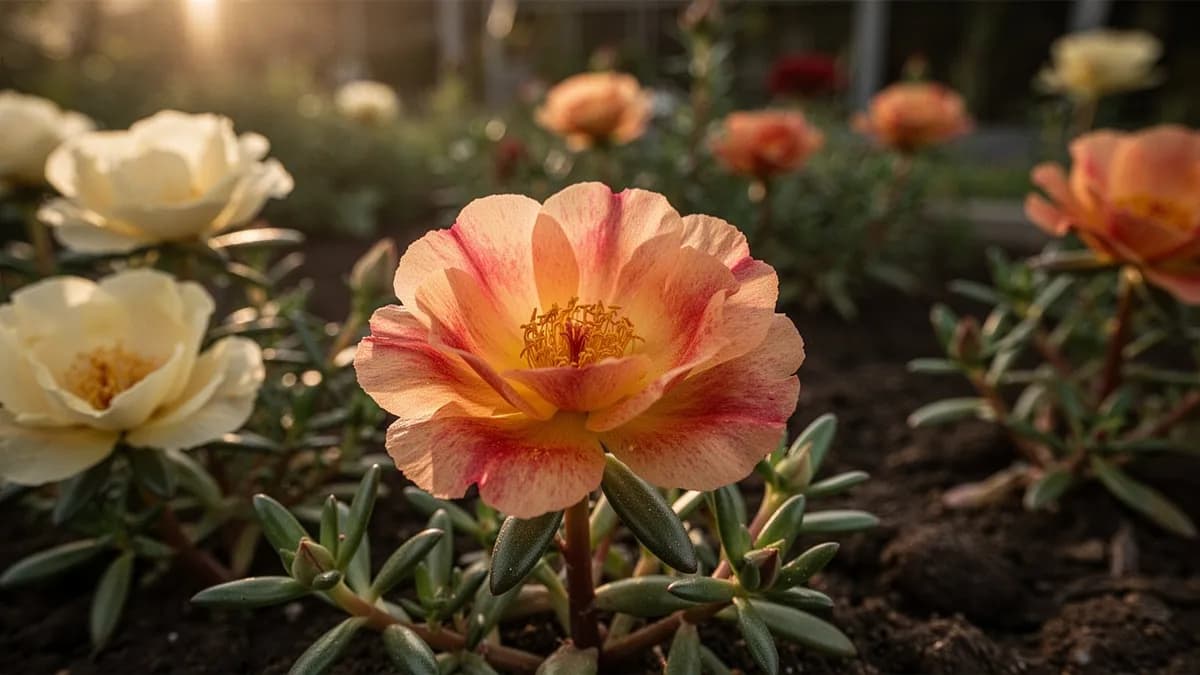
Portulaca
Portulaca grandiflora
At a Glance
It's planting season for Portulaca! Start planning your garden now.
A low-growing succulent annual with brilliant rose-like flowers that open in full sun and close on cloudy days. Portulaca thrives in hot, dry conditions and poor sandy soil where few other plants survive. It makes an excellent ground cover for dry slopes, rock gardens, and gaps between pavers.
Planting & Harvest Calendar
Growth Stages
From Seed to Harvest
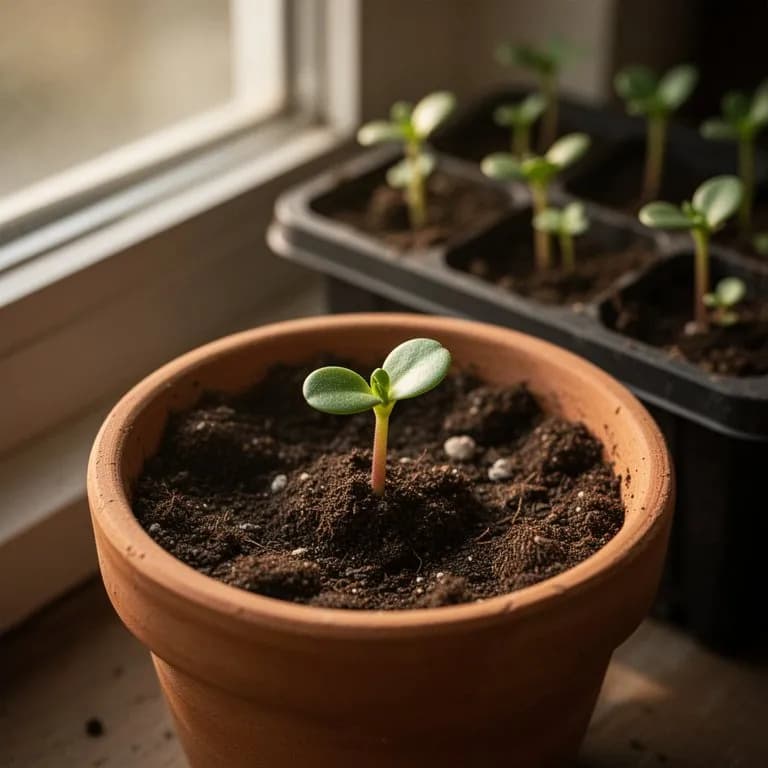
Seed Germination
Days 0–14
Portulaca seeds are extraordinarily small — nearly dust-like — and require warm soil temperatures of 21-27°C (70-80°F) and light to germinate. Seeds should be surface-sown and pressed gently onto moist soil without covering. Under ideal conditions, germination occurs in 7-14 days with tiny succulent cotyledons appearing as the first visible growth.
💡 Care Tip
Do not bury seeds — they need light to germinate. Mist the soil surface gently to avoid displacing the fine seeds. Use a seed tray with a clear cover to maintain warmth and humidity until sprouts appear. Bottom watering prevents washing seeds away.
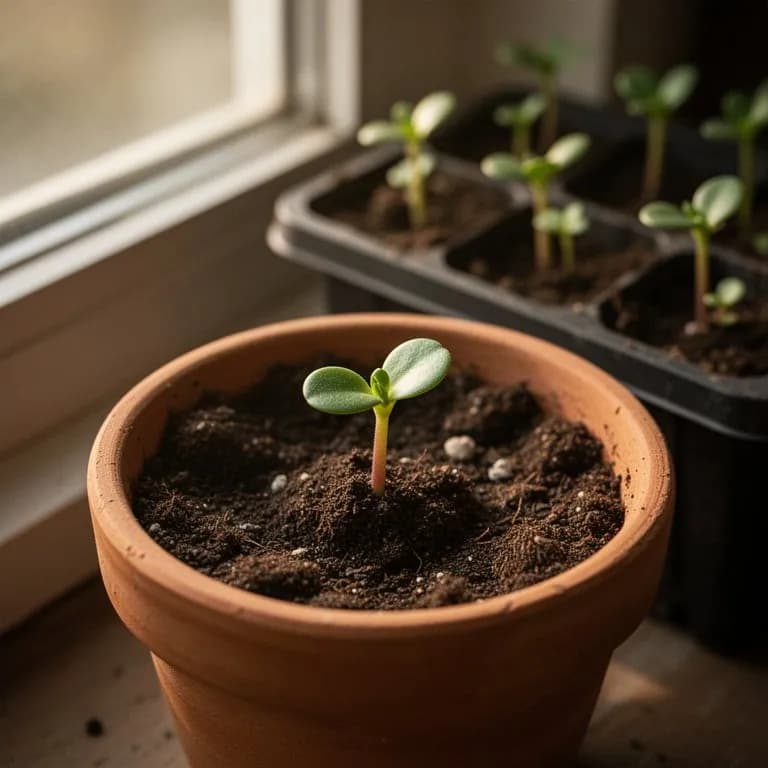
Portulaca seedlings develop their characteristic succulent foliage within the first two weeks after germination
Monthly Care Calendar
What to do each month for your Portulaca
June
You are herePlants enter rapid growth and begin trailing outward. The first flower buds appear. Avoid overhead watering and fertilizing — portulaca performs best on neglect. Pinch stem tips once if you want bushier plants. Watch for aphids on new growth and blast them off with a water spray if spotted.
Did You Know?
Fascinating facts about Portulaca
Portulaca grandiflora flowers are heliotropic — each bloom opens wide in direct sunlight and closes tightly at night and on cloudy days. Newer cultivars like the Sundial and Happy Hour series have been bred specifically to remain open longer in overcast conditions, a significant achievement in ornamental plant breeding.
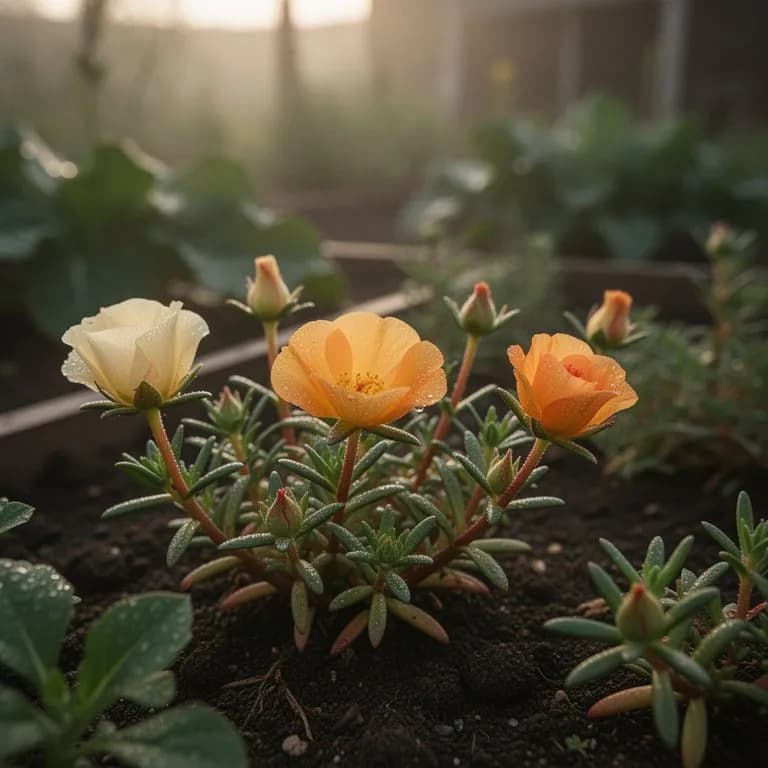
Each portulaca flower opens fully in direct sunlight and closes at night, with individual blooms lasting one to two days
Portulaca demands heat, sun, and excellent drainage. Plant transplants or direct sow seeds outdoors after all danger of frost has passed and soil temperatures are consistently warm, at least 65 degrees Fahrenheit. Space plants six to eight inches apart in the hottest, driest, sunniest spot in your garden. Portulaca thrives in sandy, gravelly, and even rocky soil where other plants would fail.
Do not amend the soil with compost or fertilizer, as portulaca actually performs best in lean, poor conditions. Rich soil promotes leggy foliage growth at the expense of flowers. Water only at planting to settle roots, then essentially leave the plants alone. The succulent, needle-like leaves store water efficiently, making portulaca one of the most drought-tolerant annuals available.
Portulaca flowers open in direct sunlight and close on cloudy days and in the evening. Newer double-flowered varieties tend to stay open longer than older single types. The plants spread to form a low, dense mat four to six inches tall that smothers weeds and fills in gaps between stepping stones, along the edges of dry walls, and in rock garden crevices. Portulaca self-sows readily in warm climates and will reappear the following year from dropped seeds.
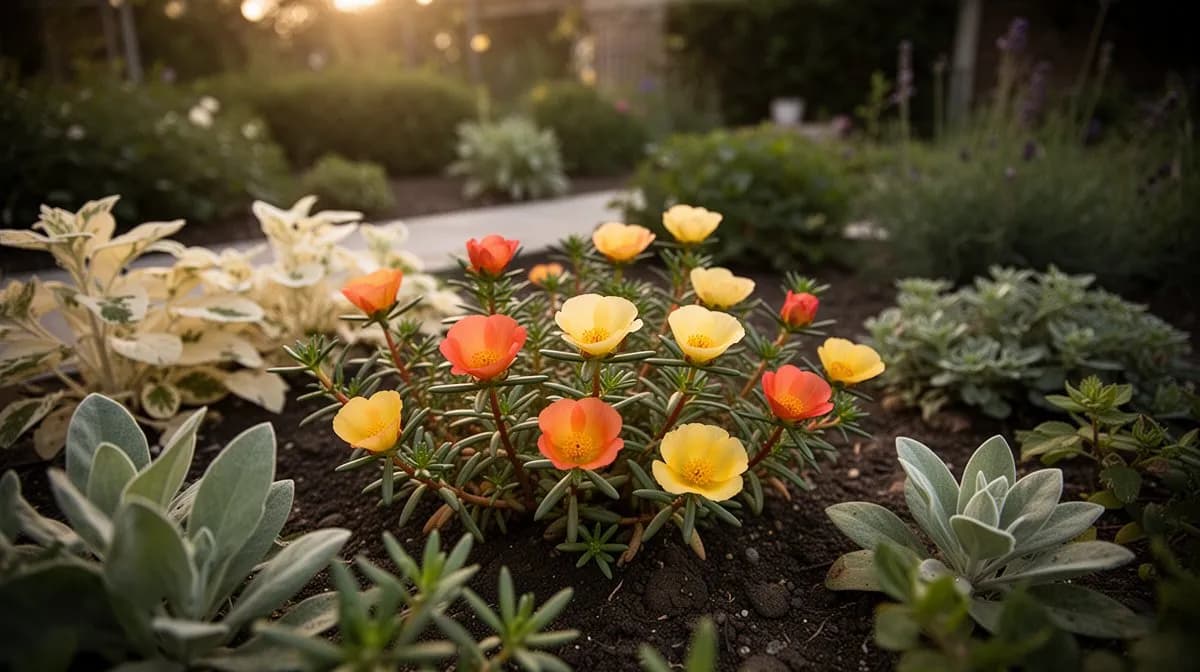
Containers and hanging baskets are ideal for portulaca, allowing its trailing habit to cascade beautifully over edges
Portulaca grandiflora, commonly known as moss rose, sun plant, or rock rose, is native to the warm, arid regions of southern South America, specifically southern Brazil, northern Argentina, and Uruguay. In its natural habitat, the plant thrives in sandy grasslands, rocky outcrops, and disturbed ground where intense sunlight and well-drained soils create conditions too harsh for most competing vegetation. The species evolved remarkable succulent adaptations — fleshy cylindrical leaves and semi-succulent stems that store water — enabling it to flourish during extended dry periods in subtropical climates with seasonal drought.
The plant was first collected and described by European botanists in the early 19th century as colonial expeditions explored the flora of South America. It was introduced to European horticulture around 1827 and quickly became a sensation in gardens across the continent. Its vivid, silky flowers in an extraordinary range of colors — from pristine white through every shade of pink, salmon, orange, scarlet, magenta, and bright yellow — captivated Victorian gardeners who prized it for summer bedding displays and conservatory collections. The ease of cultivation and spectacular flower production made it one of the most popular warm-season annuals by the mid-1800s.
From Europe, portulaca spread to gardens throughout the world's warm and temperate regions. It became a staple of traditional gardens in India, Southeast Asia, Africa, and the Americas, often passed from gardener to gardener through shared seeds and cuttings. Modern plant breeding has expanded the available forms dramatically, producing fully double flowers that resemble miniature roses, compact habits suited to containers, and crucially, cultivars that remain open on cloudy days — overcoming one of the species' few ornamental limitations. Today, Portulaca grandiflora is grown on every inhabited continent and remains one of the world's most widely planted flowering annuals, valued for its unrivaled heat and drought tolerance, self-sowing reliability, and effortless riot of summer color.
Portulaca seeds are extremely tiny and should be scattered on the surface of sandy or gritty soil without covering, as light is needed for germination. Direct sow outdoors after the last frost when soil is warm, or start indoors six to eight weeks early by sprinkling seeds on the surface of a sandy seed-starting mix. Keep at 70 to 85 degrees Fahrenheit for germination in ten to fourteen days. Do not overwater seedlings. Portulaca self-sows prolifically in warm climates, so expect volunteer seedlings in subsequent years.
Portulaca thrives in poor, sandy, gravelly, or rocky soil with sharp drainage and a neutral to slightly acidic pH. Rich, amended soil is actively harmful, promoting lush foliage and reduced flowering. Do not add compost, fertilizer, or water-retentive amendments. If growing in containers, use a cactus and succulent mix rather than standard potting soil. A single light application of balanced fertilizer at planting is the maximum needed, and many growers skip fertilizer entirely.
Check Your Zone
See if Portulaca is suitable for your location.
18°C – 35°C
64°F – 95°F
Portulaca grandiflora is a true heat-lover that thrives in temperatures between 18-35°C (65-95°F) and performs best when daytime temperatures consistently exceed 25°C (77°F). The plant tolerates extreme heat up to 40°C (104°F) without wilting, making it one of the most heat-resistant flowering annuals available. It is highly sensitive to frost and cold — foliage is damaged below 4°C (40°F) and plants are killed outright by any sustained frost. In USDA zones 2-9, it grows as a warm-season annual; in zones 10-11, it may persist as a short-lived tender perennial.
Common issues affecting Portulaca and how to prevent and treat them organically.
The most frequent problem is planting portulaca in soil that is too rich and moist, causing leggy growth, sparse flowering, and root rot. Overwatering kills more portulaca than any pest or disease. Flowers that close on cloudy days frustrate some gardeners, though newer double varieties remain open longer. In rainy, overcast climates, portulaca may not perform well and is better suited to hot, dry, sunny regions. Self-sowing can be aggressive in warm climates.
Portulaca combines well with other drought-tolerant sun lovers such as vinca, lantana, gazania, and sedum in hot, dry beds and rock gardens. It makes an ideal living mulch around the base of tall, sun-loving plants like ornamental grasses and yucca. Plant in the gaps between flagstones, along dry stone walls, and in rock garden pockets. Avoid combining with moisture-loving plants, as portulaca's watering needs are diametrically opposed to most traditional garden annuals.
- 1Choose the hottest, most sun-baked spot in your garden — portulaca blooms most prolifically where other plants struggle. South-facing walls, concrete-adjacent beds, and sun-scorched rock gardens are ideal locations that mimic its native South American habitat.
- 2Never amend the soil with rich compost or manure. Portulaca produces the most flowers and the densest growth in lean, poor, sandy, or gravelly soil. Rich soil causes lush foliage but significantly fewer blooms, which defeats the purpose of growing this plant.
- 3Overwatering is the single most common mistake with portulaca. Water only during extended drought periods of two weeks or more. The succulent stems and leaves store enough water to sustain the plant through surprising dry spells. Wet soil leads to root rot and sudden plant collapse.
- 4For the densest groundcover effect, scatter seeds directly on prepared soil and press them in with a board or your palm. Do not cover with soil — the seeds need light to germinate. Thin only if seedlings are so dense they are competing for light.
- 5Stem cuttings root incredibly easily in warm weather. Simply break off a 5-8 cm stem section, let it dry for a few hours, and press it into dry sandy soil in full sun. Within 7-10 days, roots form and the cutting begins growing without any special treatment or rooting hormone.
- 6If your portulaca flowers are closing on cloudy days and you find this frustrating, look for modern cultivars bred to stay open in lower light. The Sundial, Happy Hour, and Mojave series have significantly improved overcast performance compared to older seed strains.
- 7Portulaca is one of the best plants for extreme container gardening. It thrives in shallow pots, strawberry jars, crevice gardens, stone wall pockets, and even old shoes or tin cans with drainage holes. Anywhere you have full sun and drainage, portulaca will flourish.
- 8Let a few seed pods mature and drop their seeds naturally in autumn. Portulaca self-sows reliably in most climates, and you will be rewarded with free volunteer seedlings the following spring. Simply thin the volunteers to proper spacing and enjoy another season of color at no cost.
- 9Avoid planting portulaca in shade, partial shade, or north-facing beds. Even a few hours of shade per day dramatically reduces flower production and causes leggy, sparse growth. Six to eight hours of direct, unfiltered sunlight is the absolute minimum for good performance.
- 10Combine portulaca with other heat-loving, drought-tolerant plants like lantana, zinnias, and sedums for a cohesive, water-wise planting scheme. Avoid pairing with moisture-loving plants like impatiens or hostas, as their watering needs are completely incompatible.
Portulaca is not used as a cut flower since the blooms close when removed from sunlight. No deadheading is needed, as plants are self-cleaning and bloom continuously. For seed saving, allow some flowers to develop small round seed capsules that dry to a papery brown on the plant. The capsules open with a lid-like cap, releasing tiny black seeds. Collect capsules just before they open or place a paper bag over ripening seed heads. Self-sown portulaca will return in subsequent years.
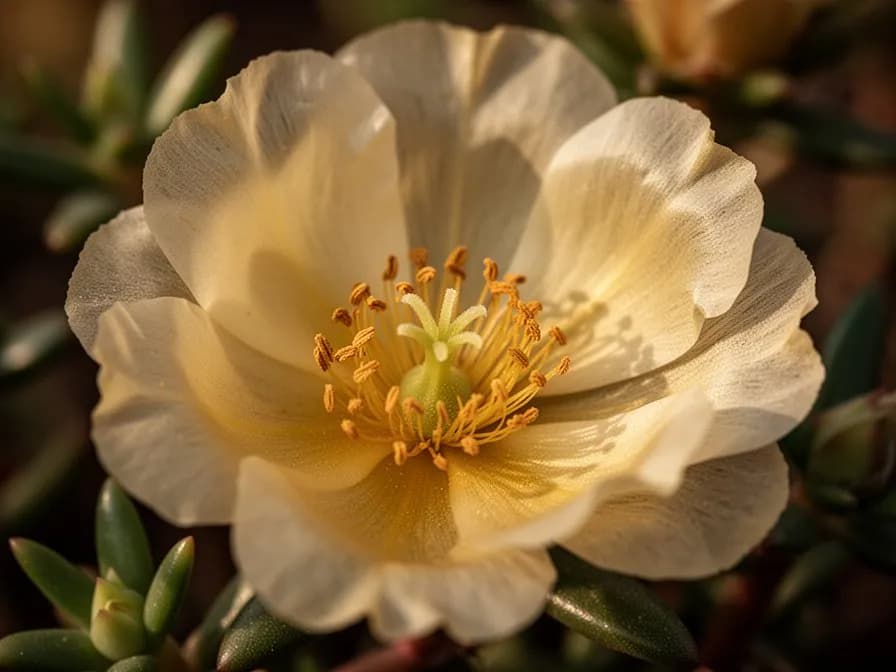
A single portulaca seed capsule can contain thousands of dust-fine seeds, enabling prolific self-seeding in favorable conditions
Portulaca flowers cannot be preserved for arrangements since they close without sunlight. However, the plants themselves can be propagated easily by stem cuttings. Snip three-inch stem tips, let the cut end callus for a day, then insert into dry sandy soil. The succulent stems root quickly without additional water. Seeds are extremely tiny and can be stored for several years in paper envelopes in a cool, dry location. Self-sown seeds survive winter in the soil in zones 8 and warmer.
Plan your garden with ease
Love growing Portulaca? Use our free garden planner to design your beds, track planting dates, and get personalized care reminders.
Nutritional Info
Per 100g serving
16
Calories
Health Benefits
- While Portulaca grandiflora is primarily ornamental, its close relative Portulaca oleracea (purslane) is one of the richest plant sources of omega-3 fatty acids, and moss rose leaves share some of these beneficial lipid profiles in smaller concentrations
- Contains mucilaginous compounds in the succulent leaves that may support digestive health by soothing the lining of the gastrointestinal tract when consumed
- Provides beta-carotene and other carotenoid pigments responsible for the vivid flower colors, which function as antioxidants when present in the edible foliage
- The succulent leaves have high water content exceeding 90 percent, contributing to hydration while providing minimal calories, similar to other edible Portulaca species
- Contains small amounts of calcium, magnesium, and iron typical of succulent plants that concentrate minerals from the soil in their water-storing tissues
- Like other members of the Portulacaceae family, the plant tissue contains betalain pigments with documented antioxidant and anti-inflammatory properties
💰 Why Grow Your Own?
Portulaca grandiflora is one of the most cost-effective flowering plants for any garden. A single packet of seeds costs $2-4 and contains hundreds to thousands of seeds — enough to cover large areas with continuous summer color. Once established, portulaca self-sows reliably, producing free volunteer seedlings year after year without any replanting. Bedding portulaca at garden centers typically costs $3-5 per cell pack; growing from seed provides the equivalent of $50-100 or more in retail plants from a single inexpensive seed packet. The plant requires no fertilizer, minimal water, and zero pest control in most situations, eliminating ongoing maintenance costs entirely. For gardeners on a budget who want maximum flower impact with minimum investment, portulaca is virtually unbeatable.
Quick Recipes
Simple recipes using fresh Portulaca
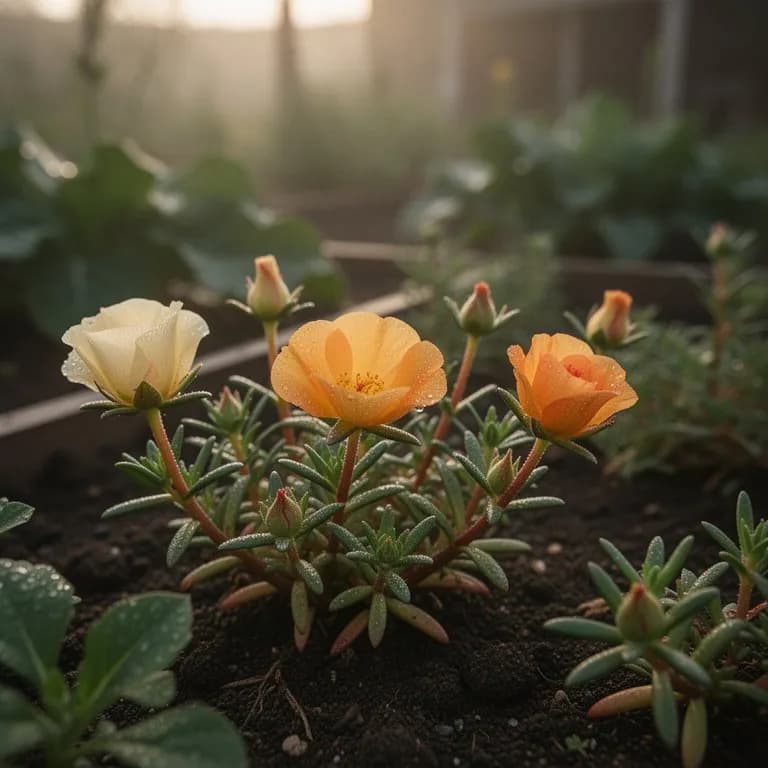
Portulaca Petal Garnish Salad
10 minA visually stunning summer salad using the edible flower petals of moss rose as a vibrant garnish. The silky petals add a mild, slightly tangy flavor and extraordinary color to a simple mixed green salad. Best assembled just before serving so petals retain their vivid hues.
Candied Portulaca Blossoms
30 minDelicate portulaca flowers preserved with a shimmering coat of crystallized sugar, creating jewel-like edible decorations for cakes, pastries, and dessert plates. The thin petals candy beautifully and retain their vivid colors when dried, lasting for weeks in an airtight container.
Portulaca Flower Ice Cubes
5 min active, 4 hours freezingStunning ice cubes with portulaca flowers frozen inside, perfect for elevating summer cocktails, lemonade, or sparkling water. The vivid petals are suspended in crystal-clear ice and slowly revealed as the cubes melt, creating a beautiful and conversation-starting presentation.
Yield & Spacing Calculator
See how many Portulaca plants fit in your garden bed based on the recommended 15cm spacing.
64
Portulaca plants in a 4×4 ft bed
8 columns × 8 rows at 15cm spacing
Popular Varieties
Some of the most popular portulaca varieties for home gardeners, each with unique characteristics.
Sundial Series
Semi-double flowers that stay open longer than older varieties in a wide range of bright colors including mango, fuchsia, and peach.
Happy Hour Series
Early-blooming with large single flowers on compact, spreading plants that open earlier in the day than other portulaca varieties.
ColorBlast Series
Large double flowers on vigorous trailing plants in striking bicolor combinations like lemon twist and watermelon punch.
Mojave Series
Extra-large double flowers on compact, well-branched plants that stay open even on partly cloudy days.
Fairy Tales Cinderella
Fully double, ruffled blooms resembling miniature roses in a soft yellow that opens from darker buds.
When should I plant Portulaca?
Plant Portulaca in May, June. It takes approximately 45 days to reach maturity, with harvest typically in June, July, August, September.
What are good companion plants for Portulaca?
Portulaca grows well alongside Marigold, Zinnia, Vinca. Companion planting can improve growth, flavor, and natural pest control.
What hardiness zones can Portulaca grow in?
Portulaca thrives in USDA hardiness zones 10 through 12. With greenhouse protection, it may be grown in zones 8 through 13.
How much sun does Portulaca need?
Portulaca requires Full Sun (6-8h+). This means at least 6-8 hours of direct sunlight daily.
How far apart should I space Portulaca?
Space Portulaca plants 15cm (6 inches) apart for optimal growth and air circulation.
What pests and diseases affect Portulaca?
Common issues include Root Rot, Aphids, Portulaca Leafminer. Prevention through good garden practices like crop rotation, proper spacing, and companion planting is the best approach. See the detailed pests and diseases section above for symptoms, prevention, and treatment for each.
How do I store Portulaca after harvest?
Portulaca flowers cannot be preserved for arrangements since they close without sunlight. However, the plants themselves can be propagated easily by stem cuttings. Snip three-inch stem tips, let the cut end callus for a day, then insert into dry sandy soil. The succulent stems root quickly without a...
What are the best Portulaca varieties to grow?
Popular varieties include Sundial Series, Happy Hour Series, ColorBlast Series, Mojave Series, Fairy Tales Cinderella. Each has unique characteristics suited to different growing conditions and culinary preferences. See the varieties section above for detailed descriptions.
What soil does Portulaca need?
Portulaca thrives in poor, sandy, gravelly, or rocky soil with sharp drainage and a neutral to slightly acidic pH. Rich, amended soil is actively harmful, promoting lush foliage and reduced flowering. Do not add compost, fertilizer, or water-retentive amendments. If growing in containers, use a cact...
Why are my portulaca flowers not opening during the day?
Portulaca flowers are strongly light-responsive and require direct, bright sunlight to open fully. If your blooms remain closed, the most likely cause is insufficient sun — even partial shade or a few hours of shadow can prevent flowers from opening. Move containers to a sunnier location or relocate plants to a bed with at least 6-8 hours of unobstructed direct sun. Overcast and rainy days will also keep flowers closed, which is natural behavior. If you garden in an area with frequent cloud cover, choose modern cultivars like the Sundial, Happy Hour, or Mojave series that have been specifically bred to open in lower light conditions.
Is Portulaca grandiflora the same plant as edible purslane?
No, they are different species in the same family. Portulaca grandiflora (moss rose) is grown primarily as an ornamental for its large, showy flowers and trailing habit. Portulaca oleracea (common purslane) is the widely consumed edible species, valued for its nutritional content including omega-3 fatty acids. While moss rose petals and leaves are technically non-toxic and can be used as edible garnishes, the plant was not selected for culinary quality. If you want a portulaca for eating, grow Portulaca oleracea — preferably a cultivated variety like 'Golden' or 'Gruner Red' that produces larger, more tender leaves.
Will portulaca come back next year on its own?
In most climates (USDA zones 2-9), portulaca is an annual that dies with the first frost. However, it self-sows very readily, and dropped seeds often overwinter in the soil and germinate the following spring when the ground warms up. Many gardeners enjoy portulaca returning year after year from self-sown seed without any replanting effort. To encourage self-seeding, allow some seed capsules to mature and drop naturally in late summer and avoid heavy mulching or tilling the area in spring. In zones 10-11, portulaca can survive winter as a tender perennial, though plants tend to become leggy and are usually replaced with fresh seedlings.
Can I grow portulaca in a hanging basket or window box?
Absolutely — portulaca is one of the best plants for hanging baskets, window boxes, and elevated containers. Its trailing stems cascade beautifully over edges, and the plant's extreme drought tolerance means it forgives the occasional missed watering that often kills other basket plants. Use a well-draining potting mix amended with extra perlite or coarse sand, and ensure your container has adequate drainage holes. Place in the sunniest spot available. In hanging baskets, portulaca needs water only when the soil is completely dry — typically once or twice a week in summer, even less in cooler weather. A single basket filled with portulaca produces a spectacular waterfall of color all summer long.
How do I save portulaca seeds for next year?
Portulaca seed saving is straightforward but requires attention to timing because the seed capsules open and release their tiny seeds quickly once ripe. Watch for capsules that have turned from green to tan or brown — these are nearly ready. Place a small paper bag over a cluster of maturing capsules and secure it with a twist tie, or check plants daily and gently twist off brown capsules into an envelope before they split. Allow collected capsules to dry completely indoors, then shake out the tiny black seeds. Store in a cool, dry, dark location in a sealed envelope or small jar. Seeds remain viable for 2-3 years when stored properly.
My portulaca is growing tall and leggy instead of staying low and bushy — what went wrong?
Leggy, stretched portulaca is almost always caused by insufficient sunlight. The plant reaches upward searching for more light, producing long stems with sparse foliage and few flowers. Move plants or containers to a location with a minimum of 6-8 hours of direct, full sun daily. Other contributing factors include overly rich soil or excessive fertilizer, which pushes soft vegetative growth at the expense of compact form and flowers. In the future, pinch stem tips once or twice when plants are young (around 10-15 cm tall) to encourage branching. Already-leggy plants can be cut back by half, and the cuttings rooted to produce new, compact plants in a sunnier location.
Ready to Grow Portulaca?
Add Portulaca to your garden plan and start designing your perfect layout.

Vladimir Kusnezow
Gardener and Software Developer
Zone 6b gardener. Growing vegetables and fruits in soil and hydroponics for 6 years. I built PlotMyGarden to plan my own gardens.
Jump to Section