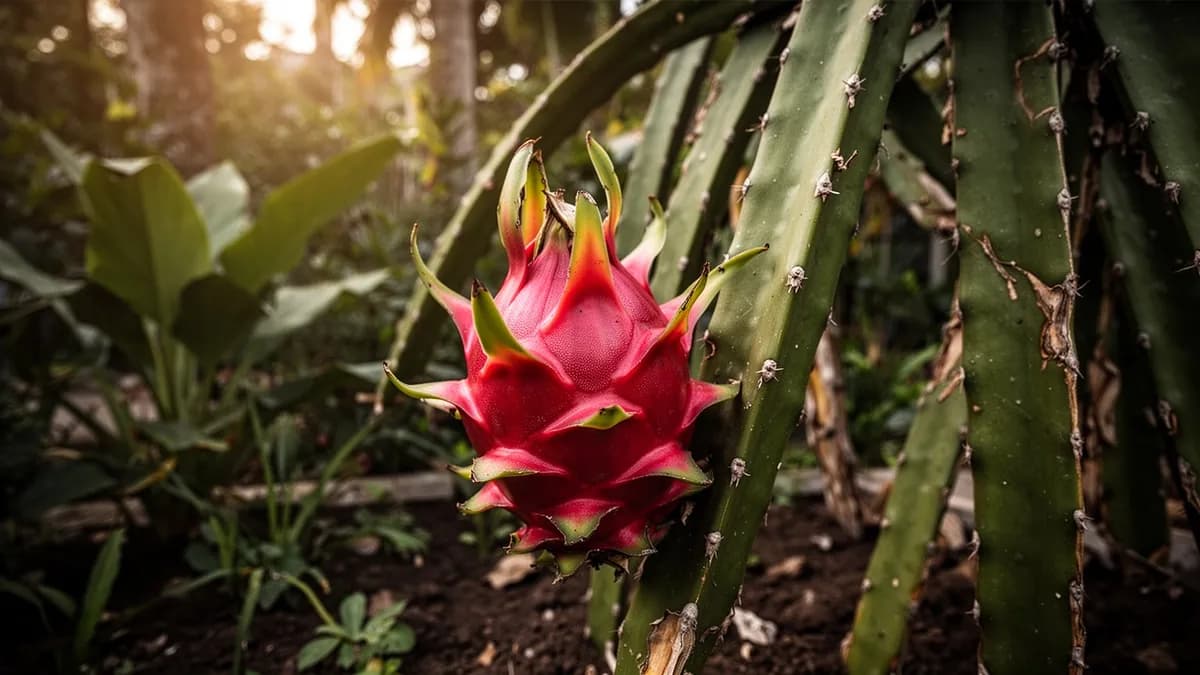
Red Dragon Fruit
Hylocereus costaricensis
At a Glance
It's planting season for Red Dragon Fruit! Start planning your garden now.
A climbing cactus producing vivid magenta-skinned fruits with deep red-purple flesh that stains dramatically and has a sweeter, more intense flavor than white-fleshed varieties. Red dragon fruit is self-sterile and requires cross-pollination with a different species or variety for fruit set. The large nocturnal flowers open for a single night and may need hand pollination.
Planting & Harvest Calendar
Growth Stages
From Seed to Harvest
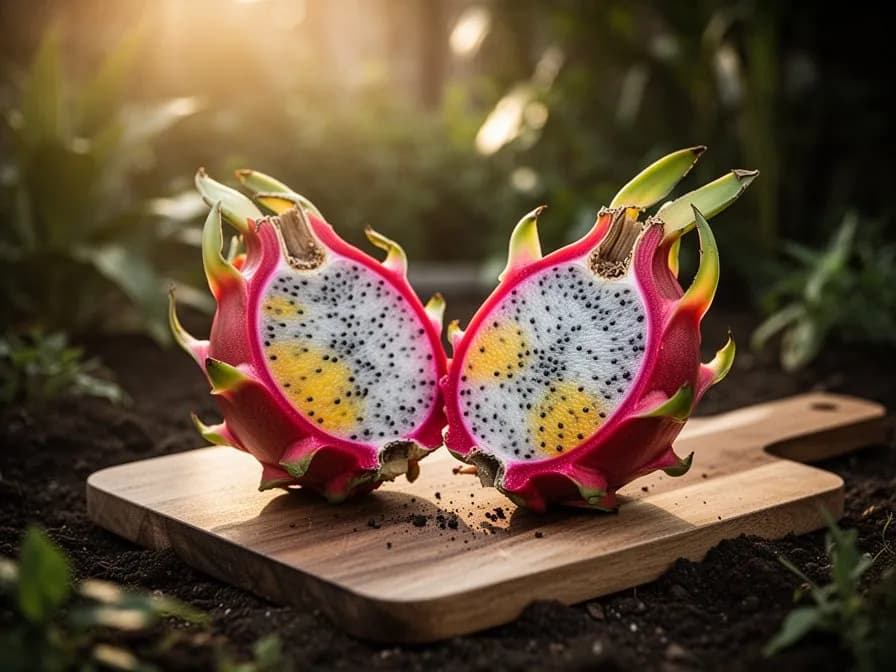
Cutting & Rooting
Days 0–30
Stem cuttings 30-40 cm long are allowed to callous for 5-7 days, then planted in well-draining soil. Aerial roots emerge within two to four weeks as the cutting establishes itself in the growing medium.
💡 Care Tip
Keep the soil barely moist and avoid direct afternoon sun until roots are established. Overwatering at this stage invites stem rot.
Monthly Care Calendar
What to do each month for your Red Dragon Fruit
May
You are hereApply high-potassium fertilizer (5-10-15) to encourage bud formation. Install shade cloth (30-40%) if temperatures regularly exceed 38°C. Hand-pollinate evening blooms if pollinators are lacking
Did You Know?
Fascinating facts about Red Dragon Fruit
Red dragon fruit flowers bloom for just a single night, earning the plant the nickname 'moonflower cactus' in some Central American regions.
Red dragon fruit is a climbing cactus that requires a sturdy support structure such as a concrete or wooden post, trellis, or arbor. Plant cuttings or nursery plants at the base of the support in well-drained soil amended with sand and compost. Space supports 10 to 15 feet apart with one to three plants per post. The cactus climbs by sending out aerial roots that grip the support surface.
Water sparingly, allowing the soil to dry between irrigations. Dragon fruit is drought-tolerant but produces best with regular watering during flowering and fruiting season. Too much water causes root rot, especially in heavy soils. In rainy climates, plant on raised mounds for improved drainage. Reduce watering in winter when growth slows.
Fertilize monthly during the growing season with a low-nitrogen fertilizer higher in phosphorus and potassium to promote flowering and fruiting. Red dragon fruit is self-sterile and requires cross-pollination from a different pitaya species or variety. The large, fragrant white flowers open for a single night, so hand pollinate in the evening or early morning using a paintbrush to transfer pollen between different varieties. Train stems along the support and prune excess growth to maintain productivity.
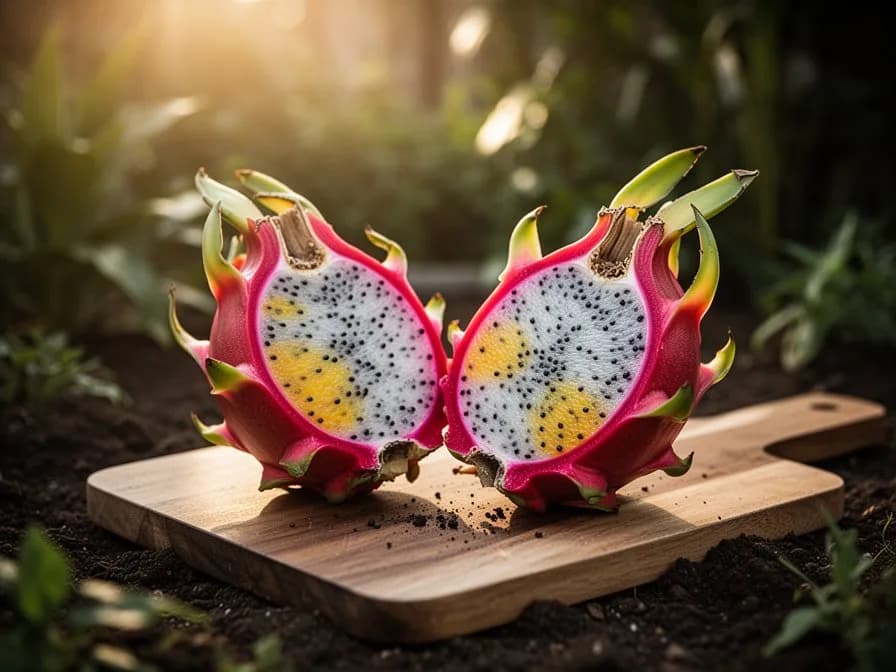
Pitaya stems trained along a sturdy vertical support for optimal sun exposure
Red dragon fruit (Hylocereus costaricensis) is native to the tropical forests of Central America, with its natural range stretching from southern Mexico through Guatemala, Honduras, Nicaragua, and Costa Rica. For centuries, indigenous peoples of Mesoamerica gathered its fruit from wild plants growing as epiphytes on jungle trees. Spanish and Portuguese colonizers encountered the fruit during the 16th century and carried it across their trade routes to Southeast Asia, where it found an extraordinarily receptive climate and culture. Vietnam, in particular, became the epicenter of modern dragon fruit cultivation after French missionaries introduced the plant in the early 19th century. The Vietnamese named it 'thanh long,' meaning green dragon, for the way its scaly green bracts resembled dragon scales. By the late 20th century, commercial plantations spread rapidly through Vietnam, Thailand, Malaysia, the Philippines, and Indonesia, transforming red pitaya from an exotic curiosity into a mainstream tropical crop. Today Vietnam is the world's largest producer and exporter of dragon fruit, cultivating hundreds of thousands of hectares. The red-fleshed species Hylocereus costaricensis has gained particular popularity due to its sweeter flavor profile and striking magenta interior compared to the more commonly grown white-fleshed Hylocereus undatus. In the 21st century, dragon fruit cultivation has expanded into subtropical regions of the United States, Australia, Israel, and southern Europe, driven by growing global demand for antioxidant-rich superfoods. Breeding programs now focus on self-fertile varieties and improved shelf life to meet the needs of international markets.
Dragon fruit seeds from the flesh germinate easily. Scoop out seeds, rinse clean, and spread on moist paper towel to sprout in three to five days at 75 to 85 degrees Fahrenheit. Transfer sprouted seeds to a well-drained cactus mix. Seedlings grow slowly and may take three to five years to fruit, with unpredictable fruit quality. Stem cuttings are the preferred propagation method, rooting in two to three weeks and producing fruit in one to two years. Take 12-inch stem sections, cure for a week, then plant in well-drained soil.
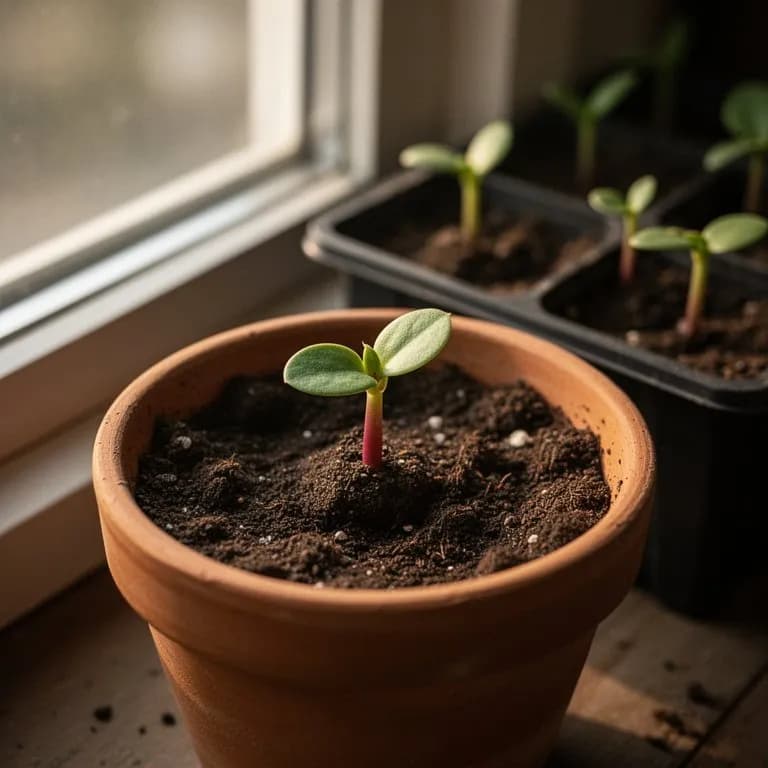
A freshly rooted pitaya cutting showing early aerial root development
Dragon fruit thrives in well-drained, sandy or loamy soil with a pH of 6.0 to 7.0. Add sand and perlite to improve drainage in heavier soils. Being a cactus, it will not tolerate waterlogged conditions. Apply a low-nitrogen, high-phosphorus and potassium fertilizer monthly during the growing season. Too much nitrogen produces excessive stem growth at the expense of flowers. Supplement with calcium and magnesium during fruiting to prevent fruit cracking.
Check Your Zone
See if Red Dragon Fruit is suitable for your location.
10°C – 38°C
50°F – 100°F
Red dragon fruit thrives in warm tropical and subtropical climates with optimal growth occurring between 20°C and 34°C. The plant can tolerate brief exposure down to about 4°C but sustained temperatures below 10°C cause stem damage and halt growth. Temperatures consistently above 38°C may cause sunburn on stems and reduce fruit quality, so shade cloth is advisable in extremely hot climates.
Common issues affecting Red Dragon Fruit and how to prevent and treat them organically.
Poor fruit set is the most common issue and is caused by the self-sterility of red varieties requiring cross-pollination from a different species. The nocturnal flowering window is brief, making hand pollination challenging. Stem rot from excess moisture is the most serious disease threat. Sunburn can damage stems in extremely hot, dry conditions. Slugs and snails feed on young stems and developing fruit near the ground. Excess nitrogen causes lush growth with few flowers.
Dragon fruit grown on vertical supports allows companion planting at ground level. Herbs such as basil, rosemary, and oregano thrive in the same well-drained soil conditions. Low-growing succulents make attractive ground covers. Leguminous ground covers like clover fix nitrogen without competing for vertical space. Avoid planting near trees that would shade the cactus stems, which need full sun for flowering.
- 1Use a sturdy concrete or hardwood post at least 1.5 m tall and 10-15 cm in diameter as the main support, since a mature plant can weigh over 50 kg.
- 2Allow stem cuttings to callous in a dry, shaded area for 5-7 days before planting to prevent rot at the cut surface.
- 3Plant in a raised bed or mound with extremely well-draining soil containing roughly 60% sandy loam and 40% perlite or pumice.
- 4Water deeply but infrequently, letting the top 5 cm of soil dry out between waterings to mimic the plant's natural epiphytic habitat.
- 5Hand-pollinate flowers in the late evening by transferring pollen from the anthers to the stigma with a soft paintbrush for reliable fruit set.
- 6Apply a potassium-rich fertilizer (such as 5-10-15) every 6-8 weeks during the growing season to promote abundant flowering and fruiting.
- 7Install 30-40% shade cloth in regions where summer temperatures regularly exceed 38°C to prevent stem sunscald and fruit sunburn.
- 8Prune the canopy annually after harvest, removing inward-crossing or dead branches to improve air circulation and reduce fungal disease risk.
- 9Protect plants from frost by covering with blankets or burlap when temperatures are forecast to drop below 4°C, as even brief frost can damage stems.
- 10Cross-pollinate with a different Hylocereus variety or clone for significantly larger and more abundant fruit compared to self-pollination.
Red dragon fruit is ready to harvest 30 to 50 days after flowering, when the skin is uniformly vivid magenta with no green remaining and the wing-like bracts begin to wither and dry. The fruit should give slightly to gentle pressure. Twist or cut the fruit from the stem with pruning shears. The deep red-purple flesh inside should be richly colored throughout. Harvest early in the morning for best freshness. Overripe fruit becomes mushy and ferments.
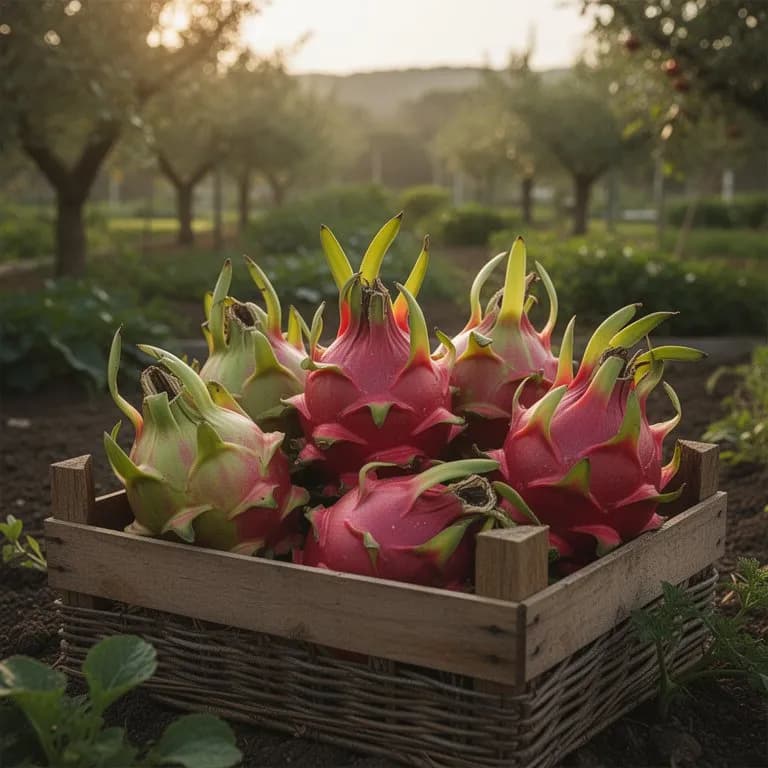
A fully ripe Hylocereus costaricensis fruit ready for harvest when the fins start to wither
Store ripe dragon fruit at room temperature for two to three days or refrigerate for up to two weeks. The vivid flesh freezes well when cubed or scooped into balls and frozen on a baking sheet before transferring to freezer bags. Dragon fruit can be juiced, blended into smoothies, or pureed for sorbets. The juice makes a vibrant natural food coloring. Dehydrated dragon fruit chips make colorful, healthy snacks.
Plan your garden with ease
Love growing Red Dragon Fruit? Use our free garden planner to design your beds, track planting dates, and get personalized care reminders.
Nutritional Info
Per 100g serving
60
Calories
Health Benefits
- Rich in betacyanin antioxidants that give the flesh its deep magenta color
- Contains prebiotic oligosaccharides that support beneficial gut bacteria
- Good source of magnesium, providing about 10% of the daily value per serving
- Provides iron at roughly 1.9 mg per 100 g, higher than most common fruits
- Low glycemic index of approximately 48, making it suitable for blood sugar management
- Contains beneficial omega-3 and omega-6 fatty acids within its edible seeds
💰 Why Grow Your Own?
A single red dragon fruit retails for $4 to $8 at grocery stores, and a mature home-grown plant can produce 20-60 fruits per season. At an average of $5 per fruit, one productive plant could yield $100-$300 worth of fruit annually. Since dragon fruit plants are perennial and can remain productive for 20 or more years with basic care, a single cutting costing $5-$15 offers an exceptional long-term return on investment for gardeners in suitable climates.
Quick Recipes
Simple recipes using fresh Red Dragon Fruit

Red Dragon Fruit Smoothie Bowl
10 minutesA vibrant magenta smoothie bowl topped with tropical fruits and crunchy granola. The frozen pitaya creates a naturally thick, ice-cream-like base without any dairy.
Pitaya and Lime Sorbet
15 minutes plus 4 hours freezingA refreshing two-ingredient sorbet that showcases the natural sweetness and color of red dragon fruit. No ice cream maker required.
Dragon Fruit Tropical Salsa
15 minutesA colorful fresh salsa that pairs beautifully with grilled fish or tortilla chips. The mild sweetness of pitaya balances the heat from the jalapeno.
Yield & Spacing Calculator
See how many Red Dragon Fruit plants fit in your garden bed based on the recommended 250cm spacing.
0
Red Dragon Fruit plants in a 4×4 ft bed
0 columns × 0 rows at 250cm spacing
Popular Varieties
Some of the most popular red dragon fruit varieties for home gardeners, each with unique characteristics.
American Beauty
A popular red-fleshed variety with large fruits, sweet flavor, and vigorous growth, requiring cross-pollination for fruit set.
Physical Graffiti
A self-sterile variety producing very large fruits with intensely colored magenta flesh and excellent sweetness.
Zamorano
A productive red-fleshed variety from Central America with good flavor and moderate fruit size.
Dark Star
A hybrid producing deep purple-red flesh with exceptional sweetness and smaller seeds than most red varieties.
Red dragon fruit is prized for its dramatic color that transforms smoothie bowls, juices, and desserts into vivid magenta creations. Eat fresh by cutting in half and scooping out the flesh. The flavor is mildly sweet with berry notes. Use in fruit salads, sorbets, and cocktails. The juice is a popular natural food coloring for frostings, pasta, and rice dishes.
When should I plant Red Dragon Fruit?
Plant Red Dragon Fruit in April, May, June. It takes approximately 730 days to reach maturity, with harvest typically in July, August, September, October.
What are good companion plants for Red Dragon Fruit?
Red Dragon Fruit grows well alongside Dragon Fruit. Companion planting can improve growth, flavor, and natural pest control.
What hardiness zones can Red Dragon Fruit grow in?
Red Dragon Fruit thrives in USDA hardiness zones 10 through 12. With greenhouse protection, it may be grown in zones 8 through 13.
How much sun does Red Dragon Fruit need?
Red Dragon Fruit requires Full Sun (6-8h+). This means at least 6-8 hours of direct sunlight daily.
How far apart should I space Red Dragon Fruit?
Space Red Dragon Fruit plants 250cm (98 inches) apart for optimal growth and air circulation.
What pests and diseases affect Red Dragon Fruit?
Common issues include Stem Rot (Dothiorella), Mealybugs, Anthracnose. Prevention through good garden practices like crop rotation, proper spacing, and companion planting is the best approach. See the detailed pests and diseases section above for symptoms, prevention, and treatment for each.
How do I store Red Dragon Fruit after harvest?
Store ripe dragon fruit at room temperature for two to three days or refrigerate for up to two weeks. The vivid flesh freezes well when cubed or scooped into balls and frozen on a baking sheet before transferring to freezer bags. Dragon fruit can be juiced, blended into smoothies, or pureed for sorb...
What are the best Red Dragon Fruit varieties to grow?
Popular varieties include American Beauty, Physical Graffiti, Zamorano, Dark Star. Each has unique characteristics suited to different growing conditions and culinary preferences. See the varieties section above for detailed descriptions.
What soil does Red Dragon Fruit need?
Dragon fruit thrives in well-drained, sandy or loamy soil with a pH of 6.0 to 7.0. Add sand and perlite to improve drainage in heavier soils. Being a cactus, it will not tolerate waterlogged conditions. Apply a low-nitrogen, high-phosphorus and potassium fertilizer monthly during the growing season....
How long does it take for a red dragon fruit cutting to produce its first fruit?
Most red dragon fruit plants grown from cuttings will produce their first fruit within 1 to 3 years, depending on climate, care, and support structure. Plants in warm tropical climates with optimal conditions can fruit as early as 12-18 months after planting, while those in cooler subtropical areas may take up to 3 years.
Do red dragon fruit plants need to be hand-pollinated?
In many home garden settings, hand-pollination is recommended because the flowers bloom for only a single night and natural pollinators such as bats and large moths may not be present. Cross-pollinating with pollen from a different Hylocereus clone or species dramatically increases fruit set rate and produces larger fruit.
What is the difference between red-fleshed and white-fleshed dragon fruit?
Red-fleshed dragon fruit (Hylocereus costaricensis) has deep magenta interior flesh with a sweeter, more intense flavor and higher antioxidant content due to its betacyanin pigments. White-fleshed dragon fruit (Hylocereus undatus) has a milder, subtly sweet taste and is more widely available commercially. The red variety is generally considered more flavorful and nutritious.
Can red dragon fruit be grown in containers?
Yes, red dragon fruit grows well in large containers of at least 75-100 liters with excellent drainage. Use a well-draining cactus mix and install a sturdy central support post. Container plants may produce slightly less fruit than in-ground plants but are a great option for gardeners in cooler climates who need to move the plant indoors during winter.
Why are my dragon fruit flowers dropping without setting fruit?
The most common cause of flower drop without fruit set is inadequate pollination. Dragon fruit flowers open for only one night, and if pollinators are absent or conditions are unfavorable, the flowers will not be fertilized. Hand-pollinating in the evening, cross-pollinating with a different variety, and ensuring the plant is not water-stressed during flowering all improve fruit set rates significantly.
How do I know when a red dragon fruit is ripe and ready to harvest?
A ripe red dragon fruit will have uniformly bright magenta skin with the green bract tips beginning to yellow and curl slightly. The fruit should give slightly when gently squeezed, similar to a ripe avocado. Harvest by cutting the stem about 2 cm above the fruit. Overripe fruit will have very wrinkled bracts and may split, so check plants every 3-5 days during the harvest window.
Ready to Grow Red Dragon Fruit?
Add Red Dragon Fruit to your garden plan and start designing your perfect layout.

Vladimir Kusnezow
Gardener and Software Developer
Zone 6b gardener. Growing vegetables and fruits in soil and hydroponics for 6 years. I built PlotMyGarden to plan my own gardens.
Jump to Section