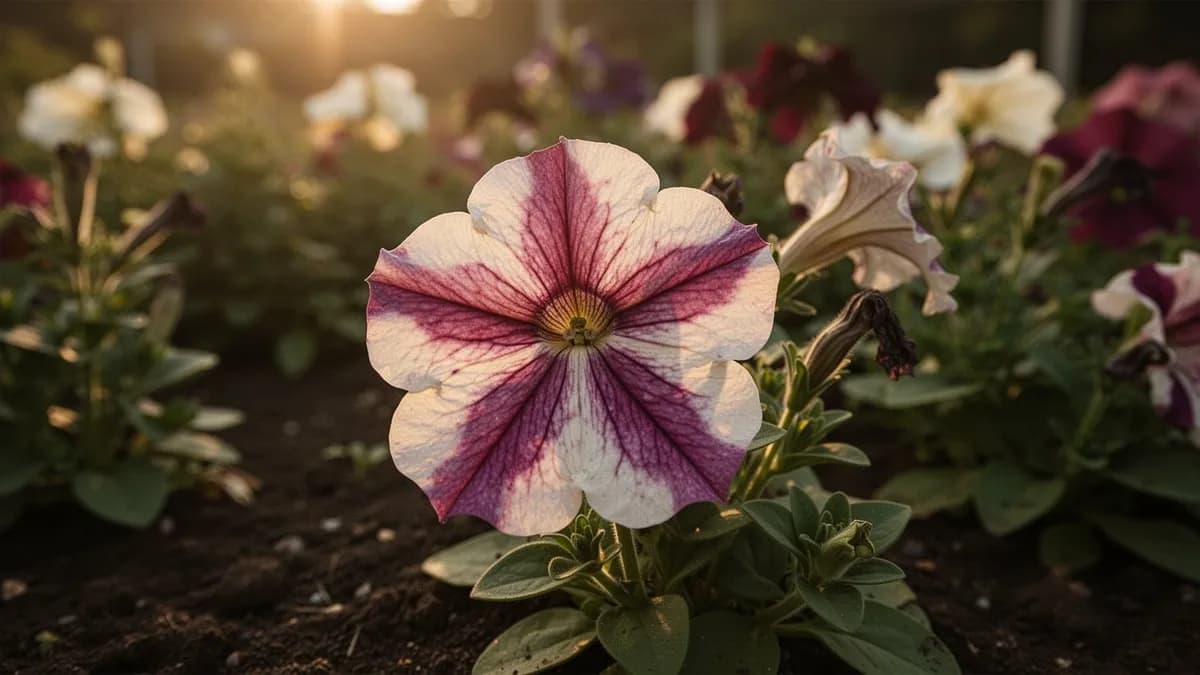
Wave Petunia
Petunia x hybrida 'Wave'
At a Glance
It's planting season for Wave Petunia! Start planning your garden now.
A vigorous spreading petunia that cascades beautifully from hanging baskets and covers ground rapidly without pinching. Wave petunias can spread up to four feet wide from a single plant and bloom non-stop from spring to frost. Feed heavily with liquid fertilizer every week for the best performance in containers.
Planting & Harvest Calendar
Growth Stages
From Seed to Harvest
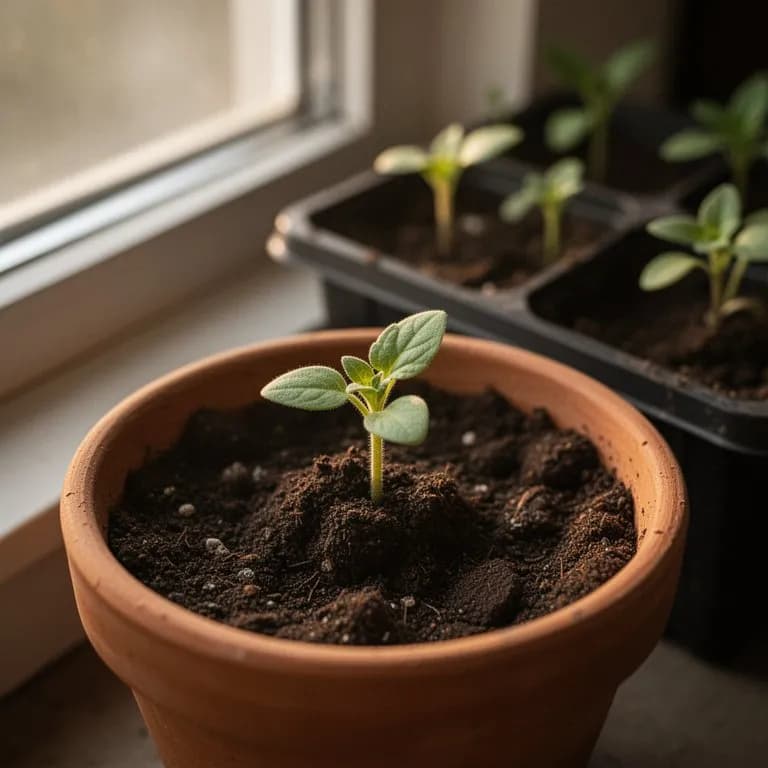
Seed Germination
Days 0–10
Wave Petunia seeds are extremely fine, nearly dust-like, and require light to germinate. Seeds are surface-sown on moist, sterile seed-starting mix and kept at 70 to 75 degrees Fahrenheit. Germination typically occurs within 5 to 10 days under consistent moisture and bright indirect light.
💡 Care Tip
Do not cover seeds with soil. Mist gently with a spray bottle to avoid displacing the tiny seeds, and cover the tray with a clear humidity dome.
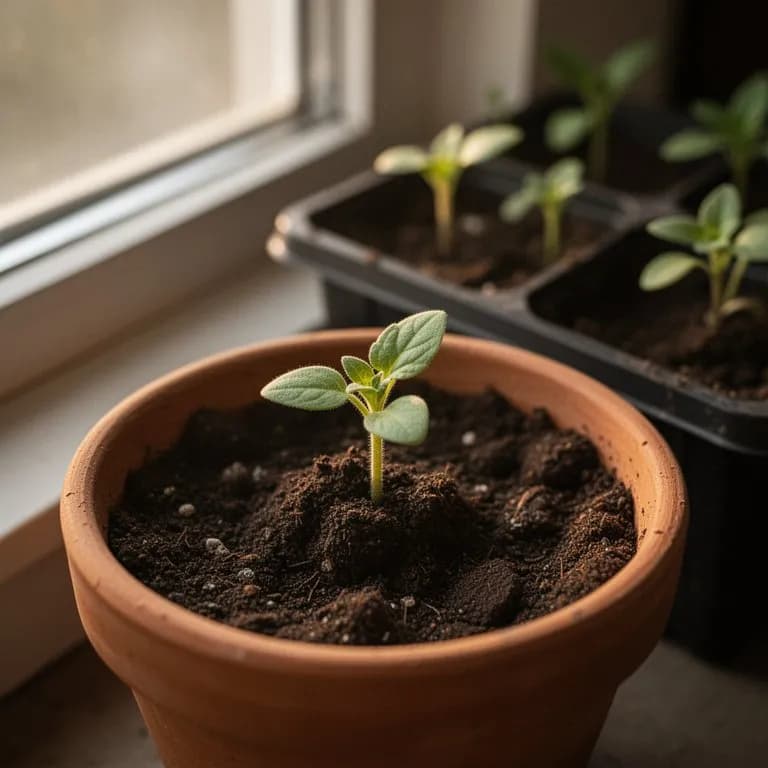
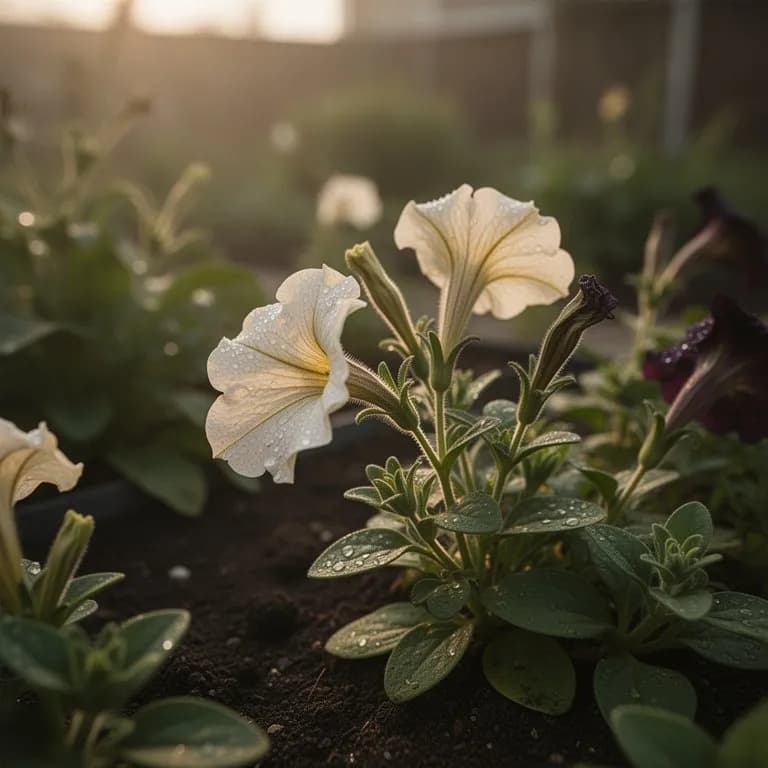
Wave Petunia seedlings at 3 weeks old, ready for transplanting
Monthly Care Calendar
What to do each month for your Wave Petunia
May
You are hereTransplant hardened-off Wave Petunias outdoors after all danger of frost has passed. Space plants 12 to 24 inches apart in garden beds. Plant one per 10-inch hanging basket or two to three per large container.
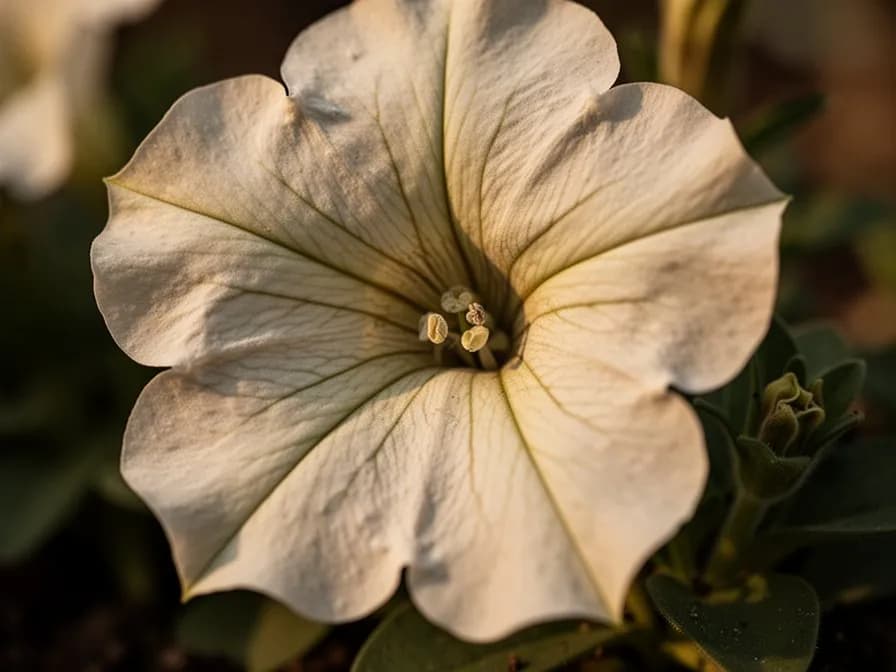
Weekly liquid feeding keeps Wave Petunias blooming continuously
Did You Know?
Fascinating facts about Wave Petunia
Wave Petunias were first introduced by Ball Horticultural Company in 1995 and quickly revolutionized the bedding plant industry by being the first spreading petunia variety available from seed.
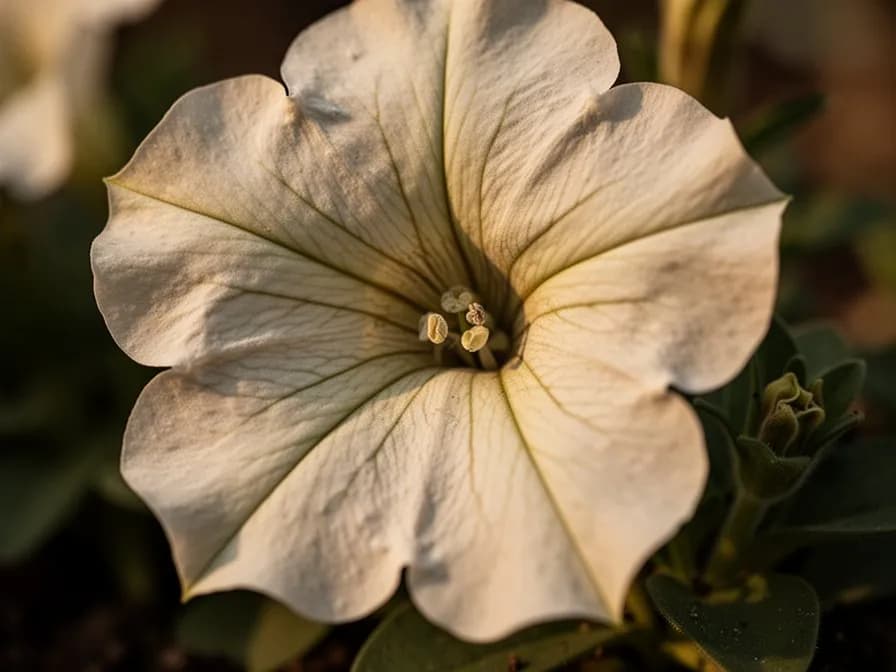
The classic trumpet-shaped bloom of a Wave Petunia measures 3 to 4 inches across
Plant Wave petunia transplants outdoors after all danger of frost has passed, in full sun with well-drained soil. Space plants twelve to twenty-four inches apart in garden beds, as each plant can spread three to four feet wide. In hanging baskets, use one plant per twelve-inch basket or three per large sixteen to eighteen inch container. Wave petunias need room to spread and should not be crowded with other plants.
These vigorous growers are extremely heavy feeders and require more fertilizer than typical annuals. In containers, feed weekly with a balanced liquid fertilizer at full strength or apply slow-release granular fertilizer at planting and supplement with weekly liquid feeding. In garden beds, feed every two weeks. Consistent nutrition is the key to the explosive growth and nonstop bloom that Wave petunias are famous for.
Water thoroughly when the top inch of soil is dry, which may be daily for containers in hot weather. Wave petunias do not require pinching, deadheading, or any shaping. Their naturally trailing and self-branching habit fills containers and covers ground without intervention. If plants become sparse in the center by midsummer, cut back by one-third and increase feeding to encourage a fresh flush of vigorous growth.
The Wave Petunia traces its ancestry to wild petunia species native to South America, primarily found in the grasslands and coastal regions of southern Brazil, Uruguay, and Argentina. Wild petunias (Petunia integrifolia and Petunia axillaris) were first collected by European botanists in the early 19th century and brought to European gardens where hybridization began in earnest by the 1830s. Traditional garden petunias were upright, mounding plants that required regular deadheading and tended to become leggy by midsummer. The development of the Wave Petunia represented a breakthrough in petunia breeding. In the late 1980s and early 1990s, plant breeders at Kirin Brewery Company in Japan, which maintained an active ornamental plant breeding division, developed a vigorous spreading petunia that could be grown reliably from seed. Ball Horticultural Company of West Chicago, Illinois, partnered with Kirin to introduce this new type of petunia to the North American market. The first Wave Petunia, a vibrant purple variety called Purple Wave, was launched in 1995 and was immediately recognized as a game-changing plant. It won the prestigious All-America Selections award that same year. Unlike traditional petunias, Wave Petunias spread vigorously along the ground or trailed dramatically from containers without the need for pinching, deadheading, or constant grooming. The Wave brand expanded rapidly through the late 1990s and 2000s, introducing new colors, patterns, and sub-series including Easy Wave, Shock Wave, and Tidal Wave, each offering slightly different growth habits and flower sizes to suit various garden applications. Today, Wave Petunias remain among the best-selling annual flowers worldwide.
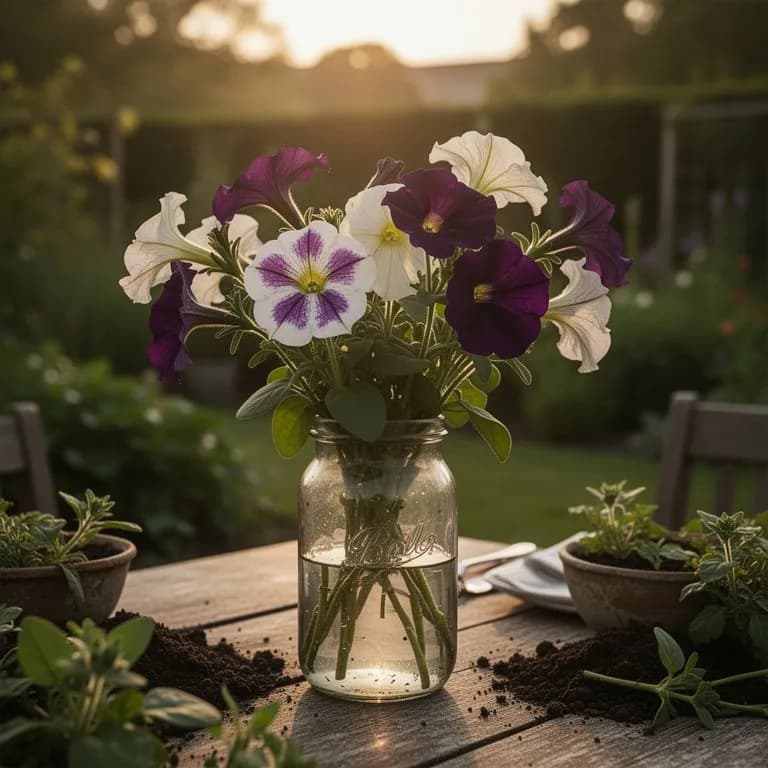
A mature Wave Petunia trailing over 3 feet from a hanging basket
Wave petunia seeds are extremely tiny, pelleted for easier handling. Start seeds indoors ten to twelve weeks before the last frost date. Sow pelleted seeds on the surface of moist seed-starting mix without covering, as light is required for germination. Keep at 70 to 75 degrees Fahrenheit and maintain consistent moisture to dissolve the pellet coating. Germination takes seven to ten days. Seedlings grow slowly at first and need bright light to prevent stretching. Most gardeners find it more practical to purchase Wave petunia transplants.
Wave petunias require rich, well-drained soil or potting mix to support their vigorous growth. In containers, use a high-quality potting mix with perlite for drainage. Feed weekly with a balanced liquid fertilizer such as 20-20-20 at full strength, or apply slow-release granular fertilizer at planting and supplement with weekly liquid feeds. Wave petunias are among the heaviest feeders of all annuals, and under-fertilizing is the number one cause of poor performance and sparse blooming.
Check Your Zone
See if Wave Petunia is suitable for your location.
10°C – 35°C
50°F – 95°F
Wave Petunias thrive in warm conditions between 60 and 90 degrees Fahrenheit (15 to 32 degrees Celsius) and grow most vigorously when nighttime temperatures stay above 55 degrees Fahrenheit. They tolerate heat well but benefit from consistent watering in temperatures above 90 degrees Fahrenheit. Growth slows significantly below 50 degrees Fahrenheit, and plants are killed by frost. For seed starting indoors, maintain a soil temperature of 70 to 75 degrees Fahrenheit for optimal germination.
Common issues affecting Wave Petunia and how to prevent and treat them organically.
The most common Wave petunia problem is poor performance due to insufficient fertilizer. These plants need weekly feeding to maintain their explosive growth. Containers that dry out completely between waterings cause bud drop and sparse flowering. Tobacco budworm is a serious pest in the southeastern United States, boring into buds and ruining flowers. By midsummer, plants may become leggy in the center, requiring a rejuvenation cutback of one-third to restore vigor.
Wave petunias are best used as standalone specimens in hanging baskets due to their aggressive spreading habit. In garden beds, they work as a flowering ground cover in front of taller plants like salvia, cleome, and ornamental grasses. In large mixed containers, combine with upright plants like dracaena spike or ornamental grasses as the centerpiece and allow the Wave petunia to cascade over the edge. Avoid pairing with less vigorous trailing plants that will be overwhelmed.
Wave Petunias are ideal for window boxes thanks to their trailing habit
- 1Plant Wave Petunias in full sun with a minimum of 6 hours of direct sunlight per day. They tolerate partial shade but bloom production drops significantly with less than 6 hours of sun.
- 2Use a high-quality, well-draining potting mix in containers and amend garden soil with compost and perlite to ensure excellent drainage, as Wave Petunias are susceptible to root rot in waterlogged conditions.
- 3Feed Wave Petunias weekly with a water-soluble fertilizer high in phosphorus, such as a 10-30-20 or 15-30-15 formula, to promote continuous heavy blooming throughout the season.
- 4Water container-grown Wave Petunias thoroughly until water drains from the bottom of the pot, then allow the top inch of soil to dry before watering again. In hot summer weather, daily watering may be necessary.
- 5Space Wave Petunias 12 to 24 inches apart when planting in garden beds to allow room for their vigorous spreading habit. Closer spacing fills in faster but may lead to overcrowding by midsummer.
- 6Perform a mid-season cutback in late July or early August by trimming all stems back by one-third. This rejuvenates the plant and produces a fresh flush of blooms within 2 to 3 weeks.
- 7Monitor regularly for tobacco budworm, a caterpillar that bores into flower buds and destroys blooms before they open. Apply Bacillus thuringiensis (Bt) spray at the first sign of damage.
- 8Avoid overhead watering whenever possible, as wet foliage promotes botrytis blight, a gray mold disease that causes flowers and leaves to rot. Water at the base of the plant instead.
- 9When planting in hanging baskets, use only one Wave Petunia per 10 to 12 inch basket. Overcrowding leads to competition for water and nutrients that results in weaker growth and fewer flowers.
- 10Protect newly transplanted Wave Petunias from temperatures below 50 degrees Fahrenheit by covering them with frost cloth or bringing containers indoors on cold spring nights until warm weather is established.
Wave petunias are not typically grown for cut flowers due to their trailing habit and short stems. However, small sprigs can be snipped for bud vases. Deadheading is unnecessary, as Wave petunias are self-cleaning and drop spent blooms naturally while producing new flowers continuously. For seed saving, note that Wave petunias are F1 hybrids and seeds will not produce identical plants. Propagation is best done by stem cuttings taken in late summer.
Wave petunias are best enjoyed in the garden or container rather than as cut flowers. Small cuttings placed in water will last three to four days. To preserve Wave petunias over winter in frost-prone areas, take four-inch stem cuttings in late summer, root them in moist perlite or vermiculite, and overwinter the rooted cuttings indoors in a bright window. This is often more reliable than saving seeds, which do not come true from hybrid varieties.
Plan your garden with ease
Love growing Wave Petunia? Use our free garden planner to design your beds, track planting dates, and get personalized care reminders.
Nutritional Info
Per 100g serving
0
Calories
Health Benefits
- Wave Petunias are ornamental plants and are not intended for human consumption.
- All parts of the petunia plant are considered mildly toxic if ingested and may cause nausea or stomach upset.
- Petunias are not listed as severely toxic by the ASPCA but should be kept away from pets as a precaution.
- Some historical and indigenous uses of wild petunia relatives involved ceremonial or medicinal preparations, but modern cultivated varieties are grown exclusively for ornamental purposes.
- Wave Petunias attract pollinators including hummingbirds and certain moth species, contributing to garden ecosystem health rather than direct nutritional value.
💰 Why Grow Your Own?
Starting Wave Petunias from seed costs approximately 5 to 10 cents per plant compared to 3 to 6 dollars per plant at garden centers. A single packet of 25 pelleted seeds typically costs 4 to 6 dollars and can produce enough plants to fill multiple hanging baskets and garden beds that would cost 50 to 100 dollars or more to plant with purchased transplants. Because each Wave Petunia spreads to cover 3 to 4 feet, fewer plants are needed compared to traditional upright petunias, further reducing overall planting costs.
Quick Recipes
Simple recipes using fresh Wave Petunia
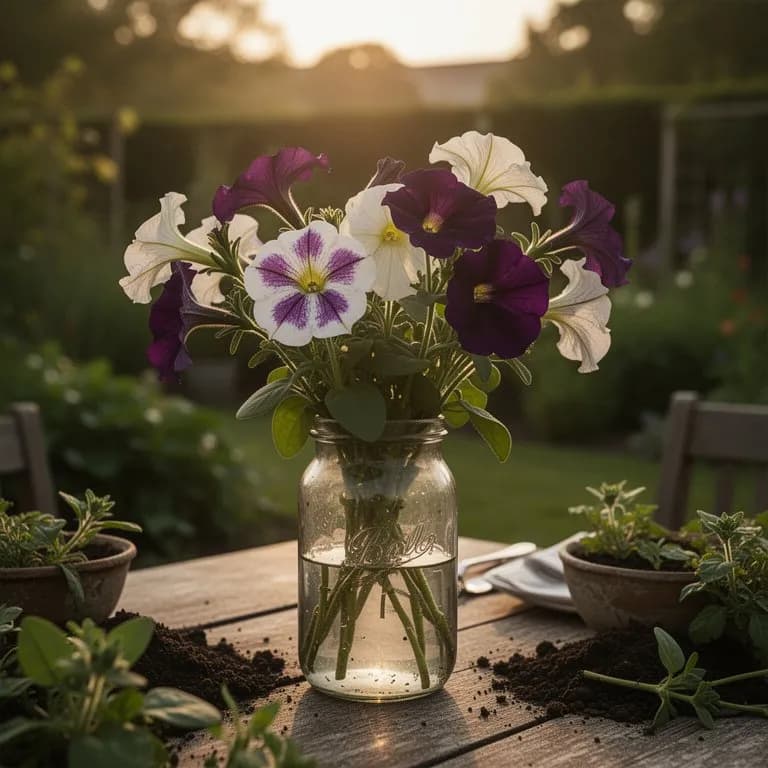
Wave Petunia Hanging Basket Arrangement
20 minutesCreate a stunning cascading display by planting a single Wave Petunia in a lined hanging basket with premium potting mix and slow-release fertilizer. This arrangement provides season-long color with minimal maintenance and produces a spectacular trailing effect within 6 to 8 weeks.
Mixed Wave Petunia Ground Cover Border
45 minutesPlant a colorful ribbon of Wave Petunias along a walkway, driveway, or garden border to create a low-growing, weed-suppressing carpet of continuous bloom. Mixing two or three complementary colors creates a striking visual effect that lasts from late spring through fall frost.
Thriller-Spiller-Filler Container Combo
30 minutesDesign a professional-looking container garden using Wave Petunias as the spiller element alongside a tall thriller plant and compact filler plants. This classic container design formula creates a balanced, full arrangement that looks polished from planting day through the end of the season.
Yield & Spacing Calculator
See how many Wave Petunia plants fit in your garden bed based on the recommended 45cm spacing.
4
Wave Petunia plants in a 4×4 ft bed
2 columns × 2 rows at 45cm spacing
Popular Varieties
Some of the most popular wave petunia varieties for home gardeners, each with unique characteristics.
Easy Wave Series
Slightly more mounding than original Waves, spreading two to three feet with a more uniform dome shape in a wide range of colors.
Tidal Wave Series
The most vigorous Wave type, growing as a tall hedge up to twenty-two inches or cascading four feet, depending on spacing.
Shock Wave Series
Compact trailing variety with smaller flowers but heavy bloom production, ideal for mixed containers and window boxes.
Wave Purple Classic
The original Wave petunia with deep purple flowers that started the spreading petunia revolution.
Double Wave Series
Fully double ruffled flowers on the classic Wave spreading habit, adding extra petal density and cottage garden charm.
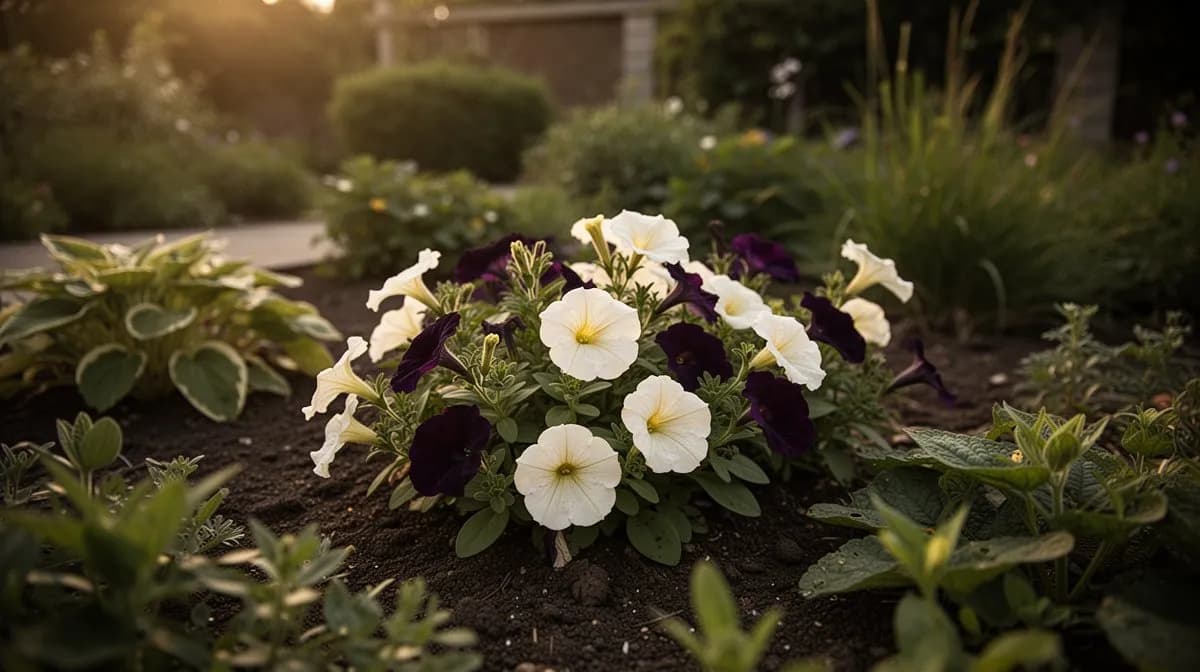
Popular Wave Petunia color varieties planted together for a vibrant display
When should I plant Wave Petunia?
Plant Wave Petunia in April, May. It takes approximately 55 days to reach maturity, with harvest typically in May, June, July, August, September, October.
What are good companion plants for Wave Petunia?
Wave Petunia grows well alongside Petunia, Geranium, Marigold. Companion planting can improve growth, flavor, and natural pest control.
What hardiness zones can Wave Petunia grow in?
Wave Petunia thrives in USDA hardiness zones 9 through 12. With greenhouse protection, it may be grown in zones 7 through 13.
How much sun does Wave Petunia need?
Wave Petunia requires Full Sun (6-8h+). This means at least 6-8 hours of direct sunlight daily.
How far apart should I space Wave Petunia?
Space Wave Petunia plants 45cm (18 inches) apart for optimal growth and air circulation.
What pests and diseases affect Wave Petunia?
Common issues include Tobacco Budworm, Botrytis Blight, Root Rot (Phytophthora). Prevention through good garden practices like crop rotation, proper spacing, and companion planting is the best approach. See the detailed pests and diseases section above for symptoms, prevention, and treatment for each.
How do I store Wave Petunia after harvest?
Wave petunias are best enjoyed in the garden or container rather than as cut flowers. Small cuttings placed in water will last three to four days. To preserve Wave petunias over winter in frost-prone areas, take four-inch stem cuttings in late summer, root them in moist perlite or vermiculite, and o...
What are the best Wave Petunia varieties to grow?
Popular varieties include Easy Wave Series, Tidal Wave Series, Shock Wave Series, Wave Purple Classic, Double Wave Series. Each has unique characteristics suited to different growing conditions and culinary preferences. See the varieties section above for detailed descriptions.
What soil does Wave Petunia need?
Wave petunias require rich, well-drained soil or potting mix to support their vigorous growth. In containers, use a high-quality potting mix with perlite for drainage. Feed weekly with a balanced liquid fertilizer such as 20-20-20 at full strength, or apply slow-release granular fertilizer at planti...
Do Wave Petunias need to be deadheaded?
No, Wave Petunias are self-cleaning, meaning spent flowers drop off naturally without manual removal. This is one of their biggest advantages over traditional petunia varieties. However, if flowering slows in midsummer, a hard cutback of one-third of the stem length will rejuvenate the plant and trigger a new wave of blooms.
How far apart should I plant Wave Petunias in a garden bed?
Space Wave Petunias 12 to 24 inches apart in garden beds. At 12-inch spacing, the bed will fill in within 4 to 6 weeks, while 24-inch spacing takes longer but reduces the number of plants needed. Each plant spreads to cover approximately 3 to 4 feet in diameter by midsummer.
Why are my Wave Petunia flowers getting holes in the buds?
Holes in flower buds are almost always caused by the tobacco budworm, a caterpillar that bores into unopened buds and feeds from inside. The caterpillars are often the same color as the buds, making them difficult to spot. Treat with Bacillus thuringiensis (Bt) or spinosad-based insecticide in the evening when caterpillars are most active.
Can I grow Wave Petunias in partial shade?
Wave Petunias can tolerate partial shade receiving 4 to 5 hours of direct sun, but they perform best and bloom most heavily in full sun with 6 or more hours of direct sunlight. In partial shade, expect fewer flowers, leggier growth, and reduced spreading compared to plants grown in full sun.
How often should I fertilize Wave Petunias?
Feed Wave Petunias weekly with a water-soluble fertilizer during the active growing season. Use a bloom-boosting formula high in phosphorus such as 10-30-20. In containers, you can also incorporate slow-release granular fertilizer at planting time to provide baseline nutrition between liquid feedings.
Can Wave Petunias survive winter and come back next year?
Wave Petunias are grown as tender annuals and do not survive freezing temperatures. In USDA zones 10 and 11, they may persist year-round, but in most climates they are killed by the first hard frost. You can take stem cuttings in early fall and root them indoors under grow lights to overwinter favorite plants for replanting the following spring.
Ready to Grow Wave Petunia?
Add Wave Petunia to your garden plan and start designing your perfect layout.

Vladimir Kusnezow
Gardener and Software Developer
Zone 6b gardener. Growing vegetables and fruits in soil and hydroponics for 6 years. I built PlotMyGarden to plan my own gardens.
Jump to Section