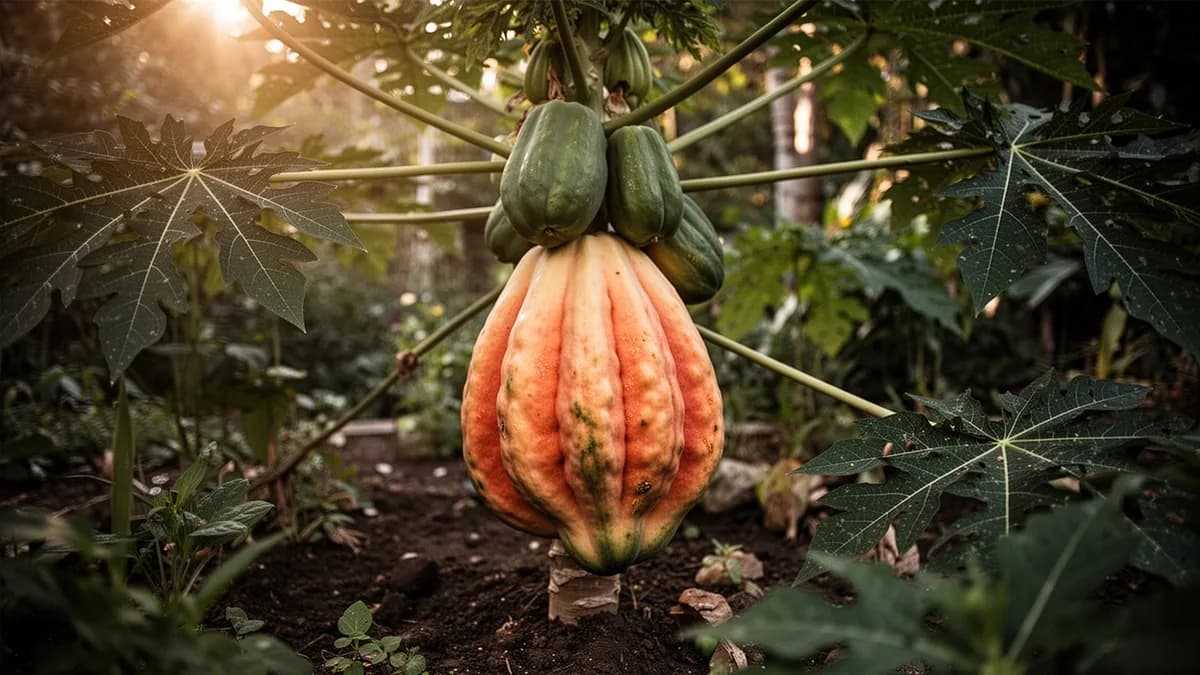
Papaya
Carica papaya
At a Glance
It's planting season for Papaya! Start planning your garden now.
A fast-growing, palm-like tropical plant that can produce fruit within nine months from seed in optimal conditions. Papayas are technically large herbs, not trees, and contain papain enzyme useful as a meat tenderizer. Plant several seedlings to ensure both male and female plants, or choose self-fertile bisexual varieties.
Planting & Harvest Calendar
Growth Stages
From Seed to Harvest
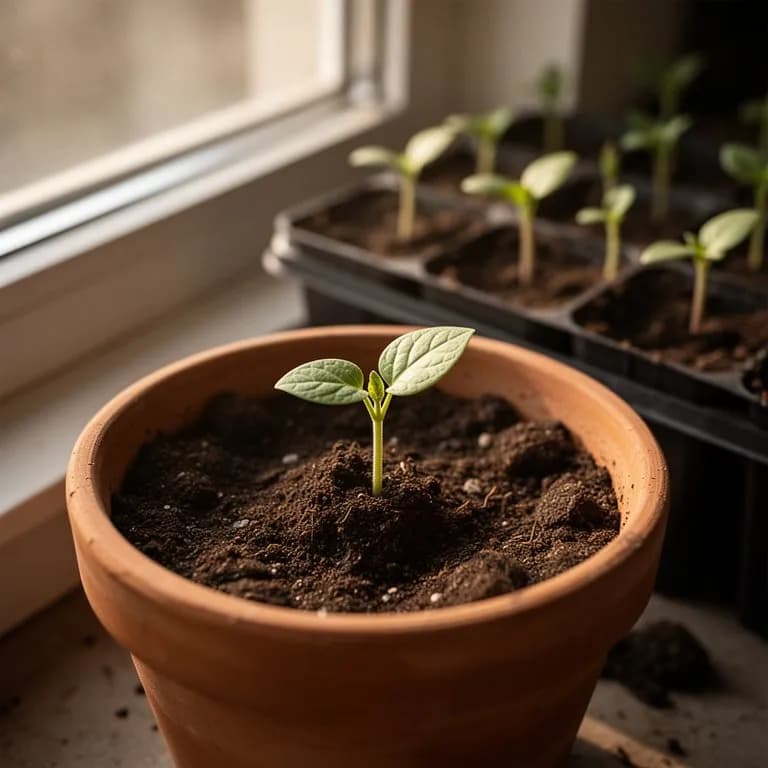
Germination
Days 0–21
Seeds germinate within 2 to 3 weeks under warm, moist conditions. The seed coat cracks and a small radicle emerges, anchoring the seedling in the growing medium.
💡 Care Tip
Keep soil temperature between 25 and 30 degrees Celsius for best germination rates. Covering the tray with plastic wrap retains moisture and warmth.
Monthly Care Calendar
What to do each month for your Papaya
May
You are hereMonitor irrigation closely as heat increases. Ensure deep watering at least twice weekly. Watch for powdery mildew on young leaves. Apply neem oil spray as a preventive measure.
Did You Know?
Fascinating facts about Papaya
Christopher Columbus reportedly called papaya the 'fruit of the angels' after encountering it during his voyages to the Americas.
Papaya thrives in full sun with consistently warm temperatures above 60 degrees Fahrenheit and rich, well-drained soil. Plant in a sheltered location protected from wind, as the hollow trunk is brittle and easily damaged. Space plants about 10 feet apart and plant in groups of three to five seedlings to ensure at least one male and several female or bisexual plants for pollination.
Water deeply and frequently, as papayas are heavy drinkers with shallow root systems. However, they are extremely sensitive to waterlogging, which causes fatal root rot within days. Maintain consistent moisture without allowing soil to become soggy. Mulch heavily to retain moisture and suppress weeds, keeping mulch away from the trunk.
Feed heavily every two weeks with a balanced fertilizer high in nitrogen during vegetative growth, then switch to a high-potassium formula once flowering begins. Papaya plants typically live only four to five years, so plan for succession planting. In marginal climates, grow in large containers that can be moved indoors during cold snaps.
The papaya (Carica papaya) is a native of the tropical lowlands of Central America and southern Mexico, where it has been cultivated by indigenous peoples for thousands of years. Archaeological evidence and botanical studies suggest that papaya was domesticated in Mesoamerica well before European contact, with cultivation spreading throughout the Caribbean and into South America over many centuries. The fruit held significant cultural and medicinal importance among the Maya and Aztec civilizations, who used both the fruit and latex derived from the unripe flesh in traditional healing practices.
Following Christopher Columbus's arrival in the Americas in 1492, Spanish and Portuguese explorers became instrumental in spreading papaya around the tropical world. Portuguese traders introduced the plant to Africa and Asia during the sixteenth century, and it rapidly naturalized across tropical regions from India and the Philippines to sub-Saharan Africa. By the eighteenth century, papaya cultivation had become established throughout the tropics, and the plant was being grown across much of Southeast Asia, the Pacific Islands, and the Indian subcontinent.
In the modern era, papaya has become one of the most widely grown tropical fruits globally. Major producing countries include India, Brazil, Indonesia, Nigeria, and Mexico. The development of the Solo variety in Hawaii in the mid-twentieth century was a landmark in papaya cultivation, creating a compact, hermaphroditic plant ideal for small-scale farming and home gardens. Hawaii's papaya industry faced near-collapse in the 1990s due to papaya ringspot virus, but the introduction of the Rainbow variety — the first genetically engineered fruit crop approved for commercial sale in the United States — revived production and demonstrated the potential of agricultural biotechnology. Today, papaya is celebrated worldwide for its culinary versatility, fast growth, nutritional density, and adaptability to a wide range of tropical and subtropical climates.
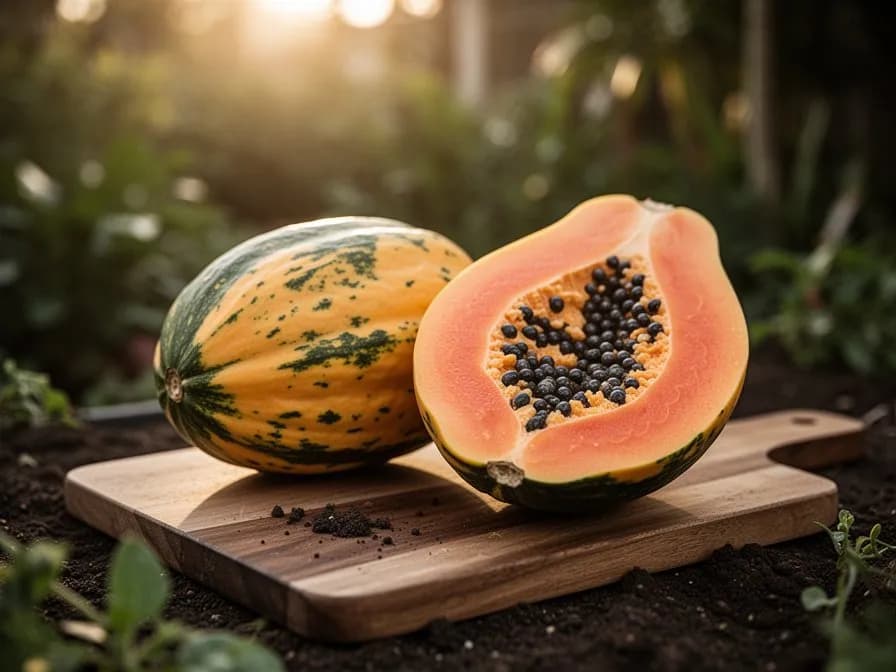
A mature papaya tree can produce fruit within 6 to 9 months of planting
Papaya seeds germinate readily from fresh fruit. Scoop seeds from a ripe papaya, rinse off the gelatinous coating, and dry for a day. Sow seeds in a warm, moist seed-starting mix at a depth of half an inch. Maintain temperatures of 75 to 85 degrees Fahrenheit for best germination, which takes two to four weeks. Transplant seedlings when they have four to six true leaves. Plant three seedlings per hole and thin to the best plant once sex can be determined at flowering, keeping female or bisexual plants. Seeds remain viable for several years if stored dry and cool.
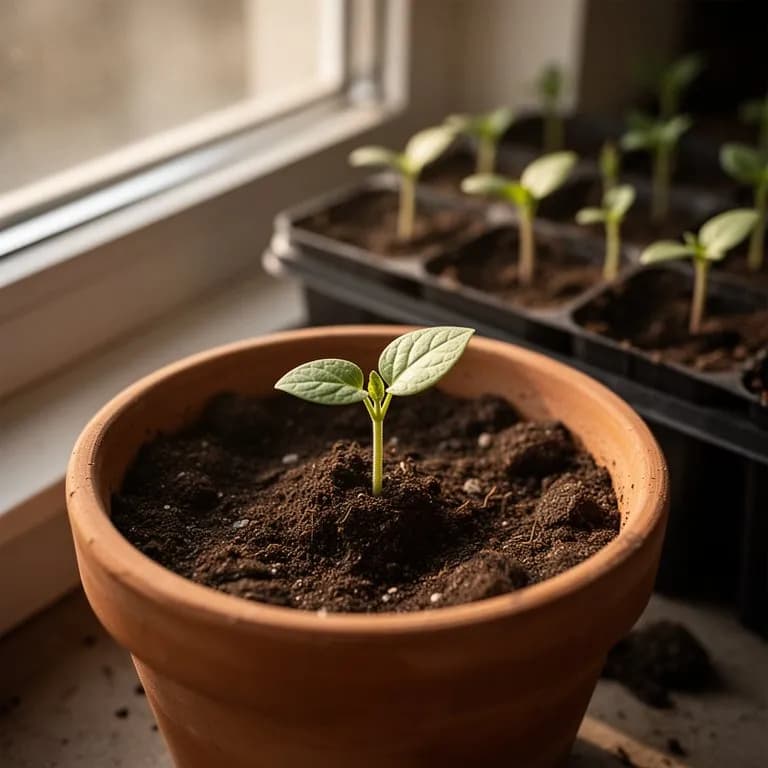
Papaya seedlings grow rapidly and should be transplanted once they reach 15 cm
Papaya demands rich, well-drained soil with a pH of 6.0 to 6.5. Sandy loam enriched with generous amounts of compost is ideal. The single most important requirement is perfect drainage; even brief waterlogging can kill papaya within days. Feed heavily and frequently with a balanced fertilizer (14-14-14) every two weeks during active growth. Once flowering begins, switch to a high-potassium formula to promote fruit development. Apply compost or well-rotted manure as a top dressing monthly. Foliar sprays of micronutrients including boron and zinc help prevent deficiency symptoms.
Check Your Zone
See if Papaya is suitable for your location.
18°C – 35°C
64°F – 95°F
Papaya thrives in warm tropical and subtropical climates with temperatures consistently between 18 and 35 degrees Celsius. It is highly sensitive to frost and suffers damage at temperatures below 5 degrees Celsius, with prolonged exposure below 2 degrees Celsius being fatal. Growth slows significantly below 15 degrees Celsius. In cooler climates, papaya can be grown in large containers and brought indoors during winter, or cultivated in heated greenhouses.
Common issues affecting Papaya and how to prevent and treat them organically.
Root rot from overwatering is the number one killer of papaya plants worldwide. The papaya ringspot virus has devastated commercial production in many regions and has no cure. Sex expression can be unstable, with bisexual plants sometimes reverting to male under temperature stress. Wind damage is common due to the brittle, hollow trunk and large leaves. Cold temperatures below 50 degrees Fahrenheit cause growth to stall, and frost is instantly fatal. Fruit drop can occur during periods of extreme heat or irregular watering.
Papaya benefits from the wind protection provided by banana plants and taller tropical species. Nitrogen-fixing legumes like beans and clover make excellent ground cover companions, improving soil fertility. Marigolds planted nearby help repel nematodes that can damage papaya roots. Avoid planting near other members of the Caricaceae family. Sweet potato makes a good living mulch companion, suppressing weeds while allowing papaya roots to spread freely in the upper soil layer.
- 1Plant papaya in the sunniest position available in your garden, as it requires a minimum of 6 hours of direct sunlight daily for productive fruiting.
- 2Improve drainage before planting by raising beds or mixing coarse sand and compost into heavy clay soils, since papaya roots are extremely susceptible to waterlogging and root rot.
- 3Sow three to four seeds per planting hole and thin to the strongest hermaphroditic or female plant once sex can be determined at the onset of flowering.
- 4Use a balanced fertilizer high in nitrogen during vegetative growth, then switch to a potassium-dominant formula once the plant begins flowering to encourage fruit development and sweetness.
- 5Apply a thick layer of organic mulch around the base of the plant to conserve soil moisture, suppress weeds, and maintain soil warmth during cooler months.
- 6In areas with strong winds, stake young plants and consider planting a windbreak such as a banana or bamboo hedge, as papaya stems are brittle and can snap in high winds.
- 7Harvest fruits while still slightly green if you live in a climate with cool evenings, since fruit will ripen quickly at room temperature and is less prone to pest damage when picked early.
- 8Grow papaya in large containers of at least 50 liters if you live in a temperate climate, using a free-draining mix and moving the plant indoors or into a heated greenhouse when temperatures fall below 12 degrees Celsius.
- 9Inspect the undersides of leaves regularly for aphids and spider mites, which are common vectors of papaya ringspot virus; act promptly with neem oil or insecticidal soap spray.
- 10Rejuvenate aging trees that have become too tall to harvest easily by cutting the main stem back to about 1 meter during warm weather, encouraging new lateral shoots and a more manageable fruiting height.
Papayas are ready to harvest when the skin begins to turn from green to yellow, starting at the bottom of the fruit. Pick when about one-quarter to one-half yellow for eating within a few days, or fully yellow for immediate consumption. Twist the fruit gently to snap it from the stem, or cut with a sharp knife leaving a short stem attached. The white latex that oozes from the skin when green can cause skin irritation, so wear gloves when handling unripe fruits. A single plant can produce 30 to 150 fruits per year in optimal conditions.
The orange flesh is rich in beta-carotene and vitamin C
Partially ripe papayas continue ripening at room temperature over two to five days. Once fully ripe, refrigerate for up to one week. Green papaya can be stored at room temperature for one to two weeks as it slowly ripens. For preservation, papaya can be frozen in chunks, dried into chewy strips, or made into jam and chutney. Green papaya is shredded and pickled or fermented in many Asian cuisines. The enzyme papain from unripe papaya latex can be collected and dried for use as a meat tenderizer.
Plan your garden with ease
Love growing Papaya? Use our free garden planner to design your beds, track planting dates, and get personalized care reminders.
Nutritional Info
Per 100g serving
43
Calories
Health Benefits
- Exceptional source of vitamin C, providing nearly 70% of the daily value per 100g serving
- Rich in beta-carotene and lycopene, powerful antioxidants that support eye and cardiovascular health
- Contains papain and chymopapain, unique proteolytic enzymes that aid protein digestion
- Low calorie density makes it an ideal fruit for weight management diets
- Good source of folate, important for cell division and particularly beneficial during pregnancy
- Contains magnesium, calcium, and B vitamins that support bone health and energy metabolism
💰 Why Grow Your Own?
Growing your own papaya can deliver exceptional economic value in tropical and subtropical climates. A single mature tree producing 50 to 80 fruits per year, each weighing 400 to 900 grams, can yield the equivalent of $80 to $200 worth of fresh fruit annually at typical retail prices. Organic papayas often command a premium of 50 to 100 percent over conventional fruit in supermarkets, making home-grown production even more financially rewarding. Beyond fresh consumption, the ability to harvest green papaya for cooking and to dry or preserve surplus fruit further extends the value of each plant. Seed costs are minimal, and established trees require little more than water, compost, and occasional fertilizer to sustain continuous production for 2 to 3 years.
Quick Recipes
Simple recipes using fresh Papaya
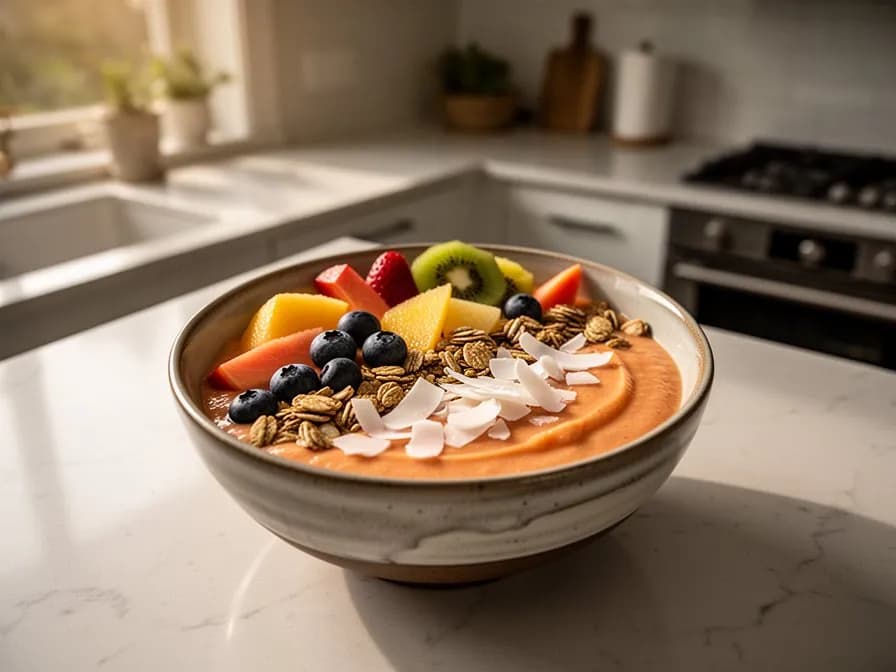
Classic Papaya Smoothie
5 minutesA creamy, tropical smoothie that showcases papaya's natural sweetness. Blending ripe papaya with coconut milk and a squeeze of lime creates a refreshing drink packed with vitamins.
Thai Green Papaya Salad (Som Tam)
15 minutesA vibrant, tangy salad made with shredded unripe papaya, chili, lime, and fish sauce. This iconic Thai dish balances heat, sour, salty, and sweet flavors in one bowl.
Papaya and Ginger Jam
40 minutesA fragrant, tropical jam that preserves the flavor of ripe papaya with warming ginger and bright citrus notes. Excellent on toast, pancakes, or stirred into yogurt.
Yield & Spacing Calculator
See how many Papaya plants fit in your garden bed based on the recommended 300cm spacing.
0
Papaya plants in a 4×4 ft bed
0 columns × 0 rows at 300cm spacing
Popular Varieties
Some of the most popular papaya varieties for home gardeners, each with unique characteristics.
Rainbow
A Hawaiian hybrid developed for resistance to papaya ringspot virus. Produces pear-shaped fruits with yellow-orange flesh and good sweetness.
Red Lady
A popular self-fertile bisexual variety with large, red-fleshed fruits averaging three to five pounds. Very productive and disease-tolerant.
Maradol
A large Mexican variety producing fruits up to 10 pounds with salmon-red flesh. Excellent flavor but requires cross-pollination.
Solo
The classic Hawaiian papaya producing small, one-pound fruits with golden flesh, perfect for a single serving. Bisexual plants are self-fertile.
Tainung No. 2
A Taiwanese hybrid with excellent disease resistance, producing medium-sized fruits with firm, orange-red flesh ideal for tropical growing.
Ripe papaya is eaten fresh with a squeeze of lime, in fruit salads, smoothies, and tropical desserts. Green papaya is a key ingredient in Thai som tam salad and is also used in curries, stir-fries, and stews. The seeds are edible with a peppery flavor and are sometimes ground as a spice. Papaya is used in jams, ice cream, and beverages throughout the tropics.
When should I plant Papaya?
Plant Papaya in March, April, May, June. It takes approximately 270 days to reach maturity, with harvest typically in January, February, March, April, May, June, July, August, September, October, November, December.
What are good companion plants for Papaya?
Papaya grows well alongside Banana. Companion planting can improve growth, flavor, and natural pest control.
What hardiness zones can Papaya grow in?
Papaya thrives in USDA hardiness zones 10 through 12. With greenhouse protection, it may be grown in zones 8 through 13.
How much sun does Papaya need?
Papaya requires Full Sun (6-8h+). This means at least 6-8 hours of direct sunlight daily.
How far apart should I space Papaya?
Space Papaya plants 300cm (118 inches) apart for optimal growth and air circulation.
What pests and diseases affect Papaya?
Common issues include Papaya Ringspot Virus, Root Rot (Phytophthora), Fruit Fly, Mealybugs. Prevention through good garden practices like crop rotation, proper spacing, and companion planting is the best approach. See the detailed pests and diseases section above for symptoms, prevention, and treatment for each.
How do I store Papaya after harvest?
Partially ripe papayas continue ripening at room temperature over two to five days. Once fully ripe, refrigerate for up to one week. Green papaya can be stored at room temperature for one to two weeks as it slowly ripens. For preservation, papaya can be frozen in chunks, dried into chewy strips, or ...
What are the best Papaya varieties to grow?
Popular varieties include Rainbow, Red Lady, Maradol, Solo, Tainung No. 2. Each has unique characteristics suited to different growing conditions and culinary preferences. See the varieties section above for detailed descriptions.
What soil does Papaya need?
Papaya demands rich, well-drained soil with a pH of 6.0 to 6.5. Sandy loam enriched with generous amounts of compost is ideal. The single most important requirement is perfect drainage; even brief waterlogging can kill papaya within days. Feed heavily and frequently with a balanced fertilizer (14-14...
How long does it take for papaya to produce fruit from seed?
Under ideal warm conditions, papaya can begin producing fruit in as little as 6 to 9 months from seed. In cooler or less optimal climates, this can extend to 12 months or more. Hermaphroditic varieties tend to fruit fastest and most reliably, while female plants require a nearby male for pollination before they will set fruit.
Can I grow papaya in a pot or container?
Yes, papaya can be grown in large containers of at least 50 liters. Use a free-draining potting mix enriched with compost, place the container in the sunniest spot available, and water and fertilize regularly. Container growing is particularly useful in temperate climates where the plant needs to be moved indoors during cold months. Compact varieties such as Solo are best suited to container cultivation.
Why is my papaya plant not producing fruit?
The most common reason is plant sex: male plants do not produce fruit on their own and require a female or hermaphroditic companion. Insufficient sunlight, cold temperatures, overwatering, or nutrient deficiency can also inhibit fruiting. Ensure the plant receives full sun, is fertilized with a potassium-rich formula during flowering, and that soil is well-drained and consistently moist but not waterlogged.
Is papaya frost hardy?
No, papaya is highly frost-sensitive and will be damaged by temperatures below 5 degrees Celsius and killed by prolonged frost. In climates with mild winters, temporary fleece covers or moving container plants indoors can protect the plant. In regions with regular frost, papaya is best grown as an annual or in a heated greenhouse.
How do I know when a papaya is ready to harvest?
Papaya is ready to harvest when at least 20 to 30 percent of the skin has turned from green to yellow or orange. The fruit should give slightly to gentle pressure near the tip. Fruits can be harvested at this stage and left to ripen fully at room temperature over 2 to 4 days. Avoid refrigerating unripe papaya as cold temperatures arrest the ripening process.
What is the difference between male, female, and hermaphroditic papaya plants?
Male papaya plants produce only pollen and no fruit. Female plants produce fruit but only when pollinated by a nearby male. Hermaphroditic (bisexual) plants carry both male and female reproductive organs in each flower and can self-pollinate, making them the most productive and popular choice for home growers. Most commercial varieties such as Solo, Sunrise, and Maradol are hermaphroditic. The sex of a papaya plant becomes apparent only at the onset of flowering, which is why it is common practice to grow several seedlings together and select the best hermaphroditic individuals.
Ready to Grow Papaya?
Add Papaya to your garden plan and start designing your perfect layout.

Vladimir Kusnezow
Gardener and Software Developer
Zone 6b gardener. Growing vegetables and fruits in soil and hydroponics for 6 years. I built PlotMyGarden to plan my own gardens.
Jump to Section