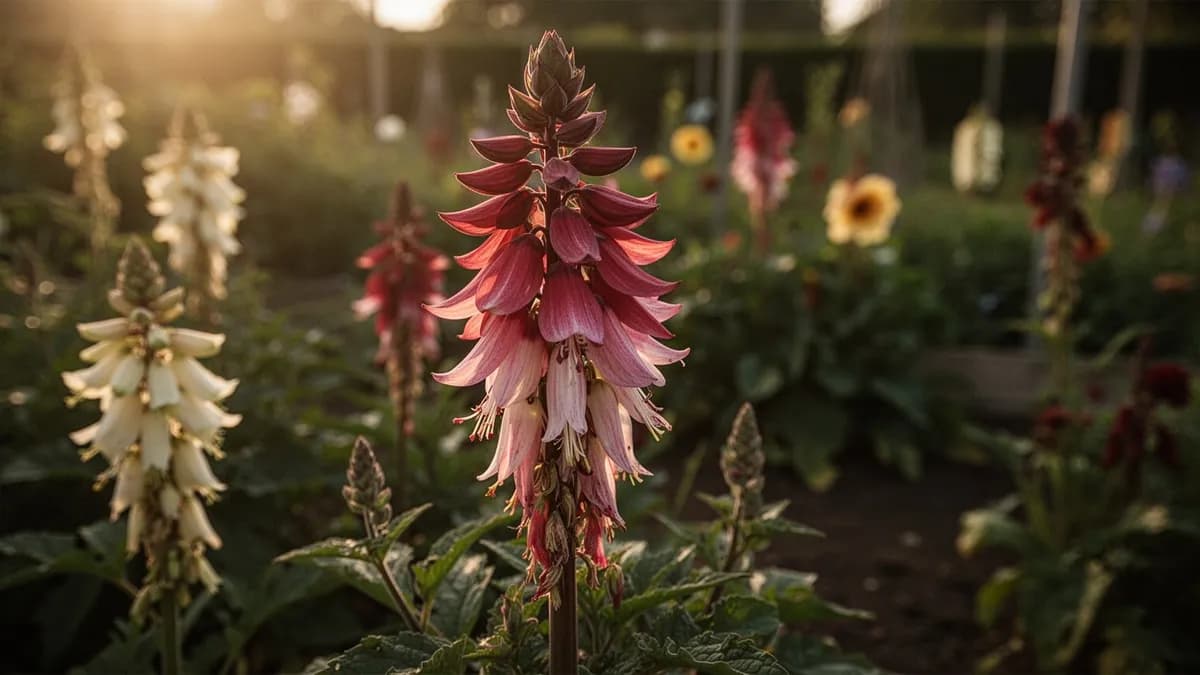
Love-Lies-Bleeding
Amaranthus caudatus
At a Glance
It's planting season for Love-Lies-Bleeding! Start planning your garden now.
A dramatic annual with long, cascading tassels of deep crimson flowers that drape gracefully from tall, sturdy plants. Love-lies-bleeding is heat and drought tolerant once established, thriving in average to poor soil with minimal fuss. The striking rope-like flower clusters are stunning in fresh or dried arrangements.
Planting & Harvest Calendar
Growth Stages
From Seed to Harvest
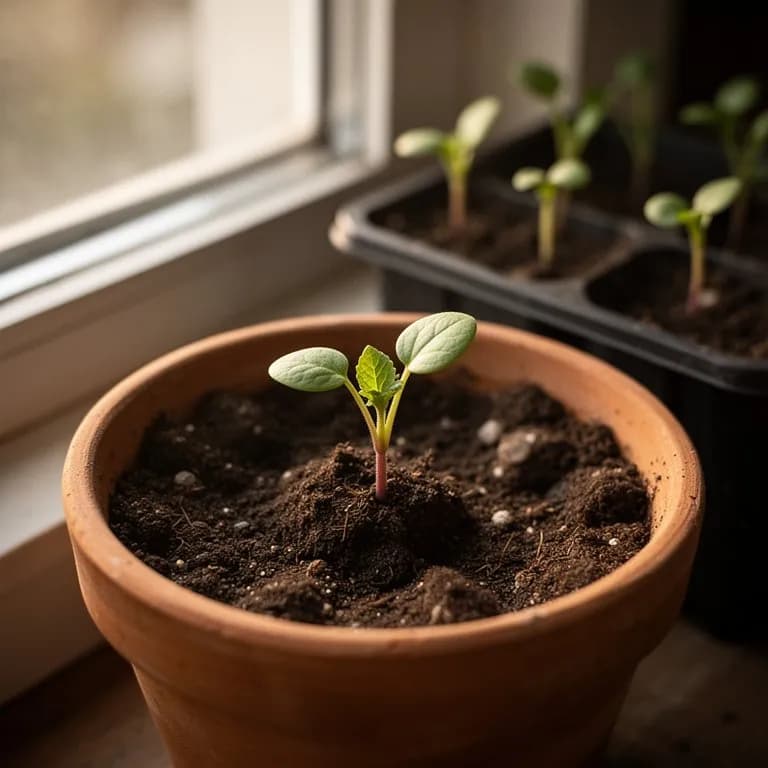
Germination
Days 0–10
The tiny seeds, barely 1 mm in diameter, germinate in warm soil within 5-10 days. Seedlings emerge with small rounded cotyledons that are pale green. Seeds require light exposure for optimal germination and should be surface-sown or covered with only a whisper-thin layer of fine soil. Soil temperatures above 18°C (65°F) are essential; germination rates drop dramatically in cool soil.
💡 Care Tip
Press seeds gently onto the surface of moist, fine-textured soil and mist lightly. Do not bury seeds deeper than 2-3 mm or they will fail to germinate. Keep the surface evenly moist with a spray bottle until seedlings emerge, and maintain soil temperatures of 21-27°C (70-80°F) for fastest results.
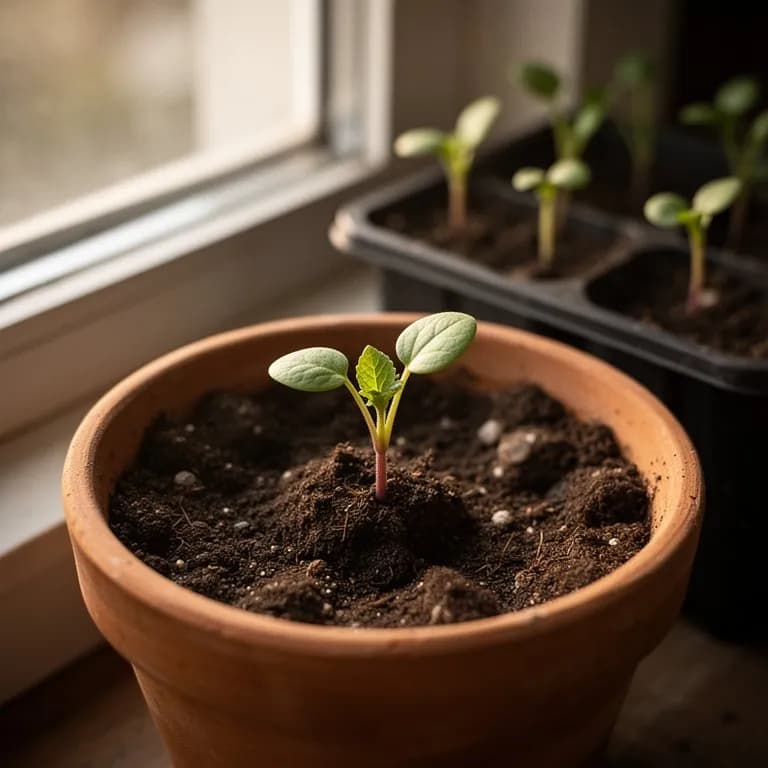
Love-lies-bleeding seedlings appear as unassuming green sprouts before developing their signature cascading form
Monthly Care Calendar
What to do each month for your Love-Lies-Bleeding
May
You are herePrimary outdoor planting month in most temperate climates. Transplant hardened-off seedlings or direct-sow seeds once all danger of frost is past and soil has warmed. Space plants 30-45 cm apart for full tassel display. Water newly transplanted seedlings daily for the first week.
Did You Know?
Fascinating facts about Love-Lies-Bleeding
The name 'love-lies-bleeding' comes from the plant's long, blood-red tassels that droop toward the ground as though weeping. In Victorian flower language, it symbolized hopeless love and heartbreak, and was commonly planted in melancholy garden settings alongside weeping willows and yew trees.
Love-lies-bleeding is a dramatic, fast-growing warm-season annual that commands attention with its long, cascading tassels of crimson flowers. Direct sow seeds after all danger of frost when soil has warmed to at least 65°F (18°C). Barely cover the tiny seeds, as they need some light to germinate. Thin seedlings to 18-24 inches apart.
Choose a sunny spot with average to poor soil—like many amaranth species, love-lies-bleeding performs best in lean conditions. Rich soil produces enormous, top-heavy plants prone to toppling. Water moderately during establishment but reduce once plants are growing vigorously. Established plants are remarkably drought and heat-tolerant.
The spectacular rope-like flower tassels can reach 18-24 inches long, cascading from the upper leaf axils. They appear in midsummer and persist until frost, gradually deepening in color as they mature. The plants can reach 3-5 feet tall depending on conditions. In windy locations, provide a sturdy stake—the heavy tassels act as sails in the wind.
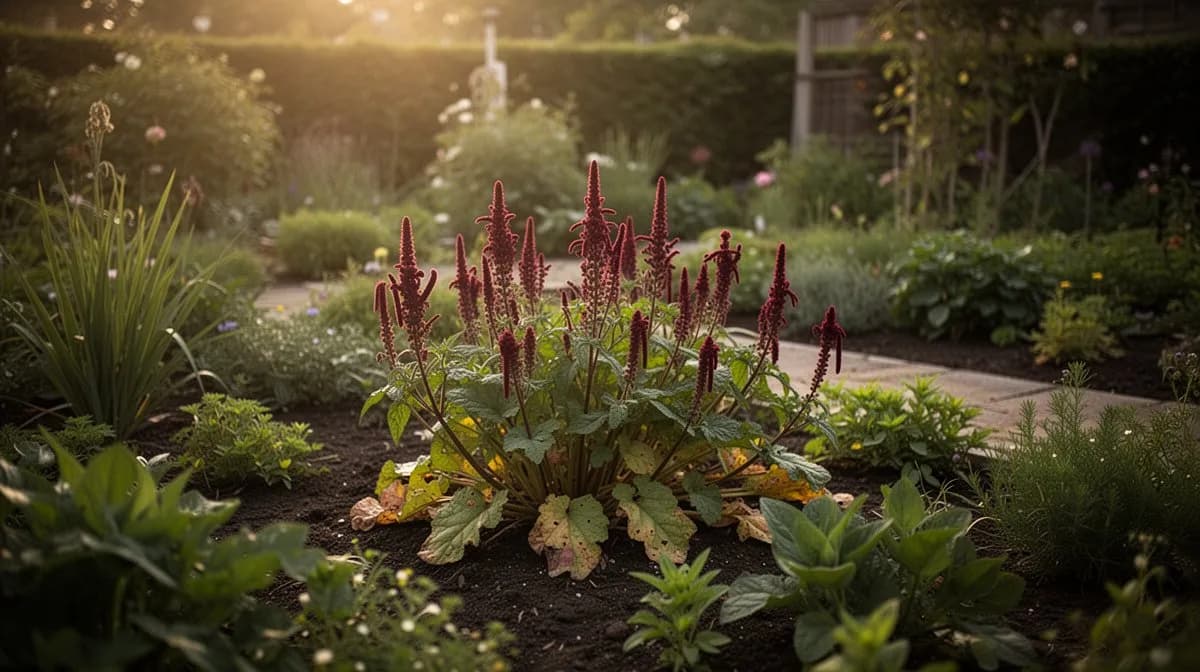
Few plants create such a dramatic focal point in the late-summer garden as a fully tasseled love-lies-bleeding
Love-lies-bleeding (Amaranthus caudatus) is native to the highlands of South America, where it was domesticated by pre-Inca civilizations in the Andean region of present-day Peru, Bolivia, and Ecuador at least 4,000 years ago. Known as 'kiwicha' in Quechua, it became one of the most important grain crops of the Inca Empire, cultivated at elevations between 2,000 and 3,500 meters where few other grain crops could thrive. Archaeological evidence from sites throughout the Andes confirms that amaranth seeds were a dietary staple, ground into flour for flatbreads, toasted as a crunchy snack, and brewed into the traditional fermented beverage 'chicha de kiwicha.'
When Spanish colonizers conquered the Inca Empire in the 16th century, they suppressed amaranth cultivation because of its central role in indigenous religious ceremonies, just as they did with Amaranthus cruentus in Mesoamerica. Despite these efforts, kiwicha survived in remote mountain communities where traditional farming practices persisted out of colonial reach. Meanwhile, the plant spread to Europe as an ornamental curiosity in the 17th century, where its dramatic weeping tassels captivated gardeners. It quickly became a fixture of European cottage gardens, earning evocative common names like love-lies-bleeding, tassel flower, and velvet flower. Victorian-era gardeners were particularly drawn to its melancholy beauty.
From Europe, love-lies-bleeding traveled along trade routes to Africa and Asia, where it was adopted not only as an ornamental but as a food plant. In parts of India, East Africa, and Southeast Asia, the young leaves became a valued cooked green, while the seeds supplemented grain harvests. Today, Amaranthus caudatus is experiencing a remarkable resurgence. The Peruvian government has actively promoted kiwicha as a superfood, and international research organizations have identified it as a climate-resilient crop with exceptional nutritional density. Its complete amino acid profile, tolerance of drought and poor soils, and dual use as both a grain and leafy green make it increasingly important for global food security.
Direct sow seeds after the last frost when soil is warm (65°F/18°C or above). Scatter seeds on prepared soil and press in lightly—seeds need light for germination. Keep moist until germination occurs in 10-14 days. Thin to 18-24 inches apart. For an earlier start, sow indoors 4-6 weeks before the last frost at 70°F (21°C). Transplant carefully after hardening off, as amaranth resents root disturbance.
Love-lies-bleeding thrives in average to poor, well-drained soil with a pH of 6.0-7.5. Avoid rich, heavily fertilized soil, which produces enormous plants that flop under their own weight. A single light application of balanced fertilizer at planting is more than adequate. In very poor soil, side-dress with compost once during the growing season. Container plants need a standard potting mix with no extra amendments.
Check Your Zone
See if Love-Lies-Bleeding is suitable for your location.
20°C – 35°C
68°F – 95°F
Love-lies-bleeding is a warm-season annual that thrives in heat and long sunny days. Seeds require soil temperatures of at least 18°C (65°F) for germination, and seedlings are killed by frost. The ideal growth range is 20-35°C (68-95°F), with the most vigorous tassel production occurring during sustained warm weather. The plant tolerates high heat up to 40°C (104°F) remarkably well due to its C4 photosynthetic pathway, continuing to grow and flower when many other ornamentals and vegetables wilt. Night temperatures consistently below 10°C (50°F) slow growth significantly, and any frost ends the plant's life.
Common issues affecting Love-Lies-Bleeding and how to prevent and treat them organically.
Top-heavy plants toppling is the most common issue—lean soil and staking prevent this. Self-sowing can be aggressive in mild climates; remove spent tassels before seeds drop if this is a concern. In very rich soil, plants may reach 5-6 feet with excessive foliage and relatively small tassels. The tiny seeds scatter prolifically when tassels are disturbed, making cleanup challenging.
Love-lies-bleeding creates dramatic vertical accents in cottage gardens and mixed borders. Plant alongside sunflowers, dahlias, and cannas for a bold, tropical-themed border. The crimson tassels contrast beautifully with golden rudbeckia and yellow marigolds. In the cutting garden, plant near zinnias, cosmos, and ornamental grasses for diverse arrangement material.
- 1Surface-sow seeds onto fine, moist soil and press gently without covering. Love-lies-bleeding seeds are tiny and need light to germinate — burying them even 5 mm deep can reduce germination by 70% or more. Mist with a spray bottle daily until seedlings emerge.
- 2Wait until soil temperatures are consistently above 18°C (65°F) before sowing or transplanting outdoors. Love-lies-bleeding is a tropical plant that does not tolerate cold soil, and premature planting leads to stunted seedlings that never fully recover.
- 3Space plants 30-45 cm apart to give the cascading tassels room to develop their full dramatic effect. Crowded plants produce shorter, less impressive tassels and are more susceptible to powdery mildew from poor air circulation.
- 4Stake or cage tall plants in exposed locations, especially once the heavy flower tassels develop. A loaded tassel can weigh enough to topple plants in strong wind or heavy rain. Use sturdy stakes and soft ties to avoid damaging the stems.
- 5Harvest leaves consistently from the outer parts of the plant during the vegetative stage to encourage bushier growth and delay flowering. Once flower tassels begin forming, leaf quality declines as the plant redirects energy toward reproduction.
- 6For the most vivid tassel color, grow plants in full sun with at least 8 hours of direct sunlight per day. Partial shade produces acceptable growth but significantly paler tassel color, diminishing the ornamental impact.
- 7To dry tassels for flower arrangements, cut them when color is at peak intensity but before seeds begin to shatter. Hang stems upside down in small bundles in a warm, dark, well-ventilated space for 2-3 weeks. Spraying with unscented hairspray after drying helps preserve the tassels.
- 8Control self-sowing by cutting tassels before seeds mature and shatter, or by mulching heavily around the base of plants in autumn to smother fallen seeds. If you welcome volunteers, allow a few tassels to drop seed naturally near the parent plant.
- 9Grow love-lies-bleeding in large containers (at least 30 cm diameter and 40 cm deep) on patios or balconies where the cascading tassels create a spectacular hanging display. Use a rich potting mix and water daily during hot weather, as container plants dry out quickly.
- 10Avoid high-nitrogen fertilizers once flower tassels begin forming. Excess nitrogen at this stage promotes leafy growth at the expense of tassel length and color. Switch to a phosphorus-rich feed or simply stop fertilizing once you see the first flower buds.
Cut love-lies-bleeding tassels for fresh arrangements when they have reached full length and color intensity. Cut stems long in the morning and condition in warm water for several hours. The cascading tassels create dramatic, gravity-defying displays in tall vases. For drying, cut tassels at peak color and hang upside down in a dark, warm, ventilated space for 2-3 weeks. Dried tassels maintain shape well but may shed small seeds.
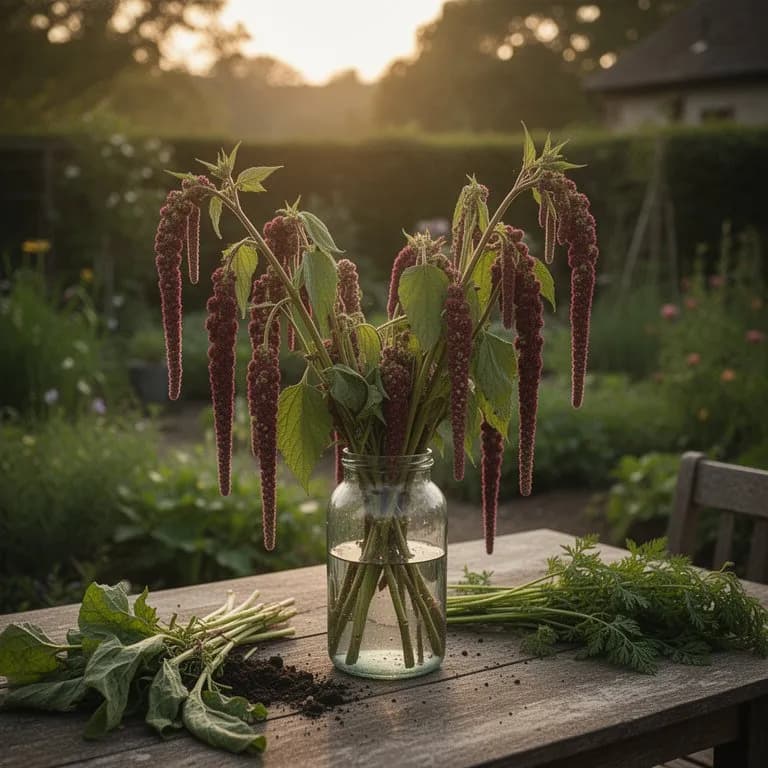
Young leaves are tender and mild with a spinach-like flavor, ideal for steaming or adding to soups
Love-lies-bleeding dries beautifully, maintaining its cascading form and deep red color. Hang in small bunches upside down for 2-3 weeks. Preserved tassels are stunning in autumn wreaths and dried arrangements. The tiny, protein-rich seeds can be collected by shaking dried flower tassels over a sheet—amaranth grain has been cultivated as a food crop for millennia. Store seeds for planting in labeled envelopes in a cool, dry place.
Plan your garden with ease
Love growing Love-Lies-Bleeding? Use our free garden planner to design your beds, track planting dates, and get personalized care reminders.
Nutritional Info
Per 100g serving
23
Calories
Health Benefits
- Leaves provide an outstanding source of vitamin A as beta-carotene at 58% of the daily value per 100g — essential for vision health, immune function, and cellular growth, particularly important in developing regions where vitamin A deficiency is prevalent
- Excellent source of vitamin C at 48% of daily value per 100g of raw leaves, supporting immune defense, collagen production, and enhancing the absorption of the plant's abundant non-heme iron
- The seeds of Amaranthus caudatus contain 14-16% protein by weight with a complete amino acid profile, including high levels of lysine (5.2g per 100g protein) — an essential amino acid typically lacking in cereal grains like wheat and rice
- Rich in bioavailable calcium (215mg per 100g of leaves) and manganese, supporting bone density and enzymatic function with better absorption rates than high-oxalate greens like spinach
- Contains squalene in the seed oil at concentrations of 5-8%, a lipid compound with potent antioxidant properties also found in olive oil and shark liver oil — amaranth seed oil has one of the highest squalene concentrations of any plant source
- The seeds are naturally gluten-free and have a low glycemic index, making amaranth grain a valuable staple for people with celiac disease or those managing blood sugar levels
💰 Why Grow Your Own?
A single packet of love-lies-bleeding seeds costs $2-5 and contains enough seeds for an entire garden display plus grain harvest. At specialty markets, fresh amaranth greens sell for $4-8 per bunch, while organic amaranth grain retails for $8-15 per pound. Growing 4-6 plants yields a season-long supply of greens worth $40-80 and several pounds of grain worth an additional $20-40. The dried tassels are sold by florists for $5-10 per stem, so a few well-grown plants can produce dozens of stems worth $50-100 for arrangements. Because love-lies-bleeding self-sows reliably, a one-time seed purchase can provide years of continuous harvests.
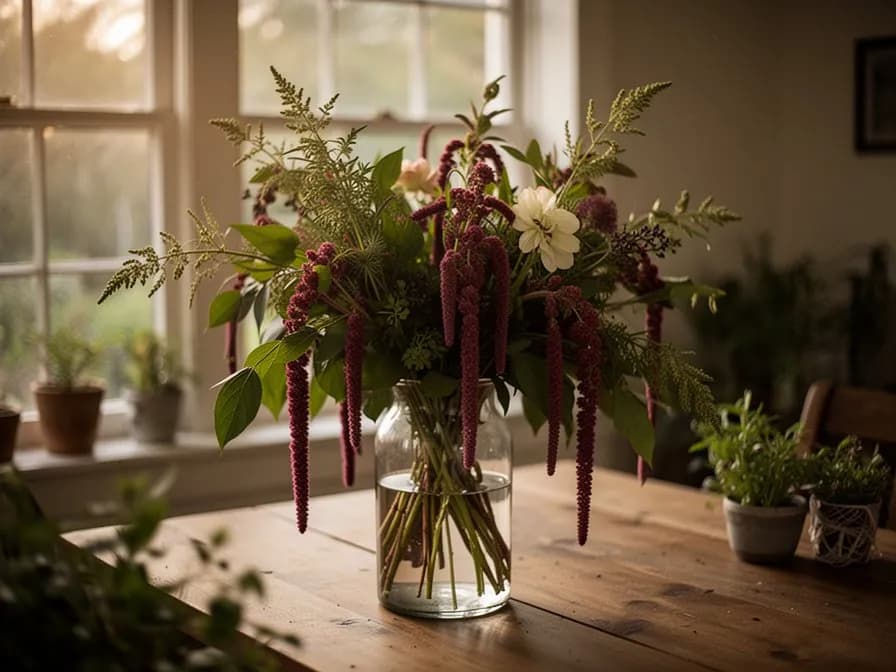
The tiny gluten-free seeds are packed with complete protein and can be popped, boiled, or ground into flour
Quick Recipes
Simple recipes using fresh Love-Lies-Bleeding
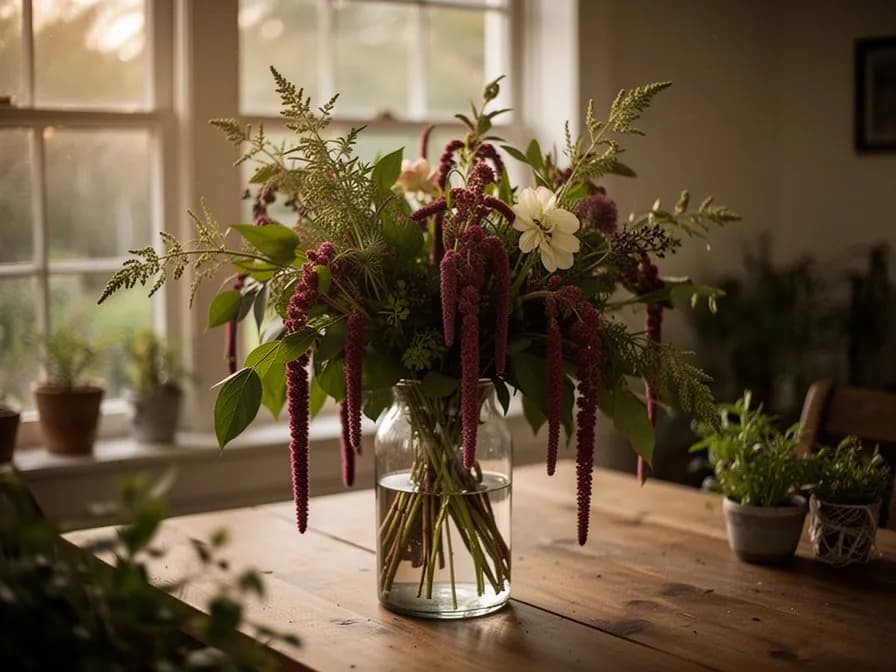
Andean Popped Amaranth Bars
20 minA traditional Andean treat where love-lies-bleeding seeds are popped in a dry pan like miniature popcorn, then bound together with honey or panela syrup into crunchy, nutty snack bars. These protein-rich bars were carried by Inca messengers on long journeys as a lightweight, energy-dense food.
Steamed Amaranth Greens with Garlic and Lemon
12 minA simple preparation that highlights the mild, spinach-like flavor of young love-lies-bleeding leaves. Quick steaming preserves the tender texture and vibrant green color while garlic and lemon add brightness. This is how amaranth greens are most commonly eaten throughout East Africa and South Asia.
Kiwicha Breakfast Porridge with Cinnamon and Fruit
25 minA warm, creamy breakfast porridge made from simmered love-lies-bleeding seeds that cook down to a smooth, slightly gelatinous consistency similar to cream of wheat. Naturally gluten-free and rich in complete protein, this Andean-inspired porridge provides sustained morning energy and keeps you full for hours.
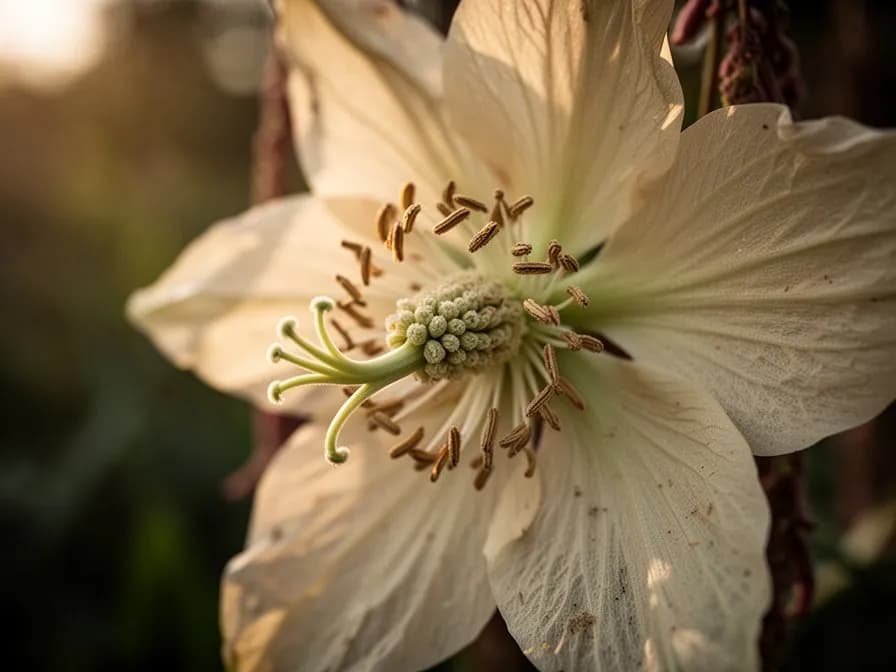
The tassels dry beautifully and hold their color for months, making them prized in dried flower arrangements
Yield & Spacing Calculator
See how many Love-Lies-Bleeding plants fit in your garden bed based on the recommended 45cm spacing.
4
Love-Lies-Bleeding plants in a 4×4 ft bed
2 columns × 2 rows at 45cm spacing
Popular Varieties
Some of the most popular love-lies-bleeding varieties for home gardeners, each with unique characteristics.
Amaranthus 'Love-Lies-Bleeding' (standard)
Deep crimson-red cascading tassels on 3-4 foot plants. The classic variety that has been grown in cottage gardens for centuries.
Amaranthus 'Green Tails'
Lime-green tassels that provide a striking contrast to the red form. Stunning in contemporary floral designs.
Amaranthus 'Coral Fountain'
Coral-pink tassels on more compact 2-3 foot plants. A softer, more romantic color than the classic red.
Amaranthus 'Pony Tails'
Dwarf variety at 18 inches with shorter tassels in a mix of red and green. Ideal for containers and small spaces.
Amaranth seeds from love-lies-bleeding are edible and highly nutritious, containing complete protein, iron, and calcium. The tiny seeds can be popped like miniature popcorn, cooked as a porridge, or ground into flour for baking. Young leaves are also edible and can be used like spinach in stir-fries and soups. Amaranth has been a staple food crop in Central America for thousands of years.
When should I plant Love-Lies-Bleeding?
Plant Love-Lies-Bleeding in April, May. It takes approximately 70 days to reach maturity, with harvest typically in July, August, September, October.
What are good companion plants for Love-Lies-Bleeding?
Love-Lies-Bleeding grows well alongside Sunflower, Zinnia, Cosmos. Companion planting can improve growth, flavor, and natural pest control.
What hardiness zones can Love-Lies-Bleeding grow in?
Love-Lies-Bleeding thrives in USDA hardiness zones 2 through 11. With greenhouse protection, it may be grown in zones 1 through 12.
How much sun does Love-Lies-Bleeding need?
Love-Lies-Bleeding requires Full Sun (6-8h+). This means at least 6-8 hours of direct sunlight daily.
How far apart should I space Love-Lies-Bleeding?
Space Love-Lies-Bleeding plants 45cm (18 inches) apart for optimal growth and air circulation.
What pests and diseases affect Love-Lies-Bleeding?
Common issues include Aphids, Stem Rot, Leaf Miners. Prevention through good garden practices like crop rotation, proper spacing, and companion planting is the best approach. See the detailed pests and diseases section above for symptoms, prevention, and treatment for each.
How do I store Love-Lies-Bleeding after harvest?
Love-lies-bleeding dries beautifully, maintaining its cascading form and deep red color. Hang in small bunches upside down for 2-3 weeks. Preserved tassels are stunning in autumn wreaths and dried arrangements. The tiny, protein-rich seeds can be collected by shaking dried flower tassels over a shee...
What are the best Love-Lies-Bleeding varieties to grow?
Popular varieties include Amaranthus 'Love-Lies-Bleeding' (standard), Amaranthus 'Green Tails', Amaranthus 'Coral Fountain', Amaranthus 'Pony Tails'. Each has unique characteristics suited to different growing conditions and culinary preferences. See the varieties section above for detailed descriptions.
What soil does Love-Lies-Bleeding need?
Love-lies-bleeding thrives in average to poor, well-drained soil with a pH of 6.0-7.5. Avoid rich, heavily fertilized soil, which produces enormous plants that flop under their own weight. A single light application of balanced fertilizer at planting is more than adequate. In very poor soil, side-dr...
Are love-lies-bleeding leaves and seeds safe to eat?
Yes, both the leaves and seeds of love-lies-bleeding (Amaranthus caudatus) are edible and nutritious. The young leaves are cooked and eaten like spinach throughout South America, Africa, and Asia — they have a mild, slightly sweet flavor and tender texture when steamed or stir-fried. The seeds are a protein-rich pseudo-cereal grain that can be popped, boiled into porridge, or ground into gluten-free flour. Amaranth has been a food crop for thousands of years, and all above-ground parts of the plant are safe for consumption.
How is love-lies-bleeding different from other amaranth species?
Love-lies-bleeding (Amaranthus caudatus) is distinguished by its dramatically long, pendulous flower tassels that droop downward like cascading ropes — hence the name 'caudatus' meaning 'tailed.' Other common amaranth species like Amaranthus cruentus and Amaranthus hypochondriacus have upright flower plumes. Love-lies-bleeding also produces lighter-colored seeds (pale cream to ivory) rather than the dark reddish-black seeds of most other grain amaranths. It originated in the South American Andes rather than Central America, and it tolerates cooler highland conditions somewhat better than its tropical relatives.
Can I grow love-lies-bleeding in containers?
Yes, love-lies-bleeding makes a spectacular container plant. Use a large pot at least 30 cm in diameter and 40 cm deep with good drainage holes. Fill with a rich, well-draining potting mix amended with compost. Place the container in full sun and water daily during hot weather, as container soil dries out much faster than garden beds. The cascading tassels draping over the sides of a pot or elevated planter create a striking display. Feed every 2-3 weeks with a balanced liquid fertilizer during active growth.
When and how should I harvest the tassels for dried flower arrangements?
Cut tassels for drying when the color has reached peak intensity, typically in late summer, but before the seeds begin to harden and shatter. Cut stems as long as possible in the morning after dew has dried. Strip the lower leaves and hang stems upside down in small bundles in a warm, dark, and well-ventilated room for 2-3 weeks. The tassels will shrink slightly as they dry but retain their deep color for months or even years. A light spray of unscented hairspray after drying helps preserve the delicate florets.
Will love-lies-bleeding come back every year?
Love-lies-bleeding is an annual plant that completes its life cycle in one growing season and dies after setting seed. However, it self-sows very freely — each plant drops tens of thousands of seeds that overwinter in the soil and germinate the following spring once soil temperatures warm up. In practice, many gardeners find that love-lies-bleeding returns reliably year after year from self-sown volunteers without any replanting effort. If you want to prevent this, remove the tassels before seeds mature and scatter.
How do I pop amaranth seeds like popcorn?
Heat a deep, dry skillet or pot over high heat until very hot (a drop of water should sizzle and evaporate instantly). Add only 1-2 tablespoons of seeds at a time — this is critical, as overcrowding prevents popping. Cover loosely with a lid and shake the pan constantly. The tiny seeds will pop within seconds, puffing up to several times their original size. Immediately pour popped seeds into a bowl and repeat with the next batch. Work in small batches for the best results. The popped seeds have a nutty, toasted flavor and can be eaten as a snack, sprinkled on yogurt, or used in granola bars.
Ready to Grow Love-Lies-Bleeding?
Add Love-Lies-Bleeding to your garden plan and start designing your perfect layout.

Vladimir Kusnezow
Gardener and Software Developer
Zone 6b gardener. Growing vegetables and fruits in soil and hydroponics for 6 years. I built PlotMyGarden to plan my own gardens.
Jump to Section