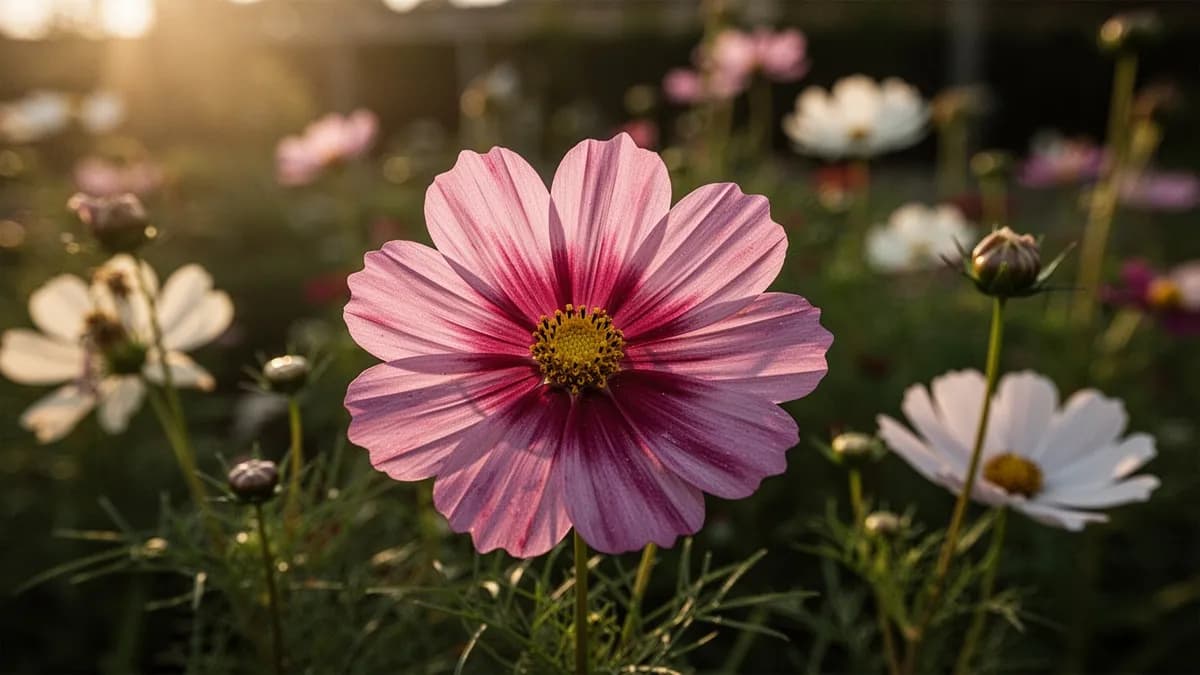
Cosmos
Cosmos bipinnatus
At a Glance
It's planting season for Cosmos! Start planning your garden now.
A tall, airy annual with ferny foliage and delicate flowers that thrives in poor soil and self-sows generously. Avoid rich soil and heavy fertilization, which produces lush foliage at the expense of flowers and causes plants to become floppy. Cosmos is one of the easiest annuals to grow from seed, germinating quickly and blooming within two months of sowing. The long-stemmed flowers in white, pink, and magenta are excellent for cutting and attract butterflies and beneficial insects throughout the season.
Planting & Harvest Calendar
Growth Stages
From Seed to Harvest
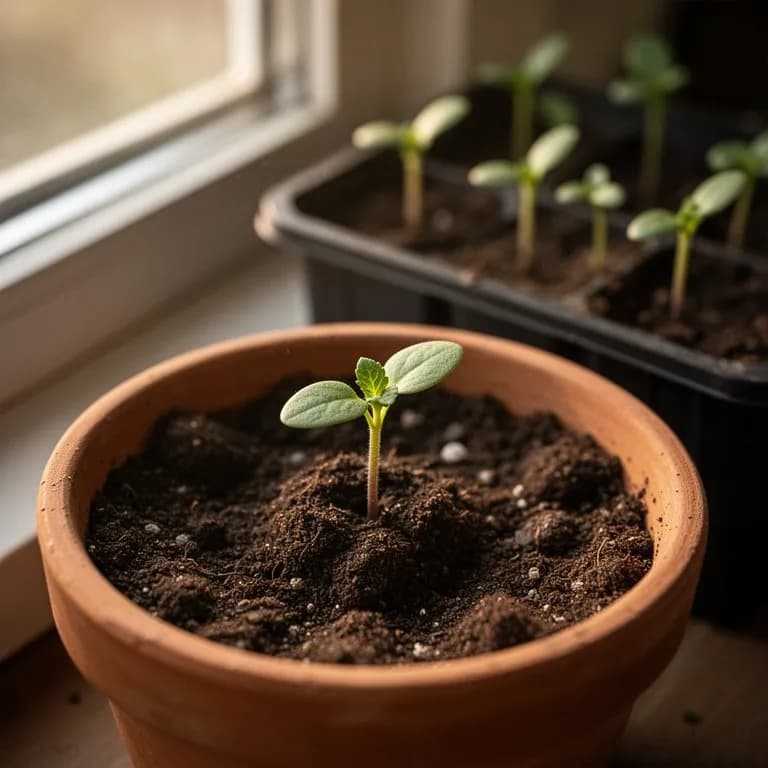
Germination
Days 0–10
Seeds germinate best in warm soil between 16-24°C. Sow seeds about 6mm deep and keep the soil lightly moist. Cosmos seeds need darkness to germinate, so cover them lightly with soil or vermiculite.
💡 Care Tip
Do not overwater during germination. Keep soil moist but not waterlogged. Avoid covering with plastic as cosmos seeds can rot in overly humid conditions.
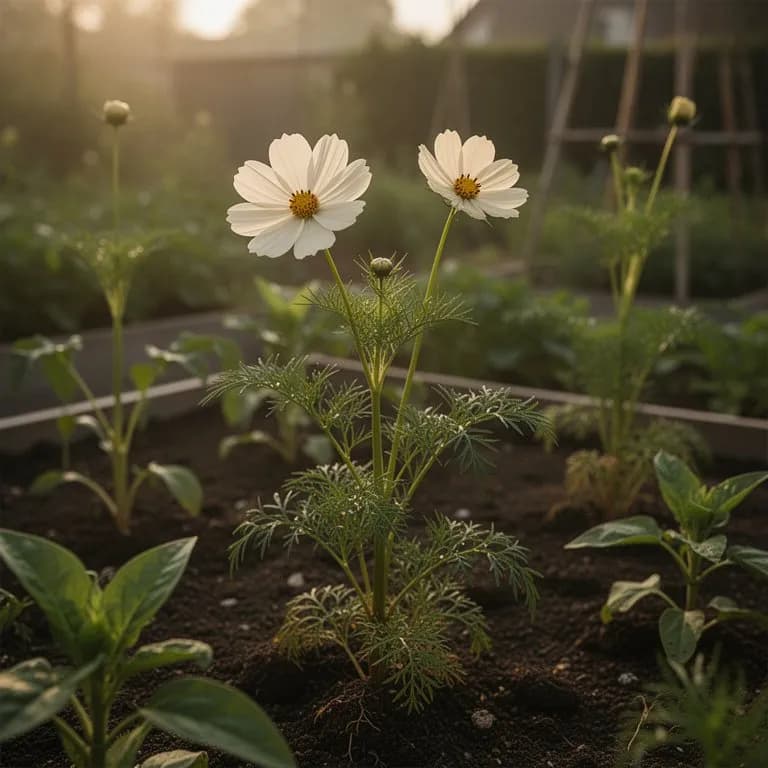
The finely divided, feathery leaves are a hallmark of Cosmos bipinnatus
Monthly Care Calendar
What to do each month for your Cosmos
May
You are hereThin direct-sown seedlings to 30-45cm apart. Pinch out growing tips of young plants to encourage branching. Begin watering if rainfall is insufficient, but keep soil on the dry side.
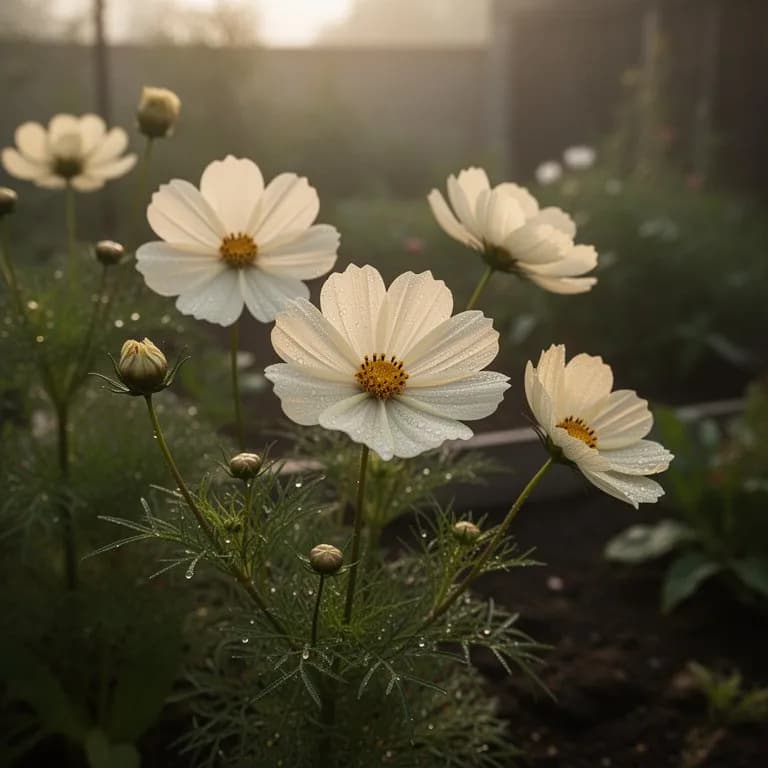
Classic pink cosmos blooms with their characteristic daisy-like form
Did You Know?
Fascinating facts about Cosmos
The name 'cosmos' comes from the Greek word 'kosmos' meaning order, harmony, and beauty — Spanish priests in Mexico gave the flower this name because of its perfectly symmetrical petals.
Direct sow cosmos seeds outdoors after all danger of frost has passed and soil temperature reaches at least 60 degrees Fahrenheit. Scatter seeds on the soil surface and cover lightly with a quarter inch of fine soil. Seeds germinate in five to ten days. Thin seedlings to twelve to eighteen inches apart for Cosmos bipinnatus varieties, which can grow four to six feet tall with ferny, delicate foliage.
Cosmos actually performs best in lean, average to poor soil. Rich soil and heavy fertilization produce tall, floppy plants with abundant foliage but few flowers. If your soil is very fertile, skip additional fertilizer entirely. Water regularly until plants are established, then reduce to occasional deep watering during dry spells. Cosmos is remarkably drought-tolerant once rooted.
For bushier plants and more blooms, pinch the growing tips when seedlings reach about twelve inches tall. Stake tall varieties or plant them where they can lean on fences or sturdy neighbors. Deadhead spent flowers regularly to encourage continuous blooming from midsummer through the first frost. Cosmos self-sows readily, and volunteer seedlings will appear the following spring in most climates.
Cosmos bipinnatus is native to the scrublands and meadows of Mexico, with its natural range extending through much of Central America. The plant thrives in the dry, warm conditions of the Mexican highlands, where it grows as a roadside wildflower at elevations between 1,500 and 2,400 meters. Indigenous peoples of Mexico appreciated the plant both for its beauty and for the dye that could be extracted from its petals. Spanish conquistadors and missionaries encountered cosmos during the colonization of the Americas in the 16th century, and by the late 18th century, seeds had been sent to the Royal Botanical Garden of Madrid. From Spain, cosmos quickly spread across European gardens, prized for their effortless elegance and ability to thrive in poor soils. The plant was formally described and classified by the French botanist Augustin Pyramus de Candolle in 1824. During the 19th century, cosmos became particularly popular in English cottage gardens and Japanese ornamental gardens. Japanese horticulturists developed many of the cultivated varieties we know today, breeding for larger flowers, shorter stems, and a wider color range. The 'Sensation' series, introduced in 1936, remains one of the most popular seed mixes worldwide. In the 20th century, cosmos earned a reputation as the quintessential easy-care annual, finding a home in wildflower meadows, pollinator gardens, and urban green spaces across every continent. Today, Cosmos bipinnatus is grown commercially for the cut flower industry and is widely naturalized in temperate regions around the world, a testament to its adaptability and enduring appeal.
Cosmos seeds are large and easy to handle, making them an ideal flower for children and beginning gardeners. Direct sow outdoors after the last frost, pressing seeds a quarter inch into the soil. Seeds germinate in five to ten days. For earlier blooms, start seeds indoors four to six weeks before the last frost in individual pots, as cosmos develops a taproot that resents disturbance. Successive sowings every three weeks from spring through early summer extend the bloom period through late fall.
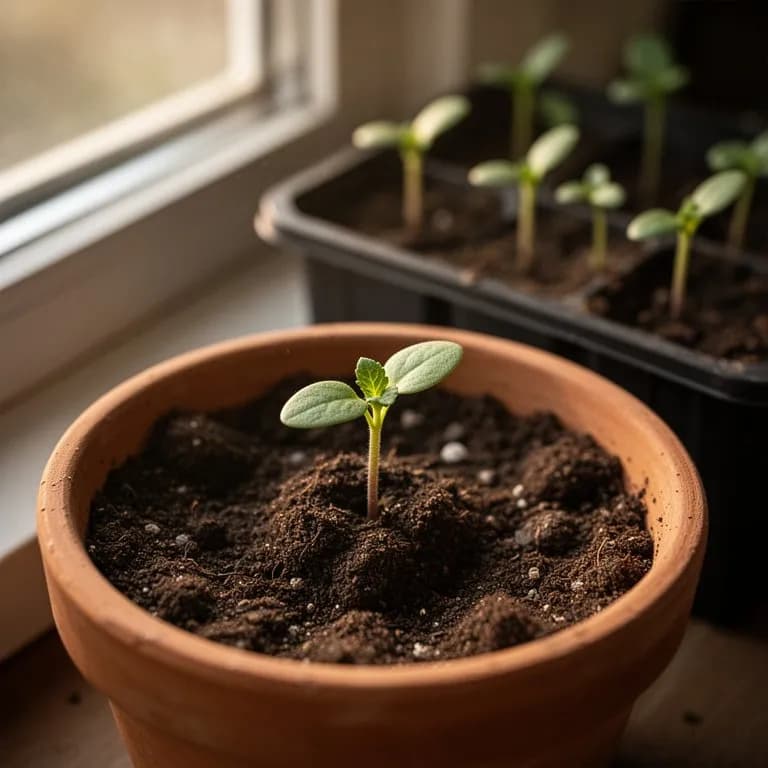
Cosmos seedlings typically emerge within 7-10 days of sowing
Cosmos thrives in average to poor, well-drained soil and does not need fertile conditions. Rich soil causes excessive leafy growth and weak, floppy stems with fewer flowers. Amend heavy clay soil with sand or perlite to improve drainage, but do not add compost or fertilizer for most garden soils. If soil is extremely poor and sandy, a single light application of balanced fertilizer at planting is sufficient. Over-fertilizing is the most common mistake with cosmos.
Check Your Zone
See if Cosmos is suitable for your location.
10°C – 35°C
50°F – 95°F
Cosmos thrive in warm conditions and tolerate heat well. They grow best between 16-30°C but can handle temperatures up to 35°C with adequate moisture. Plants are frost-tender and will be killed by temperatures below 0°C. Seeds germinate best at soil temperatures of 16-24°C. In very hot climates above 35°C, provide light afternoon shade and increase watering frequency.
Common issues affecting Cosmos and how to prevent and treat them organically.
The most frequent problem is tall, floppy plants that lodge after rain or wind, usually caused by rich soil or too much fertilizer. Staking or planting in groups helps tall varieties support each other. Cosmos bipinnatus may suffer in extreme heat above 95 degrees Fahrenheit, with reduced flowering until cooler weather returns. Powdery mildew can appear in late summer but rarely affects flowering. Self-sowing can become weedy in some gardens if spent flowers are not removed.
Cosmos makes an excellent companion for vegetable gardens by attracting beneficial insects such as hoverflies, lacewings, and parasitic wasps that prey on common garden pests. Plant alongside tomatoes, squash, and cucumbers to boost pollination and pest control. Cosmos combines beautifully with zinnias, sunflowers, and dahlias in cottage garden borders. The open, airy growth habit allows it to mingle with other plants without smothering them.
Cosmos are exceptional pollinator plants, attracting butterflies, bees, and hoverflies
- 1Sow cosmos seeds directly where they are to grow — they dislike root disturbance and transplanting can set them back. If starting indoors, use biodegradable pots that can be planted whole.
- 2Deliberately choose poor to average soil for cosmos. Rich, fertile soil produces tall, floppy plants with lots of leaves but few flowers. Lean soil forces the plant to bloom more prolifically.
- 3Pinch out the main growing tip when plants reach 20-25cm tall. This simple step encourages side branching and can double or triple the number of flower stems per plant.
- 4Space plants 30-45cm apart for tall varieties and 20-30cm for dwarf types. Closer spacing helps plants support each other and reduces the need for staking.
- 5Water deeply but infrequently once plants are established. Cosmos are drought-tolerant once their roots are developed and actually perform better with moderate water stress than with constant moisture.
- 6Deadhead spent flowers every 2-3 days to keep plants producing new blooms. Cut just above the next set of leaves or emerging buds rather than just removing the flower head.
- 7Grow cosmos alongside vegetables like tomatoes, squash, and beans to attract beneficial pollinators and predatory insects such as hoverflies and lacewings that feed on aphids.
- 8For the longest vase life, cut cosmos stems early in the morning when flowers are just beginning to open. Place immediately in cool water and expect 5-7 days of vase life.
- 9Leave a few late-season flowers to set seed for natural self-sowing. Mark your best plants with ribbon and collect their seeds separately for targeted seed saving.
- 10In windy locations, plant cosmos in clusters rather than single rows. Group plantings create mutual wind protection and produce a more natural, meadow-like appearance.
Cut cosmos flowers for arrangements when blooms are just opening or about three-quarters open for the longest vase life. Cut stems long, choosing those with buds at various stages for a natural look. For seed saving, allow flowers to remain on the plant until the long, needle-like seeds dry and darken. Clip the seed heads into a paper bag and separate the seeds by rubbing between your fingers. Deadhead regularly to prolong blooming through the entire season until hard frost.
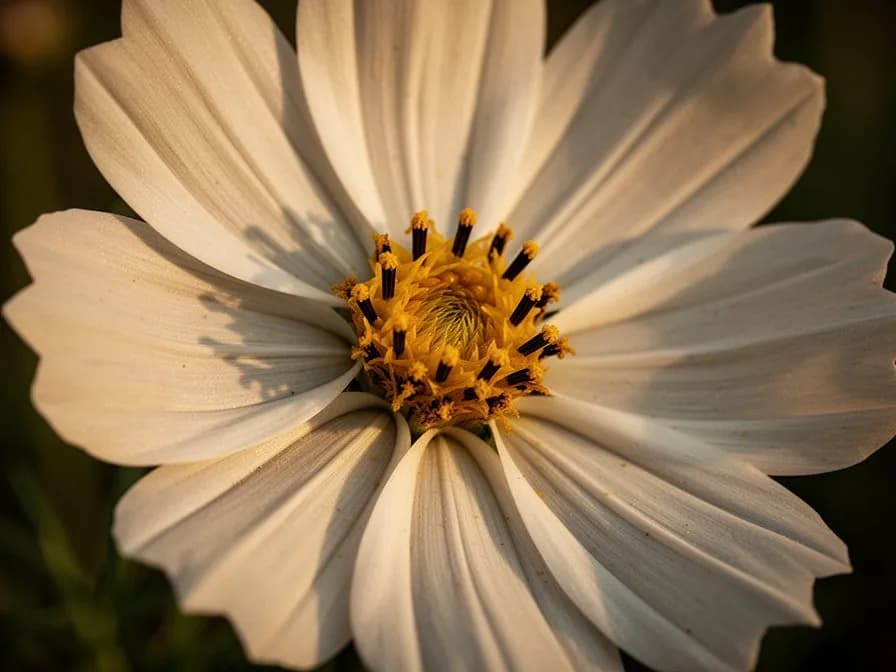
Allow seed heads to dry on the plant for easy seed saving
Fresh-cut cosmos last five to seven days in a vase with clean water and floral preservative. Recut stems at an angle and remove lower foliage. Change water every two days. Cosmos flowers can be pressed between sheets of parchment in a heavy book for two weeks for use in botanical crafts. For drying, cosmos is not ideal as petals tend to shrivel, but small single blooms can be preserved in silica gel for craft projects. Saved seeds store well for two to three years in a cool, dry place.
Plan your garden with ease
Love growing Cosmos? Use our free garden planner to design your beds, track planting dates, and get personalized care reminders.
Nutritional Info
Per 100g serving
15
Calories
Health Benefits
- Cosmos petals are edible and contain small amounts of antioxidants including flavonoids and carotenoids
- The flowers provide trace minerals when used as a garnish or in salads
- Cosmos petals contain anthocyanins, the same pigments found in blueberries, which have anti-inflammatory properties
- While not a significant food source, cosmos petals add color, mild sweetness, and a subtle floral note to dishes
- Cosmos flowers have been used in traditional Mexican herbal remedies for mild digestive support
💰 Why Grow Your Own?
Cosmos are one of the most cost-effective flowers you can grow. A single packet of seeds (approximately 100 seeds, costing around $2-4) can produce 60-80 plants, each yielding over 100 blooms across the season. That translates to thousands of cut flowers for the cost of a single store-bought bouquet. Cosmos also self-sow freely, meaning once established, you may never need to buy seeds again. Compared to purchasing fresh-cut flowers at $10-15 per bunch, a single season of cosmos can save a household $150-300 in flower purchases while providing months of continuous blooms from midsummer through frost.
Quick Recipes
Simple recipes using fresh Cosmos
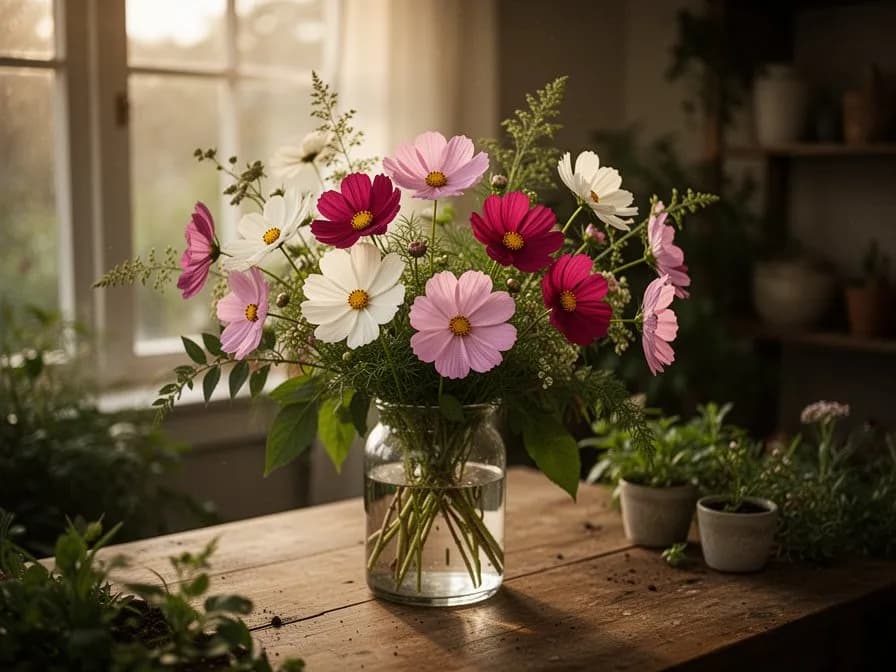
Cosmos Petal Salad with Citrus Vinaigrette
10 minutesA light, colorful salad featuring fresh cosmos petals tossed with mixed greens, shaved radish, and a bright lemon vinaigrette. The petals add a delicate sweetness and stunning visual appeal.
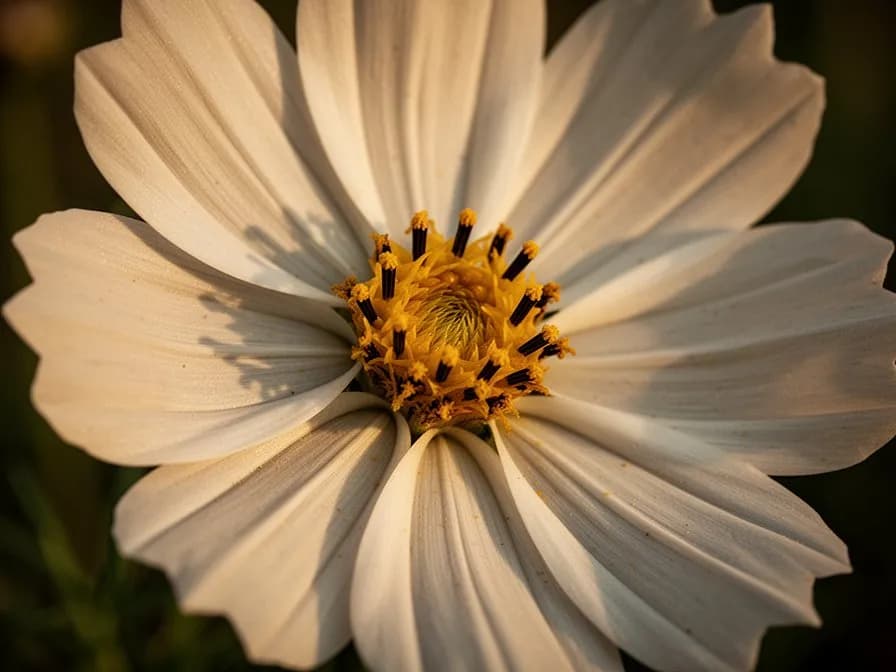
Cosmos Flower Ice Cubes
15 minutes plus freezing timeDecorative ice cubes with individual cosmos petals or small blooms frozen inside. Perfect for summer drinks, lemonade, or cocktails, adding a botanical elegance to any beverage.
Cosmos Petal Shortbread Cookies
25 minutes plus 30 minutes chillingButtery shortbread cookies pressed with fresh cosmos petals before baking. The petals become translucent and jewel-like in the oven, creating beautiful edible flower cookies.
Yield & Spacing Calculator
See how many Cosmos plants fit in your garden bed based on the recommended 30cm spacing.
16
Cosmos plants in a 4×4 ft bed
4 columns × 4 rows at 30cm spacing
Popular Varieties
Some of the most popular cosmos varieties for home gardeners, each with unique characteristics.
Sensation Mix
The classic tall cosmos reaching four to five feet with large three to four inch flowers in white, pink, and magenta on airy, ferny plants.
Sonata Series
Compact dwarf cosmos growing two feet tall, ideal for containers and small gardens while retaining full-sized flowers.
Double Click
Semi-double and double flowers with ruffled petals in rose, cranberry, and bicolors on three to four foot stems, striking as cut flowers.
Seashells Mix
Distinctive tubular, fluted petals that curl into shell-like shapes in pink, white, and crimson, adding unique texture to arrangements.
Cosmic Orange
A Cosmos sulphureus type with vivid orange semi-double flowers on compact two-foot plants, more heat-tolerant than C. bipinnatus varieties.
White varieties like 'Purity' are popular for cottage gardens and weddings
When should I plant Cosmos?
Plant Cosmos in April, May, June. It takes approximately 60 days to reach maturity, with harvest typically in July, August, September, October.
What are good companion plants for Cosmos?
Cosmos grows well alongside Zinnia, Marigold, Sunflower. Companion planting can improve growth, flavor, and natural pest control.
What hardiness zones can Cosmos grow in?
Cosmos thrives in USDA hardiness zones 5 through 11. With greenhouse protection, it may be grown in zones 3 through 12.
How much sun does Cosmos need?
Cosmos requires Full Sun (6-8h+). This means at least 6-8 hours of direct sunlight daily.
How far apart should I space Cosmos?
Space Cosmos plants 30cm (12 inches) apart for optimal growth and air circulation.
What pests and diseases affect Cosmos?
Common issues include Aphids, Powdery Mildew, Stem Canker. Prevention through good garden practices like crop rotation, proper spacing, and companion planting is the best approach. See the detailed pests and diseases section above for symptoms, prevention, and treatment for each.
How do I store Cosmos after harvest?
Fresh-cut cosmos last five to seven days in a vase with clean water and floral preservative. Recut stems at an angle and remove lower foliage. Change water every two days. Cosmos flowers can be pressed between sheets of parchment in a heavy book for two weeks for use in botanical crafts. For drying,...
What are the best Cosmos varieties to grow?
Popular varieties include Sensation Mix, Sonata Series, Double Click, Seashells Mix, Cosmic Orange. Each has unique characteristics suited to different growing conditions and culinary preferences. See the varieties section above for detailed descriptions.
What soil does Cosmos need?
Cosmos thrives in average to poor, well-drained soil and does not need fertile conditions. Rich soil causes excessive leafy growth and weak, floppy stems with fewer flowers. Amend heavy clay soil with sand or perlite to improve drainage, but do not add compost or fertilizer for most garden soils. If...
Why are my cosmos plants tall and leggy with very few flowers?
This is almost always caused by soil that is too rich in nitrogen. Cosmos evolved in poor, dry soils and respond to high fertility by producing excessive foliage instead of flowers. Avoid adding compost, manure, or fertilizer to the planting area. If your soil is naturally rich, try growing cosmos in containers with a lean, sandy mix instead.
When is the best time to sow cosmos seeds outdoors?
Sow cosmos seeds directly outdoors after all danger of frost has passed and the soil temperature has reached at least 16°C. In most temperate climates, this means late April to mid-May. For earlier blooms, start seeds indoors 4-6 weeks before the last frost date in biodegradable pots. Successive sowings every 2-3 weeks until early June will extend the flowering season.
Do cosmos come back every year or do I need to replant them?
Cosmos bipinnatus is an annual plant that completes its lifecycle in one growing season and dies after frost. However, cosmos self-sow very freely, and you will often find volunteer seedlings appearing in spring without any effort. To ensure reliable self-sowing, allow some flowers to go to seed in autumn and leave the dried seed heads in place over winter.
How do I prevent my tall cosmos from falling over in wind and rain?
Stake tall varieties early, before they reach full height, using bamboo canes or grow-through ring supports. Pinching the growing tip at 20-25cm encourages bushier, sturdier growth. Planting in groups allows stems to support each other. Dwarf varieties like 'Sonata' (45-60cm) are a good alternative for exposed or windy sites.
Are cosmos safe to plant near vegetables and herbs?
Yes, cosmos are excellent companion plants for vegetable gardens. They attract pollinators that improve fruit set on tomatoes, squash, peppers, and beans. They also draw beneficial predatory insects like hoverflies and lacewings whose larvae consume large numbers of aphids. Plant cosmos along borders or interspersed among vegetable rows for maximum benefit.
Can I grow cosmos in containers on a balcony or patio?
Absolutely. Choose dwarf varieties like 'Sonata Mix' (45-60cm) or 'Cosmic' series for containers. Use pots at least 25-30cm in diameter with good drainage holes and a free-draining compost mixed with extra perlite or grit. Water when the top 2-3cm of soil feels dry and deadhead regularly. Container cosmos may need light feeding with a dilute high-potash liquid fertilizer every 2-3 weeks to sustain blooming.
Ready to Grow Cosmos?
Add Cosmos to your garden plan and start designing your perfect layout.

Vladimir Kusnezow
Gardener and Software Developer
Zone 6b gardener. Growing vegetables and fruits in soil and hydroponics for 6 years. I built PlotMyGarden to plan my own gardens.
Jump to Section