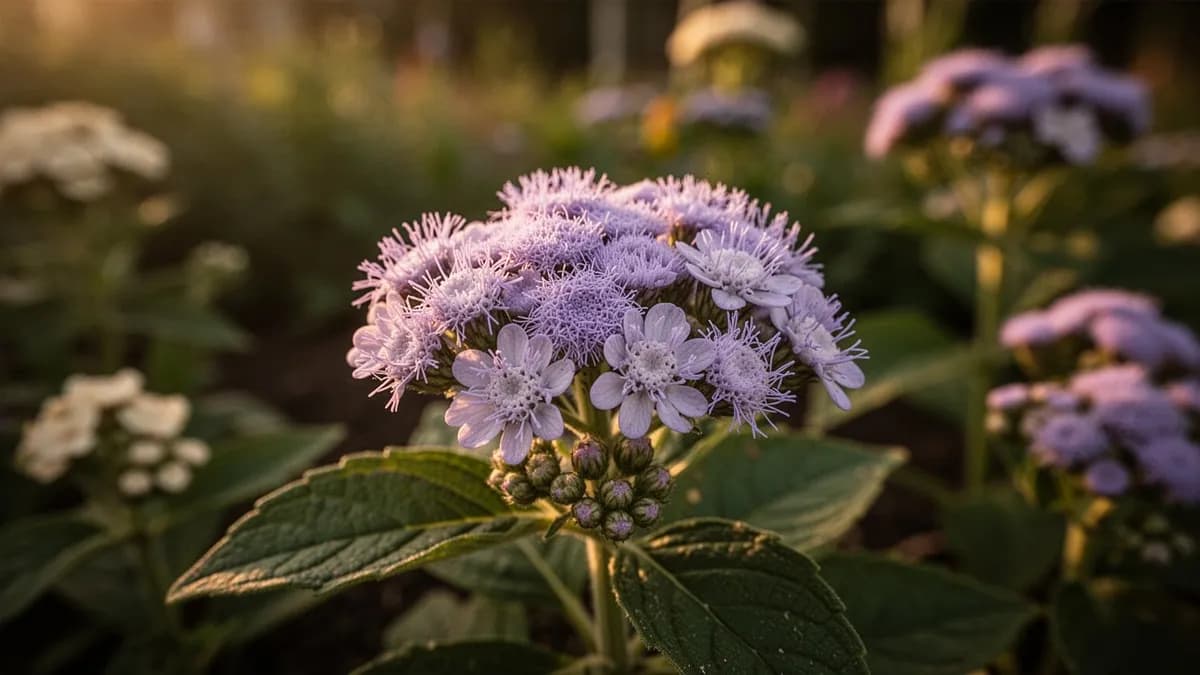
Ageratum
Ageratum houstonianum
At a Glance
It's planting season for Ageratum! Start planning your garden now.
A compact annual producing fuzzy clusters of blue, pink, or white flowers that bloom continuously throughout summer. Ageratum thrives in full sun to partial shade and benefits from regular deadheading to maintain tidy mounds. It makes an excellent edging plant and pairs well with other bedding annuals in borders and containers.
Planting & Harvest Calendar
Growth Stages
From Seed to Harvest
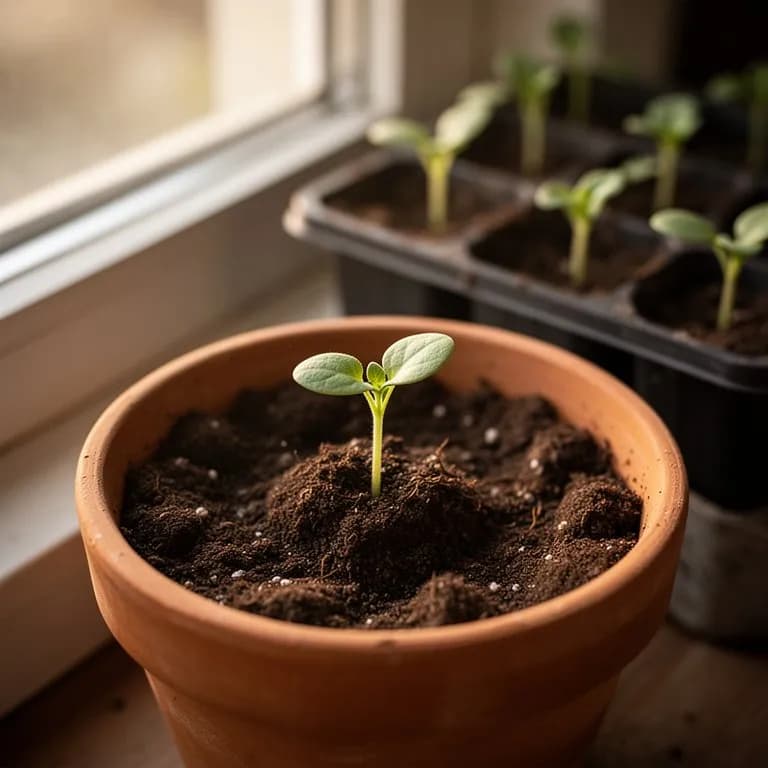
Seed Starting
Days 0–10
Ageratum seeds are extremely fine, almost dust-like, and require light to germinate. Sow them on the surface of a moist seed-starting mix without covering. Seeds need consistent warmth of 21-24°C and take 5-10 days to germinate. Mist gently to avoid displacing the tiny seeds.
💡 Care Tip
Do not cover seeds with soil. Press them lightly onto the surface and use a humidity dome or plastic wrap to maintain moisture. Bottom watering prevents washing the seeds away.
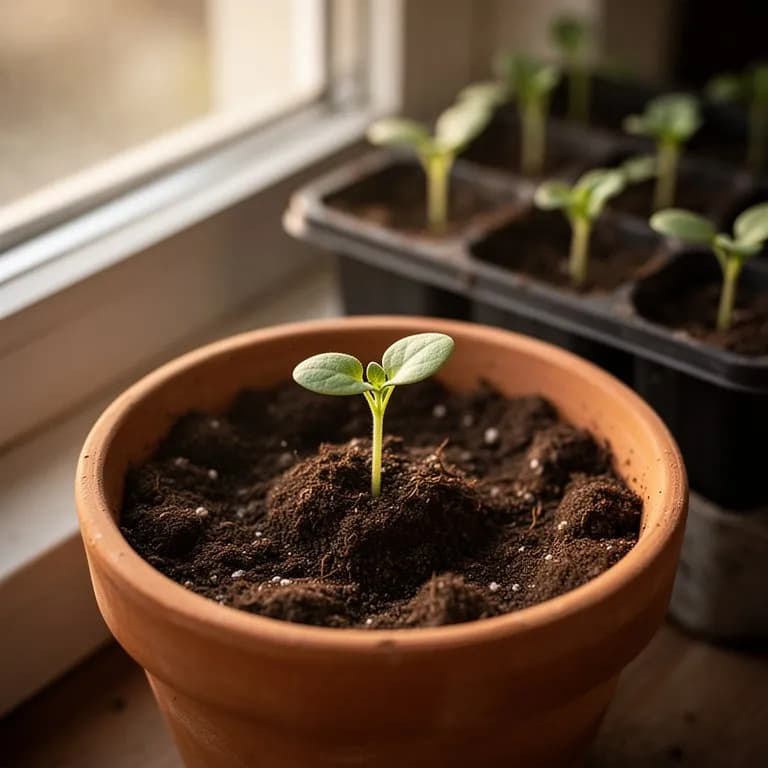
Ageratum seedlings develop their first true leaves within two weeks of germination under warm conditions
Monthly Care Calendar
What to do each month for your Ageratum
May
You are hereTransplant hardened-off seedlings into the garden after the last frost date, spacing dwarf types 15-20 cm apart and taller varieties 25-30 cm apart. Water thoroughly after planting and apply a thin layer of mulch around the base of each plant to conserve moisture.
Did You Know?
Fascinating facts about Ageratum
The name Ageratum comes from the Greek word 'ageratos' meaning 'un-aging' or 'ageless,' a reference to the remarkably long-lasting quality of its flowers which hold their color for weeks without fading.
Ageratum is a reliable bedding annual that produces fluffy flower clusters from early summer until the first frost. Start seeds indoors 6-8 weeks before the last frost, pressing the tiny seeds onto the surface of moist seed-starting mix without covering, as they need light to germinate. Transplant seedlings outdoors after all danger of frost has passed.
Space plants 6-12 inches apart depending on the variety—dwarf types for edging need less room than taller cutting varieties. Ageratum performs best in full sun but tolerates partial shade, especially in hot southern climates where afternoon shade prevents wilting. Keep soil consistently moist but not waterlogged.
Deadhead regularly by removing entire spent flower clusters to encourage fresh blooms and maintain a tidy appearance. Ageratum benefits from a mid-season trim if plants become leggy—cut back by one-third and they will flush with new growth and flowers within two weeks.
Ageratum houstonianum, commonly known as floss flower, is native to southeastern Mexico, Belize, Guatemala, and Honduras, where it grows as a short-lived perennial in tropical and subtropical habitats including open fields, roadsides, and forest clearings from sea level up to about 2,500 meters elevation. The species was first documented by European botanists in the early 18th century when Scottish surgeon and plant collector William Houston sent specimens from Veracruz, Mexico, to European gardens around 1733. The Swedish botanist Carl Linnaeus subsequently named the genus Ageratum, drawing on the Greek word 'ageratos' meaning non-aging, in admiration of the flower clusters that maintain their color and form far longer than most blossoms. By the late 1700s, ageratum had become a popular ornamental in European conservatories and formal gardens, prized for the rare true-blue hue of its flowers. During the 19th century, plant breeders in Germany, England, and France developed improved cultivars with more compact habits and richer flower colors, transforming the lanky wild species into the neat, mounding bedding plants we know today. The introduction of F1 hybrid varieties in the 1960s and 1970s brought unprecedented uniformity in height, bloom time, and color, cementing ageratum's status as one of the most reliable annual flowers for borders, edging, and mass plantings. Today it is cultivated worldwide in temperate and tropical regions. While treasured as an ornamental, ageratum has also naturalized in parts of tropical Africa, Asia, Australia, and the Pacific Islands, where it can become an aggressive weed in agricultural areas. In its native range, indigenous communities historically used ageratum leaf preparations as an external poultice for minor wounds and skin irritations, though internal use is discouraged due to the presence of pyrrolizidine alkaloids in the foliage.
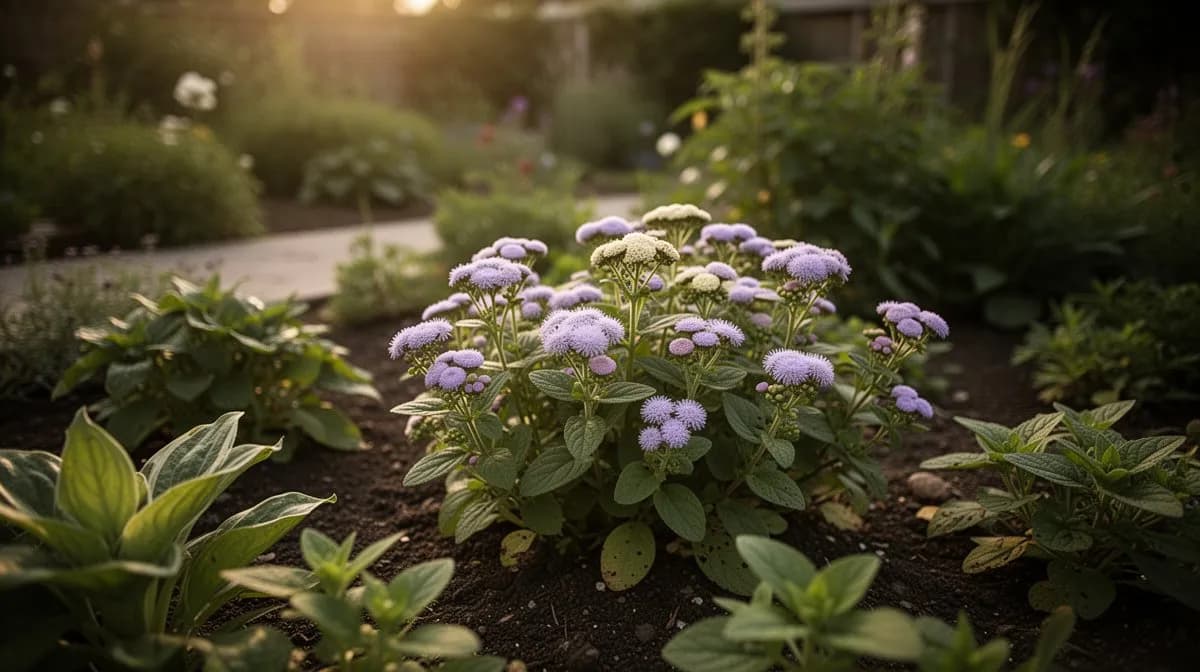
Dwarf ageratum varieties make excellent low-growing borders and edging plants along walkways and beds
Sow ageratum seeds indoors 6-8 weeks before the last expected frost. The seeds are very fine—mix with sand for even distribution and press onto the surface of moist seed-starting mix without covering, as seeds need light to germinate. Keep at 70-75°F (21-24°C) with consistent moisture. Germination takes 7-14 days. Transplant seedlings to individual cells when they have two true leaves. Harden off for a week before planting outdoors after the last frost.
Ageratum thrives in fertile, well-drained soil rich in organic matter with a pH of 6.0-7.0. Amend planting beds with compost before setting out transplants. Apply a balanced slow-release granular fertilizer at planting time, then feed every 3-4 weeks with a liquid fertilizer throughout the growing season. Avoid excessive nitrogen, which promotes foliage growth over flowering.
Check Your Zone
See if Ageratum is suitable for your location.
15°C – 30°C
59°F – 86°F
Ageratum thrives in warm conditions between 15°C and 30°C and performs best when daytime temperatures are consistently above 21°C. It is highly frost-sensitive and will be killed by temperatures at or below 0°C, so it should not be planted outdoors until all danger of frost has passed. Seeds germinate optimally at 21-24°C. Prolonged exposure to temperatures above 35°C can cause stress, leaf scorching, and reduced flowering. In hot climates, afternoon shade helps maintain bloom quality during the peak of summer.
Common issues affecting Ageratum and how to prevent and treat them organically.
Leggy, sparse growth usually indicates insufficient light—ageratum needs at least 6 hours of direct sun for compact habit. Plants that stop blooming in midsummer are heat-stressed; provide afternoon shade and keep soil moist during extreme heat. Spider mites can be a problem in dry conditions—increase humidity around plants. Self-sown seedlings from the previous year rarely come true to the parent variety's compact habit.
Ageratum is a classic companion for other bedding annuals in formal borders and containers. The blue-purple tones contrast beautifully with yellow marigolds, orange zinnias, and red salvia in traditional summer color schemes. Use dwarf varieties as a low edging in front of taller flowers. In the vegetable garden, ageratum attracts beneficial hover flies and tiny parasitic wasps that help control aphids on nearby crops.
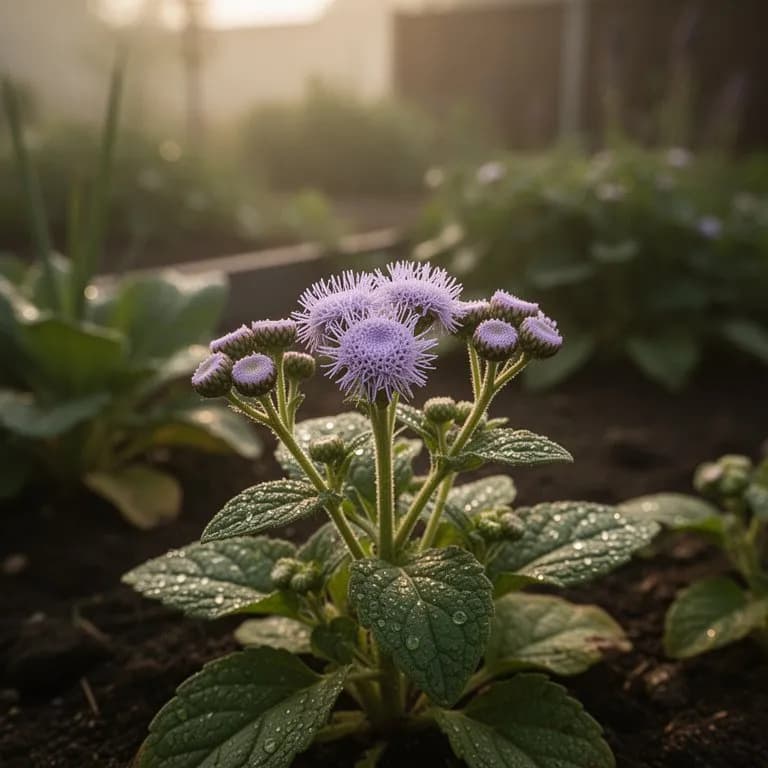
Ageratum is a magnet for butterflies, bees, and other beneficial pollinators throughout the growing season
- 1Start seeds indoors 8-10 weeks before the last frost date for the earliest blooms. Surface-sow on moist seed-starting mix and do not cover, as ageratum seeds need light to germinate. Maintain temperatures of 21-24°C for best results.
- 2Wait until all danger of frost has passed and soil temperatures are consistently above 15°C before transplanting seedlings outdoors. Ageratum is extremely frost-sensitive and even a light freeze will kill young plants.
- 3Space dwarf varieties 15-20 cm apart and taller cutting types 25-30 cm apart to allow good air circulation while achieving a full, mounded appearance. Overcrowded plants are more susceptible to powdery mildew.
- 4Pinch the growing tips of young plants when they reach 8-10 cm tall to encourage branching and a bushier habit. This single pinch results in significantly more flower clusters and a more attractive mounding shape.
- 5Water consistently, providing about 2.5 cm per week. Ageratum prefers evenly moist but not waterlogged soil. Drip irrigation or soaker hoses are ideal because overhead watering can promote fungal diseases on the dense foliage.
- 6Feed every two to three weeks with a balanced water-soluble fertilizer such as 10-10-10 during the growing season. Avoid high-nitrogen formulations which promote leafy growth at the expense of flower production.
- 7Deadhead spent flower clusters regularly by snipping them off just below the faded blooms. While ageratum has some self-cleaning ability, regular grooming keeps the plants looking their best and encourages continuous flowering.
- 8Plant ageratum alongside taller companions like zinnias, salvia, and ornamental grasses that provide afternoon shade in hot climates. Ageratum performs best with some shelter from intense midday sun in regions with temperatures above 32°C.
- 9Watch for whiteflies, which are the most common pest of ageratum. Check the undersides of leaves regularly and treat early infestations with insecticidal soap or neem oil spray applied in the early morning or evening.
- 10In humid climates, ensure good air circulation around plants to reduce the risk of powdery mildew and botrytis. Avoid wetting the foliage when watering and remove any yellowing or diseased leaves promptly to prevent spread.
Ageratum makes a charming filler flower in small arrangements. Cut stems when flower clusters are about three-quarters open, choosing stems with several clusters for the best effect. Cut in the early morning and strip lower leaves. Place in cool water with floral preservative. The fluffy flower heads last 5-7 days in the vase and complement roses, zinnias, and other summer flowers beautifully.
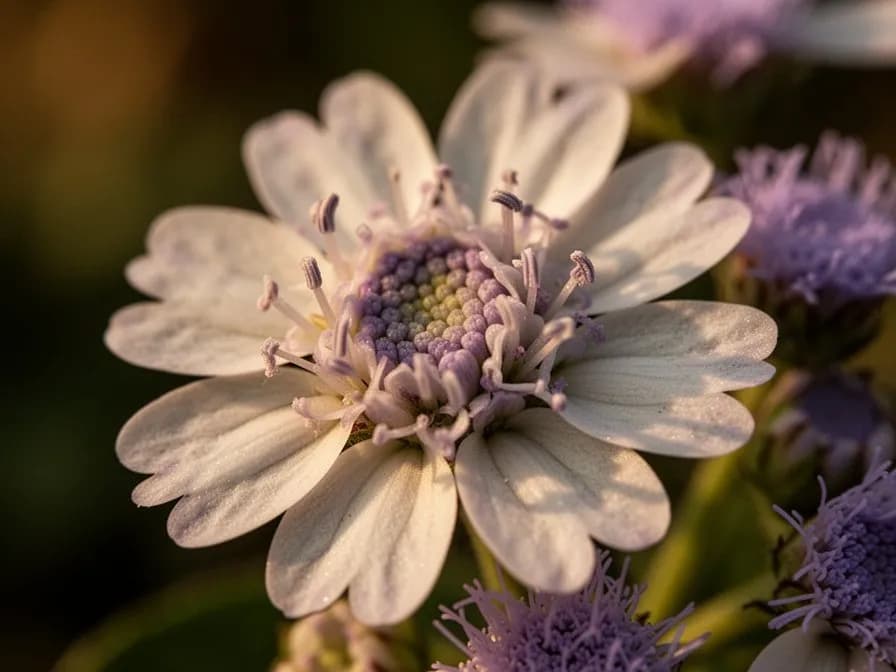
Ageratum flowers hold their color well when dried, making them a favorite for everlasting floral arrangements
Ageratum flowers can be dried for everlasting arrangements, though they lose much of their color. Hang small bunches upside down in a dark, warm, well-ventilated space for two weeks. The blue varieties retain more color when dried than pink or white. Ageratum is an annual and does not store as bulbs or tubers—save seed from dried flower heads for next year by shaking into an envelope and storing in a cool, dry place.
Plan your garden with ease
Love growing Ageratum? Use our free garden planner to design your beds, track planting dates, and get personalized care reminders.
Nutritional Info
Per 100g serving
0
Calories
Health Benefits
- Ageratum is grown exclusively as an ornamental flower and is not consumed as food
- The plant contains pyrrolizidine alkaloids in its leaves and stems, making it unsuitable and unsafe for internal consumption
- All nutritional values are not applicable because this is a non-edible ornamental species
- Some traditional external uses exist for leaf poultices, but these are not dietary applications
- The flowers are valued for their visual and pollinator-supporting qualities rather than any nutritional content
- If you are looking for edible flowers to grow, consider nasturtiums, borage, or calendula instead
💰 Why Grow Your Own?
A single packet of ageratum seeds costs $2-4 and contains 500-1,000 seeds, enough to produce dozens of plants that bloom continuously from early summer until frost. Six-packs of ageratum transplants typically retail for $4-6 at garden centers, meaning growing from seed saves roughly 80% compared to buying transplants. A flat of 36 nursery-grown ageratum plants can cost $20-30, while the same number grown from a $3 seed packet costs only pennies per plant. For gardeners who use ageratum as edging or mass plantings requiring 50-100 plants, seed-starting at home can save $50-100 or more per season. The plants also produce seeds that can be collected for free planting material in subsequent years.
Quick Recipes
Simple recipes using fresh Ageratum
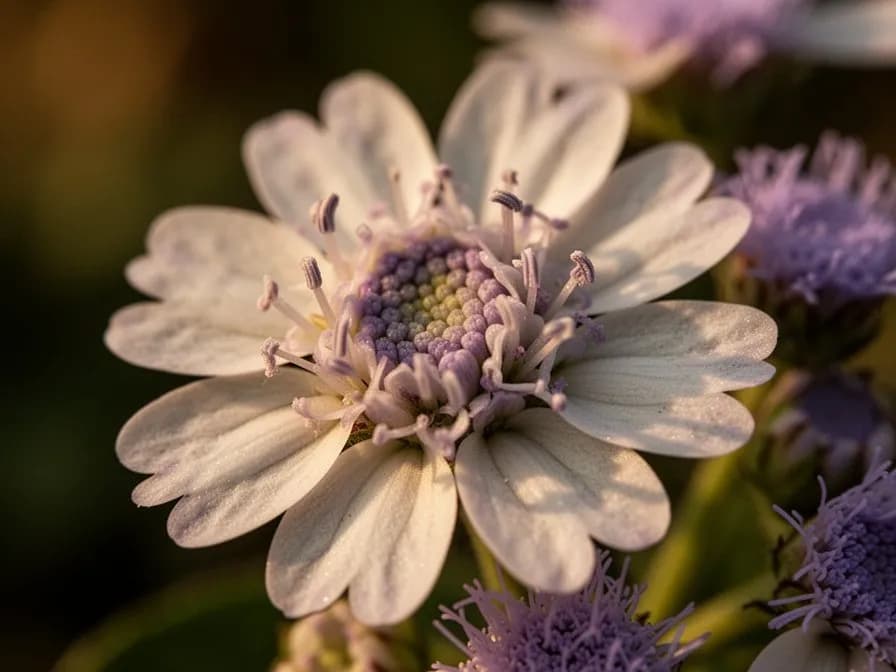
Ageratum Dried Flower Potpourri
20 minutes active, 1-2 weeks dryingA fragrant and colorful potpourri blend featuring dried ageratum blooms alongside complementary herbs and flowers. The ageratum flowers retain their blue-purple color beautifully when dried, adding a rare cool tone to the mix. Place in decorative bowls around the home for a natural air freshener.
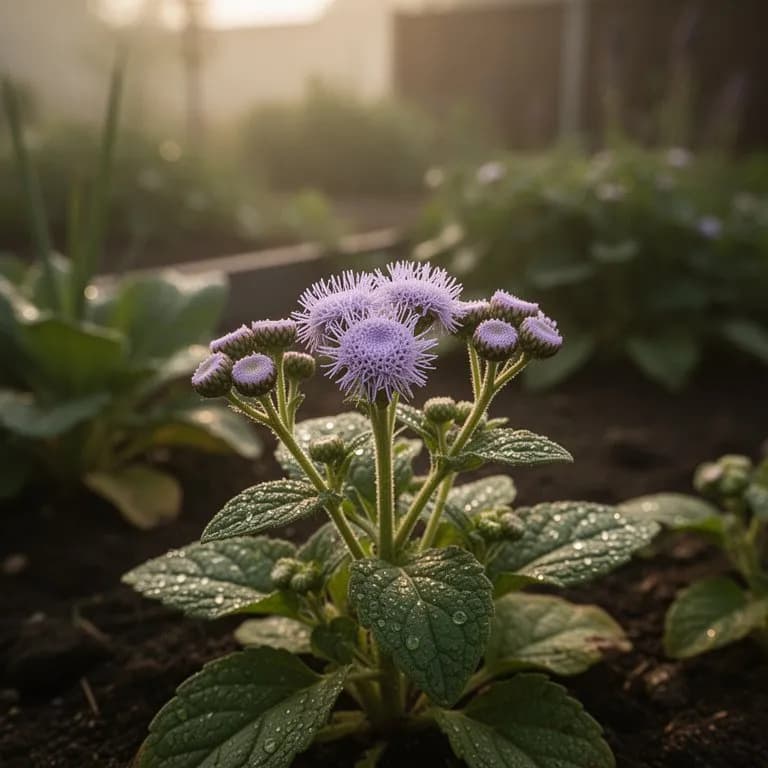
Fresh Ageratum Cut Flower Arrangement
15 minutesA stunning mixed bouquet featuring ageratum as a soft, textured filler flower alongside garden roses and greenery. The fluffy blue flower heads provide a beautiful contrast to bolder blooms and add a relaxed, cottage-garden charm to any tabletop arrangement.
Ageratum Pressed Flower Art
10 minutes active, 2-3 weeks pressingPreserve the delicate beauty of ageratum's fuzzy blue flower clusters by pressing them flat for use in botanical art, greeting cards, and framed displays. The tiny florets press beautifully and maintain their color, making them ideal for nature-inspired craft projects.
Compact ageratum cultivars thrive in containers and window boxes, adding soft color to patios and balconies
Yield & Spacing Calculator
See how many Ageratum plants fit in your garden bed based on the recommended 20cm spacing.
36
Ageratum plants in a 4×4 ft bed
6 columns × 6 rows at 20cm spacing
Popular Varieties
Some of the most popular ageratum varieties for home gardeners, each with unique characteristics.
Ageratum 'Blue Horizon'
A tall cutting variety reaching 24-30 inches with large, deep blue flower clusters on long stems. Excellent for arrangements.
Ageratum 'Blue Danube'
Compact 6-8 inch plants with powder-blue flowers. The classic choice for low edging and containers.
Ageratum 'Hawaii' series
Very dwarf at 4-6 inches with tight mounding habit in blue, white, and royal purple. Ideal for formal bedding.
Ageratum 'Artist Purple'
Rich violet-purple flowers on compact 8-inch plants. Heat-tolerant and long-blooming even in southern gardens.
While blue is the most popular color, ageratum cultivars also come in shades of purple, pink, and white
When should I plant Ageratum?
Plant Ageratum in April, May. It takes approximately 60 days to reach maturity, with harvest typically in June, July, August, September.
What are good companion plants for Ageratum?
Ageratum grows well alongside Marigold, Petunia, Sweet Alyssum. Companion planting can improve growth, flavor, and natural pest control.
What hardiness zones can Ageratum grow in?
Ageratum thrives in USDA hardiness zones 2 through 11. With greenhouse protection, it may be grown in zones 1 through 12.
How much sun does Ageratum need?
Ageratum requires Full Sun (6-8h+). This means at least 6-8 hours of direct sunlight daily.
How far apart should I space Ageratum?
Space Ageratum plants 20cm (8 inches) apart for optimal growth and air circulation.
What pests and diseases affect Ageratum?
Common issues include Whiteflies, Powdery Mildew, Crown Rot. Prevention through good garden practices like crop rotation, proper spacing, and companion planting is the best approach. See the detailed pests and diseases section above for symptoms, prevention, and treatment for each.
How do I store Ageratum after harvest?
Ageratum flowers can be dried for everlasting arrangements, though they lose much of their color. Hang small bunches upside down in a dark, warm, well-ventilated space for two weeks. The blue varieties retain more color when dried than pink or white. Ageratum is an annual and does not store as bulbs...
What are the best Ageratum varieties to grow?
Popular varieties include Ageratum 'Blue Horizon', Ageratum 'Blue Danube', Ageratum 'Hawaii' series, Ageratum 'Artist Purple'. Each has unique characteristics suited to different growing conditions and culinary preferences. See the varieties section above for detailed descriptions.
What soil does Ageratum need?
Ageratum thrives in fertile, well-drained soil rich in organic matter with a pH of 6.0-7.0. Amend planting beds with compost before setting out transplants. Apply a balanced slow-release granular fertilizer at planting time, then feed every 3-4 weeks with a liquid fertilizer throughout the growing s...
Is ageratum a perennial or an annual?
In its native habitat of Mexico and Central America, Ageratum houstonianum is a short-lived perennial. However, it is grown as a warm-season annual in most temperate gardens because it cannot survive frost. The plant will be killed by the first hard freeze in autumn. In frost-free tropical and subtropical regions (USDA zones 10-11), ageratum may persist for more than one season and can even self-seed readily.
What are the best ageratum varieties for garden borders?
For low-growing garden borders and edging, dwarf cultivars such as 'Blue Danube' (15-20 cm), 'Hawaii Blue' (15 cm), 'Artist Blue' (15-20 cm), and 'Blue Mink' (20-25 cm) are excellent choices. These compact varieties form dense, uniform mounds covered in blooms. For cutting gardens where taller stems are needed, 'Blue Horizon' (45-60 cm) is the industry standard, producing long stems ideal for fresh and dried floral arrangements.
Is ageratum toxic to pets or people?
Ageratum plants contain pyrrolizidine alkaloids, primarily in the leaves and stems, which can be toxic to the liver if consumed internally in significant quantities. The plant should not be eaten by humans, dogs, cats, or livestock. While handling the plant during routine garden care is generally safe, wearing gloves is recommended for those with sensitive skin, as the hairy foliage can cause mild contact irritation in some individuals. Keep ageratum out of reach of curious pets and young children.
Why are my ageratum plants not flowering?
The most common reasons for poor flowering in ageratum are insufficient sunlight (the plant needs at least 6 hours of direct sun), over-fertilization with nitrogen-heavy products that promote foliage over blooms, and planting too late in the season for the plants to mature before heat stress sets in. Ensure plants are receiving balanced fertilizer, adequate light, and consistent watering. Pinching young plants to promote branching also significantly increases the number of flower clusters produced.
Can I grow ageratum in containers?
Ageratum is an excellent container plant, especially the compact dwarf varieties. Use a pot at least 15-20 cm in diameter with good drainage holes and fill with a quality potting mix. Container-grown ageratum needs more frequent watering than garden plants, often daily during hot weather, because pots dry out quickly. Feed with liquid fertilizer every two weeks and deadhead regularly. Ageratum looks wonderful in window boxes, hanging baskets, and mixed container plantings paired with trailing plants like sweet alyssum or lobelia.
How do I save ageratum seeds for next year?
Allow several flower clusters to remain on the plant after blooming until they dry and turn brown. The tiny seeds are contained in small dry capsules within the spent flower heads. Snip the dried clusters and crush them gently over a sheet of white paper to release the fine seeds. Separate the seeds from the chaff by gently blowing across the paper. Store seeds in a labeled paper envelope in a cool, dry place. Ageratum seeds remain viable for 2-3 years when stored properly. Note that seeds saved from F1 hybrid varieties may not produce plants identical to the parent.
Ready to Grow Ageratum?
Add Ageratum to your garden plan and start designing your perfect layout.

Vladimir Kusnezow
Gardener and Software Developer
Zone 6b gardener. Growing vegetables and fruits in soil and hydroponics for 6 years. I built PlotMyGarden to plan my own gardens.
Jump to Section