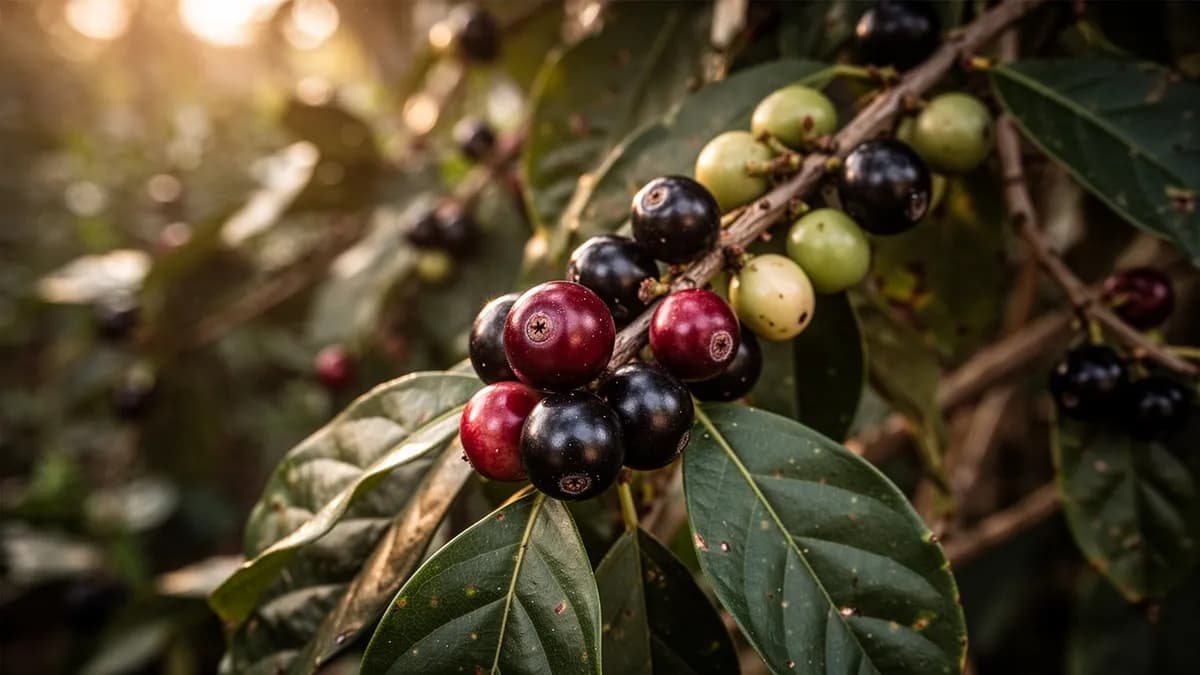
Acai Berry
Euterpe oleracea
At a Glance
It's planting season for Acai Berry! Start planning your garden now.
A tropical palm tree producing clusters of small, dark purple berries prized for their antioxidant content and use in smoothie bowls. Acai palms require tropical conditions with high humidity and consistent warmth, making them suitable only for frost-free zones or heated greenhouses. The berries must be processed within 24 hours of harvest as they deteriorate rapidly.
Planting & Harvest Calendar
Growth Stages
From Seed to Harvest
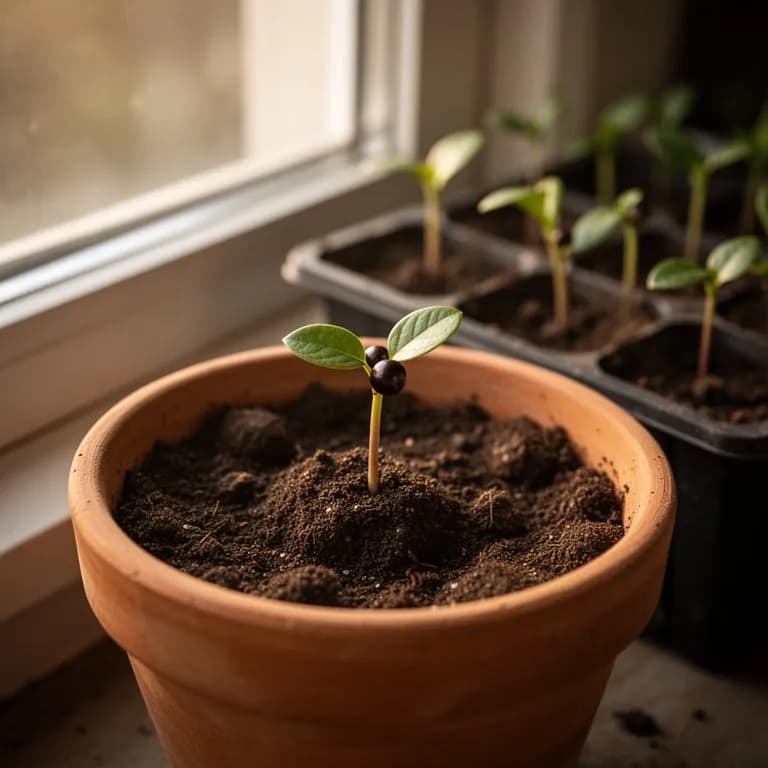
Seed Germination
Days 0–60
Açaí seeds are large, round, and contain minimal endosperm, so they must be planted fresh — viability drops sharply within a week of separation from the pulp. Seeds should be cleaned thoroughly and sown 1–2 cm deep in a warm, moist substrate. Germination is slow and irregular, typically occurring between 30 and 60 days at temperatures of 25–30°C. A single radicle emerges first, followed by a single cotyledonary petiole that anchors the seedling while the first true leaf develops below ground.
💡 Care Tip
Sow fresh seeds immediately after cleaning. Maintain soil temperature above 25°C using a heat mat. Keep the growing medium consistently moist but not waterlogged, and provide high ambient humidity of at least 70% for the best germination rates.
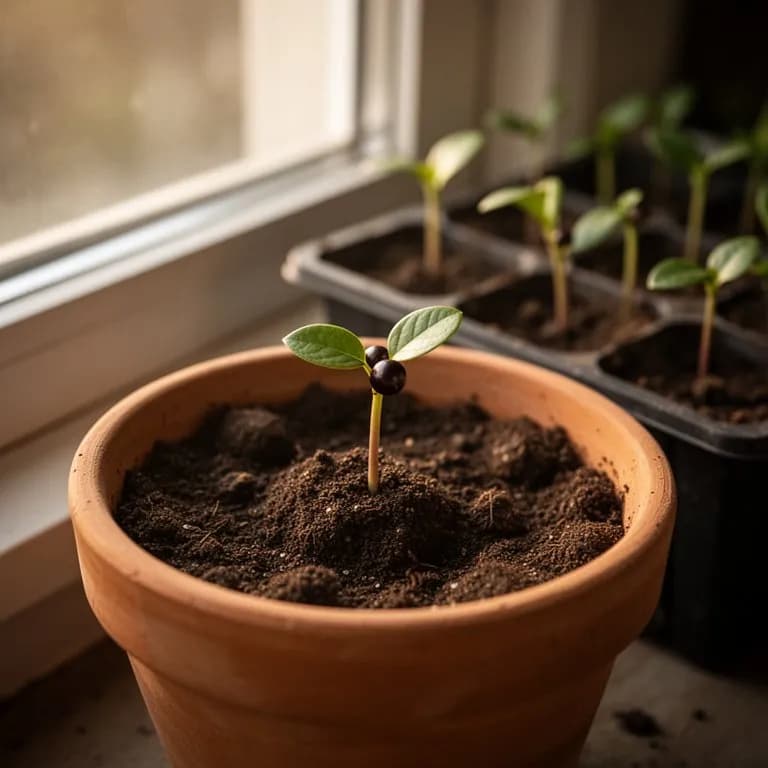
Açaí palms grow as multi-stemmed clumps from seed; seedlings develop their characteristic feathery fronds within the first year
Monthly Care Calendar
What to do each month for your Acai Berry
April
You are hereNo specific care tasks for this month.
Did You Know?
Fascinating facts about Acai Berry
The açaí palm (Euterpe oleracea) is native to the Amazon River delta and floodplain forests of Brazil, and a single wild palm can produce up to 40 kg of fruit per year — a critical food and income source for riverside communities known as ribeirinhos.
Acai palms are tropical plants native to the floodplains of the Amazon basin and require consistently warm, humid conditions to thrive. They grow only in USDA zones 10 to 12 outdoors or in heated tropical greenhouses elsewhere. Plant in rich, organic soil that retains moisture but does not become stagnant. Acai palms naturally grow in swampy conditions and appreciate consistently moist soil.
These multi-stemmed palms can reach sixty to eighty feet in their native habitat but grow more slowly in cultivation, typically reaching twenty to thirty feet. Space plants ten feet apart in a sheltered, humid location with full sun to light shade. Protect from wind, which can damage the large, feathery fronds.
Maintain high humidity through regular misting or placement near water features. Water deeply and frequently, never allowing the soil to dry out completely. Fertilize monthly with a balanced palm fertilizer during the growing season. Acai palms take four to five years to begin fruiting from seed and produce multiple harvests per year once mature. In non-tropical climates, container culture in a heated greenhouse is the only viable option.
The açaí palm (Euterpe oleracea) is indigenous to the vast floodplain forests of the Amazon basin, particularly the estuary region of the Amazon River delta in the Brazilian state of Pará. It thrives in the seasonally flooded várzea and igapó forests, growing naturally along riverbanks, in swampy lowlands, and on the tidal islands of the delta region, tolerating periodic inundation that would kill most other fruit trees. Indigenous Amazonian peoples have harvested açaí as a dietary staple for thousands of years. Archaeological evidence from sites in the Brazilian Amazon indicates açaí seed deposits dating back at least 1,000 years, and the fruit almost certainly played a role in the diet of pre-Columbian populations far longer than that. For the ribeirinho communities — the traditional riverside peoples of the Amazon — açaí is not a luxury food but a fundamental daily caloric source, often consumed in a thick porridge mixed with manioc flour (farinha) and eaten alongside dried fish. The name 'açaí' derives from the Nheengatu language spoken by Tupian peoples of the Amazon basin, roughly translating as 'fruit that cries' or 'fruit of the water-crying people,' a reference to the abundant juice the berries yield when processed. For much of the 20th century, açaí remained almost entirely unknown outside of northern Brazil. The fruit's extreme perishability — it must be processed within a day of harvest at tropical temperatures — made export essentially impossible until the development of flash-freezing infrastructure in the Amazon region during the 1980s and early 1990s. The commercial breakthrough came in the mid-1990s when entrepreneurs in Rio de Janeiro began marketing frozen açaí pulp to the growing health and fitness community in southern Brazil. Brazilian jiu-jitsu practitioners popularized açaí bowls as a performance food, and when Brazilian athletes, coaches, and martial artists emigrated to the United States and Europe, they brought the açaí bowl with them. By the mid-2000s, açaí had been seized upon by the global health food industry and was being marketed aggressively as a 'superfood' with extraordinary antioxidant properties. This surge in global demand transformed the economy of the Amazon delta. Belém do Pará, long the hub of traditional açaí trade, became the center of a modern international supply chain, and açaí cultivation expanded rapidly from wild harvest to cultivated plantations. Today, Brazil produces over 200,000 tonnes of açaí fruit annually, with Pará state accounting for the overwhelming majority of supply. The global açaí market is now valued in the billions of dollars, and the palm is cultivated in tropical regions across Central America, the Caribbean, and Southeast Asia, though the Amazon delta product is still considered the gold standard for flavor and nutritional profile.
Acai palms are grown exclusively from seed. Fresh seeds germinate most reliably; dried seeds lose viability quickly. Soak fresh seeds in warm water for twenty-four hours, then plant one inch deep in moist, warm seed-starting mix. Maintain temperatures of eighty to ninety degrees Fahrenheit with high humidity using a heat mat and humidity dome. Germination takes one to three months and is often erratic. Seedlings grow slowly and must be kept warm and moist at all times. Transplant to larger containers as they outgrow their pots.
Acai palms prefer rich, organic, slightly acidic soil with a pH of 5.5 to 6.5 that stays consistently moist. In their native habitat, they grow in periodically flooded alluvial soils. Amend planting areas with generous compost and peat moss. Fertilize monthly with a complete palm fertilizer containing micronutrients including manganese, magnesium, and iron. Potassium is especially important for palm health and fruit production. Mulch heavily to maintain moisture and add organic matter.
Check Your Zone
See if Acai Berry is suitable for your location.
15°C – 38°C
59°F – 100°F
Açaí palms are tropical plants that thrive in consistently warm, humid conditions between 22–32°C (72–90°F). They are sensitive to cold and will suffer leaf damage below 10°C (50°F), with the potential for fatal crown damage at or below 5°C (41°F). Brief temperature dips to around 12–15°C are tolerated by established specimens but will slow growth significantly. Ideal growing conditions combine high temperatures with high humidity (70–90%) and consistent rainfall or irrigation. Container-grown plants should be overwintered indoors in temperate climates, kept above 15°C at all times.
Common issues affecting Acai Berry and how to prevent and treat them organically.
The primary challenge is providing the tropical conditions acai palms require. They are killed by any frost and struggle in low humidity. In non-tropical regions, maintaining adequate warmth and humidity in a greenhouse is energy-intensive. The rapid deterioration of harvested berries makes fresh consumption impractical outside of tropical growing regions. Slow growth means four to five years before first harvest. The tall growth habit makes harvesting difficult without specialized equipment.
In tropical settings, acai palms grow well with banana plants, which share similar moisture and humidity requirements. Understory tropical plants like ginger and taro thrive in the dappled shade beneath acai fronds. Cacao and coffee are traditional companion crops in agroforestry systems featuring acai palms. The tall, slender growth habit of acai palms allows significant light to reach understory plantings, making them excellent canopy components.
- 1Plant açaí in a location with consistently warm temperatures above 18°C year-round. Even brief cold snaps below 10°C can cause lasting frond damage and significantly set back overall plant development, so tropical or heated greenhouse growing is essential.
- 2Maintain soil moisture consistently — açaí palms naturally grow in seasonally flooded riverine environments and dislike prolonged drought. Water deeply and frequently during the growing season, ensuring drainage is sufficient to prevent true waterlogging of the root crown.
- 3Use a purpose-formulated palm fertilizer that includes micronutrients, particularly magnesium and manganese, which are commonly deficient in container-grown palms. Yellowing between leaf veins (interveinal chlorosis) on younger fronds is a classic sign of manganese deficiency and responds well to foliar manganese sulfate application.
- 4Sow fresh açaí seeds immediately after extracting them from ripe fruit, as viability drops sharply within days once separated from the pulp. Clean seeds thoroughly by washing away all pulp residue, which can harbor fungal pathogens that rot the seed before germination.
- 5Grow açaí in high humidity wherever possible — ideally above 60–70%. In dry indoor environments, mist fronds daily, place containers on humidity trays filled with pebbles and water, or run a humidifier nearby. Low humidity causes frond tip browning and slows growth significantly.
- 6Repot container-grown açaí into progressively larger containers as the clump expands, using a well-draining tropical palm mix amended with perlite. Avoid using standard potting compost alone, which can become waterlogged and anaerobic around the roots of a frequently watered tropical plant.
- 7Protect container plants from cold drafts, air conditioning vents, and heating system outflows. While açaí needs warmth, dry heated air damages fronds just as surely as cold, so position plants away from HVAC vents in indoor winter quarters.
- 8Be patient — açaí is one of the slower fruiting tropical plants, typically requiring 4–6 years from seed before the first flowers appear. Focus on building a healthy, vigorous, multi-stemmed clump during the juvenile years rather than expecting early fruit production.
- 9In tropical gardens, mulch generously around the base with organic material such as coconut coir, leaf mold, or wood chips to retain the consistent moisture the plant craves and to gradually build the rich, humus-heavy soil profile that mirrors its natural riverine habitat.
- 10Harvest ripe clusters promptly — do not leave them on the palm past peak ripeness. Overripe berries ferment on the cluster and can attract pests. Process or freeze harvested berries within 12 hours to lock in nutritional value and prevent the rapid flavor degradation that makes delayed processing commercially unacceptable.
Acai berries grow in large drooping clusters on the palm and ripen year-round in tropical conditions. Clusters are ready to harvest when the berries turn deep purple-black. In traditional harvesting, workers climb the palm and cut entire fruit clusters using a machete. For home growers, a pole pruner can reach clusters on shorter palms. Acai berries are highly perishable and must be processed within twenty-four hours of harvest, as enzymatic degradation rapidly destroys their nutritional value and flavor.
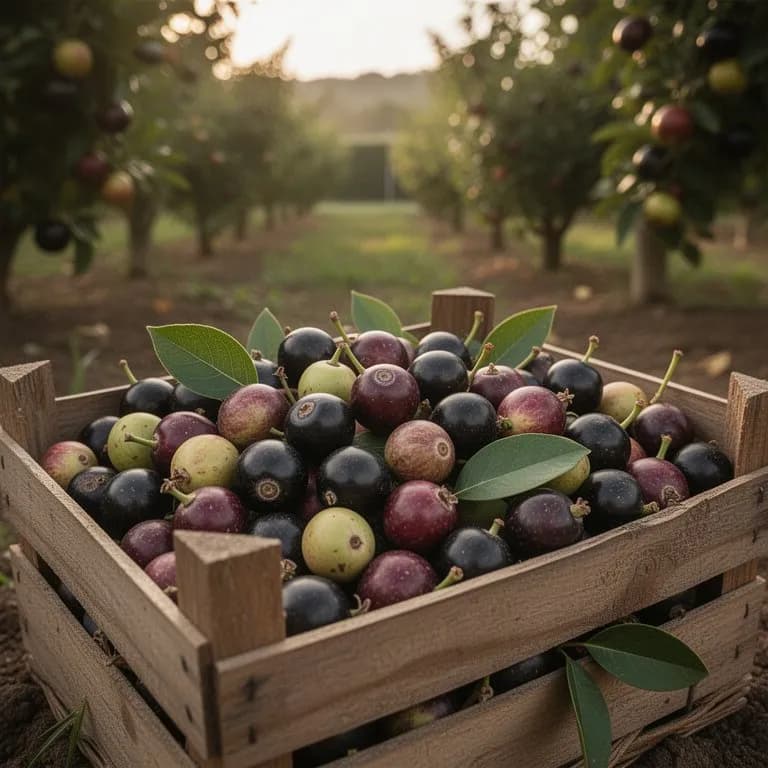
A single fruit cluster can contain 700–900 berries, each ripening to a deep purple-black color when mature
Fresh acai berries cannot be stored and must be processed immediately. Soak berries in warm water to soften the skin, then blend and strain to produce acai pulp. The pulp can be frozen in portions for up to twelve months and is the standard form used in smoothie bowls. Freeze-drying produces acai powder for longer storage. Fresh juice can be pasteurized and refrigerated for a few days. The rapid deterioration of fresh berries is why acai is almost exclusively consumed in processed forms outside of the Amazon region.
Plan your garden with ease
Love growing Acai Berry? Use our free garden planner to design your beds, track planting dates, and get personalized care reminders.
Nutritional Info
Per 100g serving
70
Calories
Health Benefits
- Extraordinarily high in anthocyanin antioxidants — studies have measured açaí pulp at 3,800 ORAC units per gram, among the highest of any food tested
- Provides a beneficial ratio of oleic acid (omega-9) and linoleic acid (omega-6), giving açaí a unique fatty acid profile more similar to olive oil than to other fruits
- Contains plant sterols including beta-sitosterol, campesterol, and sigmasterol, which have been studied for their cholesterol-modulating properties
- Rich in polyphenolic compounds including proanthocyanidins, catechins, and ferulic acid that contribute broad-spectrum antioxidant activity beyond anthocyanins alone
- Provides meaningful amounts of calcium and iron per serving, making it nutritionally relevant for plant-based diets beyond its antioxidant reputation
- Low in sugar relative to most fruits, with a glycaemic impact similar to berries rather than tropical fruits like mango or pineapple
💰 Why Grow Your Own?
Frozen açaí pulp packets (100g) retail for $2–4 each, and a single daily açaí bowl can cost $12–18 at a café or juice bar. Growing your own açaí palm in a tropical climate eliminates pulp costs entirely once the tree matures — a productive palm yields up to 40 kg of fresh fruit per year, the equivalent of $200–400 worth of commercial frozen pulp. In temperate climates, growing açaí requires significant investment in container infrastructure and indoor overwintering, making the cost savings less straightforward; however, growing from seed (inexpensive if you source fresh seeds) remains far more economical than repeated nursery purchases. Supplementing fresh fruit with home-purchased freeze-dried açaí powder ($15–25 per 100g) for smoothies and recipes is the most practical cost-saving approach for non-tropical gardeners.
Quick Recipes
Simple recipes using fresh Acai Berry
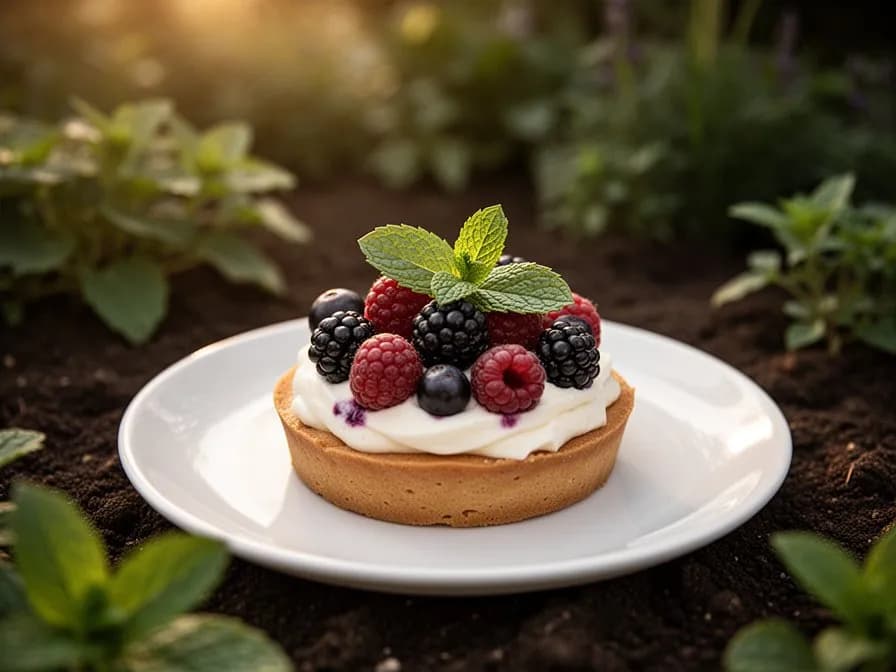
Classic Açaí Bowl
5 minutesThe iconic Brazilian-born superfood bowl: thick frozen açaí pulp blended to a dense, smooth consistency and topped with fresh fruit, granola, and honey. The key is using frozen açaí and as little liquid as possible so the base holds its shape like a thick ice cream. Serve immediately for the best texture.
Açaí Berry Smoothie
5 minutesA vibrant, deeply purple smoothie that delivers a dense concentration of antioxidants in a refreshing drinkable form. Blending açaí with mixed berries amplifies both the flavor and the nutritional profile. The banana adds natural sweetness and a creamy texture without the need for added sugar.
Açaí and Dark Chocolate Energy Bites
20 minutes + 30 minutes chillingNo-bake energy balls that combine the intense antioxidant power of açaí powder with dark chocolate, oats, and nut butter. These make an excellent pre-workout snack or healthy sweet treat. The açaí powder gives each bite a subtle fruity tang and a striking deep purple-brown color.
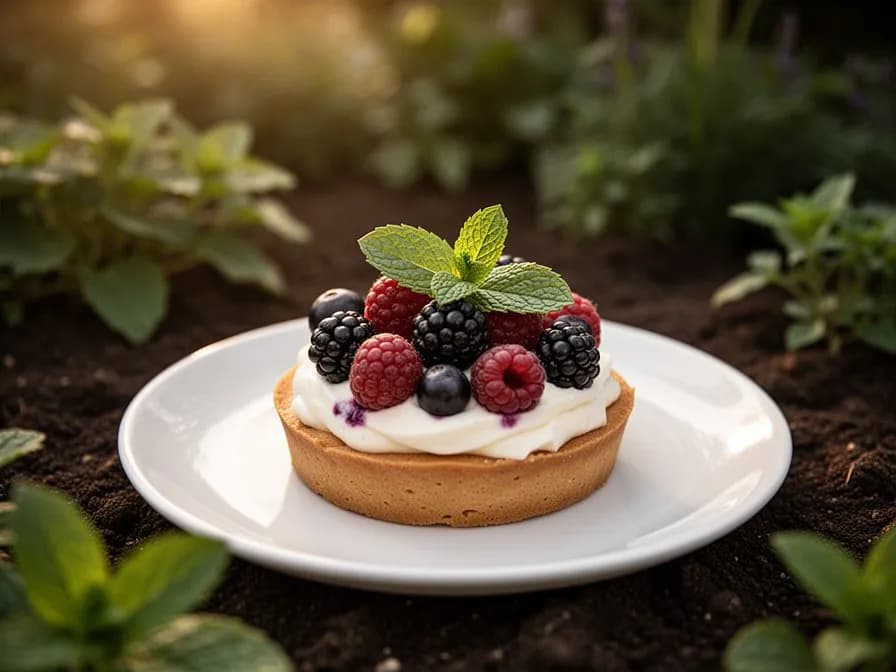
Açaí bowls blend frozen açaí pulp with liquid into a thick, ice-cream-like base, topped with fresh fruit and granola
Yield & Spacing Calculator
See how many Acai Berry plants fit in your garden bed based on the recommended 300cm spacing.
0
Acai Berry plants in a 4×4 ft bed
0 columns × 0 rows at 300cm spacing
Popular Varieties
Some of the most popular acai berry varieties for home gardeners, each with unique characteristics.
BRS Para
A high-yielding Brazilian selection developed for commercial production, with larger fruit clusters and improved disease resistance.
White Acai (Branco)
A rare variant producing pale green berries with a milder, less earthy flavor preferred by some for fresh consumption.
Hawaiian Acai
Plants grown from selected seeds adapted to Hawaiian conditions, performing well in non-Amazonian tropical environments.
Acai bowls made from frozen acai pulp blended with banana and topped with fruit and granola are the most popular preparation worldwide. Acai pulp adds a rich, earthy, berry-chocolate flavor to smoothies and drinks. In Brazil, acai is consumed as a thick puree with tapioca or fish. The berries are extremely rich in anthocyanins and healthy fats. Acai juice, frozen pulp packets, and freeze-dried powder are the most accessible forms for most consumers.
When should I plant Acai Berry?
Plant Acai Berry in April, May, June. It takes approximately 1460 days to reach maturity, with harvest typically in July, August, September, October, November, December.
What are good companion plants for Acai Berry?
Acai Berry grows well alongside Banana. Companion planting can improve growth, flavor, and natural pest control.
What hardiness zones can Acai Berry grow in?
Acai Berry thrives in USDA hardiness zones 10 through 12. With greenhouse protection, it may be grown in zones 8 through 13.
How much sun does Acai Berry need?
Acai Berry requires Full Sun (6-8h+). This means at least 6-8 hours of direct sunlight daily.
How far apart should I space Acai Berry?
Space Acai Berry plants 300cm (118 inches) apart for optimal growth and air circulation.
What pests and diseases affect Acai Berry?
Common issues include Palm Weevil, Bud Rot, Scale Insects. Prevention through good garden practices like crop rotation, proper spacing, and companion planting is the best approach. See the detailed pests and diseases section above for symptoms, prevention, and treatment for each.
How do I store Acai Berry after harvest?
Fresh acai berries cannot be stored and must be processed immediately. Soak berries in warm water to soften the skin, then blend and strain to produce acai pulp. The pulp can be frozen in portions for up to twelve months and is the standard form used in smoothie bowls. Freeze-drying produces acai po...
What are the best Acai Berry varieties to grow?
Popular varieties include BRS Para, White Acai (Branco), Hawaiian Acai. Each has unique characteristics suited to different growing conditions and culinary preferences. See the varieties section above for detailed descriptions.
What soil does Acai Berry need?
Acai palms prefer rich, organic, slightly acidic soil with a pH of 5.5 to 6.5 that stays consistently moist. In their native habitat, they grow in periodically flooded alluvial soils. Amend planting areas with generous compost and peat moss. Fertilize monthly with a complete palm fertilizer containi...
Can I grow an açaí palm outside of the tropics?
Yes, but with significant limitations. Açaí palms can be grown as container specimens in temperate and subtropical climates, provided they are overwintered indoors in a warm, humid environment with temperatures kept above 15°C. They will grow well outdoors in USDA hardiness zones 10b–12 (minimum winter temperatures above 2°C). In cooler zones, treat them as tropical houseplants or conservatory specimens, moving them outside during warm summers and bringing them in before autumn temperatures drop. Fruiting is possible on container specimens but requires patience — plan for 5–7 years before the first fruit clusters appear, and even then yields will be modest compared to those of outdoor tropical-grown palms.
Why are fresh açaí berries not available in shops outside Brazil?
Açaí berries are extraordinarily perishable. The thin pulp layer surrounding the large seed begins to oxidize and ferment within 12–24 hours of harvest at tropical temperatures, making fresh berries commercially unviable for export. All açaí products available outside of its growing regions are made from frozen pulp that is processed within hours of harvest and flash-frozen before export. This is also why açaí bowls in the West are made from frozen pulp pouches rather than fresh berries. In the Amazon delta cities like Belém, vendors sell fresh açaí juice by the liter from street carts where the berries are processed daily, but this is simply not replicable far from the growing areas.
Is açaí really a superfood, or is the health hype exaggerated?
Açaí does have genuinely impressive nutritional credentials — particularly its exceptionally high anthocyanin antioxidant content, beneficial fatty acid profile, and plant sterol content. These are real, measurable attributes supported by peer-reviewed research. However, much of the superfood marketing around açaí has overstated the evidence for specific health outcomes such as weight loss, cancer prevention, or dramatic energy enhancement in humans. Açaí is an excellent addition to a varied, plant-rich diet, but it is not a miracle food, and many of the extravagant health claims made by supplement marketers are not supported by robust human clinical trials. Eating açaí regularly as part of a balanced diet is genuinely worthwhile; spending large amounts on branded açaí supplements on the basis of specific cure claims is less justified.
How do I process açaí berries if I grow my own?
Harvest clusters when most berries are deep purple-black and slightly soft. Rinse the berries and soak them in warm (not hot) water for 15–30 minutes to soften the thin pulp layer. Then gently agitate and massage the berries against a fine-mesh strainer or dedicated açaí press to separate the pulp from the seeds. The resulting thick purple paste can be consumed immediately or frozen in ice cube trays for later use. The large seeds left behind are not edible. Work quickly — the whole process from harvest to freezing should ideally take no longer than 4–6 hours to preserve maximum nutritional quality and prevent fermentation.
How long does it take an açaí palm to produce fruit?
From seed, an açaí palm typically requires 4–6 years before producing its first fruit clusters, with 5 years being a reasonable average expectation under good growing conditions. This timeline assumes warm tropical growing conditions — plants grown in less-than-ideal conditions such as container culture in temperate climates may take longer or may not fruit reliably at all. Once productive, a well-maintained clump fruits for decades, with individual stems remaining productive for 15–20 years. The multi-stemmed nature of açaí means that as older stems decline, younger ones mature to replace them, making the overall clump effectively a very long-term productive asset.
What is the difference between açaí powder and frozen açaí pulp, and which is better?
Frozen açaí pulp is minimally processed — ripe berries are washed, mashed, and flash-frozen within hours of harvest, preserving the full spectrum of nutrients including heat-sensitive anthocyanins and healthy fats. It is the closest commercially available product to fresh açaí and is the preferred form for açaí bowls and smoothies. Açaí powder is made from freeze-dried pulp that has had the moisture removed; this concentrates the antioxidants and makes the product shelf-stable, but the fatty acids present in fresh pulp are largely absent. Powder is convenient for adding to baked goods, energy bites, or smoothies when you want the antioxidant and pigment properties without the fat content. For maximum nutritional benefit, frozen pulp is generally superior, but powder has a useful role as a versatile pantry ingredient.
Ready to Grow Acai Berry?
Add Acai Berry to your garden plan and start designing your perfect layout.

Vladimir Kusnezow
Gardener and Software Developer
Zone 6b gardener. Growing vegetables and fruits in soil and hydroponics for 6 years. I built PlotMyGarden to plan my own gardens.
Jump to Section