Yuca
A dense, starchy tropical tuber that is a dietary staple across Latin America, Africa, and Southeast Asia.





On this pageOverview
Meet Yuca
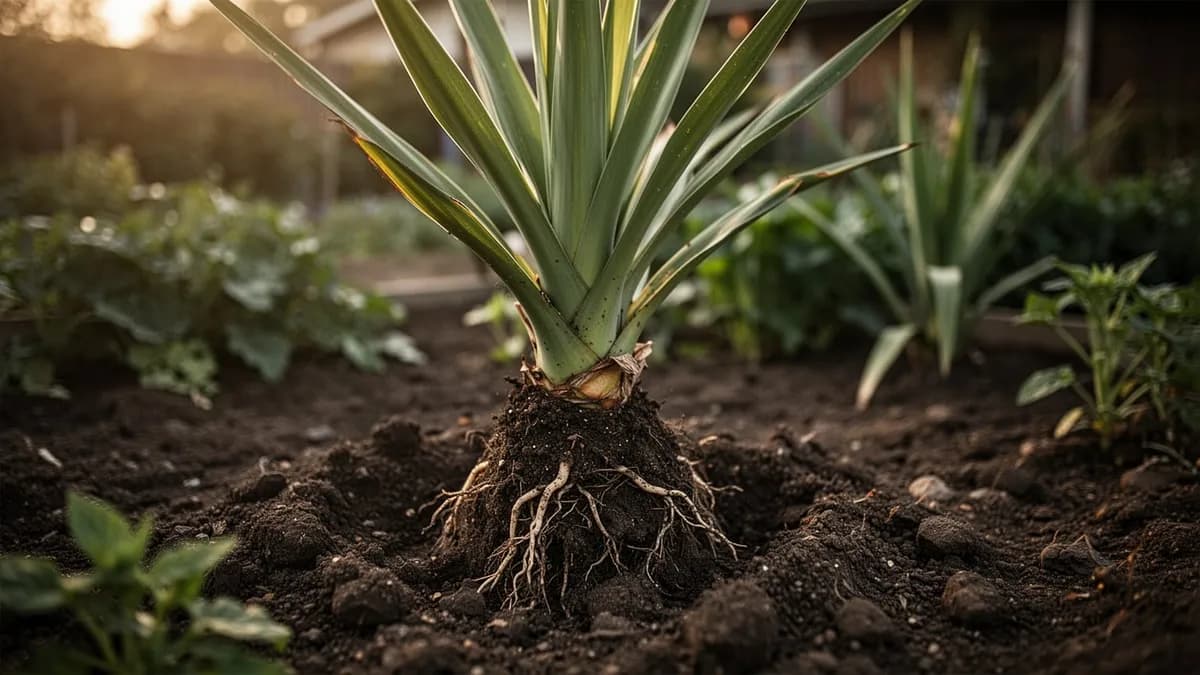
A dense, starchy tropical tuber that is a dietary staple across Latin America, Africa, and Southeast Asia. Plants grow from stem cuttings stuck directly into the ground and are remarkably drought-tolerant once established. Roots must be peeled and cooked thoroughly before eating to remove naturally occurring compounds. The processed root produces tapioca starch and can be fried, boiled, or mashed as a versatile carbohydrate base.
When to plant Yuca
Yuca is always propagated from stem cuttings, never from seed. Select healthy, mature stems from vigorous plants. Cut into sections eight to twelve inches long with at least four to five nodes each. Allow cut ends to dry for one to two days before planting. Insert cuttings at a 45-degree angle or lay horizontally, covering with two to three inches of soil. Cuttings root in one to two weeks in warm, moist soil. Plant only when temperatures are consistently above 65 degrees.
Your Yuca Year
Composed for Zone 7 · typical seasons · frost passes Apr 2, returns Nov 1
Plant Yuca Apr – Jun, pick Oct – Dec. Check the planting methods below and set your climate to personalize these windows.
How to grow Yuca
Yuca is propagated from stem cuttings rather than seeds. Select healthy, mature stems about one inch in diameter and cut into sections eight to twelve inches long. Plant cuttings at a 45-degree angle or horizontally, burying two-thirds in well-drained soil. Space plants three to four feet apart in rows four feet apart. Plant after all danger of frost has passed when soil is consistently above 65 degrees.
Yuca is remarkably adaptable and tolerates poor, sandy, or acidic soils where other crops struggle. Once established, it is one of the most drought-tolerant food crops in the world. Water regularly during the first month, then plants largely take care of themselves. Avoid waterlogged conditions which cause root rot. Yuca grows as a large shrub reaching six to ten feet tall with attractive palmate leaves.
The crop requires a long warm growing season of eight to twelve months. In zones 9-10, plant in spring and harvest the following winter. In zones 11-12, yuca can be grown year-round. In marginal climates, treat as an annual and harvest before first frost. The roots continue to grow as long as conditions are warm, so longer seasons produce larger harvests.
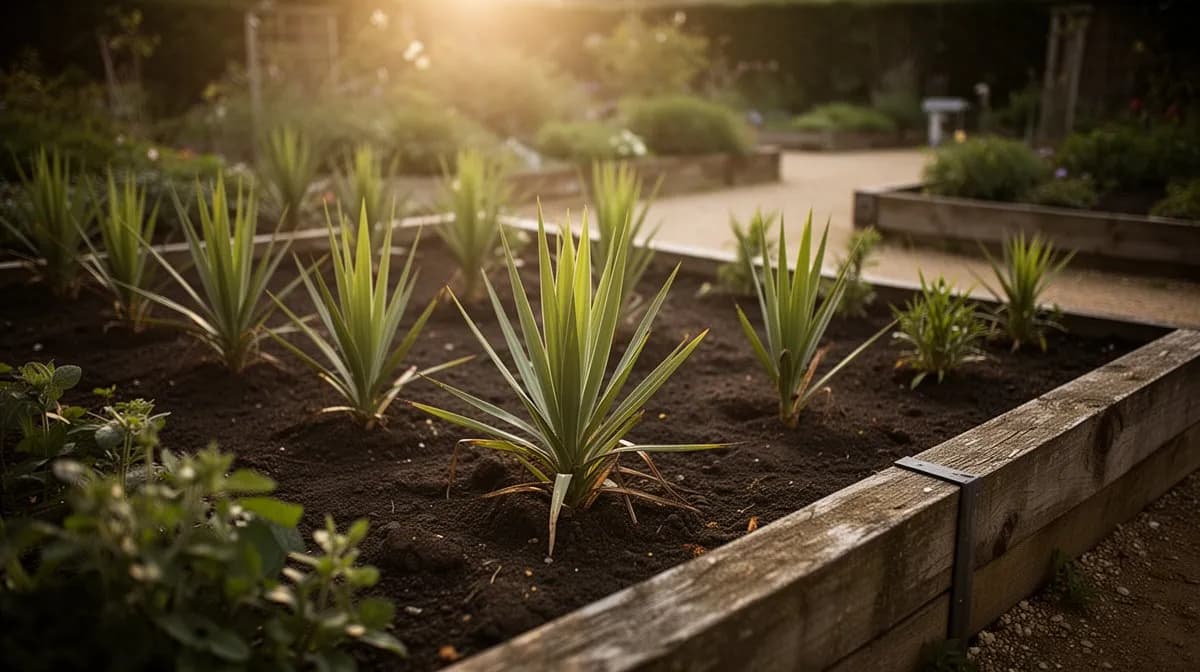
2 plants fit a 4 × 8 ft bed
Each Yuca wants 100 cm of elbow room. The planner keeps that spacing for you — every plant, every bed.
Yuca's best neighbours
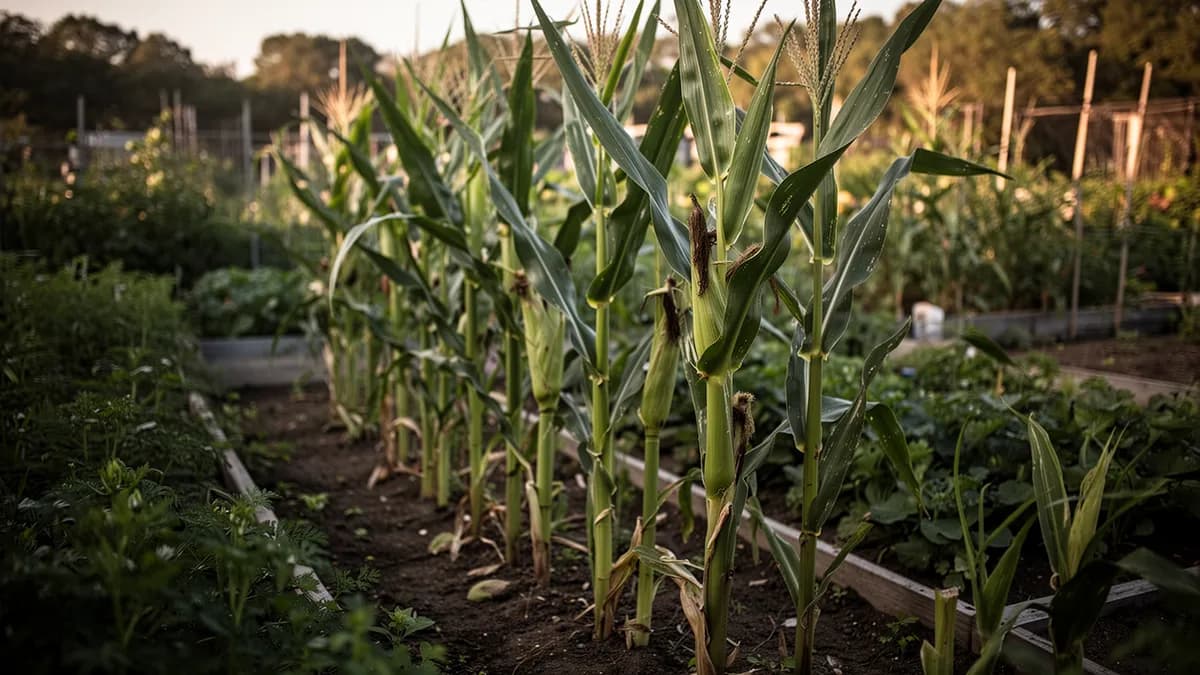
Yuca grows well in polyculture systems common in tropical agriculture. Interplant with corn, beans, and squash in traditional arrangements. Low-growing crops like sweet potatoes and peanuts grow well between yuca rows. Legumes like pigeon peas and cowpeas fix nitrogen that benefits the yuca. Avoid planting too densely as yuca needs full sun and good air circulation around its large canopy.
Corn belongs beside it.
Old growers' knowledge, checked against Yuca's real companion table below — test any plant you're growing.
Try Yuca in a bed — right here
A real planner bed with Yuca already in it. Tap a companion to place it and watch the pairing checks answer — green for good neighbours, red for a clash.


Related growing guides
Feed it well
Yuca thrives in well-drained, sandy or loamy soil with a pH of 5.5 to 6.5. It tolerates poor, acidic soils remarkably well and produces better-quality roots in moderate rather than rich fertility. Avoid excessive nitrogen which promotes top growth over roots. Apply balanced fertilizer or compost at planting and side-dress with potassium-rich amendments at four months. Too much fertility produces large plants with small, watery roots.
Ideal Temperature
Hardiness Zone Compatibility
From seed to harvest, stage by stage
Cutting Preparation & Planting
Yuca is not grown from seed but from mature stem cuttings (stakes) of 20-30 cm length, each with 5-7 visible nodes. Cuttings are planted horizontally or at a 45-degree angle in well-drained soil at a depth of 5-10 cm. Within 7-14 days, roots begin to develop from the buried nodes and the first shoots push upward through the soil surface.
Sprouting & Establishment
Multiple shoots emerge from the nodes, and the root system expands rapidly into the surrounding soil. Young leaves unfurl with their characteristic deeply lobed, palmate shape. During this stage the plant is establishing the structural root framework that will later swell into the edible storage roots.
Vegetative Growth
The plant enters rapid above-ground growth, developing a woody stem that thickens progressively and a canopy of large, dark green palmate leaves. The root system below ground begins transitioning from fibrous feeder roots to the thickened storage roots that will become the edible tubers. Plants can grow 1-2 meters tall during this phase.
Root Bulking
The storage roots undergo rapid starch accumulation, swelling dramatically in diameter and length. Each plant develops 5-10 tuberous roots radiating outward from the stem base. The above-ground canopy remains lush and productive, photosynthesizing to fuel the starch storage below. Lower leaves may yellow and drop naturally.
Maturation
Roots reach full size and maximum starch content. Leaves may thin and the plant's growth rate slows noticeably. The roots develop their full starchy density and the bark-like skin thickens. Yuca can be left in the ground as a living pantry for several additional months beyond maturity without significant quality loss.
Harvest & Storage
Full harvest occurs 8-18 months after planting depending on variety and climate. The entire root cluster is pulled or dug from the ground. Yuca roots deteriorate rapidly once harvested — the flesh begins to oxidize and develop blue-black veins within 48-72 hours if not processed. Proper post-harvest handling is essential.
Select cuttings from healthy, mature stems at least 8-12 months old. Let freshly cut stakes dry in shade for 2-3 days before planting to allow the cut ends to callus, reducing the risk of rot. Plant in soil that is at least 20°C (68°F).
Caring for Yuca month by month
What to do each month for your Yuca
October
You are hereIn zones 8-9, begin harvesting before first frost — yuca roots and stems are damaged by temperatures below 10°C (50°F). Harvest on a dry day, shake off excess soil, and process or store roots within 48-72 hours. Save healthy mature stems for next season's cuttings.
Know exactly what to do in your garden — every month
One email at the start of each month: what to sow, plant, and tackle right now — for your Yuca and everything growing around it. Plus a short starter course that helps you dodge the classic mistakes.
- What to do, right now
- Matched to your season
- Starter course included
Harvesting Yuca
Yuca roots are ready eight to twelve months after planting, though they can be left longer in tropical climates. Harvest by cutting the stem to a few inches above ground, then using a garden fork to loosen soil around the root cluster. Pull the entire root mass out carefully. Roots deteriorate rapidly after harvest, so use or process within two to three days. Always peel and cook yuca thoroughly before eating to remove cyanogenic compounds.
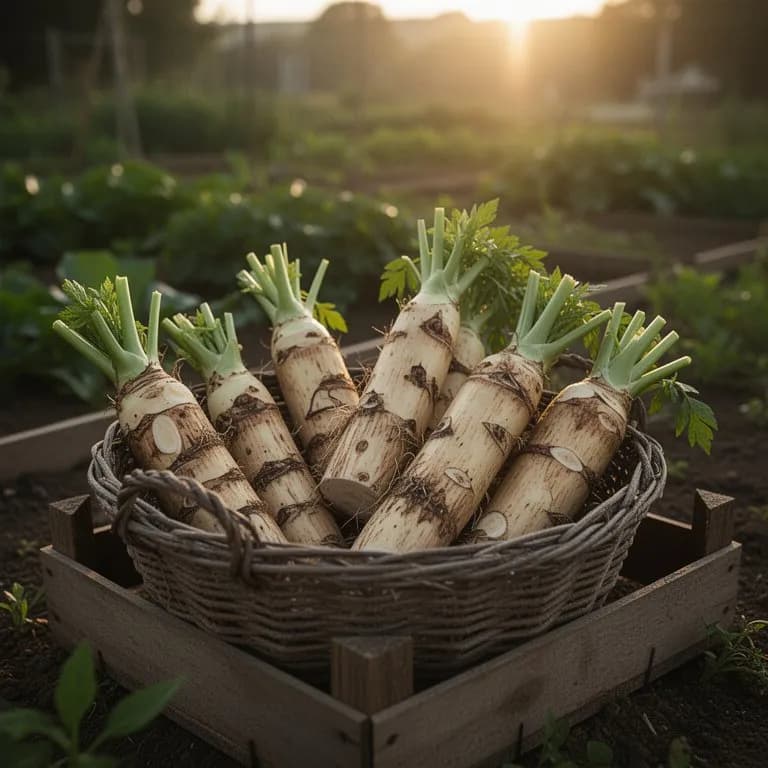
assuming you plant when the window opens — set your real date
Pick Yuca promptly and the plant keeps producing.
Storage & Preservation
Fresh yuca deteriorates within two to three days if left unprocessed. Coat cut ends with wax to extend shelf life to one to two weeks. For longer storage, peel, cut into chunks, and freeze raw for up to three months. Boil and freeze cooked yuca for up to six months. Yuca can be processed into tapioca starch or cassava flour for shelf-stable storage lasting over a year. Fried yuca chips store well in airtight containers.
What goes wrong — and the fix
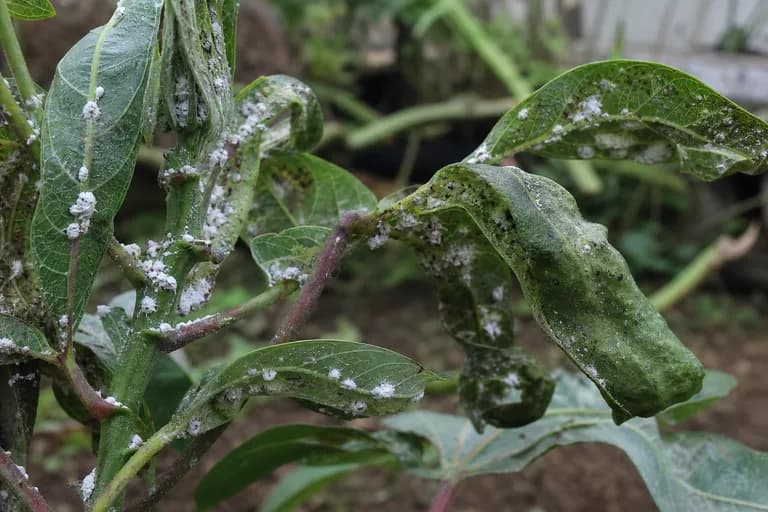
Cassava Mealybug
PestWhite, waxy insects clustering on stems and leaf undersides causing leaf curling, yellowing, and stunted growth.
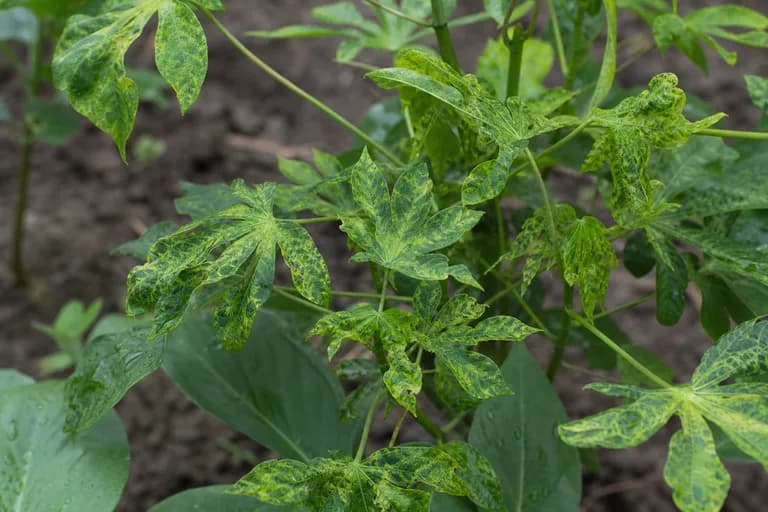
Cassava Mosaic Disease
DiseaseYellow-green mosaic patterns on leaves with leaf distortion and reduced plant vigor. Spread by whiteflies.
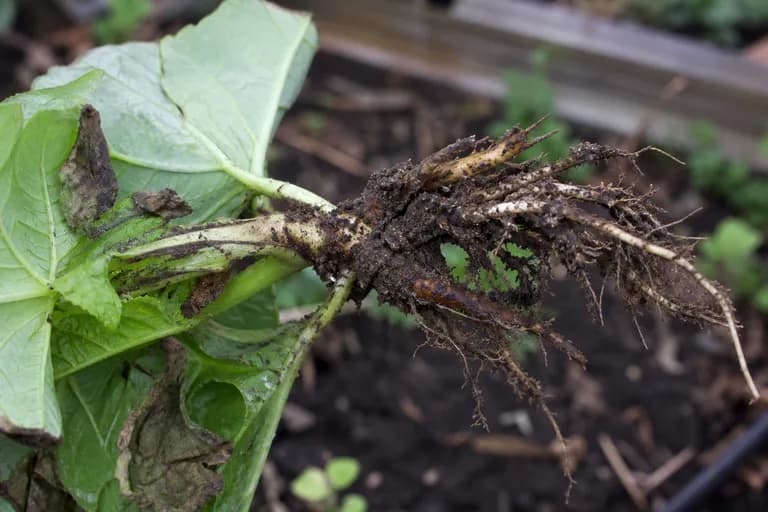
Root Rot
DiseaseSoft, foul-smelling roots that turn brown or black. Plants may wilt and collapse despite adequate rainfall.
Troubleshooting Common Problems
The primary challenge outside the tropics is the long growing season required. Yuca needs eight or more frost-free months to produce worthwhile roots. Waterlogging is the most common cause of crop failure. All parts contain cyanogenic glucosides that must be removed through proper peeling and cooking. Never eat raw yuca. In marginal climates, inadequate heat results in small, fibrous roots.
Growing Tips
- Drainage is everything. Yuca roots will rot in waterlogged soil faster than almost any other crop. If your soil holds water, build raised beds at least 25-30 cm high with generous sand and compost mixed in. Never plant in clay or compacted ground without extensive amendment.
- Use cuttings from mature stems, not young green growth. The ideal cutting comes from the middle section of a woody stem that is 8-12 months old, is 20-30 cm long, and has at least 5-7 visible nodes. Plant horizontally for more roots or at 45 degrees for a stronger single stem.
- Let cuttings dry for 2-3 days before planting. This allows the cut ends to form a protective callus that dramatically reduces the chance of fungal infection and rot during the critical establishment period. Plant the callused cutting with nodes facing upward.
- Hill soil around the base of stems at 2-3 months after planting, just as you would with potatoes. This encourages the formation of additional storage roots closer to the soil surface, increasing your total yield and making harvest easier.
- Do not over-fertilize with nitrogen. Yuca is adapted to poor tropical soils and excessive nitrogen produces a massive, lush canopy of leaves but small, fibrous roots with low starch content. Potassium is the nutrient that matters most for root bulking — use wood ash or potassium sulfate.
- Yuca has a long growing season of 8-18 months. In temperate climates with frost, you must plant as early as safely possible after last frost and harvest before first fall frost. Growing in large 75-liter containers or grow bags lets you start early indoors and extend the season.
- Harvest timing dramatically affects both yield and quality. Roots harvested too early are watery and low in starch. Roots left too long may become woody and fibrous. Test harvest a single root at 8 months — it should snap cleanly and show dense white flesh with no woody core.
- Process or use harvested roots within 48-72 hours. Unlike potatoes, yuca roots deteriorate rapidly after harvest — the flesh develops blue-black vascular streaking and becomes bitter. Peel, cut into chunks, and freeze immediately if you cannot use them fresh.
Grow your best Yuca yet — and everything around it.
Start a free plan today. Lay out your beds, drop in your Yuca, and let PlotMyGarden handle the timing, spacing, companions and reminders from seed to harvest basket.
Pick your Yuca
Sweet Cassava
Lower cyanide content suitable for direct cooking after peeling. Most commonly grown in home gardens for fresh eating.
Bitter Cassava
Higher yielding but requires extensive processing to remove cyanogenic compounds. Used primarily for starch and flour production.
Golden Yellow
Yellow-fleshed variety with enhanced beta-carotene content. Developed for improved nutrition in tropical regions.
Fresh yuca roots sell for $2-5 per kg at grocery stores and Latin American markets, with frozen peeled yuca at $4-8 per kg. A single plant producing 3-8 kg of roots represents $6-40 worth of fresh yuca, and since yuca is propagated from free stem cuttings rather than purchased seeds, the input cost is essentially zero after your first season. Growing 4-6 plants can yield 15-40 kg of roots, saving $30-200 per season. The savings are even greater if you make your own tapioca starch or yuca flour, which retail for $6-12 per kg.
Quick recipes
Yuca Frita (Fried Yuca Sticks)
35 minCrispy on the outside, creamy and fluffy on the inside — fried yuca is the beloved Latin American alternative to French fries. The secret is boiling first until tender, then frying at high heat for a shatteringly crisp crust.
5 ingredientsSancocho (Caribbean Root Vegetable Stew)
75 minA hearty, soul-warming one-pot stew found across the Caribbean and Latin America. Yuca breaks down slightly during simmering, thickening the broth naturally while remaining in tender chunks alongside meat and other root vegetables.
11 ingredientsPan de Yuca (Yuca Cheese Bread)
30 minLight, chewy, and irresistibly cheesy — these gluten-free Brazilian-Colombian bread rolls are made with tapioca starch (yuca flour) and fresh cheese. They puff up beautifully in the oven and are best eaten warm.
7 ingredientsCulinary Uses
Yuca must always be peeled and cooked before eating. Boil chunks until tender and serve with garlic mojo sauce for a classic Latin American dish. Fry boiled yuca for crispy fritters or yuca fries. Grate raw yuca for traditional Brazilian cheese bread. Process into tapioca pearls for bubble tea and puddings. Mash boiled yuca with butter for a creamy potato alternative. The neutral starchy flavor absorbs seasonings beautifully.
What's inside
Health Benefits
- Excellent source of energy-dense complex carbohydrates with a moderate glycemic index when boiled, providing sustained energy release — ideal for athletes, laborers, and anyone needing calorie-dense nutrition from a whole food source.
- Contains resistant starch when cooked and cooled, which functions as a prebiotic fiber that feeds beneficial gut bacteria, improves colon health, and may help regulate blood sugar and insulin sensitivity.
- Good source of vitamin C (23% DV per 100g), which supports immune function, collagen synthesis for healthy skin and joints, and enhances non-heme iron absorption from plant-based meals.
- Naturally gluten-free, making yuca and its derivatives (tapioca starch, cassava flour) essential alternatives for people with celiac disease, gluten sensitivity, or grain allergies.
- Provides saponins and polyphenolic antioxidants that have demonstrated anti-inflammatory properties in research, potentially helping to reduce chronic inflammation markers.
- Rich in manganese (15% DV per 100g) and copper, trace minerals critical for bone formation, wound healing, antioxidant enzyme function, and healthy connective tissue maintenance.
Where Yuca comes from
Yuca (Manihot esculenta), also known as cassava or manioc, originated in the tropical lowlands of South America, most likely in the western Amazon basin region of what is now Brazil. Archaeological evidence from coastal Peru and the Brazilian Amazon dates yuca cultivation to at least 8,000-10,000 years ago, making it one of the earliest domesticated food crops in the Americas. Indigenous peoples developed sophisticated processing techniques to remove the naturally occurring cyanogenic compounds from bitter varieties — methods involving grating, pressing, soaking, and fermenting that are still used today across the tropics.
Portuguese traders introduced yuca to Africa in the 16th century, initially through the Congo basin and the western coast. The crop spread rapidly across the continent because of its extraordinary resilience — yuca thrives in poor soils, tolerates drought, and resists locusts. By the 18th century it had become the most important calorie source for hundreds of millions of Africans, a role it maintains to this day. Portuguese and Spanish colonial trade also carried yuca to the Philippines, Indonesia, and Southeast Asia, where it became embedded in local food cultures under names like singkong, ubi kayu, and khoai mi.
Today, yuca is cultivated in virtually every tropical and subtropical country and is the primary staple food for over 800 million people worldwide. Global annual production exceeds 300 million tonnes, with Nigeria, the Democratic Republic of Congo, Thailand, Brazil, and Indonesia as the leading producers. Beyond food, yuca starch has become a major industrial commodity used in textiles, paper, adhesives, and biofuels. The crop continues to be the focus of intensive agricultural research because of its critical role in global food security, particularly as climate change threatens other staple crops that are less tolerant of heat, drought, and poor soils.
Yuca: did you know?
Fascinating facts about Yuca
Yuca (cassava) is the third-largest source of carbohydrates for human consumption in the world after rice and maize, feeding over 800 million people daily — it is the primary staple food across much of sub-Saharan Africa, Southeast Asia, and Latin America.
Yuca questions, answered
When should I plant Yuca?
What are good companion plants for Yuca?
What hardiness zones can Yuca grow in?
How much sun does Yuca need?
How far apart should I space Yuca?
What pests and diseases affect Yuca?
How do I store Yuca after harvest?
What are the best Yuca varieties to grow?
What soil does Yuca need?
Is yuca the same as yucca?
Is yuca safe to eat raw?
Can I grow yuca in a temperate climate?
Why are my yuca roots woody and fibrous instead of smooth and starchy?
How do I store yuca after harvest?
How do I get stem cuttings to start growing yuca?
You just read the theory. Now grow it on autopilot.
Everything that makes Yuca fiddly — the timing, the spacing, the companions, the harvest window — is exactly what PlotMyGarden handles for you, for every plant in your garden.
A plan that knows your weather
Set your location once. Get sow, feed and harvest dates built around your real last-frost date and live forecast — no more guessing from a generic seed packet.
From the “When to plant” sectionDrag-and-drop bed planner
Design beds on a grid. Every plant snaps to its proper spacing, and you can see your whole season laid out before you spend a cent on seed.
From the “Growing guide” sectionCompanion conflicts, caught early
200+ good-and-bad pairings checked live as you plant — so a season-wrecking mistake never makes it into the ground.
From the “Companions” sectionReminders you'll actually act on
“Water the beans.” “Pick today before it turns.” Timely, specific, and tied to the plants you're really growing.
From the “Harvest” sectionSuccession, scheduled
Want a harvest for six weeks, not six days? It spaces your sowings automatically and reminds you when each new block is due.
From the “When to plant” sectionA record that gets smarter
Every harvest you log teaches it your garden. Next year's plan starts from what actually worked in your soil, not a textbook's.
From the “Overview” sectionPlant these alongside Yuca
More Root Vegetables
Grow your best Yuca yet — and everything around it.
Start a free plan today. Lay out your beds, drop in your Yuca, and let PlotMyGarden handle the timing, spacing, companions and reminders from seed to harvest basket.