Yamswurzel
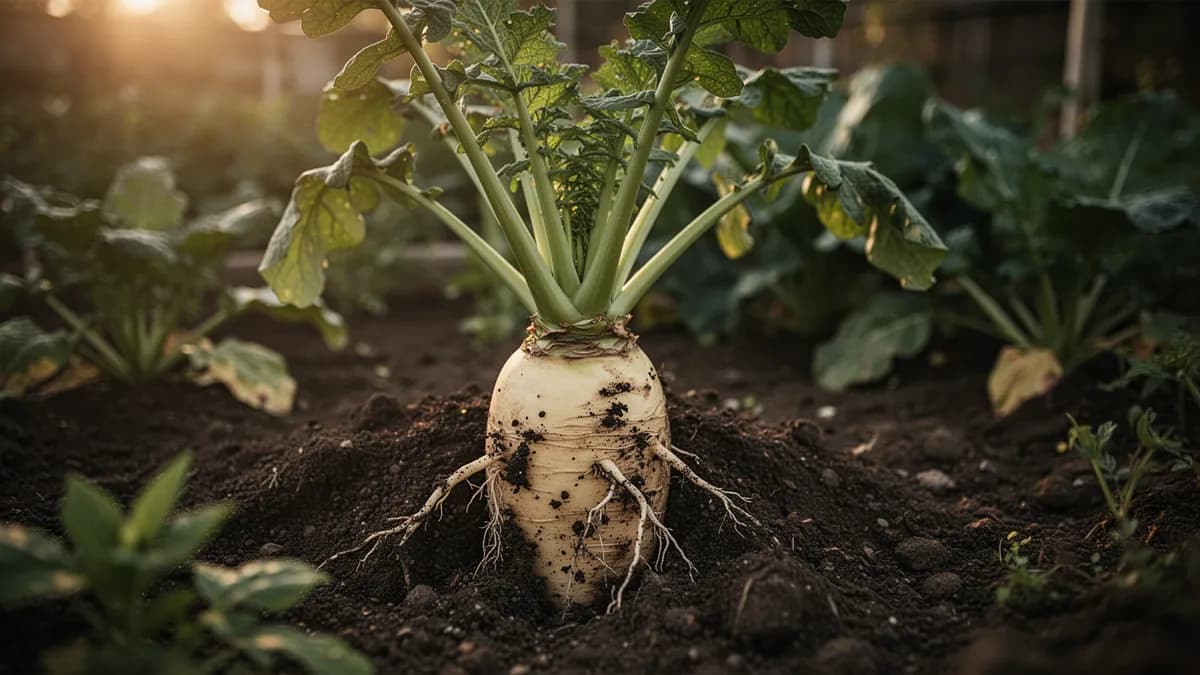
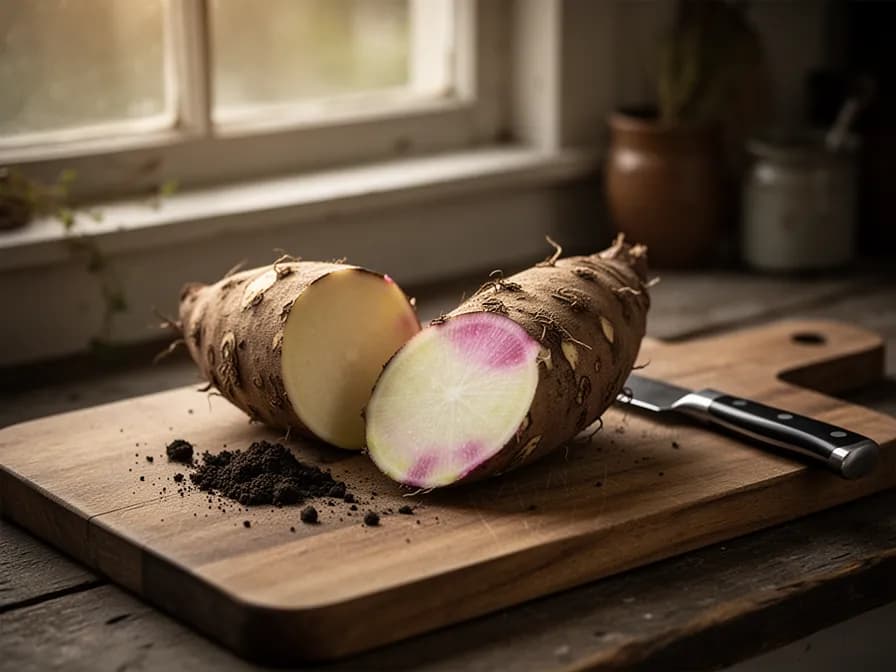
Eine echte tropische Knolle, die sich von Süßkartoffeln unterscheidet und große, stärkehaltige Wurzeln mit weißem, gelbem oder violettem Fruchtfleisch bildet.





Auf dieser SeiteÜberblick
Yamswurzel im Überblick
Eine echte tropische Knolle, die sich von Süßkartoffeln unterscheidet und große, stärkehaltige Wurzeln mit weißem, gelbem oder violettem Fruchtfleisch bildet. Yams sind kräftig wachsende Kletterpflanzen, die eine Rankhilfe und mindestens sechs Monate warmes Wetter benötigen, um beachtliche Knollen zu produzieren. Die raue, rindenartige Schale muss vor dem Kochen geschält werden, und das stärkehaltige Fruchtfleisch ist ein Grundnahrungsmittel in vielen tropischen Kulturen. Pflanzen Sie aus kleinen Knollenstücken oder Brutknollen und sorgen Sie für nährstoffreichen, gut durchlässigen Boden mit regelmäßiger Feuchtigkeit während der gesamten Wachstumsperiode.
Wann Yamswurzel pflanzen
Yams werden aus Knollenstücken (Setzlingen) gezogen, nicht aus Samen. Schneiden Sie Knollen in Stücke mit mindestens einem Auge, und lassen Sie die Schnittflächen 2-3 Tage trocknen, bevor Sie sie pflanzen. Pflanzen Sie 10-15 cm tief in warmen Boden (21°C und mehr). Kleine ganze Knollen können ebenfalls direkt gepflanzt werden. In Gebieten mit kurzer Saison treiben Sie die Setzlinge 4-6 Wochen vor der Freilandpflanzung drinnen unter warmen Bedingungen vor. Kaufen Sie nach Möglichkeit zertifiziertes, krankheitsfreies Pflanzgut.
Dein Yamswurzel-Jahr
Abgestimmt auf Zone 7 · typische Saison · Frost geht um den 2. Apr. und kehrt um den 1. Nov. zurück
Yamswurzel Apr – Mai pflanzen, Okt – Nov ernten. Beachte die Pflanzmethoden unten und wähle dein Klima für passende Zeiträume.
So baust du Yamswurzel an
Pflanzen Sie Yamsknollenstücke oder kleine ganze Knollen (Setzlinge) 10-15 cm tief, nachdem jegliche Frostgefahr vorüber ist und der Boden 21°C erreicht hat. Setzen Sie sie im Abstand von 30-45 cm in Reihen mit 90-120 cm Abstand auf aufgeschüttete Hügel. Yams sind echte Tropenpflanzen und benötigen 150-180 Tage durchgehend warmes Wetter, um Knollen in voller Größe zu produzieren.
Stellen Sie stabile Rankhilfen bereit, da Yams-Ranken 3-5 Meter und mehr klettern können. Volle Sonne und konstante Wärme über 24°C sind unerlässlich. Gießen Sie während der Wachstumsperiode regelmäßig und reduzieren Sie die Bewässerung, wenn die Ranken im Herbst zu vergilben beginnen. Düngen Sie monatlich mit ausgewogenem Dünger. Die Knollen entwickeln sich tief im Boden, daher sind lockere, tiefe Beete entscheidend.
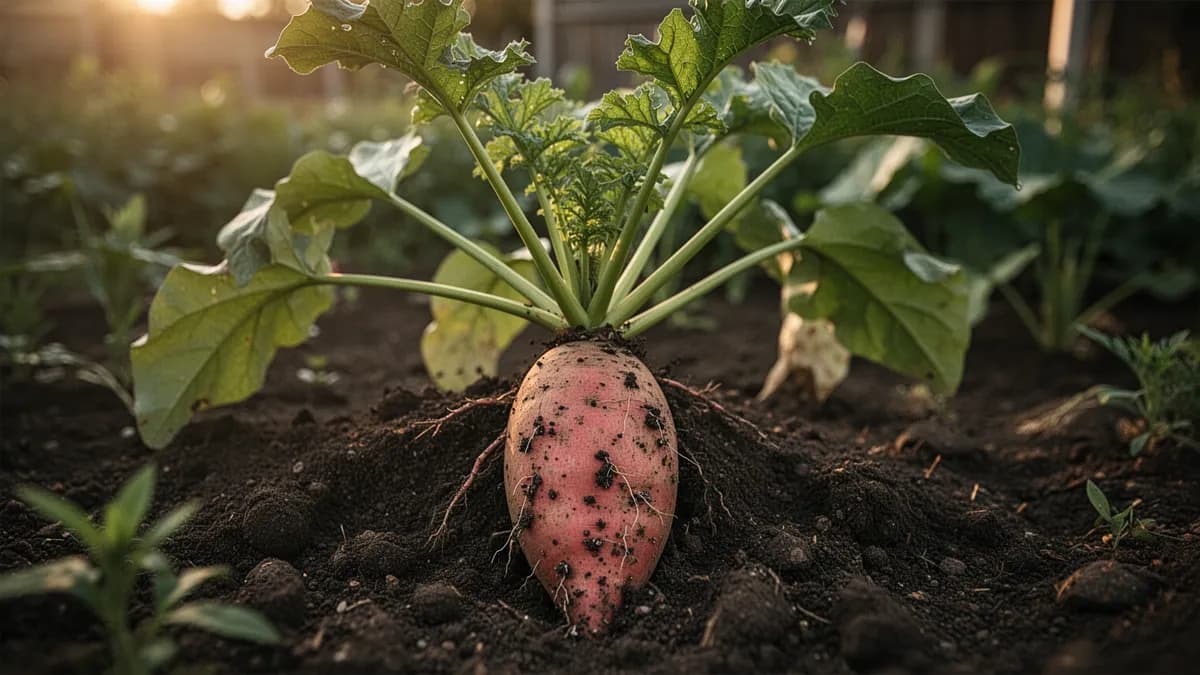
In den meisten Klimazonen der USA können echte Yams aufgrund der kurzen Warmperioden nicht ihre volle Größe erreichen. Der Anbau in Behältern in Gewächshäusern oder die Verwendung von Saisonverlängerungstechniken hilft. Ernten Sie vor dem ersten Frost. Auch kleinere Knollen sind essbar. Beachten Sie, dass das, was in amerikanischen Lebensmittelgeschäften als Yams bezeichnet wird, tatsächlich orangefleischige Süßkartoffeln sind; echte Yams sind eine völlig andere Art.
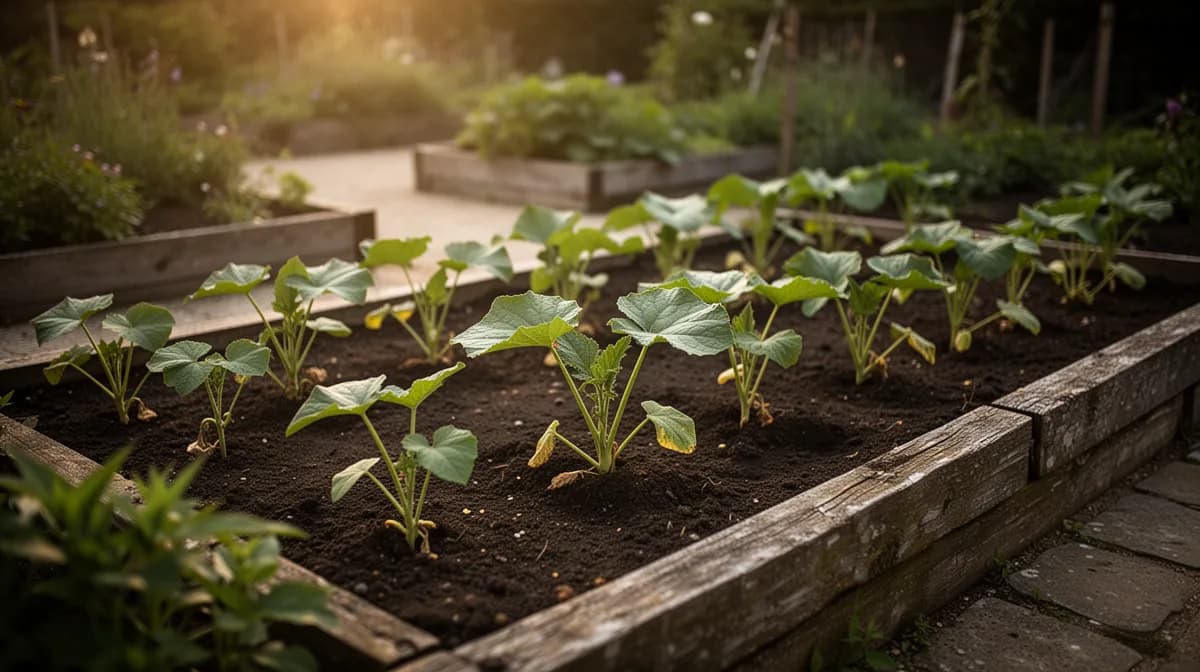
8 Pflanzen passen in ein Beet von 120 × 240 cm
Yamswurzel braucht 60 cm Platz pro Pflanze. Der Planer hält diesen Abstand für dich ein — jede Pflanze, jedes Beet.
Die besten Nachbarn für Yamswurzel
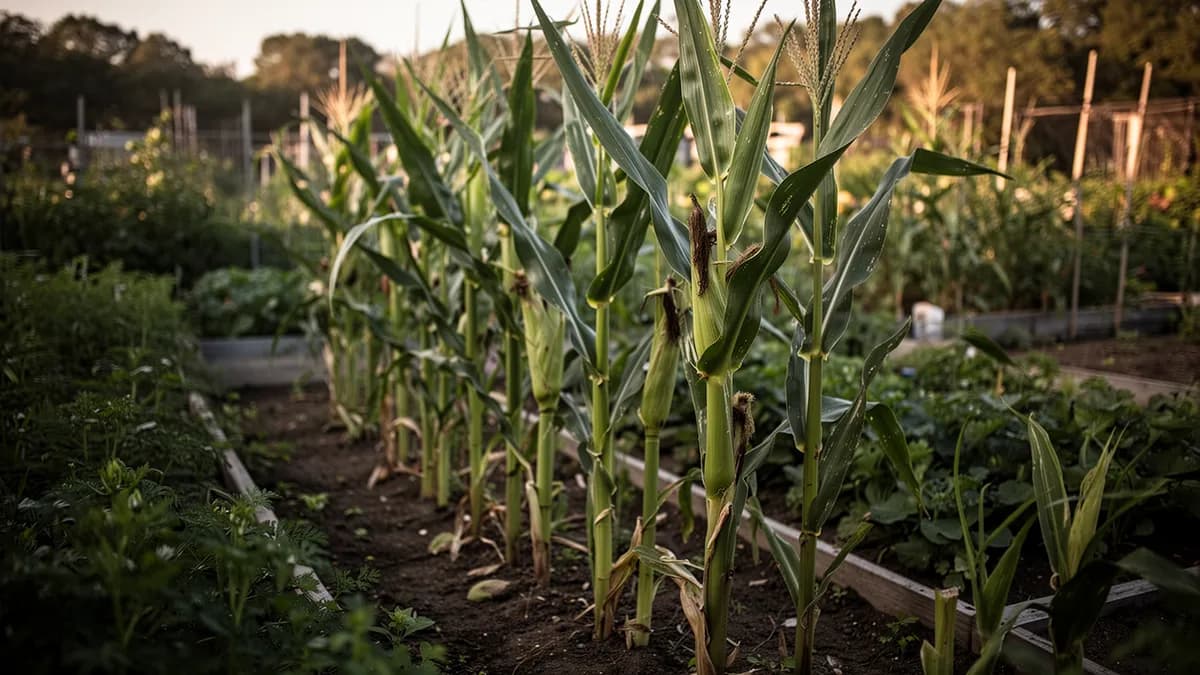
Yams gedeihen gut zusammen mit anderen tropischen Kulturen in warmen Gärten. Leiten Sie die Ranken an stabilen Spalieren entlang, wo sie hitzeempfindliche Kulturen darunter beschatten können. Die kräftigen Ranken benötigen erheblichen Platz und Stütze. Pflanzen Sie zusammen mit Mais, Bohnen und Kürbis in traditionellen tropischen Mischkultursystemen. Halten Sie Abstand zu anderen Wurzelgemüsen, die um den tiefen Bodenraum konkurrieren.
Mais gehört daneben.
Altes Gärtnerwissen, geprüft an der echten Nachbartabelle von Yamswurzel — teste jede Pflanze, die du anbaust.
Probiere Yamswurzel direkt hier im Beet
Ein echtes Planer-Beet, Yamswurzel steht schon drin. Tippe einen Begleiter an, platziere ihn und sieh, wie die Nachbarschaftsprüfung antwortet — grün für gute Nachbarn, rot bei Streit.


Passende Anbau-Ratgeber
Richtig düngen
Yams benötigen tiefen, lockeren, gut durchlässigen Boden, der bis mindestens 45 cm bearbeitet wurde. Sandiger Lehm ist ideal. Schütten Sie erhöhte Hügel für die Drainage und eine leichtere Ernte auf. Halten Sie den pH-Wert bei 5,5-6,5. Tragen Sie während der Wachstumsperiode monatlich ausgewogenen Dünger auf. Kalium fördert die Knollenentwicklung. Der Boden muss zum Pflanzen warm sein (21°C und mehr). Schwerer Lehmboden schränkt das Knollenwachstum ein und erschwert die Ernte erheblich.
Ideale Temperatur
Winterhärtezone-Kompatibilität
Von der Saat zur Ernte, Schritt für Schritt
Knollenpflanzung und Keimung
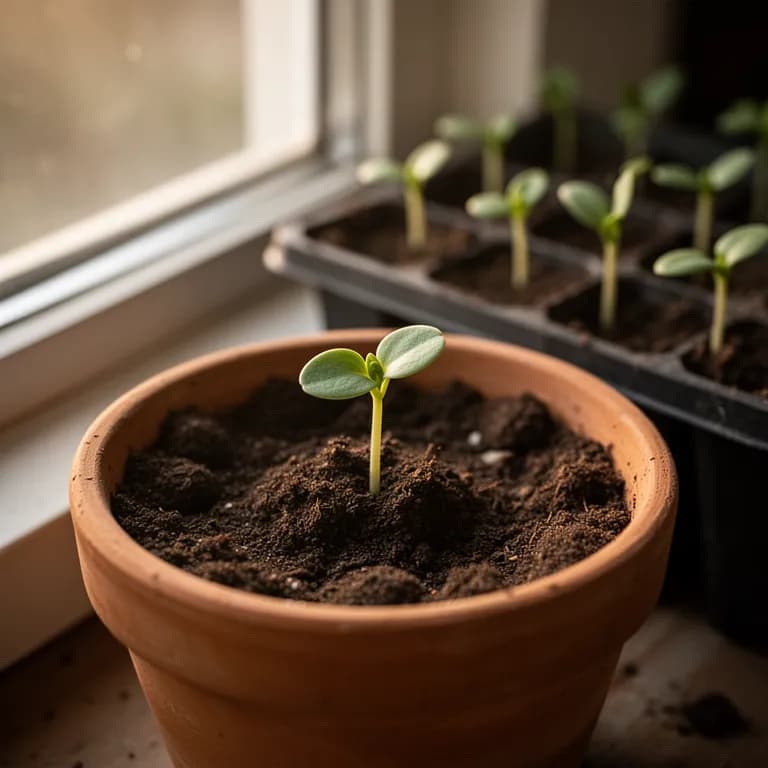
Knollenstücke (Setzlinge) werden 10-15 cm tief in warme, lockere Hügel gepflanzt. Innerhalb der ersten Woche bilden sich Wurzeln, gefolgt von einem blassen Trieb, der nach oben drängt. Der Trieb durchbricht die Oberfläche nach 2-4 Wochen.
Frühe Rankenentwicklung
Der Trieb entwickelt sich zu einer windenden Ranke mit herzförmigen Blättern. Das Wachstum ist anfangs langsam, während sich die Wurzeln etablieren, beschleunigt dann aber bei warmem Wetter. Die Ranke sucht nach Stütze und klettert an jeder verfügbaren Struktur empor.
Schnelles Rankenwachstum
Die Ranken wachsen explosionsartig und erstrecken sich 3-5 Meter entlang der Spaliere. Das dichte Blattdach fängt maximales Sonnenlicht ein. Unterirdisch bildet sich die Knolle und vergrößert sich. Einige Arten bilden Luftknöllchen (Bulbillen) an den Blattknoten.
Knollenfüllung
Die Knolle schwillt rasch an, da die Pflanze Energie in die Stärkeeinlagerung umleitet. Das Rankenwachstum verlangsamt sich und ältere Blätter vergilben. Die Knolle wächst tiefer in den lockeren Hügelboden hinein.
Reifung und Absterben
Das Laub vergilbt fortschreitend von der Basis nach oben. Die Knolle erreicht ihre maximale Größe und ihren maximalen Stärkegehalt. Die Schale verdickt sich und bereitet sich auf die Ruhephase vor.
Stellen Sie sicher, dass der Boden vor der Pflanzung mindestens 21°C warm ist. Lassen Sie Schnittflächen 2-3 Tage trocknen, um Fäulnis zu verhindern. Halten Sie den Boden feucht, aber nicht staunass.
Yamswurzel Monat für Monat pflegen
Was du jeden Monat für deine Yamswurzel tun solltest
Oktober
Aktueller MonatHaupterntemonat. Ernten, wenn 70-80% des Laubes vergilbt sind. Vorsichtig mit einer Grabegabel ausgraben. Bei 27-32°C für 10-14 Tage nachreifen lassen.
Immer wissen, was jetzt im Garten zu tun ist
Eine E-Mail zum Monatsanfang: was du jetzt säen, pflanzen und anpacken solltest — für deine Yamswurzel und alles, was drumherum wächst. Dazu ein kurzer Startkurs, der dich vor den klassischen Fehlern bewahrt.
- Was jetzt zu tun ist
- Passend zu deiner Saison
- Startkurs inklusive
Yamswurzel ernten
Ernten Sie Yams, wenn das Rankenlaub zu vergilben beginnt und auf natürliche Weise abstirbt, typischerweise 150-180 Tage nach der Pflanzung. In frostgefährdeten Gebieten sollten Sie vor dem ersten Frost ernten. Graben Sie sehr vorsichtig, da die Knollen 30-60 cm tief wachsen können. Verwenden Sie eine Grabegabel und arbeiten Sie von der Außenseite des Hügels nach innen. Gehen Sie behutsam vor, da frische Knollen leicht beschädigt werden. Lassen Sie die Knollen 1-2 Wochen an einem warmen, feuchten Ort nachreifen, bevor Sie sie einlagern.
angenommen, du pflanzt zu Beginn des Zeitraums — trage dein tatsächliches Datum ein
Ernte Yamswurzel zügig, dann trägt die Pflanze weiter.
Lagerung & Konservierung
Lagern Sie Yams nach dem Nachreifen an einem kühlen, trockenen Ort bei 13-16°C für bis zu 6 Monate. Nicht im Kühlschrank aufbewahren. Gut nachgereifte Yams entwickeln mit der Zeit einen besseren Geschmack und eine bessere Textur. Schälen, würfeln und einfrieren für die Langzeitlagerung. Yams können getrocknet und zu Mehl gemahlen werden für die traditionelle afrikanische und karibische Küche. Kochen und pürieren zum Einfrieren. Die dicke Schale schützt während der Lagerung vor Austrocknung.
Was schiefgeht — und die Lösung
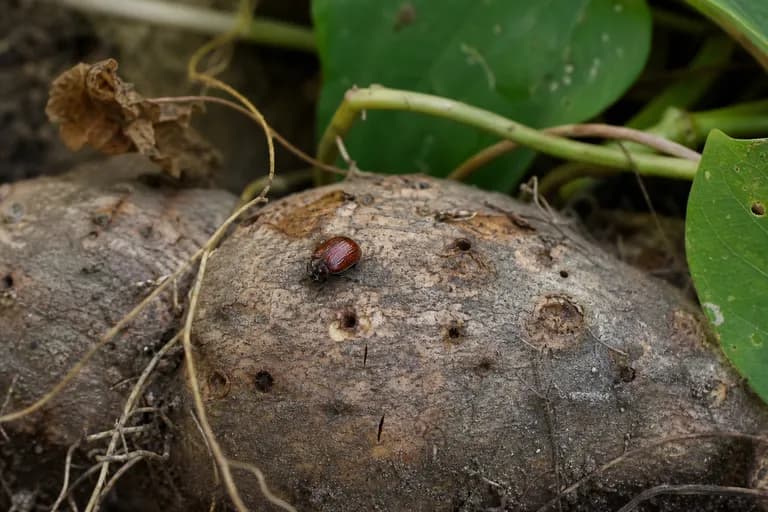
Yamskäfer
SchädlingOberflächliche Fraßschäden an Knollen, kleine Löcher, braune Narbenbildung.
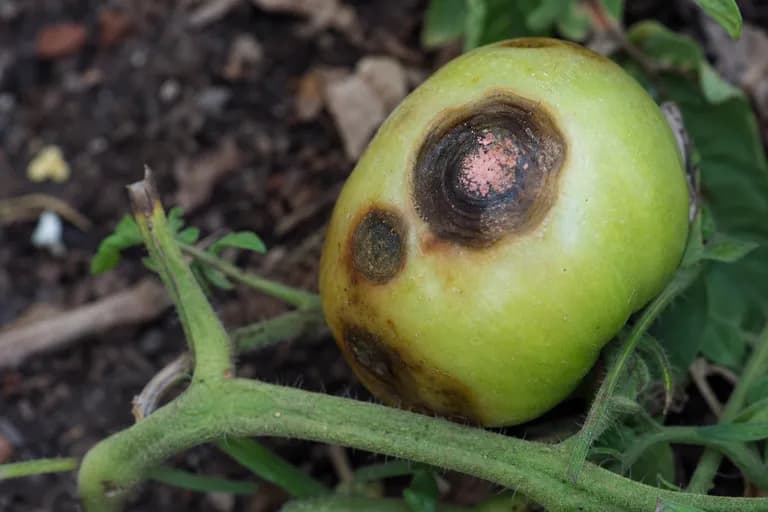
Anthraknose
KrankheitDunkle, eingesunkene Flecken auf Blättern und Stängeln, Absterben der Rankenspitzen.
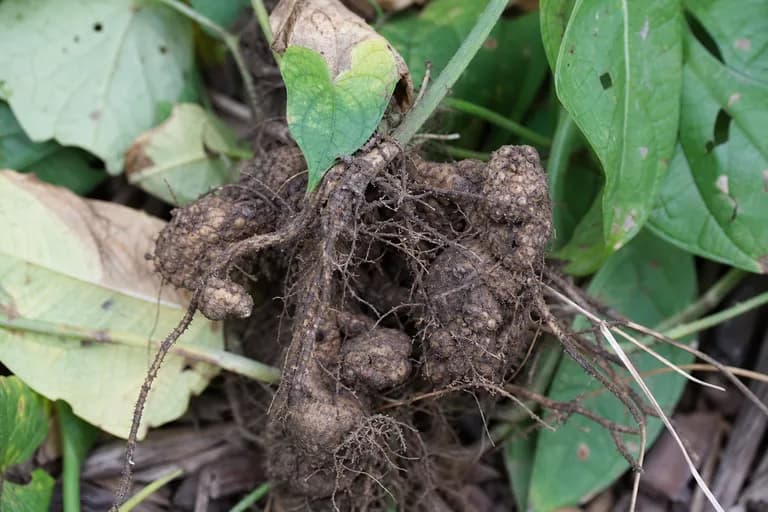
Nematoden
SchädlingGallen an Wurzeln und Knollen, Kümmerwuchs, reduzierte Erträge.
Fehlerbehebung bei häufigen Problemen
Die extrem lange, warme Wachstumsperiode (150-180 Tage über 24°C) macht den Anbau echter Yams in den meisten Teilen der kontinentalen USA außerhalb des tiefen Südens unmöglich. Verwenden Sie Gewächshäuser und Saisonverlängerung. Echte Yams werden in amerikanischen Märkten häufig mit Süßkartoffeln verwechselt; es handelt sich um völlig verschiedene Arten. Das tiefe Knollenwachstum erfordert sorgfältiges Ernten, um Bruch zu vermeiden. Die Rankenpflege ist notwendig, da die Pflanzen sehr groß werden.
Anbautipps
- Bauen Sie hohe, lockere Hügel von mindestens 45 cm auf — Yamsknollen wachsen tief und brauchen weichen Boden, um sich frei ausdehnen zu können.
- Installieren Sie Rankhilfen vor der Pflanzung. Yamsranken wachsen schnell und breiten sich ohne sofortige Stütze aus, was das Krankheitsrisiko erhöht.
- Lassen Sie Knollensetzlinge 2-3 Tage trocknen, um eine schützende Kallusschicht zu bilden. Das Auslassen dieses Schritts ist die häufigste Ursache für Pflanzversagen.
- Gießen Sie während des Rankenwachstums und der Knollenfüllung (Monat 2-5) tief und gleichmäßig. Konstante Feuchtigkeit produziert deutlich größere Knollen.
- Tragen Sie kaliumreichen Dünger (Holzasche, Seetangmehl) bei Beginn der Knollenbildung auf. Überschüssiger Stickstoff fördert das Rankenwachstum statt der Knollenentwicklung.
- Verwenden Sie in gemäßigten Klimazonen schwarze Plastikfolie als Mulch und Vliesabdeckungen, um die warme Saison zu verlängern. Jede zusätzliche warme Woche bedeutet größere Knollen.
- Ernten Sie vorsichtig mit einer Grabegabel und arbeiten Sie von der Außenseite des Hügels nach innen. Beschädigte Knollen faulen schnell im Lager.
- Heben Sie kleine Knollen (100-200 g) und Luftknöllchen Ihrer besten Pflanzen für die nächste Saison bei 16-18°C in leicht feuchtem Torf auf.
Bau deine beste Yamswurzel an — und alles drumherum.
Starte heute kostenlos. Lege deine Beete an, setze deine Yamswurzel ein und lass PlotMyGarden Timing, Abstände, Begleiter und Erinnerungen von der Saat bis zum Erntekorb übernehmen.
Finde deine Yamswurzel
Dioscorea rotundata (Weiße Yam)
Die am weitesten verbreitete echte Yam. Weißes Fruchtfleisch mit stärkehaltigem, leicht süßem Geschmack.
Dioscorea alata (Violette Yam/Ube)
Leuchtend violettes Fruchtfleisch, geschätzt in der philippinischen und asiatischen Küche. Süßer Geschmack, der in Desserts verwendet wird.
Dioscorea cayenensis (Gelbe Yam)
Gelbfleischige Sorte mit süßer, fester Textur. Beliebt in der westafrikanischen Küche.
Echte Yams kosten im Lebensmittelgeschäft 6-12 €/kg, auf Spezialmärkten 10-20 €/kg. Violette Yam (Ube) erzielt noch höhere Preise. Eine einzige Pflanze, die 2-5 kg produziert, entspricht einem Wert von 15-50 €. Der Anbau von 4-6 Pflanzen spart 50-150 € pro Saison, mehr bei Spezialzubereitungen wie Ube Halaya oder gestampfter Yam.
Schnelle Rezepte
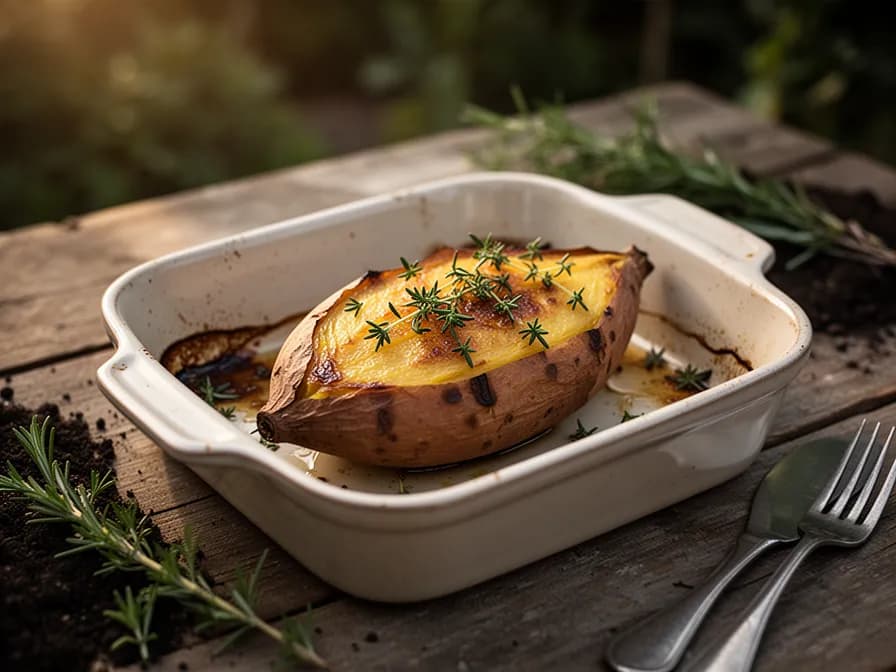
Westafrikanische gestampfte Yam (Iyan)
40 Min.Gekochte Yamsstücke werden zu einem glatten, dehnbaren Teig gestampft, der zusammen mit reichhaltigen Suppen und Eintöpfen serviert wird.
4 ZutatenPhilippinisches Ube Halaya (Violette-Yam-Konfitüre)
50 Min.Geriebene Ube wird mit Kokosmilch und Zucker eingekocht, bis sie dick und glänzend ist. Wird als Füllung für Gebäck oder als Topping für Eiscreme verwendet.
6 ZutatenGeröstete Yamsspalten mit Kräuterbutter
45 Min.Dicke Spalten, außen goldbraun geröstet und karamellisiert mit einem lockeren Inneren, vollendet mit kräuterinfundierter Butter.
7 ZutatenKulinarische Verwendung
Echte Yams sind ein Grundnahrungsmittel in der westafrikanischen, karibischen und südostasiatischen Küche. Kochen und stampfen Sie sie zu Fufu, einer traditionellen westafrikanischen Beilage. Frittieren Sie sie als Yams-Chips. Fügen Sie sie Suppen und Eintöpfen hinzu. Violette Yam (Ube) wird in philippinischen Desserts, Eiscreme und Gebäck verwendet. Backen oder rösten Sie sie wie Kartoffeln. Das stärkehaltige Fruchtfleisch nimmt Aromen in geschmorten und Curry-Gerichten gut auf. Yams müssen vor dem Verzehr gekocht werden.
Was drinsteckt
Gesundheitsvorteile
- Hervorragende Kaliumquelle (23% TW pro 100 g) zur Unterstützung der Blutdruckregulation und Herz-Kreislauf-Gesundheit.
- Komplexe Kohlenhydrate mit moderatem glykämischem Index liefern anhaltende Energie und einen stabilen Blutzuckerspiegel.
- Bedeutender Vitamin-C-Gehalt (19% TW pro 100 g) für Immunfunktion, Kollagenproduktion und Eisenaufnahme.
- Gute Vitamin-B6-Quelle (15% TW pro 100 g), unentbehrlich für die Neurotransmittersynthese und Immunfunktion.
- Hoher Ballaststoffgehalt (4,1 g pro 100 g) fördert die Verdauungsgesundheit und nährt nützliche Darmbakterien.
- Violette Sorten enthalten Anthocyane — Antioxidantien, die mit verringerter Entzündung und kardiovaskulärem Schutz in Verbindung gebracht werden.
Woher Yamswurzel stammt
Echte Yams (Dioscorea spp.) gehören zu den ältesten Kulturpflanzen und wurden unabhängig voneinander in drei tropischen Regionen domestiziert. In Westafrika wurden D. rotundata und D. cayenensis vor 5.000-8.000 Jahren domestiziert. In Südostasien wurde D. alata unabhängig davon in der Region Myanmar-Thailand-Vietnam domestiziert. Ein drittes Zentrum in Südamerika brachte D. trifida hervor.
In Westafrika prägte der Yamsanbau ganze Zivilisationen. Der sogenannte 'Yamsgürtel' von der Elfenbeinküste bis Nigeria unterstützte eine der am dichtesten besiedelten Regionen des vorkolonialen Afrikas. Jährliche Yamsfestivals gehören noch heute zu den bedeutendsten kulturellen Feierlichkeiten.
D. alata erwies sich als der große Reisende — austronesische Seefahrer trugen sie über den Pazifik nach Melanesien, Polynesien und schließlich in die Karibik. Auf den Philippinen wurde die violettfleischige Ube tief in der nationalen Küche verankert.
Heute produziert Westafrika etwa 95% der weltweiten Yamsernte. Allein Nigeria macht über 70% der globalen Produktion aus — rund 50 Millionen Tonnen jährlich. Yams bleibt das wichtigste Grundnahrungsmittel für über 100 Millionen Menschen im tropischen Afrika.
Yamswurzel: Schon gewusst?
Faszinierende Fakten über Yamswurzel
Echte Yams und Süßkartoffeln sind völlig unverwandte Pflanzen — die Verwechslung entstand, als afrikanische Sklaven Süßkartoffeln 'Nyami' nannten (das westafrikanische Wort für Yam), und die Fehlbezeichnung blieb im amerikanischen Englisch haften.
Yamswurzel: Fragen & Antworten
Wann sollte ich Yamswurzel pflanzen?
Was sind gute Begleitpflanzen für Yamswurzel?
In welchen Winterhärtezonen kann Yamswurzel wachsen?
Wie viel Sonne braucht Yamswurzel?
Welchen Abstand sollte ich zwischen Yamswurzel lassen?
Welche Schädlinge und Krankheiten befallen Yamswurzel?
Wie lagere ich Yamswurzel nach der Ernte?
Was sind die besten Yamswurzel-Sorten zum Anbauen?
Welchen Boden braucht Yamswurzel?
Was ist der Unterschied zwischen Yams und Süßkartoffeln?
Kann ich echte Yams in einem gemäßigten Klima anbauen?
Wie lagere ich Yams nach der Ernte?
Was ist Ube und kann ich es zu Hause anbauen?
Warum wachsen meine Yamsranken kräftig, aber die Knollen bleiben klein?
Du hast die Theorie gelesen. Jetzt baue sie auf Autopilot an.
Alles, was Yamswurzel knifflig macht — das Timing, die Abstände, die Begleiter, das Erntefenster — genau das übernimmt PlotMyGarden für dich, für jede Pflanze im Garten.
Ein Plan, der dein Wetter kennt
Standort einmal festlegen. Aussaat-, Dünge- und Erntedaten rund um deinen echten letzten Frosttermin und die Live-Vorhersage — kein Raten mehr nach Saattüte.
Aus dem Abschnitt „Pflanzzeit“Beetplaner per Drag & Drop
Beete auf einem Raster gestalten. Jede Pflanze rastet im richtigen Abstand ein, und du siehst die ganze Saison, bevor du einen Cent für Saatgut ausgibst.
Aus dem Abschnitt „Anbau“Begleiter-Konflikte früh erkannt
Über 200 gute und schlechte Kombinationen werden beim Pflanzen live geprüft — so landet ein saisonruinierender Fehler nie in der Erde.
Aus dem Abschnitt „Begleiter“Erinnerungen, nach denen du wirklich handelst
„Gieß die Bohnen.“ „Heute ernten, bevor's umschlägt.“ Pünktlich, konkret und auf deine echten Pflanzen bezogen.
Aus dem Abschnitt „Ernte“Staffel-Aussaat, geplant
Sechs Wochen ernten statt sechs Tage? Die App verteilt deine Aussaaten automatisch und erinnert dich, wenn der nächste Satz fällig ist.
Aus dem Abschnitt „Pflanzzeit“Ein Verlauf, der schlauer wird
Jede protokollierte Ernte bringt der App deinen Garten bei. Der Plan fürs nächste Jahr startet bei dem, was in deinem Boden wirklich funktioniert hat.
Aus dem Abschnitt „Überblick“Pflanze diese neben Yamswurzel
Weitere Wurzelgemüse
Bau deine beste Yamswurzel an — und alles drumherum.
Starte heute kostenlos. Lege deine Beete an, setze deine Yamswurzel ein und lass PlotMyGarden Timing, Abstände, Begleiter und Erinnerungen von der Saat bis zum Erntekorb übernehmen.