Tulipán flecado
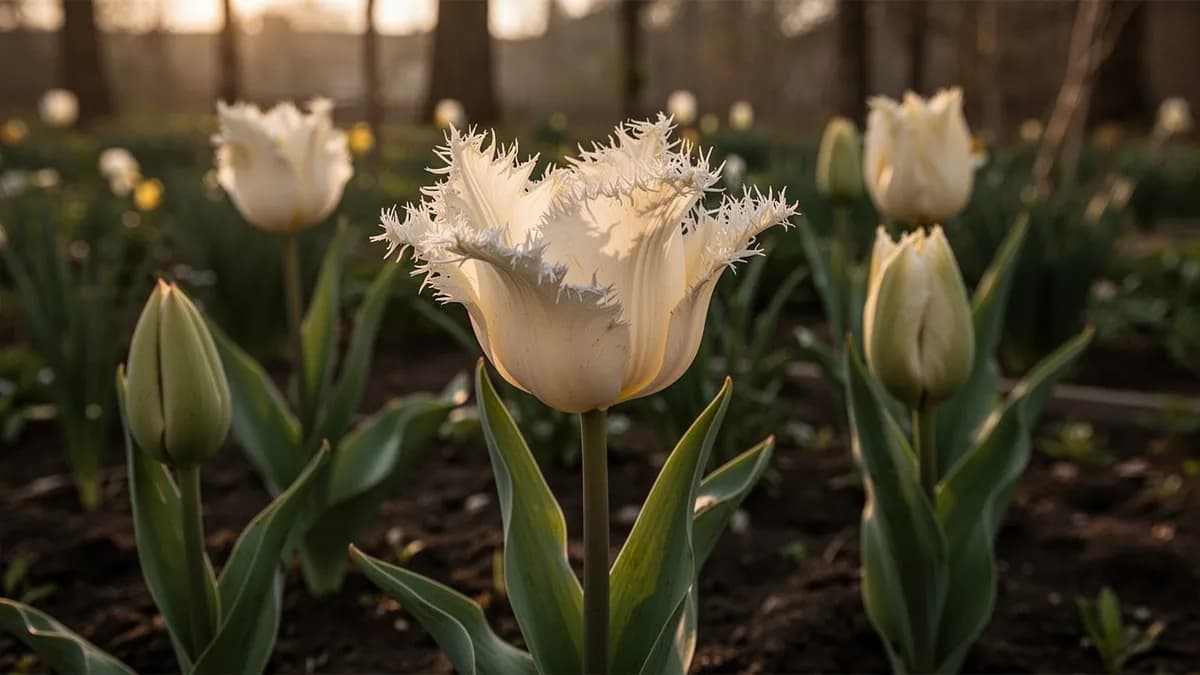
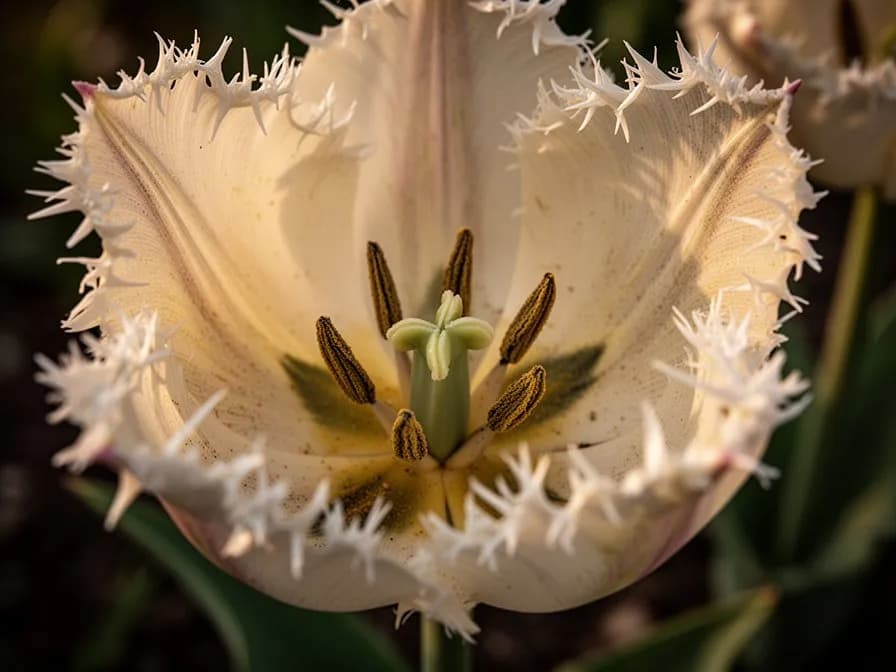
Un tulipán elegante con bordes cristalinos y flecados en sus pétalos que captan la luz con belleza en los jardines primaverales.





En esta páginaResumen
Conoce Tulipán flecado
Un tulipán elegante con bordes cristalinos y flecados en sus pétalos que captan la luz con belleza en los jardines primaverales. Los tulipanes flecados florecen a mediados y finales de la primavera y aportan textura y sofisticación a borduras y jardines de corte. Plante los bulbos en otoño a una profundidad de al menos 15 centímetros para lograr la mejor perennidad.
Cuándo plantar Tulipán flecado
Los tulipanes flecados se propagan únicamente a partir de bulbos. Compre cada otoño bulbos frescos de primera calidad para lograr la exhibición flecada más intensa. Los bulbillos producidos por plantas maduras pueden cultivarse durante 1-2 años. La propagación por semilla es poco práctica y tarda 5-7 años en alcanzar el tamaño de floración.
Tu año de Tulipán flecado
Ajustado a Zona 7 · temporada típica · la helada se va hacia el 2 abr y vuelve hacia el 1 nov
Planta Tulipán flecado Oct – Nov y cosecha Abr – May. Consulta los métodos de plantación y elige tu clima para adaptar los periodos.
Cómo cultivar Tulipán flecado
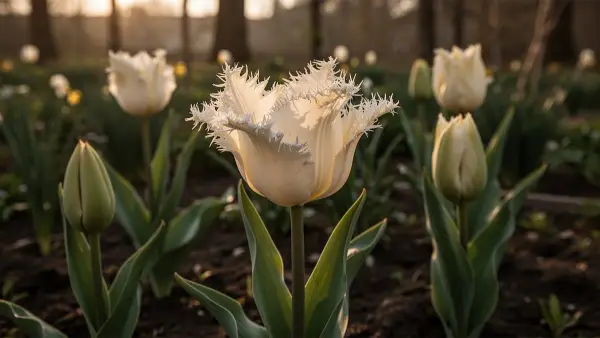
Los tulipanes flecados presentan delicadas franjas cristalinas a lo largo de los bordes de sus pétalos, creando un elegante efecto de encaje que atrapa la luz. Los flecos recuerdan a pequeños cristales de hielo y añaden una textura sofisticada a formas de tulipán por lo demás clásicas. Con una altura de 40-55 cm, los tulipanes flecados florecen a mediados y finales de la primavera y están disponibles en una amplia gama de colores.
Plante los bulbos a 15-20 cm de profundidad en otoño, en un suelo bien drenado y a pleno sol. La plantación profunda mejora el índice de retorno en años posteriores. Los tulipanes flecados son más perennes que los tipos loro, pero siguen rindiendo mejor cuando se plantan frescos cada otoño. Sepárelos 12 cm entre sí en grupos de al menos 10-15 para lograr un mayor impacto visual.
Deje que el follaje se marchite de forma natural después de la floración para nutrir el bulbo. Retire la cabeza de semilla en desarrollo después de la floración para dirigir la energía de vuelta al crecimiento del bulbo. Abone con un fertilizante líquido rico en potasio cuando las flores empiecen a marchitarse para fortalecer los bulbos de la temporada siguiente.
200 plantas caben en un bancal de 120 × 240 cm
Cada Tulipán flecado pide 12 cm de margen. El planificador guarda ese marco por ti — cada planta, cada bancal.
Los mejores vecinos de Tulipán flecado
Los tulipanes flecados aportan una textura sofisticada a las borduras primaverales. Combinan de maravilla con nomeolvides, narcisos tardíos y jacintos de uva. Plántelos entre el follaje emergente de vivaces que ocultará las hojas marchitas del tulipán. En contenedores, combínelos con violas e hiedra colgante para una elegante exhibición primaveral.
Tulipán va a su lado.
Saber de huerto de siempre, cotejado con la tabla real de Tulipán flecado — prueba cualquier planta que cultives.
Prueba Tulipán flecado en un bancal, aquí mismo
Un bancal real del planificador con Tulipán flecado ya plantado. Toca una planta compañera para colocarla y mira cómo responde la comprobación de vecinos: verde para buenos vecinos, rojo si hay conflicto.


Guías de cultivo relacionadas
Abónalo bien
Plántelos en un suelo fértil y bien drenado con un pH de 6.0-7.0. Añada harina de huesos en el momento de plantar. Aporte en primavera un fertilizante equilibrado para bulbos cuando emerjan los brotes. Un buen drenaje es fundamental para evitar la pudrición de los bulbos durante la dormancia invernal.
Temperatura ideal
Compatibilidad de zonas de rusticidad
De la semilla a la cosecha, etapa por etapa
Dormancia del bulbo y plantación
Los bulbos de tulipán flecado se plantan en otoño, idealmente cuando la temperatura del suelo se ha enfriado hasta unos 10°C (50°F). El bulbo contiene una flor embrionaria completamente formada rodeada de escamas carnosas de reserva que aportan nutrientes para la primavera siguiente. La profundidad correcta de plantación, de 15-20 cm, es crucial para la perennidad y la estabilidad del tallo.
Establecimiento de raíces
Durante el otoño y el comienzo del invierno, el bulbo desarrolla una extensa red de raíces contractiles que lo anclan firmemente en el suelo y absorben humedad y nutrientes. El crecimiento radicular ocurre cuando la temperatura del suelo está entre 4-13°C (40-55°F). El bulbo requiere un periodo de frío sostenido de 12-16 semanas por debajo de 7°C (45°F) para vernarlizarse e iniciar un desarrollo floral adecuado.
Emergencia de brotes primaverales
Cuando la temperatura del suelo sube por encima de 7°C a finales del invierno o a comienzos de la primavera, los primeros brotes verdes y puntiagudos atraviesan la superficie. Las hojas, aún enrolladas, emergen como una lanza compacta que protege el capullo floral en desarrollo. Durante esta etapa se produce un rápido crecimiento vertical, y los brotes se alargan varios centímetros por semana en condiciones favorables.
Desarrollo del capullo y elongación del tallo
El capullo floral se hace visible al elevarse sobre el follaje circundante, apareciendo inicialmente como un óvalo verde y abultado o ligeramente coloreado. El tallo se alarga con rapidez y alcanza su altura completa de 40-60 cm. Las hojas anchas, de tono azul verdoso, se despliegan a lo largo del tallo, aportando energía fotosintética. Los característicos bordes flecados de los pétalos comienzan a diferenciarse a medida que el capullo se hincha.
Plena floración
Las flores se abren por completo y revelan los espectaculares bordes flecados de los pétalos, que recuerdan delicadas agujas cristalinas o un fino plumaje. Cada flor dura normalmente 10-14 días en el jardín, según la temperatura, y las condiciones más frescas prolongan la exhibición. Los márgenes flecados crean un contraste textural muy llamativo con la superficie lisa del pétalo interior y captan la luz de forma preciosa.
Senescencia del follaje y reposición del bulbo
Después de la floración, las hojas siguen fotosintetizando durante 6-8 semanas, canalizando energía de vuelta al bulbo subterráneo y desarrollando bulbillos hijos. El follaje amarillea gradualmente y se marchita de manera natural cuando el bulbo entra en dormancia estival. Este periodo posfloración es esencial para acumular suficientes reservas de energía para producir flores la primavera siguiente.
Dormancia estival
El bulbo entra en un estado de dormancia profunda durante el verano, descansando bajo tierra con una flor embrionaria totalmente formada para la próxima temporada desarrollándose en su interior. La túnica exterior papirácea protege el bulbo de la desecación y de patógenos del suelo. Los bulbillos hijos siguen madurando junto al bulbo madre y aumentan gradualmente de tamaño hasta alcanzar capacidad de floración.
Plante los bulbos con la punta hacia arriba a una profundidad equivalente a tres veces la altura del bulbo, separados 10-15 cm. Elija un lugar a pleno sol o con sombra ligera y suelo bien drenado. Añada un puñado de harina de huesos a cada hoyo para fomentar un desarrollo radicular fuerte.
Cuidar Tulipán flecado mes a mes
Qué hacer cada mes para tu Tulipán flecado
Octubre
Mes actualMes principal de plantación para la mayoría de las regiones. Plante los bulbos a 15-20 cm de profundidad y separados 10-15 cm en un suelo bien drenado enriquecido con compost. Riegue bien después de plantar. Combine los bulbos de tulipán con crocus o jacintos de uva de floración más temprana para prolongar la exhibición primaveral mediante el método de plantación en lasaña.
Ten claro qué hacer en tu huerto, cada mes
Un correo al empezar cada mes: qué sembrar, plantar y hacer ahora mismo — para tu Tulipán flecado y todo lo que crece alrededor. Más un breve curso inicial para esquivar los errores clásicos.
- Qué hacer ahora mismo
- Ajustado a tu temporada
- Curso inicial incluido
Cosechar Tulipán flecado
Corte los tulipanes flecados cuando los capullos estén coloreados pero aún cerrados; se abren de maravilla en el jarrón. Los bordes flecados se aprecian mejor de cerca, lo que los hace ideales para arreglos de mesa. Los tallos duran 5-7 días en agua fresca.
se supone que plantas al comenzar el periodo — indica tu fecha real
A partir de bulbos, tubérculos o dientes
Cosecha Tulipán flecado a tiempo y la planta sigue produciendo.
Almacenamiento y conservación
Después de que el follaje se marchite, desentierre los bulbos si lo desea, séquelos a la sombra y guárdelos en bolsas de malla en un lugar fresco y seco hasta la plantación otoñal. Los bulbos frescos siempre producen la exhibición flecada más intensa. Las flores prensan bien para manualidades, y los bordes flecados crean texturas interesantes.
Qué falla — y cómo solucionarlo
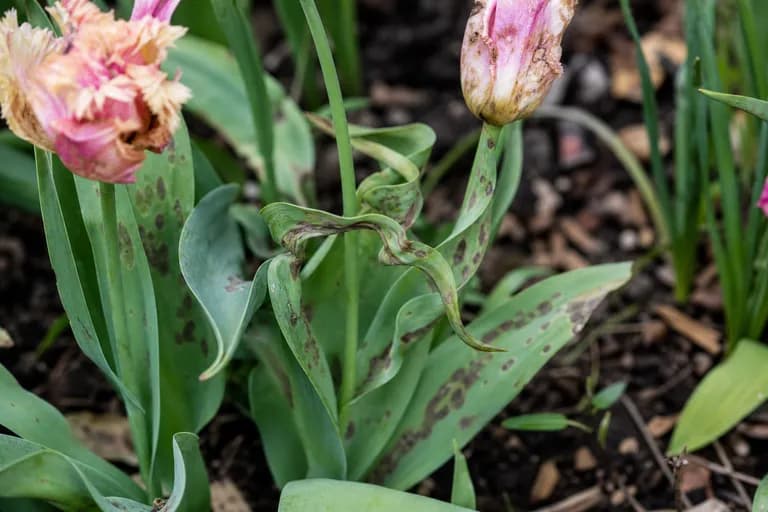
Tulipenfeuer
EnfermedadBrotes deformados, manchas marrones en hojas y flores. Una enfermedad fúngica devastadora que puede arruinar plantaciones enteras.
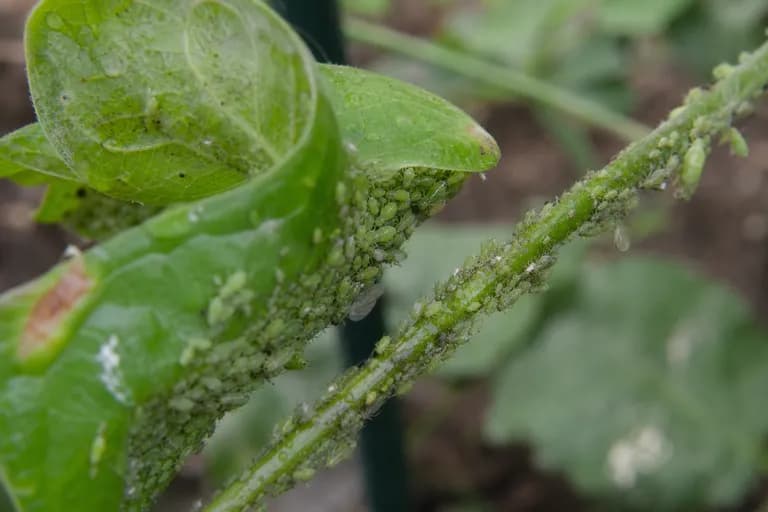
Pulgones
PlagaPulgones verdes en tallos florales y capullos en desarrollo. Pueden propagar el virus del mosaico del tulipán.
Solución de problemas comunes
Como todos los tulipanes, las variedades flecadas decaen después de unos años; sustitúyalas con regularidad para lograr la mejor exhibición. Los delicados flecos pueden dañarse con lluvia fuerte y granizo. Las ardillas desentierran los bulbos; protéjalos con malla metálica. El tulipenfeuer puede ser devastador: practique buena higiene y rote el lugar de cultivo.
Consejos de cultivo
- Plante los bulbos de tulipán flecado en otoño cuando la temperatura del suelo baje de 15°C (60°F), normalmente entre octubre y noviembre en la mayoría de los climas templados. Plantar demasiado pronto, cuando el suelo sigue cálido, puede provocar un crecimiento prematuro y problemas fúngicos.
- Coloque los bulbos a una profundidad de 15-20 cm, medida desde la base del bulbo, que es más profunda de lo que muchos jardineros creen. La plantación profunda mejora la perennidad, protege contra el levantamiento por heladas y produce tallos más firmes y menos expuestos a daños por el viento.
- Elija un lugar de plantación a pleno sol o con ligera sombra vespertina y un drenaje excelente. Los tulipanes flecados no toleran el suelo encharcado, especialmente durante la dormancia estival. Los bancales elevados o las posiciones en pendiente funcionan excepcionalmente bien en zonas con suelos arcillosos pesados.
- Plántelos en grupos de al menos 10-15 bulbos de la misma variedad para lograr el máximo impacto visual. Dispóngalos en un grupo de aspecto natural en lugar de filas rígidas, dejando 10-15 cm entre bulbos para crear una exhibición plena y cohesionada cuando florezcan.
- Aplique un fertilizante equilibrado de liberación lenta para bulbos, como 9-9-6, en el momento de plantar y de nuevo cuando los brotes emerjan en primavera. Evite los abonos altos en nitrógeno, que favorecen el follaje a expensas de las flores y pueden contribuir a la pudrición del bulbo.
- Riegue bien después de la plantación otoñal para asentar el suelo e impulsar el crecimiento de las raíces, y luego deje que las lluvias naturales mantengan los bulbos durante el invierno. Reanude el riego suplementario en primavera solo si las condiciones son inusualmente secas durante el periodo de crecimiento activo.
- Quite las flores marchitas con rapidez cuando los pétalos empiecen a palidecer, desprendiendo limpiamente la cabeza floral del tallo, pero nunca retire el follaje verde. Las hojas deben fotosintetizar durante 6-8 semanas después de la floración para reponer las reservas de energía del bulbo para la flor del año siguiente.
- Proteja los brotes emergentes de primavera del daño por babosas y caracoles aplicando cebos orgánicos o barreras de cinta de cobre alrededor de la zona de plantación. Los pulgones en los capullos en desarrollo pueden desalojarse con un chorro fuerte de agua de la manguera.
- En regiones con veranos húmedos, considere levantar los bulbos después de que el follaje haya muerto por completo. Límpielos, séquelos y guárdelos en un lugar fresco y bien ventilado a 17-20°C en bolsas de malla o bandejas abiertas hasta la siguiente plantación otoñal.
- Para obtener la mayor vida en florero al cortar tulipanes flecados, recójalos por la mañana cuando los capullos apenas empiezan a mostrar color. Corte los tallos en ángulo, colóquelos de inmediato en agua fresca con unas gotas de lejía y mantenga el jarrón alejado de la luz solar directa y de las cestas de fruta, que emiten gas etileno.
Cultiva tu mejor Tulipán flecado — y todo lo que la rodea.
Empieza un plan gratis hoy. Diseña tus bancales, coloca tu Tulipán flecado y deja que PlotMyGarden gestione el momento, el espaciado, las asociaciones y los recordatorios de la semilla a la cesta.
Elige tu Tulipán flecado
Tulipa 'Fancy Frills'
Rosa suave con flecos blancos, que combina delicadeza con bordes generosamente flecados.
Tulipa 'Burgundy Lace'
Rojo vino intenso con intrincados flecos cristalinos, uno de los tulipanes oscuros más elegantes.
Tulipa 'Honeymoon'
Blanco puro con bordes flecados elaborados, espectacular en jardines a la luz de la luna y en esquemas de plantación blancos.
Una bolsa de 25 bulbos premium de tulipán flecado suele costar 15-30 $, y produce una exhibición espectacular que costaría 60-150 $ o más como flores cortadas de una floristería. Cuando se plantan profundamente (20 cm) en un suelo bien drenado y se les permite naturalizarse, los tulipanes flecados pueden volver durante 3-6 años, multiplicando aún más el ahorro. Los tallos individuales de tulipán flecado se venden por 3-6 $ cada uno en floristerías y mercados de agricultores, lo que significa que una plantación de 50 bulbos puede equivaler a 150-300 $ en flores cortadas al año. Cultivarlos usted mismo también garantiza pétalos sin pesticidas aptos para uso comestible.
Recetas rápidas
Pétalos de tulipán flecado confitados
30 min más tiempo de secadoTransforme los pétalos ornamentales de los tulipanes flecados en elegantes confituras cristalizadas, perfectas para decorar pasteles, cupcakes y bandejas de postres. Los intrincados bordes flecados retienen muy bien el recubrimiento de azúcar y crean un aspecto brillante, similar a una joya. Use solo pétalos de tulipanes cultivados sin pesticidas ni tratamientos químicos.
5 ingredientesEnsalada primaveral de pétalos de tulipán
10 minUna ensalada primaveral visualmente espectacular que utiliza pétalos de tulipán flecado tanto como ingrediente colorido como cuenco comestible. Los pétalos tienen un sabor suave, ligeramente dulce, que recuerda a los guisantes frescos o a la lechuga mantequilla. Este plato celebra la belleza efímera de la primavera y resulta un entrante impresionante para una fiesta en el jardín o un almuerzo primaveral.
6 ingredientesSirope primaveral infusionado con pétalos de tulipán
20 min más tiempo de infusiónUn sirope sencillo con una delicada nota floral, infusionado con la sutil dulzura de los pétalos de tulipán flecado. Los pigmentos naturales de los pétalos coloreados teñirán el sirope de un suave tono pastel. Úselo para endulzar cócteles primaverales, sobre tortitas, para aromatizar limonada o para añadir un toque floral al agua con gas.
5 ingredientesQué contiene
Beneficios para la salud
- Los pétalos de tulipán contienen niveles modestos de antocianinas y flavonoides, compuestos antioxidantes naturales que ayudan a proteger las células del estrés oxidativo y pueden favorecer la salud cardiovascular general cuando se consumen como parte de una dieta variada
- La jardinería con tulipanes aporta importantes beneficios para la salud mental, como menor estrés, mejor estado de ánimo y reducción de los síntomas de ansiedad y depresión, según documentan múltiples estudios de terapia hortícola
- La tarea de planificar, plantar y cuidar jardines de tulipanes promueve la actividad física, como agacharse, cavar y caminar, contribuyendo de forma suave a mejorar la flexibilidad, la fuerza y la capacidad cardiovascular
- La exposición a los colores vibrantes de los tulipanes flecados ha demostrado en investigaciones de psicología ambiental que eleva el estado de ánimo, aumenta la sensación de felicidad y reduce la fatiga mental gracias a los efectos restauradores del contacto con la naturaleza
- La jardinería de tulipanes fomenta el tiempo al aire libre y la exposición a la luz solar durante los meses críticos de primavera, apoyando la síntesis natural de vitamina D del cuerpo y ayudando a regular los ritmos circadianos después de los días más cortos del invierno
- El ritmo estacional del cultivo de tulipanes, desde la plantación otoñal hasta la floración primaveral, proporciona una sensación de propósito, anticipación y conexión con los ciclos naturales que favorece el bienestar psicológico y la práctica de la atención plena
De dónde viene Tulipán flecado
Los tulipanes flecados (Tulipa, División 7) descienden de especies silvestres de tulipán originarias de las regiones montañosas de Asia Central, en particular de las cordilleras de Tien Shan y Pamir-Alay que abarcan el actual Kazajistán, Uzbekistán y Kirguistán. Los tulipanes silvestres evolucionaron en estos duros climas continentales con inviernos fríos y veranos secos, lo que explica la necesidad moderna de vernalización y dormancia estival del bulbo. Los tulipanes fueron cultivados por primera vez por los persas ya en el siglo X y quedaron profundamente integrados en el arte y la poesía persas como símbolos del amor perfecto y del paraíso. Los turcos otomanos adoptaron el cultivo del tulipán con extraordinaria pasión durante el siglo XVI, desarrollando extensos jardines palaciegos y programas de mejora que produjeron cientos de variedades con nombre. La corte de Solimán el Magnífico empleó maestros especializados en tulipanes que seleccionaban y cruzaban cuidadosamente las flores para crear formas nuevas. Los tulipanes llegaron a Europa occidental en la década de 1550, cuando Ogier Ghiselin de Busbecq, embajador de los Habsburgo en la corte otomana, envió bulbos al célebre botánico Carolus Clusius en la Universidad de Leiden, en los Países Bajos. Las plantaciones de Clusius en el Hortus Botanicus sentaron las bases de la industria neerlandesa de bulbos. El grupo de tulipanes flecados surgió específicamente a comienzos del siglo XX mediante esfuerzos deliberados de hibridación por parte de obtentores neerlandeses en busca de nuevas formas de pétalo. Se cree que los distintivos bordes serrados de los pétalos surgieron de mutaciones genéticas que afectaban al desarrollo del margen del pétalo y que después se estabilizaron mediante selección. El primer cultivar flecado reconocido, Sundew, se registró en 1930, y en las décadas siguientes hubo una explosión de nuevas variedades flecadas en todos los colores imaginables. Hoy en día, los tulipanes flecados figuran entre las divisiones de tulipán más codiciadas tanto para exhibición en jardín como para el comercio de flor cortada, apreciados por su complejidad textural y su vida en jarrón extendida de hasta dos semanas.
Tulipán flecado: ¿sabías que?
Datos fascinantes sobre Tulipán flecado
Los tulipanes flecados pertenecen a la División 7 del sistema oficial de clasificación de tulipanes mantenido por la Asociación Real General de Productores de Bulbos (KAVB) en los Países Bajos, que reconoce 15 divisiones distintas de tulipanes basadas en la forma de la flor y la época de floración.
Tulipán flecado: preguntas frecuentes
¿Cuándo debo plantar Tulipán flecado?
¿Cuáles son buenas plantas acompañantes para Tulipán flecado?
¿En qué zonas de rusticidad puede crecer Tulipán flecado?
¿Cuánto sol necesita Tulipán flecado?
¿A qué distancia debo espaciar Tulipán flecado?
¿Qué plagas y enfermedades afectan a Tulipán flecado?
¿Cómo almaceno Tulipán flecado después de la cosecha?
¿Cuáles son las mejores variedades de Tulipán flecado para cultivar?
¿Qué suelo necesita Tulipán flecado?
¿Qué diferencia a los tulipanes flecados de los tulipanes normales?
¿Los tulipanes flecados vuelven todos los años o tengo que replantarlos?
¿Cuál es el mejor momento para plantar bulbos de tulipán flecado?
¿Cómo prevengo enfermedades como el tulipenfeuer en mis tulipanes flecados?
¿Puedo cultivar tulipanes flecados en contenedores y macetas?
¿Cuáles son las mejores plantas acompañantes para cultivar junto a los tulipanes flecados?
Acabas de leer la teoría. Ahora cultívala en piloto automático.
Todo lo que hace que Tulipán flecado sea delicado — el momento, el espaciado, las asociaciones, la ventana de cosecha — es justo lo que PlotMyGarden resuelve por ti, para cada planta de tu huerto.
Un plan que conoce tu clima
Indica tu ubicación una vez. Recibe fechas de siembra, abonado y cosecha basadas en tu última helada real y el pronóstico en vivo — sin adivinar con un sobre genérico.
De la sección “Cuándo plantar”Planificador de bancales de arrastrar y soltar
Diseña bancales sobre una cuadrícula. Cada planta encaja con su espaciado correcto y ves toda la temporada antes de gastar un céntimo en semillas.
De la sección “Cultivo”Conflictos de asociación, detectados a tiempo
Más de 200 buenas y malas combinaciones comprobadas en vivo mientras plantas — para que un error que arruine la temporada nunca llegue a la tierra.
De la sección “Asociaciones”Recordatorios que sí vas a seguir
“Riega las judías.” “Recoge hoy antes de que se pase.” Oportunos, concretos y ligados a las plantas que de verdad cultivas.
De la sección “Cosecha”Escalonado, programado
¿Quieres cosechar seis semanas en vez de seis días? Reparte tus siembras automáticamente y te avisa cuando toca el siguiente lote.
De la sección “Cuándo plantar”Un registro que se vuelve más listo
Cada cosecha que registras le enseña tu huerto. El plan del año que viene parte de lo que de verdad funcionó en tu suelo, no en un manual.
De la sección “Resumen”Planta estos junto a Tulipán flecado
Más Bulbosas
Cultiva tu mejor Tulipán flecado — y todo lo que la rodea.
Empieza un plan gratis hoy. Diseña tus bancales, coloca tu Tulipán flecado y deja que PlotMyGarden gestione el momento, el espaciado, las asociaciones y los recordatorios de la semilla a la cesta.