Garnet Süßkartoffel
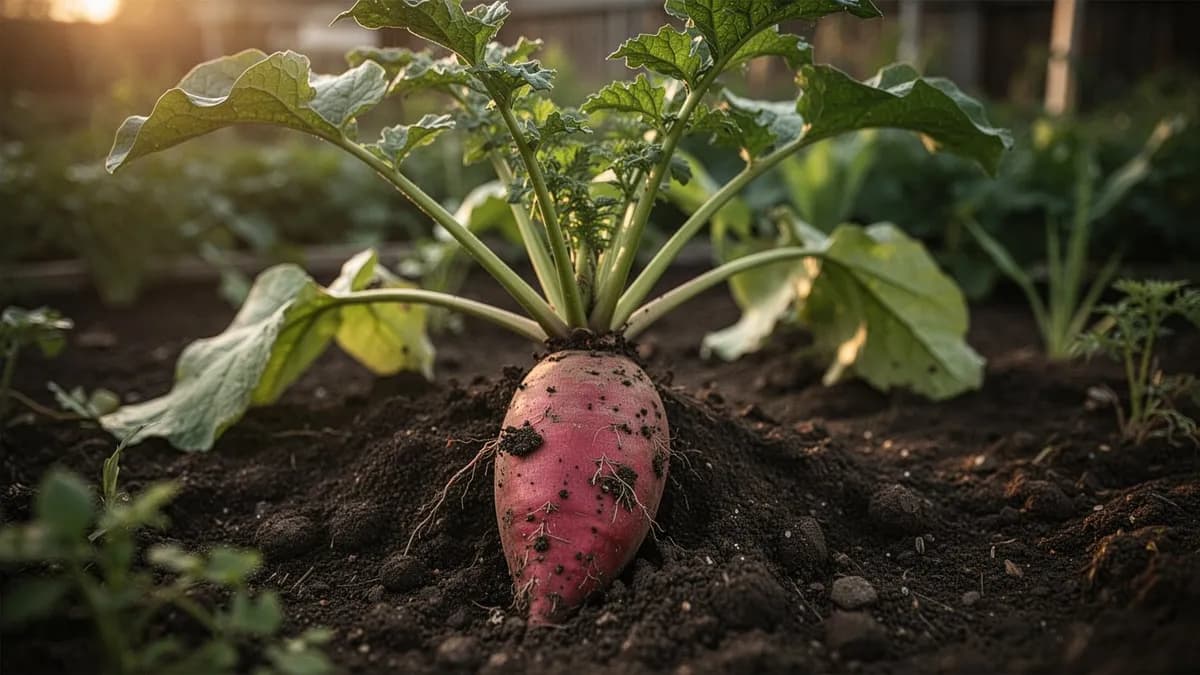
Eine dunkelrot-schalige Süßkartoffel mit leuchtend orangefarbenem, saftigem Fruchtfleisch, das beim Backen sehr cremig und süß wird.





Auf dieser SeiteÜberblick
Garnet Süßkartoffel im Überblick
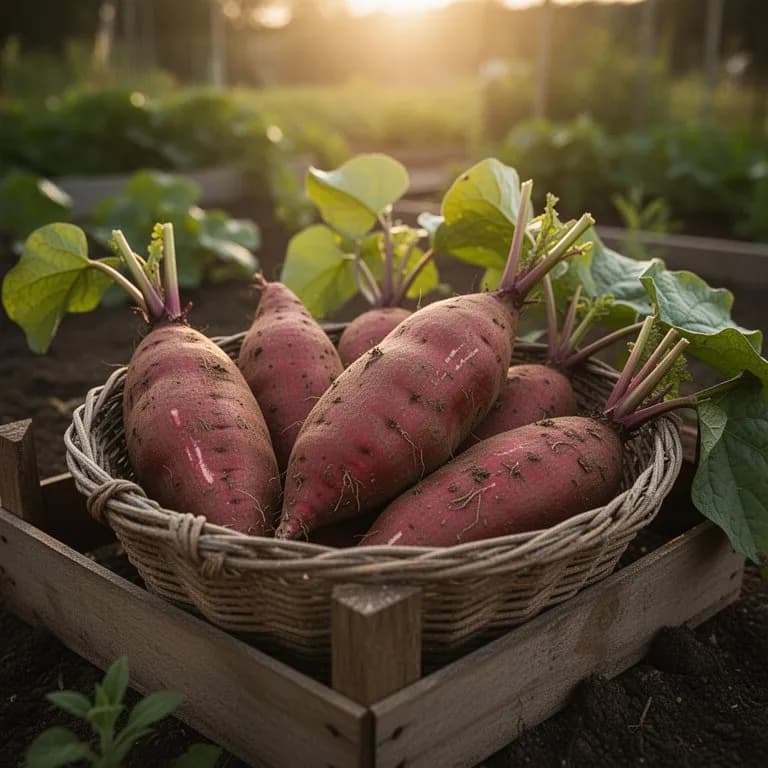
Eine dunkelrot-schalige Süßkartoffel mit leuchtend orangefarbenem, saftigem Fruchtfleisch, das beim Backen sehr cremig und süß wird. In amerikanischen Lebensmittelgeschäften häufig fälschlicherweise als Yam bezeichnet, ist die Garnet tatsächlich eine weichfleischige Süßkartoffelsorte. Die Pflanzen bilden kräftige Ranken, die im Garten als dekorative Bodendecker verwendet werden können. Der hohe Betacarotin-Gehalt verleiht dem Fruchtfleisch seine intensive orange Farbe und steigert den Nährwert.
Wann Garnet Süßkartoffel pflanzen
Ziehen Sie Stecklinge von einer Garnet-Süßkartoffel etwa acht bis zehn Wochen vor dem letzten erwarteten Frost. Hängen Sie die Knolle in einem Glas Wasser an einem warmen, hellen Standort auf oder betten Sie sie zur Hälfte in feuchte Blumenerde. Triebe erscheinen in zwei bis vier Wochen. Wenn die Stecklinge 15 cm erreicht haben und mehrere Blätter tragen, drehen Sie sie ab und bewurzeln Sie sie eine Woche lang in Wasser, bevor Sie sie umpflanzen. Jede Knolle kann 10 bis 15 Stecklinge produzieren. Pflanzen Sie erst ins Freie, wenn die Bodentemperaturen mindestens eine Woche lang über 18 Grad lagen.
Dein Garnet Süßkartoffel-Jahr
Abgestimmt auf Zone 7 · typische Saison · Frost geht um den 2. Apr. und kehrt um den 1. Nov. zurück
Garnet Süßkartoffel Mai – Jun pflanzen, Sep – Okt ernten. Beachte die Pflanzmethoden unten und wähle dein Klima für passende Zeiträume.
So baust du Garnet Süßkartoffel an
Garnet-Süßkartoffeln benötigen warme Anbaubedingungen mit Bodentemperaturen über 18 Grad Celsius. Pflanzen Sie die Stecklinge nach dem letzten Frost im Freien in aufgehäufte Reihen von 20 bis 30 cm Höhe und 90 cm Abstand, um eine hervorragende Drainage und Wärme zu gewährleisten. Setzen Sie die Stecklinge im Abstand von 30 bis 45 cm, wobei nur die oberen Blätter sichtbar bleiben.
Diese wüchsigen Pflanzen bilden dunkelrot-violette Ranken, die sich aggressiv ausbreiten und als effektive lebende Mulchschicht wirken. Gießen Sie in den ersten drei Wochen regelmäßig, während die Wurzeln sich etablieren, und reduzieren Sie dann die Bewässerung, sobald die Ranken wachsen. Süßkartoffeln sind nach der Etablierung überraschend trockenheitsresistent. Vermeiden Sie übermäßigen Stickstoff, der das Rankenwachstum auf Kosten der Knollenbildung fördert. Eine einmalige Gabe von kaliumreichem Dünger zur Saisonmitte unterstützt die Wurzelentwicklung.
Garnet benötigt etwa 110 Tage bis zur Reife, etwas länger als Beauregard, daher sollten Gärtner in nördlichen Regionen Techniken zur Saisonverlängerung einsetzen. Schwarze Plastikfolie erwärmt den Boden vor und hält die Wärme während der gesamten Saison. Reihenabdeckungen bieten Frostschutz in kühlen Nächten. Überwachen Sie die Bodentemperatur statt Kalenderdaten, um den Pflanzzeitpunkt zu bestimmen, da zu frühes Pflanzen zu schlechter Etablierung führt.
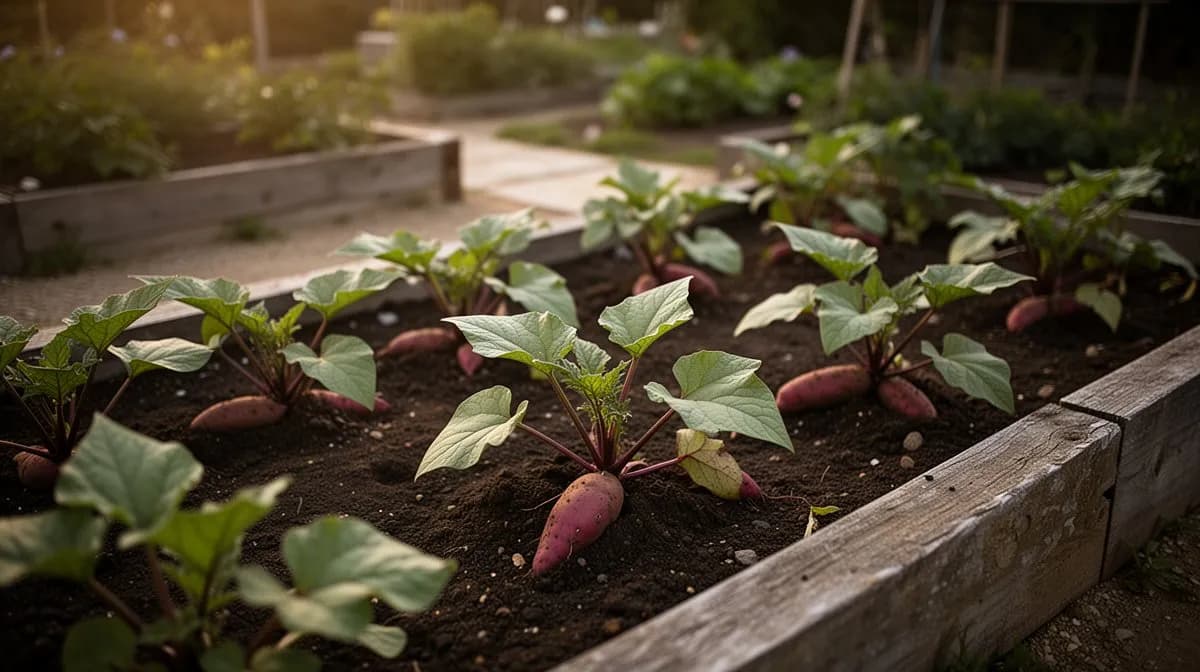
10 Pflanzen passen in ein Beet von 120 × 240 cm
Garnet Süßkartoffel braucht 45 cm Platz pro Pflanze. Der Planer hält diesen Abstand für dich ein — jede Pflanze, jedes Beet.
Die besten Nachbarn für Garnet Süßkartoffel
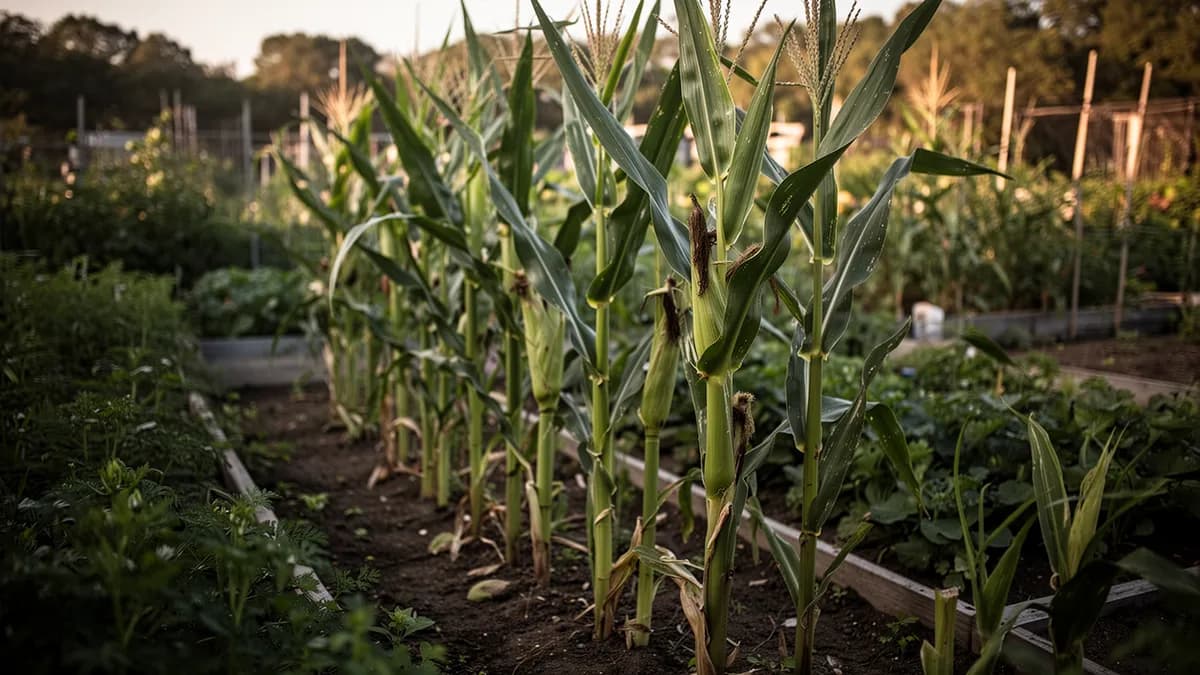
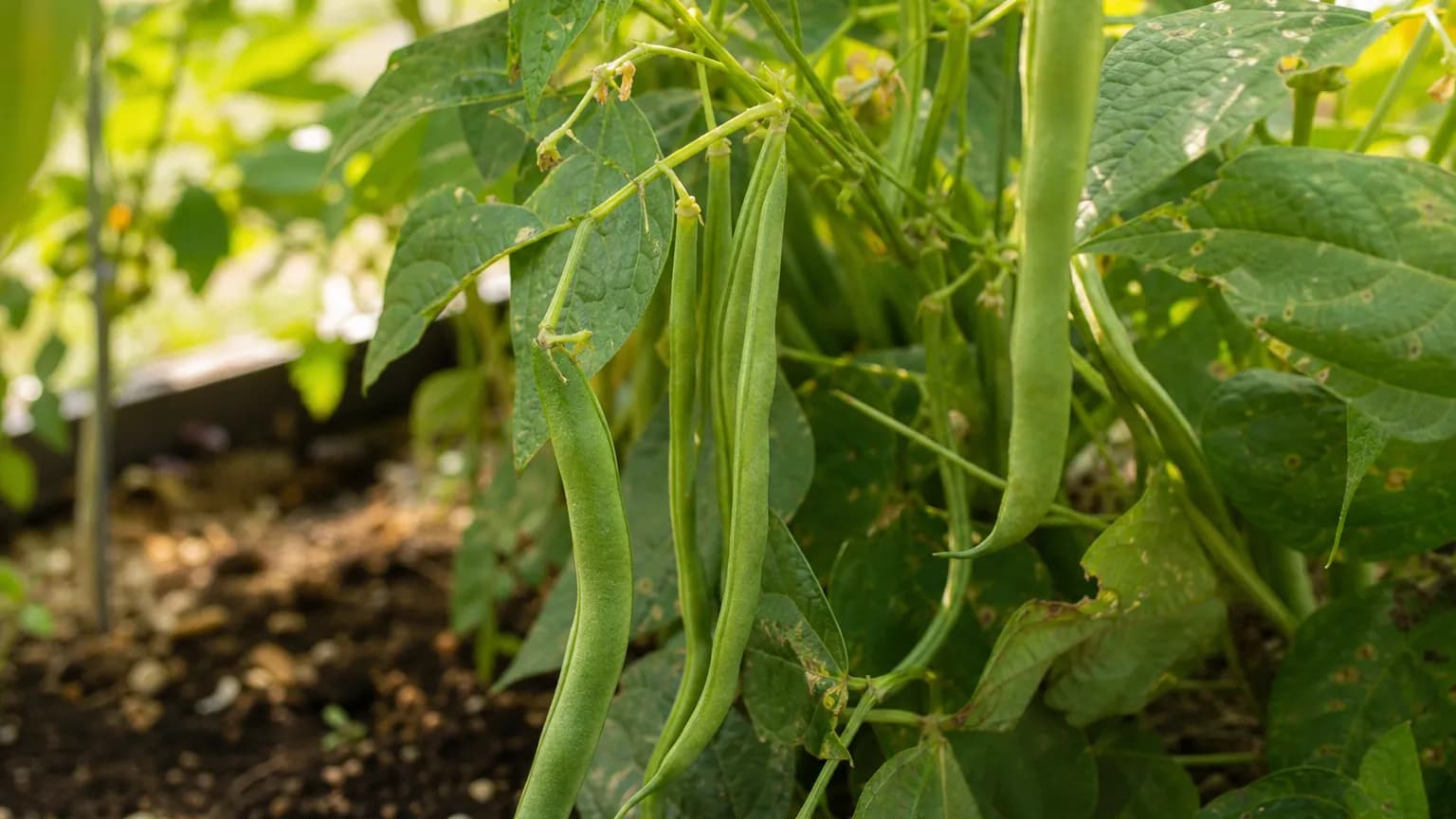
Garnet-Süßkartoffeln harmonieren gut mit Mais und Stangenbohnen, wobei die Ranken als Bodendecker unter höheren Kulturen dienen. Die dichte Rankenabdeckung unterdrückt Unkraut effektiv. Pflanzen Sie aromatische Kräuter wie Thymian und Salbei in der Nähe, um Schädlinge zu verwirren. Vermeiden Sie den Anbau neben Kürbis und Melonen, die um Bodenfläche konkurrieren. Süßkartoffeln sollten in der Fruchtfolge nicht auf Nachtschattengewächse folgen, um gemeinsame Krankheitsprobleme zu vermeiden.
Mais gehört daneben.
Altes Gärtnerwissen, geprüft an der echten Nachbartabelle von Garnet Süßkartoffel — teste jede Pflanze, die du anbaust.
Probiere Garnet Süßkartoffel direkt hier im Beet
Ein echtes Planer-Beet, Garnet Süßkartoffel steht schon drin. Tippe einen Begleiter an, platziere ihn und sieh, wie die Nachbarschaftsprüfung antwortet — grün für gute Nachbarn, rot bei Streit.


Passende Anbau-Ratgeber
Richtig düngen
Garnet-Süßkartoffeln gedeihen in lockerer, sandiger, gut durchlässiger Erde mit einem pH-Wert von 5,8 bis 6,2. Legen Sie Hochbeete oder aufgehäufte Reihen an, um die Drainage zu verbessern und die Wurzelzone zu erwärmen. Vermeiden Sie schweren Lehmboden, der zu missgebildeten Knollen führt und Fäulnis fördert. Überdüngen Sie nicht, besonders nicht mit Stickstoff, der üppige Ranken, aber wenige Knollen produziert. Geben Sie bei der Pflanzung einen stickstoffarmen Dünger wie 5-10-10. Düngen Sie zur Saisonmitte mit kaliumreichen Ergänzungen nach.
Ideale Temperatur
Winterhärtezone-Kompatibilität
Von der Saat zur Ernte, Schritt für Schritt
Stecklingsproduktion
Süßkartoffeln werden nicht aus Samen gezogen, sondern aus Stecklingen — kleinen bewurzelten Trieben, die aus einer reifen Knolle gezogen werden. Eine gesunde Garnet-Knolle, die in Wasser aufgehängt oder zur Hälfte in feuchte Blumenerde eingegraben wird, produziert 8-12 Stecklinge in 4-6 Wochen. Jeder Steckling entwickelt sein eigenes Wurzelsystem und 4-6 Blätter, bevor er von der Mutterknolle getrennt wird.
Umpflanzen & Etablierung
Stecklinge werden in warme Gartenerde umgepflanzt, sobald die Nachttemperaturen über 15°C bleiben. Die Pflanzen werden tief gesetzt, wobei der größte Teil des Stängels eingegraben wird und nur die oberen 3-4 Blätter sichtbar bleiben. Wurzeln entwickeln sich innerhalb von 7-10 Tagen an den vergrabenen Stängelknoten, und die Pflanze beginnt, ihr unterirdisches Netzwerk aufzubauen.
Rankenwachstum
Die Pflanze tritt in eine kräftige vegetative Phase ein und bildet lange rankende Triebe von bis zu 3 Metern, die sich schnell über den Boden ausbreiten. Herzförmige Blätter entwickeln sich in dichten, überlappenden Schichten, die Unkraut beschatten. Unter der Erdoberfläche beginnen sich Speicherwurzeln an den Stängelknoten zu bilden, während die Pflanze die Energie aus der Photosynthese in die unterirdische Entwicklung lenkt.
Knollenbildung
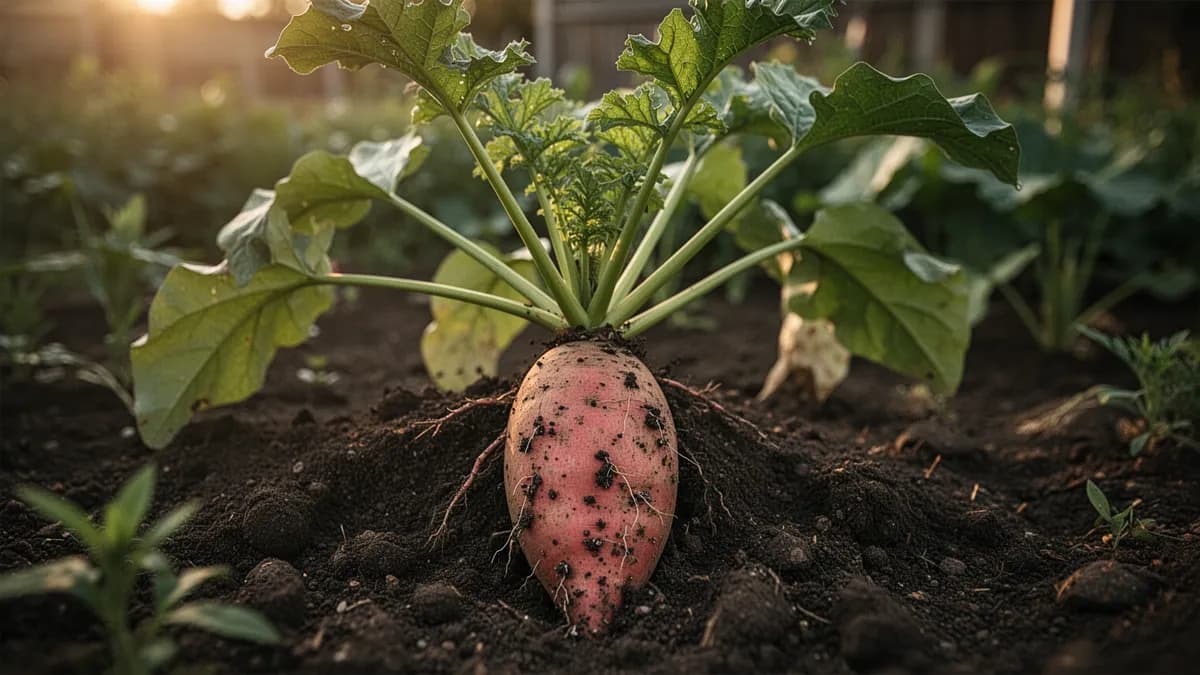
Die kritische Phase, in der die Speicherwurzeln schnell anschwellen und Stärke, Zucker und Betacarotin (das Pigment, das für Garnets tiefes orangefarbenes Fruchtfleisch verantwortlich ist) anreichern. Jede Pflanze entwickelt typischerweise 4-8 Knollen. Bodentemperatur und gleichmäßige Feuchtigkeit beeinflussen Knollengröße und -qualität in dieser Phase direkt.
Ernte & Nachreifung
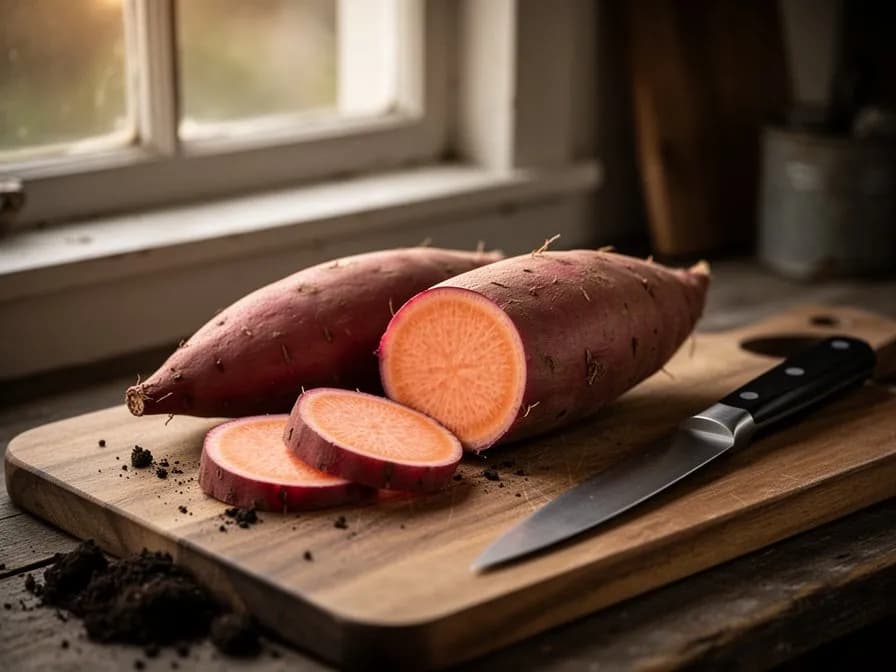
Die Knollen sind erntereif, wenn die Ranken beginnen, sich natürlich gelb zu verfärben und abzusterben, typischerweise 100-120 Tage nach dem Umpflanzen. Die Schale reifer Garnet-Süßkartoffeln entwickelt eine tiefe rötlich-orangefarbene Färbung. Nach dem vorsichtigen Ausgraben müssen die Knollen in einer warmen, feuchten Umgebung nachgereift werden, um Hautwunden zu heilen, Stärke in Zucker umzuwandeln und ihr volles süßes Aroma zu entwickeln.
Beginnen Sie mit der Stecklingsproduktion 6-8 Wochen vor Ihrem letzten Frosttermin in Innenräumen. Halten Sie die Knolle warm (24-27°C) und in hellem, indirektem Licht. Wechseln Sie das Wasser alle paar Tage, um Fäulnis zu verhindern. Stecklinge sind bereit zum Abtrennen, wenn sie 15-20 cm Stiel und sichtbare Wurzeln haben.
Garnet Süßkartoffel Monat für Monat pflegen
Was du jeden Monat für deine Garnet Süßkartoffel tun solltest
Oktober
Aktueller MonatHaupterntemonat für die meisten Zonen. Graben Sie vorsichtig an einem trockenen Tag mit einer Grabegabel, beginnend 30 cm von der Pflanzenmitte entfernt. Behandeln Sie die Knollen behutsam, da sie leicht Druckstellen bekommen. Beginnen Sie sofort mit der Nachreifung bei 27-32°C mit 85-90% Luftfeuchtigkeit für 10-14 Tage.
Immer wissen, was jetzt im Garten zu tun ist
Eine E-Mail zum Monatsanfang: was du jetzt säen, pflanzen und anpacken solltest — für deine Garnet Süßkartoffel und alles, was drumherum wächst. Dazu ein kurzer Startkurs, der dich vor den klassischen Fehlern bewahrt.
- Was jetzt zu tun ist
- Passend zu deiner Saison
- Startkurs inklusive
Garnet Süßkartoffel ernten
Garnet-Süßkartoffeln sind etwa 110 Tage nach dem Pflanzen erntereif, oder wenn die Ranken beginnen, sich gelb zu verfärben. Lockern Sie den Boden vorsichtig mit einer Grabegabel von den Rändern nach innen, um Beschädigungen der Knollen zu vermeiden. Die dunkelrote Schale ist frisch sehr druckempfindlich, also behandeln Sie sie mit Vorsicht. Legen Sie frisch gegrabene Knollen für einige Stunden zum Trocknen auf die Erdoberfläche. Waschen Sie sie erst kurz vor der Verwendung. Ernten Sie vor dem Frost, da kältegeschädigte Knollen schnell im Lager verfaulen.
angenommen, du pflanzt zu Beginn des Zeitraums — trage dein tatsächliches Datum ein
Ernte Garnet Süßkartoffel zügig, dann trägt die Pflanze weiter.
Lagerung & Konservierung
Trocknen Sie Garnet-Süßkartoffeln unmittelbar nach der Ernte in einer warmen, feuchten Umgebung bei 27 bis 29 Grad mit 85 bis 90 Prozent Luftfeuchtigkeit für 10 bis 14 Tage nach. Dies heilt Wunden, entwickelt das Aroma und verlängert die Lagerfähigkeit. Nach dem Nachreifen lagern Sie bei 13 bis 16 Grad an einem dunklen, gut belüfteten Ort. Richtig nachgereifte Knollen halten sich vier bis sechs Monate. Backen, pürieren und portionsweise einfrieren für bis zu sechs Monate. Getrocknete Süßkartoffelscheiben ergeben hervorragende lagerfähige Snacks.
Was schiefgeht — und die Lösung
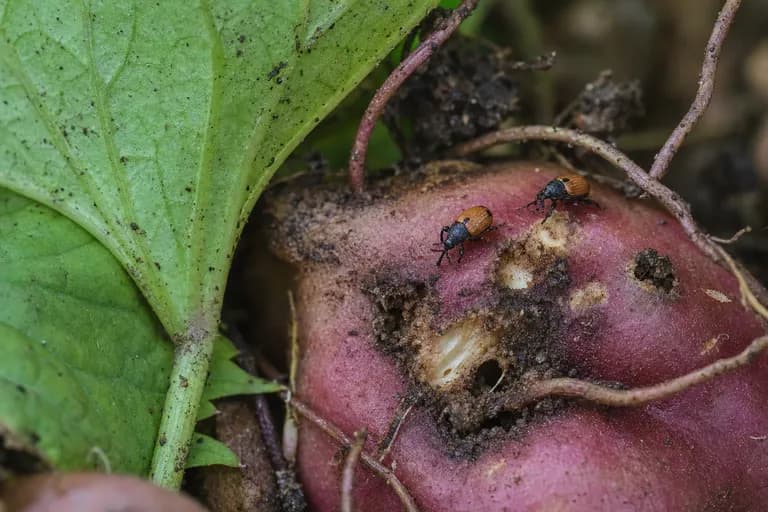
Süßkartoffelrüssler
SchädlingErwachsene Käfer und Larven bohren sich in Ranken und Knollen, hinterlassen Gänge und verursachen einen bitteren Fehlgeschmack in befallenen Wurzeln.
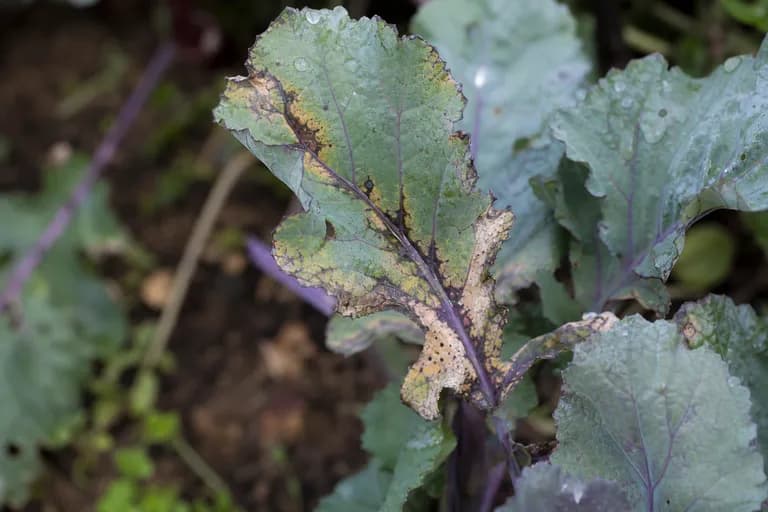
Schwarzfäule
KrankheitDunkle, eingesunkene, kreisförmige Flecken auf Knollen mit trockenem, korkigem Gewebe darunter. Befallene Wurzeln schmecken bitter und haben eine holzige Textur.
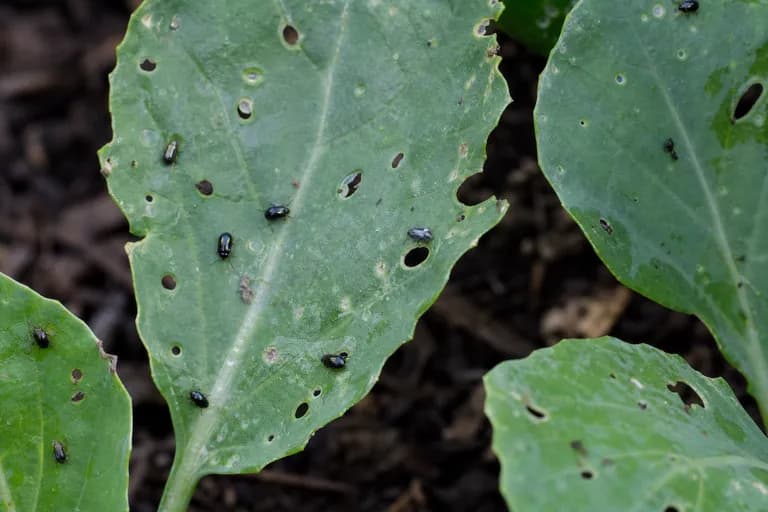
Erdflöhe
SchädlingKleine runde Löcher in den Blättern, die ein Schrotschussmuster erzeugen. Starker Befall kann junge Setzlinge entlauben und die Vitalität verringern.
Fehlerbehebung bei häufigen Problemen
Das häufigste Problem in nördlichen Gärten sind unzureichende Wärmeeinheiten, die kleine oder wenige Knollen hervorbringen. Verwenden Sie schwarze Plastikfolie und Vliesabdeckungen, um die Wärme zu maximieren. Rissbildung entsteht durch ungleichmäßiges Gießen, besonders bei starkem Regen nach Trockenperioden. Fehlende Nachreifung führt zu faden, stärkehaltigen Wurzeln mit schlechter Lagerfähigkeit. Garnet-Ranken wachsen extrem wüchsig und können kleine Gartenflächen überwuchern.
Anbautipps
- Ziehen Sie Ihre eigenen Stecklinge, um Geld zu sparen und krankheitsfreie Starts sicherzustellen. Hängen Sie eine gesunde biologische Garnet-Süßkartoffel mit Zahnstochern in einem Glas Wasser auf, wobei das untere Drittel eingetaucht ist. Stellen Sie sie an einen warmen, hellen Ort und wechseln Sie das Wasser alle 2-3 Tage. Jede Knolle produziert 8-12 Stecklinge in 4-6 Wochen.
- Bauen Sie aufgehäufte Hügel oder Dämme aus lockerer, gut durchlässiger Erde von mindestens 25 cm Höhe zum Pflanzen. Süßkartoffeln entwickeln missgebildete, unterentwickelte Knollen in schwerer oder verdichteter Erde. Mischen Sie groben Sand und Kompost ein, um die ideale lockere, krümelige Textur zu schaffen, die es den Knollen ermöglicht, sich frei auszudehnen.
- Verwenden Sie schwarze Plastikfolie, um den Boden vor dem Pflanzen zu erwärmen und die Wärme während der gesamten Saison zu halten. In kühleren Zonen (5-7) kann diese Technik das Äquivalent von 2-3 Wochen zu Ihrer Vegetationsperiode hinzufügen, indem sie die Bodentemperaturen 3-5°C über die Umgebungstemperatur anhebt — entscheidend für eine Kultur, die 100-120 frostfreie Tage benötigt.
- Überdüngen Sie nicht, besonders nicht mit Stickstoff. Überschüssiger Stickstoff produziert enorme, üppige Ranken, aber kleine, dünne Knollen. Bringen Sie eine einmalige Nachdüngung mit stickstoffarmem Dünger (5-10-10) etwa 4 Wochen nach dem Umpflanzen aus und hören Sie dann ganz mit dem Düngen auf.
- Heben Sie die sich ausbreitenden Ranken alle 1-2 Wochen an und leiten Sie sie zur Beetmitte zurück. Ranken, die an oberflächlichen Knoten wurzeln, produzieren an jedem Wurzelpunkt kleine Knollen, anstatt die Energie auf den Hauptwurzelstock zu konzentrieren, was Ihren nutzbaren Ertrag erheblich reduziert.
- Ernten Sie an einem trockenen, sonnigen Tag, nachdem die Ranken begonnen haben, sich natürlich gelb zu verfärben, normalerweise 100-120 Tage nach dem Umpflanzen. Stechen Sie eine Grabegabel 30 cm von der Pflanzenmitte entfernt ein und hebeln Sie die Knollen vorsichtig heraus — ziehen Sie niemals an den Ranken, um Knollen herauszuziehen, da dies sie abknickt und Lagerfäule verursacht.
- Die Nachreifung ist nicht optional — sie ist der wichtigste einzelne Schritt für Geschmack und Lagerfähigkeit. Frisch gegrabene Süßkartoffeln schmecken stärkehaltig und fade. Nachreifung bei 27-32°C mit 85-90% Luftfeuchtigkeit für 10-14 Tage wandelt Stärke in Zucker um, heilt Hautwunden und ermöglicht eine Lagerung von bis zu 12 Monaten.
- Kühlen Sie Süßkartoffeln niemals im Kühlschrank. Temperaturen unter 10°C verursachen Kälteschäden, die Zucker wieder in Stärke umwandeln, einen unangenehmen harten Kern in der Mitte erzeugen und die Lagerfähigkeit dramatisch verkürzen. Lagern Sie nachgereifte Knollen bei 13-15°C an einem dunklen, belüfteten Ort.
Bau deine beste Garnet Süßkartoffel an — und alles drumherum.
Starte heute kostenlos. Lege deine Beete an, setze deine Garnet Süßkartoffel ein und lass PlotMyGarden Timing, Abstände, Begleiter und Erinnerungen von der Saat bis zum Erntekorb übernehmen.
Finde deine Garnet Süßkartoffel
Garnet
Dunkelrote Schale mit tiefem Orange, ultra-saftigem Fruchtfleisch. Eine der süßesten und cremigsten Sorten, perfekt zum Backen und für Kuchen.
Jewel
Kupferfarbene Schale mit orangefarbenem Fruchtfleisch, etwas trockener als Garnet. Ausgezeichnete Allzwecksorte mit guter Lagerfähigkeit und Krankheitsresistenz.
Diane
Rotschalige Sorte mit süßem, saftigem orangefarbenem Fruchtfleisch ähnlich wie Garnet. Gute Erträge und attraktives Aussehen.
Red Garnet
Verbesserte Selektion mit gleichmäßigerer Form und tieferer roter Schale. Dasselbe außergewöhnlich saftige, süße Fruchtfleisch wie das Original.
Ein einzelner Garnet-Süßkartoffel-Steckling, der 1-3 € kostet (oder kostenlos ist, wenn er aus einer Supermarktknolle gezogen wird), kann 1,5-3,5 kg Knollen pro Pflanze produzieren. Da Bio-Süßkartoffeln in Lebensmittelgeschäften für 3-5 € pro Pfund verkauft werden, können nur 6-8 Pflanzen 10-25 kg Süßkartoffeln im Wert von 65-275 € zu Einzelhandelspreisen erzeugen. Die Einsparungen sind noch dramatischer, wenn man bedenkt, dass richtig nachgereifte Süßkartoffeln sich 6-12 Monate ohne Kühlung lagern lassen und so selbst angebautes Gemüse tief in den Winter hinein liefern, wenn frisches regionales Gemüse knapp und teuer ist.
Schnelle Rezepte

Perfekt gebackene Süßkartoffel
55 Min.Die einfachste und lohnendste Art, selbst angebaute Garnet-Süßkartoffeln zu genießen. Langsames Backen karamellisiert die natürlichen Zucker und verwandelt das dichte Fruchtfleisch in ein seidiges, fast puddingartiges Inneres mit tiefem süßem Geschmack, das keine Verzierung braucht.
4 ZutatenKnusprige Süßkartoffelpommes aus dem Ofen
35 Min.Außen golden und knusprig, innen zart und süß — diese ofengebackenen Pommes sind eine gesündere Alternative zu frittierten Versionen. Der Schlüssel liegt im gleichmäßigen Schneiden, der Verwendung von Speisestärke für die Knusprigkeit und genügend Abstand auf dem Blech für jede einzelne Pommes.
7 ZutatenSüßkartoffel-Schwarze-Bohnen-Chili
40 Min.Ein herzhaftes, natürlich süßes und rauchiges vegetarisches Chili, in dem gewürfelte Garnet-Süßkartoffeln Substanz, Cremigkeit und leuchtende Farbe beisteuern. Die Kombination aus erdigen schwarzen Bohnen, wärmenden Gewürzen und Süßkartoffel ergibt ein zutiefst befriedigendes Eintopfgericht.
10 ZutatenKulinarische Verwendung
Garnet-Süßkartoffeln werden für ihre außergewöhnlich saftige, cremige Textur beim Backen geschätzt. Einfach im Ganzen backen, bis sie weich und karamellisiert sind, für eine köstliche Zubereitung. Die intensive Süße macht sie ideal für Kuchen, Aufläufe und Backwaren. Als Beilage mit brauner Butter und Ahornsirup pürieren. In Spalten schneiden und rösten, bis sie karamellisiert sind. Ihre saftige Textur eignet sich auch hervorragend für Smoothies und Suppen.
Was drinsteckt
Gesundheitsvorteile
- Garnet-Süßkartoffeln gehören zu den konzentriertesten Nahrungsquellen für Betacarotin auf dem Planeten — eine einzelne mittelgroße Knolle liefert fast 400% des Tageswertes an Vitamin A, essentiell für die Aufrechterhaltung gesunder Sehkraft, robuster Immunfunktion und Hautzellregeneration.
- Die komplexen Kohlenhydrate in Süßkartoffeln haben einen moderaten glykämischen Index, der durch den hohen Ballaststoffgehalt weiter gesenkt wird, was nachhaltige Energie liefert ohne die scharfen Blutzuckerspitzen, die mit raffinierten Kohlenhydraten verbunden sind.
- Reich an Kalium (475mg pro Portion), das den Blutdruck reguliert, indem es den Auswirkungen von überschüssigem Natrium entgegenwirkt, einen gesunden Herzrhythmus unterstützt und den ordnungsgemäßen Flüssigkeitshaushalt im Körper aufrechterhält.
- Enthält kraftvolle Antioxidantien wie Betacarotin, Anthocyane (in der Schale) und Sporamine (einzigartige Speicherproteine), die helfen, freie Radikale zu neutralisieren und chronische Entzündungen zu reduzieren, die mit Herzerkrankungen und bestimmten Krebsarten in Verbindung gebracht werden.
- Der hohe Ballaststoffgehalt (3,8g pro mittelgroßer Knolle) unterstützt die Verdauungsgesundheit, indem er nützliche Darmbakterien nährt, regelmäßigen Stuhlgang fördert und zum Sättigungsgefühl beiträgt, das beim Gewichtsmanagement hilft.
- Liefert bedeutende Mengen an Mangan, Kupfer und den Vitaminen B5 und B6, die gemeinsam Knochengesundheit, Energiestoffwechsel, Produktion roter Blutkörperchen und Neurotransmittersynthese unterstützen.
Woher Garnet Süßkartoffel stammt
Die Süßkartoffel (Ipomoea batatas) stammt aus Mittel- oder Südamerika, wobei die ältesten bekannten Überreste in peruanischen Höhlen gefunden wurden und auf etwa 8000 v. Chr. datiert werden. Die indigenen Völker des tropischen Amerika domestizierten wilde Ipomoea-Arten über Jahrtausende hinweg und züchteten gezielt auf größere, süßere Speicherwurzeln. Als die europäischen Entdecker ankamen, wurden Süßkartoffeln in ganz Mittelamerika, der Karibik und weiten Teilen Südamerikas angebaut. Christoph Kolumbus brachte Süßkartoffeln nach seiner ersten Reise 1492 nach Spanien zurück, und von dort verbreiteten sie sich schnell über portugiesische und spanische Handelsrouten durch Europa, Afrika und Asien.
Die Garnet-Sorte (auch Garnet Yam oder Red Garnet genannt) wurde Mitte des 20. Jahrhunderts in den Vereinigten Staaten entwickelt und wurde schnell zu einer der beliebtesten Haus- und Handelssorten aufgrund ihrer tief rötlich-orangefarbenen Schale, des intensiv orangefarbenen Fruchtfleisches und der zuverlässig süßen, saftigen Textur beim Kochen. Sie gehört zur Kategorie der ‚saftigfleischigen' amerikanischen Süßkartoffeln, die kommerziell dominant wurden, nachdem das Agrarprogramm der Louisiana State University von den 1930er bis 1960er Jahren verbesserte orangefleischige Sorten herausbrachte. Diese Sorten wurden bewusst als ‚Yams' vermarktet, um sie von den älteren, trockeneren, weißfleischigen Süßkartoffeln zu unterscheiden, die bis dahin der amerikanische Standard waren.
Heute sind Süßkartoffeln die siebtgrößte Nahrungspflanze der Welt nach Produktionsvolumen. China produziert rund 55% der weltweiten Ernte, gefolgt von mehreren afrikanischen Nationen, wo Süßkartoffeln ein wichtiges Grundnahrungsmittel und eine entscheidende Waffe gegen Vitamin-A-Mangel sind, der Millionen von Kindern betrifft. Orangefleischige Sorten wie Garnet und Beauregard stehen im Zentrum internationaler Biofortifikationsbemühungen, wobei Zuchtprogramme in Subsahara-Afrika Sorten mit hohem Betacarotin-Gehalt verteilen, um Mangelernährung zu bekämpfen. Der Welternährungspreis 2016 wurde an Forscher verliehen, die diese Initiative für orangefleischige Süßkartoffeln geleitet haben, in Anerkennung ihrer tiefgreifenden Auswirkung auf die globale Ernährung.
Garnet Süßkartoffel: Schon gewusst?
Faszinierende Fakten über Garnet Süßkartoffel
Trotz des Namens sind Süßkartoffeln eigentlich gar keine Kartoffeln. Süßkartoffeln (Ipomoea batatas) gehören zur Familie der Windengewächse (Convolvulaceae), während echte Kartoffeln (Solanum tuberosum) zu den Nachtschattengewächsen gehören — sie sind nicht einmal entfernt verwandt und stammen von verschiedenen Kontinenten.
Garnet Süßkartoffel: Fragen & Antworten
Wann sollte ich Garnet Süßkartoffel pflanzen?
Was sind gute Begleitpflanzen für Garnet Süßkartoffel?
In welchen Winterhärtezonen kann Garnet Süßkartoffel wachsen?
Wie viel Sonne braucht Garnet Süßkartoffel?
Welchen Abstand sollte ich zwischen Garnet Süßkartoffel lassen?
Welche Schädlinge und Krankheiten befallen Garnet Süßkartoffel?
Wie lagere ich Garnet Süßkartoffel nach der Ernte?
Was sind die besten Garnet Süßkartoffel-Sorten zum Anbauen?
Welchen Boden braucht Garnet Süßkartoffel?
Wie ziehe ich zu Hause Süßkartoffel-Stecklinge?
Warum sind meine Süßkartoffeln klein oder seltsam geformt?
Muss ich Süßkartoffeln nach der Ernte nachreifen?
Kann ich Süßkartoffeln in Kübeln anbauen?
Was ist der Unterschied zwischen Süßkartoffeln und Yams?
Kann ich Süßkartoffelblätter und -ranken essen?
Du hast die Theorie gelesen. Jetzt baue sie auf Autopilot an.
Alles, was Garnet Süßkartoffel knifflig macht — das Timing, die Abstände, die Begleiter, das Erntefenster — genau das übernimmt PlotMyGarden für dich, für jede Pflanze im Garten.
Ein Plan, der dein Wetter kennt
Standort einmal festlegen. Aussaat-, Dünge- und Erntedaten rund um deinen echten letzten Frosttermin und die Live-Vorhersage — kein Raten mehr nach Saattüte.
Aus dem Abschnitt „Pflanzzeit“Beetplaner per Drag & Drop
Beete auf einem Raster gestalten. Jede Pflanze rastet im richtigen Abstand ein, und du siehst die ganze Saison, bevor du einen Cent für Saatgut ausgibst.
Aus dem Abschnitt „Anbau“Begleiter-Konflikte früh erkannt
Über 200 gute und schlechte Kombinationen werden beim Pflanzen live geprüft — so landet ein saisonruinierender Fehler nie in der Erde.
Aus dem Abschnitt „Begleiter“Erinnerungen, nach denen du wirklich handelst
„Gieß die Bohnen.“ „Heute ernten, bevor's umschlägt.“ Pünktlich, konkret und auf deine echten Pflanzen bezogen.
Aus dem Abschnitt „Ernte“Staffel-Aussaat, geplant
Sechs Wochen ernten statt sechs Tage? Die App verteilt deine Aussaaten automatisch und erinnert dich, wenn der nächste Satz fällig ist.
Aus dem Abschnitt „Pflanzzeit“Ein Verlauf, der schlauer wird
Jede protokollierte Ernte bringt der App deinen Garten bei. Der Plan fürs nächste Jahr startet bei dem, was in deinem Boden wirklich funktioniert hat.
Aus dem Abschnitt „Überblick“Pflanze diese neben Garnet Süßkartoffel
Weitere Wurzelgemüse
Bau deine beste Garnet Süßkartoffel an — und alles drumherum.
Starte heute kostenlos. Lege deine Beete an, setze deine Garnet Süßkartoffel ein und lass PlotMyGarden Timing, Abstände, Begleiter und Erinnerungen von der Saat bis zum Erntekorb übernehmen.