Daikon-Rettich
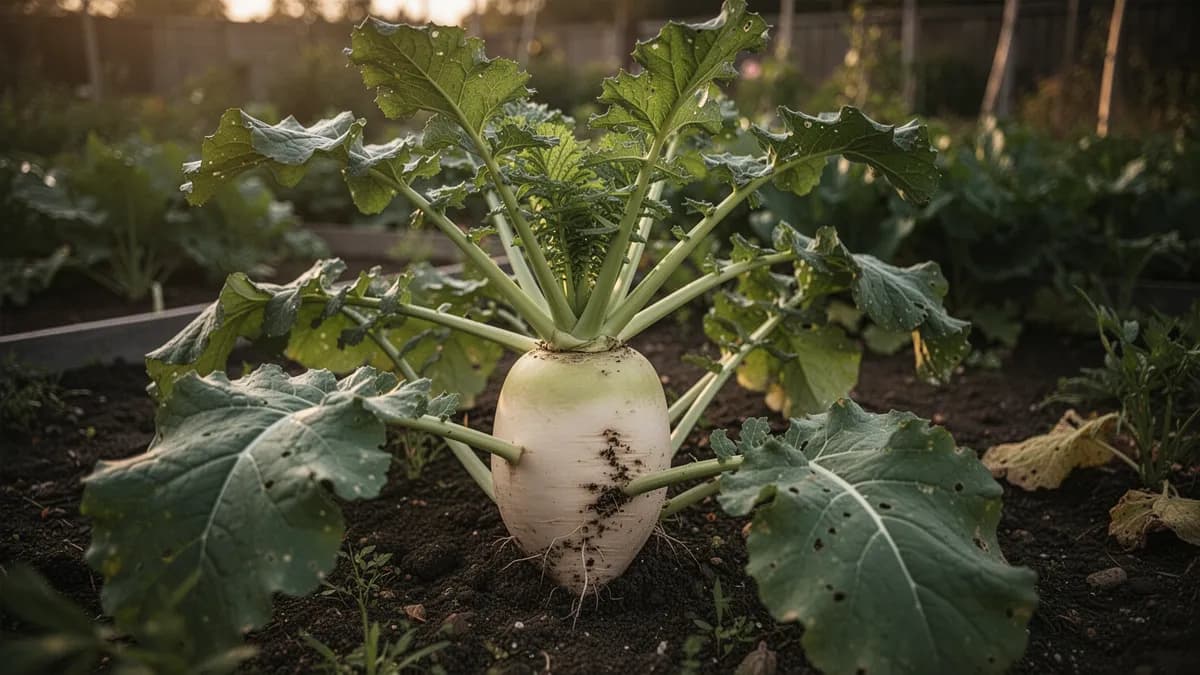
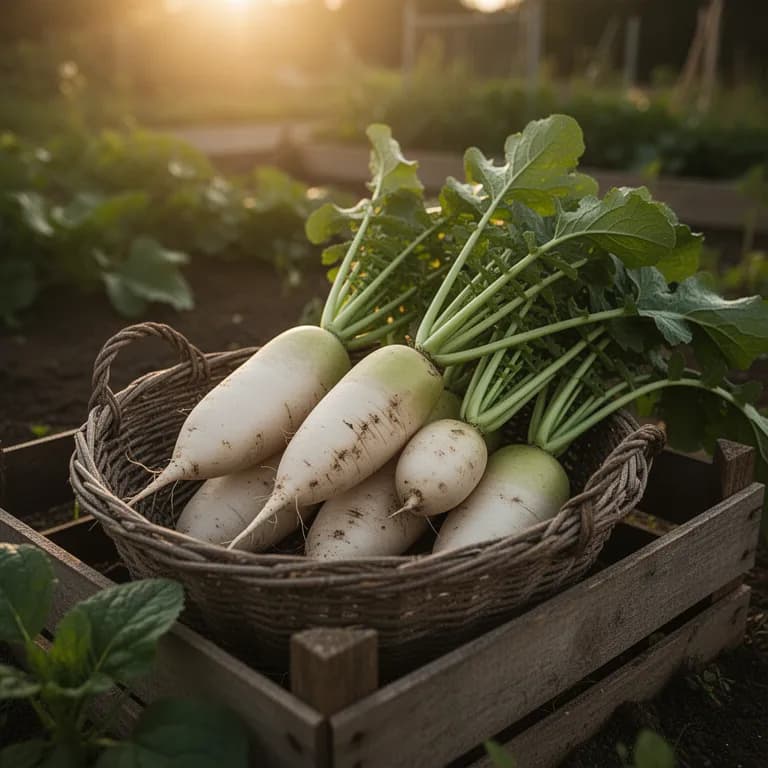
Ein großer, milder asiatischer Rettich, der über 30 cm lang werden kann und eine knackige, saftige Textur aufweist.





Auf dieser SeiteÜberblick
Daikon-Rettich im Überblick
Ein großer, milder asiatischer Rettich, der über 30 cm lang werden kann und eine knackige, saftige Textur aufweist. Daikon wird am besten im Spätsommer für die Herbsternte gepflanzt, da die kühleren Temperaturen die Wurzel süßer machen und die Schärfe reduzieren. Die tiefe Pfahlwurzel lockert verdichteten Boden auf, was Daikon zu einer ausgezeichneten Gründüngung zur Bodenverbesserung macht. Verwenden Sie ihn frisch in Salaten, eingelegt als Beilage oder gekocht in Suppen und Pfannengerichten, wo er Aromen wunderbar aufnimmt.
Wann Daikon-Rettich pflanzen
Säen Sie Daikonsamen immer direkt aus, da das Umpflanzen die Pfahlwurzel beschädigt und Gabelungen verursacht. Säen Sie die Samen im Spätsommer (Juli bis September je nach Zone) 1 cm tief aus. Die Samen keimen innerhalb von 4-7 Tagen bei 10-30°C. Vereinzeln Sie auf 10-15 cm Abstand, wenn die Sämlinge 2-3 echte Blätter haben. Ausgedünnte Sämlinge können als Microgreens verzehrt werden. Zur Bodenverbesserung streuen Sie die Samen in höherer Dichte als Gründüngung aus, nachdem die Sommergemüse abgeerntet sind.
Dein Daikon-Rettich-Jahr
Abgestimmt auf Zone 7 · typische Saison · Frost geht um den 2. Apr. und kehrt um den 1. Nov. zurück
Daikon-Rettich Jul – Sep pflanzen, Okt – Dez ernten. Beachte die Pflanzmethoden unten und wähle dein Klima für passende Zeiträume.
So baust du Daikon-Rettich an
Säen Sie Daikonsamen im Spätsommer bis Frühherbst direkt 1 cm tief aus, mit einem Abstand von 5-8 cm in Reihen von 30-45 cm. Vereinzeln Sie die Sämlinge auf 10-15 cm Abstand, sobald sie die ersten echten Blätter entwickelt haben. Daikon benötigt tiefen, lockeren Boden für eine ordnungsgemäße Wurzelentwicklung; arbeiten Sie den Boden bis mindestens 45 cm Tiefe durch und entfernen Sie alle Steine oder Fremdkörper, die Gabelungen verursachen könnten.
Daikon wächst am besten bei kühlem Wetter zwischen 10-18°C und schosst bei warmen Temperaturen oder langen Tagen vorzeitig, was die Aussaat im Spätsommer bis Herbst in den meisten Klimazonen ideal macht. Gießen Sie tief und gleichmäßig, um ein gleichmäßiges Wurzelwachstum ohne Rissbildung zu fördern. Eine leichte Mulchschicht hilft, die Bodenfeuchtigkeit und -temperatur zu erhalten. Vermeiden Sie starke Stickstoffdüngung, die das Blattwachstum auf Kosten der Wurzelentwicklung fördert.
Wenn die Wurzeln reifen, können die Köpfe über die Bodenoberfläche hinausragen. Häufeln Sie Erde um die freigelegten Wurzelschultern an, um Grünfärbung und Bitterkeit zu verhindern. Daikon ist erntereif, wenn die Wurzeln 20-35 cm lang sind, typischerweise 50-70 Tage nach der Aussaat. Im Herbst geernteter Daikon profitiert von kühlen Temperaturen, die süßere, mildere Wurzeln hervorbringen.
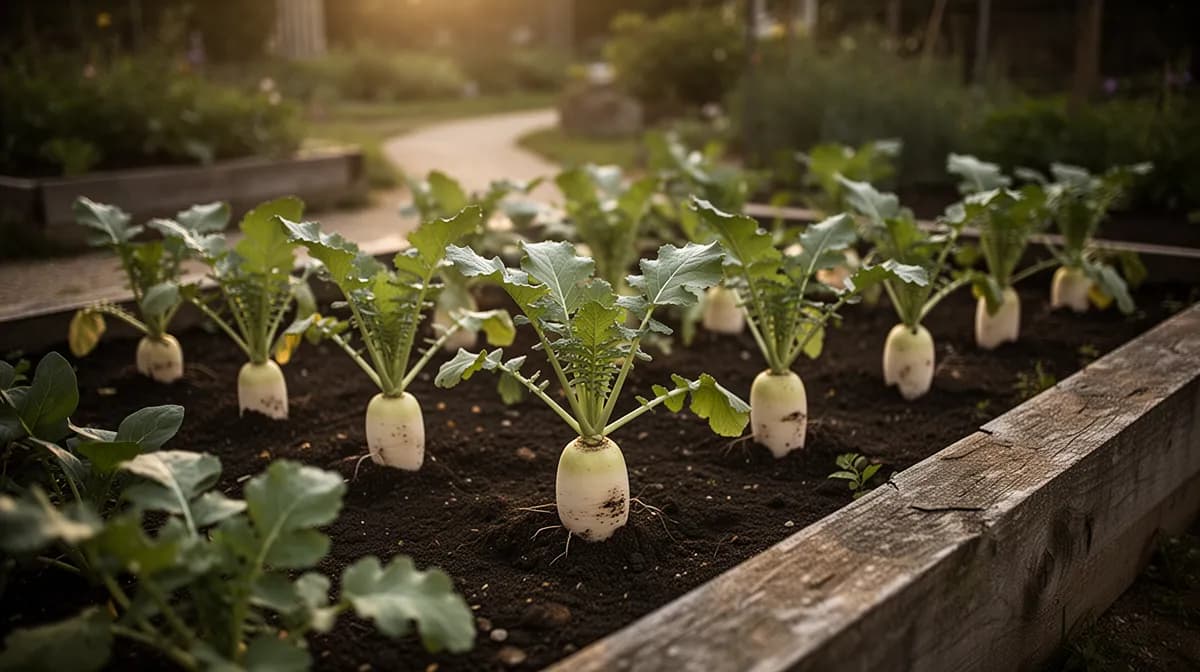
128 Pflanzen passen in ein Beet von 120 × 240 cm
Daikon-Rettich braucht 15 cm Platz pro Pflanze. Der Planer hält diesen Abstand für dich ein — jede Pflanze, jedes Beet.
Die besten Nachbarn für Daikon-Rettich
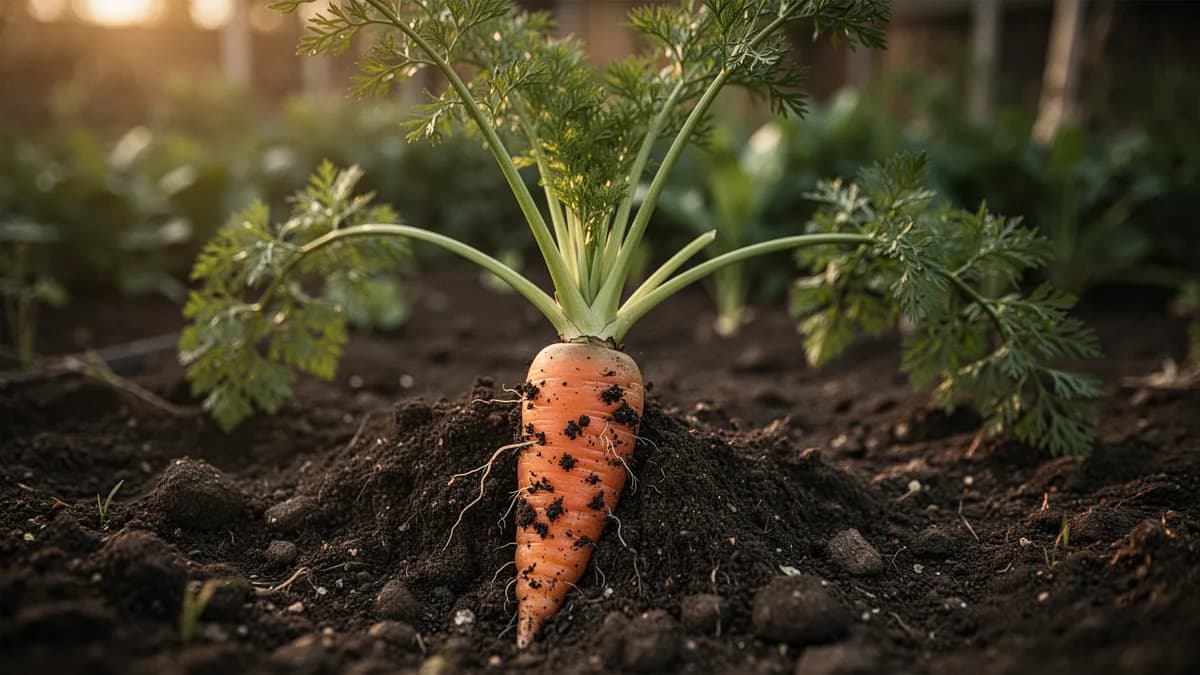
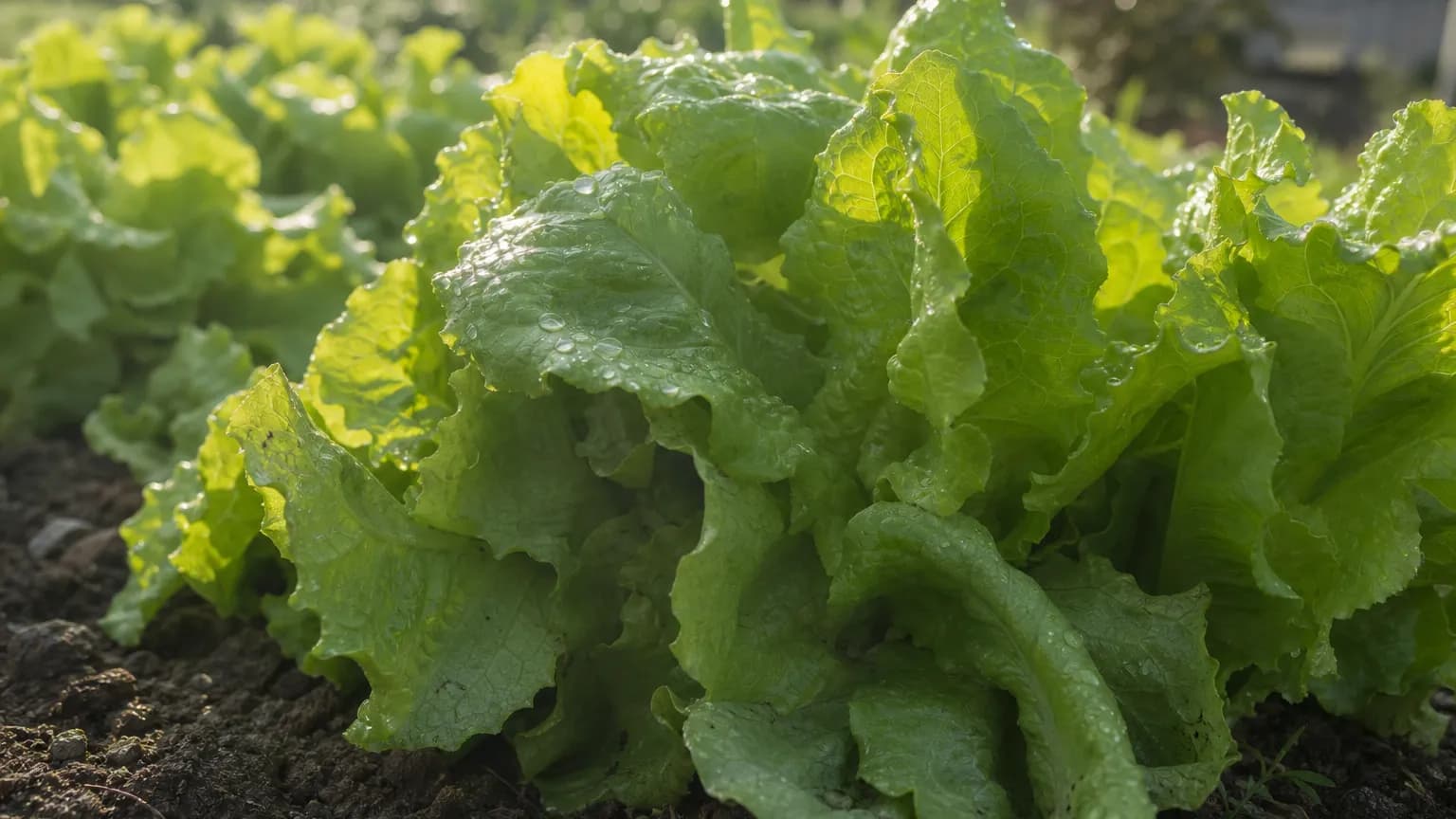
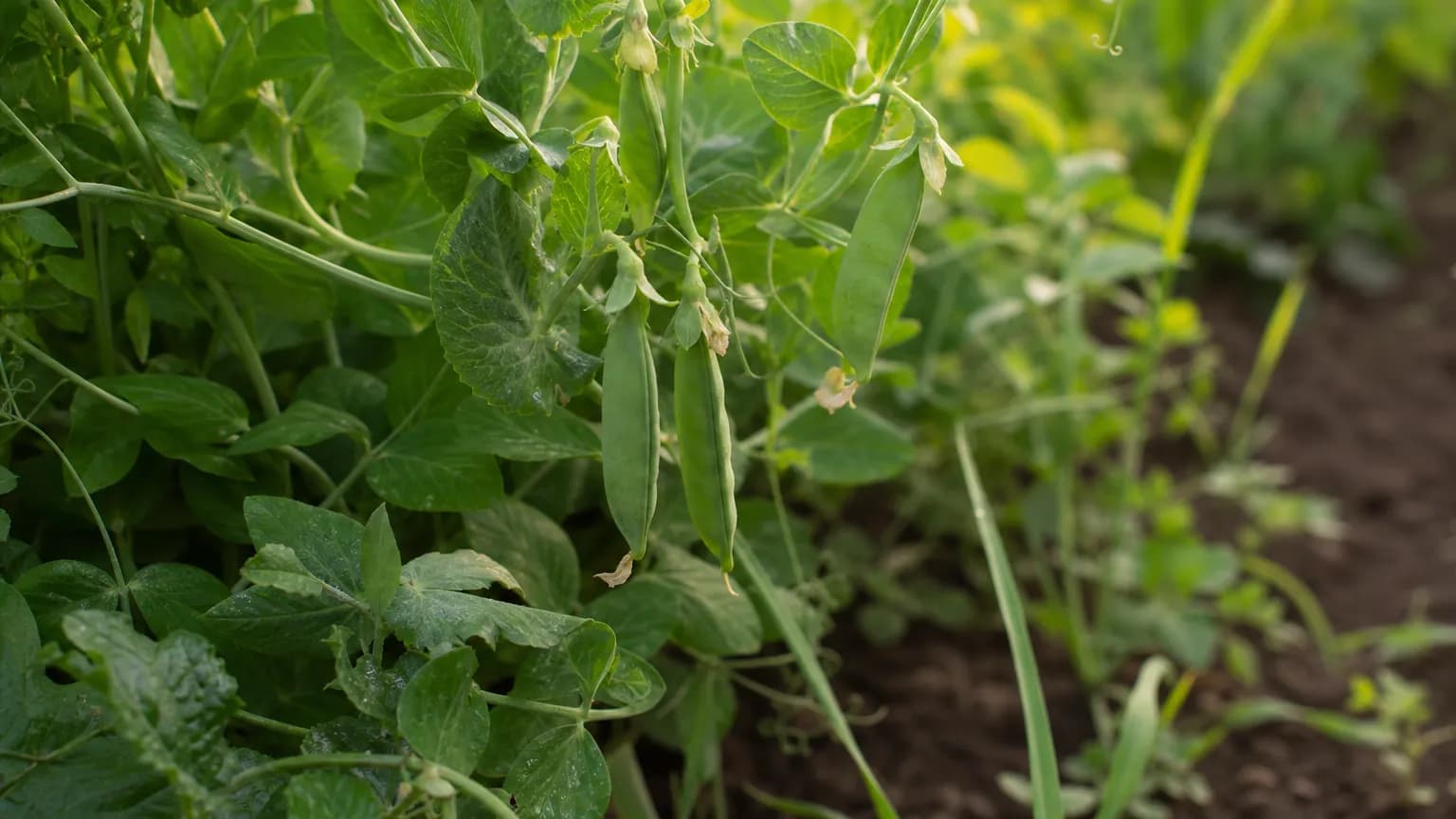
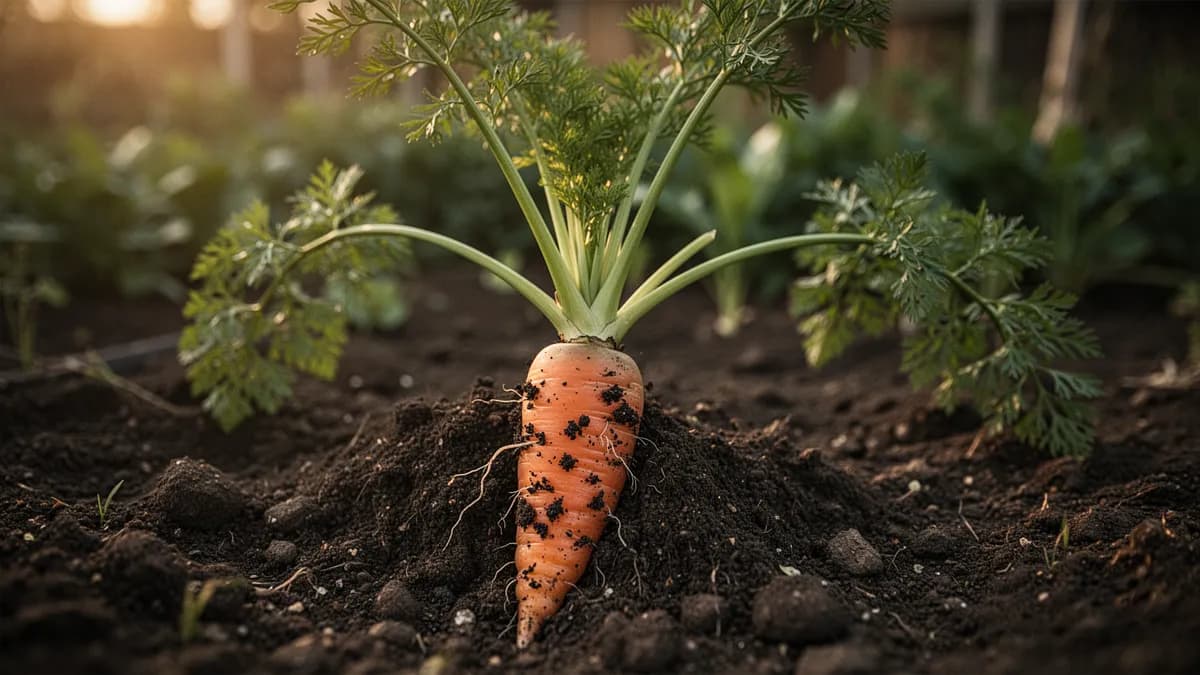
Daikon-Rettich gedeiht gut zusammen mit Karotten, Salat, Erbsen und Spinat. Seine tiefe Pfahlwurzel bricht verdichteten Unterboden auf und kommt nachfolgenden Kulturen zugute, wenn er als Gründüngung verwendet wird (oft als Bodenlockerungsrettich bezeichnet). Vermeiden Sie die Pflanzung in der Nähe anderer Kohlgewächse, um den Schädlings- und Krankheitskreislauf zu unterbrechen. Pflanzen Sie nach frühen Kulturen wie Frühlingssalat oder Erbsen, um den Gartenraum effizient zu nutzen. Die großen Blätter können im Herbstgarten Unkraut wirksam unterdrücken.
Karotte gehört daneben.
Altes Gärtnerwissen, geprüft an der echten Nachbartabelle von Daikon-Rettich — teste jede Pflanze, die du anbaust.
Probiere Daikon-Rettich direkt hier im Beet
Ein echtes Planer-Beet, Daikon-Rettich steht schon drin. Tippe einen Begleiter an, platziere ihn und sieh, wie die Nachbarschaftsprüfung antwortet — grün für gute Nachbarn, rot bei Streit.


Passende Anbau-Ratgeber
Richtig düngen
Daikon benötigt tiefen, lockeren, gut durchlässigen Boden mit einem pH-Wert von 5,8-6,8 für gerade, wohlgeformte Wurzeln. Arbeiten Sie den Boden bis mindestens 45 cm Tiefe durch und entfernen Sie dabei Steine und brechen Sie Erdklumpen auf. Verbessern Sie den Boden mit Kompost, vermeiden Sie jedoch frischen Mist, der gegabelte Wurzeln verursacht. Bringen Sie bei der Pflanzung einen stickstoffarmen Dünger (wie 5-10-10) aus, um die Wurzelentwicklung gegenüber dem Blattwachstum zu fördern. Kalium ist besonders wichtig für Wurzelgemüse; ergänzen Sie Holzasche oder Kali bei Mangel. Sandiger Lehmboden liefert die bestgeformten Wurzeln.
Ideale Temperatur
Winterhärtezone-Kompatibilität
Von der Saat zur Ernte, Schritt für Schritt
Keimung
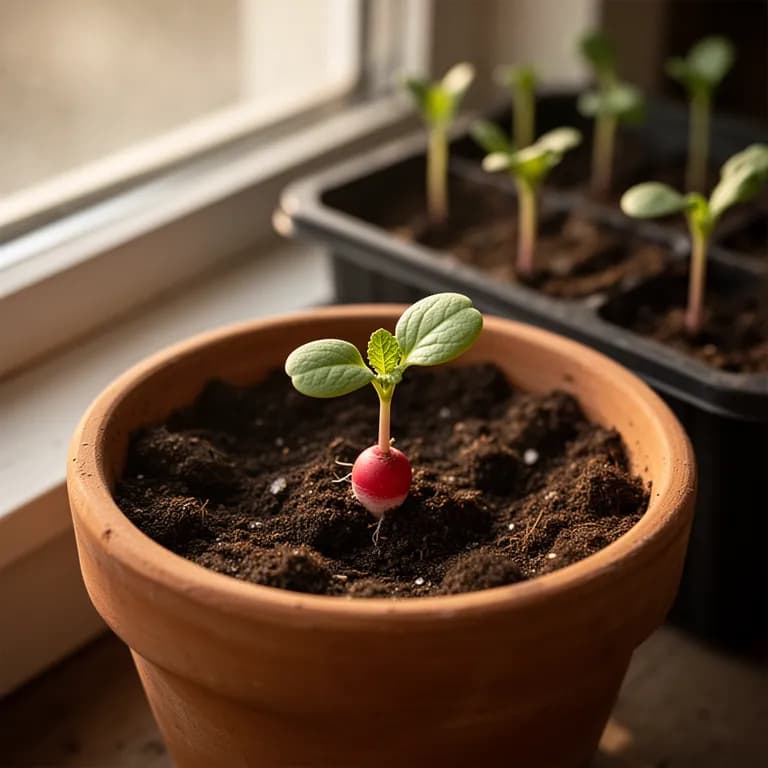
Daikonsamen keimen schnell in warmem, feuchtem Boden. Der Hypokotyl schiebt ein Paar große, herzförmige Keimblätter innerhalb von 4-7 Tagen über die Oberfläche. Die embryonale Pfahlwurzel beginnt sofort, in die Tiefe vorzudringen.
Sämlingsetablierung
Echte Blätter entwickeln sich mit einer rauen, gelappten Textur, die typisch für Kohlgewächse ist. Die Pfahlwurzel hat sich bereits zu verdicken begonnen und kann in diesem Stadium 10-15 cm tief reichen. Das Vereinzeln ist jetzt entscheidend, um gedrängte, missgeformte Wurzeln zu verhindern.
Blattdachentwicklung
Die Pflanze bildet eine Rosette aus großen, tief gelappten Blättern, die sich 30-45 cm breit ausbreiten können. Das Blätterdach beschattet den Boden, unterdrückt Unkraut und bewahrt die Feuchtigkeit. Unterirdisch verdickt und verlängert sich die Pfahlwurzel rasant.
Wurzelexpansion
Die Pfahlwurzel tritt in ihre schnellste Wachstumsphase ein, verdickt sich auf 5-8 cm Durchmesser und verlängert sich auf 20-35 cm. Die Wurzelschultern können über die Bodenoberfläche hinausragen. Kühle Herbsttemperaturen lösen eine Zuckereinlagerung aus, die die Wurzel süßer macht.
Reifung und Ernte
Die Wurzel erreicht ihre volle Größe von 20-40 cm Länge und 5-8 cm Durchmesser je nach Sorte. Die äußere Schale ist glatt und weiß (oder violett bei farbigen Sorten). Das Fleisch ist knackig, saftig und mild. Die Blätter können leicht vergilben, da die Pflanze ihre Energie in die Wurzel umleitet.
Halten Sie den Boden gleichmäßig feucht, aber nicht staunass. Die Samen keimen am besten bei 15-30°C. Vermeiden Sie verkrustete Bodenoberflächen, die das Auflaufen behindern können — eine leichte Abdeckung mit Vermiculit oder feinem Kompost hilft.
Daikon-Rettich Monat für Monat pflegen
Was du jeden Monat für deine Daikon-Rettich tun solltest
Oktober
Aktueller MonatBeginnen Sie mit der Ernte von Wurzeln, die 20-35 cm Länge erreicht haben. Ziehen Sie eine Testwurzel, um die Reife zu prüfen. Verwenden Sie eine Grabgabel, um den Boden vor dem Ziehen zu lockern. In kalten Klimazonen bringen Sie eine dicke Mulchschicht auf, um das Erntefenster vor dem Bodenfrost zu verlängern.
Immer wissen, was jetzt im Garten zu tun ist
Eine E-Mail zum Monatsanfang: was du jetzt säen, pflanzen und anpacken solltest — für deine Daikon-Rettich und alles, was drumherum wächst. Dazu ein kurzer Startkurs, der dich vor den klassischen Fehlern bewahrt.
- Was jetzt zu tun ist
- Passend zu deiner Saison
- Startkurs inklusive
Daikon-Rettich ernten
Ernten Sie Daikon-Rettich, wenn die Wurzeln 20-35 cm lang und 5-8 cm im Durchmesser sind, typischerweise 50-70 Tage nach der Aussaat. Lockern Sie den Boden neben der Wurzel mit einer Grabgabel, bevor Sie ziehen, um ein Abbrechen zu verhindern. Im Herbst geernteter Daikon ist am süßesten und mildesten. Lassen Sie die Wurzeln nicht überreif werden, da sie dann hohl und schwammig werden. In milden Klimazonen kann Daikon mit einer dicken Mulchschicht über den Winter im Boden belassen werden. Ernten Sie auch die Blätter, denn sie sind essbar und nährstoffreich.
angenommen, du pflanzt zu Beginn des Zeitraums — trage dein tatsächliches Datum ein
Ernte Daikon-Rettich zügig, dann trägt die Pflanze weiter.
Lagerung & Konservierung
Lagern Sie ganze Daikon-Rettiche in perforierten Plastikbeuteln im Kühlschrank für bis zu 2-3 Wochen. Für die Langzeitlagerung bewahren Sie sie in einem Erdkeller bei 0-4°C und 90-95% Luftfeuchtigkeit für bis zu 3 Monate auf. Daikon eignet sich hervorragend zum Einlegen in Reisessig, Salzlake oder als Takuan (japanischer getrockneter eingelegter Daikon). Raspeln und trocknen Sie ihn zu Kiriboshi Daikon, einer traditionellen japanischen Trockenzutat. Daikon kann auch in Stücke geschnitten und für die Verwendung in Suppen und Eintöpfen eingefroren werden.
Was schiefgeht — und die Lösung
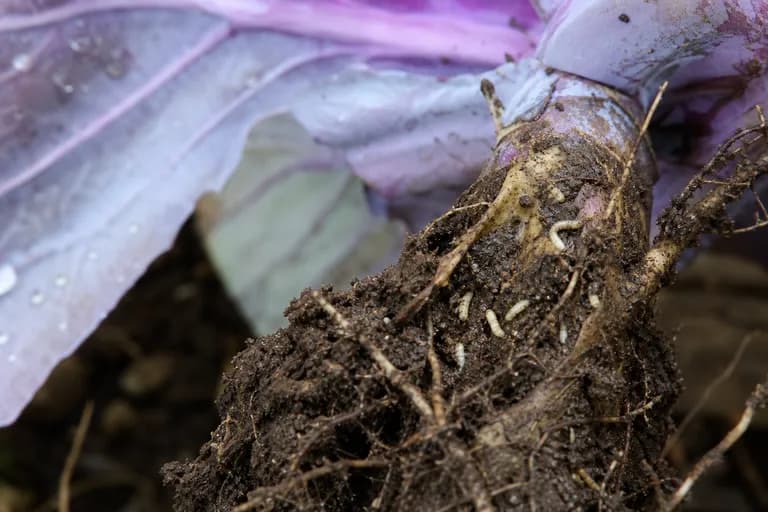
Wurzelmaden
SchädlingFraßgänge und braune Spuren in den Wurzeln, weiche Stellen, welkende Blätter trotz ausreichender Bewässerung.
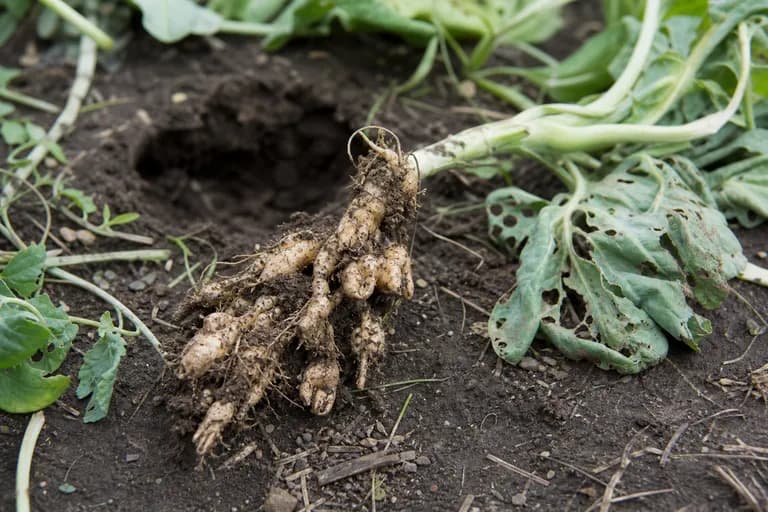
Kohlhernie
KrankheitVerkümmertes Wachstum, Welken an warmen Tagen, geschwollene und deformierte Wurzeln beim Herausziehen.
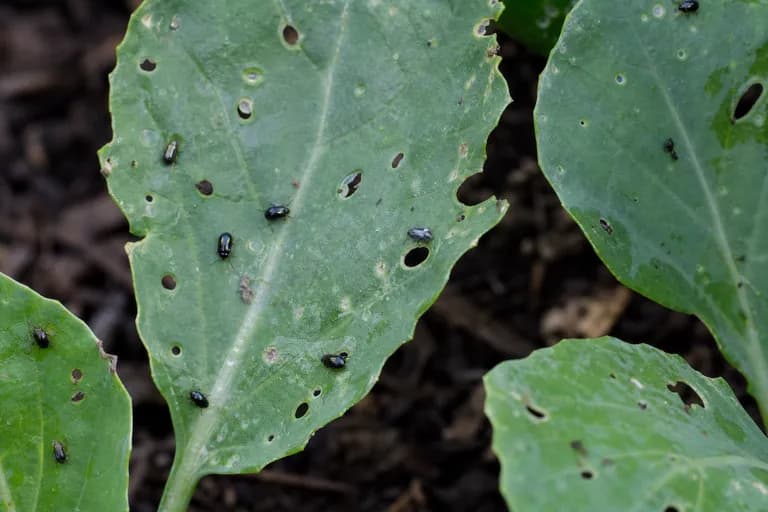
Erdflöhe
SchädlingKleine runde Löcher in den Blättern junger Sämlinge, starker Befall kann junge Pflanzen verkümmern lassen oder abtöten.
Fehlerbehebung bei häufigen Problemen
Gegabelte oder missgeformte Wurzeln entstehen durch steinigen, verdichteten oder frisch gedüngten Boden. Arbeiten Sie den Boden vor der Pflanzung tiefgründig durch. Hohle oder schwammige Kerne deuten darauf hin, dass die Wurzeln zu lange im Boden gelassen wurden oder bei heißem Wetter gewachsen sind. Schossen tritt bei Frühjahrsaussaat an sich verlängernden Tagen auf; pflanzen Sie stattdessen im Spätsommer. Geplatzte Wurzeln werden durch ungleichmäßige Bewässerung verursacht. Grüne Schultern entstehen, wenn Wurzeln über die Bodenoberfläche hinausragen; häufeln Sie Erde um die freigelegten Stellen an. Scharfe, beißende Wurzeln sind typischerweise auf warme Wachstumsbedingungen zurückzuführen.
Anbautipps
- Die Bodentiefe ist entscheidend für Daikon. Arbeiten Sie Ihren Boden bis mindestens 45 cm Tiefe durch und entfernen Sie jeden Stein, jedes Wurzelfragment und jeden harten Erdklumpen. Jedes Hindernis verursacht, dass die Pfahlwurzel sich gabelt, spaltet oder seitlich wächst. Doppeltes Umgraben oder der Einsatz einer Grabgabel wird dringend empfohlen.
- Säen Sie immer direkt aus — pflanzen Sie niemals um. Daikon entwickelt von Anfang an eine einzige tiefe Pfahlwurzel, und jede Störung dieser Wurzel verursacht dauerhafte Missbildungen. Umgepflanzter Daikon produziert fast immer gegabelte oder verkümmerte Wurzeln.
- Planen Sie Ihre Aussaat für die Herbsternte. Daikon schosst schnell bei sich verlängernden Frühlingstagen und warmen Temperaturen. Die Aussaat im Spätsommer (Juli bis September je nach Zone) stellt sicher, dass die Wurzel bei kühlen, kürzer werdenden Tagen heranreift und süßere, mildere Wurzeln hervorbringt.
- Vermeiden Sie frischen Mist oder starke Stickstoffdüngung. Überschüssiger Stickstoff produziert üppiges Laub auf Kosten der Wurzelentwicklung und kann gegabelte Wurzeln verursachen. Verwenden Sie stickstoffarme Dünger wie Knochenmehl oder Holzasche, die das Wurzelwachstum fördern.
- Vereinzeln Sie früh und entschlossen. Zu eng stehende Daikonpflanzen produzieren kleine, missgeformte Wurzeln. Vereinzeln Sie auf 10-15 cm Abstand, wenn die Sämlinge 2-3 echte Blätter haben. Essen Sie die herausgezogenen Pflänzchen als pfeffrige Microgreens in Salaten.
- Gießen Sie tief und gleichmäßig — 2,5 cm pro Woche. Unregelmäßige Bewässerung verursacht Risse in den Wurzeln oder entwickelt einen scharfen, beißenden Geschmack. Tropfbewässerung ist ideal. Mulchen Sie um die Pflanzen, um eine gleichmäßige Bodenfeuchtigkeit aufrechtzuerhalten.
- Häufeln Sie Erde um Wurzelschultern an, die über die Oberfläche hinausragen. Freigelegte Wurzelköpfe werden durch Chlorophyllbildung grün und entwickeln einen bitteren Geschmack. Ein 5 cm hoher Erdhügel oder Mulch verhindert dies.
- Verwenden Sie Vliesabdeckungen sofort nach der Aussaat zum Schutz vor Erdflöhen und Wurzelmaden — den beiden schädlichsten Schädlingen für Daikon. Vliesabdeckungen regulieren zudem die Temperatur und halten die Feuchtigkeit für eine schnellere Keimung.
Bau deine beste Daikon-Rettich an — und alles drumherum.
Starte heute kostenlos. Lege deine Beete an, setze deine Daikon-Rettich ein und lass PlotMyGarden Timing, Abstände, Begleiter und Erinnerungen von der Saat bis zum Erntekorb übernehmen.
Finde deine Daikon-Rettich
Miyashige
Klassische japanische Sorte, die 40-45 cm lange weiße Wurzeln hervorbringt. Milder, süßer Geschmack, ausgezeichnet zum Frischverzehr und Einlegen.
Minowase
Die größte Daikon-Sorte, deren Wurzeln bis zu 60 cm lang werden können. Sehr mild und saftig, ideal zum Reiben und für Salate.
Wassermelonen-Rettich
Kugelförmig mit weiß-grüner Außenhaut und atemberaubendem pink-rotem Inneren. Süßer, milder Geschmack und wunderschön in Salaten.
Alpine
Kurze, gedrungene Sorte von nur 12-15 cm Länge. Perfekt für flachgründige oder steinige Böden. Schnell reifend in 45 Tagen.
KN-Bravo
Auffälliger Daikon mit purpurfarbener Schale und weißem Fleisch. Verleiht Eingelegtem und Salaten Farbe mit mildem, süßem Geschmack.
Eine Packung Daikonsamen kostet 2-4 € und enthält 200-500 Samen — genug, um eine 10-Meter-Reihe zu bepflanzen, die 50-80 kg Wurzeln liefert. Bio-Daikon wird auf Wochenmärkten und in Fachgeschäften für 3-6 € pro kg verkauft. Eine einzelne Samenpackung für 3 € kann Daikon im Wert von 150-400 € hervorbringen. Die Wurzeln dienen zudem doppelt als Gründüngung, verbessern die Bodenstruktur und reduzieren den Bedarf an mechanischer Bodenbearbeitung in den Folgesaisons.
Schnelle Rezepte
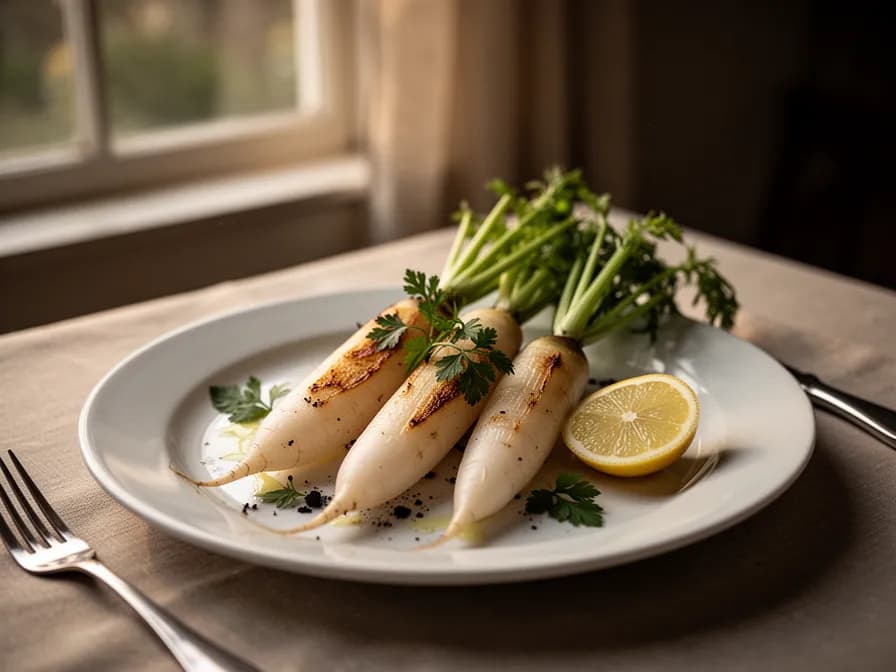
Schnell eingelegter Daikon
15 Min. + 1 StundeEine helle, säuerliche Beilage, die wunderbar zu Reisschüsseln, Banh Mi und gegrilltem Fleisch passt. Dünn geschnittener Daikon nimmt die süß-saure Lake schnell auf und ist in nur einer Stunde verzehrfertig. Hält sich im Kühlschrank wochenlang.
6 ZutatenJapanische Daikon-Misosuppe
25 Min.Eine wärmende, tiefgründig herzhafte Suppe, in der Daikon weich und durchscheinend köchelt und die umamireiche Misobrühe aufnimmt. Ein Grundnahrungsmittel der japanischen Hausmannskost, diese Suppe ist schlicht und dennoch zutiefst befriedigend an einem kalten Tag.
6 ZutatenDaikon-Rettichkuchen (Lo Bak Go)
20 Min. Vorbereitung + 50 Min. DampfgarenEin klassisches kantonesisches Dim-Sum-Gericht. Geraspelter Daikon wird mit Reismehlteig gemischt und zu einem herzhaften Kuchen gedämpft, der anschließend goldbraun und knusprig angebraten wird. Wird mit Chilisauce zum Dippen serviert.
8 ZutatenKulinarische Verwendung
Reiben Sie frischen Daikon als Beilage zu japanischen Gerichten, Sashimi und Tempura. Legen Sie ihn in Reisessig für eine säuerliche Beilage ein oder fermentieren Sie ihn für traditionelles Takuan. Geben Sie ihn in Suppen und Eintöpfe, wo er Brühenaromen wunderbar aufnimmt. Braten Sie ihn mit anderem Gemüse im Wok, schmoren Sie ihn in Sojasauce oder verwenden Sie ihn in Feuertopfgerichten. Raspeln Sie ihn roh in Salate und Krautsalate. Daikonblätter sind ebenfalls essbar und schmecken ausgezeichnet sautiert oder in Misosuppe.
Was drinsteckt
Gesundheitsvorteile
- Enthält natürliche Verdauungsenzyme (Diastase, Amylase, Esterase), die beim Abbau von Fetten, Proteinen und Stärken helfen — deshalb wird geriebener Daikon in der japanischen Küche traditionell zu gebratenen und gegrillten Speisen gereicht.
- Reich an Glucosinolaten, schwefelhaltigen Verbindungen, die der Körper zu Isothiocyanaten umwandelt, welche umfassend auf ihr Potenzial zur Hemmung des Wachstums von Krebszellen untersucht wurden.
- Ausgezeichnete Quelle für Vitamin C mit 22 mg pro 100 g, das die Immunfunktion und Kollagenproduktion unterstützt und als starkes Antioxidans gegen Schäden durch freie Radikale wirkt.
- Sehr kalorienarm (18 pro 100 g) mit moderatem Ballaststoffgehalt, was ihn zu einem idealen Lebensmittel für das Gewichtsmanagement macht, das Volumen und Sättigung ohne überschüssige Energie bietet.
- Enthält Folsäure, die für die DNA-Synthese und Zellteilung wichtig ist, was Daikon zu einem wertvollen Lebensmittel während der Schwangerschaft und für die allgemeine Herz-Kreislauf-Gesundheit macht.
- Liefert entzündungshemmende Verbindungen einschließlich Phenolsäuren und Flavonoide, die dazu beitragen können, chronische Entzündungen im Zusammenhang mit Herzerkrankungen und Stoffwechselstörungen zu reduzieren.
Woher Daikon-Rettich stammt
Der Daikon-Rettich wird seit weit über 2.000 Jahren in Ostasien kultiviert, wobei seine Ursprünge in der östlichen Mittelmeerregion liegen. Wilde Vorfahren von Raphanus sativus wanderten auf alten Handelsrouten ostwärts, und zur Zeit der chinesischen Han-Dynastie (206 v. Chr. – 220 n. Chr.) waren großwurzelige Rettichsorten bereits etablierte Kulturpflanzen in China. Von China aus verbreitete sich der Daikonanbau nach Korea und Japan, wo er zu einem der wichtigsten Gemüse in der kulinarischen Tradition wurde.
In Japan ist Daikon mindestens seit der Edo-Zeit (1603–1868) ein Grundnahrungsmittel, wo er nicht nur als Lebensmittel, sondern auch als Heilmittel geschätzt wurde. Japanische Bauern entwickelten Hunderte regionaler Sorten, die an lokale Klimabedingungen und Böden angepasst waren — vom massiven Sakurajima-Daikon im südlichen Kyushu bis zum schlanken Nerima-Daikon, der in Tokio geschätzt wird. Das Gemüse erlangte eine solche kulturelle Bedeutung, dass es in japanischen Sprichwörtern, Kunst und Festen vorkommt.
Daikon erreichte Europa im 16. Jahrhundert, erlangte jedoch nie die gleiche kulinarische Bedeutung wie in Asien. Im 20. Jahrhundert entdeckten amerikanische Landwirte die bemerkenswerte Fähigkeit des Daikons, verdichteten Boden aufzubrechen, was zu seiner weit verbreiteten Verwendung als Gründüngung unter Bezeichnungen wie Bodenlockerungsrettich führte. Heute wird Daikon weltweit angebaut, wobei China, Japan und Korea die größten Produzenten bleiben. Seine Vielseitigkeit — roh, eingelegt, fermentiert, getrocknet und gekocht verzehrt — gewährleistet seine anhaltende Bedeutung in der globalen Küche.
Daikon-Rettich: Schon gewusst?
Faszinierende Fakten über Daikon-Rettich
Daikon ist das meistkonsumierte Gemüse in Japan und macht den größten Anteil der Gemüseproduktion des Landes aus. Der durchschnittliche Japaner verzehrt etwa 12 kg Daikon pro Jahr.
Daikon-Rettich: Fragen & Antworten
Wann sollte ich Daikon-Rettich pflanzen?
Was sind gute Begleitpflanzen für Daikon-Rettich?
In welchen Winterhärtezonen kann Daikon-Rettich wachsen?
Wie viel Sonne braucht Daikon-Rettich?
Welchen Abstand sollte ich zwischen Daikon-Rettich lassen?
Welche Schädlinge und Krankheiten befallen Daikon-Rettich?
Wie lagere ich Daikon-Rettich nach der Ernte?
Was sind die besten Daikon-Rettich-Sorten zum Anbauen?
Welchen Boden braucht Daikon-Rettich?
Warum ist mein Daikon-Rettich gegabelt oder missgeformt?
Kann ich Daikon im Frühling statt im Herbst anbauen?
Woran erkenne ich, dass Daikon erntereif ist?
Warum ist mein Daikon-Rettich extrem scharf und beißend?
Kann ich Daikonblätter essen, oder sollte ich sie wegwerfen?
Wie sollte ich Daikon für die Langzeitverwendung lagern?
Du hast die Theorie gelesen. Jetzt baue sie auf Autopilot an.
Alles, was Daikon-Rettich knifflig macht — das Timing, die Abstände, die Begleiter, das Erntefenster — genau das übernimmt PlotMyGarden für dich, für jede Pflanze im Garten.
Ein Plan, der dein Wetter kennt
Standort einmal festlegen. Aussaat-, Dünge- und Erntedaten rund um deinen echten letzten Frosttermin und die Live-Vorhersage — kein Raten mehr nach Saattüte.
Aus dem Abschnitt „Pflanzzeit“Beetplaner per Drag & Drop
Beete auf einem Raster gestalten. Jede Pflanze rastet im richtigen Abstand ein, und du siehst die ganze Saison, bevor du einen Cent für Saatgut ausgibst.
Aus dem Abschnitt „Anbau“Begleiter-Konflikte früh erkannt
Über 200 gute und schlechte Kombinationen werden beim Pflanzen live geprüft — so landet ein saisonruinierender Fehler nie in der Erde.
Aus dem Abschnitt „Begleiter“Erinnerungen, nach denen du wirklich handelst
„Gieß die Bohnen.“ „Heute ernten, bevor's umschlägt.“ Pünktlich, konkret und auf deine echten Pflanzen bezogen.
Aus dem Abschnitt „Ernte“Staffel-Aussaat, geplant
Sechs Wochen ernten statt sechs Tage? Die App verteilt deine Aussaaten automatisch und erinnert dich, wenn der nächste Satz fällig ist.
Aus dem Abschnitt „Pflanzzeit“Ein Verlauf, der schlauer wird
Jede protokollierte Ernte bringt der App deinen Garten bei. Der Plan fürs nächste Jahr startet bei dem, was in deinem Boden wirklich funktioniert hat.
Aus dem Abschnitt „Überblick“Pflanze diese neben Daikon-Rettich
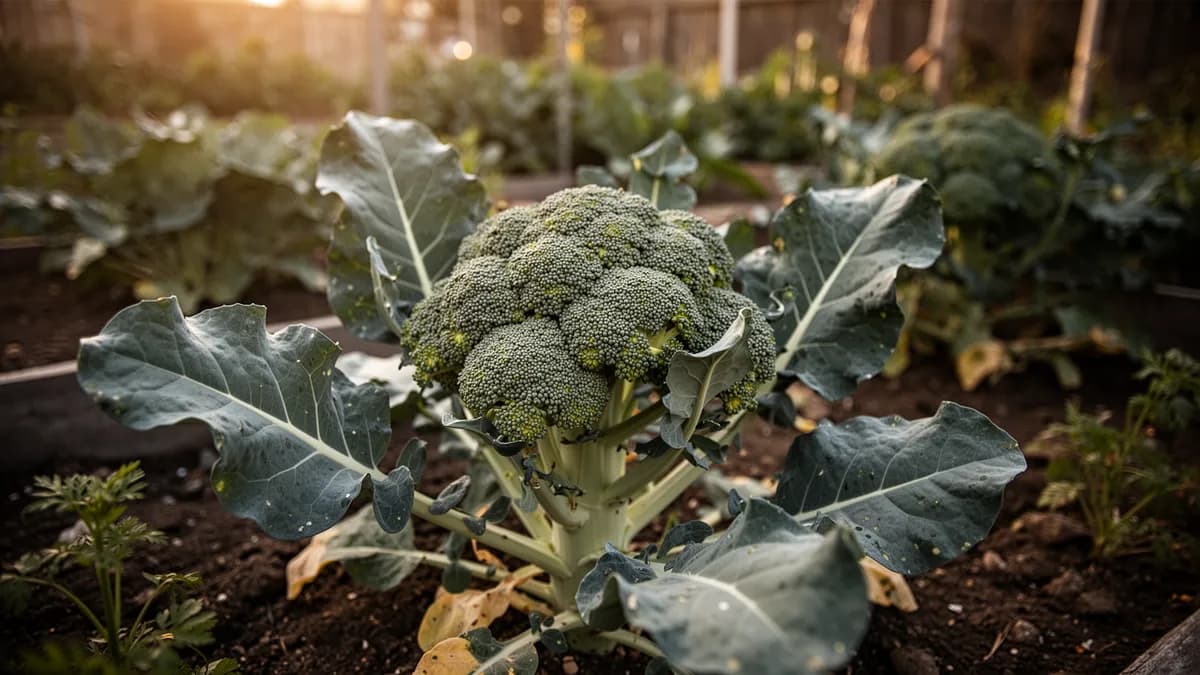
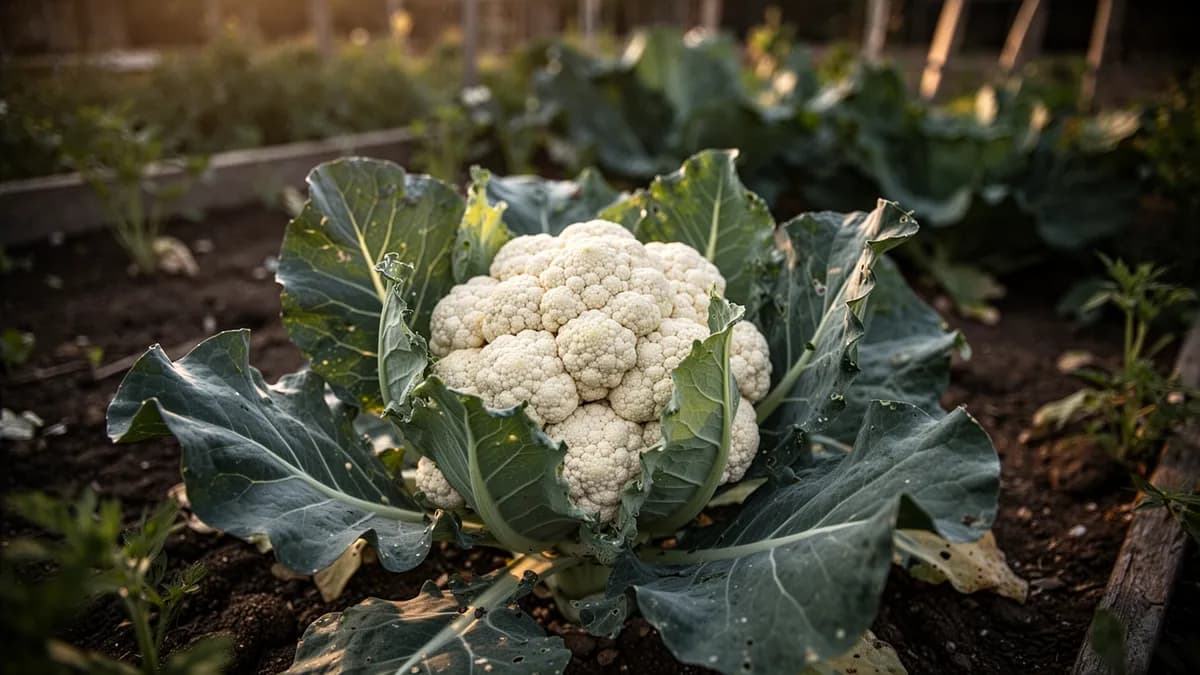
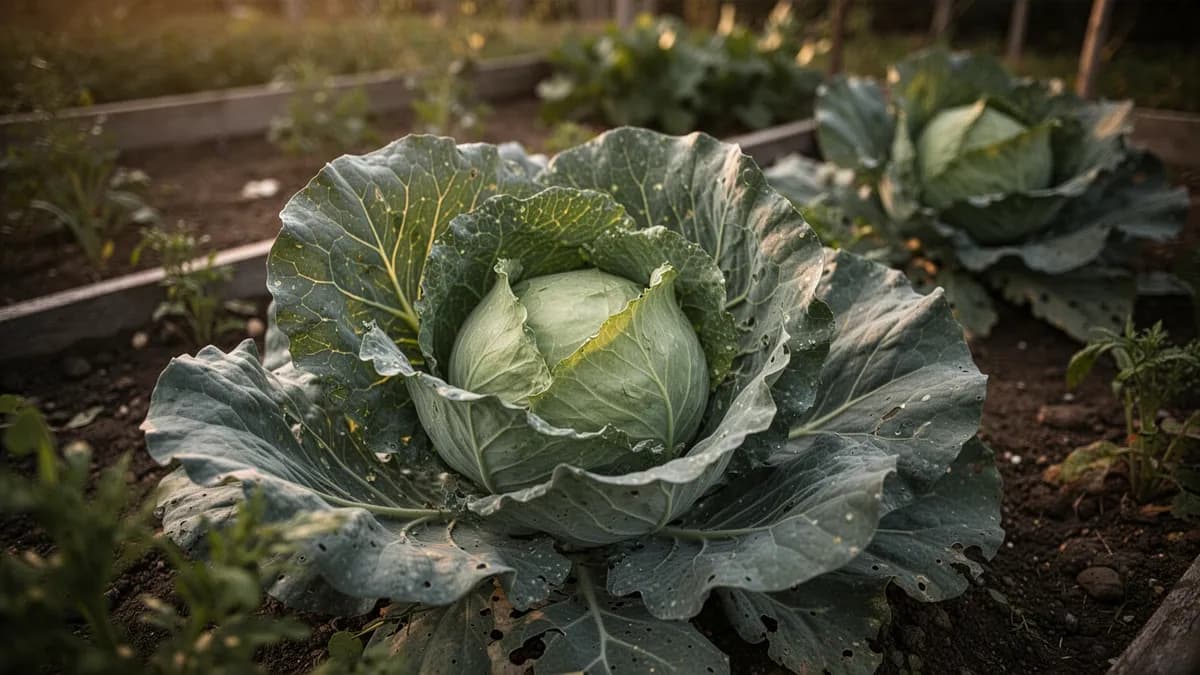
Weitere Kreuzblütler
Bau deine beste Daikon-Rettich an — und alles drumherum.
Starte heute kostenlos. Lege deine Beete an, setze deine Daikon-Rettich ein und lass PlotMyGarden Timing, Abstände, Begleiter und Erinnerungen von der Saat bis zum Erntekorb übernehmen.