Lila Blumenkohl
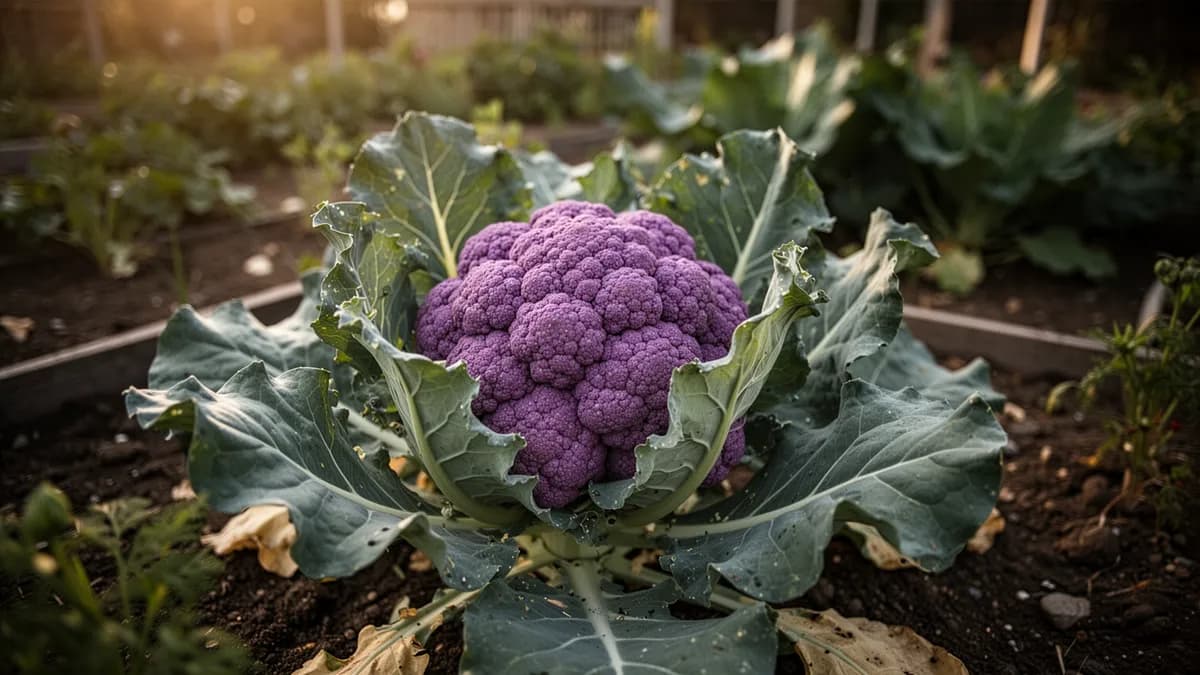
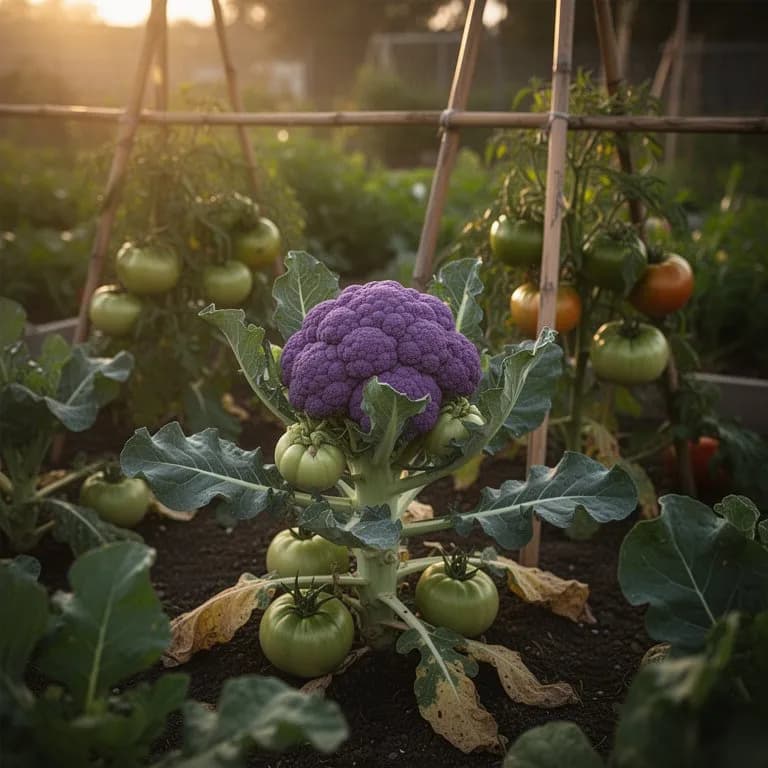
Eine auffällige Blumenkohlsorte mit tiefvioletten Blumen, die reich an Anthocyan-Antioxidantien sind und beim Rösten ihre Farbe behalten.





Auf dieser SeiteÜberblick
Lila Blumenkohl im Überblick
Eine auffällige Blumenkohlsorte mit tiefvioletten Blumen, die reich an Anthocyan-Antioxidantien sind und beim Rösten ihre Farbe behalten. Die Pflanzen benötigen ähnliche Wachstumsbedingungen wie weißer Blumenkohl, sind jedoch generell kältetoleranter und einfacher anzubauen. Ein Bleichen oder Abdecken des Kopfes ist nicht notwendig, da die gefärbten Blumen keinen Schutz vor Sonnenlicht benötigen. Ernten Sie, wenn die Köpfe fest und kompakt sind, bevor sich die Röschen zu trennen beginnen.
Wann Lila Blumenkohl pflanzen
Starten Sie die Samen 6 bis 8 Wochen vor dem geplanten Umpflanzdatum drinnen. Säen Sie die Samen einen viertel Zoll tief in feuchte Anzuchterde bei 18 bis 21 Grad Celsius. Die Keimung dauert 5 bis 10 Tage. Ziehen Sie die Setzlinge unter starkem Licht auf und halten Sie die Temperaturen zwischen 15 und 18 Grad Celsius, um kompakte Setzlinge zu erzielen. Härten Sie sie über 7 bis 10 Tage ab, bevor Sie sie ins Freie pflanzen. Für Herbstkulturen starten Sie die Samen im Hoch- bis Spätsommer.
Dein Lila Blumenkohl-Jahr
Abgestimmt auf Zone 7 · typische Saison · Frost geht um den 2. Apr. und kehrt um den 1. Nov. zurück
Lila Blumenkohl Mär – Apr, Aug – Sep pflanzen, Jun – Jul, Okt – Nov ernten. Beachte die Pflanzmethoden unten und wähle dein Klima für passende Zeiträume.
So baust du Lila Blumenkohl an
Lila Blumenkohl wird ähnlich wie normaler weißer Blumenkohl angebaut, ist aber toleranter und kälteresistenter. Starten Sie die Samen 6 bis 8 Wochen vor dem letzten Frühlingsfrost drinnen oder 12 Wochen vor dem ersten Herbstfrost für eine Herbsternte. Säen Sie die Samen einen viertel Zoll tief in Anzuchterde bei 18 bis 21 Grad Celsius.
Setzen Sie die Setzlinge ins Freie, wenn sie 4 bis 6 echte Blätter haben, mit einem Abstand von 45 bis 60 cm in Reihen mit 75 cm Abstand. Lila Blumenkohl gedeiht am besten bei kühlem Wetter mit Tagestemperaturen zwischen 15 und 21 Grad Celsius. Im Gegensatz zu weißen Sorten müssen die violetten Blumen nicht gebleicht oder eingewickelt werden, um eine gute Farbe zu entwickeln.
Halten Sie den Boden gleichmäßig feucht mit 2,5 bis 4 cm Wasser pro Woche. Mulchen Sie um die Pflanzen herum, um die Bodentemperatur zu regulieren und die Feuchtigkeit zu bewahren. Düngen Sie 3 Wochen nach dem Umpflanzen und erneut bei Beginn der Kopfbildung mit stickstoffreichem Dünger nach. Die Köpfe sind 75 bis 85 Tage nach dem Umpflanzen erntereif, wenn sie einen Durchmesser von 15 bis 20 cm erreicht haben und die Röschen noch fest zusammenstehen.
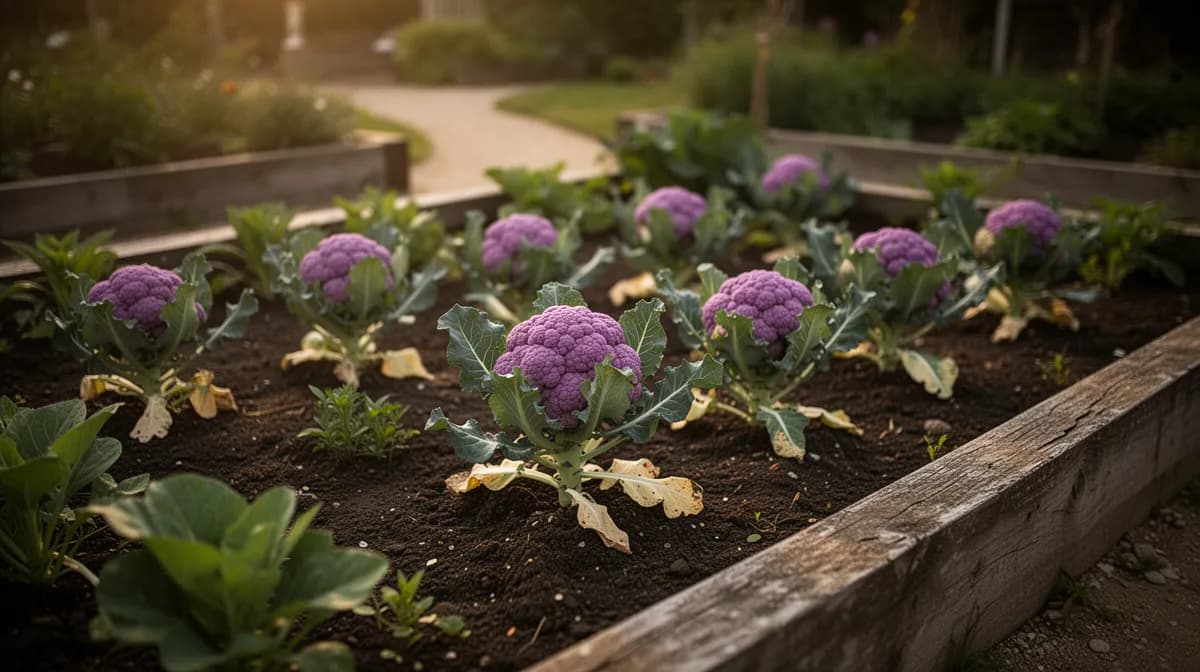
8 Pflanzen passen in ein Beet von 120 × 240 cm
Lila Blumenkohl braucht 60 cm Platz pro Pflanze. Der Planer hält diesen Abstand für dich ein — jede Pflanze, jedes Beet.
Die besten Nachbarn für Lila Blumenkohl
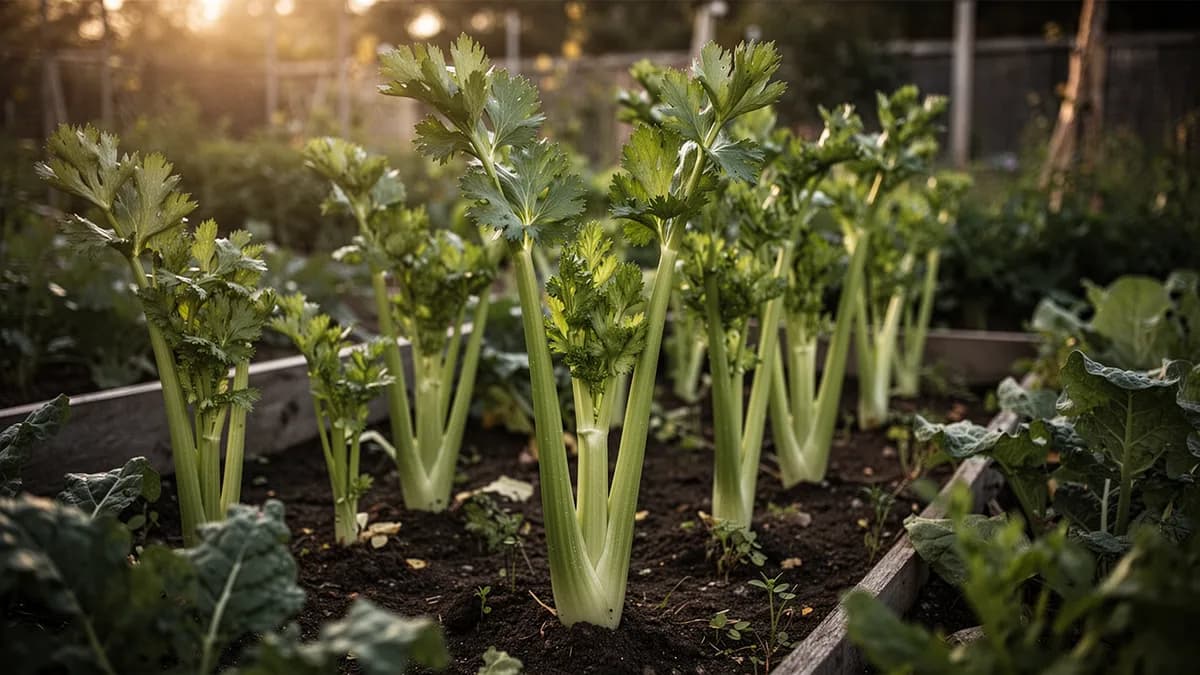
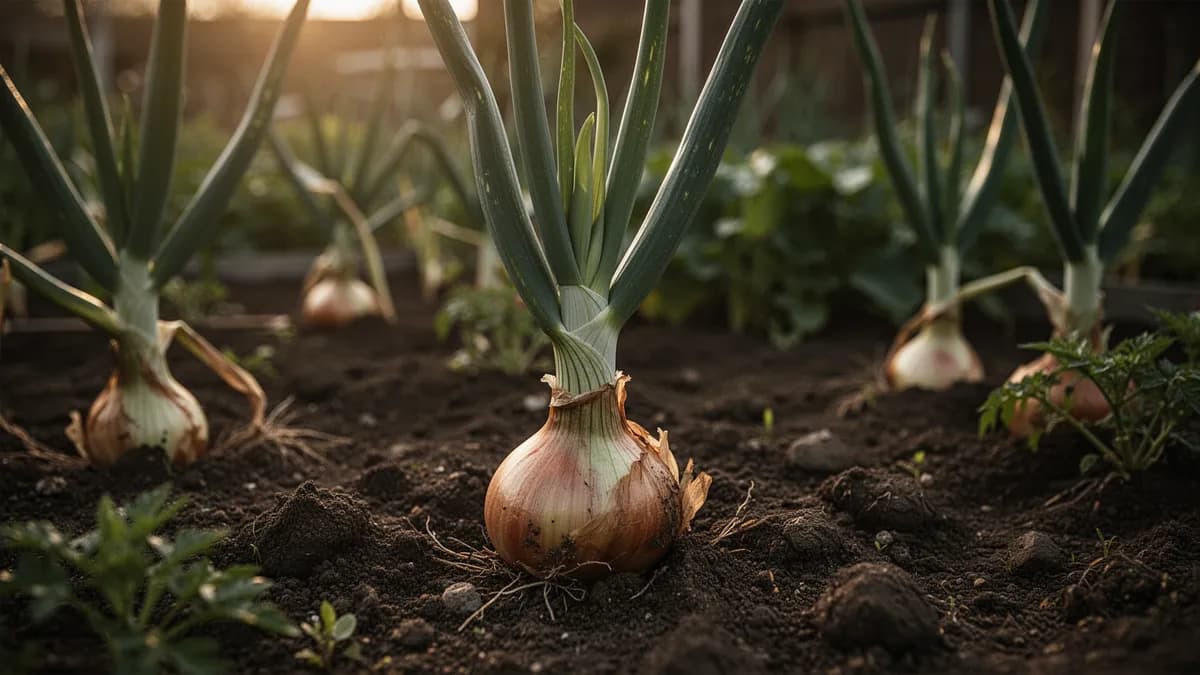
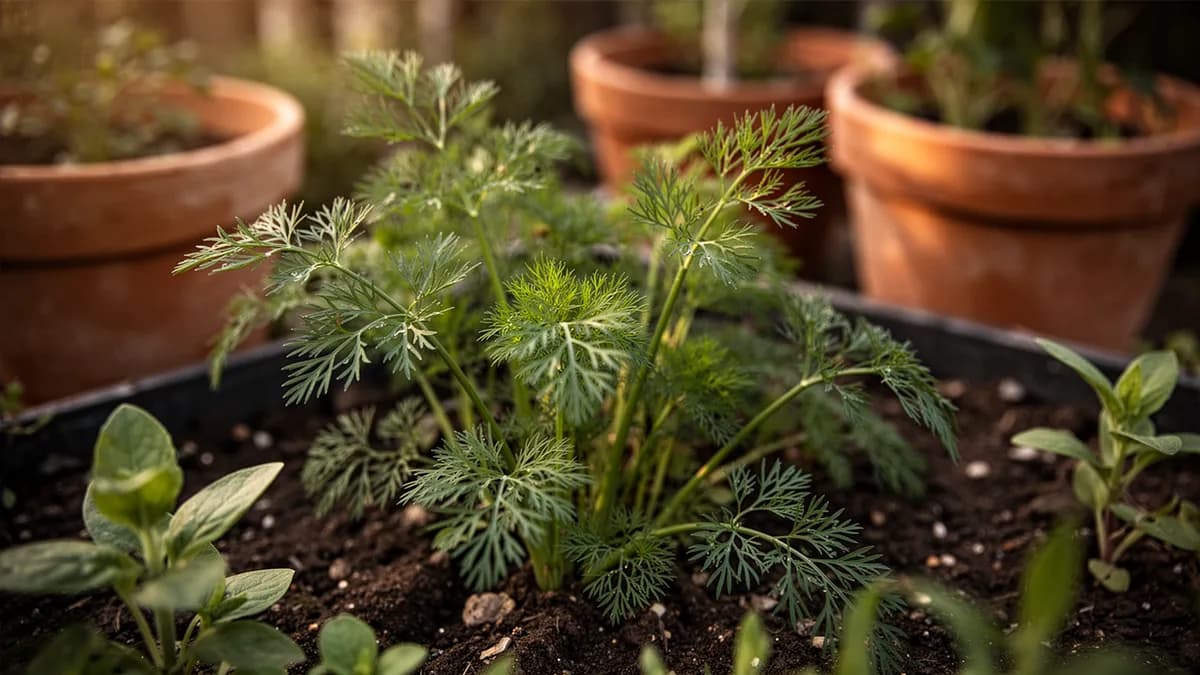
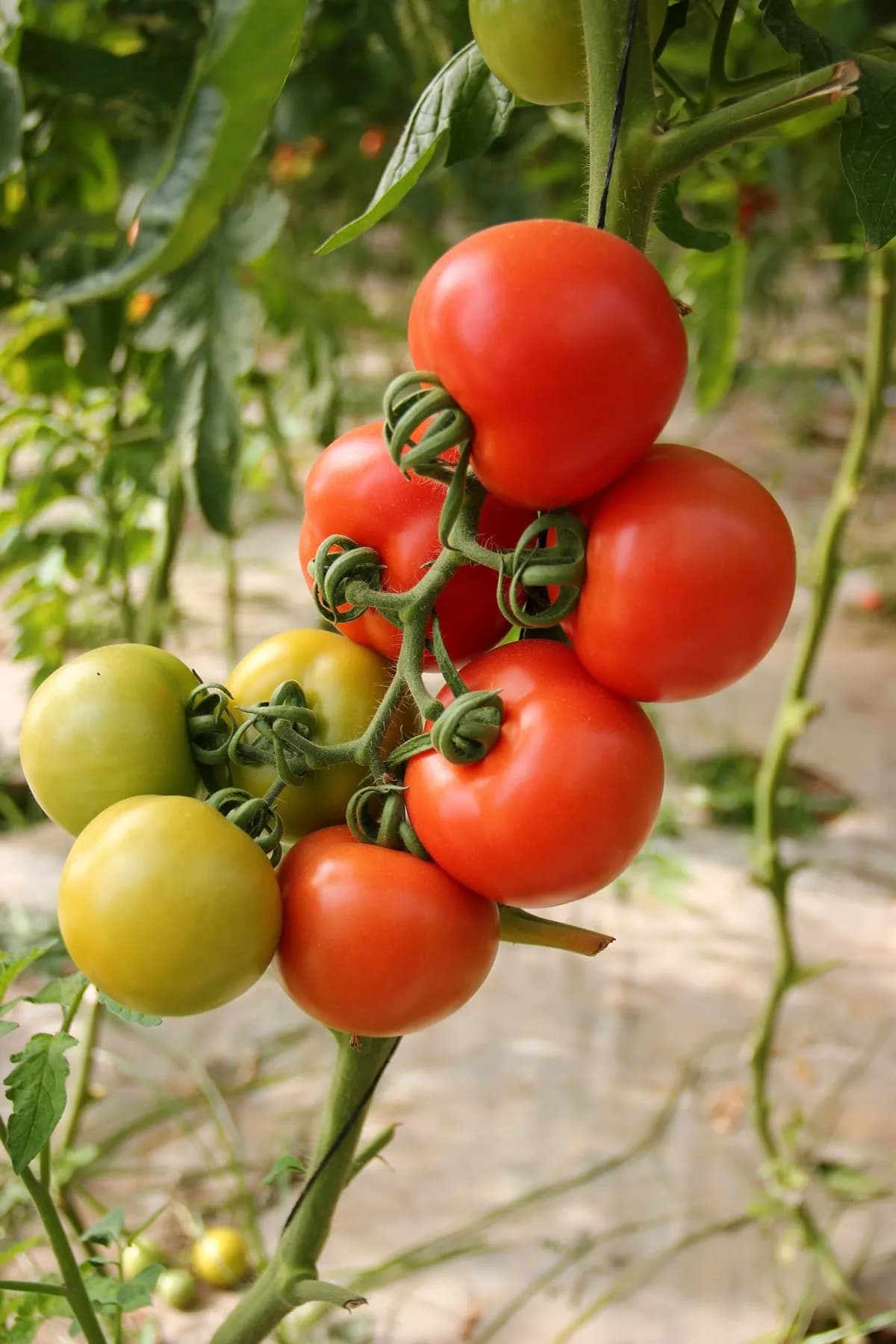
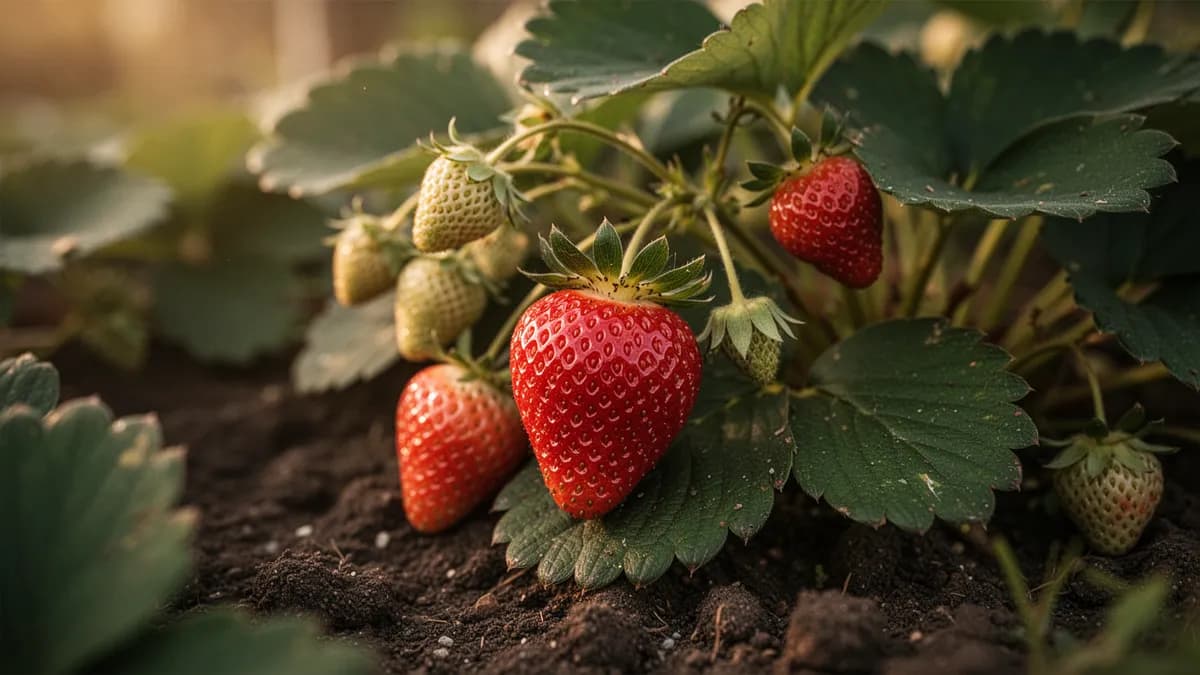
Pflanzen Sie lila Blumenkohl neben Sellerie, Zwiebeln und Dill, die dabei helfen, Kohlschädlinge abzuwehren. Thymian und Salbei sind ausgezeichnete aromatische Begleitpflanzen, die Kohlmotten verwirren. Vermeiden Sie das Pflanzen in der Nähe von Tomaten, Erdbeeren und anderen Nachtschattengewächsen, die um Nährstoffe konkurrieren. In der Nähe gepflanzte Kapuzinerkresse dient als Fangpflanze für Blattläuse und Kohlweißlinge.
Sellerie gehört daneben. Tomate nicht.
Altes Gärtnerwissen, geprüft an der echten Nachbartabelle von Lila Blumenkohl — teste jede Pflanze, die du anbaust.
Probiere Lila Blumenkohl direkt hier im Beet
Ein echtes Planer-Beet, Lila Blumenkohl steht schon drin. Tippe einen Begleiter an, platziere ihn und sieh, wie die Nachbarschaftsprüfung antwortet — grün für gute Nachbarn, rot bei Streit.


Passende Anbau-Ratgeber
Richtig düngen
Lila Blumenkohl gedeiht in nährstoffreichem, gut durchlässigem Boden mit einem pH-Wert zwischen 6,5 und 7,5. Arbeiten Sie 8 bis 10 cm Kompost vor dem Pflanzen ein und fügen Sie einen ausgewogenen 10-10-10-Granulatdünger hinzu. Düngen Sie 3 Wochen nach dem Umpflanzen und erneut bei Beginn der Kopfbildung mit stickstoffreichem Dünger wie Blutmehl nach. Bormangel verursacht hohle Stängel – tragen Sie bei Bedarf Borax mit 1 Esslöffel pro 10 Quadratmeter auf.
Ideale Temperatur
Winterhärtezone-Kompatibilität
Von der Saat zur Ernte, Schritt für Schritt
Aussaat
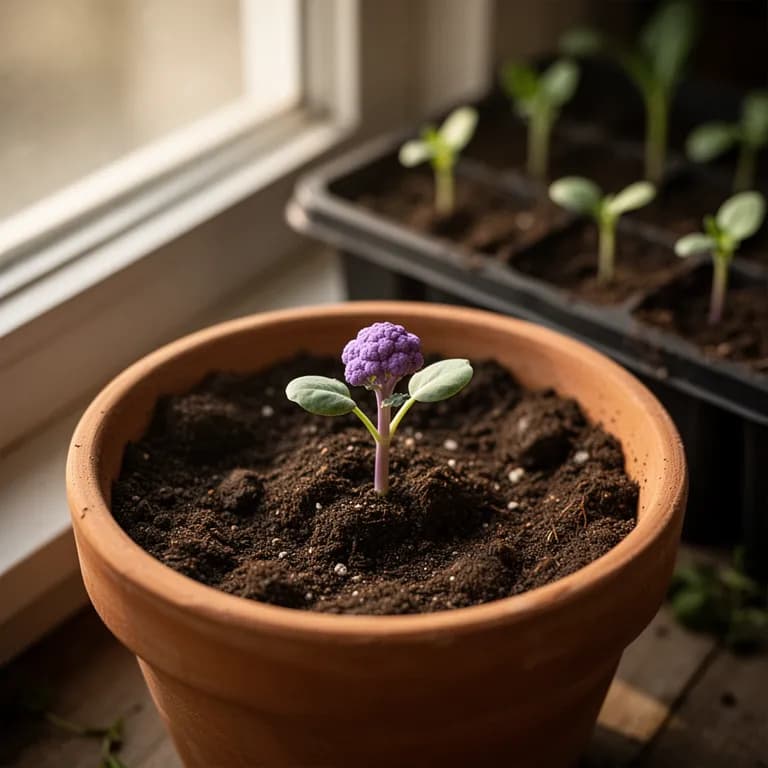
Die Samen keimen unter kühlen bis gemäßigten Bedingungen innerhalb von 5–10 Tagen. Die winzigen Keimlinge erscheinen mit abgerundeten Keimblättern, bevor sie ihre ersten echten Blätter entwickeln. Lila Blumenkohlsamen sollten drinnen in Zelltabletts oder kleinen Töpfen mit steriler Anzuchterde gestartet werden. Bodenwärme von 21–24 °C beschleunigt die Keimung, aber nach dem Auflaufen bevorzugen die Sämlinge kühlere Bedingungen um 16 °C.
Sämlingsentwicklung
Echte Blätter entwickeln sich mit dem charakteristischen blaugrünen, leicht wachsartigen Aussehen von Kohlgewächsen. Das Wurzelsystem dehnt sich in dieser Phase schnell aus. Sämlinge sollten unter kühlen Bedingungen gezogen werden, um kompakte, kräftige Stängel zu entwickeln. Eine leichte violette Tönung an den Blatträndern ist normal und zeigt tatsächlich eine gute Anthocyan-Genetik an.
Umpflanzen und vegetatives Wachstum
Umgepflanzte Sämlinge etablieren ihr Wurzelsystem im Garten und entwickeln große, ausladende Hüllblätter, die den sich entwickelnden Kopf schließlich schützen werden. Die Pflanze konzentriert ihre Energie auf den Aufbau eines umfangreichen Blattdachs – mindestens 12–15 große, gesunde Blätter werden benötigt, bevor die Kopfbildung beginnen kann. Gleichmäßige Feuchtigkeit und Nährstoffversorgung sind in dieser Phase entscheidend.
Kopfbildung
Die kleine violette Blume (Kopf) erscheint in der Mitte der Pflanze, zunächst in der Größe einer Münze. Sie wächst über 2–3 Wochen stetig und entwickelt ihre charakteristische tiefviolette Färbung durch Anthocyan-Pigmente. Im Gegensatz zu weißem Blumenkohl müssen violette Sorten nicht gebleicht (Blätter zusammengebunden) werden, da sich die Anthocyane bei etwas Sonneneinstrahlung sogar am besten entwickeln.
Kopfreifung
Der Kopf erreicht seine volle Größe von 15–20 cm Durchmesser mit festen, dicht gepackten Röschen in einem satten Violettton. Die Farbe vertieft sich mit der Reifung, besonders bei kühlen Nachttemperaturen, die die Anthocyanproduktion fördern. Der Kopf sollte sich für seine Größe schwer und dicht anfühlen.
Ernte
Der Kopf ist erntereif, wenn er 15–20 cm Durchmesser erreicht, sich fest und dicht anfühlt und die einzelnen Röschen noch eng zusammenstehen. Schneiden Sie den Kopf mit 2–3 Hüllblättern ab, um ihn während der Lagerung zu schützen. Im Gegensatz zu weißem Blumenkohl behalten violette Sorten ihre Farbe am besten, wenn sie morgens geerntet werden, bevor die Sonne den Kopf erwärmt.
Säen Sie die Samen 6 mm tief und halten Sie den Boden gleichmäßig feucht, aber nicht staunass. Bieten Sie sofort nach dem Auflaufen starkes Licht, um schwache, vergeilteSämlinge zu vermeiden. Ein nach Süden ausgerichtetes Fensterbrett oder Pflanzenlampen, die 5–8 cm über den Sämlingen angebracht sind, eignen sich gut.
Lila Blumenkohl Monat für Monat pflegen
Was du jeden Monat für deine Lila Blumenkohl tun solltest
Oktober
Aktueller MonatHaupterntemonat für im Herbst gepflanzten lila Blumenkohl. Kühle Nächte und milde Tage erzeugen die tiefste violette Farbe und den süßesten Geschmack. Ernten Sie, wenn die Köpfe 15–20 cm Durchmesser haben, fest und dicht gepackt sind. Leichter Frost verbessert sogar den Geschmack, indem Stärke in Zucker umgewandelt wird.
Immer wissen, was jetzt im Garten zu tun ist
Eine E-Mail zum Monatsanfang: was du jetzt säen, pflanzen und anpacken solltest — für deine Lila Blumenkohl und alles, was drumherum wächst. Dazu ein kurzer Startkurs, der dich vor den klassischen Fehlern bewahrt.
- Was jetzt zu tun ist
- Passend zu deiner Saison
- Startkurs inklusive
Lila Blumenkohl ernten
Ernten Sie lila Blumenkohl, wenn die Köpfe einen Durchmesser von 15 bis 20 cm haben und die Röschen noch fest zusammenstehen. Schneiden Sie den Kopf mit einem scharfen Messer ab und lassen Sie mehrere Hüllblätter zum Schutz des Blumenkohls dran. Die Ernte am Morgen ergibt die knackigsten Köpfe. Warten Sie nicht, bis sich die Röschen lockern oder trennen, da dies auf Überreife hinweist. Nach dem Schnitt des Hauptkopfes können sich Seitentriebe mit kleineren sekundären Köpfen entwickeln.
angenommen, du pflanzt zu Beginn des Zeitraums — trage dein tatsächliches Datum ein
Ernte Lila Blumenkohl zügig, dann trägt die Pflanze weiter.
Lagerung & Konservierung
Frischer lila Blumenkohl hält sich 1 bis 2 Wochen im Kühlschrank, locker in Frischhaltefolie oder in einem perforierten Beutel eingewickelt. Zum Einfrieren schneiden Sie ihn in Röschen, blanchieren Sie diese 3 Minuten, schrecken Sie sie in Eiswasser ab, lassen Sie sie abtropfen und frieren Sie sie auf Tabletts ein, bevor Sie sie in Beutel umfüllen. Lila Blumenkohl behält seine Farbe am besten beim Rösten oder Einlegen. Essig hilft, die leuchtenden violetten Anthocyan-Pigmente beim Einlegen zu bewahren.
Was schiefgeht — und die Lösung
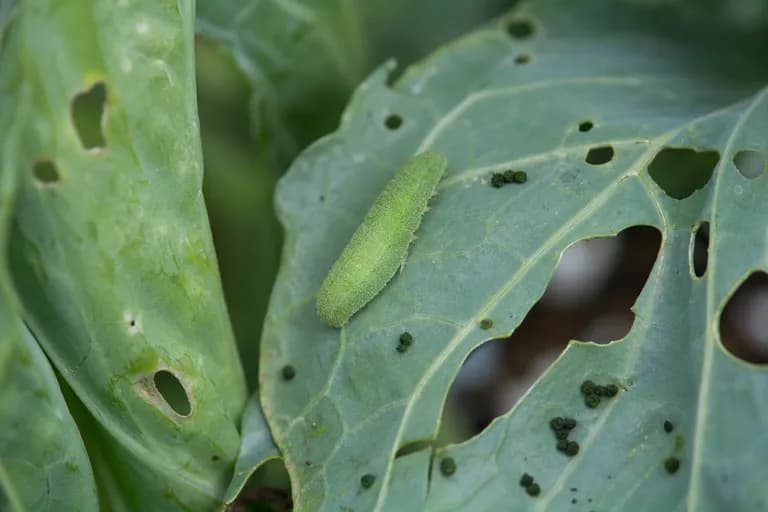
Kohlraupen
SchädlingUnregelmäßige Löcher in den Blättern, grüne Raupen sichtbar auf den Blattunterseiten und Kotreste auf den Blättern.
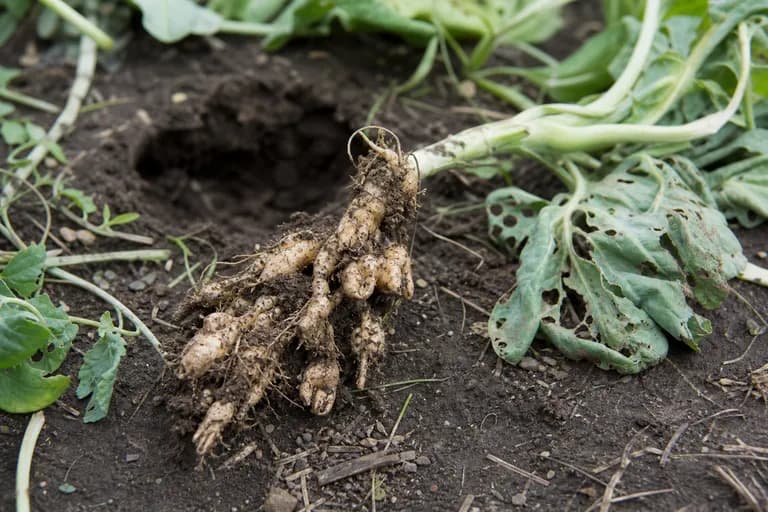
Kohlhernie
KrankheitWelken an warmen Tagen, Wachstumsstörungen, Vergilben der Blätter und geschwollene, deformierte Wurzeln.

Falscher Mehltau
KrankheitGelbe Flecken auf den oberen Blattoberflächen mit grau-violettem, pelzigem Bewuchs auf der Unterseite.
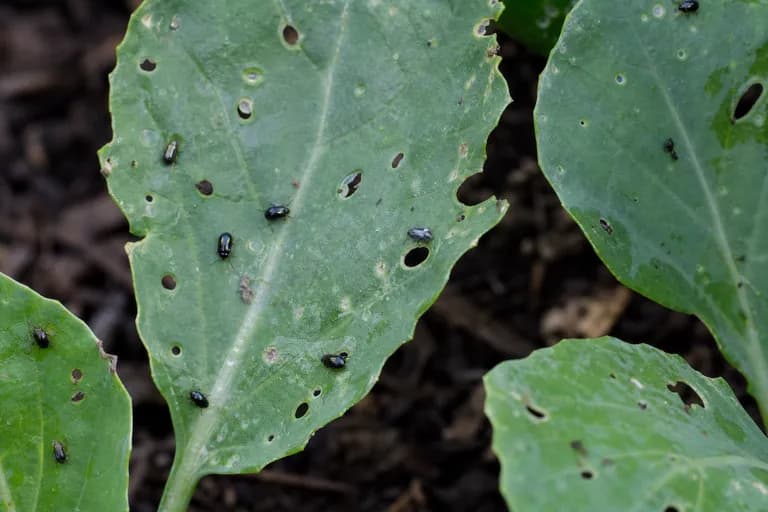
Erdflöhe
SchädlingWinzige runde Löcher in den Blättern, die ein Schrotschuss-Muster ergeben, besonders bei jungen Setzlingen.
Fehlerbehebung bei häufigen Problemen
Knopfbildung tritt auf, wenn sich kleine vorzeitige Köpfe durch Verpflanzungsschock oder Temperaturextreme bilden. Lockere oder körnige Blumen entstehen durch unregelmäßige Bewässerung oder Temperaturen über 27 Grad Celsius während der Kopfbildung. Die violette Farbe kann bei sehr heißem Wetter oder beim Kochen in Wasser verblassen. Schossen tritt auf, wenn junge Pflanzen längerer Kälte unter 10 Grad Celsius ausgesetzt sind, gefolgt von Erwärmungsphasen.
Anbautipps
- Planen Sie Ihre Pflanzung so, dass die Köpfe bei kühlem Wetter reifen. Lila Blumenkohl bildet die besten Köpfe und die tiefste Farbe, wenn die Tagestemperaturen zwischen 15–21 °C bleiben. In den meisten Zonen bedeutet das ein Umpflanzen im Frühling für eine Frühsommerernte oder ein Umpflanzen im Hochsommer für eine Herbsternte.
- Bleichen Sie lila Blumenkohl nicht. Im Gegensatz zu weißen Sorten, bei denen die Blätter über dem Kopf zusammengebunden werden müssen, um Vergilbung zu verhindern, benötigt lila Blumenkohl Sonnenlicht zur Entwicklung seiner Anthocyan-Pigmente. Lichtblockierung erzeugt einen matteren, weniger leuchtenden Kopf.
- Bereiten Sie nährstoffreichen, fruchtbaren Boden vor dem Pflanzen vor. Blumenkohl ist einer der stärksten Zehrer im Gemüsegarten. Arbeiten Sie 5–8 cm gereiften Kompost und einen ausgewogenen organischen Dünger vor dem Umpflanzen ein. Düngen Sie alle 3–4 Wochen während des aktiven Wachstums mit Stickstoff nach.
- Halten Sie während der Kopfbildung eine absolut gleichmäßige Feuchtigkeit aufrecht. Unregelmäßige Bewässerung verursacht ungleichmäßige Röschen, hohle Stängel und braune oder verfärbte Flecken am Kopf. Tropfbewässerung mit Zeitschaltuhr eliminiert das Rätselraten und liefert Wasser direkt an die Wurzelzone.
- Schützen Sie von Anfang an gegen häufige Kohlschädlinge. Kohlweißlinge, Kohleulen und Erdflöhe können junge Pflanzen verwüsten. Leichtes Vlies, das sofort nach dem Umpflanzen angebracht wird, bietet physischen Schutz ohne Chemikalien und mildert auch Temperaturextreme ab.
- Ernten Sie am Morgen für die beste Farbe und Haltbarkeit. Die Anthocyan-Pigmente sind am stabilsten, wenn der Kopf kühl ist. Köpfe, die in der Nachmittagshitze geerntet werden, können etwas weniger leuchtend erscheinen. Lassen Sie 2–3 Hüllblätter zum Schutz der Blume während der Lagerung dran.
- Versuchen Sie eine Herbstpflanzung für die tiefste violette Farbe. Kühle Nächte und gemäßigte Tage im Herbst lösen die maximale Anthocyanproduktion aus. Im Herbst geernteter lila Blumenkohl ist typischerweise 30–50 % intensiver gefärbt als im Frühling geerntete Köpfe derselben Sorte.
- Verwenden Sie die nährstoffreichen Blätter. Lila Blumenkohlblätter sind vollkommen essbar und voller Nährstoffe. Braten Sie sie wie Grünkohl an, geben Sie sie in Suppen oder rösten Sie sie zusammen mit den Röschen – die äußeren Blätter entwickeln oft violette Äderung, die genauso visuell beeindruckend ist wie der Kopf selbst.
Bau deine beste Lila Blumenkohl an — und alles drumherum.
Starte heute kostenlos. Lege deine Beete an, setze deine Lila Blumenkohl ein und lass PlotMyGarden Timing, Abstände, Begleiter und Erinnerungen von der Saat bis zum Erntekorb übernehmen.
Finde deine Lila Blumenkohl
Graffiti
Der beliebteste lila Blumenkohl mit leuchtend violetten Köpfen und ausgezeichnetem Geschmack, der beim Kochen seine Farbe behält.
Depurple
Eine kräftige Hybride, die große, tiefviolette Köpfe mit gleichmäßiger Form und guter Kältetoleranz produziert.
Purple Cape
Eine traditionelle Sorte aus Südafrika mit lockeren violetten Blumen, extrem winterhart und zur Überwinterung geeignet.
Violet Queen
Eine frühreife Sorte mit lila-grünen Köpfen, die beim Kochen leuchtend grün werden.
Lila Blumenkohl kostet im Supermarkt und auf Bauernmärkten typischerweise 4–7 € pro Kopf – deutlich mehr als weißer Blumenkohl aufgrund seines Spezialitätenstatus. Ein Samentütchen für 3–5 € kann 30–50 Pflanzen hervorbringen, wodurch jeder selbst angebaute Kopf nur wenige Cent an Saatgutinvestition kostet. Der Anbau von nur 6 Pflanzen spart 25–40 € pro Saison allein an frischen Köpfen. Die Ersparnis wird noch bedeutender, wenn man bedenkt, dass selbst angebauter lila Blumenkohl oft frischer ist und mehr Anthocyangehalt bewahrt als im Laden gekaufte Köpfe, die möglicherweise tage- oder wochenlang transportiert wurden.
Schnelle Rezepte
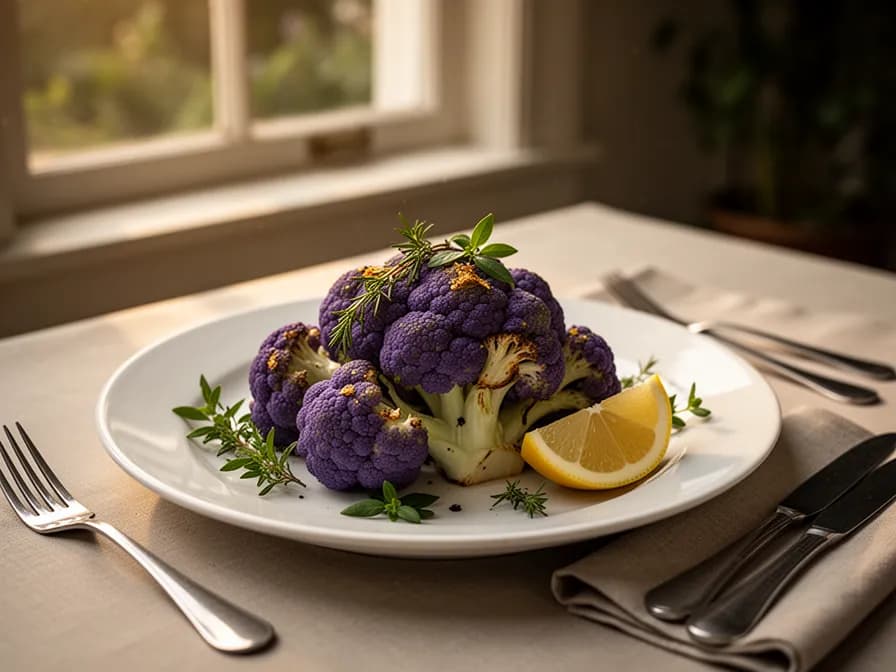
Geröstete lila Blumenkohl-Steaks
35 Min.Dicke Scheiben von lila Blumenkohl, geröstet bis sie karamellisiert und zart sind mit knusprigen Rändern. Die hohe Hitze bringt die natürliche Süße hervor, während die dramatische violette Farbe an den Rändern zu einem wunderschönen Blauviolett verblasst. Ein einfacher Tahini-Nieselregen verleiht Reichhaltigkeit.
7 ZutatenLila Blumenkohl-Cheddar-Suppe
40 Min.Eine samtweiche, leuchtende Suppe, die beim Pürieren ein atemberaubendes Blauviolett annimmt. Kräftiger Cheddar verleiht Reichhaltigkeit und Tiefe, während der Blumenkohl eine natürlich cremige Basis ohne schwere Sahne bietet. Serviert mit einem Klecks Crème fraîche als Kontrast.
8 ZutatenRoher lila Blumenkohl-Tabouleh
20 Min.Fein gehackter roher lila Blumenkohl ersetzt Bulgurweizen in dieser getreidefreien, kohlenhydratarmen Variante des nahöstlichen Klassikers. Die rohen Röschen bewahren ihre leuchtend violette Farbe und bieten bei jedem Bissen einen befriedigenden Biss.
8 ZutatenKulinarische Verwendung
Lila Blumenkohl ist hervorragend geröstet mit Olivenöl und Knoblauch, wobei er seine leuchtende Farbe behält. Verwenden Sie ihn roh auf Gemüseplatten für eine farbenfrohe Präsentation. Er eignet sich wunderbar für Pfannengerichte, Gratins und Currys. Legen Sie die Röschen für ein auffälliges Beilagen-Relish ein. Beachten Sie, dass Kochen in Wasser die violette Farbe blaugrün verfärbt – daher sind Rösten, Dämpfen oder Rohverzehr die bevorzugten Methoden.
Was drinsteckt
Gesundheitsvorteile
- Reich an Anthocyanen – starken Antioxidantien, die die violette Farbe verleihen – die in Studien nachweislich Entzündungen reduzieren, die Herz-Kreislauf-Gesundheit unterstützen und möglicherweise vor altersbedingtem kognitivem Abbau schützen.
- Ausgezeichnete Vitamin-C-Quelle, die über 50 % des Tageswertes pro 100 g liefert, essentiell für die Immunfunktion, Kollagensynthese, Eisenaufnahme und den Schutz vor oxidativen Schäden.
- Enthält hohe Mengen an Sulforaphan und anderen Glucosinolaten, schwefelhaltigen Verbindungen, die die natürlichen Entgiftungsenzyme des Körpers aktivieren und umfassend auf ihr Potenzial zur Hemmung des Krebszellwachstums untersucht wurden.
- Liefert bedeutendes Vitamin K, das eine gesunde Blutgerinnung, Knochenmineralisierung und Kalziumregulierung unterstützt – besonders wichtig für die Erhaltung der Knochendichte im Alter.
- Reich an Ballaststoffen, die die Verdauungsgesundheit fördern, nützliche Darmbakterien nähren, eine regelmäßige Darmfunktion unterstützen und möglicherweise den Cholesterinspiegel senken, indem sie Gallensäuren im Darm binden.
- Enthält Cholin, einen essentiellen Nährstoff, der für die Gehirngesundheit, Leberfunktion und die fetale Gehirnentwicklung während der Schwangerschaft von entscheidender Bedeutung ist – ein Nährstoff, den die Mehrheit der Menschen nicht in ausreichenden Mengen zu sich nimmt.
Woher Lila Blumenkohl stammt
Lila Blumenkohl (Brassica oleracea var. botrytis) gehört zur gleichen Art wie weißer Blumenkohl, Brokkoli, Grünkohl, Kohl und Rosenkohl – eine der bemerkenswert vielfältigsten Pflanzenarten in der menschlichen Landwirtschaft. Aller Blumenkohl stammt vom Wildkohl (Brassica oleracea) ab, der an den Küstenklippen des Mittelmeerraums und des atlantischen Europas heimisch ist. Der früheste Blumenkohlanbau fand vermutlich im östlichen Mittelmeerraum statt, wobei schriftliche Aufzeichnungen arabischer Botaniker aus dem 12. und 13. Jahrhundert blumenkohlähnliche Pflanzen beschreiben, die in Syrien und auf Zypern angebaut wurden.
Violett getönte Kohlgewächse sind in der langen Kultivierungsgeschichte des Blumenkohls sporadisch aufgetaucht, doch die gezielte Züchtung auf tiefe, stabile violette Färbung begann erst im späten 20. Jahrhundert. Italienische Bauern in Süditalien bauten jahrhundertelang regionale lila Blumenkohl-Landsorten an – insbesondere die 'Violetto di Sicilia' (Veilchen von Sizilien) – aber diese traditionellen Sorten hatten eine ungleichmäßige Farbe und inkonsistente Köpfe. Moderner lila Blumenkohl, wie wir ihn kennen, wurde hauptsächlich von niederländischen und nordamerikanischen Saatgutunternehmen in den 1980er und 1990er Jahren durch klassische Kreuzung entwickelt, wobei auf hohen Anthocyangehalt, gleichmäßige Kopfform und zuverlässig tiefe violette Pigmentierung selektiert wurde.
Heute hat sich lila Blumenkohl von einer Spezialitätenkuriosität zum Mainstream-Gemüse entwickelt, angetrieben durch das Verbraucherinteresse an farbenfrohem, antioxidantienreichem Gemüse und der Farm-to-Table-Bewegung. Sorten wie Graffiti, Depurple und Purple of Sicily sind in Supermärkten und auf Bauernmärkten weltweit erhältlich. Das Gemüse hat besondere Beliebtheit in der gesundheitsbewussten Küche aufgrund seines Anthocyangehalts gefunden, sowie bei Hobbygärtnern, die sowohl seine ernährungsphysiologischen Vorteile als auch seinen dramatischen Zierwert im Garten schätzen.
Lila Blumenkohl: Schon gewusst?
Faszinierende Fakten über Lila Blumenkohl
Lila Blumenkohl erhält seine leuchtende Farbe durch Anthocyane – die gleiche Klasse antioxidativer Pigmente, die in Blaubeeren, Rotkohl und Concord-Trauben vorkommt. Ein einzelner Kopf lila Blumenkohl kann so viele Anthocyane enthalten wie eine volle Tasse Blaubeeren.
Lila Blumenkohl: Fragen & Antworten
Wann sollte ich Lila Blumenkohl pflanzen?
Was sind gute Begleitpflanzen für Lila Blumenkohl?
In welchen Winterhärtezonen kann Lila Blumenkohl wachsen?
Wie viel Sonne braucht Lila Blumenkohl?
Welchen Abstand sollte ich zwischen Lila Blumenkohl lassen?
Welche Schädlinge und Krankheiten befallen Lila Blumenkohl?
Wie lagere ich Lila Blumenkohl nach der Ernte?
Was sind die besten Lila Blumenkohl-Sorten zum Anbauen?
Welchen Boden braucht Lila Blumenkohl?
Warum wird mein lila Blumenkohl grün statt violett zu bleiben?
Verändert sich die violette Farbe beim Kochen?
Ist lila Blumenkohl gentechnisch verändert?
Kann ich lila Blumenkohl in heißen Klimazonen anbauen?
Wie lange hält sich geernteter lila Blumenkohl?
Was sind die besten Begleitpflanzen für lila Blumenkohl?
Du hast die Theorie gelesen. Jetzt baue sie auf Autopilot an.
Alles, was Lila Blumenkohl knifflig macht — das Timing, die Abstände, die Begleiter, das Erntefenster — genau das übernimmt PlotMyGarden für dich, für jede Pflanze im Garten.
Ein Plan, der dein Wetter kennt
Standort einmal festlegen. Aussaat-, Dünge- und Erntedaten rund um deinen echten letzten Frosttermin und die Live-Vorhersage — kein Raten mehr nach Saattüte.
Aus dem Abschnitt „Pflanzzeit“Beetplaner per Drag & Drop
Beete auf einem Raster gestalten. Jede Pflanze rastet im richtigen Abstand ein, und du siehst die ganze Saison, bevor du einen Cent für Saatgut ausgibst.
Aus dem Abschnitt „Anbau“Begleiter-Konflikte früh erkannt
Über 200 gute und schlechte Kombinationen werden beim Pflanzen live geprüft — so landet ein saisonruinierender Fehler nie in der Erde.
Aus dem Abschnitt „Begleiter“Erinnerungen, nach denen du wirklich handelst
„Gieß die Bohnen.“ „Heute ernten, bevor's umschlägt.“ Pünktlich, konkret und auf deine echten Pflanzen bezogen.
Aus dem Abschnitt „Ernte“Staffel-Aussaat, geplant
Sechs Wochen ernten statt sechs Tage? Die App verteilt deine Aussaaten automatisch und erinnert dich, wenn der nächste Satz fällig ist.
Aus dem Abschnitt „Pflanzzeit“Ein Verlauf, der schlauer wird
Jede protokollierte Ernte bringt der App deinen Garten bei. Der Plan fürs nächste Jahr startet bei dem, was in deinem Boden wirklich funktioniert hat.
Aus dem Abschnitt „Überblick“Pflanze diese neben Lila Blumenkohl
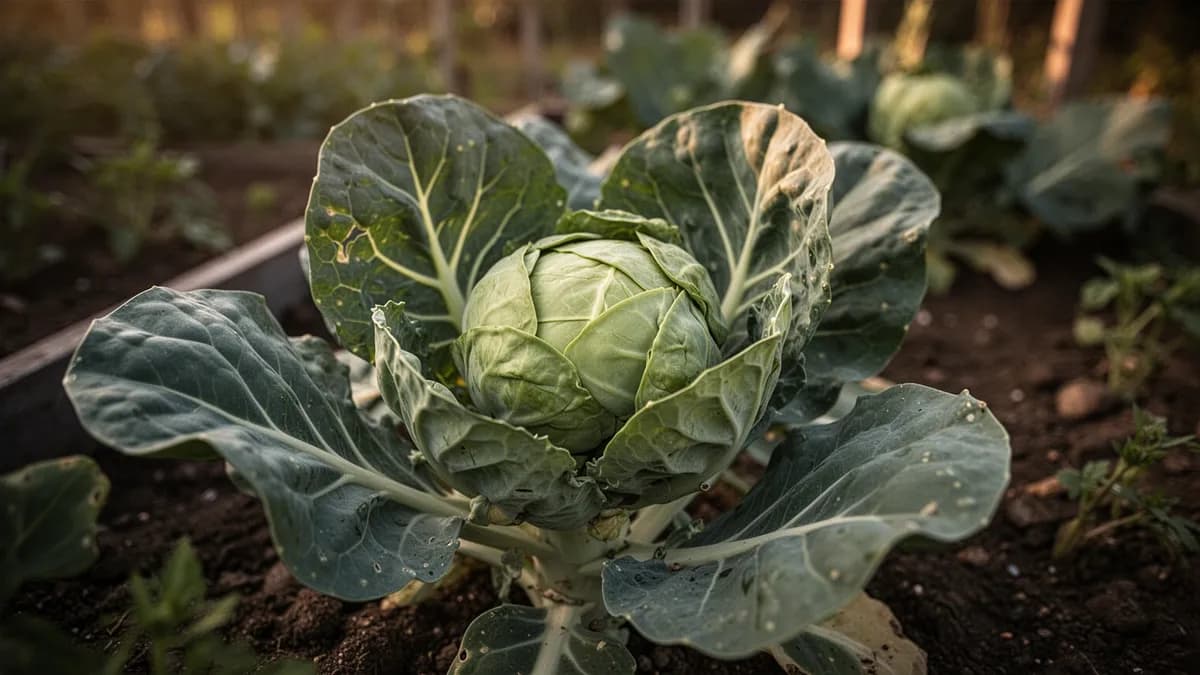
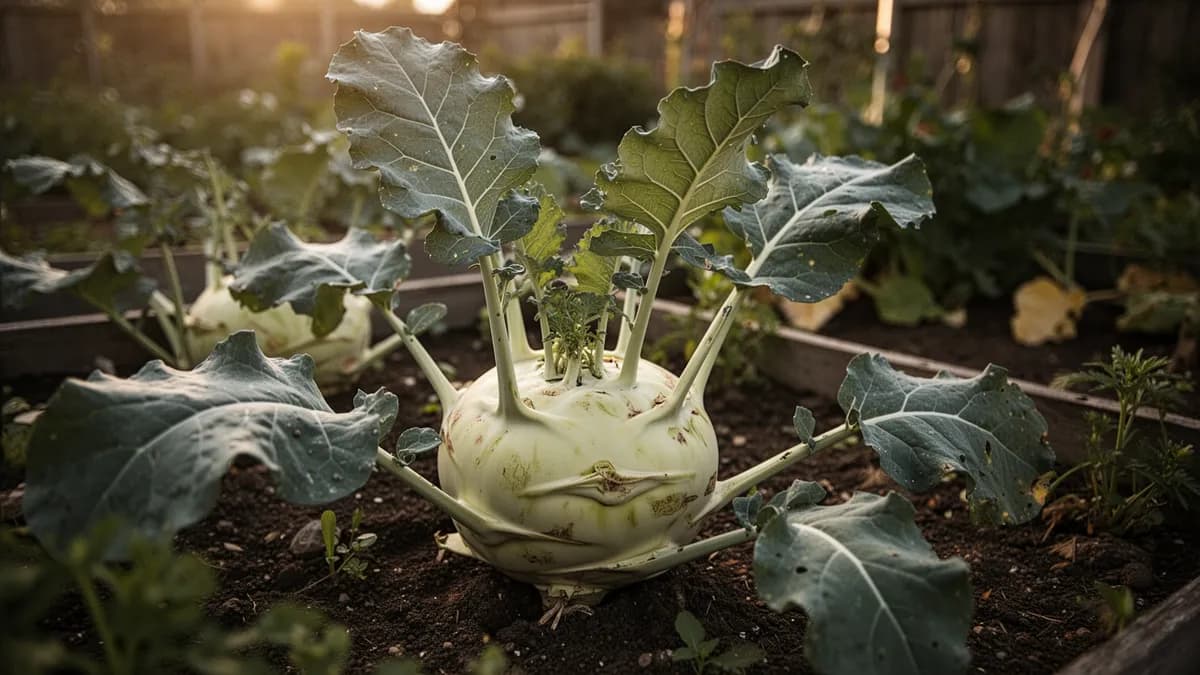
Weitere Kreuzblütler
Halte Lila Blumenkohl von diesen fern
Bau deine beste Lila Blumenkohl an — und alles drumherum.
Starte heute kostenlos. Lege deine Beete an, setze deine Lila Blumenkohl ein und lass PlotMyGarden Timing, Abstände, Begleiter und Erinnerungen von der Saat bis zum Erntekorb übernehmen.