Riesenkohlrabi
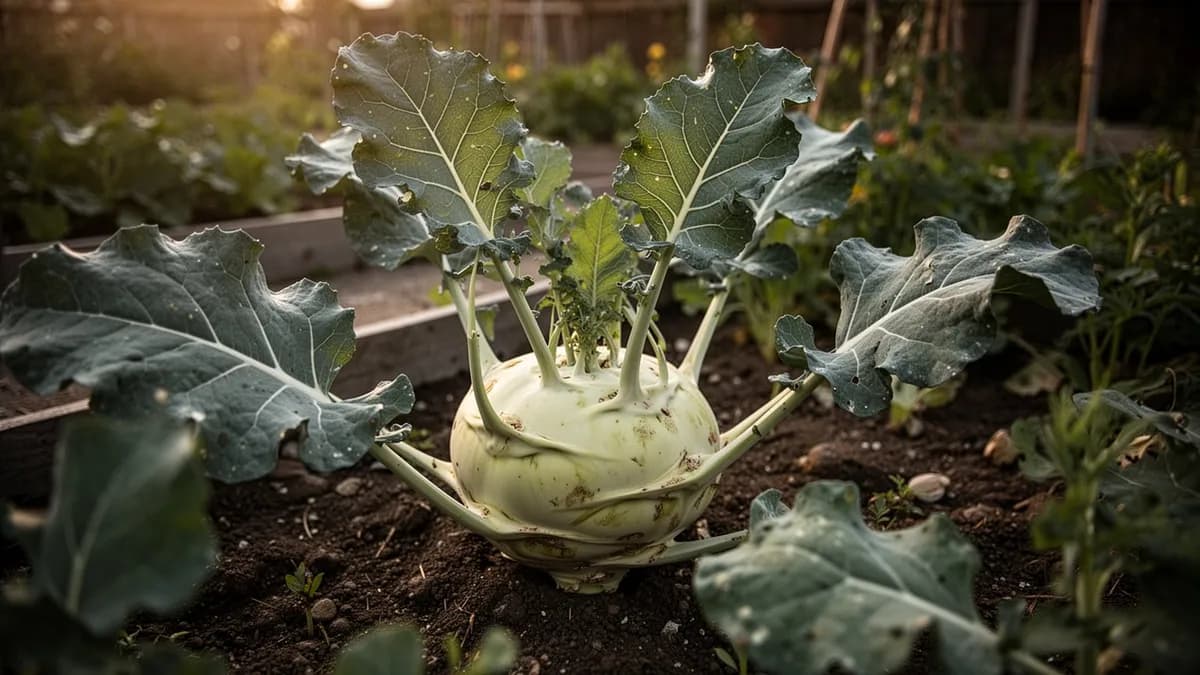
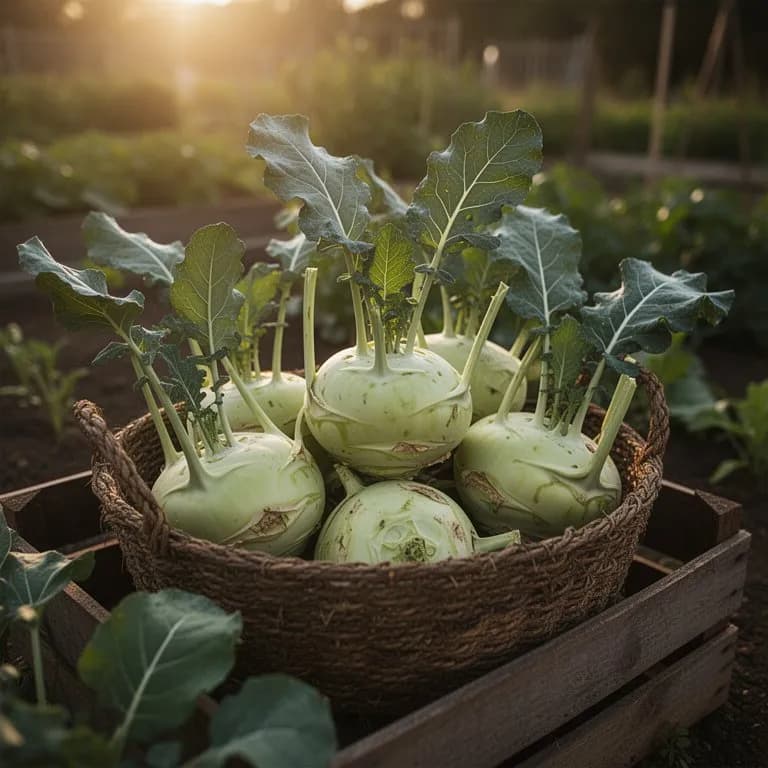
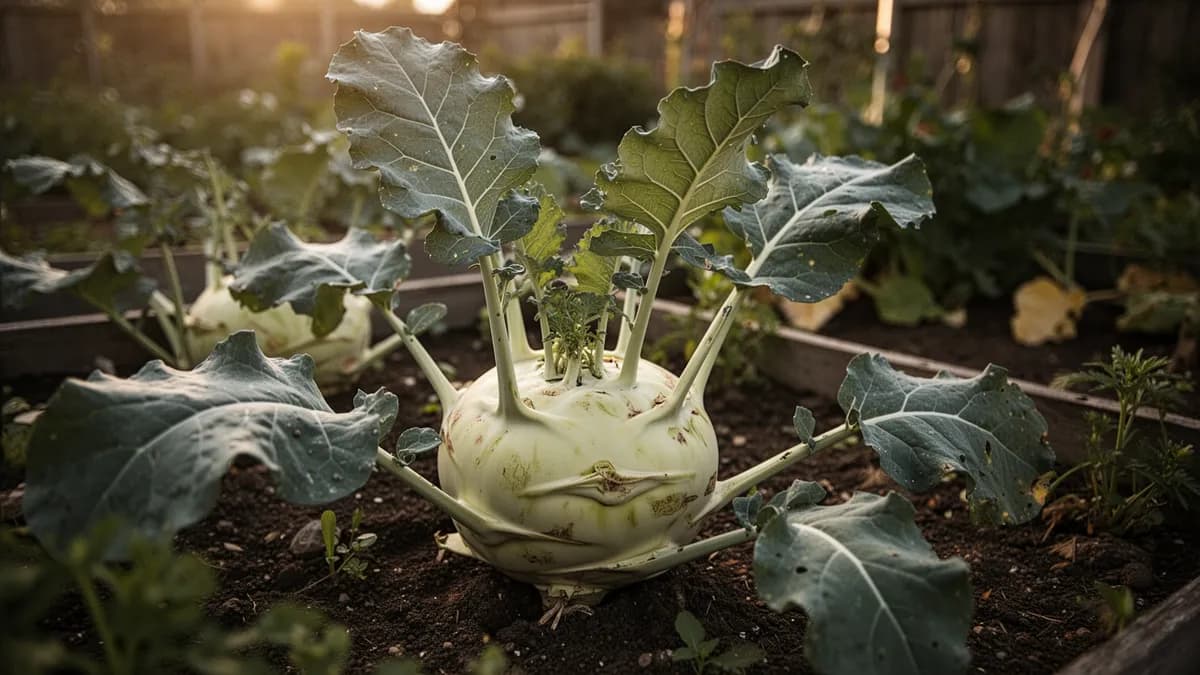
Eine übergroße Kohlrabi-Sorte, die ohne holzig oder faserig zu werden die Größe eines Basketballs erreichen kann.





Auf dieser SeiteÜberblick
Riesenkohlrabi im Überblick
Eine übergroße Kohlrabi-Sorte, die ohne holzig oder faserig zu werden die Größe eines Basketballs erreichen kann. Im Gegensatz zu Standardkohlrabi behalten Riesensorten selbst bei großen Ausmaßen ihre zarte, knackige Textur. Sorgen Sie für nährstoffreichen, gleichmäßig feuchten Boden und stetige Düngung für ein gleichmäßiges Wachstum ohne Rissbildung. Hervorragend für Krautsalate, Pfannengerichte und Suppen, bei denen der milde, süße Geschmack Substanz verleiht.
Wann Riesenkohlrabi pflanzen
Säen Sie Samen direkt 0,5 cm tief aus, sobald die Bodentemperaturen 7 Grad Celsius erreichen. Vereinzeln Sie Setzlinge auf 30 bis 45 cm Abstand, wenn sie 2 echte Blätter haben. Zum Vorziehen beginnen Sie 4 bis 6 Wochen vor dem letzten Frost drinnen. Die Keimung dauert 5 bis 10 Tage bei 15 bis 21 Grad. Riesensorten benötigen mehr Platz und Zeit als Standardkohlrabi, planen Sie also entsprechend.
Dein Riesenkohlrabi-Jahr
Abgestimmt auf Zone 7 · typische Saison · Frost geht um den 2. Apr. und kehrt um den 1. Nov. zurück
Riesenkohlrabi Mär – Apr, Aug – Sep pflanzen, Jun – Jul, Okt – Nov ernten. Beachte die Pflanzmethoden unten und wähle dein Klima für passende Zeiträume.
So baust du Riesenkohlrabi an
Riesenkohlrabi-Sorten können verdickte Stängel mit einem Gewicht von 2 bis 5 Kilogramm oder mehr produzieren und dabei zart und süß bleiben, im Gegensatz zu Standardkohlrabi, der bei großen Ausmaßen holzig wird. Säen Sie die Samen direkt 0,5 cm tief im Frühling oder Spätsommer aus, mit einem Abstand von 30 bis 45 cm in Reihen von 60 cm Abstand. Die Keimung erfolgt in 5 bis 10 Tagen bei 15 bis 21 Grad Celsius.
Riesenkohlrabi benötigt eine längere Wachstumsperiode von 80 bis 130 Tagen im Vergleich zu Standardsorten. Halten Sie den Boden gleichmäßig feucht und nährstoffreich für ein stetiges, ununterbrochenes Wachstum, das für die Erhaltung der zarten Textur bei großen Ausmaßen unerlässlich ist. Mulchen Sie um die Pflanzen herum, um Feuchtigkeit zu speichern und die Wurzeln kühl zu halten.
Düngen Sie alle 3 bis 4 Wochen mit ausgewogenem Dünger nach. Riesenkohlrabi verträgt sowohl Hitze als auch Kälte besser als Standardsorten, was ihn saisonübergreifend vielseitig einsetzbar macht. Ernten Sie, wenn der verdickte Stängel einen Durchmesser von 15 bis 25 cm erreicht. Im Gegensatz zu normalem Kohlrabi bleiben richtig angebaute Riesensorten selbst bei großen Ausmaßen bemerkenswert zart und knackig.
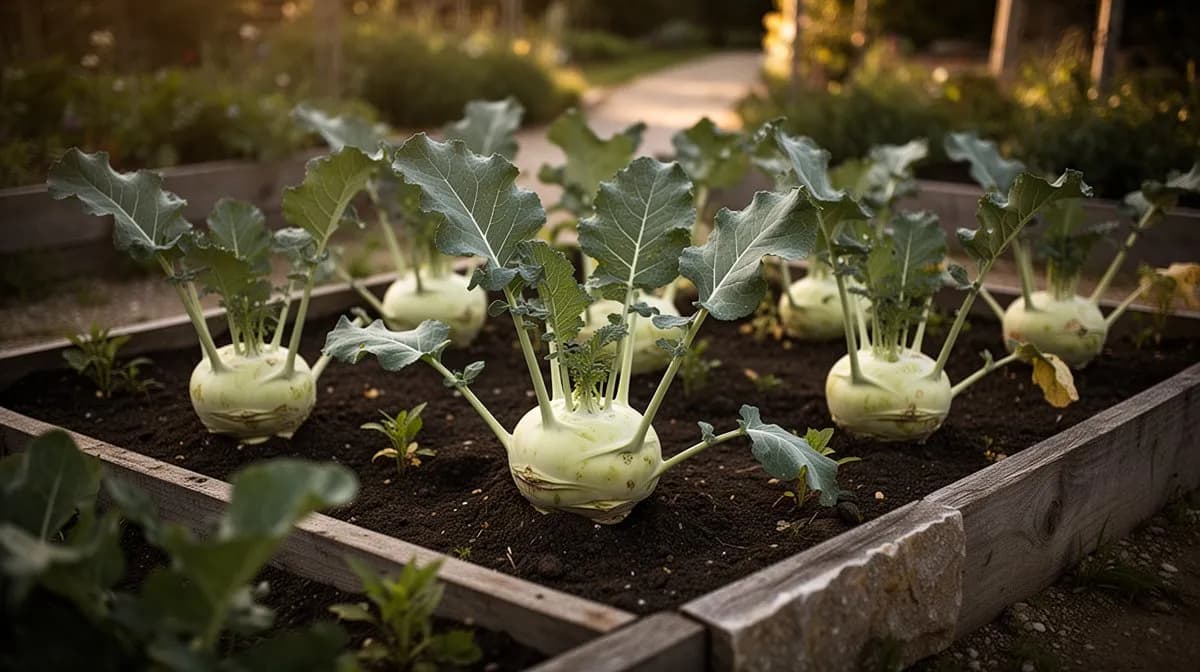
10 Pflanzen passen in ein Beet von 120 × 240 cm
Riesenkohlrabi braucht 45 cm Platz pro Pflanze. Der Planer hält diesen Abstand für dich ein — jede Pflanze, jedes Beet.
Die besten Nachbarn für Riesenkohlrabi
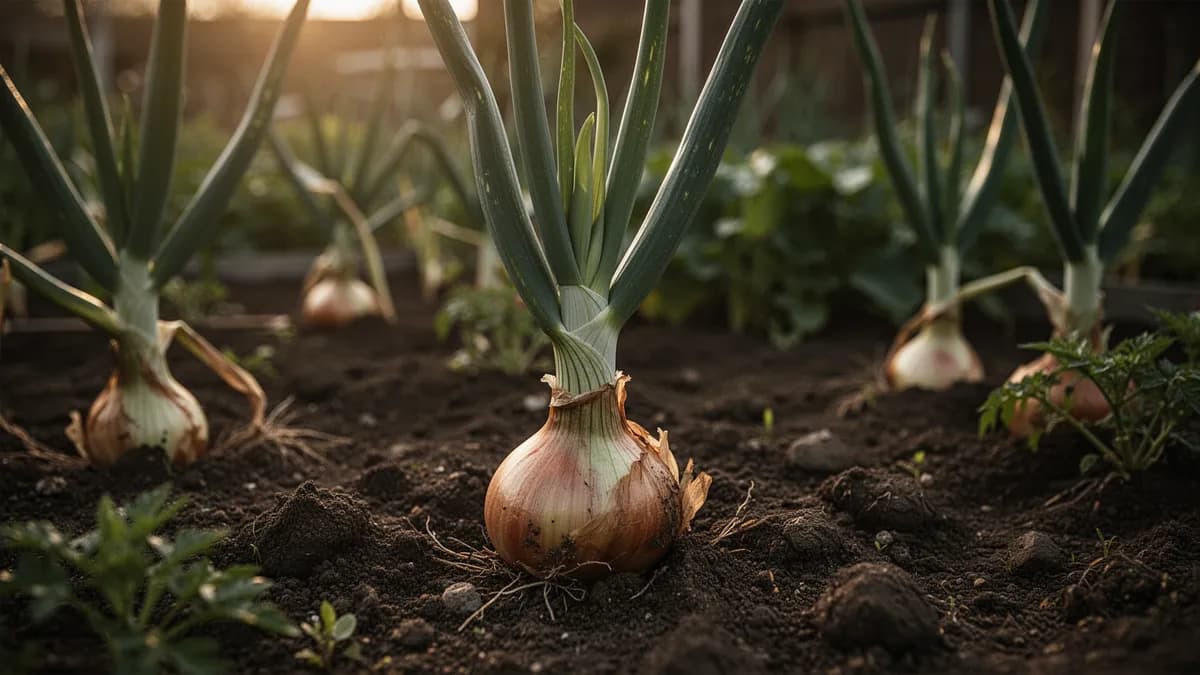
Pflanzen Sie Riesenkohlrabi neben Zwiebeln, Rote Bete und aromatischen Kräutern wie Dill und Thymian, um Kohlschädlinge abzuschrecken. Salat und Spinat sind gute Bodendecker-Begleitpflanzen, die den Boden beschatten. Vermeiden Sie die Pflanzung in der Nähe von Tomaten, Paprika und Erdbeeren. In der Nähe gepflanzte Kapuzinerkresse lockt Blattläuse vom Kohlrabi weg.
Rote Bete gehört daneben. Tomate nicht.
Altes Gärtnerwissen, geprüft an der echten Nachbartabelle von Riesenkohlrabi — teste jede Pflanze, die du anbaust.
Probiere Riesenkohlrabi direkt hier im Beet
Ein echtes Planer-Beet, Riesenkohlrabi steht schon drin. Tippe einen Begleiter an, platziere ihn und sieh, wie die Nachbarschaftsprüfung antwortet — grün für gute Nachbarn, rot bei Streit.


Passende Anbau-Ratgeber
Richtig düngen
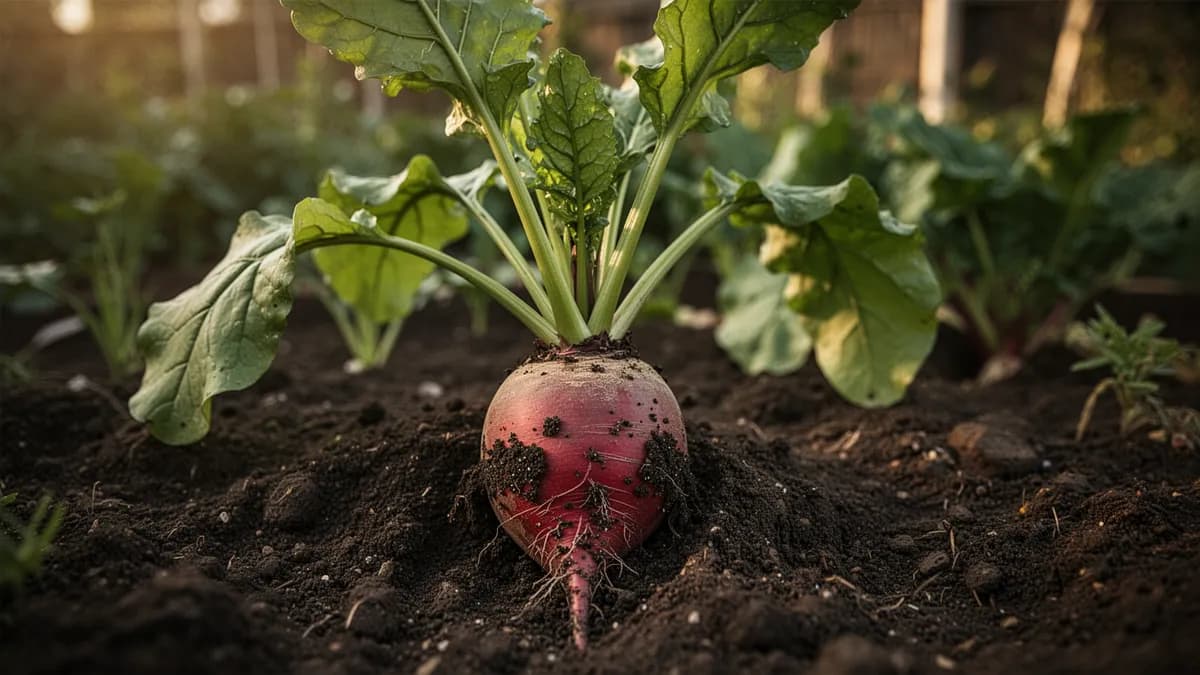
Riesenkohlrabi benötigt fruchtbaren, gut durchlässigen Boden mit einem pH-Wert zwischen 6,0 und 7,5. Arbeiten Sie großzügige Mengen Kompost und ausgewogenen Granulatdünger vor der Pflanzung ein. Düngen Sie alle 3 bis 4 Wochen mit ausgewogenem Dünger nach, um ein stetiges Wachstum aufrechtzuerhalten, das der Schlüssel ist, um das Fruchtfleisch bei großen Ausmaßen zart zu halten. Gleichmäßige Feuchtigkeit ist entscheidend; unregelmäßiges Gießen führt zu holzigen, gerissenen Stängeln.
Ideale Temperatur
Winterhärtezone-Kompatibilität
Von der Saat zur Ernte, Schritt für Schritt
Aussaat
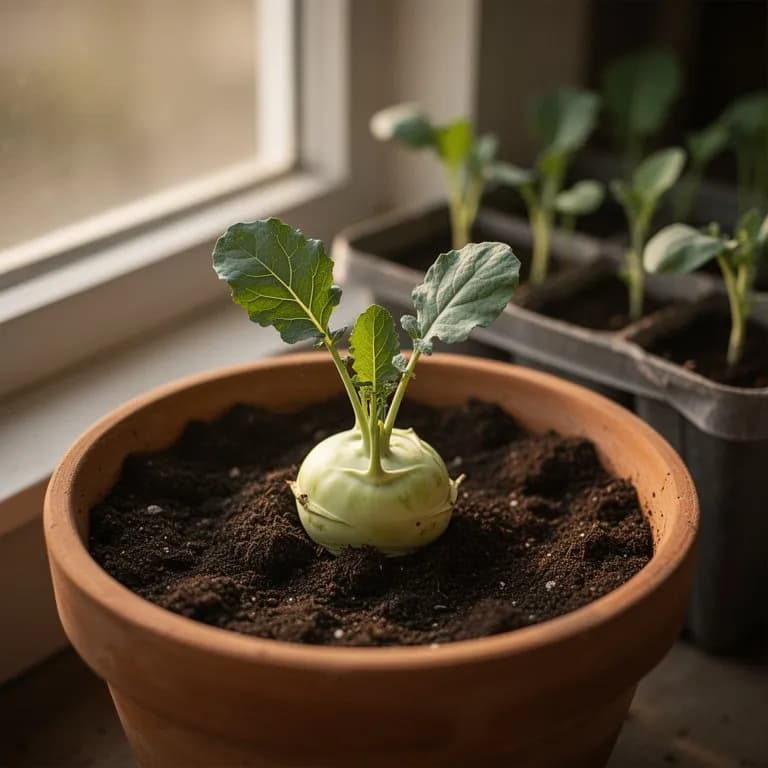
Samen keimen bereitwillig in kühlen bis mäßigen Bodentemperaturen zwischen 10-25°C. Die kleinen runden Samen produzieren kräftige Setzlinge mit breiten, runden Keimblättern, die typisch für die Kohlfamilie sind. Riesensorten können direkt gesät oder 4-6 Wochen vor dem geplanten Umpflanztermin drinnen vorgezogen werden.
Setzlingsentwicklung
Echte Blätter entwickeln sich mit der charakteristischen blaugrünen Farbe und den leicht gelappten Rändern der Kohlgewächse. Der Setzling etabliert ein starkes Wurzelsystem und beginnt, das Blätterdach aufzubauen, das die Knollenentwicklung antreiben wird. In diesem Stadium sind Riesensorten von Standardkohlrabi nicht zu unterscheiden.
Blätterdach-Ausdehnung
Die Pflanze entwickelt eine stattliche Rosette großer, paddelförmiger Blätter, die 50-60 cm Spannweite erreichen kann. Diese breiten Blätter wirken als Solarpaneele und fangen Energie ein, die in der sich entwickelnden Knolle gespeichert wird. Die Stängelbasis beginnt sich oberhalb der Bodenoberfläche deutlich zu verdicken.
Knollenbildung
Die verdickte Stängelknolle dehnt sich oberhalb der Bodenoberfläche rasch aus und wächst von Tennisballgröße auf ihre beeindruckenden endgültigen Dimensionen. Die Schale der Knolle wechselt von hellgrün oder violett zu einem glatten, wachsartigen Finish. Riesensorten legen den größten Teil ihrer Größe in dieser 6-wöchigen Periode zu und können unter idealen Bedingungen 100-200 Gramm pro Woche zunehmen.
Knollenreifung
Die Knolle erreicht ihre volle Größe von 15-25 cm Durchmesser und wiegt je nach Sorte und Wachstumsbedingungen 2-5 kg. Im Gegensatz zu Standardkohlrabi behalten Riesensorten selbst bei sehr großen Ausmaßen ihre zarte, knackige Textur. Die Außenhaut wird fest und wachsartig, während das Innere saftig und süß bleibt.
Ernte und Lagerung
Schneiden Sie die Knolle auf Bodenhöhe von der Wurzel ab und kürzen Sie die Blätter, wobei 2-3 cm Stängel stehen bleiben. Riesenkohlrabi lagert außergewöhnlich gut – ganze Knollen halten 2-3 Monate in einem kühlen Erdkeller oder Kühlschrank-Gemüsefach. Das dichte Fruchtfleisch gewinnt nach einigen Wochen Kühllagerung sogar leicht an Süße.
Säen Sie Samen 1 cm tief in feuchte, gut durchlässige Erde. Halten Sie den Boden gleichmäßig feucht, aber nicht staunass. Innenaussaaten profitieren von kühlen Bedingungen um 15-18°C, um kompakte, stämmige Setzlinge statt vergeilteter zu erhalten.
Riesenkohlrabi Monat für Monat pflegen
Was du jeden Monat für deine Riesenkohlrabi tun solltest
Oktober
Aktueller MonatIm Herbst gepflanzte Knollen legen an Größe zu im kühleren Wetter. Kohlrabi verträgt leichten Frost gut und wird nach einer Kälteperiode süßer. Bringen Sie Vliesabdeckung an oder mulchen Sie reichlich in den Zonen 5-6, wenn Hartfrost droht, bevor die Knollen ihre volle Größe erreichen.
Immer wissen, was jetzt im Garten zu tun ist
Eine E-Mail zum Monatsanfang: was du jetzt säen, pflanzen und anpacken solltest — für deine Riesenkohlrabi und alles, was drumherum wächst. Dazu ein kurzer Startkurs, der dich vor den klassischen Fehlern bewahrt.
- Was jetzt zu tun ist
- Passend zu deiner Saison
- Startkurs inklusive
Riesenkohlrabi ernten
Ernten Sie Riesenkohlrabi, wenn der verdickte Stängel einen Durchmesser von 15 bis 25 cm erreicht, wobei richtig angebaute Exemplare noch größer werden können und dabei zart bleiben. Schneiden Sie den Stängel mit einem scharfen Messer auf Bodenhöhe ab. Testen Sie die Zartheit, indem Sie einen Fingernagel in die Schale drücken – er sollte leicht eindringen. Entfernen Sie die Blätter und die harte Basis vor der Lagerung. Riesensorten halten sich gut im Boden und können über mehrere Wochen geerntet werden.
angenommen, du pflanzt zu Beginn des Zeitraums — trage dein tatsächliches Datum ein
Ernte Riesenkohlrabi zügig, dann trägt die Pflanze weiter.
Lagerung & Konservierung
Riesenkohlrabi lagert außergewöhnlich gut und hält 2 bis 3 Monate in einem kühlen Erdkeller oder 4 bis 6 Wochen im Kühlschrank. Schälen Sie die harte Außenhaut vor dem Verzehr. Zum Einfrieren schälen, würfeln, 2 Minuten blanchieren und in Beuteln einfrieren. Kohlrabi kann wie Sauerkraut fermentiert oder in Essig eingelegt werden. Dünne Scheiben lassen sich auch gut zum Knabbern dörren.
Was schiefgeht — und die Lösung
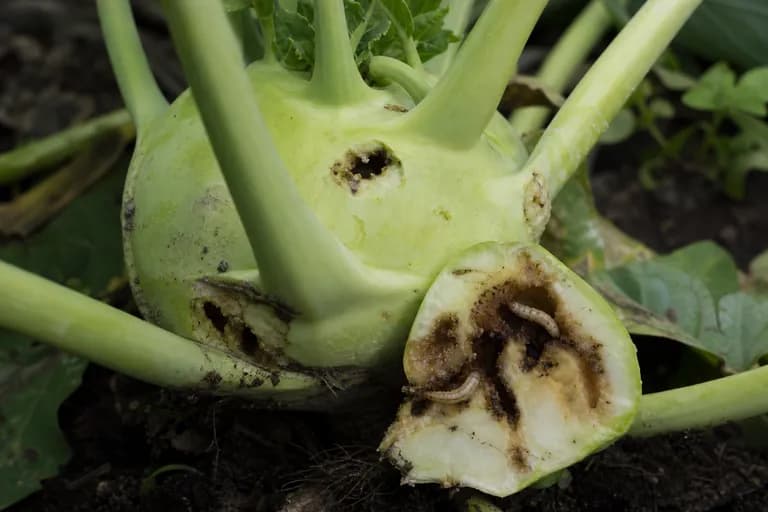
Kohlfliegen-Maden
SchädlingWelkende Pflanzen, Tunnel im verdickten Stängel und kleine weiße Maden, die beim Aufschneiden des Stängels sichtbar werden.
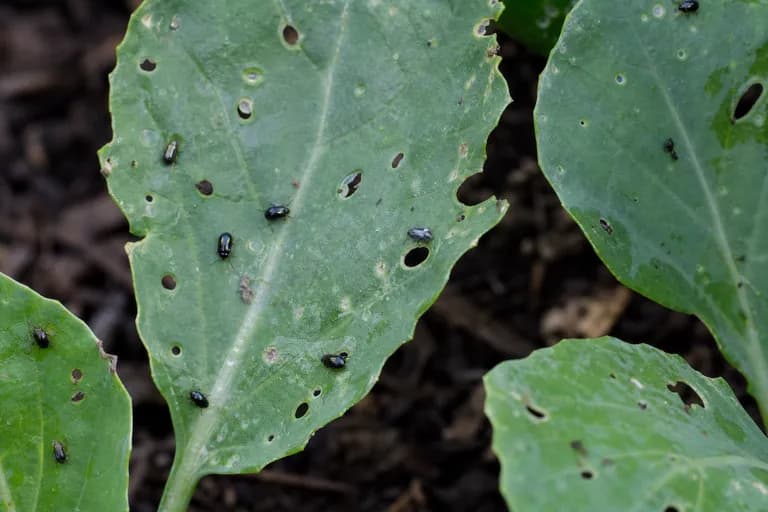
Erdflöhe
SchädlingKleine runde Löcher, die die Blätter durchsiebt erscheinen lassen, besonders schädlich für junge Setzlinge.
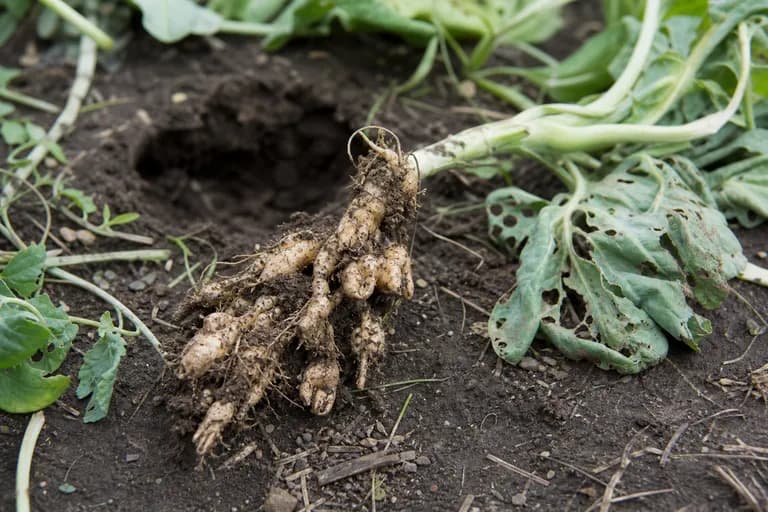
Kohlhernie
KrankheitWelke bei warmem Wetter, vergilbende Blätter, Wachstumsstillstand und geschwollene, deformierte Wurzeln.
Fehlerbehebung bei häufigen Problemen
Die größte Herausforderung bei Riesenkohlrabi ist ein gleichmäßiges, ununterbrochenes Wachstum, um Holzigkeit zu vermeiden. Jeder Stress durch Trockenheit, Nährstoffmangel oder Temperaturextreme kann dazu führen, dass das Fruchtfleisch zäh und faserig wird. Rissbildung entsteht durch plötzliches starkes Gießen nach Trockenperioden. Kohlfliegen-Maden können in den verdickten Stängel tunneln und die Ernte ruinieren.
Anbautipps
- Wählen Sie eine echte Riesensorte – das ist entscheidend. Standardkohlrabi-Sorten werden ab 8-10 cm Durchmesser holzig und bitter. Nur Sorten, die speziell für die Riesenproduktion gezüchtet wurden, wie Superschmelz, Kossak oder Gigante, behalten ihre zarte Textur bei großen Ausmaßen. Erwarten Sie nicht, dass Standardsorten sich wie Riesensorten verhalten, nur weil Sie sie länger wachsen lassen.
- Planen Sie Ihre Pflanzung so, dass die Knollenbildung mit kühlem Wetter zusammenfällt. Riesenkohlrabi benötigt 130-150 Tage, um seine volle Größe zu erreichen, zählen Sie also vom ersten Herbstfrost rückwärts für eine Herbsternte, oder pflanzen Sie früh im Frühling für eine Mittsommerernte in kühleren Klimazonen. Hitze während der Knollenbildung ruiniert die Qualität.
- Gleichmäßige Feuchtigkeit ist der wichtigste Einzelfaktor für qualitativ hochwertige Knollen. Unregelmäßiges Gießen führt dazu, dass die Knolle reißt, hohle Zentren entwickelt oder holzig wird. Gießen Sie 2-3 Mal pro Woche tief statt täglich oberflächlich, und mulchen Sie reichlich, um eine gleichmäßige Bodenfeuchtigkeit aufrechtzuerhalten.
- Setzen Sie die Pflanzen großzügig im Abstand von 40-50 cm in Reihen von 60 cm Abstand. Riesenkohlrabi braucht Platz sowohl für sein ausgedehntes Blätterdach als auch für seine Knolle, die 25 cm Durchmesser erreichen kann. Zu eng stehende Pflanzen produzieren unterentwickelte, missgeformte Knollen.
- Düngen Sie stetig, aber vermeiden Sie Stickstoffüberschuss. Ein ausgewogener Dünger (10-10-10) alle 2-3 Wochen unterstützt ein stetiges Wachstum. Zu viel Stickstoff produziert riesige Blätter, aber kleinere, weichere Knollen. Wechseln Sie zu einer stickstoffärmeren Formel, sobald die Knollenschwellung beginnt.
- Geraten Sie nicht in Panik, wenn die Knollenbildung langsam erscheint. Riesensorten investieren stark in das Blätterdach, bevor die Knollenentwicklung um den 60.-70. Tag ernsthaft beginnt. Die große Blattfläche ist notwendig, um die darauffolgende schnelle Knollenausdehnung zu befeuern.
- Ernten Sie nach Belieben – Riesenkohlrabi ist extrem nachsichtig. Im Gegensatz zu Standardsorten, die sich schnell verschlechtern, wenn sie zu lange im Boden bleiben, kann Riesenkohlrabi 2-3 Wochen über die optimale Reife hinaus im Garten bleiben, ohne an Qualität zu verlieren, besonders bei kühlem Herbstwetter.
- Heben Sie die Blätter zum Kochen auf. Riesenkohlrabi produziert große, zarte Blätter, die köstlich mit Knoblauch und Olivenöl angebraten, in Suppen gegeben oder als Wraps verwendet werden können. Die Blätter sind tatsächlich nährstoffreicher als die Knolle und enthalten höhere Konzentrationen an Vitamin A, C und Eisen.
Bau deine beste Riesenkohlrabi an — und alles drumherum.
Starte heute kostenlos. Lege deine Beete an, setze deine Riesenkohlrabi ein und lass PlotMyGarden Timing, Abstände, Begleiter und Erinnerungen von der Saat bis zum Erntekorb übernehmen.
Finde deine Riesenkohlrabi
Superschmelz
Die führende Riesensorte, die zarte, süße Knollen bis zu 5 kg produziert, die niemals holzig werden.
Kossak
Ein Hybrid-Riesenkohlrabi, der 20 bis 25 cm Durchmesser erreicht, mit ausgezeichneter Textur und mildem, süßem Geschmack.
Gigante
Eine italienische Erbsorte, die sehr große, hellgrüne Knollen mit knackigem, süßem Fruchtfleisch produziert.
Riesenkohlrabi ist selten in Lebensmittelgeschäften erhältlich, und wenn er auf Wochenmärkten oder in Spezialgeschäften angeboten wird, kostet er typischerweise 4-8 € pro Kilogramm. Eine einzelne Pflanze, die aus einer 3-4 € teuren Samentüte (mit 50-100 Samen) gezogen wird, kann eine 3-5 kg schwere Knolle im Wert von 12-40 € zu Marktpreisen produzieren. Der Anbau von 4-6 Pflanzen liefert 10-25 kg Gemüse im Wert von 40-200 €, alles aus einer einzigen Samentüte. Die außergewöhnliche Lagerfähigkeit (2-3 Monate in Kühllagerung) bedeutet, dass die Ersparnisse bis weit in den Winter reichen, wenn frisches lokales Gemüse am teuersten ist.
Schnelle Rezepte
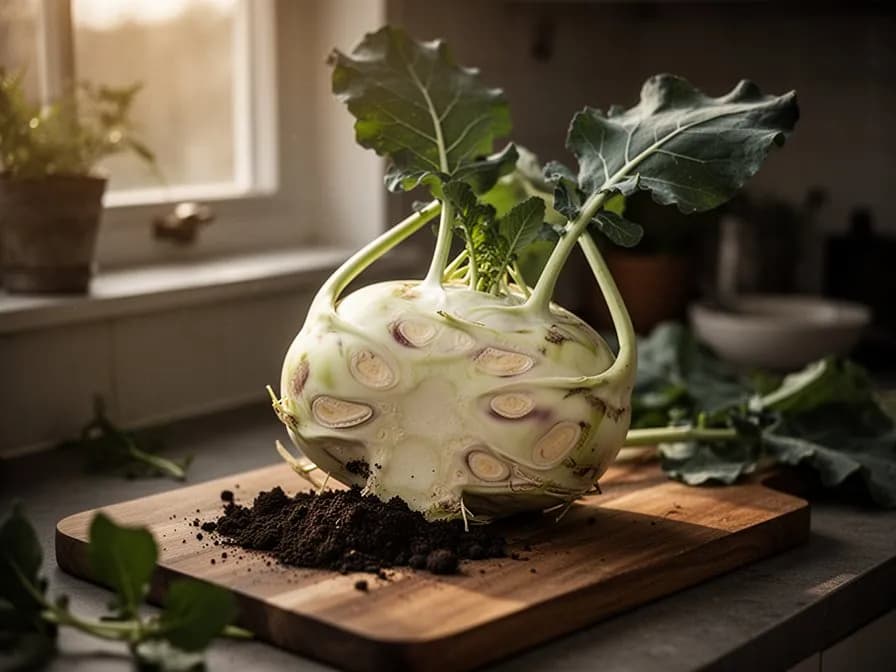
Cremiger Kohlrabi-Apfel-Krautsalat
15 Min.Ein erfrischender roher Krautsalat, der die apfelknackige Textur und milde Süße des Riesenkohlrabis hervorhebt. Geraspelter Kohlrabi passt perfekt zu saurem Grünem Apfel und einem würzigen Joghurt-Dressing für eine leichte, knackige Beilage, die zu Grillfleisch oder als eigenständiger Salat funktioniert.
8 Zutaten
Geröstete Kohlrabi-Spalten mit Kräutern
40 Min.Rösten bei hoher Hitze verwandelt Riesenkohlrabi in zarte, karamellisierte Spalten mit goldenen Rändern und einer nussig-süßen Geschmackstiefe, die Erstverkoster überrascht. Eine einfache Zubereitung, die selbst Kohlrabi-Skeptiker überzeugt.
7 ZutatenKohlrabi-Schnitzel (nach deutscher Art)
30 Min.Ein traditionelles deutsches Rezept, bei dem dicke Kohlrabischeiben paniert und in der Pfanne zu knusprig-goldenen Schnitzeln gebraten werden – ein beliebtes vegetarisches Hauptgericht. Die dichte, fleischige Textur des Riesenkohlrabis macht ihn zum perfekten Ersatz für traditionelles Schnitzel.
7 ZutatenKulinarische Verwendung
Riesenkohlrabi hat einen süßen, milden Geschmack, ähnlich wie Brokkolistiele oder Rüben. Schälen und roh als Sticks mit Dip essen, in Krautsalat schneiden oder in Salate reiben. Würfel goldbraun rösten, zu Pfannengerichten geben oder in Suppen und Eintöpfen köcheln lassen. Er eignet sich hervorragend als kohlenhydratarmer Kartoffelersatz in Gratins und Pürees.
Was drinsteckt
Gesundheitsvorteile
- Außergewöhnlich reich an Vitamin C, das 69 % des Tageswerts pro 100 g liefert – ein starkes Antioxidans, das die Immunabwehr, Kollagensynthese, Eisenaufnahme und den Schutz vor oxidativen Zellschäden unterstützt.
- Enthält Glucosinolate und Isothiocyanate, schwefelhaltige Verbindungen, die umfassend auf ihr Potenzial zur Hemmung des Krebszellenwachstums untersucht werden, insbesondere bei Darm-, Brust- und Prostatakrebs.
- Reich an Ballaststoffen (3,6 g pro 100 g), die die Verdauungsregelmäßigkeit unterstützen, nützliche Darmmikrobiota nähren und möglicherweise helfen, den LDL-Cholesterinspiegel zu senken, indem sie Gallensäuren im Darm binden.
- Gute Kaliumquelle (350 mg pro 100 g), die hilft, den Blutdruck zu regulieren, indem sie den Auswirkungen von Natriumzufuhr entgegenwirkt, gesunde Muskelkontraktion unterstützt und einen gesunden Flüssigkeitshaushalt aufrechterhält.
- Liefert B-Vitamine einschließlich B6 und Folat, die für den Homocystein-Stoffwechsel, die Neurotransmittersynthese und die Bildung roter Blutkörperchen unerlässlich sind – zur Unterstützung der kardiovaskulären und neurologischen Gesundheit.
- Sehr niedrige Kaloriendichte (27 kcal pro 100 g) kombiniert mit hohem Wasser- und Ballaststoffgehalt erzeugt ein starkes Sättigungsgefühl, was Riesenkohlrabi zu einem hervorragenden Lebensmittel für Gewichtsmanagement und metabolische Gesundheit macht.
Woher Riesenkohlrabi stammt
Kohlrabi (Brassica oleracea var. gongylodes) wurde vermutlich durch selektive Züchtung im Nordeuropa des Spätmittelalters entwickelt, wobei die frühesten schriftlichen Beschreibungen in den 1550er-Jahren vom italienischen Botaniker Pietro Andrea Mattioli stammen. Im Gegensatz zu seinen uralten Verwandten unter den Kohlgewächsen – Kohl, Grünkohl und Brokkoli – ist Kohlrabi ein vergleichsweise modernes Gemüse, das für seinen einzigartigen verdickten Stängel statt seiner Blätter, Blüten oder Knospen selektiert wurde.
Das Gemüse gewann besondere Beliebtheit in den deutschsprachigen Regionen Europas, wo es zu einem Grundnahrungsmittel der bäuerlichen und Bauernhofküche wurde. Bis zum 17. und 18. Jahrhundert wurde Kohlrabi in ganz Deutschland, Österreich, der Schweiz und Osteuropa angebaut. Er wurde für seine Winterhärte, sein schnelles Wachstum und seine Vielseitigkeit in der Küche geschätzt – roh gegessen, gekocht oder über die Wintermonate gelagert. Die heute existierenden Riesensorten gehen auf österreichische und bayerische Zuchtprogramme zurück, die auf Knollen selektierten, die zu außergewöhnlicher Größe heranwachsen konnten, ohne die Holzigkeit zu entwickeln, unter der Standardsorten ab einem bestimmten Durchmesser leiden.
Superschmelz, der berühmteste Riesenkohlrabi, wurde Mitte des 20. Jahrhunderts entwickelt und bleibt der Maßstab für die Züchtung übergroßer Kohlrabi. Er kann Knollen mit einem Gewicht von 4-10 kg produzieren und dabei die knackige, süße, saftige Textur einer viel kleineren Knolle beibehalten – eine bemerkenswerte Leistung der Gemüsezüchtung. Heute erlebt Riesenkohlrabi eine Renaissance unter Hobbygärtnern und Spezialmarkt-Landwirten in Europa und Nordamerika, geschätzt für seine beeindruckenden Erträge, seine lange Lagerfähigkeit und die pure Neuheit, ein einzelnes Gemüse in der Größe einer Bowlingkugel zu ernten.
Riesenkohlrabi: Schon gewusst?
Faszinierende Fakten über Riesenkohlrabi
Riesenkohlrabi-Sorten wie Superschmelz wurden speziell in österreichischen und deutschen Anbauregionen gezüchtet, um auf enorme Größen (bis zu 10 kg) anzuwachsen und dabei zart und süß zu bleiben – eine Leistung, die kein Standardkohlrabi erreichen kann, da normale Sorten ab Tennisballgröße holzig werden.
Riesenkohlrabi: Fragen & Antworten
Wann sollte ich Riesenkohlrabi pflanzen?
Was sind gute Begleitpflanzen für Riesenkohlrabi?
In welchen Winterhärtezonen kann Riesenkohlrabi wachsen?
Wie viel Sonne braucht Riesenkohlrabi?
Welchen Abstand sollte ich zwischen Riesenkohlrabi lassen?
Welche Schädlinge und Krankheiten befallen Riesenkohlrabi?
Wie lagere ich Riesenkohlrabi nach der Ernte?
Was sind die besten Riesenkohlrabi-Sorten zum Anbauen?
Welchen Boden braucht Riesenkohlrabi?
Was ist der Unterschied zwischen Riesenkohlrabi und normalem Kohlrabi?
Woran erkenne ich, dass der Riesenkohlrabi erntereif ist?
Kann ich Riesenkohlrabi in heißen Klimazonen anbauen?
Wie sollte ich Riesenkohlrabi nach der Ernte lagern?
Wie schmeckt Riesenkohlrabi und wie wird er gegessen?
Ist Riesenkohlrabi frostverträglich?
Du hast die Theorie gelesen. Jetzt baue sie auf Autopilot an.
Alles, was Riesenkohlrabi knifflig macht — das Timing, die Abstände, die Begleiter, das Erntefenster — genau das übernimmt PlotMyGarden für dich, für jede Pflanze im Garten.
Ein Plan, der dein Wetter kennt
Standort einmal festlegen. Aussaat-, Dünge- und Erntedaten rund um deinen echten letzten Frosttermin und die Live-Vorhersage — kein Raten mehr nach Saattüte.
Aus dem Abschnitt „Pflanzzeit“Beetplaner per Drag & Drop
Beete auf einem Raster gestalten. Jede Pflanze rastet im richtigen Abstand ein, und du siehst die ganze Saison, bevor du einen Cent für Saatgut ausgibst.
Aus dem Abschnitt „Anbau“Begleiter-Konflikte früh erkannt
Über 200 gute und schlechte Kombinationen werden beim Pflanzen live geprüft — so landet ein saisonruinierender Fehler nie in der Erde.
Aus dem Abschnitt „Begleiter“Erinnerungen, nach denen du wirklich handelst
„Gieß die Bohnen.“ „Heute ernten, bevor's umschlägt.“ Pünktlich, konkret und auf deine echten Pflanzen bezogen.
Aus dem Abschnitt „Ernte“Staffel-Aussaat, geplant
Sechs Wochen ernten statt sechs Tage? Die App verteilt deine Aussaaten automatisch und erinnert dich, wenn der nächste Satz fällig ist.
Aus dem Abschnitt „Pflanzzeit“Ein Verlauf, der schlauer wird
Jede protokollierte Ernte bringt der App deinen Garten bei. Der Plan fürs nächste Jahr startet bei dem, was in deinem Boden wirklich funktioniert hat.
Aus dem Abschnitt „Überblick“Pflanze diese neben Riesenkohlrabi
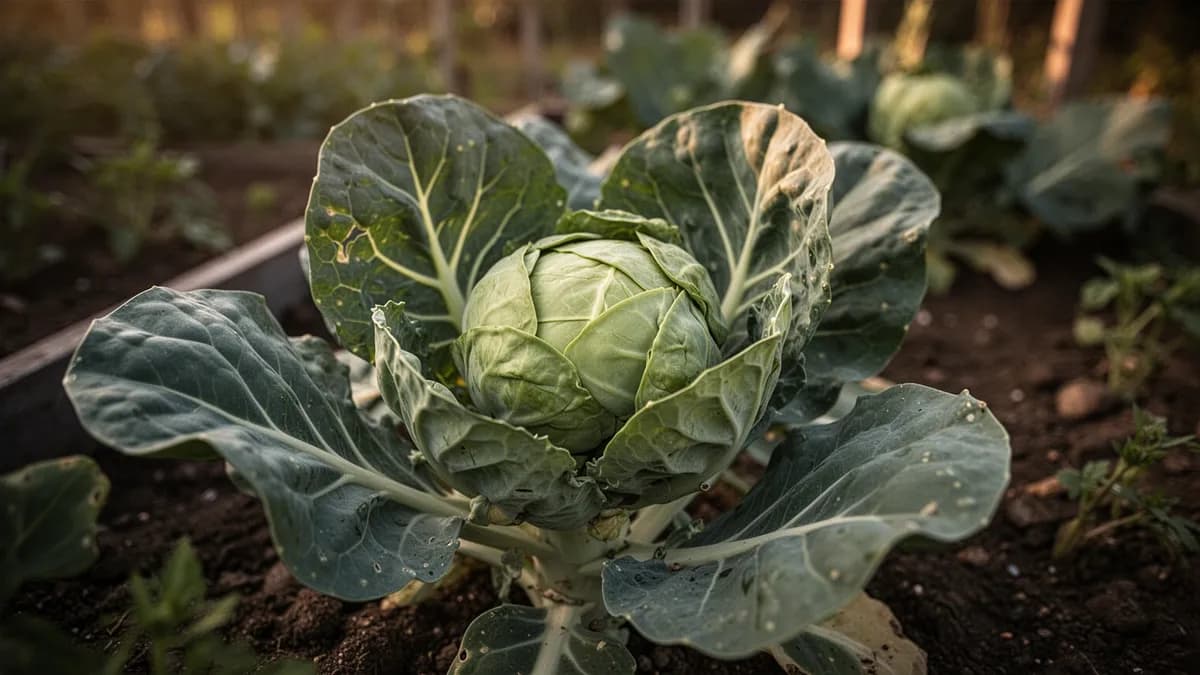
Weitere Kreuzblütler
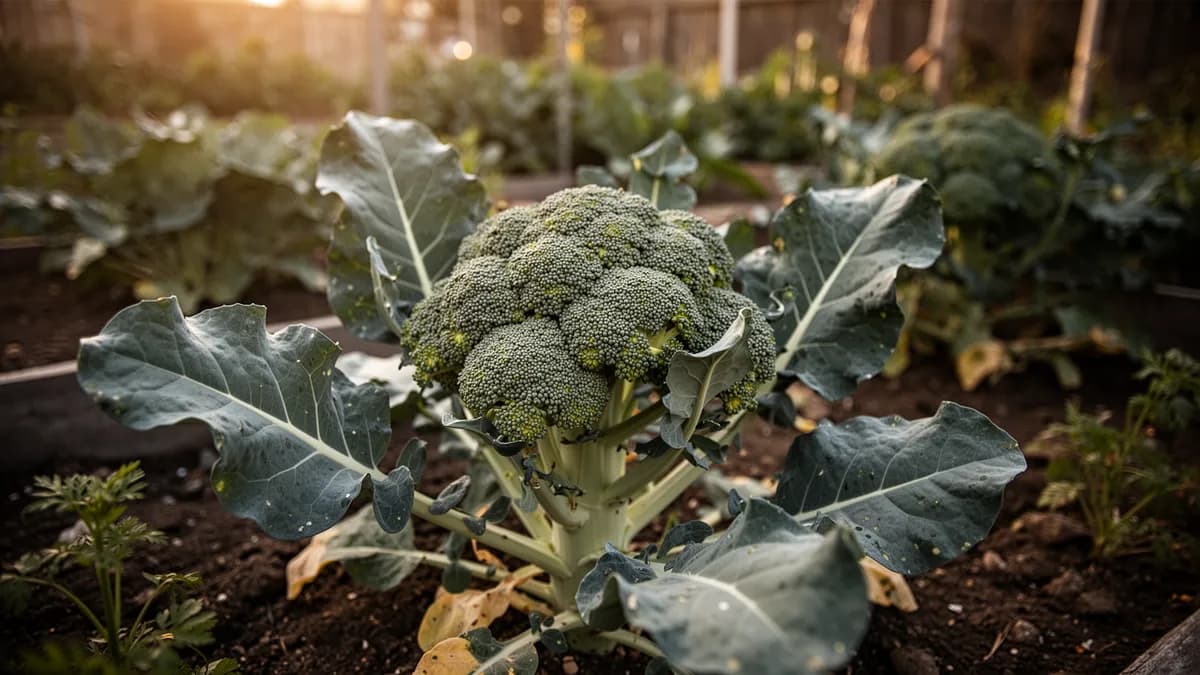
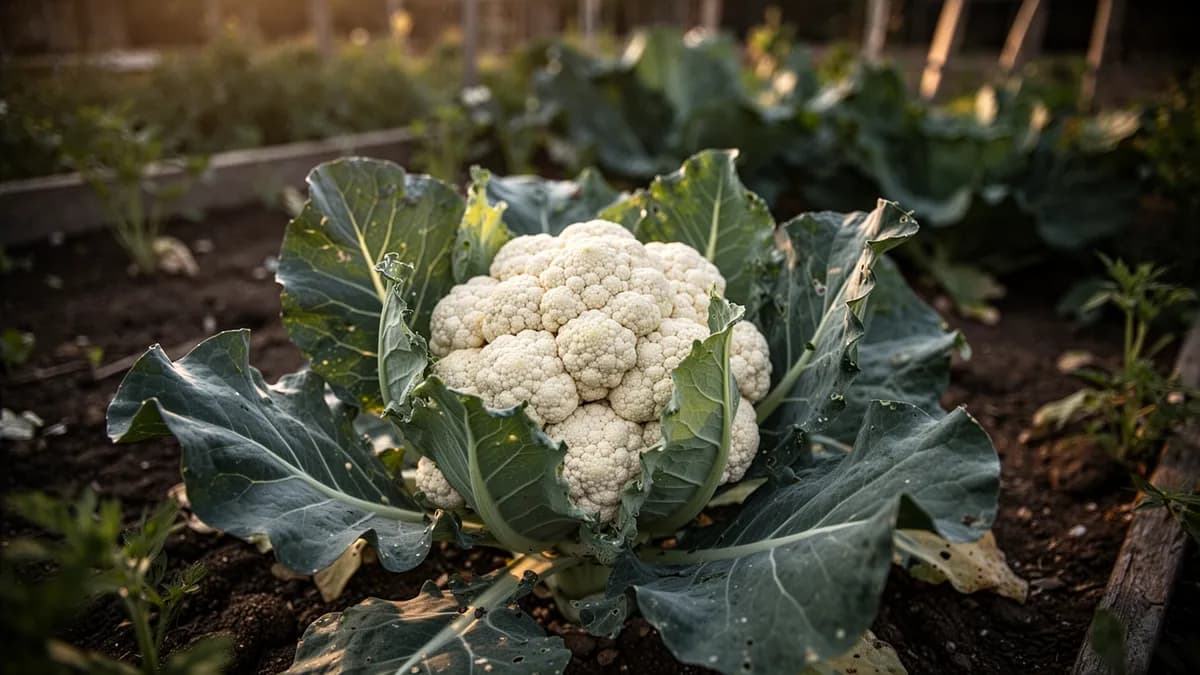
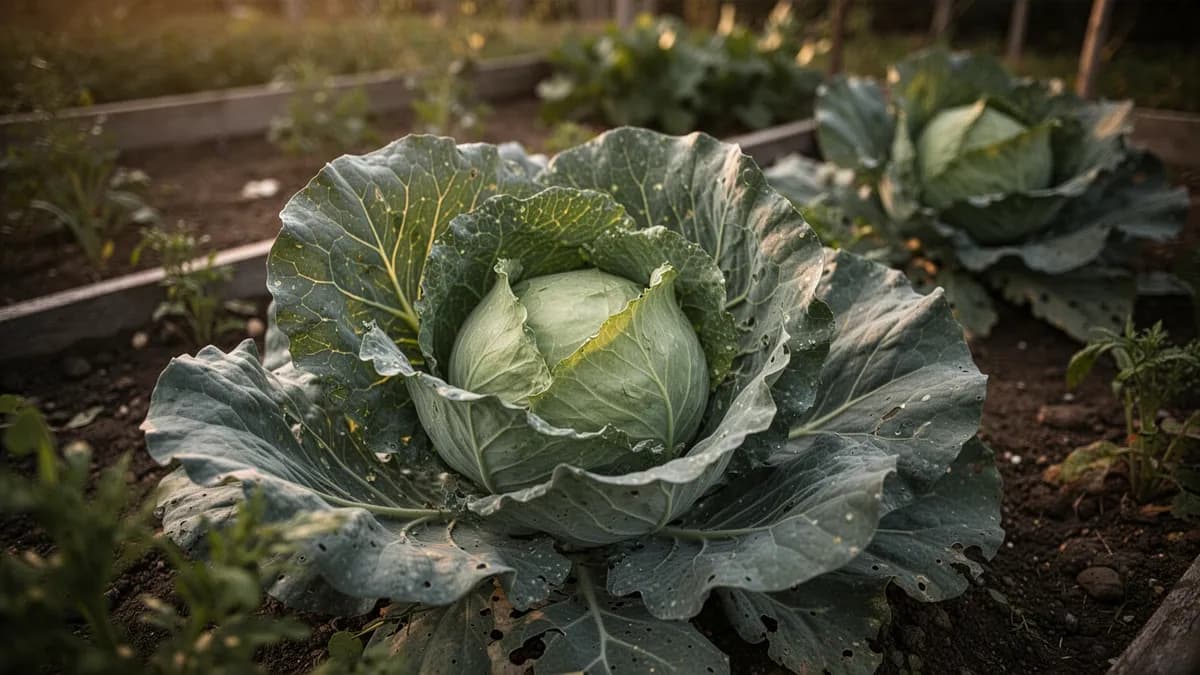
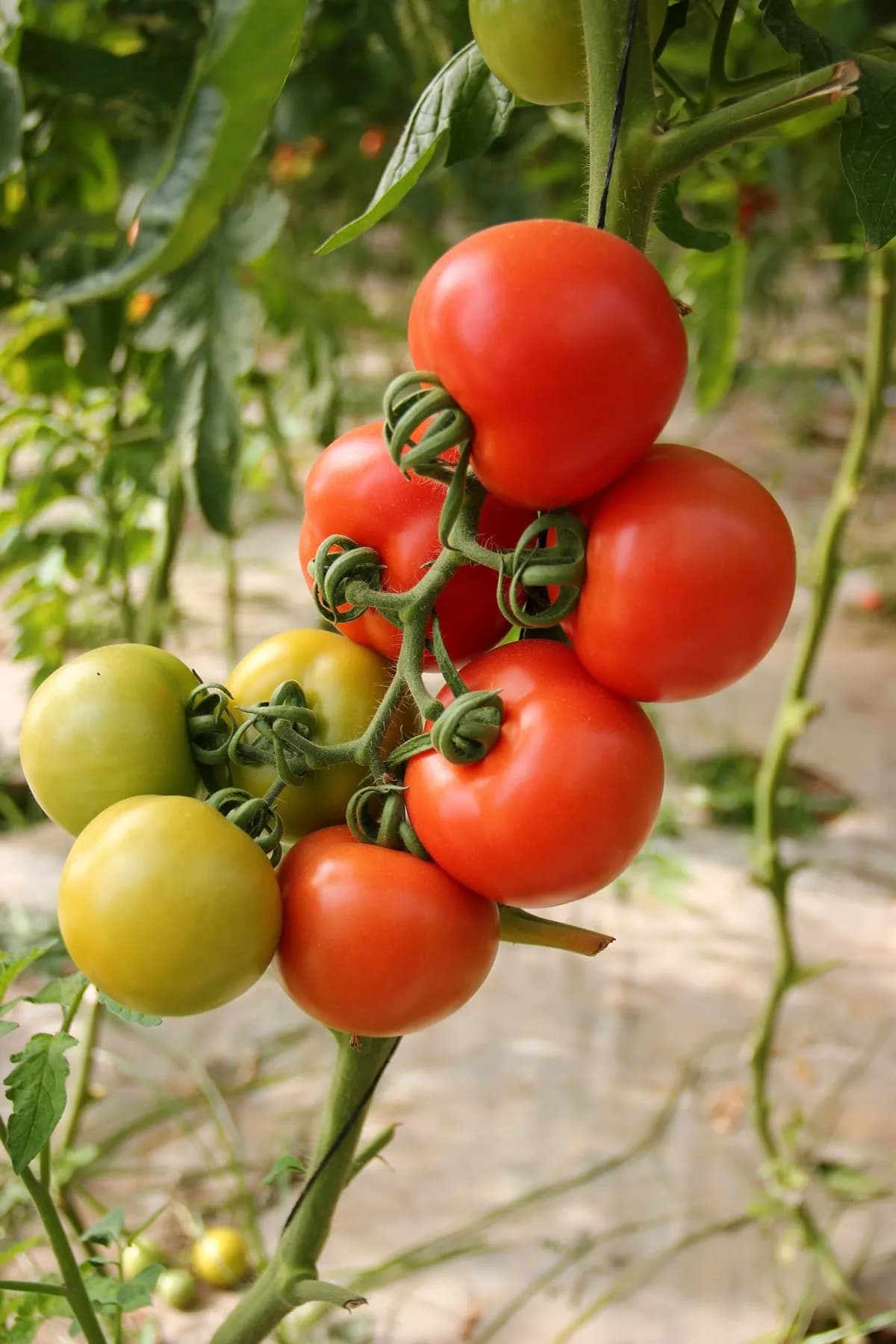
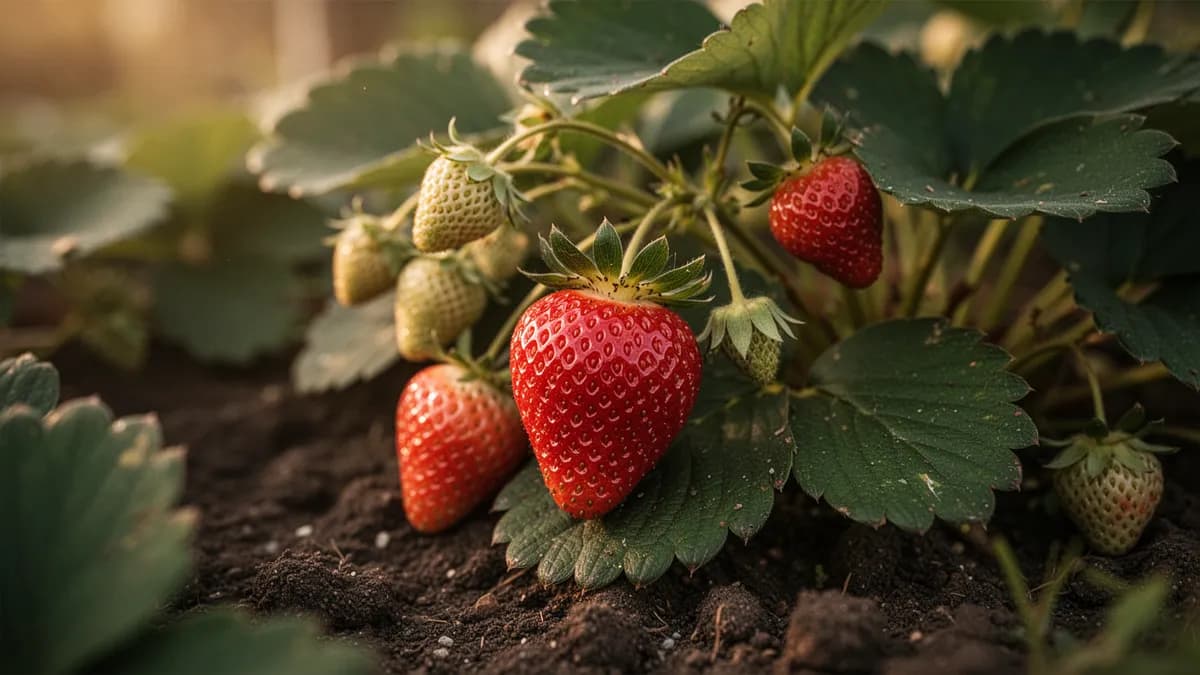
Halte Riesenkohlrabi von diesen fern
Bau deine beste Riesenkohlrabi an — und alles drumherum.
Starte heute kostenlos. Lege deine Beete an, setze deine Riesenkohlrabi ein und lass PlotMyGarden Timing, Abstände, Begleiter und Erinnerungen von der Saat bis zum Erntekorb übernehmen.