Melón Kiwano
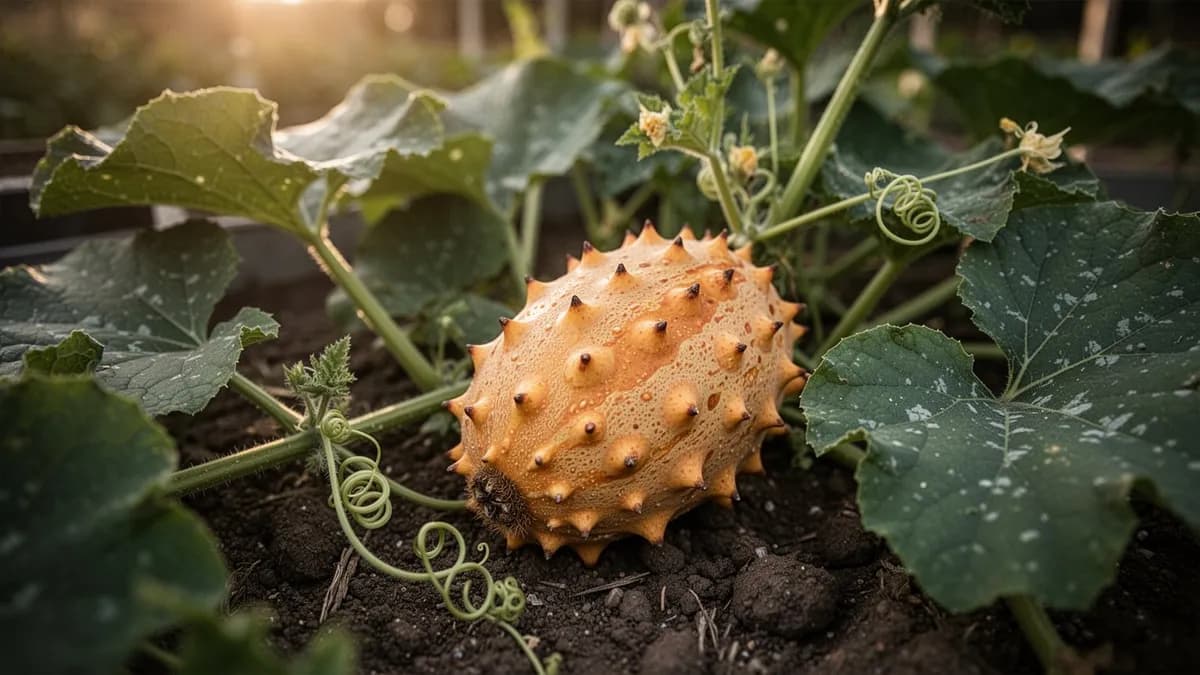
El kiwano (Cucumis metuliferus), también conocido como pepino con cuernos o melón africano, es una cucurbitácea trepadora originaria del África subsahariana con frutos espinosos de aspecto exótico.





En esta páginaResumen
Conoce Melón Kiwano
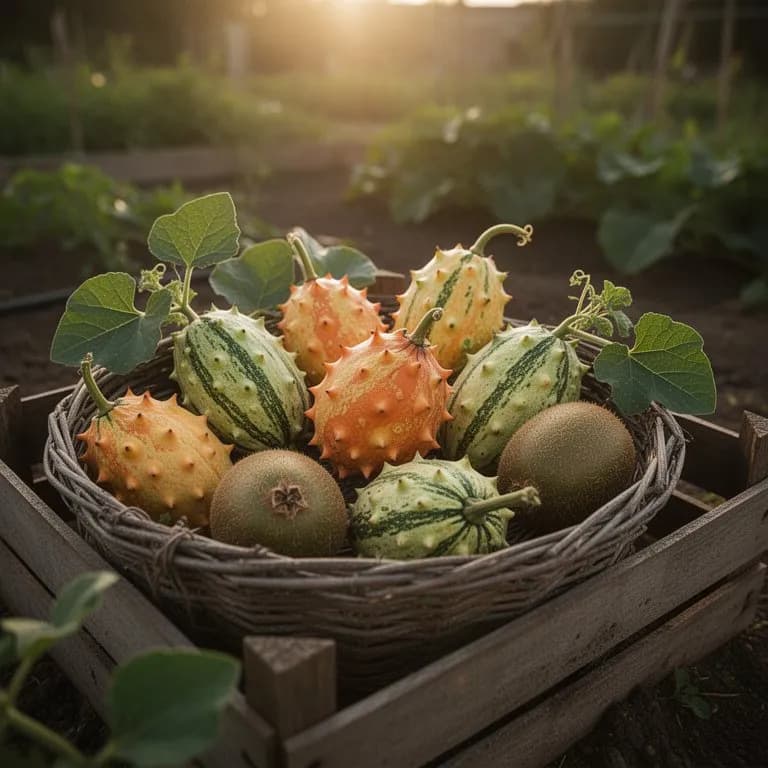
El kiwano (Cucumis metuliferus), también conocido como pepino con cuernos o melón africano, es una cucurbitácea trepadora originaria del África subsahariana con frutos espinosos de aspecto exótico. Su cáscara naranja brillante con protuberancias cónicas y su interior gelatinoso verde esmeralda con semillas lo convierten en una de las frutas más visualmente llamativas del mundo.
Cuándo plantar Melón Kiwano
Inicie en interior 4-6 semanas antes de la última helada en macetas de turba a 2 cm de profundidad. La germinación ocurre en 10-14 días a 25-30 °C. Trasplante al exterior cuando la temperatura nocturna supere los 15 °C de forma estable. También puede sembrarse directamente cuando el suelo esté a 20 °C o más.
Tu año de Melón Kiwano
Ajustado a Zona 7 · temporada típica · la helada se va hacia el 2 abr y vuelve hacia el 1 nov
Planta Melón Kiwano May – Jun y cosecha Ago – Oct. Consulta los métodos de plantación y elige tu clima para adaptar los periodos.
Cómo cultivar Melón Kiwano
Plante en el lugar más cálido y soleado del jardín, ya que el kiwano necesita una temporada larga de calor constante. El suelo debe ser fértil, bien drenado y rico en materia orgánica con pH entre 6,0 y 7,0. En climas con veranos cortos, inicie las semillas en interior 4-6 semanas antes del trasplante.
Proporcione un enrejado resistente de 1,5-2 m ya que las vigorosas enredaderas trepan extensamente y producen mejor en vertical. Espacie las plantas 60-90 cm entre sí. Siembre 2-3 semillas a 2 cm de profundidad y aclare a la más vigorosa.
Riegue regularmente con 3-4 cm semanales, preferiblemente con riego por goteo. Fertilice con compost al plantar y aplique abono equilibrado cada 2-3 semanas durante el crecimiento activo. Aumente el potasio cuando aparezcan los primeros frutos. El kiwano es notablemente resistente a plagas y enfermedades que afectan a otros cucurbitáceas.
8 plantas caben en un bancal de 120 × 240 cm
Cada Melón Kiwano pide 60 cm de margen. El planificador guarda ese marco por ti — cada planta, cada bancal.
Los mejores vecinos de Melón Kiwano
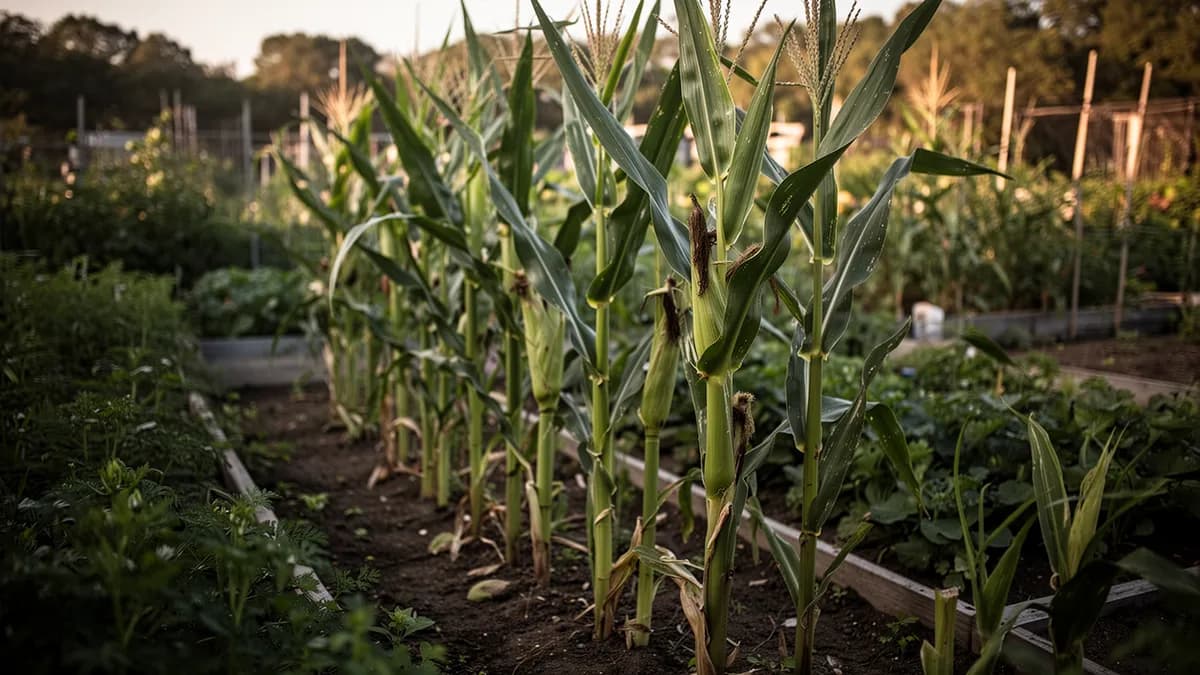
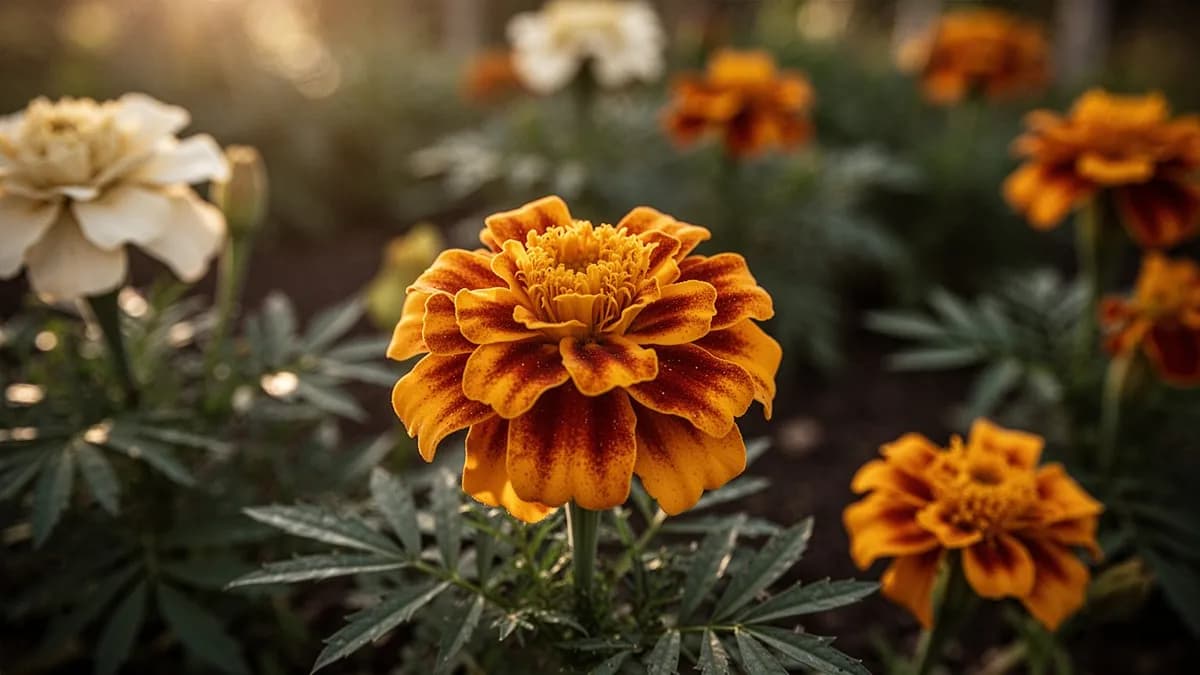
Se asocia bien con maíz y frijoles que pueden servir de soporte y fijar nitrógeno respectivamente. Los girasoles proporcionan sombra parcial en climas muy calurosos. Las caléndulas repelen plagas. Evite plantar cerca de patatas y hierbas aromáticas intensas.
Maíz va a su lado. Papa no.
Saber de huerto de siempre, cotejado con la tabla real de Melón Kiwano — prueba cualquier planta que cultives.
Prueba Melón Kiwano en un bancal, aquí mismo
Un bancal real del planificador con Melón Kiwano ya plantado. Toca una planta compañera para colocarla y mira cómo responde la comprobación de vecinos: verde para buenos vecinos, rojo si hay conflicto.


Guías de cultivo relacionadas
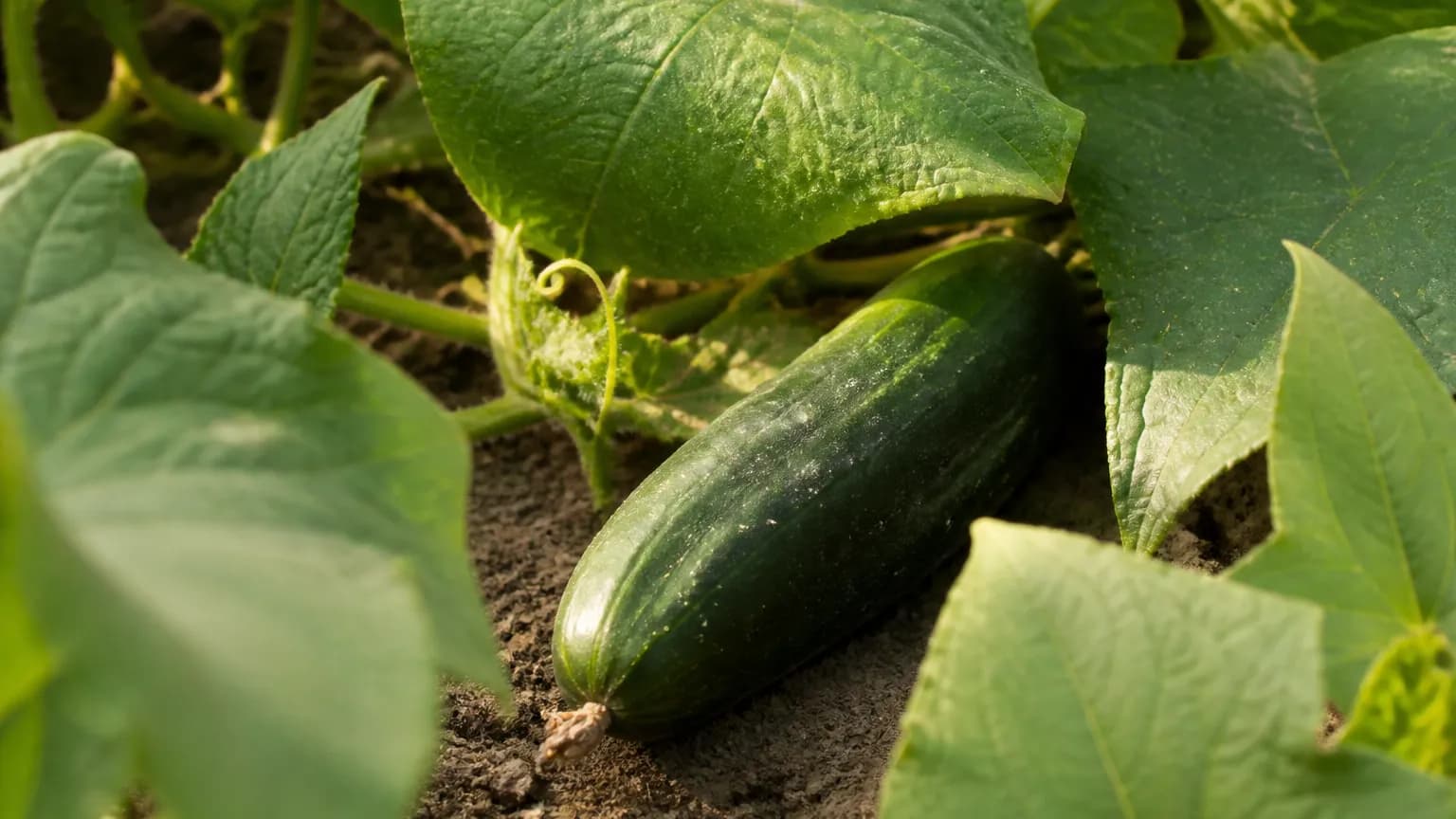
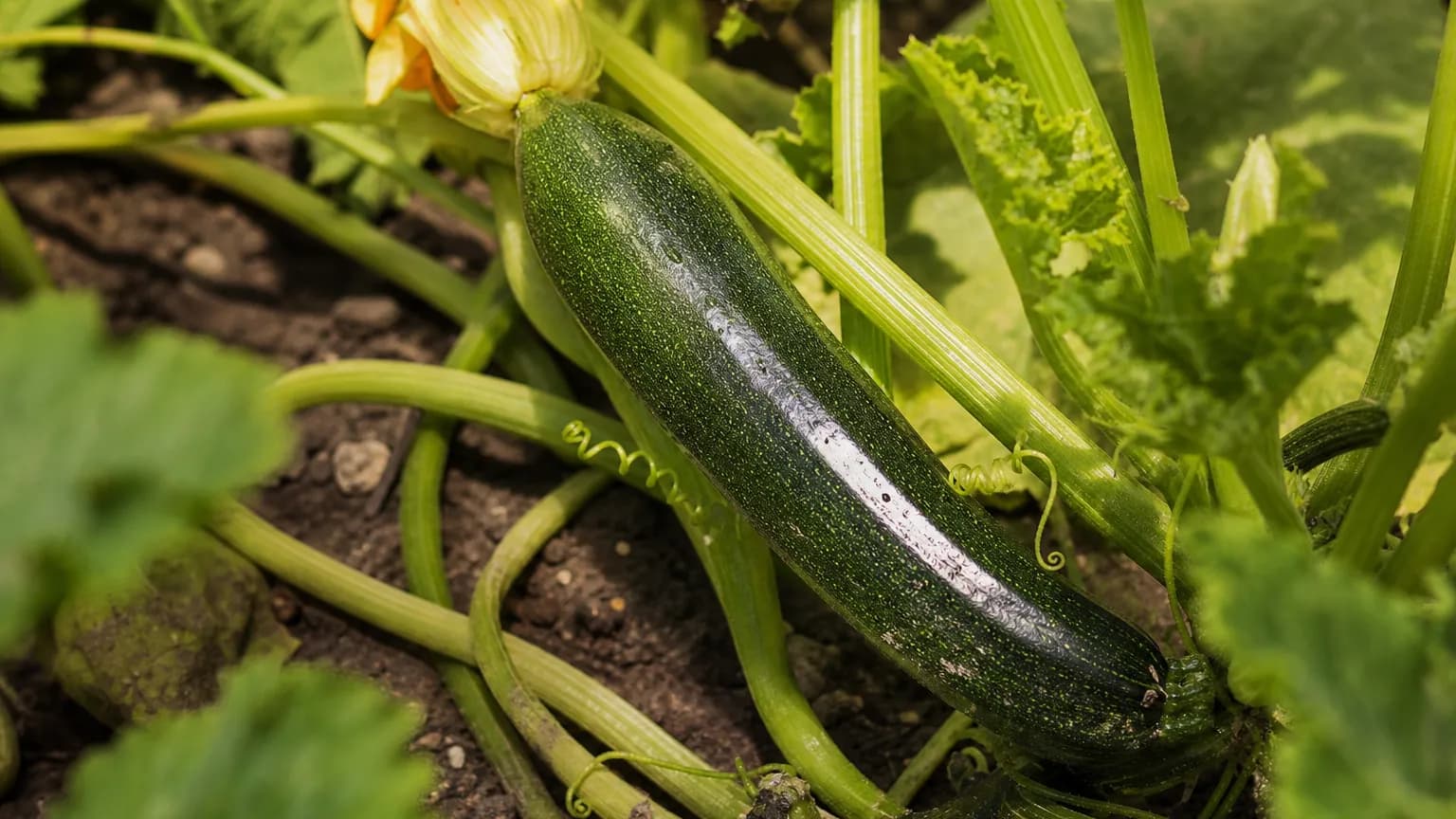
Abónalo bien
Requiere suelos fértiles, bien drenados y ricos en materia orgánica con pH entre 6,0 y 7,0. Incorpore compost antes de la siembra. Aplique fertilizante equilibrado regularmente durante el crecimiento. Aumente el potasio durante la fructificación. El kiwano es menos exigente que otras cucurbitáceas pero responde bien a la fertilización.
Temperatura ideal
Compatibilidad de zonas de rusticidad
De la semilla a la cosecha, etapa por etapa
Inicio de semillas
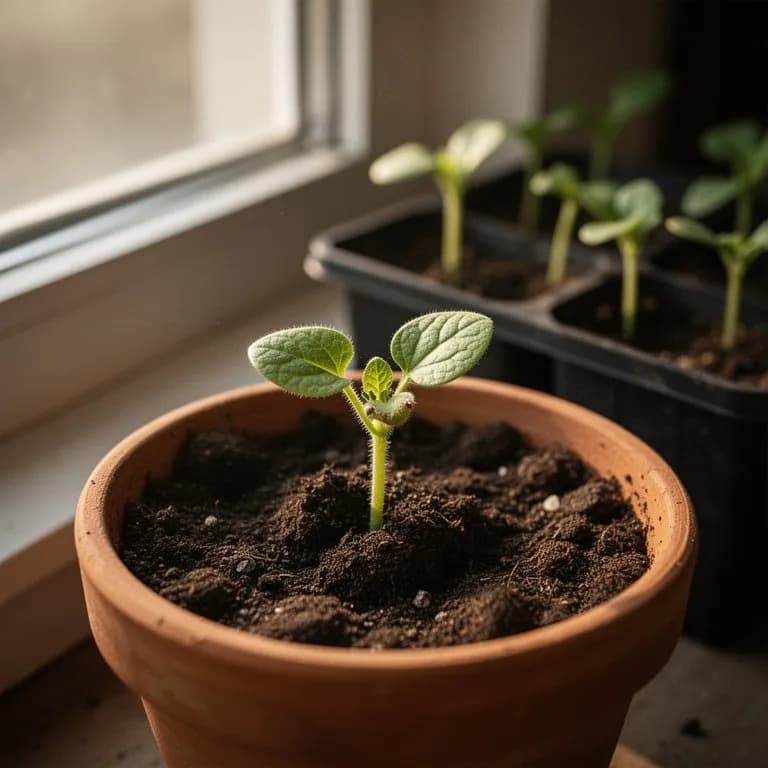
Las semillas de kiwano germinan con facilidad en suelo cálido y producen cotiledones anchos en 7-14 días. Las semillas se parecen a las de pepino aplanadas y necesitan calor constante de al menos 20°C (68°F) para emerger con fiabilidad. Las plántulas son vigorosas desde el principio y crecen rápidamente una vez establecidas.
Desarrollo de la vid
Las hojas verdaderas aparecen con la forma profundamente lobulada característica de las cucurbitáceas. Los zarcillos se desarrollan rápidamente y la vid empieza a trepar con fuerza, ganando fácilmente 15-20 cm por día en condiciones cálidas. El tallo principal se ramifica libremente y forma un follaje denso y de textura áspera.
Floración
Aparecen pequeñas flores amarillas brillantes en las axilas de las hojas: primero salen en grupos las flores masculinas y después las femeninas, identificables por el pequeño ovario espinoso en la base. La planta es monoica y depende de las abejas y otros polinizadores para el cuajado, aunque la polinización manual funciona bien en jardines cerrados.
Desarrollo del fruto
Las flores femeninas polinizadas se desarrollan en frutos ovalados cubiertos de espinas suaves y llamativas que se endurecen gradualmente a medida que el fruto madura. Los frutos empiezan de color verde oscuro y pasan lentamente de un verde más claro a amarillo-anaranjado durante 4-6 semanas. Cada vid puede producir 10-20 frutos en buenas condiciones.
Maduración
Los frutos pasan de verde a un naranja brillante al alcanzar la madurez completa. Las espinas se endurecen y la piel se vuelve firme y coriácea. Los frutos maduros se desprenden fácilmente de la vid con una presión suave. El interior cambia de pálido a un verde esmeralda intenso con una consistencia gelatinosa alrededor de las semillas.
Cosecha prolongada
La vid sigue produciendo nuevas flores y frutos hasta que las temperaturas bajan de 12°C (54°F). Los frutos formados más tarde pueden no madurar por completo antes de la helada en climas de temporada corta. Los frutos maduros se conservan de forma excepcional: hasta 6 meses a temperatura ambiente gracias a su cáscara gruesa y protectora.
Siembra las semillas en interior 4-6 semanas antes de la última helada. Remójalas durante 24 horas en agua tibia para acelerar la germinación. Usa una manta térmica para mantener la temperatura del sustrato en 25-30°C (77-86°F) y lograr la emergencia más rápida.
Cuidar Melón Kiwano mes a mes
Qué hacer cada mes para tu Melón Kiwano
Octubre
Mes actualContinue harvesting ripe fruits. Before the first frost, harvest all remaining fruits including green ones — they will ripen indoors at room temperature. Ripe kiwano stores for months without refrigeration. Save seeds from your best fruits.
Ten claro qué hacer en tu huerto, cada mes
Un correo al empezar cada mes: qué sembrar, plantar y hacer ahora mismo — para tu Melón Kiwano y todo lo que crece alrededor. Más un breve curso inicial para esquivar los errores clásicos.
- Qué hacer ahora mismo
- Ajustado a tu temporada
- Curso inicial incluido
Cosechar Melón Kiwano
Coseche cuando los frutos cambien de verde a naranja brillante uniforme y las espinas cónicas estén firmes, generalmente 90-120 días después de la siembra. Los frutos deben ceder ligeramente a la presión. Corte con tijeras dejando un trozo de pedúnculo. Los frutos inmaduros verdes también pueden cosecharse y usarse como pepinos.
se supone que plantas al comenzar el periodo — indica tu fecha real
Mantén un riego constante durante el desarrollo del fruto: la humedad irregular causa frutos deformes. Aplica mantillo para conservar la humedad del suelo y reducir las fluctuaciones de temperatura. Sujeta los racimos pesados con eslingas si se cultiva en vertical.
Almacenamiento y conservación
Una de las mayores ventajas del kiwano es su extraordinaria capacidad de conservación: los frutos maduros se mantienen a temperatura ambiente durante 2-6 meses sin refrigeración. La gruesa piel espinosa los protege naturalmente. Refrigerados pueden durar aún más. La pulpa no se presta bien a la congelación.
Qué falla — y cómo solucionarlo
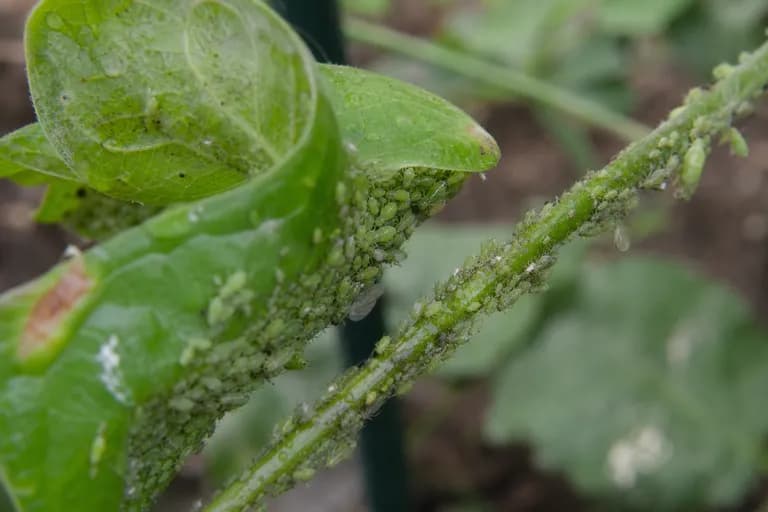
Escarabajo del pepino (Diabrotica spp.)
PlagaMordeduras en hojas y flores, aunque el kiwano es más resistente a estos ataques que los pepinos convencionales.
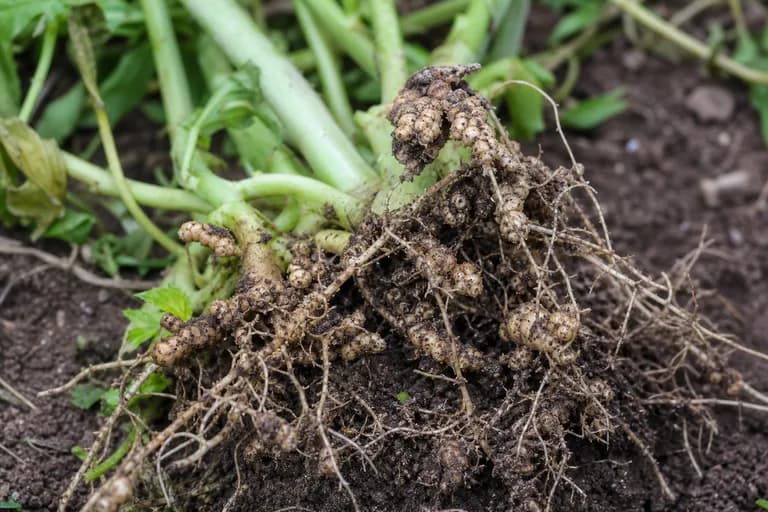
Araña roja (Tetranychus urticae)
PlagaPunteado amarillento fino en las hojas, telarañas en el envés, hojas que se secan en condiciones calurosas y secas.
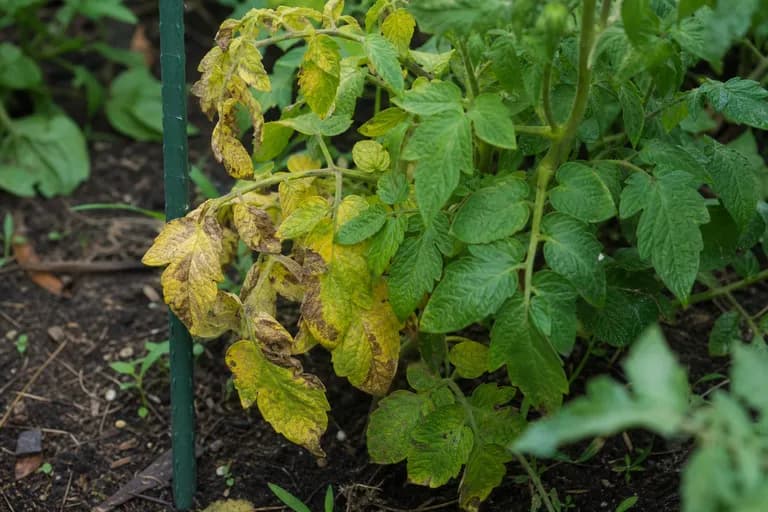
Oídio (Podosphaera xanthii)
EnfermedadPolvo blanco en la superficie de las hojas. El kiwano tiene mejor resistencia natural que otros cucurbitáceas.
Solución de problemas comunes
La temporada de crecimiento larga es el principal desafío en climas templados con veranos cortos. Inicie en interior para ganar semanas. Las espinas de los frutos pueden pinchar al manipularlos; use guantes. La pulpa tiene una textura gelatinosa que no gusta a todos. Los frutos verdes son comestibles como alternativa si no maduran a tiempo.
Consejos de cultivo
- Kiwano is one of the easiest exotic fruits to grow — if you can grow cucumbers, you can grow kiwano. The key requirements are warmth, sun, and a sturdy climbing structure. Do not overcomplicate it.
- Provide the strongest trellis you can build. A single kiwano vine can cover a 3-meter fence and produce 15+ heavy spiny fruits — weak supports will collapse under the combined weight of vine and fruit.
- Full sun of at least 8 hours daily is essential for maximum fruit production. Kiwano originates from open African grasslands and has no tolerance for shade. In partial shade, vines grow lush foliage but set few fruits.
- Water deeply once or twice per week rather than lightly every day. Kiwano's African desert heritage gives it moderate drought tolerance once established, but consistent moisture during flowering and fruit set maximizes yields.
- Do not over-fertilize with nitrogen. Excessive nitrogen produces massive vines with poor fruit set. Use a balanced fertilizer during vegetative growth, then switch to higher phosphorus and potassium once flowering begins.
- Hand-pollinate if fruit set is poor. Female flowers are easy to identify by the tiny spiny oval ovary at their base. Transfer pollen from freshly opened male flowers using a small brush in the cool morning hours.
- Harvest fruits at the right time — wait until the skin turns fully orange for the best flavor. Green kiwano tastes bland and cucumber-like, while fully orange fruits develop the complex banana-lime-passion fruit flavor the fruit is famous for.
- Take advantage of the extraordinary shelf life. Unlike almost any other garden fruit, ripe kiwano stores for 3-6 months at room temperature without spoiling. Harvest the entire crop before frost and enjoy through the winter months.
Cultiva tu mejor Melón Kiwano — y todo lo que la rodea.
Empieza un plan gratis hoy. Diseña tus bancales, coloca tu Melón Kiwano y deja que PlotMyGarden gestione el momento, el espaciado, las asociaciones y los recordatorios de la semilla a la cesta.
Elige tu Melón Kiwano
Horned Melon (estándar)
La variedad africana clásica con cáscara naranja brillante y espinas prominentes. Pulpa gelatinosa verde con sabor a plátano-limón-kiwi. 100-120 días.
Jelly Melon
Selección con pulpa más dulce y menos ácida. Frutos algo más pequeños y uniformes. Buena productividad en climas templados. 90-100 días.
Green Hedge
Variedad más compacta con enredaderas menos extensas. Frutos de tamaño medio con buena producción. Ideal para huertos pequeños. 95-110 días.
Kiwano fruits retail for $3-6 each at specialty grocery stores and can command $5-8 at farmers markets — making them one of the highest value-per-fruit crops a home gardener can grow. A single plant producing 10-15 fruits represents $30-90 in retail value from just a few seeds costing under $3. The 3-6 month shelf life eliminates waste, and the dramatic appearance makes kiwano a profitable addition for market gardeners.
Recetas rápidas
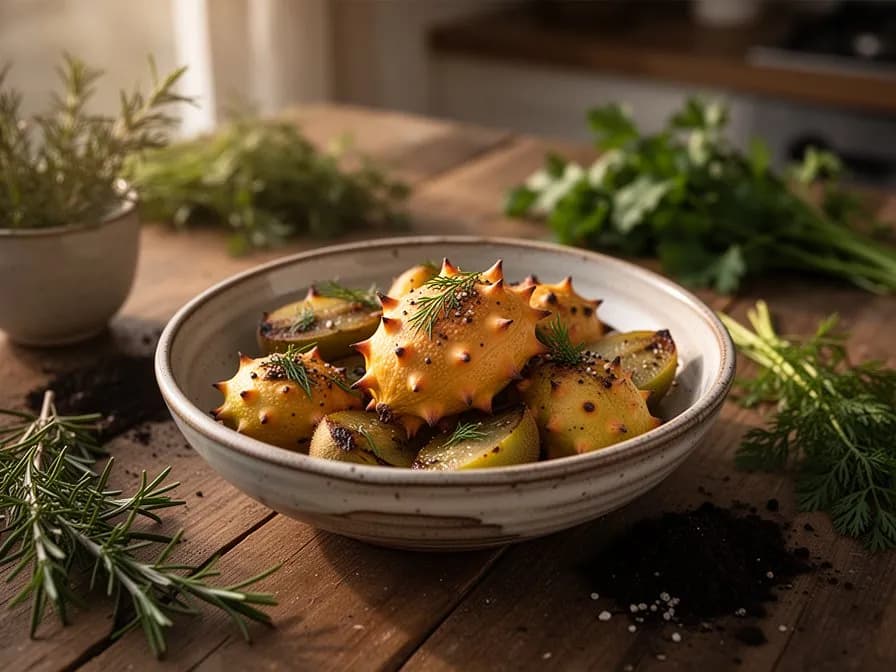
Tropical Kiwano Smoothie
5 minA vibrant green tropical smoothie that showcases kiwano's unique banana-lime flavor. The jelly-like pulp blends into a silky, refreshing drink that is as beautiful as it is delicious.
7 ingredientesKiwano and Prawn Ceviche
25 minAn exotic ceviche where kiwano's citrusy pulp acts as both ingredient and garnish. The tangy green jelly pairs beautifully with lime-cured seafood for a striking appetizer.
8 ingredientesKiwano Sorbet
15 min + freezingA showstopping frozen dessert that captures kiwano's refreshing citrus-banana flavor in an icy, brilliant green sorbet. The seeds add a pleasant crunch reminiscent of passion fruit.
6 ingredientesUsos culinarios
La pulpa gelatinosa verde se consume fresca directamente del fruto cortado por la mitad, o se extrae y añade a batidos, cócteles y postres. Su textura la hace ideal para decorar platos y bebidas en la alta cocina. También se usa en ensaladas de frutas tropicales, sorbetes y granizados. Los frutos inmaduros verdes pueden encurtirse o cocinarse como pepinos.
Qué contiene
Beneficios para la salud
- High water content of approximately 89% makes kiwano one of the most hydrating fruits available — traditionally used as a portable water source in the arid regions of southern Africa where it originates.
- Contains magnesium at meaningful levels for a fruit, supporting over 300 enzymatic reactions in the body including muscle contraction, nerve function, and blood sugar regulation.
- Provides iron and zinc in higher concentrations than most common fruits, supporting red blood cell production, immune defense, and wound healing.
- The seeds are edible and rich in vitamin E, a fat-soluble antioxidant that protects cell membranes from oxidative damage and supports skin health.
- Contains cucurbitacin compounds studied for potential anti-inflammatory and anti-tumor properties — though research is still in early stages, these bioactive compounds are unique to the cucurbit family.
- Low glycemic index and moderate fiber content make kiwano a suitable fruit option for people managing blood sugar levels, as it causes only a gradual rise in blood glucose after consumption.
De dónde viene Melón Kiwano
Kiwano (Cucumis metuliferus) is native to the semi-arid regions of southern and central Africa, particularly the Kalahari Desert and surrounding areas of Botswana, Namibia, South Africa, and Zimbabwe. Wild populations still grow across sub-Saharan Africa from Senegal to Somalia, thriving in dry sandy soils and open grasslands where few other crops survive. The plant has been gathered and cultivated by indigenous African peoples for millennia, valued as a food, water source, and traditional medicine in some of the continent's most challenging environments.
Kiwano remained largely unknown outside Africa until the late 20th century. In the 1980s, New Zealand entrepreneurs recognized the fruit's exotic visual appeal and unique flavor as marketable novelties, establishing commercial cultivation and coining the trade name 'kiwano' (likely inspired by the success of rebranding Chinese gooseberry as 'kiwifruit'). From New Zealand, commercial production spread to Israel, Australia, parts of southern Europe, and eventually California. The fruit found a niche in high-end restaurants, specialty markets, and cocktail bars where its dramatic spiny orange exterior and vivid green interior made it an instant conversation piece.
Today kiwano is grown commercially across several continents but remains a specialty crop rather than a staple. Israel and New Zealand are among the leading exporters, while small-scale production occurs in Portugal, Spain, Italy, and the southern United States. In home gardens worldwide, kiwano has gained popularity as an easy-to-grow, heat-loving vine that produces abundant, long-storing fruit with minimal care — and as one of the most visually spectacular crops any gardener can grow.
Melón Kiwano: ¿sabías que?
Datos fascinantes sobre Melón Kiwano
Kiwano (Cucumis metuliferus) is native to the Kalahari Desert region of southern Africa, where it is one of the few water sources available to wildlife during the dry season — its high water content makes it a survival fruit for both animals and people.
Melón Kiwano: preguntas frecuentes
¿Cuándo debo plantar Melón Kiwano?
¿Cuáles son buenas plantas acompañantes para Melón Kiwano?
¿En qué zonas de rusticidad puede crecer Melón Kiwano?
¿Cuánto sol necesita Melón Kiwano?
¿A qué distancia debo espaciar Melón Kiwano?
¿Qué plagas y enfermedades afectan a Melón Kiwano?
¿Cómo almaceno Melón Kiwano después de la cosecha?
¿Cuáles son las mejores variedades de Melón Kiwano para cultivar?
¿Qué suelo necesita Melón Kiwano?
What does kiwano taste like?
How do you eat a kiwano fruit?
Can kiwano survive frost?
Why are my kiwano fruits not ripening?
Is kiwano invasive?
Can I grow kiwano in a container?
Acabas de leer la teoría. Ahora cultívala en piloto automático.
Todo lo que hace que Melón Kiwano sea delicado — el momento, el espaciado, las asociaciones, la ventana de cosecha — es justo lo que PlotMyGarden resuelve por ti, para cada planta de tu huerto.
Un plan que conoce tu clima
Indica tu ubicación una vez. Recibe fechas de siembra, abonado y cosecha basadas en tu última helada real y el pronóstico en vivo — sin adivinar con un sobre genérico.
De la sección “Cuándo plantar”Planificador de bancales de arrastrar y soltar
Diseña bancales sobre una cuadrícula. Cada planta encaja con su espaciado correcto y ves toda la temporada antes de gastar un céntimo en semillas.
De la sección “Cultivo”Conflictos de asociación, detectados a tiempo
Más de 200 buenas y malas combinaciones comprobadas en vivo mientras plantas — para que un error que arruine la temporada nunca llegue a la tierra.
De la sección “Asociaciones”Recordatorios que sí vas a seguir
“Riega las judías.” “Recoge hoy antes de que se pase.” Oportunos, concretos y ligados a las plantas que de verdad cultivas.
De la sección “Cosecha”Escalonado, programado
¿Quieres cosechar seis semanas en vez de seis días? Reparte tus siembras automáticamente y te avisa cuando toca el siguiente lote.
De la sección “Cuándo plantar”Un registro que se vuelve más listo
Cada cosecha que registras le enseña tu huerto. El plan del año que viene parte de lo que de verdad funcionó en tu suelo, no en un manual.
De la sección “Resumen”Planta estos junto a Melón Kiwano
Más Cucurbitáceas
Mantén Melón Kiwano lejos de estos
Cultiva tu mejor Melón Kiwano — y todo lo que la rodea.
Empieza un plan gratis hoy. Diseña tus bancales, coloca tu Melón Kiwano y deja que PlotMyGarden gestione el momento, el espaciado, las asociaciones y los recordatorios de la semilla a la cesta.