Calabaza Kabocha
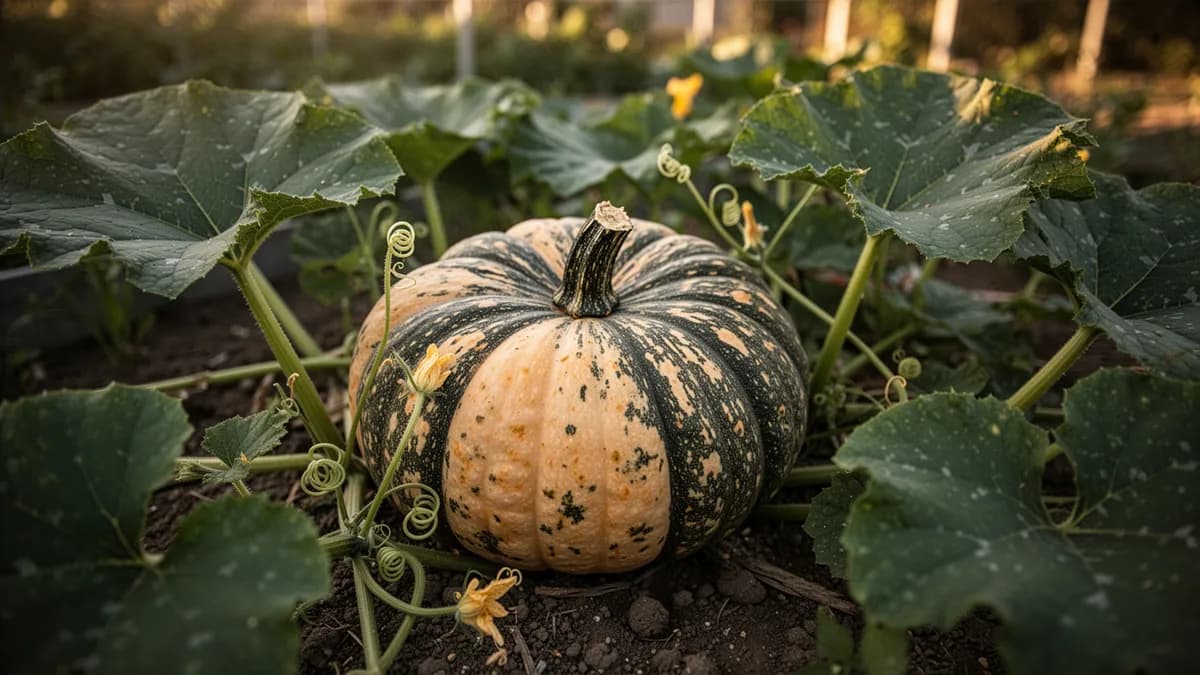
La calabaza kabocha (Cucurbita maxima) es una calabaza de invierno japonesa de forma achatada con cáscara verde oscura, a veces con manchas más claras, y una pulpa anaranjada intensamente dulce, seca y cremosa.





En esta páginaResumen
Conoce Calabaza Kabocha
La calabaza kabocha (Cucurbita maxima) es una calabaza de invierno japonesa de forma achatada con cáscara verde oscura, a veces con manchas más claras, y una pulpa anaranjada intensamente dulce, seca y cremosa. Es considerada una de las calabazas más sabrosas del mundo, fundamental en la cocina japonesa y cada vez más popular en la gastronomía occidental.
Cuándo plantar Calabaza Kabocha
Siembre directamente al aire libre cuando la temperatura del suelo supere los 18 °C, o inicie en interior 3-4 semanas antes en macetas de turba biodegradables para ganar tiempo en climas con veranos cortos. Plante 2-3 semillas a 2,5 cm de profundidad y aclare a la más vigorosa. La germinación ocurre en 7-10 días a 21-27 °C.
Tu año de Calabaza Kabocha
Ajustado a Zona 7 · temporada típica · la helada se va hacia el 2 abr y vuelve hacia el 1 nov
Planta Calabaza Kabocha May – Jun y cosecha Sep – Oct. Consulta los métodos de plantación y elige tu clima para adaptar los periodos.
Cómo cultivar Calabaza Kabocha
Plante en pleno sol en suelo fértil, bien drenado y enriquecido con abundante compost, con pH entre 6,0 y 7,0. Siembre 2-3 semillas a 2,5 cm de profundidad en montículos espaciados 120-150 cm, aclarando a la planta más vigorosa. La kabocha necesita una temporada larga y cálida para desarrollar todo su dulzor.
Las enredaderas pueden extenderse 3-5 m, aunque existen variedades semiarbustivas más compactas. Riegue profundamente con 3-4 cm semanales mediante riego por goteo, evitando mojar el follaje. Aplique acolchado de paja para conservar la humedad y proteger los frutos del contacto con el suelo húmedo.
Fertilice con compost al plantar y aplique abono rico en potasio cuando se formen los primeros frutos. Limite la producción a 2-4 frutos por planta para maximizar el tamaño y la concentración de azúcares. Reduzca el riego gradualmente en las últimas semanas antes de la cosecha para intensificar el dulzor y mejorar la conservación.
2 plantas caben en un bancal de 120 × 240 cm
Cada Calabaza Kabocha pide 120 cm de margen. El planificador guarda ese marco por ti — cada planta, cada bancal.
Los mejores vecinos de Calabaza Kabocha
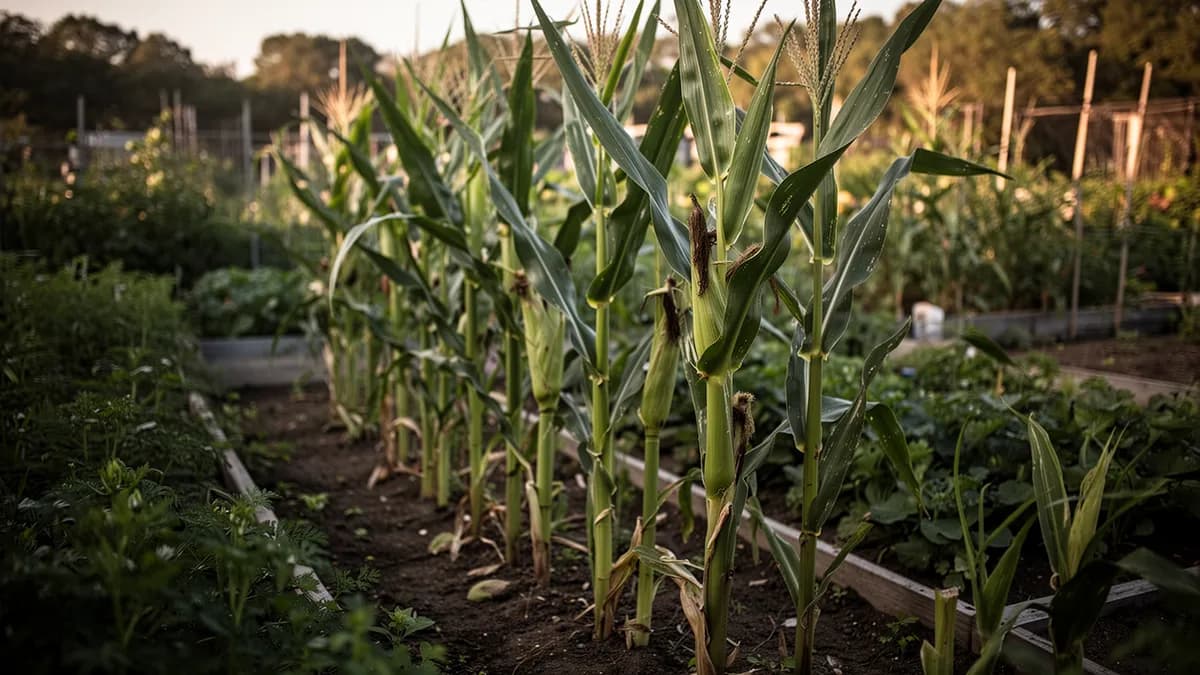
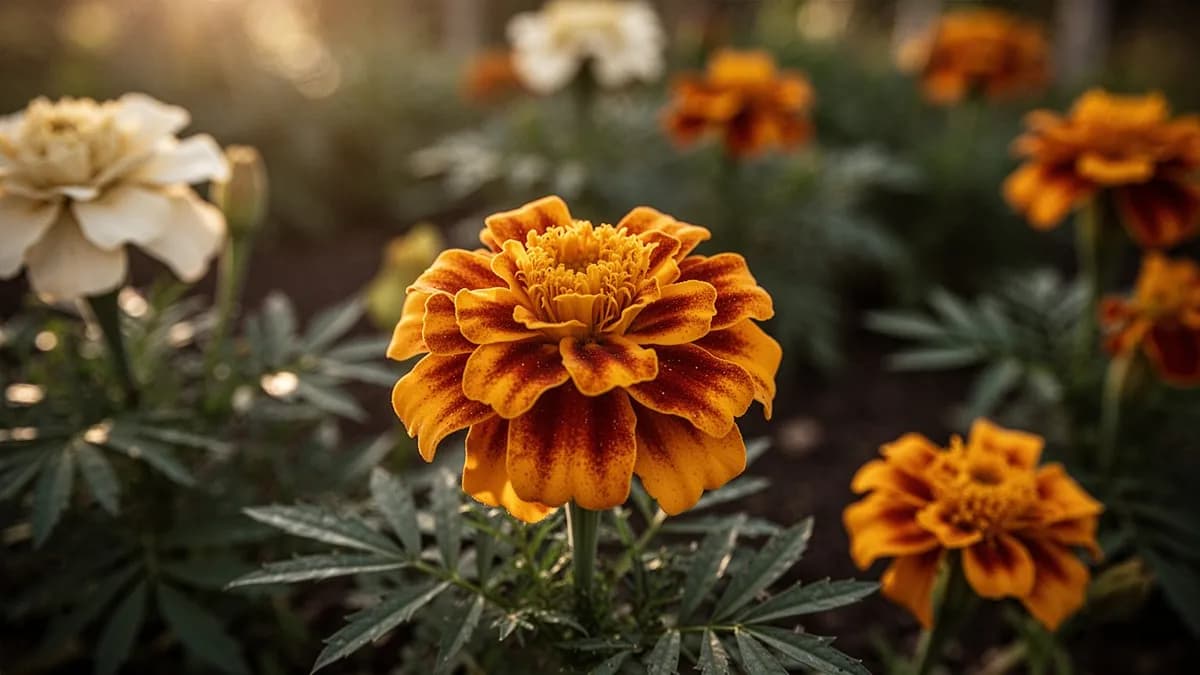
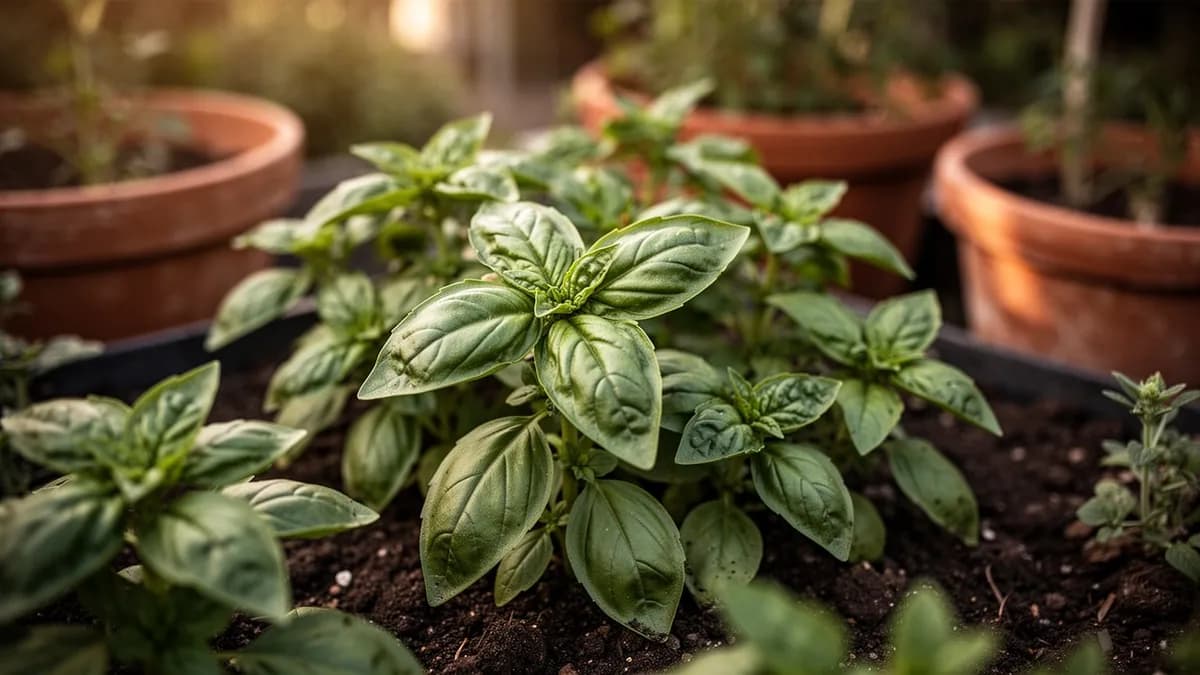
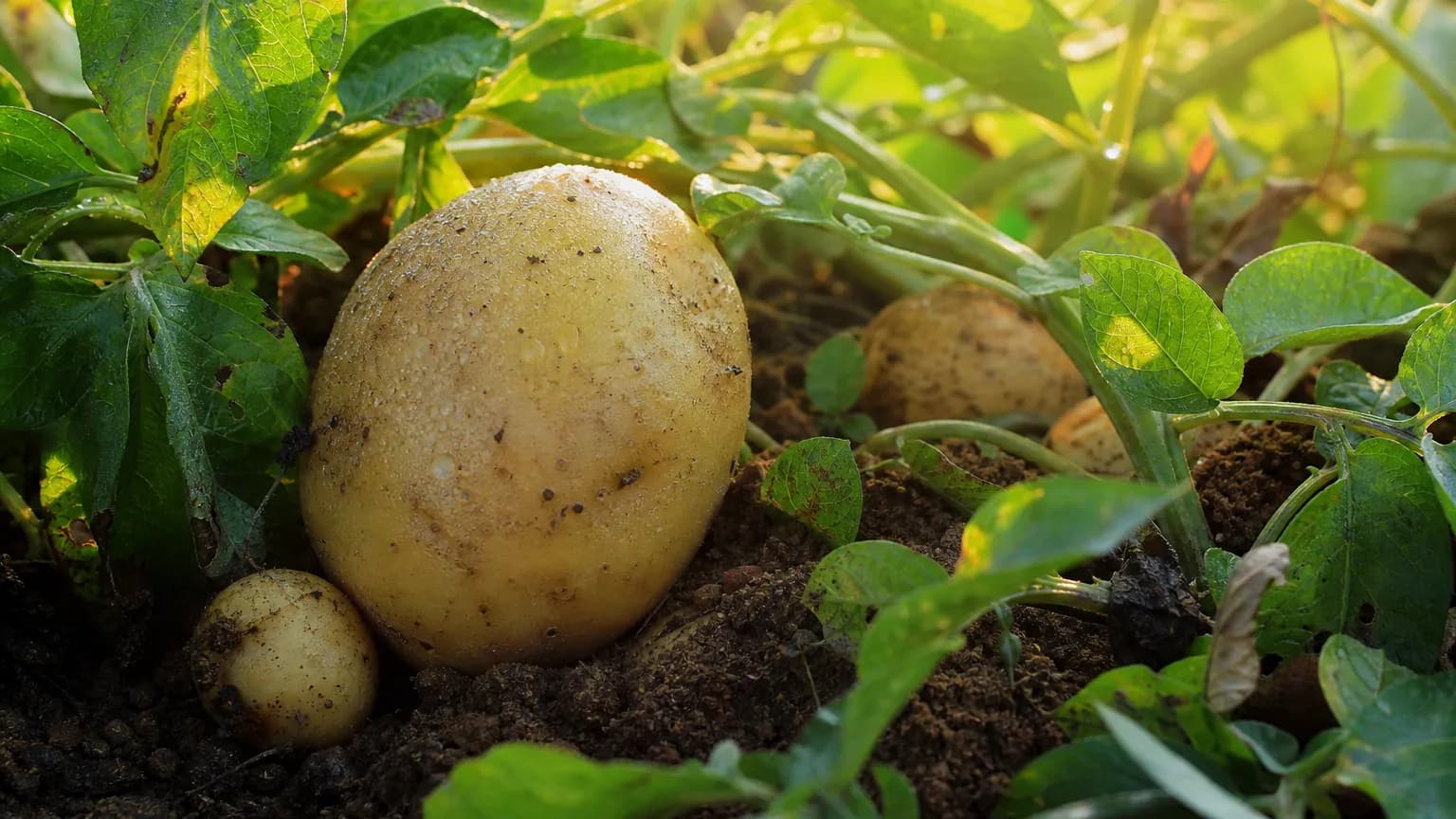
Se asocia bien con maíz y frijoles en la asociación de las Tres Hermanas. Las caléndulas y capuchinas repelen plagas. La albahaca y el orégano atraen polinizadores. Evite plantar cerca de patatas y otras solanáceas.
Maíz va a su lado. Papa no.
Saber de huerto de siempre, cotejado con la tabla real de Calabaza Kabocha — prueba cualquier planta que cultives.
Prueba Calabaza Kabocha en un bancal, aquí mismo
Un bancal real del planificador con Calabaza Kabocha ya plantado. Toca una planta compañera para colocarla y mira cómo responde la comprobación de vecinos: verde para buenos vecinos, rojo si hay conflicto.


Guías de cultivo relacionadas
Abónalo bien
Requiere suelos fértiles, profundos y bien drenados con pH entre 6,0 y 7,0. Incorpore abundante compost o estiércol bien descompuesto antes de la siembra. Aplique fertilizante equilibrado al plantar y cambie a fórmula rica en potasio durante la fructificación para maximizar el dulzor y la capacidad de almacenamiento.
Temperatura ideal
Compatibilidad de zonas de rusticidad
De la semilla a la cosecha, etapa por etapa
Germinación de semillas
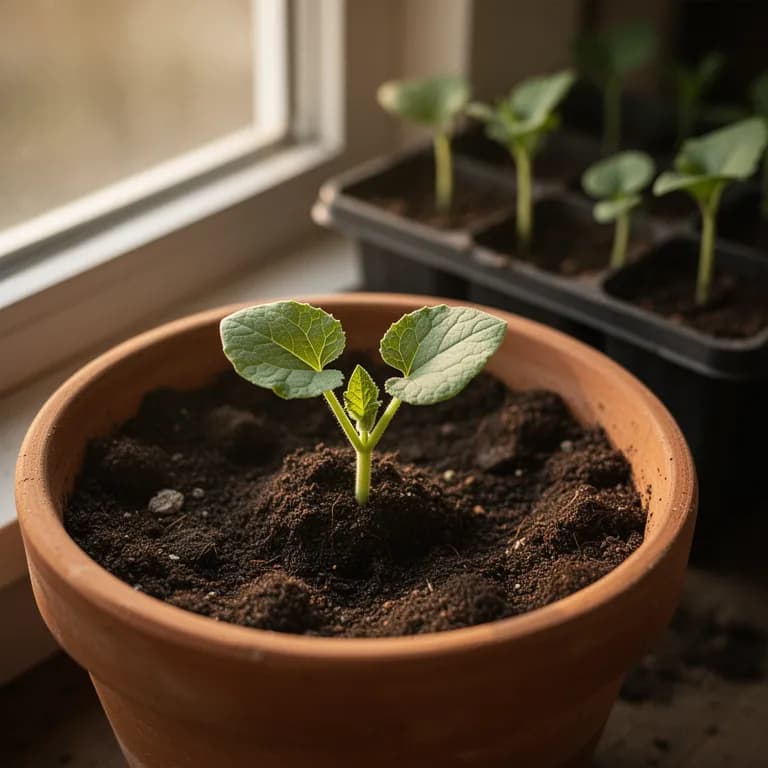
Las semillas germinan en suelo cálido y producen un tallo firme coronado por grandes cotiledones redondeados. La germinación tarda 7-10 días con temperaturas del suelo de 21-29 °C (70-85 °F). Las semillas sembradas en suelo frío, por debajo de 16 °C (60 °F), se pudren antes de emerger.
Desarrollo de plántula
Aparecen las hojas verdaderas con la forma grande y lobulada característica del follaje de Cucurbita maxima. La plántula desarrolla un sistema radicular robusto y empieza a emitir los primeros zarcillos. El crecimiento se acelera cuando las temperaturas superan los 21 °C (70 °F).
Expansión de las guías
Las guías vigorosas se extienden rápidamente por el suelo, avanzando 8-12 pies en todas las direcciones. Las hojas grandes, algo rugosas, dan sombra al suelo de debajo. La planta desarrolla un sistema radicular extenso y empieza a producir zarcillos que anclan las guías a soportes cercanos.
Floración
Aparecen grandes flores de color amarillo dorado: primero las masculinas, en tallos largos, seguidas por las femeninas, con un pequeño ovario redondo en la base. Cada flor se abre al amanecer y se cierra por la tarde. La polinización por abejas es esencial para el cuajado.
Desarrollo del fruto
Las flores femeninas polinizadas se hinchan hasta adoptar la forma característica, redonda y achatada. La cáscara se oscurece a verde intenso y empieza a endurecerse. Los frutos aumentan de peso con rapidez durante esta fase, alcanzando 1,5-2,5 kg (3-5 lb) cada uno. Los azúcares internos se acumulan mientras la pulpa se espesa y se intensifica de color.
Maduración y cosecha
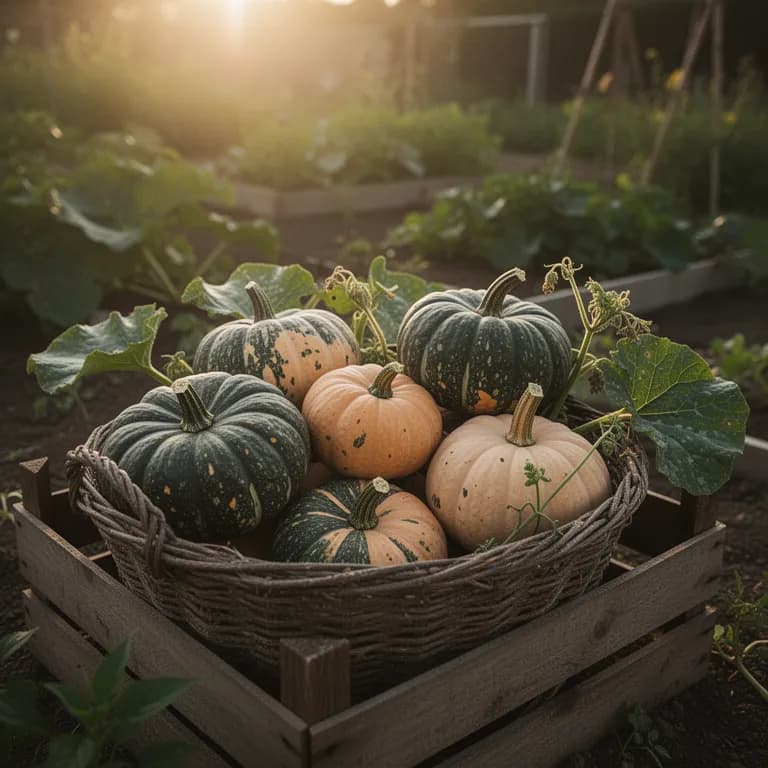
La cáscara se vuelve verde oscuro opaco, con acabado mate, y extremadamente dura: una uña no debería dejar marca. El tallo se seca y se vuelve corchoso. Una kabocha madura suena hueca al golpearla. Cura de 1-2 semanas al sol y en calor después de la cosecha para endulzar aún más la pulpa.
Siembra las semillas a 2,5 cm de profundidad en suelo previamente calentado. Si las inicias en interior, usa macetas biodegradables grandes de al menos 10 cm de diámetro para no dañar la raíz principal sensible al trasplantar.
Cuidar Calabaza Kabocha mes a mes
Qué hacer cada mes para tu Calabaza Kabocha
Octubre
Mes actualComplete harvest before hard frost. Finish curing fruits for 1-2 weeks at 27°C (80°F) in a dry location. Move cured squash to cool storage at 10-13°C (50-55°F). Remove spent vines and compost healthy material. Note variety performance.
Ten claro qué hacer en tu huerto, cada mes
Un correo al empezar cada mes: qué sembrar, plantar y hacer ahora mismo — para tu Calabaza Kabocha y todo lo que crece alrededor. Más un breve curso inicial para esquivar los errores clásicos.
- Qué hacer ahora mismo
- Ajustado a tu temporada
- Curso inicial incluido
Cosechar Calabaza Kabocha
Coseche cuando la cáscara esté completamente dura y no ceda a la presión de la uña, el pedúnculo esté seco y corchoso, y la piel haya perdido su brillo, generalmente 90-110 días después de la siembra. Corte dejando 5-7 cm de pedúnculo. Cure al sol durante 1-2 semanas para endurecer la piel y concentrar los azúcares antes de almacenar.
se supone que plantas al comenzar el periodo — indica tu fecha real
Cosecha cuando la cáscara se vuelva verde oscuro opaco, con acabado mate, y esté muy dura al tacto, y el tallo esté seco y corchoso. Un fruto maduro suena hueco al golpearlo. Cosecha antes de una helada fuerte.
Almacenamiento y conservación
La kabocha es una de las calabazas que mejor se conserva: bien curada, dura 4-6 meses en un lugar fresco, seco y ventilado a 10-15 °C. El sabor mejora durante los primeros 1-2 meses de almacenamiento conforme los almidones se convierten en azúcares. La pulpa cocida puede congelarse en porciones hasta 8 meses.
Qué falla — y cómo solucionarlo
Escarabajo del pepino (Diabrotica spp.)
PlagaAgujeros en hojas y flores, cicatrices en frutos jóvenes. Los escarabajos pueden transmitir marchitez bacteriana.
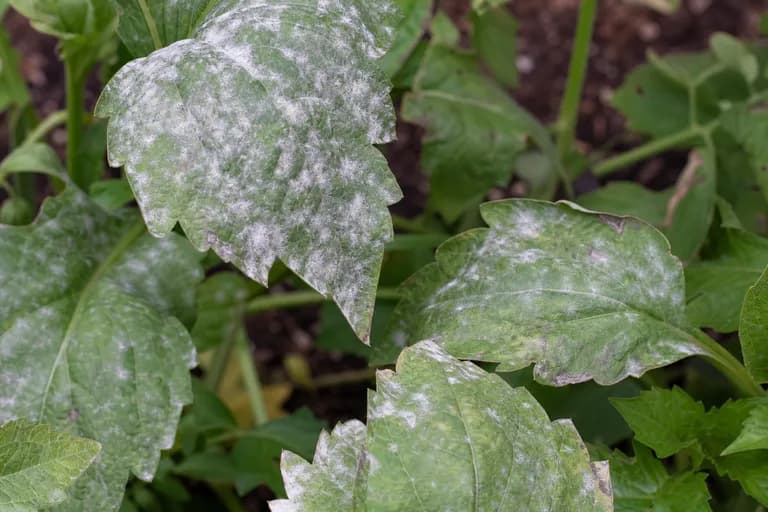
Oídio (Podosphaera xanthii)
EnfermedadPolvo blanco harinoso en las hojas que progresa a manchas extensas, causando defoliación prematura y reducción del dulzor de los frutos.
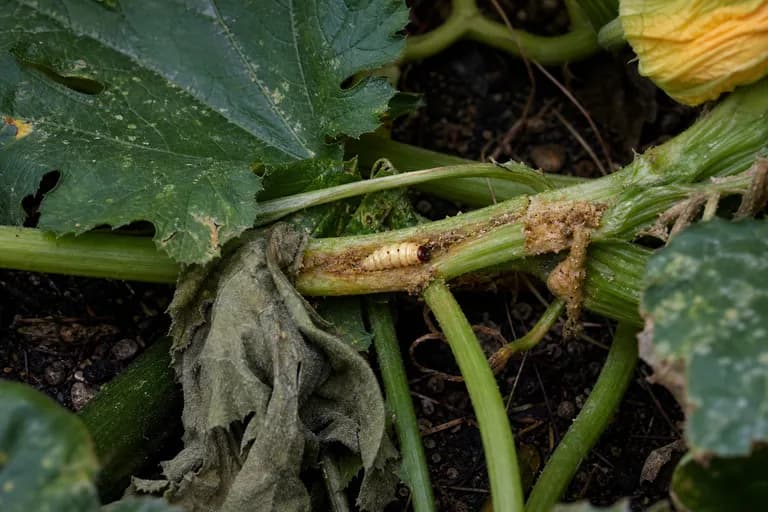
Barrenador de la vid (Melittia cucurbitae)
PlagaMarchitez súbita de secciones de la enredadera, excremento verde-amarillento en la base del tallo, larvas dentro del tallo.
Solución de problemas comunes
La kabocha es una planta generalmente robusta con pocos problemas serios. El principal desafío es proporcionar una temporada de crecimiento suficientemente larga y cálida para el desarrollo completo del dulzor. En climas frescos, inicie en interior para ganar semanas. El exceso de riego al final del ciclo diluye el sabor y reduce la conservación.
Consejos de cultivo
- Soil warmth is everything at planting time. Kabocha seeds rot in cold, wet soil below 16°C (60°F). Use black plastic mulch to warm beds 2-3 weeks before planting, or start indoors and transplant after frost danger has completely passed.
- Grow kabocha on hills or mounds of compost-enriched soil. The raised planting improves drainage, warms the root zone, and concentrates nutrients where the plant needs them most during early growth.
- Train vines deliberately or they will take over the garden. Direct new vine growth away from pathways and neighboring beds. Vertical trellising with fabric slings supporting the heavy fruits works well in small spaces.
- Pollination is the most common failure point. If bees are scarce, hand-pollinate by transferring pollen from freshly opened male flowers to female flowers (identified by the small round ovary at the base) using a soft brush between 6-10 AM.
- Reduce watering 2-3 weeks before expected harvest. This controlled water stress concentrates the natural sugars in the flesh, dramatically improving the sweet, chestnut-like flavor that makes kabocha special.
- Never skip curing. Freshly harvested kabocha is starchy and bland compared to properly cured fruit. Cure at 27°C (80°F) for 10-14 days in a dry location — this converts starches to sugars and hardens the rind for long storage.
- Store cured kabocha at 10-13°C (50-55°F) with good air circulation. Avoid storing on concrete floors which wick moisture and promote rot. A shelf in a cool closet, basement, or unheated room is ideal. Check monthly for soft spots.
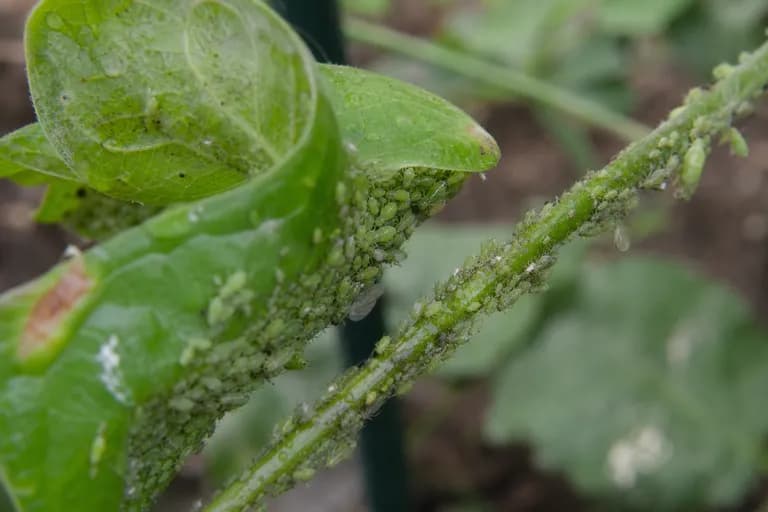
- Plant borage and marigolds nearby to attract pollinators and deter squash pests. Nasturtiums act as trap crops, drawing aphids away from squash vines. The companion planting is both functional and beautiful.
Cultiva tu mejor Calabaza Kabocha — y todo lo que la rodea.
Empieza un plan gratis hoy. Diseña tus bancales, coloca tu Calabaza Kabocha y deja que PlotMyGarden gestione el momento, el espaciado, las asociaciones y los recordatorios de la semilla a la cesta.
Elige tu Calabaza Kabocha
Winter Sweet
Variedad estándar con piel verde oscuro y pulpa anaranjada excepcionalmente dulce y seca. Frutos de 1,5-2,5 kg con excelente almacenamiento. 95-100 días.
Sunshine
Variedad de piel roja-anaranjada con pulpa intensamente dulce. Hábito semiarbustivo más compacto que la kabocha tradicional. 90-95 días.
Delica
Variedad italiana-japonesa con piel verde oscuro con rayas y pulpa extremadamente seca y dulce. Considerada una de las kabocha más sabrosas. 95-100 días.
Shishigatani
Variedad heredada japonesa con forma de reloj de arena única. Sabor profundo y complejo. Cultivada desde el siglo XVII en Kioto. 110-120 días.
A single kabocha seed packet ($3-5) can produce 4-6 plants yielding 15-30 squash that store for months without refrigeration. Organic kabocha sells for $3-5 per pound at farmers markets and specialty grocery stores, with a single fruit costing $5-12. Growing just 4 plants can produce $80-200 worth of squash per season. The savings are even greater when you consider that kabocha stores for 3-4 months at room temperature, providing free produce well into winter without any processing or freezer space.
Recetas rápidas
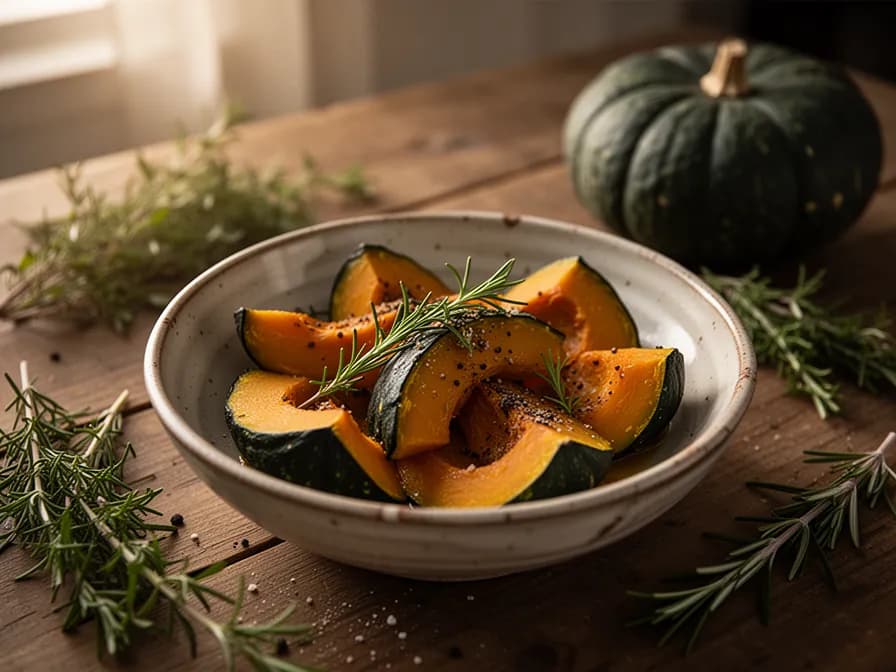
Roasted Kabocha Wedges with Miso Glaze
35 minSweet kabocha wedges roasted until caramelized and brushed with a savory-sweet miso glaze. The dense flesh holds its shape beautifully and develops an almost candy-like sweetness at high heat.
8 ingredientes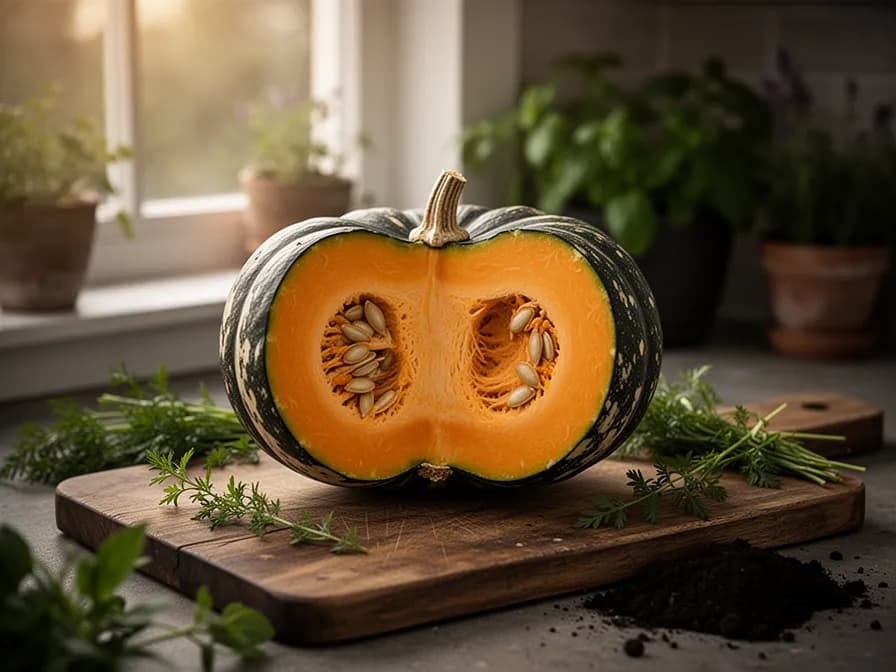
Kabocha Tempura
25 minThin slices of kabocha fried in an ultra-light, crispy batter — a staple of Japanese cuisine. The sweet, dense flesh contrasts perfectly with the delicate, shattering crust.
7 ingredientesCreamy Kabocha Squash Soup
40 minA velvety, naturally sweet soup that needs no cream — kabocha's dense flesh purees into an exceptionally smooth, rich texture all on its own. Warming spices complement the chestnut-like flavor.
8 ingredientesUsos culinarios
En Japón se prepara en tempura, nimono (estofado dulce con salsa de soja y dashi), y korokke (croquetas). Su pulpa seca y dulce la hace ideal para sopas cremosas, purés, curris y gratinados. Asada en gajos es una guarnición exquisita. También se utiliza en repostería para tartas, flanes, mochi y helados. La piel es comestible cuando se cocina.
Qué contiene
Beneficios para la salud
- Exceptionally high in beta-carotene — the deep orange flesh provides 88% of the daily value of vitamin A per 100g, supporting vision health, immune function, and skin integrity.
- Rich in complex carbohydrates with a moderate glycemic index, providing steady energy release. Studies suggest winter squash consumption may support healthy blood sugar regulation despite its sweet taste.
- Contains significant amounts of vitamin C, supporting collagen production, iron absorption, and antioxidant protection against cellular damage from free radicals.
- Good source of potassium (350mg per 100g) which helps regulate blood pressure, maintain fluid balance, and support proper muscle and nerve function.
- The carotenoids lutein and zeaxanthin in kabocha flesh support eye health and may reduce the risk of age-related macular degeneration — one of the leading causes of vision loss in older adults.
- High water content (about 90%) combined with dietary fiber promotes satiety and supports digestive health while keeping calorie density remarkably low at just 40 calories per 100g.
De dónde viene Calabaza Kabocha
Kabocha squash (Cucurbita maxima) traces its origins to South America, where the species was domesticated in the Andes region of Peru, Bolivia, and Argentina over 4,000 years ago. Archaeological evidence from coastal Peru shows that Cucurbita maxima was cultivated alongside beans and corn as part of the foundational agricultural triad that sustained pre-Columbian civilizations. Spanish and Portuguese explorers carried squash seeds back to Europe in the 16th century, and Portuguese traders subsequently introduced them to Southeast Asia and Japan through their extensive maritime trade networks.
The squash arrived in Japan via Cambodia — Portuguese merchants trading through Cambodian ports brought seeds to the southern island of Kyushu around 1541. The Japanese word 'kabocha' is believed to be a phonetic adaptation of 'Cambodia,' reflecting this trade route origin. Japanese farmers embraced the crop and selectively bred it over centuries for the characteristics now synonymous with kabocha: dense, dry, intensely sweet flesh with a chestnut-like texture, and a compact, thick-walled fruit that stores exceptionally well through the long winter months.
Today, kabocha is deeply embedded in Japanese culinary culture — it is a centerpiece of traditional New Year foods (osechi ryori), a beloved tempura ingredient, and a winter solstice staple. Japan produces over 200,000 tonnes annually, with additional imports from New Zealand, Mexico, and Tonga to meet year-round demand. In Western countries, kabocha has surged in popularity since the 2000s as home gardeners and chefs discovered its superior sweetness and texture compared to common butternut or acorn squash. Modern breeding programs continue to develop improved varieties with better disease resistance, compact vine habits for small gardens, and even higher sugar content.
Calabaza Kabocha: ¿sabías que?
Datos fascinantes sobre Calabaza Kabocha
Kabocha means 'pumpkin' or 'squash' in Japanese, derived from 'Cambodia' — Portuguese traders introduced the squash to Japan from Cambodia in the 16th century, and the name stuck as a corruption of the country name.
Calabaza Kabocha: preguntas frecuentes
¿Cuándo debo plantar Calabaza Kabocha?
¿Cuáles son buenas plantas acompañantes para Calabaza Kabocha?
¿En qué zonas de rusticidad puede crecer Calabaza Kabocha?
¿Cuánto sol necesita Calabaza Kabocha?
¿A qué distancia debo espaciar Calabaza Kabocha?
¿Qué plagas y enfermedades afectan a Calabaza Kabocha?
¿Cómo almaceno Calabaza Kabocha después de la cosecha?
¿Cuáles son las mejores variedades de Calabaza Kabocha para cultivar?
¿Qué suelo necesita Calabaza Kabocha?
How do I know when kabocha squash is ready to harvest?
Why is my kabocha squash not sweet enough?
Can I eat the skin of kabocha squash?
How long can I store kabocha squash after harvest?
Can kabocha squash be grown vertically on a trellis?
Acabas de leer la teoría. Ahora cultívala en piloto automático.
Todo lo que hace que Calabaza Kabocha sea delicado — el momento, el espaciado, las asociaciones, la ventana de cosecha — es justo lo que PlotMyGarden resuelve por ti, para cada planta de tu huerto.
Un plan que conoce tu clima
Indica tu ubicación una vez. Recibe fechas de siembra, abonado y cosecha basadas en tu última helada real y el pronóstico en vivo — sin adivinar con un sobre genérico.
De la sección “Cuándo plantar”Planificador de bancales de arrastrar y soltar
Diseña bancales sobre una cuadrícula. Cada planta encaja con su espaciado correcto y ves toda la temporada antes de gastar un céntimo en semillas.
De la sección “Cultivo”Conflictos de asociación, detectados a tiempo
Más de 200 buenas y malas combinaciones comprobadas en vivo mientras plantas — para que un error que arruine la temporada nunca llegue a la tierra.
De la sección “Asociaciones”Recordatorios que sí vas a seguir
“Riega las judías.” “Recoge hoy antes de que se pase.” Oportunos, concretos y ligados a las plantas que de verdad cultivas.
De la sección “Cosecha”Escalonado, programado
¿Quieres cosechar seis semanas en vez de seis días? Reparte tus siembras automáticamente y te avisa cuando toca el siguiente lote.
De la sección “Cuándo plantar”Un registro que se vuelve más listo
Cada cosecha que registras le enseña tu huerto. El plan del año que viene parte de lo que de verdad funcionó en tu suelo, no en un manual.
De la sección “Resumen”Planta estos junto a Calabaza Kabocha
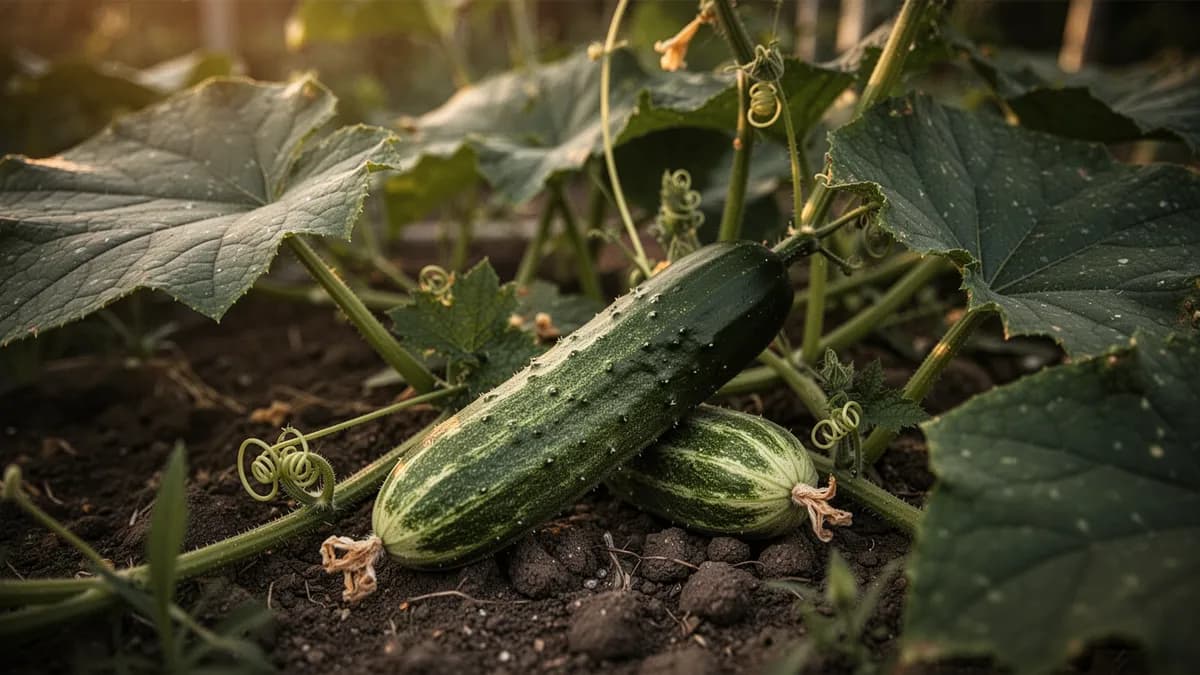
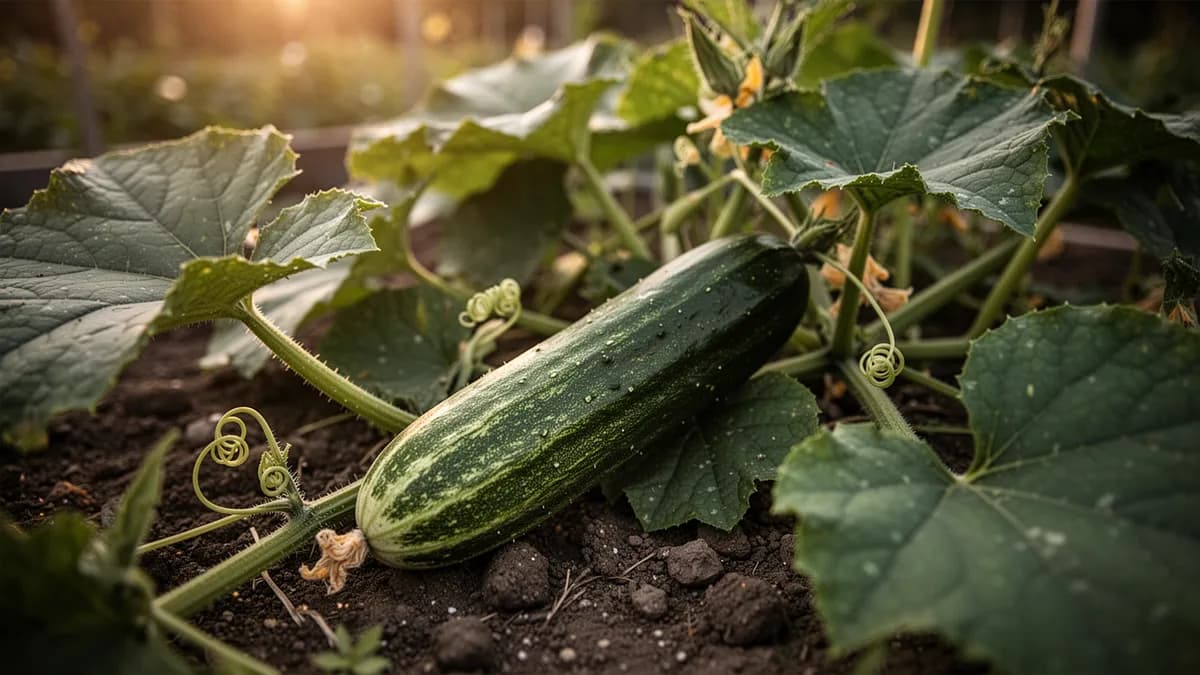
Más Cucurbitáceas
Mantén Calabaza Kabocha lejos de estos
Cultiva tu mejor Calabaza Kabocha — y todo lo que la rodea.
Empieza un plan gratis hoy. Diseña tus bancales, coloca tu Calabaza Kabocha y deja que PlotMyGarden gestione el momento, el espaciado, las asociaciones y los recordatorios de la semilla a la cesta.