Hickory Tree
A stately native hardwood tree with distinctive shaggy bark that produces richly flavored nuts and some of the best firewood and smoking wood available.





On this pageOverview
Meet Hickory Tree
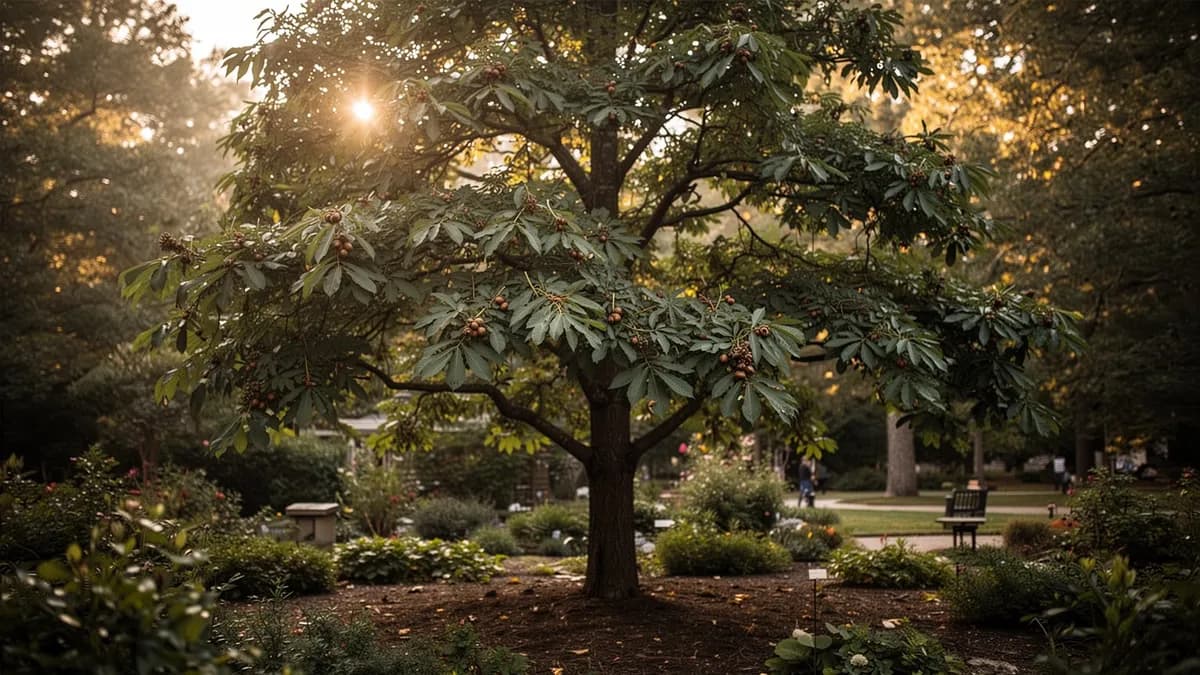
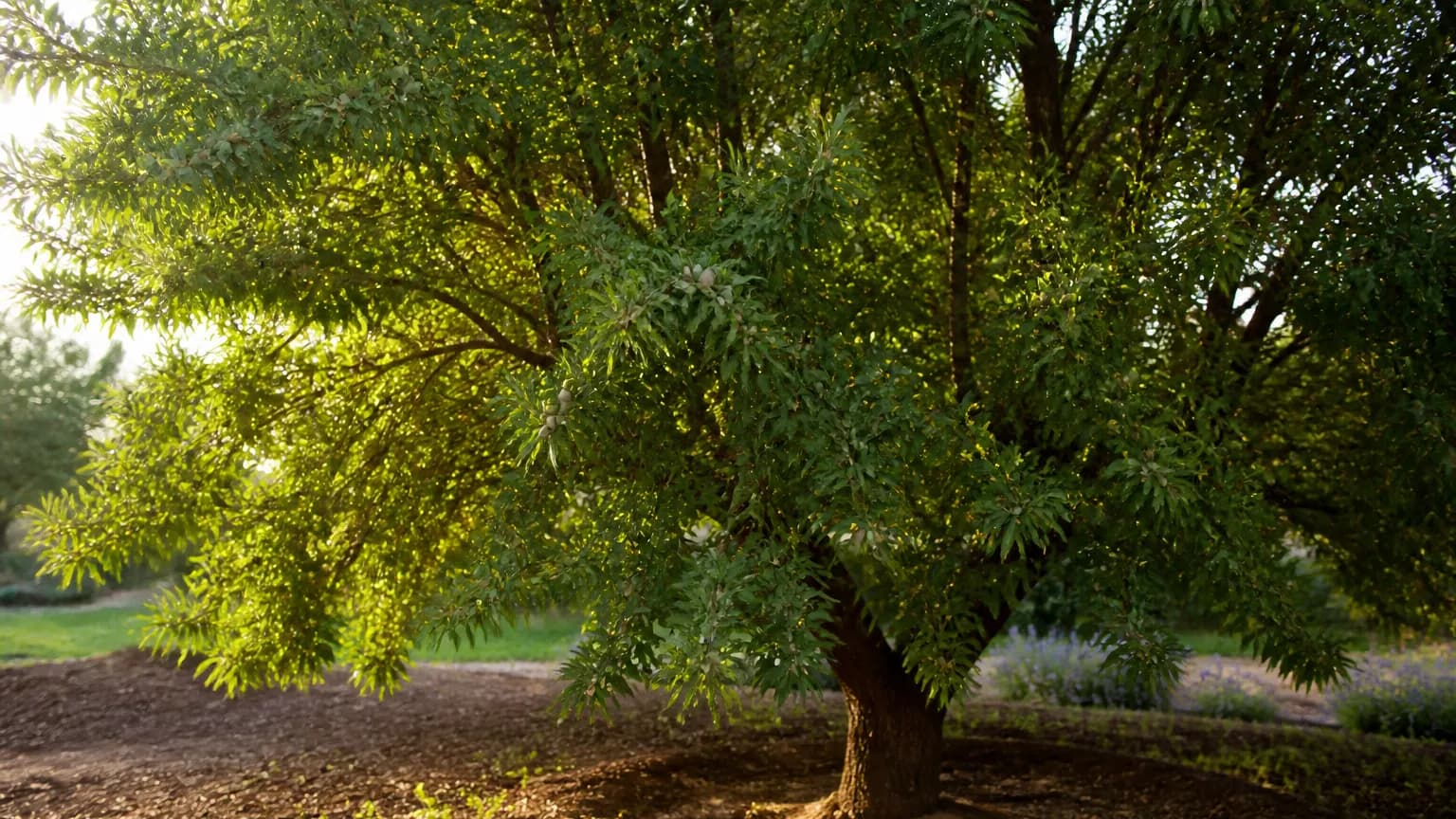
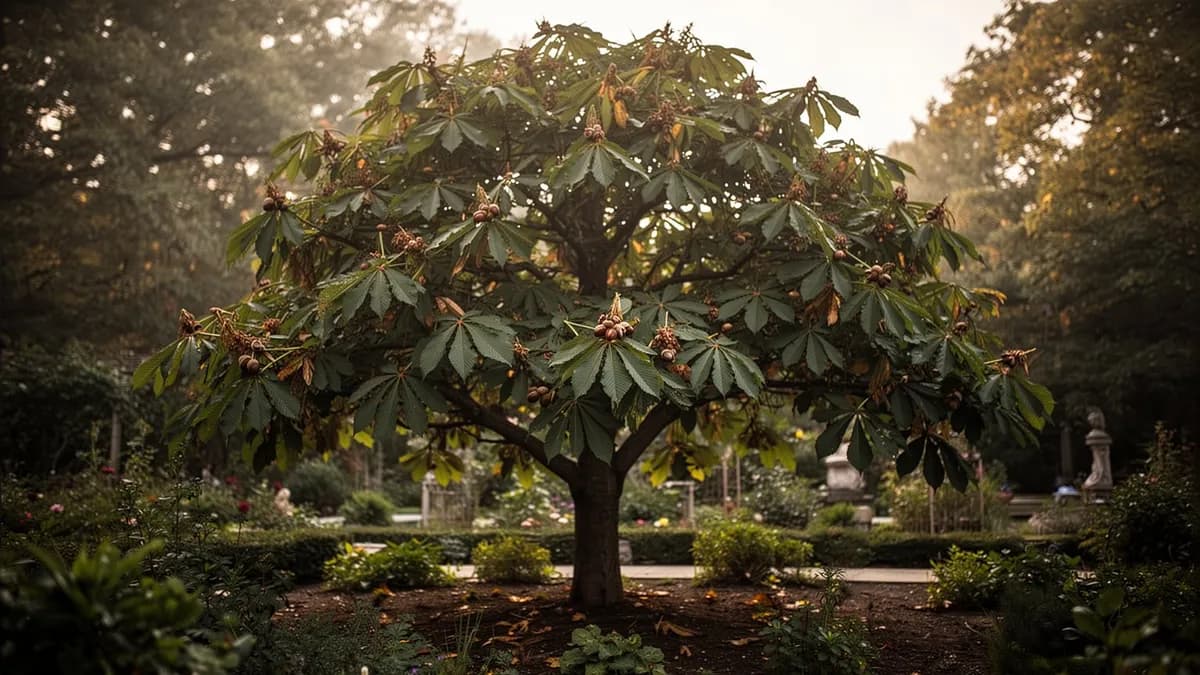
A stately native hardwood tree with distinctive shaggy bark that produces richly flavored nuts and some of the best firewood and smoking wood available. Shagbark hickory nuts taste similar to pecans and are a prized wild harvest. Trees grow slowly and develop a deep taproot that makes transplanting difficult, so plant young saplings in their permanent location. Hickories provide spectacular golden-yellow fall color and exceptionally strong, flexible wood.
When to plant Hickory Tree
Hickory nuts require 90 to 120 days of cold stratification in moist sand in the refrigerator before planting. Sow stratified nuts 1 to 2 inches deep in deep containers or directly in the ground in early spring. Germination occurs in 4 to 6 weeks. The taproot grows rapidly, so transplant seedlings to permanent locations during their first dormant season. Named grafted varieties are available from specialty nurseries and begin bearing years sooner than seedlings. Handle the long taproot carefully during transplanting.
Your Hickory Tree Year
Composed for Zone 7 · typical seasons · frost passes Apr 2, returns Nov 1
Plant Hickory Tree Mar – Apr, Oct – Nov, pick Sep – Oct. Check the planting methods below and set your climate to personalize these windows.
How to grow Hickory Tree
Plant hickory trees in deep, well-drained, fertile soil with a pH between 6.0 and 7.0. Choose a permanent location carefully because hickories develop a deep taproot that makes transplanting extremely difficult once established. Plant nursery-grown saplings in spring or fall, digging a hole deep enough to accommodate the long taproot without bending it. Water thoroughly at planting and provide weekly deep watering during the first two growing seasons.
Hickories are slow-growing trees that may add only 12 to 18 inches of height per year. They prefer full sun but tolerate light shade. Apply a 3 to 4 inch layer of organic mulch over the root zone to conserve moisture and moderate soil temperature, keeping mulch away from the trunk. Avoid cultivating the soil deeply near the tree, as this can damage feeder roots.
Pruning needs are minimal. Remove dead, damaged, or crossing branches in late winter while the tree is dormant. Hickories begin producing nuts after 10 to 15 years, with peak production occurring after 40 years. The trees are long-lived and can produce for well over a century once mature.
Hickory Tree needs more room than a 4 × 8 ft bed gives
Each Hickory Tree wants 1000 cm of elbow room. The planner keeps that spacing for you — every plant, every bed.
Hickory Tree's best neighbours
Plant shade-tolerant groundcovers like comfrey, clover, and woodland wildflowers beneath hickory trees. Comfrey accumulates nutrients from deep in the soil and provides excellent chop-and-drop mulch material. Nitrogen-fixing plants like white clover improve soil fertility around these heavy-feeding trees. Avoid planting near black walnuts, as hickories can be affected by juglone. Spring bulbs like daffodils and snowdrops thrive under the deciduous canopy before leaf-out.
Keep Walnut Tree away from it.
Old growers' knowledge, checked against Hickory Tree's real companion table below — test any plant you're growing.
Related growing guides
Feed it well
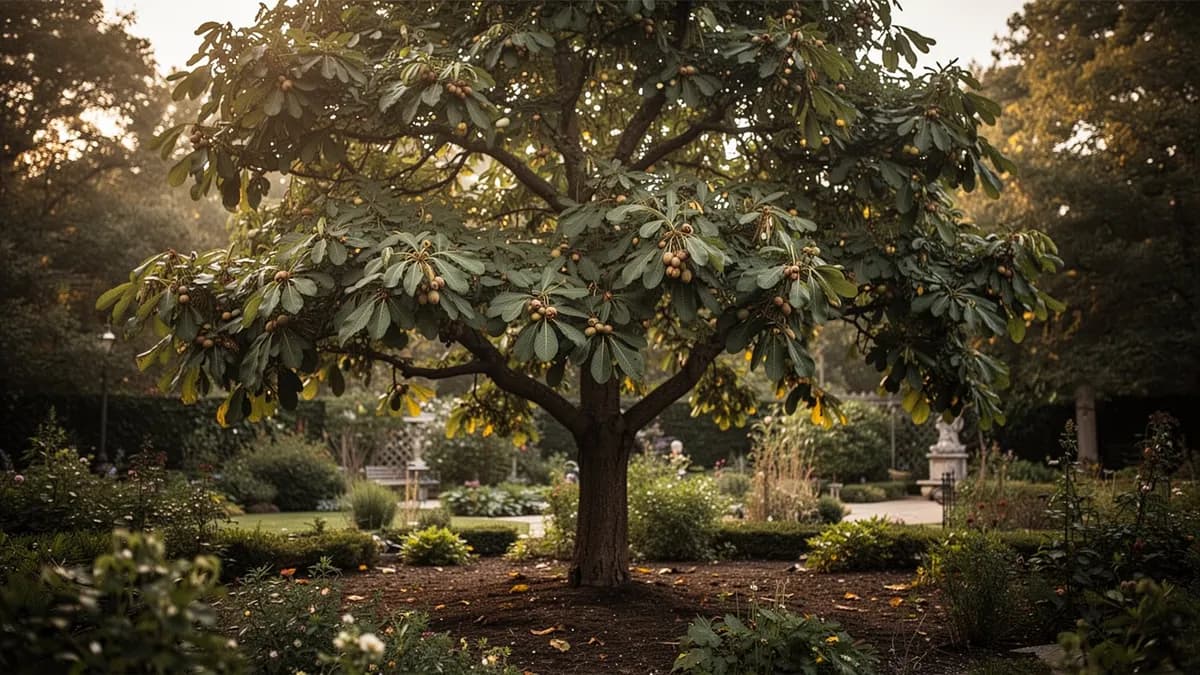
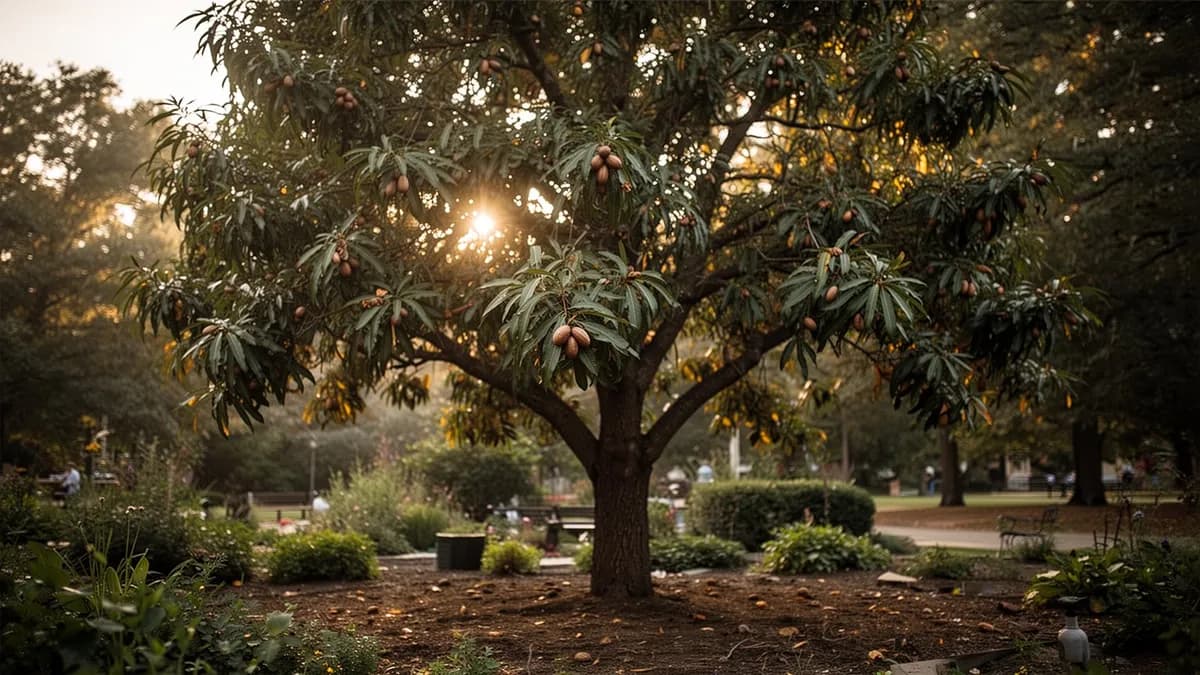
Hickory trees prefer deep, fertile, well-drained loam with a pH of 6.0 to 7.0. They tolerate slightly acidic soils but struggle in heavy clay or waterlogged conditions. Young trees benefit from annual applications of balanced 10-10-10 fertilizer in early spring, spread beneath the drip line. Mature trees rarely need fertilization in good soil. Top-dress the root zone with compost annually to maintain organic matter levels and soil structure. Zinc deficiency can occur in alkaline soils, causing rosette formation in new growth.
Ideal Temperature
Hardiness Zone Compatibility
From seed to harvest, stage by stage
Nut Germination and Taproot Development
After stratification through winter cold, the hickory nut germinates in spring. The seedling sends down a deep taproot before producing significant above-ground growth, sometimes reaching 12 inches deep before the first leaves fully unfurl.
Seedling Establishment
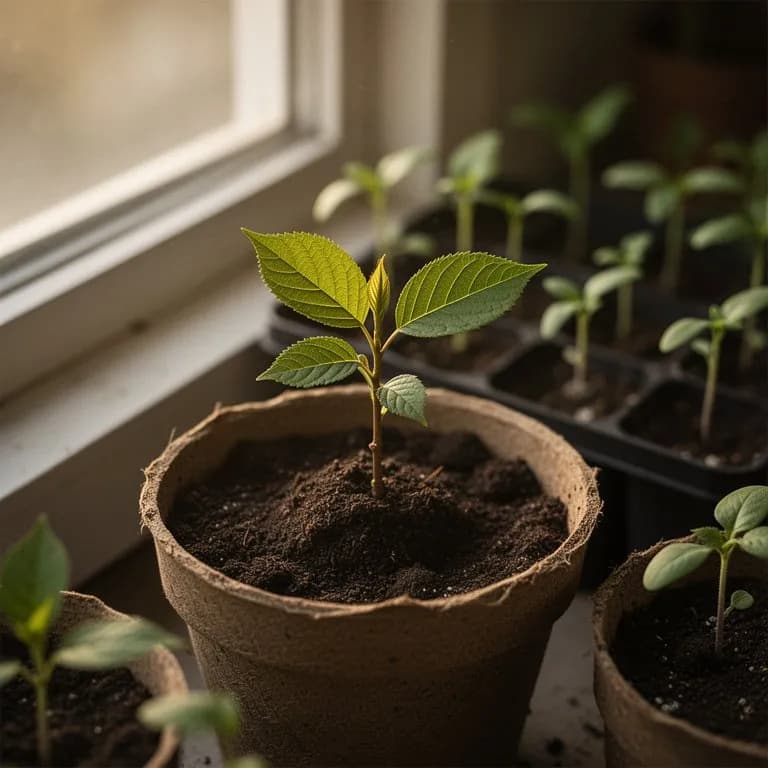
During the first two years, the young hickory focuses heavily on root development. Above-ground growth is slow, typically only six to twelve inches per year. The seedling produces its first compound leaves with three to five leaflets.
Juvenile Growth Phase
From years three through ten, the hickory accelerates its vertical growth, adding one to two feet per year. The trunk begins to thicken and the canopy starts to form its characteristic oval to oblong shape. Bark remains smooth and gray during this phase.
Pre-Bearing Maturation
Between years ten and twenty, the tree develops its mature canopy structure and begins forming the characteristic shaggy bark on shagbark varieties. The root system is now extensive and deeply established. Some precocious trees may produce their first small nut crops toward the end of this stage.
Nut-Bearing Maturity
Hickory trees typically begin reliable nut production between fifteen and forty years of age, depending on species and growing conditions. Shagbark hickory often starts bearing around age twenty to twenty-five. Mature trees can produce fifty to one hundred pounds of nuts per year in good mast years, though production is often biennial.
Old Growth and Legacy Phase
Hickory trees are long-lived, with many species reaching two hundred to three hundred years. Old growth hickories develop massive trunks up to three feet in diameter and heights of eighty to one hundred feet. They become important wildlife habitat trees, providing food for squirrels, wild turkeys, and wood ducks, while cavities shelter woodpeckers and owls.
Plant nuts directly outdoors in fall at a depth of one to two inches, or cold-stratify in moist sand for 90 to 120 days before spring planting. Protect from squirrels with wire mesh.
Caring for Hickory Tree month by month
What to do each month for your Hickory Tree
October
You are hereHarvest fallen nuts daily, removing outer husks and spreading nuts to dry. Plant freshly harvested nuts directly in prepared beds for natural cold stratification. Apply a final deep watering before the ground freezes if autumn has been dry
Know exactly what to do in your garden — every month
One email at the start of each month: what to sow, plant, and tackle right now — for your Hickory Tree and everything growing around it. Plus a short starter course that helps you dodge the classic mistakes.
- What to do, right now
- Matched to your season
- Starter course included
Harvesting Hickory Tree
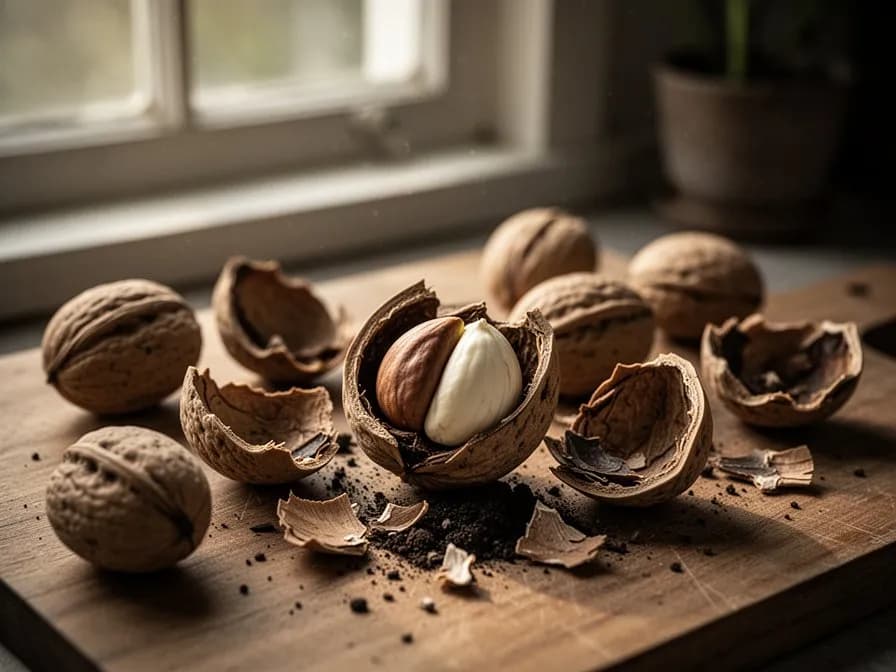
Hickory nuts ripen in September and October when the thick green husks split open and nuts begin falling to the ground. Gather nuts promptly after they fall to beat squirrels and other wildlife to the harvest. Remove husks immediately and spread nuts in a single layer to dry in a warm, airy location for 2 to 3 weeks. Test for dryness by cracking a nut; the kernel should snap cleanly rather than bend. A mature shagbark hickory can produce 1 to 3 bushels of nuts per year.
assuming you plant when the window opens — set your real date
Pick Hickory Tree promptly and the plant keeps producing.
Storage & Preservation
Store dried, unshelled hickory nuts in mesh bags in a cool, dry location for up to a year. Shelled kernels should be refrigerated in airtight containers for up to 3 months or frozen for up to a year. The rich, oily kernels are prone to rancidity, so taste-test stored nuts before using. Hickory nuts can be pressed for their flavorful oil or ground into nut meal for baking. Hickory nut milk, made by boiling crushed nuts in water, is a traditional preparation.
What goes wrong — and the fix
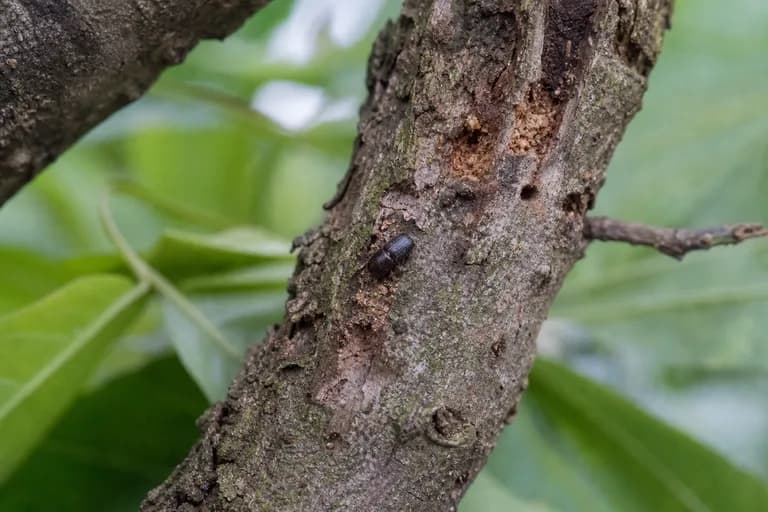
Hickory Bark Beetle
PestSmall holes in bark with fine sawdust. Branches die back and bark loosens over infested areas.
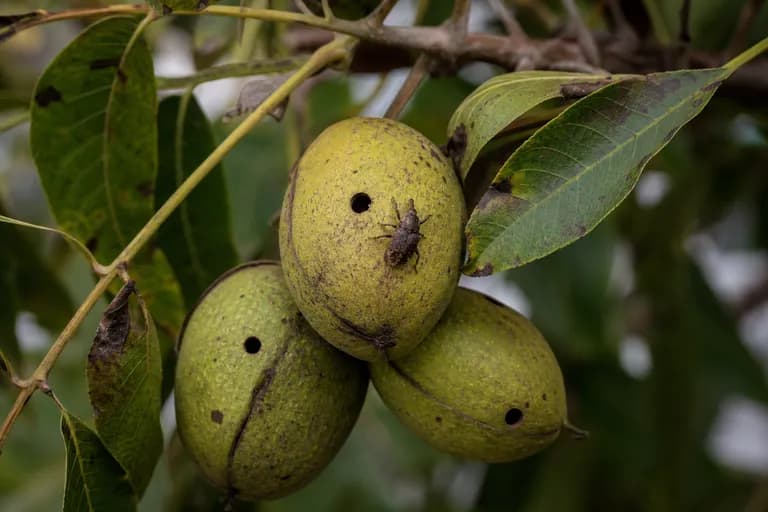
Pecan Weevil
PestSmall puncture holes in developing nuts. Larvae feed inside nuts, leaving hollowed-out kernels filled with frass.
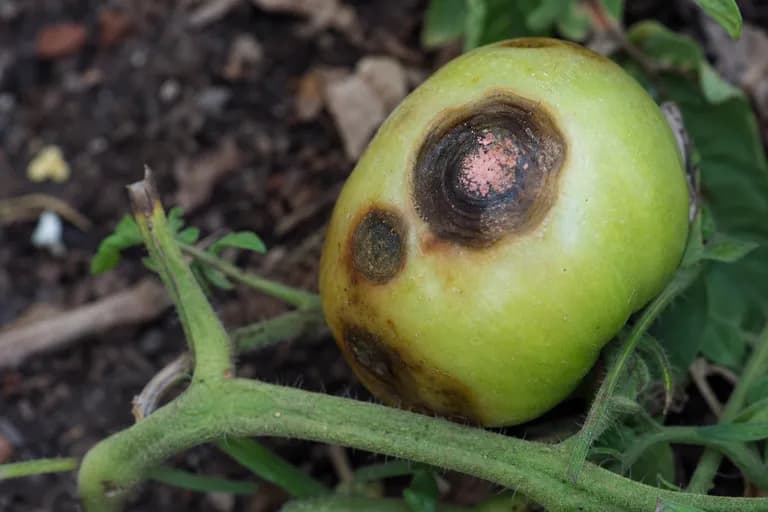
Anthracnose
DiseaseBrown or tan irregular spots on leaves, often along veins. Severe infections cause premature defoliation.
Troubleshooting Common Problems
The deep taproot makes transplanting large specimens nearly impossible, so site selection is critical. Nut production takes many years and is highly variable from year to year. Squirrels are the most persistent competitors for the harvest and are difficult to deter on large trees. Hickory nuts have very hard shells that are challenging to crack without specialized tools. Anthracnose and leaf spots can cause early defoliation in wet years but rarely threaten tree health.
Growing Tips
- Plant hickory nuts directly in their permanent location whenever possible because the deep taproot makes transplanting difficult after the first year or two of growth.
- Select a planting site with full sun and deep, well-drained loamy soil. Hickory trees tolerate a range of soil pH from mildly acidic to neutral, roughly 6.0 to 7.0.
- Cold-stratify nuts for 90 to 120 days in moist sand at 33 to 40 degrees Fahrenheit if you cannot plant them outdoors in autumn for natural winter chilling.
- Protect young seedlings from deer browsing with four-foot tree tubes or wire cages for the first three to five years until the leader grows above browse height.
- Avoid heavy pruning on hickory trees because they compartmentalize wounds slowly. Limit pruning to dead, damaged, or crossing branches during the dormant season.
- Water young trees deeply once per week during their first five years, providing at least one inch of water per session to encourage deep root development.
- Apply a broad ring of composted hardwood mulch two to four inches deep from six inches away from the trunk out to the drip line to suppress weeds and retain soil moisture.
- Consider planting improved grafted cultivars such as Grainger, Selbhers, or Yoder No. 1 for earlier bearing and larger, easier-to-shell nuts compared to wild seedling trees.
- Plant at least two unrelated hickory trees within pollination distance of roughly 200 feet to ensure adequate cross-pollination, as many hickories exhibit dichogamy where male and female flowers mature at different times.
- Monitor for hickory bark beetles by checking for small round holes and fine sawdust on the trunk, and maintain tree vigor through proper watering and mulching as stressed trees are most susceptible to attack.
Grow your best Hickory Tree yet — and everything around it.
Start a free plan today. Lay out your beds, drop in your Hickory Tree, and let PlotMyGarden handle the timing, spacing, companions and reminders from seed to harvest basket.
Pick your Hickory Tree
Shagbark Hickory (Carya ovata)
The most popular species with distinctive peeling bark and excellent nut flavor. Hardy to zone 4 with nuts that crack out relatively easily.
Shellbark Hickory (Carya laciniosa)
Produces the largest nuts of any hickory species. Prefers bottomland soils and is slightly less cold-hardy than shagbark.
Hican Hybrids
Crosses between hickory and pecan that combine hickory cold-hardiness with larger, easier-to-crack pecan-type nuts.
Mockernut Hickory (Carya tomentosa)
Extremely hard-shelled nuts with small but flavorful kernels. Thrives on dry upland sites where other hickories struggle.
A single mature hickory tree can produce fifty to one hundred pounds of nuts per year in good mast years, worth roughly two hundred to five hundred dollars at specialty market prices of four to five dollars per pound for shelled kernels. While the tree takes fifteen to twenty-five years to begin bearing, it will then produce for well over a century with essentially zero input costs, making it one of the most productive long-term food investments for a home landscape. The wood from periodic pruning also provides premium smoking chips and exceptional firewood, adding further value.
Quick recipes
Hickory Nut Maple Granola
40 minutesA crunchy homemade granola featuring chopped hickory nuts toasted with rolled oats, real maple syrup, and warm spices. The rich buttery flavor of the hickory nuts pairs perfectly with maple, creating an autumn-inspired breakfast or snack.
7 ingredients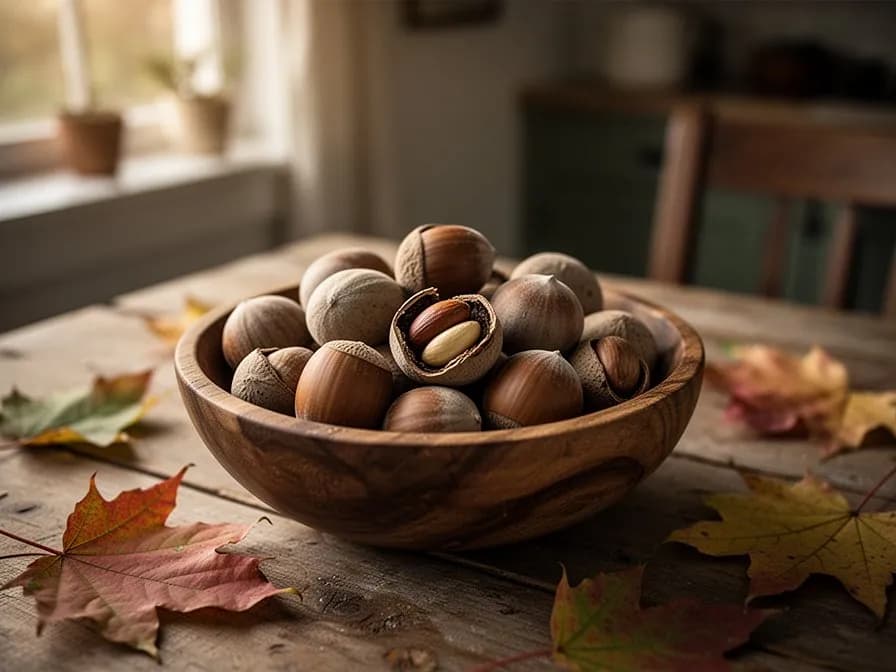
Hickory Nut Butter
20 minutesA smooth and intensely flavored nut butter made by roasting and grinding hickory nut kernels until creamy. This spread has a richer and more complex flavor than peanut butter, with sweet and slightly smoky undertones unique to hickory nuts.
5 ingredientsTraditional Hickory Nut Milk (Pawcohiccora)
45 minutesA recreation of the traditional Algonquian hickory nut milk made by simmering crushed whole hickory nuts in water and straining the resulting rich liquid. This creamy plant milk has a naturally sweet and nutty flavor and can be used in cooking, baking, or enjoyed as a warm beverage.
5 ingredientsCulinary Uses
Hickory nuts have a rich, sweet flavor similar to pecans and are excellent in pies, cookies, cakes, and candies. They can substitute for pecans in any recipe. The nuts are delicious roasted with salt and make a flavorful addition to salads and grain dishes. Hickory wood is prized for smoking meats, imparting a strong, sweet, bacon-like flavor to pork, beef, and poultry.
What's inside
Health Benefits
- High monounsaturated fat content supports cardiovascular health by helping reduce LDL cholesterol levels when consumed as part of a balanced diet
- Excellent source of manganese, a trace mineral essential for bone formation, blood clotting, and metabolism of amino acids and carbohydrates
- Rich in magnesium which plays a critical role in over three hundred enzymatic reactions in the body including nerve function and blood sugar regulation
- Provides substantial amounts of thiamine (vitamin B1) which is necessary for converting food into cellular energy and supporting proper nervous system function
- Contains significant dietary fiber that promotes healthy digestion, supports beneficial gut bacteria, and contributes to satiety after meals
- Good source of plant-based protein and healthy fats that provide sustained energy, making hickory nuts a valuable addition to vegetarian and forager diets
Where Hickory Tree comes from
Hickory trees belong to the genus Carya, a group of roughly eighteen species in the walnut family Juglandaceae, with twelve species native to eastern North America and several others found in East Asia. The geographic split reflects an ancient connection when continuous forests spanned the Northern Hemisphere before continental drift and ice ages separated the populations millions of years ago. Fossil evidence shows that hickory trees have grown in North America for at least fifty million years, making them one of the oldest continuously present tree genera on the continent. Native American peoples throughout the eastern woodlands relied heavily on hickory nuts as a calorie-dense staple food. The Algonquian peoples prepared a nutritious milk called pawcohiccora by pounding dried hickory kernels and boiling them in water, straining out the shell fragments to produce a rich, oily liquid used in cooking cornbread and soups. This process was so central to their food culture that the English word hickory derives directly from this Algonquian term. European colonists quickly adopted hickory for its unmatched wood properties, using it for wagon wheel spokes, plow handles, and barrel hoops where strength and flexibility under stress were essential. During the American frontier era, hickory became synonymous with toughness and reliability. The wood fueled countless smokehouses across the rural South, establishing the hickory-smoked flavor profile that remains the foundation of American barbecue tradition. Today, shagbark hickory and shellbark hickory are gaining renewed interest among permaculture practitioners and native plant enthusiasts who value their ecological importance, nut production potential, and role in supporting wildlife in naturalized landscapes.
Hickory Tree: did you know?
Fascinating facts about Hickory Tree
Hickory wood is the preferred fuel for smoking bacon, ham, and barbecue because it produces a strong, sweet, and slightly savory smoke flavor that has defined American cured meats for centuries.
Hickory Tree questions, answered
When should I plant Hickory Tree?
What hardiness zones can Hickory Tree grow in?
How much sun does Hickory Tree need?
How far apart should I space Hickory Tree?
What pests and diseases affect Hickory Tree?
How do I store Hickory Tree after harvest?
What are the best Hickory Tree varieties to grow?
What soil does Hickory Tree need?
How long does it take for a hickory tree to produce nuts?
What is the difference between shagbark and shellbark hickory?
How do I crack hickory nuts without crushing the kernels?
Are all hickory nuts edible?
Can I grow a hickory tree in a small yard?
What wildlife does a hickory tree support?
You just read the theory. Now grow it on autopilot.
Everything that makes Hickory Tree fiddly — the timing, the spacing, the companions, the harvest window — is exactly what PlotMyGarden handles for you, for every plant in your garden.
A plan that knows your weather
Set your location once. Get sow, feed and harvest dates built around your real last-frost date and live forecast — no more guessing from a generic seed packet.
From the “When to plant” sectionDrag-and-drop bed planner
Design beds on a grid. Every plant snaps to its proper spacing, and you can see your whole season laid out before you spend a cent on seed.
From the “Growing guide” sectionCompanion conflicts, caught early
200+ good-and-bad pairings checked live as you plant — so a season-wrecking mistake never makes it into the ground.
From the “Companions” sectionReminders you'll actually act on
“Water the beans.” “Pick today before it turns.” Timely, specific, and tied to the plants you're really growing.
From the “Harvest” sectionSuccession, scheduled
Want a harvest for six weeks, not six days? It spaces your sowings automatically and reminds you when each new block is due.
From the “When to plant” sectionA record that gets smarter
Every harvest you log teaches it your garden. Next year's plan starts from what actually worked in your soil, not a textbook's.
From the “Overview” sectionMore Nut Trees
Keep Hickory Tree away from these
Grow your best Hickory Tree yet — and everything around it.
Start a free plan today. Lay out your beds, drop in your Hickory Tree, and let PlotMyGarden handle the timing, spacing, companions and reminders from seed to harvest basket.