Grosellero espinoso europeo
Una variedad de grosella espinosa de fruto grande, apreciada en la cocina británica y europea para postres, salsas y vino.





En esta páginaResumen
Conoce Grosellero espinoso europeo
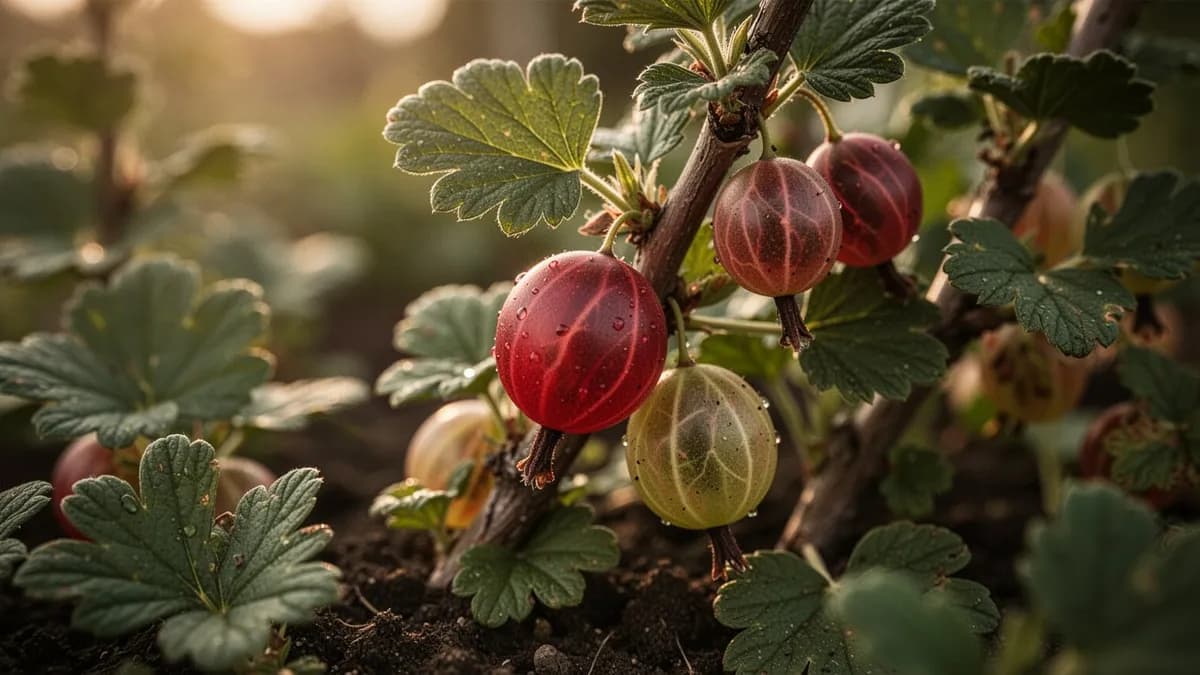
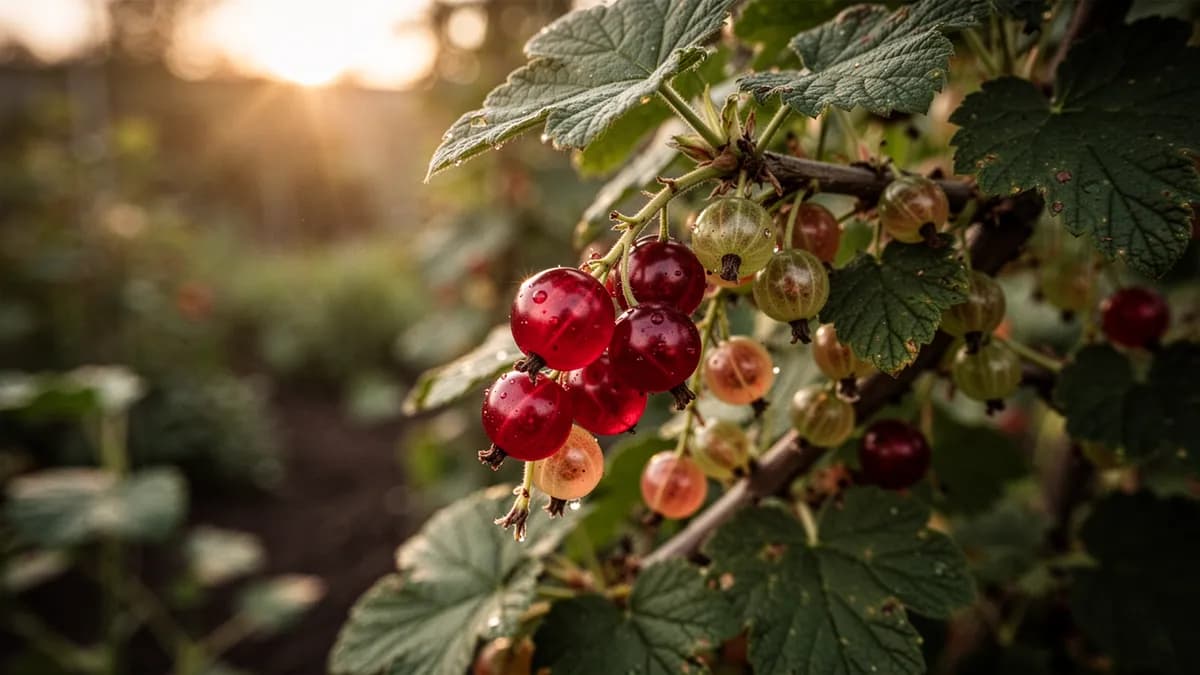
Una variedad de grosella espinosa de fruto grande, apreciada en la cocina británica y europea para postres, salsas y vino. Las variedades europeas producen bayas del tamaño de pequeñas ciruelas, en una gama de colores que va del verde al rojo y al dorado. Requieren buena circulación de aire y la selección de cultivares resistentes al oídio en climas húmedos.
Cuándo plantar Grosellero espinoso europeo
Las grosellas espinosas europeas se propagan fácilmente por esquejes de madera dura tomados a finales de otoño. Selecciona tallos sanos y rectos de unos treinta centímetros, procedentes del crecimiento del año en curso. Retira todas las yemas salvo las tres o cuatro superiores para dejar un tallo limpio y evitar la emisión de brotes subterráneos. Introduce el esqueje dos tercios de su longitud en un suelo húmedo y bien drenado. Los esquejes enraízan durante el invierno sin calor adicional y pueden trasplantarse al otoño siguiente. El injerto sobre patrón de Ribes aureum se usa comercialmente por su vigor y resistencia a enfermedades. La propagación por semilla produce descendencia muy variable.
Tu año de Grosellero espinoso europeo
Ajustado a Zona 7 · temporada típica · la helada se va hacia el 2 abr y vuelve hacia el 1 nov
Planta Grosellero espinoso europeo Mar – Abr y cosecha Jun – Jul. Consulta los métodos de plantación y elige tu clima para adaptar los periodos.
Cómo cultivar Grosellero espinoso europeo
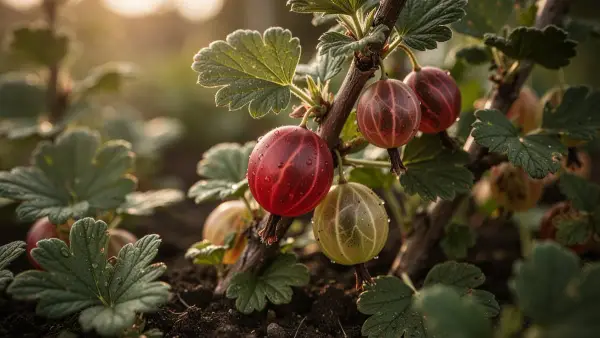
Las grosellas espinosas europeas producen las bayas más grandes y sabrosas de todos los tipos de grosella espinosa, con frutos individuales que alcanzan el tamaño de pequeñas ciruelas y una deslumbrante gama de colores que va del verde translúcido al amarillo dorado y al rojo carmesí intenso. Se han cultivado y seleccionado durante siglos en Gran Bretaña y Europa, donde existen cientos de variedades con nombre y las exposiciones competitivas de grosella espinosa siguen siendo una tradición muy querida. Plántalas en un lugar fresco y resguardado, con sol de mañana y sombra por la tarde en climas cálidos.
El gran desafío de las grosellas espinosas europeas es su extrema susceptibilidad al oídio americano, una devastadora enfermedad fúngica que llegó a Europa a comienzos del siglo XX y transformó por completo su cultivo. Elige siempre que sea posible cultivares resistentes al oídio y mantén una forma abierta en copa con excelente circulación de aire por el centro del arbusto. Separa las plantas entre 120 y 150 cm, poda para dejar entre ocho y diez ramas principales y elimina toda la madera de más de tres años.
Las grosellas espinosas europeas tienen más espinas que las americanas, así que usa guantes gruesos al podar y cosechar. La poda en espolón de las ramas laterales a cinco yemas en invierno y el despunte a cinco hojas en verano concentran la energía de la planta en menos frutos, pero de mayor tamaño. Para obtener bayas de exhibición, aclara la carga a finales de primavera, eliminando cada segundo fruto para que los restantes alcancen su tamaño máximo. Riega de forma constante y aplica un acolchado abundante con estiércol bien descompuesto para ofrecer las condiciones ricas y húmedas que estas variedades necesitan.
Para Grosellero espinoso europeo un bancal de 120 × 240 cm se queda corto
Cada Grosellero espinoso europeo pide 150 cm de margen. El planificador guarda ese marco por ti — cada planta, cada bancal.
Los mejores vecinos de Grosellero espinoso europeo
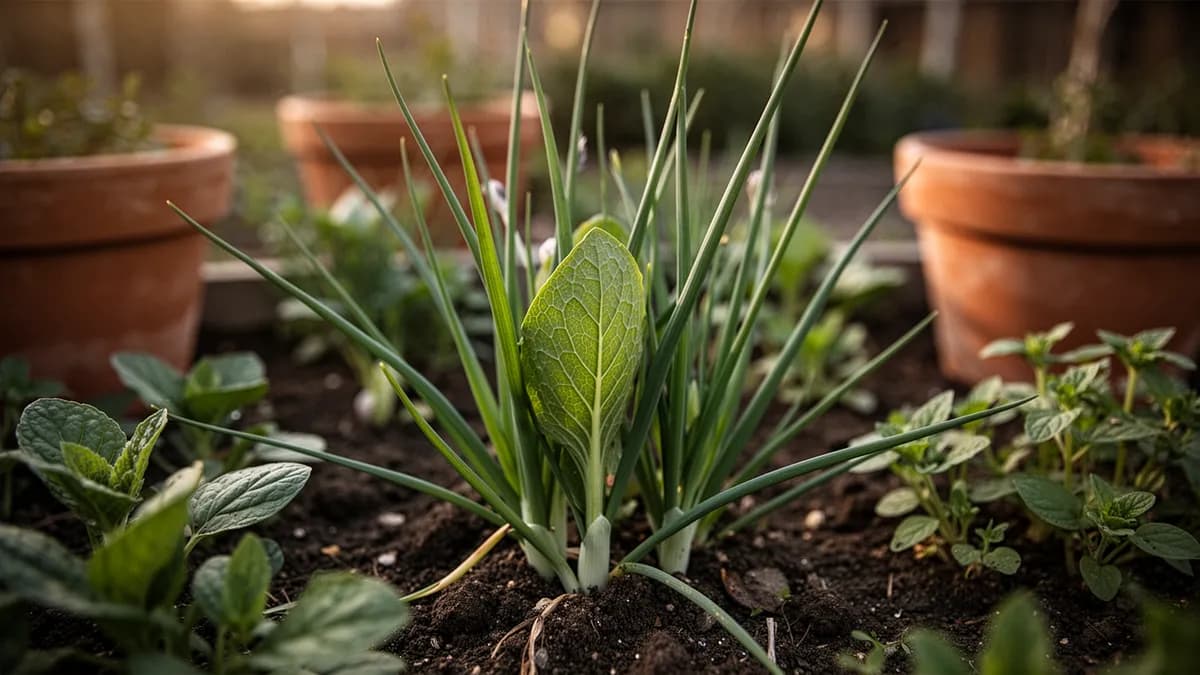
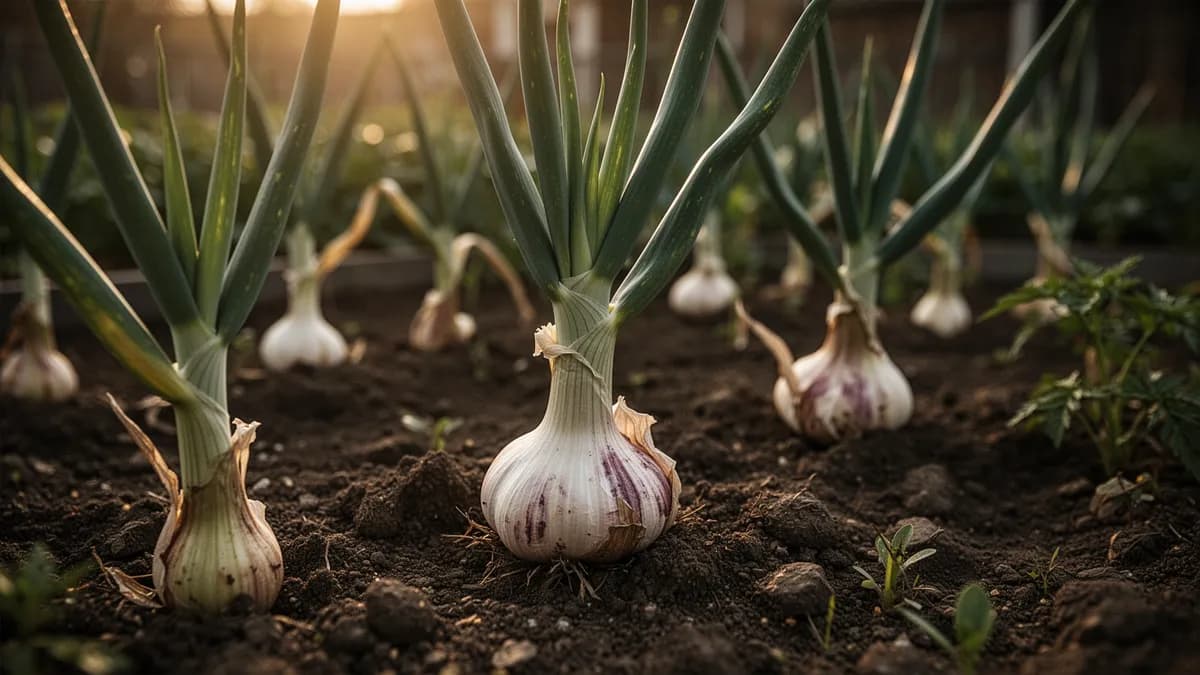
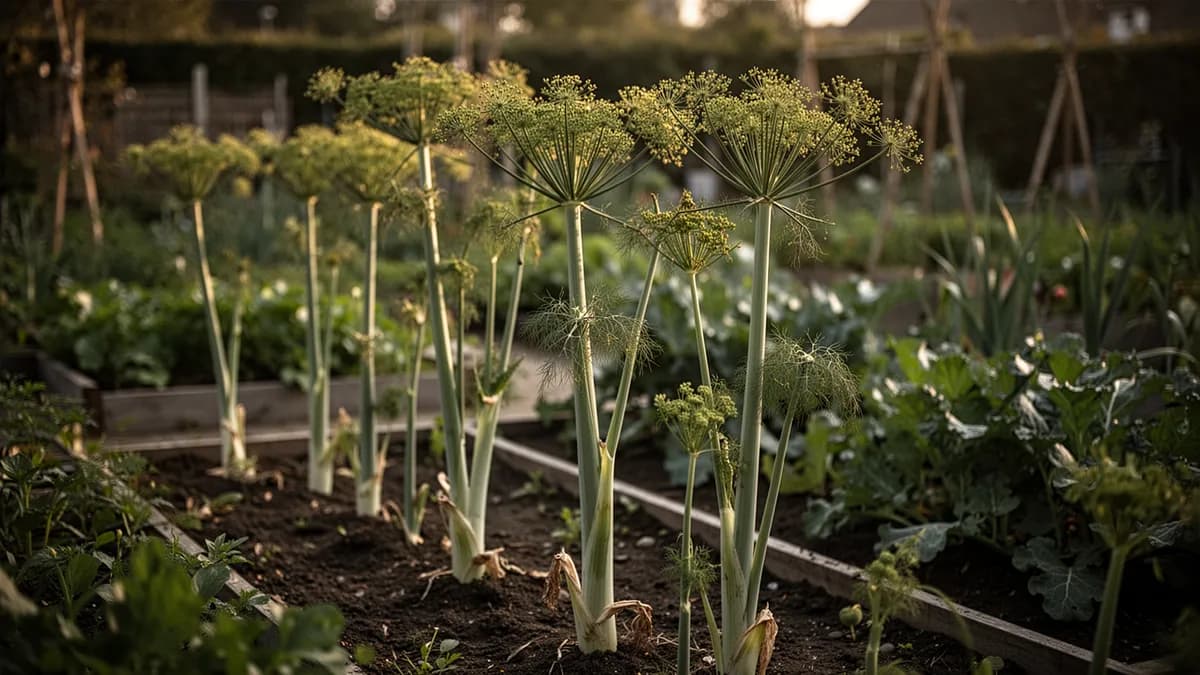
La cebollino y el ajo plantados cerca de los arbustos de grosella espinosa europea pueden ayudar a disuadir a los pulgones y aportar cierta protección a base de azufre frente al oídio. La buena circulación de aire es el factor cultural más importante para el control de enfermedades, así que evita el hacinamiento con plantas altas vecinas. El tanaceto y el ajenjo son acompañantes tradicionales para repeler la mosca sierra. Las hierbas bajas como el tomillo funcionan como cubresuelos que suprimen malezas sin competir por la luz. Mantén la distancia respecto al hinojo y evita plantar cerca de pinos de cinco agujas en áreas reguladas.
Cebollino va a su lado. Hinojo no.
Saber de huerto de siempre, cotejado con la tabla real de Grosellero espinoso europeo — prueba cualquier planta que cultives.
Prueba Grosellero espinoso europeo en un bancal, aquí mismo
Un bancal real del planificador con Grosellero espinoso europeo ya plantado. Toca una planta compañera para colocarla y mira cómo responde la comprobación de vecinos: verde para buenos vecinos, rojo si hay conflicto.


Guías de cultivo relacionadas
Abónalo bien
Las grosellas espinosas europeas necesitan un suelo rico, con buena retención de humedad, un pH de 6.0 a 6.5 y abundante materia orgánica. Son más exigentes que los tipos americanos y responden muy bien al acolchado anual con estiércol bien descompuesto o compost a finales del invierno. Aplica un fertilizante rico en potasio, como sulfato potásico, a comienzos de la primavera para favorecer frutos grandes y bien coloreados. Evita el exceso de nitrógeno, que provoca un crecimiento tierno y más susceptible al oídio. En suelos arenosos ligeros, añade mucho compost para mejorar la retención de humedad.
Temperatura ideal
Compatibilidad de zonas de rusticidad
De la semilla a la cosecha, etapa por etapa
Plantación en reposo
Los arbustos de grosella espinosa a raíz desnuda o cultivados en contenedor se plantan desde finales de otoño hasta comienzos de primavera, mientras la planta está en reposo. Las raíces se establecen con rapidez en un suelo fresco y húmedo antes de que empiece el crecimiento aéreo. Planta con el injerto o la marca del suelo al nivel del terreno, en un bancal bien preparado y fértil.
Apertura de yemas y brotación
Entre los primeros arbustos del jardín en despertar a finales del invierno, las yemas de la grosella espinosa se hinchan y se abren en racimos de pequeñas hojas lobuladas de un verde manzana fresco. Esta brotación temprana hace importante la protección contra heladas en zonas propensas a fríos tardíos.
Floración
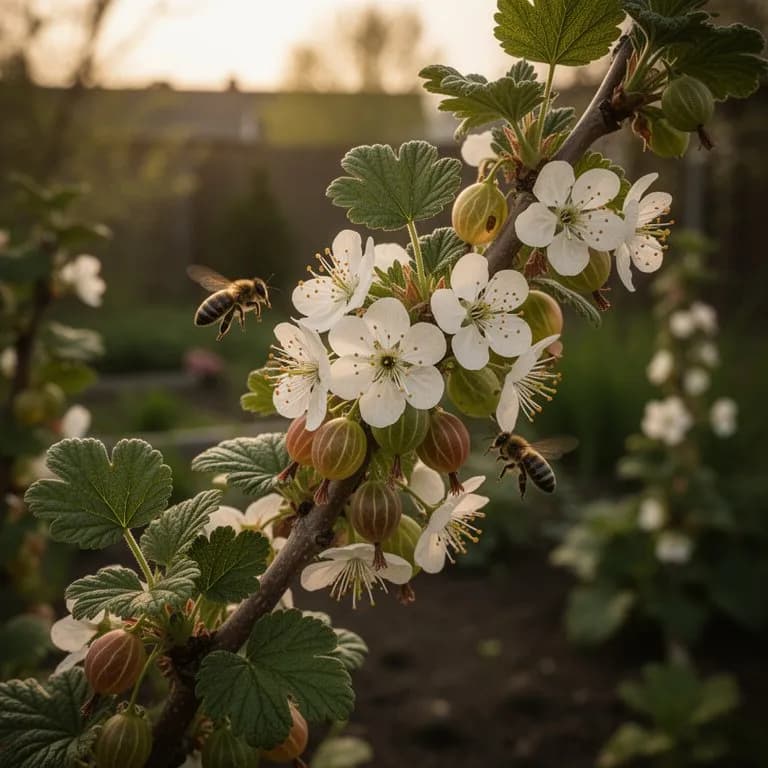
Pequeñas flores colgantes, de color verde rosado a blanco cremoso, aparecen en racimos de una a tres a lo largo de la madera del año anterior. Las flores son en gran parte autofértiles, así que un solo arbusto dará cosecha, aunque plantar dos variedades cercanas mejora el rendimiento. Las abejas y los polinizadores tempranos son visitantes clave.
Cuajado y engorde
Las flores fecundadas pierden sus pétalos y las pequeñas bayas embrionarias empiezan a engordar con rapidez. En esta fase los frutos son duros, claramente acanalados y muy ácidos. Es el momento ideal para el aclareo en verde: eliminar cada segundo fruto de las ramas muy cargadas para que las bayas restantes aumenten de tamaño.
Maduración
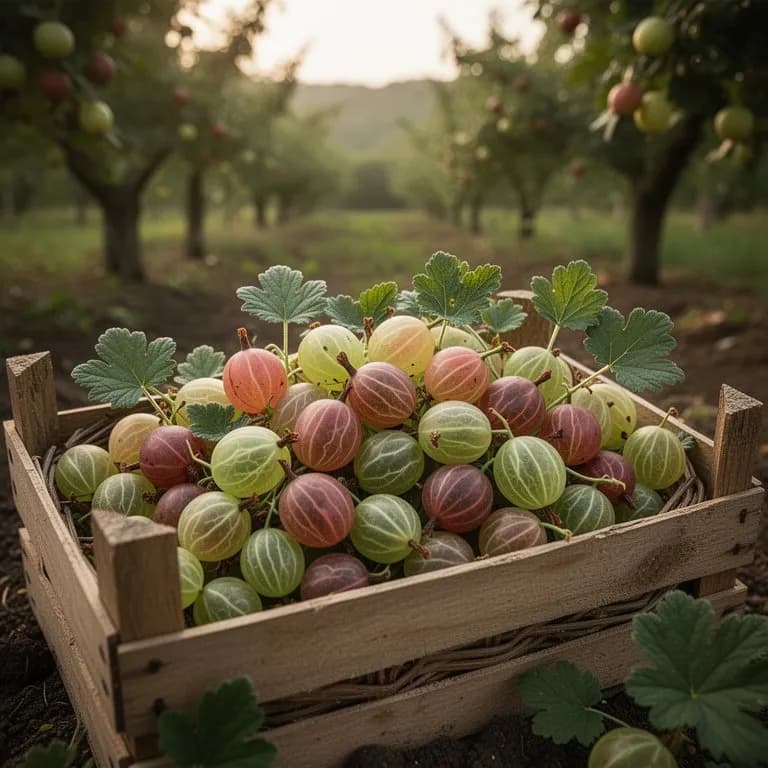
Según la variedad, las bayas pasan de duras y verdes brillantes a su color de madurez, que puede ser verde amarillento, dorado, rojo, rosa o casi blanco. Las variedades de postre se ablandan y desarrollan una dulzura floral compleja cuando están totalmente maduras. Las variedades de cocina se recogen ligeramente inmaduras para lograr la máxima pectina y acidez.
Poscosecha y poda
Tras la cosecha, el arbusto sigue fotosintetizando y acumulando reservas en las raíces durante finales del verano y el otoño. Las hojas empiezan a amarillear y caer con las primeras heladas otoñales. La poda invernal, realizada cuando la planta está totalmente en reposo, da forma al arbusto y elimina la madera vieja y poco productiva para estimular nuevos brotes fructíferos.
Incorpora abundante compost bien descompuesto o estiércol en el hoyo de plantación. Coloca un acolchado generoso de virutas de corteza o paja después de plantar para conservar la humedad y suprimir las malas hierbas sin amontonar el material sobre los tallos.
Cuidar Grosellero espinoso europeo mes a mes
Qué hacer cada mes para tu Grosellero espinoso europeo
Octubre
Mes actualPlanta nuevos arbustos de grosella espinosa a raíz desnuda comprados en vivero. Prepara los hoyos con compost y asegúrate de que el suelo drene bien. Las plantas en contenedor también pueden colocarse ahora. Marca claramente la posición de los arbustos establecidos antes de que el suelo se congele.
Ten claro qué hacer en tu huerto, cada mes
Un correo al empezar cada mes: qué sembrar, plantar y hacer ahora mismo — para tu Grosellero espinoso europeo y todo lo que crece alrededor. Más un breve curso inicial para esquivar los errores clásicos.
- Qué hacer ahora mismo
- Ajustado a tu temporada
- Curso inicial incluido
Cosechar Grosellero espinoso europeo
Las grosellas espinosas europeas se cosechan en dos estados diferentes según su uso. Para cocinar, recoge las bayas cuando estén de tamaño completo, pero aún duras y verdes, ya que el alto contenido de ácido y pectina en esta fase produce las mejores tartas, pasteles y mermeladas. Para comerlas frescas como postre, deja las bayas en el arbusto hasta que se ablanden, desarrollen todo su color y sean lo bastante dulces como para comerlas crudas. Este doble enfoque te permite aclarar la cosecha para cocinar a finales de primavera y, al mismo tiempo, dejar que las bayas mejor situadas maduren por completo para consumo en fresco.
se supone que plantas al comenzar el periodo — indica tu fecha real
Cosecha Grosellero espinoso europeo a tiempo y la planta sigue produciendo.
Almacenamiento y conservación
Las grosellas espinosas duras e inmaduras para cocina se conservan sorprendentemente bien, hasta tres semanas en la nevera. Las bayas de postre completamente maduras son más perecederas y deben consumirse en el plazo de una semana. Ambos estados se congelan bien: extiéndelas en una bandeja y pásalas a bolsas cuando estén sólidas. Las grosellas espinosas europeas producen las mejores conservas, fools y crumbles tradicionales gracias a su tamaño y complejidad de sabor. El vino de grosella espinosa elaborado con variedades europeas es una antigua tradición inglesa que da lugar a una bebida fresca, parecida a un vino blanco. La salsa embotellada de grosella espinosa combina de maravilla con el pescado.
Qué falla — y cómo solucionarlo
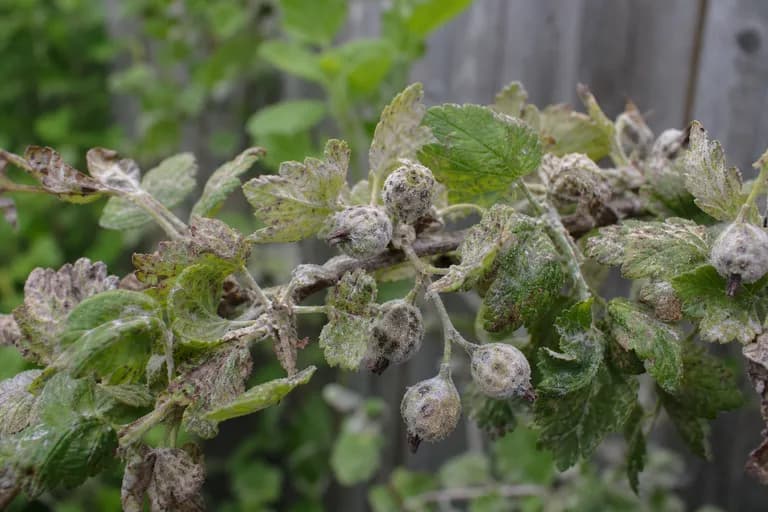
Oídio americano de la grosella espinosa
EnfermedadCapa densa, blanca a marrón, de aspecto afelpado que cubre las puntas de los brotes, las hojas y los frutos en desarrollo; crecimiento muy raquítico y bayas no aptas para venta.
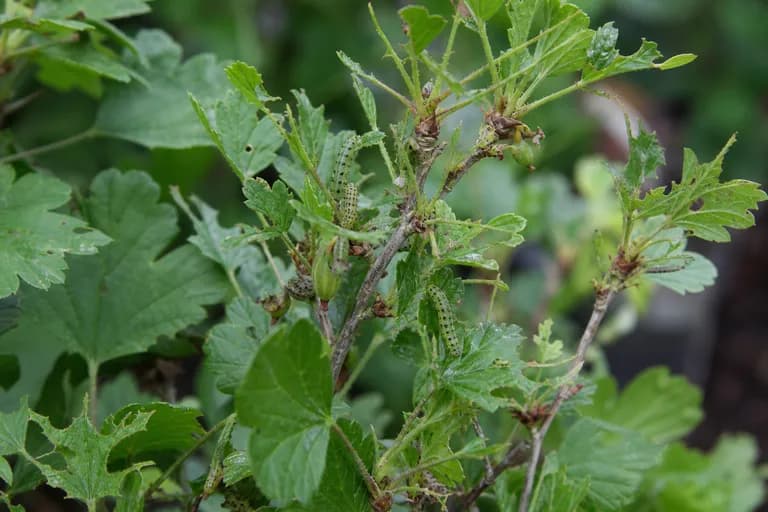
Mosca sierra de la grosella espinosa
PlagaLarvas verde pálido con manchas negras que esqueletizan rápidamente las hojas desde el interior del arbusto hacia afuera, provocando una defoliación completa en pocos días.
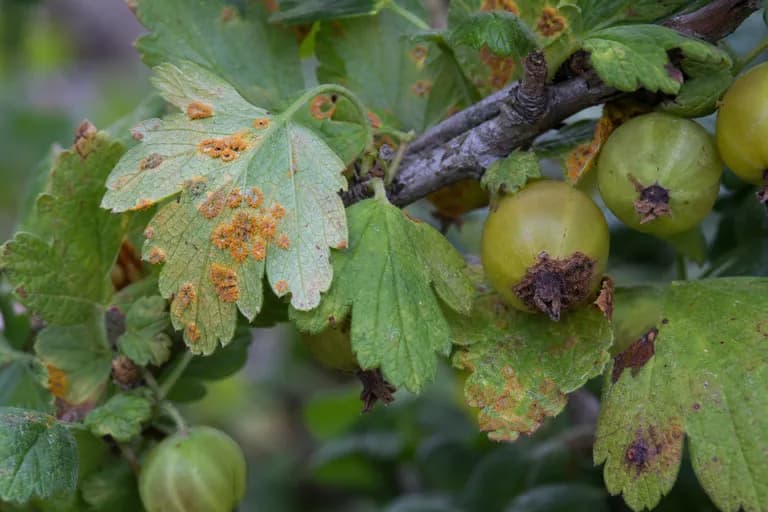
Roya en copa de la grosella espinosa
EnfermedadPústulas brillantes en forma de copa de color naranja en el envés de las hojas y frutos deformados en primavera; las ciperáceas actúan como hospedador alternativo.
Solución de problemas comunes
El oídio es, con diferencia, el mayor problema de las grosellas espinosas europeas y puede arrasar plantas sin protección. Elegir cultivares resistentes es la decisión más importante para cualquier cultivador. Las larvas de la mosca sierra pueden dejar los arbustos sin hojas en pocos días si no se detectan pronto, así que la vigilancia desde mediados de primavera es esencial. Las fuertes espinas de muchas variedades europeas hacen que podar y cosechar sea doloroso; elige, cuando sea posible, cultivares mejorados para reducir la espinación. En algunas regiones de EE. UU. pueden aplicarse restricciones de plantación de Ribes.
Consejos de cultivo
- Planta los arbustos de grosella espinosa a raíz desnuda entre noviembre y marzo, mientras están completamente en reposo. Las plantas cultivadas en contenedor pueden colocarse en cualquier momento del año si se riegan bien, pero la plantación en otoño e invierno establece los sistemas radiculares más fuertes antes de la primera temporada de crecimiento.
- Elige un lugar de plantación con sol pleno a sombra parcial. Las grosellas espinosas son uno de los arbustos frutales más tolerantes a la sombra y producirán razonablemente bien en una pared orientada al norte o bajo árboles caducifolios, aunque los rendimientos son más altos en una ubicación abierta y soleada.
- Incorpora una cantidad generosa de estiércol bien descompuesto o compost en el hoyo de plantación y aplica cada año a finales del invierno un fertilizante equilibrado. Una cobertura superficial de sulfato potásico a finales del invierno favorece el desarrollo del fruto y mejora la resistencia a enfermedades.
- Poda hasta conseguir una forma de copa abierta, buscando 8-10 ramas de estructura bien espaciadas con un tronco central o pie despejado de unos 15 cm. Abrir el centro del arbusto mejora la circulación de aire, reduce el oídio y hace la cosecha mucho más fácil.
- Inspecciona cuidadosamente los brotes nuevos desde mediados de primavera en adelante en busca de larvas de la mosca sierra de la grosella espinosa, pequeñas orugas verde pálido con manchas negras que pueden defoliar por completo un arbusto en pocos días. Recógelas a mano en cuanto las veas, revisando primero el envés de las hojas cerca del centro de la planta.
- Coloca malla fina contra pájaros en cuanto las bayas empiecen a colorear en junio. Los mirlos y las palomas torcaces pueden vaciar cada baya durante la noche. Revisa la malla con regularidad para asegurarte de que no haya aves atrapadas dentro.
- Para obtener la fruta de postre más dulce, deja las bayas en el arbusto hasta que estén totalmente maduras y blandas. Para usos culinarios como mermelada y crumble, cosecha ligeramente inmaduras, cuando las bayas aún estén firmes y su contenido de pectina sea máximo.
- Toma esquejes de madera dura en otoño cortando brotes del grosor de un lápiz del crecimiento de la temporada actual, a longitudes de 20-25 cm. Retira las yemas inferiores, introduce dos tercios del esqueje en suelo de buen drenaje al aire libre y la mayoría habrá enraizado la primavera siguiente, dándote plantas gratis para ampliar tu zona o compartir.
- Aplica cada primavera un acolchado generoso alrededor de la base del arbusto con una capa de 5-8 cm de virutas de madera, mantillo de hojas o compost bien descompuesto, manteniendo el acolchado alejado de los tallos principales. Esto conserva la humedad, suprime las malezas y alimenta la biología del suelo a medida que se descompone.
- Si el oídio es un problema recurrente, elige variedades resistentes como 'Invicta', 'Pax' o 'Hinnonmäki Red' y poda con más firmeza para abrir el centro del arbusto. Evita el riego por aspersión y asegúrate de que la planta tenga buena ventilación por todos los lados.
Cultiva tu mejor Grosellero espinoso europeo — y todo lo que la rodea.
Empieza un plan gratis hoy. Diseña tus bancales, coloca tu Grosellero espinoso europeo y deja que PlotMyGarden gestione el momento, el espaciado, las asociaciones y los recordatorios de la semilla a la cesta.
Elige tu Grosellero espinoso europeo
Invicta
La referencia entre las variedades europeas resistentes al oídio, con bayas verdes grandes para cocinar y cosechas muy abundantes y fiables.
Whinham's Industry
Una variedad clásica de época victoriana que produce grandes bayas rojas oscuras para postre, con un sabor dulce excelente y mejor tolerancia a la sombra que la mayoría.
Leveller
Una variedad de exhibición muy apreciada, con enormes bayas amarillo dorado y un sabor exquisito, aunque requiere un cultivo cuidadoso y buen manejo del oídio.
Hinnonmaki Red
Una variedad finlandesa resistente al oídio, con bayas rojas de tamaño medio a grande que combinan buena calidad de postre con gran resistencia a enfermedades.
Un solo arbusto europeo de grosella espinosa a raíz desnuda cuesta aproximadamente entre 5 y 15 libras esterlinas al plantarlo y, con una poda y cuidados básicos anuales, producirá entre 3 y 6 kg de fruta cada año durante 15-20 años o más. Con precios de supermercado de 3 a 6 libras por tarrina de 300 g de grosellas frescas, cuando se encuentran, un arbusto productivo puede suponer un ahorro anual de 30 a 120 libras o más. Transformar la cosecha en mermelada, cordial o puré congelado amplía su valor a lo largo del año. El rendimiento total de por vida de un arbusto bien mantenido puede superar fácilmente los 100 kg de fruta, lo que lo convierte en una de las plantas frutales con mejor retorno por libra de inversión inicial para el horticultor doméstico.
Recetas rápidas
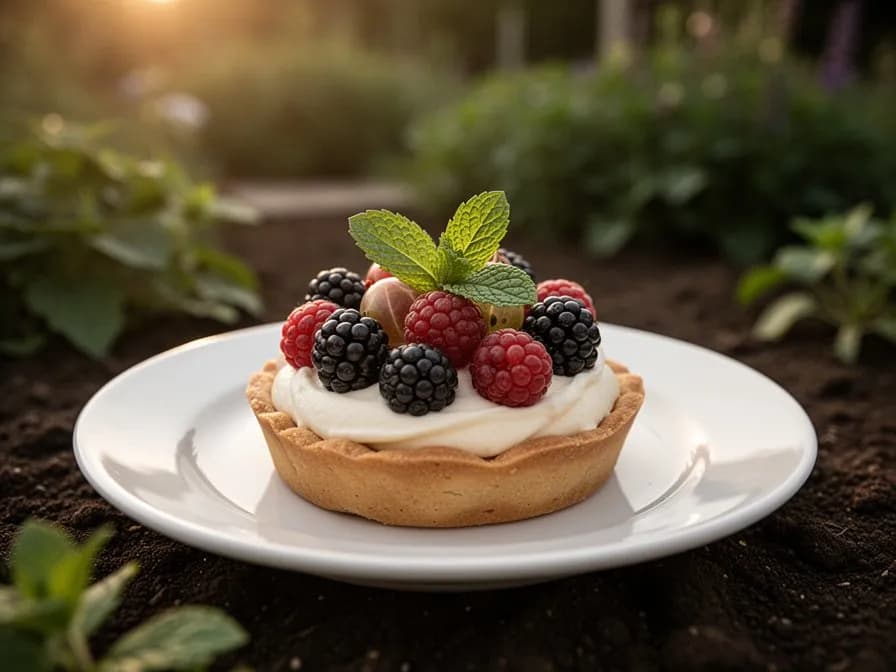
Mermelada clásica de grosella espinosa
45 minutesUna conserva brillante, de sabor vivo entre ácido y dulce, que cuaja con firmeza sin pectina añadida gracias al alto contenido natural de pectina de la grosella espinosa. El verde intenso de las bayas poco maduras se transforma en un tono ámbar o rosado, casi joya, durante la cocción. Úsala sobre tostadas o scones, o como glaseado para cerdo asado y pato.
5 ingredientesFool de grosella espinosa y flor de saúco
30 minutes plus chillingEl más elegante de los postres veraniegos de la vieja Inglaterra. Grosellas espinosas estofadas, ácidas, mezcladas con nata montada suave y un toque de cordial de flor de saúco forman una combinación de extraordinaria sencillez y refinamiento. Ambas frutas están en plena temporada al mismo tiempo, así que este postre celebra el inicio del verano en el jardín.
5 ingredientesCrumble de grosella espinosa
20 minutes prep, 35 minutes bakingUn pudin quintessentialmente británico que deja brillar la fuerte acidez de la grosella espinosa bajo una cobertura dorada y mantequillosa de crumble. El contraste entre la fruta burbujeante y ácida y la cobertura dulce y crujiente es profundamente satisfactorio. Sírvelo caliente con crema pastelera fría, nata cuajada o una bola de helado de vainilla.
7 ingredientesUsos culinarios
Las grosellas espinosas europeas son la base de la cocina postrera británica clásica. El gooseberry fool, una mezcla sencilla de fruta cocida y nata montada, es un plato veraniego atemporal. La tarta, el crumble y el pastel de grosella espinosa ponen en valor el característico sabor agridulce de la fruta cuando se cocina con azúcar. La combinación clásica de salsa de grosella espinosa con caballa y otros pescados grasos equilibra la riqueza con acidez. Las grosellas verdes producen un chutney excelente. Las variedades europeas maduras para postre se comen frescas como fruta de lujo.
Qué contiene
Beneficios para la salud
- Aporta alrededor del 30 % de la ingesta diaria recomendada de vitamina C por cada 100 g, apoyando la síntesis de colágeno, la defensa inmunitaria y la absorción de hierro no hemo de los alimentos vegetales.
- El alto contenido de fibra soluble, especialmente pectina, ralentiza la absorción de glucosa, favorece niveles saludables de colesterol y alimenta bacterias intestinales beneficiosas, contribuyendo a la salud metabólica a largo plazo.
- Ricas en antocianinas, quercetina y otros antioxidantes flavonoides que ayudan a neutralizar radicales libres y a reducir la inflamación crónica de bajo grado asociada con enfermedades cardiovasculares y envejecimiento.
- Contienen ácido salicílico, precursor natural de la aspirina, con leves propiedades antiinflamatorias y analgésicas, y que desempeña un papel en la respuesta inmunitaria frente a patógenos.
- Aportan cantidades notables de potasio y magnesio, minerales que actúan juntos para regular la presión arterial, apoyar un ritmo cardíaco saludable y reducir el riesgo de hipertensión.
- La combinación de índice glucémico bajo, mucha fibra y densidad calórica reducida convierte a las grosellas espinosas en una excelente fruta para el control de la glucosa y dietas orientadas al control del peso.
De dónde viene Grosellero espinoso europeo
La grosella espinosa europea (Ribes uva-crispa var. sativum) es originaria de las laderas rocosas, los bosques abiertos y los setos de Europa y la región del Cáucaso, y crece de forma silvestre desde las islas británicas hacia el este a través de Europa central, los Balcanes y hasta el norte de Irán. Las pruebas arqueológicas y escritas sitúan su cultivo en huertos europeos desde el siglo XIII, cuando comenzó a seleccionarse a partir de plantas silvestres de seto y a mejorarse mediante cría deliberada. En los siglos XV y XVI, las grosellas espinosas ya eran una presencia consolidada en los huertos comerciales británicos y del norte de Europa, valoradas tanto por su versatilidad culinaria como por su capacidad para prosperar en climas fríos y húmedos donde otras frutas blandas sufrían. Los siglos XVIII y XIX vieron un florecimiento extraordinario de la cultura de la grosella espinosa, especialmente en las ciudades industriales del norte de Inglaterra. Los cultivadores de clase trabajadora formaron clubes y sociedades de grosella espinosa, celebrando exposiciones competitivas en las que el peso de una sola baya era el único criterio de excelencia. Estos entusiastas criadores produjeron cientos de cultivares con nombre e impulsaron un aumento espectacular del tamaño de las bayas, con frutos premiados que acabaron superando los 60 gramos, muchas veces el peso de una baya silvestre. Decenas de estas variedades patrimoniales, entre ellas 'Leveller', 'Whitesmith', 'Careless' y 'Lancashire Lad', siguen estando disponibles comercialmente hoy y son muy apreciadas por los aficionados a las frutas históricas. En Norteamérica, el cultivo de grosellas espinosas y de sus parientes cercanos, las grosellas, se redujo drásticamente a comienzos del siglo XX cuando la legislación federal prohibió plantar especies de Ribes como parte del esfuerzo para combatir la roya del pino blanco. Aunque la prohibición federal se levantó en 1966 y las restricciones a nivel estatal se han ido retirando gradualmente, esa interrupción frenó el desarrollo de una cultura de la grosella espinosa en Norteamérica que venía creciendo de forma constante durante la época colonial. Hoy la grosella espinosa europea disfruta de un seguimiento discreto pero devoto entre los hortelanos de zonas templadas de todo el mundo, apreciada por su productividad excepcional, su versatilidad desde baya ácida para cocinar hasta fruta dulce de postre, y su disposición a producir con fiabilidad en condiciones de sombra parcial y veranos frescos que plantean dificultades a muchas otras frutas.
Grosellero espinoso europeo: ¿sabías que?
Datos fascinantes sobre Grosellero espinoso europeo
Las grosellas espinosas europeas (Ribes uva-crispa) se cultivan en Gran Bretaña y el norte de Europa desde al menos el siglo XIII, y en el siglo XIX los clubes de cultivo de grosella espinosa del norte de Inglaterra celebraban concursos en los que los productores competían por la baya individual más grande, algunas de más de 60 gramos.
Grosellero espinoso europeo: preguntas frecuentes
¿Cuándo debo plantar Grosellero espinoso europeo?
¿Cuáles son buenas plantas acompañantes para Grosellero espinoso europeo?
¿En qué zonas de rusticidad puede crecer Grosellero espinoso europeo?
¿Cuánto sol necesita Grosellero espinoso europeo?
¿A qué distancia debo espaciar Grosellero espinoso europeo?
¿Qué plagas y enfermedades afectan a Grosellero espinoso europeo?
¿Cómo almaceno Grosellero espinoso europeo después de la cosecha?
¿Cuáles son las mejores variedades de Grosellero espinoso europeo para cultivar?
¿Qué suelo necesita Grosellero espinoso europeo?
¿Cuándo debo cosechar las grosellas espinosas y cómo sé cuándo están maduras?
Mi arbusto de grosella espinosa ha desarrollado una capa blanca y polvorienta en las puntas de los brotes y las hojas jóvenes. ¿Qué es y cómo lo trato?
¿Necesito más de un arbusto de grosella espinosa para la polinización?
¿Puedo cultivar grosellas espinosas en maceta?
¿Cómo propago grosellas espinosas para conseguir más plantas gratis?
¿Cuánto vive un arbusto de grosella espinosa y cuándo alcanza su fase más productiva?
Acabas de leer la teoría. Ahora cultívala en piloto automático.
Todo lo que hace que Grosellero espinoso europeo sea delicado — el momento, el espaciado, las asociaciones, la ventana de cosecha — es justo lo que PlotMyGarden resuelve por ti, para cada planta de tu huerto.
Un plan que conoce tu clima
Indica tu ubicación una vez. Recibe fechas de siembra, abonado y cosecha basadas en tu última helada real y el pronóstico en vivo — sin adivinar con un sobre genérico.
De la sección “Cuándo plantar”Planificador de bancales de arrastrar y soltar
Diseña bancales sobre una cuadrícula. Cada planta encaja con su espaciado correcto y ves toda la temporada antes de gastar un céntimo en semillas.
De la sección “Cultivo”Conflictos de asociación, detectados a tiempo
Más de 200 buenas y malas combinaciones comprobadas en vivo mientras plantas — para que un error que arruine la temporada nunca llegue a la tierra.
De la sección “Asociaciones”Recordatorios que sí vas a seguir
“Riega las judías.” “Recoge hoy antes de que se pase.” Oportunos, concretos y ligados a las plantas que de verdad cultivas.
De la sección “Cosecha”Escalonado, programado
¿Quieres cosechar seis semanas en vez de seis días? Reparte tus siembras automáticamente y te avisa cuando toca el siguiente lote.
De la sección “Cuándo plantar”Un registro que se vuelve más listo
Cada cosecha que registras le enseña tu huerto. El plan del año que viene parte de lo que de verdad funcionó en tu suelo, no en un manual.
De la sección “Resumen”Planta estos junto a Grosellero espinoso europeo
Más Bayas
Mantén Grosellero espinoso europeo lejos de estos
Cultiva tu mejor Grosellero espinoso europeo — y todo lo que la rodea.
Empieza un plan gratis hoy. Diseña tus bancales, coloca tu Grosellero espinoso europeo y deja que PlotMyGarden gestione el momento, el espaciado, las asociaciones y los recordatorios de la semilla a la cesta.