Japanese Daikon
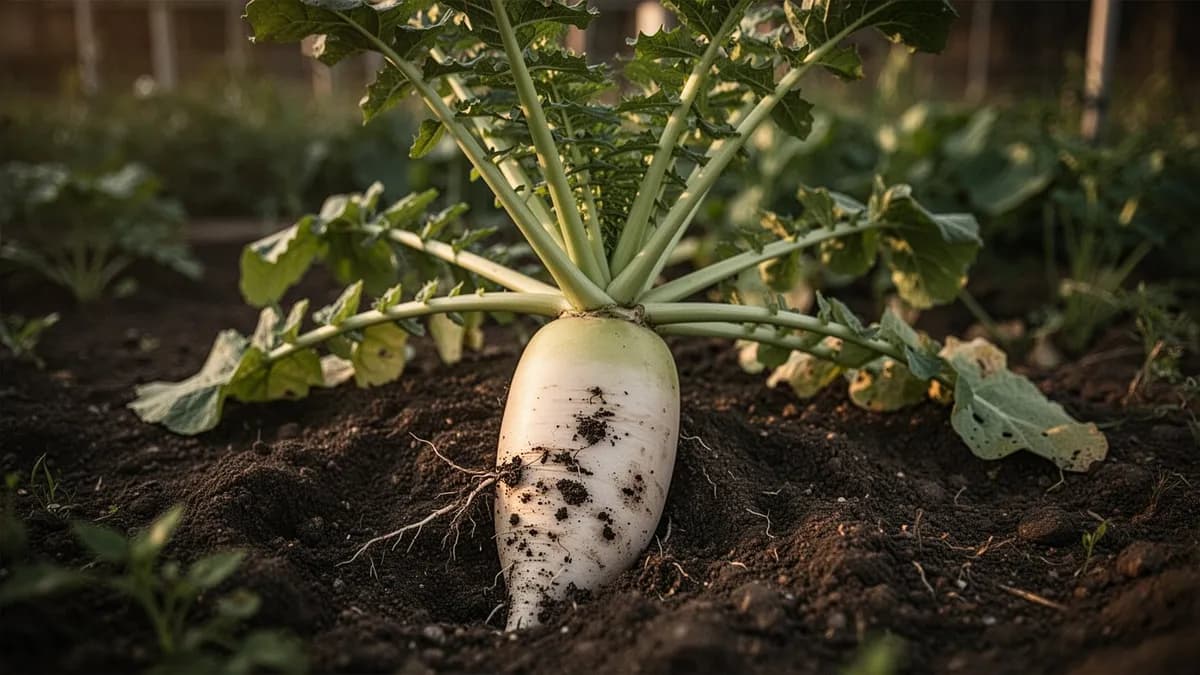
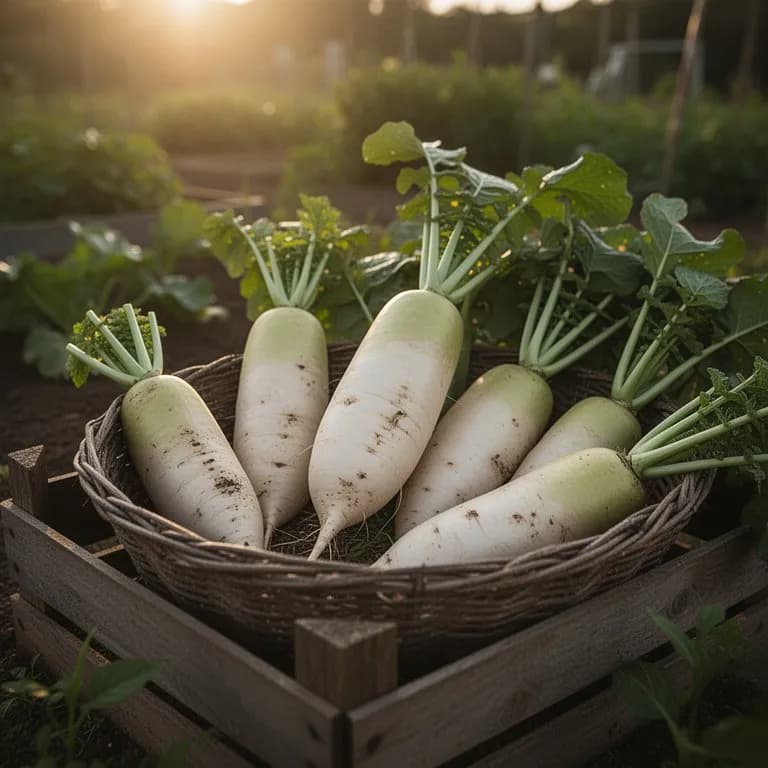
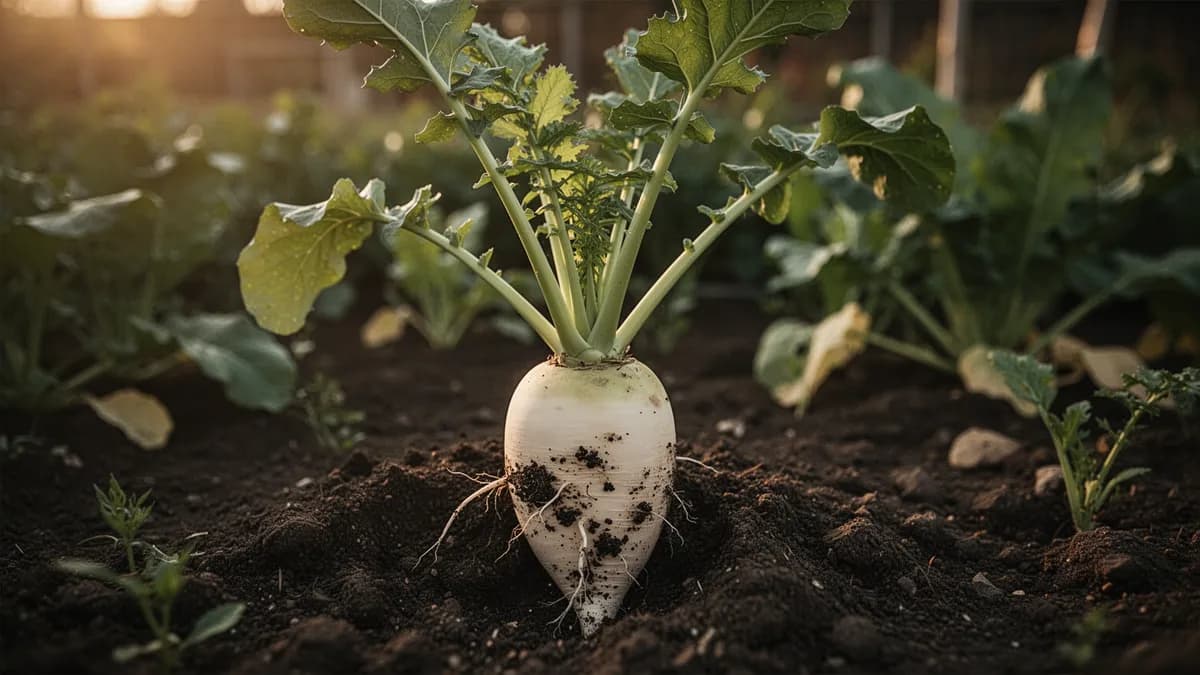
A classic white Japanese radish that can grow over a foot long with mild, crisp flesh used raw, pickled, and in soups.





On this pageOverview
Meet Japanese Daikon
A classic white Japanese radish that can grow over a foot long with mild, crisp flesh used raw, pickled, and in soups. Best grown as a fall crop for the sweetest flavor and longest, straightest roots. The large taproots help break up compacted soil, earning daikon a role as a biological tillage crop in no-till farming. Grate fresh for a cooling condiment with sashimi and tempura, or pickle for traditional takuan.
When to plant Japanese Daikon
Direct sowing is essential for daikon as the long taproot does not tolerate transplanting. Sow seeds 1 to 2 cm deep directly in the garden from mid-July through early September for fall harvest. Space seeds 5 cm apart and thin to 15 cm when seedlings have two to three true leaves. Seeds germinate rapidly in four to seven days at soil temperatures of 15 to 25 degrees Celsius. For spring crops in mild climates, choose bolt-resistant varieties and sow as soon as soil can be worked. Pre-soak seeds for two hours before sowing to speed germination in dry conditions.
Your Japanese Daikon Year
Composed for Zone 7 · typical seasons · frost passes Apr 2, returns Nov 1
Plant Japanese Daikon Jul – Sep, pick Oct – Dec. Check the planting methods below and set your climate to personalize these windows.
How to grow Japanese Daikon
Japanese daikon is best grown as a fall crop, as cool weather produces the mildest, crispest roots with minimal bolting risk. Direct sow seeds in mid to late summer, planting 1 to 2 cm deep in rows 30 cm apart. Thin seedlings to 15 cm apart when they reach 5 cm tall, as crowding results in forked or stunted roots. Choose a site with deep, loose, stone-free soil to allow the long taproots to develop straight and smooth without obstruction.
Prepare the soil by digging or forking to a depth of at least 40 cm, removing any rocks, clods, or debris that could deflect the growing root. Incorporate well-rotted compost to improve soil structure, but avoid fresh manure which causes forking. Keep the soil consistently moist throughout the growing period, as fluctuations in moisture lead to cracked or pithy roots. A layer of straw mulch helps retain moisture and regulate soil temperature during warm late-summer days.
Daikon grows rapidly, reaching harvest size in 50 to 70 days depending on variety and conditions. As roots swell, they often push partially out of the soil; mound earth around exposed shoulders to prevent greening and keep the flesh white and mild. In mild climates, daikon can overwinter in the ground with a thick mulch layer, allowing harvest through winter as needed. In areas with hard freezes, harvest before the ground freezes solid and store in cool, humid conditions.
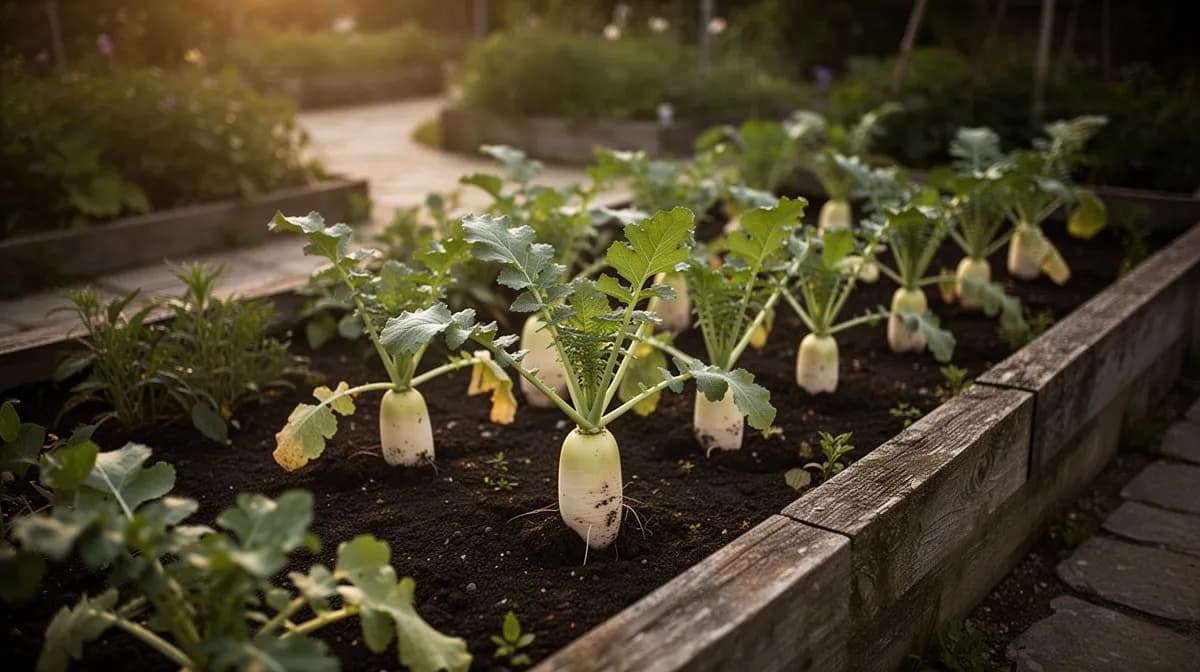
128 plants fit a 4 × 8 ft bed
Each Japanese Daikon wants 15 cm of elbow room. The planner keeps that spacing for you — every plant, every bed.
Japanese Daikon's best neighbours
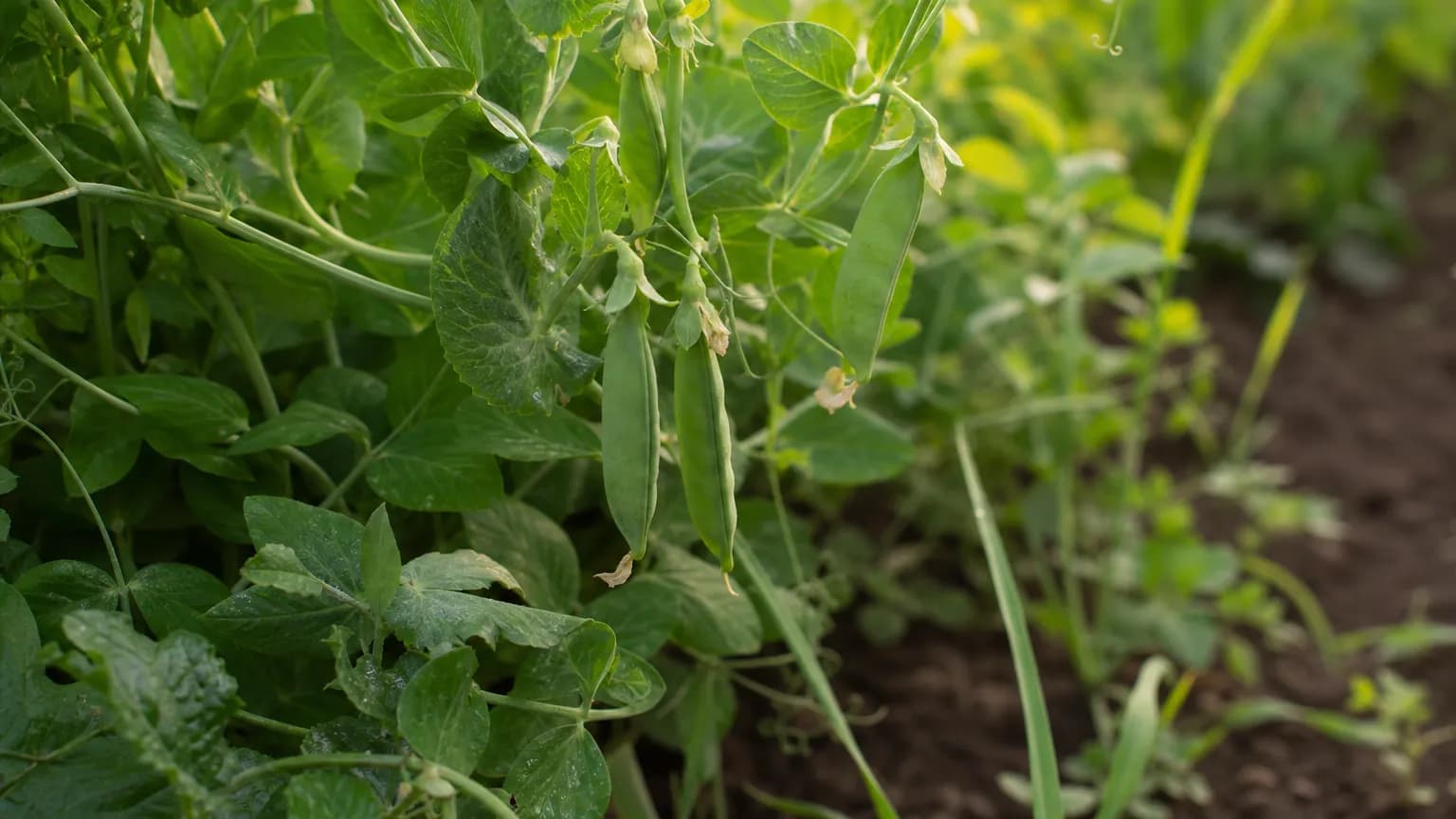
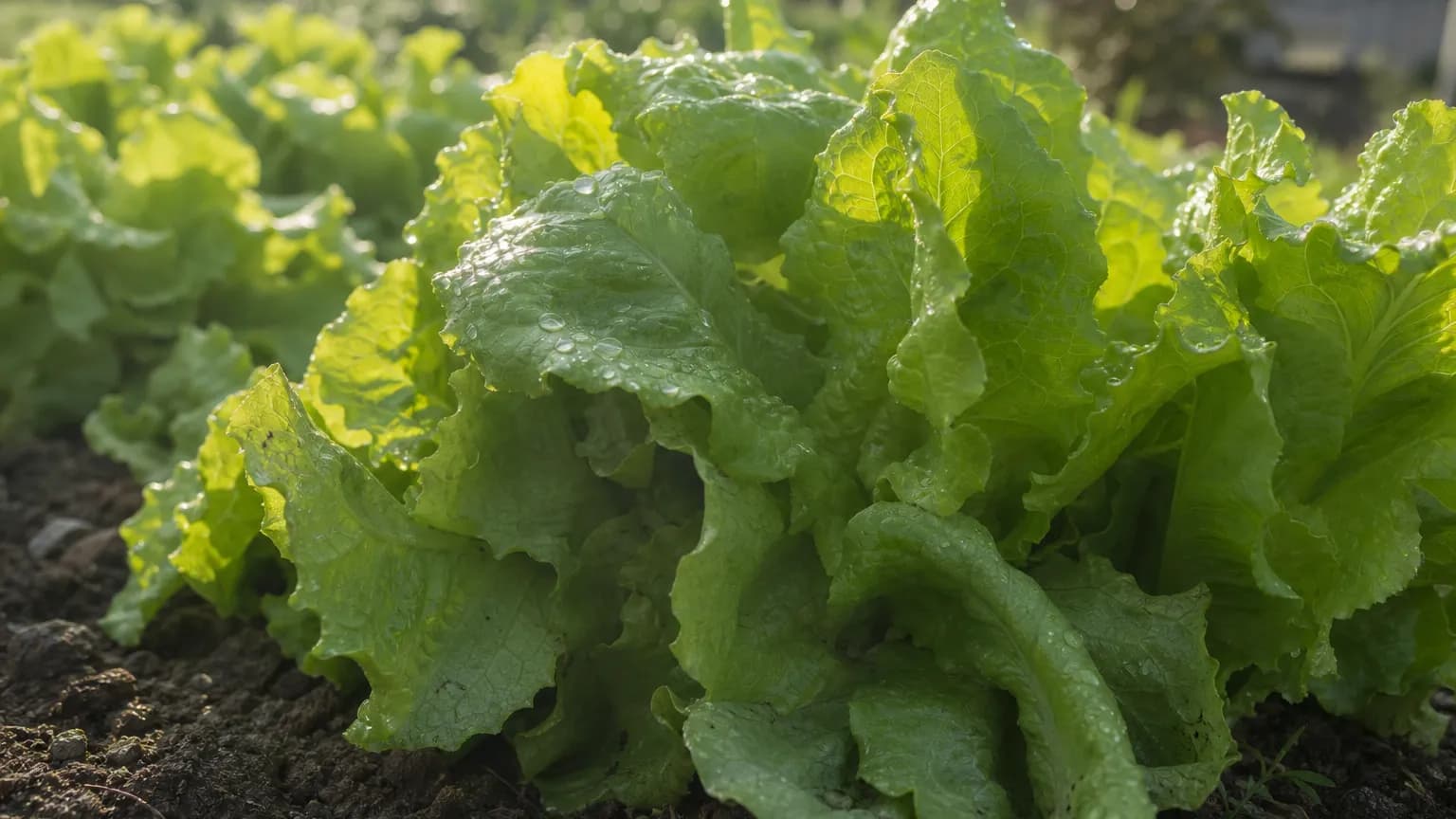
Daikon grows well alongside peas, lettuce, and other cool-season crops that share similar growing conditions. Its deep taproot breaks up compacted subsoil, benefiting shallow-rooted neighbors and improving soil drainage for future plantings. Avoid planting near other brassica family members to minimize shared pest and disease pressure. Daikon can serve as a cover crop or green manure, as unharvested roots decompose and leave channels that improve soil structure. Interplant with quick-maturing lettuce or spinach to make efficient use of garden space.
Peas belongs beside it.
Old growers' knowledge, checked against Japanese Daikon's real companion table below — test any plant you're growing.
Try Japanese Daikon in a bed — right here
A real planner bed with Japanese Daikon already in it. Tap a companion to place it and watch the pairing checks answer — green for good neighbours, red for a clash.


Related growing guides
Feed it well
Daikon requires deep, loose, well-drained soil for straight root development. Sandy loam is ideal, but heavier soils can work if deeply dug and amended with sand and compost. Soil pH should be between 6.0 and 7.0. Avoid fresh manure, which causes roots to fork. Apply a balanced granular fertilizer before sowing, focusing on phosphorus and potassium rather than nitrogen, as excess nitrogen promotes leafy top growth at the expense of root development. Side-dress lightly with a low-nitrogen fertilizer three weeks after thinning. Ensure consistent moisture for smooth, crack-free roots.
Ideal Temperature
Hardiness Zone Compatibility
From seed to harvest, stage by stage
Seed Germination
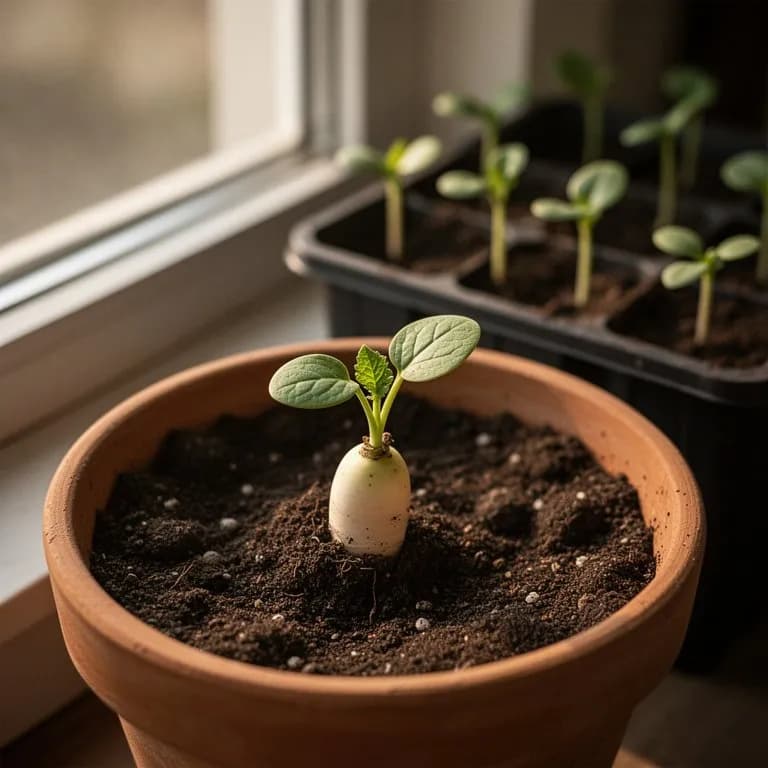
Daikon seeds germinate rapidly in cool to mild soil, with heart-shaped cotyledons breaking the surface in as little as 3-5 days. Seeds are direct-sown since daikon's long taproot does not tolerate transplanting. Optimal soil temperature for germination is 15-25°C (60-77°F).
Seedling Thinning
True leaves develop with the characteristic rough, lobed shape of brassica foliage. This is the critical thinning window — overcrowded seedlings produce thin, misshapen roots. The taproot begins its rapid downward growth, and any soil compaction or stones will cause forking.
Leaf Rosette Development
The plant builds a vigorous rosette of deeply lobed, rough-textured leaves that can spread 45-60 cm across. The foliage functions as the engine powering rapid root expansion below the soil. Healthy leaf development directly correlates with root size at harvest.
Root Expansion
The taproot enters its most rapid growth phase, thickening dramatically and elongating 1-2 cm per day under ideal cool conditions. The root shoulder begins to push above the soil line. Interior flesh is building its crisp, juicy texture and the mild-sweet flavor that distinguishes Japanese daikon from smaller radish types.
Maturation
Roots reach full size, typically 30-45 cm long and 5-8 cm in diameter for standard Minowase types. The skin is smooth, porcelain-white, and the flesh is dense, juicy, and mildly sweet with a gentle peppery finish. Harvest timing is critical — over-mature roots become pithy and hollow.
Harvest Window
The optimal harvest window spans about 2 weeks. Early in this window, roots are at peak crispness and sweetness. As the window closes, roots begin to develop spongy pith in the center and the flavor turns more sharply pungent. A light frost actually improves sweetness as the plant converts starches to sugars.
Sow seeds 1-2 cm deep and 5 cm apart in deeply loosened soil. Daikon must be direct-sown — never start in pots or trays, as any root disturbance causes forking and stunted roots.
Caring for Japanese Daikon month by month
What to do each month for your Japanese Daikon
October
You are herePrime harvest month for autumn-sown daikon. Roots are at peak sweetness after the first light frosts convert starches to sugars. Loosen soil deeply with a fork before pulling. Store in the refrigerator or in damp sand in a cool root cellar.
Know exactly what to do in your garden — every month
One email at the start of each month: what to sow, plant, and tackle right now — for your Japanese Daikon and everything growing around it. Plus a short starter course that helps you dodge the classic mistakes.
- What to do, right now
- Matched to your season
- Starter course included
Harvesting Japanese Daikon
Harvest daikon 50 to 70 days after sowing when roots are 25 to 40 cm long and 5 to 8 cm in diameter, depending on variety. Loosen soil alongside the root with a garden fork before pulling to avoid breakage, as the long taproots snap easily. Harvest in the morning when roots are most turgid. Roots left too long in the ground become pithy and hollow, especially in warm weather. Twist off the leafy tops immediately after harvest, leaving about 2 cm of stem to prevent moisture loss. Check a test root before harvesting the whole crop to assess maturity.
assuming you plant when the window opens — set your real date
Pick Japanese Daikon promptly and the plant keeps producing.
Storage & Preservation
Store unwashed daikon in the refrigerator wrapped in damp paper towels inside a plastic bag, where roots keep for two to three weeks. For long-term storage, pack in boxes of damp sand in a cool cellar or garage at around 2 to 5 degrees Celsius, where they last several months. Daikon is traditionally preserved as takuan by sun-drying whole roots and then fermenting in rice bran and salt. Fresh daikon can also be julienned and quick-pickled in rice vinegar and sugar, or grated and frozen in portions for adding to soups and sauces.
What goes wrong — and the fix
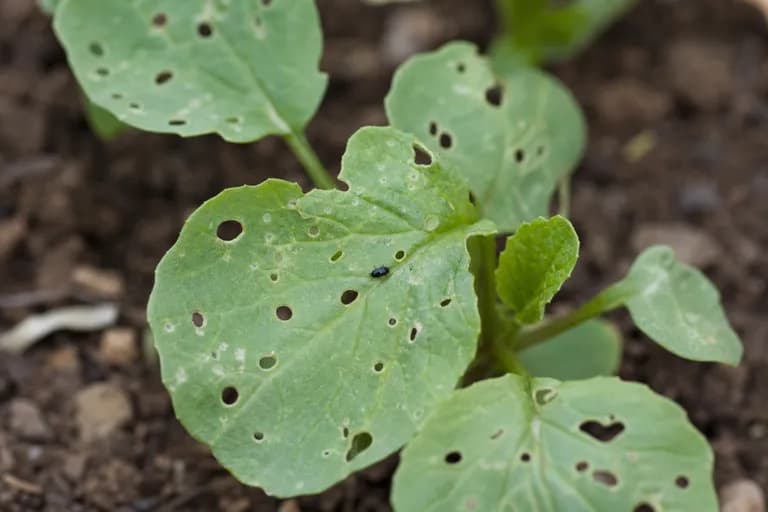
Flea Beetle
PestNumerous tiny round holes in leaves of young seedlings, giving foliage a peppered or shot-hole appearance.
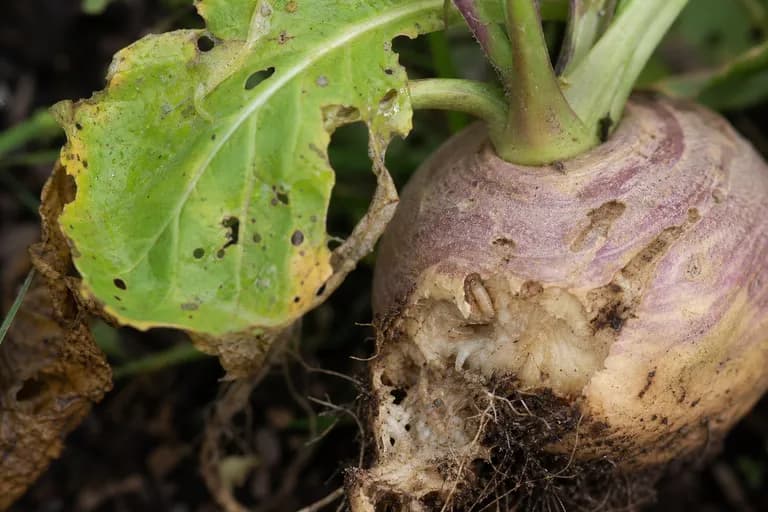
Cabbage Root Fly
PestWilting seedlings, tunnels and maggots visible in root flesh, secondary rot infections in damaged roots.
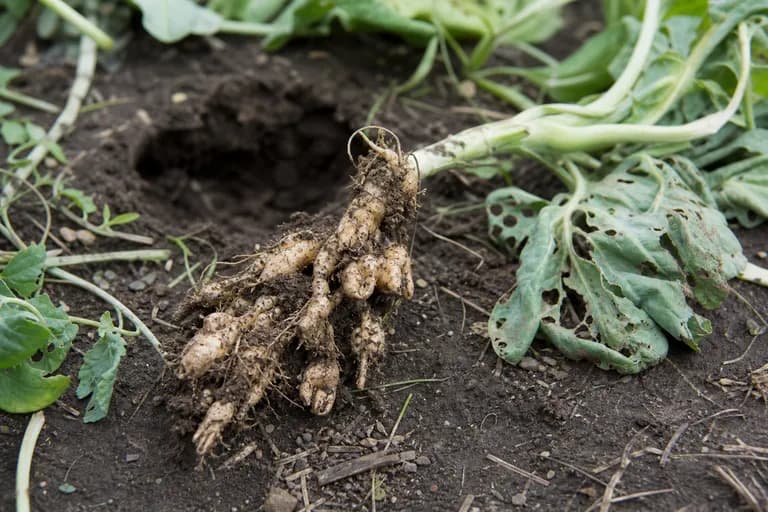
Clubroot
DiseaseSwollen, distorted roots, stunted top growth, and wilting during warm weather despite adequate soil moisture.
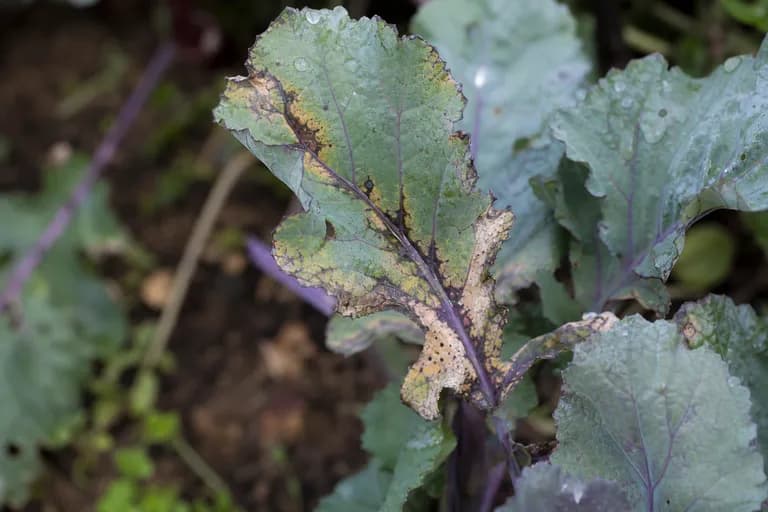
Black Rot
DiseaseV-shaped yellow to brown lesions starting from leaf margins, darkened veins, internal discoloration of roots.
Troubleshooting Common Problems
Forked or misshapen roots are the most common complaint, caused by rocky, compacted, or recently manured soil. Prepare beds deeply and remove obstructions before sowing. Bolting occurs when plants are exposed to long days and warm temperatures, which is why fall sowing is preferred. Pithy or hollow roots result from overmaturity or hot growing conditions; harvest promptly at the right size. Cracking is caused by irregular watering, so maintain consistent soil moisture. Green shoulders develop when roots are exposed to sunlight; mound soil around emerging root tops to keep them white.
Growing Tips
- Always direct-sow daikon — never start in pots or trays. The long taproot cannot tolerate any transplant disturbance. Even slight root damage causes forking, splitting, and stunted growth that no amount of care can correct.
- Deep soil preparation is the single most important factor for straight, well-formed roots. Double-dig or deeply fork the bed to at least 40-45 cm. Remove every stone, root fragment, and hard clump — any obstacle causes the taproot to fork around it.
- Autumn sowing (July-August in most zones) produces dramatically better daikon than spring sowing. Cool autumn temperatures promote sweet, dense roots, while spring plantings often bolt in summer heat before roots reach full size.
- Thin without mercy and on schedule. Crowded daikon roots push against each other and produce thin, twisted, unmarketable roots. Thin to 25-30 cm apart when seedlings have 2-3 true leaves — the thinnings make excellent spicy microgreens.
- Maintain perfectly consistent soil moisture throughout the growing period. Irregular watering causes roots to crack, split, or develop a harsh pungency. Aim for 2.5 cm of water per week through rain or irrigation.
- Hill soil around the root shoulder as it emerges above the soil surface. Exposed root portions turn green from chlorophyll production and develop a tougher, more bitter texture compared to the snow-white flesh below ground.
- Harvest using a deep fork, not by pulling. Daikon roots can extend 40+ cm into the soil, and pulling without loosening first will snap the root, leaving the tender bottom portion in the ground. Insert a fork 15 cm away from the root and lever the soil loose.
- Do not waste the leaves. Daikon greens contain five times more vitamin C than the root and are rich in calcium and iron. Stir-fry them with sesame oil and soy sauce, chop into miso soup, or salt-pickle them as a rice topping (furikake).
Grow your best Japanese Daikon yet — and everything around it.
Start a free plan today. Lay out your beds, drop in your Japanese Daikon, and let PlotMyGarden handle the timing, spacing, companions and reminders from seed to harvest basket.
Pick your Japanese Daikon
Minowase
The classic long white daikon growing 40 to 60 cm. Mild, crisp flesh ideal for grating, pickling, and cooking. Very productive.
April Cross
An F1 hybrid with excellent bolt resistance, suitable for spring and fall sowing. Smooth, cylindrical white roots with sweet flavor.
Miyashige
A traditional Japanese variety producing straight, uniform roots about 40 cm long. Excellent for takuan pickles and cooking.
Watermelon Radish
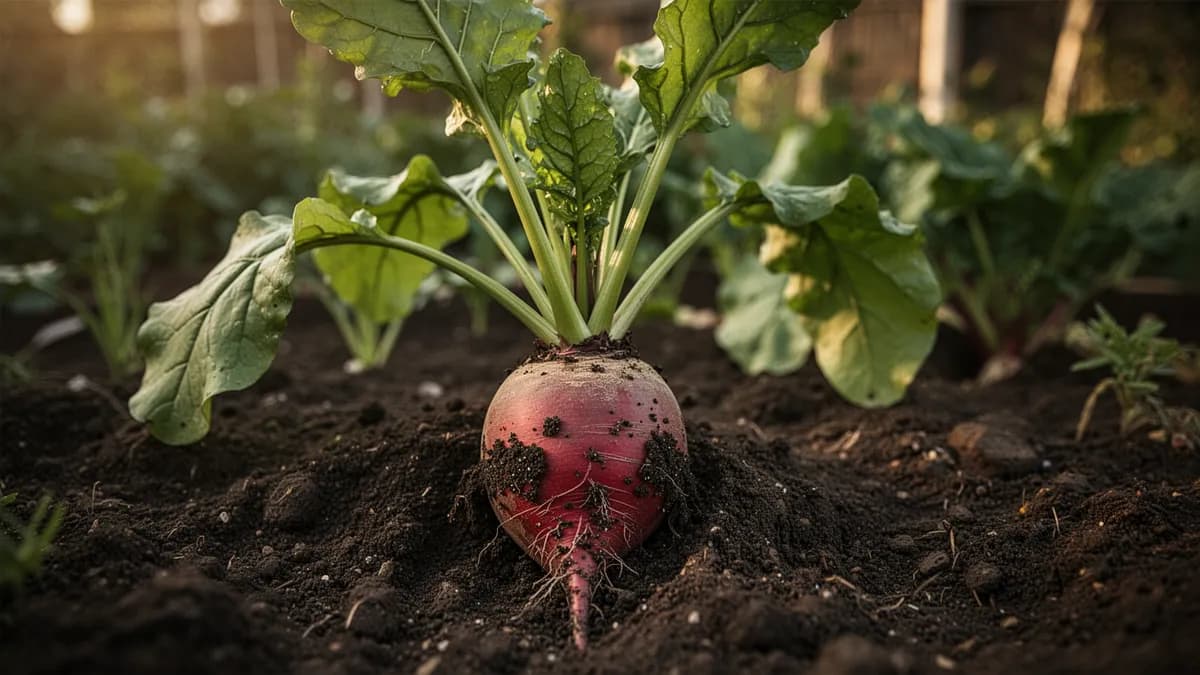
A Chinese daikon type with green skin and stunning pink interior. Milder and sweeter than white types, beautiful in salads.
Tokinashi
All-season daikon that resists bolting better than most varieties. Medium-length roots with crisp texture and mild flavor.
A single packet of daikon seeds ($2-4) yields 100-200 roots over multiple sowings, while a single fresh daikon costs $2-5 at grocery stores and $3-7 at Asian specialty markets. Growing a 3-meter row produces 8-15 kg of daikon worth $20-50 at retail prices. The savings multiply dramatically when you factor in specialty products like fresh daikon oroshi (grated condiment), takuan pickles ($5-8 per package), and kiriboshi daikon (dried strips, $4-7 per bag) — all easily made from your homegrown harvest at essentially zero cost.
Quick recipes
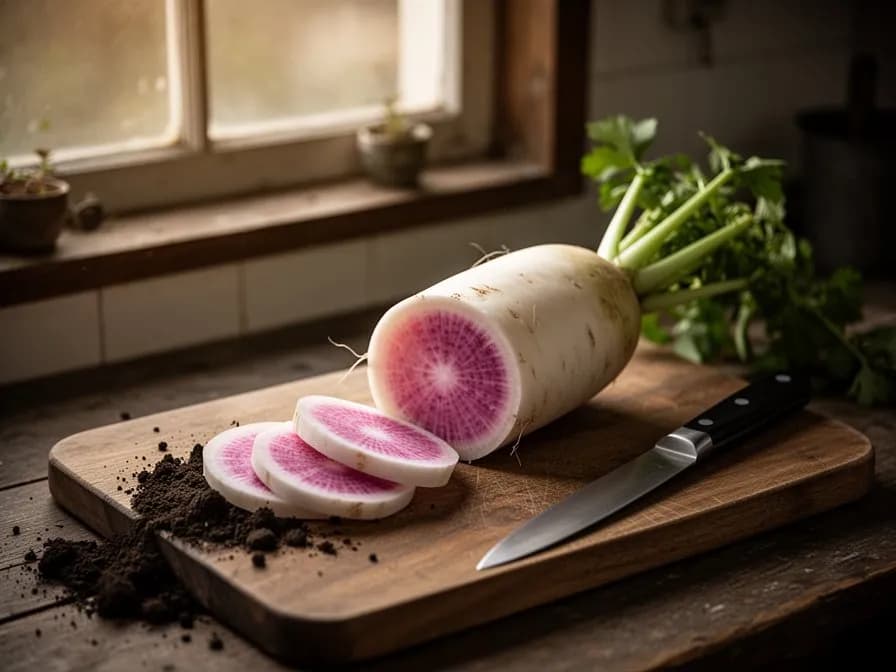
Classic Oden Daikon
90 minThick daikon rounds simmered low and slow in kombu-dashi broth until they turn translucent and meltingly tender, absorbing deep umami flavor throughout. This is the most beloved oden ingredient in Japan and the ultimate cold-weather comfort food.
7 ingredients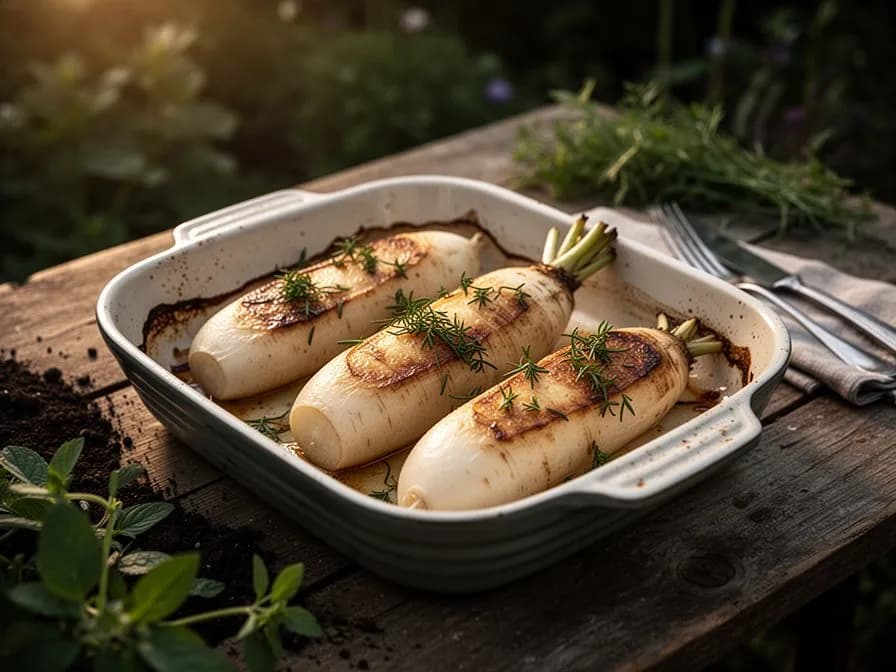
Quick Pickled Daikon (Asazuke)
15 min + 2 hr restA light, refreshing Japanese quick pickle that brings crisp texture and bright flavor to any meal. Ready in just a couple of hours, these tangy-sweet daikon slices are the perfect palate cleanser alongside rice, grilled fish, or bento boxes.
6 ingredientsDaikon Oroshi (Grated Daikon Condiment)
5 minFreshly grated daikon — the essential Japanese condiment served alongside grilled fish, tempura, and noodles. The natural enzymes in raw grated daikon aid digestion of rich and fried foods, while its clean peppery bite cuts through oiliness.
4 ingredientsCulinary Uses
Daikon is incredibly versatile in the kitchen. Grate fresh for a traditional Japanese condiment alongside sashimi, tempura, and grilled fish. Simmer thick rounds in dashi broth for oden, a comforting winter stew. Julienne for Vietnamese banh mi sandwiches or Korean kimchi. Stir-fry sliced daikon with soy sauce and sesame oil for a quick side dish. The mild, slightly sweet flesh absorbs flavors beautifully in braised dishes. Daikon leaves are also edible and can be stir-fried or added to miso soup.
What's inside
Health Benefits
- Contains active digestive enzymes (diastase and amylase) that break down starches and fats — eating raw grated daikon with fried or heavy foods measurably improves digestion and reduces bloating.
- Extremely low calorie density (18 calories per 100g) with high water content (94%), making daikon an excellent food for weight management and hydration support.
- Rich in vitamin C, providing 24% of the daily value per 100g, supporting immune defense, collagen production, and enhanced iron absorption from plant-based foods.
- Contains glucosinolates and isothiocyanates — sulfur-containing compounds being actively researched for their potential to support the body's natural detoxification pathways and anti-inflammatory responses.
- Good source of folate (B9), essential for DNA synthesis, red blood cell formation, and particularly important during pregnancy for preventing neural tube defects.
- The fiber in daikon supports healthy digestion and regular bowel function, while its high potassium content (227mg per 100g) helps regulate blood pressure and maintain electrolyte balance.
Where Japanese Daikon comes from
Daikon (Raphanus sativus var. longipinnatus) traces its ancestry to the wild radish species native to the Mediterranean and Central Asian regions, but it was in China and Japan where it was transformed into the large, mild-flavored root vegetable known today. Chinese texts from around 400 BC describe cultivated radishes, and the crop likely traveled to Japan via the Korean Peninsula sometime before the 8th century AD. By the Nara period (710-794 AD), daikon was already documented as a staple food crop in Japanese agriculture.
Japanese farmers and gardeners spent over a thousand years selectively breeding daikon for increased size, milder flavor, and crisp texture, ultimately producing varieties dramatically different from the small, pungent radishes of the Mediterranean. The cool, wet climate of Japan proved ideal for daikon cultivation, and by the Edo period (1603-1868) it had become the single most important vegetable in Japanese agriculture and cuisine. More than 100 distinct regional varieties emerged, from the massive Sakurajima daikon of southern Kyushu to the slender Nerima daikon of Tokyo, each adapted to local growing conditions and culinary uses.
Today, Japan produces approximately 1.2 million tonnes of daikon annually, making it the nation's most-produced vegetable by volume. Daikon is also widely cultivated across China, South Korea, Taiwan, and Southeast Asia, with growing popularity in Western markets where it is used in salads, stir-fries, and as a low-calorie substitute for potatoes and turnips. Modern Japanese varieties like Minowase and April Cross have become the global standard, prized for their uniform shape, mild sweetness, and crisp juicy texture that develops best in the cool temperatures of autumn cultivation.
Japanese Daikon: did you know?
Fascinating facts about Japanese Daikon
Japanese daikon is the most consumed vegetable in Japan by weight — the average Japanese person eats over 10 kg of daikon per year, consumed raw, pickled, simmered, dried, and grated across hundreds of traditional dishes.
Japanese Daikon questions, answered
When should I plant Japanese Daikon?
What are good companion plants for Japanese Daikon?
What hardiness zones can Japanese Daikon grow in?
How much sun does Japanese Daikon need?
How far apart should I space Japanese Daikon?
What pests and diseases affect Japanese Daikon?
How do I store Japanese Daikon after harvest?
What are the best Japanese Daikon varieties to grow?
What soil does Japanese Daikon need?
Why are my daikon roots forked or misshapen?
Why did my daikon bolt before the roots were ready?
How can I store daikon after harvest?
Why is my daikon root pithy or hollow inside?
Can I grow daikon in containers?
What is the difference between daikon and regular radish?
You just read the theory. Now grow it on autopilot.
Everything that makes Japanese Daikon fiddly — the timing, the spacing, the companions, the harvest window — is exactly what PlotMyGarden handles for you, for every plant in your garden.
A plan that knows your weather
Set your location once. Get sow, feed and harvest dates built around your real last-frost date and live forecast — no more guessing from a generic seed packet.
From the “When to plant” sectionDrag-and-drop bed planner
Design beds on a grid. Every plant snaps to its proper spacing, and you can see your whole season laid out before you spend a cent on seed.
From the “Growing guide” sectionCompanion conflicts, caught early
200+ good-and-bad pairings checked live as you plant — so a season-wrecking mistake never makes it into the ground.
From the “Companions” sectionReminders you'll actually act on
“Water the beans.” “Pick today before it turns.” Timely, specific, and tied to the plants you're really growing.
From the “Harvest” sectionSuccession, scheduled
Want a harvest for six weeks, not six days? It spaces your sowings automatically and reminds you when each new block is due.
From the “When to plant” sectionA record that gets smarter
Every harvest you log teaches it your garden. Next year's plan starts from what actually worked in your soil, not a textbook's.
From the “Overview” sectionPlant these alongside Japanese Daikon
More Root Vegetables
Grow your best Japanese Daikon yet — and everything around it.
Start a free plan today. Lay out your beds, drop in your Japanese Daikon, and let PlotMyGarden handle the timing, spacing, companions and reminders from seed to harvest basket.