Uchuva (Physalis peruviana)
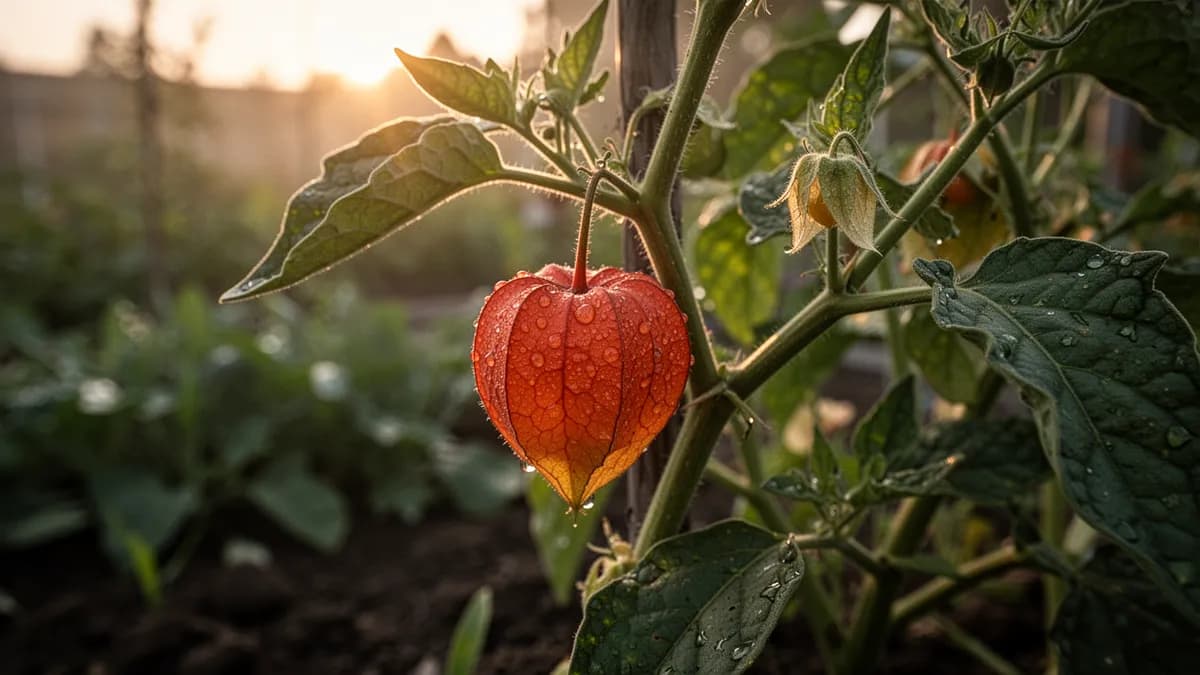
La uchuva (Physalis peruviana) es una solanácea andina que produce pequeñas bayas doradas de 1-2 cm envueltas en un cáliz papirácea decorativo.





En esta páginaResumen
Conoce Uchuva (Physalis peruviana)
La uchuva (Physalis peruviana) es una solanácea andina que produce pequeñas bayas doradas de 1-2 cm envueltas en un cáliz papirácea decorativo. Su sabor es una mezcla única de dulce, ácido y tropical, con notas de piña, mango y tomate, que la ha convertido en una fruta gourmet muy valorada en todo el mundo para postres, ensaladas y decoración.
Cuándo plantar Uchuva (Physalis peruviana)
Siembre en superficie del sustrato húmedo cubriendo apenas con vermiculita. Germinación lenta en 10-21 días a 20-25 °C. Sea paciente. Trasplante a macetas individuales con primeras hojas verdaderas. Endurezca 7-10 días.
Tu año de Uchuva (Physalis peruviana)
Ajustado a Zona 7 · temporada típica · la helada se va hacia el 2 abr y vuelve hacia el 1 nov
Planta Uchuva (Physalis peruviana) Feb – May y cosecha Ago – Oct. Consulta los métodos de plantación y elige tu clima para adaptar los periodos.
Cómo cultivar Uchuva (Physalis peruviana)
Siembre en interiores 8-10 semanas antes de la última helada, esparciendo las diminutas semillas en la superficie del sustrato húmedo y cubriéndolas apenas con vermiculita. Mantenga a 20-25 °C para germinación en 10-21 días.
Trasplante cuando haya pasado todo riesgo de helada, espaciando 90-120 cm ya que las plantas son grandes y extensas, alcanzando 1-1,5 m de altura. Proporcione tutores o jaulas para mantener la planta erguida. Riegue moderadamente con 2-3 cm semanales.
Fertilice cada 3-4 semanas con abono equilibrado, evitando exceso de nitrógeno. Las uchuvas son perennes en climas libres de heladas pero se cultivan como anuales en zonas templadas. Los frutos maduran gradualmente y caen al suelo cuando están listos.
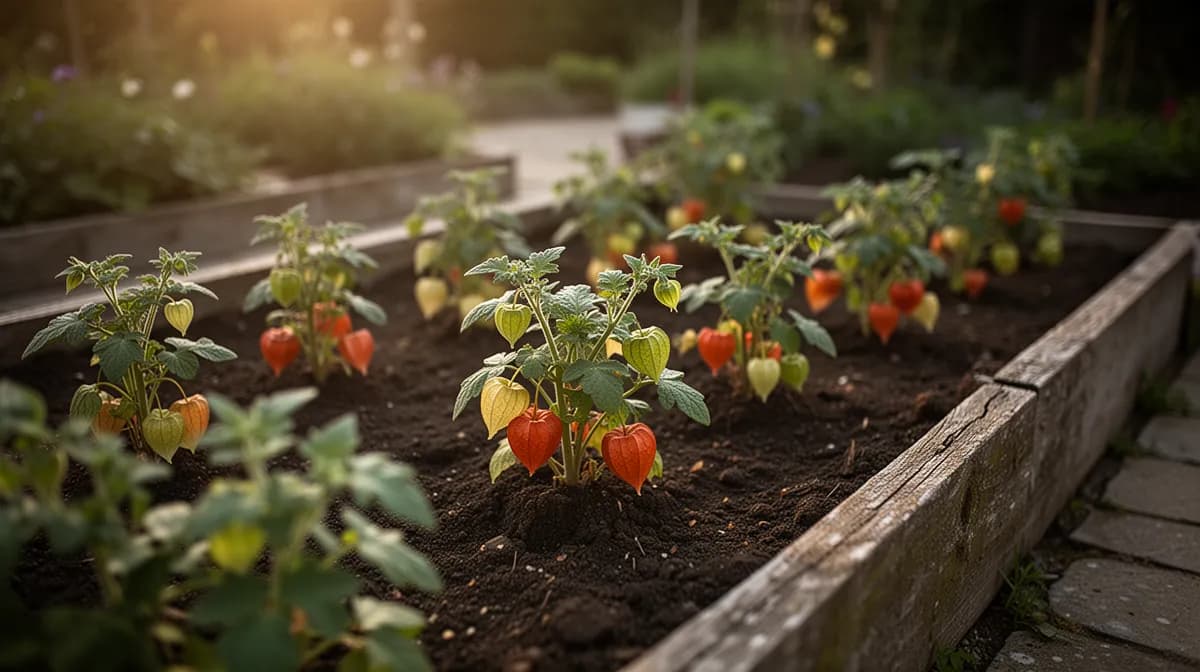
8 plantas caben en un bancal de 120 × 240 cm
Cada Uchuva (Physalis peruviana) pide 60 cm de margen. El planificador guarda ese marco por ti — cada planta, cada bancal.
Los mejores vecinos de Uchuva (Physalis peruviana)
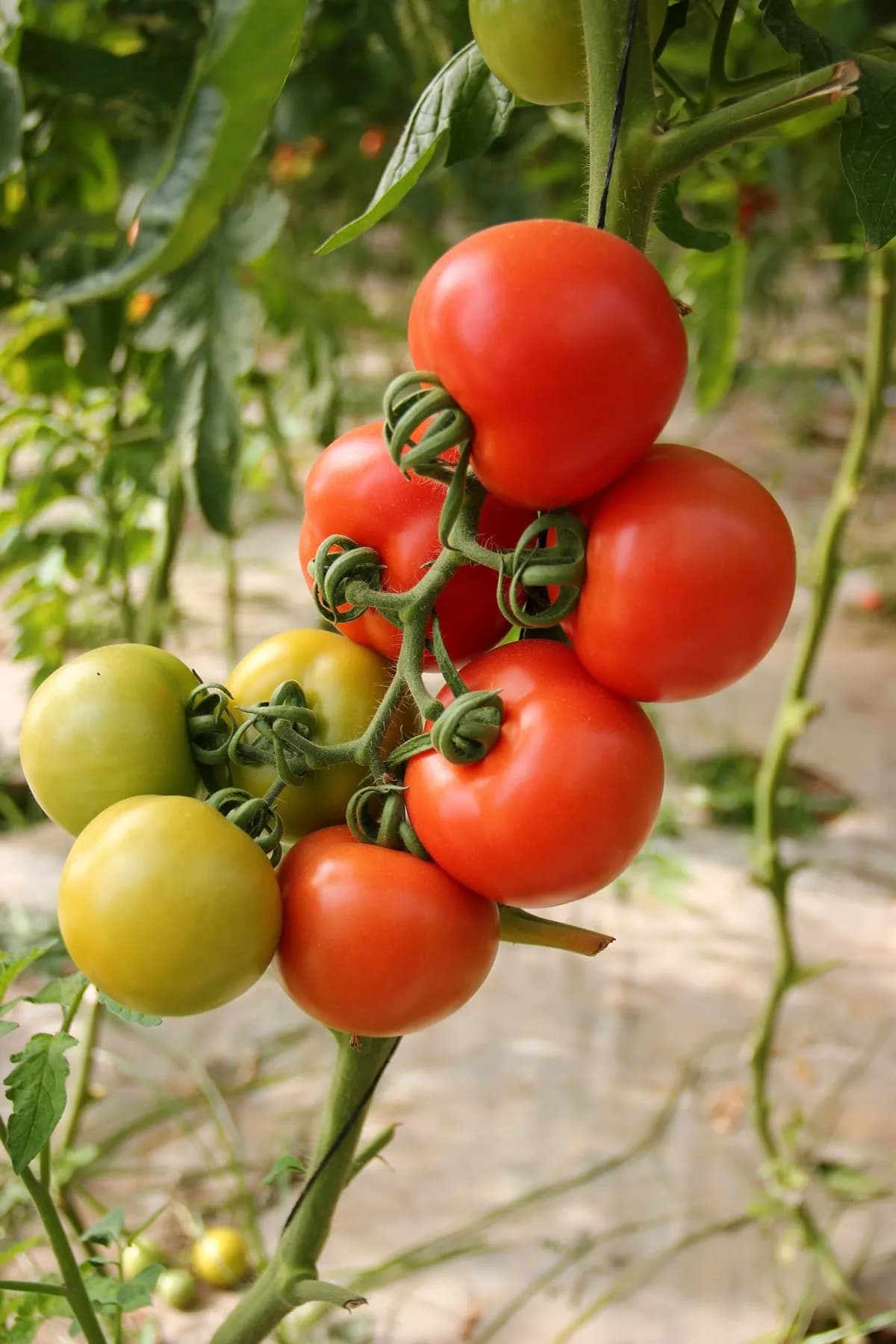
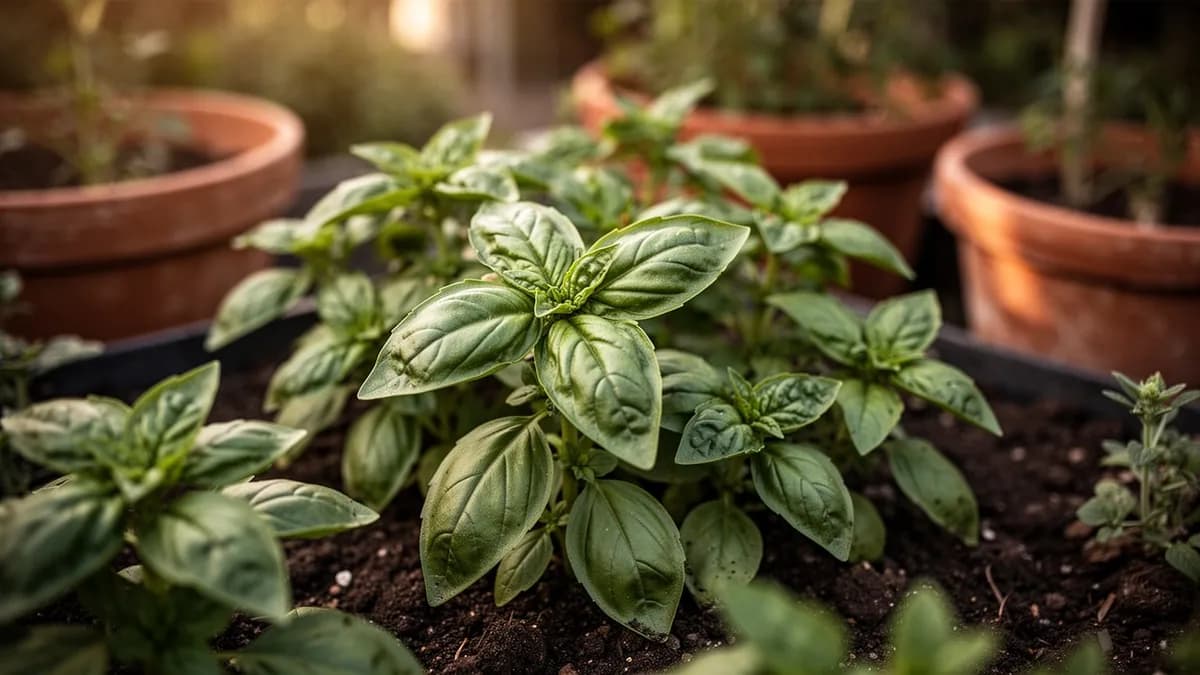
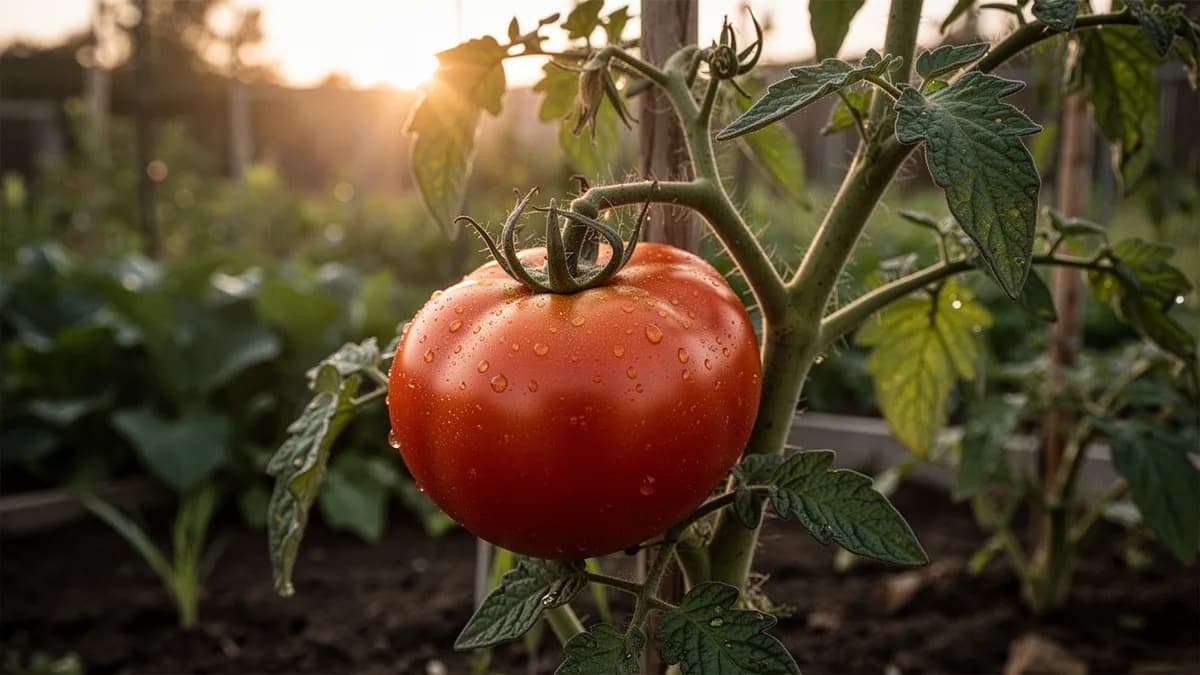
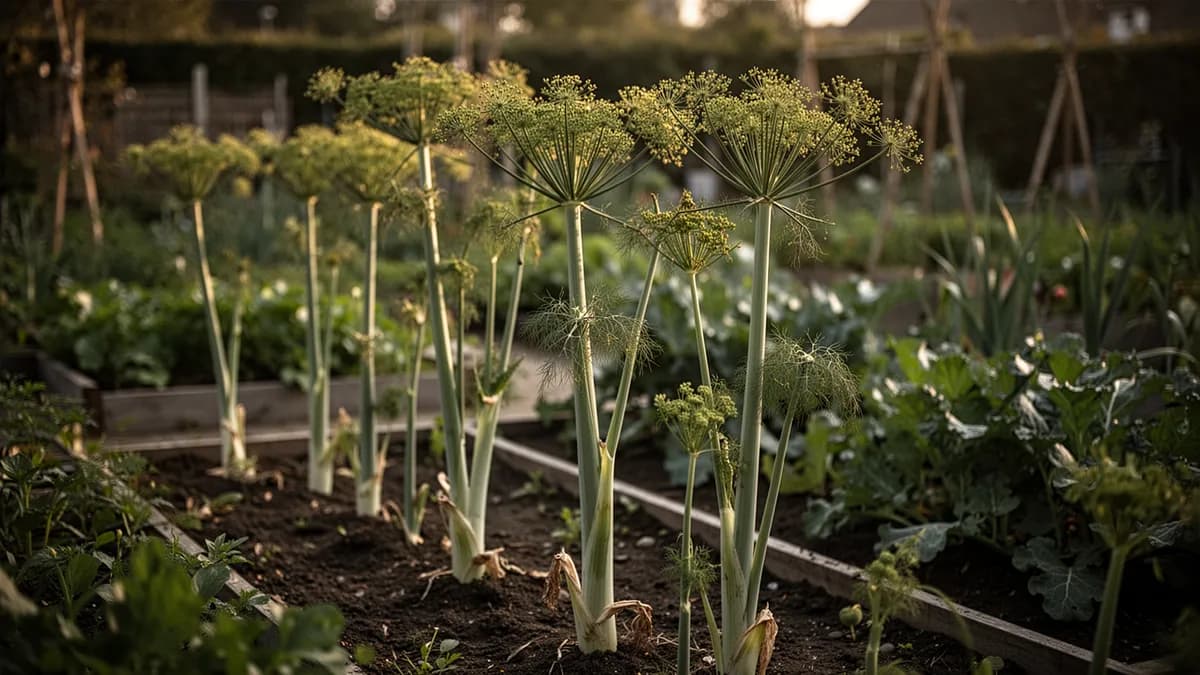
Crecen bien junto a tomates, albahaca y caléndulas. Las capuchinas atraen pulgones lejos de la planta. Evite plantar junto a hinojo y brassicas. No plante donde hubo solanáceas recientemente.
Tomate va a su lado. Hinojo no.
Saber de huerto de siempre, cotejado con la tabla real de Uchuva (Physalis peruviana) — prueba cualquier planta que cultives.
Prueba Uchuva (Physalis peruviana) en un bancal, aquí mismo
Un bancal real del planificador con Uchuva (Physalis peruviana) ya plantado. Toca una planta compañera para colocarla y mira cómo responde la comprobación de vecinos: verde para buenos vecinos, rojo si hay conflicto.


Guías de cultivo relacionadas
Abónalo bien
Suelos bien drenados, moderadamente fértiles con pH 5,5-7,0. No necesita suelos ricos; demasiada fertilidad produce plantas enormes con pocos frutos. Aplique compost moderado y fertilice ligeramente con potasio durante fructificación.
Temperatura ideal
Compatibilidad de zonas de rusticidad
De la semilla a la cosecha, etapa por etapa
Siembra
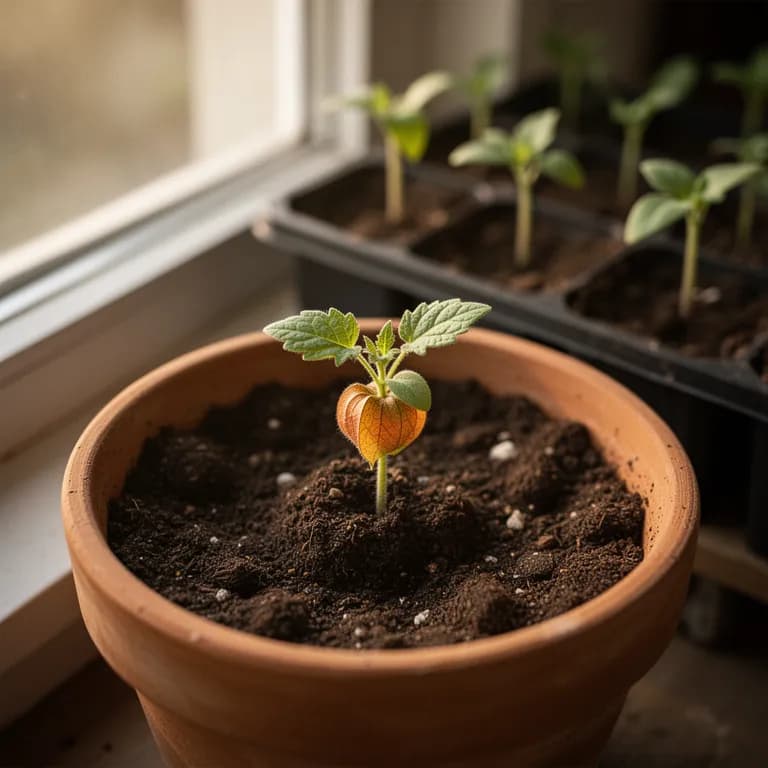
Las semillas de cape gooseberry son diminutas y necesitan luz y calor para germinar. Siémbralas en la superficie de un sustrato húmedo para semillero.
Desarrollo de plántulas
Las plántulas desarrollan hojas verdaderas vellosas y un sistema radicular ramificado, y necesitan luz intensa para mantenerse compactas.
Crecimiento vegetativo
Las plantas crecen como matas extensas y arbustivas y se benefician de tutores o jaulas cuando las ramas se vuelven pesadas.
Floración
Aparecen pequeñas flores amarillas en cada nudo, son autofértiles y comienzan a formar la cubierta alrededor de cada fruto.
Desarrollo del fruto
El cáliz se infla alrededor de cada fruto en desarrollo y las bayas maduran de verde a naranja dorado dentro de la cubierta papirácea.
Cosecha y producción continua
Los frutos maduros caen envueltos en sus cálices secos y la planta sigue floreciendo y fructificando durante muchas semanas.
Mantén una temperatura constante de 20-25 °C y conserva la superficie uniformemente húmeda sin cubrir las semillas en profundidad.
Cuidar Uchuva (Physalis peruviana) mes a mes
Qué hacer cada mes para tu Uchuva (Physalis peruviana)
Octubre
Mes actualContinue harvesting as long as plants are producing. Before the first frost, prune plants back and cover with frost cloth to extend the season by several weeks. Alternatively, dig up plants, pot them, and move to a frost-free greenhouse or conservatory.
Ten claro qué hacer en tu huerto, cada mes
Un correo al empezar cada mes: qué sembrar, plantar y hacer ahora mismo — para tu Uchuva (Physalis peruviana) y todo lo que crece alrededor. Más un breve curso inicial para esquivar los errores clásicos.
- Qué hacer ahora mismo
- Ajustado a tu temporada
- Curso inicial incluido
Cosechar Uchuva (Physalis peruviana)
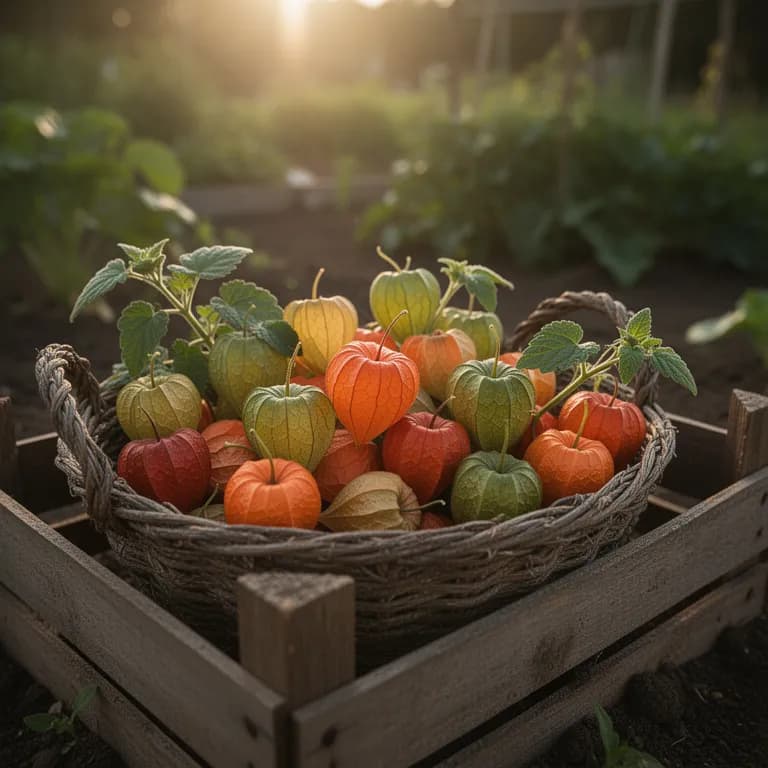
Las uchuvas están listas cuando caen naturalmente de la planta y el cáliz se torna pajizo y seco, generalmente 70-80 días tras el trasplante. Recoja del suelo diariamente. El fruto interior debe ser dorado o anaranjado. Los frutos verdes no son comestibles.
se supone que plantas al comenzar el periodo — indica tu fecha real
Cosecha cuando el cáliz se vuelva papiráceo y de color marrón pajizo y el fruto interior sea naranja dorado.
Almacenamiento y conservación
Con cáliz intacto se conservan a temperatura ambiente 1-2 semanas y en refrigerador hasta un mes. Para conservación, retire el cáliz y congele en bandejas. También se preparan en mermeladas, chutneys, se deshidratan como pasas o se conservan en almíbar.
Qué falla — y cómo solucionarlo
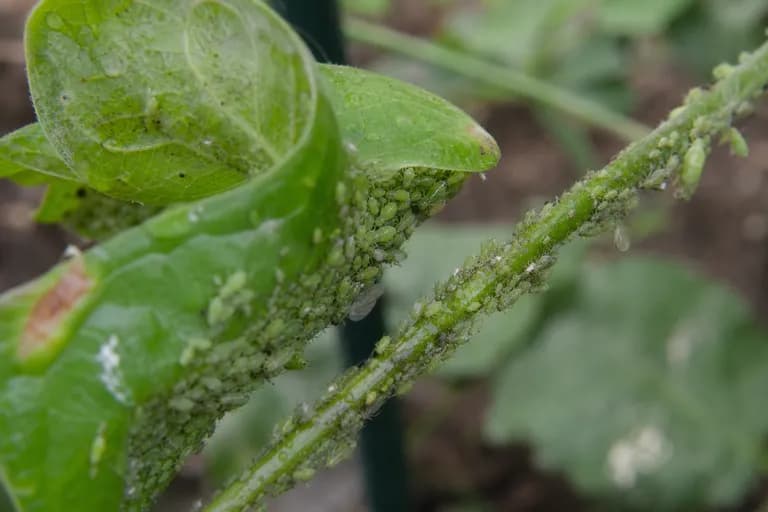
Mosca blanca (Bemisia tabaci)
PlagaMoscas blancas bajo hojas, amarillamiento y debilitamiento.
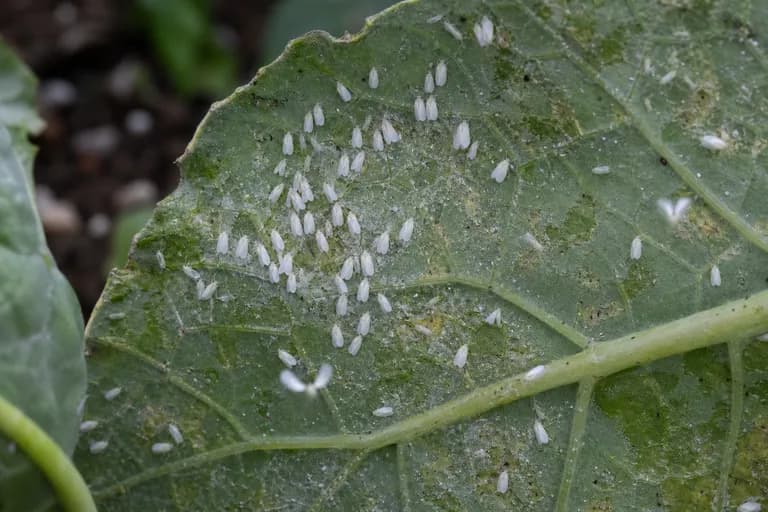
Fusariosis (Fusarium oxysporum)
EnfermedadMarchitez progresiva unilateral, amarillamiento y oscurecimiento vascular.
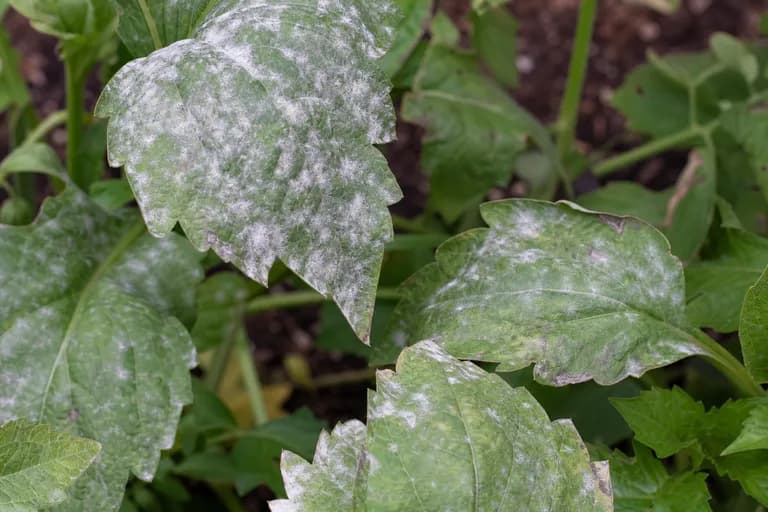
Perforador del fruto (Heliothis spp.)
PlagaAgujeros en frutos con larvas dentro, pudrición secundaria.
Solución de problemas comunes
Las plantas son extensas y desordenadas sin tutores. La temporada de crecimiento larga limita la producción en climas con veranos cortos. Los frutos verdes contienen solanina y no deben consumirse. Las heladas matan las plantas instantáneamente.
Consejos de cultivo
- Start seeds very early — 8-10 weeks before last frost. Cape gooseberry has a long season from seed to fruit (120-140 days), so the earlier you start indoors, the longer your harvest window will be. In short-season climates, this early start is essential for any harvest at all.
- Surface-sow seeds and do not bury them. Cape gooseberry seeds require light for germination. Press gently into moist seed-starting mix and cover with the thinnest possible layer of vermiculite. Mist regularly and maintain 20-25°C (68-77°F) for best germination in 14-21 days.
- Treat cape gooseberry plants exactly like indeterminate tomatoes for support. They become large, sprawling bushes that benefit greatly from tomato cages, stakes, or a trellis system. Unsupported plants will sprawl along the ground, making fruit collection difficult and increasing disease risk.
- Pinch growing tips when young plants reach 15-20 cm tall to encourage branching. More branches mean more flowering nodes and ultimately more fruit. A well-branched plant can have dozens of fruits developing simultaneously at different stages.
- Do not overfeed with nitrogen. Like tomatoes, excess nitrogen produces beautiful foliage but delays flowering and reduces fruit set. Use a balanced fertilizer during early growth, then switch to a high-potassium feed (such as tomato fertilizer) once flowering begins.
- Collect ripe fruits from the ground daily. Cape gooseberries self-harvest by dropping when ripe — this is normal and desirable. Place a layer of clean straw mulch beneath plants to cushion fallen fruits and prevent soil splash and slug damage.
- Save plants from frost by potting up and overwintering indoors. Cape gooseberries are perennial in frost-free climates, and a plant that survives winter will produce much earlier and more heavily in its second year. A cool, bright greenhouse or conservatory is ideal.
- Never eat green, unripe cape gooseberries. Like all Physalis species, the unripe fruit and the leaves contain solanine and other glycoalkaloids that can cause gastrointestinal distress. Only eat fruits that have turned fully golden-orange inside a dry, papery husk.
Cultiva tu mejor Uchuva (Physalis peruviana) — y todo lo que la rodea.
Empieza un plan gratis hoy. Diseña tus bancales, coloca tu Uchuva (Physalis peruviana) y deja que PlotMyGarden gestione el momento, el espaciado, las asociaciones y los recordatorios de la semilla a la cesta.
Elige tu Uchuva (Physalis peruviana)
Goldenberry
Selección estándar con frutos dorados de 1,5-2 cm, sabor equilibrado entre dulce y ácido. Muy productiva. 70-80 días.
Giant Poha Berry
Variedad hawaiana con frutos más grandes (2-3 cm) y sabor más dulce. Plantas vigorosas. 80-90 días.
Giallo Grosso
Variedad italiana con frutos grandes y dulces. Buena adaptación a climas mediterráneos. 75 días.
Schoenbrunn Gold
Variedad austríaca seleccionada por su dulzor excepcional y productividad en climas frescos. 80 días.
Fresh cape gooseberries are a premium specialty fruit, typically selling for $6-12 per 100g punnet at gourmet grocers and farmers markets — making them one of the most expensive fresh fruits per kilogram. A single plant producing 1-3 kg of fruit represents $60-360 worth of berries at retail prices. Growing from seed costs under $3, making cape gooseberries one of the highest return-on-investment crops for home gardeners. Dried cape gooseberries sell for $15-25 per 200g bag, and homemade cape gooseberry jam or chutney makes a highly valued artisan gift.
Recetas rápidas
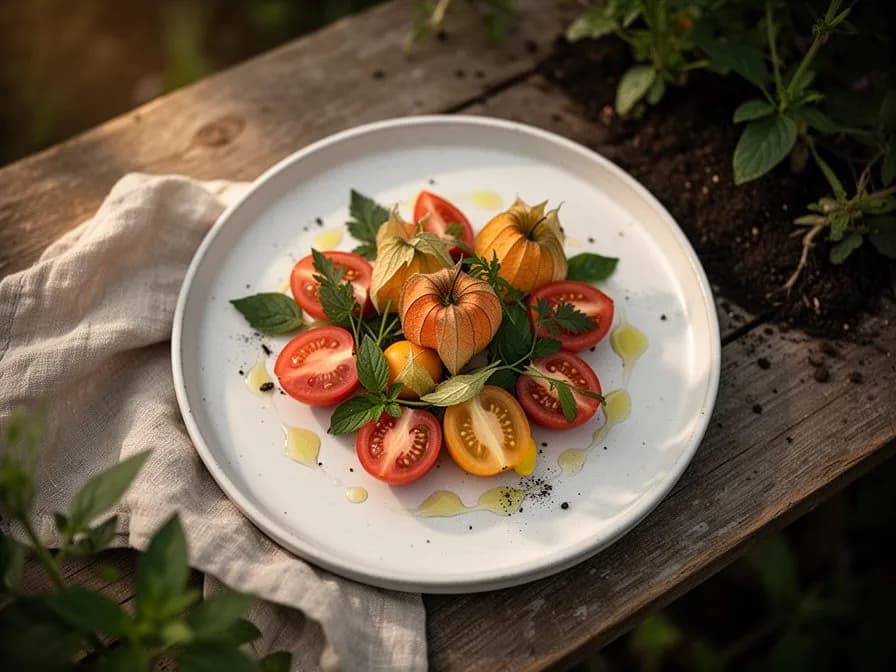
Cape Gooseberry and Ginger Jam
40 minA beautifully golden, tangy-sweet jam with a hint of warm ginger that showcases cape gooseberry's naturally high pectin content. This jam sets easily without added pectin, and the flavor is reminiscent of tropical passionfruit with a citrus finish.
6 ingredientes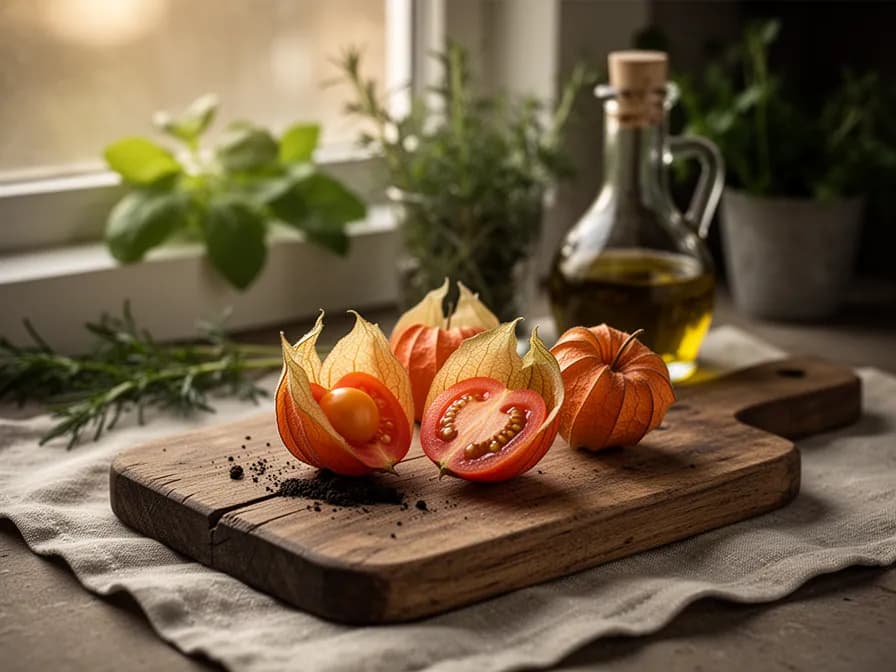
Chocolate-Dipped Cape Gooseberries
20 minAn elegant dessert or gift where ripe cape gooseberries are dipped in tempered dark chocolate, using their natural papery husks as decorative handles. The combination of bittersweet chocolate and tart fruit is stunning at dinner parties.
4 ingredientesCape Gooseberry Salsa
15 minA vibrant, tangy salsa that pairs beautifully with grilled fish, chicken, or tortilla chips. The sweet-tart cape gooseberries replace tomatoes for a unique twist on a classic, adding a bright tropical note.
7 ingredientesUsos culinarios
Las uchuvas maduras son deliciosas frescas como snack o bañadas en chocolate. Se usan en tartas, mousses, mermeladas gourmet y chutneys agridulces. Son una decoración elegante para postres y cócteles. En Colombia se preparan en jugo, y en sudáfrica en mermeladas. Combinan con queso, ensaladas y carnes.
Qué contiene
Beneficios para la salud
- Exceptionally rich in beta-carotene and vitamin A, supporting eye health, immune function, and healthy skin — 100g provides about 14% of the recommended daily intake of vitamin A.
- Contains withanolides, rare bioactive steroidal compounds with demonstrated anti-inflammatory and immunomodulatory properties in laboratory research, making cape gooseberry a subject of growing interest in nutritional science.
- Good source of vitamin C, supporting collagen production, iron absorption, and antioxidant defense against free radical damage from environmental stressors.
- Rich in soluble fiber and natural pectin that support digestive health, promote regular bowel function, and may help regulate cholesterol levels by binding bile acids in the gut.
- Provides a meaningful amount of phosphorus and iron, supporting bone mineralization, energy production, and healthy oxygen transport in the blood.
- Contains polyphenol antioxidants including quercetin and kaempferol that have been associated with reduced inflammation and lower risk of cardiovascular disease in epidemiological studies.
De dónde viene Uchuva (Physalis peruviana)
The cape gooseberry (Physalis peruviana) originated in the highlands of Peru, Ecuador, and Colombia, where it has been cultivated for thousands of years in the Andean mountain valleys at elevations of 1,500-3,000 meters. Archaeological evidence and historical accounts confirm that the Inca civilization prized the fruit, cultivating it alongside potatoes, quinoa, and other native crops in the terraced agricultural systems of the Sacred Valley. Wild populations of Physalis peruviana still grow throughout the Andean highlands, and the fruit remains an important part of traditional diets in Peru, Colombia, and Ecuador.
European explorers encountered the fruit during the Spanish conquest of South America in the 16th century, and seeds were carried to Europe, Africa, and Asia over the following centuries. The fruit gained its common English name from the Cape of Good Hope region of South Africa, where it was widely cultivated by the early 1800s and became naturalized. British settlers in the Cape Colony valued the fruit for its long shelf life, high pectin content for jam making, and its ability to grow in relatively poor soils. From South Africa, the cape gooseberry spread to Australia, New Zealand, India, and Southeast Asia, often naturalizing in subtropical and tropical highland areas.
Today, Colombia is the world's largest commercial producer of cape gooseberries, cultivating them primarily in the cool Andean departments of Boyaca and Cundinamarca for export to European markets, where the fruit commands premium prices as an exotic garnish and dessert ingredient. South Africa, Zimbabwe, Kenya, India, and China are also significant producers. In temperate climates like Europe and North America, the cape gooseberry is grown as a warm-season annual, treated much like a tomato, and has become increasingly popular among home gardeners and specialty growers seeking unusual and rewarding fruits.
Uchuva (Physalis peruviana): ¿sabías que?
Datos fascinantes sobre Uchuva (Physalis peruviana)
Cape gooseberries are not gooseberries at all — they belong to the nightshade family (Solanaceae) and are more closely related to tomatoes, tomatillos, and potatoes than to true gooseberries. Their name comes from the Cape of Good Hope in South Africa, where the fruit became widely cultivated in the early 1800s.
Uchuva (Physalis peruviana): preguntas frecuentes
¿Cuándo debo plantar Uchuva (Physalis peruviana)?
¿Cuáles son buenas plantas acompañantes para Uchuva (Physalis peruviana)?
¿En qué zonas de rusticidad puede crecer Uchuva (Physalis peruviana)?
¿Cuánto sol necesita Uchuva (Physalis peruviana)?
¿A qué distancia debo espaciar Uchuva (Physalis peruviana)?
¿Qué plagas y enfermedades afectan a Uchuva (Physalis peruviana)?
¿Cómo almaceno Uchuva (Physalis peruviana) después de la cosecha?
¿Cuáles son las mejores variedades de Uchuva (Physalis peruviana) para cultivar?
¿Qué suelo necesita Uchuva (Physalis peruviana)?
How do I know when cape gooseberries are ripe?
Can I grow cape gooseberries in containers?
How long can I store cape gooseberries after harvest?
Are cape gooseberries the same as ground cherries or tomatillos?
Why are my cape gooseberry plants flowering but not setting fruit?
Can cape gooseberry plants survive winter outdoors?
Acabas de leer la teoría. Ahora cultívala en piloto automático.
Todo lo que hace que Uchuva (Physalis peruviana) sea delicado — el momento, el espaciado, las asociaciones, la ventana de cosecha — es justo lo que PlotMyGarden resuelve por ti, para cada planta de tu huerto.
Un plan que conoce tu clima
Indica tu ubicación una vez. Recibe fechas de siembra, abonado y cosecha basadas en tu última helada real y el pronóstico en vivo — sin adivinar con un sobre genérico.
De la sección “Cuándo plantar”Planificador de bancales de arrastrar y soltar
Diseña bancales sobre una cuadrícula. Cada planta encaja con su espaciado correcto y ves toda la temporada antes de gastar un céntimo en semillas.
De la sección “Cultivo”Conflictos de asociación, detectados a tiempo
Más de 200 buenas y malas combinaciones comprobadas en vivo mientras plantas — para que un error que arruine la temporada nunca llegue a la tierra.
De la sección “Asociaciones”Recordatorios que sí vas a seguir
“Riega las judías.” “Recoge hoy antes de que se pase.” Oportunos, concretos y ligados a las plantas que de verdad cultivas.
De la sección “Cosecha”Escalonado, programado
¿Quieres cosechar seis semanas en vez de seis días? Reparte tus siembras automáticamente y te avisa cuando toca el siguiente lote.
De la sección “Cuándo plantar”Un registro que se vuelve más listo
Cada cosecha que registras le enseña tu huerto. El plan del año que viene parte de lo que de verdad funcionó en tu suelo, no en un manual.
De la sección “Resumen”Planta estos junto a Uchuva (Physalis peruviana)
Más Solanáceas
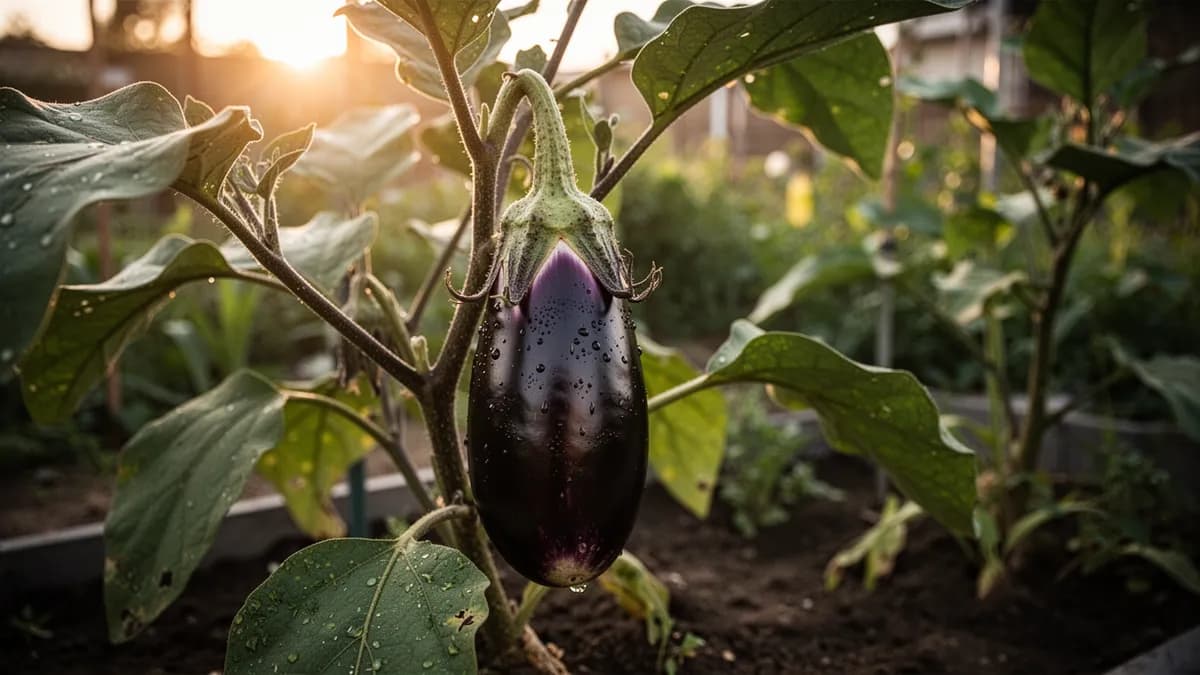
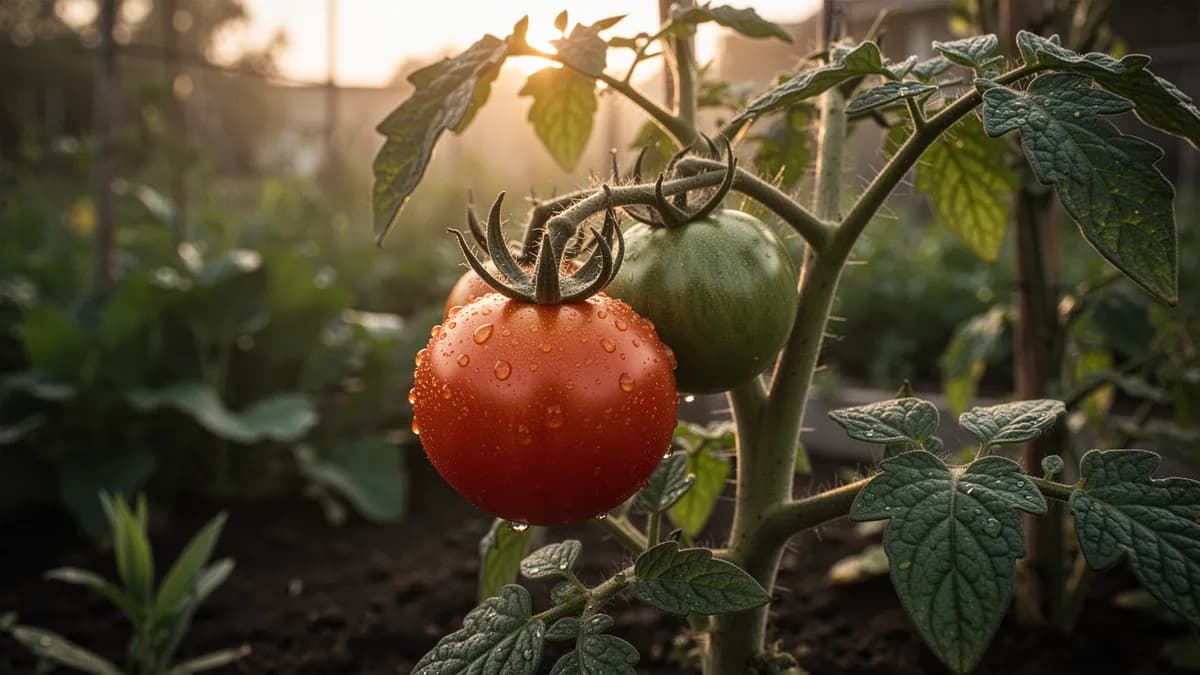
Mantén Uchuva (Physalis peruviana) lejos de estos
Cultiva tu mejor Uchuva (Physalis peruviana) — y todo lo que la rodea.
Empieza un plan gratis hoy. Diseña tus bancales, coloca tu Uchuva (Physalis peruviana) y deja que PlotMyGarden gestione el momento, el espaciado, las asociaciones y los recordatorios de la semilla a la cesta.