Camellia Tree
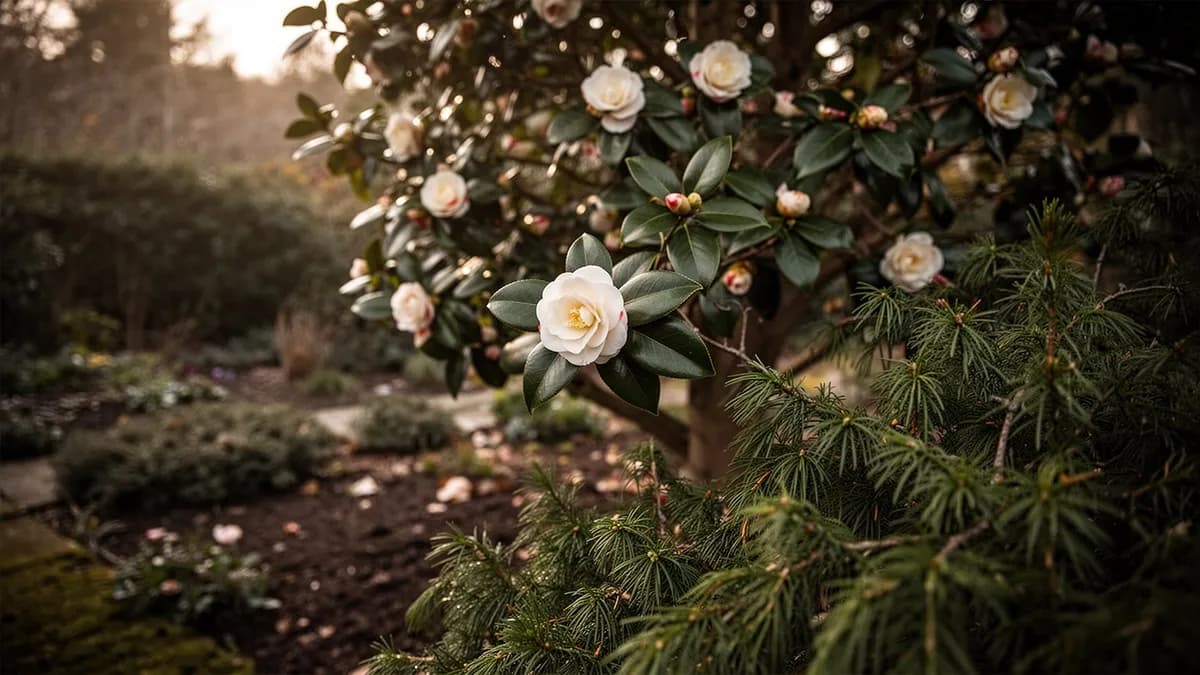
An elegant broadleaf evergreen prized for spectacular rose-like flowers in late winter and early spring when little else is blooming.





On this pageOverview
Meet Camellia Tree
An elegant broadleaf evergreen prized for spectacular rose-like flowers in late winter and early spring when little else is blooming. Camellias demand acidic, well-drained soil enriched with organic matter and consistent moisture, especially during bud development in summer and fall. Plant in dappled shade or morning sun with afternoon protection, as hot afternoon sun can bleach flowers and scorch leaves. They are relatively slow-growing but long-lived, and mature specimens covered in hundreds of blooms are among the most stunning sights in the winter garden.
When to plant Camellia Tree
Camellia seeds ripen inside woody capsules that split open in fall. Collect seeds as soon as capsules crack and sow immediately, as camellia seeds lose viability quickly when dried. Soak seeds in warm water for 24 hours before planting. Sow 1 inch deep in a moist, acidic seedling mix of peat and perlite. Place in a warm location at 70 to 75 degrees Fahrenheit. Germination occurs in 4 to 8 weeks. Seedlings grow slowly and should be kept in dappled shade with consistent moisture. Note that seedlings will not be identical to the parent plant and may take 5 to 7 years to bloom. Named cultivars must be propagated by grafting or semi-hardwood cuttings taken in summer.
Your Camellia Tree Year
Composed for Zone 7 · typical seasons · frost passes Apr 2, returns Nov 1
Plant Camellia Tree Mar – Apr, Oct – Nov, pick —. Check the planting methods below and set your climate to personalize these windows.
How to grow Camellia Tree
Camellias are the aristocrats of the winter garden, producing exquisite blooms from late fall through early spring depending on species and cultivar. Site selection is critical: choose a location with morning sun or bright dappled shade and protection from hot afternoon sun, which bleaches flowers and scorches foliage. North- or east-facing exposures are ideal. Camellias require acidic, well-drained soil with a pH of 5.0 to 6.5, rich in organic matter.
Plant container-grown camellias in fall or early spring, setting the root ball slightly high to ensure the crown remains above grade. Dig the planting hole 2 to 3 times wider than the root ball but no deeper. Backfill with a mix of native soil and composted pine bark. Water deeply at planting and maintain consistent moisture, especially during summer and fall when flower buds are developing.
Mulch with 3 to 4 inches of pine straw or shredded bark, keeping mulch away from the trunk. Camellias are shallow-rooted and resent deep cultivation around their base. Prune immediately after flowering if needed to shape the plant, as flower buds for the following year form on new growth during summer. Remove spent blooms to prevent petal blight from spreading and to improve the plant's appearance.
Camellia Tree needs more room than a 4 × 8 ft bed gives
Each Camellia Tree wants 400 cm of elbow room. The planner keeps that spacing for you — every plant, every bed.
Camellia Tree's best neighbours
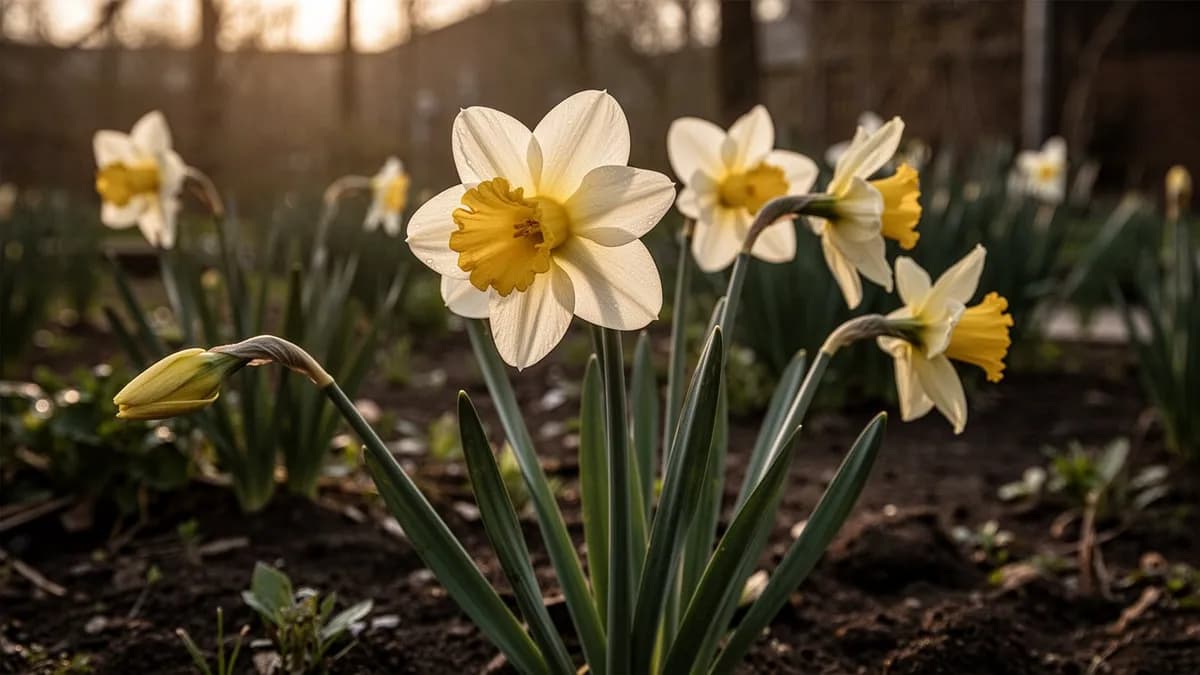
Camellias pair beautifully with other acid-loving, shade-tolerant plants. Azaleas and rhododendrons bloom at different times, providing continuous color from fall through spring. Underplant with hellebores, which bloom simultaneously with camellias in late winter. Ferns, hostas, and Japanese forest grass provide textural contrast around the base. Daffodils and other spring bulbs naturalize well in the filtered shade beneath camellias. Hydrangeas make excellent companions in similar light and soil conditions.
Daffodil belongs beside it.
Old growers' knowledge, checked against Camellia Tree's real companion table below — test any plant you're growing.
Try Camellia Tree in a bed — right here
A real planner bed with Camellia Tree already in it. Tap a companion to place it and watch the pairing checks answer — green for good neighbours, red for a clash.


Related growing guides
Feed it well
Camellias demand acidic soil with a pH of 5.0 to 6.5 and excellent drainage. Heavy clay soils must be heavily amended with pine bark, peat moss, and perlite, or camellias should be planted in raised beds. Fertilize with an azalea and camellia formula in spring after flowering finishes and again in early summer. Use half the recommended rate, as camellias are sensitive to over-fertilization, which causes leaf burn and bud drop. Avoid fertilizing after mid-summer, as late growth is vulnerable to frost. Supplement with chelated iron if leaves show interveinal yellowing, indicating iron chlorosis from insufficient soil acidity.
Ideal Temperature
Hardiness Zone Compatibility
From seed to harvest, stage by stage
Propagation & Rooting
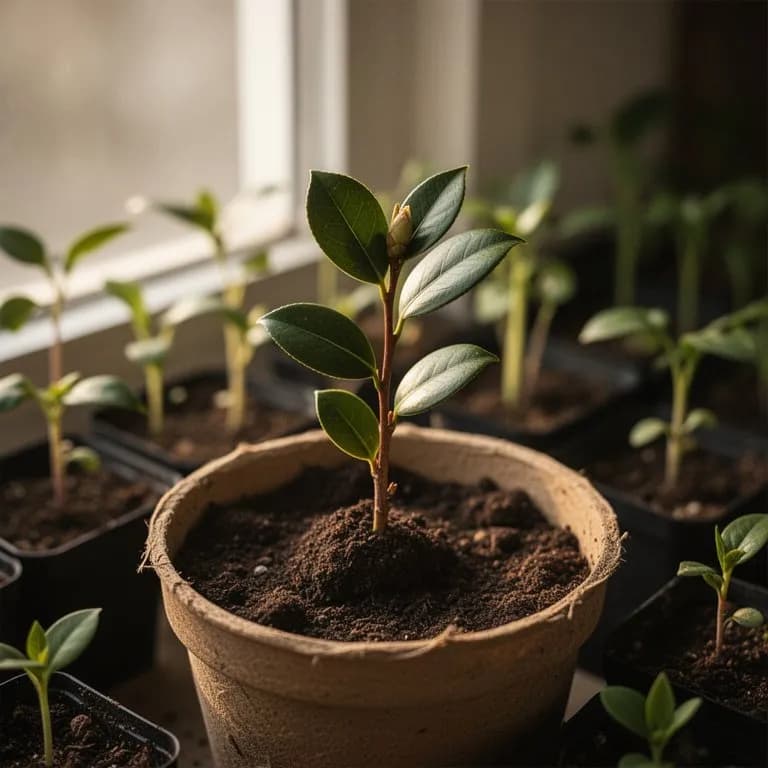
Semi-hardwood cuttings taken in late summer or early autumn are rooted in a moist, well-draining medium under high humidity. Rooting hormone applied to the cut end improves success rates significantly. Seeds can also be used but take longer and may not grow true to the parent variety.
Seedling Establishment
Rooted cuttings or young seedlings develop their first flush of glossy evergreen leaves. The root system is still shallow and delicate during this stage, making consistent watering essential. Plants may reach 6 to 12 inches in height during the first year.
Juvenile Growth
The young camellia develops a branching structure and builds a dense canopy of dark green foliage. Growth rate is moderate at 6 to 12 inches per year. Some precocious varieties may produce their first flower buds during the second or third year.
First Flowering
Most Camellia japonica cultivars begin reliable flowering between their third and fifth year. Flower buds form on current season wood in late summer and autumn, then open from late winter through early spring depending on climate and cultivar. Blooms range from single to formal double forms in shades of red, pink, white, and bicolor.
Mature Specimen
A mature Camellia japonica forms a large evergreen shrub or small tree ranging from 6 to 25 feet tall depending on cultivar and pruning. Mature plants produce hundreds of flowers each season and can live for well over a century. Some historic specimens in Japan and the southern United States are over 200 years old.
Keep cuttings in bright indirect light with consistent moisture and humidity above 80 percent. A heated propagation mat set to 70 degrees Fahrenheit accelerates root development.
Caring for Camellia Tree month by month
What to do each month for your Camellia Tree
October
You are hereEarly-blooming sasanqua-type cultivars begin flowering while japonica buds continue swelling. Test soil pH and amend with sulfur if pH has risen above 6.5. Prepare frost protection materials for regions with early freezes
Know exactly what to do in your garden — every month
One email at the start of each month: what to sow, plant, and tackle right now — for your Camellia Tree and everything growing around it. Plus a short starter course that helps you dodge the classic mistakes.
- What to do, right now
- Matched to your season
- Starter course included
Harvesting Camellia Tree
Camellias are grown for ornamental value rather than harvest. However, Camellia sinensis is the source of tea, and the seeds of Camellia oleifera produce valuable cooking oil used throughout Asia. Cut camellia blooms for indoor arrangements when buds are just beginning to open and show color. Cut stems early in the morning and place immediately in water. Camellia blooms are also popular as floating arrangements in shallow bowls, where individual flowers without stems can last 3 to 5 days.
assuming you plant when the window opens — set your real date
Pick Camellia Tree promptly and the plant keeps producing.
Storage & Preservation
Cut camellia flowers are short-lived, lasting 3 to 7 days in water depending on the variety and stage when cut. Refrigerate cut blooms at 35 to 40 degrees Fahrenheit to extend their life. Individual blooms can be preserved by pressing between sheets of absorbent paper in heavy books, though they lose their three-dimensional form. Silica gel drying preserves the shape better, with blooms retaining color for months when dried properly. Camellia oil pressed from Camellia oleifera seeds stores well in sealed bottles in cool, dark conditions for up to two years.
What goes wrong — and the fix
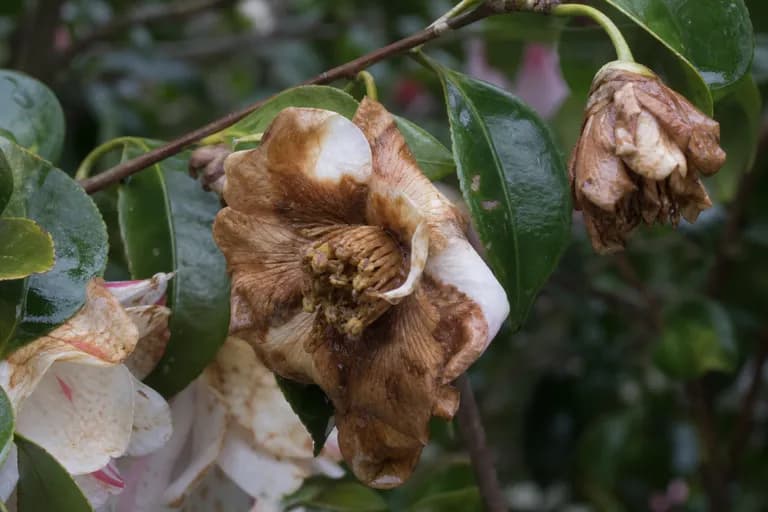
Camellia Petal Blight
DiseaseBrown veins appear in flower petals, rapidly spreading to turn entire blooms brown and mushy. Affected flowers drop prematurely and develop hard black sclerotia at their base.
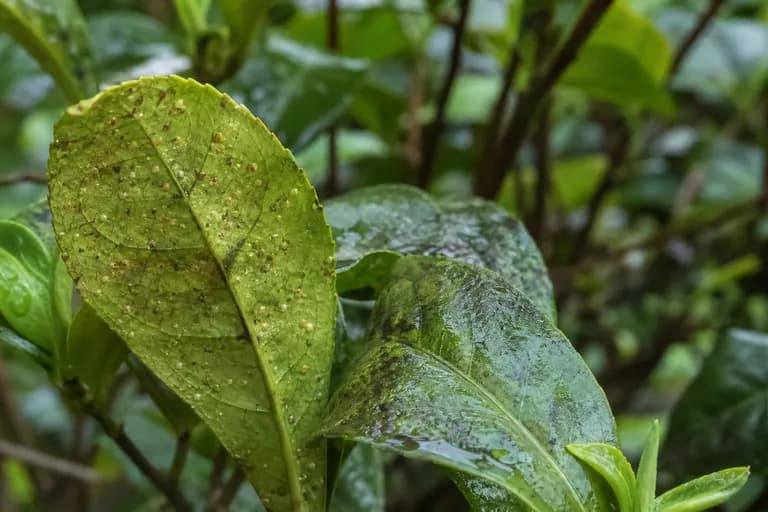
Tea Scale
PestWhite cottony masses on the undersides of leaves with yellow spots visible on upper surfaces. Heavy infestations cause leaf yellowing, drop, and reduced vigor.
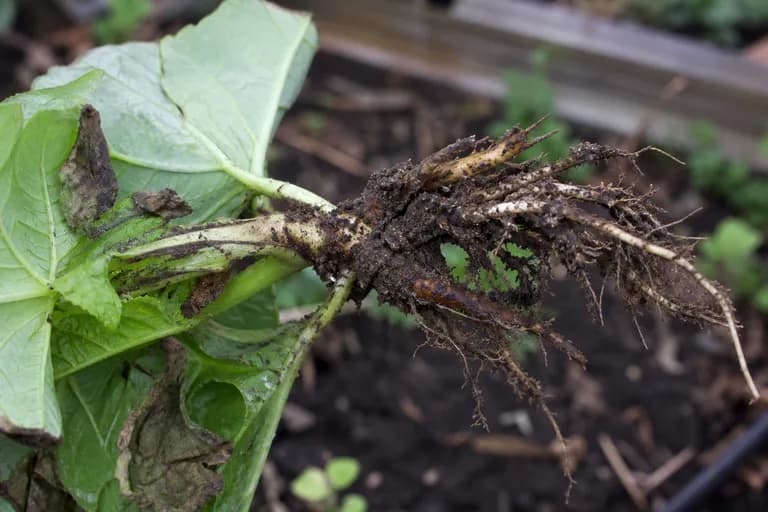
Root Rot
DiseaseWilting despite adequate soil moisture, yellowing leaves, and gradual decline. Roots appear dark and mushy when examined. Often fatal in poorly drained soils.
Troubleshooting Common Problems
Bud drop is the most frustrating camellia problem, often caused by temperature fluctuations, drought stress during bud development, or over-fertilization. Sooty mold on leaves indicates scale insect infestation; treat the scale and the mold will clear. Sunscald appears as bronzed or bleached patches on leaves exposed to intense afternoon sun. Cold damage causes browning of flower buds and petal edges during sudden freezes. Yellow leaves with green veins indicate iron deficiency due to soil pH above 6.5. Dieback of branch tips may indicate Glomerella canker or extreme cold exposure.
Growing Tips
- Plant camellias in partial shade with protection from hot afternoon sun, ideally under the high canopy of deciduous trees that provide dappled light year-round.
- Ensure soil is well-draining and acidic with a pH between 5.0 and 6.5. Amend alkaline soils with sulfur, peat moss, or composted pine bark before planting.
- Water deeply and consistently, providing at least one inch of water per week during the growing season. Camellias have shallow root systems that dry out quickly.
- Apply a 3 to 4 inch layer of acidic organic mulch such as pine bark, pine needles, or oak leaves around the root zone but keep it several inches away from the trunk.
- Fertilize with an acid-forming fertilizer formulated for camellias, azaleas, and rhododendrons in early spring after flowering and again in midsummer. Stop fertilizing by August.
- Prune for shape immediately after flowering ends in spring. Pruning later in the season removes developing flower buds and reduces the next year's bloom display.
- Protect plants from cold drying winds by siting them on the north or east side of buildings or walls, or by using windbreak plantings of evergreen shrubs.
- Prevent camellia petal blight by removing fallen flowers and petals from the ground promptly and replacing the top layer of mulch each spring to eliminate fungal spores.
- Disbud flower clusters in autumn by removing all but one or two buds per cluster if you want fewer but significantly larger and more impressive individual blooms.
- When planting, set the root ball slightly high so the top of the root ball sits about one inch above the surrounding soil level, as camellias are highly sensitive to root rot from being planted too deeply.
Grow your best Camellia Tree yet — and everything around it.
Start a free plan today. Lay out your beds, drop in your Camellia Tree, and let PlotMyGarden handle the timing, spacing, companions and reminders from seed to harvest basket.
Pick your Camellia Tree
Debutante
Large peony-form flowers in clear pink. Early to mid-season bloomer with vigorous upright growth. One of the most reliable and widely available camellia cultivars.
Nuccio's Gem
Considered one of the most perfect formal double white camellias ever produced. Medium-sized blooms of pristine white on a compact plant. Mid-season bloomer.
Professor Sargent
Dark red anemone-form flowers on a vigorous, upright plant. Very reliable bloomer and one of the hardiest japonicas. Mid to late season.
April Dawn
Variegated sport with soft pink and white marbled petals. Formal double form that blooms over a long season from mid-winter to spring. Compact, manageable growth habit.
Kramer's Supreme
Fragrant large peony-form red flowers, unusual among camellias for its scent. Vigorous upright growth to 15 feet. Mid-season bloomer prized by collectors.
A single Camellia japonica plant purchased as a small nursery specimen for 15 to 40 dollars can grow into a large flowering tree that provides decades of ornamental value, potentially increasing property values by enhancing curb appeal. Propagating new plants from semi-hardwood cuttings is straightforward and can yield dozens of new plants from a single mother tree at no additional cost. Camellia seed oil, which retails for 15 to 30 dollars per small bottle, can be cold-pressed from seeds harvested from your own tree. As an evergreen, a mature camellia also provides year-round privacy screening that might otherwise require an expensive fence or wall installation.
Quick recipes
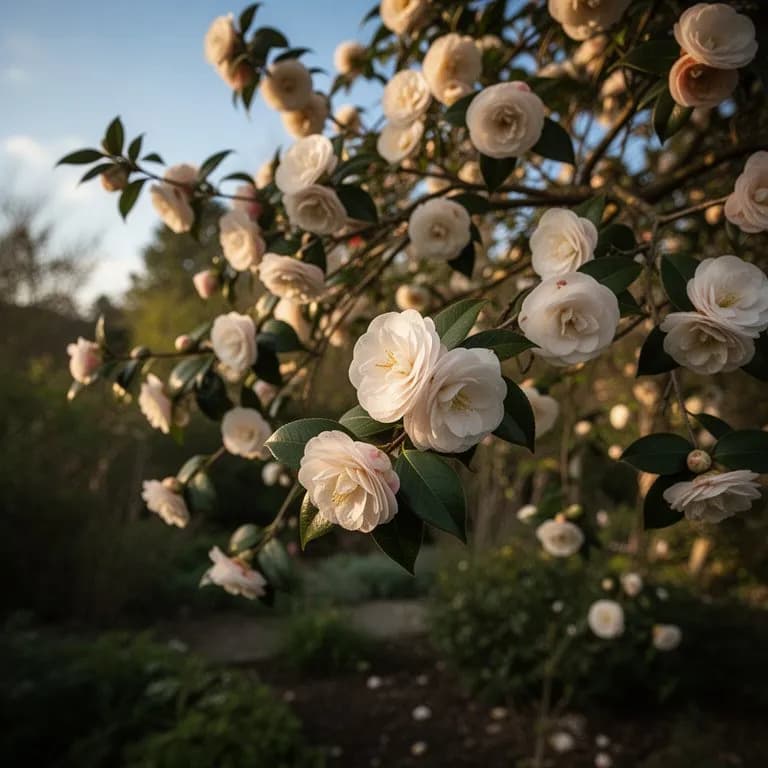
Camellia Petal Garnished Green Tea
5 minutesA delicate presentation pairing fresh camellia petals with brewed green tea from its botanical cousin Camellia sinensis. The petals float on the surface adding visual elegance and a very subtle floral note to the tea.
4 ingredients
Camellia Oil Salad Dressing
10 minutesCold-pressed camellia seed oil makes a light, nutty salad dressing with a flavor profile similar to high-quality olive oil. This traditional Japanese-inspired dressing pairs beautifully with mixed greens, grilled vegetables, or seared fish.
6 ingredientsCamellia Petal Infused Sugar
15 minutes plus 2 weeks infusionFresh camellia petals layered with granulated sugar create a subtly fragrant floral sugar perfect for rimming cocktail glasses, sprinkling over baked goods, or sweetening tea. Use only pesticide-free petals from plants not treated with systemic chemicals.
4 ingredientsWhat's inside
Health Benefits
- Camellia seed oil is rich in oleic acid, a monounsaturated fatty acid associated with cardiovascular health and reduced inflammation when used in cooking or as a dietary supplement
- Applied topically, camellia seed oil deeply moisturizes skin and hair without clogging pores, and has been a cornerstone of Japanese beauty routines for centuries
- Camellia seed oil contains natural antioxidants including vitamins A and E that help protect skin from environmental damage and premature aging
- Spending time cultivating and caring for camellias in the garden provides stress-reducing benefits associated with horticultural therapy and mindful outdoor activity
- Camellia japonica flowers blooming in the depths of winter provide psychological uplift and connection to nature during the season most associated with seasonal affective disorder
- The closely related Camellia sinensis produces tea leaves containing L-theanine and catechins with well-documented benefits for cognitive function, metabolism, and antioxidant protection
Where Camellia Tree comes from
Camellia japonica is native to the coastal and island regions of southern Japan, South Korea, and parts of eastern China, where it grows as an understory tree in warm temperate forests. The species has been cultivated in Japan for well over a thousand years, first valued for its seed oil and later prized as an ornamental flowering tree. In Japanese culture, the camellia or tsubaki holds deep symbolic meaning and appears extensively in art, poetry, textile design, and religious ceremonies. Buddhist temple gardens throughout Japan feature ancient camellia specimens, some dating back several centuries. The plant was introduced to Europe in the early 18th century, with the first documented specimens arriving in England around 1739. Portuguese traders and Jesuit missionaries likely brought camellias from Japan and China to Portugal even earlier. By the early 1800s, camellias had become enormously fashionable across Europe, particularly in Portugal, Spain, Italy, and England, where wealthy collectors built heated glasshouses specifically to grow them. The flower reached North America by the late 18th century and found a natural home in the warm, humid climate of the southeastern United States, particularly along the Gulf Coast and in states like Alabama, Georgia, South Carolina, and Louisiana. Today there are over 30,000 registered Camellia japonica cultivars worldwide, ranging from compact shrubs to tree-form specimens reaching 25 feet tall. Flower forms include single, semi-double, anemone, peony, rose, and formal double types in colors spanning pure white through every shade of pink and red to deep crimson. The American Camellia Society, founded in 1945, maintains an extensive registry and promotes camellia culture throughout North America.
Camellia Tree: did you know?
Fascinating facts about Camellia Tree
Camellia japonica is the official state flower of Alabama, where it has been cultivated since the early 1800s and thrives in the humid subtropical climate.
Camellia Tree questions, answered
When should I plant Camellia Tree?
What are good companion plants for Camellia Tree?
What hardiness zones can Camellia Tree grow in?
How much sun does Camellia Tree need?
How far apart should I space Camellia Tree?
What pests and diseases affect Camellia Tree?
How do I store Camellia Tree after harvest?
What are the best Camellia Tree varieties to grow?
What soil does Camellia Tree need?
Why are the flower buds on my camellia turning brown and falling off before opening?
What is the brown discoloration on my camellia flowers and how do I prevent it?
Can I grow Camellia japonica in a container or pot?
Is Camellia japonica the same plant that produces tea?
How long does it take for a camellia to reach full size?
Why are the leaves on my camellia turning yellow?
You just read the theory. Now grow it on autopilot.
Everything that makes Camellia Tree fiddly — the timing, the spacing, the companions, the harvest window — is exactly what PlotMyGarden handles for you, for every plant in your garden.
A plan that knows your weather
Set your location once. Get sow, feed and harvest dates built around your real last-frost date and live forecast — no more guessing from a generic seed packet.
From the “When to plant” sectionDrag-and-drop bed planner
Design beds on a grid. Every plant snaps to its proper spacing, and you can see your whole season laid out before you spend a cent on seed.
From the “Growing guide” sectionCompanion conflicts, caught early
200+ good-and-bad pairings checked live as you plant — so a season-wrecking mistake never makes it into the ground.
From the “Companions” sectionReminders you'll actually act on
“Water the beans.” “Pick today before it turns.” Timely, specific, and tied to the plants you're really growing.
From the “Harvest” sectionSuccession, scheduled
Want a harvest for six weeks, not six days? It spaces your sowings automatically and reminds you when each new block is due.
From the “When to plant” sectionA record that gets smarter
Every harvest you log teaches it your garden. Next year's plan starts from what actually worked in your soil, not a textbook's.
From the “Overview” sectionPlant these alongside Camellia Tree
More Evergreens
Grow your best Camellia Tree yet — and everything around it.
Start a free plan today. Lay out your beds, drop in your Camellia Tree, and let PlotMyGarden handle the timing, spacing, companions and reminders from seed to harvest basket.