Remolacha Chioggia
Una remolacha heirloom italiana con anillos rojos y blancos concéntricos impresionantes al cortarse, parecidos a un objetivo de tiro al blanco.





En esta páginaResumen
Conoce Remolacha Chioggia
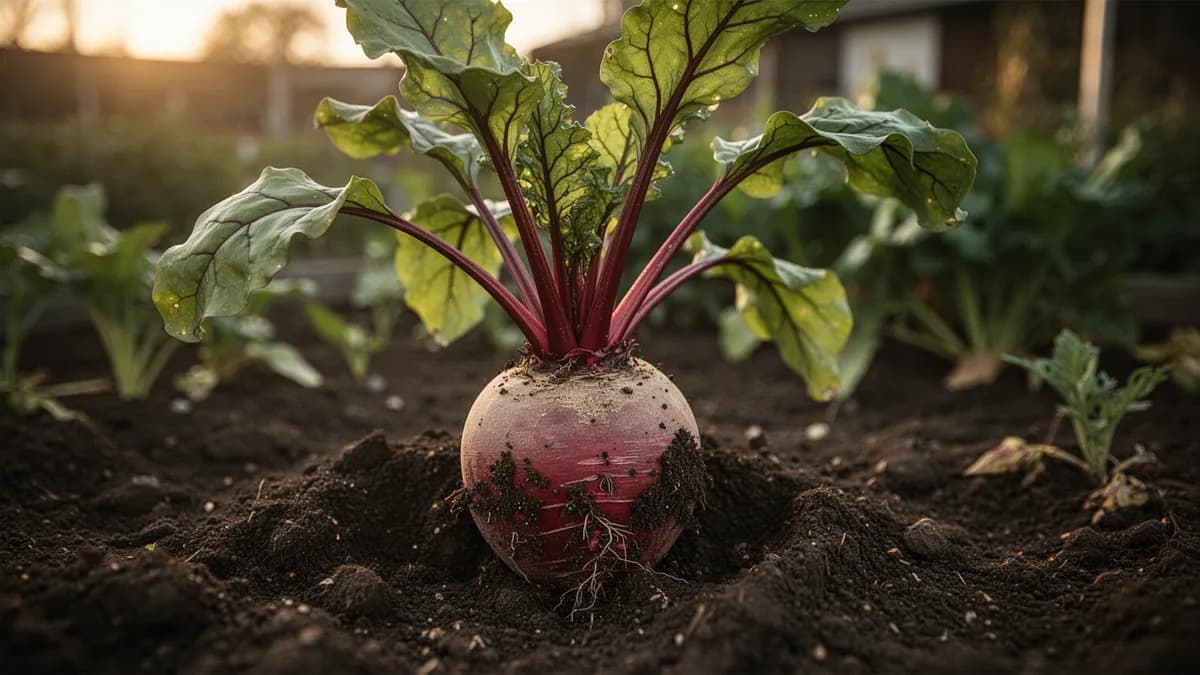
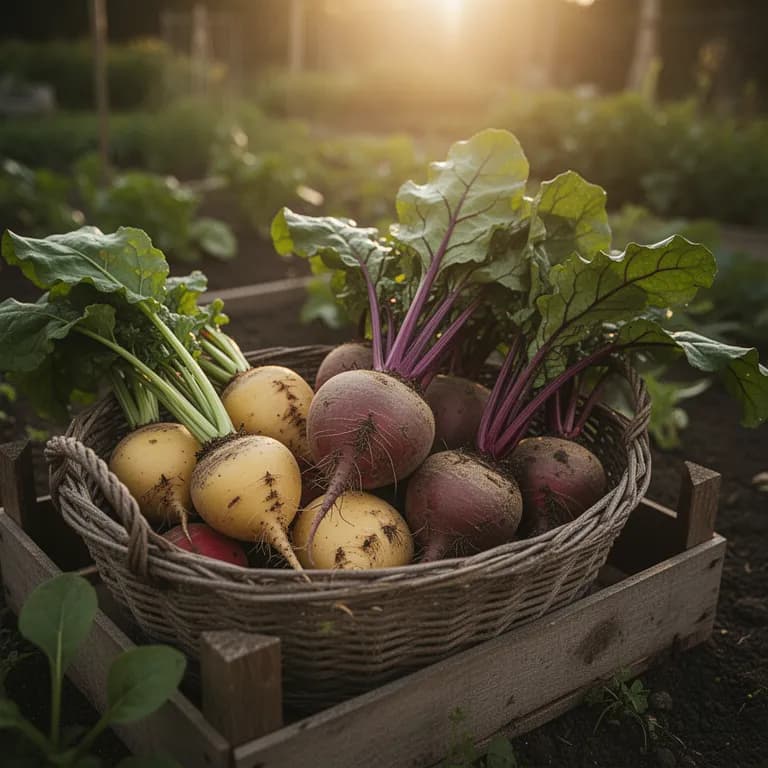
Una remolacha heirloom italiana con anillos rojos y blancos concéntricos impresionantes al cortarse, parecidos a un objetivo de tiro al blanco. Las remolachas Chioggia tienen un sabor más suave y dulce que los tipos rojos sólidos y se disfrutan mejor crudas o ligeramente cocinadas para preservar el patrón llamativo. Los anillos se desvanecen a rosa cuando se cocinan a fuego alto, así que sírvalas cortadas finamente y aderezadas con vinagreta para el efecto visual más dramático. Cultívelas como remolachas estándar con humedad consistente para desarrollo uniforme de raíz.
Cuándo plantar Remolacha Chioggia
Siembre directamente a 1 cm de profundidad 2-4 semanas antes de la última helada. Remoje semillas 24 horas para mejorar germinación. Raclare a 8-10 cm de distancia. Para los anillos más vívidos, siembre sucesivamente cada 3 semanas y coseche prontamente a 5 cm. Las semillas permanecen viables por 4 años. Chioggia es un heirloom de polinización abierta, así que las semillas guardadas crían verdadero.
Tu año de Remolacha Chioggia
Ajustado a Zona 7 · temporada típica · la helada se va hacia el 2 abr y vuelve hacia el 1 nov
Planta Remolacha Chioggia Mar – May, Ago – Sep y cosecha Jun – Ago, Oct – Nov. Consulta los métodos de plantación y elige tu clima para adaptar los periodos.
Cómo cultivar Remolacha Chioggia
Siembre semillas de remolacha Chioggia directamente a 1 cm de profundidad, 2-4 semanas antes de la última helada. Las semillas germinan en 7-14 días a 10-24°C. Raclare a 8-10 cm de distancia cuando las plántulas tengan 5 cm de altura. Espacie hileras a 30-45 cm de separación. Las remolachas Chioggia se cultivan igual que las remolachas estándar pero se cosechan más pequeñas para preservar su patrón interior distintivo.
Proporcione condiciones de crecimiento frescas (13-21°C) y humedad consistente. Acolche para mantener suelo fresco y húmedo. Alimente ligeramente con fertilizante equilibrado; evite nitrógeno pesado. El patrón interior de rayas de caramelo es más dramático en raíces más pequeñas (5 cm), volviéndose menos distintivo a medida que las raíces crecen más grandes.
Para los anillos internos más vívidos, coseche a 5-6 cm de diámetro. La cocción disminuye el contraste rosa-blanco; sirva crudo o muy ligeramente cocinado para preservar el atractivo visual. Las remolachas Chioggia tienen un sabor más suave y dulce que la mayoría de las remolachas rojas. Siembre sucesivamente cada 3 semanas para suministro continuo de raíces de tamaño perfecto.
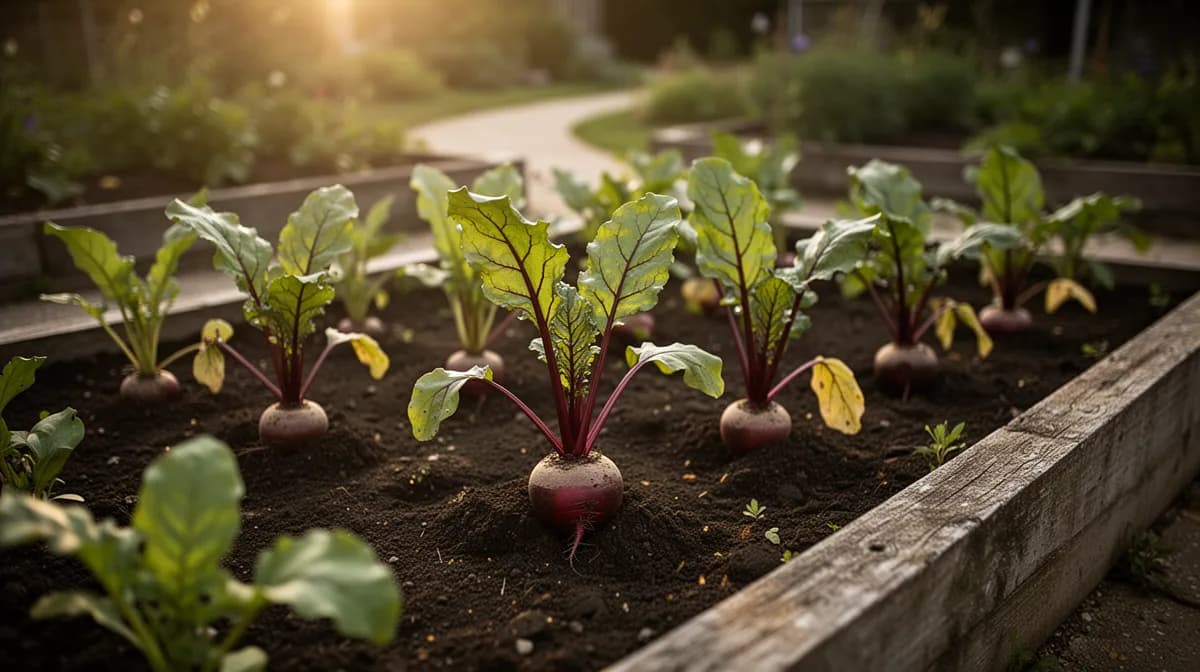
288 plantas caben en un bancal de 120 × 240 cm
Cada Remolacha Chioggia pide 10 cm de margen. El planificador guarda ese marco por ti — cada planta, cada bancal.
Los mejores vecinos de Remolacha Chioggia
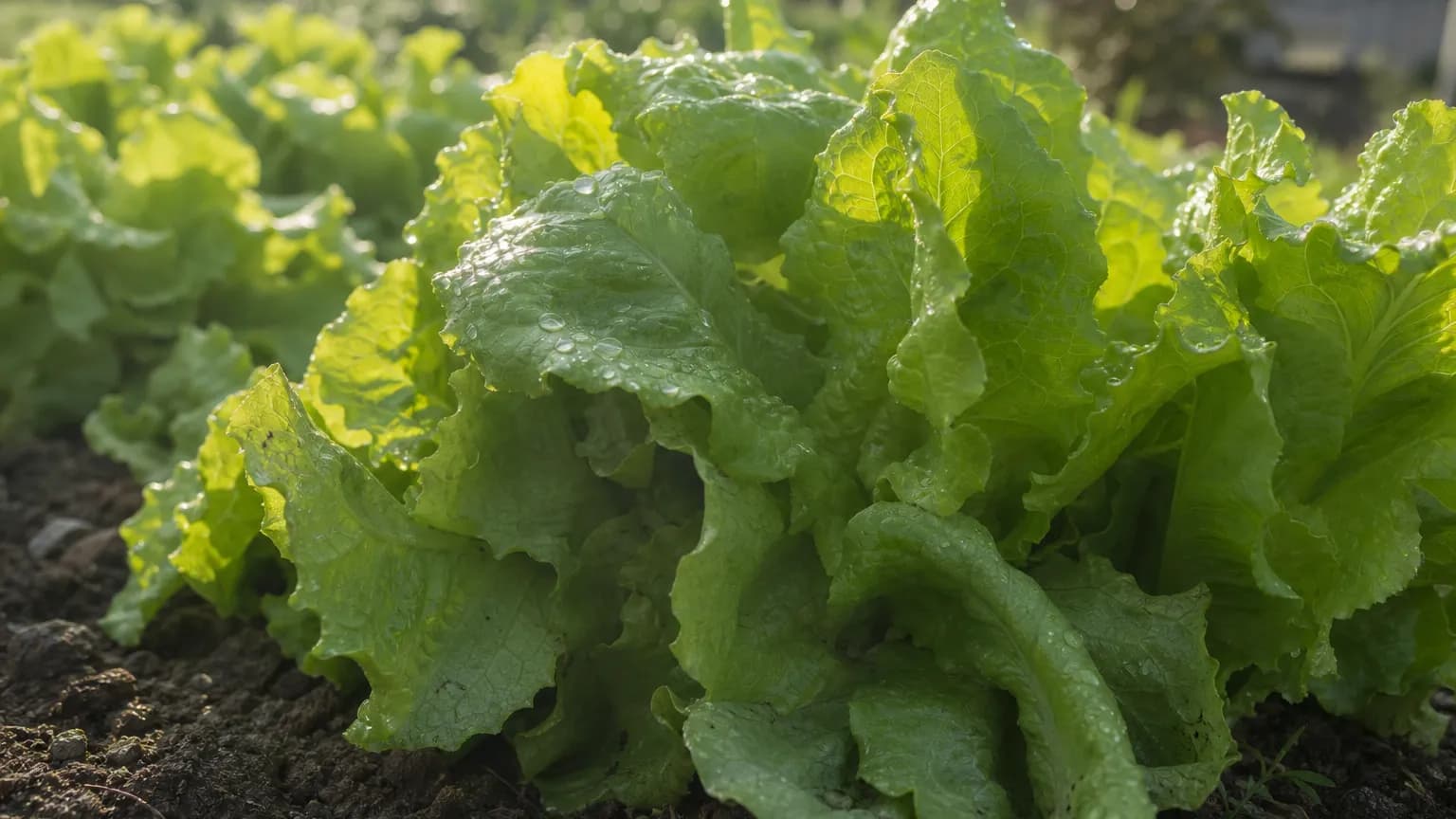
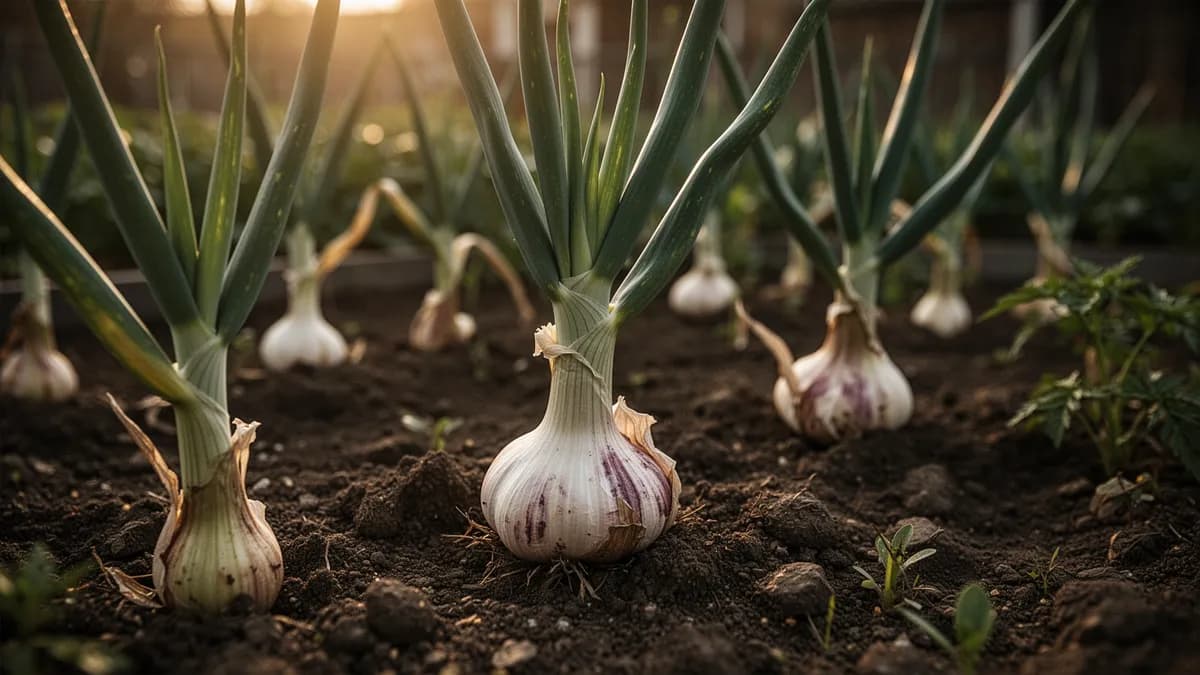
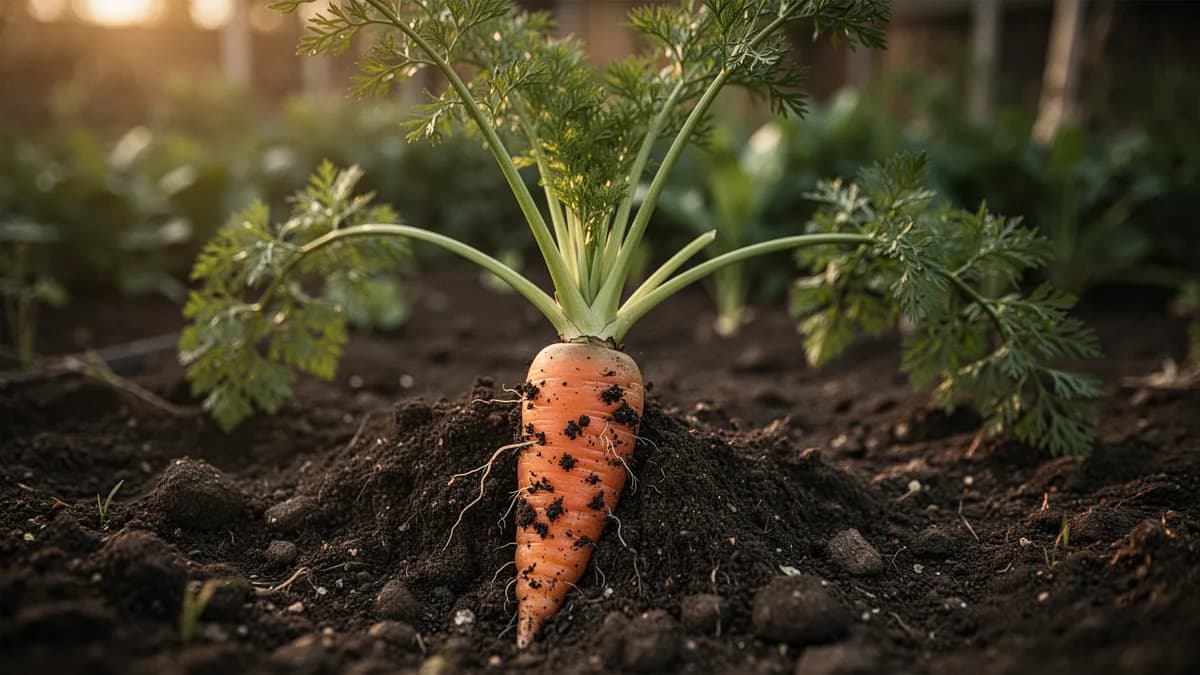
Las remolachas Chioggia crecen bien con los mismos compañeros que otras remolachas: cebollas, ajo, lechuga y brassicas. Evite judías trepadoras. Las hojas con tallos rojos añaden valor ornamental al jardín. Interplante con rábanos de maduración rápida. Siga cultivos de legumbres para beneficiarse del nitrógeno residual. Espacie adecuadamente para circulación de aire para prevenir enfermedades foliares.
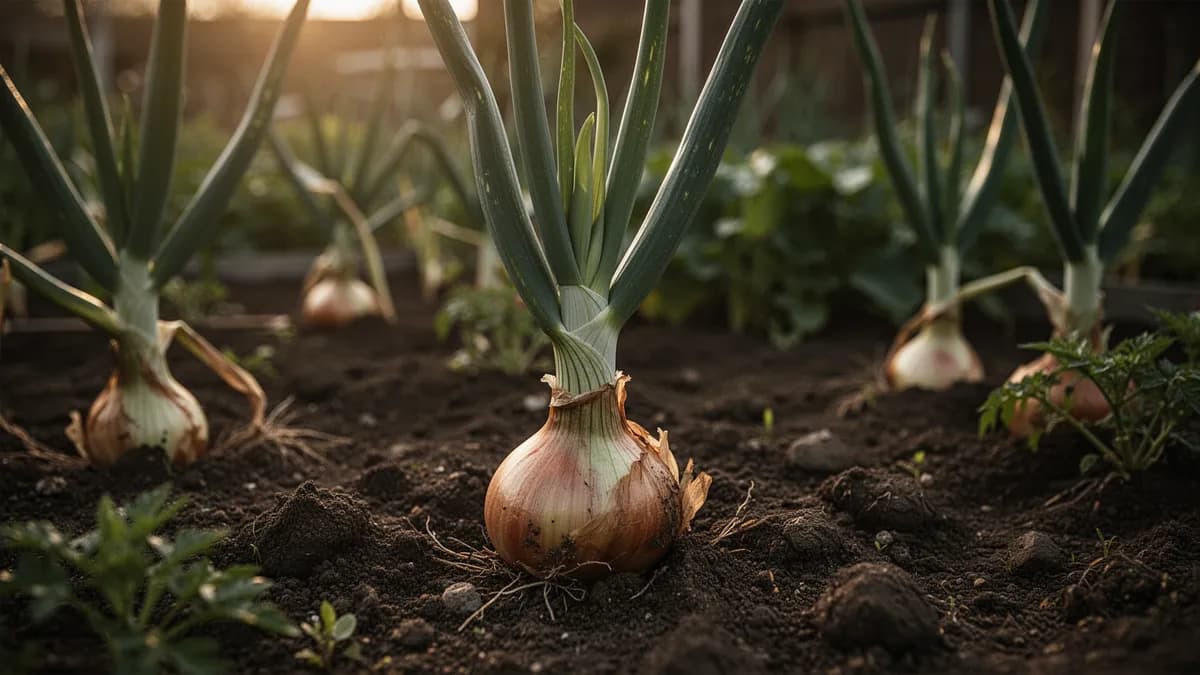
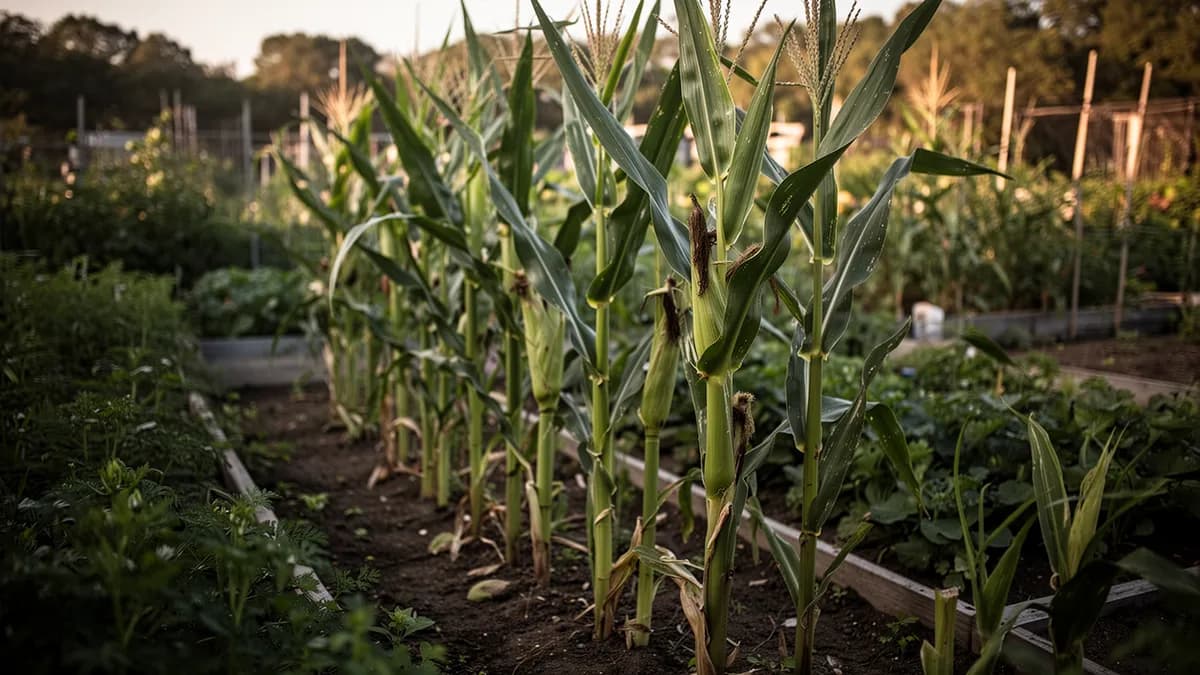
Cebolla va a su lado. Maíz no.
Saber de huerto de siempre, cotejado con la tabla real de Remolacha Chioggia — prueba cualquier planta que cultives.
Prueba Remolacha Chioggia en un bancal, aquí mismo
Un bancal real del planificador con Remolacha Chioggia ya plantado. Toca una planta compañera para colocarla y mira cómo responde la comprobación de vecinos: verde para buenos vecinos, rojo si hay conflicto.


Guías de cultivo relacionadas
Abónalo bien
Las remolachas Chioggia crecen mejor en suelo suelto, bien drenado con un pH de 6.0-7.0. Enmiende con compost para fertilidad y retención de humedad. Aplique fertilizante equilibrado al sembrar. Evite exceso de nitrógeno, que promueve crecimiento de partes superiores sobre desarrollo de raíces. La humedad consistente produce las raíces más suaves y uniformemente anilladas. El boro es importante; aplique bórax si se sospecha deficiencia.
Temperatura ideal
Compatibilidad de zonas de rusticidad
De la semilla a la cosecha, etapa por etapa
Germinación
Las semillas de remolacha Chioggia son grupos de frutos secos que pueden contener varios embriones. Remojarlas ayuda a que la cubierta exterior corchosa absorba agua más rápido y mejora la germinación.
Aclareo y crecimiento de plántulas
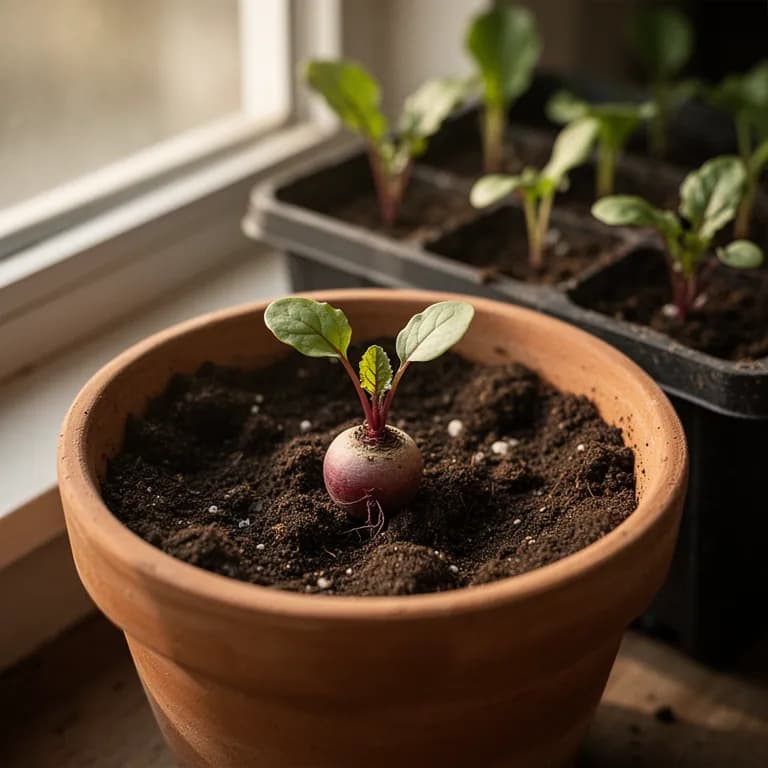
De cada grupo de semillas pueden salir varias plántulas, así que el aclareo es esencial. Las plantas jóvenes desarrollan sus primeras hojas verdaderas y la raíz principal comienza a formarse bajo la superficie del suelo.
Desarrollo de hojas
La planta forma una roseta de hojas anchas mientras la raíz comienza a engrosarse y los anillos concéntricos empiezan a desarrollarse.
Engrosamiento de la raíz
La raíz se engrosa rápidamente y los anillos rojos y blancos alternados se vuelven más definidos.
Ventana de cosecha
Cosecha las raíces mientras los anillos concéntricos sigan siendo intensos; las raíces más grandes se vuelven menos definidas y pueden volverse leñosas.
Remoja los grupos de semillas en agua a temperatura ambiente durante 24 horas antes de sembrar. Siembra a 1 cm de profundidad en suelo húmedo y mantenlo uniformemente húmedo.
Cuidar Remolacha Chioggia mes a mes
Qué hacer cada mes para tu Remolacha Chioggia
Octubre
Mes actualPeak fall harvest month. Pull beets at 5-6 cm diameter for the best ring pattern. In zones 7+, beets can remain in the ground well into autumn. Twist off greens and store roots in perforated bags in the refrigerator. Use greens immediately or blanch and freeze.
Ten claro qué hacer en tu huerto, cada mes
Un correo al empezar cada mes: qué sembrar, plantar y hacer ahora mismo — para tu Remolacha Chioggia y todo lo que crece alrededor. Más un breve curso inicial para esquivar los errores clásicos.
- Qué hacer ahora mismo
- Ajustado a tu temporada
- Curso inicial incluido
Cosechar Remolacha Chioggia
Coseche remolachas Chioggia a 5-6 cm de diámetro para los anillos interiores más vívidos, típicamente 50-60 días después de la siembra. Las raíces más grandes pierden el patrón distintivo. Afloje suavemente el suelo antes de tirar. Recorte las partes superiores a 2.5 cm, dejando la raíz intacta. Los anillos se preservan mejor comiendo crudos, asando muy brevemente, o cortando fino y encurtiendo rápido. Las hojas son completamente comestibles.
se supone que plantas al comenzar el periodo — indica tu fecha real
Cosecha cuando el diámetro sea de 5-6 cm, normalmente 50-60 días después de la siembra.
Almacenamiento y conservación
Almacene remolachas Chioggia sin lavar en bolsas perforadas en el refrigerador por 2-3 semanas. Los anillos se desvanecen durante almacenamiento prolongado, así que use relativamente frescas para mejor impacto visual. Encurtir rodajas finas en salmuera de vinagre clara para preservar parcialmente el patrón rayado. El asado reduce el contraste del patrón. Para mejor efecto visual, corte justo antes de servir. Las hojas deben usarse dentro de pocos días o escaldar y congelar.
Qué falla — y cómo solucionarlo
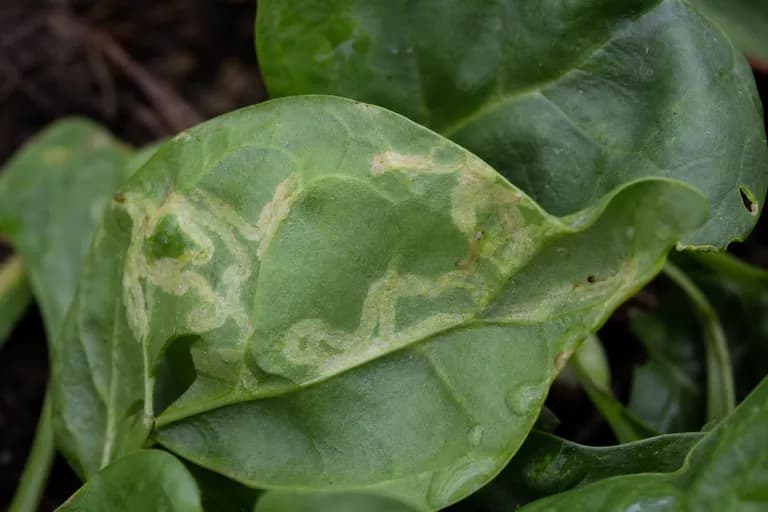
Minadores de hojas
PlagaSenderos sinuosos dentro de hojas, superficies foliares ampolladas, vigor reducido de la planta.
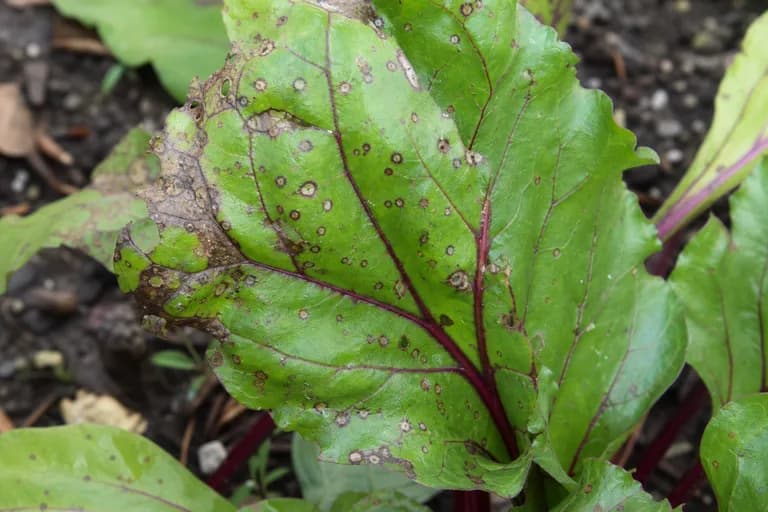
Mancha foliar por Cercospora
EnfermedadManchas redondas con centros grises y bordes púrpuras en hojas, defoliación.
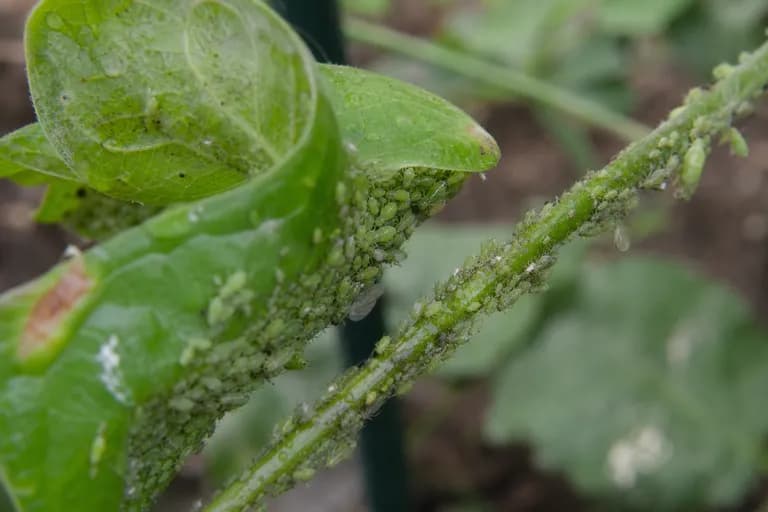
Pulgones
PlagaPequeños insectos en el envés de hojas, follaje enrollado, residuo pegajoso.
Solución de problemas comunes
El patrón de anillos distintivo se desvanece en raíces más grandes; coseche pequeño. La cocción (especialmente hervido) disminuye el contraste de color; coma crudo o cocine mínimamente. Anillos inconsistentes resultan de estrés durante el crecimiento. Espigado en rachas frías produce raíces leñosas y no comercializables. La germinación de racimos de semillas requiere raclare diligente. El sabor suave puede ser demasiado sutil para quienes disfrutan sabor audaz de remolacha.
Consejos de cultivo
- Soak seeds for 24 hours before planting. Chioggia beet seed clusters have a corky outer layer that inhibits water absorption. Soaking softens this barrier and can improve germination rates from 60% to over 85%. Change the water once midway through soaking if it becomes discolored.
- Thin ruthlessly and early. Each seed cluster produces 2-4 seedlings, and overcrowded beets produce undersized roots with indistinct ring patterns. Thin to 8-10 cm apart when seedlings are 5 cm tall. Use scissors to snip at soil level rather than pulling, which disturbs neighboring roots.
- Harvest at 5-6 cm diameter for the most vivid rings. The concentric pattern is sharpest in smaller roots — larger beets develop wider, less distinct rings and a woodier texture. Pull one test root and slice it before harvesting the row to verify ring development.
- Never boil Chioggia beets if you want to preserve the rings. Betacyanin pigments are water-soluble and heat-sensitive. Serve raw (carpaccio, salads), or roast briefly at moderate heat (180°C/350°F for 20 minutes maximum). Quick-pickling in vinegar partially preserves the color contrast.
- Succession plant every 3 weeks during cool seasons for a continuous supply of perfectly sized roots. A single sowing produces a one-time harvest, but staggered plantings from March through May and again from July through September yield beets for months.
- Consistent moisture is the single most important factor for well-formed rings. Even brief drought stress during root development causes irregular, woody zones that disrupt the concentric pattern. Water deeply twice per week or use drip irrigation and mulch to maintain even soil moisture.
- Grow in cool weather only. Chioggia beets planted in summer heat above 27°C (80°F) produce tough, poorly colored roots with faded rings. Spring and fall crops in the 10-24°C (50-75°F) range yield the sweetest flavor and most vivid patterns.
- Save the greens — they are more nutritious than the root. Chioggia beet greens can be sauteed like Swiss chard (they are the same species) and contain exceptional amounts of vitamin K, vitamin A, and iron. Harvest outer leaves throughout the season without harming root development.
Cultiva tu mejor Remolacha Chioggia — y todo lo que la rodea.
Empieza un plan gratis hoy. Diseña tus bancales, coloca tu Remolacha Chioggia y deja que PlotMyGarden gestione el momento, el espaciado, las asociaciones y los recordatorios de la semilla a la cesta.
Elige tu Remolacha Chioggia
Chioggia
El heirloom italiano original con anillos alternados rosa y blanco. Sabor dulce y suave. Nombrado por el pueblo pesquero italiano.
Chioggia Guardsmark
Selección mejorada con rayado interno más consistente y mejor uniformidad.
Candy Cane
Patrón rayado similar con rendimiento confiable. Buena resistencia al espigado para plantación de primavera.
A packet of Chioggia beet seeds costs $2-4 and contains 200-400 seeds — enough for multiple succession sowings over the entire season. Fresh Chioggia beets sell for $4-7 per bunch (3-4 roots) at farmers markets and specialty grocers, and $6-10 per pound at upscale stores due to their heirloom status. Growing a single 3-meter row produces $30-50 worth of beets at market prices. The greens, often discarded in stores, add further value as a nutritious cooking green equivalent to Swiss chard.
Recetas rápidas
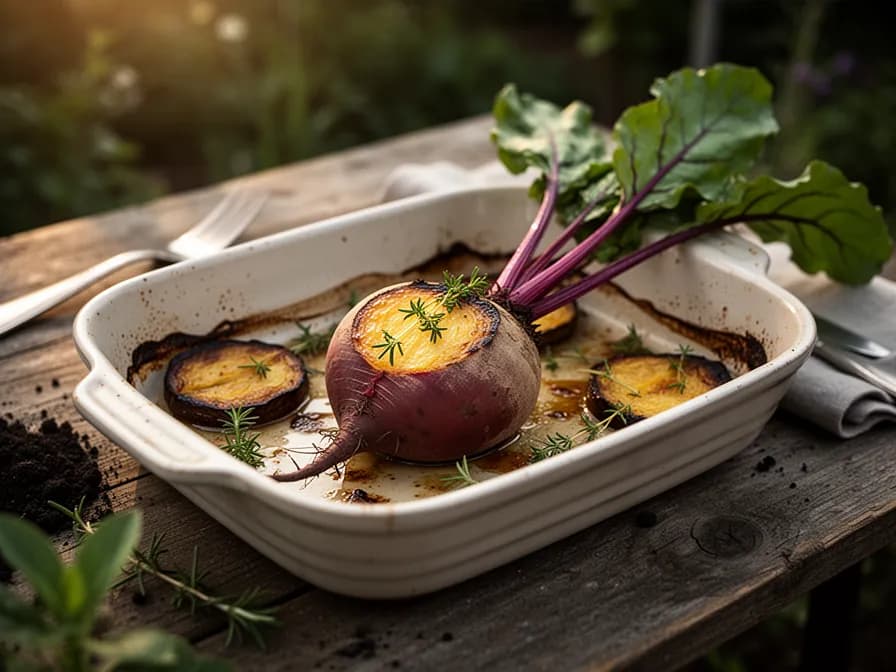
Chioggia Beet Carpaccio with Goat Cheese
15 minPaper-thin raw beet slices arranged on a plate to showcase the stunning bullseye pattern, dressed with a simple vinaigrette and crumbled goat cheese. This no-cook preparation preserves the full visual impact of the concentric rings.
7 ingredientesQuick-Pickled Chioggia Beet Slices
20 min plus 1 hour restingThinly sliced beets cured in a warm rice vinegar brine that partially preserves the candy-stripe pattern while adding a sweet-tangy crunch. These pickled slices elevate sandwiches, grain bowls, and charcuterie boards.
8 ingredientesRoasted Chioggia Beet and Citrus Salad
40 minLightly roasted beet wedges tossed with fresh orange segments, toasted walnuts, and a citrus dressing. Brief roasting at moderate temperature preserves some of the ring pattern while caramelizing the natural sugars for a deeper, earthier sweetness.
8 ingredientesUsos culinarios
Las remolachas Chioggia se muestran mejor crudas, cortadas fino como papel en mandolina para mostrar los impresionantes anillos de rayas de caramelo. Use en carpaccio con queso de cabra y rúcula. Encurtir rodajas finas para preservar parcialmente el patrón. Ase muy brevemente para mantener algo de contraste de color. El sabor dulce y suave las hace atractivas incluso para quienes no les gustan las remolachas rojas. Espectaculares como guarnición y en ensaladas compuestas.
Qué contiene
Beneficios para la salud
- Rich in dietary nitrates that the body converts to nitric oxide, which dilates blood vessels and has been shown in clinical studies to lower blood pressure by 4-10 mmHg — one of the most well-documented cardiovascular benefits of any vegetable.
- Contains unique betalain antioxidants (betacyanins and betaxanthins) found in very few other foods. Research indicates betalains have anti-inflammatory properties and may help protect cells from oxidative damage linked to chronic diseases.
- High in folate (vitamin B9), providing approximately 27% of the daily value per 100g — essential for DNA synthesis, red blood cell formation, and particularly critical during early pregnancy for preventing neural tube defects.
- The betaine (trimethylglycine) in beets supports liver function by assisting in the processing of fats and may help reduce elevated homocysteine levels, an independent risk factor for cardiovascular disease.
- Contains significant manganese (16% DV per 100g), which is essential for bone formation, blood clotting, and the function of superoxide dismutase — one of the body's most important antioxidant enzymes.
- The edible beet greens provide substantial vitamin K (over 400% DV per 100g), vitamin A, iron, and calcium, making them one of the most nutrient-dense leafy greens available — far more nutritious per gram than the root itself.
De dónde viene Remolacha Chioggia
The Chioggia beet traces its origins to the coastal town of Chioggia in the Veneto region of northeastern Italy, situated at the southern end of the Venetian Lagoon. This distinctive striped variety was first documented in Italian seed catalogs in the 1840s, though local oral tradition suggests it had been cultivated in the Veneto region for generations before that. The town of Chioggia has a long agricultural history closely tied to the fertile alluvial soils of the Po River delta, and the beet variety that bears its name became a point of regional pride.
All cultivated beets descend from the wild sea beet (Beta vulgaris subsp. maritima), a coastal plant native to the Mediterranean, Atlantic Europe, and western Asia. Ancient civilizations initially cultivated beets only for their leaves — the swollen root we eat today was not developed until Roman times, and even then root beets remained small and variable. The distinctive concentric ring pattern of the Chioggia beet is a naturally occurring mutation that Italian growers recognized and selectively preserved, stabilizing the trait through careful seed saving over many generations.
Chioggia beets remained relatively unknown outside of Italy and specialty seed collections until the farm-to-table and heirloom vegetable movements of the late 20th century brought renewed interest in visually striking heritage varieties. By the 1990s and 2000s, chefs and food photographers discovered that the dramatic bullseye cross-section was as photogenic as it was delicious, and Chioggia beets became a staple of upscale restaurant menus and food magazines worldwide. Today they are among the most popular heirloom beet varieties globally, prized for their mild sweetness, low tendency to bleed, and unmistakable visual appeal.
Remolacha Chioggia: ¿sabías que?
Datos fascinantes sobre Remolacha Chioggia
Chioggia beets are named after Chioggia, a small fishing village at the southern tip of the Venetian Lagoon in Italy, where this heirloom variety has been cultivated since at least the early 1840s — making it one of the oldest documented beet cultivars still grown today.
Remolacha Chioggia: preguntas frecuentes
¿Cuándo debo plantar Remolacha Chioggia?
¿Cuáles son buenas plantas acompañantes para Remolacha Chioggia?
¿En qué zonas de rusticidad puede crecer Remolacha Chioggia?
¿Cuánto sol necesita Remolacha Chioggia?
¿A qué distancia debo espaciar Remolacha Chioggia?
¿Qué plagas y enfermedades afectan a Remolacha Chioggia?
¿Cómo almaceno Remolacha Chioggia después de la cosecha?
¿Cuáles son las mejores variedades de Remolacha Chioggia para cultivar?
¿Qué suelo necesita Remolacha Chioggia?
Why did my Chioggia beet rings fade when I cooked them?
Why did multiple seedlings come up from each seed I planted?
When is the best time to harvest for the most vivid ring pattern?
Can I grow Chioggia beets in summer?
Will Chioggia beets cross-pollinate with my Swiss chard?
Acabas de leer la teoría. Ahora cultívala en piloto automático.
Todo lo que hace que Remolacha Chioggia sea delicado — el momento, el espaciado, las asociaciones, la ventana de cosecha — es justo lo que PlotMyGarden resuelve por ti, para cada planta de tu huerto.
Un plan que conoce tu clima
Indica tu ubicación una vez. Recibe fechas de siembra, abonado y cosecha basadas en tu última helada real y el pronóstico en vivo — sin adivinar con un sobre genérico.
De la sección “Cuándo plantar”Planificador de bancales de arrastrar y soltar
Diseña bancales sobre una cuadrícula. Cada planta encaja con su espaciado correcto y ves toda la temporada antes de gastar un céntimo en semillas.
De la sección “Cultivo”Conflictos de asociación, detectados a tiempo
Más de 200 buenas y malas combinaciones comprobadas en vivo mientras plantas — para que un error que arruine la temporada nunca llegue a la tierra.
De la sección “Asociaciones”Recordatorios que sí vas a seguir
“Riega las judías.” “Recoge hoy antes de que se pase.” Oportunos, concretos y ligados a las plantas que de verdad cultivas.
De la sección “Cosecha”Escalonado, programado
¿Quieres cosechar seis semanas en vez de seis días? Reparte tus siembras automáticamente y te avisa cuando toca el siguiente lote.
De la sección “Cuándo plantar”Un registro que se vuelve más listo
Cada cosecha que registras le enseña tu huerto. El plan del año que viene parte de lo que de verdad funcionó en tu suelo, no en un manual.
De la sección “Resumen”Planta estos junto a Remolacha Chioggia
Más Hortalizas de raíz
Mantén Remolacha Chioggia lejos de estos
Diseños de jardín con Remolacha Chioggia
Cultiva tu mejor Remolacha Chioggia — y todo lo que la rodea.
Empieza un plan gratis hoy. Diseña tus bancales, coloca tu Remolacha Chioggia y deja que PlotMyGarden gestione el momento, el espaciado, las asociaciones y los recordatorios de la semilla a la cesta.