Blaue Kornblume
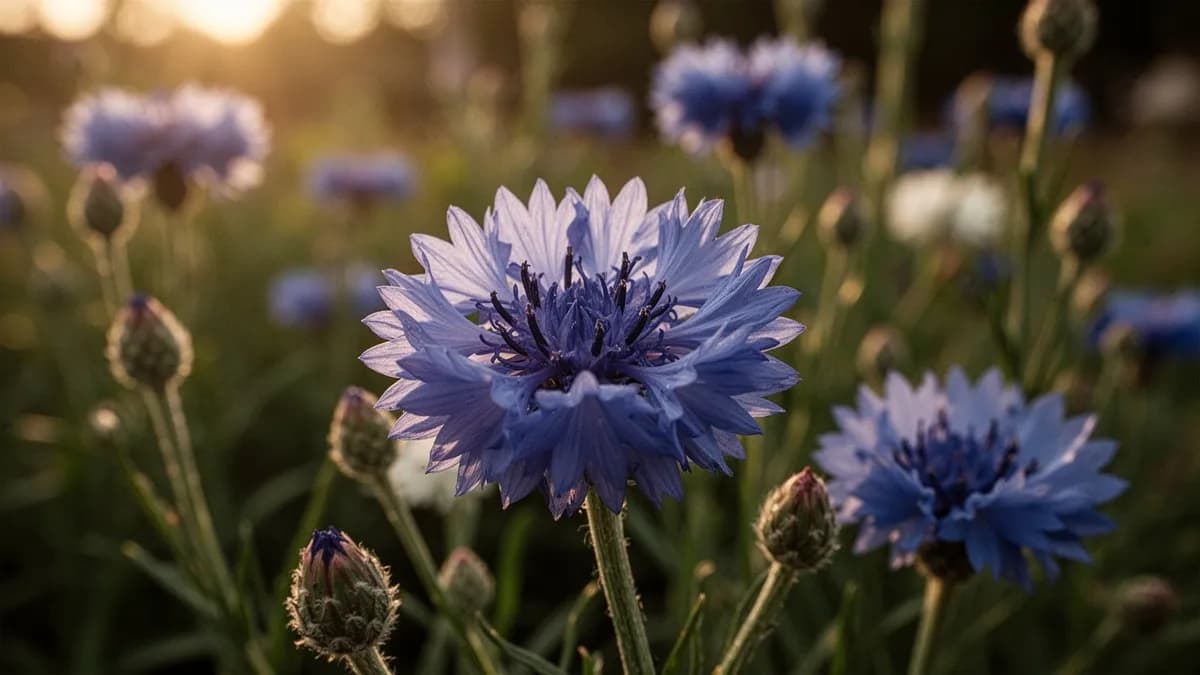
Eine echte Blaukultivars der klassischen Kornblume mit intensiven Saphirblüten auf drahtigen Stielen, die sich perfekt zum Schneiden eignen.





Auf dieser SeiteÜberblick
Blaue Kornblume im Überblick
Eine echte Blaukultivars der klassischen Kornblume mit intensiven Saphirblüten auf drahtigen Stielen, die sich perfekt zum Schneiden eignen. Kornblumen säen sich bereitwillig selbst aus und gedeihen in kargem Boden mit minimaler Pflege. Säen Sie den Samen im Herbst oder frühen Frühling für die längste Blütezeit.
Wann Blaue Kornblume pflanzen
Kornblumensamen für beste Ergebnisse direkt im Herbst oder frühen Frühling aussäen – sie mögen das Verpflanzen nicht. Samen auf vorbereiteten Boden streuen und leicht bis auf eine Tiefe von 0,5 cm einharken. Samen keimen in 7–14 Tagen in kühlem Boden (13–18 °C). Sämlinge auf 15–20 cm Abstand ausdünnen. Für die Anzucht drinnen 4–6 Wochen vor dem letzten Frost in biologisch abbaubare Töpfe säen, die ohne Wurzelstörung ausgepflanzt werden können. Samen können auch in aufeinanderfolgenden Chargen alle 2–3 Wochen für kontinuierliche Blüten ausgesät werden.
Dein Blaue Kornblume-Jahr
Abgestimmt auf Zone 7 · typische Saison · Frost geht um den 2. Apr. und kehrt um den 1. Nov. zurück
Blaue Kornblume Mär – Mai pflanzen, Mai – Aug ernten. Beachte die Pflanzmethoden unten und wähle dein Klima für passende Zeiträume.
So baust du Blaue Kornblume an
Kornblumen gehören zu den einfachsten Blumen, die man aus Samen ziehen kann, da sie unter Bedingungen gedeihen, die anspruchsvollere Einjährige scheitern lassen. Säen Sie den Samen direkt im Freien im Herbst oder sehr frühen Frühling – diese kälteharten Pflanzen vertragen leichte Fröste und bevorzugen sogar kühle Wachstumsbedingungen. Samen auf vorbereiteten Boden streuen, leicht einharken und Sämlinge auf 15–20 cm Abstand ausdünnen.
Wählen Sie einen sonnigen Standort mit durchschnittlichem bis armem, gut drainierendem Boden. Reicher Boden erzeugt üppiges Blattwerk, aber schwache, schlaffe Stiele. Kornblumen in kargem Boden bleiben kompakt mit kräftigen, drahtigen Stielen, die selten gestützt werden müssen. Nach dem Eingewöhnen sparsam gießen – diese mediterranen Einheimischen sind trockenheitstolerant und faulen in zu feuchten Bedingungen.
Konsequent ausgeizen, um Selbstaussaat zu verhindern und die Blütezeit zu verlängern. Wenn man sie sich selbst überlässt, säen sich Kornblumen reichlich selbst aus und können leicht verunkrauten. In heißen Klimazonen können Pflanzen in der Mittsommerhitze aufhören zu blühen; Folgesaaten im frühen Frühling und erneut im Spätsommer sorgen für kontinuierliche Blüten.
72 Pflanzen passen in ein Beet von 120 × 240 cm
Blaue Kornblume braucht 20 cm Platz pro Pflanze. Der Planer hält diesen Abstand für dich ein — jede Pflanze, jedes Beet.
Die besten Nachbarn für Blaue Kornblume
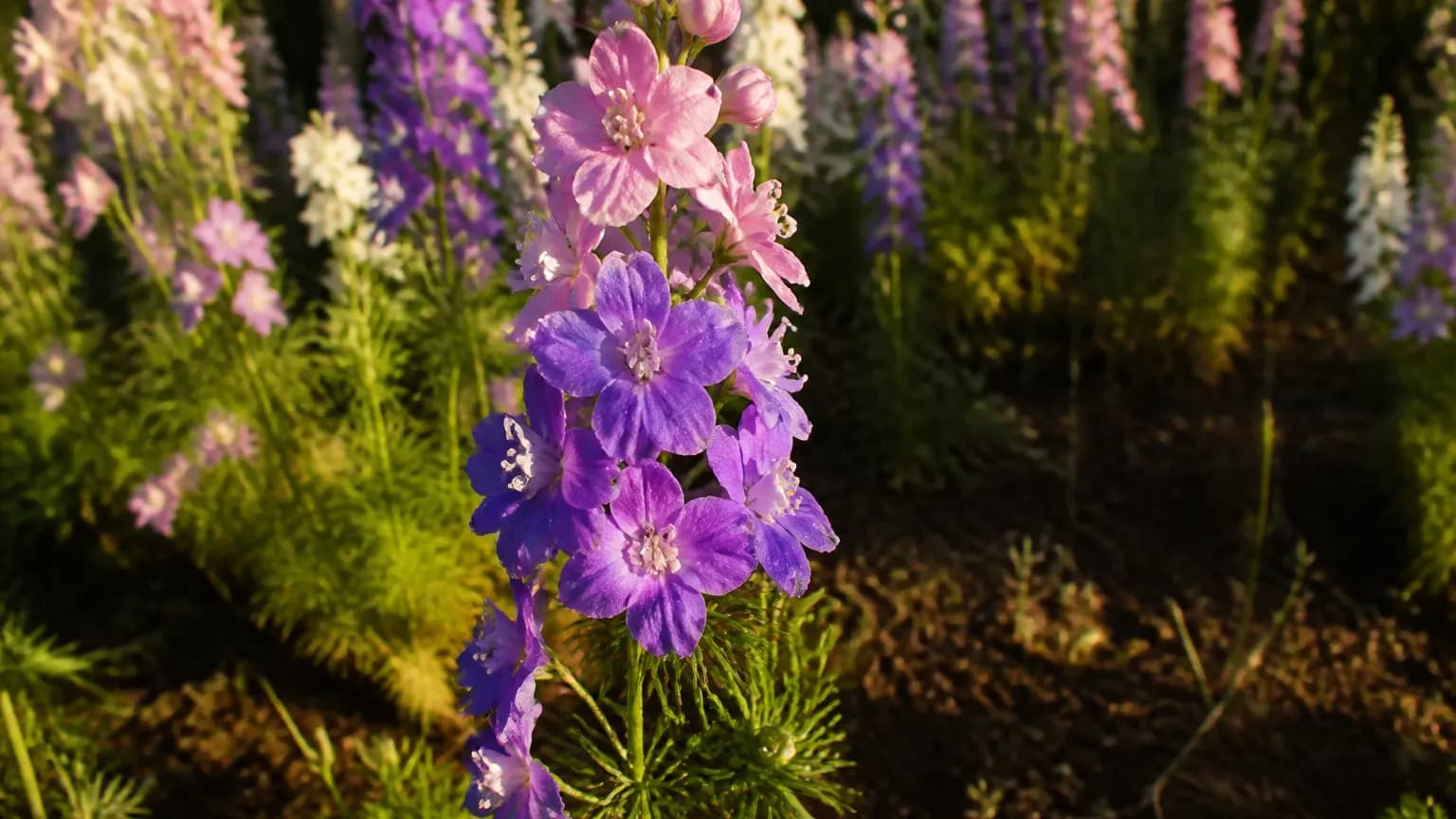
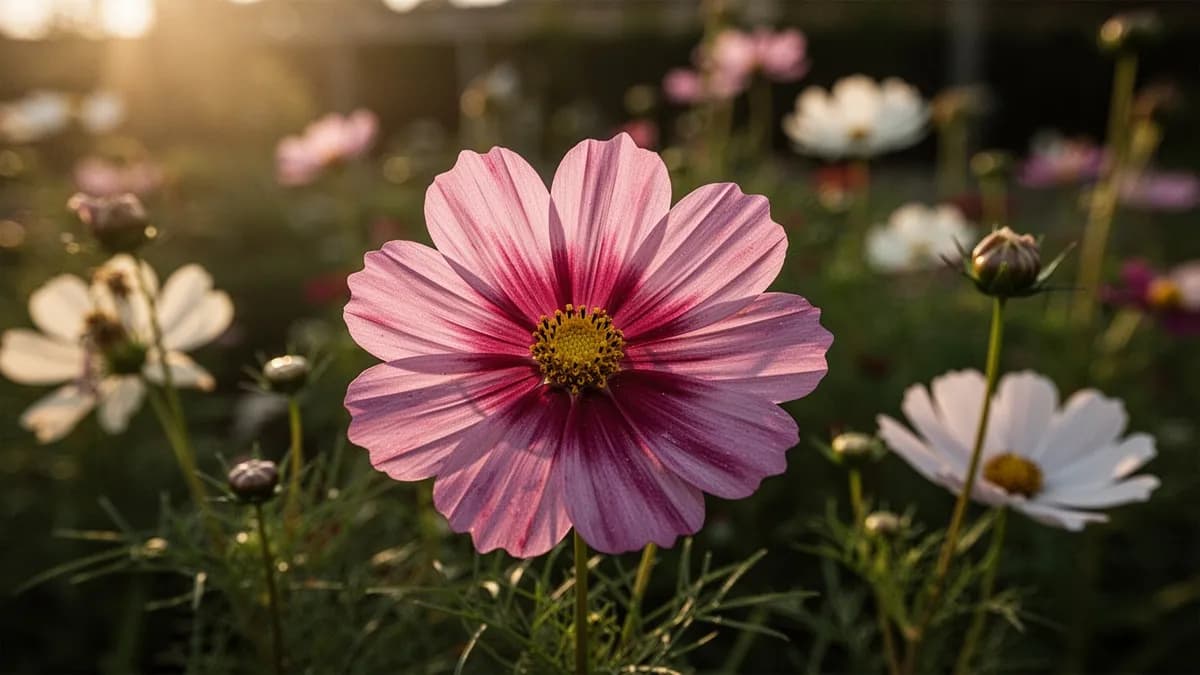
Kornblumen erinnern an Bauerngärten und Wildblumenwiesen. Mit anderen selbst aussäenden Einjährigen wie Mohn, Cosmeen und Rittersporn für eine naturnahe Bepflanzung kombinieren, die Jahr für Jahr wiederkehrt. Im Gemüsegarten ziehen sie Nützlinge an, darunter Florfliegen und Schwebfliegen, die Blattläuse fressen. Die blauen Blüten bieten einen ausgezeichneten Kontrast neben goldenen Ringelblumen und roten Mohnblumen.
Kornblume gehört daneben.
Altes Gärtnerwissen, geprüft an der echten Nachbartabelle von Blaue Kornblume — teste jede Pflanze, die du anbaust.
Probiere Blaue Kornblume direkt hier im Beet
Ein echtes Planer-Beet, Blaue Kornblume steht schon drin. Tippe einen Begleiter an, platziere ihn und sieh, wie die Nachbarschaftsprüfung antwortet — grün für gute Nachbarn, rot bei Streit.


Passende Anbau-Ratgeber
Richtig düngen
Kornblumen gedeihen in armem bis durchschnittlichem, gut drainierendem Boden mit einem pH-Wert von 6,0–7,5. Sie gedeihen tatsächlich besser in kargem Boden als in reichem – übermäßige Fruchtbarkeit führt zu hochbeinigen, schwachstieligen Pflanzen. Dünger wird selten benötigt. Wenn der Boden sehr arm ist, reicht eine einmalige leichte Anwendung von ausgewogenem Granulat-Dünger beim Pflanzen aus. In Behältern standardmäßige Blumenerde ohne zusätzliche Zusätze verwenden.
Ideale Temperatur
Winterhärtezone-Kompatibilität
Von der Saat zur Ernte, Schritt für Schritt
Samenkeimung
Kornblumensamen sind kleine, längliche Achänen mit einem Borstenbüschel. Sie keimen am besten, wenn sie direkt in kühlen Boden bei 15–18 °C gesät werden. Samen bevorzugen Dunkelheit zur Keimung und sollten mit etwa 6 mm feiner Erde bedeckt werden. Die Keimung erfolgt unter günstigen Bedingungen typischerweise innerhalb von 7–10 Tagen.
Sämlingsentwicklung
Sämlinge keimen mit schmalen, riemenförmigen Keimblättern, gefolgt von schlanken echten Blättern, die mit feinen graugrünen Haaren bedeckt sind. Die jungen Pflanzen entwickeln schnell eine Pfahlwurzel und beginnen, eine niedrige Grundrosette aus lanzettförmigem Laub zu bilden. Im Herbst gesäte Sämlinge überwintern in diesem Stadium.
Rosetten- und Vegetationswachstum
Die Pflanze bildet eine dichte Rosette aus schmalen, graugrünen Blättern und beginnt aufrechte, drahtartige, verzweigte Stiele zu treiben. Die Stiele verlängern sich rasch und entwickeln eine charakteristische eckige, etwas hochbeinige Wuchsform. Das Laub ist mit einem feinen spinnwebartigen Flaum bedeckt, der ihm ein silbriges Aussehen verleiht.
Knospung und erste Blüte
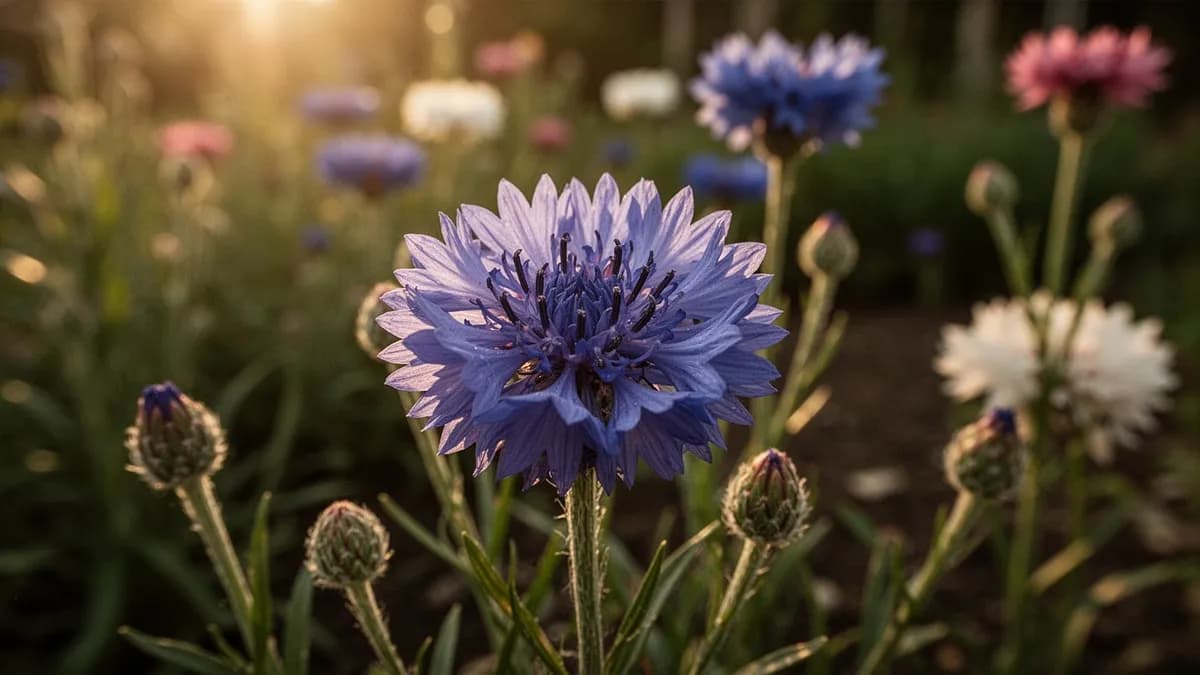
Runde, schuppige Blütenknospen erscheinen an den Spitzen der verzweigten Stiele. Jede Knospe ist von überlappenden Hüllblättern mit charakteristischen dunkel gefransten Rändern umgeben. Knospen schwellen über mehrere Tage an, bevor sich die äußeren Zungenblüten entfalten und die charakteristische intensive blaue Farbe zeigen. Die ersten Blüten öffnen sich oben an der Pflanze.
Hauptblüte
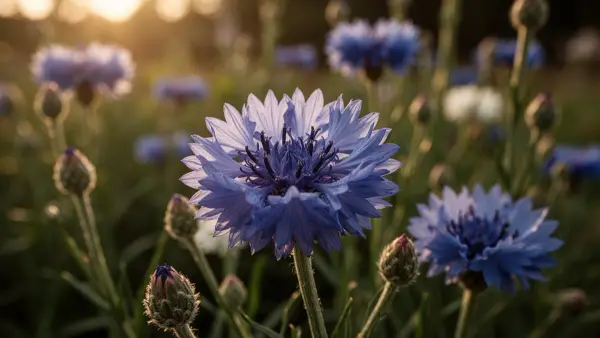
Die Pflanze ist mit leuchtend blauen zusammengesetzten Blütenköpfen bedeckt, jeder 2,5–4 cm groß, bestehend aus röhrenförmigen Scheibenblüten in der Mitte und gefransten Zungenblüten, die nach außen strahlen. Blüten ziehen Bienen, Schmetterlinge, Schwebfliegen und andere Bestäuber in großer Zahl an. Bei konsequentem Ausgeizen kann diese Phase vier bis sechs Wochen andauern.
Samenbildung und Rückgang
Unbefruchtete Zungenblüten fallen ab, und die Scheibenblüten reifen zu Achänen-Samen mit papierartigen Borstenbüscheln heran. Das Laub vergilbt und die Stiele beginnen auszutrocknen. Jeder Blütenkopf kann 30–50 Samen produzieren. Die Pflanze ist eine Einjährige und stirbt nach Abschluss ihres Samenzyklus.
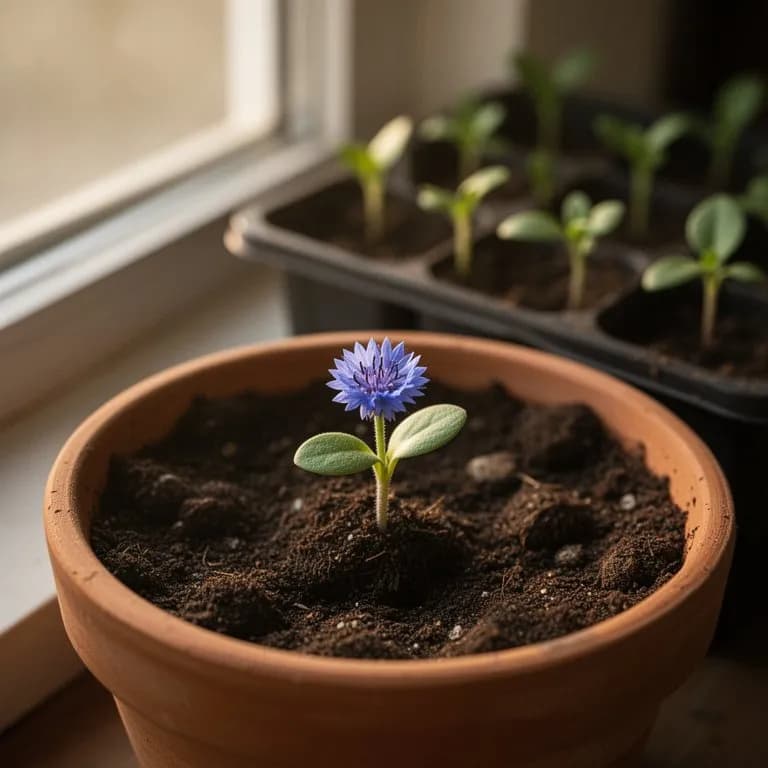
Samen direkt im Freien im frühen Frühling oder Herbst aussäen. Leicht mit Erde bedecken, da Dunkelheit die Keimung fördert. Das Saatbeet gleichmäßig feucht, aber niemals staunass halten. Vermeiden Sie die Anzucht im Innenraum, da Kornblumen eine Pfahlwurzel entwickeln, die das Verpflanzen nicht verträgt.
Blaue Kornblume Monat für Monat pflegen
Was du jeden Monat für deine Blaue Kornblume tun solltest
Oktober
Aktueller MonatHerbstaussaatfenster in USDA-Zonen 7–10. Samen auf vorbereiteten Boden streuen und leicht einharken. Sämlinge entwickeln vor der Winterruhe ein Wurzelsystem. Rückstände von Sommerpflanzen entfernen.
Immer wissen, was jetzt im Garten zu tun ist
Eine E-Mail zum Monatsanfang: was du jetzt säen, pflanzen und anpacken solltest — für deine Blaue Kornblume und alles, was drumherum wächst. Dazu ein kurzer Startkurs, der dich vor den klassischen Fehlern bewahrt.
- Was jetzt zu tun ist
- Passend zu deiner Saison
- Startkurs inklusive
Blaue Kornblume ernten
Kornblumen für Arrangements schneiden, wenn die Blüten etwa zu drei Vierteln geöffnet sind – sie öffnen sich in der Vase weiter. Stiele früh morgens vor der Hitze lang schneiden. Unteres Laub entfernen und sofort in kühles Wasser stellen. Die echten blauen Blüten sind in gemischten Sträußen besonders gefragt und halten 5–7 Tage. Die Blütenblätter sind essbar und können zum Garnieren von Salaten, Kuchen und Cocktails mit ihrer lebhaften blauen Farbe verwendet werden.
angenommen, du pflanzt zu Beginn des Zeitraums — trage dein tatsächliches Datum ein
Ernte Blaue Kornblume zügig, dann trägt die Pflanze weiter.
Lagerung & Konservierung
Kornblumen trocknen außergewöhnlich gut und behalten dabei einen Großteil ihrer leuchtend blauen Farbe. Kleine Bündel kopfüber an einem dunklen, warmen, gut belüfteten Ort für 1–2 Wochen aufhängen. Die getrockneten Blüten sind in Potpourri und Kräuterteemischungen beliebt. Zum Samen aufbewahren einige Blütenköpfe vollständig an der Pflanze trocknen lassen, dann Samen in einen Umschlag schütteln. An einem kühlen, trockenen Ort aufbewahren; Samen bleiben 3–4 Jahre keimfähig.
Was schiefgeht — und die Lösung
Blattläuse
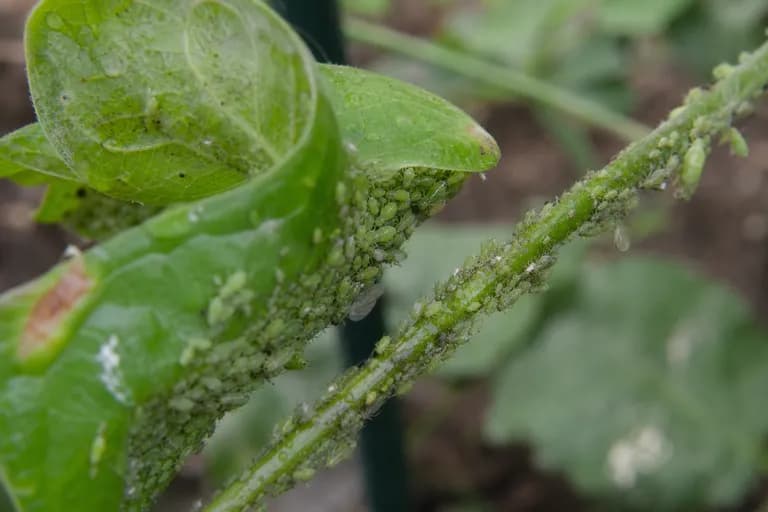
SchädlingKleine Ansammlungen grüner oder schwarzer Insekten an Stielen und Knospen. Eingerollte Blätter und klebrige Rückstände.
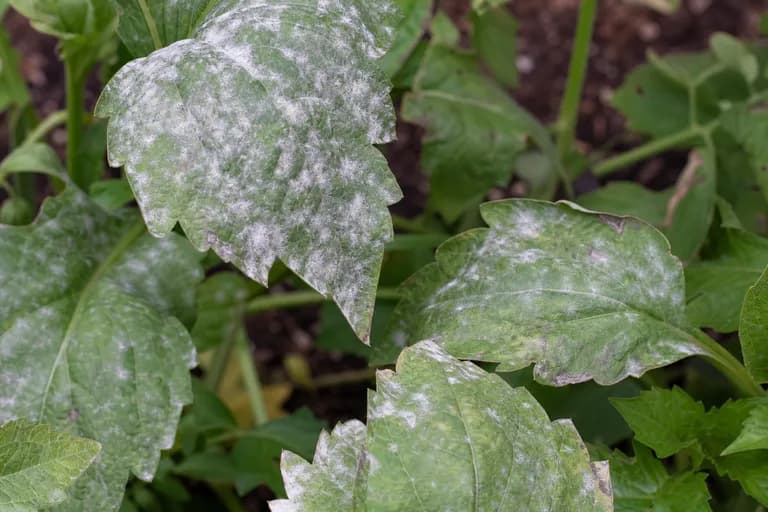
Echter Mehltau
KrankheitWeiße pudrige Flecken auf Blättern und Stielen, vor allem bei feuchtem Wetter mit schlechter Luftzirkulation.
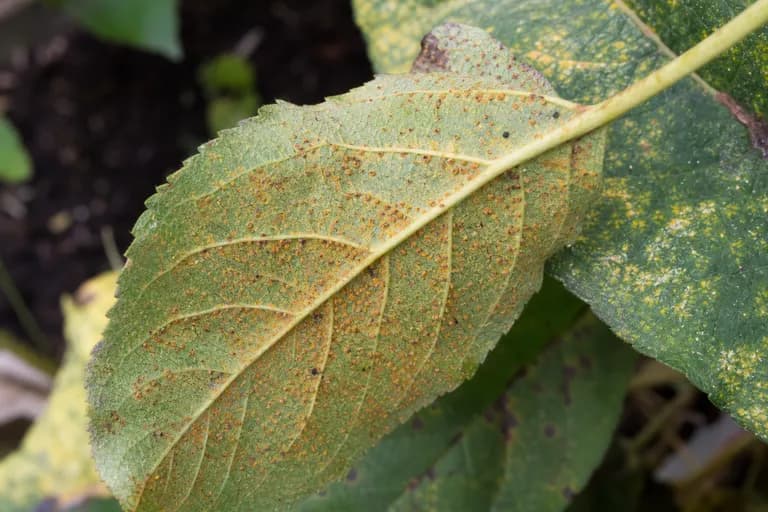
Rost
KrankheitOrangebraune Pusteln auf Blattunterseiten. Blätter vergilben und fallen vorzeitig ab.
Fehlerbehebung bei häufigen Problemen
Die häufigste Beschwerde ist, dass Pflanzen hochbeinig werden und umkippen, was meist durch zu nährstoffreichen Boden, zu viel Schatten oder Überfüllung verursacht wird. Volle Sonne und karger Boden erzeugen die kräftigsten Stiele. Selbstaussaat kann problematisch werden, wenn Pflanzen ungehindert Samen bilden dürfen – ausgeizen oder unerwünschte Jungpflanzen herausziehen. In feuchten Klimazonen kann Echter Mehltau das Laub entstellen; gute Luftzirkulation ist die beste Abwehr.
Anbautipps
- Samen lieber direkt im Freien aussäen als drinnen anzuziehen – Kornblumen entwickeln eine lange Pfahlwurzel, die sich nicht gut verpflanzen lässt und Wurzelstörungen nicht verträgt.
- Im Herbst (September–Oktober) in USDA-Zonen 7–10 aussäen für früheres und kräftigeres Blühen im folgenden Frühling; im Herbst gesäte Pflanzen entwickeln stärkere Wurzelsysteme über den Winter.
- Einen Standort mit voller Sonne und kargem bis durchschnittlichem Boden wählen – übermäßig reicher oder stark gedüngter Boden produziert üppiges Laub, aber weniger Blüten und schwache, schlaffe Stiele.
- Pflanzen auf 20–25 cm Abstand setzen, um gute Luftzirkulation zu gewährleisten, was die beste Abwehr gegen Echten Mehltau bei feuchtem Sommerwetter ist.
- Verblühte Blüten alle zwei bis drei Tage ausgeizen, um die Samenbildung zu verhindern und eine kontinuierliche Folge neuer Knospen für vier bis sechs Wochen anzuregen.
- Hohe Sorten (60–90 cm) mit Reisigreisern stützen, die in den Boden um die Horste gedrückt werden, oder ein horizontales Netzgitter verwenden, das auf etwa 30 cm Höhe montiert wird.
- Oberflächenbewässerung vermeiden; morgens an der Pflanzenbasis bewässern, um das Laub trocken zu halten und Pilzkrankheitsdruck zu reduzieren.
- Zwei oder drei Folgesaaten im Abstand von drei Wochen vom frühen Frühling bis zum Frühsommer vornehmen, um Kornblumen von Juni bis September zu genießen.
- Einige spätsaisonale Blütenköpfe reifen lassen und Samen natürlich fallen lassen – Kornblumen säen sich zuverlässig selbst aus und kehren Jahr für Jahr ohne zusätzlichen Aufwand zurück.
- Blüten zum Trocknen ernten, wenn sie an einem trockenen Morgen vollständig geöffnet sind; kleine Bündel kopfüber an einem dunklen, gut belüfteten Ort für 7–10 Tage aufhängen, um die blaue Farbe zu erhalten.
Bau deine beste Blaue Kornblume an — und alles drumherum.
Starte heute kostenlos. Lege deine Beete an, setze deine Blaue Kornblume ein und lass PlotMyGarden Timing, Abstände, Begleiter und Erinnerungen von der Saat bis zum Erntekorb übernehmen.
Finde deine Blaue Kornblume
Centaurea 'Blue Boy'
Die klassische echte blaue Kornblume mit gefüllten Blüten auf 60–75 cm langen Stielen. Der Standard, an dem alle anderen gemessen werden.
Centaurea 'Black Ball'
Tiefes Kastanienbraun-Violett, fast schwarze Blüten, die Sträußen und Beeten Dramatik verleihen. Auffällig und ungewöhnlich.
Centaurea 'Classic Fantastic'
Zweifarbige Blüten in Blau und Weiß mit bereiftem Aussehen. Jede Blüte ist einzigartig gemustert.
Centaurea 'Polka Dot' Mix
Eine fröhliche Mischung aus blauen, rosafarbenen, weißen, violetten und kastanienbraunen Blüten. Erzeugt einen bunten Wieseneffekt.
Ein einziges Päckchen Kornblumensamen (ungefähr 200–300 Samen) kostet etwa 2–4 € und kann ein großes Gartenbeet füllen. Jede Pflanze produziert im Laufe ihrer Blütezeit Dutzende von Blüten und liefert wochenlang kostenlose Schnittblumen, essbare Blütenblätter und getrocknete Botanicals. Entsprechende Mengen getrockneter kulinarischer Kornblumenblütenblätter werden in Spezialgeschäften für 8–15 € pro 30 g verkauft, und ein einzelner Strauß frisch geschnittener Kornblumen kostet auf Wochenmärkten 5–10 €. Der eigene Anbau liefert durch Selbstaussaat auch Samen für das folgende Jahr, was diese Blume zu einer außergewöhnlich kostengünstigen Zier- und Essblume macht.
Schnelle Rezepte
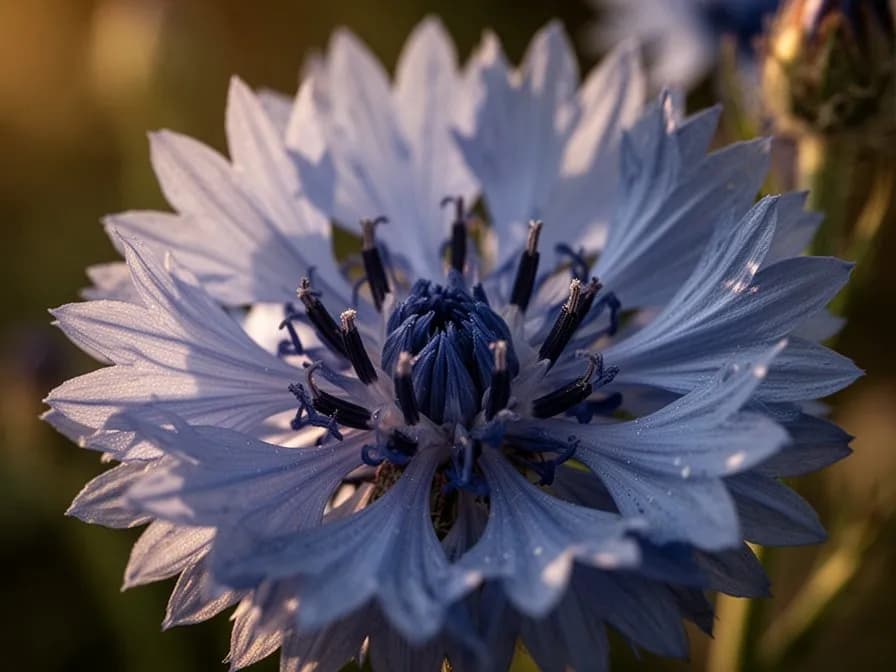
Kornblumenblüten-Kräutertee
5 Min.Ein zarter, natürlich koffeinfreier Kräuteraufguss mit einem dezent süßen, leicht erdigen Geschmack und einer atemberaubenden saphirblauen Farbe. Getrocknete Kornblumenblütenblätter werden traditionell in Earl Grey gemischt, ergeben aber auch für sich allein einen wunderbaren Kräutertee, der mild beruhigend und wunderschön zum Servieren ist.
4 ZutatenKornblumen-Zitronen-Shortbread-Kekse
35 Min.Buttrige Shortbread-Kekse, gespickt mit getrockneten Kornblumenblütenblättern und Zitronenschale. Die Blütenblätter verleihen dem hellen Teig ein schönes blaues Tupfenmuster und eine sehr milde, grasige Note, die die Zitrusnote ergänzt. Perfekt für den Nachmittagstee oder essbare Geschenke.
6 Zutaten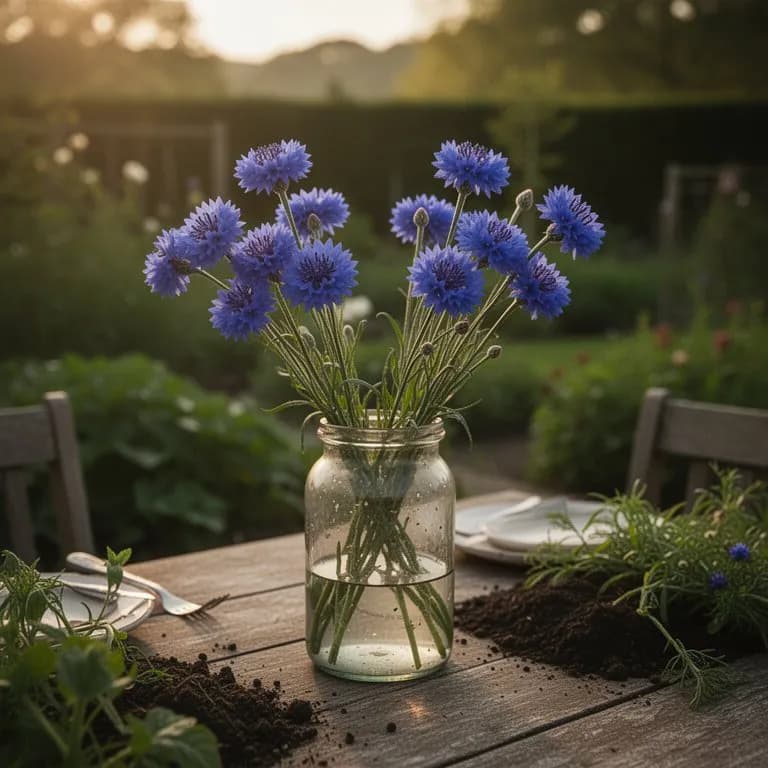
Sommersalat mit Kornblumenblütenblättern und Ziegenfrischkäse
10 Min.Ein lebhafter Gartensalat, der frische Kornblumenblütenblätter sowohl als Garnitur als auch als Zutat präsentiert. Der milde, leicht nelkenartige Geschmack der Blütenblätter harmoniert wunderbar mit cremigem Ziegenfrischkäse, pfeffrigem Rucola und einem leichten Honig-Zitronen-Vinaigrette.
8 ZutatenKulinarische Verwendung
Kornblumenblütenblätter sind essbar und wurden seit Jahrhunderten verwendet, um Salaten, Desserts und Kräutertees eine lebhafte blaue Farbe zu verleihen. Der Geschmack ist mild, leicht süßlich und dezent nelkenartig. Blütenblätter als Garnitur auf Kuchen verwenden, in Eiswürfel einfrieren oder über grüne Salate streuen. Die getrockneten Blütenblätter sind eine klassische Zutat in Earl-Grey- und Lady-Grey-Teemischungen und verleihen Kräuteraufgüssen optischen Reiz.
Was drinsteckt
Gesundheitsvorteile
- Kornblumenblütenblätter sind reich an Anthocyanpigmenten, insbesondere Protocyanin und Cyanidin, die als Antioxidantien wirken und zum Schutz von Zellen vor oxidativem Stress beitragen können.
- Die traditionelle europäische Kräuterheilkunde verwendete Kornblumenaufgüsse als beruhigendes Augenbad zur Linderung leichter Bindehautentzündungen und Augenermüdung – der französische Name 'casse-lunettes' verweist auf diese historische Verwendung.
- Kornblumentee hat mild harntreibende Eigenschaften und wurde in der Volksmedizin zur Unterstützung der Nieren- und Harnwegsgesundheit eingesetzt.
- Die in Kornblumenblütenblättern vorhandenen Flavonoide, einschließlich Apigenin und Quercetin, haben in der Laborforschung entzündungshemmende Wirkungen nachgewiesen.
- Als koffeinfreier Kräutertee kann Kornblumenblütentee die Entspannung fördern und bei abendlichem Konsum einen erholsamen Schlaf unterstützen.
- Kornblumen-Hydrolat (Blumenwasser) wird in der Naturkosmetik weitverbreitet als sanftes Tonic für empfindliche und gereizte Haut eingesetzt, das hilft, Schwellungen um die Augen zu reduzieren.
Woher Blaue Kornblume stammt
Die blaue Kornblume (Centaurea cyanus) ist im Mittelmeerraum und im Nahen Osten beheimatet, wo sie sich als Begleitpflanze von Getreidefeldern, insbesondere Weizen und Gerste, entwickelte. Archäologische Belege für Kornblumensamen wurden in altägyptischen Gräbern gefunden, einschließlich des Bestattungskranzes des Pharaos Tutanchamun aus etwa 1323 v. Chr., was bestätigt, dass die Blume vor Tausenden von Jahren angebaut und geschätzt wurde. Als die Getreidelandwirtschaft sich während der Jungstein- und Bronzezeit über Europa verbreitete, reiste die Kornblume mit ihr, indem sie sich in Feldern von Skandinavien bis zu den Britischen Inseln einbürgerte. Im Mittelalter war die blaue Kornblume in europäischen Getreidefeldern allgegenwärtig und wurde tief in die Volkskultur eingebettet. Im deutschsprachigen Raum war sie als Kornblume bekannt, und ihre leuchtend blauen Blütenblätter wurden in Erntekränze geflochten und in traditionellen Kräuterheilmitteln gegen Augenleiden eingesetzt – der französische Volksname 'casse-lunettes' (Brillenbrecher) verweist auf diese Verwendung. Die Blume wurde im 19. Jahrhundert in Preußen zu einem politischen Symbol, als Königin Luise von Preußen ihre Kinder in einem Kornfeld versteckte und sie beruhigte, indem sie Kornblumenkränze flocht; ihr Sohn, später Kaiser Wilhelm I., nahm die Blüte als sein persönliches Emblem an. Im 20. Jahrhundert übernahm die Kornblume eine doppelte Gedenkrolle: Frankreich verwendet das Bleuet de France zur Ehrung von Veteranen, während die Blume in Estland 1968 zur Nationalblume erklärt wurde. Mit dem Aufkommen der modernen Landwirtschaft und synthetischer Herbizide Mitte des 20. Jahrhunderts gingen die wilden Kornblumenpopulationen in Westeuropa stark zurück, was zu Schutzmaßnahmen und Aufnahme in regionale Rote Listen gefährdeter Arten führte. Heute werden Kornblumen in Bauerngärten, Wildblumenwiesen und Schnittgärten weit kultiviert, und ihre essbaren Blütenblätter haben einen bedeutenden Platz in der modernen Gastronomie und der handwerklichen Teemischung gefunden.
Blaue Kornblume: Schon gewusst?
Faszinierende Fakten über Blaue Kornblume
Kornblumenblau wurde einst als Pigment von Renaissance-Malern verwendet, und die Blume verlieh dem spezifischen Farbton 'Kornblumenblau' seinen Namen, der seit 1958 in der Crayola-Buntstiftpalette anerkannt ist.
Blaue Kornblume: Fragen & Antworten
Wann sollte ich Blaue Kornblume pflanzen?
Was sind gute Begleitpflanzen für Blaue Kornblume?
In welchen Winterhärtezonen kann Blaue Kornblume wachsen?
Wie viel Sonne braucht Blaue Kornblume?
Welchen Abstand sollte ich zwischen Blaue Kornblume lassen?
Welche Schädlinge und Krankheiten befallen Blaue Kornblume?
Wie lagere ich Blaue Kornblume nach der Ernte?
Was sind die besten Blaue Kornblume-Sorten zum Anbauen?
Welchen Boden braucht Blaue Kornblume?
Sind blaue Kornblumenblütenblätter sicher zu essen?
Warum sind meine Kornblumenstiele schlaff und fallen um?
Kann ich Kornblumen in Behältern anbauen?
Kommen Kornblumen jedes Jahr wieder?
Wann ist der beste Zeitpunkt zum Aussäen von Kornblumensamen?
Wie trockne ich Kornblumenblütenblätter für Tee oder Dekoration?
Du hast die Theorie gelesen. Jetzt baue sie auf Autopilot an.
Alles, was Blaue Kornblume knifflig macht — das Timing, die Abstände, die Begleiter, das Erntefenster — genau das übernimmt PlotMyGarden für dich, für jede Pflanze im Garten.
Ein Plan, der dein Wetter kennt
Standort einmal festlegen. Aussaat-, Dünge- und Erntedaten rund um deinen echten letzten Frosttermin und die Live-Vorhersage — kein Raten mehr nach Saattüte.
Aus dem Abschnitt „Pflanzzeit“Beetplaner per Drag & Drop
Beete auf einem Raster gestalten. Jede Pflanze rastet im richtigen Abstand ein, und du siehst die ganze Saison, bevor du einen Cent für Saatgut ausgibst.
Aus dem Abschnitt „Anbau“Begleiter-Konflikte früh erkannt
Über 200 gute und schlechte Kombinationen werden beim Pflanzen live geprüft — so landet ein saisonruinierender Fehler nie in der Erde.
Aus dem Abschnitt „Begleiter“Erinnerungen, nach denen du wirklich handelst
„Gieß die Bohnen.“ „Heute ernten, bevor's umschlägt.“ Pünktlich, konkret und auf deine echten Pflanzen bezogen.
Aus dem Abschnitt „Ernte“Staffel-Aussaat, geplant
Sechs Wochen ernten statt sechs Tage? Die App verteilt deine Aussaaten automatisch und erinnert dich, wenn der nächste Satz fällig ist.
Aus dem Abschnitt „Pflanzzeit“Ein Verlauf, der schlauer wird
Jede protokollierte Ernte bringt der App deinen Garten bei. Der Plan fürs nächste Jahr startet bei dem, was in deinem Boden wirklich funktioniert hat.
Aus dem Abschnitt „Überblick“Pflanze diese neben Blaue Kornblume
Weitere Einjährige
Bau deine beste Blaue Kornblume an — und alles drumherum.
Starte heute kostenlos. Lege deine Beete an, setze deine Blaue Kornblume ein und lass PlotMyGarden Timing, Abstände, Begleiter und Erinnerungen von der Saat bis zum Erntekorb übernehmen.