Red Amaranth
A brilliant red-leaved variety of edible amaranth that doubles as an ornamental and a nutritious cooking green.





On this pageOverview
Meet Red Amaranth
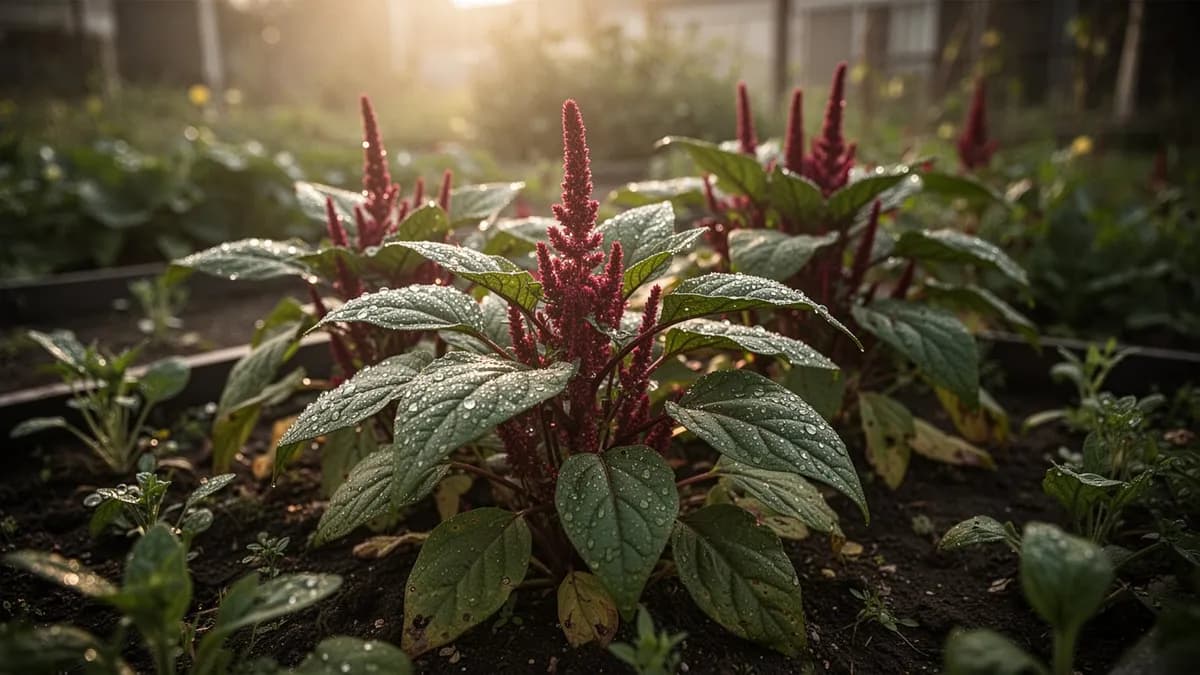
A brilliant red-leaved variety of edible amaranth that doubles as an ornamental and a nutritious cooking green. Young leaves are tender with a mild spinach-like flavor and can be harvested continuously by cutting outer leaves. Plants are heat-loving and drought-tolerant, thriving in conditions that cause lettuce and spinach to bolt. The vibrant red color adds visual drama to both the garden and the plate.
When to plant Red Amaranth
Direct sow after the last frost when soil is at least 65 degrees Fahrenheit. Scatter seeds on the soil surface and press gently without covering, as they need light for germination. Keep the soil surface moist until germination in 7 to 14 days. Thin seedlings to 6 to 8 inches apart. For an early start, sow in cell trays indoors 4 weeks before the last frost at 70 to 75 degrees.
Your Red Amaranth Year
Composed for Zone 7 · typical seasons · frost passes Apr 2, returns Nov 1
Plant Red Amaranth Apr – Jun, pick Jun – Aug. Check the planting methods below and set your climate to personalize these windows.
How to grow Red Amaranth
Red amaranth is a heat-loving leafy green that thrives in warm summer conditions when lettuce and spinach bolt. Direct sow seeds after all danger of frost has passed and soil has warmed to at least 65 degrees Fahrenheit. Scatter seeds thinly on the soil surface and press lightly, as they need light to germinate. Thin seedlings to 6 to 8 inches apart.
Amaranth grows rapidly in hot weather, reaching harvestable size in just 30 to 40 days for baby leaves. Plants can grow 4 to 6 feet tall if left to mature for grain production. For leafy greens, keep plants trimmed to 12 to 18 inches by regularly harvesting the top growing tips.
Water regularly during establishment, then reduce to moderate watering as plants become drought-tolerant. Amaranth tolerates poor soil but produces more tender leaves in fertile conditions. The vibrant red-purple foliage makes this plant highly ornamental in flower borders and containers as well as vegetable gardens.
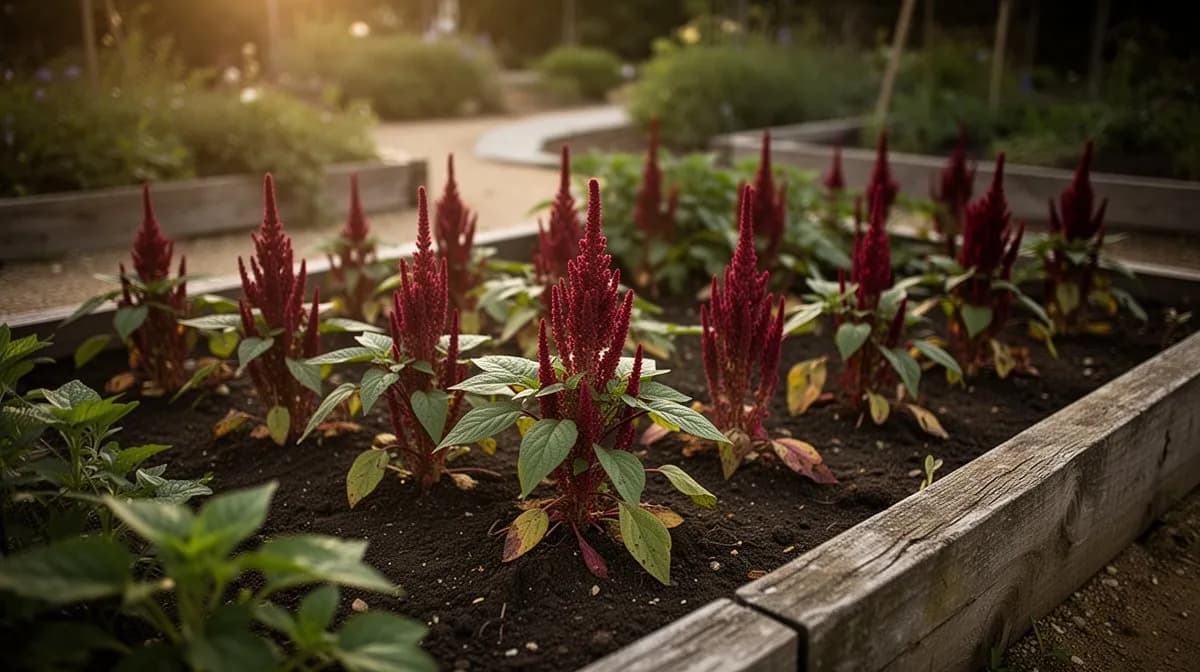
36 plants fit a 4 × 8 ft bed
Each Red Amaranth wants 25 cm of elbow room. The planner keeps that spacing for you — every plant, every bed.
Red Amaranth's best neighbours
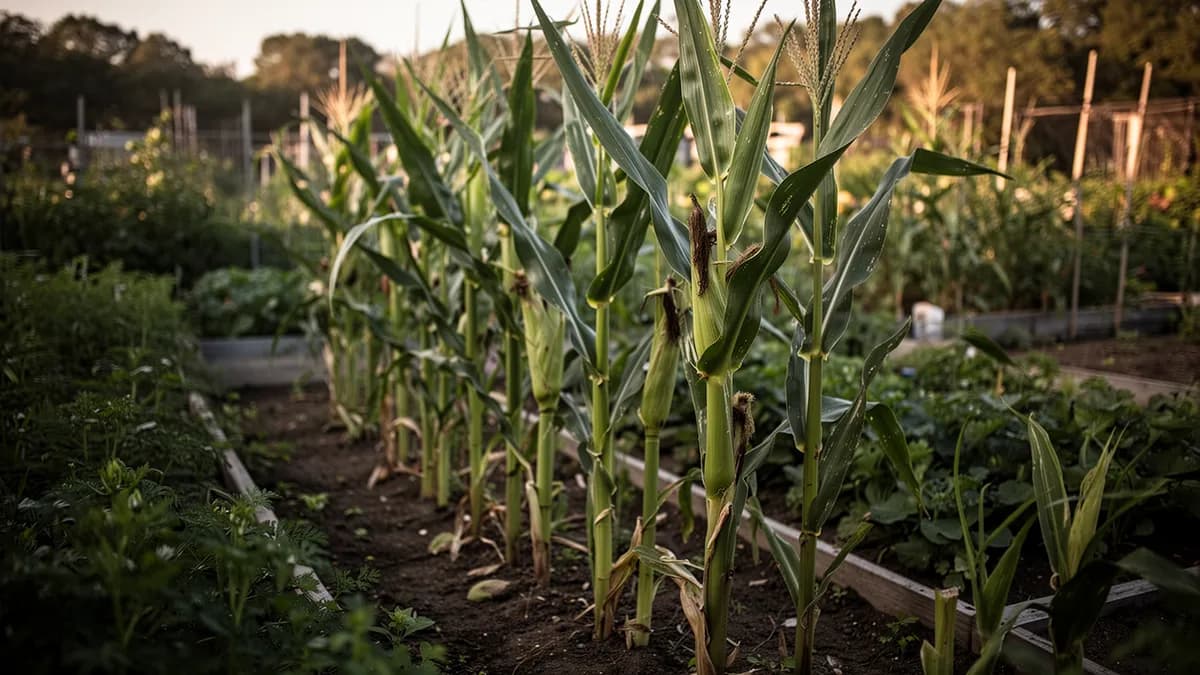
Red amaranth grows well with corn, squash, and beans in traditional polyculture gardens. It provides shade for lower-growing lettuce and spinach in summer. Avoid planting near other tall crops that will compete for light. Flowers attract beneficial pollinators and predatory insects. The deep taproot helps break up compacted soil for neighboring plants.
Corn belongs beside it.
Old growers' knowledge, checked against Red Amaranth's real companion table below — test any plant you're growing.
Try Red Amaranth in a bed — right here
A real planner bed with Red Amaranth already in it. Tap a companion to place it and watch the pairing checks answer — green for good neighbours, red for a clash.


Related growing guides
Feed it well
Red amaranth grows in almost any well-drained soil with a pH between 6.0 and 7.5. It tolerates poor, dry soil but produces more tender, flavorful leaves in moderately fertile conditions. Apply a light application of balanced fertilizer at planting. Excessive nitrogen can reduce the intensity of the red coloration. Amaranth fixes its own nitrogen to some extent, reducing fertilizer needs.
Ideal Temperature
Hardiness Zone Compatibility
From seed to harvest, stage by stage
Germination
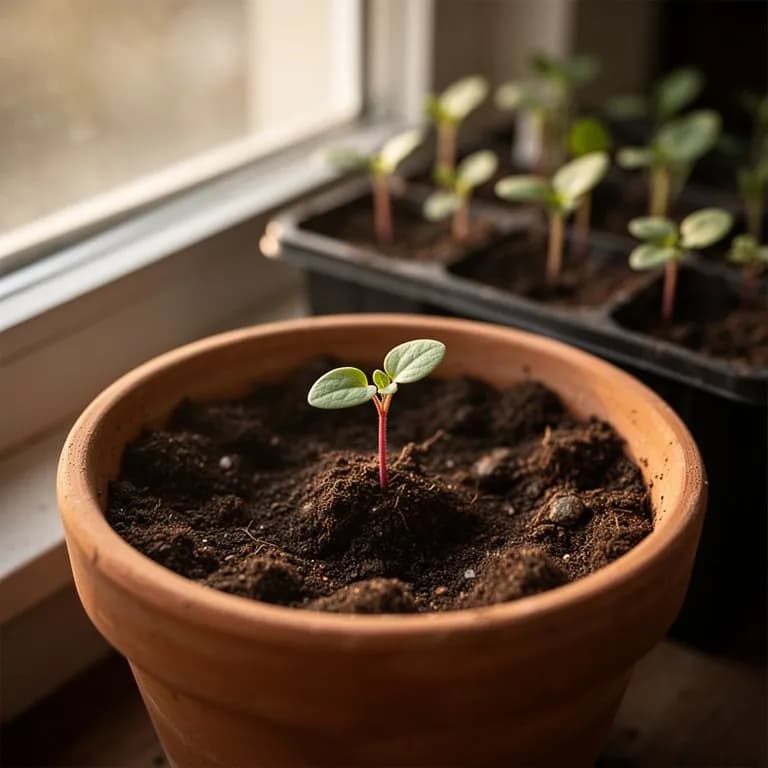
Tiny seeds germinate quickly in warm soil, producing delicate seedlings with small rounded cotyledons that already show a faint magenta blush. Seeds need light to germinate and should be surface-sown or barely covered with a fine dusting of soil. Germination takes 4-10 days with soil temperatures above 18°C (65°F).
Seedling Development
True leaves emerge with the characteristic pointed oval shape and increasingly vivid red-to-burgundy coloration. Seedlings grow slowly at first while establishing their root system. This is the ideal stage for first microgreen or baby-leaf harvests if desired.
Rapid Vegetative Growth
Plants enter a vigorous growth phase, producing lush deep-red foliage on increasingly sturdy stems. Growth accelerates dramatically in hot weather, with plants adding 5-10 cm per week. Leaf production is at its peak and this is the prime window for continuous leaf harvest.
Flowering
Dense, dramatic flower plumes emerge from the growing tip and upper leaf axils, ranging from deep crimson to magenta. The plumes are made up of thousands of tiny flowers that are wind-pollinated and highly attractive to beneficial insects. Leaf quality declines slightly as the plant redirects energy into reproduction.
Seed Development
Flower plumes gradually fill with thousands of tiny round seeds that darken from pale pink to deep reddish-black as they mature. The plumes become heavy and droop under their own weight. A single plant can produce 50,000 to 100,000 seeds, making amaranth one of the most prolific seed-bearing plants in the garden.
Senescence and Seed Harvest
The plant begins to dry down naturally as seed maturation completes. Lower leaves yellow and drop while the seed heads become papery and dry. This is the final window for grain harvest before seeds begin to shatter and self-sow freely throughout the garden.
Press seeds gently onto the soil surface and mist lightly — do not bury them deeply. Keep soil consistently moist but not waterlogged. A soil temperature of 21-27°C (70-80°F) gives the fastest germination.
Caring for Red Amaranth month by month
What to do each month for your Red Amaranth
October
You are hereComplete seed harvest before hard frost. Clean and winnow seeds for storage or kitchen use. In zones 9-12, make a final succession sowing for a late-autumn and winter leaf crop. Pull spent plants and compost.
Know exactly what to do in your garden — every month
One email at the start of each month: what to sow, plant, and tackle right now — for your Red Amaranth and everything growing around it. Plus a short starter course that helps you dodge the classic mistakes.
- What to do, right now
- Matched to your season
- Starter course included
Harvesting Red Amaranth
Begin harvesting red amaranth leaves when plants reach 6 to 8 inches tall, typically 30 to 40 days after sowing. Cut the top 4 to 6 inches of the growing tip to encourage bushier growth and continuous production. Young leaves are most tender and have the best color. For baby greens, cut entire plants at 3 to 4 inches tall. Regular harvesting prevents flowering and extends the leafy harvest period.
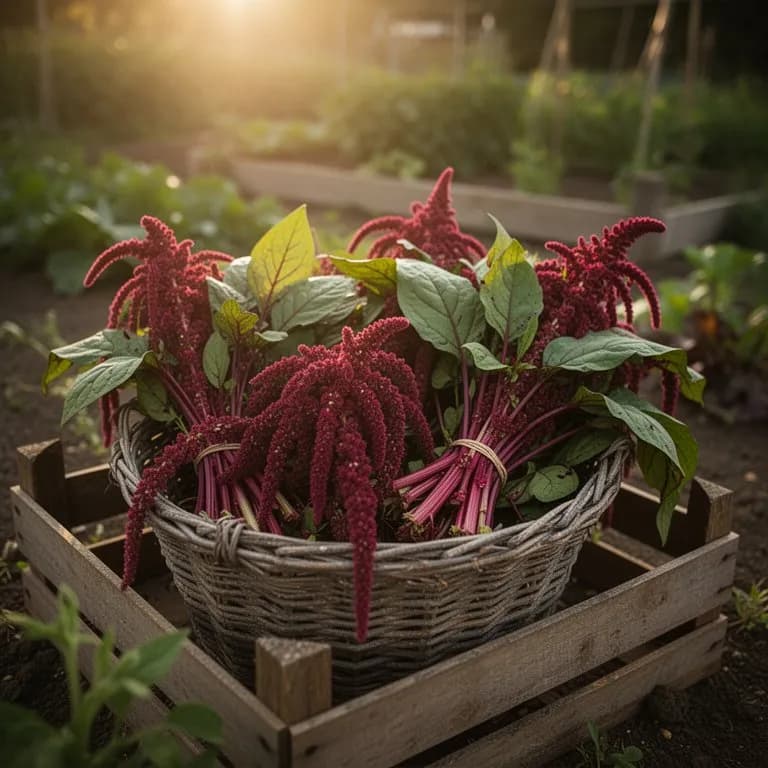
assuming you plant when the window opens — set your real date
Pick Red Amaranth promptly and the plant keeps producing.
Storage & Preservation
Fresh red amaranth leaves wilt quickly and should be used within 2 to 3 days of harvest. Store in the refrigerator in a sealed container with a damp paper towel. For longer preservation, blanch leaves for 1 minute and freeze in portions for up to 6 months. The leaves can also be dried and crumbled as a nutritional supplement for soups and smoothies.
What goes wrong — and the fix
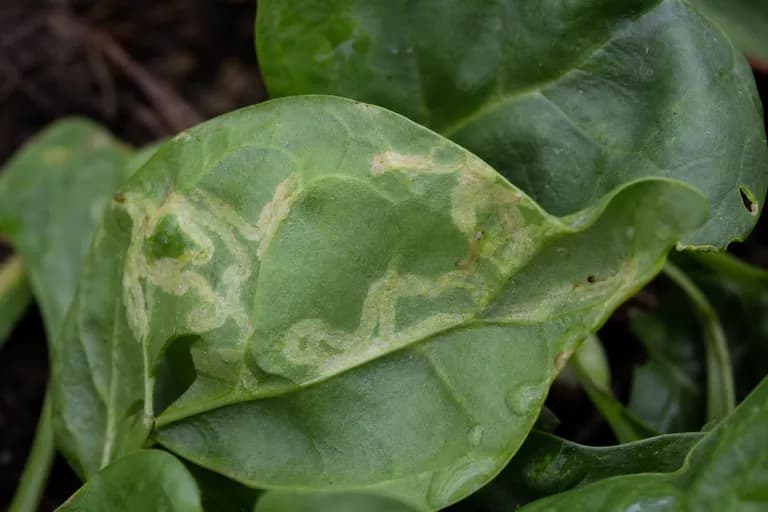
Leaf Miners
PestWinding white or pale tunnels visible within leaf tissue, caused by larvae feeding between leaf surfaces.
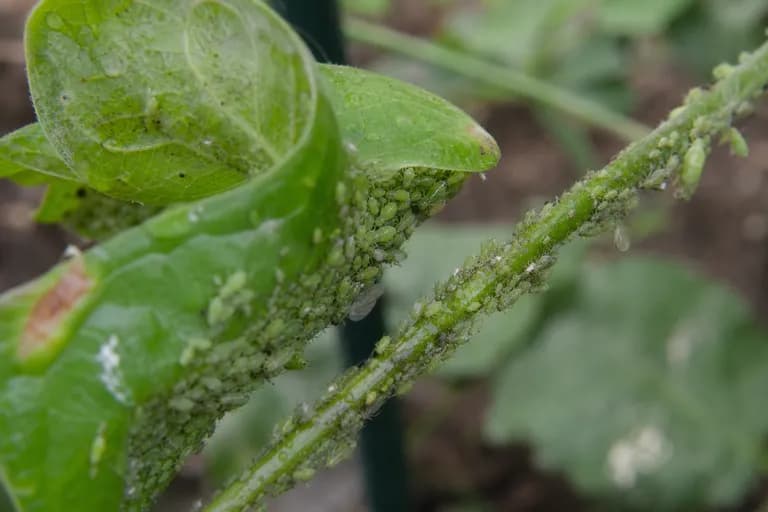
Aphids
PestClusters of small insects on tender growing tips and undersides of young leaves.
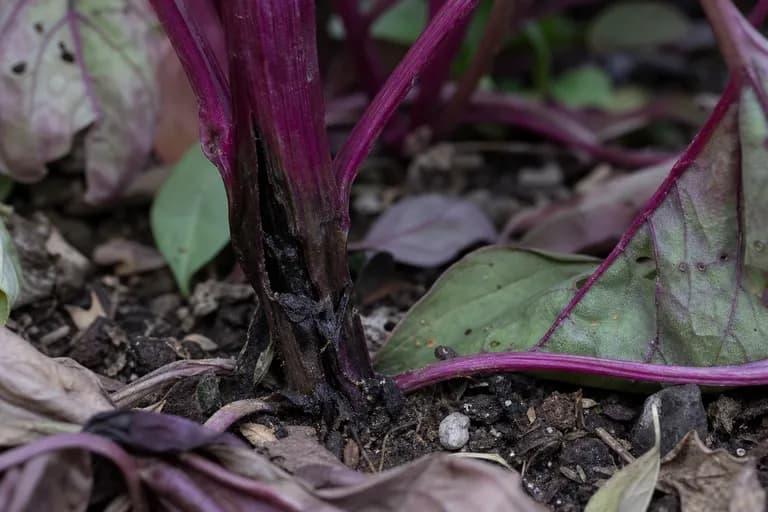
Stem Rot
DiseaseDark, water-soaked lesions at the base of stems leading to wilting and collapse.
Troubleshooting Common Problems
Seeds may fail to germinate if soil is too cold or seeds are buried too deeply, as they need light and warmth. In very rich soil, plants may grow excessively tall and lanky. The red pigment can fade in extreme heat or deep shade. Plants allowed to flower will self-seed prolifically and may become weedy. Stem rot occurs in poorly drained, overwatered conditions.
Growing Tips
- Surface-sow seeds and do not bury them. Amaranth seeds are extremely tiny (less than 1mm) and require light to germinate. Press them gently onto moist soil and mist with a spray bottle — covering with more than 3mm of soil will prevent germination entirely.
- Mix tiny seeds with fine sand before sowing to achieve even spacing. A ratio of one part seed to ten parts sand helps distribute the minuscule seeds more uniformly and prevents the dense clumps that result from sowing seeds straight from the packet.
- Succession-sow every 2-3 weeks from late spring through midsummer for a continuous supply of tender baby leaves. Young leaves harvested at 10-15 cm tall are the most tender and mild-flavored, making them perfect for salads.
- Harvest outer leaves first, leaving the central growing point intact — the plant will keep producing new leaves for weeks. Once you cut the central stem or allow flowering, leaf production quality drops significantly.
- Pinch out the growing tip when plants reach 30-40 cm tall to encourage side branching and a bushier habit with more harvestable leaves. Unpinched plants tend to grow tall and lanky with fewer, tougher leaves.
- Red amaranth tolerates poor soil better than most vegetables but responds dramatically to compost and balanced fertilization. A single side-dressing of compost or 10-10-10 fertilizer when plants are 15 cm tall noticeably increases leaf size and tenderness.
- Be prepared for enthusiastic self-sowing. Once red amaranth goes to seed in your garden, volunteer seedlings will appear for years. This can be a benefit or a nuisance — deadhead flower plumes before they shatter if you want to control spread.
- Use red amaranth as a trap crop for flea beetles and leaf miners, which prefer it over many other vegetables. Plant a sacrificial row near susceptible brassicas to draw pests away from your main crops.
Grow your best Red Amaranth yet — and everything around it.
Start a free plan today. Lay out your beds, drop in your Red Amaranth, and let PlotMyGarden handle the timing, spacing, companions and reminders from seed to harvest basket.
Pick your Red Amaranth
Red Garnet
Deep burgundy-red leaves with compact growth habit, excellent for baby leaf salads.
Red Leaf
A vigorous variety with large red-purple leaves and strong upright growth, dual-purpose for leaves and grain.
Molten Fire
Striking tricolor foliage in red, orange, and yellow, highly ornamental and edible.
Hopi Red Dye
A traditional Native American variety used for both food and natural red dye production.
Red amaranth seed packets cost $2-4 and contain hundreds of seeds — enough for multiple sowings all season. Fresh red amaranth greens sell for $4-8 per bunch at farmers markets and Asian grocery stores, and are often unavailable at conventional supermarkets. Growing 6-10 plants provides a steady supply of premium greens worth $60-120 over the season. The grain harvest adds further value, as organic amaranth grain retails for $8-15 per pound. Because the plant self-sows freely, you may never need to buy seeds again after the first year.
Quick recipes
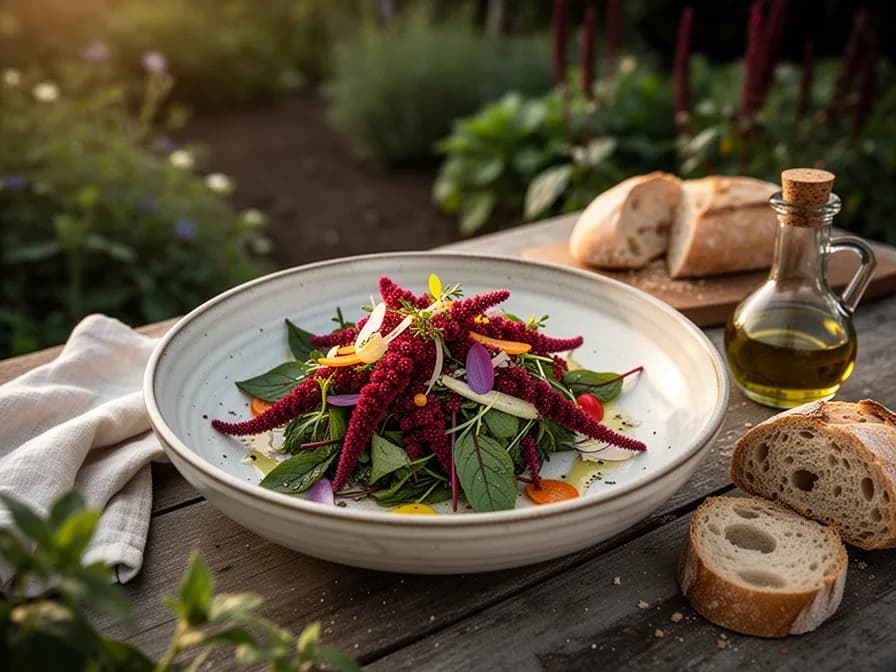
Garlic Red Amaranth Stir-Fry
10 minA lightning-fast side dish common across Southeast Asia and the Caribbean — tender amaranth leaves wilted with garlic and a splash of soy sauce. The leaves cook down like spinach but hold their vibrant color and have a richer, earthier flavor with a hint of sweet beet-like taste.
7 ingredientsCaribbean Callaloo Soup
35 minA silky, richly flavored one-pot soup inspired by the beloved Caribbean dish traditionally made with amaranth greens (called callaloo in the islands). Coconut milk adds body while scotch bonnet pepper provides gentle heat.
9 ingredientsAmaranth Grain Porridge with Honey and Berries
25 minA protein-packed breakfast porridge made from amaranth seeds that cooks to a creamy, slightly nutty consistency similar to polenta. Naturally gluten-free and loaded with complete protein, it keeps you full through the entire morning.
8 ingredientsCulinary Uses
Red amaranth leaves are cooked similarly to spinach and have a mild, slightly earthy flavor. Saute with garlic and chili as a side dish. Add to soups, stews, and curries where the red color bleeds attractively into the broth. Young leaves work well in salads. In Caribbean and Asian cuisines, amaranth greens are a staple ingredient in one-pot dishes.
What's inside
Health Benefits
- Exceptional source of vitamin A as beta-carotene (58% DV per 100g of leaves), supporting healthy vision, robust immune function, and skin cell renewal — especially valuable for communities with limited access to other vitamin A-rich foods.
- One of the best plant-based sources of bioavailable iron among leafy greens, with lower oxalate content than spinach allowing greater mineral absorption — critical for preventing iron-deficiency anemia.
- The betacyanin pigments responsible for the red-purple color are potent antioxidants with demonstrated anti-inflammatory properties, and studies suggest they may help protect cells against oxidative damage linked to chronic disease.
- Amaranth grain provides complete protein with all essential amino acids, including high levels of lysine — an amino acid deficient in wheat, rice, and corn — making it particularly valuable for plant-based diets.
- Rich in calcium (215mg per 100g of leaves) with better bioavailability than many other greens, supporting bone health, muscle function, and nerve signaling without the need for dairy products.
- Contains significant dietary fiber and has a low glycemic index, helping regulate blood sugar levels after meals — traditional medicine systems in India and Central America have long used amaranth preparations to support metabolic health.
Where Red Amaranth comes from
Red amaranth (Amaranthus cruentus and related species) originated in Central and South America, where it was domesticated at least 6,000 to 8,000 years ago alongside maize, beans, and squash. Archaeological evidence from cave sites in Mexico's Tehuacan Valley shows amaranth seeds were gathered and cultivated by some of the earliest agricultural societies in the Americas. By the height of the Aztec Empire in the 15th century, amaranth had become one of the four primary crops of Mesoamerica, with an estimated 20,000 tonnes of amaranth grain collected annually as tribute from conquered provinces — a quantity rivaling the tribute of maize.
The Aztecs revered amaranth not merely as food but as a sacred substance integral to religious ceremonies. Ground amaranth seeds were mixed with honey and sometimes sacrificial blood to form dough figures of deities ('tzoalli'), which were shared and consumed during major festivals. When Spanish conquistadors arrived in the 16th century, they perceived these rituals as a direct challenge to Catholic communion and systematically banned amaranth cultivation under penalty of severe punishment. Fields were burned, seed stores destroyed, and the crop that had sustained civilizations for millennia was driven nearly to extinction in its homeland.
Despite the suppression in the Americas, amaranth had already spread throughout the Old World along ancient trade routes. Red-leafed varieties became deeply established in the cuisines of South and Southeast Asia, sub-Saharan Africa, and the Caribbean — regions where the plant's heat tolerance and nutritional density made it invaluable. In India, red amaranth ('lal shak') remains one of the most widely consumed leafy vegetables, eaten daily by hundreds of millions. In the Caribbean, it became the foundation of callaloo, one of the region's most iconic dishes. Today, amaranth is experiencing a global renaissance as a superfood, with both the grain and the leaves recognized for exceptional protein quality, micronutrient density, and adaptability to hot, challenging growing conditions that will become increasingly common under climate change.
Red Amaranth: did you know?
Fascinating facts about Red Amaranth
Red amaranth was a sacred crop of the Aztec Empire, who called it 'huautli' and cultivated it on a scale rivaling maize and beans. Aztec warriors consumed amaranth cakes before battle, believing the grain granted strength and endurance — the Spanish conquistadors banned its cultivation to suppress indigenous religious practices.
Red Amaranth questions, answered
When should I plant Red Amaranth?
What are good companion plants for Red Amaranth?
What hardiness zones can Red Amaranth grow in?
How much sun does Red Amaranth need?
How far apart should I space Red Amaranth?
What pests and diseases affect Red Amaranth?
How do I store Red Amaranth after harvest?
What are the best Red Amaranth varieties to grow?
What soil does Red Amaranth need?
Can I eat both the leaves and the seeds of red amaranth?
Why does the cooking water turn bright pink or red when I cook red amaranth?
Is red amaranth the same as the weed that grows everywhere?
How do I harvest and clean the tiny amaranth seeds for eating?
Will red amaranth grow in partial shade?
Is red amaranth safe for people with kidney stones or oxalate concerns?
You just read the theory. Now grow it on autopilot.
Everything that makes Red Amaranth fiddly — the timing, the spacing, the companions, the harvest window — is exactly what PlotMyGarden handles for you, for every plant in your garden.
A plan that knows your weather
Set your location once. Get sow, feed and harvest dates built around your real last-frost date and live forecast — no more guessing from a generic seed packet.
From the “When to plant” sectionDrag-and-drop bed planner
Design beds on a grid. Every plant snaps to its proper spacing, and you can see your whole season laid out before you spend a cent on seed.
From the “Growing guide” sectionCompanion conflicts, caught early
200+ good-and-bad pairings checked live as you plant — so a season-wrecking mistake never makes it into the ground.
From the “Companions” sectionReminders you'll actually act on
“Water the beans.” “Pick today before it turns.” Timely, specific, and tied to the plants you're really growing.
From the “Harvest” sectionSuccession, scheduled
Want a harvest for six weeks, not six days? It spaces your sowings automatically and reminds you when each new block is due.
From the “When to plant” sectionA record that gets smarter
Every harvest you log teaches it your garden. Next year's plan starts from what actually worked in your soil, not a textbook's.
From the “Overview” sectionPlant these alongside Red Amaranth
More Leafy Greens
Grow your best Red Amaranth yet — and everything around it.
Start a free plan today. Lay out your beds, drop in your Red Amaranth, and let PlotMyGarden handle the timing, spacing, companions and reminders from seed to harvest basket.