Calabaza Amarilla
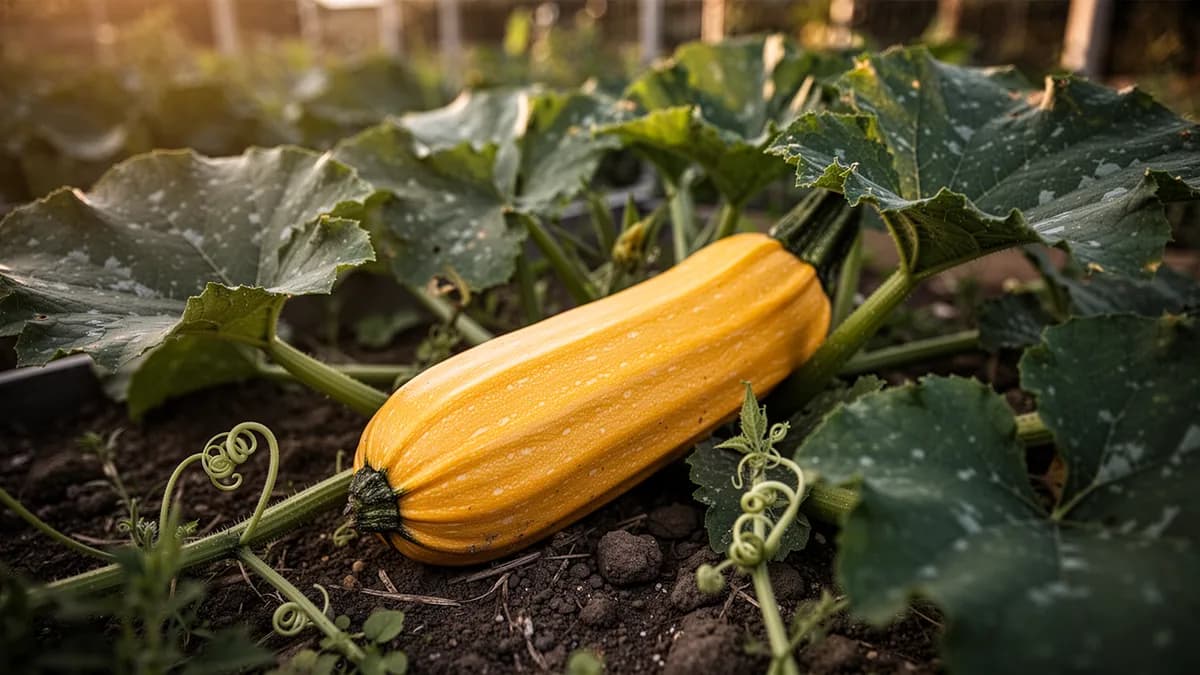
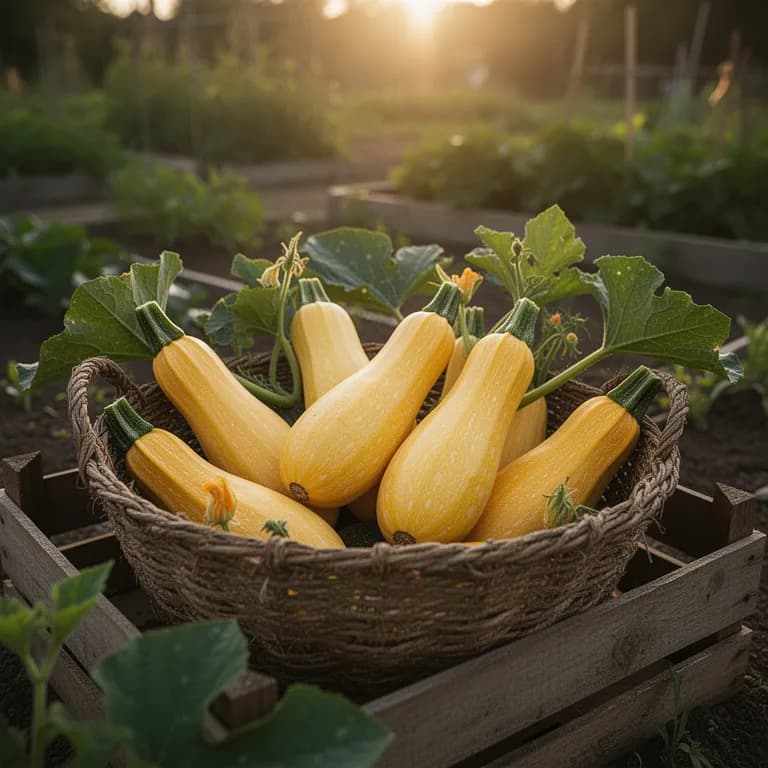
La calabaza amarilla de verano (Cucurbita pepo) es una variedad de calabaza de verano originaria de América, distinguida por su color amarillo brillante y su forma que puede ser recta (straightneck) o curva (crookneck).





En esta páginaResumen
Conoce Calabaza Amarilla
La calabaza amarilla de verano (Cucurbita pepo) es una variedad de calabaza de verano originaria de América, distinguida por su color amarillo brillante y su forma que puede ser recta (straightneck) o curva (crookneck). Su pulpa suave y tierna con un sabor ligeramente dulce y mantecoso la convierte en un acompañamiento versátil. Es una de las calabazas de verano más populares en la cocina americana.
Cuándo plantar Calabaza Amarilla
Siembre directamente después de la última helada cuando el suelo supere los 18 °C, o inicie 3-4 semanas antes en interior en macetas biodegradables. Coloque 2-3 semillas a 2-3 cm de profundidad por montículo. La germinación ocurre en 5-10 días a 20-25 °C. Aclare a la plántula más fuerte.
Tu año de Calabaza Amarilla
Ajustado a Zona 7 · temporada típica · la helada se va hacia el 2 abr y vuelve hacia el 1 nov
Planta Calabaza Amarilla Abr – Jun y cosecha Jul – Sep. Consulta los métodos de plantación y elige tu clima para adaptar los periodos.
Cómo cultivar Calabaza Amarilla
La calabaza amarilla se cultiva como cualquier calabaza de verano. Elija un lugar a pleno sol con al menos 6-8 horas de luz directa y suelo rico, fértil y bien drenado, pH entre 6,0 y 7,5. Prepare el terreno con abundante compost y estiércol bien descompuesto.
Siembre directamente después de la última helada cuando la temperatura del suelo supere los 18 °C. Plante 2-3 semillas a 2-3 cm de profundidad en montículos separados 90-120 cm. Aclare a la planta más vigorosa. También puede iniciar en interior 3-4 semanas antes en macetas biodegradables.
Riegue abundante y regularmente en la base, evitando mojar las hojas. Aplique acolchado para conservar la humedad y controlar malas hierbas. Fertilice cada 2-3 semanas con fertilizante orgánico rico en potasio durante la fructificación. Coseche regularmente para estimular la producción continua.
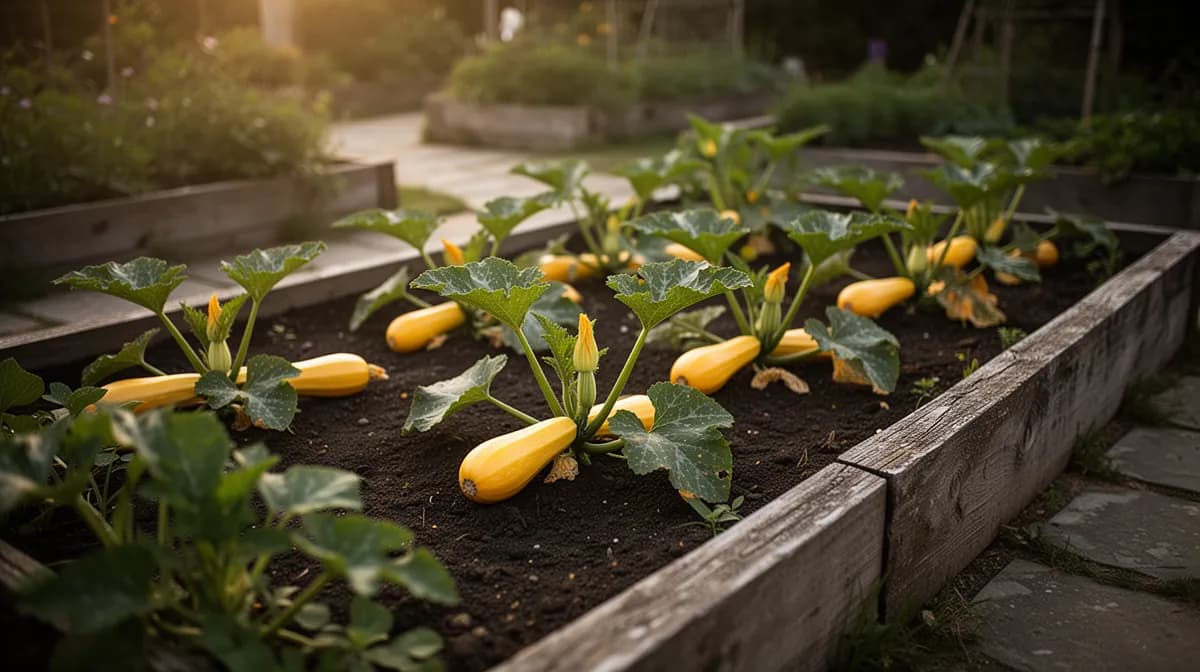
2 plantas caben en un bancal de 120 × 240 cm
Cada Calabaza Amarilla pide 90 cm de margen. El planificador guarda ese marco por ti — cada planta, cada bancal.
Los mejores vecinos de Calabaza Amarilla
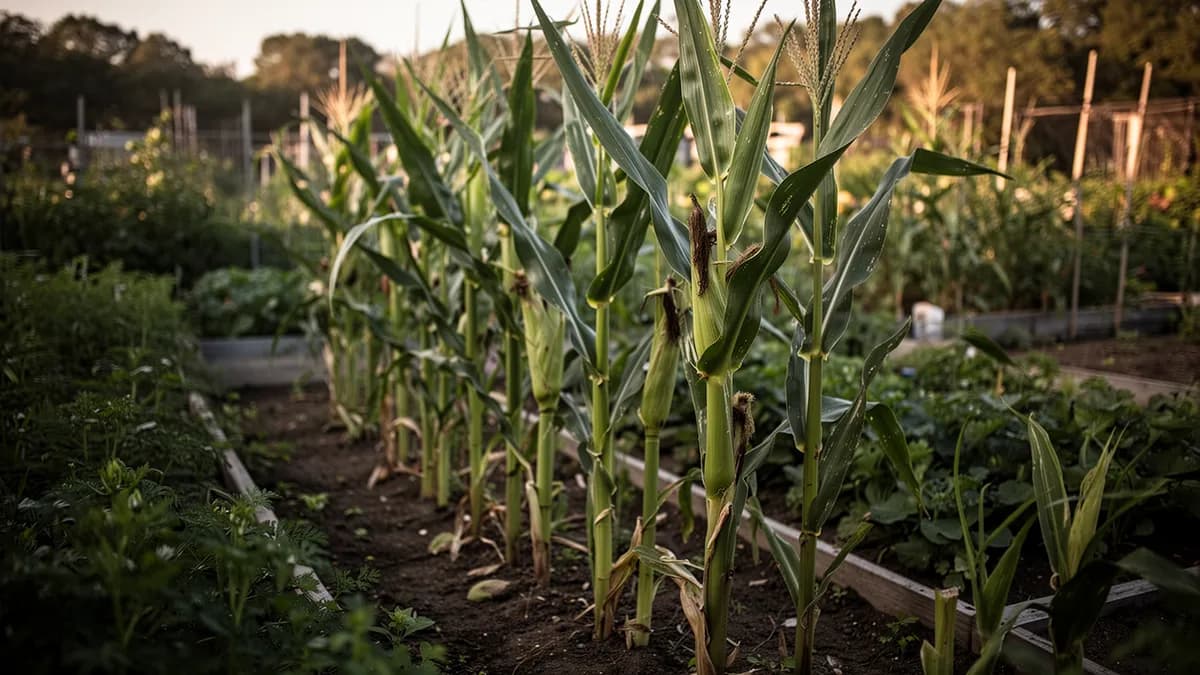
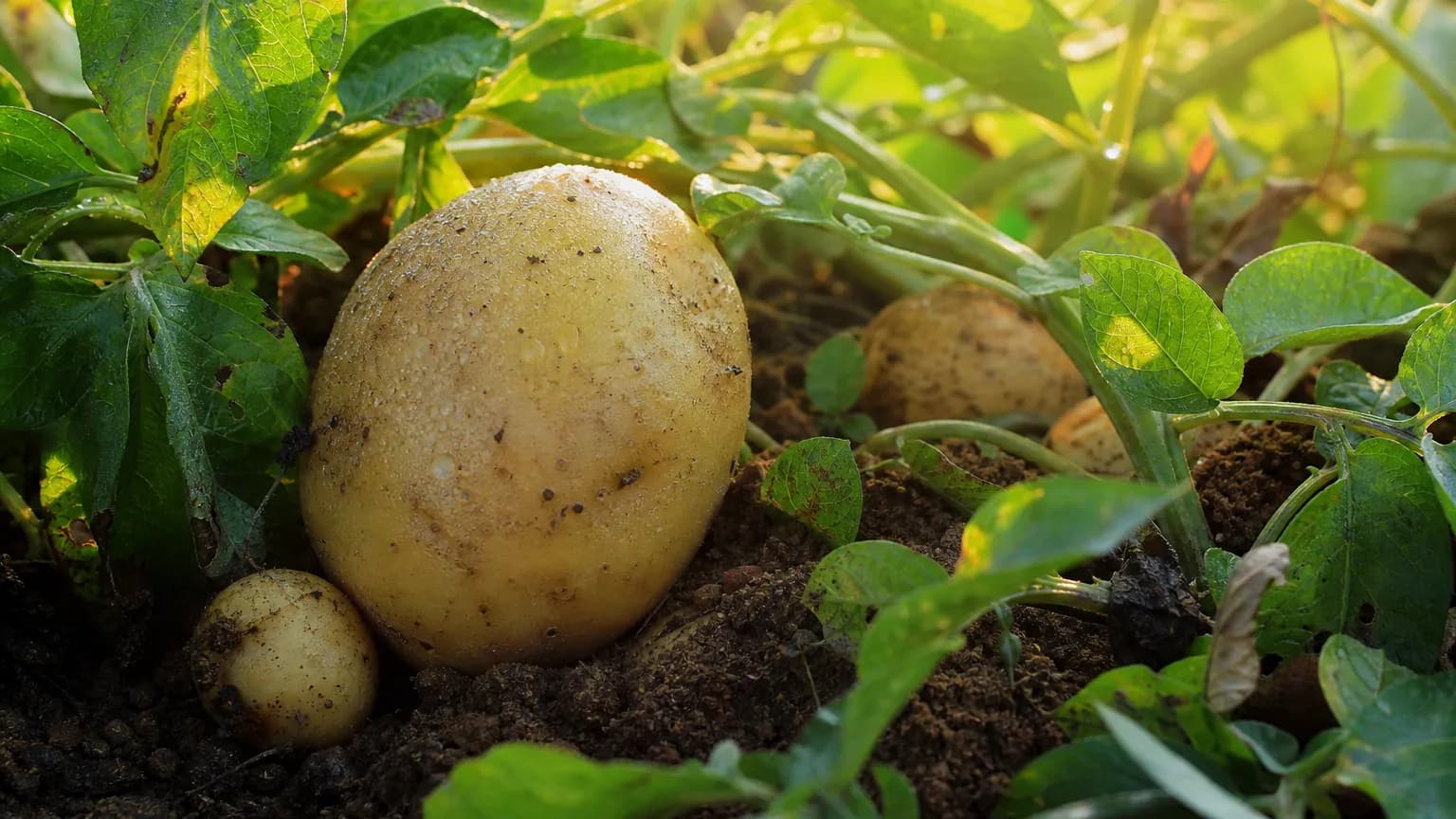
La calabaza amarilla crece bien junto a frijoles, que fijan nitrógeno, y maíz en el sistema de las tres hermanas. Las caléndulas y capuchinas plantadas alrededor repelen insectos y atraen polinizadores. Evite plantarla cerca de patatas y otras cucurbitáceas para reducir la presión de plagas compartidas.
Maíz va a su lado. Papa no.
Saber de huerto de siempre, cotejado con la tabla real de Calabaza Amarilla — prueba cualquier planta que cultives.
Prueba Calabaza Amarilla en un bancal, aquí mismo
Un bancal real del planificador con Calabaza Amarilla ya plantado. Toca una planta compañera para colocarla y mira cómo responde la comprobación de vecinos: verde para buenos vecinos, rojo si hay conflicto.


Guías de cultivo relacionadas
Abónalo bien
La calabaza amarilla necesita suelo rico, fértil y bien drenado con pH entre 6,0 y 7,5. Incorpore abundante compost antes de la siembra. Aplique fertilizante orgánico rico en potasio y fósforo cada 2-3 semanas durante la fructificación. El suelo debe mantenerse húmedo pero nunca encharcado.
Temperatura ideal
Compatibilidad de zonas de rusticidad
De la semilla a la cosecha, etapa por etapa
Germinación
Las semillas germinan rápido en suelo cálido y empujan grandes cotiledones redondeados a través de la superficie en 5-10 días. El tallo grueso y el sistema radicular inicial se establecen rápidamente en suelos con temperaturas superiores a 65°F (18°C). Los suelos fríos retrasan mucho la germinación y aumentan el riesgo de pudrición de la semilla.
Desarrollo de la plántula
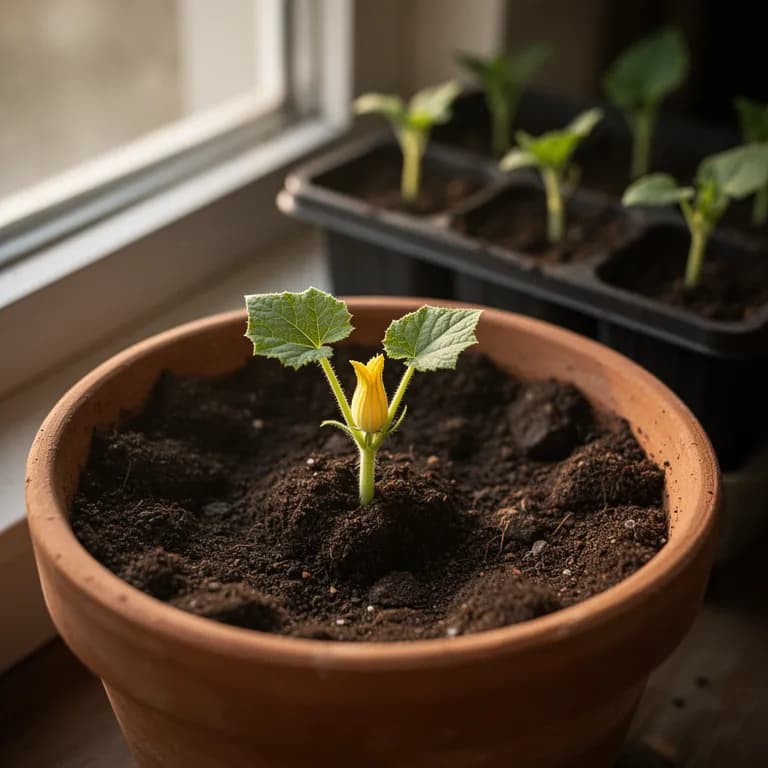
Aparecen las hojas verdaderas con la forma lobulada y la textura áspera característica de las cucurbitáceas. La plántula desarrolla un tallo central firme y un sistema radicular en expansión. El crecimiento se acelera cuando las temperaturas diurnas superan los 75°F (24°C) y la planta adopta su forma arbustiva.
Crecimiento vegetativo arbustivo
La planta desarrolla su hábito arbustivo compacto característico y produce hojas grandes y profundamente lobuladas sobre tallos gruesos y huecos. El crecimiento vegetativo rápido crea un dosel denso de 3-4 feet de ancho. El sistema radicular se expande hacia los lados y hacia abajo para sostener el abundante crecimiento aéreo.
Floración
Aparecen grandes flores amarillas en forma de trompeta: primero se abren las flores masculinas en tallos largos, seguidas de las flores femeninas con un diminuto fruto inmaduro visible en la base. Cada flor se abre solo durante un día y debe ser polinizada por abejas o a mano por la mañana para que se desarrollen los frutos.
Desarrollo del fruto y cosecha
Las flores femeninas polinizadas se convierten en frutos de crecimiento rápido. La calabaza amarilla puede pasar de la polinización al tamaño de cosecha en solo 4-6 días con clima cálido. Se desarrollan varios frutos al mismo tiempo mientras la planta sigue produciendo nuevas flores durante todo el verano.
Pico de producción
La planta entra en una fase de producción sostenida, floreciendo y fructificando al mismo tiempo durante 6-8 semanas. Una planta arbustiva sana puede producir 3-5 calabazas por semana durante el pico de la temporada. La producción disminuye gradualmente a medida que el oídio y los perforadores de la vid pasan factura a mediados del verano.
Siembra las semillas a 2.5 cm de profundidad en un suelo que se haya calentado al menos a 65°F. Riega suavemente después de sembrar y mantén el suelo constantemente húmedo, pero no encharcado. Un termómetro de suelo elimina las dudas sobre el momento adecuado.
Cuidar Calabaza Amarilla mes a mes
Qué hacer cada mes para tu Calabaza Amarilla
Octubre
Mes actualFinal harvests in most zones as frost approaches. In zones 9-10, fall plantings may still be producing. Pull spent plants after frost kills foliage. Add compost to empty beds. Note variety performance for next year's planning.
Ten claro qué hacer en tu huerto, cada mes
Un correo al empezar cada mes: qué sembrar, plantar y hacer ahora mismo — para tu Calabaza Amarilla y todo lo que crece alrededor. Más un breve curso inicial para esquivar los errores clásicos.
- Qué hacer ahora mismo
- Ajustado a tu temporada
- Curso inicial incluido
Cosechar Calabaza Amarilla
Coseche la calabaza amarilla cuando tenga 15-20 cm de longitud para la straightneck o cuando la curva esté bien formada pero la piel aún tierna para la crookneck, entre 50 y 60 días. Corte con un cuchillo dejando 2-3 cm de pedúnculo. Coseche cada 2-3 días, ya que las calabazas crecen rápidamente y se endurecen si se dejan demasiado.
se supone que plantas al comenzar el periodo — indica tu fecha real
Cosecha cuando los frutos crookneck midan 4-7 inches o los straightneck midan 6-8 inches, mientras la piel esté brillante y tierna.
Almacenamiento y conservación
Los frutos frescos se conservan en el refrigerador 5-7 días en una bolsa perforada. Para congelación, córtelos en rodajas, escáldelos 1 minuto, enfríe y congele. También se deshidratan en chips al horno y se conservan en aceite de oliva. Los frutos grandes y maduros son menos sabrosos pero pueden usarse en sopas y purés.
Qué falla — y cómo solucionarlo
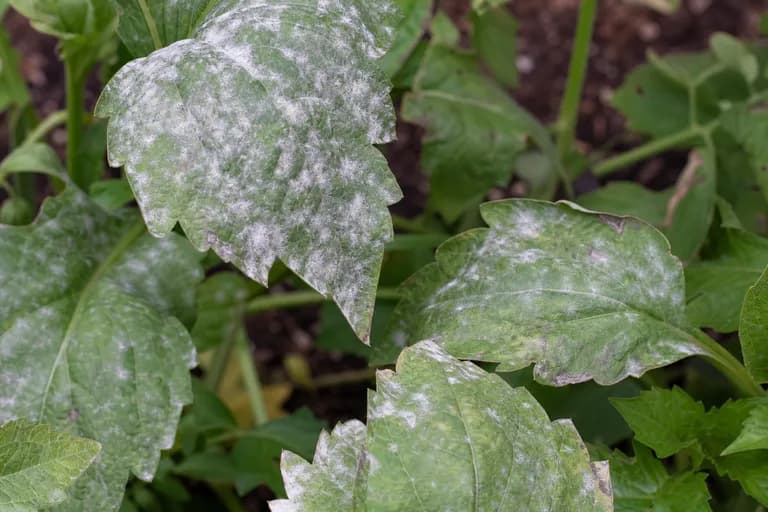
Oídio (Podosphaera xanthii)
EnfermedadPolvo blanquecino que recubre las hojas, reduciendo la fotosíntesis. Las hojas amarillean y se secan, afectando la producción de frutos.
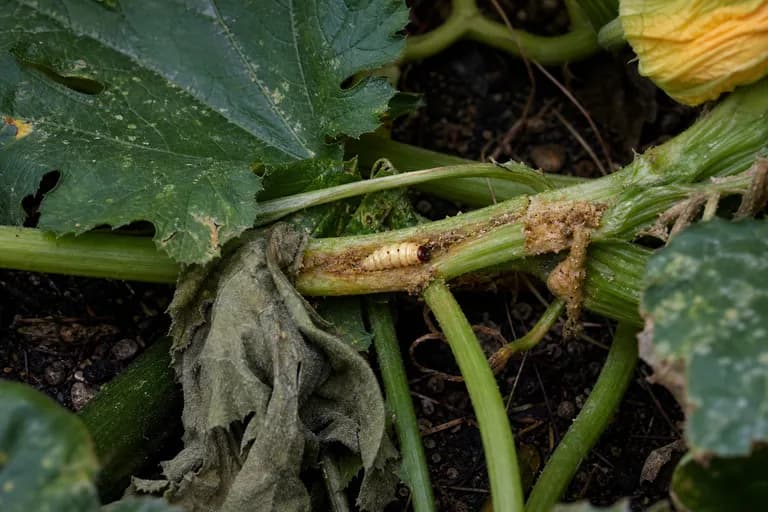
Barrenador de la vid (Melittia cucurbitae)
PlagaMarchitamiento súbito de secciones de la planta causado por larvas que perforan la base del tallo. Excrementos amarillentos (frass) visibles en la base.
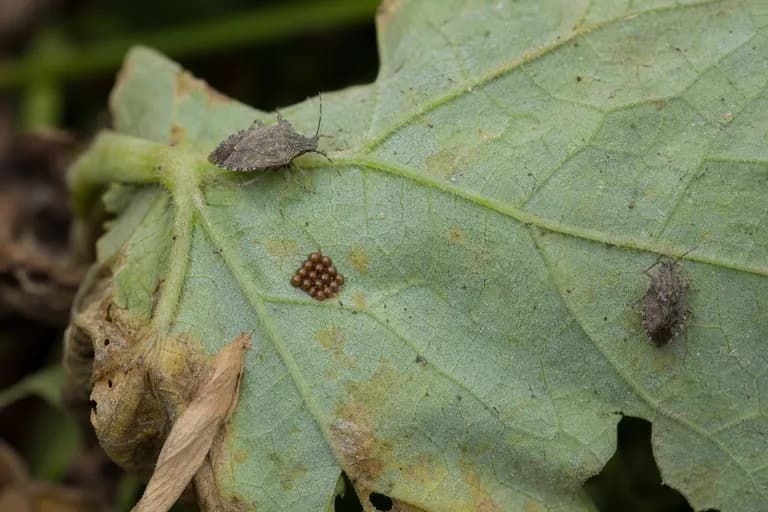
Escarabajo del pepino (Diabrotica spp.)
PlagaEscarabajos pequeños amarillos con rayas o manchas negras que devoran las flores y hojas. Las larvas atacan las raíces. Pueden transmitir marchitez bacteriana.
Solución de problemas comunes
El oídio es el problema más común en condiciones húmedas con mala ventilación. Las plantas producen primero flores masculinas antes de las femeninas, lo que puede causar frustración inicial al no ver frutos. Si no se cosechan regularmente, los frutos crecen demasiado y se vuelven duros y con semillas grandes, y la planta reduce su producción.
Consejos de cultivo
- Do not rush planting — yellow squash planted in cold soil will rot, not grow. Wait until soil temperatures reach at least 65°F (18°C), and ideally 70°F (21°C). Use black plastic mulch to warm beds 2-3 weeks before planting for an earlier start.
- Harvest frequently and harvest young. The single most important practice for maximizing yellow squash production is picking fruits every 1-2 days at 6-8 inches. Leaving a fruit to reach full size signals the plant to slow flower and fruit production dramatically.
- Wrap the lower 6 inches of the main stem with aluminum foil or row cover fabric as a physical barrier against squash vine borers — these destructive moths lay eggs at the stem base, and the larvae bore inside to feed, often killing the entire plant.
- Plant in mounded hills or raised beds for improved drainage and faster soil warming in spring. Yellow squash roots are susceptible to rot in waterlogged soil, and the elevated position encourages deeper root development.
- Remove the oldest, lowest leaves proactively throughout the season to improve air circulation around the plant base. Powdery mildew is nearly inevitable by midsummer, and good airflow is your best defense to slow its spread.
- Plan succession plantings every 3-4 weeks from late spring through midsummer. Individual yellow squash plants typically decline after 6-8 weeks of heavy production due to cumulative disease pressure, so fresh plants ensure an uninterrupted supply.
- Interplant with herbs and flowers that attract pollinators. Borage, marigolds, dill, and oregano draw bees to your squash patch and also attract beneficial predatory insects that help control aphids and squash bugs.
- Water at the base of plants using drip irrigation or a soaker hose rather than overhead sprinklers. Wet foliage dramatically accelerates powdery mildew and other fungal diseases. Morning watering is preferable if overhead irrigation is unavoidable.
Cultiva tu mejor Calabaza Amarilla — y todo lo que la rodea.
Empieza un plan gratis hoy. Diseña tus bancales, coloca tu Calabaza Amarilla y deja que PlotMyGarden gestione el momento, el espaciado, las asociaciones y los recordatorios de la semilla a la cesta.
Elige tu Calabaza Amarilla
Yellow Crookneck
Variedad clásica americana con cuello curvo y piel amarilla verrugosa. Pulpa firme y sabor a nuez. Planta arbustiva compacta. 50-55 días.
Early Prolific Straightneck
Variedad temprana con frutos rectos y piel lisa amarillo brillante. Muy productiva y fiable. Textura suave y cremosa. 48-52 días.
Gold Star
Variedad moderna con excelente resistencia a enfermedades. Frutos rectos, uniformes y de piel lisa dorada. 50-55 días.
Sunburst (patisson)
Variedad en forma de platillo con bordes festoneados y color amarillo sol. Muy decorativa y de sabor delicado. Ideal para rellenar. 50-55 días.
A single yellow squash plant grown from a $2-3 seed packet (which contains 15-25 seeds) can produce 20-40 squash over a season, with organic yellow squash selling for $2-4 per pound at grocery stores and farmers markets. Just 2-3 plants can yield 8-15 kg of squash worth $30-80 at retail prices. The savings compound when you factor in the superior flavor and freshness of squash harvested minutes before cooking versus store-bought fruits picked days earlier and shipped hundreds of miles. Surplus squash is easily frozen, made into bread, or shared with neighbors.
Recetas rápidas
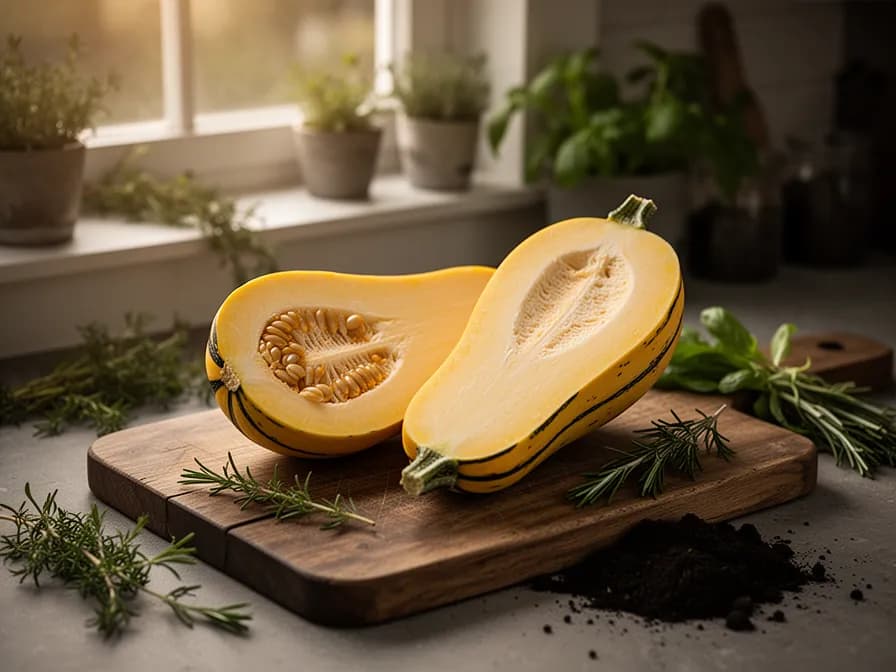
Southern Yellow Squash Casserole
45 minA beloved Southern comfort dish where tender sauteed squash is layered with a creamy, cheesy filling and topped with buttery crushed crackers. This casserole is a staple at family gatherings and church potlucks across the American South.
8 ingredientes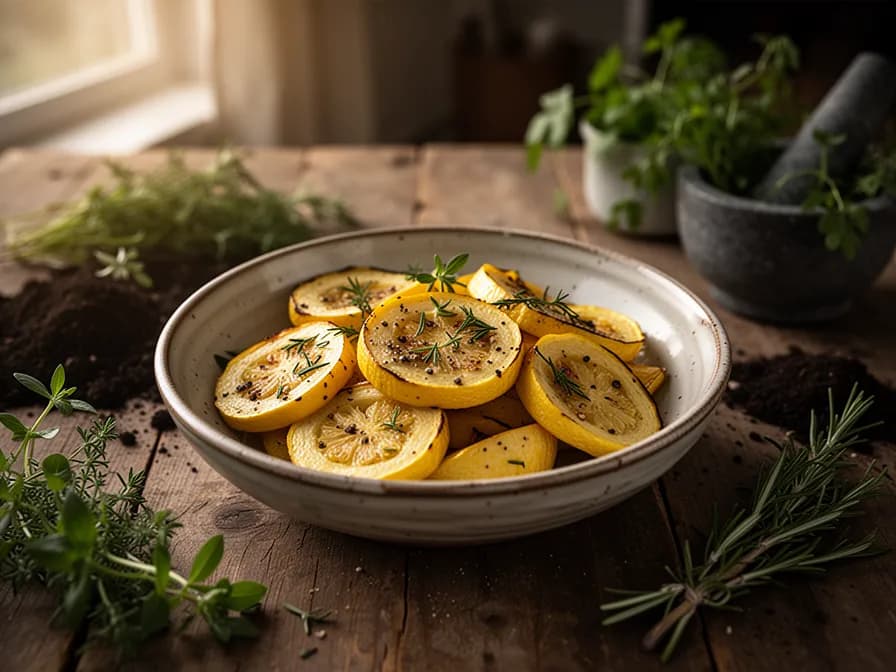
Grilled Yellow Squash with Herb Butter
15 minThick planks of yellow squash grilled until tender with beautiful char marks, then finished with a compound butter of fresh herbs. The high heat caramelizes the natural sugars and concentrates the squash's buttery, nutty flavor.
6 ingredientesYellow Squash Fritters
25 minCrispy pan-fried fritters made from grated yellow squash bound with egg and a light flour batter. These golden patties are a wonderful way to use up an abundant harvest and make an excellent appetizer or light lunch.
8 ingredientesUsos culinarios
La calabaza amarilla se prepara de múltiples formas. Cortada en rodajas y asada a la parrilla con aceite de oliva y hierbas es un clásico del verano americano. Se fríe en rodajas rebozadas, se añade a sopas crema, se ralla para bizcochos y panes como el zucchini bread, y se saltea con ajo y mantequilla. Su sabor suave y ligeramente dulce la hace extremadamente versátil y complementaria a prácticamente cualquier preparación.
Qué contiene
Beneficios para la salud
- Extremely low in calories (only 16 per 100g) while providing meaningful amounts of vitamins and minerals, making yellow squash an ideal food for weight management and calorie-conscious diets.
- Rich in vitamin C, providing 19% of the daily value per 100g, which supports immune function, collagen synthesis for healthy skin, and acts as a powerful antioxidant protecting cells from free radical damage.
- Contains lutein and zeaxanthin, carotenoid antioxidants concentrated in the yellow skin that accumulate in the retina and may help protect against age-related macular degeneration and cataracts.
- Good source of manganese, a trace mineral essential for bone formation, blood clotting, and the function of superoxide dismutase — one of the body's most important antioxidant enzymes.
- The high water content (approximately 95%) combined with dietary fiber supports hydration and digestive regularity, while the potassium content (262mg per 100g) helps regulate blood pressure and fluid balance.
- Provides folate (B9), which is critical for DNA synthesis, cell division, and red blood cell formation — particularly important during pregnancy for preventing neural tube defects in developing fetuses.
De dónde viene Calabaza Amarilla
Yellow squash (Cucurbita pepo) is native to the Americas and was first domesticated in Mesoamerica between 8,000 and 10,000 years ago, making squash one of the earliest cultivated plants in the Western Hemisphere. Wild ancestors of the species were likely first gathered for their protein-rich seeds rather than their bitter, small-fruited flesh. Over millennia of selective breeding by Indigenous peoples from Mexico through the eastern woodlands of North America, squash was transformed into the diverse array of summer and winter types we know today.
Yellow squash was a central component of the Three Sisters agricultural system practiced by Native American nations across eastern North America, where squash, corn, and beans were planted together in a symbiotic arrangement — corn provided a climbing structure for beans, beans fixed atmospheric nitrogen to feed all three crops, and the broad squash leaves shaded the soil to conserve moisture and suppress weeds. Spanish and Portuguese explorers carried squash back to Europe in the 16th century, where it was adopted rapidly in Mediterranean and Central European cuisines.
The crookneck and straightneck forms of yellow squash that dominate American gardens today were developed primarily in the southeastern United States during the 18th and 19th centuries. The Early Yellow Crookneck, with its distinctive curved neck and bumpy golden skin, was documented as early as 1700 and remains popular today. Modern hybrid breeding has produced disease-resistant, highly productive bush varieties suited to smaller gardens and commercial production. Today yellow squash is grown commercially across the southern and eastern United States, with Florida, Georgia, and California leading production, while home gardeners across the continent treasure it as one of the most rewarding and prolific vegetables to grow.
Calabaza Amarilla: ¿sabías que?
Datos fascinantes sobre Calabaza Amarilla
Yellow squash is one of the oldest cultivated crops in the Americas — archaeological evidence from Mexican caves shows that ancestral squash species were domesticated as early as 8,000-10,000 years ago, predating corn and beans by thousands of years.
Calabaza Amarilla: preguntas frecuentes
¿Cuándo debo plantar Calabaza Amarilla?
¿Cuáles son buenas plantas acompañantes para Calabaza Amarilla?
¿En qué zonas de rusticidad puede crecer Calabaza Amarilla?
¿Cuánto sol necesita Calabaza Amarilla?
¿A qué distancia debo espaciar Calabaza Amarilla?
¿Qué plagas y enfermedades afectan a Calabaza Amarilla?
¿Cómo almaceno Calabaza Amarilla después de la cosecha?
¿Cuáles son las mejores variedades de Calabaza Amarilla para cultivar?
¿Qué suelo necesita Calabaza Amarilla?
Why are my yellow squash plants producing flowers but no fruit?
What is the difference between crookneck and straightneck yellow squash?
How do I prevent squash vine borers from destroying my plants?
Can I grow yellow squash in containers?
Why are my yellow squash developing brown, sunken spots on the blossom end?
My yellow squash are growing very large and tough — what went wrong?
Acabas de leer la teoría. Ahora cultívala en piloto automático.
Todo lo que hace que Calabaza Amarilla sea delicado — el momento, el espaciado, las asociaciones, la ventana de cosecha — es justo lo que PlotMyGarden resuelve por ti, para cada planta de tu huerto.
Un plan que conoce tu clima
Indica tu ubicación una vez. Recibe fechas de siembra, abonado y cosecha basadas en tu última helada real y el pronóstico en vivo — sin adivinar con un sobre genérico.
De la sección “Cuándo plantar”Planificador de bancales de arrastrar y soltar
Diseña bancales sobre una cuadrícula. Cada planta encaja con su espaciado correcto y ves toda la temporada antes de gastar un céntimo en semillas.
De la sección “Cultivo”Conflictos de asociación, detectados a tiempo
Más de 200 buenas y malas combinaciones comprobadas en vivo mientras plantas — para que un error que arruine la temporada nunca llegue a la tierra.
De la sección “Asociaciones”Recordatorios que sí vas a seguir
“Riega las judías.” “Recoge hoy antes de que se pase.” Oportunos, concretos y ligados a las plantas que de verdad cultivas.
De la sección “Cosecha”Escalonado, programado
¿Quieres cosechar seis semanas en vez de seis días? Reparte tus siembras automáticamente y te avisa cuando toca el siguiente lote.
De la sección “Cuándo plantar”Un registro que se vuelve más listo
Cada cosecha que registras le enseña tu huerto. El plan del año que viene parte de lo que de verdad funcionó en tu suelo, no en un manual.
De la sección “Resumen”Planta estos junto a Calabaza Amarilla
Más Cucurbitáceas
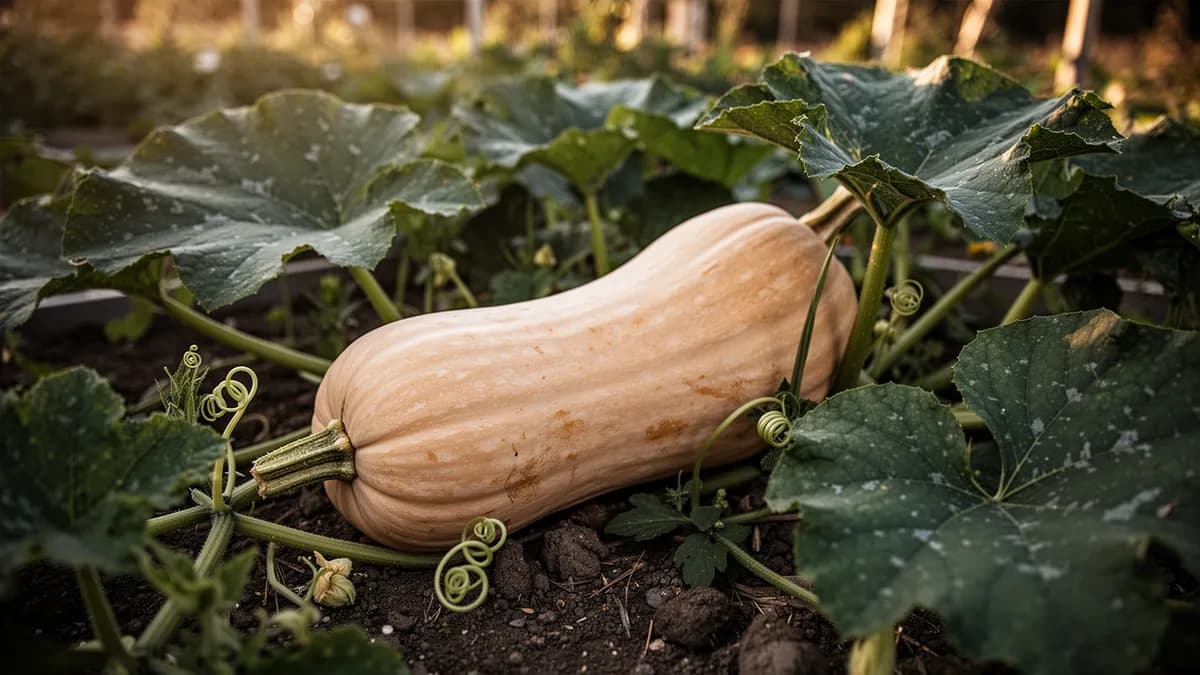
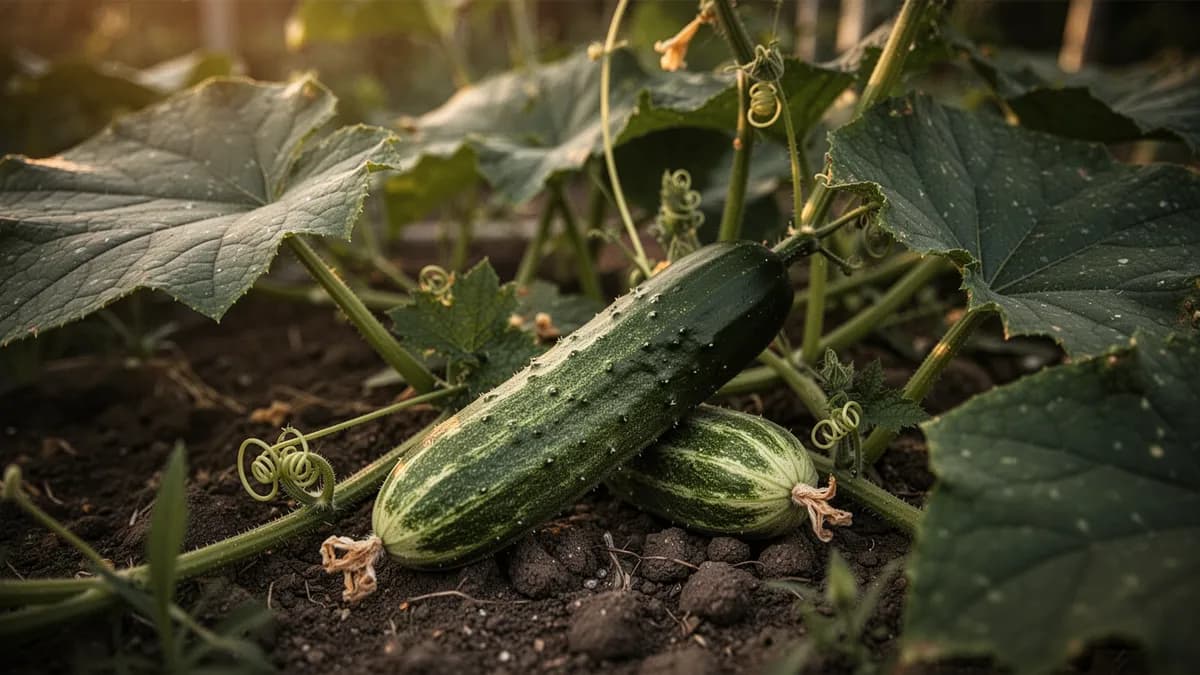
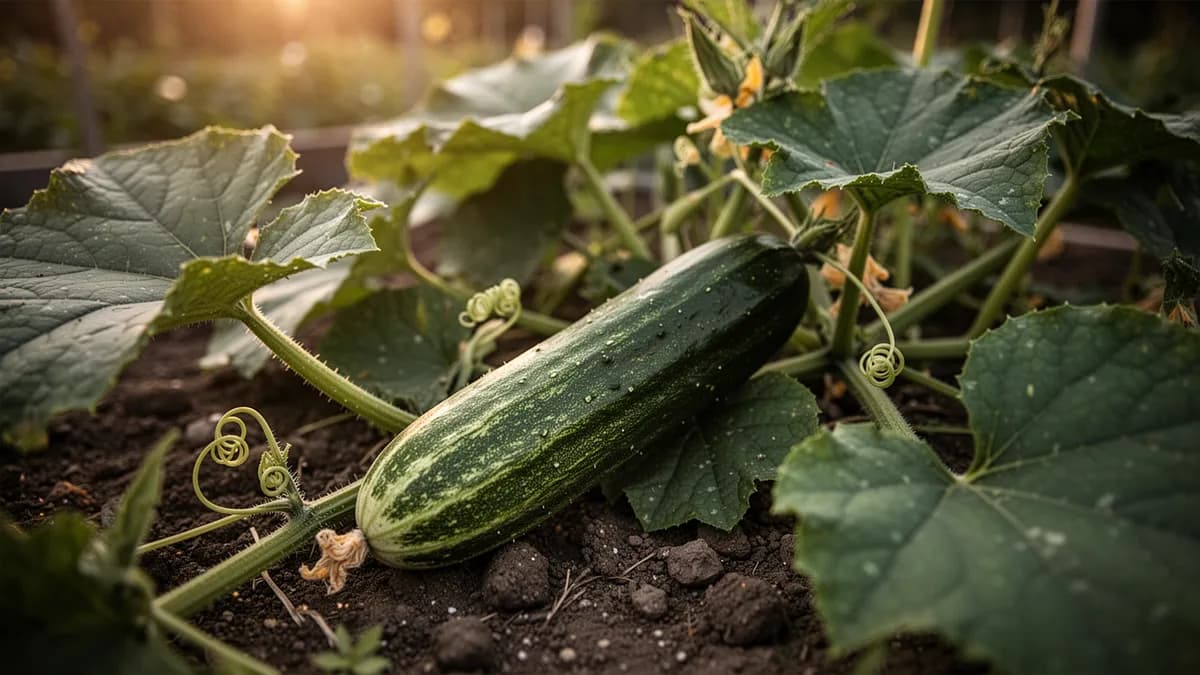
Mantén Calabaza Amarilla lejos de estos
Cultiva tu mejor Calabaza Amarilla — y todo lo que la rodea.
Empieza un plan gratis hoy. Diseña tus bancales, coloca tu Calabaza Amarilla y deja que PlotMyGarden gestione el momento, el espaciado, las asociaciones y los recordatorios de la semilla a la cesta.