Espinaca Malabar
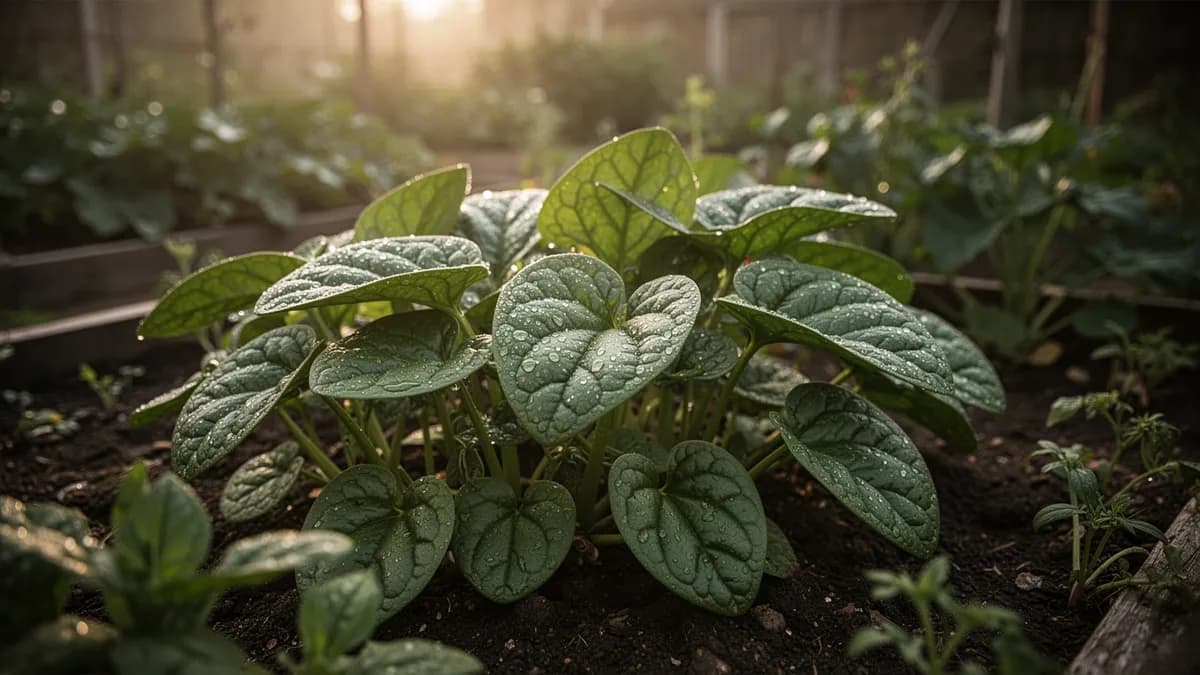
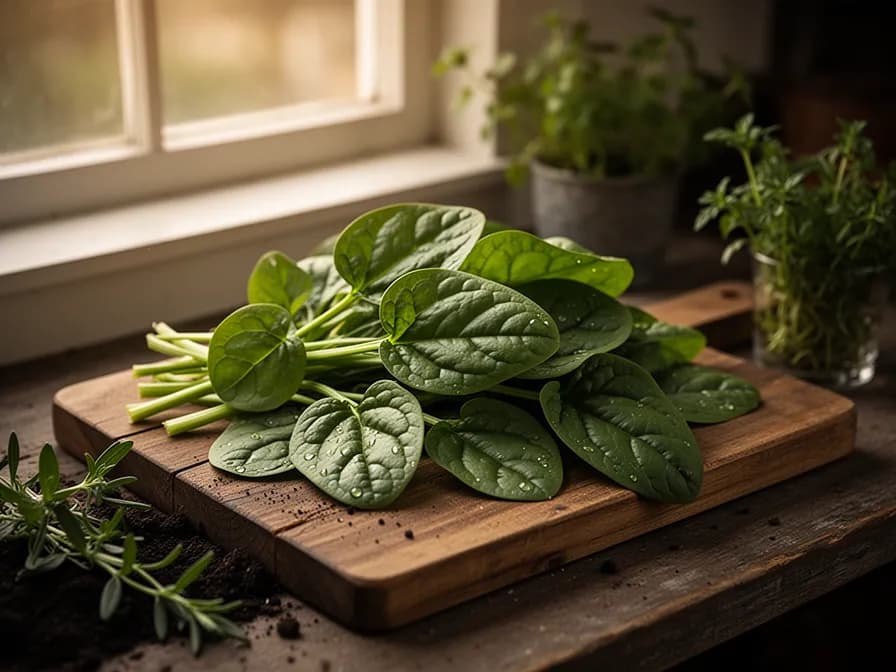
La espinaca Malabar (Basella alba o Basella rubra) es una planta trepadora tropical originaria del subcontinente indio, no relacionada botánicamente con la espinaca verdadera pero utilizada de forma similar.





En esta páginaResumen
Conoce Espinaca Malabar
La espinaca Malabar (Basella alba o Basella rubra) es una planta trepadora tropical originaria del subcontinente indio, no relacionada botánicamente con la espinaca verdadera pero utilizada de forma similar. Sus hojas gruesas, carnosas y suculentas producen abundante cosecha durante los meses más calurosos del verano, cuando la espinaca común ya ha espigado.
Cuándo plantar Espinaca Malabar
Remoje las semillas en agua tibia (30 °C) durante 24 horas para ablandar la cubierta dura, o escarifique ligeramente con papel de lija fino. Siembre en interiores 6-8 semanas antes del trasplante a 1 cm de profundidad en sustrato cálido. La germinación es lenta e irregular, tomando 10-21 días. Mantenga temperatura constante de 25-30 °C para mejores resultados.
Tu año de Espinaca Malabar
Ajustado a Zona 7 · temporada típica · la helada se va hacia el 2 abr y vuelve hacia el 1 nov
Planta Espinaca Malabar May – Jun y cosecha Jul – Oct. Consulta los métodos de plantación y elige tu clima para adaptar los periodos.
Cómo cultivar Espinaca Malabar
Inicie las semillas en interiores 6-8 semanas antes de la última helada, ya que la espinaca Malabar necesita una temporada larga y cálida. Remoje las semillas en agua tibia durante 24 horas antes de sembrar para ablandar la cubierta dura y acelerar la germinación. Siembre a 1 cm de profundidad en sustrato cálido (25-30 °C); la germinación es lenta, tardando 10-21 días.
Transplante al exterior cuando las temperaturas nocturnas se mantengan por encima de 15 °C de forma estable. Proporcione un enrejado, celosía o estructura de soporte de al menos 2 metros de altura, ya que esta planta vigorosa puede trepar hasta 3-4 metros en una temporada. Espacie las plantas 30-45 cm y proporcione suelo rico y bien drenado.
Riegue abundantemente durante el crecimiento activo ya que las hojas suculentas necesitan mucha humedad. Fertilice cada 2-3 semanas con un abono rico en nitrógeno para estimular la producción continua de hojas. La poda regular de los brotes terminales fomenta la ramificación lateral y una mayor producción de hojas tiernas.
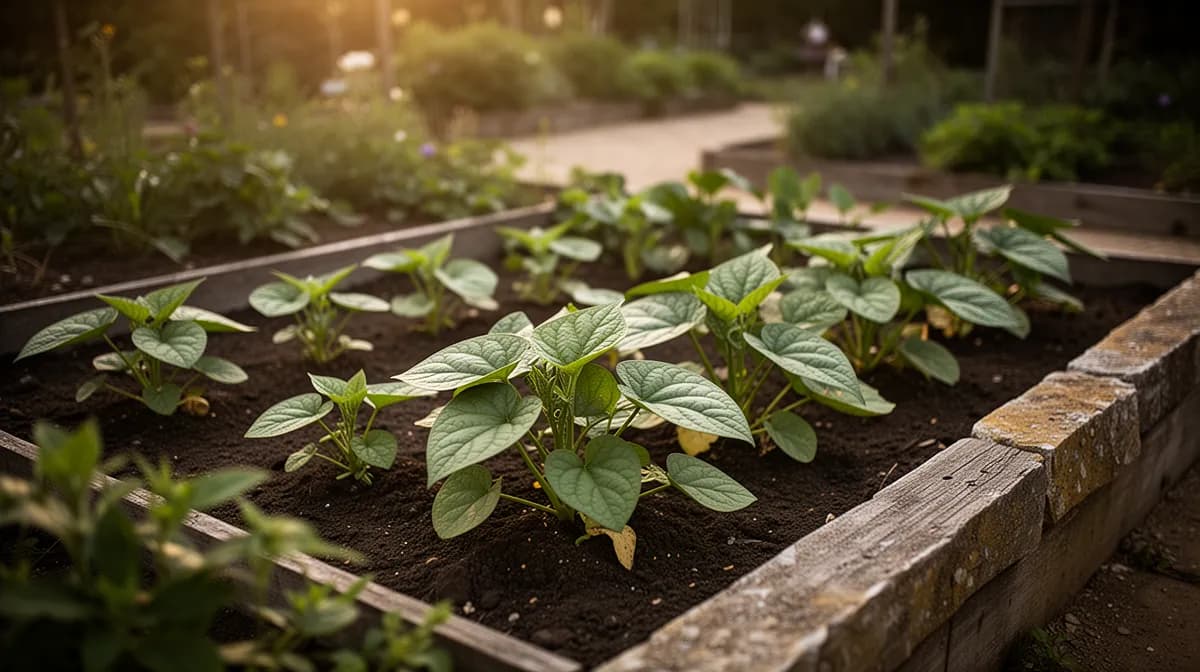
32 plantas caben en un bancal de 120 × 240 cm
Cada Espinaca Malabar pide 30 cm de margen. El planificador guarda ese marco por ti — cada planta, cada bancal.
Los mejores vecinos de Espinaca Malabar
Excelente compañera de otras plantas tropicales como calabazas, frijoles trepadores y okra que comparten necesidades de calor. Los tagetes plantados en la base ayudan a repeler plagas del suelo. Evite combinar con plantas que prefieren frescor como lechugas y espinacas verdaderas.
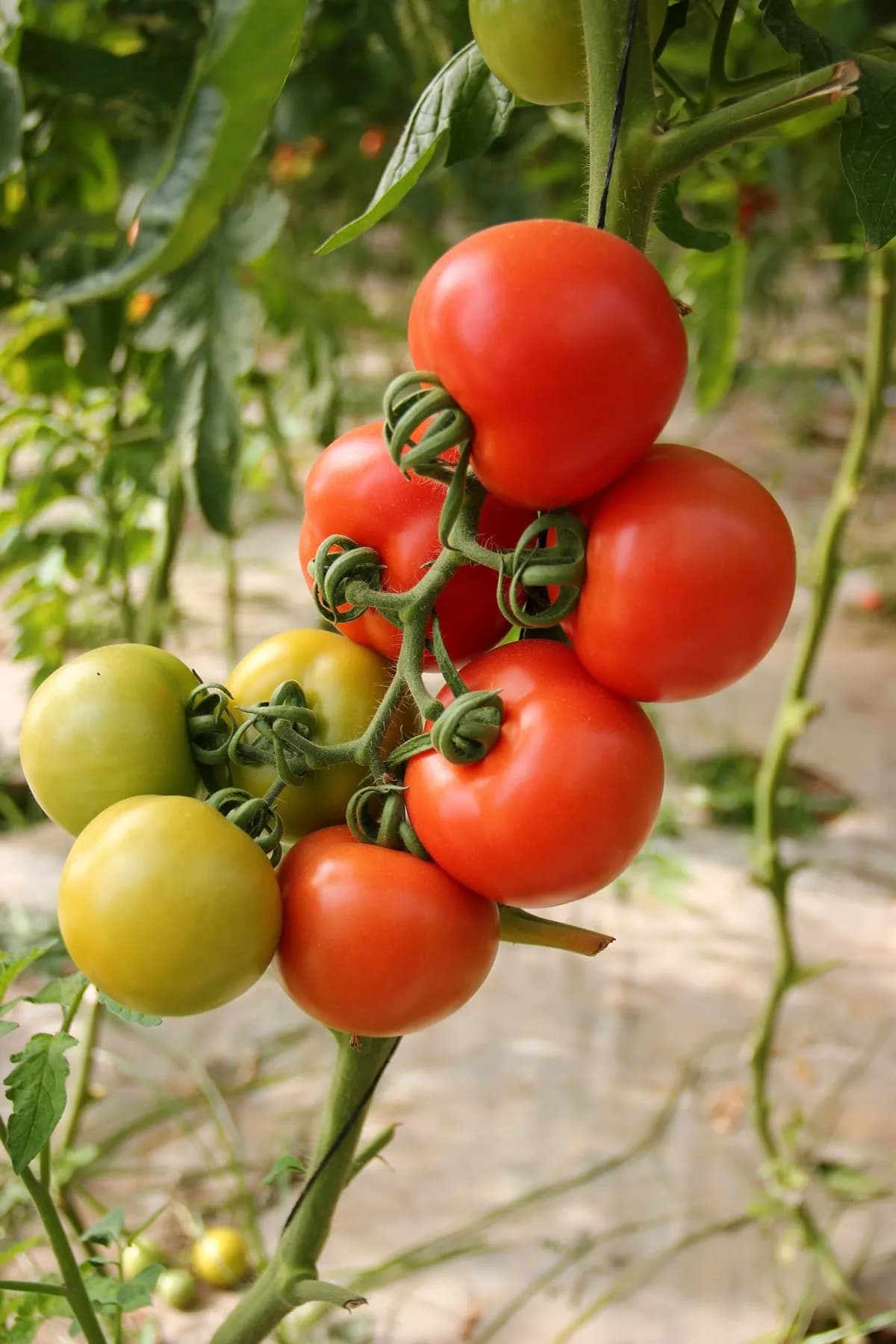
Tomate va a su lado.
Saber de huerto de siempre, cotejado con la tabla real de Espinaca Malabar — prueba cualquier planta que cultives.
Prueba Espinaca Malabar en un bancal, aquí mismo
Un bancal real del planificador con Espinaca Malabar ya plantado. Toca una planta compañera para colocarla y mira cómo responde la comprobación de vecinos: verde para buenos vecinos, rojo si hay conflicto.


Guías de cultivo relacionadas
Abónalo bien
Prefiere un suelo fértil, rico en materia orgánica y bien drenado con pH entre 6,0 y 7,0. Incorpore abundante compost o estiércol bien descompuesto antes de plantar. Fertilice cada 2-3 semanas con un abono rico en nitrógeno para mantener una producción continua de hojas. El potasio adicional fortalece los tallos trepadores.
Temperatura ideal
Compatibilidad de zonas de rusticidad
De la semilla a la cosecha, etapa por etapa
Germinación de semillas
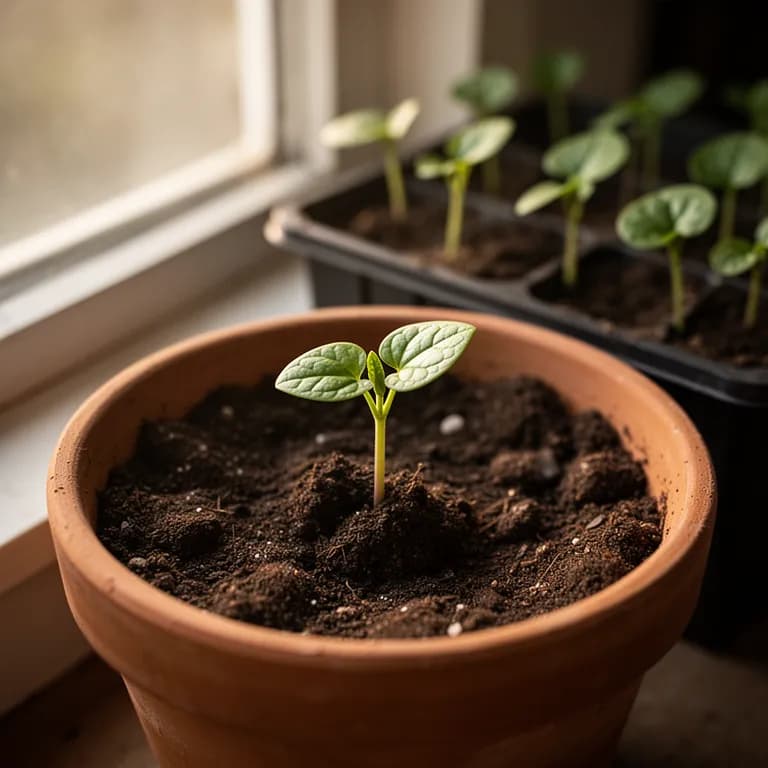
Las semillas germinan lentamente debido a su cubierta dura y oscura. Después de remojarlas durante 24 horas, aparece una radícula blanca seguida de cotiledones gruesos y redondeados. La germinación requiere calor constante de 24-29°C y tarda 10-21 días incluso con pretratamiento.
Establecimiento de plántulas
Las plántulas desarrollan sus primeras hojas verdaderas, que son notablemente más gruesas y carnosas que las de la mayoría de las hortalizas. El crecimiento es lento por debajo de 27°C, pero se acelera rápidamente cuando llega el calor. El tallo empieza a mostrar su hábito trepador característico.
Establecimiento de la enredadera
La enredadera inicia su fase de trepado rápido, buscando apoyo y produciendo hojas cada vez más grandes y brillantes. Los zarcillos se enroscan en cualquier estructura disponible. Con calor ideal, las vides pueden crecer 15-30 cm por semana. El tallo se engrosa y se vuelve semileñoso en la base.
Crecimiento activo y primera cosecha
Las vides entran en su fase de máximo crecimiento vegetativo, produciendo abundantes hojas grandes y brillantes y ramificándose libremente. Este es el momento de cosechar las primeras hojas y puntas de brote. La planta responde a la cosecha produciendo aún más brotes laterales y hojas.
Producción máxima
La vid alcanza su plena capacidad productiva durante los meses más calurosos, cubriendo los enrejados con un follaje denso y frondoso. Las hojas se producen de forma continua y pueden cosecharse cada pocos días. Empiezan a aparecer pequeños racimos de flores rosas o blancas, seguidos de bayas de color púrpura oscuro.
Floración y producción de bayas
A medida que los días se acortan a finales del verano, la planta produce más espigas florales y bayas de color morado oscuro a negro. La producción de hojas se ralentiza, pero continúa. Las bayas son comestibles pero tienen un efecto ligeramente laxante y contienen un tinte púrpura intenso. La vid continúa hasta que la mata la primera helada.
Remoja las semillas en agua tibia durante 24 horas o escarifícalas con papel de lija antes de sembrar. Usa una manta térmica ajustada a 27°C para lograr la germinación más fiable. No dejes que el sustrato de siembra se seque durante esta fase lenta de germinación.
Cuidar Espinaca Malabar mes a mes
Qué hacer cada mes para tu Espinaca Malabar
Octubre
Mes actualFinal harvests in most zones as temperatures drop. Collect ripe purple-black berries for seed saving before frost. In zones 10-12, the vine may continue producing. In cooler zones, harvest all remaining usable leaves before frost.
Ten claro qué hacer en tu huerto, cada mes
Un correo al empezar cada mes: qué sembrar, plantar y hacer ahora mismo — para tu Espinaca Malabar y todo lo que crece alrededor. Más un breve curso inicial para esquivar los errores clásicos.
- Qué hacer ahora mismo
- Ajustado a tu temporada
- Curso inicial incluido
Cosechar Espinaca Malabar
Coseche las hojas jóvenes y los brotes tiernos de 10-15 cm regularmente, cortando con tijeras limpias. La cosecha frecuente estimula nuevo crecimiento y mantiene la planta productiva. Evite las hojas viejas y grandes que son más fibrosas y mucilaginosas. La cosecha puede continuar durante todo el verano hasta las primeras heladas.
se supone que plantas al comenzar el periodo — indica tu fecha real
Empieza a cosechar cuando las vides alcancen 2-3 pies de largo, normalmente 55-70 días después de plantar.
Almacenamiento y conservación
Consuma las hojas frescas el mismo día de la cosecha para máxima calidad, o guárdelas en una bolsa húmeda en el refrigerador durante 2-3 días. Para conservación a largo plazo, blanquee brevemente las hojas y congélelas. También se pueden deshidratar para uso como especia en sopas y guisos, aunque pierden su textura suculenta.
Qué falla — y cómo solucionarlo
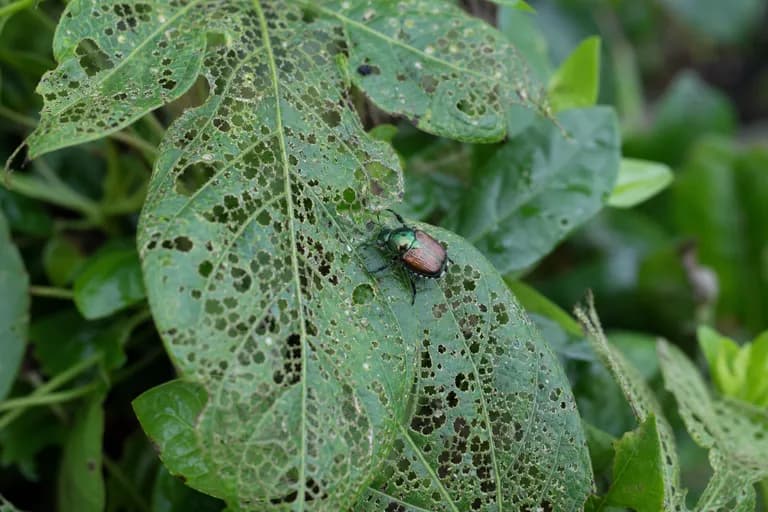
Pulgones
PlagaColonias de pulgones verdes o negros en los brotes tiernos y el envés de las hojas jóvenes, causando enrollamiento foliar y secreción de melaza pegajosa que atrae hongos.
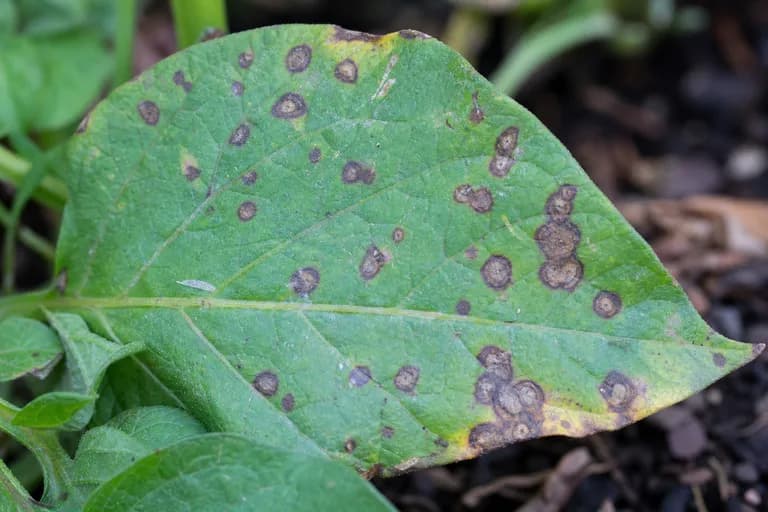
Cercosporiosis foliar
EnfermedadManchas circulares pequeñas de color marrón-grisáceo con bordes oscuros en las hojas. En condiciones húmedas, las manchas se expanden y las hojas se secan prematuramente.
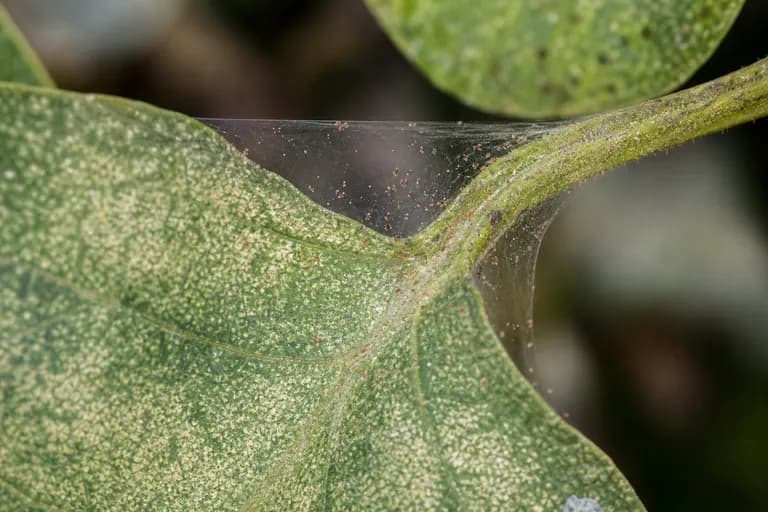
Mosca blanca
PlagaPequeños insectos blancos alados en el envés de las hojas que vuelan al agitar la planta. Causan amarillamiento foliar y producen melaza.
Solución de problemas comunes
El inicio del crecimiento es muy lento en temperaturas por debajo de 20 °C; la planta no prospera en climas frescos de verano. Las hojas desarrollan una textura mucilaginosa al cocinarlas, similar a la okra, que algunos encuentran desagradable. Las semillas tienen una cubierta dura que dificulta la germinación sin pretratamiento previo.
Consejos de cultivo
- Patience with germination is essential. Malabar spinach seeds are notoriously slow — expect 10-21 days even with pre-soaking. Do not assume seeds have failed and replant too early. The combination of 24-hour warm water soak plus a heat mat at 27°C (80°F) gives the best results.
- Never rush outdoor transplanting. Malabar spinach planted in cool soil will sulk for weeks and may never recover. Wait until nighttime temperatures are reliably above 15°C (60°F) and soil has warmed to at least 18°C (65°F).
- Invest in a strong trellis from the start. Malabar spinach vines are heavy and vigorous, reaching 3-5 meters in a single season. A flimsy support will collapse under the weight of mature vines. Sturdy fencing, heavy-gauge cattle panels, or thick bamboo poles are ideal.
- Harvest frequently and from the top. Picking the growing tips and young leaves every few days forces the vine to produce more side branches, resulting in a bushier, more productive plant with more tender growth overall.
- Provide consistent moisture and high humidity. While Malabar spinach tolerates brief dry spells, leaf production drops noticeably without regular watering. Mulch heavily and water at the base during dry periods. The plant loves humid conditions.
- Grow the red-stemmed variety (Basella rubra) if you want ornamental value alongside food production. The striking purple stems, dark green leaves, and colorful berries make this one of the most attractive edible vines for trellises, arbors, and fences.
- Pinch off flower buds to extend leaf production. Once the plant starts flowering and producing berries, leaf growth slows significantly as energy shifts to reproduction. Delay flowering as long as possible for maximum green harvest.
- In short-season climates, start seeds as early as possible indoors — 8 weeks before last frost is not too early. Every week of indoor head start translates to additional weeks of productive harvest before autumn frost ends the season.
Cultiva tu mejor Espinaca Malabar — y todo lo que la rodea.
Empieza un plan gratis hoy. Diseña tus bancales, coloca tu Espinaca Malabar y deja que PlotMyGarden gestione el momento, el espaciado, las asociaciones y los recordatorios de la semilla a la cesta.
Elige tu Espinaca Malabar
Rubra (Red Stem)
Variedad con tallos y pecíolos de color rojo-púrpura intenso y hojas verde oscuro. Muy ornamental además de comestible. Produce bayas de tinte rojo. 70 días.
Alba (Green Stem)
Variedad de tallos verdes con hojas más grandes y carnosas. Sabor más suave que la variedad roja. Mayor rendimiento de hojas. 65-70 días hasta primera cosecha.
Broad Leaf Red
Selección con hojas excepcionalmente grandes y anchas en tallos rojizos. Excelente productividad y vigor. 70-80 días.
Malabar Select
Variedad mejorada con menor mucosidad y mayor tolerancia a temperaturas frescas. Hojas tiernas y de buen sabor. 60-70 días hasta cosecha.
Malabar spinach seeds cost $2-4 per packet (enough for 10-20 plants), and each vine produces 1.5-3 kg of greens over a season. With specialty Asian greens selling for $4-8 per bunch at farmers markets and Asian grocery stores, just 2-3 plants can easily save $30-60 over a summer. The real value is in providing fresh, heat-tolerant greens during the summer months when store-bought spinach is expensive, wilts quickly, and often comes from distant farms with high food miles.
Recetas rápidas
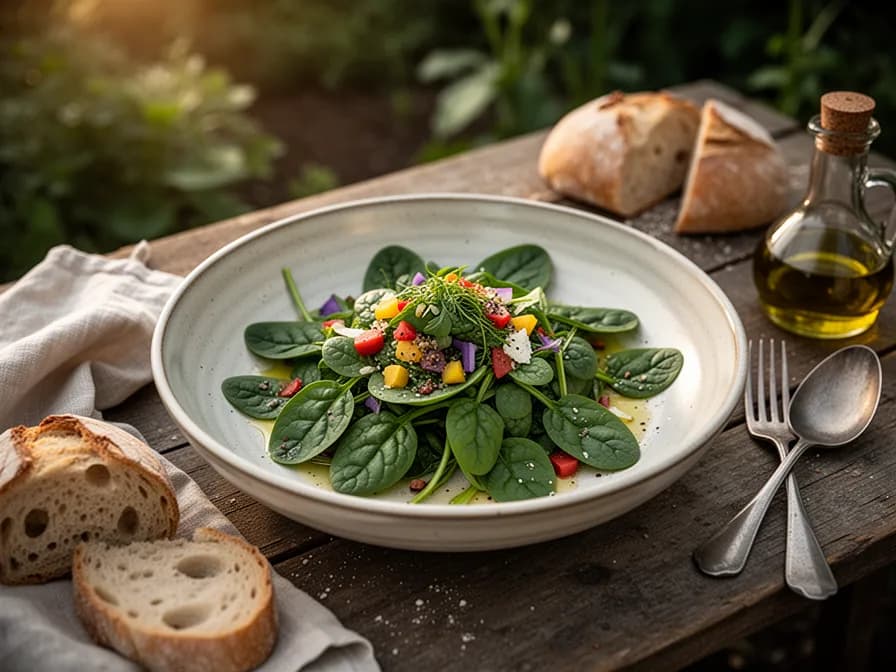
Malabar Spinach and Lentil Dal
35 minA comforting Indian-inspired dal where Malabar spinach's mucilaginous texture melts into a creamy, protein-rich lentil stew. The thick leaves hold up beautifully in the simmering broth and add a silky body to the dish.
10 ingredientesGarlic Stir-Fried Malabar Spinach
10 minThe quickest and most popular way to prepare Malabar spinach across Southeast Asia — high-heat stir-frying with garlic keeps the leaves tender while minimizing the mucilaginous texture. Ready in minutes for a vibrant, nutritious side dish.
7 ingredientesMalabar Spinach and Coconut Soup
25 minA silky, vibrant green soup inspired by Filipino and Sri Lankan traditions. The natural mucilage of Malabar spinach creates a luxuriously smooth texture without any added thickener, and the coconut milk adds richness.
8 ingredientesUsos culinarios
Las hojas jóvenes son excelentes salteadas con ajo y jengibre en la cocina asiática, donde su textura suculenta se aprecia especialmente. Se utiliza ampliamente en curris indios, sopas filipinas (alugbati) y guisos del sudeste asiático. Cruda en ensaladas aporta una textura carnosa única. Los brotes tiernos son deliciosos en tempura o salteados brevemente.
Qué contiene
Beneficios para la salud
- Exceptionally high in vitamin A (160% DV per 100g), supporting healthy vision, immune function, and skin cell renewal — one of the richest plant sources of beta-carotene among leafy greens.
- Outstanding vitamin C content (113% DV per 100g) that far exceeds true spinach, boosting immune defense, enhancing iron absorption from plant foods, and supporting collagen production.
- Provides more bioavailable calcium than true spinach because Malabar spinach contains significantly less oxalic acid — the compound in regular spinach that binds calcium and prevents absorption.
- The mucilaginous fiber in Malabar spinach soothes the digestive tract lining, may help reduce inflammation in the gut, and acts as a prebiotic to support beneficial gut bacteria.
- Contains iron, magnesium, and manganese that support energy metabolism, oxygen transport in the blood, and enzymatic reactions throughout the body.
- Very low calorie density (19 calories per 100g) combined with high water content makes Malabar spinach an excellent food for weight management while still delivering concentrated nutrition.
De dónde viene Espinaca Malabar
Malabar spinach (Basella alba and Basella rubra) is native to tropical South and Southeast Asia, with its center of origin believed to be the Indian subcontinent, particularly the Malabar Coast of southwestern India — the region that gives the plant its common English name. Archaeological and historical evidence suggests that Malabar spinach has been cultivated in India for at least 2,000 years, where it remains one of the most important leafy greens in tropical and subtropical regions. The plant spread eastward along ancient trade routes to China, where it has been cultivated since at least the 4th century and is recorded in early Chinese agricultural texts as a valued summer green.
From South Asia, Malabar spinach traveled throughout Southeast Asia — to the Philippines, Indonesia, Malaysia, Vietnam, and Thailand — where it became deeply integrated into local cuisines and traditional medicine systems. Portuguese and Spanish colonial traders introduced the plant to tropical Africa and the Americas during the 16th and 17th centuries. In Africa, it found a welcoming climate and was quickly adopted into local food systems, particularly in West and East Africa where it is now a commercially important leafy vegetable.
Today, Malabar spinach is cultivated throughout the tropics and warm subtropics worldwide, from India and China (the largest producers) to the Caribbean, Central America, and the southeastern United States. It has gained renewed interest among temperate-zone gardeners as a heat-tolerant summer green that fills the gap when true spinach, lettuce, and other cool-season greens have bolted. The red-stemmed variety (Basella rubra) has also found a niche as an ornamental edible vine, valued for its attractive purple stems, glossy leaves, and colorful berries that add visual interest to trellises and arbors while providing a continuous supply of nutritious greens.
Espinaca Malabar: ¿sabías que?
Datos fascinantes sobre Espinaca Malabar
Malabar spinach is not actually related to true spinach (Spinacia oleracea) at all — it belongs to the family Basellaceae and is more closely related to the ornamental Madeira vine. The common name is simply a nod to its spinach-like use in the kitchen.
Espinaca Malabar: preguntas frecuentes
¿Cuándo debo plantar Espinaca Malabar?
¿Cuáles son buenas plantas acompañantes para Espinaca Malabar?
¿En qué zonas de rusticidad puede crecer Espinaca Malabar?
¿Cuánto sol necesita Espinaca Malabar?
¿A qué distancia debo espaciar Espinaca Malabar?
¿Qué plagas y enfermedades afectan a Espinaca Malabar?
¿Cómo almaceno Espinaca Malabar después de la cosecha?
¿Cuáles son las mejores variedades de Espinaca Malabar para cultivar?
¿Qué suelo necesita Espinaca Malabar?
Why is my Malabar spinach growing so slowly?
Is Malabar spinach slimy, and how do I deal with the texture?
Can I grow Malabar spinach in a container?
Is Malabar spinach a good substitute for regular spinach?
Will Malabar spinach come back next year?
Are the purple berries of Malabar spinach edible?
Acabas de leer la teoría. Ahora cultívala en piloto automático.
Todo lo que hace que Espinaca Malabar sea delicado — el momento, el espaciado, las asociaciones, la ventana de cosecha — es justo lo que PlotMyGarden resuelve por ti, para cada planta de tu huerto.
Un plan que conoce tu clima
Indica tu ubicación una vez. Recibe fechas de siembra, abonado y cosecha basadas en tu última helada real y el pronóstico en vivo — sin adivinar con un sobre genérico.
De la sección “Cuándo plantar”Planificador de bancales de arrastrar y soltar
Diseña bancales sobre una cuadrícula. Cada planta encaja con su espaciado correcto y ves toda la temporada antes de gastar un céntimo en semillas.
De la sección “Cultivo”Conflictos de asociación, detectados a tiempo
Más de 200 buenas y malas combinaciones comprobadas en vivo mientras plantas — para que un error que arruine la temporada nunca llegue a la tierra.
De la sección “Asociaciones”Recordatorios que sí vas a seguir
“Riega las judías.” “Recoge hoy antes de que se pase.” Oportunos, concretos y ligados a las plantas que de verdad cultivas.
De la sección “Cosecha”Escalonado, programado
¿Quieres cosechar seis semanas en vez de seis días? Reparte tus siembras automáticamente y te avisa cuando toca el siguiente lote.
De la sección “Cuándo plantar”Un registro que se vuelve más listo
Cada cosecha que registras le enseña tu huerto. El plan del año que viene parte de lo que de verdad funcionó en tu suelo, no en un manual.
De la sección “Resumen”Planta estos junto a Espinaca Malabar
Más Hortalizas de hoja
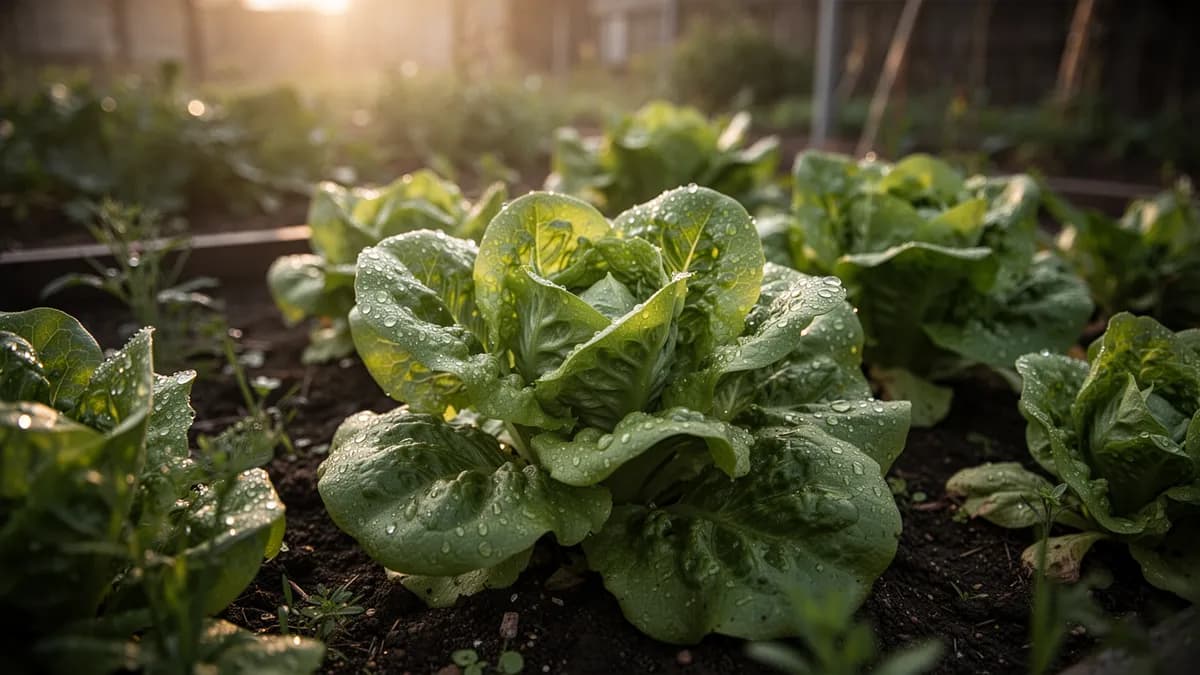
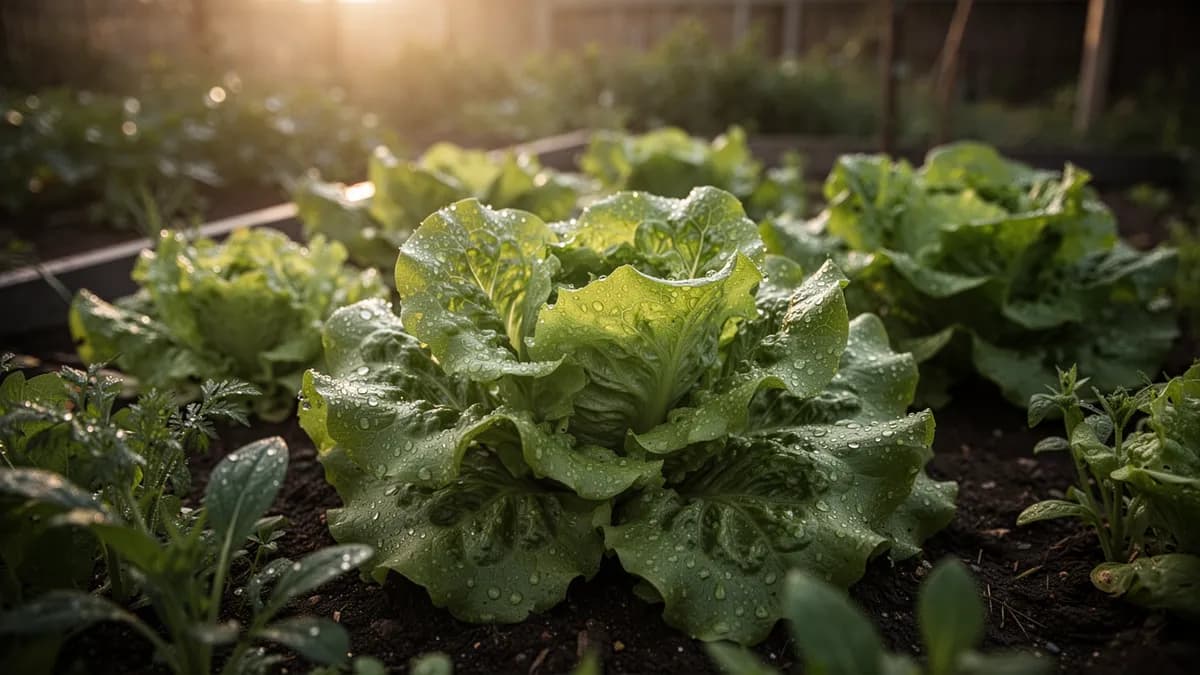
Diseños de jardín con Espinaca Malabar
Cultiva tu mejor Espinaca Malabar — y todo lo que la rodea.
Empieza un plan gratis hoy. Diseña tus bancales, coloca tu Espinaca Malabar y deja que PlotMyGarden gestione el momento, el espaciado, las asociaciones y los recordatorios de la semilla a la cesta.