Espárrago de Mar
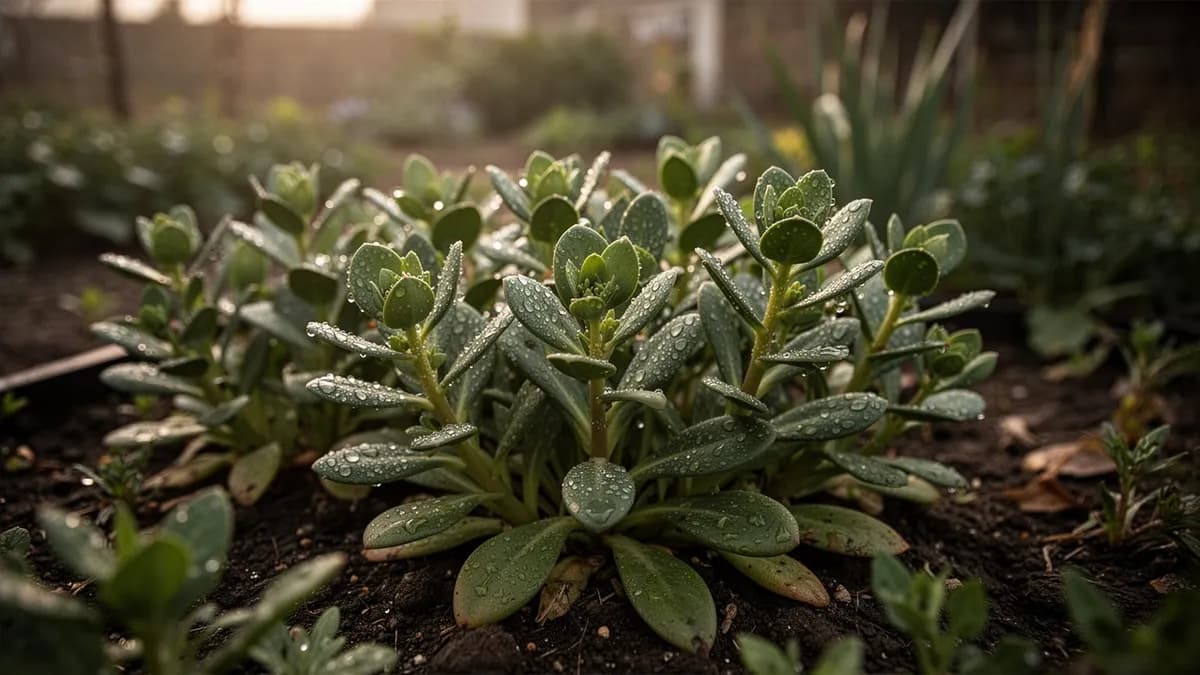
El hinojo marino (Crithmum maritimum) es una planta halófita perenne que crece de forma silvestre en acantilados y marismas costeras del Mediterráneo y el Atlántico.





En esta páginaResumen
Conoce Espárrago de Mar
El hinojo marino (Crithmum maritimum) es una planta halófita perenne que crece de forma silvestre en acantilados y marismas costeras del Mediterráneo y el Atlántico. Sus hojas carnosas y suculentas poseen un sabor salado y aromático muy apreciado en la gastronomía, con notas que recuerdan al perejil, el apio y el hinojo.
Cuándo plantar Espárrago de Mar
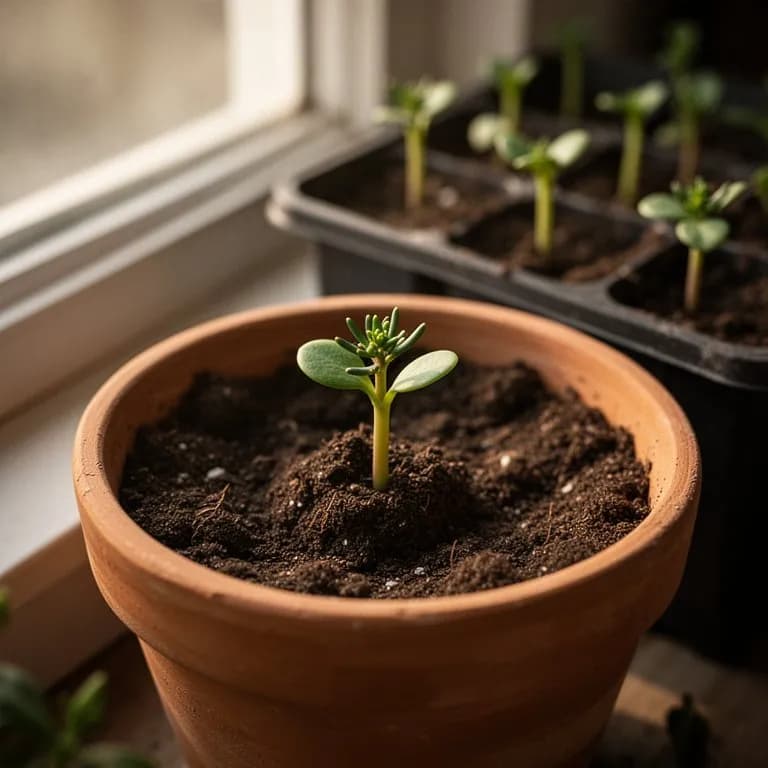
Las semillas requieren estratificación en frío durante 4-6 semanas antes de la siembra para romper la dormancia. Siembre en primavera en bandejas con sustrato arenoso, colocando las semillas en superficie y cubriéndolas apenas con arena fina. La germinación es lenta e irregular (2-8 semanas). Trasplante las plántulas cuando tengan 4-5 hojas verdaderas a macetas con sustrato muy drenante.
Tu año de Espárrago de Mar
Ajustado a Zona 7 · temporada típica · la helada se va hacia el 2 abr y vuelve hacia el 1 nov
Planta Espárrago de Mar Mar – May y cosecha Jun – Ago. Consulta los métodos de plantación y elige tu clima para adaptar los periodos.
Cómo cultivar Espárrago de Mar
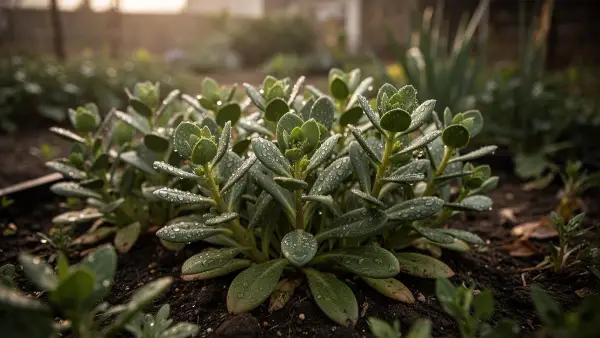
El hinojo marino crece naturalmente en acantilados rocosos y marismas costeras, por lo que en el jardín necesita condiciones que imiten este hábitat. Elija un lugar a pleno sol con suelo muy bien drenado, preferiblemente arenoso o pedregoso, con pH entre 6,5 y 8,0. Es una planta que tolera la salinidad y los suelos pobres.
Para el cultivo en maceta, use un sustrato de arena gruesa y grava con algo de compost. Siembre las semillas en primavera tras estratificarlas en frío durante 4-6 semanas, o divida plantas establecidas en primavera. Coloque las semillas en superficie cubiertas apenas con arena fina. La germinación es lenta e irregular, pudiendo tardar de 2 a 8 semanas.
Riegue moderadamente, permitiendo que el sustrato se seque ligeramente entre riegos. La planta tolera la sequía una vez establecida pero agradece riegos ocasionales con agua ligeramente salada. Protéjala de heladas severas en climas continentales, ya que es sensible por debajo de -5 °C. En climas templados es perenne y puede vivir muchos años.
128 plantas caben en un bancal de 120 × 240 cm
Cada Espárrago de Mar pide 15 cm de margen. El planificador guarda ese marco por ti — cada planta, cada bancal.
Guías de cultivo relacionadas
Abónalo bien
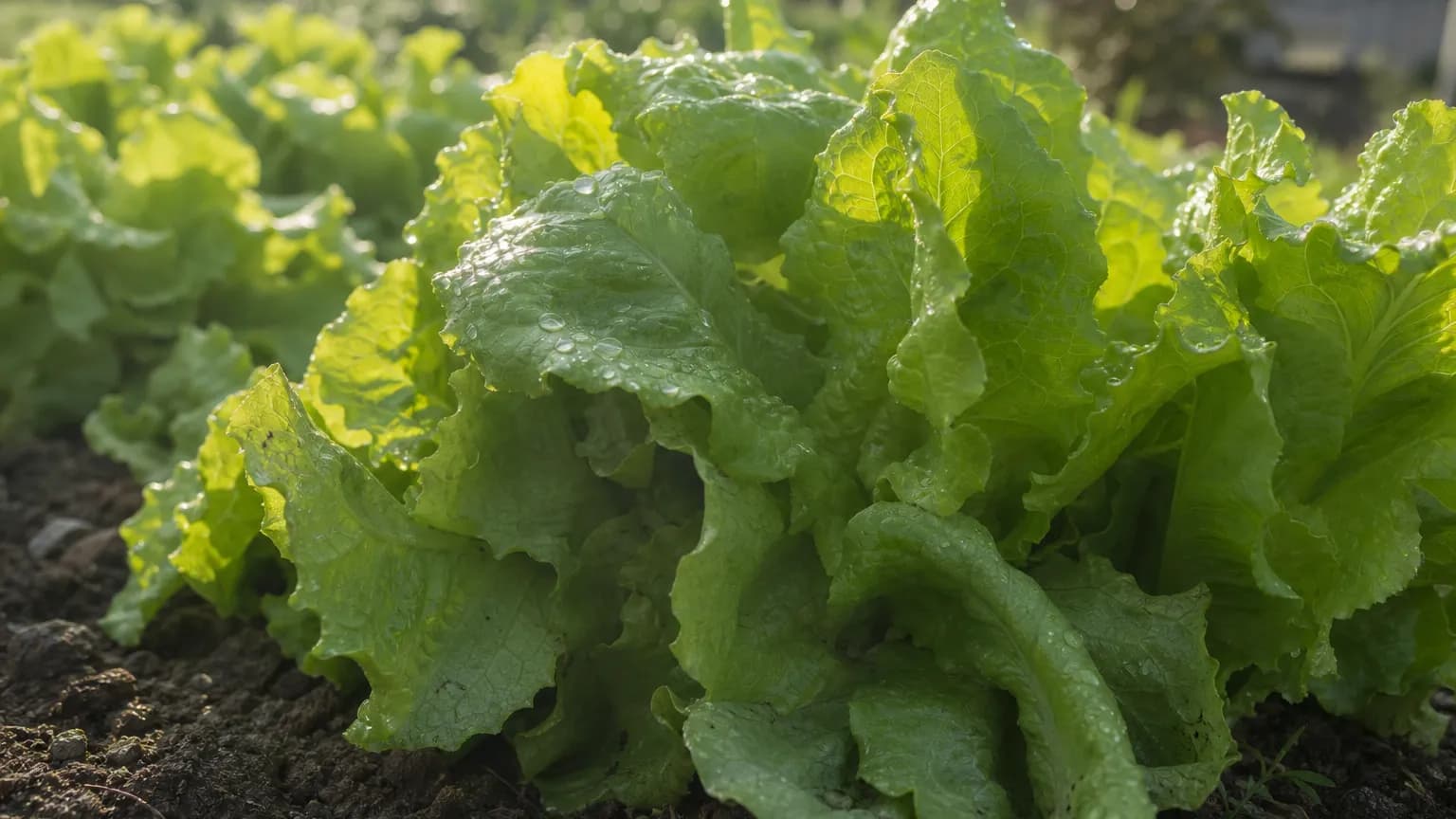
El hinojo marino necesita un sustrato extremadamente bien drenado, idealmente compuesto de arena gruesa, grava y algo de compost, con pH entre 6,5 y 8,0. Tolera suelos salinos y calcáreos. La fertilización debe ser mínima; un aporte ligero de extracto de algas marinas cada 4-6 semanas en la temporada de crecimiento es más que suficiente.
Temperatura ideal
Compatibilidad de zonas de rusticidad
De la semilla a la cosecha, etapa por etapa
Germinación de semillas
Las semillas de salicornia son notoriamente lentas e irregulares para germinar. Antes de sembrarlas requieren un periodo de estratificación en frío de 2-4 semanas. Una vez plantadas en suelo arenoso y húmedo, las plántulas diminutas emergen de forma dispersa durante 14-21 días. La tasa de germinación es naturalmente baja (30-50 %), así que siembra en abundancia.
Establecimiento de plántulas
Al principio las plántulas son diminutas y delicadas, y desarrollan su primer par de hojas suculentas y cilíndricas. El crecimiento es lento durante esta fase, mientras la planta desarrolla su sistema radicular. Las plántulas son vulnerables a la desecación y al damping off en condiciones demasiado húmedas sin un drenaje adecuado.
Crecimiento vegetativo
Las plantas empiezan a ramificarse con vigor, produciendo los característicos tallos verdes, carnosos y segmentados. El crecimiento se acelera con el calor y la planta se extiende lateralmente. Los tallos se vuelven cada vez más suculentos y desarrollan el sabor salado distintivo por el que se valora la salicornia.
Ventana de cosecha
Los tallos alcanzan su tamaño cosechable y están en su punto máximo de ternura y sabor. La planta está de color verde brillante, crujiente, y las partes superiores se quiebran limpiamente al doblarlas. Esta es la mejor etapa para comerla: los tallos son jugosos, salados y con un crujido muy agradable. La cosecha regular favorece nuevo crecimiento lateral.
Floración y formación de semillas
Si no se cosecha, la salicornia produce pequeñas flores verde-amarillentas e insignificantes en las puntas de los tallos a finales del verano. Los tallos se vuelven leñosos y duros en cuanto comienza la floración. La planta desvía su energía a la producción de semillas y la calidad para consumo disminuye rápidamente. Las semillas maduran en pequeñas cápsulas papiráceas a comienzos del otoño.
Dormancia
A medida que bajan las temperaturas en otoño, los tallos de la salicornia se vuelven rojos y luego marrones, y el crecimiento aéreo se seca. La planta entra en dormancia invernal y sobrevive como una corona radicular en el suelo. En climas marítimos suaves (zonas 7-10), las plantas son de manera fiable perennes y rebrotan con vigor cada primavera.
Estratifica las semillas en arena húmeda en el refrigerador durante 2-4 semanas antes de plantarlas. Siembra en la superficie de compost arenoso húmedo y presiona suavemente: las semillas necesitan luz para germinar. Mantenlas a 15-20 °C y no dejes que la superficie se seque.
Cuidar Espárrago de Mar mes a mes
Qué hacer cada mes para tu Espárrago de Mar
Octubre
Mes actualFinal harvests as stems begin to turn red and woody. Collect dried seed heads from plants allowed to go to seed. Store seeds in paper envelopes in a cool, dry place. Reduce watering as plants enter dormancy.
Ten claro qué hacer en tu huerto, cada mes
Un correo al empezar cada mes: qué sembrar, plantar y hacer ahora mismo — para tu Espárrago de Mar y todo lo que crece alrededor. Más un breve curso inicial para esquivar los errores clásicos.
- Qué hacer ahora mismo
- Ajustado a tu temporada
- Curso inicial incluido
Cosechar Espárrago de Mar
Coseche los brotes jóvenes y las hojas tiernas cuando tengan entre 5 y 10 cm de longitud, generalmente entre 60 y 80 días después del trasplante. Corte con tijeras limpias dejando al menos un tercio de la planta para permitir el rebrote. Las hojas más jóvenes tienen el mejor sabor; las maduras se vuelven correosas y menos aromáticas.
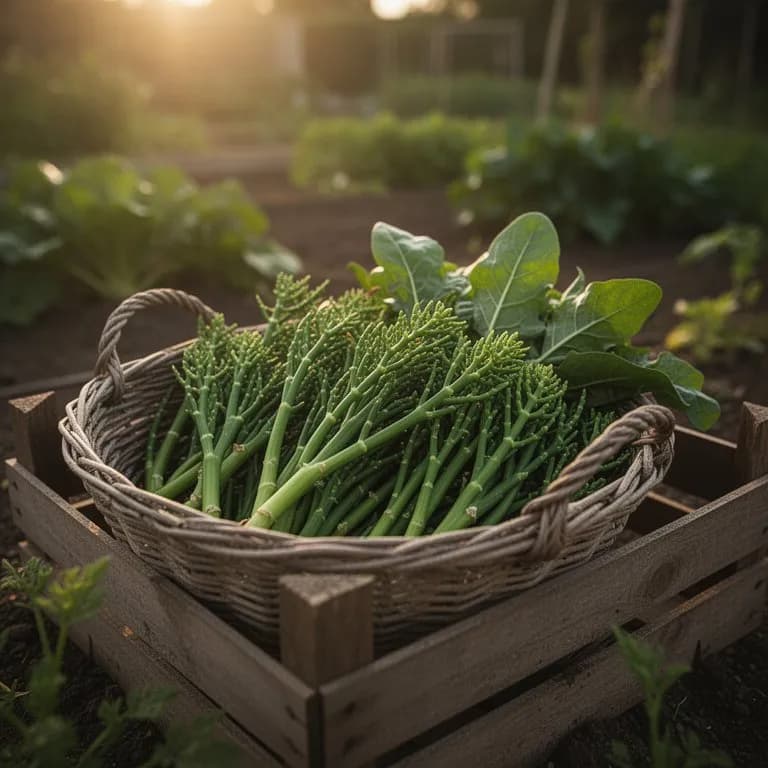
se supone que plantas al comenzar el periodo — indica tu fecha real
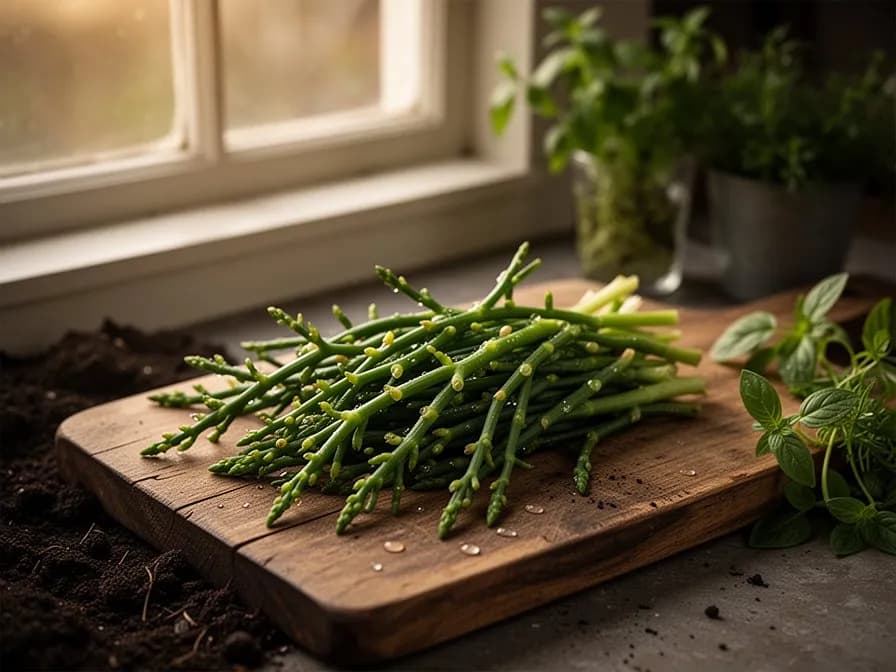
Cosecha de junio a agosto, cuando los tallos estén de color verde brillante, crujientes y tiernos.
Almacenamiento y conservación
Las hojas frescas se conservan solo 2-3 días en el refrigerador envueltas en un paño húmedo, ya que pierden su aroma rápidamente. Para conservación prolongada, encurta los brotes en vinagre de sidra con especias, un método tradicional de las comunidades costeras. También pueden deshidratarse a baja temperatura para usar como condimento salado en polvo.
Qué falla — y cómo solucionarlo
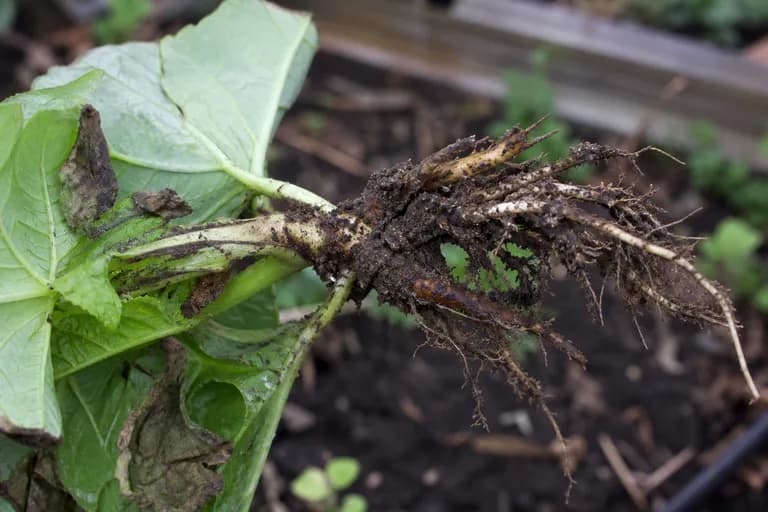
Pudrición radical (Pythium spp.)
EnfermedadLos tallos se oscurecen desde la base, las raíces se vuelven blandas y marrones, y la planta se marchita progresivamente. Suele ocurrir por encharcamiento.
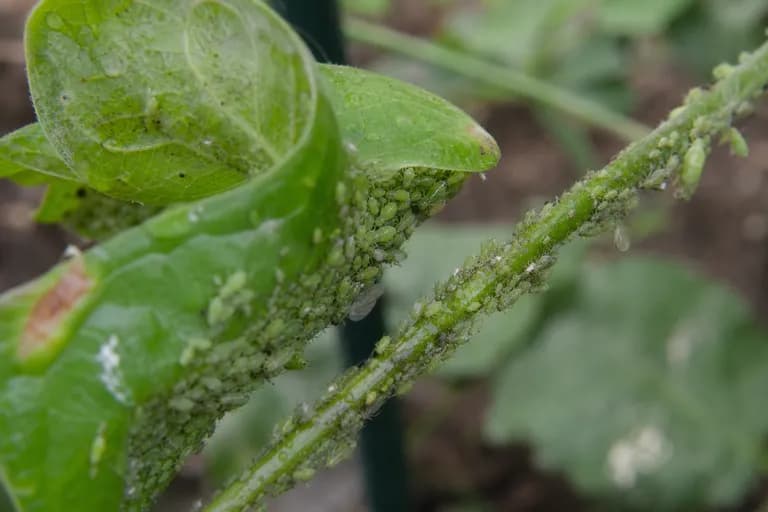
Cochinillas (Pseudococcidae)
PlagaMasas algodonosas blancas en las axilas de las hojas y los nudos del tallo. La planta se debilita y las hojas amarillean. Pueden aparecer hongos negros sobre la melaza segregada.
Solución de problemas comunes
El mayor desafío es proporcionar un drenaje adecuado, ya que la pudrición por exceso de humedad es la principal causa de pérdida. La planta necesita condiciones que imiten los acantilados costeros: sol, viento y suelo pobre pero bien drenado. En interior o zonas sin brisa, la falta de circulación de aire puede favorecer enfermedades fúngicas.
Consejos de cultivo
- Cold stratification is essential for germination success. Mix seeds with damp sand and refrigerate for 2-4 weeks at 3-5°C (37-41°F) before sowing. Without this cold period, germination rates drop to near zero.
- Embrace salt — samphire is one of the only vegetables that actually benefits from salt water irrigation. Add 2-3 teaspoons of sea salt per liter of water and use this for regular watering. Plants grown without any salt produce bland, less succulent stems.
- Drainage is more critical than fertility. Samphire grows naturally in poor, sandy soils and will rot in heavy clay or waterlogged conditions. Use a mix of at least 50% sharp sand or grit in your growing medium.
- Harvest by snapping, not pulling. Grasp the top 5-8 cm of a stem and snap it cleanly — if the stem bends without snapping, it is too woody and past its prime. Regular tip harvesting keeps the plant bushy and productive.
- Grow samphire in containers if your garden soil is heavy clay. A wide, shallow trough (at least 30 cm deep) filled with sandy compost works perfectly and allows precise control of drainage and salinity.
- Avoid fertilizing heavily — samphire is adapted to nutrient-poor coastal soils and excessive nitrogen produces leggy, less flavorful growth. A light application of liquid seaweed fertilizer every 3-4 weeks is sufficient.
- Protect from slugs and snails, which are the primary pest threat. The salty stems are surprisingly attractive to slugs in garden settings. Use copper tape around containers or organic slug pellets around bed plantings.
- In zones 7 and above, treat samphire as a perennial. Cut back dead growth in autumn, mulch the crown with sand or gravel, and the plant will regrow vigorously each spring with increasingly larger yields year after year.
Cultiva tu mejor Espárrago de Mar — y todo lo que la rodea.
Empieza un plan gratis hoy. Diseña tus bancales, coloca tu Espárrago de Mar y deja que PlotMyGarden gestione el momento, el espaciado, las asociaciones y los recordatorios de la semilla a la cesta.
Elige tu Espárrago de Mar
Crithmum maritimum
La especie tipo, con hojas suculentas de color verde grisáceo y sabor aromático complejo. Crece en rosetas compactas de 20-30 cm. Primera cosecha a los 60-80 días desde el trasplante.
Hinojo marino atlántico
Ecotipo adaptado a las costas atlánticas, con hojas más gruesas y sabor más intenso. Mayor tolerancia al frío que las variedades mediterráneas.
Hinojo marino cultivado
Selecciones de cultivo que producen hojas más tiernas y menos fibrosas que las poblaciones silvestres. Mejor adaptadas al cultivo en maceta y jardín.
Fresh samphire is a premium-priced gourmet vegetable, typically selling for $15-25 per kilogram ($7-12 per pound) at farmers markets and specialty grocers, and even more at fine dining suppliers. A modest home planting of 20 plants can produce 4-8 kg of fresh samphire per season — a retail value of $60-200. Since samphire seeds cost very little and the plant is perennial in mild climates, the investment pays for itself in the first season and continues producing for 3-5 years without replanting.
Recetas rápidas
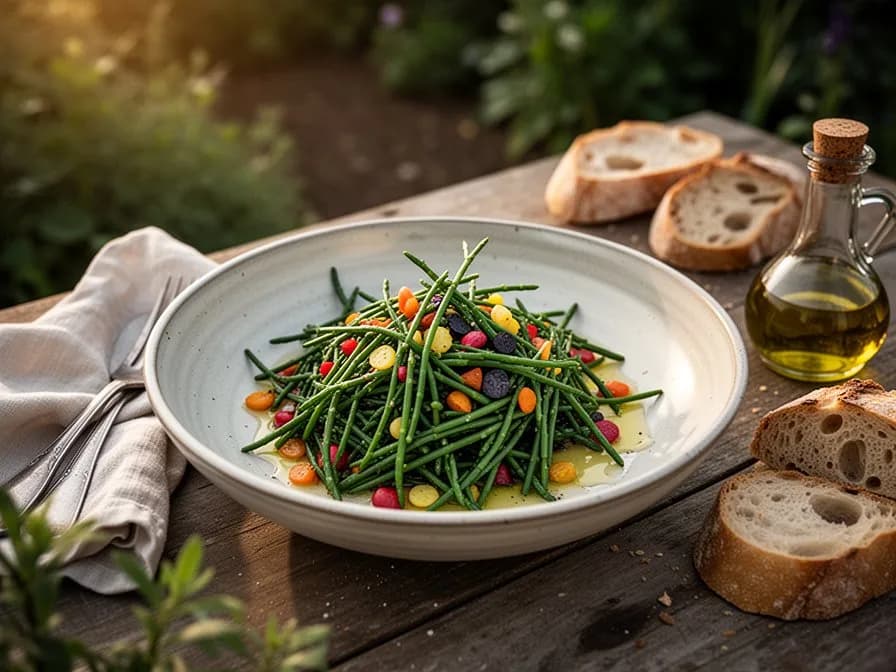
Sautéed Samphire with Garlic and Lemon
10 minThe simplest and most classic way to serve samphire — a quick sauté in butter with garlic brings out its natural brininess, and a squeeze of lemon cuts through the richness. Perfect alongside any fish or seafood dish.
6 ingredientesSamphire and New Potato Salad
25 minA vibrant summer salad where the salty crunch of blanched samphire contrasts beautifully with warm, buttery new potatoes. A mustard vinaigrette ties everything together — no additional salt needed thanks to the samphire.
8 ingredientesSamphire Tempura
15 minDelicate samphire sprigs coated in a light, crispy batter and fried until golden — the heat intensifies the salty crunch and creates an addictive contrast of textures. Serve with a soy and ginger dipping sauce.
6 ingredientesUsos culinarios
El hinojo marino es un ingrediente gourmet con un sabor salado y aromático que combina notas de hinojo, perejil y apio marino. Se consume crudo en ensaladas, ligeramente salteado con mantequilla como guarnición de pescados, o encurtido en vinagre. Es especialmente popular como acompañamiento de mariscos, lubina y salmón. También se usa para aromatizar salsas, mantequillas compuestas y aceites.
Qué contiene
Beneficios para la salud
- Exceptionally rich in bioavailable minerals including iodine, calcium, magnesium, and iron — all concentrated from its saline growing environment and readily absorbed by the body.
- Contains significant vitamin C (13% DV per 100g), supporting immune function, collagen production, and enhancing the absorption of the plant's abundant iron content.
- Rich in natural antioxidants including phenolic acids, flavonoids, and beta-carotene that help combat oxidative stress and may reduce inflammation throughout the body.
- Provides a natural source of dietary iodine essential for thyroid function — particularly valuable for people who do not regularly consume seafood or iodized salt.
- Very low in calories (approximately 25 per 100g) while high in minerals and fiber, making it an excellent nutrient-dense addition to weight management diets.
- The natural sodium content can help replace added table salt in cooking, potentially reducing overall sodium intake while adding complex mineral nutrition and flavor to meals.
De dónde viene Espárrago de Mar
Samphire (Salicornia europaea and related species) is native to the coastal salt marshes, tidal mudflats, and saline environments of Europe, from the Mediterranean basin north to Scandinavia and east across temperate Asia. The plant has colonized coastlines worldwide and various Salicornia species are now found on every continent except Antarctica. Its natural habitat — the harsh intertidal zone where land meets sea — has shaped samphire into one of the most salt-tolerant edible plants on Earth.
Humans have foraged samphire from wild coastal habitats for thousands of years. In medieval Europe, samphire was gathered along the coasts of England, France, the Netherlands, and the Mediterranean and was valued both as a vegetable and as a source of soda ash for glass and soap production. The burned ashes of samphire (called 'barilla') were a significant coastal industry in Spain, Sicily, and southern France from the 14th through 18th centuries. As a food, samphire was traditionally pickled in vinegar and sold as a condiment — Samuel Pepys recorded buying pickled samphire from London street vendors in the 1660s.
In modern times, samphire has transformed from a humble foraged ingredient into a fashionable gourmet vegetable featured in fine dining restaurants across Europe. Commercial cultivation began in earnest in the Netherlands, Israel, and the United Kingdom in the early 2000s, using controlled saline irrigation to grow consistent, high-quality crops year-round. Today, samphire is sold fresh in supermarkets across Europe and is increasingly popular in North America and Asia. Agricultural researchers are especially interested in samphire as a model halophyte crop — a plant that could be irrigated with seawater or brackish water, potentially transforming coastal deserts into productive farmland as global freshwater resources come under pressure.
Espárrago de Mar: ¿sabías que?
Datos fascinantes sobre Espárrago de Mar
Samphire is one of very few vegetables that thrives in salt water — it belongs to a group of plants called halophytes that have evolved specialized cells to sequester salt, allowing them to grow in conditions that would kill virtually every other food crop.
Espárrago de Mar: preguntas frecuentes
¿Cuándo debo plantar Espárrago de Mar?
¿En qué zonas de rusticidad puede crecer Espárrago de Mar?
¿Cuánto sol necesita Espárrago de Mar?
¿A qué distancia debo espaciar Espárrago de Mar?
¿Qué plagas y enfermedades afectan a Espárrago de Mar?
¿Cómo almaceno Espárrago de Mar después de la cosecha?
¿Cuáles son las mejores variedades de Espárrago de Mar para cultivar?
¿Qué suelo necesita Espárrago de Mar?
What is the difference between marsh samphire and rock samphire?
Can I grow samphire without using salt water?
Why are my samphire seeds not germinating?
Is samphire safe to forage from the wild?
How do I store and preserve fresh samphire?
Can I grow samphire indoors or on a windowsill?
Acabas de leer la teoría. Ahora cultívala en piloto automático.
Todo lo que hace que Espárrago de Mar sea delicado — el momento, el espaciado, las asociaciones, la ventana de cosecha — es justo lo que PlotMyGarden resuelve por ti, para cada planta de tu huerto.
Un plan que conoce tu clima
Indica tu ubicación una vez. Recibe fechas de siembra, abonado y cosecha basadas en tu última helada real y el pronóstico en vivo — sin adivinar con un sobre genérico.
De la sección “Cuándo plantar”Planificador de bancales de arrastrar y soltar
Diseña bancales sobre una cuadrícula. Cada planta encaja con su espaciado correcto y ves toda la temporada antes de gastar un céntimo en semillas.
De la sección “Cultivo”Conflictos de asociación, detectados a tiempo
Más de 200 buenas y malas combinaciones comprobadas en vivo mientras plantas — para que un error que arruine la temporada nunca llegue a la tierra.
De la sección “Asociaciones”Recordatorios que sí vas a seguir
“Riega las judías.” “Recoge hoy antes de que se pase.” Oportunos, concretos y ligados a las plantas que de verdad cultivas.
De la sección “Cosecha”Escalonado, programado
¿Quieres cosechar seis semanas en vez de seis días? Reparte tus siembras automáticamente y te avisa cuando toca el siguiente lote.
De la sección “Cuándo plantar”Un registro que se vuelve más listo
Cada cosecha que registras le enseña tu huerto. El plan del año que viene parte de lo que de verdad funcionó en tu suelo, no en un manual.
De la sección “Resumen”Más Hortalizas de hoja
Cultiva tu mejor Espárrago de Mar — y todo lo que la rodea.
Empieza un plan gratis hoy. Diseña tus bancales, coloca tu Espárrago de Mar y deja que PlotMyGarden gestione el momento, el espaciado, las asociaciones y los recordatorios de la semilla a la cesta.