Rúcula Silvestre
Diplotaxis tenuifolia, conocida como rúcula silvestre o rúcula perenne, es una planta de la familia Brassicaceae originaria de la región mediterránea.





En esta páginaResumen
Conoce Rúcula Silvestre
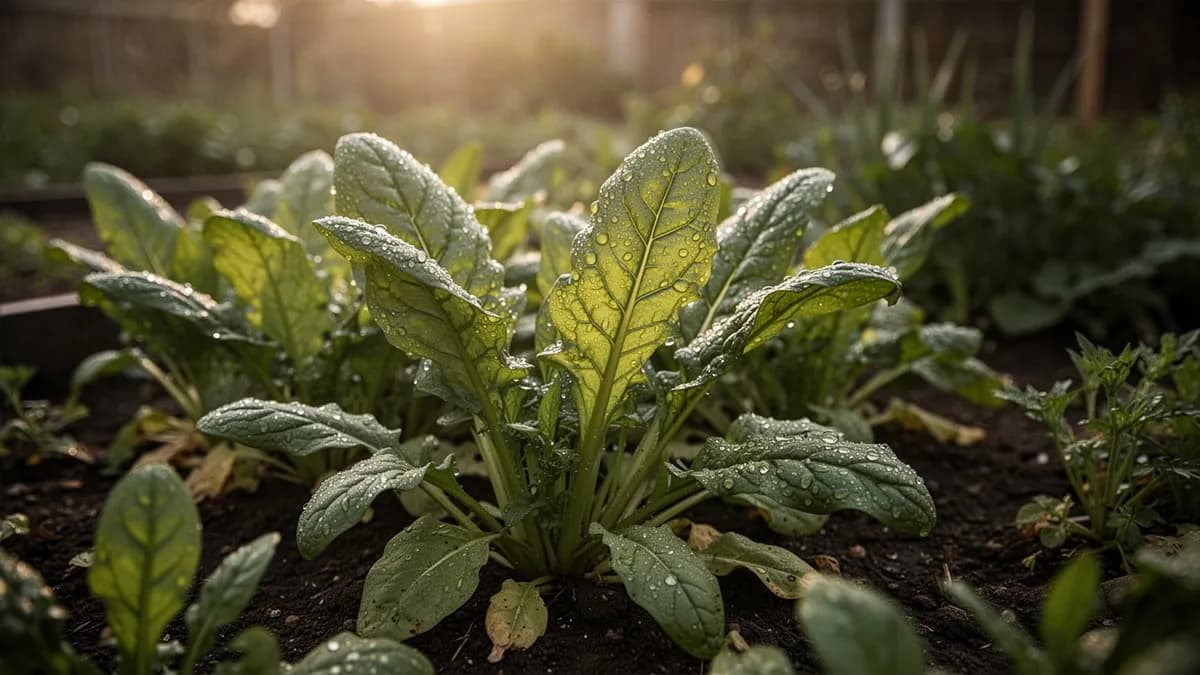
Diplotaxis tenuifolia, conocida como rúcula silvestre o rúcula perenne, es una planta de la familia Brassicaceae originaria de la región mediterránea. A diferencia de la rúcula común (Eruca vesicaria), posee hojas más pequeñas y profundamente lobuladas con un sabor más intenso, picante y ligeramente amargo, muy valorado en gastronomía.
Cuándo plantar Rúcula Silvestre
Siembre las semillas directamente en el suelo a una profundidad muy superficial de apenas 3-5 mm, ya que necesitan luz para germinar adecuadamente. Puede sembrar en hileras o al voleo, aclarando posteriormente a 15-20 cm entre plantas. La germinación ocurre en 7-14 días a temperaturas de 10-20°C. Realice siembras escalonadas cada 3-4 semanas para asegurar un suministro continuo de hojas tiernas durante toda la temporada.
Tu año de Rúcula Silvestre
Ajustado a Zona 7 · temporada típica · la helada se va hacia el 2 abr y vuelve hacia el 1 nov
Planta Rúcula Silvestre Mar – Abr, Ago – Sep y cosecha May – Jul, Oct – Nov. Consulta los métodos de plantación y elige tu clima para adaptar los periodos.
Cómo cultivar Rúcula Silvestre
La rúcula silvestre es una planta perenne resistente que puede cultivarse durante gran parte del año en climas templados. Siembre las semillas directamente en el suelo o en semilleros desde principios de primavera hasta mediados de otoño, a una profundidad de apenas 0,5 cm, ya que las semillas necesitan luz para germinar. Mantenga el sustrato húmedo pero no encharcado hasta la germinación, que ocurre en 7-14 días.
Plante en un lugar con sol parcial, especialmente en verano, ya que la sombra ligera evita que las hojas se vuelvan excesivamente amargas y retrasa la floración. Separe las plantas 15-20 cm entre sí en hileras con 30 cm de distancia. La rúcula silvestre tolera suelos pobres pero produce hojas más tiernas y sabrosas en suelos moderadamente fértiles con buen drenaje.
A diferencia de la rúcula anual, la variedad silvestre rebrota vigorosamente después del corte, proporcionando cosechas repetidas durante meses. Corte las hojas a unos 3-5 cm del suelo para estimular el rebrote. En climas con inviernos suaves, la planta puede producir hojas durante todo el año. Elimine las flores que aparezcan para prolongar la producción de hojas, aunque las flores amarillas también son comestibles.
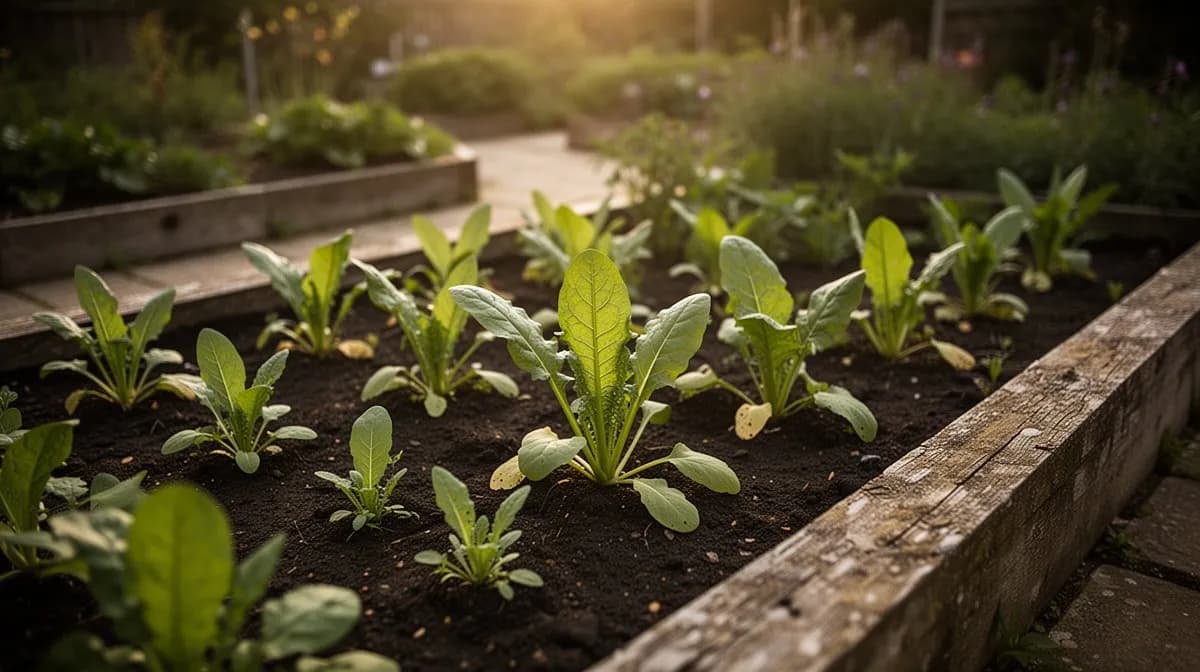
128 plantas caben en un bancal de 120 × 240 cm
Cada Rúcula Silvestre pide 15 cm de margen. El planificador guarda ese marco por ti — cada planta, cada bancal.
Los mejores vecinos de Rúcula Silvestre
La rúcula silvestre actúa como planta trampa para las pulguillas de las crucíferas, protegiendo así a coles y brócolis cercanos. Se asocia bien con lechugas y otras verduras de hoja, proporcionando cobertura del suelo que ayuda a retener la humedad. Evite plantarla junto a otras crucíferas si desea reducir la presión de plagas compartidas.
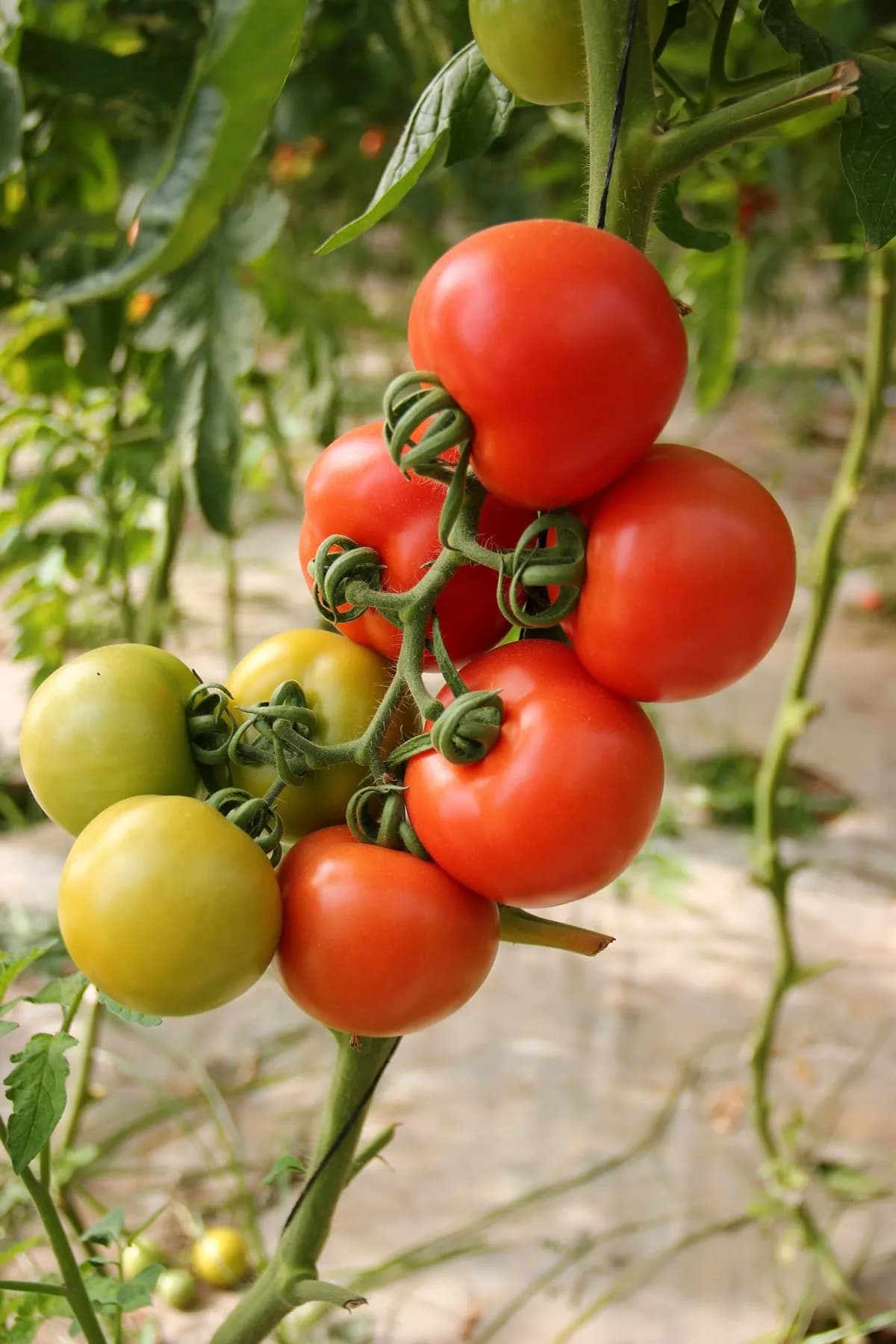
Tomate va a su lado.
Saber de huerto de siempre, cotejado con la tabla real de Rúcula Silvestre — prueba cualquier planta que cultives.
Prueba Rúcula Silvestre en un bancal, aquí mismo
Un bancal real del planificador con Rúcula Silvestre ya plantado. Toca una planta compañera para colocarla y mira cómo responde la comprobación de vecinos: verde para buenos vecinos, rojo si hay conflicto.


Guías de cultivo relacionadas
Abónalo bien
La rúcula silvestre es poco exigente con el suelo, tolerando desde suelos arenosos hasta arcillosos, siempre que tengan un drenaje razonable. Prefiere un pH entre 6,0 y 7,5. Un suelo moderadamente fértil produce las mejores hojas; el exceso de nitrógeno genera un crecimiento rápido pero con menos sabor. Aplique compost ligero al inicio de la temporada y evite los fertilizantes químicos concentrados.
Temperatura ideal
Compatibilidad de zonas de rusticidad
De la semilla a la cosecha, etapa por etapa
Germinación
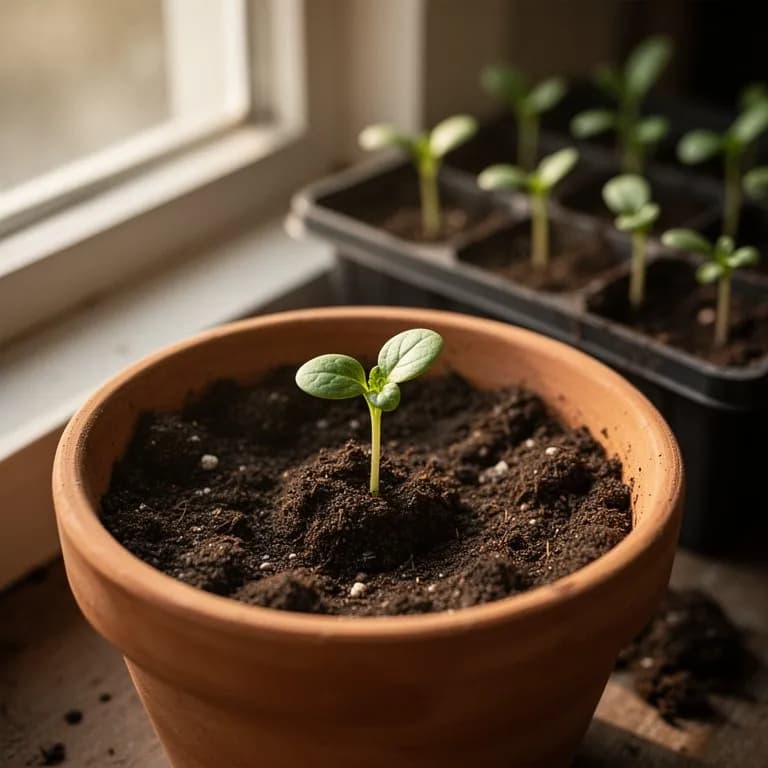
Las semillas diminutas germinan en 5-10 días con temperaturas del suelo de 10-20 °C. Las plántulas emergen con cotiledones delgados y pronto aparecen las primeras hojas verdaderas, que ya muestran las características profundas incisiones del rúcula silvestre. Las semillas son muy pequeñas y deben sembrarse de forma superficial, cubiertas apenas con 2-3 mm de sustrato.
Formación de roseta
Las plántulas se convierten en rosetas bajas de hojas verde oscuro, profundamente pinnadas y pegadas al suelo. La forma de la hoja se vuelve cada vez más dentada y parecida a una hoja de roble a medida que la planta madura. La intensidad del sabor aumenta durante esta fase, ya que se elevan las concentraciones de glucosinolatos en el follaje.
Pico de producción de hojas
Las plantas alcanzan el tamaño completo de roseta y entran en su fase más productiva, generando continuamente nuevas hojas desde el centro. A diferencia de la rúcula cultivada (Eruca vesicaria), la rúcula silvestre es una verdadera perenne y seguirá produciendo hojas durante meses o incluso años si se eliminan los tallos florales. Las hojas en esta etapa tienen el sabor más intenso, picante y a nuez.
Floración
Tallos florales delgados se alargan desde el centro de la roseta y producen pequeñas flores amarillo crema de cuatro pétalos típicas de la familia Brassicaceae. A diferencia de la rúcula cultivada, las flores de la rúcula silvestre son de un amarillo pálido en lugar de blancas con venas moradas. Las flores son comestibles, tienen un suave sabor picante y atraen polinizadores beneficiosos al jardín.
Cuajado de semillas y auto-siembra
Las flores polinizadas desarrollan vainas estrechas tipo síliqua que contienen diminutas semillas marrón oscuro. Las vainas se secan y se abren cuando maduran, dispersando las semillas alrededor de la planta madre. La rúcula silvestre es una auto-sembradora entusiasta y puede establecer colonias permanentes en el jardín si se le permite semillar siquiera una vez.
Rebrotación perenne
Como semiperenne, la rúcula silvestre vuelve a brotar desde su raíz leñosa después de una poda fuerte o de un periodo de dormancia estacional. En climas suaves (zonas 7-10), las plantas establecidas persisten todo el año y reanudan un crecimiento vigoroso de hojas después del frío invernal o del estrés por calor estival. La raíz pivotante profunda sostiene a la planta frente a heladas ligeras y periodos secos que matarían a la rúcula anual de ensalada.
Siembra las semillas escasamente en surcos de 1 cm de profundidad y mantén el suelo constantemente húmedo con una pulverización suave. La rúcula silvestre germina mejor en condiciones frescas: evita sembrar con calor de pleno verano por encima de 25 °C, ya que puede inhibir la germinación y provocar una nascencia irregular.
Cuidar Rúcula Silvestre mes a mes
Qué hacer cada mes para tu Rúcula Silvestre
Octubre
Mes actualContinue harvesting as growth slows but leaf quality remains excellent in cool autumn weather. Protect plants from early frosts with row cover or cloches to extend the season by several weeks. In mild zones, wild rocket will keep producing leaves well into winter under minimal protection.
Ten claro qué hacer en tu huerto, cada mes
Un correo al empezar cada mes: qué sembrar, plantar y hacer ahora mismo — para tu Rúcula Silvestre y todo lo que crece alrededor. Más un breve curso inicial para esquivar los errores clásicos.
- Qué hacer ahora mismo
- Ajustado a tu temporada
- Curso inicial incluido
Cosechar Rúcula Silvestre
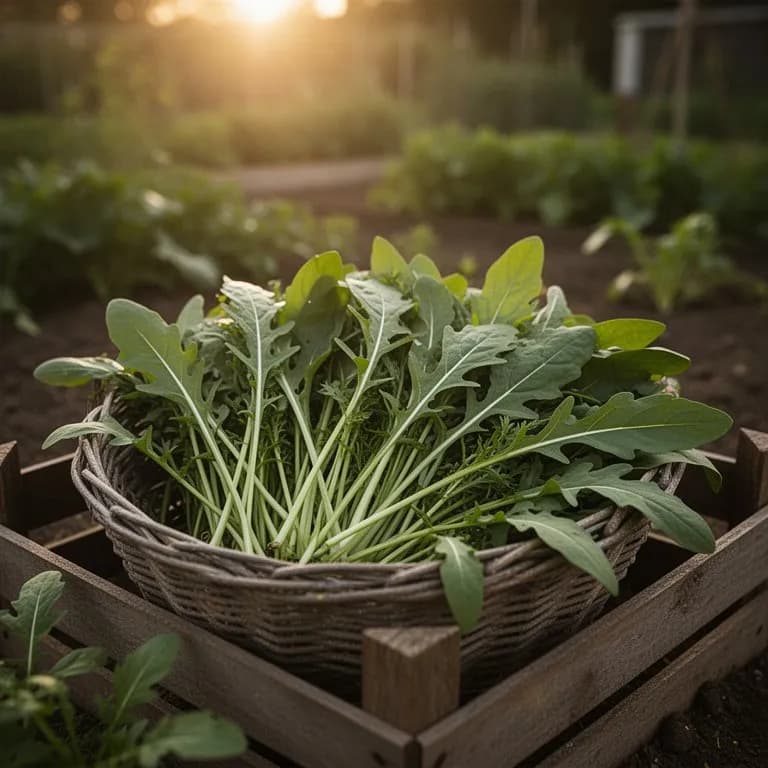
Comience a cosechar las hojas cuando las plantas tengan al menos 10-12 cm de altura, generalmente entre 40 y 60 días después de la siembra. Corte las hojas exteriores dejando intacto el corazón central para permitir el rebrote continuo. Las hojas más jóvenes tienen un sabor más suave y tierno, mientras que las más maduras son más picantes e intensas. Coseche regularmente para estimular la producción de nuevas hojas.
se supone que plantas al comenzar el periodo — indica tu fecha real
Recolecta las hojas exteriores cuando las plantas alcancen unos 10 cm de altura y sigue cosechando cada pocos días
Almacenamiento y conservación
Las hojas frescas se conservan en el refrigerador durante 3-5 días envueltas en papel de cocina húmedo dentro de una bolsa de plástico abierta. No es recomendable congelar la rúcula silvestre, ya que pierde su textura crujiente. Para preservar su sabor, puede preparar un pesto de rúcula silvestre con aceite de oliva, piñones y parmesano que se congela bien en porciones pequeñas.
Qué falla — y cómo solucionarlo
Pulgones
PlagaColonias de pequeños insectos verdes o negros en el envés de las hojas y en los brotes tiernos, que succionan la savia y causan deformación del follaje. Producen melaza pegajosa que atrae hormigas.
Pulguilla de las crucíferas
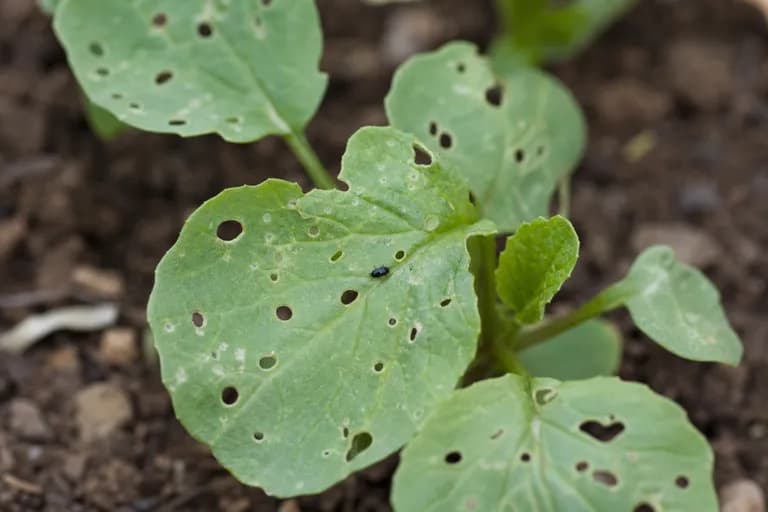
PlagaPequeños agujeros redondos en las hojas causados por diminutos escarabajos saltadores de color negro o bronce. Los daños son especialmente severos en plántulas jóvenes y pueden destruir cultivos recién sembrados.
Mildiu
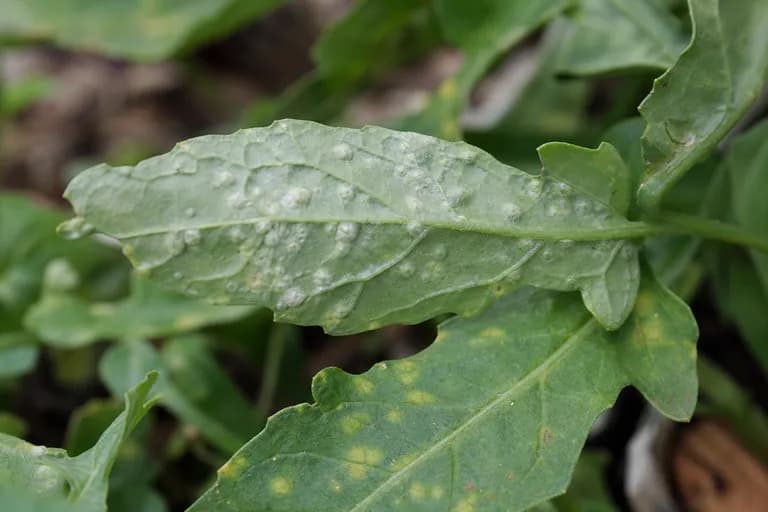
EnfermedadManchas amarillentas en la superficie superior de las hojas con un vello grisáceo o blanquecino en el envés. Las hojas afectadas se marchitan y mueren progresivamente.
Solución de problemas comunes
El principal problema es la tendencia a espigarse y florecer prematuramente con el calor del verano, lo que hace que las hojas se vuelvan muy amargas y fibrosas. Cultive en semisombra durante los meses más calurosos o siembre variedades resistentes al espigado. La auto-siembra puede ser agresiva en condiciones favorables, convirtiéndose en una planta invasiva si no se controla la producción de semillas.
Consejos de cultivo
- Sow in cool weather for the best flavor. Wild rocket grown in spring and autumn has a pleasant peppery-nutty taste, while summer-grown leaves can be overwhelmingly bitter and fiery. Plan your main sowings for March-April and August-September in temperate climates.
- Use the cut-and-come-again method for maximum yield. Snip leaves with scissors 2-3cm above the growing crown rather than pulling entire plants. Each plant will regrow 4-6 times before needing replacement, multiplying your harvest from every sowing.
- Provide afternoon shade in summer to prevent bolting and bitterness. A position that receives morning sun but is shaded from 1-5pm during the hottest months produces significantly better-tasting leaves than full, all-day sun in summer.
- Space plants 10-15cm apart for individual rosettes, or broadcast seed densely and harvest as baby leaves at 8-10cm tall for the mildest, most salad-friendly flavor. Baby leaves are sweeter and less peppery than mature foliage.
- Allow a few plants to flower and set seed each year to establish a self-sowing colony. Once wild rocket self-sows in your garden, volunteer seedlings will appear in spring and autumn for years, creating an essentially permanent salad patch with zero effort.
- Grow wild rocket in containers on a balcony or patio — its compact rosette habit and shallow root system make it ideal for pots as small as 15cm. Use a gritty, well-draining potting mix and water when the top 2cm of soil dries out. Rotate containers to chase the best light in each season.
- Intercrop wild rocket between slower-growing vegetables like tomatoes, peppers, or brassicas. The rocket germinates and produces a harvestable crop quickly in the spaces between transplants, making efficient use of otherwise bare soil during establishment.
- Water consistently but never allow waterlogged soil. Wild rocket's Mediterranean origins mean it handles drought better than excess moisture. Overwatering encourages root rot and fungal leaf diseases, while moderate water stress actually concentrates flavor compounds in the leaves.
Cultiva tu mejor Rúcula Silvestre — y todo lo que la rodea.
Empieza un plan gratis hoy. Diseña tus bancales, coloca tu Rúcula Silvestre y deja que PlotMyGarden gestione el momento, el espaciado, las asociaciones y los recordatorios de la semilla a la cesta.
Elige tu Rúcula Silvestre
Selvatica
Variedad clásica de rúcula silvestre con hojas profundamente lobuladas y sabor intensamente picante. Muy resistente al frío y productiva durante toda la temporada.
Grazia
Variedad mejorada con hojas más anchas y ligeramente menos picantes que la silvestre típica. Más lenta para espigarse y con buena tolerancia al calor.
Olive Leaf
Variedad de hojas redondeadas similares a las hojas de olivo, con un sabor intenso y ligeramente ahumado. Muy decorativa en el huerto y en el plato.
Dragon's Tongue
Variedad ornamental y comestible con venas rojizas en las hojas verdes. Sabor picante y ligeramente dulce, muy atractiva en ensaladas mixtas.
Wild rocket seed packets cost $2-4 and contain hundreds of seeds — enough to establish a permanent, self-sowing patch. Pre-washed wild rocket sells for $4-6 per 100g bag at supermarkets and $6-10 per bunch at farmers markets, reflecting its premium status over common salad rocket. Growing just 8-12 plants provides $80-150 worth of leaves over the season. As a perennial that self-sows freely, wild rocket is essentially a plant-once, harvest-forever crop — after the initial planting, you may never need to buy rocket again.
Recetas rápidas
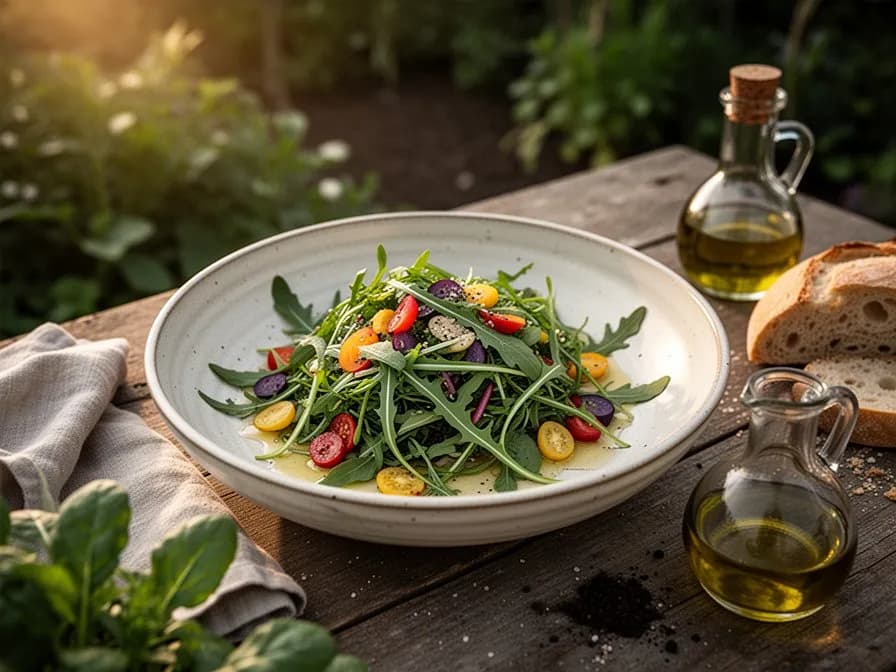
Classic Italian Rucola Selvatica Salad
10 minThe definitive wild rocket salad from Italian trattorias — nothing more than the finest leaves, great olive oil, a squeeze of lemon, and shaved Parmigiano. The intense peppery bite of wild rocket makes this minimalist salad far more complex than the sum of its parts.
6 ingredientesWild Rocket and Walnut Pesto
15 minA bold pesto that replaces basil with wild rocket for a sharper, more peppery sauce that pairs brilliantly with pasta, grilled meats, or spread on crostini. The slight bitterness of the rocket is balanced by toasted walnuts and salty pecorino.
7 ingredientesWild Rocket and Prosciutto Pizza Topping
5 minThe classic Roman finishing touch for pizza bianca — a generous mound of fresh wild rocket and paper-thin prosciutto piled onto a just-baked pizza. The residual heat gently wilts the rocket while the prosciutto stays silky. No cooking of the rocket required.
6 ingredientesUsos culinarios
La rúcula silvestre es un ingrediente fundamental de la cocina mediterránea, utilizada principalmente cruda en ensaladas donde su sabor picante contrasta con ingredientes suaves como la mozzarella y el tomate. Es imprescindible como cobertura de pizzas y focaccias añadida después de la cocción, en carpaccios de ternera o bresaola, y en pastas frescas como finalización. También se utiliza para elaborar pestos alternativos y como guarnición aromática de platos de carne y pescado.
Qué contiene
Beneficios para la salud
- Exceptionally high in vitamin K (91% DV per 100g), essential for proper blood clotting and increasingly recognized for its role in directing calcium into bones rather than arteries — supporting both skeletal strength and cardiovascular health.
- Rich in glucosinolates and their breakdown products (isothiocyanates), which have demonstrated anti-cancer properties in numerous laboratory and epidemiological studies — wild rocket contains higher concentrations of these compounds than most other salad greens.
- An excellent dietary source of nitrate, which the body converts to nitric oxide — a molecule that dilates blood vessels, lowers blood pressure, and improves oxygen delivery to muscles during exercise, with effects documented in peer-reviewed clinical trials.
- Contains significant folate (24% DV per 100g), vital for DNA synthesis and cell division — particularly important during pregnancy, periods of rapid growth, and for supporting healthy homocysteine metabolism linked to heart health.
- Provides a broad spectrum of carotenoid antioxidants including beta-carotene, lutein, and zeaxanthin, which protect the retina from age-related macular degeneration and filter harmful blue light — wild rocket's dark green color reflects its dense carotenoid content.
- The high water content (92%) combined with fiber and minimal calories makes wild rocket one of the most nutrient-dense foods per calorie, supporting weight management while delivering disproportionately high levels of vitamins, minerals, and protective phytochemicals.
De dónde viene Rúcula Silvestre
Wild rocket (Diplotaxis tenuifolia) is native to the Mediterranean basin and western Asia, where it has grown wild along coastlines, rocky hillsides, and disturbed ground since antiquity. Unlike cultivated salad rocket (Eruca vesicaria), which was domesticated from a separate genus, wild rocket was never truly domesticated — it was simply gathered from the wild for thousands of years before gradually being transplanted into gardens.
The ancient Egyptians, Greeks, and Romans all prized wild rocket as both a culinary herb and a medicinal plant. In Roman culture it held a particularly prominent place: Pliny the Elder described it as one of the most important salad herbs, Columella recommended it for flavoring cheese, and Dioscorides documented its use as a digestive aid and diuretic in his foundational pharmacological text De Materia Medica. The Romans also firmly believed in its aphrodisiac properties, which gave it both cultural cachet and occasional controversy — early Christian monasteries banned its cultivation to avoid tempting the monks.
Throughout the Middle Ages, wild rocket remained a staple of Mediterranean peasant cuisine, foraged from fields and waysides rather than cultivated. Italian, Turkish, and North African cooks used it in salads, as a pizza and flatbread topping, and stirred into soups and pasta. The plant's ability to thrive in poor, dry soil with minimal care made it a reliable food source for rural communities.
Wild rocket's modern culinary renaissance began in Italy in the 1980s and 1990s, when rucola selvatica became a fashionable ingredient in upscale restaurants. The trend spread rapidly to the UK, Australia, and North America, where wild rocket began appearing in farmers markets and specialty seed catalogs. Today it is cultivated commercially across Southern Europe, and is increasingly popular among home gardeners worldwide who appreciate its perennial nature, intense flavor, and the fact that it self-sows to create a permanent, self-sustaining salad patch.
Rúcula Silvestre: ¿sabías que?
Datos fascinantes sobre Rúcula Silvestre
Wild rocket (Diplotaxis tenuifolia) is botanically distinct from the common salad rocket (Eruca vesicaria) found in most supermarkets. Wild rocket is a perennial with deeply lobed leaves and yellow flowers, while salad rocket is an annual with rounder leaves and white flowers — they belong to different genera entirely despite sharing the common name.
Rúcula Silvestre: preguntas frecuentes
¿Cuándo debo plantar Rúcula Silvestre?
¿Cuáles son buenas plantas acompañantes para Rúcula Silvestre?
¿En qué zonas de rusticidad puede crecer Rúcula Silvestre?
¿Cuánto sol necesita Rúcula Silvestre?
¿A qué distancia debo espaciar Rúcula Silvestre?
¿Qué plagas y enfermedades afectan a Rúcula Silvestre?
¿Cómo almaceno Rúcula Silvestre después de la cosecha?
¿Cuáles son las mejores variedades de Rúcula Silvestre para cultivar?
¿Qué suelo necesita Rúcula Silvestre?
What is the difference between wild rocket and regular salad rocket?
Can I grow wild rocket indoors through winter?
Why does my wild rocket taste extremely bitter and spicy?
Is wild rocket truly perennial, and how long do plants last?
How do I stop wild rocket from taking over my garden?
Are wild rocket flowers edible?
Acabas de leer la teoría. Ahora cultívala en piloto automático.
Todo lo que hace que Rúcula Silvestre sea delicado — el momento, el espaciado, las asociaciones, la ventana de cosecha — es justo lo que PlotMyGarden resuelve por ti, para cada planta de tu huerto.
Un plan que conoce tu clima
Indica tu ubicación una vez. Recibe fechas de siembra, abonado y cosecha basadas en tu última helada real y el pronóstico en vivo — sin adivinar con un sobre genérico.
De la sección “Cuándo plantar”Planificador de bancales de arrastrar y soltar
Diseña bancales sobre una cuadrícula. Cada planta encaja con su espaciado correcto y ves toda la temporada antes de gastar un céntimo en semillas.
De la sección “Cultivo”Conflictos de asociación, detectados a tiempo
Más de 200 buenas y malas combinaciones comprobadas en vivo mientras plantas — para que un error que arruine la temporada nunca llegue a la tierra.
De la sección “Asociaciones”Recordatorios que sí vas a seguir
“Riega las judías.” “Recoge hoy antes de que se pase.” Oportunos, concretos y ligados a las plantas que de verdad cultivas.
De la sección “Cosecha”Escalonado, programado
¿Quieres cosechar seis semanas en vez de seis días? Reparte tus siembras automáticamente y te avisa cuando toca el siguiente lote.
De la sección “Cuándo plantar”Un registro que se vuelve más listo
Cada cosecha que registras le enseña tu huerto. El plan del año que viene parte de lo que de verdad funcionó en tu suelo, no en un manual.
De la sección “Resumen”Planta estos junto a Rúcula Silvestre
Más Hortalizas de hoja
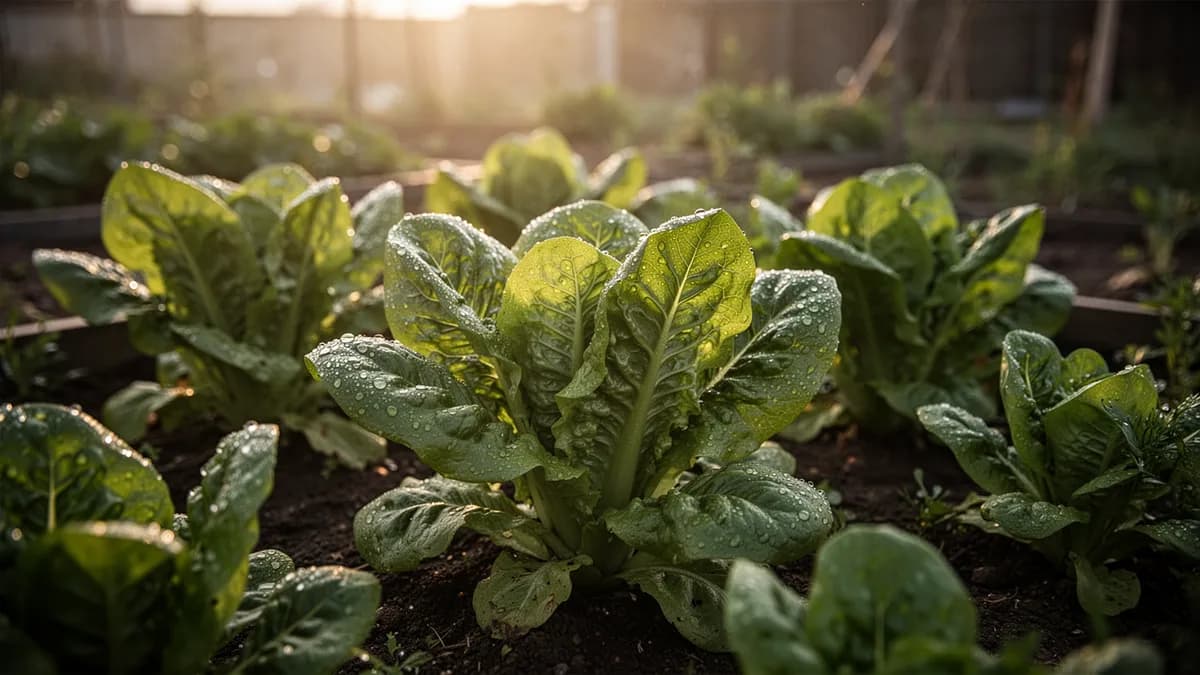
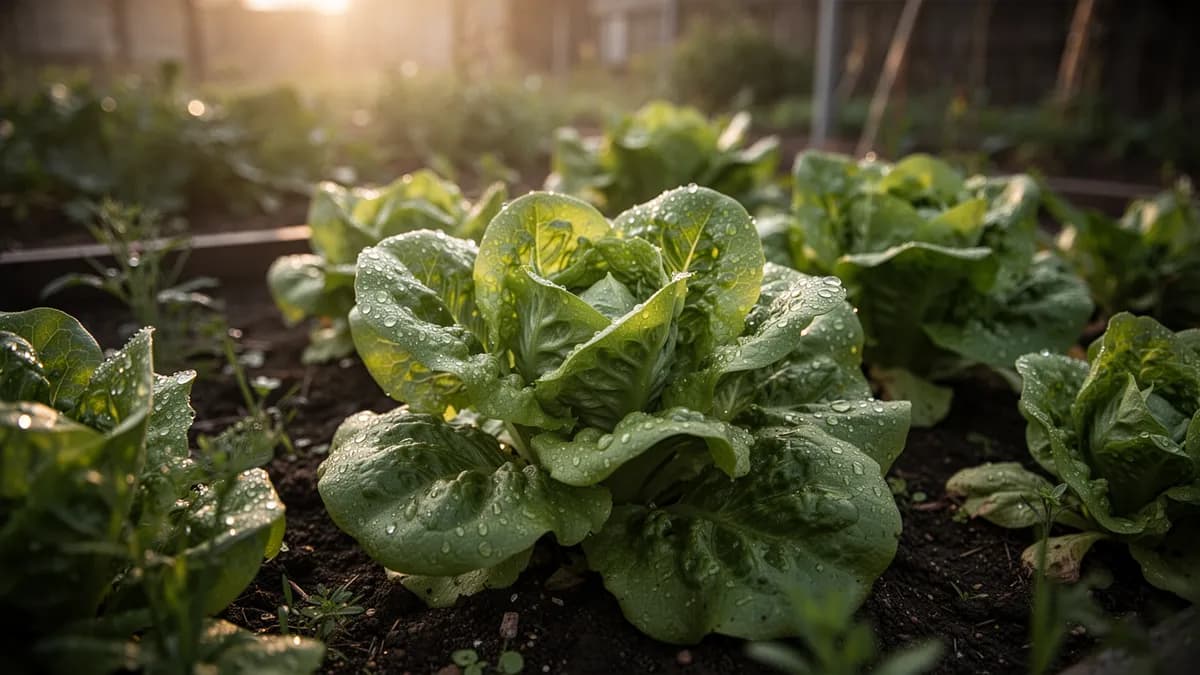
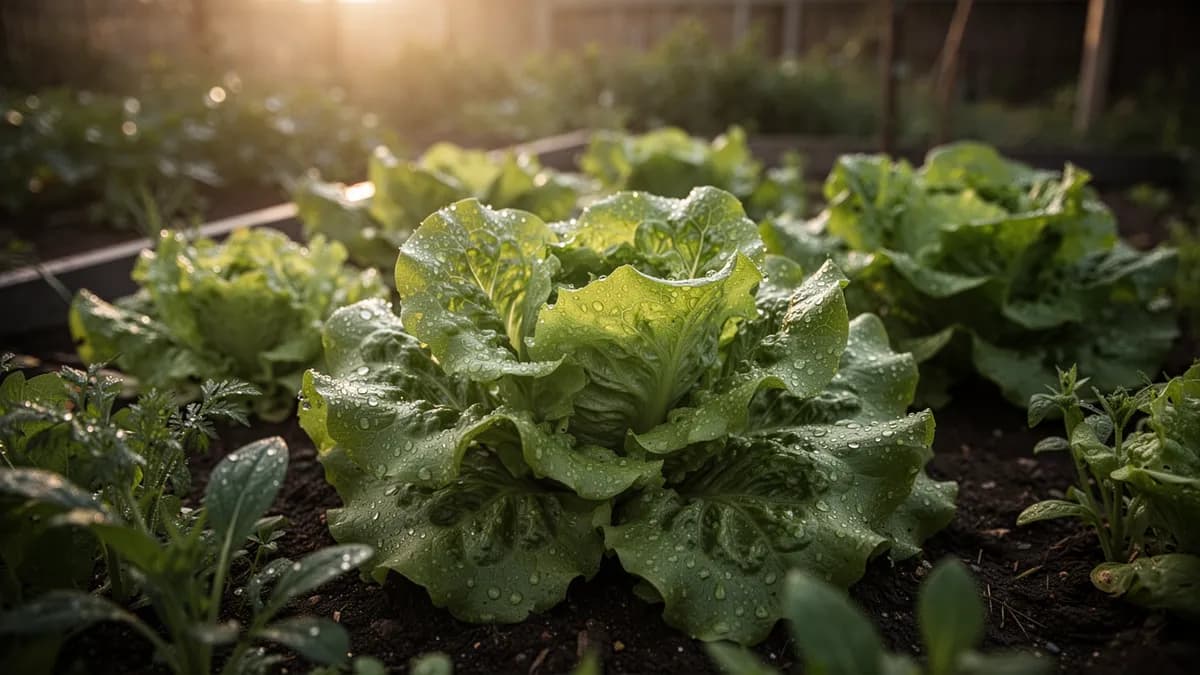
Cultiva tu mejor Rúcula Silvestre — y todo lo que la rodea.
Empieza un plan gratis hoy. Diseña tus bancales, coloca tu Rúcula Silvestre y deja que PlotMyGarden gestione el momento, el espaciado, las asociaciones y los recordatorios de la semilla a la cesta.