Calabaza Jack O'Lantern
La calabaza Jack O'Lantern (Cucurbita pepo) es la variedad icónica utilizada para tallar linternas decorativas en Halloween, originaria de América del Norte.





En esta páginaResumen
Conoce Calabaza Jack O'Lantern
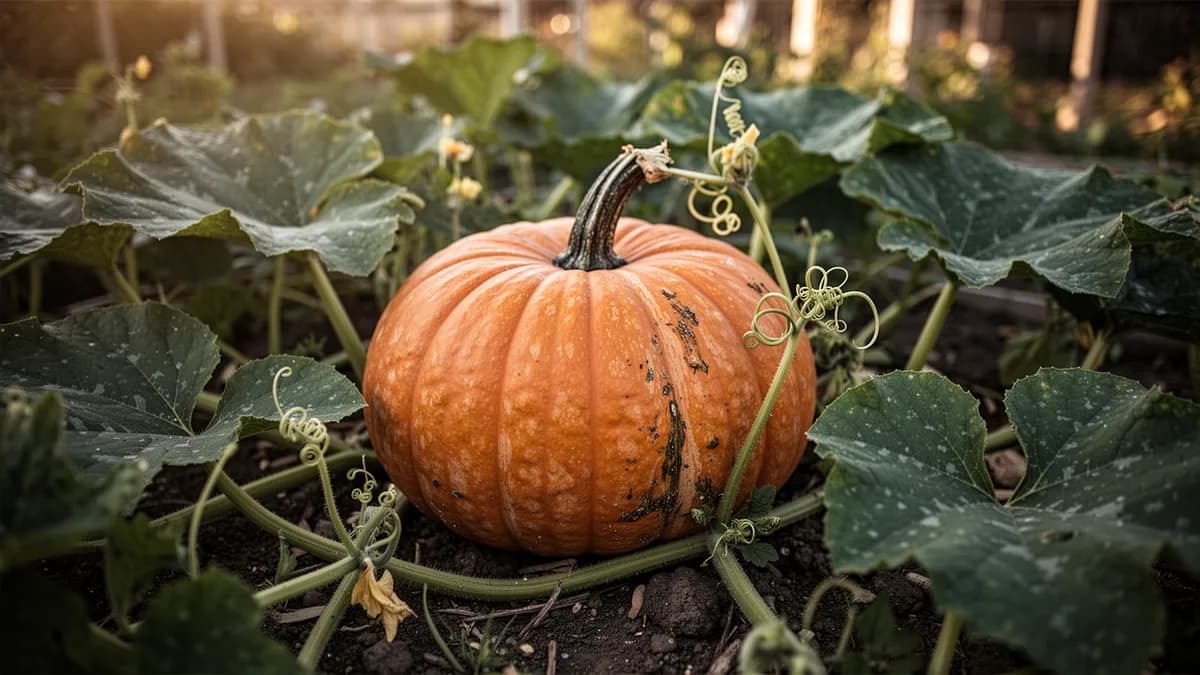
La calabaza Jack O'Lantern (Cucurbita pepo) es la variedad icónica utilizada para tallar linternas decorativas en Halloween, originaria de América del Norte. Produce frutos grandes, redondos y de color naranja brillante con una cáscara lisa y firme, ideales para el tallado artístico. Aunque su pulpa es menos dulce que otras variedades culinarias, las semillas tostadas son un aperitivo popular y nutritivo.
Cuándo plantar Calabaza Jack O'Lantern
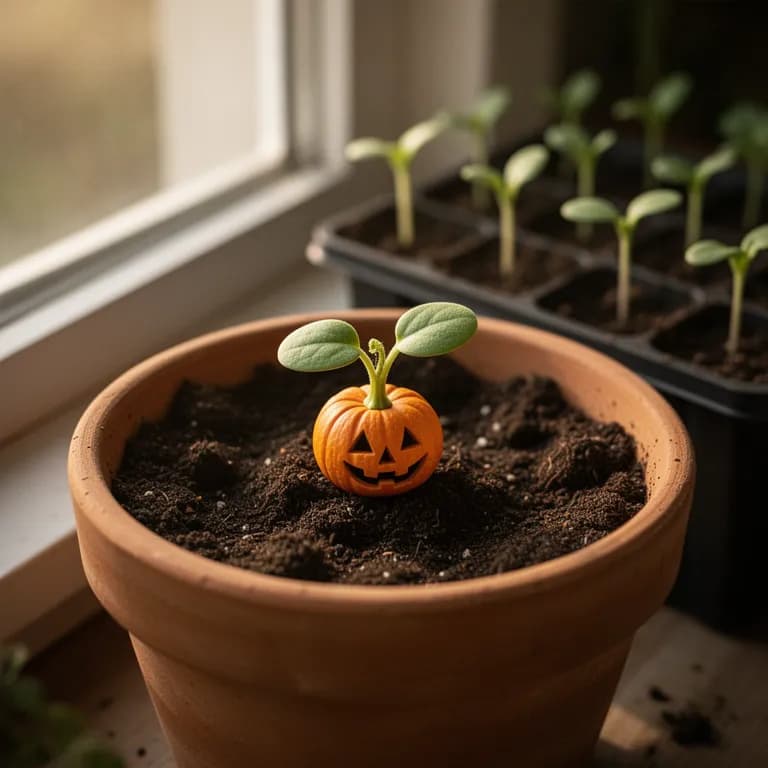
Siembre las semillas directamente en el exterior 1-2 semanas después de la última helada, cuando la temperatura del suelo sea de al menos 18°C. También puede iniciar las semillas en interior 3-4 semanas antes del trasplante en macetas biodegradables de turba para minimizar la perturbación de las raíces. Plante a 2-3 cm de profundidad con el extremo puntiagudo hacia abajo y mantenga el sustrato húmedo pero no encharcado hasta la germinación, que ocurre en 5-10 días.
Tu año de Calabaza Jack O'Lantern
Ajustado a Zona 7 · temporada típica · la helada se va hacia el 2 abr y vuelve hacia el 1 nov
Planta Calabaza Jack O'Lantern May – Jun y cosecha Sep – Oct. Consulta los métodos de plantación y elige tu clima para adaptar los periodos.
Cómo cultivar Calabaza Jack O'Lantern
La calabaza Jack O'Lantern requiere una temporada de crecimiento larga y cálida de al menos 100 días libres de heladas. Siembre las semillas directamente en el exterior después de que haya pasado todo riesgo de heladas y la temperatura del suelo alcance al menos 18°C. Plante en montículos espaciados entre 1,5 y 2,5 metros, colocando 3-4 semillas por montículo a una profundidad de 2-3 cm.
Estas plantas son vigorosas y producen enredaderas que pueden extenderse entre 5 y 8 metros, por lo que necesitan mucho espacio. Riegue abundantemente y de forma regular, proporcionando al menos 2,5 cm de agua por semana, preferiblemente con riego por goteo para mantener el follaje seco. Aplique una capa gruesa de mantillo alrededor de las plantas para conservar la humedad y controlar las malas hierbas.
Cuando los frutos comiencen a formarse, coloque una tabla o cartón debajo de cada calabaza para evitar el contacto directo con el suelo húmedo y prevenir la pudrición. Pode las enredaderas secundarias para dirigir la energía de la planta hacia los frutos principales. Para obtener calabazas más grandes, limite cada planta a 2-3 frutos. Fertilice cada dos semanas con un fertilizante rico en fósforo y potasio una vez que aparezcan las flores.
Para Calabaza Jack O'Lantern un bancal de 120 × 240 cm se queda corto
Cada Calabaza Jack O'Lantern pide 150 cm de margen. El planificador guarda ese marco por ti — cada planta, cada bancal.
Los mejores vecinos de Calabaza Jack O'Lantern
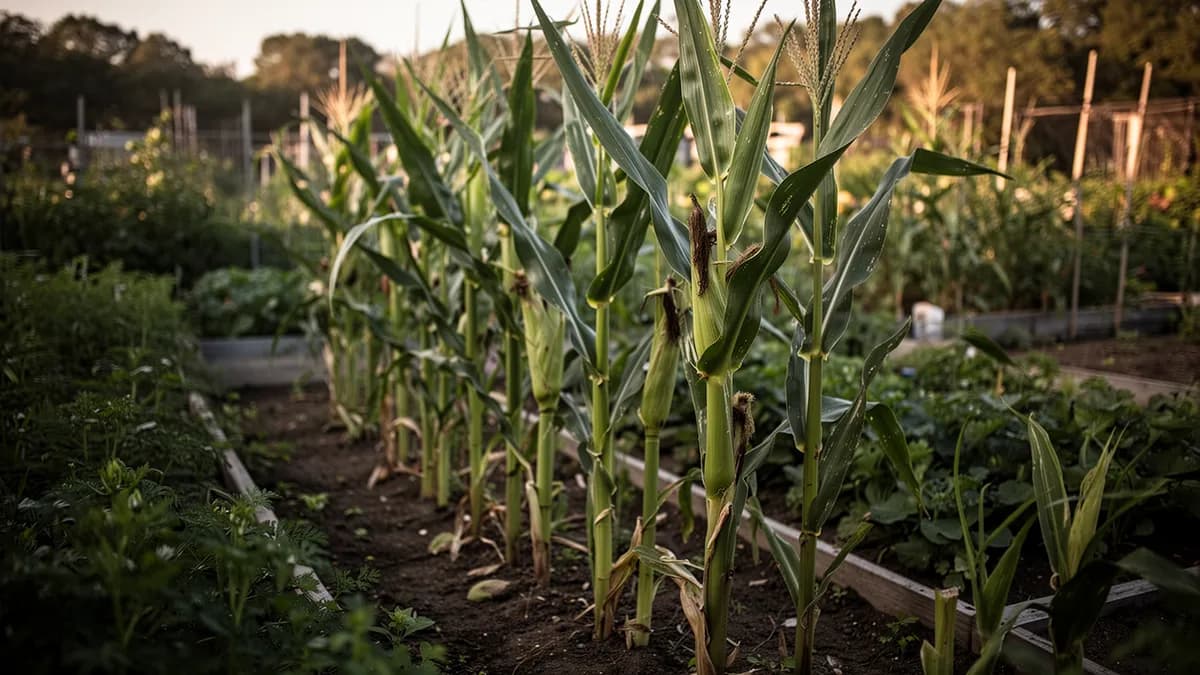
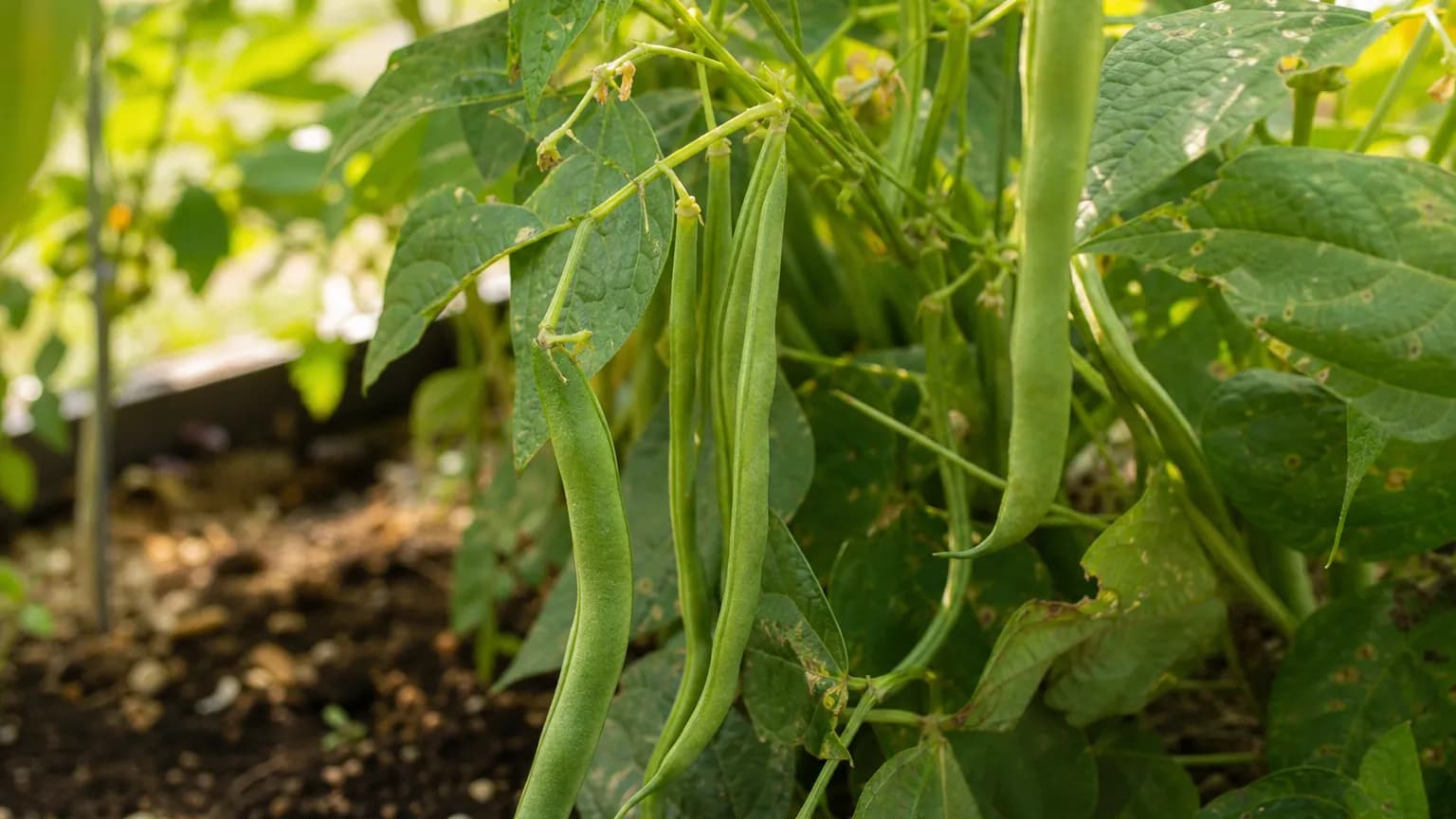
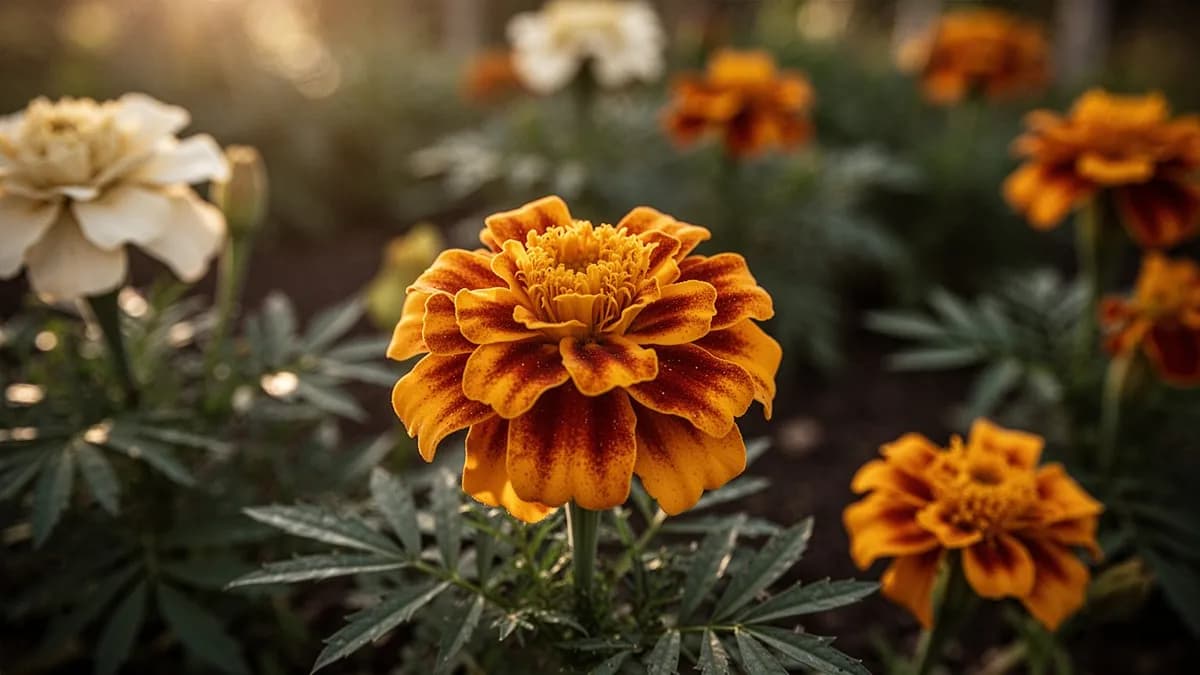
La calabaza Jack O'Lantern forma parte del sistema tradicional de las Tres Hermanas junto con el maíz y los frijoles, donde cada planta beneficia a las demás: el maíz sirve de soporte, los frijoles fijan nitrógeno y las hojas grandes de la calabaza dan sombra al suelo. También se asocia bien con girasoles, que atraen polinizadores, y con rábanos, que actúan como cultivo trampa para los escarabajos del pepino.
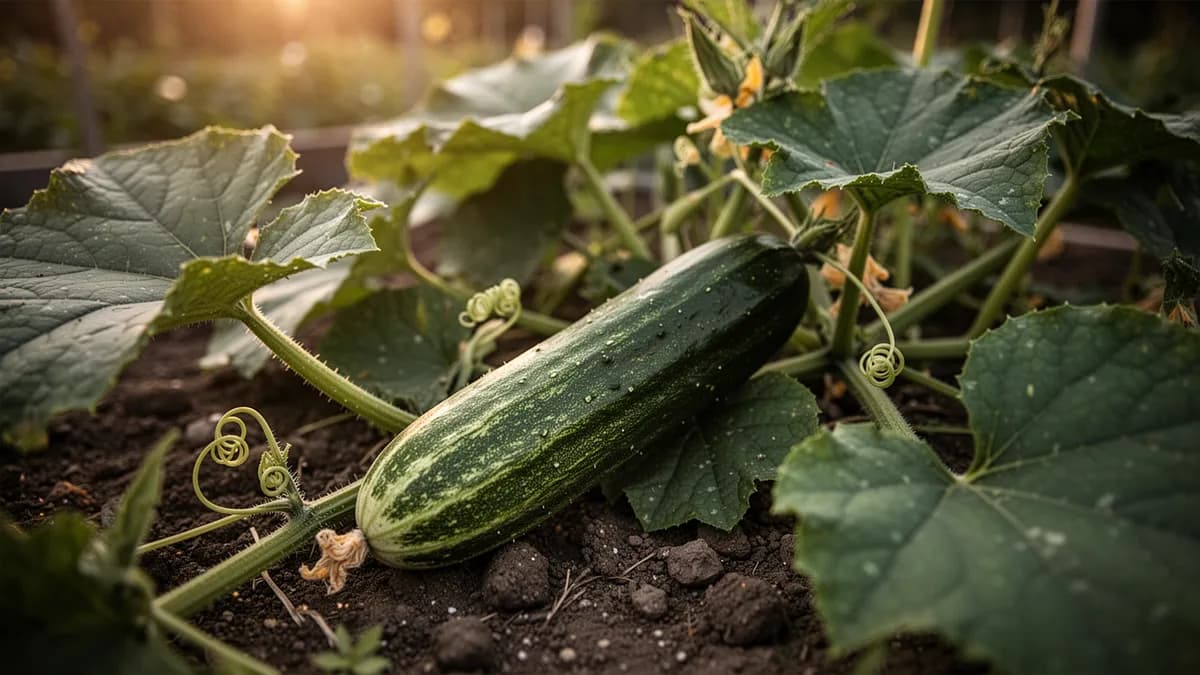
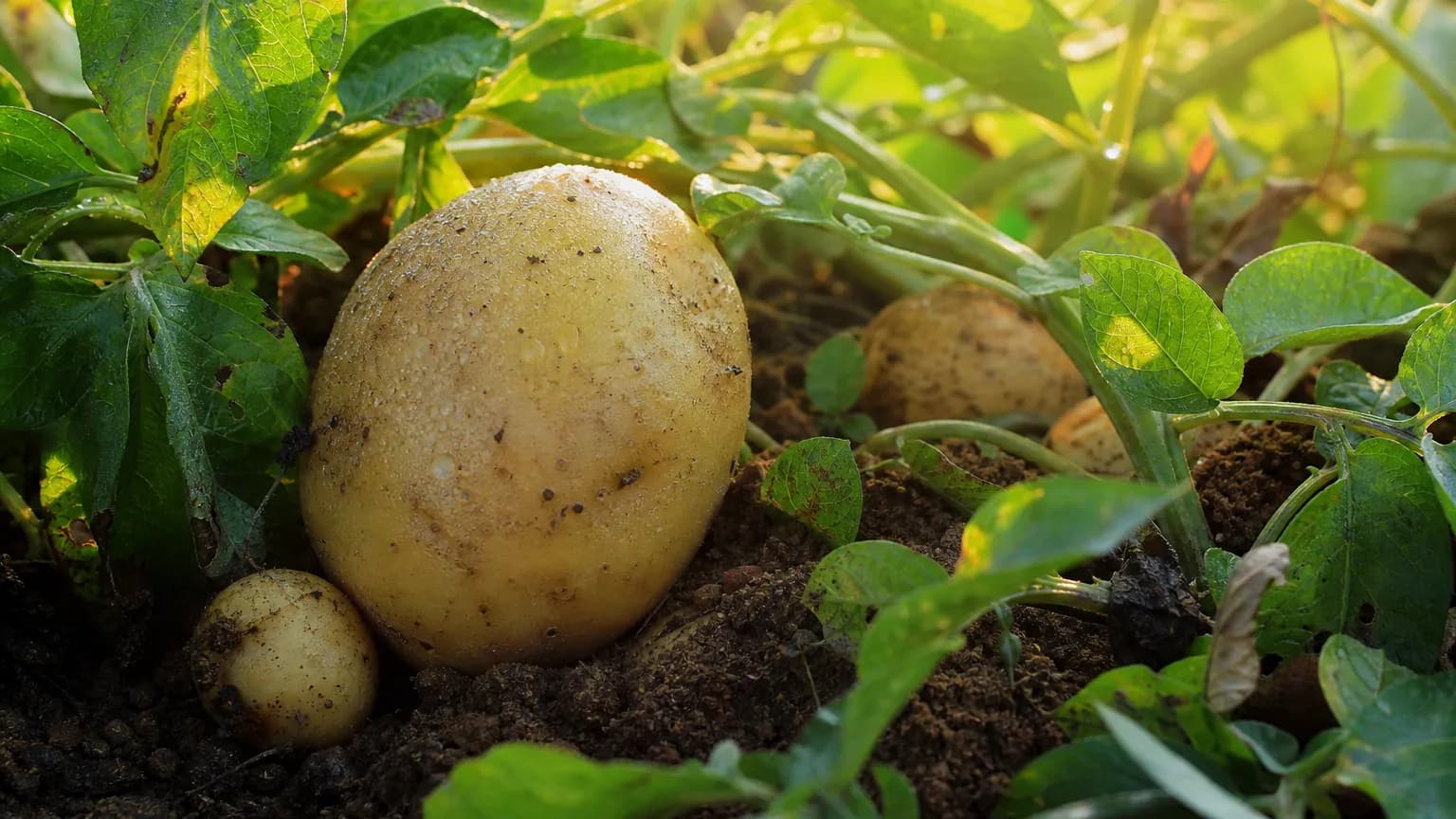
Maíz va a su lado. Papa no.
Saber de huerto de siempre, cotejado con la tabla real de Calabaza Jack O'Lantern — prueba cualquier planta que cultives.
Prueba Calabaza Jack O'Lantern en un bancal, aquí mismo
Un bancal real del planificador con Calabaza Jack O'Lantern ya plantado. Toca una planta compañera para colocarla y mira cómo responde la comprobación de vecinos: verde para buenos vecinos, rojo si hay conflicto.


Guías de cultivo relacionadas
Abónalo bien
La calabaza Jack O'Lantern requiere un suelo rico en materia orgánica, bien drenado y profundo, con un pH entre 6,0 y 7,0. Enriquezca el suelo con abundante compost maduro o estiércol bien descompuesto antes de la siembra, incorporando al menos 5-8 cm de enmienda orgánica. Aplique un fertilizante equilibrado (10-10-10) al momento de la siembra y cambie a uno rico en fósforo y potasio (5-10-10) cuando aparezcan las primeras flores.
Temperatura ideal
Compatibilidad de zonas de rusticidad
De la semilla a la cosecha, etapa por etapa
Germinación de la semilla
Las semillas de calabaza germinan rápidamente en suelo cálido y húmedo. La semilla grande se abre y envía una raíz principal blanca y gruesa, seguida de un hipocótilo robusto que empuja dos cotiledones grandes por encima de la superficie del suelo. La germinación requiere temperaturas del suelo de al menos 16 °C y ocurre más rápido a 27-32 °C, normalmente en 5-10 días.
Establecimiento de la plántula
Las hojas verdaderas desarrollan su forma característica profundamente lobulada y de textura áspera. El tallo se engrosa y comienza a extenderse. El sistema radicular se expande rápidamente, formando una amplia red de raíces laterales y una raíz principal profunda para sostener las enormes necesidades de agua y nutrientes de la planta.
Crecimiento de las guías
La planta entra en un crecimiento vegetativo explosivo, emitiendo largas guías con zarcillos que se anclan a todo lo que tocan. Las guías pueden extenderse de 15-30 cm por día en clima cálido, alcanzando finalmente 4-6 metros de longitud. Las hojas grandes y ásperas forman un dosel denso que sombrea las malezas. Las guías secundarias se ramifican desde la principal.
Floración y polinización
Aparecen grandes flores de color naranja amarillento brillante: primero las flores masculinas en tallos largos y finos, seguidas 7-10 días después por las flores femeninas, identificables por el pequeño ovario redondo en su base. Cada flor se abre al amanecer y se cierra al mediodía. La polinización exitosa requiere visitas de abejas que transfieran polen de las flores masculinas a las femeninas durante esta breve ventana matinal.
Desarrollo del fruto
Una vez polinizado, el pequeño ovario verde detrás de la flor femenina se hincha rápidamente hasta adoptar la forma reconocible de una calabaza. El fruto crece con rapidez durante 3-4 semanas, ganando varias libras por semana. El exterior pasa de verde oscuro a verde más claro y luego comienza a desarrollar color naranja cuando el fruto alcanza su tamaño completo de 25-35 cm de diámetro.
Maduración y cosecha
La calabaza adquiere su color naranja intenso final a medida que se desarrollan los azúcares y carotenoides en la cáscara y la pulpa. El tallo que conecta el fruto con la guía comienza a secarse y a volverse corchoso y marrón. La cáscara se endurece hasta el punto de no poder hundirse con una uña. El fruto suele pesar 4-8 kg cuando madura.
Siembra las semillas a 2,5 cm de profundidad en suelo precalentado. Coloca 2-3 semillas por loma y aclara a la plántula más fuerte después de la emergencia. No comiences las semillas demasiado pronto en interior: las calabazas resienten el daño de raíces y se trasplantan mal si están enraizadas en exceso.
Cuidar Calabaza Jack O'Lantern mes a mes
Qué hacer cada mes para tu Calabaza Jack O'Lantern
Octubre
Mes actualHarvest pumpkins when fully orange with hard rinds and dry, corky stems. Cut stems with pruners leaving a 10 cm handle. Cure in a warm (27°C), dry location for 10 days. After curing, store in a cool (10-15°C), dry place for up to 3 months.
Ten claro qué hacer en tu huerto, cada mes
Un correo al empezar cada mes: qué sembrar, plantar y hacer ahora mismo — para tu Calabaza Jack O'Lantern y todo lo que crece alrededor. Más un breve curso inicial para esquivar los errores clásicos.
- Qué hacer ahora mismo
- Ajustado a tu temporada
- Curso inicial incluido
Cosechar Calabaza Jack O'Lantern
Coseche las calabazas Jack O'Lantern cuando la cáscara esté completamente naranja y firme al tacto, generalmente entre 100 y 120 días después de la siembra. Golpee suavemente la calabaza; un sonido hueco indica madurez. Corte el fruto con un cuchillo afilado o tijeras de podar, dejando al menos 10-15 cm de tallo adherido, ya que un tallo corto favorece la descomposición prematura. Coseche antes de la primera helada fuerte.
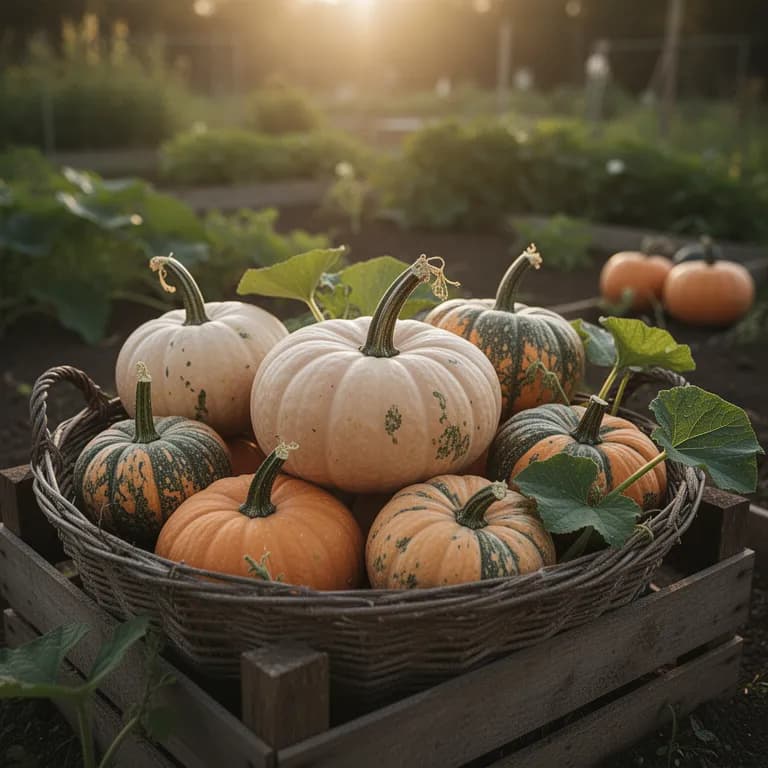
se supone que plantas al comenzar el periodo — indica tu fecha real
Cosecha cuando la cáscara esté completamente naranja, dura y resistente a rayarse con la uña; el tallo debe estar seco y acorchado.
Almacenamiento y conservación
Cure las calabazas cosechadas en un lugar cálido y seco (27-30°C) durante 10-14 días para endurecer la cáscara y sellar pequeñas heridas. Una vez curadas, almacénelas en un lugar fresco y ventilado a 10-15°C con humedad relativa del 50-70%, donde se conservarán durante 2-3 meses. Las semillas pueden tostarse con sal y especias para un aperitivo nutritivo, y la pulpa se puede deshidratar o hacer puré para uso en sopas y panes.
Qué falla — y cómo solucionarlo
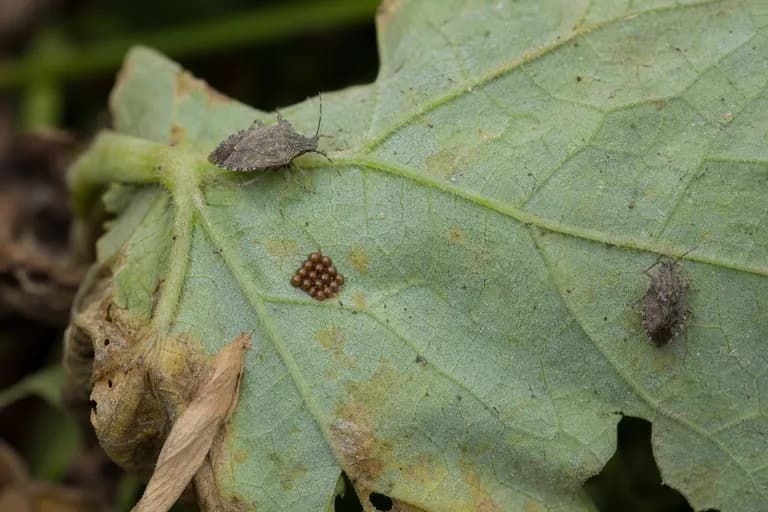
Escarabajo del pepino
PlagaAdultos de color amarillo con rayas o manchas negras que devoran hojas y flores, dejando agujeros irregulares. Las larvas atacan las raíces bajo tierra y pueden transmitir la marchitez bacteriana.
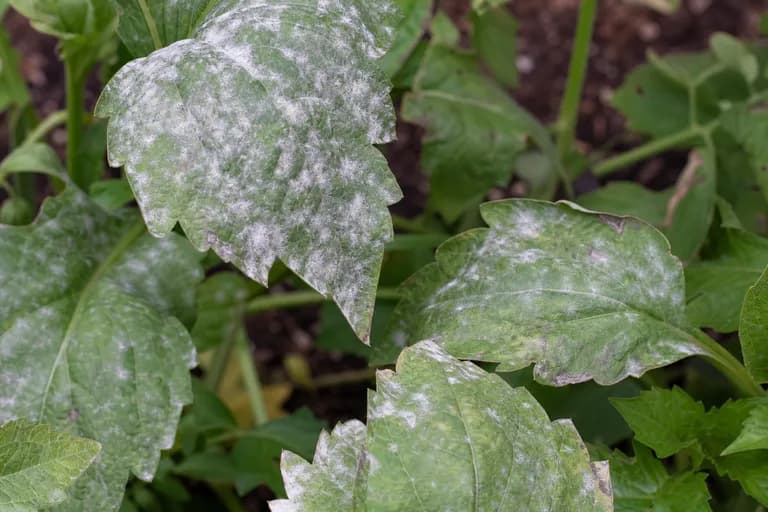
Mildiú polvoriento
EnfermedadAparición de un polvo blanco grisáceo en la superficie de las hojas que se extiende progresivamente, causando amarillamiento, marchitez y eventual muerte del follaje afectado.
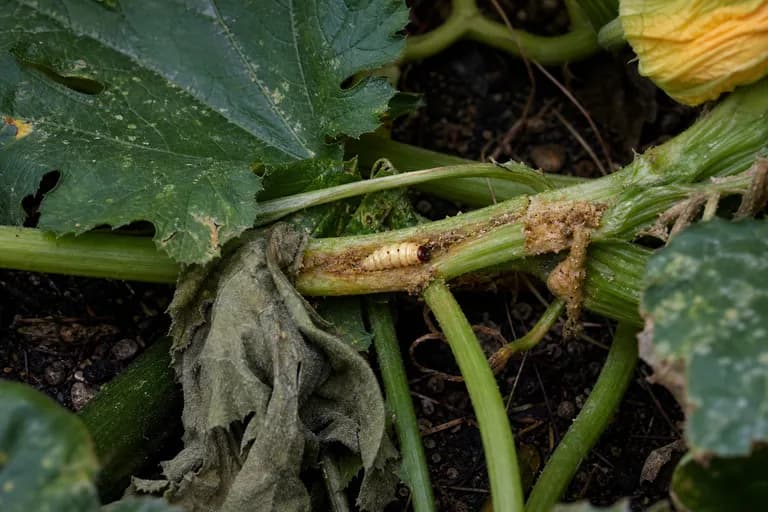
Barrenador de la vid
PlagaMarchitez súbita de secciones enteras de la enredadera, con presencia de excrementos granulares en la base de los tallos. Al cortar el tallo se encuentran larvas blancas alimentándose del interior.
Solución de problemas comunes
El problema más frecuente es la polinización deficiente, que resulta en frutos deformados o que abortan prematuramente. Si hay pocos polinizadores naturales, realice la polinización manual transfiriendo polen de las flores masculinas a las femeninas con un pincel. Las calabazas también son susceptibles a la pudrición del extremo de la flor cuando el riego es irregular, y al agrietamiento de la cáscara por fluctuaciones de humedad.
Consejos de cultivo
- Build mounded hills rather than planting in flat ground. Mounding soil 25-30 cm high improves drainage, warms the root zone faster in spring, and prevents the crown rot that kills pumpkins planted in waterlogged soil.
- Time your planting backward from your target harvest date. For Halloween pumpkins, count back 100-120 days from early October — this typically means planting in mid-June in most zones, not the earliest possible date.
- Pollination is the single biggest failure point for home pumpkin growers. If you see small fruits yellowing and falling off, poor pollination is almost certainly the cause. Learn to hand-pollinate as insurance — it takes 30 seconds per flower and dramatically improves fruit set.
- Water at the soil level with drip irrigation or soaker hoses, never overhead. Wet foliage is the primary trigger for powdery mildew, the most common and damaging pumpkin disease. Water deeply 2-3 times per week rather than lightly every day.
- Limit each vine to 2-3 developing fruits if you want full-sized carving pumpkins. Once your desired number of pumpkins are set and growing, pinch off any new female flowers and trim vine tips to redirect all the plant's energy into sizing up the existing fruits.
- Slide a piece of cardboard, a wooden shingle, or a thick layer of straw beneath each developing pumpkin. Direct soil contact causes bottom rot, discoloration, and insect damage that ruins the fruit for carving and shortens storage life.
- Monitor aggressively for powdery mildew starting in mid-summer. At the first sign of white powdery spots on leaves, spray with a solution of 1 tablespoon potassium bicarbonate per liter of water. Preventive weekly spraying from July onward is even more effective than reactive treatment.
- Cure pumpkins after harvest by holding them at 27-29°C (80-85°F) with good air circulation for 10 days. Curing heals any stem cuts or skin scratches and dramatically extends storage life — properly cured Jack-o-Lantern pumpkins can last 2-3 months in cool dry storage.
Cultiva tu mejor Calabaza Jack O'Lantern — y todo lo que la rodea.
Empieza un plan gratis hoy. Diseña tus bancales, coloca tu Calabaza Jack O'Lantern y deja que PlotMyGarden gestione el momento, el espaciado, las asociaciones y los recordatorios de la semilla a la cesta.
Elige tu Calabaza Jack O'Lantern
Connecticut Field
Variedad tradicional americana de gran tamaño (7-10 kg) con forma redonda ligeramente aplanada y color naranja intenso. Madura en 110-120 días y es la calabaza clásica para tallar.
Howden
Variedad muy popular para Halloween con frutos de 8-12 kg, cáscara dura con costillas pronunciadas y excelente forma redonda. Madura en 115 días y tiene un tallo robusto ideal para el transporte.
Magic Lantern
Híbrido mejorado con forma ovalada uniforme, color naranja brillante y mango fuerte. Produce frutos de 5-8 kg en 105 días con buena resistencia al mildiú polvoriento.
Cargo PMR
Variedad híbrida con resistencia al mildiú polvoriento, frutos de 5-7 kg de forma redondeada y color naranja profundo. Ideal para climas húmedos donde las enfermedades fúngicas son problemáticas.
A single seed packet ($3-5) can produce 6-10 pumpkin vines, each yielding 3-5 pumpkins. With Jack-o-Lantern pumpkins selling for $5-15 each at pumpkin patches and grocery stores in autumn, a small home patch of 3-4 vines can easily produce $50-150 worth of pumpkins. Beyond carving, the edible flesh yields several batches of soup, puree, and baked goods that would cost $20-40 to buy as canned pumpkin. Roasted seeds from a single large pumpkin replace a $4-6 bag of store-bought pepitas.
Recetas rápidas
Classic Roasted Pumpkin Soup
45 minSilky, golden pumpkin soup made by roasting pumpkin wedges until caramelized and blending with aromatics. Roasting intensifies the natural sweetness and produces a deeper, more complex flavor than boiling. A swirl of cream and toasted pumpkin seeds finish each bowl.
10 ingredientesSpiced Roasted Pumpkin Seeds
30 minThe best part of carving a pumpkin — crispy roasted seeds seasoned with olive oil and your choice of spices. Rinsing and drying the seeds thoroughly before roasting is the key to achieving maximum crunch. Customize with sweet or savory seasonings.
6 ingredientesPumpkin and Sage Pasta
35 minCubes of roasted pumpkin tossed with browned butter, crispy fried sage leaves, and Parmesan over your favorite pasta. The combination of nutty browned butter and earthy sage is the classic Italian pairing for winter squash — simple but deeply satisfying.
8 ingredientesUsos culinarios
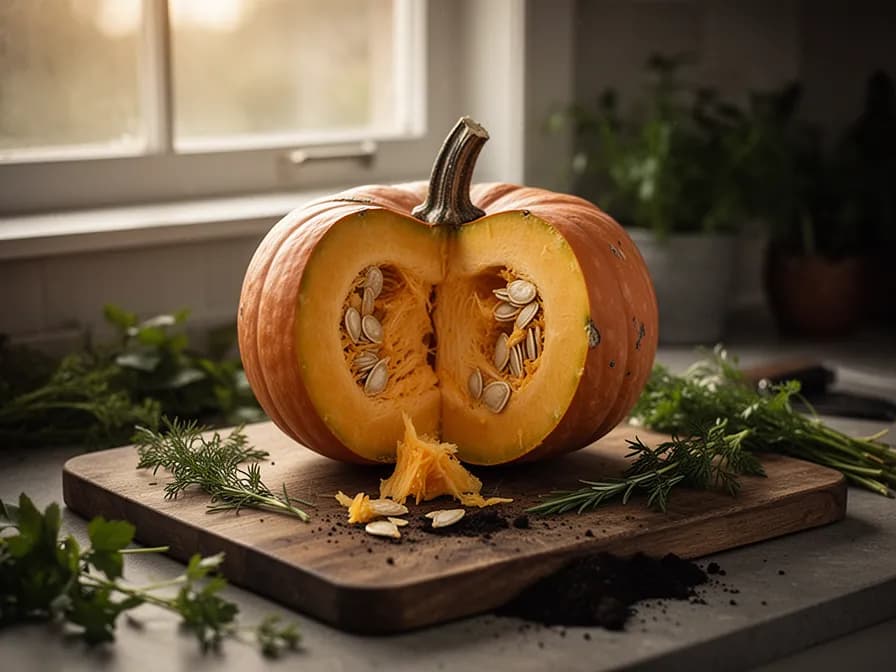
Aunque la calabaza Jack O'Lantern se cultiva principalmente para decoración y tallado, sus semillas tostadas con aceite de oliva, sal y especias son un aperitivo delicioso y rico en zinc, magnesio y ácidos grasos saludables. La pulpa se puede utilizar en sopas cremosas, panes de calabaza y currys, aunque su textura es más fibrosa y su sabor menos dulce que las variedades culinarias específicas.
Qué contiene
Beneficios para la salud
- Pumpkin flesh is one of the richest food sources of beta-carotene, which the body converts to vitamin A — essential for maintaining healthy vision, immune defense, and skin cell turnover. A single cup of cooked pumpkin provides over 200% of the daily recommended vitamin A.
- Pumpkin seeds (pepitas) are among the best plant-based sources of magnesium, providing about 37% of the daily value per 30g serving — magnesium supports over 300 enzymatic reactions including energy production, muscle function, and nervous system regulation.
- The seeds contain high levels of zinc, which plays a critical role in immune function, wound healing, and testosterone production. A 30g serving provides about 14% of the daily value for zinc.
- Pumpkin flesh is rich in potassium, supporting healthy blood pressure regulation and reducing the risk of stroke. Its high water content and low calorie density make it an excellent food for hydration and weight management.
- The carotenoids lutein and zeaxanthin found in pumpkin accumulate in the macula of the eye and act as natural blue-light filters, helping protect against age-related macular degeneration and cataracts.
- Pumpkin seed oil has been studied for its potential to support prostate health and urinary function in men, with several clinical trials showing improvement in symptoms of benign prostatic hyperplasia.
De dónde viene Calabaza Jack O'Lantern
The Jack-o-Lantern pumpkin (Cucurbita pepo) descends from wild gourds native to Central America and southern North America. Archaeological evidence from the Oaxaca Valley in Mexico places pumpkin cultivation at 8,000-10,000 years ago, making it one of the earliest domesticated crops in the Americas — predating the domestication of corn and beans by several thousand years. Early pumpkins were small, hard-shelled, and bitter, valued primarily for their nutritious seeds rather than their flesh. Over millennia of selection by indigenous farmers across the Americas, larger, sweeter-fleshed varieties developed.
Native American peoples cultivated pumpkins extensively and relied on them as a critical staple food that could be dried and stored for winter consumption. The Three Sisters planting system — growing pumpkins with corn and climbing beans — was one of the most sophisticated companion planting techniques in agricultural history. European explorers encountered pumpkins throughout the New World and brought seeds back to Europe in the 16th century, where the crop quickly spread across the continent and into Asia and Africa.
The specific association of pumpkins with Halloween and the Jack-o-Lantern tradition has roots in Celtic and Irish folklore. The legend of 'Stingy Jack,' a trickster who was condemned to roam the earth with only a carved turnip lantern, inspired the Irish custom of carving frightening faces into root vegetables on All Hallows' Eve. When waves of Irish immigration brought this tradition to North America in the 19th century, the abundant native pumpkin replaced the turnip as the carving medium of choice. Today, the United States produces over 700,000 tonnes of pumpkins annually, with Illinois leading production, and the Jack-o-Lantern pumpkin remains the most iconic variety for both carving and autumn decoration.
Calabaza Jack O'Lantern: ¿sabías que?
Datos fascinantes sobre Calabaza Jack O'Lantern
The Jack-o-Lantern tradition originated in Ireland, where turnips and beets were originally carved with scary faces and lit with embers to ward off evil spirits on All Hallows' Eve. When Irish immigrants arrived in North America, they discovered that the native pumpkin was far larger and easier to carve, and the tradition shifted to pumpkins permanently.
Calabaza Jack O'Lantern: preguntas frecuentes
¿Cuándo debo plantar Calabaza Jack O'Lantern?
¿Cuáles son buenas plantas acompañantes para Calabaza Jack O'Lantern?
¿En qué zonas de rusticidad puede crecer Calabaza Jack O'Lantern?
¿Cuánto sol necesita Calabaza Jack O'Lantern?
¿A qué distancia debo espaciar Calabaza Jack O'Lantern?
¿Qué plagas y enfermedades afectan a Calabaza Jack O'Lantern?
¿Cómo almaceno Calabaza Jack O'Lantern después de la cosecha?
¿Cuáles son las mejores variedades de Calabaza Jack O'Lantern para cultivar?
¿Qué suelo necesita Calabaza Jack O'Lantern?
How much space do Jack-o-Lantern pumpkins need to grow?
Why are my baby pumpkins turning yellow and falling off the vine?
When exactly should I harvest my pumpkins for Halloween?
Can I eat Jack-o-Lantern pumpkins or are they just for carving?
How do I prevent powdery mildew on my pumpkin plants?
How do I store pumpkins to make them last as long as possible?
Acabas de leer la teoría. Ahora cultívala en piloto automático.
Todo lo que hace que Calabaza Jack O'Lantern sea delicado — el momento, el espaciado, las asociaciones, la ventana de cosecha — es justo lo que PlotMyGarden resuelve por ti, para cada planta de tu huerto.
Un plan que conoce tu clima
Indica tu ubicación una vez. Recibe fechas de siembra, abonado y cosecha basadas en tu última helada real y el pronóstico en vivo — sin adivinar con un sobre genérico.
De la sección “Cuándo plantar”Planificador de bancales de arrastrar y soltar
Diseña bancales sobre una cuadrícula. Cada planta encaja con su espaciado correcto y ves toda la temporada antes de gastar un céntimo en semillas.
De la sección “Cultivo”Conflictos de asociación, detectados a tiempo
Más de 200 buenas y malas combinaciones comprobadas en vivo mientras plantas — para que un error que arruine la temporada nunca llegue a la tierra.
De la sección “Asociaciones”Recordatorios que sí vas a seguir
“Riega las judías.” “Recoge hoy antes de que se pase.” Oportunos, concretos y ligados a las plantas que de verdad cultivas.
De la sección “Cosecha”Escalonado, programado
¿Quieres cosechar seis semanas en vez de seis días? Reparte tus siembras automáticamente y te avisa cuando toca el siguiente lote.
De la sección “Cuándo plantar”Un registro que se vuelve más listo
Cada cosecha que registras le enseña tu huerto. El plan del año que viene parte de lo que de verdad funcionó en tu suelo, no en un manual.
De la sección “Resumen”Planta estos junto a Calabaza Jack O'Lantern
Más Cucurbitáceas
Mantén Calabaza Jack O'Lantern lejos de estos
Cultiva tu mejor Calabaza Jack O'Lantern — y todo lo que la rodea.
Empieza un plan gratis hoy. Diseña tus bancales, coloca tu Calabaza Jack O'Lantern y deja que PlotMyGarden gestione el momento, el espaciado, las asociaciones y los recordatorios de la semilla a la cesta.