Calabaza de Ceniza
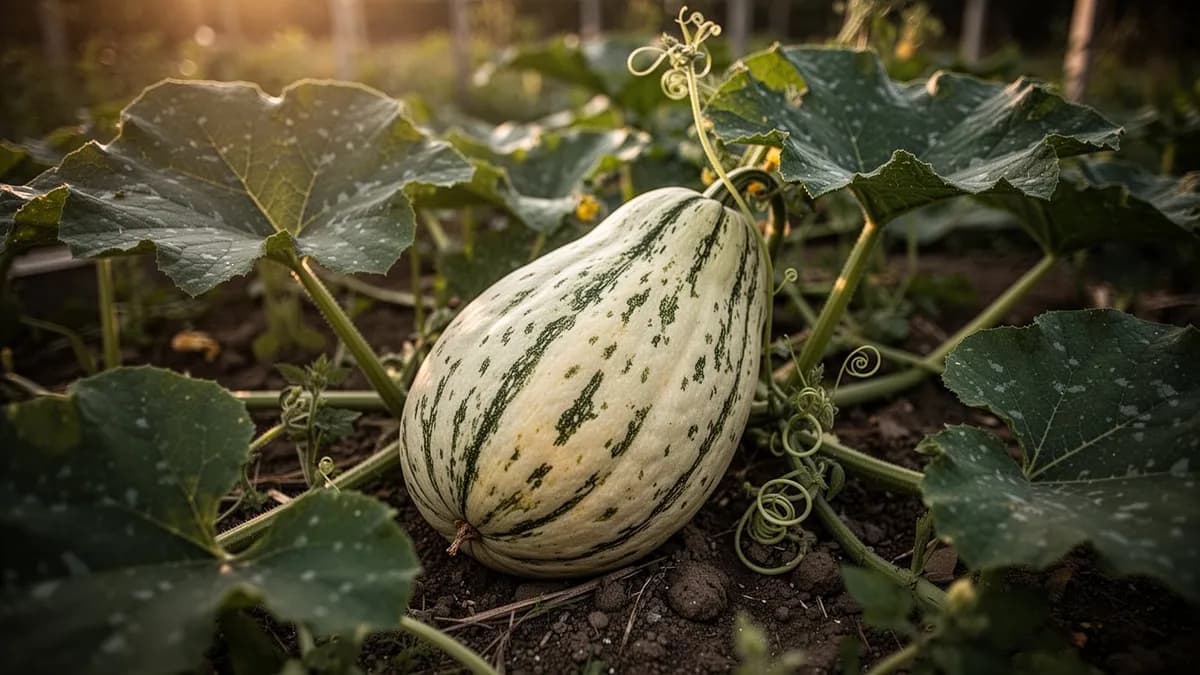
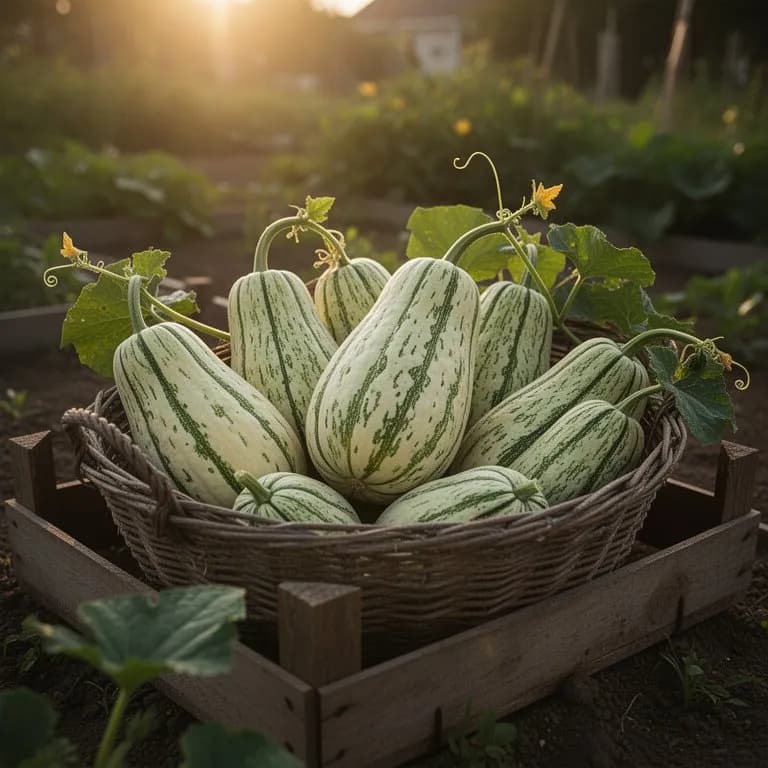
La calabaza de ceniza (Benincasa hispida), también conocida como calabaza blanca o calabaza de cera, es una cucurbitácea tropical de gran tamaño que puede alcanzar frutos de 10-25 kg cubiertos por una característica capa de cera blanca o cenicienta al madurar.





En esta páginaResumen
Conoce Calabaza de Ceniza
La calabaza de ceniza (Benincasa hispida), también conocida como calabaza blanca o calabaza de cera, es una cucurbitácea tropical de gran tamaño que puede alcanzar frutos de 10-25 kg cubiertos por una característica capa de cera blanca o cenicienta al madurar. Es una de las hortalizas con mayor vida de almacenamiento, pudiendo conservarse hasta 12 meses en condiciones adecuadas, y se utiliza ampliamente en las cocinas asiáticas tanto en preparaciones culinarias como en la medicina tradicional ayurvédica.
Cuándo plantar Calabaza de Ceniza
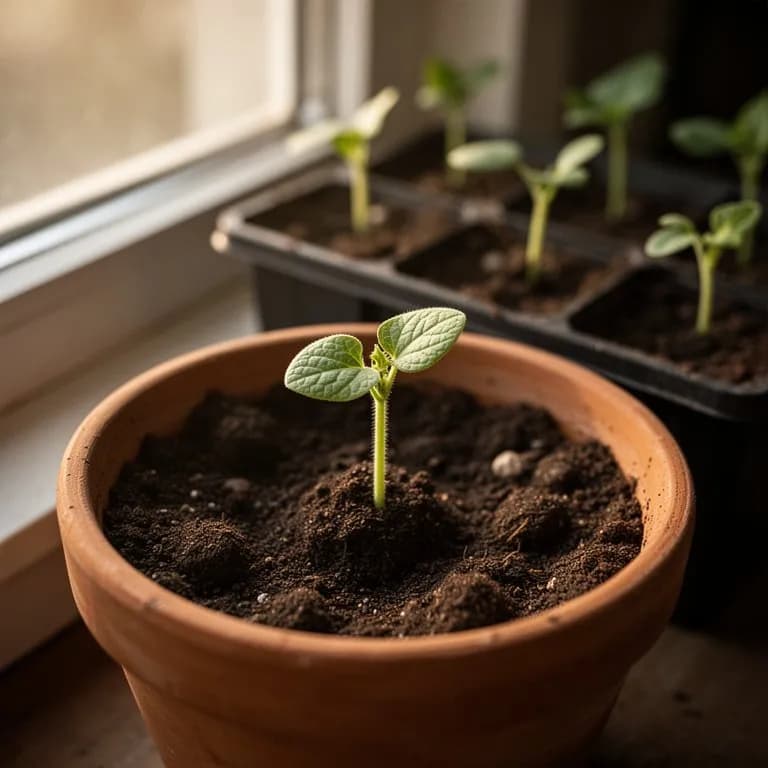
Inicie las semillas en interior 4-6 semanas antes de la última helada en macetas biodegradables de 10 cm con sustrato cálido, manteniendo una temperatura de 25-30 °C para una germinación óptima. Las semillas germinan en 7-14 días y se pueden remojar en agua tibia durante 12-24 horas antes de la siembra para acelerar el proceso. Trasplante al exterior cuando las plántulas tengan 2-3 hojas verdaderas y la temperatura nocturna sea constantemente superior a 15 °C.
Tu año de Calabaza de Ceniza
Ajustado a Zona 7 · temporada típica · la helada se va hacia el 2 abr y vuelve hacia el 1 nov
Planta Calabaza de Ceniza Abr – Jun y cosecha Ago – Oct. Consulta los métodos de plantación y elige tu clima para adaptar los periodos.
Cómo cultivar Calabaza de Ceniza
La calabaza de ceniza requiere una temporada de crecimiento larga y cálida de al menos 100-140 días libres de helada. Siembre las semillas en interior 4-6 semanas antes de la última helada en macetas biodegradables de 10 cm, o directamente en el terreno cuando la temperatura del suelo supere los 20 °C. Plante en montículos espaciados 2-3 metros entre sí, colocando 3-4 semillas por montículo a 3 cm de profundidad y aclarando a las 2 plantas más vigorosas.
Las plantas son trepadoras vigorosas que necesitan un enrejado robusto o amplio espacio para extenderse por el suelo, con guías que pueden alcanzar 5-8 metros de longitud. Proporcione riego abundante y regular durante la fase de crecimiento vegetativo y formación de frutos, reduciendo gradualmente el riego cuando los frutos comiencen a desarrollar la capa cerosa característica. Aplique un acolchado grueso de paja alrededor de las plantas para conservar la humedad y mantener los frutos limpios.
Fertilice mensualmente con compost líquido o un fertilizante equilibrado durante la fase de crecimiento activo, cambiando a una fórmula alta en potasio cuando aparezcan las primeras flores para mejorar la calidad y el tamaño de los frutos. La polinización manual puede ser necesaria en huertos con poca presencia de polinizadores, transfiriendo el polen de las flores masculinas a las femeninas temprano por la mañana.
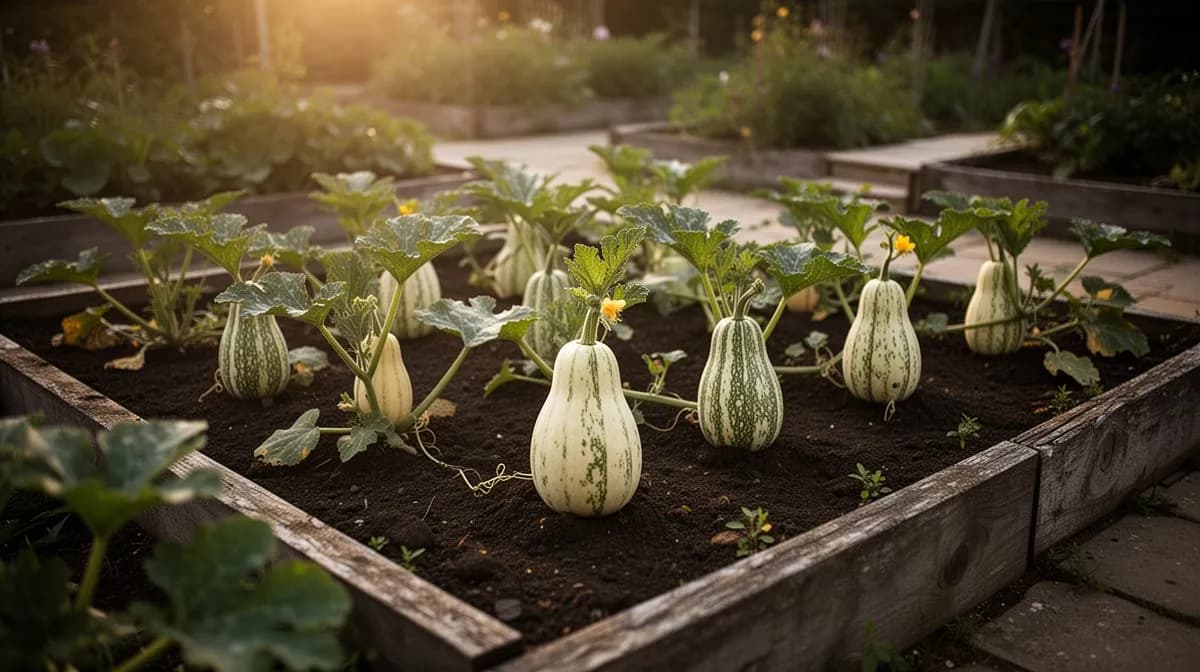
2 plantas caben en un bancal de 120 × 240 cm
Cada Calabaza de Ceniza pide 120 cm de margen. El planificador guarda ese marco por ti — cada planta, cada bancal.
Los mejores vecinos de Calabaza de Ceniza
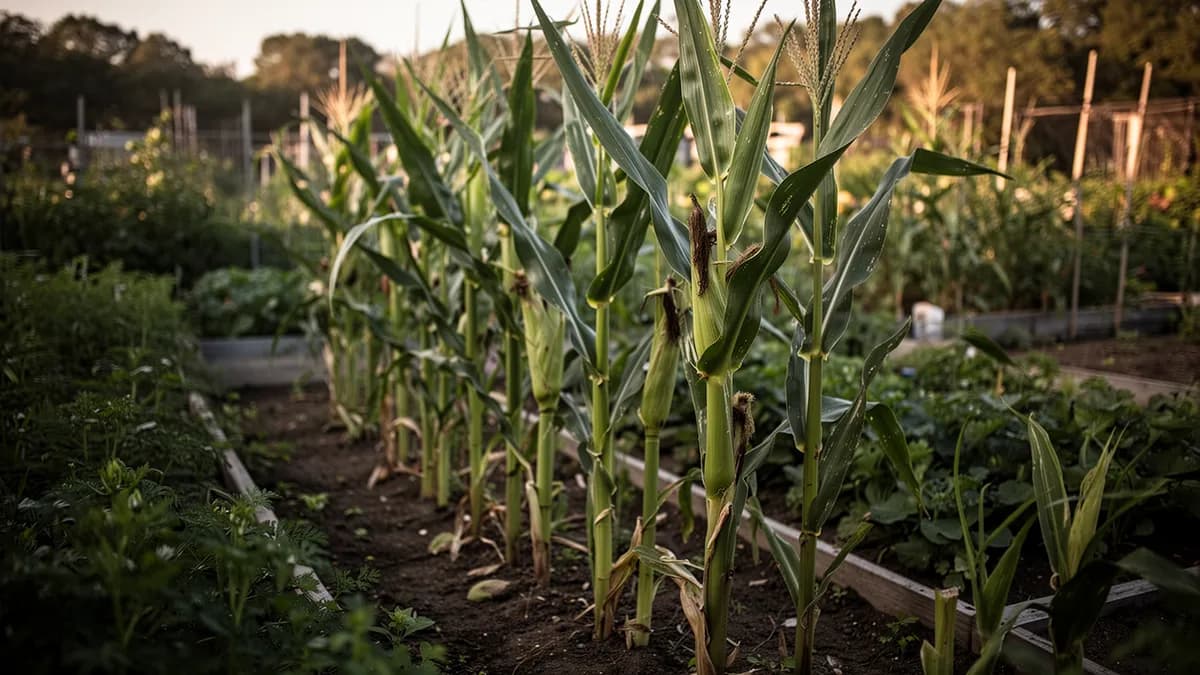
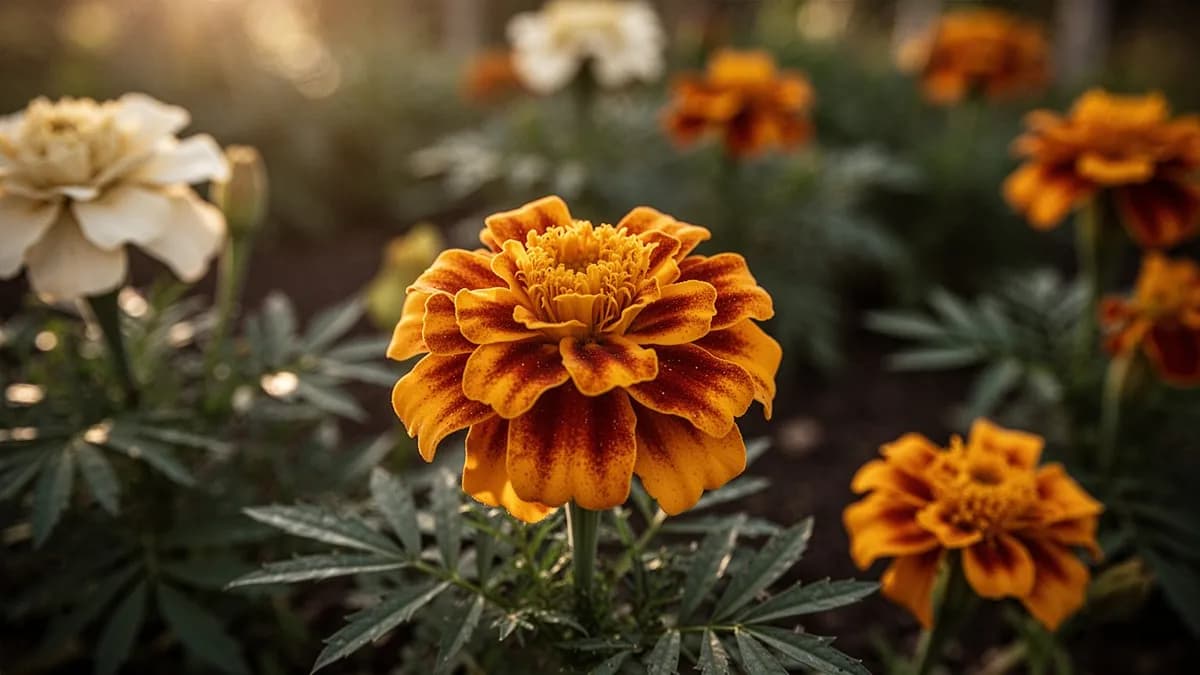
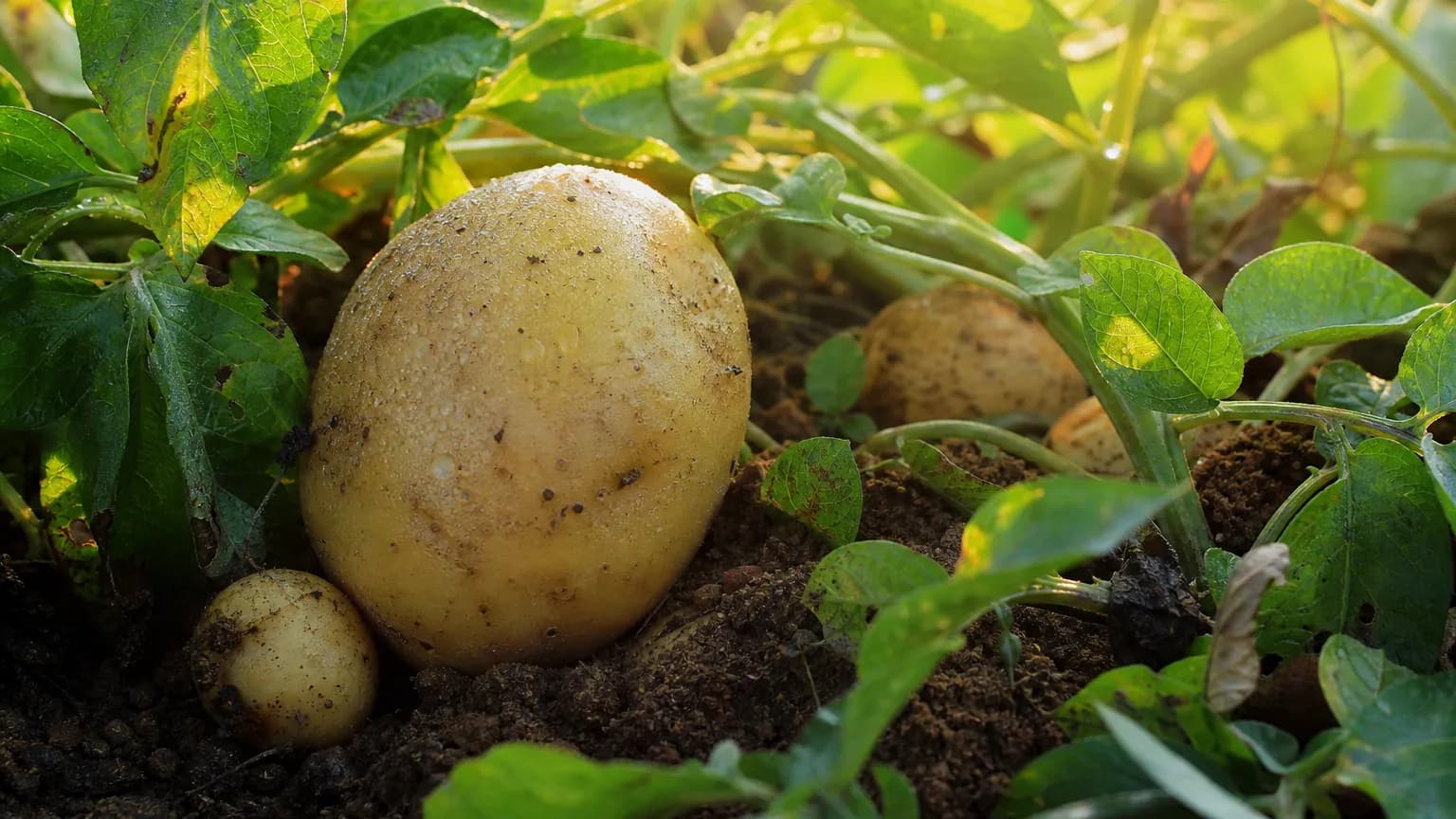
Se asocia bien con maíz y frijoles en la combinación tradicional de las tres hermanas, donde el maíz sirve de soporte, los frijoles fijan nitrógeno y la calabaza cubre el suelo suprimiendo malezas. Las caléndulas plantadas alrededor del cultivo repelen insectos plaga y atraen polinizadores beneficiosos. Evitar plantar cerca de patatas y otras solanáceas que compiten por nutrientes del suelo.
Maíz va a su lado. Papa no.
Saber de huerto de siempre, cotejado con la tabla real de Calabaza de Ceniza — prueba cualquier planta que cultives.
Prueba Calabaza de Ceniza en un bancal, aquí mismo
Un bancal real del planificador con Calabaza de Ceniza ya plantado. Toca una planta compañera para colocarla y mira cómo responde la comprobación de vecinos: verde para buenos vecinos, rojo si hay conflicto.


Guías de cultivo relacionadas
Abónalo bien
Prospera en suelos fértiles, profundos y bien drenados con pH entre 6,0 y 7,0, ricos en materia orgánica. Prepare el terreno incorporando abundante compost o estiércol bien descompuesto antes de la siembra, creando montículos elevados que favorezcan el drenaje. Fertilice con un abono equilibrado cada 3-4 semanas durante el crecimiento vegetativo, y cambie a una fórmula alta en potasio durante la fructificación para mejorar la calidad del fruto y la formación de la capa cerosa.
Temperatura ideal
Compatibilidad de zonas de rusticidad
De la semilla a la cosecha, etapa por etapa
Siembra
Las semillas de calabaza ceniza son grandes, planas y de color crema, y germinan rápidamente en suelo cálido. La gruesa cubierta de la semilla se ablanda con rapidez cuando hay suficiente humedad en el suelo, y la robusta radícula emerge en 4-7 días. Los cotiledones, grandes y redondeados, salen y se abren para comenzar la fotosíntesis de inmediato.
Desarrollo de plántulas
Las hojas verdaderas se desarrollan con rapidez, con una forma profundamente lobulada y textura áspera típica de las cucurbitáceas. El tallo se engrosa y aparecen los primeros zarcillos, señal de la naturaleza trepadora de la planta. El desarrollo de las raíces es vigoroso y sienta las bases para el enorme crecimiento de la enredadera.
Crecimiento de la enredadera
La enredadera entra en un crecimiento explosivo, extendiéndose de 15 a 30 cm por día en climas cálidos. En cada nudo se desarrollan hojas grandes, peludas y lobuladas, junto con zarcillos fuertes que se agarran a cualquier soporte. El tallo principal produce ramas laterales que aumentan aún más la extensión de la planta hasta 4-6 metros o más.
Desarrollo del fruto
Las flores femeninas polinizadas se convierten en frutos que se hinchan rápidamente y están cubiertos de finos pelos suaves. Los frutos jóvenes son verdes y vellosos, y aumentan de tamaño durante 5-8 semanas. A medida que maduran, los pelos retroceden y comienza a formarse en la cáscara una distintiva capa cerosa blanquecina y calcárea, que le da al fruto su aspecto ceniciento y su nombre común.
Después de la cosecha
La calabaza ceniza es una enredadera de temporada larga que termina después de fructificar. Los frutos maduros pueden almacenarse durante muchos meses, pero la planta no continúa produciendo cuando termina la temporada.
Después de la cosecha
La calabaza ceniza es una enredadera de temporada larga que termina después de fructificar. Los frutos maduros pueden almacenarse durante muchos meses, pero la planta no continúa produciendo cuando termina la temporada.
Remoja las semillas en agua tibia durante 8-12 horas antes de sembrarlas para acelerar la germinación. Planta a 2-3 cm de profundidad en suelo cálido con al menos 21°C. En climas fríos, inicia en interior en macetas biodegradables 3-4 semanas antes de la última helada para evitar daños en las raíces al trasplantar.
Cuidar Calabaza de Ceniza mes a mes
Qué hacer cada mes para tu Calabaza de Ceniza
Octubre
Mes actualHarvest mature fruits with fully developed waxy bloom and dry, corky stems. Cut with 5-8 cm of stem attached. Cure harvested fruits in a warm, dry area for 7-10 days. Begin processing any immature fruits that will not ripen before frost.
Ten claro qué hacer en tu huerto, cada mes
Un correo al empezar cada mes: qué sembrar, plantar y hacer ahora mismo — para tu Calabaza de Ceniza y todo lo que crece alrededor. Más un breve curso inicial para esquivar los errores clásicos.
- Qué hacer ahora mismo
- Ajustado a tu temporada
- Curso inicial incluido
Cosechar Calabaza de Ceniza
La calabaza de ceniza se cosecha entre 100 y 140 días después de la siembra, cuando la superficie del fruto desarrolla la característica capa de cera blanca o cenicienta y el pedúnculo comienza a secarse. Corte el fruto dejando un pedúnculo largo de 7-10 cm para prolongar la conservación. Los frutos inmaduros también pueden cosecharse jóvenes y tiernos para consumo inmediato como verdura fresca.
se supone que plantas al comenzar el periodo — indica tu fecha real
Cosecha para consumo fresco cuando los frutos sean medianos y aún verdes, por lo general 60-70 días después de la polinización; para almacenamiento, espera hasta que la capa blanca cerosa se haya desarrollado por completo.
Almacenamiento y conservación
La calabaza madura con su capa cerosa intacta se almacena excepcionalmente bien durante 6-12 meses en un lugar fresco (12-15 °C), seco y bien ventilado, lo que la convierte en una de las hortalizas con mayor vida útil. Una vez cortada, envuelva la pulpa expuesta en film transparente y refrigere, consumiéndola en 5-7 días. La pulpa también se puede cortar en cubos y congelar, o deshidratar para conservación a largo plazo.
Qué falla — y cómo solucionarlo
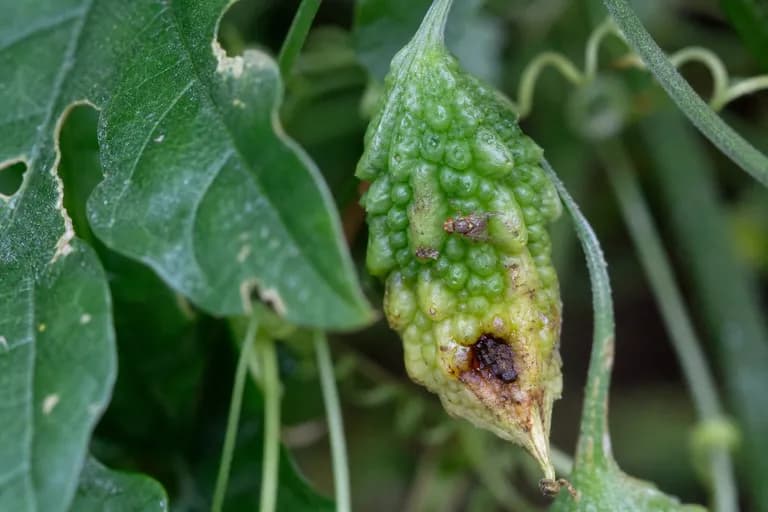
Escarabajo rayado del pepino (Acalymma vittatum)
PlagaAgujeros en hojas y flores, marchitamiento súbito de plántulas jóvenes y posible transmisión de la marchitez bacteriana que provoca el colapso total de la planta.
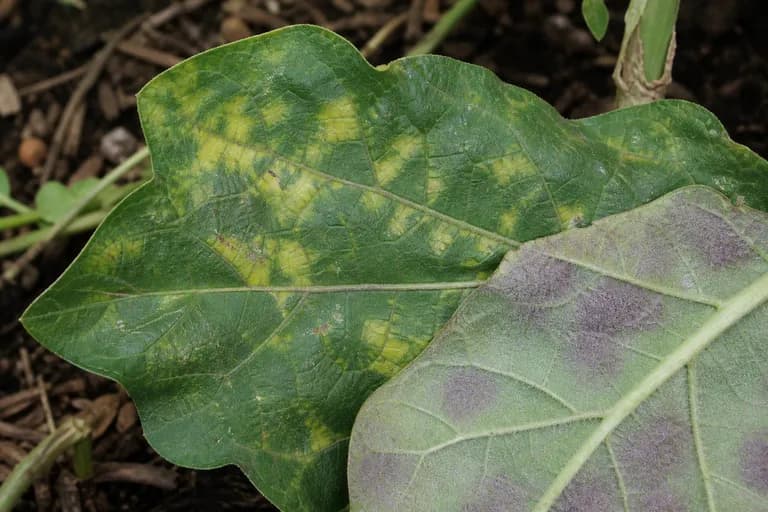
Mildiú velloso (Pseudoperonospora cubensis)
EnfermedadManchas angulares de color amarillo en el haz de las hojas limitadas por las nervaduras, con un moho grisáceo-violáceo en el envés visible en condiciones de alta humedad, que provoca el secado rápido del follaje.
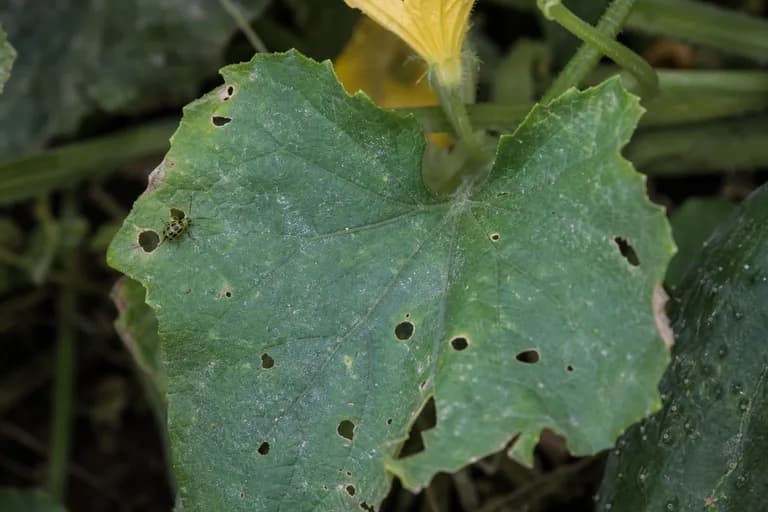
Mosca de la fruta (Bactrocera cucurbitae)
PlagaPequeñas picaduras en la superficie de los frutos jóvenes, larvas blancas en el interior de la pulpa que causan pudrición y caída prematura de los frutos.
Solución de problemas comunes
La necesidad de una temporada cálida muy larga limita su cultivo en climas con veranos cortos o temperaturas frescas. Las plantas ocupan un espacio considerable y pueden resultar difíciles de manejar en huertos pequeños sin estructuras de soporte adecuadas. Los frutos que descansan directamente sobre suelo húmedo son susceptibles a la pudrición basal, por lo que conviene elevarlos sobre paja o tablas.
Consejos de cultivo
- Give ash gourd plenty of space — this is a vigorous vine that can spread 4-6 meters in a single season. Either provide a strong trellis system (which produces cleaner, more uniform fruits) or allocate a large ground area for the vine to sprawl across.
- Build a sturdy trellis if growing vertically. Mature ash gourds can weigh 3-10 kg each, so the support structure must be robust. Use heavy-gauge wire panels, strong wooden frames, or reinforced cattle panels. Support individual fruits with mesh slings or old fabric hammocks tied to the trellis.
- Soak seeds for 8-12 hours before planting and sow in genuinely warm soil of at least 21°C (70°F). Cold soil causes seed rot. In temperate climates, start seeds indoors in biodegradable pots to gain 3-4 weeks of growing time without disturbing the sensitive taproot.
- Hand-pollinate for reliable fruit set, especially in cooler climates or urban gardens with low pollinator activity. Transfer pollen from male flowers (long thin stem, no swelling at base) to female flowers (small swelling at base) using a soft brush in the early morning before flowers close.
- Limit each vine to 2-3 fruits for the largest individual gourds. Remove additional female flowers after your target number of fruits has set. This concentrates the plant's energy into fewer, larger, better-storing fruits rather than many small ones.
- Water deeply and consistently during the vine growth and fruit development stages — at least 2.5 cm per week. Irregular watering causes fruit cracking and poor development. Reduce watering as fruits approach maturity to encourage wax development and rind hardening.
- Harvest only when the waxy white bloom is fully developed and the stem has turned dry and corky. Premature harvest results in poor storage life. Leave 5-8 cm of stem attached when cutting, and cure fruits in a warm, dry location for 7-10 days before long-term storage.
- Store cured ash gourds in a cool, dry, well-ventilated area at 13-15°C (55-60°F). Do not stack fruits — arrange in a single layer on shelves or racks with space between each. Check monthly for soft spots. A properly cured ash gourd with intact wax coating will store for 6-12 months.
Cultiva tu mejor Calabaza de Ceniza — y todo lo que la rodea.
Empieza un plan gratis hoy. Diseña tus bancales, coloca tu Calabaza de Ceniza y deja que PlotMyGarden gestione el momento, el espaciado, las asociaciones y los recordatorios de la semilla a la cesta.
Elige tu Calabaza de Ceniza
Round (Redonda)
Variedad esférica de gran tamaño que puede alcanzar 15-25 kg, con cáscara verde oscura que desarrolla abundante cera blanca al madurar. Excelente para almacenamiento prolongado, madura en 110-120 días.
Oblong (Oblonga)
Frutos alargados y cilíndricos de 5-15 kg, ideales para cortar en rodajas uniformes. Pulpa firme y de textura fina, madura en 100-115 días.
Petha Special
Variedad seleccionada por su pulpa blanca y translúcida ideal para la elaboración del dulce petha, popular en la India. Frutos medianos de 8-12 kg con alto contenido de azúcar.
Mini Ash Gourd
Cultivar compacto que produce frutos más pequeños de 3-5 kg, adecuado para huertos familiares y consumo individual. Madura en 90-100 días con buen sabor.
Ash gourd is an exceptional value crop for home gardeners. A single plant producing 10-30 kg of food from a packet of seeds costing under $3 represents remarkable productivity per square meter. At Asian grocery stores, ash gourd typically sells for $1.50-3.00 per kg, meaning a single plant can produce $15-90 worth of food. The extraordinary storage life of 6-12 months without refrigeration adds further value by providing fresh produce throughout winter without preservation equipment. In South and Southeast Asian communities where ash gourd is a dietary staple, growing it at home eliminates repeated grocery trips for a heavy, bulky ingredient.
Recetas rápidas
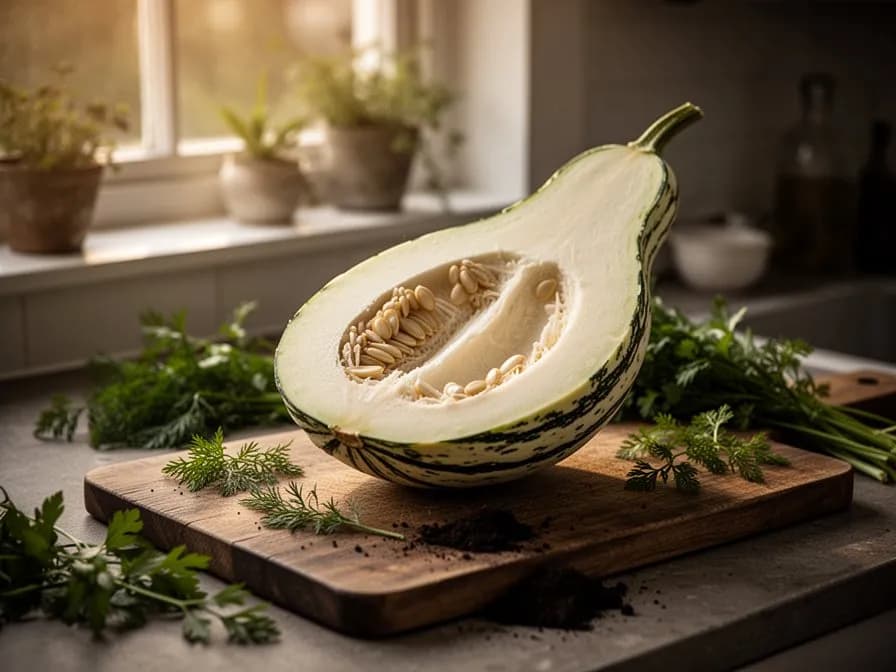
South Indian Ash Gourd Curry (Kumbalanga Curry)
35 minA creamy, mildly spiced coconut curry where tender ash gourd cubes absorb the fragrant blend of curry leaves, mustard seeds, and turmeric. This classic Kerala dish is comforting, easy to digest, and pairs perfectly with steamed rice or chapati.
10 ingredientesAsh Gourd and Lentil Soup (Dal Kootu)
40 minA nourishing, protein-rich soup combining soft ash gourd with yellow lentils in a warming South Indian spice base. The gourd melts into the lentils creating a silky, hearty texture that is both satisfying and easy on the stomach.
11 ingredientesAsh Gourd Halwa (Petha)
50 minA beloved Indian sweet where grated ash gourd is slowly cooked down with sugar and ghee until translucent and candy-like. Petha from the city of Agra is one of India's most famous confections, and this home version captures the same delicate, melt-in-your-mouth quality.
7 ingredientesUsos culinarios
En la cocina asiática se utiliza ampliamente en curris, sopas, caldos y guisos donde absorbe maravillosamente los sabores de las especias. En India, es el ingrediente principal del dulce petha, una confitería translúcida y cristalizada muy popular. También se consume en bebidas medicinales ayurvédicas, y su pulpa joven y tierna se puede saltear o freír como verdura ligera.
Qué contiene
Beneficios para la salud
- Extremely low in calories (13 per 100g) and high in water content (over 96%), making ash gourd one of the most effective natural foods for weight management, hydration, and calorie-controlled diets.
- Rich in dietary fiber that supports digestive regularity, feeds beneficial gut bacteria, and promotes a feeling of satiety despite the very low calorie count.
- Used in Ayurvedic medicine for thousands of years as a cooling, anti-inflammatory food prescribed for urinary tract health, kidney support, and reduction of excess body heat.
- Contains vitamin C and B-vitamins that support immune function, energy metabolism, and antioxidant defense against cellular damage from free radicals.
- Traditional Chinese medicine classifies ash gourd as a diuretic food that helps reduce fluid retention and edema, and modern nutritional analysis supports its potential for supporting healthy kidney function due to its high water and potassium content.
- The alkaline nature of ash gourd is valued in traditional medicine systems for helping to balance body pH, reduce acidity, and soothe inflammatory conditions of the digestive tract including gastritis and acid reflux.
De dónde viene Calabaza de Ceniza
Ash gourd (Benincasa hispida) is native to Southeast Asia, with the most likely center of origin being the Indo-Malayan region encompassing parts of modern-day Indonesia, Malaysia, and southern India. Archaeological evidence and historical texts suggest cultivation stretching back at least 4,000-5,000 years, making it one of the oldest cultivated crops in tropical Asia. Ancient Sanskrit texts including the Charaka Samhita and Sushruta Samhita, foundational works of Ayurvedic medicine dating to approximately 600 BCE, describe ash gourd in detail as both a food and a medicinal plant, prescribing it for urinary disorders, mental clarity, and digestive health.
From its Southeast Asian origins, ash gourd spread along ancient trade routes throughout the tropical and subtropical world. It reached China over 2,000 years ago, where it became known as 'dong gua' (winter melon) and was integrated into traditional Chinese medicine and cuisine. The fruit's extraordinary storage life — lasting 6-12 months without refrigeration thanks to its thick waxy rind — made it invaluable in pre-refrigeration societies where preserving fresh vegetables through dry seasons and winters was a constant challenge. In China, ash gourd became a staple ingredient in soups, stews, and the beloved sweet winter melon tea.
Ash gourd cultivation spread to Japan, Korea, the Philippines, and the Pacific Islands, adapting to diverse climates and culinary traditions in each region. In India, it became deeply embedded in religious and cultural practices — the fruit is considered auspicious in Hindu tradition and is used in temple offerings and ceremonial cooking. The city of Agra developed the art of making Petha, a translucent ash gourd confection, over 350 years ago, creating one of India's most famous sweets. Today, ash gourd is cultivated commercially across India, China, Southeast Asia, and parts of Africa, and is increasingly grown by home gardeners in temperate Western countries who are discovering this remarkably productive, easy-to-grow, and extraordinarily long-storing gourd.
Calabaza de Ceniza: ¿sabías que?
Datos fascinantes sobre Calabaza de Ceniza
Ash gourd gets its name from the chalky, ash-like white waxy coating (bloom) that develops on the rind as the fruit matures. This natural wax layer is so effective as a preservative that whole ash gourds can be stored for 6-12 months at room temperature without refrigeration — a remarkable trait that made it a vital food security crop across tropical Asia for centuries.
Calabaza de Ceniza: preguntas frecuentes
¿Cuándo debo plantar Calabaza de Ceniza?
¿Cuáles son buenas plantas acompañantes para Calabaza de Ceniza?
¿En qué zonas de rusticidad puede crecer Calabaza de Ceniza?
¿Cuánto sol necesita Calabaza de Ceniza?
¿A qué distancia debo espaciar Calabaza de Ceniza?
¿Qué plagas y enfermedades afectan a Calabaza de Ceniza?
¿Cómo almaceno Calabaza de Ceniza después de la cosecha?
¿Cuáles son las mejores variedades de Calabaza de Ceniza para cultivar?
¿Qué suelo necesita Calabaza de Ceniza?
How long can I store a whole ash gourd?
What does ash gourd taste like?
Can I grow ash gourd in a temperate climate?
Is ash gourd the same as winter melon?
How do I know when ash gourd is ready to harvest?
Why are my ash gourd flowers dropping without setting fruit?
Acabas de leer la teoría. Ahora cultívala en piloto automático.
Todo lo que hace que Calabaza de Ceniza sea delicado — el momento, el espaciado, las asociaciones, la ventana de cosecha — es justo lo que PlotMyGarden resuelve por ti, para cada planta de tu huerto.
Un plan que conoce tu clima
Indica tu ubicación una vez. Recibe fechas de siembra, abonado y cosecha basadas en tu última helada real y el pronóstico en vivo — sin adivinar con un sobre genérico.
De la sección “Cuándo plantar”Planificador de bancales de arrastrar y soltar
Diseña bancales sobre una cuadrícula. Cada planta encaja con su espaciado correcto y ves toda la temporada antes de gastar un céntimo en semillas.
De la sección “Cultivo”Conflictos de asociación, detectados a tiempo
Más de 200 buenas y malas combinaciones comprobadas en vivo mientras plantas — para que un error que arruine la temporada nunca llegue a la tierra.
De la sección “Asociaciones”Recordatorios que sí vas a seguir
“Riega las judías.” “Recoge hoy antes de que se pase.” Oportunos, concretos y ligados a las plantas que de verdad cultivas.
De la sección “Cosecha”Escalonado, programado
¿Quieres cosechar seis semanas en vez de seis días? Reparte tus siembras automáticamente y te avisa cuando toca el siguiente lote.
De la sección “Cuándo plantar”Un registro que se vuelve más listo
Cada cosecha que registras le enseña tu huerto. El plan del año que viene parte de lo que de verdad funcionó en tu suelo, no en un manual.
De la sección “Resumen”Planta estos junto a Calabaza de Ceniza
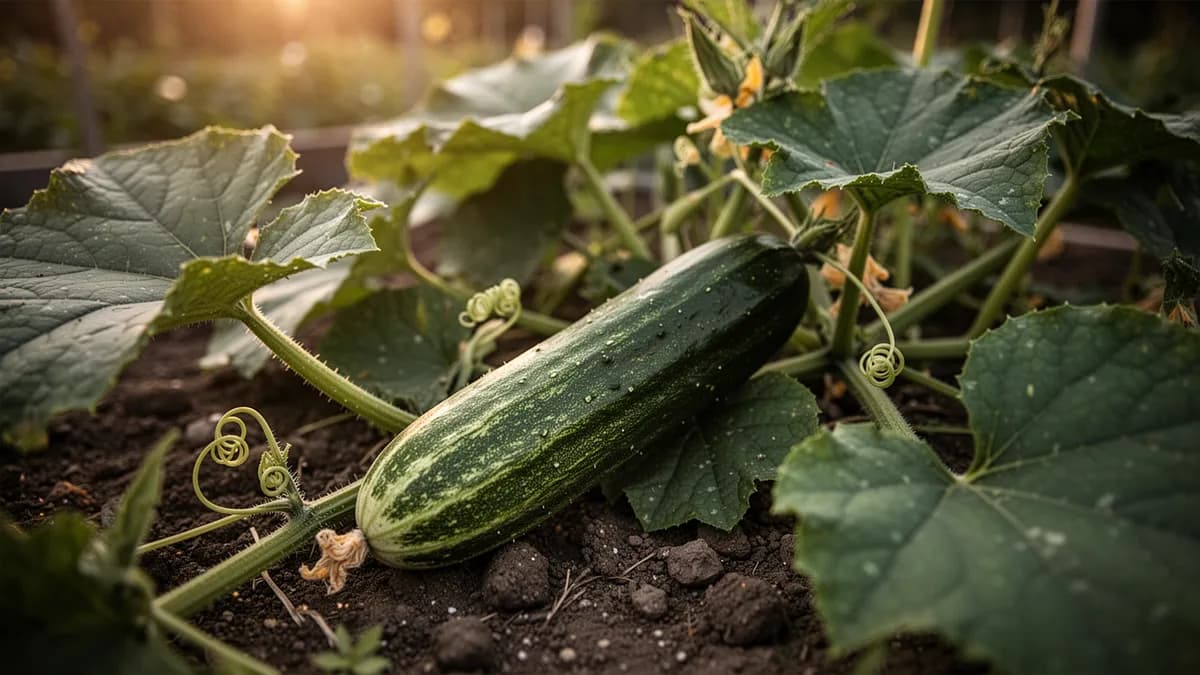
Más Cucurbitáceas
Mantén Calabaza de Ceniza lejos de estos
Cultiva tu mejor Calabaza de Ceniza — y todo lo que la rodea.
Empieza un plan gratis hoy. Diseña tus bancales, coloca tu Calabaza de Ceniza y deja que PlotMyGarden gestione el momento, el espaciado, las asociaciones y los recordatorios de la semilla a la cesta.