Amaranto Rojo
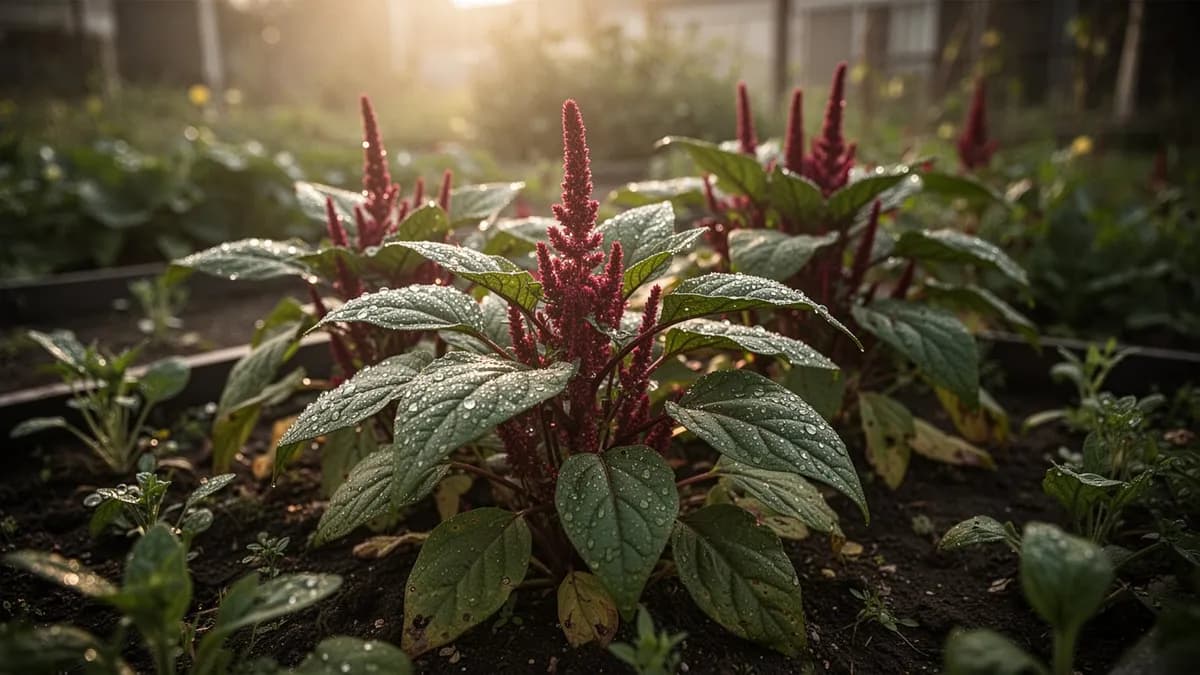
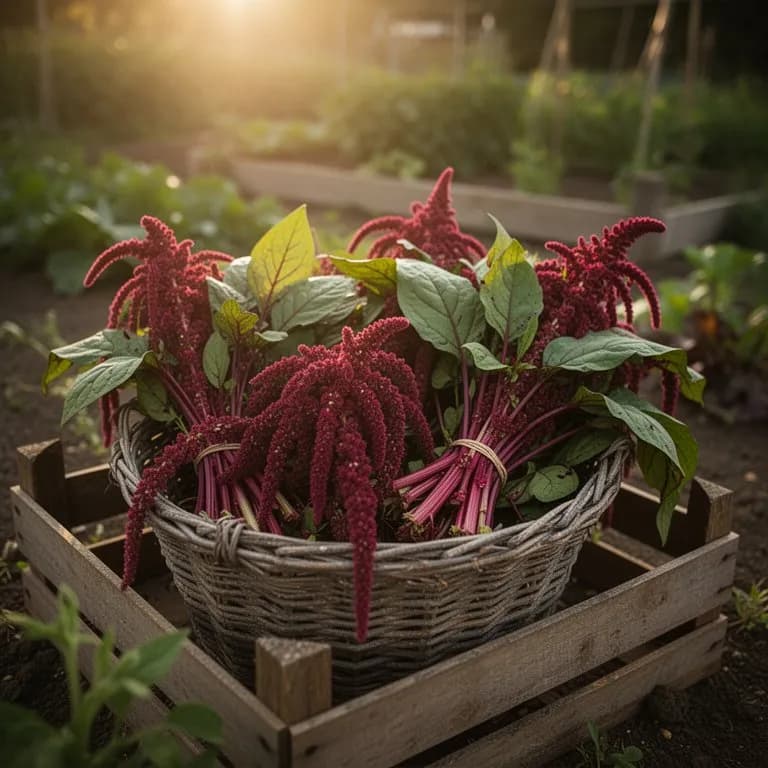
El amaranto rojo (Amaranthus cruentus) es una planta de doble propósito que destaca por sus espectaculares hojas de color rojo-púrpura intenso y sus inflorescencias vistosas, siendo a la vez una verdura de hoja nutritiva y una fuente de semillas ricas en proteínas.





En esta páginaResumen
Conoce Amaranto Rojo
El amaranto rojo (Amaranthus cruentus) es una planta de doble propósito que destaca por sus espectaculares hojas de color rojo-púrpura intenso y sus inflorescencias vistosas, siendo a la vez una verdura de hoja nutritiva y una fuente de semillas ricas en proteínas. Alcanza una altura de 1-2 metros y aporta un valor ornamental excepcional al huerto comestible.
Cuándo plantar Amaranto Rojo
Las diminutas semillas se siembran directamente en exterior cuando la temperatura del suelo supere los 18 °C, ya que el amaranto no tolera el frío. Esparza las semillas sobre la superficie del suelo húmedo y presione ligeramente sin cubrir, ya que requieren luz para germinar. La germinación ocurre en 7-14 días a temperaturas óptimas de 20-30 °C.
Tu año de Amaranto Rojo
Ajustado a Zona 7 · temporada típica · la helada se va hacia el 2 abr y vuelve hacia el 1 nov
Planta Amaranto Rojo Abr – Jun y cosecha Jun – Ago. Consulta los métodos de plantación y elige tu clima para adaptar los periodos.
Cómo cultivar Amaranto Rojo
El amaranto rojo es una planta extremadamente resistente al calor que prospera en condiciones donde otras verduras de hoja se espigan rápidamente. Siembre las semillas cuando la temperatura del suelo supere los 18 °C, esparciendo las diminutas semillas sobre la superficie del suelo y presionándolas ligeramente sin cubrirlas, ya que necesitan luz para germinar. Aclare las plántulas a 20-30 cm de separación cuando tengan 5-7 cm de altura.
Mantenga el suelo uniformemente húmedo durante la germinación y las primeras semanas de crecimiento, reduciendo el riego gradualmente a medida que las plantas se establecen. El amaranto desarrolla un sistema radicular profundo que lo hace tolerante a la sequía una vez establecido. Aplique un acolchado de 5-8 cm alrededor de las plantas para conservar la humedad y suprimir las malas hierbas.
Para la cosecha de hojas, comience a recolectar las hojas exteriores cuando las plantas tengan 15-20 cm de altura, lo que estimula la producción de nuevo follaje. Si el objetivo es la cosecha de semillas, deje que las inflorescencias maduren completamente en la planta hasta que adquieran un color marrón oscuro. Las plantas pueden resembrarse espontáneamente, por lo que conviene retirar las cabezas de semillas antes de que se abran si no se desea propagación descontrolada.
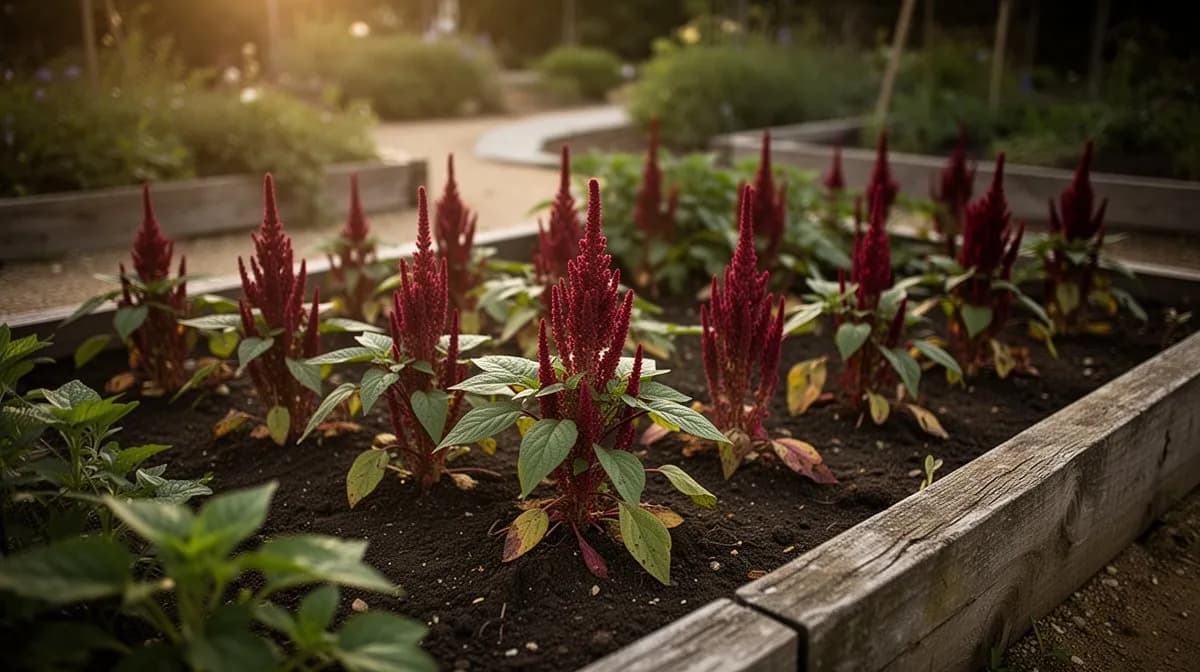
36 plantas caben en un bancal de 120 × 240 cm
Cada Amaranto Rojo pide 25 cm de margen. El planificador guarda ese marco por ti — cada planta, cada bancal.
Los mejores vecinos de Amaranto Rojo
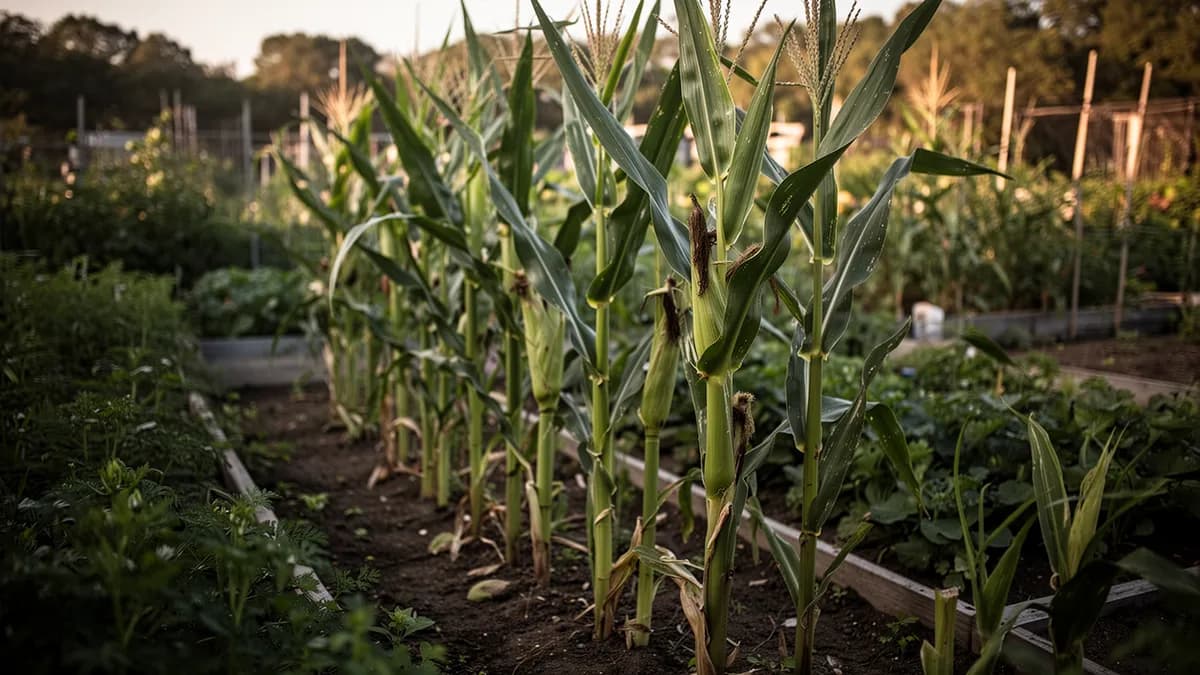
Se asocia bien con tomates, pimientos y berenjenas, proporcionando sombra parcial beneficiosa al suelo durante los meses más calurosos. Las fresas y las habas también son buenos compañeros. Evitar plantar cerca de cultivos de porte bajo que puedan quedar sombreados por su altura considerable.
Maíz va a su lado.
Saber de huerto de siempre, cotejado con la tabla real de Amaranto Rojo — prueba cualquier planta que cultives.
Prueba Amaranto Rojo en un bancal, aquí mismo
Un bancal real del planificador con Amaranto Rojo ya plantado. Toca una planta compañera para colocarla y mira cómo responde la comprobación de vecinos: verde para buenos vecinos, rojo si hay conflicto.


Guías de cultivo relacionadas
Abónalo bien
Prefiere suelos ricos en materia orgánica con pH entre 6,0 y 7,5, aunque tolera una amplia gama de condiciones edáficas incluyendo suelos pobres. Incorporar compost bien descompuesto antes de la siembra y aplicar un fertilizante equilibrado orgánico a mitad de temporada. El amaranto es notablemente eficiente en la absorción de nutrientes y produce abundante biomasa incluso en suelos moderadamente fértiles.
Temperatura ideal
Compatibilidad de zonas de rusticidad
De la semilla a la cosecha, etapa por etapa
Germinación
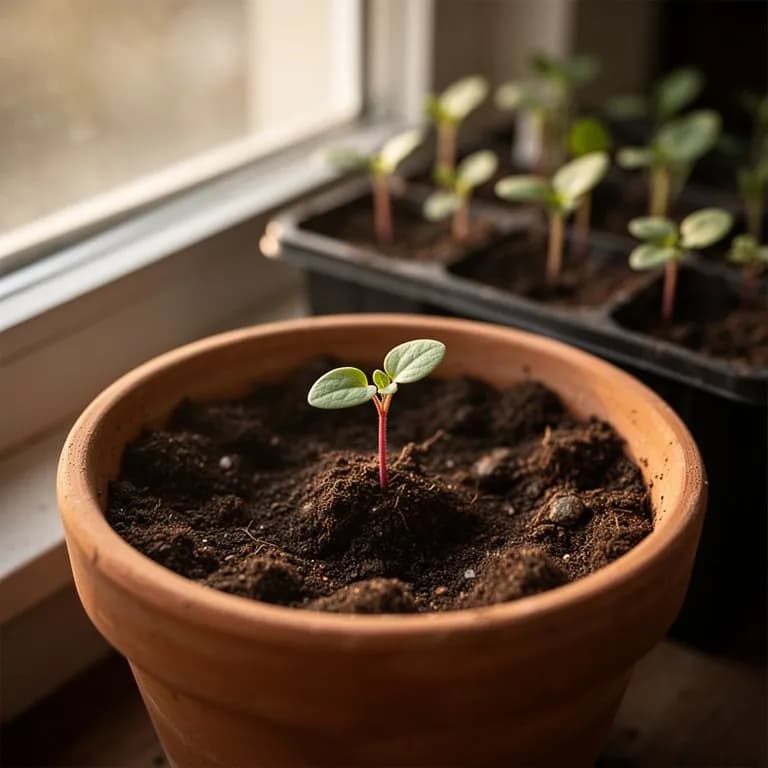
Las semillas diminutas germinan rápidamente en suelo cálido y producen plántulas delicadas con pequeños cotiledones redondeados que ya muestran un leve tono magenta. Las semillas necesitan luz para germinar y deben sembrarse en la superficie o cubrirse apenas con una capa fina de tierra. La germinación tarda de 4 a 10 días con temperaturas del suelo superiores a 18°C (65°F).
Desarrollo de plántulas
Aparecen las hojas verdaderas con la característica forma ovalada y puntiaguda, y una coloración cada vez más intensa de rojo a burdeos. Al principio las plántulas crecen despacio mientras establecen su sistema radicular. Esta es la etapa ideal para un primer corte de microgreens o hojas baby si se desea.
Crecimiento vegetativo rápido
Las plantas entran en una fase de crecimiento vigoroso, produciendo un follaje rojo intenso y exuberante sobre tallos cada vez más firmes. El crecimiento se acelera mucho con el calor, y las plantas pueden aumentar 5-10 cm por semana. La producción de hojas está en su punto máximo y esta es la ventana ideal para una cosecha continua de hojas.
Floración
Surgen plumas florales densas y espectaculares desde la punta de crecimiento y las axilas superiores de las hojas, en tonos que van del rojo carmesí al magenta. Las plumas están formadas por miles de flores diminutas polinizadas por el viento y muy atractivas para insectos beneficiosos. La calidad de las hojas disminuye ligeramente a medida que la planta redirige su energía hacia la reproducción.
Desarrollo de semillas
Las panojas florales se llenan gradualmente con miles de semillas pequeñas y redondas que se oscurecen de rosa pálido a un rojo negruzco profundo al madurar. Las panojas se vuelven pesadas y se inclinan por su propio peso. Una sola planta puede producir de 50 000 a 100 000 semillas, lo que convierte al amaranto en una de las plantas más prolíficas en producción de semillas del jardín.
Senescencia y cosecha de semillas
La planta comienza a secarse de forma natural a medida que se completa la maduración de las semillas. Las hojas inferiores amarillean y caen mientras las cabezas de semillas se vuelven papiráceas y secas. Esta es la última ventana para cosechar grano antes de que las semillas empiecen a abrirse y a auto-sembrarse libremente por todo el jardín.
Presiona las semillas suavemente sobre la superficie del suelo y rocía con cuidado — no las entierres profundamente. Mantén el suelo constantemente húmedo, pero no empapado. Una temperatura del suelo de 21-27°C (70-80°F) da la germinación más rápida.
Cuidar Amaranto Rojo mes a mes
Qué hacer cada mes para tu Amaranto Rojo
Octubre
Mes actualComplete seed harvest before hard frost. Clean and winnow seeds for storage or kitchen use. In zones 9-12, make a final succession sowing for a late-autumn and winter leaf crop. Pull spent plants and compost.
Ten claro qué hacer en tu huerto, cada mes
Un correo al empezar cada mes: qué sembrar, plantar y hacer ahora mismo — para tu Amaranto Rojo y todo lo que crece alrededor. Más un breve curso inicial para esquivar los errores clásicos.
- Qué hacer ahora mismo
- Ajustado a tu temporada
- Curso inicial incluido
Cosechar Amaranto Rojo
Las hojas jóvenes se pueden cosechar desde los 25-40 días tras la siembra, cortando las hojas exteriores mientras se deja el punto de crecimiento central intacto para permitir la regeneración continua. Para la cosecha de semillas, espere hasta que las inflorescencias estén completamente maduras y comiencen a desprender semillas al sacudirlas, generalmente a los 90-120 días.
se supone que plantas al comenzar el periodo — indica tu fecha real
Empieza a cosechar cuando las plantas alcancen 15 a 20 cm de altura, normalmente entre 30 y 40 días después de la siembra.
Almacenamiento y conservación
Las hojas frescas se conservan en el frigorífico envueltas en papel húmedo dentro de una bolsa perforada durante 5-7 días. Para conservación a largo plazo, blanquear las hojas durante 2 minutos, enfriar en agua con hielo y congelar en bolsas herméticas. Las semillas secas se almacenan en recipientes herméticos en un lugar fresco y oscuro durante varios años.
Qué falla — y cómo solucionarlo
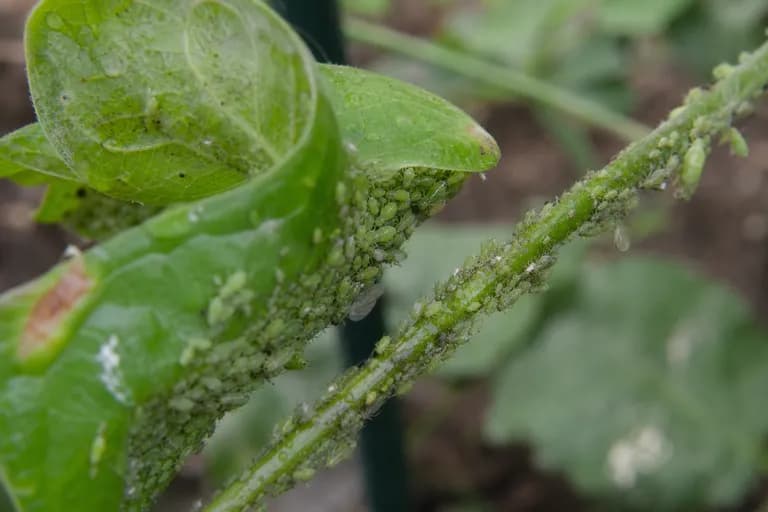
Pulgón verde del melocotonero (Myzus persicae)
PlagaColonias de pequeños insectos verdes o rosados en los brotes tiernos y el envés de las hojas jóvenes, causando enrollamiento foliar, deformación de brotes y secreción de melaza pegajosa.
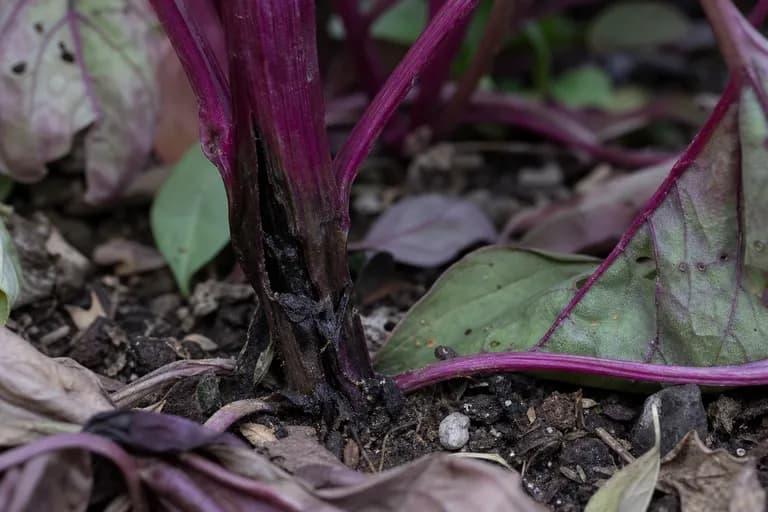
Damping-off (Pythium spp.)
EnfermedadCaída y marchitamiento súbito de plántulas jóvenes a nivel del suelo, estrangulamiento del tallo en la zona del cuello y muerte rápida de semilleros densos en condiciones frías y húmedas.
Escarabajo pulga (Alticinae)
PlagaPequeños agujeros redondos en las hojas que les dan apariencia de perdigonada, especialmente en hojas jóvenes. Los adultos son diminutos escarabajos saltadores de color oscuro muy difíciles de atrapar.
Solución de problemas comunes
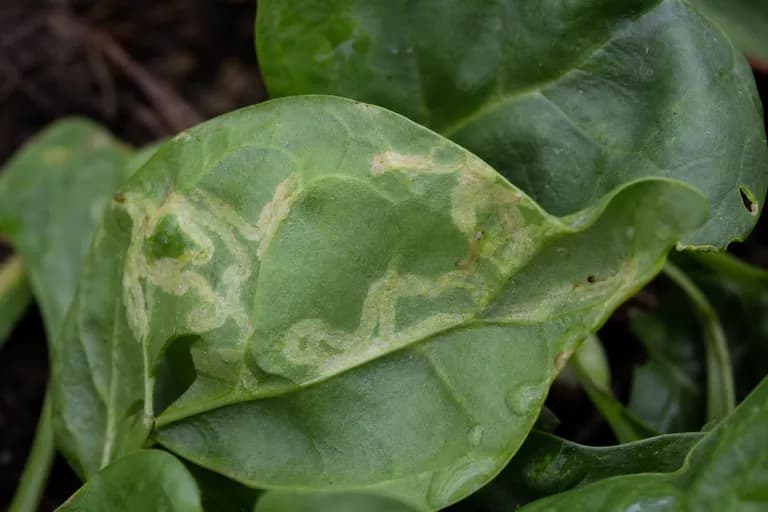
La pudrición radicular en suelos encharcados es el problema más grave, ya que el amaranto no tolera el agua estancada a pesar de su resistencia general. Las plántulas son vulnerables al damping-off si se siembran demasiado densas en condiciones frías y húmedas. En zonas ventosas, las plantas altas pueden necesitar tutores o protección contra el viento para evitar el vuelco.
Consejos de cultivo
- Surface-sow seeds and do not bury them. Amaranth seeds are extremely tiny (less than 1mm) and require light to germinate. Press them gently onto moist soil and mist with a spray bottle — covering with more than 3mm of soil will prevent germination entirely.
- Mix tiny seeds with fine sand before sowing to achieve even spacing. A ratio of one part seed to ten parts sand helps distribute the minuscule seeds more uniformly and prevents the dense clumps that result from sowing seeds straight from the packet.
- Succession-sow every 2-3 weeks from late spring through midsummer for a continuous supply of tender baby leaves. Young leaves harvested at 10-15 cm tall are the most tender and mild-flavored, making them perfect for salads.
- Harvest outer leaves first, leaving the central growing point intact — the plant will keep producing new leaves for weeks. Once you cut the central stem or allow flowering, leaf production quality drops significantly.
- Pinch out the growing tip when plants reach 30-40 cm tall to encourage side branching and a bushier habit with more harvestable leaves. Unpinched plants tend to grow tall and lanky with fewer, tougher leaves.
- Red amaranth tolerates poor soil better than most vegetables but responds dramatically to compost and balanced fertilization. A single side-dressing of compost or 10-10-10 fertilizer when plants are 15 cm tall noticeably increases leaf size and tenderness.
- Be prepared for enthusiastic self-sowing. Once red amaranth goes to seed in your garden, volunteer seedlings will appear for years. This can be a benefit or a nuisance — deadhead flower plumes before they shatter if you want to control spread.
- Use red amaranth as a trap crop for flea beetles and leaf miners, which prefer it over many other vegetables. Plant a sacrificial row near susceptible brassicas to draw pests away from your main crops.
Cultiva tu mejor Amaranto Rojo — y todo lo que la rodea.
Empieza un plan gratis hoy. Diseña tus bancales, coloca tu Amaranto Rojo y deja que PlotMyGarden gestione el momento, el espaciado, las asociaciones y los recordatorios de la semilla a la cesta.
Elige tu Amaranto Rojo
Red Garnet
Variedad espectacular con hojas y tallos de color granate intenso y grandes inflorescencias rojas. Excelente como verdura de hoja y muy ornamental, madura para semillas en 100-110 días.
Hopi Red Dye
Variedad ancestral de los nativos Hopi utilizada tradicionalmente como tinte natural y alimento. Produce inflorescencias de color rojo brillante y semillas oscuras ricas en proteínas en 110-120 días.
Molten Fire
Cultivar ornamental comestible con hojas tricolores en tonos rojo, naranja y amarillo que crean un efecto visual impresionante en el huerto. Las hojas jóvenes son tiernas y sabrosas para ensaladas.
Red Leaf
Variedad productiva de hojas grandes de color rojo-burdeos, seleccionada específicamente para la cosecha de verdura de hoja. Crecimiento rápido con primeras hojas listas para recolectar en 30-35 días.
Red amaranth seed packets cost $2-4 and contain hundreds of seeds — enough for multiple sowings all season. Fresh red amaranth greens sell for $4-8 per bunch at farmers markets and Asian grocery stores, and are often unavailable at conventional supermarkets. Growing 6-10 plants provides a steady supply of premium greens worth $60-120 over the season. The grain harvest adds further value, as organic amaranth grain retails for $8-15 per pound. Because the plant self-sows freely, you may never need to buy seeds again after the first year.
Recetas rápidas
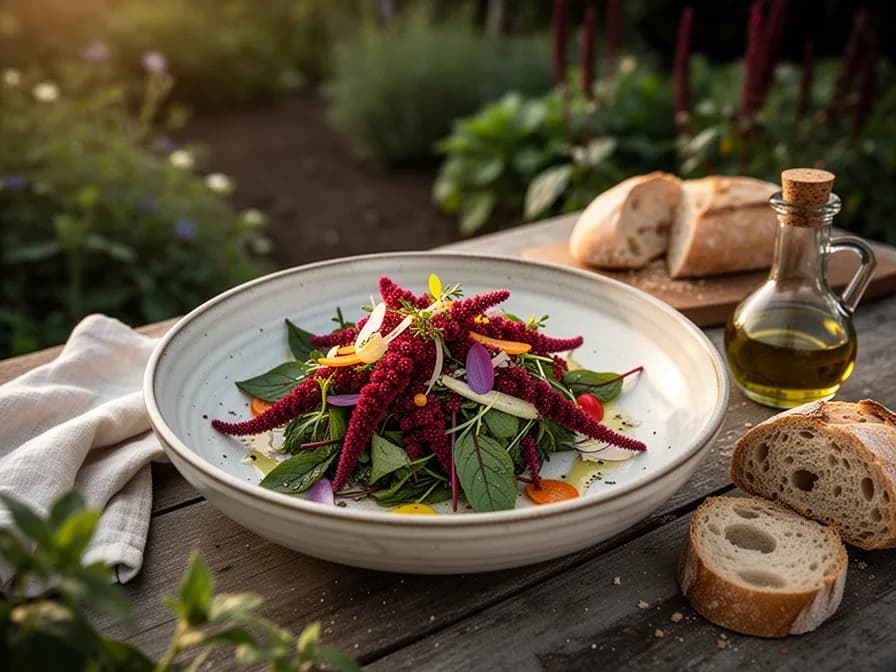
Garlic Red Amaranth Stir-Fry
10 minA lightning-fast side dish common across Southeast Asia and the Caribbean — tender amaranth leaves wilted with garlic and a splash of soy sauce. The leaves cook down like spinach but hold their vibrant color and have a richer, earthier flavor with a hint of sweet beet-like taste.
7 ingredientesCaribbean Callaloo Soup
35 minA silky, richly flavored one-pot soup inspired by the beloved Caribbean dish traditionally made with amaranth greens (called callaloo in the islands). Coconut milk adds body while scotch bonnet pepper provides gentle heat.
9 ingredientesAmaranth Grain Porridge with Honey and Berries
25 minA protein-packed breakfast porridge made from amaranth seeds that cooks to a creamy, slightly nutty consistency similar to polenta. Naturally gluten-free and loaded with complete protein, it keeps you full through the entire morning.
8 ingredientesUsos culinarios
Las hojas jóvenes se utilizan como verdura de hoja similar a la espinaca, tanto crudas en ensaladas como salteadas, al vapor o en sopas y guisos tradicionales de Asia, África y América Latina. Las semillas se consumen como pseudocereal, tostadas, en gachas o molidas como harina sin gluten para panes y galletas.
Qué contiene
Beneficios para la salud
- Exceptional source of vitamin A as beta-carotene (58% DV per 100g of leaves), supporting healthy vision, robust immune function, and skin cell renewal — especially valuable for communities with limited access to other vitamin A-rich foods.
- One of the best plant-based sources of bioavailable iron among leafy greens, with lower oxalate content than spinach allowing greater mineral absorption — critical for preventing iron-deficiency anemia.
- The betacyanin pigments responsible for the red-purple color are potent antioxidants with demonstrated anti-inflammatory properties, and studies suggest they may help protect cells against oxidative damage linked to chronic disease.
- Amaranth grain provides complete protein with all essential amino acids, including high levels of lysine — an amino acid deficient in wheat, rice, and corn — making it particularly valuable for plant-based diets.
- Rich in calcium (215mg per 100g of leaves) with better bioavailability than many other greens, supporting bone health, muscle function, and nerve signaling without the need for dairy products.
- Contains significant dietary fiber and has a low glycemic index, helping regulate blood sugar levels after meals — traditional medicine systems in India and Central America have long used amaranth preparations to support metabolic health.
De dónde viene Amaranto Rojo
Red amaranth (Amaranthus cruentus and related species) originated in Central and South America, where it was domesticated at least 6,000 to 8,000 years ago alongside maize, beans, and squash. Archaeological evidence from cave sites in Mexico's Tehuacan Valley shows amaranth seeds were gathered and cultivated by some of the earliest agricultural societies in the Americas. By the height of the Aztec Empire in the 15th century, amaranth had become one of the four primary crops of Mesoamerica, with an estimated 20,000 tonnes of amaranth grain collected annually as tribute from conquered provinces — a quantity rivaling the tribute of maize.
The Aztecs revered amaranth not merely as food but as a sacred substance integral to religious ceremonies. Ground amaranth seeds were mixed with honey and sometimes sacrificial blood to form dough figures of deities ('tzoalli'), which were shared and consumed during major festivals. When Spanish conquistadors arrived in the 16th century, they perceived these rituals as a direct challenge to Catholic communion and systematically banned amaranth cultivation under penalty of severe punishment. Fields were burned, seed stores destroyed, and the crop that had sustained civilizations for millennia was driven nearly to extinction in its homeland.
Despite the suppression in the Americas, amaranth had already spread throughout the Old World along ancient trade routes. Red-leafed varieties became deeply established in the cuisines of South and Southeast Asia, sub-Saharan Africa, and the Caribbean — regions where the plant's heat tolerance and nutritional density made it invaluable. In India, red amaranth ('lal shak') remains one of the most widely consumed leafy vegetables, eaten daily by hundreds of millions. In the Caribbean, it became the foundation of callaloo, one of the region's most iconic dishes. Today, amaranth is experiencing a global renaissance as a superfood, with both the grain and the leaves recognized for exceptional protein quality, micronutrient density, and adaptability to hot, challenging growing conditions that will become increasingly common under climate change.
Amaranto Rojo: ¿sabías que?
Datos fascinantes sobre Amaranto Rojo
Red amaranth was a sacred crop of the Aztec Empire, who called it 'huautli' and cultivated it on a scale rivaling maize and beans. Aztec warriors consumed amaranth cakes before battle, believing the grain granted strength and endurance — the Spanish conquistadors banned its cultivation to suppress indigenous religious practices.
Amaranto Rojo: preguntas frecuentes
¿Cuándo debo plantar Amaranto Rojo?
¿Cuáles son buenas plantas acompañantes para Amaranto Rojo?
¿En qué zonas de rusticidad puede crecer Amaranto Rojo?
¿Cuánto sol necesita Amaranto Rojo?
¿A qué distancia debo espaciar Amaranto Rojo?
¿Qué plagas y enfermedades afectan a Amaranto Rojo?
¿Cómo almaceno Amaranto Rojo después de la cosecha?
¿Cuáles son las mejores variedades de Amaranto Rojo para cultivar?
¿Qué suelo necesita Amaranto Rojo?
Can I eat both the leaves and the seeds of red amaranth?
Why does the cooking water turn bright pink or red when I cook red amaranth?
Is red amaranth the same as the weed that grows everywhere?
How do I harvest and clean the tiny amaranth seeds for eating?
Will red amaranth grow in partial shade?
Is red amaranth safe for people with kidney stones or oxalate concerns?
Acabas de leer la teoría. Ahora cultívala en piloto automático.
Todo lo que hace que Amaranto Rojo sea delicado — el momento, el espaciado, las asociaciones, la ventana de cosecha — es justo lo que PlotMyGarden resuelve por ti, para cada planta de tu huerto.
Un plan que conoce tu clima
Indica tu ubicación una vez. Recibe fechas de siembra, abonado y cosecha basadas en tu última helada real y el pronóstico en vivo — sin adivinar con un sobre genérico.
De la sección “Cuándo plantar”Planificador de bancales de arrastrar y soltar
Diseña bancales sobre una cuadrícula. Cada planta encaja con su espaciado correcto y ves toda la temporada antes de gastar un céntimo en semillas.
De la sección “Cultivo”Conflictos de asociación, detectados a tiempo
Más de 200 buenas y malas combinaciones comprobadas en vivo mientras plantas — para que un error que arruine la temporada nunca llegue a la tierra.
De la sección “Asociaciones”Recordatorios que sí vas a seguir
“Riega las judías.” “Recoge hoy antes de que se pase.” Oportunos, concretos y ligados a las plantas que de verdad cultivas.
De la sección “Cosecha”Escalonado, programado
¿Quieres cosechar seis semanas en vez de seis días? Reparte tus siembras automáticamente y te avisa cuando toca el siguiente lote.
De la sección “Cuándo plantar”Un registro que se vuelve más listo
Cada cosecha que registras le enseña tu huerto. El plan del año que viene parte de lo que de verdad funcionó en tu suelo, no en un manual.
De la sección “Resumen”Planta estos junto a Amaranto Rojo
Más Hortalizas de hoja
Cultiva tu mejor Amaranto Rojo — y todo lo que la rodea.
Empieza un plan gratis hoy. Diseña tus bancales, coloca tu Amaranto Rojo y deja que PlotMyGarden gestione el momento, el espaciado, las asociaciones y los recordatorios de la semilla a la cesta.