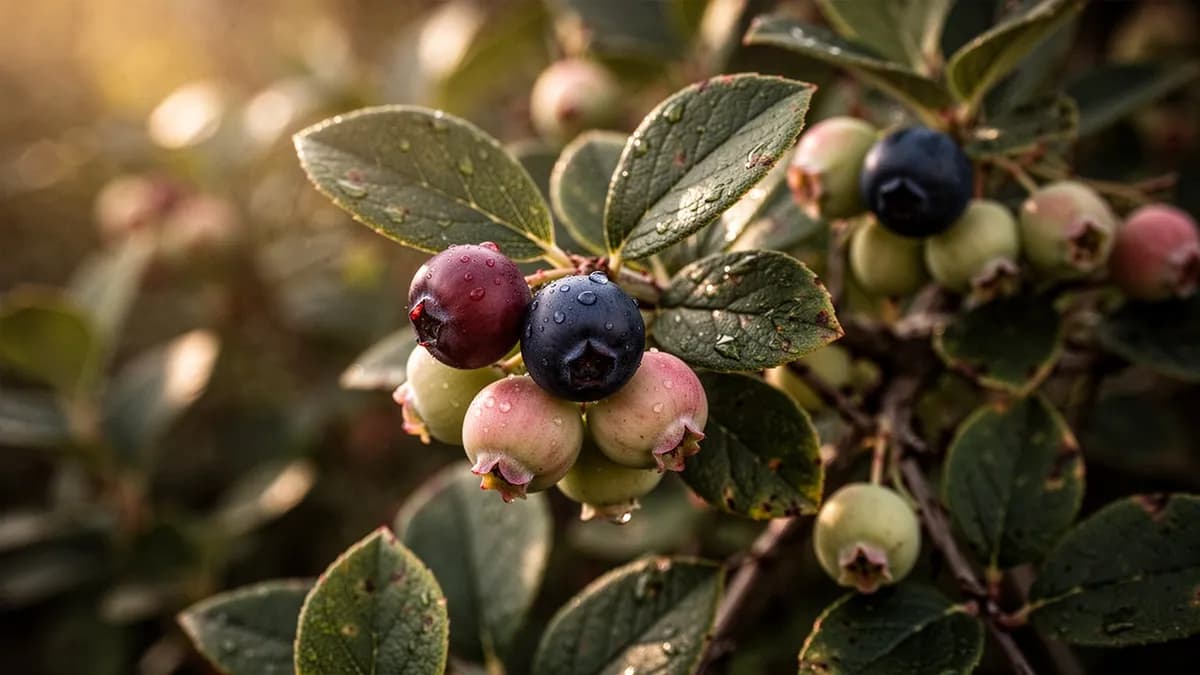
Huckleberry
Vaccinium membranaceum
At a Glance
A wild-type berry native to western North America, highly prized for its intense, complex flavor superior to cultivated blueberries. Huckleberries are notoriously difficult to cultivate commercially, growing best in acidic forest soils with dappled shade. They are slow to establish but long-lived, eventually producing generous harvests of small, deeply flavored berries.
Planting & Harvest Calendar
Growth Stages
From Seed to Harvest
Dormancy and Bud Break
Days 0–30
Huckleberry shrubs spend winter fully dormant, with fat buds held tightly along woody stems. As soil temperatures rise above 5°C (40°F) in early to mid-spring, buds swell and begin to break open. The emerging growth is often a distinctive red or bronze color before greening up. This stage marks the beginning of the plant's annual productive cycle.
💡 Care Tip
Apply a light top dressing of acidic compost or aged pine bark fines around the drip line as buds begin to swell. Avoid disturbing shallow roots. If plants are in containers, begin watering again as growth resumes but do not overwater cold, dormant soil.
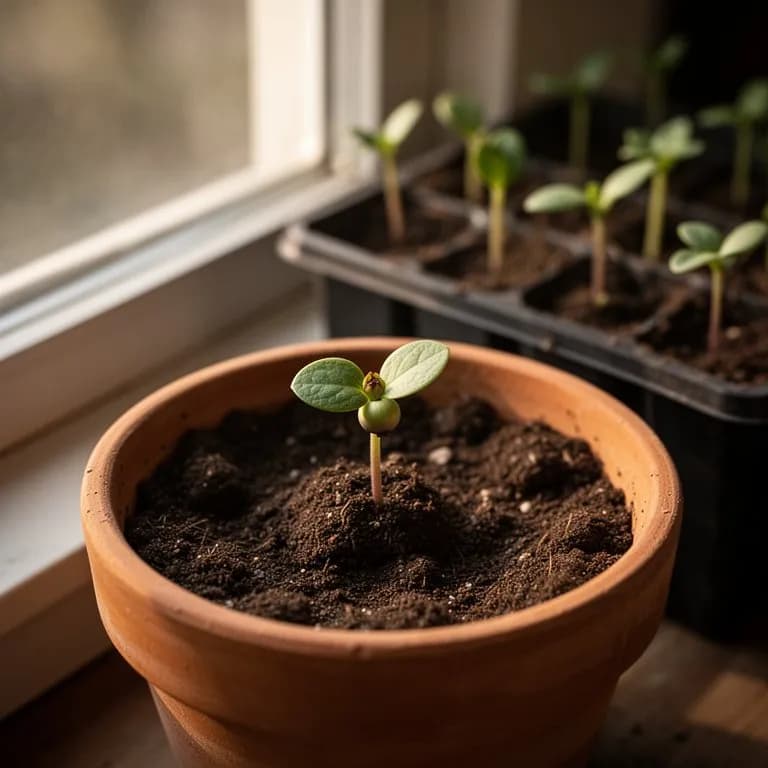
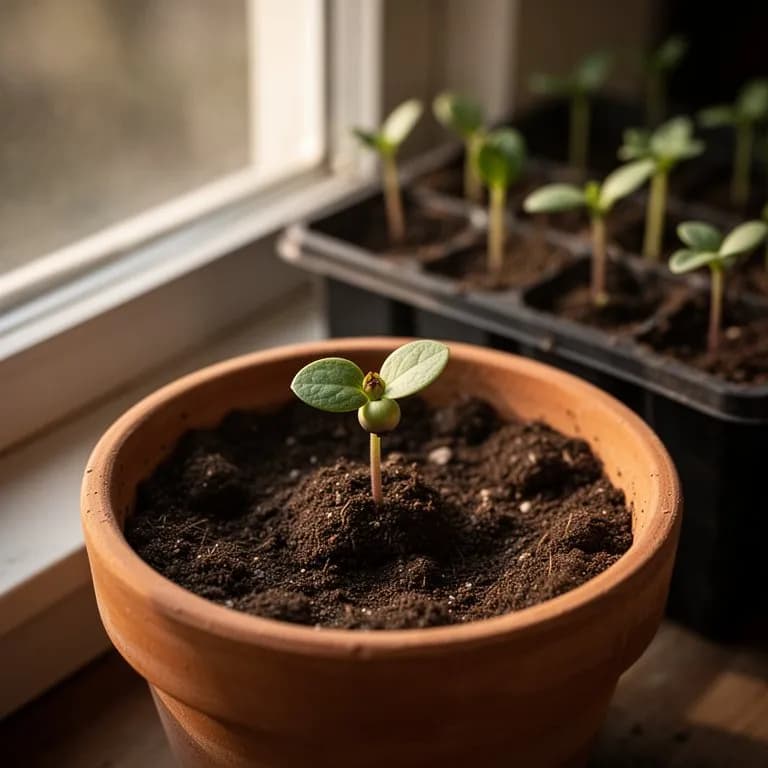
Huckleberry seedlings grow slowly in their first season, focusing energy on root establishment
Monthly Care Calendar
What to do each month for your Huckleberry
May
You are hereMonitor flowering carefully and protect blooms from unexpected frosts. Avoid any pesticide applications during bloom to safeguard native bee pollinators. Replenish mulch to 10 cm depth to conserve moisture and suppress weeds as temperatures rise.
Did You Know?
Fascinating facts about Huckleberry
Huckleberries are one of the few commercially significant fruit crops in North America that have never been successfully domesticated at scale. The vast majority of huckleberries consumed each year are still hand-picked from wild stands in the Rocky Mountains and Pacific Northwest.
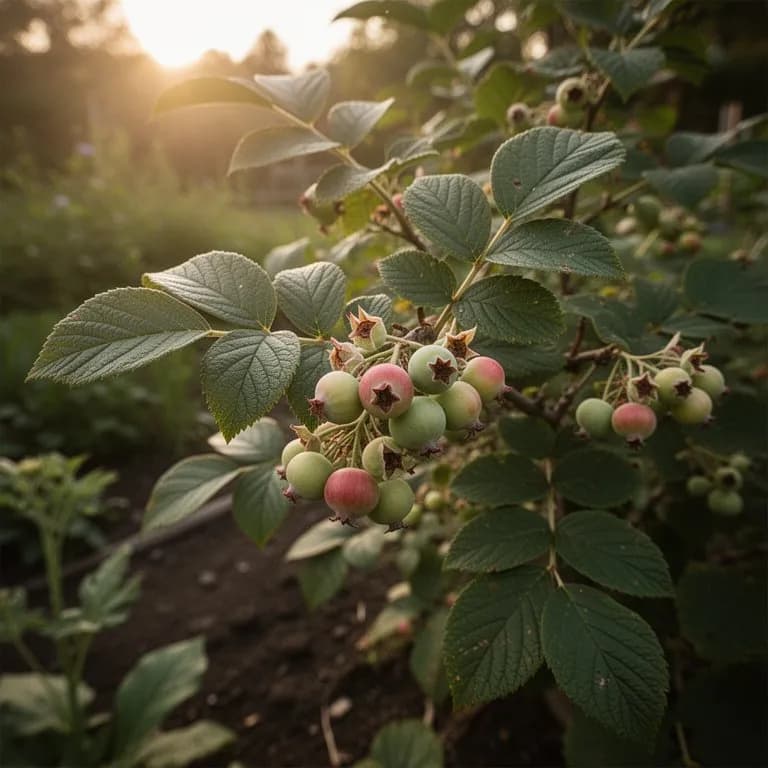
Huckleberry puts on a spectacular autumn display before dropping its leaves for winter dormancy
Huckleberries are woodland plants that thrive under conditions mimicking their native forest habitat. Choose a planting site with dappled shade or morning sun and afternoon shade, beneath conifers or deciduous trees. The soil must be acidic with a pH between 4.5 and 5.5, rich in organic matter, and consistently moist but well-drained. Amend planting areas with generous amounts of composted pine bark, peat moss, and leaf mold to replicate the humus-rich forest floor.
Plant container-grown huckleberry starts in early spring, spacing them about three feet apart. Dig holes twice the width of the root ball and backfill with amended soil. Water deeply after planting and apply a four-inch layer of pine needle or bark mulch to conserve moisture and maintain acidity. Huckleberries establish slowly, often taking two to three years before producing meaningful fruit.
Once established, huckleberries require minimal care beyond consistent moisture and occasional fertilization with an acidifying fertilizer in early spring. Avoid heavy pruning; instead, remove only dead or crossing branches in late winter. These long-lived shrubs can produce for decades once their root systems are well developed. Patience is essential, as commercially cultivated huckleberries remain rare due to their slow growth and specific habitat requirements.
Huckleberries encompass two distinct but related genera of berry-producing shrubs native to North America: Vaccinium (including V. membranaceum, V. ovalifolium, and V. parvifolium) in the western mountain states and Pacific Northwest, and Gaylussacia in the eastern woodlands and Appalachian highlands. These plants have been integral to the ecosystems and cultures of their respective regions for millennia, predating human arrival on the continent and evolving alongside the megafauna and ecosystems of post-glacial North America. Indigenous peoples of the Pacific Northwest and Northern Rocky Mountains, including the Salish, Kootenai, Nez Perce, and many other nations, developed sophisticated harvesting and land management practices centered on huckleberries over thousands of years. Huckleberry picking sites were considered family and tribal territories, and access rights were governed by established cultural protocols. Berries were eaten fresh, dried in cakes for winter storage, and mixed with fat and dried meat to create pemmican, a calorie-dense survival food of critical importance. When European and American explorers arrived in the inland Northwest in the early 19th century, they documented vast huckleberry meadows maintained by Indigenous burning practices that created ideal open-canopy habitat. The Lewis and Clark Expedition noted the abundance of huckleberries and their importance to the tribes they encountered. As settlement progressed through the 19th century, wild huckleberry picking became a summer tradition for communities throughout the Northwest, with entire families camping in the mountains during berry season. Towns in Idaho, Montana, Oregon, and Washington built regional identities around huckleberry harvesting that persist to this day, with annual festivals celebrating the fruit. Despite decades of scientific effort, Vaccinium huckleberries have resisted all attempts at commercial domestication. The plants require specific mycorrhizal fungi partnerships, complex alpine soil chemistry, and cold stratification regimes that have proven impossible to replicate economically at commercial scale. This irreducible wildness has preserved the huckleberry as a genuinely wild food in an era when most fruits are grown in controlled agricultural settings, and has also made it one of the most culturally and economically significant foraged foods on the continent.
Huckleberry seeds require cold stratification for reliable germination. Collect seeds from ripe berries by mashing fruit in water and skimming off pulp. Dry seeds and mix with damp sand in a sealed bag, then refrigerate for 90 to 120 days. Sow stratified seeds on the surface of acidic seed-starting mix, pressing lightly without covering, as they need light to germinate. Maintain consistent moisture and temperatures around 65 to 70 degrees Fahrenheit. Germination is slow and irregular, taking four to eight weeks. Seedlings grow very slowly and should remain in pots for at least one year before transplanting.
Huckleberries demand highly acidic soil with a pH of 4.5 to 5.5, rich in organic matter. Amend planting beds with sulfur, peat moss, and composted pine bark to achieve and maintain proper acidity. Apply an acid-forming fertilizer such as cottonseed meal or ammonium sulfate in early spring at a low rate. Avoid lime and alkaline fertilizers. Top-dress annually with composted pine needles or leaf mold to maintain organic matter levels and continue acidifying the soil naturally.
Check Your Zone
See if Huckleberry is suitable for your location.
-25°C – 28°C
-13°F – 82°F
Mountain huckleberries (Vaccinium membranaceum) are among the most cold-hardy fruit plants in North America, native to alpine and subalpine zones where temperatures regularly fall below -20°C in winter. They require 800-1,200 hours of winter chilling below 7°C to break dormancy and produce well. Summer temperatures above 28-30°C cause stress and reduced fruit set. They thrive in cool, moist mountain climates with warm days and cool nights during fruit development. Eastern huckleberries (Gaylussacia spp.) are similarly hardy, tolerating USDA zones 4-7.
Common issues affecting Huckleberry and how to prevent and treat them organically.
The most common challenge is slow establishment; huckleberries often produce little to no fruit for the first two to three years. Alkaline or neutral soil pH causes chlorosis and stunted growth, so regular soil testing is important. Birds are the primary competitor for ripe berries and netting is essential. Insufficient shade can cause leaf scorch in hot climates. Overwatering leads to root rot, while drought stress during fruiting causes berries to drop prematurely.
Huckleberries grow naturally alongside other acid-loving woodland plants. Rhododendrons, azaleas, and ferns make excellent companions, creating a naturalistic forest understory planting. Blueberries share similar soil requirements and attract the same pollinators. Salal and Oregon grape provide complementary ground cover. Avoid planting near walnut trees, which produce juglone toxic to many Ericaceous plants. Conifers overhead provide ideal dappled light conditions.
- 1Soil pH is the single most critical factor for huckleberry success. Target a pH of 4.5-5.2 by incorporating large volumes of aged pine bark, peat moss, or sulfur-amended native soil into your planting bed. Test pH annually and adjust as needed, as huckleberries simply will not thrive in neutral or alkaline soil regardless of other care.
- 2Plant at least two compatible huckleberry plants within 3 meters of each other. While some huckleberry species are partially self-fertile, cross-pollination between two plants of the same species dramatically increases berry set, fruit size, and overall yield.
- 3Huckleberries grow in partnership with specific mycorrhizal fungi that are often absent in disturbed garden soils. Inoculate planting holes with an ericoid mycorrhizal inoculant at planting time, or use soil sourced from under established huckleberry or blueberry plants to introduce native fungal communities.
- 4Choose a planting site that mirrors the plant's natural habitat: dappled shade to partial sun in warmer climates (below 1,000 m elevation), or full sun in cooler northern gardens and higher elevations. Avoid full afternoon sun in hot summer regions, which causes heat stress and reduces fruit quality.
- 5Mulch generously and permanently. A 10-15 cm layer of wood chips, shredded bark, or pine needles over the root zone mimics the forest floor environment, keeps roots cool and moist, suppresses competing weeds, and gradually acidifies the soil as it decomposes.
- 6Never fertilize huckleberries with high-nitrogen fertilizers or fresh manure. Use only acidic, slow-release fertilizers formulated for blueberries or acid-loving shrubs, applied lightly in early spring only. Over-fertilizing produces lush leafy growth at the expense of fruit production and root health.
- 7Resist the urge to prune heavily or frequently. Huckleberries bear fruit on wood that is 1-3 years old. Aggressive pruning removes the productive wood and can set back fruiting by 2-3 years. Limit pruning to removing dead, damaged, or crossing branches and thinning the oldest, least productive canes every few years.
- 8Protect the harvest from birds by installing netting over plants as soon as berries begin to show color. Birds can strip a mature plant within 2-3 days once fruit ripens. Use lightweight polypropylene bird netting staked well above branch tips to avoid entangling wildlife.
- 9Container cultivation is viable for huckleberries using large pots (60 liters or more) filled with a mix of 60% peat or coir, 30% perlite, and 10% aged pine bark fines. This allows growers in alkaline-soil regions or those without garden space to enjoy huckleberries, though yields will be lower than in-ground plants.
- 10Accept and plan for slow establishment. Unlike most garden fruits, huckleberries are genuinely long-game plants that may produce only a handful of berries for the first 2-4 years. Mark the planting well, protect it carefully, and trust that by year 5-7 you will have a productive, increasingly low-maintenance plant that may outlive the gardener who planted it.
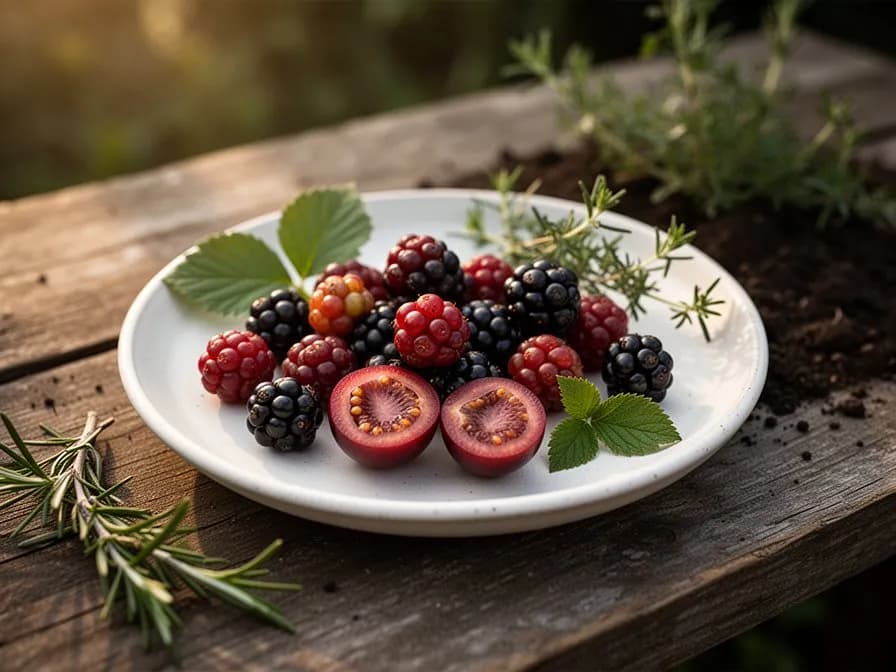
Harvest huckleberries when they turn deep purple-black and detach easily from the stem with a gentle tug. Ripe berries are soft, sweet, and will stain your fingers. Pick into shallow containers to prevent crushing. Huckleberries ripen unevenly over several weeks from mid-July through August, so plan multiple harvesting sessions. Taste-test before picking, as color alone is not always a reliable indicator of ripeness. Handle gently, as the thin-skinned berries bruise easily.
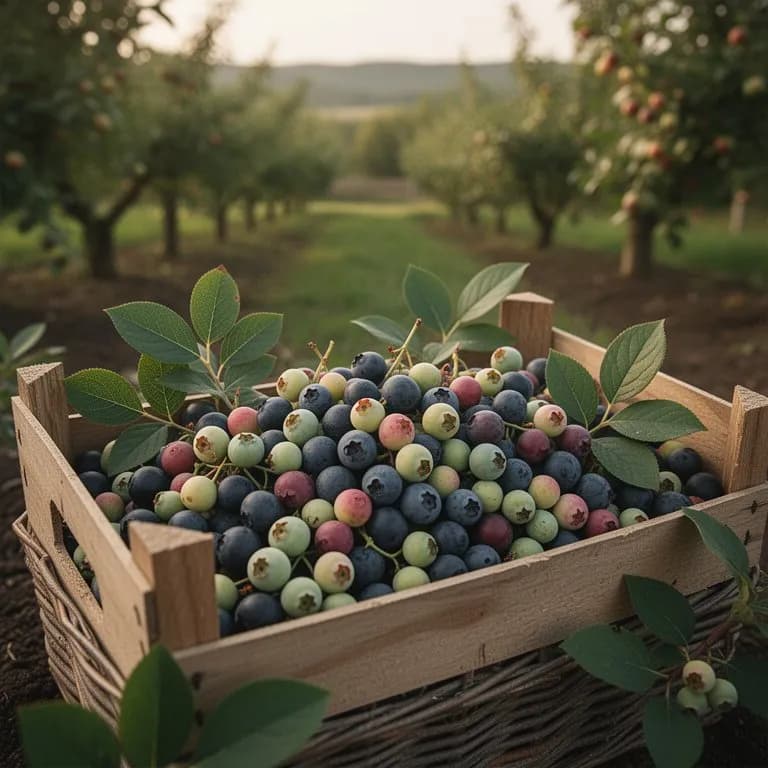
Ripe huckleberries are plump, fully colored, and release easily from the stem when ready to harvest
Fresh huckleberries keep for up to one week in the refrigerator when stored unwashed in a single layer. For long-term storage, spread berries on a baking sheet and freeze individually before transferring to freezer bags, where they will keep for up to a year. Huckleberries make outstanding jams, syrups, and pie fillings. They can also be dehydrated in a food dehydrator at 135 degrees Fahrenheit for shelf-stable snacking and baking use.
Plan your garden with ease
Love growing Huckleberry? Use our free garden planner to design your beds, track planting dates, and get personalized care reminders.
Nutritional Info
Per 100g serving
37
Calories
Health Benefits
- Exceptionally rich in anthocyanins, the purple-blue pigments responsible for huckleberry's deep color, with wild huckleberries containing 2-3 times more anthocyanins per gram than commercially grown blueberries
- Provides a significant source of manganese (over 25% DV per 100g), a trace mineral essential for bone formation, wound healing, and carbohydrate metabolism
- Contains resveratrol and pterostilbene, polyphenol compounds studied for their potential anti-aging, anti-inflammatory, and cardioprotective effects
- Low glycemic index fruit that provides sustained energy without sharp blood sugar spikes, making it suitable for blood sugar management diets
- Rich in vitamin C and vitamin E working synergistically as antioxidants, offering stronger free radical protection than either vitamin alone
- Contains quercetin, a potent flavonoid with documented anti-inflammatory and antihistamine properties that may support seasonal allergy relief
💰 Why Grow Your Own?
Fresh wild huckleberries sell for $15-25 per pound at farmers markets and specialty grocers in peak season, making them among the most expensive fresh berries available. A single mature huckleberry shrub in a home garden can produce 2-5 pounds of fruit per season, representing $30-125 in market value annually. Over the 50-100 year lifespan of a well-established plant, the cumulative savings compared to purchasing wild-harvested berries are extraordinary. A container of huckleberry jam selling for $20-30 at a specialty store costs under $3 in ingredients when made from homegrown berries.
Quick Recipes
Simple recipes using fresh Huckleberry
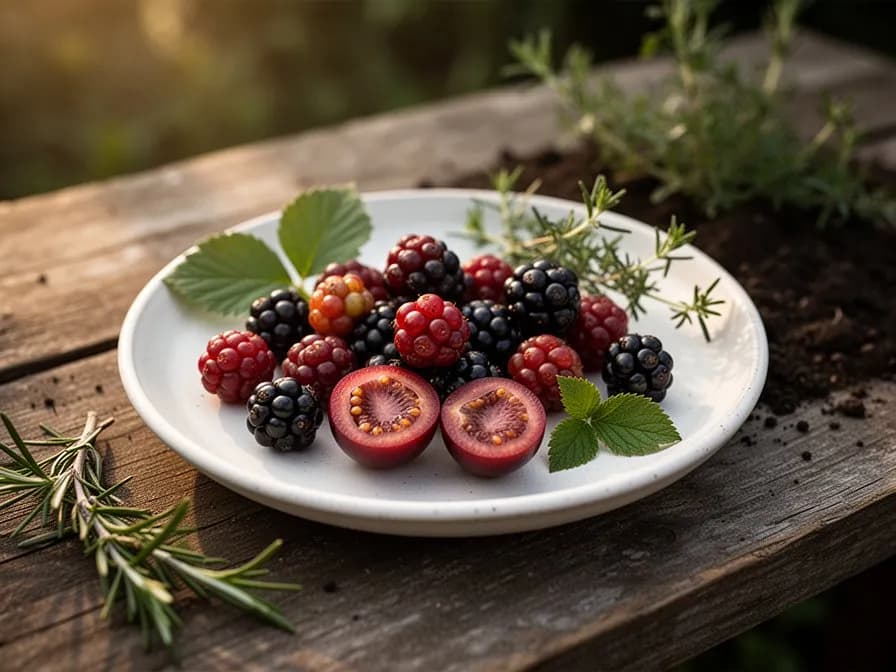
Classic Huckleberry Pie
30 minutes + 55 minutes bakeA legendary Pacific Northwest dessert that lets the complex, wine-like flavor of huckleberries take center stage. The filling is thickened with just enough tapioca starch to hold its shape without masking the fresh berry flavor. Serve warm with vanilla ice cream for the quintessential summer mountain experience.
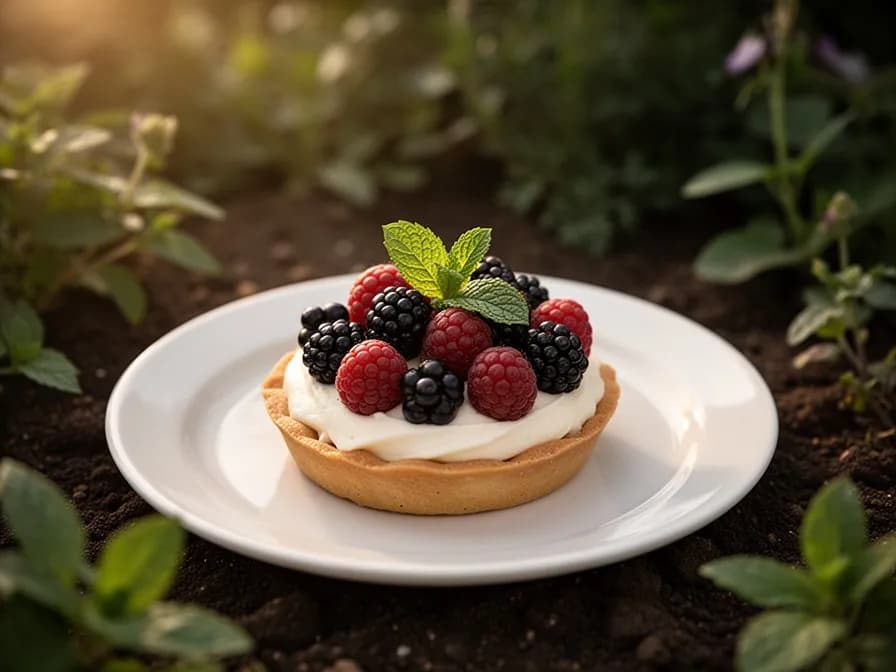
Huckleberry Jam
20 minutes + 15 minutes processingA straightforward small-batch jam that captures the bold, earthy sweetness of fresh huckleberries with minimal added ingredients. Unlike commercial jam, homemade huckleberry jam retains much of the fruit's distinctive flavor complexity. This recipe makes approximately 5-6 half-pint jars and requires no pectin, as huckleberries are naturally high in pectin.
Huckleberry Pancakes with Lemon Butter
20 minutesFluffy buttermilk pancakes studded with whole huckleberries and served with a bright lemon-honey butter that complements the berries' earthy depth. The key is adding the berries to the batter just before cooking so they do not bleed purple throughout. These pancakes have become a signature breakfast dish at mountain lodges throughout the Northwest.
Huckleberry pie is considered one of the finest wild berry desserts in North American cuisine
Yield & Spacing Calculator
See how many Huckleberry plants fit in your garden bed based on the recommended 90cm spacing.
1
Huckleberry plants in a 4×4 ft bed
1 columns × 1 rows at 90cm spacing
Popular Varieties
Some of the most popular huckleberry varieties for home gardeners, each with unique characteristics.
Black Huckleberry
Vaccinium membranaceum, the most prized wild species with intensely flavored dark purple berries found throughout the Pacific Northwest mountains.
Red Huckleberry
Vaccinium parvifolium, producing tart, bright red berries on graceful stems, thriving in old-growth forest understory on rotting logs.
Evergreen Huckleberry
Vaccinium ovatum, an ornamental species with glossy evergreen foliage and small, sweet black berries popular in the floral industry.
Cascade Huckleberry
Vaccinium deliciosum, a low-growing alpine species producing exceptionally sweet blue berries at high elevations in the Cascade Range.
Huckleberries have a rich, complex flavor superior to cultivated blueberries, making them prized for pies, cobblers, muffins, and pancakes. They produce exceptional jams and syrups with deep, winey notes. Huckleberry ice cream and milkshakes are regional specialties in the Pacific Northwest. The berries pair well with lemon, vanilla, and almond flavors.
When should I plant Huckleberry?
Plant Huckleberry in March, April. It takes approximately 730 days to reach maturity, with harvest typically in July, August.
What are good companion plants for Huckleberry?
Huckleberry grows well alongside Blueberry, Strawberry. Companion planting can improve growth, flavor, and natural pest control.
What hardiness zones can Huckleberry grow in?
Huckleberry thrives in USDA hardiness zones 3 through 8. With greenhouse protection, it may be grown in zones 1 through 9.
How much sun does Huckleberry need?
Huckleberry requires Partial Sun (3-6h). This means 3-6 hours of sunlight, ideally morning sun with afternoon shade.
How far apart should I space Huckleberry?
Space Huckleberry plants 90cm (35 inches) apart for optimal growth and air circulation.
What pests and diseases affect Huckleberry?
Common issues include Huckleberry Fruit Fly, Powdery Mildew, Root Rot (Phytophthora). Prevention through good garden practices like crop rotation, proper spacing, and companion planting is the best approach. See the detailed pests and diseases section above for symptoms, prevention, and treatment for each.
How do I store Huckleberry after harvest?
Fresh huckleberries keep for up to one week in the refrigerator when stored unwashed in a single layer. For long-term storage, spread berries on a baking sheet and freeze individually before transferring to freezer bags, where they will keep for up to a year. Huckleberries make outstanding jams, syr...
What are the best Huckleberry varieties to grow?
Popular varieties include Black Huckleberry, Red Huckleberry, Evergreen Huckleberry, Cascade Huckleberry. Each has unique characteristics suited to different growing conditions and culinary preferences. See the varieties section above for detailed descriptions.
What soil does Huckleberry need?
Huckleberries demand highly acidic soil with a pH of 4.5 to 5.5, rich in organic matter. Amend planting beds with sulfur, peat moss, and composted pine bark to achieve and maintain proper acidity. Apply an acid-forming fertilizer such as cottonseed meal or ammonium sulfate in early spring at a low r...
What is the difference between huckleberries and blueberries?
Huckleberries and blueberries are closely related, both belonging to the family Ericaceae, but they differ in several important ways. True huckleberries in the Vaccinium genus (such as V. membranaceum) are wild mountain species that have never been successfully domesticated, while the blueberries sold in stores are cultivated varieties of V. corymbosum and related species selected over decades for large, mild fruit. Vaccinium huckleberries are typically smaller and darker than cultivated blueberries, with a more intense, complex flavor combining sweet, tart, and earthy notes. Gaylussacia huckleberries (eastern species) contain 10 hard seed-like nutlets per berry and have a distinctly different texture. Nutritionally, wild huckleberries tend to be higher in anthocyanins and other antioxidants than commercial blueberries due to their wild growth conditions and smaller fruit size.
Can I grow huckleberries in a warm climate or the southeastern United States?
Vaccinium membranaceum and other mountain huckleberries require cool climates with significant winter chilling and are not well suited to warm regions. However, eastern huckleberry species in the Gaylussacia genus, particularly G. baccata (black huckleberry) and G. frondosa (dangleberry), are native to the Appalachians and southeastern woodlands and are better adapted to warmer, humid climates in USDA zones 4-7. For gardeners in the Deep South or warm coastal regions, blueberry species such as V. darrowii (sparkleberry) or V. virgatum (rabbiteye blueberry) are more practical alternatives that offer similar flavor and cultural value.
Why are my huckleberry leaves turning yellow?
Yellowing leaves on huckleberry plants most commonly indicate iron or manganese deficiency caused by soil pH that is too high. When pH rises above 5.5, these nutrients become chemically unavailable to the plant even if they are present in the soil. Test your soil pH immediately and apply sulfur or acidifying fertilizer to bring it back into the 4.5-5.2 range. Interveinal chlorosis (yellow between the veins, with veins staying green) is the classic symptom of pH-related iron deficiency. Other causes include overwatering leading to root suffocation, insufficient light, or natural aging of the oldest inner leaves.
How long does it take a huckleberry plant to produce fruit?
Huckleberries are slow to establish and typically begin producing a meaningful harvest 3-5 years after planting. Plants grown from seed may take 5-8 years to fruit. Container-grown nursery plants at least 2 years old at purchase will reach production sooner than smaller liner plants. During the first 1-2 seasons after planting, it is actually beneficial to remove flower buds to direct energy toward root establishment, which pays off with larger crops in subsequent years. Once fully established at 5-7 years, plants become increasingly productive and can continue bearing fruit for decades or even a century.
Where can I buy huckleberry plants for my garden?
Huckleberry plants are not widely available at mainstream garden centers due to the difficulty of propagation and slow growth. Seek out specialty native plant nurseries in the Pacific Northwest and Rocky Mountain regions, as well as online mail-order nurseries that specialize in native or unusual fruiting plants. Some native plant sales organized by conservation organizations also offer huckleberry starts propagated from local seed sources. Ensure you are purchasing legally sourced, nursery-propagated plants rather than wild-collected material, which is illegal to dig from public lands and often fails to transplant successfully in any case.
What animals eat huckleberries and should I be concerned?
Huckleberries are a prized food source for a remarkable range of wildlife. Birds including robins, waxwings, thrushes, and grouse consume berries eagerly and will strip a plant quickly. Black bears and grizzly bears in mountain regions are famous for their late-summer huckleberry binges. Deer browse the foliage in winter but rarely cause severe damage. In a home garden setting, bird netting installed as berries begin to color is the most practical protection. In bear country, be aware that a heavily fruiting huckleberry shrub may attract wildlife; plant away from areas of frequent human activity and harvest promptly as fruit ripens.
Ready to Grow Huckleberry?
Add Huckleberry to your garden plan and start designing your perfect layout.

Vladimir Kusnezow
Gardener and Software Developer
Zone 6b gardener. Growing vegetables and fruits in soil and hydroponics for 6 years. I built PlotMyGarden to plan my own gardens.
Jump to Section