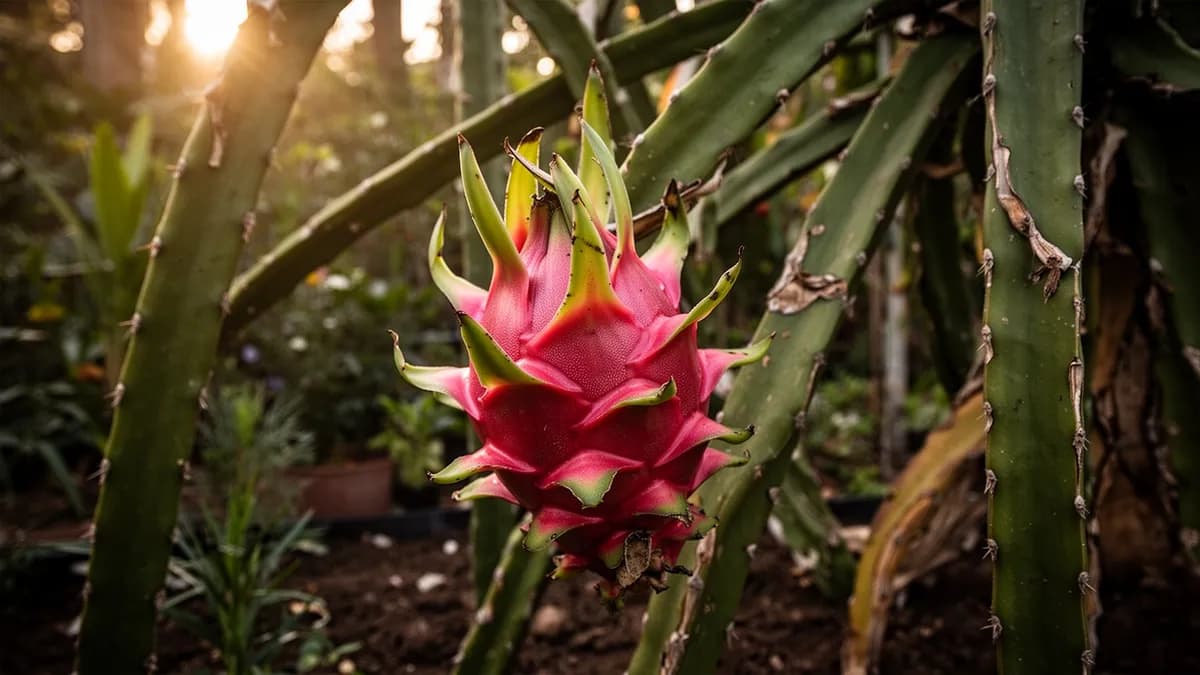
Dragon Fruit
Hylocereus undatus
At a Glance
It's planting season for Dragon Fruit! Start planning your garden now.
A climbing cactus producing spectacular nighttime flowers followed by vibrant pink-skinned fruits with white or magenta speckled flesh. Dragon fruit requires a sturdy support structure and prefers warm, dry conditions typical of its desert origins. Most varieties need cross-pollination from a different cultivar and the large flowers must be hand-pollinated in areas without nocturnal pollinators.
Planting & Harvest Calendar
Growth Stages
From Seed to Harvest
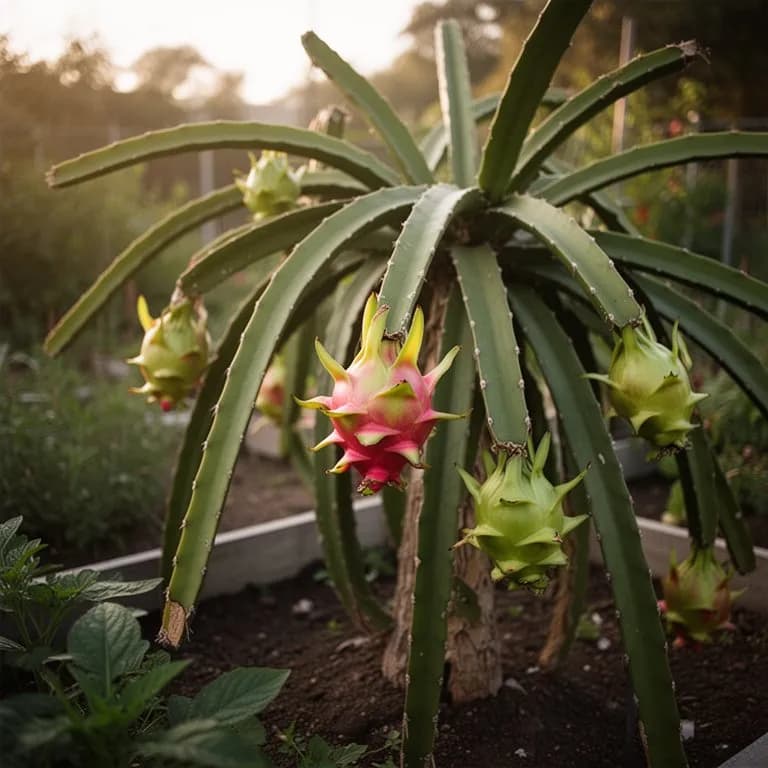
Propagation and Rooting
Days 0–30
Cuttings are taken from mature stems and allowed to callous for 3-7 days before planting. Roots emerge within 2-4 weeks in warm, moist conditions. Seeds can also be used but take much longer to reach fruiting maturity.
💡 Care Tip
Allow cut ends to dry and callous completely before planting to prevent rot. Plant in well-draining cactus mix and keep slightly moist but not wet.
Monthly Care Calendar
What to do each month for your Dragon Fruit
May
You are herePrime growing season begins. Increase watering as temperatures rise. Fertilize every 3-4 weeks with a balanced or bloom-promoting formula. First flower buds may appear on established plants. Hand-pollinate any flowers that open to ensure good fruit set.
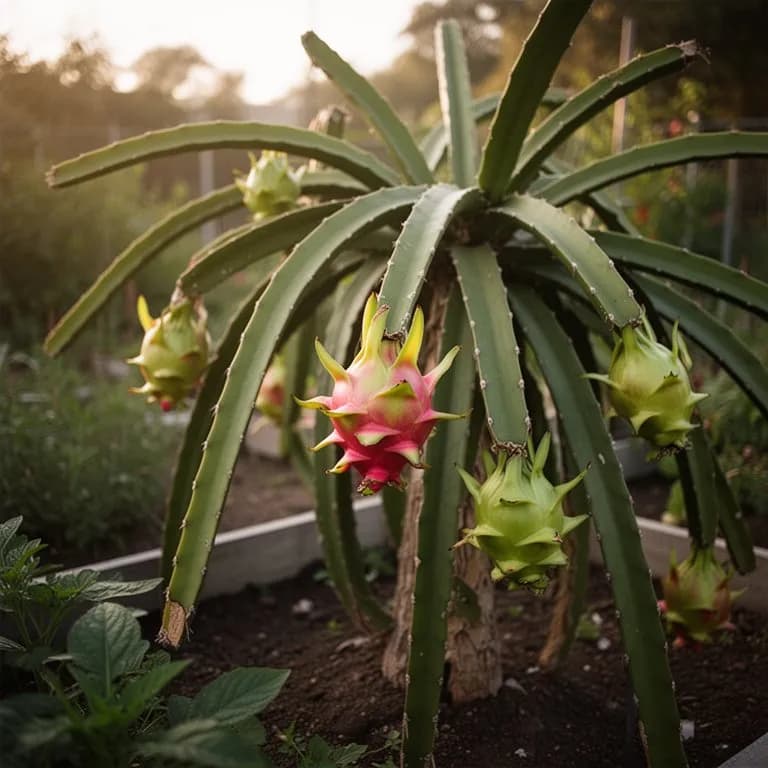
Regular pruning encourages branching and increases flower and fruit production
Did You Know?
Fascinating facts about Dragon Fruit
Dragon fruit flowers are pollinated exclusively at night by moths and bats in their native habitat — making them one of the few crops that depend entirely on nocturnal pollinators.
Dragon fruit is a climbing cactus that needs a sturdy support structure such as a concrete or wooden post, trellis, or arbor. Plant cuttings or nursery starts in spring in full sun with well-drained, slightly sandy soil. Space plants 6 to 10 feet apart along the support structure. The fleshy, triangular stems climb by aerial roots and can reach 20 feet or more.
Water moderately during the growing season, allowing soil to dry between waterings. Despite being a cactus, dragon fruit performs best with regular moisture during flowering and fruiting, but overwatering causes stem and root rot. Reduce watering significantly in winter during the dormant period.
Dragon fruit flowers open for only one night and must be pollinated during that window. In areas without nocturnal pollinators like bats and hawk moths, hand-pollination is essential. Transfer pollen between flowers of different varieties using a small brush in the evening. Most pink-skinned varieties require cross-pollination from a genetically different cultivar for fruit set. Prune annually to remove dead or damaged stems and limit growth to manageable levels.
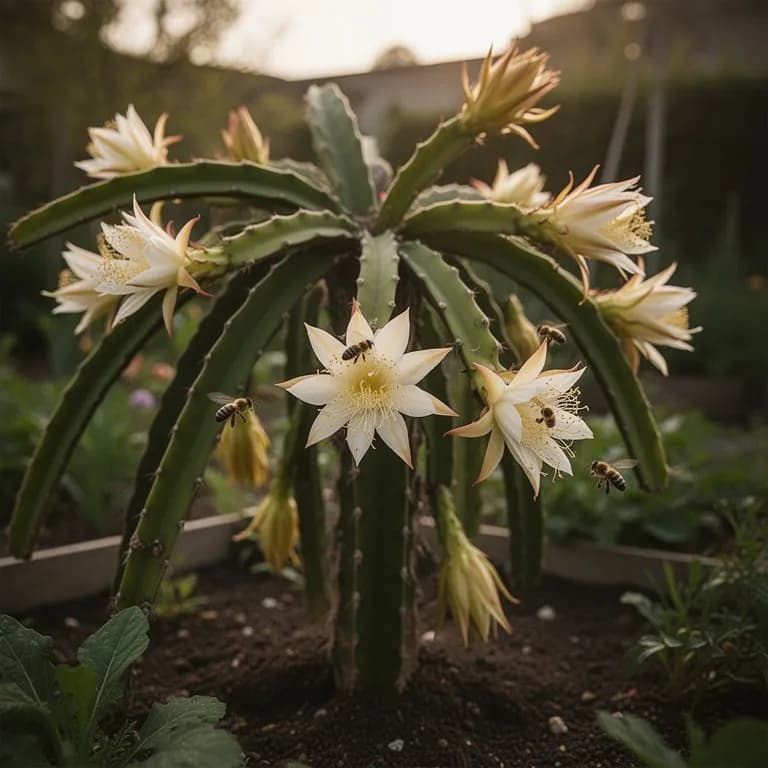
Dragon fruit flowers are among the most spectacular in the plant kingdom, blooming for a single night
Dragon fruit (Hylocereus undatus, also classified as Selenicereus undatus) is a member of the cactus family Cactaceae and is native to the tropical rainforests of Mexico, Guatemala, El Salvador, and Costa Rica. The plant grows wild in these regions, climbing trees and rocky outcroppings using its aerial roots. Indigenous peoples of Mesoamerica cultivated and consumed dragon fruit long before European contact, valuing both its sweet, refreshing flesh and the tender young stems as food sources.
Spanish and Portuguese explorers encountered the plant during their colonization of Central America and brought it to Europe and their Asian colonies in the early 17th century. The French introduced it to Vietnam during the colonial period, likely in the 1800s, where it found a near-perfect climate and rapidly became a commercial crop. The Vietnamese name 'thanh long,' meaning 'green dragon,' is the direct source of the common English name 'dragon fruit,' a reference to the flame-like green scales on the fruit's bright skin.
From Vietnam, cultivation spread rapidly across Southeast Asia — to Thailand, the Philippines, Malaysia, Indonesia, and southern China — during the 20th century. Today, Asia produces the vast majority of the world's dragon fruit, with Vietnam alone accounting for a dominant share of global exports. The crop transformed the economies of many rural Vietnamese communities, becoming one of the country's most important agricultural export products.
In the Americas, commercial dragon fruit cultivation began gaining serious momentum in the 1990s and 2000s, particularly in Florida, California, Hawaii, and throughout Latin America. The rise of interest in exotic 'superfoods' in Western markets during the 2000s and 2010s dramatically increased consumer demand, driving rapid expansion of commercial plantings worldwide. Today, dragon fruit is grown commercially on every continent except Antarctica, and is increasingly popular with home gardeners in warm climates seeking an exotic, productive, and visually spectacular edible plant.
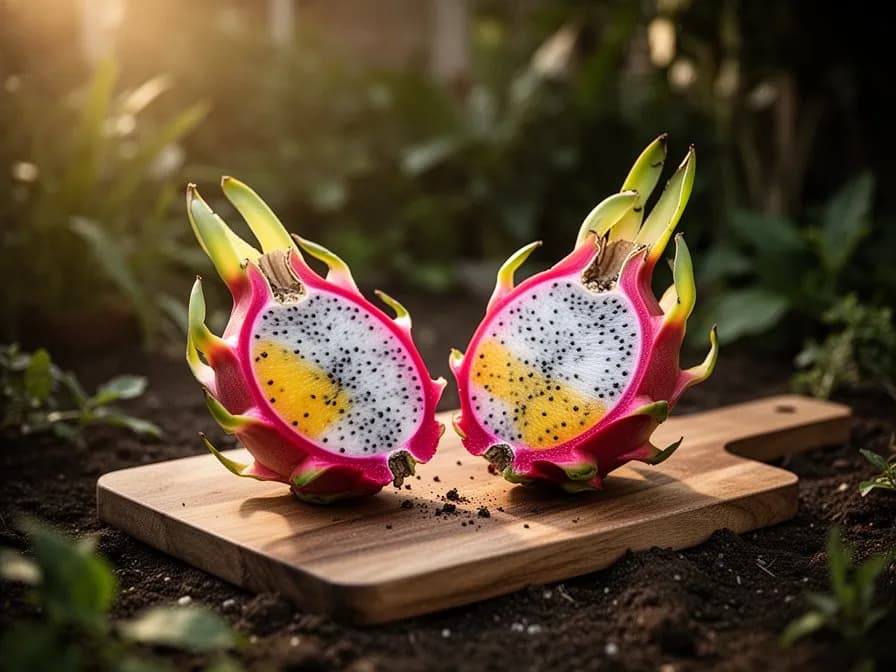
Dragon fruit cacti are vigorous climbers that need strong support structures
Dragon fruit seeds are extracted from the flesh by mashing fruit in water and straining through a fine mesh to separate the tiny black seeds. Spread seeds on a moist paper towel for a day, then sow on the surface of a well-drained cactus mix, pressing lightly but not covering. Maintain warm temperatures of 75 to 85 degrees Fahrenheit and keep consistently moist. Germination takes one to two weeks. Seedling growth is very slow for the first year. Plants from seed take three to five years to fruit. Propagation from stem cuttings is preferred, as they root easily and can fruit within one to two years.
Dragon fruit prefers well-drained, slightly sandy or loamy soil with a pH of 6.0 to 7.0. As a cactus, it is highly susceptible to root rot in heavy or waterlogged soils. Amend clay soils heavily with sand, perlite, and organic matter. Apply a balanced fertilizer (10-10-10) monthly during the growing season, switching to a low-nitrogen, high-phosphorus formula (2-10-10) when flower buds appear. Supplement with magnesium sulfate to prevent yellowing. Organic matter like compost should be applied as a top dressing rather than incorporated deeply.
Check Your Zone
See if Dragon Fruit is suitable for your location.
10°C – 38°C
50°F – 100°F
Dragon fruit is a tropical cactus that thrives in warm to hot temperatures year-round. It performs best between 18°C and 35°C (65°F to 95°F). While established plants can tolerate brief dips to around 0°C (32°F), even a light frost will damage stems and a hard freeze will kill the plant. Temperatures consistently above 38°C (100°F) can cause sunburn on stems and inhibit flower set. Ideal fruiting conditions combine warm days, mild nights, and a seasonal dry period that helps trigger flowering.
Common issues affecting Dragon Fruit and how to prevent and treat them organically.
The most common issue is lack of fruit set due to inadequate pollination. Since flowers open only at night and for a single evening, hand-pollination is often necessary. Overwatering is the second most frequent problem, causing stem and root rot. Sunburn can damage stems in extremely hot climates, so provide light afternoon shade in the hottest areas. The heavy, sprawling stems can overwhelm inadequate support structures, so build robust posts or trellises. Nutrient deficiency symptoms are common in poor soils, particularly magnesium and iron.
- 1Always use a very well-draining soil mix — dragon fruit roots are highly susceptible to rot if kept in waterlogged soil. A mix of 60% coarse sandy soil or perlite and 40% compost works well for both in-ground and container planting.
- 2Install a sturdy, permanent support structure before or immediately after planting. Dragon fruit plants grow heavy over time; a concrete post, strong wooden pole, or iron trellis anchored deeply is far better than a flimsy garden stake you will need to replace later.
- 3Hand-pollination dramatically improves fruit set, especially for single-plant growers. Use a small, soft paintbrush or a cotton swab to transfer pollen from the stamens to the stigma (the central column) of the flower. Do this within 2-3 hours of the flower opening at dusk for best results.
- 4Dragon fruit is one of the few cacti that actually benefits from regular watering during its active growing and fruiting season — unlike desert cacti, it comes from tropical forests with seasonal rainfall. Water deeply and consistently from spring through harvest, then cut back significantly in winter.
- 5Grow at least two different varieties for cross-pollination to maximize fruit set. While some varieties are self-fertile, most produce significantly more and larger fruit when cross-pollinated with a genetically different plant.
- 6Fertilize with a formula that transitions through the season: use a high-nitrogen fertilizer in spring to drive stem and canopy growth, switch to a bloom-boosting high-phosphorus formula as buds develop, and use a potassium-rich formula during and after fruiting to support fruit quality and plant recovery.
- 7In regions with cold winters, growing dragon fruit in large containers (at least 15-25 gallons for a mature plant) allows you to move plants indoors or into a greenhouse before frost. Even a frost-free sunroom or garage with a grow light can overwinter a dragon fruit plant successfully.
- 8Prune your plant aggressively after the main fruiting season each year. Remove the oldest, thickest, most woody stems that no longer flower productively, and thin out dense areas of the canopy. Dragon fruit fruits primarily on newer growth, so regular renewal pruning maintains high yields.
- 9Protect ripening fruit from birds and insects by slipping paper bags, mesh fruit protectors, or old stockings over developing fruit once they reach golf-ball size. This simple step can save a significant portion of your harvest from damage.
- 10When stems are young and green, they can sunburn in intense direct sun, particularly in hot, arid climates. Provide light afternoon shade for plants under 1 year old, or during heat waves, to prevent bleaching and permanent damage to the photosynthetic tissue.
Dragon fruits are ready to harvest 30 to 50 days after flowering, when the skin turns from green to bright pink or red and the wing-like bracts begin to wither. The fruit should give slightly when gently squeezed. Twist or cut the fruit from the stem, leaving a short stub. Overripe fruits split and lose quality quickly. The flesh should be firm with evenly distributed tiny black seeds. Harvest in the morning for best shelf life. A mature plant can produce 20 to 60 fruits per season over several months.
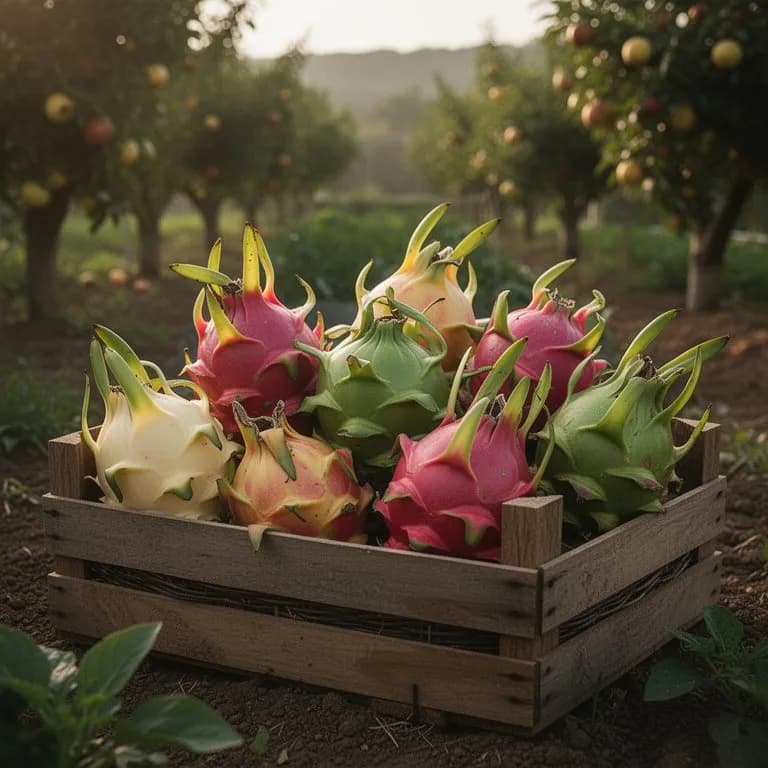
Red-skinned varieties with white or red flesh are the most widely grown commercially
Fresh dragon fruit keeps at room temperature for two to three days or refrigerated for up to two weeks. Cut fruit should be refrigerated and consumed within two days. For freezing, scoop out the flesh, cube it, and freeze on a baking sheet before transferring to freezer bags. Frozen dragon fruit is excellent in smoothie bowls and frozen desserts. The fruit can be dehydrated into chewy chips or made into jam. Dragon fruit juice is popular in tropical beverages.
Plan your garden with ease
Love growing Dragon Fruit? Use our free garden planner to design your beds, track planting dates, and get personalized care reminders.
Nutritional Info
Per 100g serving
60
Calories
Health Benefits
- Rich in betalain antioxidants (red-fleshed varieties), which give the flesh its vivid magenta color and are associated with anti-inflammatory properties
- Contains prebiotics including oligosaccharides that feed beneficial gut bacteria and support digestive health
- Provides iron in a form that is enhanced by the fruit's natural vitamin C content, improving absorption
- Seeds are a source of beneficial omega-3 and omega-6 polyunsaturated fatty acids
- Low in calories and naturally fat-free, making it an excellent choice for weight-conscious diets
- Contains magnesium, which supports muscle and nerve function, bone health, and energy metabolism
💰 Why Grow Your Own?
Fresh dragon fruit regularly sells for $3 to $8 per fruit (or $6 to $12 per pound) at specialty grocery stores and farmers markets, making it one of the most expensive common fruits by weight. A single mature dragon fruit plant in a suitable climate can produce 20 to 100 fruits per year across multiple flushes, representing a retail value of $60 to $800 annually from a single plant. Container-grown plants purchased as rooted cuttings typically cost $20 to $50 and begin producing fruit within 1 to 2 years. Over a plant's productive lifespan of 20+ years, the cumulative savings compared to purchasing fruit commercially can easily exceed $1,000 per plant — making dragon fruit one of the highest-value-per-square-foot crops available to home gardeners in warm climates.
Quick Recipes
Simple recipes using fresh Dragon Fruit

Dragon Fruit Smoothie Bowl
10 minutesA vibrant, Instagram-worthy breakfast bowl that showcases the stunning color of red-fleshed dragon fruit. Thick, creamy, and naturally sweet.
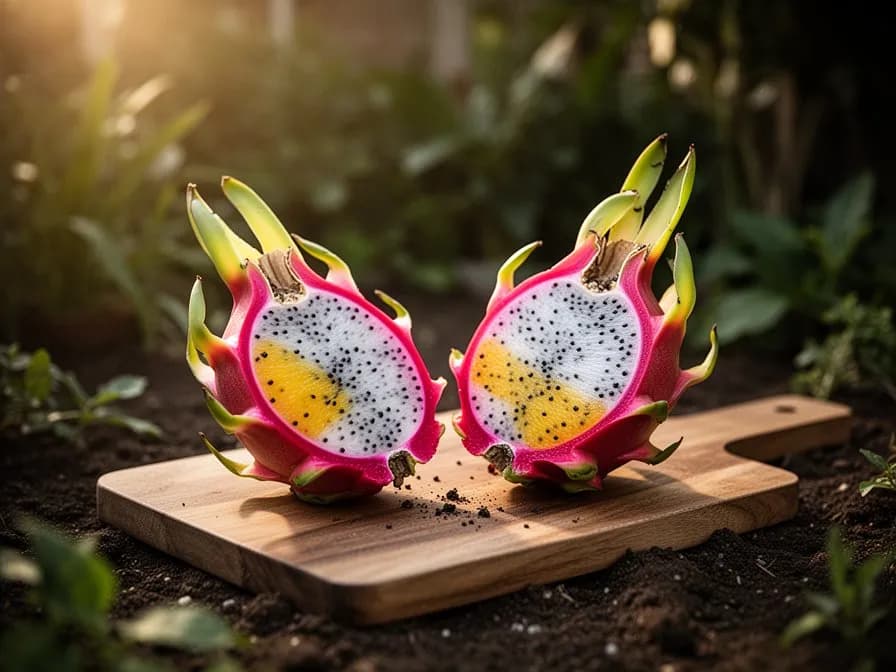
Dragon Fruit and Mango Salsa
15 minutesA refreshing, colorful salsa that pairs beautifully with grilled fish, chicken tacos, or tortilla chips. The mild sweetness of dragon fruit balances perfectly with lime and chili.
Chilled Dragon Fruit Lemonade
10 minutesA stunning, naturally pink lemonade that uses the juice of red dragon fruit for its brilliant color. Refreshing, lightly sweet, and completely natural.
Yield & Spacing Calculator
See how many Dragon Fruit plants fit in your garden bed based on the recommended 300cm spacing.
0
Dragon Fruit plants in a 4×4 ft bed
0 columns × 0 rows at 300cm spacing
Popular Varieties
Some of the most popular dragon fruit varieties for home gardeners, each with unique characteristics.
American Beauty
A self-fertile variety with deep magenta flesh and excellent sweet flavor. One of the best for home growing due to its self-pollinating ability.
Vietnam White
The most common commercial variety with pink skin and white flesh. Mild, sweet flavor and reliable production but requires cross-pollination.
Physical Graffiti
A highly sought-after hybrid with vivid magenta flesh and exceptional sweetness. Requires cross-pollination with a different variety.
Edgar's Baby
A compact, self-fertile variety with red flesh, well-suited for container growing and smaller gardens.
Natural Mystic
A vigorous grower with deep red-purple flesh and complex, grape-like flavor. Excellent for tropical climates.
Yellow dragon fruit (Selenicereus megalanthus) is considered the sweetest variety
Dragon fruit is typically eaten fresh, scooped from the halved shell with a spoon. The mild, subtly sweet flesh is popular in smoothie bowls, fruit salads, and as a natural food coloring. Red-fleshed varieties produce vibrant pink-magenta color in drinks and desserts. The fruit pairs well with citrus, kiwi, and tropical flavors. Dragon fruit sorbet and ice cream are popular treats.
When should I plant Dragon Fruit?
Plant Dragon Fruit in March, April, May. It takes approximately 365 days to reach maturity, with harvest typically in July, August, September, October, November.
What hardiness zones can Dragon Fruit grow in?
Dragon Fruit thrives in USDA hardiness zones 10 through 12. With greenhouse protection, it may be grown in zones 8 through 13.
How much sun does Dragon Fruit need?
Dragon Fruit requires Full Sun (6-8h+). This means at least 6-8 hours of direct sunlight daily.
How far apart should I space Dragon Fruit?
Space Dragon Fruit plants 300cm (118 inches) apart for optimal growth and air circulation.
What pests and diseases affect Dragon Fruit?
Common issues include Stem Rot (Anthracnose), Mealybugs, Cactus Virus X. Prevention through good garden practices like crop rotation, proper spacing, and companion planting is the best approach. See the detailed pests and diseases section above for symptoms, prevention, and treatment for each.
How do I store Dragon Fruit after harvest?
Fresh dragon fruit keeps at room temperature for two to three days or refrigerated for up to two weeks. Cut fruit should be refrigerated and consumed within two days. For freezing, scoop out the flesh, cube it, and freeze on a baking sheet before transferring to freezer bags. Frozen dragon fruit is ...
What are the best Dragon Fruit varieties to grow?
Popular varieties include American Beauty, Vietnam White, Physical Graffiti, Edgar's Baby, Natural Mystic. Each has unique characteristics suited to different growing conditions and culinary preferences. See the varieties section above for detailed descriptions.
What soil does Dragon Fruit need?
Dragon fruit prefers well-drained, slightly sandy or loamy soil with a pH of 6.0 to 7.0. As a cactus, it is highly susceptible to root rot in heavy or waterlogged soils. Amend clay soils heavily with sand, perlite, and organic matter. Apply a balanced fertilizer (10-10-10) monthly during the growing...
How long does it take for dragon fruit to produce fruit after planting?
Dragon fruit started from cuttings typically begins flowering and fruiting within 1 to 2 years of planting, assuming it receives adequate warmth, light, and a proper support structure. Plants grown from seed take considerably longer — often 5 to 7 years to reach maturity. For the fastest results, always start with a rooted cutting or a young plant from a reputable nursery, and choose a variety suited to your climate zone.
Can I grow dragon fruit in a pot or container?
Yes — dragon fruit is one of the better large cacti for container growing. Use a pot of at least 15 gallons for a young plant, sizing up to 25 gallons or larger as the plant matures. The container must have excellent drainage. Install a sturdy central post or trellis inside the pot before planting. Container plants dry out faster than in-ground plants, so check soil moisture more frequently. The major advantage of container growing is the ability to bring the plant indoors during cold winters, making it viable in temperate climates where it would otherwise not survive.
Why is my dragon fruit plant not flowering?
The most common reasons a mature dragon fruit does not flower are: insufficient canopy mass (the plant needs a substantial amount of stem growth before it can support flowering), insufficient light (it needs at least 6 hours of direct sun daily), artificial light interruption at night (street lights or porch lights shining on the plant can disrupt its photoperiod-sensitive flowering trigger), over-fertilization with nitrogen (which promotes vegetative growth at the expense of flowers), or temperatures that are consistently too cold. Plants also need a brief dry, slightly cool period to trigger flowering — try reducing water for 4-6 weeks in late autumn or early winter.
Do I need more than one dragon fruit plant to get fruit?
Some varieties of dragon fruit are self-fertile and can set fruit with their own pollen, but even self-fertile varieties typically produce larger and more numerous fruits when cross-pollinated with a different variety. Many popular varieties, including some red-fleshed types, are effectively self-sterile and require pollen from a genetically different plant to set fruit reliably. If you have space, growing two or more different varieties together is strongly recommended to maximize your harvest. If space is limited, hand-pollination using pollen collected and stored from another plant (even fresh pollen from a friend's plant) can dramatically improve yields.
How do I know when dragon fruit is ripe and ready to harvest?
Dragon fruit is ready to harvest when the skin has fully developed its final color — bright red, deep pink, or vibrant yellow depending on the variety — and the wing-like scales (or bracts) along the sides of the fruit begin to wither and turn brown at their tips. The fruit should have a slight give when gently squeezed, similar to a ripe avocado or mango. Do not wait until the fruit is soft or falling off — dragon fruit does not ripen further after harvest, so picking at peak color and slight firmness is ideal. From flower pollination to ripe fruit typically takes 28 to 50 days depending on variety and conditions.
Is dragon fruit cold-hardy, and what is the lowest temperature it can survive?
Dragon fruit is a tropical cactus with limited cold tolerance. Established plants can withstand brief dips to around 0°C (32°F) without serious damage, but prolonged exposure to near-freezing temperatures or any actual frost will cause stem damage. Temperatures below -2°C (28°F) are typically fatal to unprotected plants. For gardeners in USDA zones 9 and below, growing in containers that can be moved indoors is the most reliable approach. In zone 9, planting against a south-facing masonry wall (which stores and re-radiates heat) and providing frost cloth during cold snaps can help plants survive mild winters outdoors.
Ready to Grow Dragon Fruit?
Add Dragon Fruit to your garden plan and start designing your perfect layout.

Vladimir Kusnezow
Gardener and Software Developer
Zone 6b gardener. Growing vegetables and fruits in soil and hydroponics for 6 years. I built PlotMyGarden to plan my own gardens.
Jump to Section