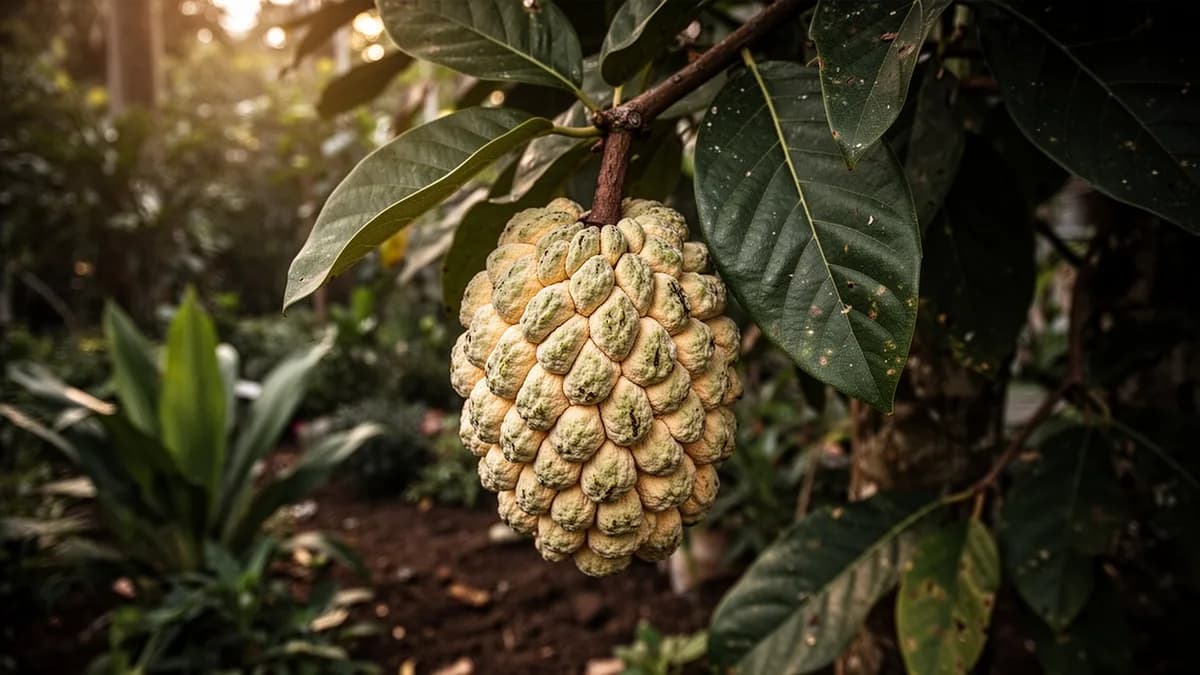
Custard Apple
Annona reticulata
At a Glance
It's planting season for Custard Apple! Start planning your garden now.
A tropical Annona species with reddish-brown skin and sweet, granular white flesh with a mild, pleasant custard flavor. Custard apples are less flavorful than cherimoya but easier to grow in fully tropical conditions. The trees are drought-tolerant once established and generally require less maintenance than other Annona species.
Planting & Harvest Calendar
Growth Stages
From Seed to Harvest
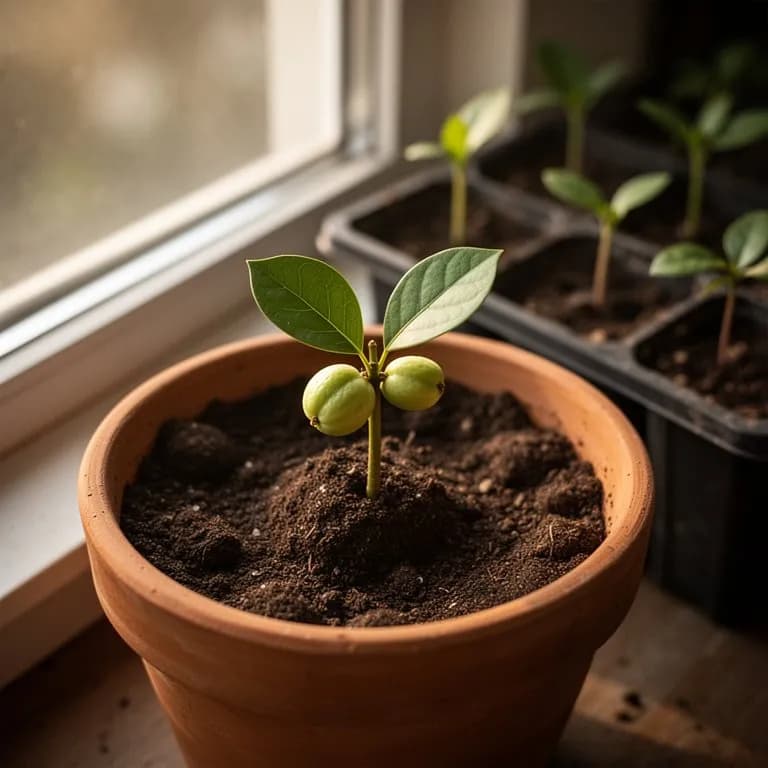
Germination
Days 0–30
Seeds germinate slowly in warm soil, sending up a single shoot. Germination can take 2-4 weeks and requires consistent moisture and temperatures above 18°C.
💡 Care Tip
Soak seeds for 24 hours before planting and keep the growing medium consistently moist but not waterlogged. Use bottom heat if possible.
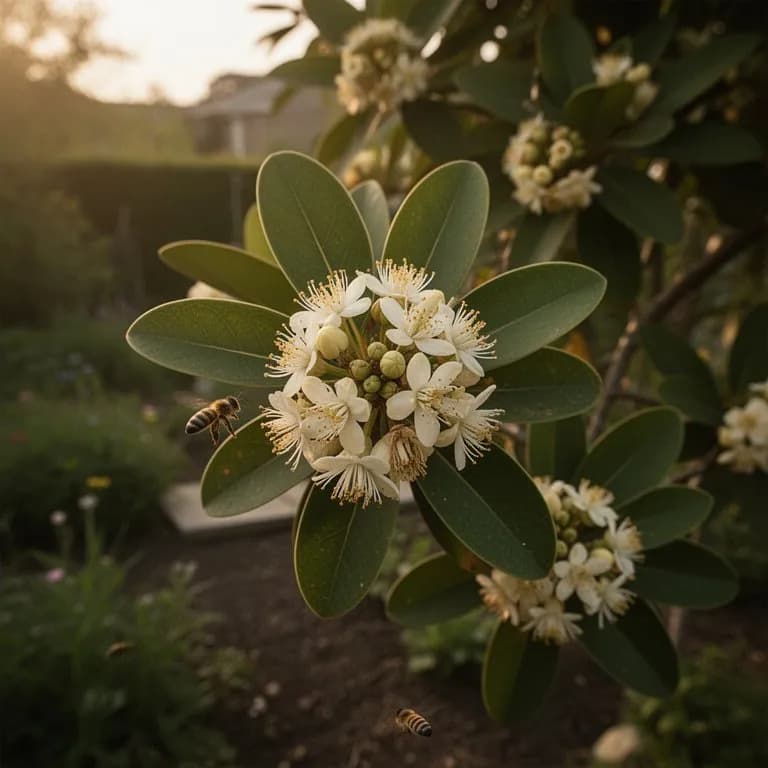
Custard apple flowers are small and fragrant, attracting pollinators in late spring
Monthly Care Calendar
What to do each month for your Custard Apple
May
You are herePeak flowering period — hand-pollinate daily in the mornings for the best fruit set. Maintain consistent moisture as drought stress during flowering causes flower drop. Apply a compost tea foliar spray to boost plant vigour.
Did You Know?
Fascinating facts about Custard Apple
Custard apple (Annona squamosa) is believed to be one of the first fruit trees domesticated in the Americas, with evidence of cultivation stretching back over 5,000 years by indigenous peoples of the tropical lowlands.
Custard apple is one of the easiest Annona species to grow, tolerating a wider range of tropical conditions than its more refined relatives. Plant in full sun with well-draining soil, spacing trees twenty to twenty-five feet apart. The tree grows to twenty to thirty feet tall and develops a spreading, irregular canopy. Water regularly during the first two years, after which the tree is moderately drought-tolerant.
Unlike cherimoya, custard apple does not require a cool winter period and thrives in lowland tropical heat. Fertilize quarterly with a balanced fertilizer, adding extra potassium during fruiting periods. The tree is semi-deciduous, dropping leaves during dry periods before producing new growth and flowers. Organic mulch helps conserve moisture and suppress weeds around the shallow root zone.
Custard apple is generally self-pollinating and sets fruit more reliably than cherimoya without hand-pollination, though hand-pollination can still improve yields. Prune after harvest to maintain a manageable size and open canopy structure. Remove dead wood, crossing branches, and root suckers that divert energy from fruit production. The tree tolerates moderate pruning well and recovers quickly.
The custard apple, known botanically as Annona squamosa, traces its origins to the tropical lowlands of the Americas, with its native range spanning from southern Mexico and the Caribbean through Central America and into northern South America. Archaeological evidence and linguistic studies suggest that indigenous communities across these regions were cultivating and selectively improving the fruit at least 5,000 years ago, long before European contact.
Spanish and Portuguese explorers and colonisers in the 16th century were quick to recognise the fruit's value and transported it along their trade routes to West Africa, tropical Asia, and eventually the Pacific Islands. By the 17th century, custard apple was well established in India, where it took on great cultural and culinary importance and came to be known by a variety of local names including 'sitaphal' (Lord Shiva's fruit) in Hindi, and 'atta' in many South Asian languages.
In India, the tree became so thoroughly integrated into the landscape and food culture that many early European botanists who encountered it in Asia incorrectly assumed it was of Asian origin. Today, India is by far the largest producer and consumer of custard apple in the world, followed by other South and Southeast Asian nations including Thailand, the Philippines, Indonesia, and Sri Lanka.
The fruit also established a strong presence in tropical Africa, Australia, and throughout the Pacific, where it adapted readily to a wide range of tropical and subtropical conditions. In Australia, commercial cultivation has expanded significantly in Queensland and northern New South Wales, where improved hybrid varieties like the 'African Pride' and 'Pinks Mammoth' have been developed to offer larger fruit, better shelf life, and improved hand-pollination characteristics suited to commercial orchards.
Despite its global reach, the custard apple remains relatively underrepresented in Western supermarkets due to its delicate texture and short post-harvest life, which makes long-distance shipping challenging. However, growing interest in exotic tropical fruits, home gardening, and local farmers' markets has spurred renewed appreciation for this ancient, flavour-rich fruit.
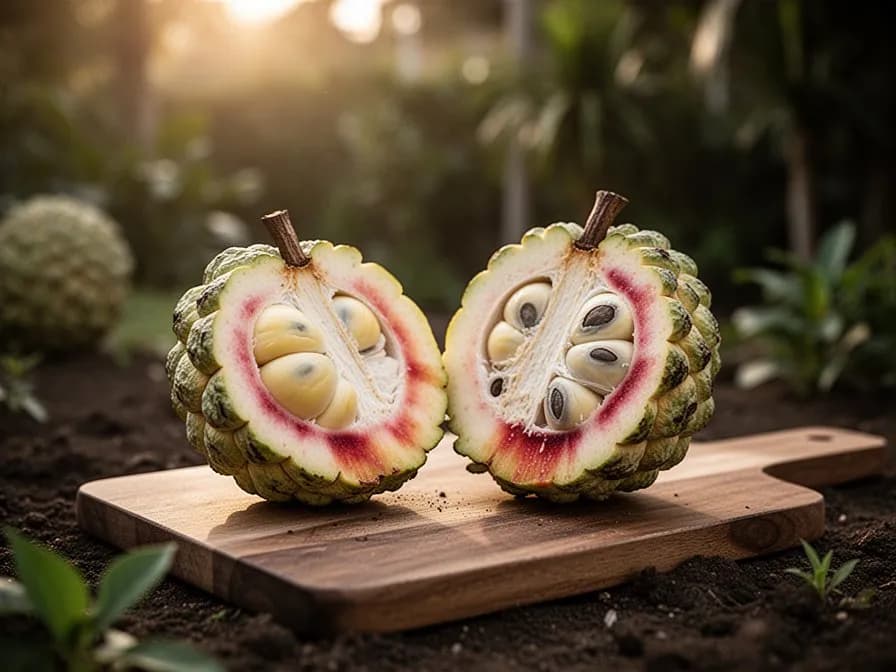
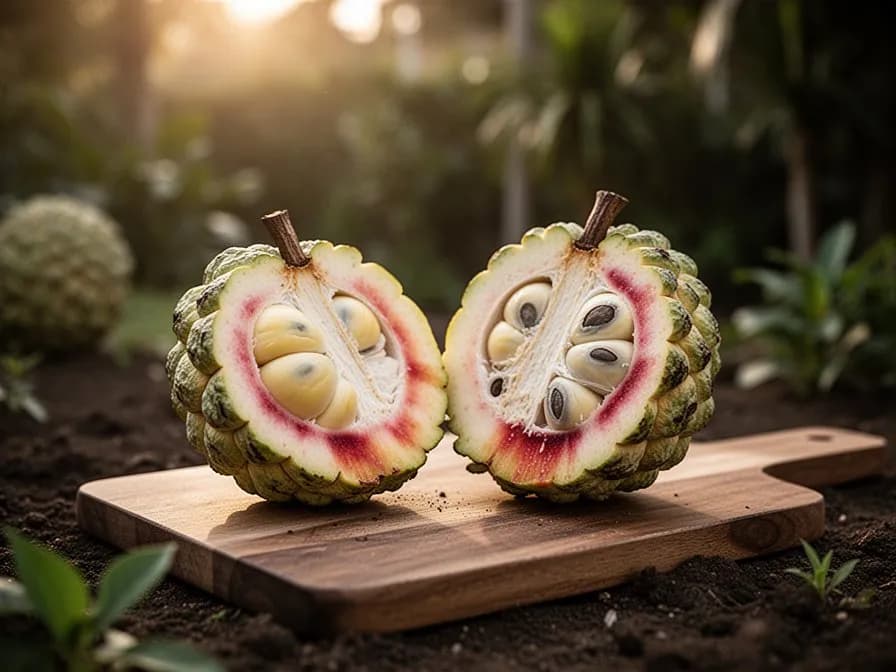
The creamy white flesh of custard apple has a smooth, pudding-like texture
Custard apple seeds germinate readily compared to other Annonas. Scarify seeds by nicking the coat with a file and soak for twenty-four hours. Plant one inch deep in moist, well-draining potting mix. Keep warm at 75 to 85 degrees Fahrenheit with consistent moisture. Germination takes two to four weeks. Seedling trees fruit in three to five years. For improved fruit quality, graft with superior cultivar scions onto seedling rootstock.
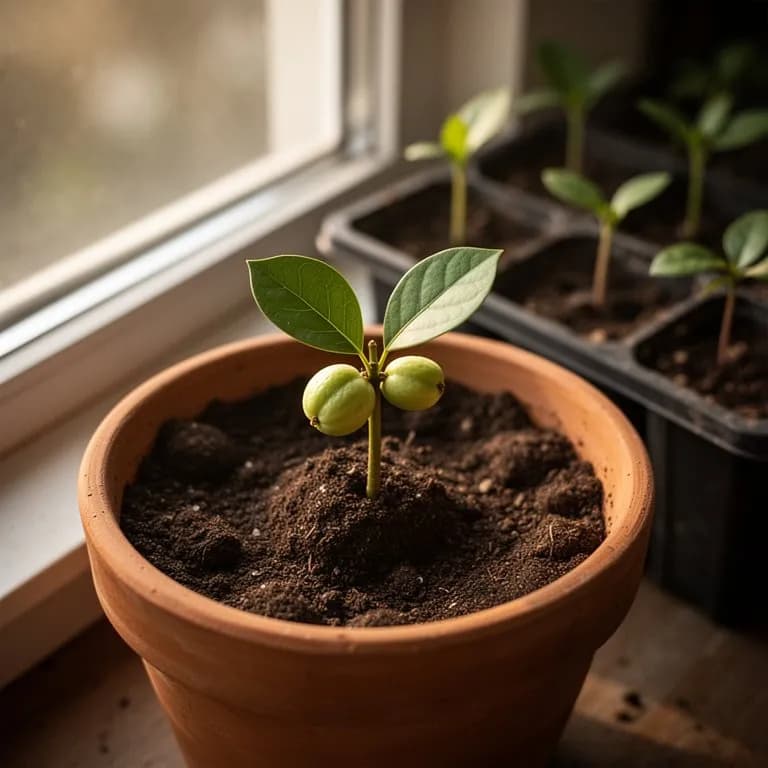
Healthy custard apple seedling ready for transplanting into the garden
Custard apple is adaptable to a range of soil types including sandy, loamy, and light clay soils with a pH of 5.5 to 7.5. It is more tolerant of poor soils than cherimoya or soursop. Apply a balanced fertilizer quarterly with additional potassium during fruiting. Organic mulch improves soil fertility and moisture retention. In very sandy soils, more frequent lighter fertilization prevents nutrient leaching. The tree tolerates slightly alkaline conditions better than other Annonas.
Check Your Zone
See if Custard Apple is suitable for your location.
13°C – 35°C
55°F – 95°F
Custard apple thrives in warm tropical and subtropical climates and is sensitive to frost. It grows best between 25°C and 35°C and can tolerate brief dips to around 13°C in winter dormancy, but prolonged exposure to temperatures below 10°C will damage or kill the tree. Hot, dry conditions above 38°C can cause flower and fruit drop unless adequate irrigation is provided.
Common issues affecting Custard Apple and how to prevent and treat them organically.
Custard apple fruit quality is generally considered inferior to cherimoya, with a grainier texture and less complex flavor. The seeds are numerous and hard to separate from the flesh. Fruit flies are attracted to the sweet ripening fruit and can be a persistent problem. The tree can become weedy in some tropical regions, spreading through seed dispersal. Overwatering leads to root rot, especially in heavy soils.
- 1Always hand-pollinate custard apple flowers to dramatically improve fruit set — use a small, dry paintbrush to transfer pollen from freshly opened male-phase flowers (which shed loose, powdery pollen) to the sticky, receptive female-phase flowers, which are usually in an earlier stage of opening on the same or neighbouring tree.
- 2Plant custard apple in a position that receives full sun for at least 6–8 hours per day, as insufficient sunlight directly reduces flowering, fruit set, and fruit quality — a north-facing wall in temperate zones provides both sun and radiant heat.
- 3Custard apple trees prefer a soil pH between 6.0 and 7.0 and perform poorly in heavy clay or waterlogged soils — if drainage is an issue, plant on a raised mound or in a raised garden bed to keep the root zone well-aerated.
- 4Apply a thick 10cm mulch of sugar cane or wood chip around the drip line of the tree, keeping it clear of the trunk, to conserve soil moisture, suppress weeds, and maintain the warm, moist root zone conditions that custard apple demands.
- 5Reduce irrigation significantly during the tree's natural dry-season dormancy period (winter in subtropical climates), as overwatering dormant trees promotes root rot — resume normal watering as new spring growth appears.
- 6Prune custard apple trees annually after harvest to maintain an open vase shape, removing dead and crossing branches and tipping back excessively long shoots to encourage dense, productive new growth the following season.
- 7In subtropical and temperate gardens, protect young trees from frost by covering with frost cloth or hessian when temperatures are forecast to drop below 10°C — even a light frost can kill young trees and defoliate or damage mature specimens.
- 8Custard apple is susceptible to mealybug infestations particularly during warm, humid periods — inspect the junction of fruit stalks and branch crotches regularly and treat at the first sign with a diluted neem oil spray or horticultural soap solution.
- 9Grafted trees from a reputable nursery are strongly preferred over seed-grown trees, as grafted plants bear fruit 1–2 years earlier, produce fruit true-to-type, and tend to exhibit superior disease resistance and yield compared to seedlings.
- 10Avoid planting custard apple in frost pockets, exposed coastal positions, or areas subject to strong winds, as the branches are somewhat brittle and the tree is intolerant of cold, drying winds which cause leaf scorch and fruit drop.
Custard apple is ready when the skin turns from green to reddish-brown or pinkish and the segments separate slightly. The fruit yields to gentle pressure when ripe. Harvest by cutting the stem with pruning shears while the fruit is still slightly firm, as it bruises easily when fully soft. Allow harvested fruit to ripen at room temperature for two to four days. The fruit has a sweet aroma and the flesh pulls away from the skin easily when fully ripe.
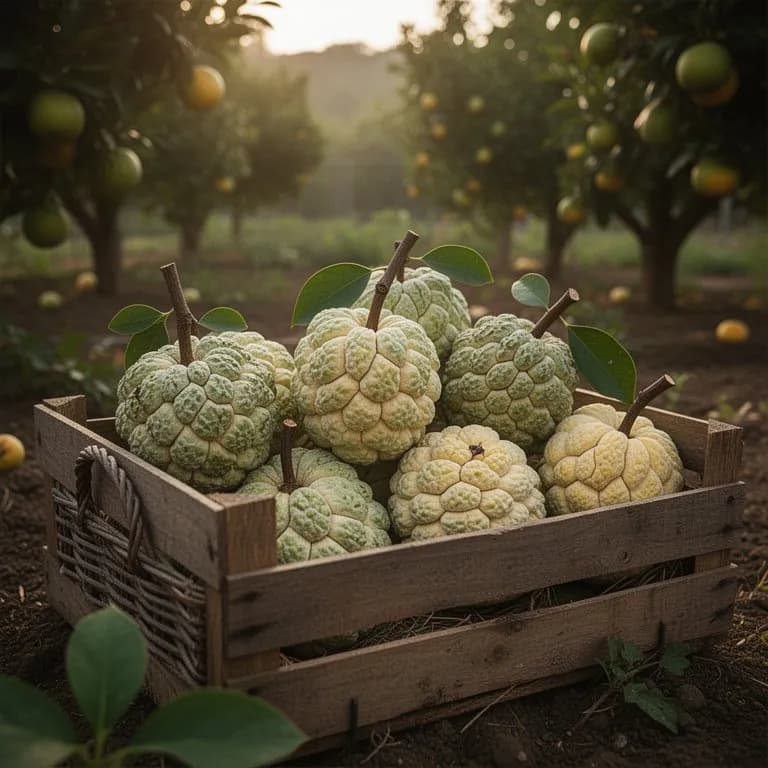
A bountiful harvest of custard apples collected at peak ripeness
Ripe custard apple should be consumed within one to two days, as the flesh darkens and ferments quickly. Refrigerate slightly unripe fruit for up to one week. The pulp can be scooped out, seeds removed, and frozen for up to three months. Custard apple pulp is used in ice cream and smoothie bases when frozen. The fruit does not dry or preserve well by other methods due to its high moisture and sugar content.
Plan your garden with ease
Love growing Custard Apple? Use our free garden planner to design your beds, track planting dates, and get personalized care reminders.
Nutritional Info
Per 100g serving
101
Calories
Health Benefits
- Rich in vitamin B6, supporting brain health and neurotransmitter production
- Good source of magnesium, contributing to muscle and nerve function
- Contains significant amounts of riboflavin (vitamin B2) for energy metabolism
- Provides natural antioxidants including kaurenoic acid and annonaceous acetogenins
- Low in fat and cholesterol-free, making it a heart-healthy fruit choice
- High natural sugar content provides quick energy — ideal as a pre-workout snack
💰 Why Grow Your Own?
A single ripe custard apple at a farmers' market or specialty grocer typically costs between $4 and $8 depending on size and season. A home-grown mature tree can produce 50 to 100 fruit per season, representing a potential saving of $200 to $800 or more annually. Seedlings cost $15–$30 and grafted trees $30–$60, meaning the tree typically pays for itself in its first productive season.
Quick Recipes
Simple recipes using fresh Custard Apple
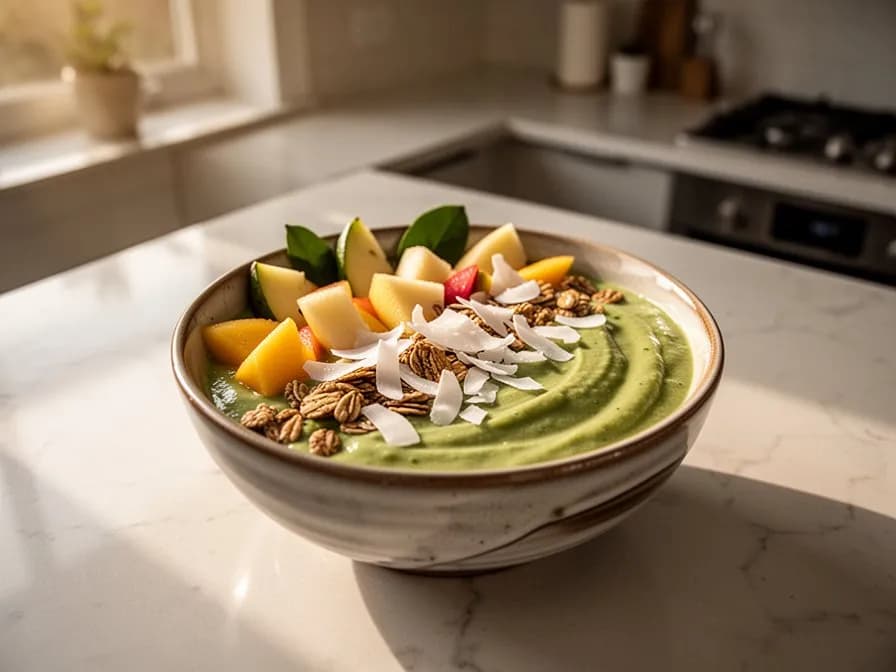
Custard Apple Smoothie
5 minutesA thick, creamy tropical smoothie that highlights the natural vanilla-like flavour of custard apple. Naturally sweet and satisfying enough to serve as a breakfast or dessert.
Custard Apple Ice Cream
20 minutes (plus freezing time)A no-churn ice cream that lets custard apple's natural creaminess do the heavy lifting. The result is a silky, tropical frozen dessert with minimal effort.
Custard Apple Lassi
10 minutesA traditional South Asian-inspired yoghurt drink blended with custard apple pulp, creating a refreshing and probiotic-rich beverage perfect for hot days.
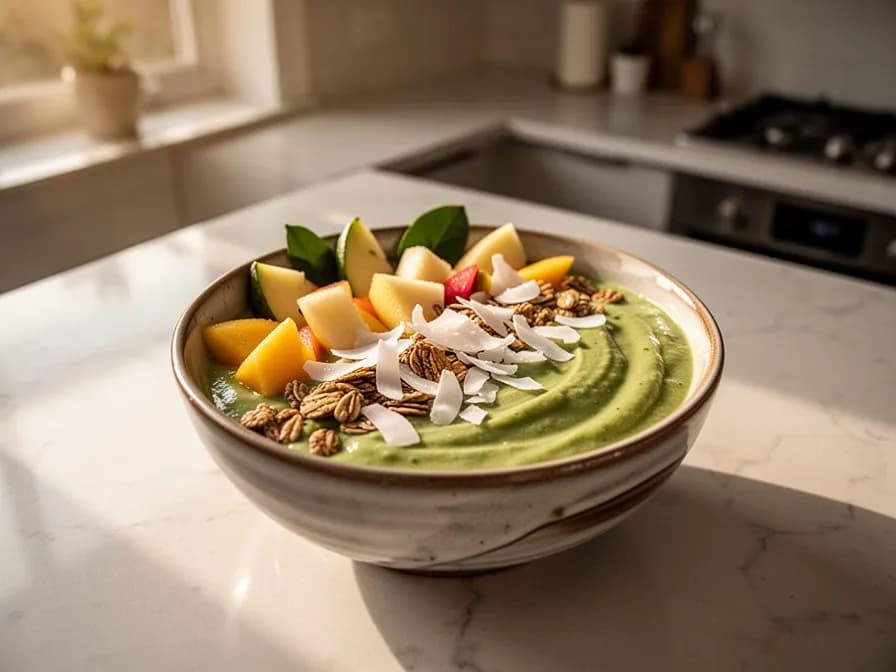
Custard apple makes an exceptionally rich and creamy smoothie base
Yield & Spacing Calculator
See how many Custard Apple plants fit in your garden bed based on the recommended 360cm spacing.
0
Custard Apple plants in a 4×4 ft bed
0 columns × 0 rows at 360cm spacing
Popular Varieties
Some of the most popular custard apple varieties for home gardeners, each with unique characteristics.
African Pride
An Australian hybrid between cherimoya and custard apple with superior flavor and large, heart-shaped fruit. Combines the easy growing of custard apple with cherimoya flavor.
Pink's Mammoth
Produces very large fruit weighing up to three pounds with sweet, creamy flesh. Vigorous tree with good productivity in tropical climates.
Hillary White
A selection with lighter-colored skin and sweet, smooth-textured flesh. Reliable producer with few seeds compared to seedling trees.
Custard apple is eaten fresh by scooping the flesh from the halved fruit and discarding the seeds. The mild, sweet flavor works well in smoothies, milkshakes, and ice cream. The pulp can be strained to remove seeds and used in dessert preparations. In tropical regions, the fruit is blended with milk and sugar for a refreshing drink. It pairs well with lime juice and coconut cream.
When should I plant Custard Apple?
Plant Custard Apple in March, April, May. It takes approximately 1095 days to reach maturity, with harvest typically in August, September, October, November.
What hardiness zones can Custard Apple grow in?
Custard Apple thrives in USDA hardiness zones 10 through 12. With greenhouse protection, it may be grown in zones 8 through 13.
How much sun does Custard Apple need?
Custard Apple requires Full Sun (6-8h+). This means at least 6-8 hours of direct sunlight daily.
How far apart should I space Custard Apple?
Space Custard Apple plants 360cm (142 inches) apart for optimal growth and air circulation.
What pests and diseases affect Custard Apple?
Common issues include Fruit Fly, Leaf Spot, Mealybugs. Prevention through good garden practices like crop rotation, proper spacing, and companion planting is the best approach. See the detailed pests and diseases section above for symptoms, prevention, and treatment for each.
How do I store Custard Apple after harvest?
Ripe custard apple should be consumed within one to two days, as the flesh darkens and ferments quickly. Refrigerate slightly unripe fruit for up to one week. The pulp can be scooped out, seeds removed, and frozen for up to three months. Custard apple pulp is used in ice cream and smoothie bases whe...
What are the best Custard Apple varieties to grow?
Popular varieties include African Pride, Pink's Mammoth, Hillary White. Each has unique characteristics suited to different growing conditions and culinary preferences. See the varieties section above for detailed descriptions.
What soil does Custard Apple need?
Custard apple is adaptable to a range of soil types including sandy, loamy, and light clay soils with a pH of 5.5 to 7.5. It is more tolerant of poor soils than cherimoya or soursop. Apply a balanced fertilizer quarterly with additional potassium during fruiting. Organic mulch improves soil fertilit...
How do I know when a custard apple is ripe and ready to eat?
Custard apples do not ripen on the tree — they must be harvested at the 'mature green' stage and allowed to ripen at room temperature. A fruit is ready to harvest when it gives very slightly under gentle thumb pressure and the skin segments begin to visibly separate. Once picked, store at room temperature for 2–5 days. The fruit is perfectly ripe when it feels soft all over, similar to a ripe avocado. At this point, refrigerate it and consume within 1–2 days before it deteriorates.
Why is my custard apple tree flowering but not setting any fruit?
Poor fruit set is the most common problem with custard apples and is almost always caused by inadequate pollination. The flowers are protogynous — the female parts are receptive before the male parts of the same flower shed pollen, which means self-pollination rarely occurs naturally. The natural pollinators (specific beetle species) are often absent in gardens. The solution is to hand-pollinate using a small paintbrush daily during flowering, transferring fresh pollen from flowers that are shedding powdery yellow pollen to flowers at an earlier, sticky, receptive stage.
Can I grow a custard apple tree in a pot or container?
Yes, custard apple can be grown in a large container (minimum 100–150 litre capacity) and this is actually a practical solution for gardeners in cooler climates who need to bring the tree indoors over winter. Use a free-draining premium potting mix amended with coarse sand and perlite. Container trees will be smaller and produce less fruit than ground-planted specimens, but with attentive watering, regular feeding, and annual root pruning, a pot-grown tree can still deliver a rewarding harvest.
Are custard apple seeds poisonous, and is it safe to blend the whole fruit?
Yes, custard apple seeds contain annonacin and other acetogenins that are toxic if consumed in meaningful quantities. The seeds are hard, shiny, and easy to remove by hand — always de-seed the fruit carefully before eating or blending. Never blend the whole fruit with seeds in a smoothie, as the blades will crush the seeds and release these compounds into your drink. The flesh itself, once fully de-seeded, is completely safe and nutritious.
How long does it take for a custard apple tree to produce fruit?
The time to first fruiting depends on whether the tree was grown from seed or from a graft. Seed-grown trees typically take 5–7 years to begin bearing fruit and may not produce fruit identical to the parent. Grafted trees from a reputable nursery will generally begin fruiting within 3–4 years of planting, with meaningful harvests from year 4–5 onwards. Purchasing a grafted named variety such as 'African Pride' or 'Pinks Mammoth' is strongly recommended for home gardeners wanting reliable, early, high-quality fruit production.
What is the difference between a custard apple, a cherimoya, and a sugar apple?
These three fruits are closely related members of the Annona genus and are frequently confused. The custard apple (Annona squamosa) has a distinctive bumpy, pale green skin with visible segments and a sweet, grainy-textured white flesh. The cherimoya (Annona cherimola) is larger, has smoother skin with U-shaped indentations, and a creamier, less grainy flesh often described as tasting like a blend of vanilla, pineapple, and banana. The sugar apple is often used interchangeably with custard apple in many countries, particularly India, though in strict botanical terms the sugar apple refers specifically to Annona squamosa. The 'atemoya' is a widely grown hybrid of the custard apple and cherimoya, combining the heat tolerance of the custard apple with the superior flavour and flesh texture of the cherimoya.
Ready to Grow Custard Apple?
Add Custard Apple to your garden plan and start designing your perfect layout.

Vladimir Kusnezow
Gardener and Software Developer
Zone 6b gardener. Growing vegetables and fruits in soil and hydroponics for 6 years. I built PlotMyGarden to plan my own gardens.
Jump to Section