Winter Melon
A large, waxy-skinned gourd used extensively in Chinese and Southeast Asian soups and braised dishes.





On this pageOverview
Meet Winter Melon
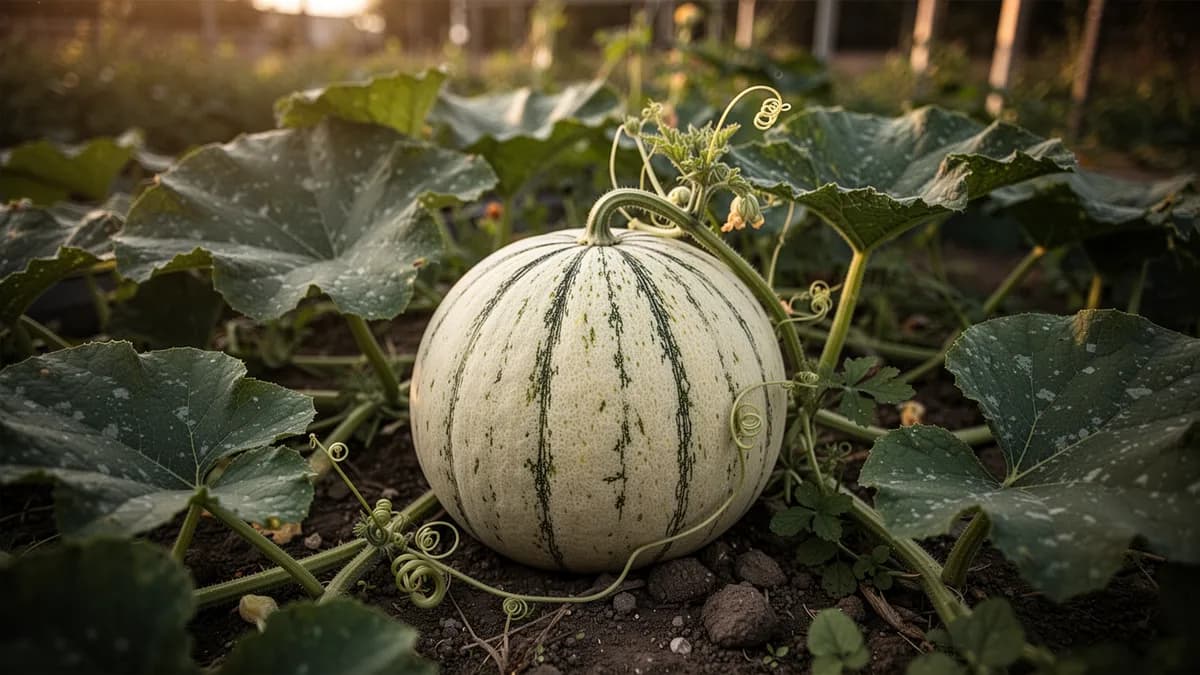
A large, waxy-skinned gourd used extensively in Chinese and Southeast Asian soups and braised dishes. Winter melon can grow to enormous size but is typically harvested at ten to fifteen pounds for the best culinary quality. The mild, almost flavorless white flesh absorbs the flavors of broths and seasonings beautifully, making it a preferred soup ingredient. Despite the name, it is a warm-season crop that stores well through winter due to its thick, waxy rind.
When to plant Winter Melon
Start winter melon seeds indoors 6-8 weeks before the last frost to ensure adequate growing time. Soak seeds overnight in warm water before planting 1 inch deep at 80-90°F. Germination takes 7-14 days. Use a heat mat for consistent warmth. Transplant after all frost danger when nighttime temperatures stay above 60°F. Direct sowing is only practical in tropical and subtropical regions with very long growing seasons. Handle transplants carefully to avoid root disturbance. Space plants 4-6 feet apart in enriched soil.
Your Winter Melon Year
Composed for Zone 7 · typical seasons · frost passes Apr 2, returns Nov 1
Plant Winter Melon May – Jun, pick Sep – Nov. Check the planting methods below and set your climate to personalize these windows.
How to grow Winter Melon
Winter melon, also called wax gourd or ash gourd, is a large tropical cucurbit producing waxy-skinned fruits that can weigh 10-40 pounds. Despite its name, it is a warm-season crop that requires 120-150 days of hot weather to mature. Start seeds indoors 6-8 weeks before the last frost or direct sow after soil reaches 70°F. Plant seeds 1 inch deep and space plants 4-6 feet apart.
Winter melon vines are vigorous sprawlers that need 8-12 feet of growing space or a very sturdy trellis for vertical growing. Smaller fruits can be trellised but large varieties are better grown on the ground with straw mulch underneath. Water deeply and consistently with 1.5-2 inches per week during active growth. The large leaves transpire heavily and plants need substantial moisture.
Pollination by bees is essential as plants have separate male and female flowers. Female flowers are identified by the small round ovary at the base. Hand pollination is recommended when growing few plants. Each vine produces 1-3 large fruits or 4-6 smaller ones depending on variety. As fruits mature, they develop a distinctive waxy white coating on the skin that gives the plant its wax gourd name and contributes to its exceptional storage capability.
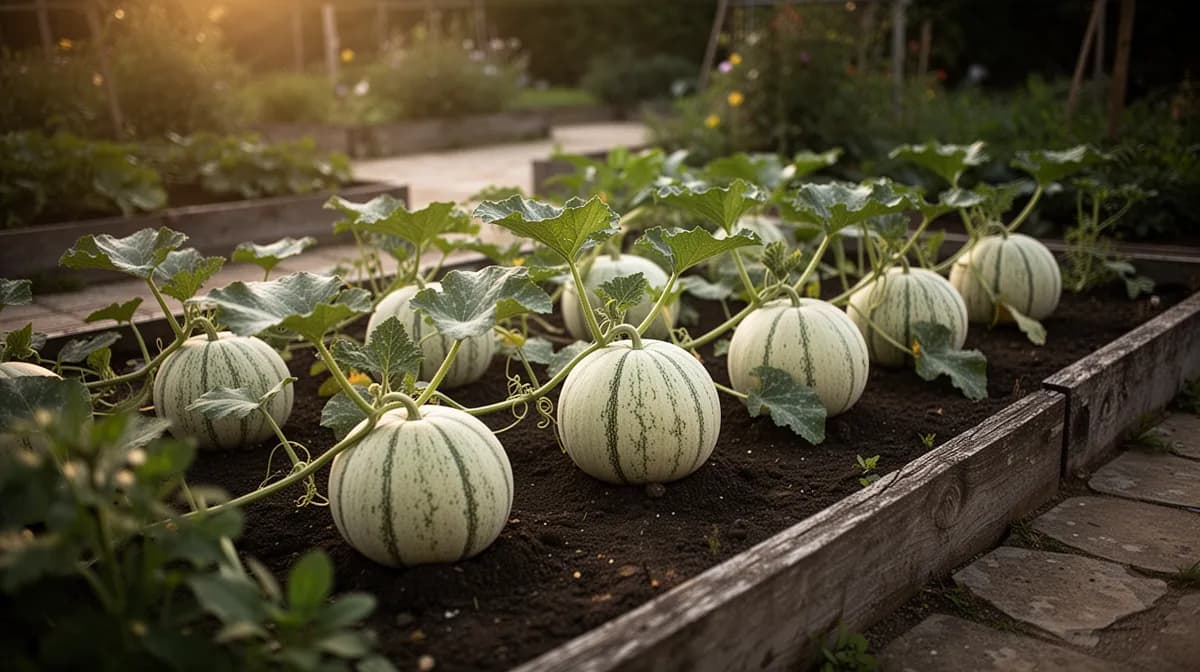
2 plants fit a 4 × 8 ft bed
Each Winter Melon wants 120 cm of elbow room. The planner keeps that spacing for you — every plant, every bed.
Winter Melon's best neighbours
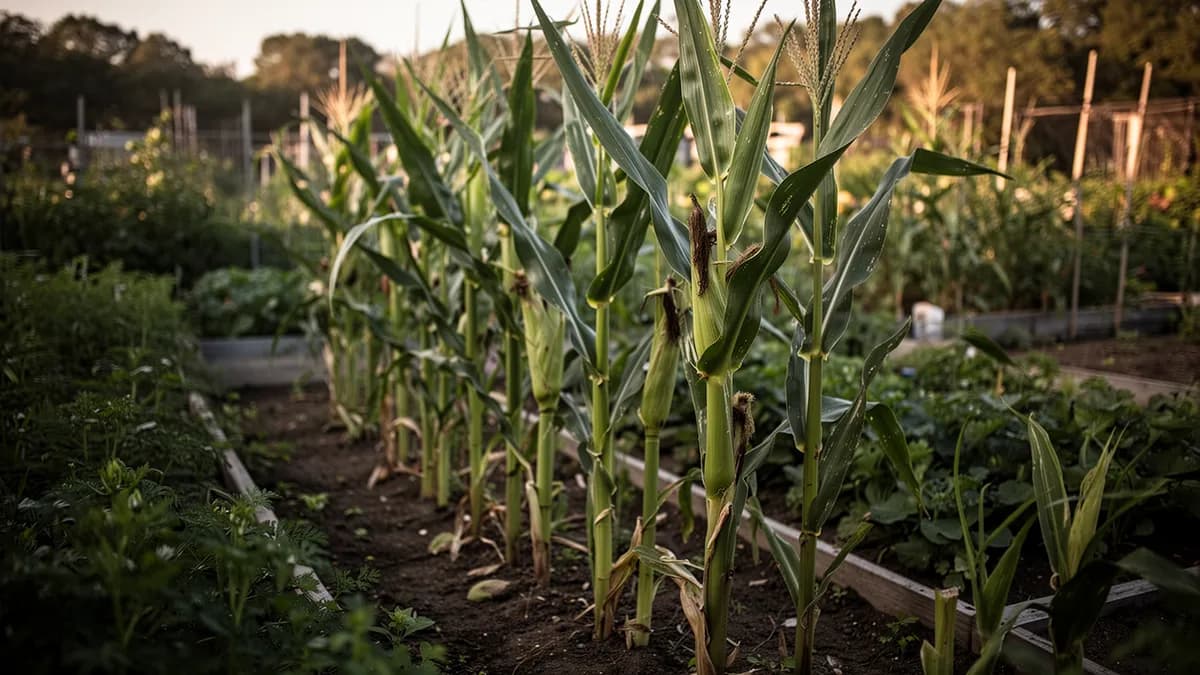
Winter melon benefits from nearby corn which provides a windbreak for the large-leaved vines. Beans fix nitrogen that feeds the heavy-feeding winter melon. Sunflowers and zinnias attract pollinators essential for fruit set. Marigolds planted nearby deter various pests. Avoid planting near other large cucurbits that would compete for space and nutrients. The massive vine spread requires thoughtful placement; grow on the garden's edge so vines can extend outward without overwhelming other crops.
Corn belongs beside it.
Old growers' knowledge, checked against Winter Melon's real companion table below — test any plant you're growing.
Try Winter Melon in a bed — right here
A real planner bed with Winter Melon already in it. Tap a companion to place it and watch the pairing checks answer — green for good neighbours, red for a clash.


Related growing guides
Feed it well
Winter melon requires rich, well-drained soil with a pH of 6.0-6.8 heavily amended with compost and aged manure. These large, vigorous plants are heavy feeders requiring substantial nutrition throughout the season. Apply balanced fertilizer at planting and side-dress monthly. When fruits begin developing, increase potassium to support rind development and storage quality. Deep, loose soil accommodates the extensive root system. Raised beds with rich soil give winter melon the warmth and fertility it demands.
Ideal Temperature
Hardiness Zone Compatibility
From seed to harvest, stage by stage
Seed Starting
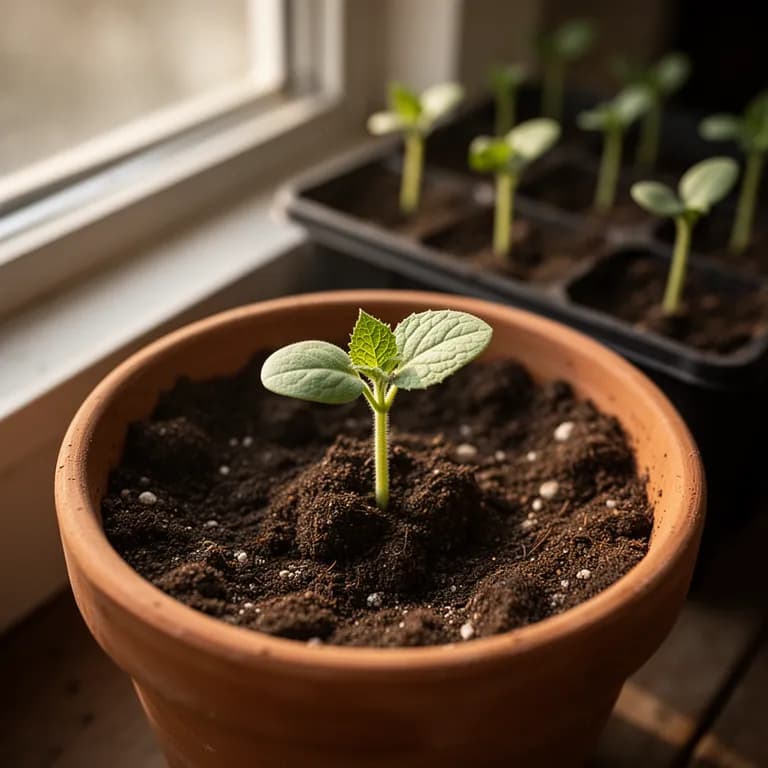
Seeds germinate in warm soil within 7-14 days. The large, flat seeds produce robust seedlings with broad cotyledon leaves. Winter melon seeds require consistent soil temperatures of at least 21°C (70°F) for reliable germination and will rot in cold, wet soil.
Vine Establishment
True leaves develop rapidly, showing the characteristic deeply lobed shape. The vine begins to run along the ground, producing tendrils that grip supports or neighboring plants. Root systems expand vigorously during this phase, forming the foundation for the heavy fruit load to come.
Rapid Vine Growth
Vines enter explosive growth, extending 15-30 cm per day in hot weather and producing large, hairy leaves that shade the ground beneath. The plant sends out lateral branches and tendrils in all directions. This energy-intensive phase requires heavy feeding and consistent moisture.
Flowering and Pollination
Bright yellow flowers open in the morning, with male flowers appearing first and female flowers following a week or two later. Female flowers are identifiable by the small swollen ovary at the base that resembles a miniature melon. Successful pollination requires bee activity during the few morning hours each flower is open.
Fruit Development
Pollinated fruits swell rapidly, gaining 0.5-1 kg per week under ideal conditions. The rind develops its characteristic waxy white bloom, a powdery coating that protects the fruit and gives winter melon its name. Fruits grow oblong to cylindrical, reaching 30-60 cm in length.
Maturity and Harvest
Fruits reach full size at 5-15 kg depending on variety and growing conditions. The waxy white coating becomes thick and powdery, and the rind hardens to a dark green beneath the wax. The vine's leaves begin to yellow as the plant redirects energy into fruit maturation. Mature fruit sounds hollow when tapped.
Start seeds indoors 3-4 weeks before the last frost date in biodegradable pots to avoid root disturbance during transplanting. Soak seeds for 12 hours in warm water before planting to speed germination. Maintain soil temperature at 25-30°C (77-86°F) with a heat mat.
Caring for Winter Melon month by month
What to do each month for your Winter Melon
October
You are hereComplete harvest before the first frost — winter melon cannot tolerate any freezing. Cure harvested fruit in a warm, well-ventilated area for one week. Store in a cool, dry place at 13-15°C (55-60°F) where fruit will keep for 3-6 months or longer.
Know exactly what to do in your garden — every month
One email at the start of each month: what to sow, plant, and tackle right now — for your Winter Melon and everything growing around it. Plus a short starter course that helps you dodge the classic mistakes.
- What to do, right now
- Matched to your season
- Starter course included
Harvesting Winter Melon
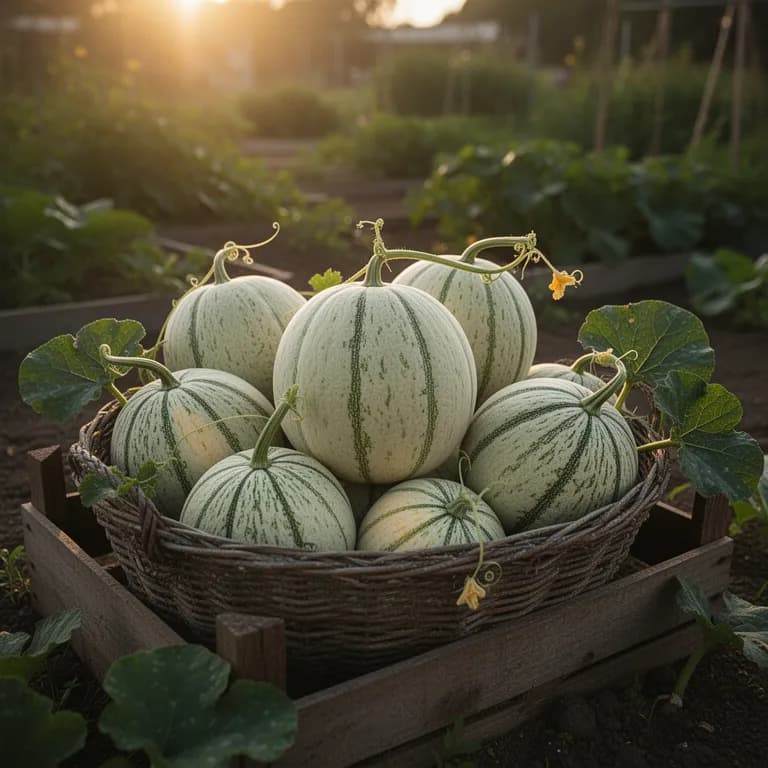
Harvest winter melon when the waxy white coating on the skin is fully developed and the rind is very hard. Mature fruits have a dull, chalky white appearance. The stem should be dry and corky. For smaller immature fruits used in soups, harvest at 8-12 inches when the skin is still green. Cut from the vine with a sharp knife leaving a 2-3 inch stem. Mature fruits are very heavy and may require two people to handle. Winter melon is one of the few fresh vegetables that improves with storage as flavors concentrate.
assuming you plant when the window opens — set your real date
Pick Winter Melon promptly and the plant keeps producing.
Storage & Preservation
Winter melon has legendary storage capability, keeping for 6-12 months in a cool, dry location at 55-60°F. The waxy coating acts as a natural preservation barrier. Once cut, refrigerate wrapped portions and use within one week. For longer preservation, cube and freeze for later use in soups. Candied winter melon is a traditional Chinese sweet made by simmering cubes in sugar syrup. Dried winter melon strips are sold in Asian markets for reconstitution in soups. Winter melon tea is a popular Southeast Asian beverage.
What goes wrong — and the fix
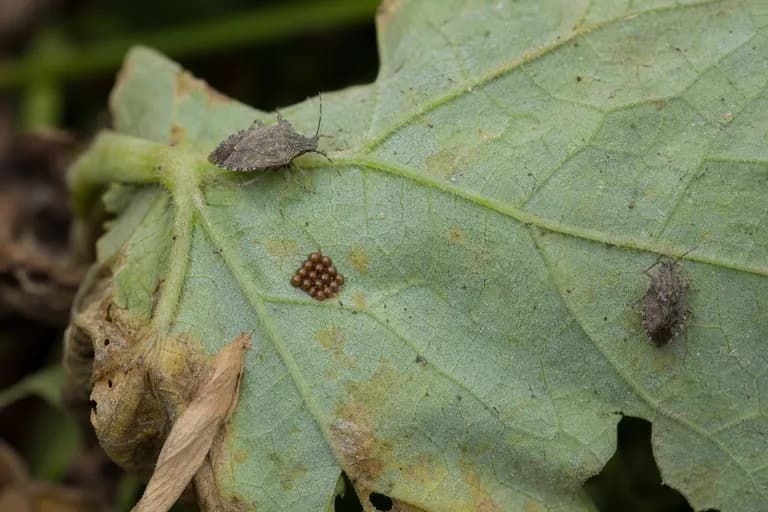
Squash Bug
PestBrown adults and gray nymphs on leaves and stems causing wilting, with egg clusters on leaf undersides.

Downy Mildew
DiseaseAngular yellow spots on upper leaf surfaces with fuzzy gray mold underneath, causing rapid leaf die-back.
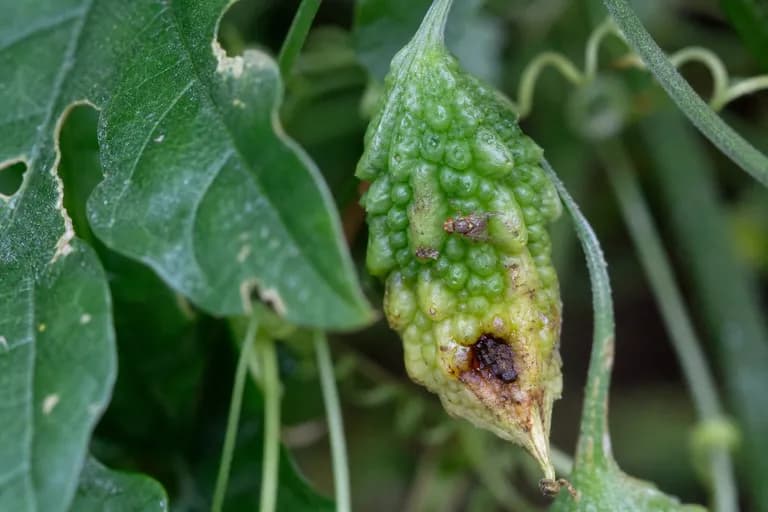
Fruit Fly
PestSmall puncture marks on developing fruits with larvae feeding inside causing rot and premature decay.
Troubleshooting Common Problems
The primary challenge outside tropical regions is providing enough warm growing days for these long-season crops. Start seeds early indoors and choose smaller-fruited varieties for shorter seasons. Fruits rotting on the ground is common in humid climates; elevate on straw or boards. Very large fruits may split during heavy rain if growth is rapid. The massive vines can overwhelm small gardens; plan for at least 8-12 feet of growing space. Insufficient pollination leads to misshapen or undeveloped fruits.
Growing Tips
- Give winter melon vines room to roam. Each plant needs a minimum of 3-5 meters of spreading space, or a very sturdy trellis rated for at least 25 kg per fruit. Underestimating space requirements is the most common mistake new growers make.
- Start seeds indoors to gain a critical head start on the long growing season. Winter melon needs 100-160 frost-free days to produce mature fruit — in zones 7-8, indoor starting 4-6 weeks before last frost is essential for a successful harvest.
- Rich soil is non-negotiable. Work in at least 10 cm of compost and a generous amount of well-rotted manure before planting. Winter melon is a heavy feeder that needs abundant nutrients to fuel its massive vine growth and large fruit development.
- Hand-pollinate for reliable fruit set, especially in urban gardens with limited pollinator populations. In the early morning when flowers are open, use a small brush or pluck a male flower and touch its pollen directly to the stigma of a female flower.
- Limit fruit count per vine to 2-3 melons if you want the largest possible fruit for long-term storage. More fruit per vine means smaller individual melons. Pinch off additional female flowers once your target fruit count is set.
- Place a thick layer of straw, a wooden board, or a melon cradle under each developing fruit to prevent bottom rot from soil moisture contact. This is especially critical in humid climates or during rainy periods.
- Water consistently with 3-5 cm per week during vine growth and fruit development, then reduce watering as fruit approaches maturity. Drip irrigation is ideal — overhead watering promotes powdery mildew on the large leaf surfaces.
- Harvest timing is critical for storage quality. Wait until the waxy white bloom covers the entire fruit surface and the stem begins to dry and crack. Immature fruit with thin wax coating stores poorly and has weaker flavor.
Grow your best Winter Melon yet — and everything around it.
Start a free plan today. Lay out your beds, drop in your Winter Melon, and let PlotMyGarden handle the timing, spacing, companions and reminders from seed to harvest basket.
Pick your Winter Melon
Tong Qwa
Standard round variety producing dark green fruits with heavy wax coating. Fruits weigh 15-25 pounds with dense white flesh.
Oblong Winter Melon
Elongated cylindrical fruits reaching 20-30 inches long. White flesh with mild, sweet flavor popular in Chinese soups.
Mini Winter Melon
Compact variety producing 5-8 pound fruits more manageable for modern households. Same flavor and storage qualities.
Fuzzy Melon
Closely related smaller variety harvested young at 6-8 inches. Fuzzy skin and tender flesh ideal for quick stir-fries and soups.
Winter melon retails for $1-3 per pound at Asian grocery stores and $3-6 per pound at specialty markets. A single vine producing 20-40 kg of fruit represents $45-120 worth of produce from a $2-3 seed packet. The extraordinary storage life means zero waste — unlike most garden produce, you can consume winter melon at your own pace over 6-12 months without any need for canning, freezing, or dehydrating. Growing your own also gives you access to the freshest possible fruit for soups and stir-fries, with a quality that far surpasses anything shipped long distances.
Quick recipes
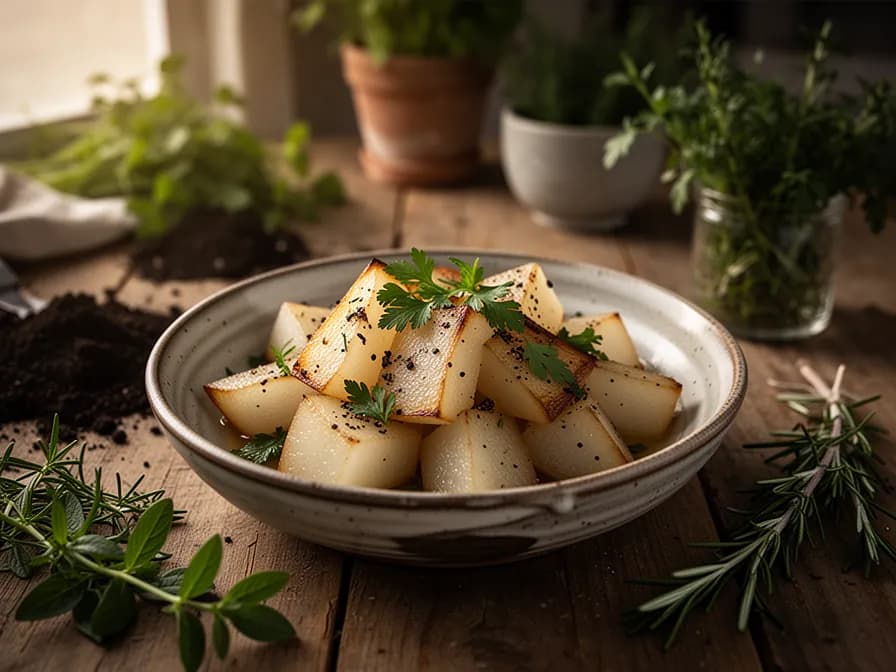
Classic Winter Melon Soup
45 minA light, nourishing Chinese soup where cubes of winter melon become beautifully translucent as they simmer in a savory broth with dried shrimp and goji berries. This is the most traditional and beloved way to prepare winter melon across East and Southeast Asia.
8 ingredientsStir-Fried Winter Melon with Garlic and Oyster Sauce
20 minSliced winter melon stir-fried at high heat with garlic and a savory oyster sauce glaze. The slices maintain a pleasant bite while absorbing the rich umami flavors — a quick weeknight side dish that pairs beautifully with steamed rice.
8 ingredientsWinter Melon and Pork Rib Stew
90 minA hearty, comforting stew where fall-apart tender pork ribs and soft winter melon chunks meld together in a deeply savory broth. Slow simmering extracts collagen from the ribs and infuses the melon with rich pork flavor.
10 ingredientsCulinary Uses
Winter melon is a staple in Chinese, Vietnamese, and South Asian cuisines. The mild, refreshing flesh is primarily used in soups, most famously winter melon soup served inside a carved melon shell. Add cubes to stir-fries, curries, and braised dishes where the flesh absorbs surrounding flavors beautifully. Candied winter melon is a traditional confection. Winter melon tea is a popular sweet beverage in Southeast Asia. The young shoots and leaves are also edible as cooked greens. The flesh can be used in smoothies and juices.
What's inside
Health Benefits
- Extremely low in calories at only 12 per 100g — winter melon is one of the lowest-calorie foods available, making it an excellent choice for weight management and calorie-controlled diets without sacrificing volume or satiety.
- The high water content of approximately 96% makes winter melon a superb hydrating food during hot weather, helping to maintain fluid balance and supporting kidney function — a benefit recognized in traditional Chinese medicine for centuries.
- Contains no fat and virtually no sodium, making it naturally heart-healthy and suitable for low-sodium diets prescribed for hypertension and cardiovascular disease.
- Rich in dietary fiber at 2.9g per 100g, supporting digestive regularity, promoting beneficial gut bacteria, and contributing to feelings of fullness that aid in appetite control.
- Provides vitamin C (14% DV per 100g) which supports immune function, collagen synthesis for healthy skin, and acts as an antioxidant to help protect cells from oxidative damage.
- Traditional Chinese and Ayurvedic medicine systems have used winter melon for millennia as a diuretic food that reduces water retention and edema — modern research supports its mild diuretic properties related to its high potassium-to-sodium ratio and water content.
Where Winter Melon comes from
Winter melon (Benincasa hispida) is native to Southeast Asia, with its center of origin believed to be in the region spanning southern China, Indonesia, and the Malay Peninsula. Archaeological evidence suggests it has been cultivated for at least 2,000 years, with references appearing in ancient Chinese agricultural texts from the Han Dynasty period. The plant spread throughout tropical and subtropical Asia along ancient trade routes, becoming a dietary staple in China, Japan, India, and across Southeast Asia.
In traditional Chinese medicine, winter melon has been classified as a cooling food for centuries, prescribed to reduce excess body heat, relieve water retention, and support kidney function. This medicinal reputation, combined with its extraordinary storage qualities — whole fruits can last 6-12 months in a cool, dry place without refrigeration — made winter melon an invaluable food crop in an era before modern preservation methods. The ability to harvest in summer and eat throughout winter gave the fruit its common English name.
Winter melon plays important roles in the cuisines of nearly every Asian culture. In China, it is essential in soups, stews, and elaborate banquet presentations. In India, it is known as 'petha' and is used to make a beloved translucent candy of the same name, famous in the city of Agra. In Southeast Asia, it appears in savory curries, sweet desserts, and the enormously popular winter melon tea. Today, winter melon is grown commercially across tropical Asia, with China and India being the largest producers. It has gained a foothold in home gardens worldwide wherever summers are warm enough, and is increasingly available in international grocery stores, introducing this ancient Asian staple to new audiences around the globe.
Winter Melon: did you know?
Fascinating facts about Winter Melon
Despite its name, winter melon is a warm-season crop that must be grown during summer — the 'winter' in its name refers to its extraordinary storage life of 6-12 months, allowing summer-harvested fruit to be eaten throughout the winter.
Winter Melon questions, answered
When should I plant Winter Melon?
What are good companion plants for Winter Melon?
What hardiness zones can Winter Melon grow in?
How much sun does Winter Melon need?
How far apart should I space Winter Melon?
What pests and diseases affect Winter Melon?
How do I store Winter Melon after harvest?
What are the best Winter Melon varieties to grow?
What soil does Winter Melon need?
How do I know when winter melon is ready to harvest?
How long can I store winter melon after harvest?
Can I grow winter melon vertically on a trellis?
Why are my winter melon flowers falling off without producing fruit?
Is winter melon the same as wax gourd or ash gourd?
Can I eat winter melon raw or does it need to be cooked?
You just read the theory. Now grow it on autopilot.
Everything that makes Winter Melon fiddly — the timing, the spacing, the companions, the harvest window — is exactly what PlotMyGarden handles for you, for every plant in your garden.
A plan that knows your weather
Set your location once. Get sow, feed and harvest dates built around your real last-frost date and live forecast — no more guessing from a generic seed packet.
From the “When to plant” sectionDrag-and-drop bed planner
Design beds on a grid. Every plant snaps to its proper spacing, and you can see your whole season laid out before you spend a cent on seed.
From the “Growing guide” sectionCompanion conflicts, caught early
200+ good-and-bad pairings checked live as you plant — so a season-wrecking mistake never makes it into the ground.
From the “Companions” sectionReminders you'll actually act on
“Water the beans.” “Pick today before it turns.” Timely, specific, and tied to the plants you're really growing.
From the “Harvest” sectionSuccession, scheduled
Want a harvest for six weeks, not six days? It spaces your sowings automatically and reminds you when each new block is due.
From the “When to plant” sectionA record that gets smarter
Every harvest you log teaches it your garden. Next year's plan starts from what actually worked in your soil, not a textbook's.
From the “Overview” sectionPlant these alongside Winter Melon
More Cucurbits
Grow your best Winter Melon yet — and everything around it.
Start a free plan today. Lay out your beds, drop in your Winter Melon, and let PlotMyGarden handle the timing, spacing, companions and reminders from seed to harvest basket.