Französischer Thymian
Der bevorzugte Küchenthymian mit schmalen graugrünen Blättern und einem süßeren, feineren Aroma als Englischer Thymian.





Auf dieser SeiteÜberblick
Französischer Thymian im Überblick
Der bevorzugte Küchenthymian mit schmalen graugrünen Blättern und einem süßeren, feineren Aroma als Englischer Thymian. Französischer Thymian ist etwas weniger winterhart, liefert aber ein überlegenes Aroma für Bouquet garni, Suppen und Saucen. Sorgen Sie für eine hervorragende Drainage und vermeiden Sie Überwässerung, um Wurzelfäule bei dieser mediterranen Pflanze zu verhindern.
Wann Französischer Thymian pflanzen
Französischer Thymian kann 8-10 Wochen vor dem letzten Frost drinnen ausgesät werden, aber die Keimung ist langsam und uneinheitlich. Streuen Sie winzige Samen auf die Oberfläche feuchter, gut drainierter Aussaaterde und drücken Sie sie an, ohne sie zu bedecken, da sie Licht benötigen. Halten Sie eine Bodentemperatur von 15-21°C und gleichmäßige Feuchtigkeit. Die Keimung dauert 14-28 Tage. Sämlinge sind zunächst extrem klein und wachsen langsam. Für schnellere, zuverlässigere Ergebnisse vermehren Sie über Stecklinge oder Teilung etablierter Pflanzen. Bewurzelte Stecklinge sind in 4-6 Wochen pflanzfertig.
Dein Französischer Thymian-Jahr
Abgestimmt auf Zone 7 · typische Saison · Frost geht um den 2. Apr. und kehrt um den 1. Nov. zurück
Französischer Thymian Mär – Mai pflanzen, Jan – Dez ernten. Beachte die Pflanzmethoden unten und wähle dein Klima für passende Zeiträume.
So baust du Französischer Thymian an
Beginnen Sie mit Französischem Thymian aus Jungpflanzen, Stecklingen oder Wurzelteilungen für die zuverlässigsten Ergebnisse. Obwohl Samen erhältlich sind, ist die Keimung langsam und ungleichmäßig. Schneiden Sie 8-10 cm lange Stecklinge von weichem Neutrieb im späten Frühling, entfernen Sie die unteren Blätter und bewurzeln Sie sie in einer Perlit-Sand-Mischung unter einer Feuchtigkeitshaube. Stecklinge bewurzeln in 2-4 Wochen. Teilen Sie etablierte Pflanzen im Frühling, indem Sie bewurzelte Abschnitte vorsichtig auseinander ziehen.
Pflanzen Sie Französischen Thymian in voller Sonne mit scharf drainierendem, magerem Boden bei einem pH-Wert von 6,0-8,0. Er gedeiht unter denselben trockenen, steinigen, alkalischen Bedingungen wie in seiner Heimat Südfrankreich. Setzen Sie die Pflanzen im Abstand von 20-30 cm. Französischer Thymian bildet einen kompakten, aufrechten Hügel von 15-30 cm Höhe mit winzigen, schmalen graugrünen Blättern, die sowohl in Aussehen als auch im Geschmack feiner sind als die des Englischen Thymians.
Gießen Sie mäßig bis zur Etablierung, dann reduzieren Sie auf gelegentliches tiefes Wässern. Französischer Thymian ist trockenheitsresistent, sobald sein Wurzelsystem entwickelt ist, aber weniger winterhart als Englischer Thymian. Bieten Sie daher in Zone 5 Winterschutz mit Nadelzweigen oder Kiesmulch. Schneiden Sie die Pflanzen nach der Blüte im Frühsommer leicht zurück, um eine kompakte Form zu erhalten. Ersetzen Sie die Pflanzen alle 3-4 Jahre, wenn sie übermäßig verholzt werden, oder verjüngen Sie sie durch Absenken von Trieben in den umgebenden Boden.
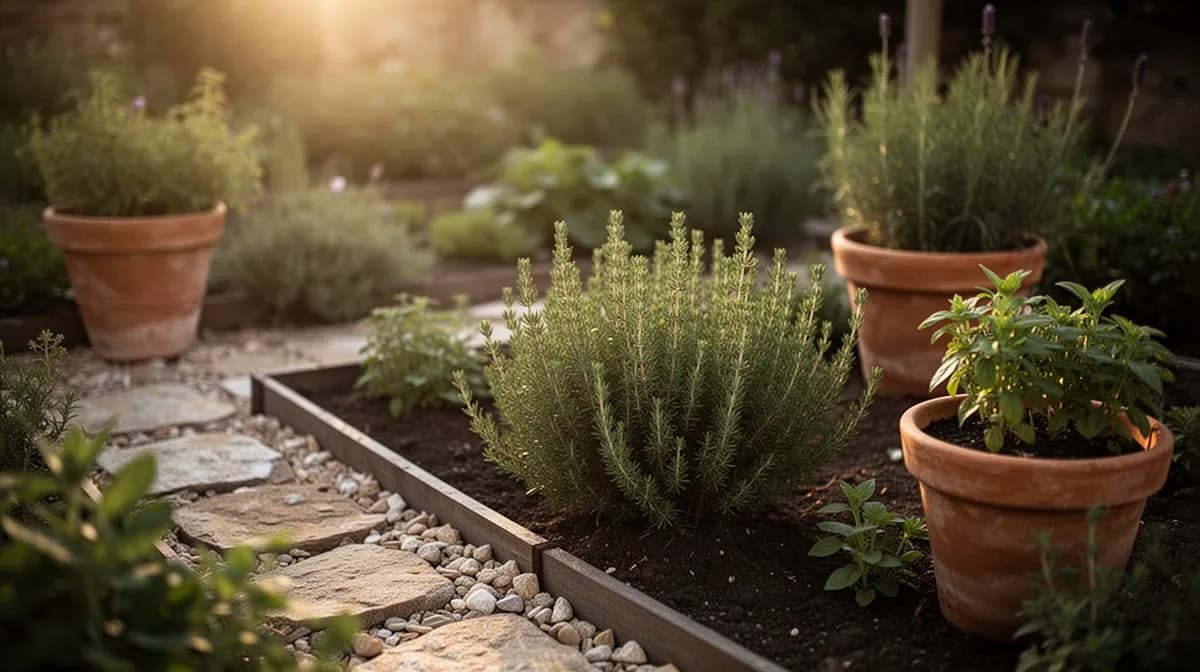
36 Pflanzen passen in ein Beet von 120 × 240 cm
Französischer Thymian braucht 25 cm Platz pro Pflanze. Der Planer hält diesen Abstand für dich ein — jede Pflanze, jedes Beet.
Die besten Nachbarn für Französischer Thymian
Französischer Thymian ist eine wertvolle Begleitpflanze, die mit ihren aromatischen ätherischen Ölen Kohlraupen, Weiße Fliegen und Tomatenschwärmer abschreckt. Pflanzen Sie ihn neben Kohlgewächse (Kohl, Brokkoli, Rosenkohl) zum Schutz vor Schädlingen. Er wächst gut neben Rosmarin, Salbei und Lavendel in mediterranen Kräutergärten mit ähnlichen Vorlieben für mageren, trockenen Boden. Die kompakte Größe des Französischen Thymians macht ihn zu einer hervorragenden Rand- oder Einfassungspflanze um Gemüsebeete. Die Blüten ziehen im Frühsommer Bestäuber und nützliche Schlupfwespen an.
Rosmarin gehört daneben. Basilikum nicht.
Altes Gärtnerwissen, geprüft an der echten Nachbartabelle von Französischer Thymian — teste jede Pflanze, die du anbaust.
Probiere Französischer Thymian direkt hier im Beet
Ein echtes Planer-Beet, Französischer Thymian steht schon drin. Tippe einen Begleiter an, platziere ihn und sieh, wie die Nachbarschaftsprüfung antwortet — grün für gute Nachbarn, rot bei Streit.


Passende Anbau-Ratgeber
Richtig düngen
Französischer Thymian verlangt vor allem mageren, schnell drainierenden Boden. Sandiger, steiniger oder kiesiger Boden mit einem pH-Wert von 6,0-8,0 ist ideal. In Lehmböden pflanzen Sie in Hochbeete mit einer Mischung aus Sand, Perlit und minimalem Kompost. Düngen Sie sparsam mit einer leichten Gabe ausgewogenen Granulatdüngers nur im zeitigen Frühjahr. Überdüngung erzeugt weiches, üppiges Wachstum mit vermindertem Gehalt an ätherischen Ölen und minderwertigem Aroma. Kiesmulch um die Pflanzenbasis hält den Wurzelhals trocken und verhindert die Fäulnis, die organischer Mulch fördern kann.
Ideale Temperatur
Winterhärtezone-Kompatibilität
Von der Saat zur Ernte, Schritt für Schritt
Samenkeimung
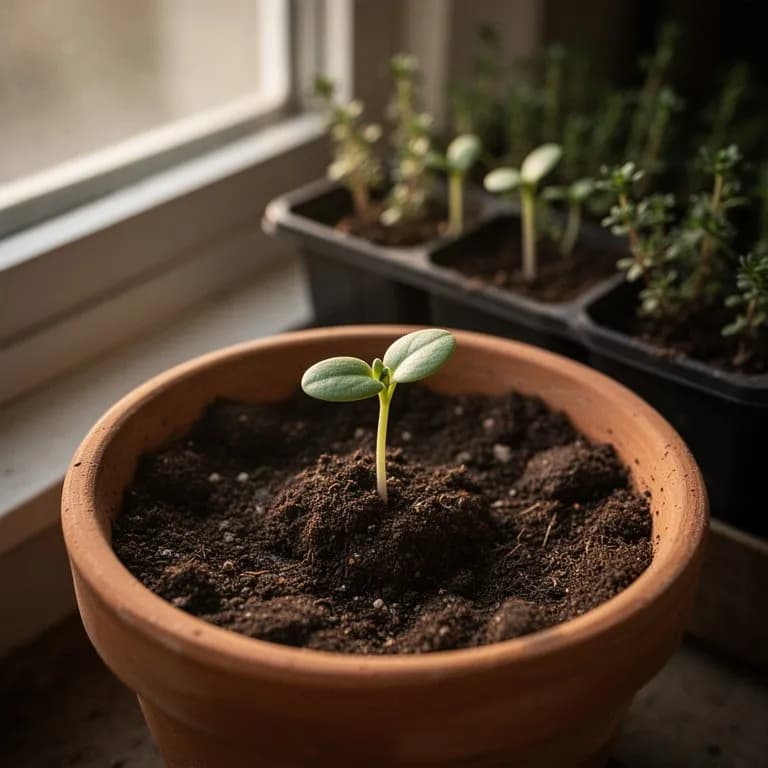
Die Samen des Französischen Thymians sind außergewöhnlich winzig — fast staubfein — und benötigen Licht zum Keimen. Die Samen werden auf die Oberfläche feuchter Aussaaterde gedrückt, ohne sie zu bedecken. Die Keimung ist langsam und ungleichmäßig und dauert typischerweise 14-21 Tage bei Temperaturen von 18-24°C. Die ersten Sämlinge erscheinen als winzige Blattpaare, die mit bloßem Auge kaum sichtbar sind.
Sämlingsetablierung
Sämlinge wachsen sehr langsam und entwickeln ihre ersten echten Blätter — winzig, oval und graugrün mit einer leicht filzigen Textur. Das Wachstum wird in dieser Phase in Millimetern gemessen. Die Stängel sind fadendünn und zerbrechlich. Bis Tag 45-60 erreichen die Sämlinge 3-5 cm Höhe und beginnen eine erkennbare Thymianform mit gegenständigen Blattpaaren an dünnen Stängeln zu entwickeln.
Vegetatives Wachstum
Die Pflanzen entwickeln ihre charakteristische halbholzige, verzweigte Struktur. Die Stängel verdicken sich an der Basis und verfärben sich von grün zu braun, wobei sie zunehmend verholzen. Die feinen, aromatischen Blätter verdichten sich entlang der Stängel, und die Pflanze bildet einen niedrigen, rundlichen Hügel von 15-30 cm Höhe und Breite. Die Produktion ätherischer Öle nimmt mit der Reifung der Pflanze zu, und das Aroma wird merklich stärker.
Blütezeit
Im ersten oder zweiten Jahr bildet Französischer Thymian dichte Büschel winziger, röhrenförmiger Blüten in Schattierungen von Blassrosa bis Zarttlilafarben an den Triebspitzen. Die Blüten sind nektarreich und ziehen Honigbienen, Hummeln und Schmetterlinge in großer Zahl an. Die gesamte Pflanze wird zu einer summenden Wolke aus Bestäuberaktivität. Die Blüte erfolgt typischerweise vom späten Frühling bis zum Hochsommer.
Ausgewachsene Staude
Französischer Thymian findet in seinen mehrjährigen Zyklus, wobei er an der Basis zunehmend verholzt und gleichzeitig jeden Frühling frischen grünen Austrieb an den Spitzen produziert. Etablierte Pflanzen bilden dichte, trockenheitsresistente Polster, die minimale Pflege erfordern. Pflanzen bleiben typischerweise 3-5 Jahre produktiv, bevor sie übermäßig verholzen und licht werden. Dann sollten sie ersetzt oder durch Teilung bzw. Absenken verjüngt werden.
Säen Sie die Samen auf der Oberfläche aus und drücken Sie sie sanft in feuchte Erde — bedecken Sie sie nicht, da Thymiansamen Licht zum Keimen benötigen. Besprühen Sie mit einer Sprühflasche, anstatt von oben zu gießen, um das Wegspülen der Samen zu vermeiden. Eine Feuchtigkeitshaube hilft, während dieser langsamen Keimphase eine gleichmäßige Oberflächenfeuchtigkeit aufrechtzuerhalten.
Französischer Thymian Monat für Monat pflegen
Was du jeden Monat für deine Französischer Thymian tun solltest
Oktober
Aktueller MonatStoppen Sie die Ernte, damit sich die Pflanzen auf die Winterruhe vorbereiten können. Entfernen Sie herabgefallene Blätter und Pflanzenreste rund um die Pflanzenbasis, um die Luftzirkulation zu verbessern und den Druck durch überwinternde Pilzkrankheiten zu verringern. In den Zonen 5-6 bringen Sie einen leichten Kiesmulch um die Pflanzenbasis als Winterisolierung an.
Immer wissen, was jetzt im Garten zu tun ist
Eine E-Mail zum Monatsanfang: was du jetzt säen, pflanzen und anpacken solltest — für deine Französischer Thymian und alles, was drumherum wächst. Dazu ein kurzer Startkurs, der dich vor den klassischen Fehlern bewahrt.
- Was jetzt zu tun ist
- Passend zu deiner Saison
- Startkurs inklusive
Französischer Thymian ernten
Ernten Sie Französischen Thymian während der gesamten Wachstumsperiode, indem Sie 8-10 cm lange Triebspitzen direkt über einem Blattknoten schneiden. Das feinste Aroma entwickelt sich kurz bevor die Blüte im Frühsommer beginnt. Die schmalen, graugrünen Blätter des Französischen Thymians haben ein süßeres, komplexeres Aroma als Englischer Thymian, was ihn zur bevorzugten Sorte für die französische Küche macht. Ernten Sie am Morgen für den höchsten Gehalt an ätherischen Ölen. Regelmäßige leichte Ernte fördert dichtes, buschiges Wachstum. Schneiden Sie nach der Blüte die gesamte Pflanze um ein Drittel zurück, um frisches aromatisches Wachstum anzuregen.
angenommen, du pflanzt zu Beginn des Zeitraums — trage dein tatsächliches Datum ein
Ernte Französischer Thymian zügig, dann trägt die Pflanze weiter.
Lagerung & Konservierung
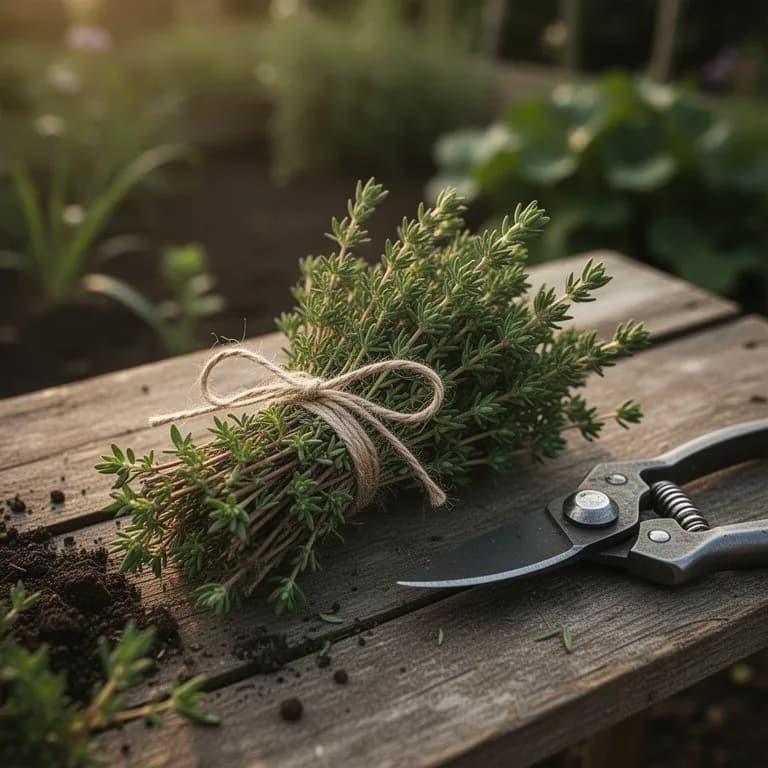
Frischer Französischer Thymian hält sich 1-2 Wochen im Kühlschrank, eingewickelt in ein feuchtes Papiertuch in einem verschlossenen Beutel. Französischer Thymian trocknet hervorragend und behält viel von seinem süßen, komplexen Aroma. Hängen Sie kleine Bündel 1-2 Wochen an einem warmen, dunklen Ort auf. Streifen Sie getrocknete Blätter von holzigen Stängeln und lagern Sie sie in luftdichten Glasgefäßen bis zu 18 Monate. Eingefrorene Zweige in verschlossenen Beuteln behalten gutes Aroma für 6 Monate. Französischer Thymian ist die wesentliche Komponente von Bouquet garni und Herbes-de-Provence-Mischungen, die sich beide gut getrocknet aufbewahren lassen.
Was schiefgeht — und die Lösung
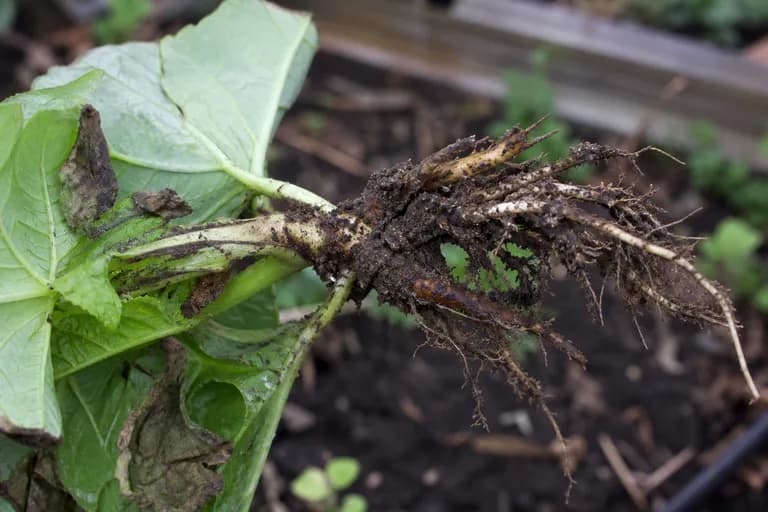
Wurzelfäule
KrankheitTriebsterben, Vergilbung des Laubs, weiche und verfärbte Wurzeln, Pflanzenverfall trotz ausreichendem Sonnenlicht.
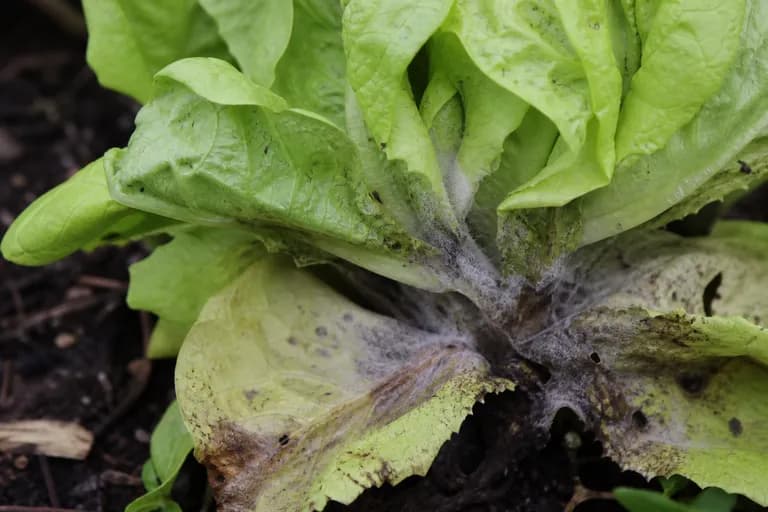
Grauschimmel (Botrytis)
KrankheitFlauschiger grauer Schimmel auf Blättern und Stängeln, meist bei kühlen, feuchten Bedingungen, Welken und Verbräunung betroffener Triebe.
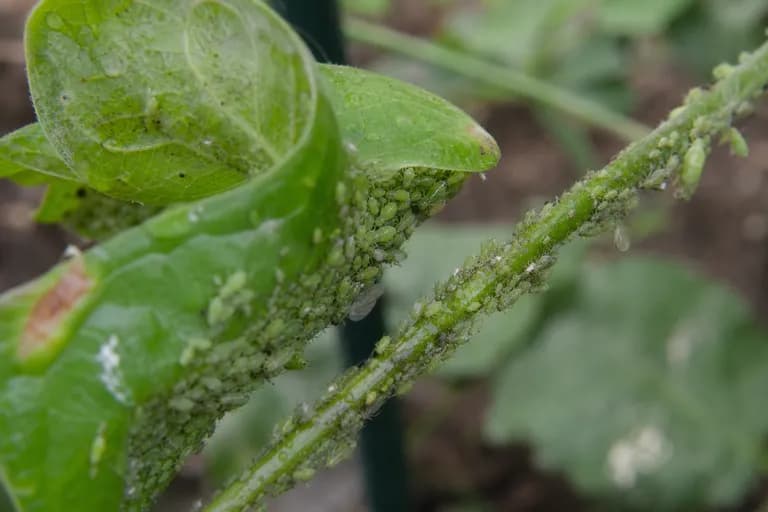
Blattläuse
SchädlingKleine Ansammlungen von Insekten an zarten Triebspitzen, klebriger Honigtau, verformter Neutrieb.
Fehlerbehebung bei häufigen Problemen
Französischer Thymian ist weniger winterhart als Englischer Thymian und kann in Zone-5-Wintern ohne Schutz Frostschäden erleiden. Gute Drainage ist wichtiger als Kälteschutz, da Winternässe mehr Pflanzen tötet als Kälte allein. Pflanzen werden nach 3-4 Jahren holzig und im Zentrum kahl; ersetzen Sie sie oder verjüngen Sie sie durch Absenken äußerer Triebe. In feuchten Klimazonen sind Pilzerkrankungen häufiger; sorgen Sie für weite Abstände und volle Sonneneinstrahlung. Im Topf kultivierter Französischer Thymian benötigt eine kiesige, schnell drainierende Mischung und sorgfältiges Gießen, um Wurzelfäule zu vermeiden.
Anbautipps
- Beginnen Sie mit Thymian aus Jungpflanzen statt aus Samen für schnellere Ergebnisse. Die Samenkeimung ist langsam (14-21 Tage), ungleichmäßig, und Sämlinge wachsen in den ersten zwei Monaten sehr langsam. Eine einzelne Jungpflanze für wenige Euro produziert Monate vor samengestarteten Pflanzen erntefertige Zweige.
- Drainage ist der wichtigste einzelne Faktor für den Thymianbau-Erfolg. In schwerem Lehm oder schlecht drainiertem Boden pflanzen Sie Thymian in Hochbeete, Hügel oder Gefäße mit einer Mischung aus 50 % Blumenerde und 50 % grobem Sand oder Perlit. Thymian in staunassem Boden entwickelt Wurzelfäule und stirbt, oft innerhalb weniger Wochen.
- Pflanzen Sie Thymian in voller Sonne mit mindestens 6-8 Stunden direktem Sonnenlicht täglich. Thymian im Halbschatten wird sparrig, licht und produziert deutlich weniger ätherische Öle — was zu schwachem Geschmack führt. Südwände und Steinoberflächen bieten hervorragende reflektierte Wärme.
- Gießen Sie etablierten Thymian sparsam — er stirbt weitaus wahrscheinlicher durch Überwässerung als durch Trockenheit. Lassen Sie den Boden zwischen den Wassergaben vollständig austrocknen. In den meisten Klimazonen reicht natürlicher Niederschlag für etablierte Pflanzen. Gießen Sie nur bei anhaltender Trockenheit von mehr als 2-3 Wochen.
- Schneiden Sie Thymian im zeitigen Frühjahr um ein Drittel zurück, sobald der Neutrieb erscheint. Dies verhindert, dass Pflanzen übermäßig verholzen und im Zentrum kahl werden. Schneiden Sie niemals in altes, blattloses Holz — Thymian kann nicht aus kahlen Stängeln austreiben, und starker Rückschnitt tötet Zweige ab.
- Vermehren Sie Thymian einfach durch Absenken — befestigen Sie niedrig wachsende Triebe mit einem kleinen Stein oder Drahthaken auf der Bodenoberfläche. Der vergrabene Abschnitt bewurzelt sich in 4-6 Wochen und kann von der Mutterpflanze abgetrennt werden. Dies ist die einfachste und zuverlässigste Methode für Hobbygärtner.
- Ernten Sie Thymian kurz bevor die Blüten sich öffnen, für die maximale Konzentration ätherischer Öle und den intensivsten kulinarischen Geschmack. Schneiden Sie die Stängel 5-8 cm von der Basis, lassen Sie genügend belaubtes Wachstum, damit sich die Pflanze schnell erholen kann.
- Pflanzen Sie Thymian als Begleitpflanze neben Tomaten, Paprika, Auberginen und Kohlgewächse. Das starke Aroma des Thymians hilft, Kohlraupen, Weiße Fliegen und Blattläuse abzuschrecken. Neben Rosen gepflanzt, entmutigt Thymian Blattlausbefall. Seine niedrige, ausbreitende Wuchsform dient auch als lebender Mulch, der Unkraut unterdrückt.
- Überwintern Sie Thymian in kalten Zonen erfolgreich, indem Sie für perfekte Drainage sorgen und nach dem Durchfrieren des Bodens einen leichten Mulch aus Kies oder Kiefernnadeln auftragen. Vermeiden Sie schweren organischen Mulch, der Feuchtigkeit an den Stängeln hält. Kübelpflanzen können in einer unbeheizten Garage in der Nähe eines hellen Fensters überwintert werden.
- Ersetzen Sie Thymianpflanzen alle 3-5 Jahre, wenn sie übermäßig verholzen und nur noch spärliches Laub tragen. Vermehren Sie Ersatzpflanzen durch Absenken oder Stecklinge im Spätsommer, damit neue Pflanzen bereitstehen, wenn die alten nachlassen. Wechseln Sie die Pflanzstandorte, um den Aufbau bodenbürtiger Krankheiten zu vermeiden.
Bau deine beste Französischer Thymian an — und alles drumherum.
Starte heute kostenlos. Lege deine Beete an, setze deine Französischer Thymian ein und lass PlotMyGarden Timing, Abstände, Begleiter und Erinnerungen von der Saat bis zum Erntekorb übernehmen.
Finde deine Französischer Thymian
Französischer Thymian (Standard)
Der klassische schmalblättrige Küchenthymian mit überlegenem süßem Aroma und graugrünem Laub. Die bevorzugte Sorte für Bouquet garni und die feine französische Küche.
Französischer Sommerthymian
Eine etwas kompaktere Auslese mit hervorragender Hitzetoleranz und konzentriertem Aroma. Besonders gut geeignet für heiße, trockene Sommerklimate.
Schmalblättriger Französischer Thymian
Eine besonders feinblättrige Auslese mit der höchsten Konzentration ätherischer Öle. Von Profiköchen für seinen verfeinerten, delikaten Charakter geschätzt.
Frischer Thymian kostet im Supermarkt 2-4 € pro kleinem Bund (15-20 g), und ein einzelnes Glas getrockneter Thymian (15-30 g) kostet 3-7 €. Eine einzelne Thymianpflanze, die in der Gärtnerei 3-5 € kostet (oder für Pfennige aus Samen gezogen werden kann), produziert genug frischen und getrockneten Thymian, um pro Jahr Thymian im Wert von 40-80 € aus dem Supermarkt zu ersetzen. Da Französischer Thymian eine winterharte Staude mit einer Lebensdauer von 3-5 Jahren ist, bringt eine einmalige Investition von wenigen Euro über die Jahre Kräuter im Wert von Hunderten von Euro. Eigener Anbau bedeutet zudem ganzjährigen Zugang zu frischem Thymian — unvergleichlich besser als die welken, geschmacklosen Zweige, die oft in Plastikverpackungen im Supermarkt zu finden sind.
Schnelle Rezepte
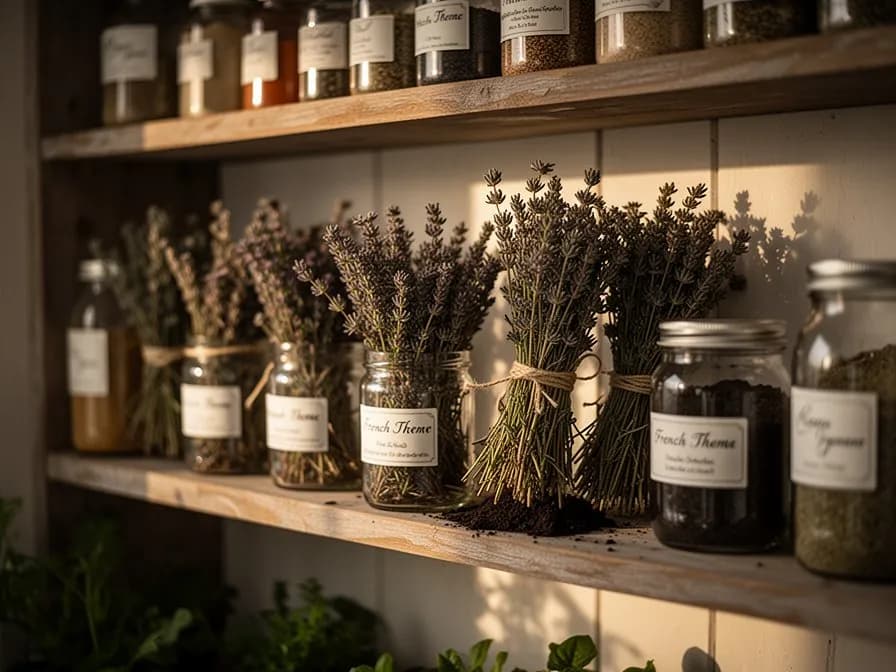
Klassisches Französisches Bouquet Garni
5 Min.Das unverzichtbare Kräuterbündel der französischen Küche — frischer Thymian, Petersilie und Lorbeerblatt zusammengebunden und in Suppen, Eintöpfen, Schmorgerichten und Brühen mitgekocht. Dieses aromatische Bündel verleiht Gerichten das tiefe Kräuterrückgrat, das die französische Hausmannskost definiert.
5 Zutaten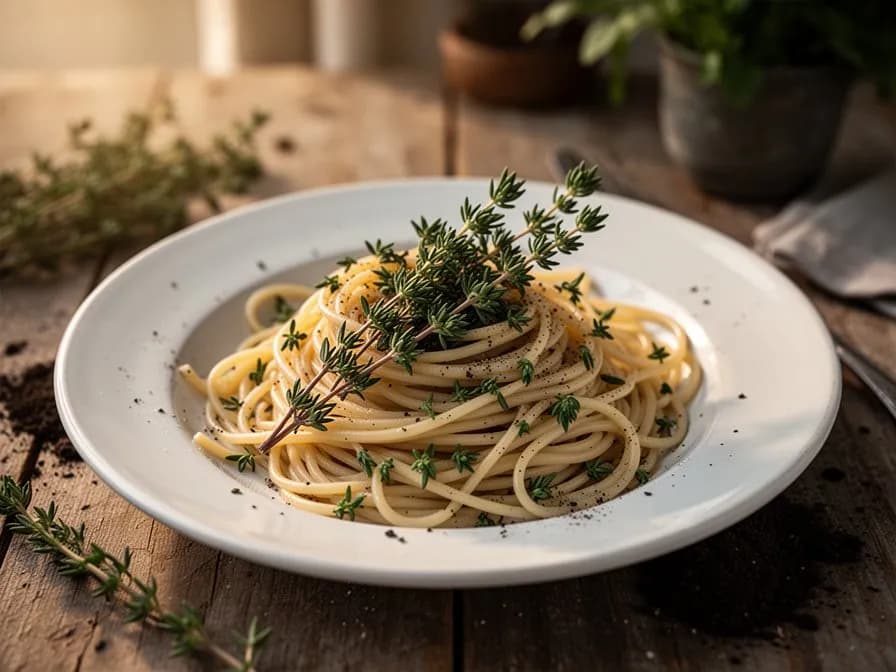
Zitronen-Thymian-Brathähnchen
75 Min.Ein zeitloser Braten, bei dem frischer Thymian ein einfaches Hähnchen in etwas Außergewöhnliches verwandelt. Thymianzweige werden unter die Haut geschoben, mit Zitrone in die Bauchhöhle gefüllt und über Wurzelgemüse gestreut, um ein aromatisches, goldbraunes Meisterwerk zu schaffen.
7 ZutatenFrischer Thymian-Honig-Kräutertee
10 Min.Ein wohltuender Kräutertee aus frischen Thymianzweigen, aufgegossen mit heißem Wasser, Honig und Zitrone. Dieses traditionelle Hausmittel gegen Halsschmerzen und Husten ist auch ein herrliches Alltagsgetränk mit sanft beruhigenden Eigenschaften.
5 ZutatenKulinarische Verwendung
Französischer Thymian ist die beste Küchenthymiansorte, von Köchen wegen seines süßeren, nuancierteren Aromas im Vergleich zu Englischem Thymian geschätzt. Er ist der unverzichtbare Thymian für Bouquet garni, Herbes de Provence, Suppen, Brühen und Saucen der klassischen französischen Küche. Verwenden Sie ihn zum Würzen von gebratenem Hähnchen, geschmortem Fleisch, Wurzelgemüse und Sahnesaucen. Französischer Thymian behält sein Aroma beim langen Kochen gut und verbessert langsam gegarte Eintöpfe, Cassoulet und Schmorgerichte. Die zarte Süße harmoniert wunderbar mit Pilzen, Zwiebeln und Winterkürbis.
Was drinsteckt
Gesundheitsvorteile
- Enthält Thymol, eine kraftvolle natürliche antimikrobielle Verbindung, die in klinischen Studien nachweislich das Wachstum schädlicher Bakterien wie E. coli und Staphylococcus hemmt, was Thymiantee zu einem traditionellen und wissenschaftlich unterstützten Hausmittel bei Halsschmerzen und für die Mundgesundheit macht.
- Reich an Vitamin C (160 mg pro 100 g frisch, 178 % TW) und Vitamin A (4751 IU, 95 % TW), bietet starke antioxidative und immunstärkende Vorteile, selbst bei Verwendung in kleinen kulinarischen Mengen über den Tag verteilt.
- Traditionelles Atemwegsmittel, unterstützt durch moderne Forschung — Thymianextrakte haben bronchienerweiternde und schleimlösende Eigenschaften gezeigt, und thymianbasierte Hustensäfte sind in Deutschland und anderen europäischen Ländern zugelassene Phytopharmaka.
- Enthält Rosmarinsäure und andere polyphenolische Verbindungen mit dokumentierten entzündungshemmenden Wirkungen, die potenziell vorteilhaft sind zur Reduzierung chronischer Entzündungen im Zusammenhang mit Arthritis, Herz-Kreislauf-Erkrankungen und Stoffwechselstörungen.
- Eine der eisenreichsten Kräuterquellen mit 17,5 mg pro 100 g (97 % TW), die bei regelmäßiger Verwendung beim Kochen bedeutsam zur täglichen Eisenaufnahme beitragen — besonders wertvoll für Menschen, die sich pflanzenbasiert ernähren.
- Aufkommende Forschungsergebnisse deuten darauf hin, dass Thymol und Carvacrol im Thymian die Darmgesundheit unterstützen können, indem sie nützliche Bakterien fördern und gleichzeitig pathogene Mikroorganismen hemmen, was zu einem gesunden intestinalen Mikrobiom-Gleichgewicht beiträgt.
Woher Französischer Thymian stammt
Französischer Thymian (Thymus vulgaris 'French') hat seinen Ursprung auf den sonnenverbrannten Kalksteinhängen und Garrigue-Buschlandschaften des westlichen Mittelmeerraums. Wilder Thymian bedeckt seit Jahrtausenden die felsigen Hänge Südfrankreichs, Spaniens, Italiens und Nordafrikas und gedeiht in den dünnen, alkalischen Böden und der intensiven Sonneneinstrahlung, die diese Region kennzeichnen. Die Art entwickelte sich zusammen mit Lavendel, Rosmarin und Oregano in diesen rauen, dürregefährdeten Landschaften und bildete die konzentrierten ätherischen Öle, die sowohl als Schutz gegen Pflanzenfresser als auch gegen die unerbittliche Mittelmeersonne dienen.
Die alten Ägypter gehörten zu den Ersten, die die bemerkenswerten konservierenden Eigenschaften des Thymians erkannten und ihn in ihre Einbalsamierungspraktiken einbezogen. Die Griechen erhoben Thymian zum Symbol für Mut und Eleganz — die Redewendung "nach Thymian duften" war ein hohes Kompliment, das Anmut und Kultiviertheit implizierte. Griechische Ärzte, darunter Hippokrates und Dioskurides, dokumentierten die medizinischen Anwendungen von Thymian bei Atemwegserkrankungen, Verdauungsbeschwerden und Wundbehandlung. Die Römer verbreiteten den Thymiananbau in ihrem gesamten Reich und verwendeten ihn zur Raumreinigung, zum Aromatisieren von Käse und als aromatischen Badezusatz.
Im Mittelalter wurde Thymian tief in die europäische Kultur und Volksmedizin eingebettet. Mönche kultivierten ihn in Klosterkräutergärten für kulinarische und medizinische Zwecke, und er spielte eine herausragende Rolle in Apothekerpräparaten gegen Husten, Halsschmerzen und Verdauungsstörungen. Die Entwicklung der französischen Haute Cuisine ab dem 17. Jahrhundert festigte die Position des Thymians als Eckpfeilerkraut der europäischen Kochkunst — die unverzichtbare Komponente von Bouquet garni, Herbes de Provence und unzähligen klassischen Saucen und Schmorgerichten.
Französischer Thymian wurde durch jahrhundertelange Auslese von provenzalischen Gärtnern und Kräuterkundigen verfeinert, die Pflanzen mit dem süßesten, komplexesten Aroma und dem aufrechtest wachsenden, produktivsten Wuchsverhalten bevorzugten. Diese Selektion brachte die heute als Französischer Thymian bekannte Kultursorte hervor, die sich vom gewöhnlichen Thymian durch schmalere, graugrüne Blätter, kompaktere Form und überlegenes kulinarisches Aroma unterscheidet. Heute wird Französischer Thymian auf allen bewohnten Kontinenten angebaut und bleibt das wichtigste einzelne Küchenkraut in westlichen Kochtraditionen.
Französischer Thymian: Schon gewusst?
Faszinierende Fakten über Französischer Thymian
Die alten Ägypter verwendeten Thymian bei ihrer Einbalsamierung — die starke antimikrobielle Verbindung Thymol half bei der Konservierung mumifizierter Überreste, und Spuren von Thymian wurden in ägyptischen Gräbern gefunden, die über 3.500 Jahre alt sind.
Französischer Thymian: Fragen & Antworten
Wann sollte ich Französischer Thymian pflanzen?
Was sind gute Begleitpflanzen für Französischer Thymian?
In welchen Winterhärtezonen kann Französischer Thymian wachsen?
Wie viel Sonne braucht Französischer Thymian?
Welchen Abstand sollte ich zwischen Französischer Thymian lassen?
Welche Schädlinge und Krankheiten befallen Französischer Thymian?
Wie lagere ich Französischer Thymian nach der Ernte?
Was sind die besten Französischer Thymian-Sorten zum Anbauen?
Welchen Boden braucht Französischer Thymian?
Was ist der Unterschied zwischen Französischem Thymian und gewöhnlichem Thymian?
Kann Französischer Thymian den Winter im Freien überstehen?
Wie trockne und lagere ich Thymian aus meinem Garten?
Warum wird meine Thymianpflanze braun und stirbt ab?
Kann ich Französischen Thymian in einem Topf oder Kübel anbauen?
Ist Französischer Thymian während der Schwangerschaft oder für Kinder sicher?
Du hast die Theorie gelesen. Jetzt baue sie auf Autopilot an.
Alles, was Französischer Thymian knifflig macht — das Timing, die Abstände, die Begleiter, das Erntefenster — genau das übernimmt PlotMyGarden für dich, für jede Pflanze im Garten.
Ein Plan, der dein Wetter kennt
Standort einmal festlegen. Aussaat-, Dünge- und Erntedaten rund um deinen echten letzten Frosttermin und die Live-Vorhersage — kein Raten mehr nach Saattüte.
Aus dem Abschnitt „Pflanzzeit“Beetplaner per Drag & Drop
Beete auf einem Raster gestalten. Jede Pflanze rastet im richtigen Abstand ein, und du siehst die ganze Saison, bevor du einen Cent für Saatgut ausgibst.
Aus dem Abschnitt „Anbau“Begleiter-Konflikte früh erkannt
Über 200 gute und schlechte Kombinationen werden beim Pflanzen live geprüft — so landet ein saisonruinierender Fehler nie in der Erde.
Aus dem Abschnitt „Begleiter“Erinnerungen, nach denen du wirklich handelst
„Gieß die Bohnen.“ „Heute ernten, bevor's umschlägt.“ Pünktlich, konkret und auf deine echten Pflanzen bezogen.
Aus dem Abschnitt „Ernte“Staffel-Aussaat, geplant
Sechs Wochen ernten statt sechs Tage? Die App verteilt deine Aussaaten automatisch und erinnert dich, wenn der nächste Satz fällig ist.
Aus dem Abschnitt „Pflanzzeit“Ein Verlauf, der schlauer wird
Jede protokollierte Ernte bringt der App deinen Garten bei. Der Plan fürs nächste Jahr startet bei dem, was in deinem Boden wirklich funktioniert hat.
Aus dem Abschnitt „Überblick“Pflanze diese neben Französischer Thymian
Weitere Küchenkräuter
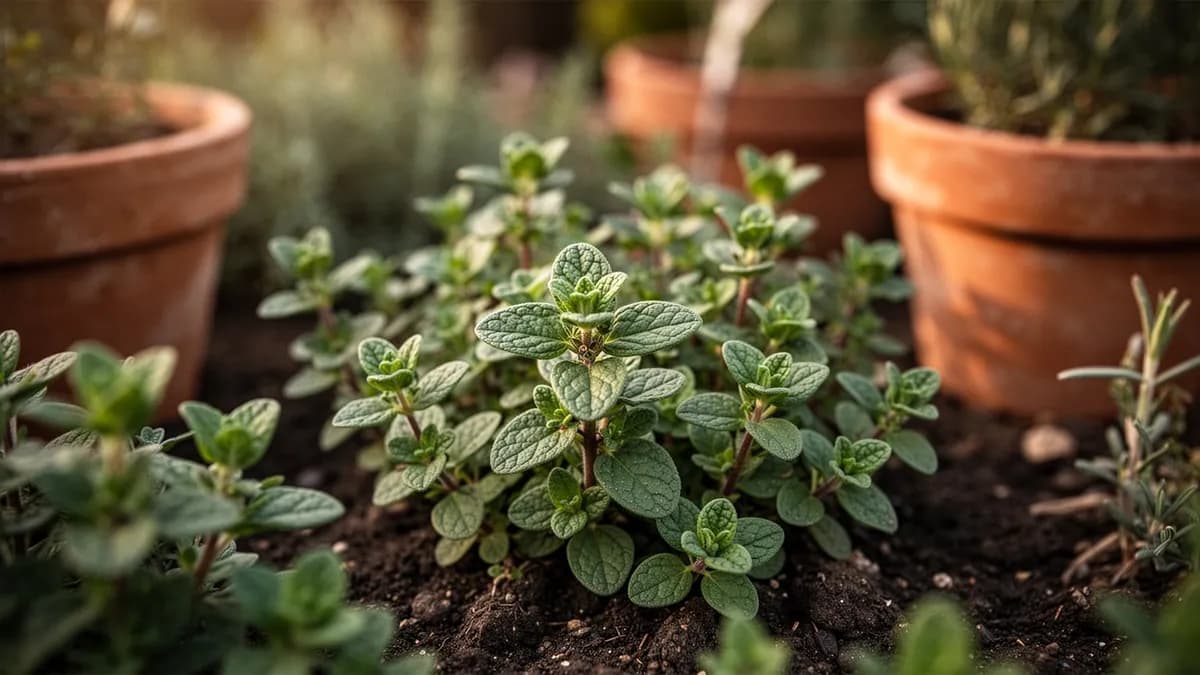
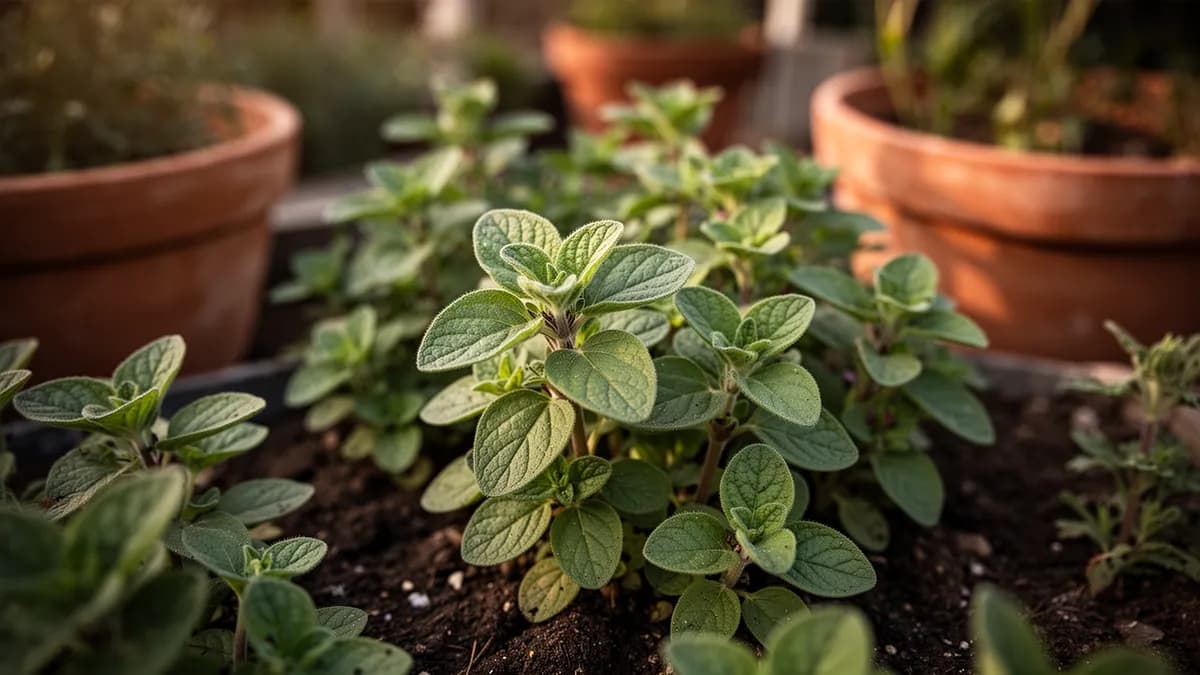
Halte Französischer Thymian von diesen fern
Bau deine beste Französischer Thymian an — und alles drumherum.
Starte heute kostenlos. Lege deine Beete an, setze deine Französischer Thymian ein und lass PlotMyGarden Timing, Abstände, Begleiter und Erinnerungen von der Saat bis zum Erntekorb übernehmen.