Tallos de Lirio
Los tallos de lirio comestibles provienen de diversas especies de Lilium, especialmente L. lancifolium y L. brownii, cultivadas tradicionalmente en China, Japón y Corea.





En esta páginaResumen
Conoce Tallos de Lirio
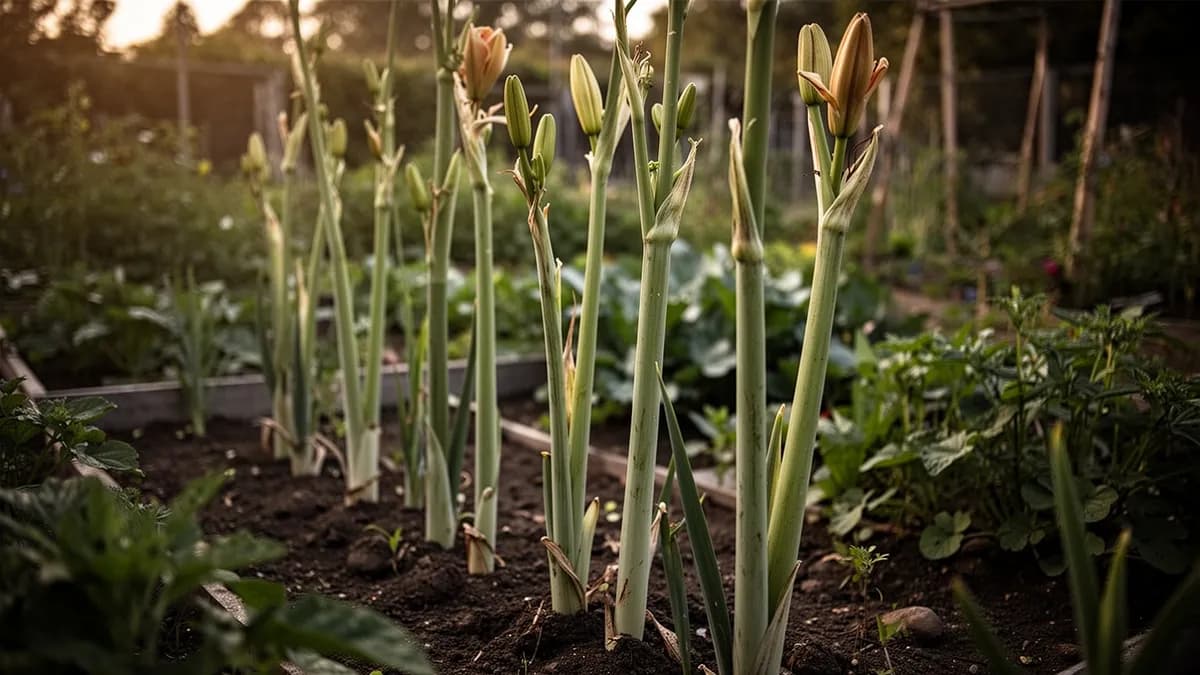
Los tallos de lirio comestibles provienen de diversas especies de Lilium, especialmente L. lancifolium y L. brownii, cultivadas tradicionalmente en China, Japón y Corea. Tanto los bulbos escamosos como los tallos tiernos se utilizan en la cocina asiática, ofreciendo una textura suave y ligeramente crujiente con un sabor delicado y dulce que recuerda a la castaña de agua.
Cuándo plantar Tallos de Lirio
La propagación más fiable es mediante bulbos o escamas de bulbo. Plante los bulbos enteros en otoño o primavera a 10-15 cm de profundidad. Para propagar por escamas, separe las escamas exteriores de un bulbo sano, plántelas a 3-4 cm de profundidad en bandejas con sustrato húmedo y manténgalas en un lugar fresco y sombreado. Los bulbillos aéreos del lirio tigre también pueden plantarse directamente. La propagación por semilla es posible pero lenta, tardando 3-5 años hasta la primera cosecha.
Tu año de Tallos de Lirio
Ajustado a Zona 7 · temporada típica · la helada se va hacia el 2 abr y vuelve hacia el 1 nov
Planta Tallos de Lirio Mar – Abr y cosecha Jun – Ago. Consulta los métodos de plantación y elige tu clima para adaptar los periodos.
Cómo cultivar Tallos de Lirio
Los lirios comestibles prefieren una ubicación de semisombra protegida del sol intenso del mediodía, con suelo rico en materia orgánica, húmedo pero bien drenado, y pH ligeramente ácido entre 5,5 y 6,5. Prepare el terreno con abundante compost y turba para crear condiciones frescas y húmedas.
Plante los bulbos en otoño o primavera temprana a una profundidad de 10-15 cm con una separación de 20-30 cm entre ellos. Los bulbos se componen de escamas superpuestas que pueden separarse para la propagación. Cubra con un acolchado grueso de hojas o corteza para mantener la humedad y proteger del calor.
Mantenga el suelo constantemente húmedo durante toda la temporada de crecimiento, pero evite el encharcamiento que provoca la pudrición de los bulbos. Riegue regularmente en periodos de sequía. Los lirios comestibles son plantas perennes que necesitan 2-3 años para establecerse completamente antes de comenzar la cosecha regular de bulbos.
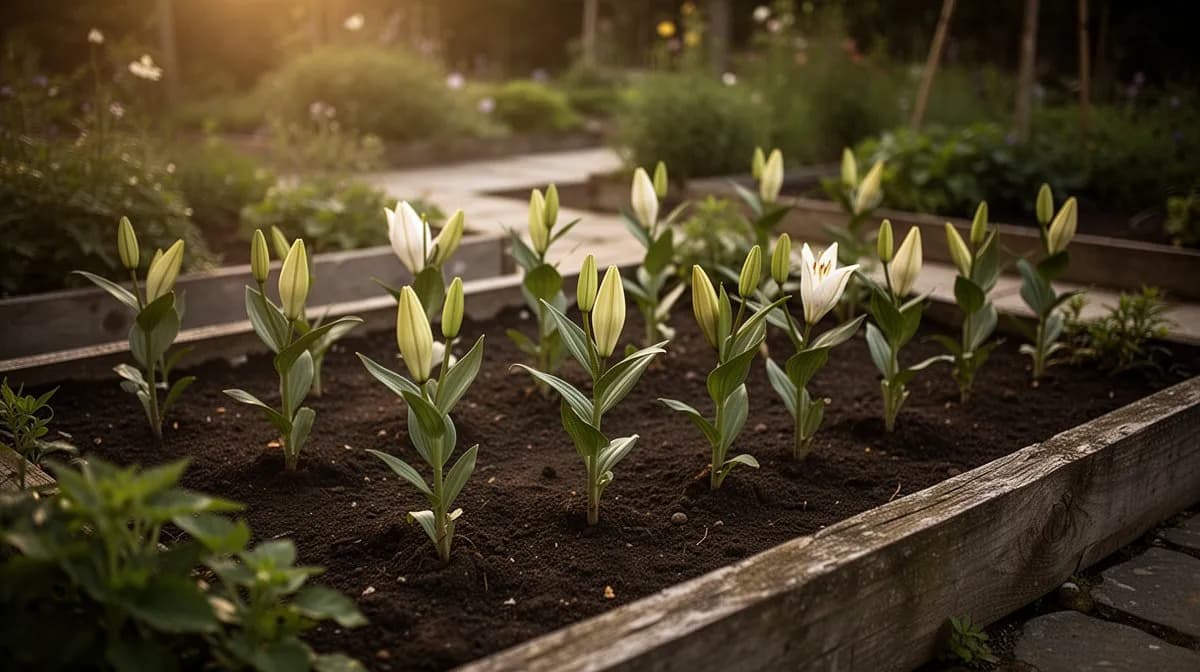
36 plantas caben en un bancal de 120 × 240 cm
Cada Tallos de Lirio pide 25 cm de margen. El planificador guarda ese marco por ti — cada planta, cada bancal.
Guías de cultivo relacionadas
Abónalo bien
Los lirios comestibles necesitan un suelo rico en materia orgánica, húmedo pero bien drenado, con pH entre 5,5 y 6,5. Incorpore abundante compost, turba y mantillo de hojas antes de la plantación. Aplique un fertilizante orgánico equilibrado en primavera y una cobertura de compost en otoño. Evite la cal, ya que estos lirios prefieren suelos ligeramente ácidos.
Temperatura ideal
Compatibilidad de zonas de rusticidad
De la semilla a la cosecha, etapa por etapa
Plantación de bulbos
Los bulbos de lirio se plantan en otoño o a comienzos de primavera, colocándolos a 10-15 cm de profundidad en un suelo bien drenado, con la punta de crecimiento orientada hacia arriba. A diferencia de los tulipanes, los bulbos de lirio nunca entran por completo en reposo y deben plantarse lo antes posible después de la compra. Las escamas carnosas y superpuestas del bulbo contienen toda la energía almacenada necesaria para producir el tallo, las hojas y las flores de la temporada siguiente.
Establecimiento de raíces
Bajo tierra, el bulbo emite una red de raíces basales contráctiles desde su placa basal. Estas raíces anclan el bulbo a la profundidad correcta y comienzan a absorber agua y nutrientes. En los bulbos plantados en otoño, el crecimiento radicular continúa durante los inviernos templados siempre que la temperatura del suelo se mantenga por encima de 4 °C. Más adelante, emergerán raíces del tallo desde la parte enterrada del propio tallo, formando un segundo sistema radicular de alimentación exclusivo de los lirios.
Emergencia primaveral
Cuando la temperatura del suelo supera los 10 °C, un brote vigoroso atraviesa la superficie y a menudo adquiere un tono rojizo púrpura debido a los pigmentos de antocianina que protegen el tejido emergente de la radiación UV. El brote se alarga con rapidez y despliega hojas muy juntas a lo largo del tallo. En la parte subterránea del tallo se desarrollan raíces caulinares, formando un sistema radicular secundario esencial que alimenta a la planta en desarrollo.
Desarrollo del tallo y las hojas
El tallo se alarga hasta su altura máxima de 60-180 cm, según la especie y la variedad, y desarrolla hojas lanceoladas dispuestas en verticilos o de forma alterna a lo largo del tallo. Las hojas son la fábrica de energía de la planta: realizan la fotosíntesis para alimentar las flores de la temporada actual y reponer el bulbo para los años futuros. Los tipos asiáticos son los más bajos, los orientales alcanzan una altura media y los imponentes híbridos Orienpet llegan a la mayor estatura.
Después de la floración y reposición del bulbo
Después de la floración, el tallo y las hojas permanecen verdes y activas fotosintéticamente durante 6-8 semanas, devolviendo energía al bulbo para impulsar el crecimiento del año siguiente. Este periodo posterior a la floración es crucial: retirar el follaje demasiado pronto debilita mucho el bulbo y reduce la floración futura. Con el tiempo, el tallo amarillea y se seca de forma natural cuando la planta entra en reposo.
Almacenamiento y conservación
Los bulbos frescos de lirio son perecederos y deben usarse dentro de una semana después de la cosecha. Guarda los bulbos sin lavar en un lugar fresco y oscuro o en el refrigerador dentro de una bolsa de papel. Para una conservación más prolongada, separa el bulbo en escamas individuales, blanquéalo durante dos minutos y congélalo en recipientes herméticos hasta seis meses. Los bulbos de lirio también pueden conservarse cortándolos en láminas finas y deshidratándolos a baja temperatura. Los botones florales para las “agujas doradas” deben secarse por completo al sol o en un deshidratador hasta quedar quebradizos y luego almacenarse en recipientes herméticos hasta un año.
Plántalos de inmediato: los bulbos de lirio se desecan rápido porque no tienen una túnica papirácea protectora. En climas cálidos, elige un lugar con sol de la mañana y sombra por la tarde. Si tu suelo es arcilloso y pesado, añade una capa de 5 cm de gravilla gruesa debajo de cada bulbo para evitar el encharcamiento y la pudrición.
Cuidar Tallos de Lirio mes a mes
Qué hacer cada mes para tu Tallos de Lirio
Octubre
Mes actualPrimary bulb planting season. Plant new bulbs 10-15 cm deep in well-drained soil enriched with compost. Divide and replant overcrowded clumps that showed reduced flowering. Apply a generous layer of mulch over newly planted and established beds for winter insulation.
Ten claro qué hacer en tu huerto, cada mes
Un correo al empezar cada mes: qué sembrar, plantar y hacer ahora mismo — para tu Tallos de Lirio y todo lo que crece alrededor. Más un breve curso inicial para esquivar los errores clásicos.
- Qué hacer ahora mismo
- Ajustado a tu temporada
- Curso inicial incluido
Cosechar Tallos de Lirio
Coseche los tallos jóvenes cuando alcancen 20-30 cm de altura, cortándolos a nivel del suelo, entre 60 y 90 días después del brote primaveral. Para cosechar los bulbos, desentierrelos con cuidado en otoño usando una horca cuando las hojas se marchiten. Separe las escamas exteriores grandes para consumo y replante el corazón del bulbo para regeneración.
se supone que plantas al comenzar el periodo — indica tu fecha real
Cosecha los bulbos de lirio en otoño, después de que el follaje haya amarilleado y muerto de forma natural. Los botones florales secos se recolectan justo antes de abrirse, normalmente a mediados del verano.
Almacenamiento y conservación
Los tallos frescos son muy perecederos y deben consumirse dentro de 2-3 días tras la cosecha, guardándolos en el refrigerador envueltos en un paño húmedo. Los bulbos enteros se conservan mejor en arena húmeda en un lugar fresco y oscuro durante varias semanas. Las escamas de bulbo pueden secarse al sol o deshidratarse para uso prolongado en sopas y guisos.
Qué falla — y cómo solucionarlo
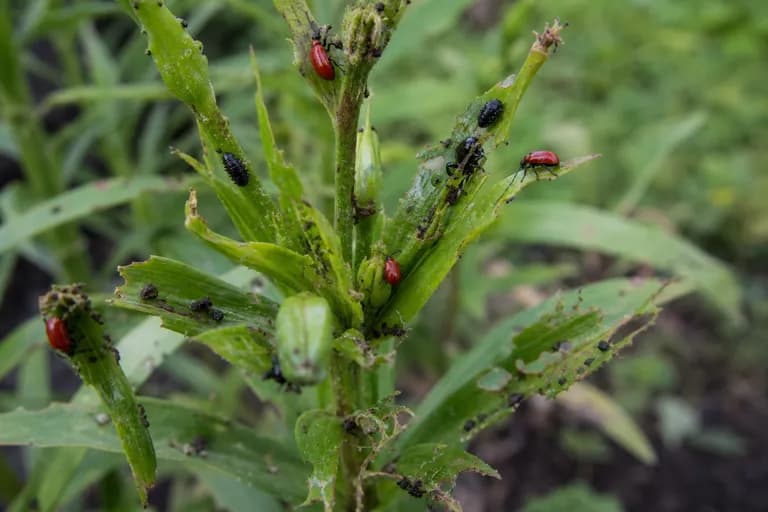
Escarabajo del lirio (Lilioceris lilii)
PlagaEscarabajos adultos de color rojo brillante que devoran las hojas y los botones florales. Las larvas, cubiertas de excrementos como camuflaje, causan daños aún más graves, pudiendo defoliar la planta completamente.
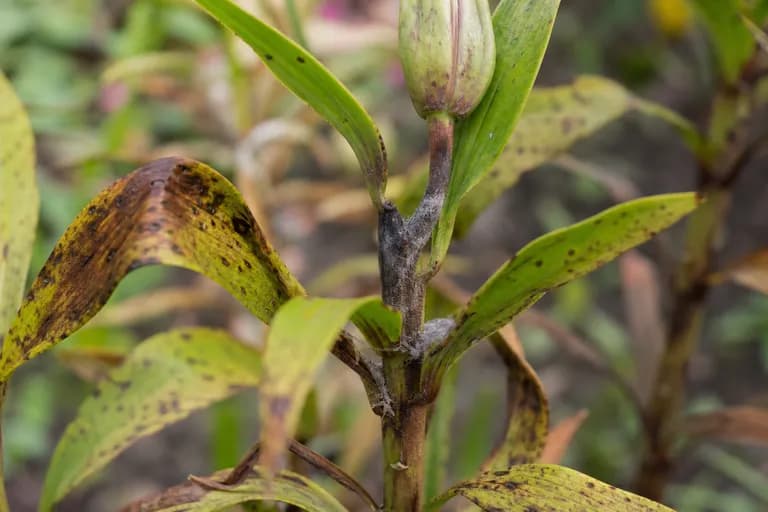
Pudrición del bulbo por Fusarium (Fusarium oxysporum)
EnfermedadLos bulbos desarrollan manchas marrones acuosas entre las escamas que se extienden progresivamente. Las hojas amarillean desde la base y la planta se marchita. Los bulbos afectados emiten un olor desagradable.
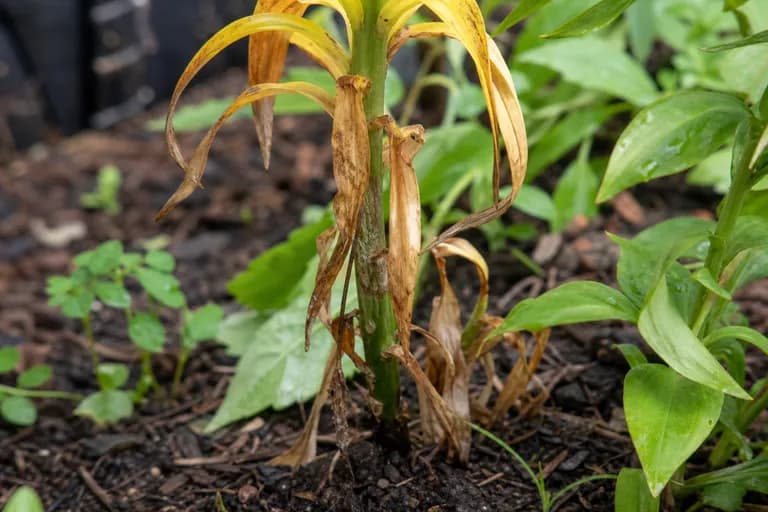
Botrytis del lirio (Botrytis elliptica)
EnfermedadManchas marrones ovales en las hojas que se expanden rápidamente en condiciones húmedas. El moho gris puede cubrir las hojas y los tallos, causando la caída prematura del follaje.
Solución de problemas comunes
El principal desafío es mantener la humedad constante del suelo sin encharcamiento, ya que los bulbos son susceptibles a la pudrición por exceso de agua estancada. El escarabajo del lirio puede ser devastador y requiere vigilancia constante desde principios de primavera. Los lirios comestibles necesitan paciencia, ya que los bulbos tardan 2-3 años en alcanzar un tamaño cosechable.
Consejos de cultivo
- Drainage is the single most critical factor for lily success. Bulbs sitting in waterlogged soil rot quickly and silently below ground. If your soil is heavy clay, plant bulbs on a raised mound or add a generous handful of coarse grit or perlite beneath each bulb to channel water away from the base plate.
- Plant lily bulbs three times as deep as the bulb is tall — typically 10-15 cm for standard-sized bulbs. Deep planting anchors the stem against wind, insulates the bulb from temperature extremes, and allows room for the crucial stem roots that form above the bulb on the buried stem section.
- Group lilies in clusters of 3-5 bulbs of the same variety spaced 20-30 cm apart for the most dramatic visual impact. A single lily stem looks lonely, but a clump of five creates a stunning pillar of color and fragrance that anchors a perennial border.
- Never remove lily foliage after flowering until it has turned completely brown and pulls away easily. The leaves photosynthesizing for 6-8 weeks after bloom are literally building next year's flowers — cutting them early can reduce flowering by 50% or more the following season.
- Deadhead spent flowers immediately by snapping or cutting just below the bloom, but leave the stem and all leaves intact. Seed pod formation diverts enormous amounts of energy from the bulb, weakening future performance. The exception is species lilies grown for naturalizing, where seed dispersal is desired.
- Apply a slow-release balanced fertilizer when shoots emerge in spring, then switch to a high-potassium feed (like tomato fertilizer) after flowering to strengthen the bulb for the following year. Avoid high-nitrogen feeds which produce lush foliage but weaker stems and fewer flowers.
- Watch vigilantly for the scarlet lily beetle (Lilioceris lilii) — a bright red beetle that defoliates lily plants rapidly. Handpick adults daily in the morning when they are sluggish. Check the undersides of leaves for orange-brown larvae covered in their own dark excrement, and remove them immediately.
- Protect emerging spring shoots from late frosts with an overturned bucket or layer of straw on cold nights. A frost-killed growing tip cannot regenerate, and the bulb must wait until the following year to try again — losing an entire season of blooms from a single cold snap.
Cultiva tu mejor Tallos de Lirio — y todo lo que la rodea.
Empieza un plan gratis hoy. Diseña tus bancales, coloca tu Tallos de Lirio y deja que PlotMyGarden gestione el momento, el espaciado, las asociaciones y los recordatorios de la semilla a la cesta.
Elige tu Tallos de Lirio
Lilium lancifolium (Lirio tigre)
Especie con bulbos grandes y carnosos, muy utilizada en la cocina china y coreana. Produce abundantes bulbillos aéreos para propagación fácil. Sabor dulce y textura harinosa.
Lilium brownii (Bai He)
El lirio comestible clásico de la medicina y cocina chinas. Bulbos con escamas blancas grandes de sabor suave y ligeramente dulce. Muy apreciado en postres y sopas dulces.
Lilium davidii
Especie china con bulbos comestibles de textura firme y sabor ligeramente amargo. Utilizada tanto en cocina como en medicina tradicional china. Tolerante al calor.
Cut lily stems sell for $8-18 per bunch at florists and grocery stores, with premium Oriental varieties commanding the highest prices. A single lily bulb costing $3-8 produces cut-worthy stems year after year as a perennial, with each bulb eventually multiplying into a clump of 3-5 flowering stems. An initial investment of $30-50 in a dozen quality bulbs can provide $100-200 worth of cut flowers annually within 2-3 years as bulbs multiply. The fragrance and freshness of garden-cut lilies far surpass anything available at a flower shop.
Recetas rápidas
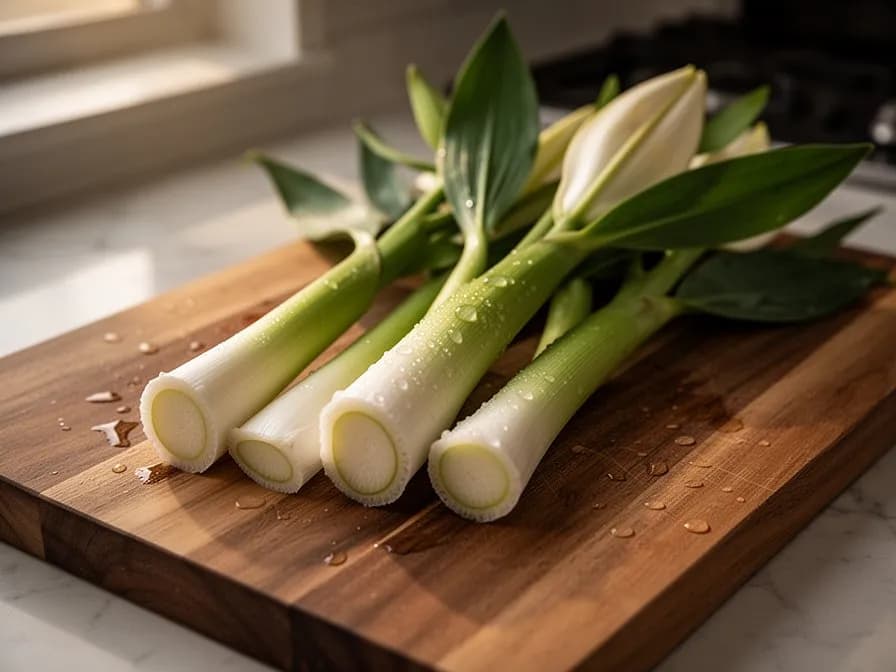
Classic Lily Vase Arrangement
15 minA stunning floral arrangement showcasing the natural elegance of cut lily stems. Properly conditioned stems last 7-14 days, with buds opening sequentially for an ever-changing display of color and fragrance.
5 ingredientesDried Lily Petal Potpourri
20 min + drying timeCapture the beauty and fragrance of lily petals by air-drying them for a naturally scented potpourri. Oriental lily petals retain their sweet perfume for months when properly dried and make a lovely handmade gift.
6 ingredientesTraditional Chinese Lily Bulb Sweet Soup
45 minA delicate, lightly sweetened soup using dried edible lily bulb petals — a beloved dessert in Chinese cuisine believed to nourish the lungs and calm the mind. Only use bulbs specifically sold for culinary use from Asian grocery stores.
6 ingredientesUsos culinarios
Los bulbos de lirio son un ingrediente clásico de la cocina china, donde las escamas frescas o secas se utilizan en sopas dulces y postres con azúcar cande y semillas de loto. También se saltean con verduras, se añaden a guisos y platos al vapor. Los tallos jóvenes se preparan como los espárragos, salteados brevemente con aceite de sésamo y salsa de soja. En la medicina china, los bulbos de lirio se consideran nutritivos para los pulmones.
Qué contiene
Beneficios para la salud
- The fragrance of Oriental lilies contains linalool and other terpene compounds that have been studied for their calming, anxiety-reducing effects — simply having fresh lilies in a room may promote relaxation and improved mood.
- Gardening with lilies provides gentle physical exercise including digging, bending, and carrying soil — activities shown to improve cardiovascular health, joint flexibility, and bone density in older adults.
- Growing and arranging cut flowers like lilies has been shown in horticultural therapy research to reduce cortisol levels, lower blood pressure, and improve emotional well-being across a wide range of populations.
- Edible lily bulbs used in Traditional Chinese Medicine are rich in starch, protein, and saponins with documented anti-inflammatory and antioxidant properties, though more clinical research is needed to confirm specific health claims.
- The presence of flowering plants including lilies in indoor environments has been associated with improved concentration, faster recovery from illness, and enhanced creativity in multiple workplace and hospital studies.
- IMPORTANT SAFETY NOTE: All parts of true lilies (Lilium species) are severely toxic to cats, causing fatal kidney failure even from minor exposures such as grooming pollen from fur or drinking water from a vase. Keep lilies entirely out of homes with cats.
De dónde viene Tallos de Lirio
True lilies belong to the genus Lilium, a group of approximately 100 species native to temperate regions of the Northern Hemisphere, with the greatest diversity found across East Asia, from Japan and Korea through China to the eastern Himalayas. Other species are native to Europe, the Caucasus region, and North America. Lilies have been cultivated and revered by human civilizations for millennia — the white Madonna lily (Lilium candidum) was grown in the eastern Mediterranean at least 3,000 years ago and appears in Minoan art, Assyrian relief carvings, and ancient Egyptian decorative motifs. In Greek mythology, lilies were said to have sprung from the milk of Hera, and the Romans associated them with Venus and used them lavishly in garlands and festivals.
In East Asia, lilies have an even longer cultural history. Chinese records describe the cultivation and medicinal use of lily bulbs dating back over 2,000 years. The bulbs of species like Lilium lancifolium (tiger lily) and Lilium brownii are important food and medicinal ingredients in Traditional Chinese Medicine, where they are valued for nourishing yin energy and soothing the lungs. Japan has its own rich lily heritage — the golden-rayed lily (Lilium auratum) and the showy lily (Lilium speciosum), both native to Japan, would later become the foundation of modern Oriental lily hybrids.
The modern era of lily breeding began in the early 20th century when hybridizers, most notably Jan de Graaff at Oregon Bulb Farms in the 1940s-1960s, systematically crossed different lily species to create vigorous, disease-resistant hybrids suitable for garden and cut-flower production. De Graaff's Asiatic and Aurelian hybrids revolutionized lily growing. The next breakthrough came with Oriental hybrids developed from Japanese species, prized for enormous fragrant flowers. Today, Orienpet (OT) hybrids — crosses between Oriental and trumpet lilies — combine the best qualities of both parents: massive fragrant blooms on towering, vigorous stems. The Netherlands is now the world center of lily bulb production, exporting billions of bulbs annually and making lilies one of the most commercially important cut flowers on earth, second only to roses.
Tallos de Lirio: ¿sabías que?
Datos fascinantes sobre Tallos de Lirio
The lily family has been cultivated for over 3,000 years — ancient Minoan frescoes on the Greek island of Crete depict white Madonna lilies (Lilium candidum) dating to approximately 1580 BCE, making them one of the oldest ornamental plants in continuous cultivation.
Tallos de Lirio: preguntas frecuentes
¿Cuándo debo plantar Tallos de Lirio?
¿En qué zonas de rusticidad puede crecer Tallos de Lirio?
¿Cuánto sol necesita Tallos de Lirio?
¿A qué distancia debo espaciar Tallos de Lirio?
¿Qué plagas y enfermedades afectan a Tallos de Lirio?
¿Cómo almaceno Tallos de Lirio después de la cosecha?
¿Cuáles son las mejores variedades de Tallos de Lirio para cultivar?
¿Qué suelo necesita Tallos de Lirio?
When is the best time to plant lily bulbs?
Why did my lily buds turn brown and fail to open?
How do I keep cut lilies fresh for as long as possible?
Can I grow lilies in pots and containers?
Are lilies toxic to pets?
How do I divide and multiply my lily bulbs?
Acabas de leer la teoría. Ahora cultívala en piloto automático.
Todo lo que hace que Tallos de Lirio sea delicado — el momento, el espaciado, las asociaciones, la ventana de cosecha — es justo lo que PlotMyGarden resuelve por ti, para cada planta de tu huerto.
Un plan que conoce tu clima
Indica tu ubicación una vez. Recibe fechas de siembra, abonado y cosecha basadas en tu última helada real y el pronóstico en vivo — sin adivinar con un sobre genérico.
De la sección “Cuándo plantar”Planificador de bancales de arrastrar y soltar
Diseña bancales sobre una cuadrícula. Cada planta encaja con su espaciado correcto y ves toda la temporada antes de gastar un céntimo en semillas.
De la sección “Cultivo”Conflictos de asociación, detectados a tiempo
Más de 200 buenas y malas combinaciones comprobadas en vivo mientras plantas — para que un error que arruine la temporada nunca llegue a la tierra.
De la sección “Asociaciones”Recordatorios que sí vas a seguir
“Riega las judías.” “Recoge hoy antes de que se pase.” Oportunos, concretos y ligados a las plantas que de verdad cultivas.
De la sección “Cosecha”Escalonado, programado
¿Quieres cosechar seis semanas en vez de seis días? Reparte tus siembras automáticamente y te avisa cuando toca el siguiente lote.
De la sección “Cuándo plantar”Un registro que se vuelve más listo
Cada cosecha que registras le enseña tu huerto. El plan del año que viene parte de lo que de verdad funcionó en tu suelo, no en un manual.
De la sección “Resumen”Más Tallos y brotes
Cultiva tu mejor Tallos de Lirio — y todo lo que la rodea.
Empieza un plan gratis hoy. Diseña tus bancales, coloca tu Tallos de Lirio y deja que PlotMyGarden gestione el momento, el espaciado, las asociaciones y los recordatorios de la semilla a la cesta.