Orégano Cubano
No es un orégano verdadero sino una planta tropical de hojas suculentas con un potente sabor a orégano y tomillo, ampliamente utilizada en las cocinas caribeña y asiática.





En esta páginaResumen
Conoce Orégano Cubano
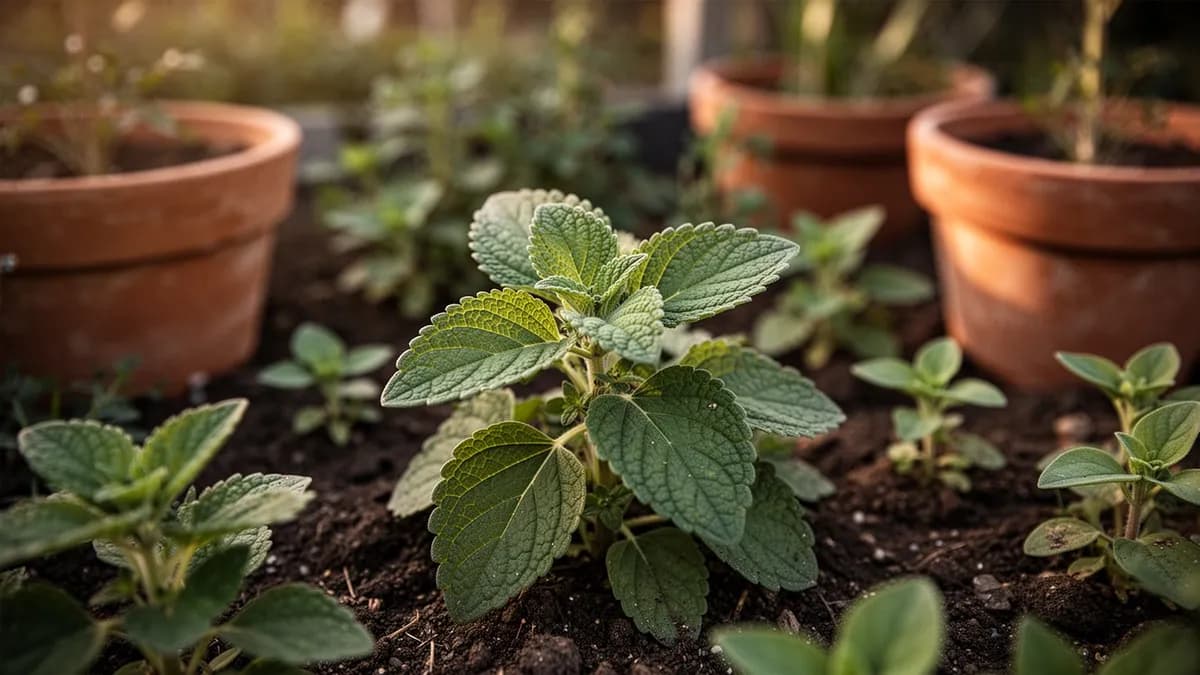
No es un orégano verdadero sino una planta tropical de hojas suculentas con un potente sabor a orégano y tomillo, ampliamente utilizada en las cocinas caribeña y asiática. Sus hojas gruesas y aterciopeladas almacenan agua con eficacia, lo que la hace sorprendentemente tolerante a la sequía para ser una hierba tropical. Cultívela como planta de interior o como anual en climas templados, ya que no soporta ninguna helada.
Cuándo plantar Orégano Cubano
El orégano cubano no produce semilla viable y debe propagarse exclusivamente a partir de esquejes de tallo. Tome esquejes de 10-15 cm de tallos sanos y sin flores en cualquier momento durante la temporada de crecimiento. Retire los 2-3 pares de hojas inferiores y coloque los extremos cortados en un vaso de agua limpia. Las raíces aparecerán en 7-10 días. Alternativamente, introduzca los esquejes directamente en una mezcla húmeda de sustrato y manténgalos en un lugar cálido y húmedo. Una vez bien enraizados y con nuevo crecimiento visible, trasplántelos a macetas individuales. El orégano cubano enraíza con tanta facilidad que es una de las hierbas más sencillas de propagar.
Tu año de Orégano Cubano
Ajustado a Zona 7 · temporada típica · la helada se va hacia el 2 abr y vuelve hacia el 1 nov
Planta Orégano Cubano Abr – Jun y cosecha Jun – Oct. Consulta los métodos de plantación y elige tu clima para adaptar los periodos.
Cómo cultivar Orégano Cubano
Propague el orégano cubano a partir de esquejes de tallo, que enraízan con extraordinaria facilidad. Corte secciones de 10-15 cm de tallos sanos, retire las hojas inferiores y colóquelas directamente en un vaso de agua o introdúzcalas en una mezcla húmeda de maceta. Las raíces aparecen en 5-10 días en agua y en 2-3 semanas en tierra. El orégano cubano no produce semilla viable, por lo que la propagación vegetativa es la única opción.
Plante en suelo bien drenado y moderadamente fértil, a semisombra o pleno sol. A diferencia del orégano verdadero, el orégano cubano es una suculenta tropical de la familia de los coléos y prefiere condiciones cálidas y húmedas con cierta protección del sol intenso de la tarde. En las zonas tropicales 10-12 crece como perenne vigorosa de 30-45 cm de altura, con hojas gruesas, carnosas y aterciopeladas. En climas templados, cultívelo en maceta o como anual y llévelo al interior antes de que las temperaturas bajen de 5 °C.
Riegue con moderación, dejando que el sustrato se seque ligeramente entre riegos. Las hojas suculentas almacenan agua de forma eficaz, lo que hace a la planta sorprendentemente resistente a la sequía para ser una especie tropical. Abone mensualmente con un fertilizante líquido equilibrado durante la temporada de crecimiento. Pince regularmente las puntas de los tallos para favorecer un crecimiento compacto y tupido, y evitar que la planta se desguarnice. El orégano cubano es una excelente hierba para el alféizar de la ventana y prospera en las condiciones cálidas y luminosas de la mayoría de las cocinas.
32 plantas caben en un bancal de 120 × 240 cm
Cada Orégano Cubano pide 30 cm de margen. El planificador guarda ese marco por ti — cada planta, cada bancal.
Los mejores vecinos de Orégano Cubano
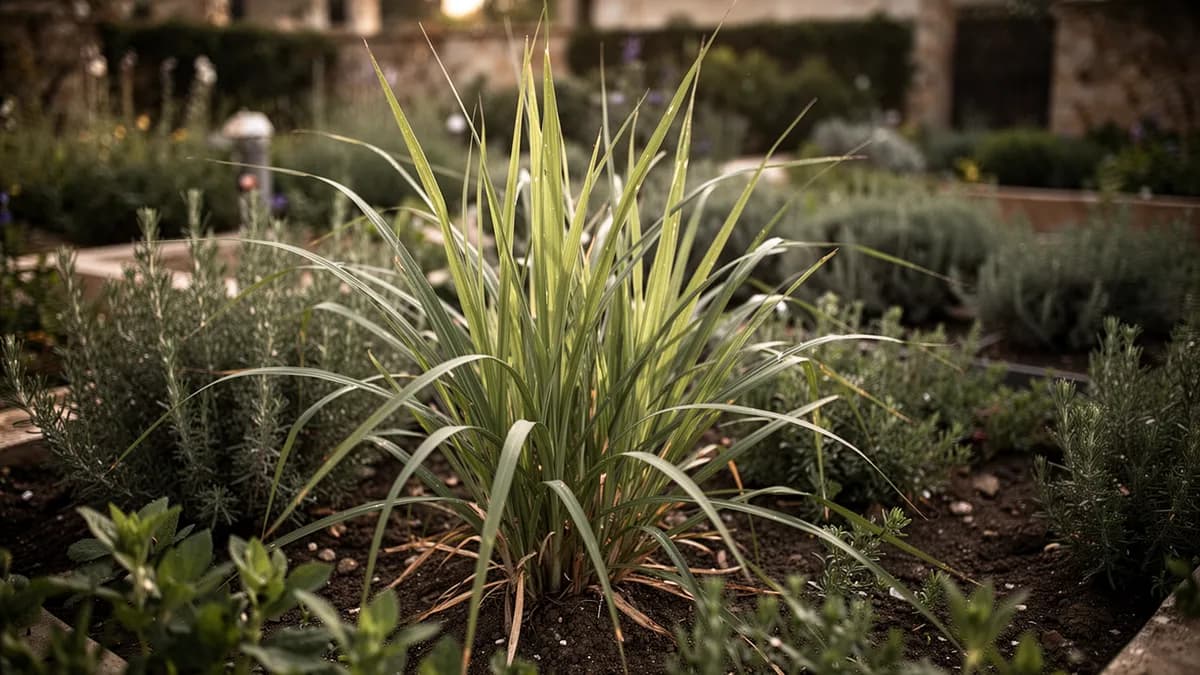
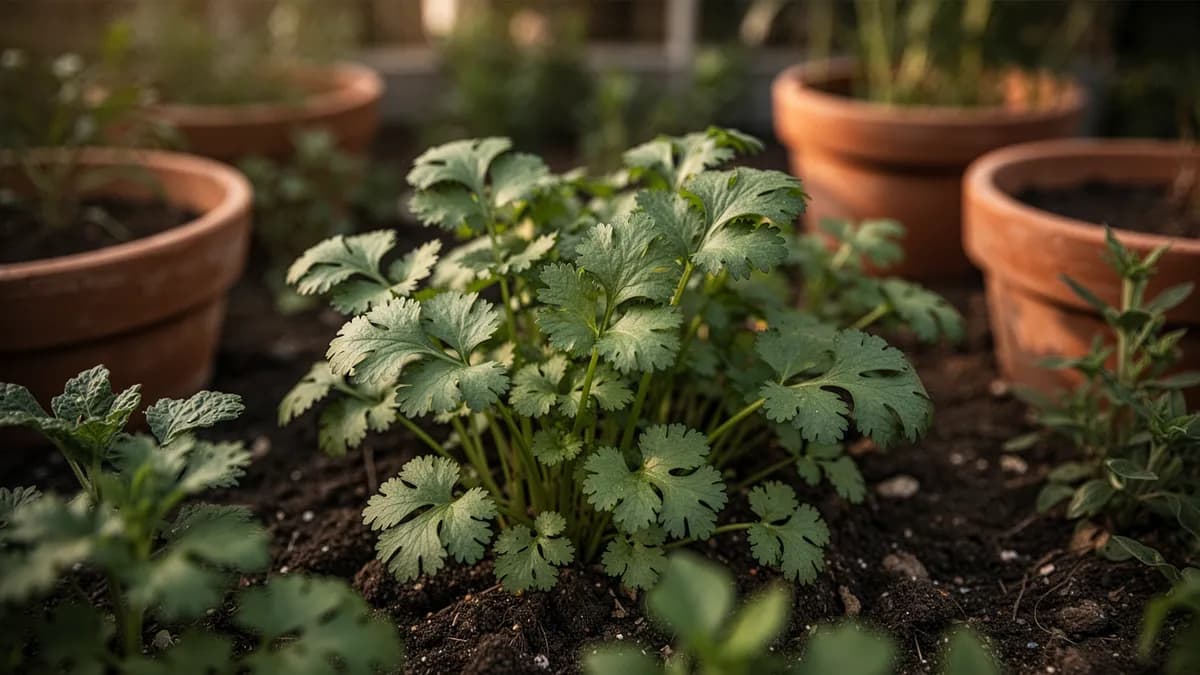
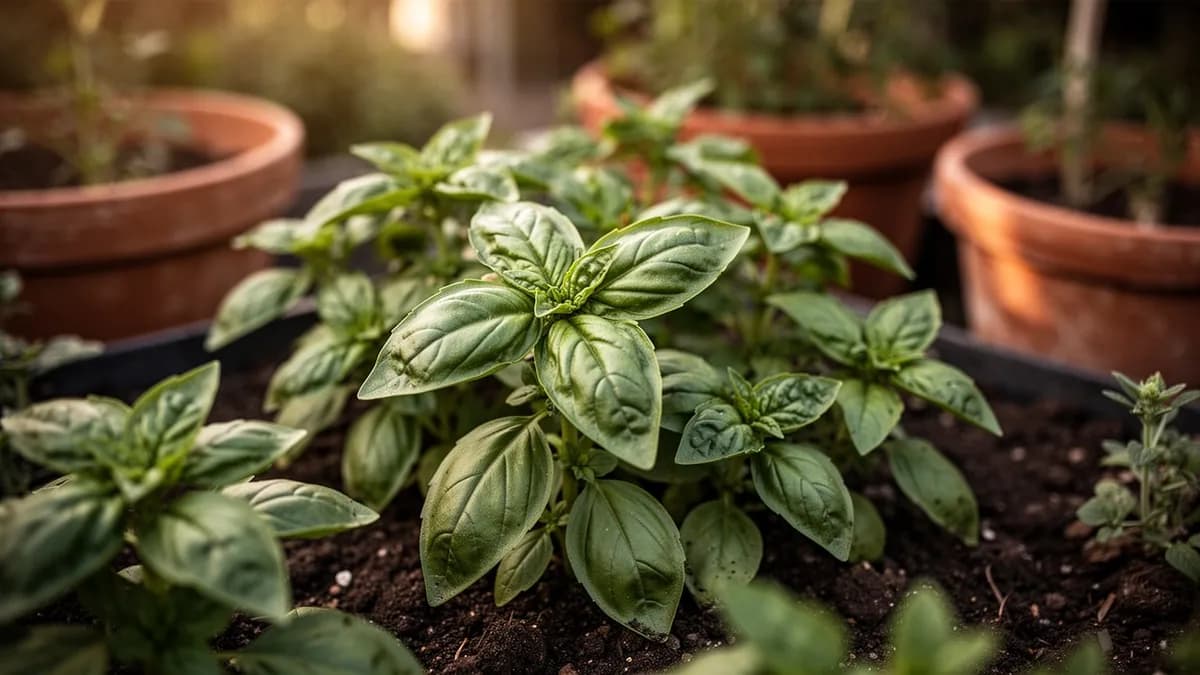
El orégano cubano crece bien junto a otras hierbas tropicales y subtropicales como la albahaca, la hierba limón y el cilantro, que comparten requisitos similares de calor y humedad. En macetas combina muy bien con la albahaca tailandesa y el cilantro vietnamita para crear una colección de hierbas tropicales. Los potentes aceites aromáticos repelen ciertos insectos, lo que lo convierte en un compañero útil en jardines de macetas. Al ser una tropical delicada, el orégano cubano se cultiva generalmente por separado de las hierbas mediterráneas resistentes que prefieren condiciones secas y magras. Su hábito rastrero lo convierte en una atractiva planta de relleno en maceteros mixtos de hierbas.
Albahaca tailandesa va a su lado. Menta no.
Saber de huerto de siempre, cotejado con la tabla real de Orégano Cubano — prueba cualquier planta que cultives.
Prueba Orégano Cubano en un bancal, aquí mismo
Un bancal real del planificador con Orégano Cubano ya plantado. Toca una planta compañera para colocarla y mira cómo responde la comprobación de vecinos: verde para buenos vecinos, rojo si hay conflicto.


Guías de cultivo relacionadas
Abónalo bien
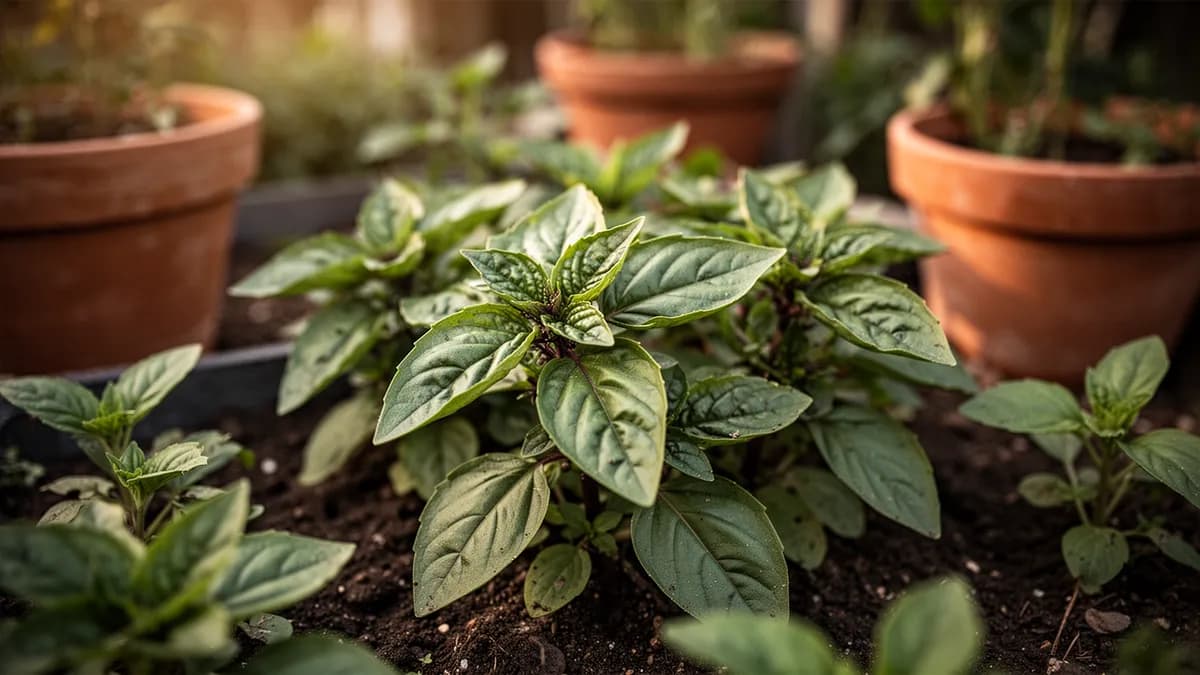
El orégano cubano prospera en una mezcla de sustrato bien drenada y moderadamente fértil, similar a la que se usaría para suculentas o plantas tropicales. Una mezcla de sustrato estándar con perlita o arena gruesa añadida funciona muy bien. El pH debe estar entre 6.0 y 7.0. Abone mensualmente durante la temporada de crecimiento con un fertilizante líquido equilibrado diluido a la mitad de la dosis recomendada. Evite los suelos arcillosos pesados o las condiciones de encharcamiento que favorecen la pudrición de raíces. En macetas, asegúrese de que haya varios agujeros de drenaje y nunca deje los recipientes en agua estancada. Una ligera capa de compost en primavera aporta una nutrición suave.
Temperatura ideal
Compatibilidad de zonas de rusticidad
De la semilla a la cosecha, etapa por etapa
Propagación y enraizamiento
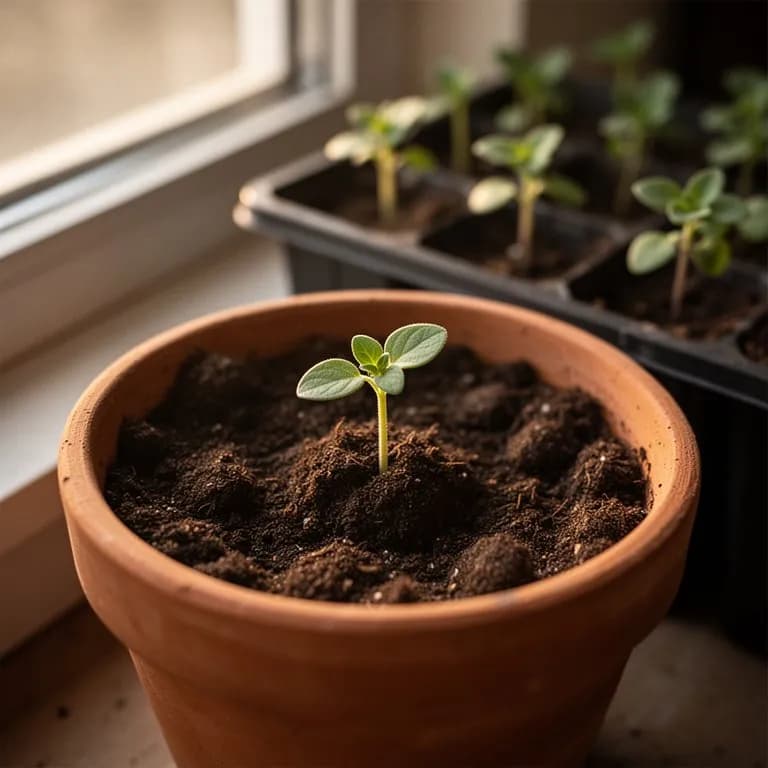
El orégano cubano se propaga casi exclusivamente a partir de esquejes de tallo, ya que las semillas son raras y su germinación es poco fiable. Un esqueje de tallo de 10-15 cm con al menos dos nudos foliares se coloca en una mezcla húmeda de sustrato o en agua. Las raíces adventicias blancas emergen de los nudos en 5-10 días, y el esqueje comienza a anclarse en el medio de cultivo.
Fase de establecimiento
El esqueje enraizado comienza a producir nuevos pares de hojas opuestas, gruesas y carnosas desde la punta de crecimiento. El tallo se engrosa y las yemas laterales comienzan a hincharse en los nudos foliares. El sistema radicular se expande rápidamente en condiciones cálidas, llenando la zona de raíces y permitiendo un crecimiento aéreo más rápido. La textura aterciopelada característica de las hojas y el fuerte aroma a orégano-tomillo se acentúan a medida que la planta madura.
Crecimiento vegetativo activo
La planta entra en una fase de crecimiento vigoroso, produciendo abundante follaje de hojas gruesas y aromáticas en tallos ramificados. En condiciones cálidas, el crecimiento puede ser notablemente rápido — los tallos se alargan 2-5 cm por semana. La planta desarrolla un porte extendido y redondeado que alcanza 30-60 cm de altura y 40-60 cm de anchura. La producción de hojas es más abundante durante los meses cálidos con días largos y humedad constante.
Floración
Las plantas maduras producen espigas erectas de pequeñas flores tubulares en tonos de lavanda pálido, rosa o blanco. Las espigas florales se elevan 10-20 cm por encima del follaje y atraen polinizadores como abejas y mariposas. La floración se desencadena por los días más cortos en otoño o por un estrés leve. Aunque atractiva, la floración redirige la energía lejos de la producción de hojas y puede indicar que la planta está demasiado apretada en la maceta o bajo estrés.
Invernada y renovación
Como perenne tropical sensible a las heladas, el orégano cubano debe protegerse de temperaturas inferiores a 10 grados Celsius. El crecimiento se ralentiza significativamente en invierno incluso en climas suaves. Las plantas más viejas pueden volverse leñosas en la base con escaso follaje en tallos largos y desnudos. Este es el momento natural para una poda de rejuvenecimiento o para tomar esquejes frescos con los que iniciar plantas nuevas y vigorosas para la temporada siguiente.
Tome esquejes de tallos sanos y sin flores. Retire las hojas inferiores e introduzca el esqueje 3-5 cm de profundidad en una mezcla húmeda y bien drenada. Mantenga en luz indirecta brillante y conserve la humedad cubriéndolo con una bolsa de plástico transparente. Evite el riego excesivo — los tallos suculentos se pudren con facilidad en condiciones saturadas.
Cuidar Orégano Cubano mes a mes
Qué hacer cada mes para tu Orégano Cubano
Octubre
Mes actualLleve las plantas en maceta al interior antes de que las temperaturas nocturnas bajen de 10 grados Celsius. Colóquelas en la ventana más luminosa disponible y reduzca el riego. Inspeccione minuciosamente las plantas en busca de insectos polizones antes de llevarlas dentro — la mosca blanca y los ácaros araña suelen entrar en los hogares en plantas de hierbas.
Ten claro qué hacer en tu huerto, cada mes
Un correo al empezar cada mes: qué sembrar, plantar y hacer ahora mismo — para tu Orégano Cubano y todo lo que crece alrededor. Más un breve curso inicial para esquivar los errores clásicos.
- Qué hacer ahora mismo
- Ajustado a tu temporada
- Curso inicial incluido
Cosechar Orégano Cubano
Coseche las hojas de orégano cubano en cualquier momento una vez que la planta esté bien establecida con varios tallos ramificados. Recoja hojas individuales gruesas y carnosas, o pince las puntas enteras de los tallos, lo que también estimula un crecimiento más tupido. Las grandes hojas suculentas tienen un sabor a orégano-tomillo muy concentrado, así que úselas con moderación en la cocina en comparación con el orégano común. Coseche por la mañana cuando los aceites esenciales están más concentrados. La planta produce hojas todo el año cuando se cultiva en interior, proporcionando un suministro continuo de hierba fresca durante el invierno.
se supone que plantas al comenzar el periodo — indica tu fecha real
Cosecha Orégano Cubano a tiempo y la planta sigue produciendo.
Almacenamiento y conservación
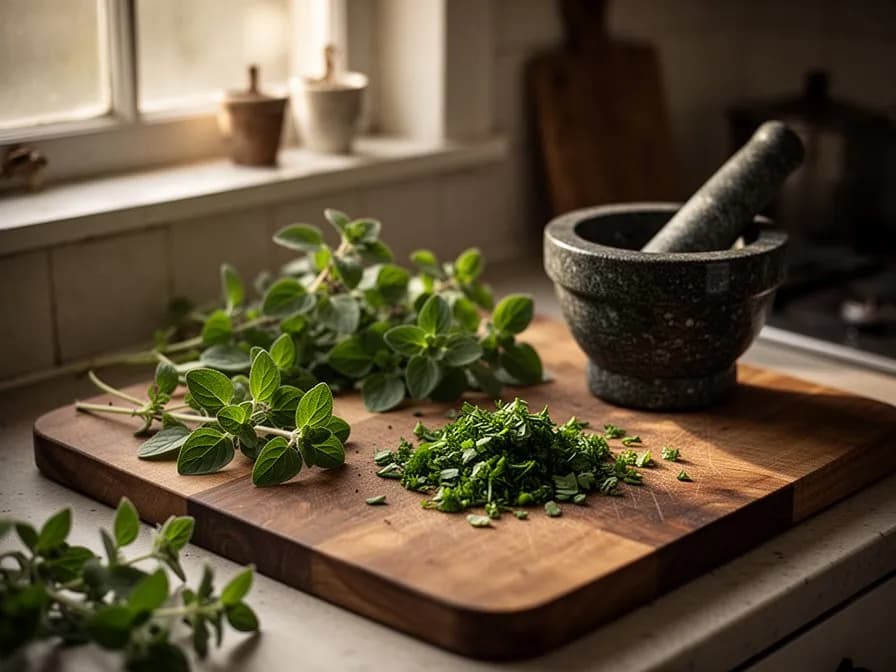
Use el orégano cubano fresco para obtener el mejor sabor, ya que las hojas suculentas y gruesas no se secan bien debido a su alto contenido en humedad. Las hojas frescas se conservan aproximadamente una semana en un recipiente cerrado en el refrigerador. Para un almacenamiento más prolongado, pique finamente las hojas y congélelas en cubeteras con una pequeña cantidad de agua o aceite. El orégano cubano puede conservarse en vinagre, que captura eficazmente su potente sabor a orégano-tomillo. Las hojas también pueden triturarse en una pasta de hierbas con aceite y congelarse para un uso cómodo en recetas caribeñas y asiáticas a lo largo del año.
Qué falla — y cómo solucionarlo
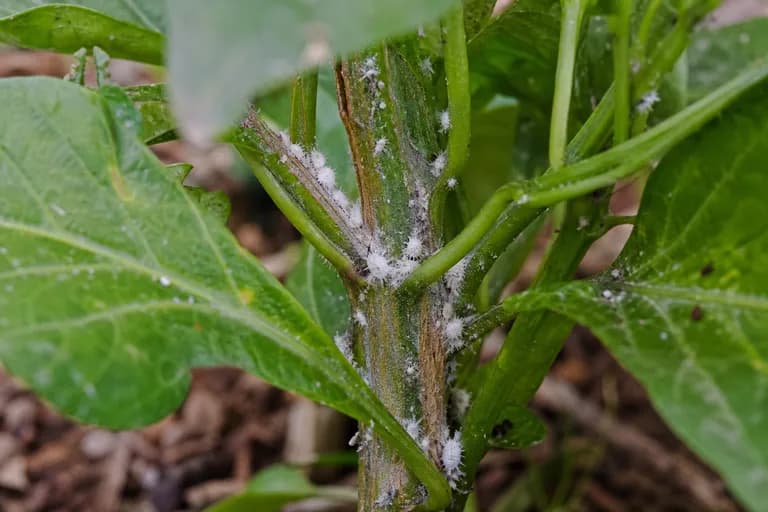
Cochinillas harinosas
PlagaMasas algodonosas blancas en las axilas de las hojas y en el envés, melaza pegajosa, amarillamiento y debilitamiento de la planta.
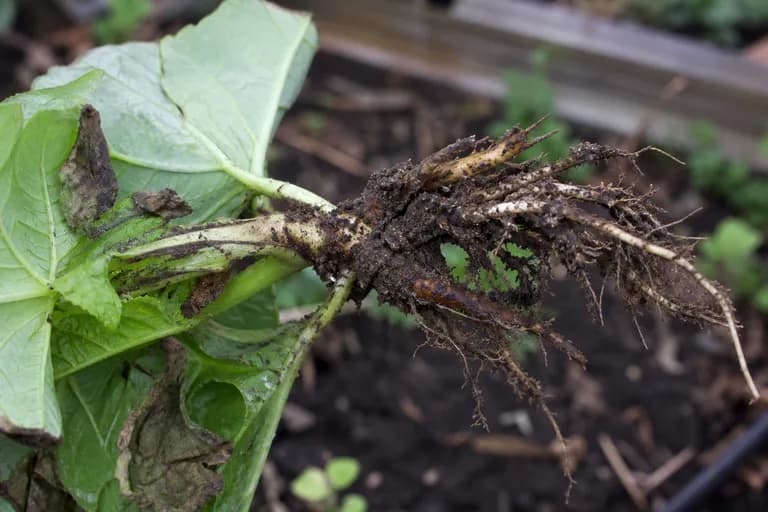
Pudrición de raíces
EnfermedadBase del tallo blanda y pastosa, amarillamiento y caída de las hojas inferiores, olor desagradable del sustrato, colapso de la planta.
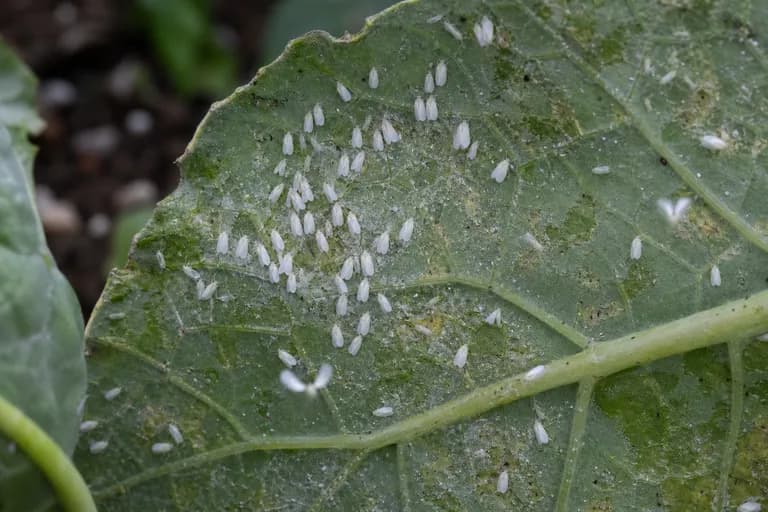
Mosca blanca
PlagaPequeños insectos blancos voladores que revolotean al mover la planta, melaza pegajosa en las hojas inferiores, follaje amarillento.
Solución de problemas comunes
La sensibilidad al frío es la principal limitación del orégano cubano; muere al primer contacto con las heladas y sufre daños por debajo de 5 °C. En climas templados, cultívelo siempre en macetas que puedan trasladarse al interior antes del tiempo frío. El crecimiento desguarnecido y estirado se produce por luz insuficiente; proporcione luz indirecta brillante o luz directa durante al menos 6 horas diarias. El exceso de riego provoca pudrición del tallo en la base, que avanza rápidamente en los tallos suculentos. Las plantas de interior pueden atraer cochinillas harinosas; inspecciónelas regularmente y trátelas con prontitud. El intenso sabor a orégano puede dominar los platos, así que úselo con moderación hasta calibrar su intensidad.
Consejos de cultivo
- Propague siempre el orégano cubano a partir de esquejes de tallo en lugar de semillas. Las semillas son extremadamente raras, y cuando están disponibles, la germinación es poco fiable y lenta. Un esqueje de tallo de 10-15 cm enraíza en solo 7-14 días en una mezcla húmeda de sustrato o incluso en un vaso de agua, produciendo una planta nueva y vigorosa lista para el trasplante.
- Asegure un drenaje excelente por encima de todo. El orégano cubano almacena agua en sus gruesas hojas y tallos suculentos, lo que lo hace muy propenso a la pudrición de raíces en suelos encharcados. Use una mezcla de sustrato bien drenante con perlita o arena gruesa añadida, y nunca deje las macetas en platos con agua estancada.
- Pince las puntas de los tallos con regularidad y frecuencia — esta es la práctica de mantenimiento más importante. Sin pellizcos frecuentes, el orégano cubano crece formando tallos altos, desguarnecidos y voluminosos que acaban volcándose. Pellizcar cada 2-3 semanas estimula la ramificación y crea una planta densa y tupida con mucho más follaje cosechable.
- Cultive en macetas si vive en las zonas 9 o inferiores. El orégano cubano muere con las heladas y debe llevarse al interior en invierno. Una maceta de 25-30 cm proporciona espacio suficiente para una planta productiva, y las macetas facilitan la transición estacional entre interior y exterior.
- Proporcione pleno sol para el sabor más intenso y un crecimiento más compacto. El orégano cubano tolera la semisombra, pero se desguarnice y produce hojas con aceites esenciales menos concentrados en condiciones de poca luz. Lo ideal es un mínimo de 6 horas de luz solar directa al día.
- Riegue abundantemente pero con poca frecuencia, dejando que los centímetros superiores del sustrato se sequen entre riegos. Las hojas suculentas actúan como reservorios de agua, y la planta tolera mucho mejor una sequía breve que el exceso de riego. En el calor veraniego, regar una o dos veces por semana suele ser suficiente.
- Abone mensualmente durante la temporada de crecimiento activo con un fertilizante líquido equilibrado diluido a la mitad de la dosis recomendada. El exceso de fertilizante produce un crecimiento rápido pero débil y sin sabor. El objetivo es un crecimiento firme y moderado con aceites aromáticos concentrados en las hojas.
- Vigile las cochinillas harinosas, que son la plaga más común del orégano cubano, especialmente en plantas de interior durante el invierno. Las hojas aterciopeladas proporcionan escondites ideales para estos insectos algodonosos blancos. Trátelas pronto con alcohol de frotar aplicado con un bastoncillo de algodón o con un spray de jabón insecticida.
- Tome esquejes de los tallos más sanos y aromáticos a finales del verano para crear plantas nuevas para invernar. Las plantas jóvenes son siempre más vigorosas y productivas que los ejemplares viejos y leñosos. Renueve las plantas madre cada 2-3 años para obtener la mejor calidad de hojas y apariencia de la planta.
- Coseche por la mañana después de que el rocío se haya secado para obtener la mayor concentración de aceites esenciales y el mejor sabor. Use las hojas frescas de inmediato para el aroma más intenso, o congele hojas enteras en una sola capa sobre una bandeja de horno antes de transferirlas a bolsas para congelador para el almacenamiento a largo plazo.
Cultiva tu mejor Orégano Cubano — y todo lo que la rodea.
Empieza un plan gratis hoy. Diseña tus bancales, coloca tu Orégano Cubano y deja que PlotMyGarden gestione el momento, el espaciado, las asociaciones y los recordatorios de la semilla a la cesta.
Elige tu Orégano Cubano
Orégano cubano (verde estándar)
La forma común, con hojas gruesas, pelosas y de color verde pálido, y un fuerte aroma a orégano-tomillo. La variedad más cultivada para uso culinario.
Orégano cubano variegado
Una llamativa variedad ornamental con bordes crema y verdes variegados en las hojas suculentas. Sabor ligeramente más suave, pero muy decorativa como planta de interior.
Orégano cubano 'Well-Sweep Wedgwood Blue'
Una selección compacta con flores lavanda azuladas y un follaje especialmente aromático. Excelente para macetas y cestas colgantes.
El orégano cubano fresco raramente está disponible en los supermercados convencionales y suele costar entre 3 y 6 € por un manojo pequeño en mercados especializados latinoamericanos o caribeños. Un solo esqueje enraizado que cuesta entre 3 y 5 € (o gratis si lo regala un amigo jardinero) produce un suministro ilimitado de hojas frescas durante años, ya que la planta es perenne en climas cálidos y fácil de invernar en interior. Con un pellizco regular, una sola planta proporciona más hierbas aromáticas frescas de las que la mayoría de los hogares pueden consumir — y cada tallo podado puede convertirse en una planta nueva, multiplicando el huerto de hierbas sin ningún coste.
Recetas rápidas
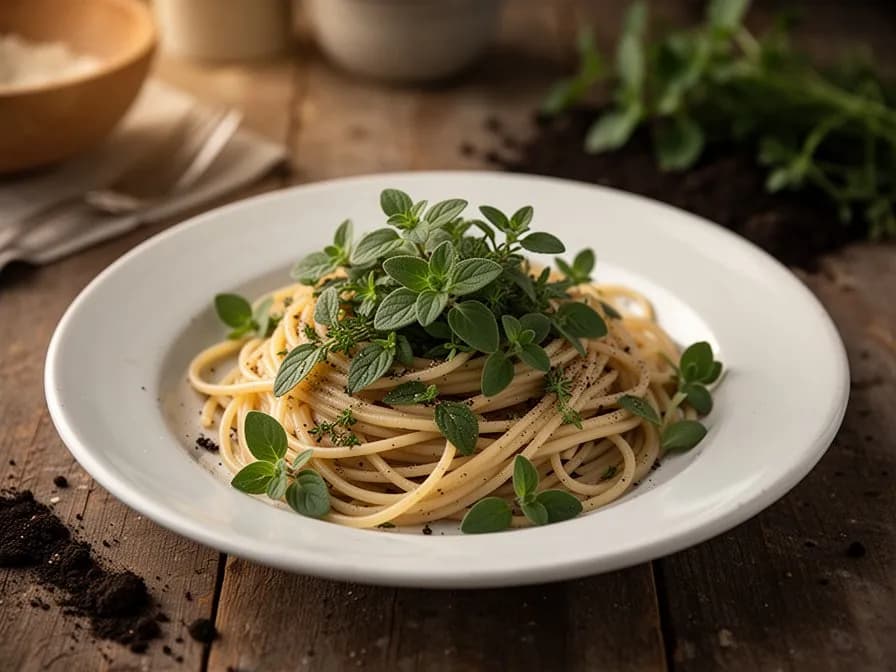
Frijoles negros cubanos con orégano fresco
60 minUna abundante y aromática olla de frijoles negros cocidos a fuego lento, sazonados generosamente con orégano cubano fresco, comino y sofrito. Las hojas gruesas aguantan perfectamente la cocción y liberan su intenso sabor a orégano-tomillo en los frijoles. Un acompañamiento tradicional en todo el Caribe.
10 ingredientesTé de orégano cubano con miel para la tos
10 minUn reconfortante té de hierbas tradicional utilizado en todo el Caribe, la India y el sudeste asiático para aliviar la tos y la congestión nasal. Los aceites aromáticos que se liberan al infusionar las hojas gruesas en agua caliente ayudan a despejar las vías respiratorias y proporcionan un alivio suave para el dolor de garganta.
5 ingredientesPollo a la plancha con mojo de orégano cubano
30 min (más 2 horas de marinado)Una vibrante marinada de cítricos y hierbas con el orégano cubano como protagonista aromático, mezclado con zumo de naranja agria, ajo y comino. El intenso sabor del orégano cubano resiste el calor de la plancha y penetra en el pollo con su característico toque a orégano-tomillo.
8 ingredientesUsos culinarios
El orégano cubano tiene un sabor intenso a orégano-tomillo con matices mentolados, muy utilizado en las cocinas caribeña, india y del sudeste asiático. Use las hojas gruesas en guisos de legumbres, curris, rellenos y estofados de cocción lenta. En la cocina caribeña aromatiza los frijoles negros, los arroces y las marinadas de jerk. Las hojas carnosas pueden rebozarse y freírse en forma de buñuelos. Úselo con moderación como sustituto del orégano común, ya que su sabor es significativamente más concentrado.
Qué contiene
Beneficios para la salud
- Contiene altas concentraciones de carvacrol y timol — compuestos fenólicos con propiedades antibacterianas, antifúngicas y antivirales demostradas clínicamente, utilizados en sistemas de medicina tradicional de África, India y el Caribe durante siglos.
- Utilizado tradicionalmente como remedio respiratorio en todo el trópico — el té de hojas frescas o la inhalación de vapor ayuda a aliviar la tos, la congestión nasal, la bronquitis y el dolor de garganta, diluyendo el moco y calmando las vías respiratorias inflamadas.
- Rico en ácido rosmarínico, un potente compuesto antiinflamatorio que puede ayudar a reducir los síntomas de alergias, artritis y otras condiciones inflamatorias cuando se consume regularmente como té o hierba culinaria.
- Aporta cantidades significativas de vitamina A en forma de betacaroteno (32% VD por cada 100 g de hojas frescas), favoreciendo la salud visual, la función inmunitaria y la integridad de la piel — nutrientes importantes concentrados en las gruesas hojas ricas en aceites esenciales.
- Contiene flavonoides y antioxidantes fenólicos que ayudan a neutralizar los radicales libres y reducir el estrés oxidativo, con estudios que sugieren posibles efectos protectores sobre la salud hepática y la función celular.
- Utilizado en la medicina tradicional como ayuda digestiva — los aceites esenciales aromáticos estimulan la producción de enzimas digestivas y bilis, ayudando a aliviar la hinchazón, los gases y el malestar estomacal tras las comidas copiosas.
De dónde viene Orégano Cubano
El orégano cubano (Plectranthus amboinicus) es originario del este y sur de África, donde las poblaciones silvestres aún crecen en hábitats rocosos y semiáridos desde Kenia y Tanzania hasta Mozambique y Sudáfrica. A pesar de sus raíces africanas, el nombre común de la planta refleja su profunda adopción cultural en Cuba y el Caribe en general, donde se convirtió en una hierba culinaria y medicinal indispensable tras su introducción a través de las rutas comerciales de la época colonial.
El viaje de la planta desde África al resto del mundo tropical probablemente comenzó con los comerciantes árabes y del océano Índico, que la llevaron al subcontinente indio hace siglos. En India quedó profundamente integrada en la medicina ayurvédica y las cocinas regionales, conocida por docenas de nombres locales como 'patharchur', 'karpuravalli' y 'ajwain ka patta'. Desde India, los colonizadores portugueses y holandeses extendieron la planta hacia el este, hasta el archipiélago malayo, Indonesia y Filipinas durante los siglos XVI y XVII. El nombre de la especie, 'amboinicus', hace referencia a la isla de Ambon, en Indonesia, donde el botánico neerlandés Nikolaus Joseph von Jacquin describió formalmente la planta por primera vez a finales del siglo XVIII.
El viaje hacia el oeste hasta las Américas llegó a través del comercio trasatlántico de esclavos y los barcos coloniales españoles. Los africanos cautivos y sus descendientes trajeron el conocimiento de los usos medicinales de la planta, y esta prosperó en los húmedos climas tropicales de las islas caribeñas. En Cuba se convirtió en el orégano preferido para cocinar — su intenso y complejo sabor, que combina notas de orégano, tomillo y ajedrea, resultó ideal para los ricos guisos de legumbres, estofados y carnes asadas de la isla. La planta se naturalizó en todo el Caribe, América Central y América del Sur tropical, convirtiéndose en un elemento básico del huerto doméstico en incontables hogares.
Hoy en día, el orégano cubano se cultiva en todo el mundo tropical y subtropical, desde los huertos de La Habana y Chennai hasta las colecciones de hierbas en maceta de Londres y Nueva York. Su extraordinaria adaptabilidad, facilidad de propagación y sabor concentrado le han ganado un fiel seguimiento entre jardineros y cocineros que descubren que esta humilde planta de hojas aterciopeladas ofrece un impacto aromático que supera con creces su modesta apariencia.
Orégano Cubano: ¿sabías que?
Datos fascinantes sobre Orégano Cubano
A pesar de su nombre común, el orégano cubano no es un orégano verdadero en absoluto. Pertenece a la familia de la menta (Lamiaceae) en el género Plectranthus, lo que lo hace más emparentado con el coleo y la hiedra sueca que con el orégano mediterráneo (Origanum vulgare) que se encuentra en la mayoría de los especieros.
Orégano Cubano: preguntas frecuentes
¿Cuándo debo plantar Orégano Cubano?
¿Cuáles son buenas plantas acompañantes para Orégano Cubano?
¿En qué zonas de rusticidad puede crecer Orégano Cubano?
¿Cuánto sol necesita Orégano Cubano?
¿A qué distancia debo espaciar Orégano Cubano?
¿Qué plagas y enfermedades afectan a Orégano Cubano?
¿Cómo almaceno Orégano Cubano después de la cosecha?
¿Cuáles son las mejores variedades de Orégano Cubano para cultivar?
¿Qué suelo necesita Orégano Cubano?
¿El orégano cubano es igual que el orégano común?
¿Puede el orégano cubano sobrevivir a las heladas o a los inviernos fríos?
¿Cómo evito que mi orégano cubano se desguarnice?
¿Puedo usar el orégano cubano como sustituto del orégano común en la cocina?
¿Por qué las hojas de mi orégano cubano se están poniendo amarillas?
¿Cómo seco o conservo las hojas de orégano cubano para su uso posterior?
Acabas de leer la teoría. Ahora cultívala en piloto automático.
Todo lo que hace que Orégano Cubano sea delicado — el momento, el espaciado, las asociaciones, la ventana de cosecha — es justo lo que PlotMyGarden resuelve por ti, para cada planta de tu huerto.
Un plan que conoce tu clima
Indica tu ubicación una vez. Recibe fechas de siembra, abonado y cosecha basadas en tu última helada real y el pronóstico en vivo — sin adivinar con un sobre genérico.
De la sección “Cuándo plantar”Planificador de bancales de arrastrar y soltar
Diseña bancales sobre una cuadrícula. Cada planta encaja con su espaciado correcto y ves toda la temporada antes de gastar un céntimo en semillas.
De la sección “Cultivo”Conflictos de asociación, detectados a tiempo
Más de 200 buenas y malas combinaciones comprobadas en vivo mientras plantas — para que un error que arruine la temporada nunca llegue a la tierra.
De la sección “Asociaciones”Recordatorios que sí vas a seguir
“Riega las judías.” “Recoge hoy antes de que se pase.” Oportunos, concretos y ligados a las plantas que de verdad cultivas.
De la sección “Cosecha”Escalonado, programado
¿Quieres cosechar seis semanas en vez de seis días? Reparte tus siembras automáticamente y te avisa cuando toca el siguiente lote.
De la sección “Cuándo plantar”Un registro que se vuelve más listo
Cada cosecha que registras le enseña tu huerto. El plan del año que viene parte de lo que de verdad funcionó en tu suelo, no en un manual.
De la sección “Resumen”Planta estos junto a Orégano Cubano
Más Hierbas culinarias
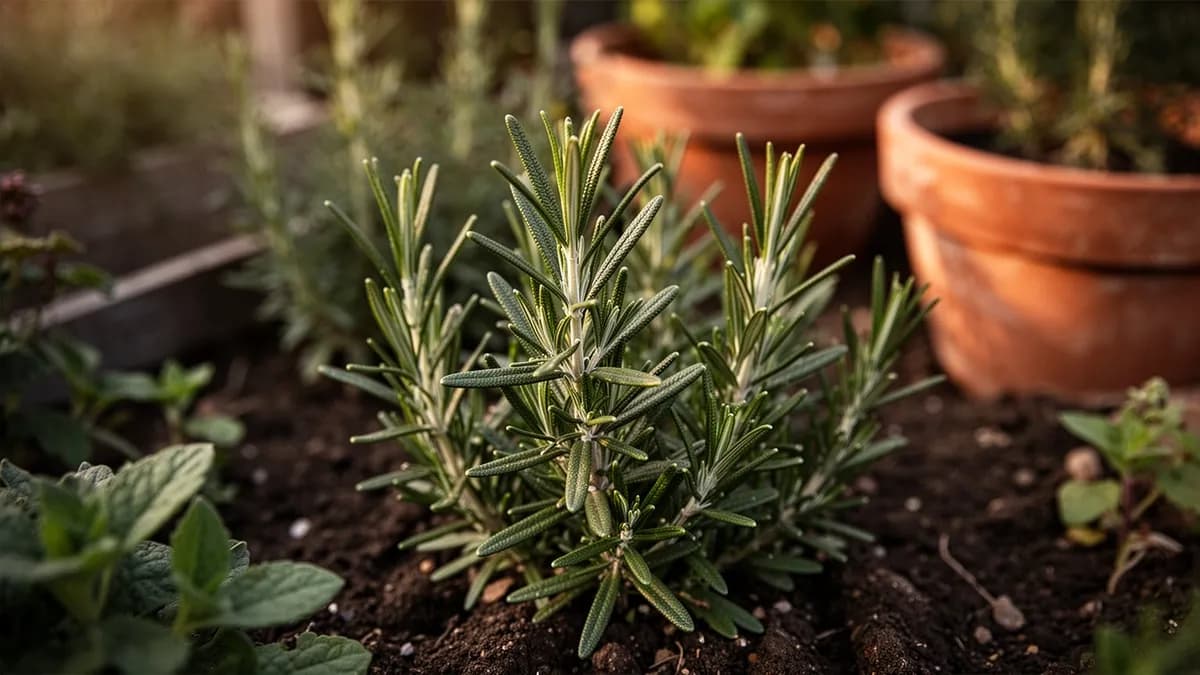
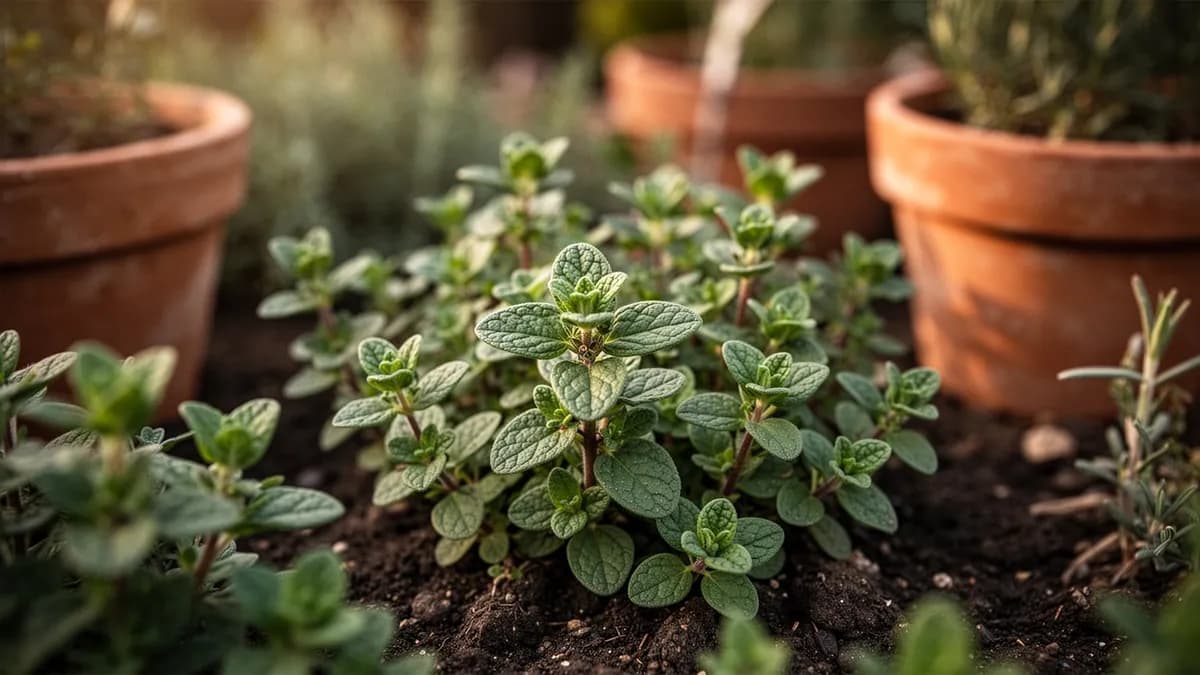
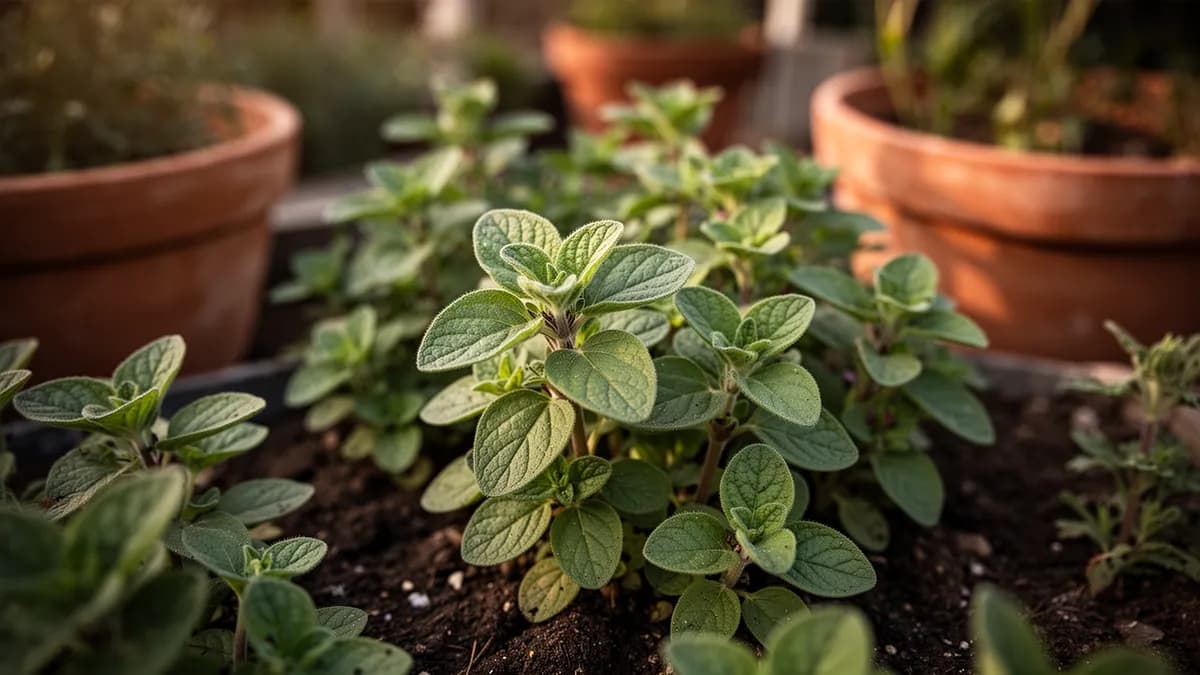
Mantén Orégano Cubano lejos de estos
Cultiva tu mejor Orégano Cubano — y todo lo que la rodea.
Empieza un plan gratis hoy. Diseña tus bancales, coloca tu Orégano Cubano y deja que PlotMyGarden gestione el momento, el espaciado, las asociaciones y los recordatorios de la semilla a la cesta.