Afrikanische Tagetes
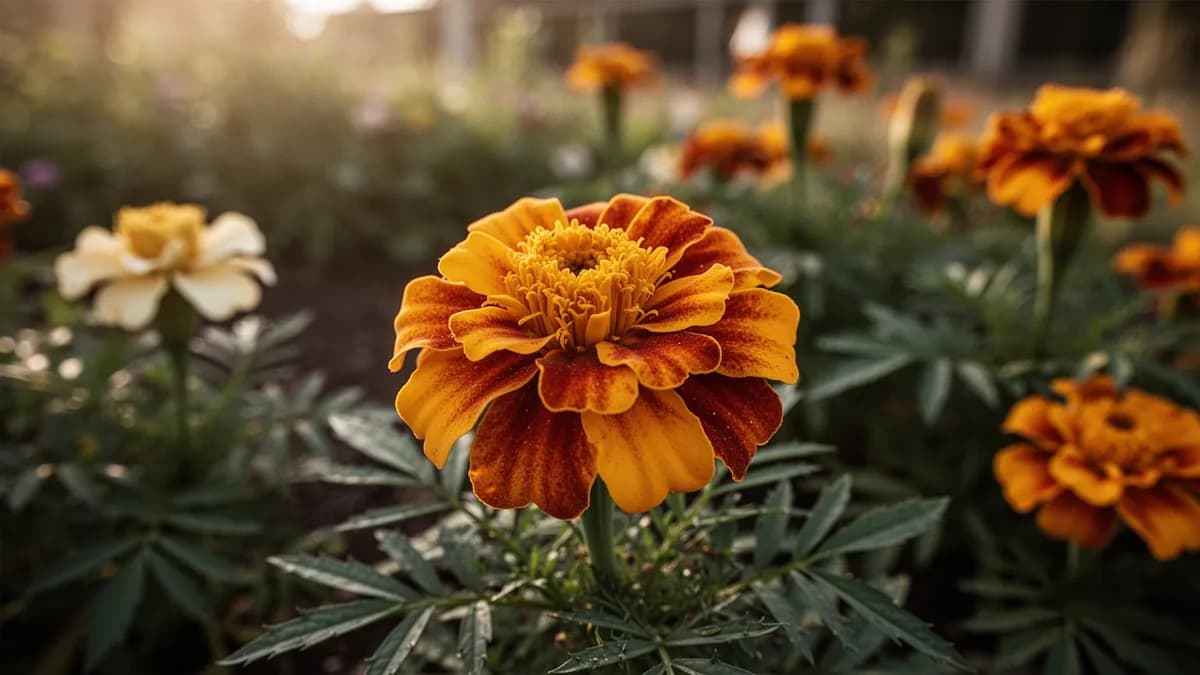
Eine hohe Tagetessorte, die große, kugelförmige Pompon-Blüten in Gelb- und Orangetönen hervorbringt.





Auf dieser SeiteÜberblick
Afrikanische Tagetes im Überblick
Eine hohe Tagetessorte, die große, kugelförmige Pompon-Blüten in Gelb- und Orangetönen hervorbringt. Afrikanische Tagetes können bis zu 90 cm hoch werden und eignen sich hervorragend für hintere Beetbepflanzungen und Schnittblumengärten. Sie sind wärmeliebend und nach dem Anwachsen trockenheitsverträglich, profitieren jedoch vom regelmäßigen Entfernen verblühter Blüten, um die Blütezeit zu verlängern.
Wann Afrikanische Tagetes pflanzen
Afrikanische Tagetes-Samen sind groß und leicht zu handhaben. Beginnen Sie sechs bis acht Wochen vor dem letzten Frost mit der Aussaat im Haus, um diesen langsamer reifenden Pflanzen genügend Zeit zu geben, bis zum Frühsommer mit der Blüte zu beginnen. Säen Sie die Samen 6 mm tief in feuchte Anzuchterde und halten Sie 21 bis 24 Grad Celsius für die Keimung in fünf bis sieben Tagen ein. Kneifen Sie die Triebspitze, wenn die Sämlinge vier bis sechs Blätter haben, um die Verzweigung zu fördern. Härten Sie die Pflanzen gründlich ab, bevor Sie sie nach dem letzten Frost ins Freie setzen.
Dein Afrikanische Tagetes-Jahr
Abgestimmt auf Zone 7 · typische Saison · Frost geht um den 2. Apr. und kehrt um den 1. Nov. zurück
Afrikanische Tagetes Apr – Jun pflanzen, Jul – Okt ernten. Beachte die Pflanzmethoden unten und wähle dein Klima für passende Zeiträume.
So baust du Afrikanische Tagetes an
Säen Sie Afrikanische Tagetes-Samen sechs bis acht Wochen vor dem letzten Frost im Haus vor, da sie eine längere Saison als Französische Tagetes benötigen, um ihre beeindruckende Größe zu erreichen. Säen Sie die Samen 6 mm tief in feuchte Anzuchterde bei 21 bis 24 Grad Celsius, die Keimung erfolgt in fünf bis sieben Tagen. Setzen Sie abgehärtete Jungpflanzen nach dem letzten Frost ins Freie, mit einem Abstand von 30 bis 45 cm in voller Sonne.
Afrikanische Tagetes gedeihen bei heißem Wetter und zeigen ihre beste Leistung, wenn die Tagestemperaturen konstant über 24 Grad Celsius liegen. Sie vertragen nährstoffarme Böden, bringen aber die größten Blüten in mäßig fruchtbarem, gut durchlässigem Gartenboden hervor. Gießen Sie an der Pflanzenbasis statt von oben, um zu verhindern, dass die schweren Blütenköpfe Wasser sammeln und Botrytis-Fäule entwickeln.
Entfernen Sie verblühte Blüten regelmäßig, indem Sie den Stiel bis zum nächsten Blattpaar zurückschneiden, damit die Pflanzen weiterhin neue Knospen bilden. Die großen Pompon-Blüten können nach Regen kopflastig werden, daher sollten Sie einen windgeschützten Standort wählen oder eine leichte Stütze anbringen. Düngen Sie monatlich mit einem ausgewogenen Dünger, um kräftiges Wachstum und kontinuierliche Blütenproduktion den ganzen Sommer über bis in den frühen Herbst zu gewährleisten.
18 Pflanzen passen in ein Beet von 120 × 240 cm
Afrikanische Tagetes braucht 35 cm Platz pro Pflanze. Der Planer hält diesen Abstand für dich ein — jede Pflanze, jedes Beet.
Die besten Nachbarn für Afrikanische Tagetes
Wie andere Tagetes-Arten setzen Afrikanische Tagetes Alpha-Terthienyl aus ihren Wurzeln frei, das Wurzelgallennematoden im umliegenden Boden unterdrückt. Pflanzen Sie sie als lebende Bodenentseuchung neben Tomaten, Paprika und Auberginen. Ihre hohe Statur macht sie zu geeigneten Begleitern im hinteren Beetbereich für niedrigere Gemüse- und Blumenpflanzen. Der starke Laubgeruch vertreibt Weiße Fliegen, Blattläuse und einige Käferarten. Vermeiden Sie die Pflanzung neben Bohnen und Kohlgewächsen.
Tomate gehört daneben. Kohl nicht.
Altes Gärtnerwissen, geprüft an der echten Nachbartabelle von Afrikanische Tagetes — teste jede Pflanze, die du anbaust.
Probiere Afrikanische Tagetes direkt hier im Beet
Ein echtes Planer-Beet, Afrikanische Tagetes steht schon drin. Tippe einen Begleiter an, platziere ihn und sieh, wie die Nachbarschaftsprüfung antwortet — grün für gute Nachbarn, rot bei Streit.


Passende Anbau-Ratgeber
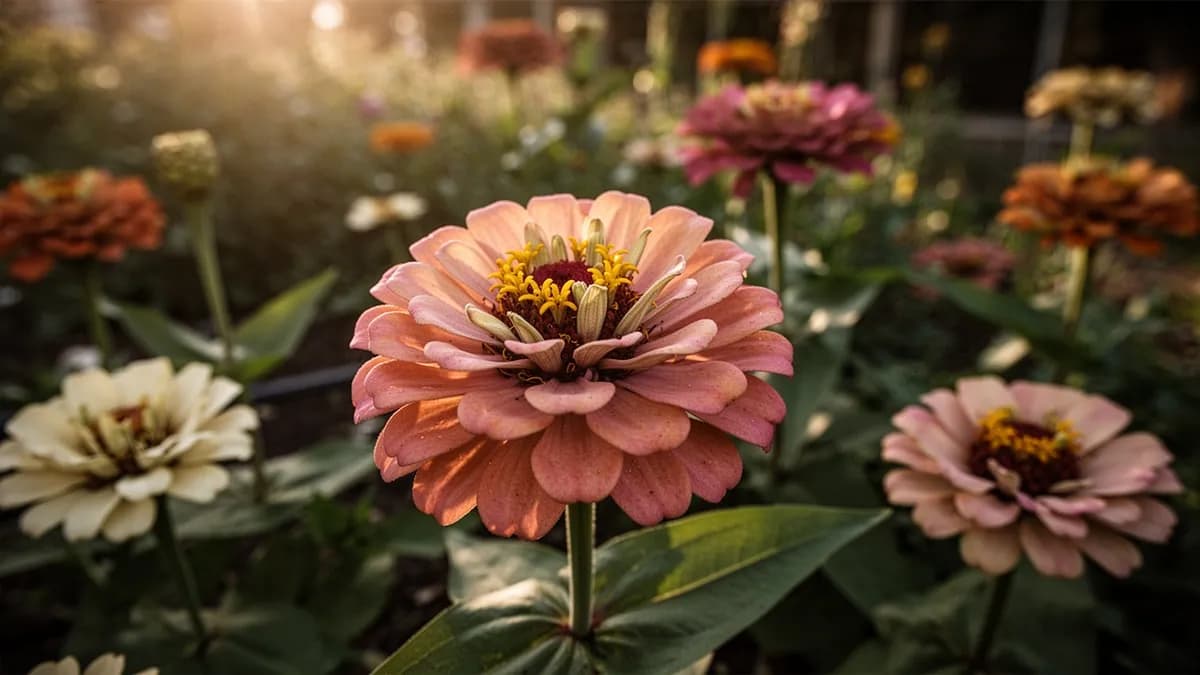
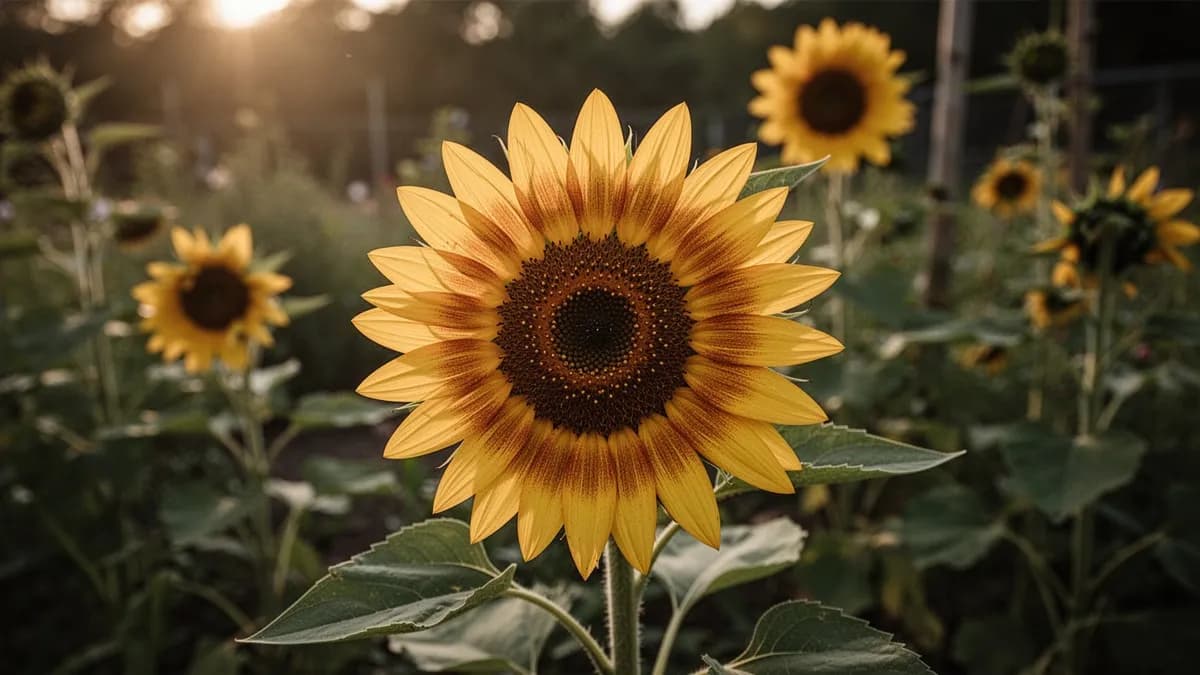
Richtig düngen
Afrikanische Tagetes gedeihen am besten in mäßig fruchtbarem, gut durchlässigem Boden mit einem pH-Wert von 6,0 bis 7,0. Sie vertragen arme Böden, bringen aber ihre größten und eindrucksvollsten Blüten bei regelmäßiger Düngung hervor. Arbeiten Sie vor dem Pflanzen Kompost in den Boden ein. Düngen Sie alle drei bis vier Wochen mit einem ausgewogenen Flüssigdünger oder bringen Sie Langzeitdünger beim Pflanzen aus. Vermeiden Sie übermäßigen Stickstoff, der das Blattwachstum auf Kosten der Blüten fördert.
Ideale Temperatur
Winterhärtezone-Kompatibilität
Von der Saat zur Ernte, Schritt für Schritt
Samenkeimung
Afrikanische Tagetes-Samen sind länglich und schwarz mit weißer Basis. Sie keimen leicht in warmem Boden bei 21–24 °C. Die Samen sollten 6–8 Wochen vor dem letzten erwarteten Frost im Haus ausgesät werden oder nach dem letzten Frost direkt ins Freiland.
Sämlingsentwicklung
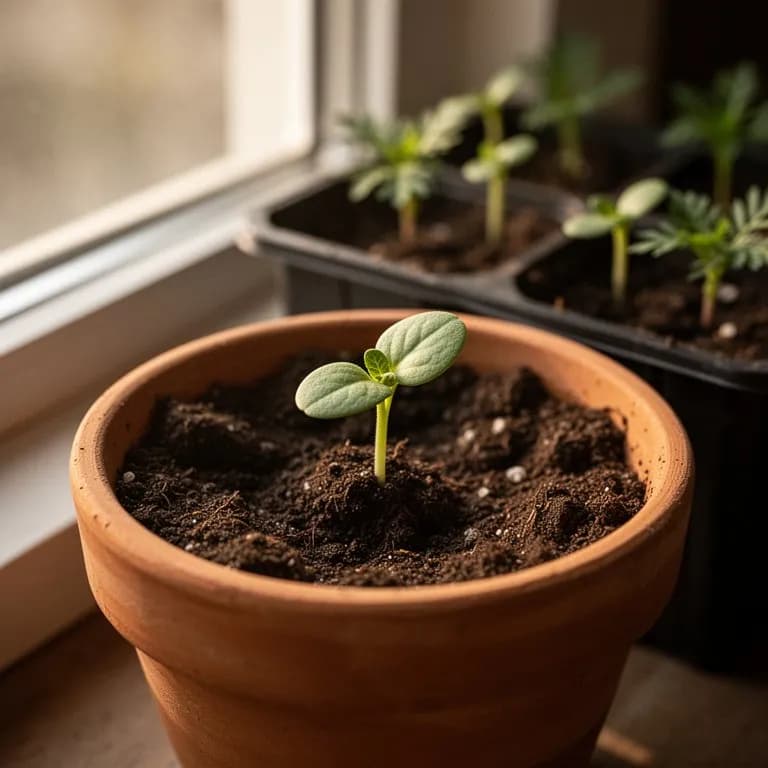
Zuerst erscheinen die Keimblätter als schmale, bandförmige Blätter. Es folgen die echten Blätter mit dem charakteristischen gefiederten, gezahnten Laub, das beim Berühren einen stechenden Geruch abgibt. Die Sämlinge wachsen in diesem Stadium aufrecht mit einem einzelnen kräftigen Stiel.
Vegetatives Wachstum
Die Pflanzen entwickeln sich schnell und bilden einen kräftigen Hauptstiel, der je nach Sorte 30–90 cm hoch werden kann. Seitentriebe bilden sich natürlich, und das tief geteilte dunkelgrüne Laub wird dichter. Das Wurzelsystem etabliert sich aggressiv, einschließlich der Produktion von Alpha-Terthienyl-Verbindungen in den Wurzeln, die Nematoden unterdrücken.
Knospenbildung
Blütenknospen erscheinen an den Stielspitzen, zunächst fest geschlossen und von grünen Kelchblättern umhüllt. Die Knospen schwellen über 1–2 Wochen an, während sich die dicht gepackten Blütenblätter im Inneren entwickeln. Afrikanische Tagetes-Knospen sind merklich größer als die der Französischen Tagetes und deuten auf die übergroßen Blüten hin.
Hauptblütezeit
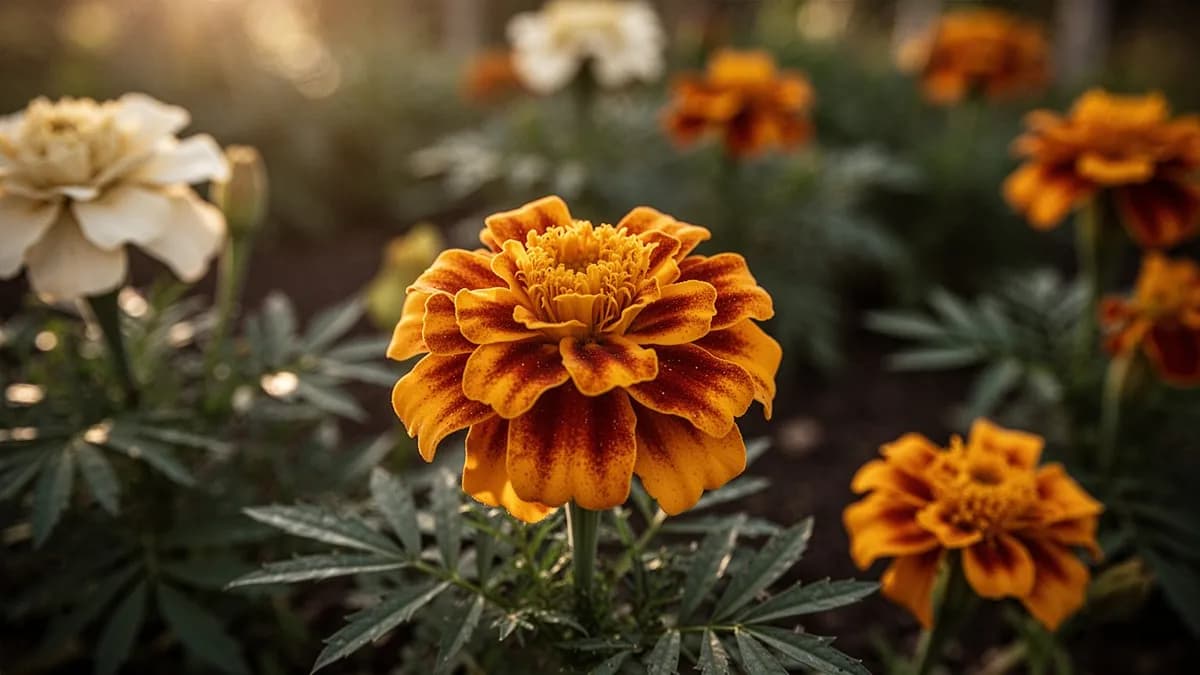
Große, vollständig gefüllte Blüten öffnen sich auf 8–12 cm Durchmesser in Gelb-, Gold-, Orange- und Cremeweiß-Tönen. Jede Blüte besteht aus Hunderten von dicht gepackten Zungenblüten. Die Pflanzen produzieren kontinuierlich Blüten vom Hochsommer bis zum Herbst, wenn verblühte Blüten zeitnah entfernt werden.
Samenreife und Absterben
Wenn Blüten ausreifen dürfen, entwickeln sich Samen in den getrockneten Blütenköpfen. Jede Blüte kann 30–50 keimfähige Samen hervorbringen. Wenn die Temperaturen im Herbst sinken, verlangsamt sich das Wachstum und das Laub kann sich gelb färben. Die Pflanzen werden beim ersten strengen Frost abgetötet und vollenden ihren einjährigen Lebenszyklus.
Säen Sie die Samen 6 mm tief in feuchte, gut durchlässige Anzuchterde. Halten Sie die Erde gleichmäßig feucht und warm. Decken Sie die Schalen mit einer Feuchtigkeitshaube oder Frischhaltefolie ab, bis die Keimung in 5–7 Tagen erfolgt.
Afrikanische Tagetes Monat für Monat pflegen
Was du jeden Monat für deine Afrikanische Tagetes tun solltest
Oktober
Aktueller MonatErnten Sie die verbleibenden Blüten vor dem Frost. Sammeln Sie getrocknete Samenköpfe und lagern Sie die Samen in beschrifteten Umschlägen. Nachdem der Frost die Pflanzen abgetötet hat, ziehen Sie die abgestorbenen Pflanzen heraus und kompostieren Sie das Laub. Die Wurzeln können zur Nematodenunterdrückung in den Boden eingearbeitet werden.
Immer wissen, was jetzt im Garten zu tun ist
Eine E-Mail zum Monatsanfang: was du jetzt säen, pflanzen und anpacken solltest — für deine Afrikanische Tagetes und alles, was drumherum wächst. Dazu ein kurzer Startkurs, der dich vor den klassischen Fehlern bewahrt.
- Was jetzt zu tun ist
- Passend zu deiner Saison
- Startkurs inklusive
Afrikanische Tagetes ernten
Schneiden Sie Afrikanische Tagetes-Blüten für Arrangements, wenn die Blüten vollständig geöffnet und die Farben am leuchtendsten sind. Die großen Pompon-Köpfe sind beeindruckend in Sträußen und halten sich gut in der Vase. Zum Saatgutgewinnen lassen Sie die Blütenköpfe vollständig an der Pflanze trocknen, bis sie papierartig und braun sind. Ziehen Sie den getrockneten Kopf auseinander, um die langen, schlanken schwarz-weißen Samen freizulegen. Entfernen Sie die übrigen verblühten Blüten konsequent während der gesamten Saison, um die Blütenproduktion zu maximieren.
angenommen, du pflanzt zu Beginn des Zeitraums — trage dein tatsächliches Datum ein
Ernte Afrikanische Tagetes zügig, dann trägt die Pflanze weiter.
Lagerung & Konservierung
Frisch geschnittene Afrikanische Tagetes halten fünf bis sieben Tage in einer Vase mit sauberem Wasser, wobei der starke Laubgeruch in Innenräumen wahrnehmbar sein kann. Entfernen Sie alle Blätter unterhalb der Wasserlinie. Zum Trocknen hängen Sie einzelne Stiele kopfüber in einem warmen, dunklen, gut belüfteten Bereich für zwei bis drei Wochen auf. Die großen Köpfe behalten beim Trocknen gut ihre Form und Farbe. Samen können in Papierumschlägen an einem kühlen, trockenen Ort bis zu drei Jahre aufbewahrt werden.
Was schiefgeht — und die Lösung
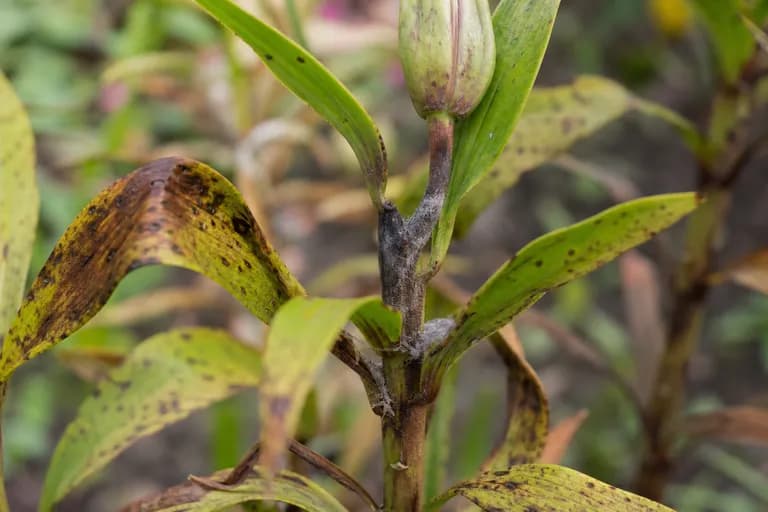
Grauschimmel (Botrytis)
KrankheitGroße Blütenköpfe entwickeln einen grauen, pelzigen Schimmelbelag, besonders nach Regen oder Überkopfbewässerung. Die Blüten werden von der Mitte nach außen braun und matschig.
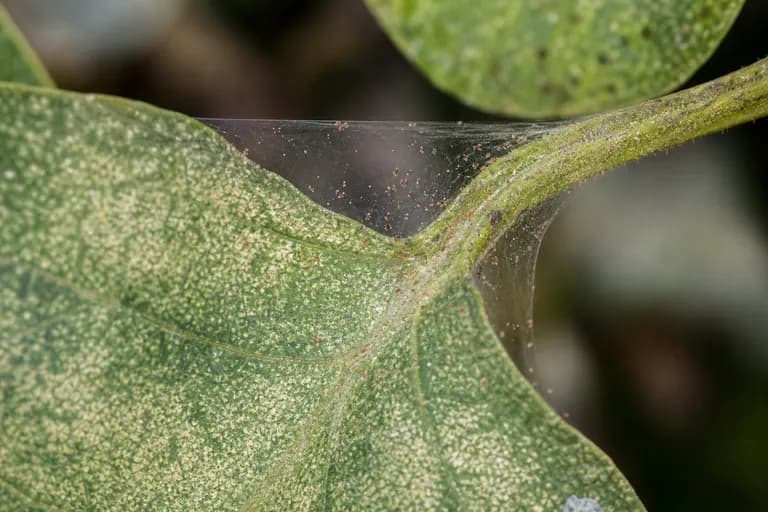
Spinnmilben
SchädlingFeine Sprenkelung und Bronzefärbung der Blätter mit zarten Gespinsten auf den Blattunterseiten. Am häufigsten bei heißem, trockenem Wetter.
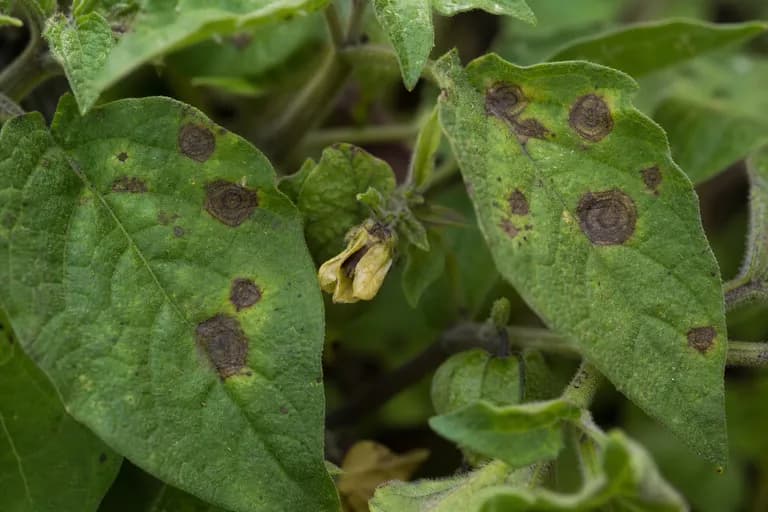
Alternaria-Blattfleckenkrankheit
KrankheitDunkelbraune bis schwarze kreisförmige Flecken mit konzentrischen Ringen auf den Blättern, die oft an den unteren Blättern beginnen und bei feuchten Bedingungen nach oben fortschreiten.
Fehlerbehebung bei häufigen Problemen
Das häufigste Problem ist Botrytis-Fäule der großen Blütenköpfe bei nassem Wetter oder durch Überkopfbewässerung. Gießen Sie immer an der Pflanzenbasis. Hohe Sorten können bei Wind und Regen durch kopflastige Blüten umkippen und profitieren von geschützten Standorten. Afrikanische Tagetes beginnen langsamer zu blühen als Französische Tagetes und benötigen warme Bedingungen für gute Leistung. In kühlen, bewölkten Klimazonen können sie üppiges Laub, aber spärliche Blütenbildung zeigen.
Anbautipps
- Säen Sie die Samen 6–8 Wochen vor dem letzten Frosttermin im Haus vor, um die frühesten Blüten zu erhalten. Afrikanische Tagetes brauchen länger bis zur ersten Blüte als Französische Tagetes, daher ist der Vorsprung im Haus besonders wertvoll in Regionen mit kurzer Saison.
- Kneifen Sie die zentrale Triebspitze, wenn die Sämlinge 15 cm hoch sind, um die seitliche Verzweigung zu fördern und eine buschigere Pflanze mit mehr Blütenstielen zu erhalten. Dieser einzelne Schritt kann Ihre gesamte Blütenanzahl über die Saison verdoppeln.
- Pflanzen Sie Afrikanische Tagetes in voller Sonne mit mindestens 6–8 Stunden direkter Sonneneinstrahlung täglich. Sie vertragen Halbschatten, produzieren aber weniger und kleinere Blüten mit schwächeren Stielen, die zum Umknicken neigen.
- Halten Sie einen Pflanzabstand von 30–45 cm ein, um eine ausreichende Luftzirkulation um das dichte Laub und die großen Blüten zu gewährleisten. Schlechte Luftzirkulation bei feuchten Bedingungen begünstigt Botrytis-Grauschimmel, der die Blütenköpfe von innen heraus faulen lässt.
- Gießen Sie an der Pflanzenbasis statt von oben, um Laub und Blüten trocken zu halten. Nasse Blütenblätter an den dichten gefüllten Blüten halten Feuchtigkeit fest und schaffen ideale Bedingungen für Pilzkrankheiten.
- Entfernen Sie verblühte Blüten umgehend, indem Sie den Stiel knapp über dem nächsten Blattknoten abschneiden. Wenn Blüten Samen ansetzen dürfen, signalisiert das der Pflanze, die Blütenproduktion deutlich zu verlangsamen.
- Pflanzen Sie Afrikanische Tagetes als biologische Schädlingsbekämpfungsstrategie im gesamten Gemüsegarten. Ihre Wurzeln setzen Verbindungen frei, die für Wurzelgallennematoden giftig sind, und ihr starker Geruch vertreibt Weiße Fliegen, Blattläuse und Tomatenhornwürmer.
- Vermeiden Sie starke Stickstoffdüngung, die üppiges Blattwachstum auf Kosten der Blüten fördert. Ein ausgewogener oder leicht phosphorbetonter Dünger, der alle 2–3 Wochen ausgebracht wird, unterstützt die beste Blütenproduktion.
- Stützen Sie höhere Sorten (60–90 cm) an exponierten oder windigen Standorten, da die schweren Blütenköpfe bei Stürmen zum Abknicken der Stiele führen können. Ein einfacher Bambusstab mit weicher Bindung pro Pflanze bietet ausreichend Halt.
- Gewinnen Sie Samen von Ihren besten Pflanzen, indem Sie einige spätblühende Blüten vollständig am Stiel trocknen lassen. Lagern Sie die geernteten Samen an einem kühlen, trockenen Ort – sie bleiben 2–3 Jahre keimfähig.
Bau deine beste Afrikanische Tagetes an — und alles drumherum.
Starte heute kostenlos. Lege deine Beete an, setze deine Afrikanische Tagetes ein und lass PlotMyGarden Timing, Abstände, Begleiter und Erinnerungen von der Saat bis zum Erntekorb übernehmen.
Finde deine Afrikanische Tagetes
Antigua-Serie
Kompakte Afrikanische Tagetes, die 30 bis 35 cm hoch werden, mit riesigen 8 bis 10 cm großen, vollständig gefüllten Blüten in Gold, Orange, Primelgelb und Gelb.
Inca II-Serie
Wüchsige Pflanzen bis 45 cm mit großen gefüllten Blüten und hervorragender Krankheitsresistenz, ausgezeichnet für Beete und Kübel.
Crackerjack-Mischung
Klassische hohe Afrikanische Tagetes, die bis zu 90 cm hoch werden, mit massiven Pompon-Blüten in einer Mischung aus Gelb, Gold und tieforange.
Moonstruck-Serie
Zwerg-Afrikanische Tagetes mit beeindruckend großen Blüten an kompakten 25 bis 30 cm hohen Pflanzen, ideal für Kübel und Beetränder.
Marvel II-Serie
Frühblühende Afrikanische Tagetes an 45 cm hohen Pflanzen mit ausgezeichneter Hitzetoleranz und vollständig gefüllten Blüten in einer breiten Farbpalette.
Afrikanische Tagetes gehören zu den kostengünstigsten Gartenpflanzen, die man anbauen kann. Eine einzelne Samentüte (ca. 100 Samen für unter 3 €) kann Dutzende von Pflanzen hervorbringen, die 3–4 Monate lang ununterbrochen blühen. Jede Pflanze kann Ihnen 3–5 € im Vergleich zum Kauf von Gärtnerei-Jungpflanzen sparen, und eine ausgewachsene Pflanze produziert genug Samen, um Ihren Garten für Jahre zu versorgen. Bei Verwendung als Mischkulturpartner im Gemüsegarten bieten Tagetes natürliche Nematodenunterdrückung und Schädlingsabwehr, die den Bedarf an chemischen Pflanzenschutzmitteln reduzieren und potenziell 15–30 € pro Saison einsparen können. Getrocknete Tagetes-Blütenblätter können als Ersatz für teuren Safran als natürlicher Lebensmittelfarbstoff dienen, und selbst angebaute Tagetes-Sträuße ersetzen gekaufte Schnittblumen den ganzen Sommer und Herbst über.
Schnelle Rezepte
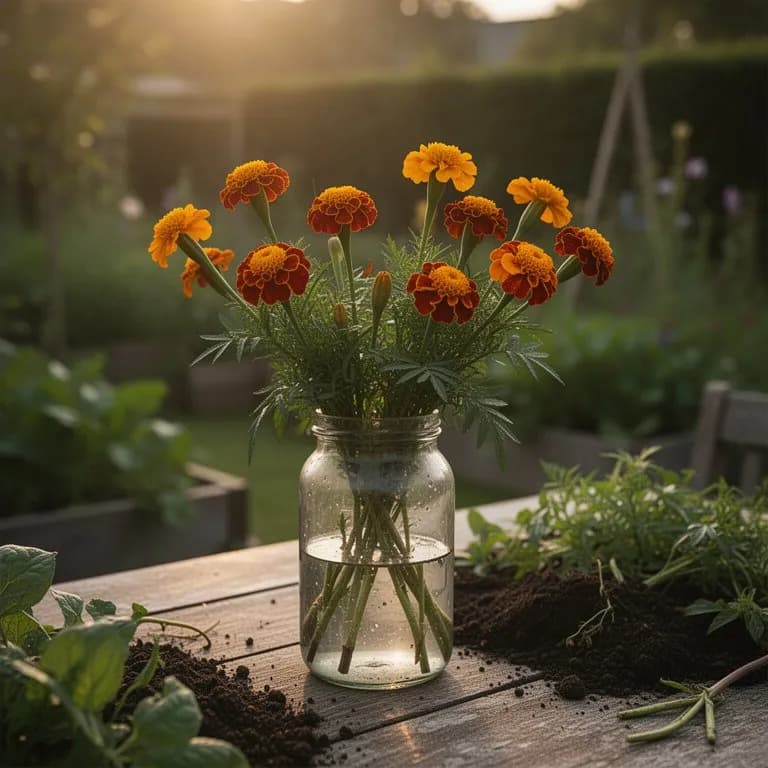
Tagetes-Blütenblatt-Butter
15 Min. plus 2 Stunden KühlungEine wunderschön goldene Kräuterbutter mit Afrikanischen Tagetes-Blütenblättern, perfekt zum Bestreichen von warmem Brot, zum Verfeinern von gedünstetem Gemüse oder zum Schmelzen über gegrilltem Fisch. Die Blütenblätter verleihen ein subtiles blumiges, leicht zitrusartiges Aroma und eine lebhafte safranähnliche Farbe.
5 Zutaten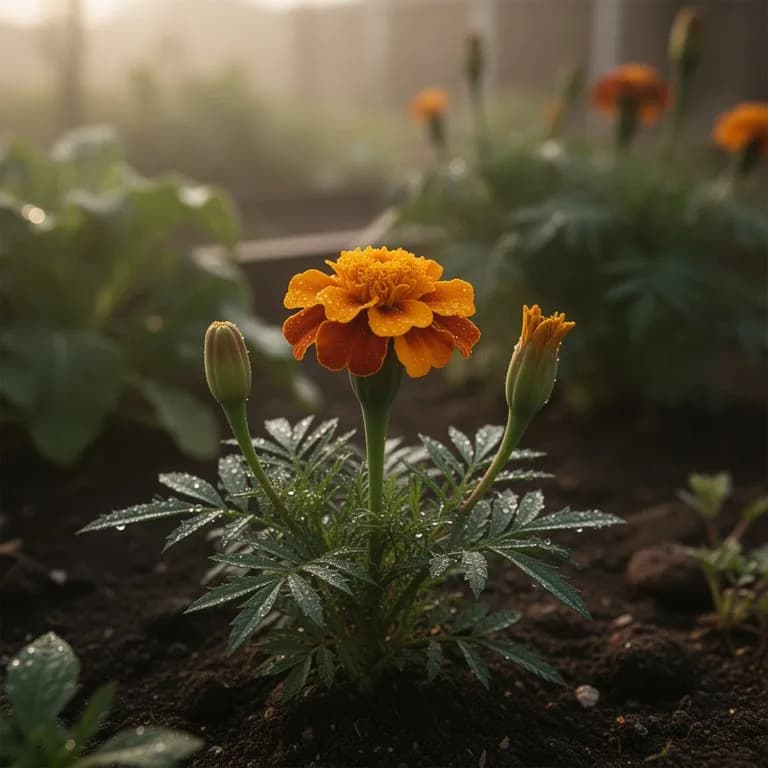
Tagetes-Blütenblatt-Tee
10 Min.Ein wohltuender goldener Kräutertee aus getrockneten Afrikanischen Tagetes-Blütenblättern, der in der mexikanischen Volksmedizin traditionell zur Beruhigung von Verdauungsbeschwerden und zur Reduzierung von Entzündungen verwendet wird. Der Tee hat ein mildes, leicht erdiges und blumiges Aroma, das gut zu Honig und Zitrone passt.
5 ZutatenTagetes-Reis (Arroz de Cempasúchil)
30 Min.Ein traditionelles mexikanisches Reisgericht, das mit Afrikanischen Tagetes-Blütenblättern goldgelb gefärbt wird und oft während der Día de los Muertos-Feierlichkeiten zubereitet wird. Die Blütenblätter dienen als natürlicher Safranersatz und verleihen dem Reis sowohl Farbe als auch ein zartes blumiges Aroma.
7 ZutatenWas drinsteckt
Gesundheitsvorteile
- Reich an Lutein- und Zeaxanthin-Carotinoiden, die die Augengesundheit unterstützen und das Risiko altersbedingter Makuladegeneration und Katarakte reduzieren können, wenn sie regelmäßig als Teil einer ausgewogenen Ernährung verzehrt werden
- Enthält Flavonoide mit antioxidativen Eigenschaften, die helfen, freie Radikale zu neutralisieren und oxidativen Stress im Zusammenhang mit chronischen Entzündungen reduzieren können
- Traditionelle Kräuterzubereitungen aus Tagetes-Blütenblättern werden zur Linderung von Verdauungsbeschwerden einschließlich Magenkrämpfen, Übelkeit und leichten Magenentzündungen verwendet
- Äußerliche Anwendungen von Tagetes-Blütenblattextrakten haben antimikrobielle und entzündungshemmende Eigenschaften gezeigt, die die Wundheilung und Hautgesundheit unterstützen können
- Die in Afrikanischen Tagetes-Geweben enthaltenen Thiophen-Verbindungen weisen antimykotische Wirkung auf, und Tagetes-Fußbäder werden traditionell bei leichten Pilzerkrankungen der Haut eingesetzt
- Tagetes-Blütenblatt-Tee wird in volksmedizinischen Traditionen in Mexiko und Indien als mildes beruhigendes Getränk verwendet, um Anspannung zu lösen und die Entspannung vor dem Schlaf zu fördern
Woher Afrikanische Tagetes stammt
Die Afrikanische Tagetes (Tagetes erecta) stammt aus Mexiko und Mittelamerika, wo sie seit über 2.000 Jahren kultiviert wird. Die Azteken verehrten die Pflanze als heilig und verwendeten sie in religiösen Zeremonien, traditioneller Medizin und aufwendigen Gartengestaltungen. Sie entwickelten durch jahrhundertelange sorgfältige Auslese viele der großblütigen Formen, die wir heute kennen. Als die spanischen Konquistadoren Anfang des 16. Jahrhunderts in Mexiko ankamen, waren sie von den leuchtend goldenen Blüten beeindruckt und brachten Samen nach Spanien zurück. Von der Iberischen Halbinsel breitete sich der Tagetesanbau rasch über Europa und nach Nordafrika aus, wo die Pflanzen im warmen mediterranen und subtropischen Klima gediehen. Die Blume wurde in Nordafrika so weit eingebürgert, dass europäische Botaniker fälschlicherweise eine afrikanische Herkunft annahmen, woraus der gebräuchliche Name Afrikanische Tagetes entstand. Der schwedische Botaniker Carl von Linné formalisierte 1753 den Gattungsnamen Tagetes in Anlehnung an die etruskische Gottheit Tages, die mit der Erde und Prophezeiung verbunden war. Im 17. und 18. Jahrhundert züchteten europäische Gärtner gezielt höhere Pflanzen mit zunehmend großen, vollständig gefüllten Blüten. Die Art erreichte Indien während der portugiesischen Kolonialzeit und wurde schnell fester Bestandteil hinduistischer Zeremonien, Hochzeitsdekorationen und Tempelopfer – eine Tradition, die bis heute fortbesteht, wobei Indien einer der weltweit größten kommerziellen Produzenten von Tagetesblüten ist. Im 20. Jahrhundert spielte die Burpee Seed Company eine entscheidende Rolle bei der Popularisierung der Afrikanischen Tagetes in amerikanischen Gärten und finanzierte Zuchtprogramme, die kompakte, gleichmäßig blühende Hybriden für die Massenbepflanzung hervorbrachten. Heute gehören Afrikanische Tagetes zu den zehn am häufigsten angebauten einjährigen Blumen weltweit.
Afrikanische Tagetes: Schon gewusst?
Faszinierende Fakten über Afrikanische Tagetes
Afrikanische Tagetes (Tagetes erecta) stammen gar nicht aus Afrika – sie kommen ursprünglich aus Mexiko und Mittelamerika. Spanische Entdecker brachten sie im 16. Jahrhundert nach Europa und Nordafrika, wo sie so beliebt wurden, dass man annahm, sie seien dort heimisch.
Afrikanische Tagetes: Fragen & Antworten
Wann sollte ich Afrikanische Tagetes pflanzen?
Was sind gute Begleitpflanzen für Afrikanische Tagetes?
In welchen Winterhärtezonen kann Afrikanische Tagetes wachsen?
Wie viel Sonne braucht Afrikanische Tagetes?
Welchen Abstand sollte ich zwischen Afrikanische Tagetes lassen?
Welche Schädlinge und Krankheiten befallen Afrikanische Tagetes?
Wie lagere ich Afrikanische Tagetes nach der Ernte?
Was sind die besten Afrikanische Tagetes-Sorten zum Anbauen?
Welchen Boden braucht Afrikanische Tagetes?
Sind Afrikanische Tagetes essbar und unbedenklich?
Wie helfen Afrikanische Tagetes bei der Schädlingsbekämpfung im Gemüsegarten?
Was ist der Unterschied zwischen Afrikanischen Tagetes und Französischen Tagetes?
Warum faulen meine Afrikanischen Tagetes-Blüten, bevor sie sich vollständig öffnen?
Kann ich Afrikanische Tagetes in Kübeln anbauen?
Wie gewinne ich Samen von meinen Afrikanischen Tagetes-Pflanzen?
Du hast die Theorie gelesen. Jetzt baue sie auf Autopilot an.
Alles, was Afrikanische Tagetes knifflig macht — das Timing, die Abstände, die Begleiter, das Erntefenster — genau das übernimmt PlotMyGarden für dich, für jede Pflanze im Garten.
Ein Plan, der dein Wetter kennt
Standort einmal festlegen. Aussaat-, Dünge- und Erntedaten rund um deinen echten letzten Frosttermin und die Live-Vorhersage — kein Raten mehr nach Saattüte.
Aus dem Abschnitt „Pflanzzeit“Beetplaner per Drag & Drop
Beete auf einem Raster gestalten. Jede Pflanze rastet im richtigen Abstand ein, und du siehst die ganze Saison, bevor du einen Cent für Saatgut ausgibst.
Aus dem Abschnitt „Anbau“Begleiter-Konflikte früh erkannt
Über 200 gute und schlechte Kombinationen werden beim Pflanzen live geprüft — so landet ein saisonruinierender Fehler nie in der Erde.
Aus dem Abschnitt „Begleiter“Erinnerungen, nach denen du wirklich handelst
„Gieß die Bohnen.“ „Heute ernten, bevor's umschlägt.“ Pünktlich, konkret und auf deine echten Pflanzen bezogen.
Aus dem Abschnitt „Ernte“Staffel-Aussaat, geplant
Sechs Wochen ernten statt sechs Tage? Die App verteilt deine Aussaaten automatisch und erinnert dich, wenn der nächste Satz fällig ist.
Aus dem Abschnitt „Pflanzzeit“Ein Verlauf, der schlauer wird
Jede protokollierte Ernte bringt der App deinen Garten bei. Der Plan fürs nächste Jahr startet bei dem, was in deinem Boden wirklich funktioniert hat.
Aus dem Abschnitt „Überblick“Pflanze diese neben Afrikanische Tagetes
Weitere Einjährige
Halte Afrikanische Tagetes von diesen fern
Bau deine beste Afrikanische Tagetes an — und alles drumherum.
Starte heute kostenlos. Lege deine Beete an, setze deine Afrikanische Tagetes ein und lass PlotMyGarden Timing, Abstände, Begleiter und Erinnerungen von der Saat bis zum Erntekorb übernehmen.