Gartenliebstöckel
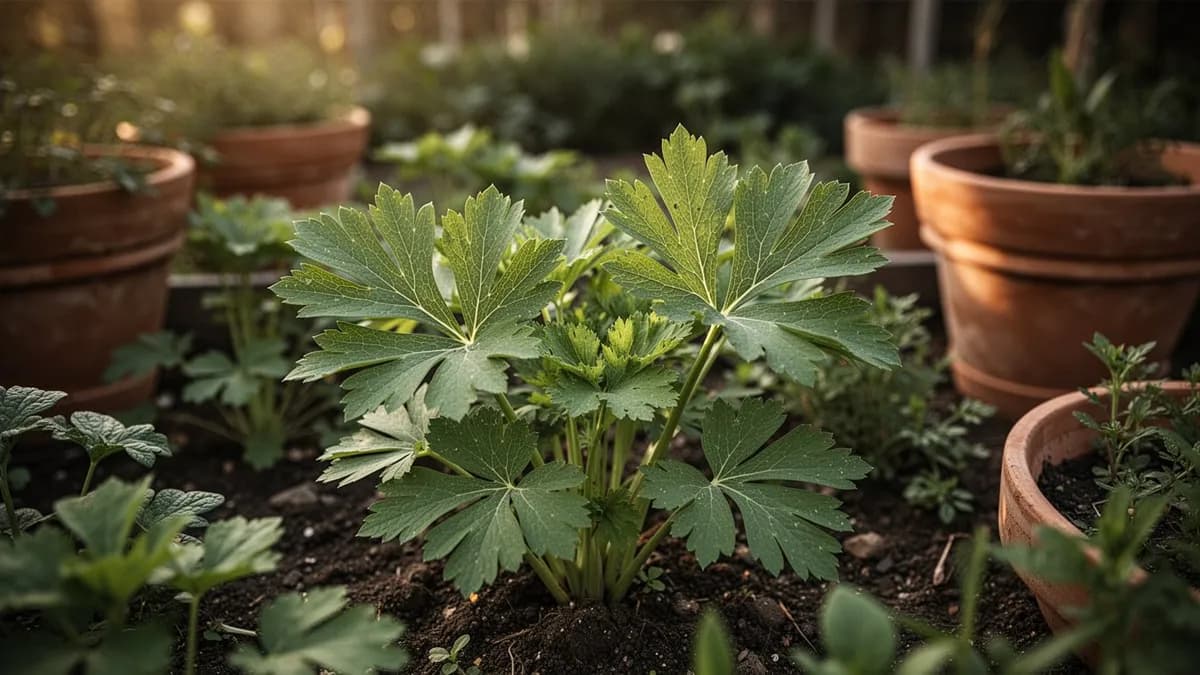
Eine ausgewählte Gartenform des Liebstöckels, die für besonders große, aromatische Blätter mit intensivem Selleriegeschmack gezüchtet wurde.





Auf dieser SeiteÜberblick
Gartenliebstöckel im Überblick
Eine ausgewählte Gartenform des Liebstöckels, die für besonders große, aromatische Blätter mit intensivem Selleriegeschmack gezüchtet wurde. Diese Sorte wächst kräftig bis zu 1,80 m Höhe und produziert reichlich Laub, ideal für Suppen, Brühen und Bloody Marys. In nährstoffreichen, feuchten Boden pflanzen und Blütenstängel zurückschneiden, um die Energie in die Blattproduktion umzuleiten.
Wann Gartenliebstöckel pflanzen
Liebstöckelsamen keimen langsam und verlieren schnell ihre Keimfähigkeit; verwenden Sie frisches Saatgut, das weniger als ein Jahr alt ist. Im frühen Frühling drinnen aussäen, Samen auf feuchte Anzuchterde drücken und leicht bedecken. Temperaturen von 15 bis 18 Grad einhalten. Die Keimung dauert 10 bis 20 Tage und kann ungleichmäßig sein. Kältestratifikation für 2 Wochen vor der Aussaat kann die Keimrate verbessern. Setzlinge nach dem letzten Frost ins Freie verpflanzen, mit einem Abstand von 60 bis 90 cm. Die Teilung etablierter Pflanzen im Frühling ist zuverlässiger als die Aussaat.
Dein Gartenliebstöckel-Jahr
Abgestimmt auf Zone 7 · typische Saison · Frost geht um den 2. Apr. und kehrt um den 1. Nov. zurück
Gartenliebstöckel Mär – Apr pflanzen, Apr – Sep ernten. Beachte die Pflanzmethoden unten und wähle dein Klima für passende Zeiträume.
So baust du Gartenliebstöckel an
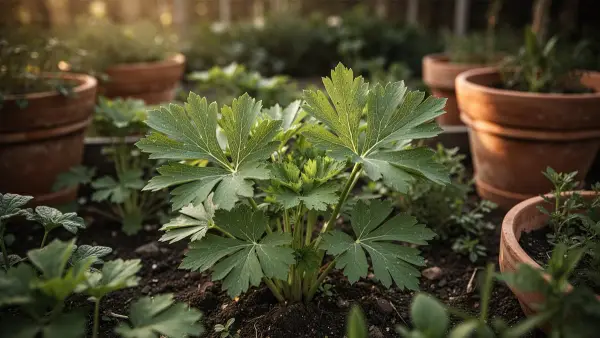
Gartenliebstöckel ist ein prächtiges mehrjähriges Kraut, das eine beeindruckende Höhe von 1,80 m erreicht und einen markanten vertikalen Akzent im Kräutergarten setzt. Seine großen, glänzenden, dunkelgrünen gefiederten Blätter haben ein intensives Selleriearoma, das komplexer und aromatischer ist als Sellerie selbst. In Halbschatten bis volle Sonne pflanzen, in nährstoffreichen, feuchten, gut durchlässigen Boden mit einem pH-Wert von 6,0 bis 7,0. Liebstöckel braucht viel Platz, da ausgewachsene Pflanzen sich bis zu 90 cm breit ausbreiten.
Samen im frühen Frühling drinnen aussäen, da Liebstöckelsamen langsam und ungleichmäßig keimen und 10 bis 20 Tage bei 15 bis 18 Grad benötigen. Setzlinge nach dem letzten Frost ins Freie verpflanzen, mit einem Abstand von 60 bis 90 cm. Liebstöckel kann auch durch Teilung etablierter Horste im Frühling vermehrt werden.
Während der gesamten Wachstumsperiode gleichmäßige Feuchtigkeit sicherstellen; Liebstöckel welkt bei Trockenheit dramatisch, erholt sich aber schnell nach dem Gießen. Blütenstängel zurückschneiden, sobald sie erscheinen, um die Energie in die Blattproduktion umzuleiten, es sei denn, Sie möchten Samen ernten. Liebstöckel stirbt im Winter oberirdisch ab und kehrt im Frühling zuverlässig zurück. Eine einzelne Pflanze liefert mehr als genug Liebstöckel für die meisten Haushalte.
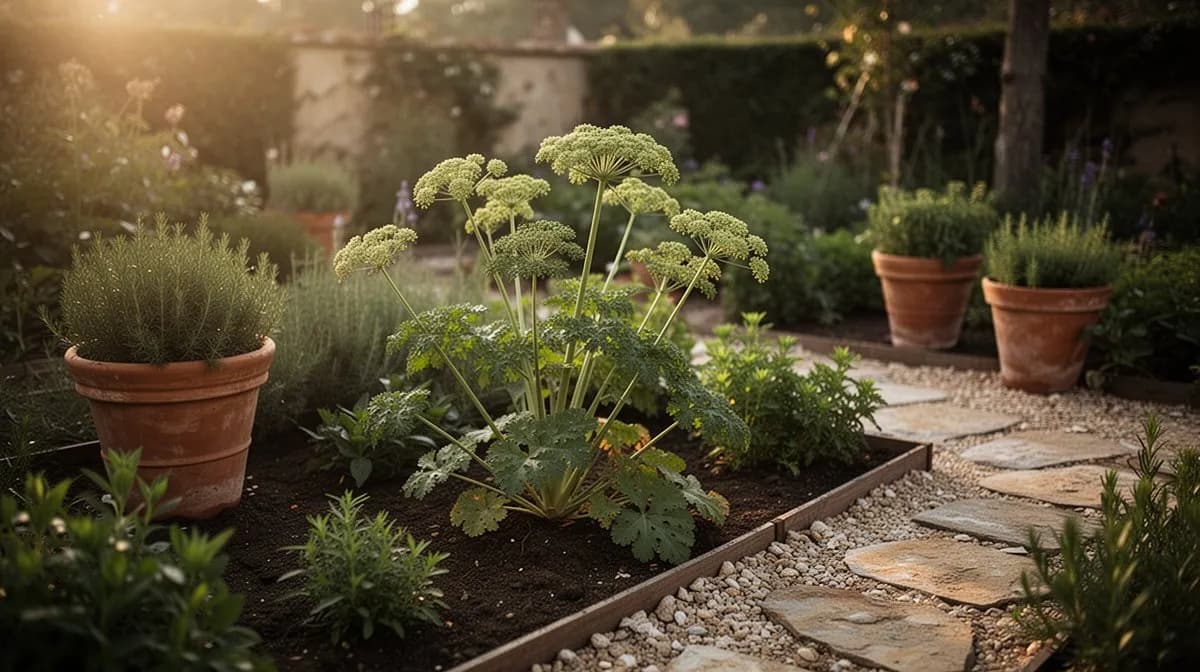
8 Pflanzen passen in ein Beet von 120 × 240 cm
Gartenliebstöckel braucht 60 cm Platz pro Pflanze. Der Planer hält diesen Abstand für dich ein — jede Pflanze, jedes Beet.
Die besten Nachbarn für Gartenliebstöckel
Die hohe Statur des Liebstöckels macht ihn nützlich als lebende Sichtschutzwand oder Windschutz im Kräutergarten. Seine Blüten ziehen Nützlinge an, darunter Schlupfwespen und Schwebfliegen. Am hinteren Rand von Beeten pflanzen, wo seine Höhe niedrigere Kräuter nicht beschattet. Liebstöckel soll Berichten zufolge die Gesundheit und den Geschmack benachbarter Pflanzen verbessern, was ihn zu einem traditionellen Begleiter in gemischten Kräuterpflanzungen macht. Von sehr niedrig wachsenden Kräutern fernhalten, die er überschatten würde.
Petersilie gehört daneben.
Altes Gärtnerwissen, geprüft an der echten Nachbartabelle von Gartenliebstöckel — teste jede Pflanze, die du anbaust.
Probiere Gartenliebstöckel direkt hier im Beet
Ein echtes Planer-Beet, Gartenliebstöckel steht schon drin. Tippe einen Begleiter an, platziere ihn und sieh, wie die Nachbarschaftsprüfung antwortet — grün für gute Nachbarn, rot bei Streit.


Passende Anbau-Ratgeber
Richtig düngen
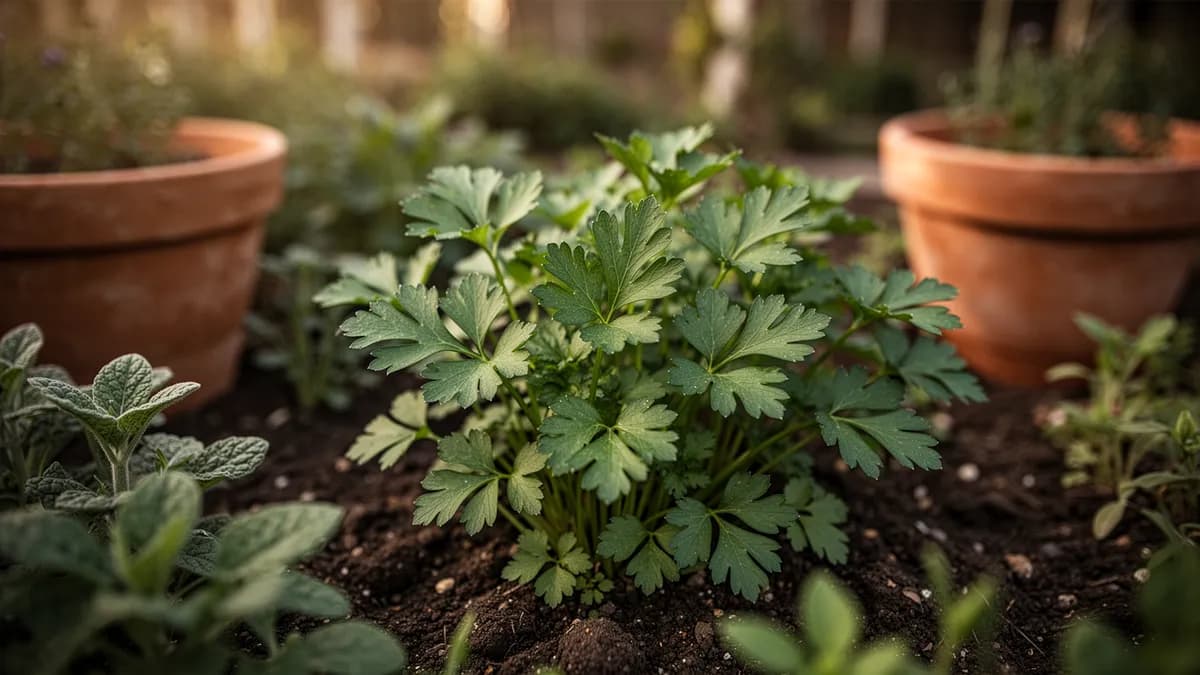
Liebstöckel gedeiht in nährstoffreichem, feuchtem, gut durchlässigem Boden mit einem pH-Wert von 6,0 bis 7,0. Er profitiert von reichlicher Kompostbeigabe beim Pflanzen und jährlichem Aufbringen einer Deckschicht. Im frühen Frühling ausgewogenen organischen Dünger ausbringen, wenn der Neuaustrieb erscheint. Mit organischem Material mulchen, um Feuchtigkeit zu bewahren und Unkraut zu unterdrücken. Liebstöckel ist ein Starkzehrer und profitiert von regelmäßiger Düngung während der Wachstumsperiode, besonders wenn häufig Blätter geerntet werden.
Ideale Temperatur
Winterhärtezone-Kompatibilität
Von der Saat zur Ernte, Schritt für Schritt
Samenkeimung
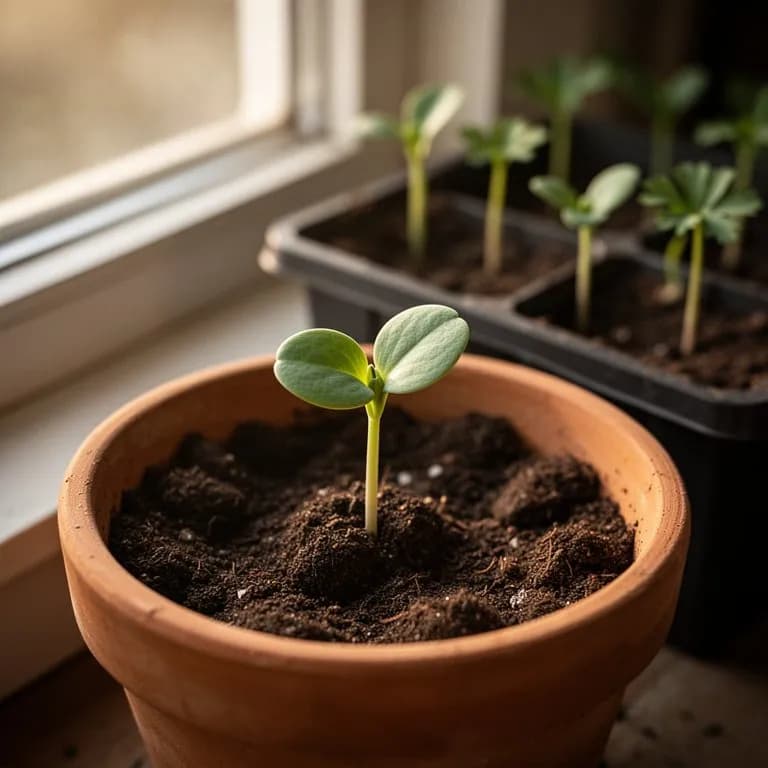
Liebstöckelsamen sind langsame und etwas unregelmäßige Keimer, die unter optimalen Bedingungen typischerweise 10–20 Tage zum Auflaufen benötigen. Die kleinen, gerippten Samen brauchen Licht und gleichmäßige Feuchtigkeit, um die Keimruhe zu brechen. Frisches Saatgut keimt weitaus zuverlässiger als älteres, da die Keimfähigkeit von Liebstöckel nach dem ersten Jahr stark nachlässt. Die ersten Blätter sind klein, einfach und gerundet – ganz anders als das ausgewachsene gefiederte Laub.
Sämlingsetablierung
Nach der Etablierung entwickeln Sämlinge ihre ersten echten gefiederten Blätter mit gezähnten, sellerieartigen Blättchen. Das Wachstum ist anfangs langsam, da die Pflanze stark in die Wurzelentwicklung investiert und die dicke Pfahlwurzel aufbaut, die sie über Jahre versorgen wird. Nach 6–8 Wochen haben die Pflanzen mehrere Sätze gefiederter Blätter und eine Rosette von etwa 15–20 cm Durchmesser.
Vegetatives Wachstum im ersten Jahr
Im ersten Jahr konzentriert sich Liebstöckel auf den Aufbau eines starken Wurzelsystems und einer buschigen Rosette aus tief eingeschnittenen, glänzend dunkelgrünen Blättern. Pflanzen erreichen typischerweise 40–60 cm Höhe in ihrer ersten Saison und blühen normalerweise nicht. Das Laub hat das intensive Selleriearoma, das Liebstöckel in der Küche so geschätzt macht. Im Herbst vergilben die Blätter und sterben ab, wenn die Pflanze in die Ruhephase eintritt und Energie in ihrer sich verdickenden Pfahlwurzel speichert.
Frühjahrsaustrieb und Blüte
Ab dem zweiten Jahr treibt Liebstöckel im frühen Frühling mit kräftigem Neuaustrieb aus der Ruhephase aus und schiebt sich oft vor den letzten Frösten durch den Boden. Die Pflanze sendet rasch dicke, hohle Stängel empor, die 1,5–2 Meter Höhe erreichen können. Im Hochsommer erscheinen große zusammengesetzte Dolden aus winzigen gelbgrünen Blüten an den Stängelspitzen, die flachköpfigen Dolden gleichen und von Bienen und Nützlingen umschwärmt werden.
Samenreife und Ruhephase
Nach der Blüte entwickelt Liebstöckel Büschel kleiner, gerippter, aromatischer Samen, die über mehrere Wochen im Spätsommer von Grün nach Braun reifen. Die Samen haben ein warmes, sellerieartiges Aroma und werden als Gewürz verwendet. Mit dem Herbst vergilbt das Laub und stirbt bis zum Boden ab. Der dicke mehrjährige Wurzelstock bleibt unterirdisch lebendig und bereit, im folgenden Frühling erneut auszutreiben. Eine gut etablierte Liebstöckelpflanze kann 15–20 Jahre leben und produzieren.
Samen auf der Oberfläche aussäen oder nur mit 3 mm feinem Kompost bedecken, da Licht die Keimung fördert. Boden gleichmäßig feucht, aber nicht staunass halten bei 15–20 °C. Eine Stratifizierung der Samen im Kühlschrank für 2–3 Wochen vor der Aussaat kann die Keimrate deutlich verbessern. Geduld haben – die Keimung ist naturgemäß ungleichmäßig.
Gartenliebstöckel Monat für Monat pflegen
Was du jeden Monat für deine Gartenliebstöckel tun solltest
Oktober
Aktueller MonatLaub vergilbt und stirbt natürlich ab. Abgestorbene Stängel auf 5–10 cm über dem Wurzelstock zurückschneiden. Große, überalterte Horste jetzt oder im frühen Frühling teilen – den Wurzelballen mit einer Grabegabel ausheben und in Abschnitte mit jeweils mehreren Wachstumsknospen und gesunden Wurzeln teilen. Teilstücke sofort wieder einpflanzen.
Immer wissen, was jetzt im Garten zu tun ist
Eine E-Mail zum Monatsanfang: was du jetzt säen, pflanzen und anpacken solltest — für deine Gartenliebstöckel und alles, was drumherum wächst. Dazu ein kurzer Startkurs, der dich vor den klassischen Fehlern bewahrt.
- Was jetzt zu tun ist
- Passend zu deiner Saison
- Startkurs inklusive
Gartenliebstöckel ernten
Liebstöckelblätter während der gesamten Wachstumsperiode ernten, indem Sie äußere Stängel an der Basis abschneiden. Junge Frühlingsblätter haben den mildesten, angenehmsten Geschmack. Die Stängel können als Sellerieersatz in Suppen und Eintöpfen verwendet werden; bei größeren Stängeln die zähen äußeren Fasern abziehen. Samen können geerntet werden, wenn sie an der Pflanze braun werden, typischerweise im Spätsommer. Die Wurzeln von 2 bis 3 Jahre alten Pflanzen können im Herbst ausgegraben und medizinisch oder als Würzmittel verwendet werden.
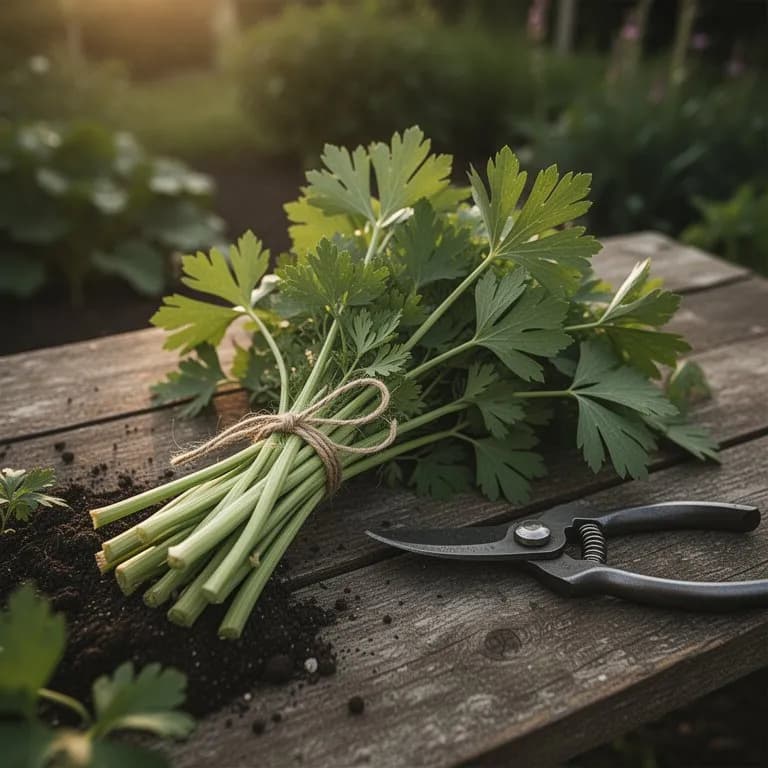
angenommen, du pflanzt zu Beginn des Zeitraums — trage dein tatsächliches Datum ein
Ernte Gartenliebstöckel zügig, dann trägt die Pflanze weiter.
Lagerung & Konservierung
Frischer Liebstöckel hält sich im Kühlschrank bis zu einer Woche in einem Glas Wasser, locker mit einer Plastiktüte abgedeckt. Zum Trocknen Stängelbündel an einem warmen, dunklen, gut belüfteten Ort für 1 bis 2 Wochen aufhängen. Getrockneter Liebstöckel behält bis zu einem Jahr guten sellerieartigen Geschmack. Gehackte Blätter in Eiswürfelformen mit Wasser oder Brühe einfrieren für praktische Zugabe zu Wintersuppen. Liebstöckelstängel können wie Engelwurz kandiert werden, um Kuchen und Gebäck zu verzieren. Samen trocknen gut und sind 2 bis 3 Jahre haltbar.
Was schiefgeht — und die Lösung
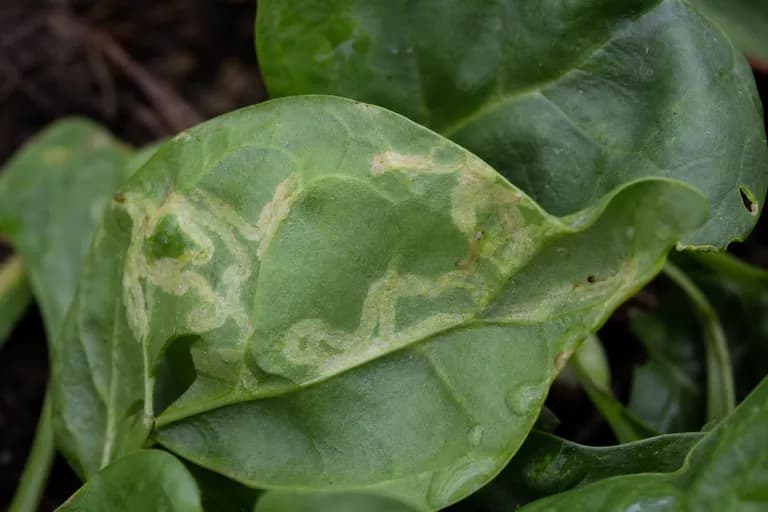
Minierfliegen
SchädlingGewundene helle Fraßgänge oder Flecken in Blättern, wo Larven zwischen den Blattoberflächen fressen. Hauptsächlich ein kosmetisches Problem. Am häufigsten im späten Frühling.
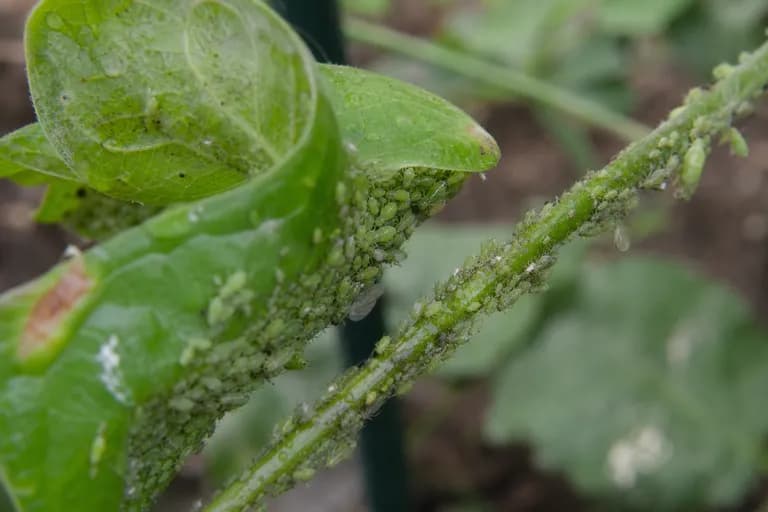
Blattläuse
SchädlingAnsammlungen an zartem Neutrieb und Blütenstielen. Klebriger Honigtau und möglicher Rußtau. Meist ein geringes Problem.
Fehlerbehebung bei häufigen Problemen
Die größte Herausforderung besteht darin, die beeindruckende Größe des Liebstöckels zu bewältigen; eine einzelne Pflanze kann einen kleinen Kräutergarten überwuchern. Genügend Platz einplanen oder in einem großen Kübel anbauen. Selbstaussaat kann aggressiv sein, wenn Blütenstängel nicht entfernt werden. Liebstöckel welkt bei Trockenheit dramatisch, erholt sich aber schnell nach dem Gießen. Minierfliegen verunstalten gelegentlich das Laub, beeinträchtigen aber nicht die Pflanzengesundheit. Der intensive Selleriegeschmack kann überwältigend sein, wenn man ihn beim Kochen zu großzügig einsetzt.
Anbautipps
- Verwenden Sie immer frisches Saatgut beim Aussäen von Liebstöckel – die Keimfähigkeit lässt nach dem ersten Jahr dramatisch nach. Sammeln Sie wenn möglich Samen direkt von einer bestehenden Pflanze oder kaufen Sie von einem seriösen Anbieter, der aktuelles Saatgut garantiert. Eine Stratifizierung der Samen im Kühlschrank für 2–3 Wochen vor der Aussaat verbessert die Keimung deutlich.
- Geben Sie Liebstöckel viel Platz. Ausgewachsene Pflanzen erreichen 1,5–2 Meter Höhe und 60–90 cm Breite, daher am hinteren Rand von Kräuterbeeten oder an einem eigenen Platz pflanzen, wo sie kleinere Kräuter und Gemüse nicht beschatten. Eine einzelne Pflanze reicht normalerweise für die meisten Haushalte.
- Liebstöckel bevorzugt nährstoffreichen, tiefgründigen, gleichmäßig feuchten Boden mit guter Drainage. Großzügig Kompost oder gut verrotteten Mist in den Pflanzbereich einarbeiten, bevor Setzlinge gesetzt werden. Die tiefe Pfahlwurzel schätzt lockeren, unverdichteten Boden, in den sie leicht eindringen kann.
- Nachmittäglicher Halbschatten verlängert die Erntezeit in heißen Klimazonen und verhindert die Bitterkeit, die sich bei Hitzewellen im Liebstöckellaub entwickeln kann. In kühleren nördlichen Klimazonen bringt volle Sonne das kräftigste Wachstum und stärkste Aroma hervor.
- Blätter immer von außen nach innen ernten und nie mehr als ein Drittel des Laubs auf einmal entnehmen. So kann sich die Pflanze schnell erholen und während der gesamten Saison weiter frischen Neuaustrieb produzieren.
- Blütenstängel entfernen, sobald sie erscheinen, wenn Sie die Blattproduktion maximieren möchten. Einige Blütenköpfe stehen zu lassen, nützt dem Gartenökosystem jedoch enorm – Liebstöckeldolden gehören zu den besten Blüten, um Schwebfliegen, Florfliegen und Schlupfwespen anzulocken, die Blattläuse und andere Gartenschädlinge jagen.
- Etablierte Horste alle 3–4 Jahre im frühen Frühling oder Herbst teilen, um die Vitalität zu erhalten. Mit einem scharfen Spaten den Wurzelstock in Abschnitte teilen, jeder mit mindestens 2–3 Wachstumsknospen und einem Teil gesunder Wurzel. Teilstücke sofort in der gleichen Tiefe wieder einpflanzen und gut wässern.
- Liebstöckel lässt sich hervorragend für den Winter einfrieren. Frische Blätter fein hacken und in Eiswürfelformen mit etwas Wasser oder Olivenöl einfrieren – einen Würfel herausnehmen, wann immer ein Rezept sellerieartigen Geschmack verlangt. Dies bewahrt weit mehr Aroma als Trocknen.
- Die hohlen Stängel des Liebstöckels können blanchiert und als Gemüse gegessen werden, ähnlich wie Sellerie, aber mit tieferem Geschmack. Junge Stängel, die im Frühling geerntet werden, wenn sie noch zart und hellgrün sind, sind am feinsten. Ältere Stängel werden zäh und faserig.
- Liebstöckel ist eine hervorragende Begleitpflanze für viele Gemüsearten. Seine hohe Statur bietet Halbschatten für Salat und andere hitzeempfindliche Kulturen, seine Blüten locken nützliche Raubinsekten an, und seine tiefe Pfahlwurzel hilft, verdichteten Unterboden aufzubrechen und Nährstoffe aus tieferen Bodenschichten nach oben zu bringen.
Bau deine beste Gartenliebstöckel an — und alles drumherum.
Starte heute kostenlos. Lege deine Beete an, setze deine Gartenliebstöckel ein und lass PlotMyGarden Timing, Abstände, Begleiter und Erinnerungen von der Saat bis zum Erntekorb übernehmen.
Finde deine Gartenliebstöckel
Magna
Eine ausgewählte Gartenform mit besonders großen, aromatischen Blättern und kräftigem Wuchs. Die verbesserte Standardsorte für Küchengärten. Erreicht 1,80 m Höhe mit reichlich Laub.
Gewöhnlicher Liebstöckel
Der Standard-Wildtyp, etwas kleiner als Magna, aber mit dem gleichen intensiven Selleriegeschmack. Sehr winterhart und langlebige Staude. Sät sich bereitwillig selbst aus, wenn man die Samen reifen lässt.
Frischer Liebstöckel ist in Supermärkten selten erhältlich und erzielt Premiumpreise von 3–6 € pro kleinem Bund auf Bauernmärkten und in Feinkostgeschäften, wenn er überhaupt zu finden ist. Getrockneter Liebstöckel kostet 8–15 € pro 30 g in Gewürzläden. Ein einzelnes Samentütchen für 3–4 € oder eine Jungpflanze für 5–8 € ergibt eine Staude, die Jahr für Jahr 15–20 Jahre lang mit minimalem Pflegeaufwand zurückkehrt und eine praktisch unbegrenzte Versorgung mit frischen Blättern, Stängeln, Samen und Wurzeln bietet. Über ein Jahrzehnt spart eine einzelne Liebstöckelpflanze leicht 100–300 € im Vergleich zum Kauf entsprechender Mengen des frischen Krauts – und nichts übertrifft den Geschmack von Blättern, die Momente vor dem Kochen gepflückt werden.
Schnelle Rezepte
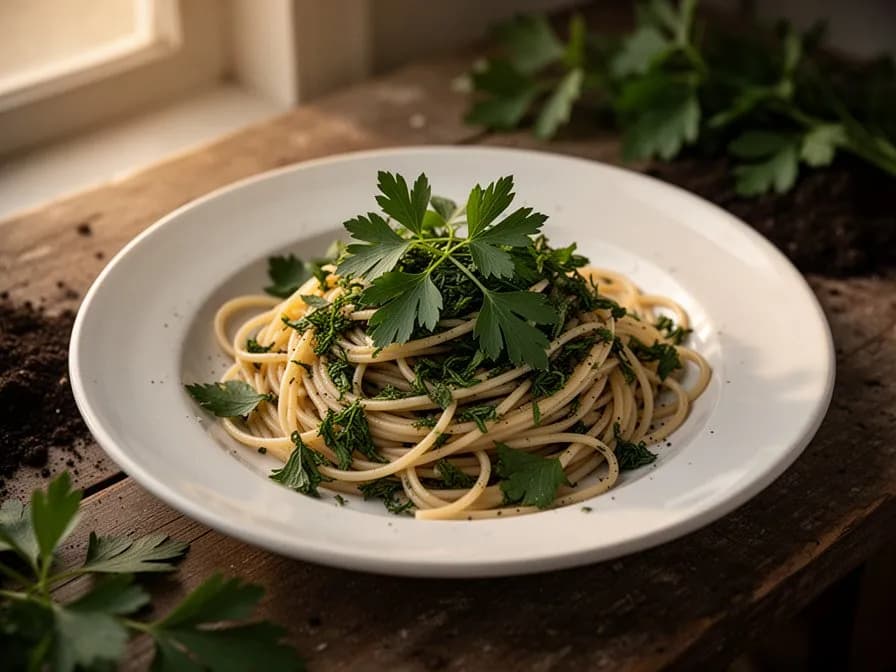
Cremige Kartoffel-Liebstöckel-Suppe
35 Min.Eine samtige, wohltuende Suppe, die den tiefen sellerieartigen Geschmack des Liebstöckels perfekt zur Geltung bringt. Zarte Kartoffeln werden mit Zwiebel und Knoblauch geköchelt, dann mit einer großzügigen Handvoll frischer Liebstöckelblätter zu einer samtigen Suppe püriert, die weit komplexer schmeckt, als ihre einfachen Zutaten vermuten lassen.
9 ZutatenLiebstöckel-Pesto
10 Min.Ein kräftiges, intensiv herzhaftes Pesto, das Liebstöckel anstelle von traditionellem Basilikum verwendet. Die natürliche Umami-Tiefe und sellerieartige Wärme des Krauts ergeben eine vielseitige Soße, die hervorragend zu Pasta, gegrilltem Gemüse oder auf knusprigem Brot schmeckt. Eine kleine Menge reicht wegen des kräftigen Liebstöckelgeschmacks weit.
7 ZutatenLiebstöckelbutter
10 Min.Eine einfache Kräuterbutter mit fein gehacktem Liebstöckel, die wunderbar über gegrilltem Fisch, gedämpftem Gemüse oder frischem Brot schmilzt. Die ätherischen Öle des Krauts durchziehen die Butter mit einem komplexen, herzhaften Selleriegeschmack, der alltägliche Gerichte in etwas Besonderes verwandelt. Rollen lassen sich monatelang einfrieren.
6 ZutatenKulinarische Verwendung
Liebstöckel ist der ultimative Sellerieersatz mit einem komplexeren, konzentrierteren Geschmack. Blätter zu Suppen, Eintöpfen, Fonds und Brühen hinzufügen, wo man normalerweise Sellerie verwenden würde. Die hohlen Stängel können als natürliche Strohhalme für herzhafte Getränke wie Bloody Marys und Tomatensaft verwendet werden. Junge Blätter verleihen Salaten, Kartoffelgerichten und Sahnesoßen Tiefe. Sparsam verwenden wegen des intensiven Geschmacks. Liebstöckel ist in vielen europäischen Küchen traditionell, besonders in der deutschen, österreichischen und englischen Küche. Die Samen würzen Brot, Cracker und Käse.
Was drinsteckt
Gesundheitsvorteile
- Reich an Quercetin und anderen Flavonoid-Antioxidantien, die helfen, chronische Entzündungen zu reduzieren, die Herz-Kreislauf-Gesundheit zu unterstützen und laut Ernährungsforschung vor oxidativem stressbedingtem Zellschaden schützen können.
- Enthält ätherische Öle einschließlich Ligustilid und Butylphthalid, die traditionell zur Unterstützung der Verdauungsgesundheit eingesetzt werden, indem sie die Magensaftsekretion anregen und Blähungen, Völlegefühl und Verdauungsstörungen lindern.
- Liefert bedeutendes Vitamin A (89 % TW pro 100 g frischer Blätter) als Beta-Carotin, unterstützt gesunde Sehkraft, Immunsystemfunktion und Hautzellenerneuerung – weit über dem Vitamin-A-Gehalt von gewöhnlichem Sellerie.
- Wirkt in der traditionellen europäischen Kräutermedizin als natürliches Diuretikum und hilft, eine gesunde Nierenfunktion zu fördern, Wassereinlagerungen zu reduzieren und die Harnwegsgesundheit zu unterstützen, wenn als Tee oder Abkochung konsumiert.
- Gute Vitamin-C-Quelle (20 % TW pro 100 g), die die Kollagensynthese unterstützt, die Eisenaufnahme aus pflanzlichen Lebensmitteln verbessert und zur Immunabwehr beiträgt – besonders wertvoll, wenn großzügig in der Frühlings- und Sommerküche verwendet.
- Enthält Cumarine und andere bioaktive Verbindungen, die auf ihre potenziellen antimikrobiellen und antimykotischen Eigenschaften hin untersucht wurden und zur allgemeinen Immunresistenz beitragen können, wenn Liebstöckel regelmäßig als Teil einer abwechslungsreichen Ernährung konsumiert wird.
Woher Gartenliebstöckel stammt
Liebstöckel (Levisticum officinale) stammt aus den Bergregionen Südeuropas und hat seinen Ursprung höchstwahrscheinlich im Gebiet des heutigen Iran, Afghanistan und des östlichen Mittelmeerraums. Von dort verbreitete er sich über antike Handelsrouten und die gezielte Kultivierung durch griechische und römische Kräuterkundler, die ihn sowohl für kulinarische als auch medizinische Zwecke schätzten, über ganz Europa. Die Römer waren besonders begeistert von Liebstöckel und halfen bei seiner Verbreitung in ihrem gesamten Reich, indem sie ihn in Kräutergärten von Britannien bis Nordafrika pflanzten.
Während des Mittelalters wurde Liebstöckel zu einem der Eckpfeiler-Kräuter europäischer Klostergärten, wo Benediktinermönche ihn neben anderen wichtigen Heil- und Küchenpflanzen kultivierten. Der große Kräuterkundige Karl der Große nahm Liebstöckel in sein Capitulare de villis (um 800 n. Chr.) auf, eine Verordnung, die Pflanzen auflistete, die in kaiserlichen Gärten im gesamten Frankenreich angebaut werden mussten. Diese königliche Empfehlung half, den Platz des Liebstöckels im europäischen Gartenbau für Jahrhunderte zu festigen.
In der Volksheilkunde-Tradition Europas wurde Liebstöckelwurzel als Verdauungstonikum, Mittel bei Harnwegsbeschwerden und zur Behandlung von Halsschmerzen und Atemwegserkrankungen eingesetzt. Im deutschsprachigen Raum bleibt Liebstöckel ein beliebtes Küchenkraut, bekannt als 'Maggikraut', weil sein Geschmack dem der berühmten Maggi-Würze stark ähnelt – obwohl Liebstöckel dem kommerziellen Produkt um viele Jahrhunderte vorausgeht. Die Assoziation des Krauts mit Liebe und Romantik führte zu seiner Aufnahme in traditionelle Liebestränke und Badezubereitungen, besonders im ländlichen England und Mitteleuropa.
Liebstöckel überquerte den Atlantik mit frühen europäischen Siedlern und wurde ab dem 17. Jahrhundert in kolonialen amerikanischen Küchengärten angebaut. Thomas Jefferson soll Liebstöckel in Monticello kultiviert haben. Obwohl er im 19. und 20. Jahrhundert aus dem weitverbreiteten kommerziellen Anbau verdrängt wurde, als Sellerie verfügbarer und erschwinglicher wurde, erlebt Liebstöckel eine Renaissance unter Kräuterliebhabern, Permakultur-Praktikern und Köchen, die seinen intensiven Geschmack, seine mehrjährige Natur und seine bemerkenswerte Selbstständigkeit im Garten schätzen.
Gartenliebstöckel: Schon gewusst?
Faszinierende Fakten über Gartenliebstöckel
Liebstöckel war eines der wichtigsten Kräuter in mittelalterlichen europäischen Klostergärten, wo er sowohl als Heil- als auch als Küchenpflanze angebaut wurde. Mönche verwendeten ihn, um Suppen und Eintöpfe während der Fastenzeit zu würzen, wobei seine intensive herzhafte Tiefe einfache fleischlose Mahlzeiten sättigender machte.
Gartenliebstöckel: Fragen & Antworten
Wann sollte ich Gartenliebstöckel pflanzen?
Was sind gute Begleitpflanzen für Gartenliebstöckel?
In welchen Winterhärtezonen kann Gartenliebstöckel wachsen?
Wie viel Sonne braucht Gartenliebstöckel?
Welchen Abstand sollte ich zwischen Gartenliebstöckel lassen?
Welche Schädlinge und Krankheiten befallen Gartenliebstöckel?
Wie lagere ich Gartenliebstöckel nach der Ernte?
Was sind die besten Gartenliebstöckel-Sorten zum Anbauen?
Welchen Boden braucht Gartenliebstöckel?
Schmeckt Liebstöckel wie Sellerie?
Ist Liebstöckel ein mehrjähriges oder einjähriges Kraut?
Wie verwende ich Liebstöckel beim Kochen?
Warum welkt meine Liebstöckelpflanze oder wird im Sommer gelb?
Kann ich Liebstöckel im Kübel anbauen?
Wie konserviere ich Liebstöckel für den Winter?
Du hast die Theorie gelesen. Jetzt baue sie auf Autopilot an.
Alles, was Gartenliebstöckel knifflig macht — das Timing, die Abstände, die Begleiter, das Erntefenster — genau das übernimmt PlotMyGarden für dich, für jede Pflanze im Garten.
Ein Plan, der dein Wetter kennt
Standort einmal festlegen. Aussaat-, Dünge- und Erntedaten rund um deinen echten letzten Frosttermin und die Live-Vorhersage — kein Raten mehr nach Saattüte.
Aus dem Abschnitt „Pflanzzeit“Beetplaner per Drag & Drop
Beete auf einem Raster gestalten. Jede Pflanze rastet im richtigen Abstand ein, und du siehst die ganze Saison, bevor du einen Cent für Saatgut ausgibst.
Aus dem Abschnitt „Anbau“Begleiter-Konflikte früh erkannt
Über 200 gute und schlechte Kombinationen werden beim Pflanzen live geprüft — so landet ein saisonruinierender Fehler nie in der Erde.
Aus dem Abschnitt „Begleiter“Erinnerungen, nach denen du wirklich handelst
„Gieß die Bohnen.“ „Heute ernten, bevor's umschlägt.“ Pünktlich, konkret und auf deine echten Pflanzen bezogen.
Aus dem Abschnitt „Ernte“Staffel-Aussaat, geplant
Sechs Wochen ernten statt sechs Tage? Die App verteilt deine Aussaaten automatisch und erinnert dich, wenn der nächste Satz fällig ist.
Aus dem Abschnitt „Pflanzzeit“Ein Verlauf, der schlauer wird
Jede protokollierte Ernte bringt der App deinen Garten bei. Der Plan fürs nächste Jahr startet bei dem, was in deinem Boden wirklich funktioniert hat.
Aus dem Abschnitt „Überblick“Pflanze diese neben Gartenliebstöckel
Weitere Küchenkräuter
Bau deine beste Gartenliebstöckel an — und alles drumherum.
Starte heute kostenlos. Lege deine Beete an, setze deine Gartenliebstöckel ein und lass PlotMyGarden Timing, Abstände, Begleiter und Erinnerungen von der Saat bis zum Erntekorb übernehmen.