Pomelo Ruby Red
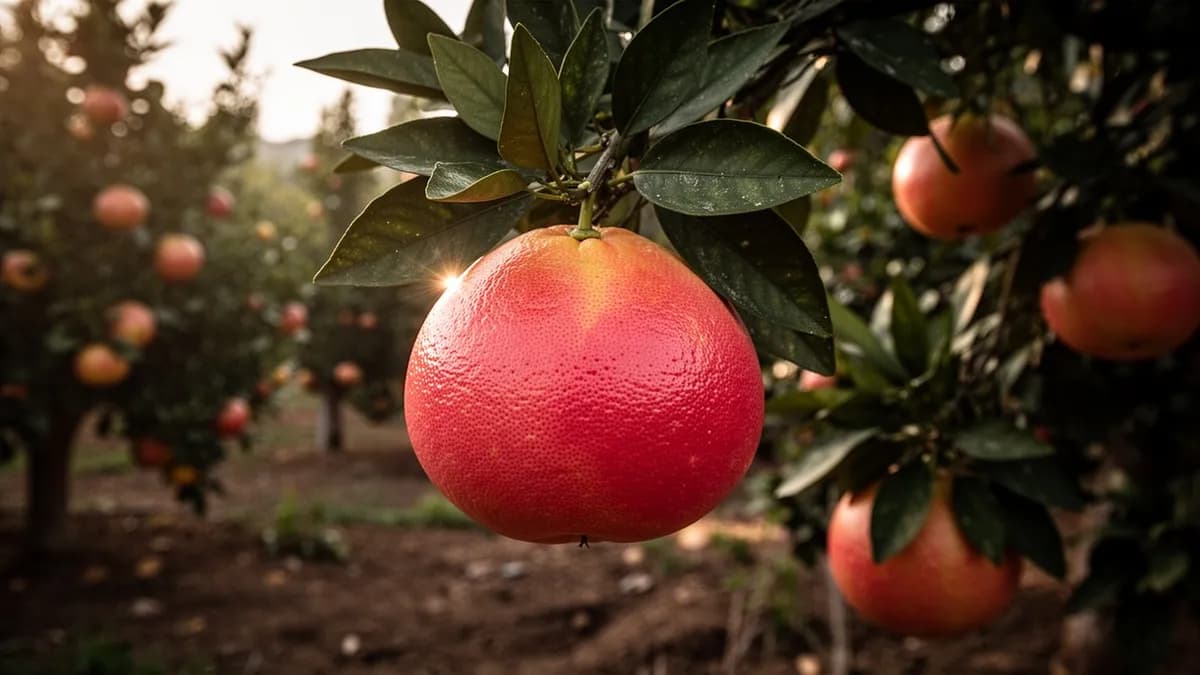
Un cultivar de pomelo muy popular con pulpa de un rojo rosado intenso, notablemente más dulce y menos amarga que las variedades blancas.





En esta páginaResumen
Conoce Pomelo Ruby Red
Un cultivar de pomelo muy popular con pulpa de un rojo rosado intenso, notablemente más dulce y menos amarga que las variedades blancas. El pomelo Ruby Red se descubrió como una mutación de yema en Texas y es la fruta oficial del estado. Su pigmento procede del licopeno, el mismo antioxidante que se encuentra en los tomates.
Cuándo plantar Pomelo Ruby Red
El pomelo Ruby Red se propaga por yema o injerto sobre portainjertos compatibles para conservar la deseable mutación de pulpa roja. Los árboles procedentes de semilla volverán a un fenotipo de pomelo genérico y perderán la pigmentación roja característica. Compre árboles injertados en vivero sobre portainjertos adaptados a su clima: naranja agria para suelos bien drenados, Swingle citrumelo para suelos arenosos con presión de Phytophthora, o mandarina Cleopatra para tolerancia a la sal. Los árboles injertados empiezan a producir fruta en tres a cinco años.
Tu año de Pomelo Ruby Red
Ajustado a Zona 7 · temporada típica · la helada se va hacia el 2 abr y vuelve hacia el 1 nov
Planta Pomelo Ruby Red Mar – May y cosecha Ene – Abr, Nov – Dic. Consulta los métodos de plantación y elige tu clima para adaptar los periodos.
Cómo cultivar Pomelo Ruby Red
El pomelo Ruby Red prospera en las zonas USDA 9 a 12, donde los veranos largos y calurosos desarrollan el mejor dulzor y el color más intenso de la pulpa. Plántelo a pleno sol, preferiblemente con exposición al sur, y deje entre 4.5 y 6 metros entre árboles estándar. Elija un suelo bien drenado y coloque la unión del injerto claramente por encima de la línea del suelo. Riegue a fondo tras la plantación y mantenga una humedad constante durante las dos primeras temporadas de crecimiento.
La característica pigmentación roja se desarrolla mejor con días cálidos y noches frescas durante el periodo de maduración, de noviembre a abril. Los árboles en climas tropicales constantemente cálidos pueden producir una pulpa menos colorida que los cultivados en regiones subtropicales con variación térmica estacional. Ruby Red es vigoroso y forma de manera natural una copa densa y redondeada que requiere aclareos periódicos para favorecer la circulación del aire.
Fertilice de tres a cuatro veces al año con un abono específico para cítricos que contenga nitrógeno, fósforo, potasio y oligoelementos. Añada hierro y manganeso si aparecen hojas amarillas con nervaduras verdes. Pode cada año a finales de primavera para controlar la altura y eliminar la madera muerta del interior. El estrés hídrico durante el desarrollo del fruto produce frutos más pequeños y secos, así que mantenga un riego profundo y constante, especialmente durante el calor del verano.
Para Pomelo Ruby Red un bancal de 120 × 240 cm se queda corto
Cada Pomelo Ruby Red pide 360 cm de margen. El planificador guarda ese marco por ti — cada planta, cada bancal.
Los mejores vecinos de Pomelo Ruby Red
Plante hierbas florales y plantas que atraigan insectos beneficiosos bajo los pomelos Ruby Red. El eneldo, el hinojo y la alyssum dulce atraen avispas parasitoides y sírfidos que se alimentan de las plagas de los cítricos. Cultivos de cobertura fijadores de nitrógeno, como el trébol carmesí y la veza vellosa, mejoran la fertilidad del suelo de forma natural. La hierba limón y la citronela plantadas cerca pueden ayudar a despistar a los insectos plaga que buscan cítricos. Evite plantar junto a otros árboles grandes que compitan por la luz y el agua, ya que el pomelo necesita la máxima exposición solar para lograr buena calidad de fruto.
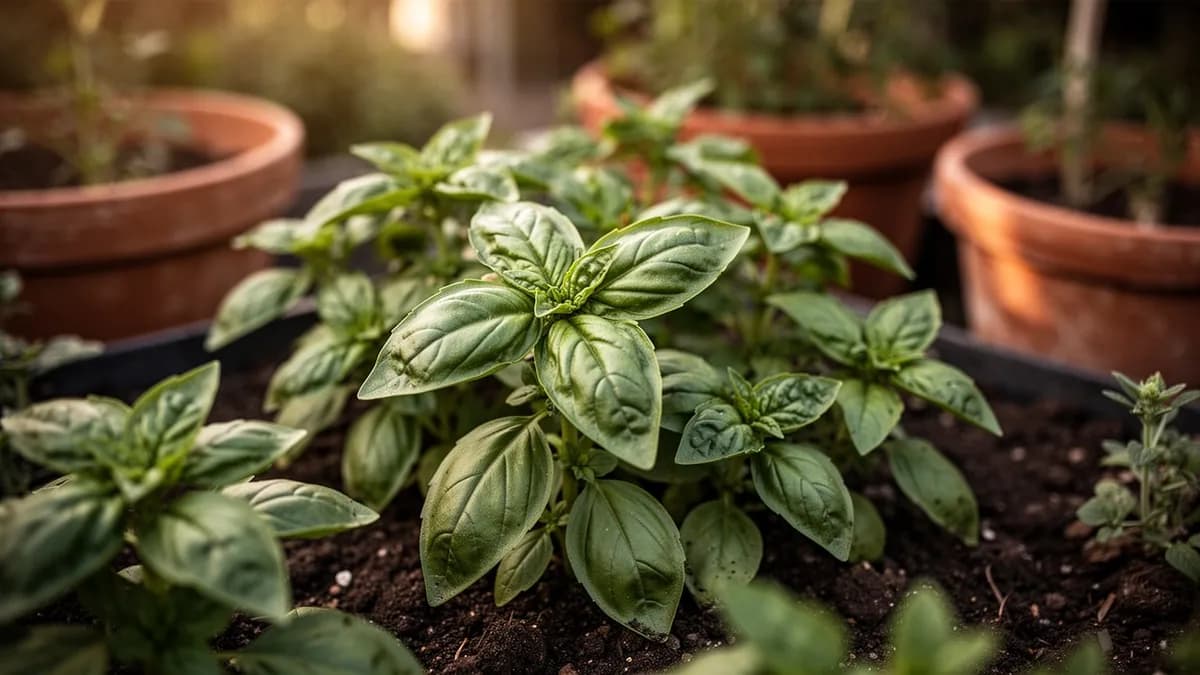
Albahaca va a su lado. Nogal no.
Saber de huerto de siempre, cotejado con la tabla real de Pomelo Ruby Red — prueba cualquier planta que cultives.
Prueba Pomelo Ruby Red en un bancal, aquí mismo
Un bancal real del planificador con Pomelo Ruby Red ya plantado. Toca una planta compañera para colocarla y mira cómo responde la comprobación de vecinos: verde para buenos vecinos, rojo si hay conflicto.


Guías de cultivo relacionadas
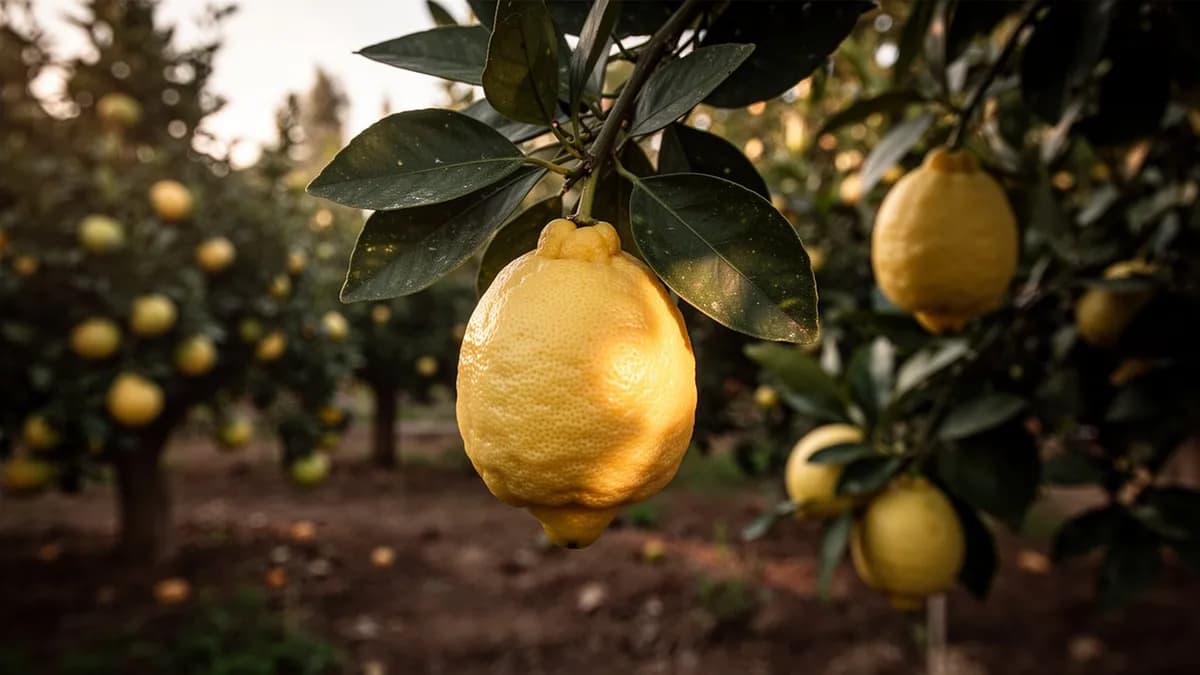
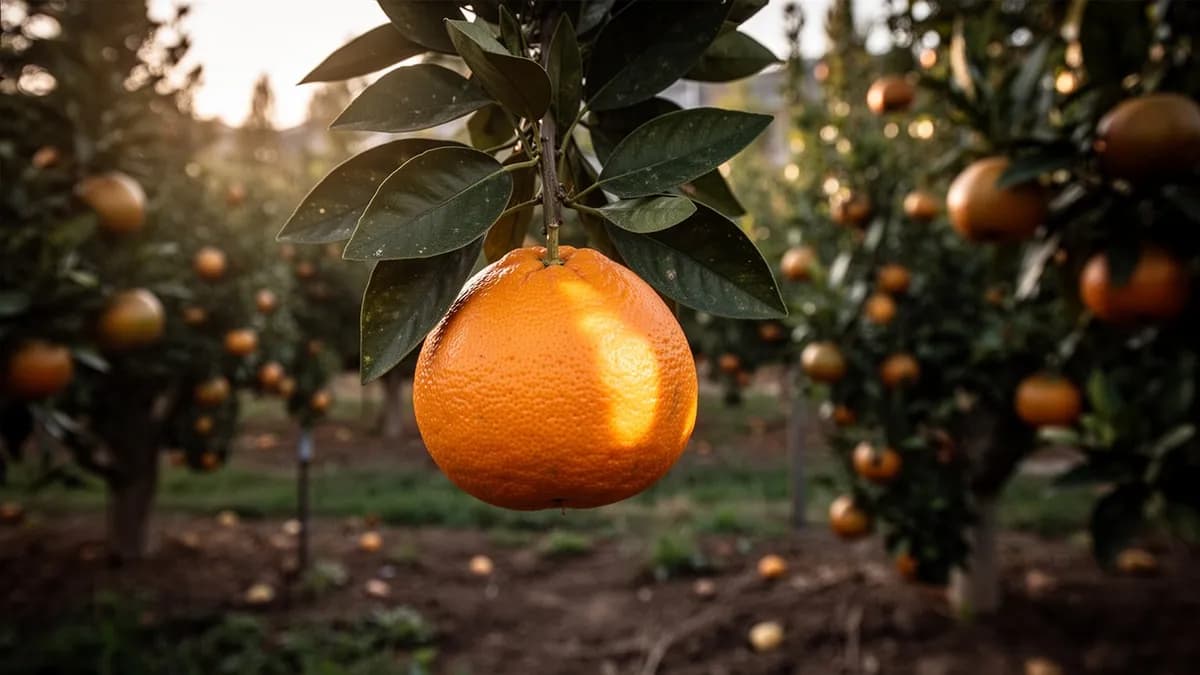
Abónalo bien
El pomelo Ruby Red prefiere un franco arenoso bien drenado con un pH de 6.0 a 7.0. Los árboles son vigorosos y responden bien a una fertilización generosa, por lo que conviene aplicar un fertilizante cítrico rico en nitrógeno cuatro veces al año. Aporte potasio adicional para favorecer el dulzor y el tamaño del fruto. Añada hierro y manganeso quelatados si aparece clorosis internervial. Ruby Red es sensible a la acumulación de sales en el suelo, así que lave periódicamente las sales de riego con riegos profundos. Un acolchado orgánico de unos ocho centímetros de espesor ayuda a mantener la humedad del suelo y la salud microbiana.
Temperatura ideal
Compatibilidad de zonas de rusticidad
De la semilla a la cosecha, etapa por etapa
Establecimiento del injerto
Los pomelos Ruby Red casi siempre se propagan como árboles de vivero injertados, en los que la variedad deseada se une a un portainjerto resistente a enfermedades, como naranja trifoliada o Swingle citrumelo. Durante los primeros 90 días tras la plantación, el árbol concentra su energía en establecer el sistema radicular en la nueva ubicación. Apenas se observa crecimiento aéreo visible, pero la masa de raíces aumenta de forma significativa.
Crecimiento vegetativo
El árbol establecido produce brotes vigorosos de crecimiento nuevo, con hojas anchas y verde oscuro, más grandes que las de la mayoría de otras especies cítricas. En climas cálidos se producen varios brotes de crecimiento al año. La copa desarrolla su forma redondeada y extendida característica, y el tronco se engrosa. Algunas variedades desarrollan pequeñas espinas en las ramas más jóvenes.
Primera floración
Los pomelos Ruby Red injertados suelen producir sus primeras flores 2 a 4 años después de la plantación, aunque en climas marginales pueden tardar más. Las flores blancas, intensamente fragantes, aparecen a finales del invierno y en primavera, emergiendo en racimos en las puntas de los nuevos brotes. El pomelo es autofértil, por lo que un solo árbol puede cuajar fruto sin necesidad de otro árbol para la polinización cruzada.
Desarrollo del fruto y caída de junio
Tras la polinización, el árbol cuaja una abundancia de pequeños frutos verdes. Un aclareo natural conocido como caída de junio ocurre unos meses después, cuando el árbol desprende el exceso de fruto que no puede llevar a madurez. El fruto restante comienza el largo proceso de maduración, engrosando lentamente y desarrollando su forma característica de aplanada a redondeada.
Desarrollo del color
A medida que el fruto se acerca a la madurez, la piel externa pasa de verde a amarillo pálido con un ligero rubor. La pulpa interna desarrolla al mismo tiempo su coloración rubí rosada característica por acumulación de licopeno, un proceso favorecido por días cálidos y noches frescas. En climas tropicales con temperaturas uniformemente cálidas, la piel puede permanecer parcialmente verde incluso cuando el fruto está completamente maduro.
Maduración y cosecha prolongada
Los pomelos Ruby Red maduran aproximadamente 9 a 12 meses después de la floración, normalmente desde finales de otoño hasta el invierno y comienzos de la primavera, según el clima. Una de las grandes ventajas del pomelo es que el fruto maduro puede permanecer en el árbol varios meses sin deteriorarse, de modo que el árbol actúa como un almacén vivo y permite cosechar según se necesite.
Riegue a fondo el árbol recién plantado dos o tres veces por semana durante el primer mes y después reduzca a un riego profundo semanal. No abone durante las primeras 6 a 8 semanas para evitar quemar las raíces jóvenes. Entute el árbol si el lugar de plantación está expuesto al viento.
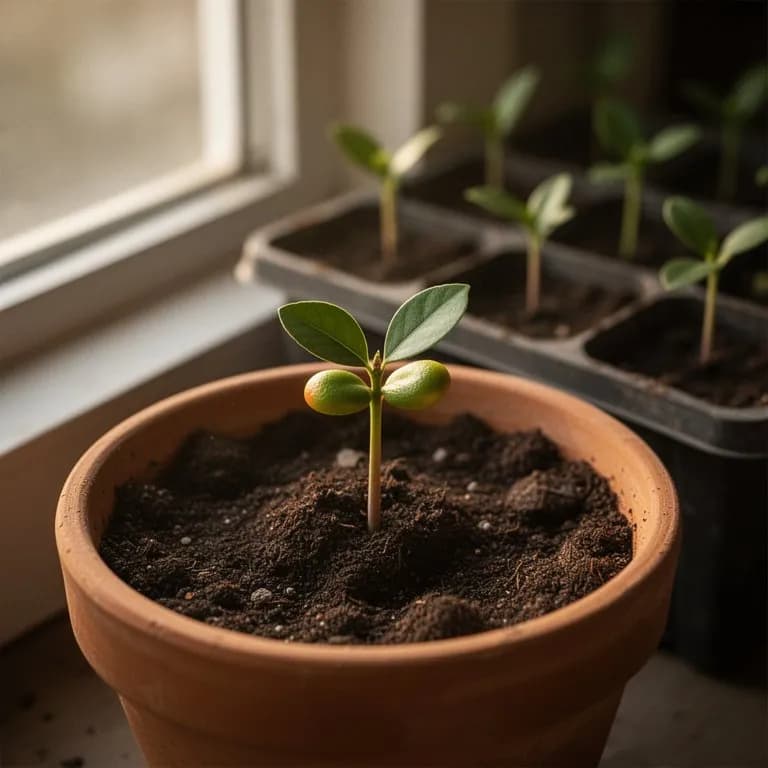
Cuidar Pomelo Ruby Red mes a mes
Qué hacer cada mes para tu Pomelo Ruby Red
Octubre
Mes actualEl fruto entra en sus últimas fases de desarrollo y empieza a colorearse al bajar las temperaturas. En climas fríos, prepare el material de protección contra heladas. Los árboles en contenedor deben trasladarse a un lugar resguardado cuando las temperaturas nocturnas se acerquen a 5 °C.
Ten claro qué hacer en tu huerto, cada mes
Un correo al empezar cada mes: qué sembrar, plantar y hacer ahora mismo — para tu Pomelo Ruby Red y todo lo que crece alrededor. Más un breve curso inicial para esquivar los errores clásicos.
- Qué hacer ahora mismo
- Ajustado a tu temporada
- Curso inicial incluido
Cosechar Pomelo Ruby Red
El pomelo Ruby Red madura de noviembre a abril, y su dulzor mejora cuanto más tiempo permanezca el fruto en el árbol durante el invierno. Compruebe la madurez probándolo, no confiándose del color exterior, que puede ser engañosamente pálido. El fruto debe sentirse pesado para su tamaño y tener la piel lisa y firme. Córtelo del árbol con tijeras de podar. Los pomelos que permanecen en el árbol hasta bien entrada la primavera pueden empezar a secarse por dentro. En climas muy cálidos, el fruto maduro puede volver a mostrar verde externamente sin que ello afecte a su calidad interna.
se supone que plantas al comenzar el periodo — indica tu fecha real
Cosecha Pomelo Ruby Red a tiempo y la planta sigue produciendo.
Almacenamiento y conservación
El pomelo Ruby Red se conserva excepcionalmente bien gracias a su piel gruesa: dura de dos a tres semanas a temperatura ambiente y hasta dos meses refrigerado. El zumo mantiene su precioso color rosa al congelarse y se conserva durante seis meses. Los gajos pueden conservarse en almíbar ligero para usarlos todo el año. La piel confitada de Ruby Red muestra maravillosamente su color rosado. El pomelo puede gratinarse con azúcar moreno para un postre templado. Las rodajas deshidratadas son adornos coloridos para cócteles.
Qué falla — y cómo solucionarlo
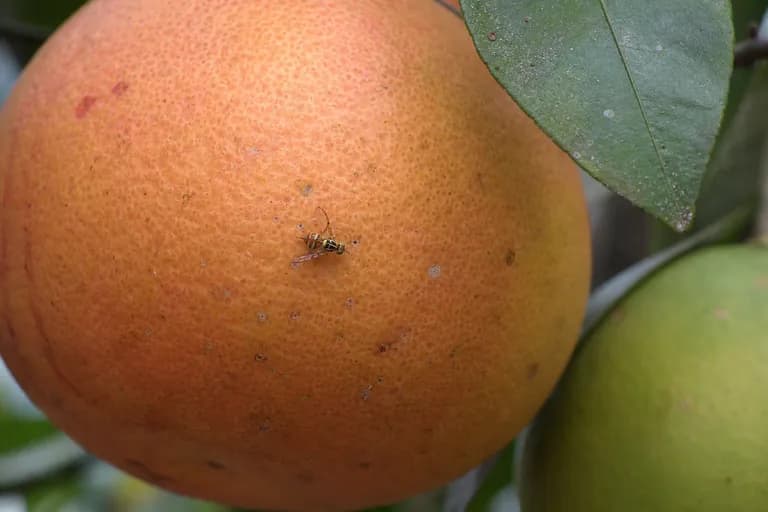
Mosca de la fruta del Caribe
PlagaPequeñas marcas de picadura en la piel del fruto donde las hembras ponen los huevos. Las larvas se alimentan dentro del fruto, provocando que caiga prematuramente y se pudra de dentro hacia fuera.
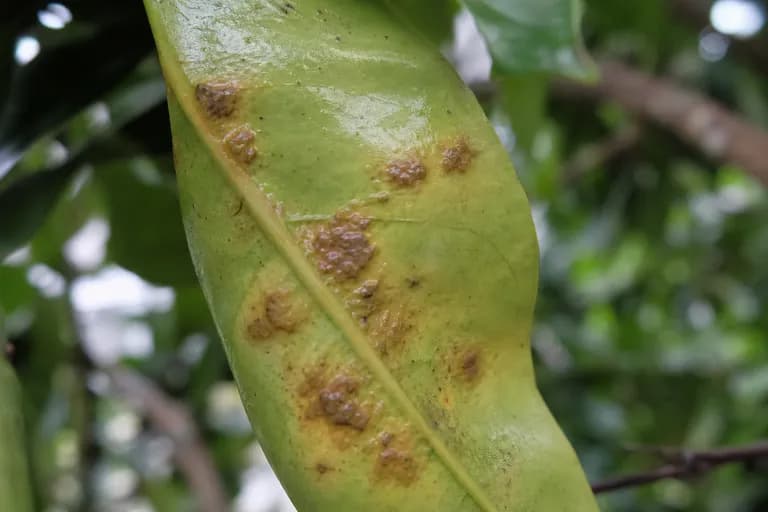
Mancha grasienta
EnfermedadAmpollas amarillentas y marrones, de aspecto graso, en el envés de las hojas, que se vuelven oscuras y elevadas. Provoca caída prematura de hojas, reduciendo el vigor del árbol y la calidad del fruto.
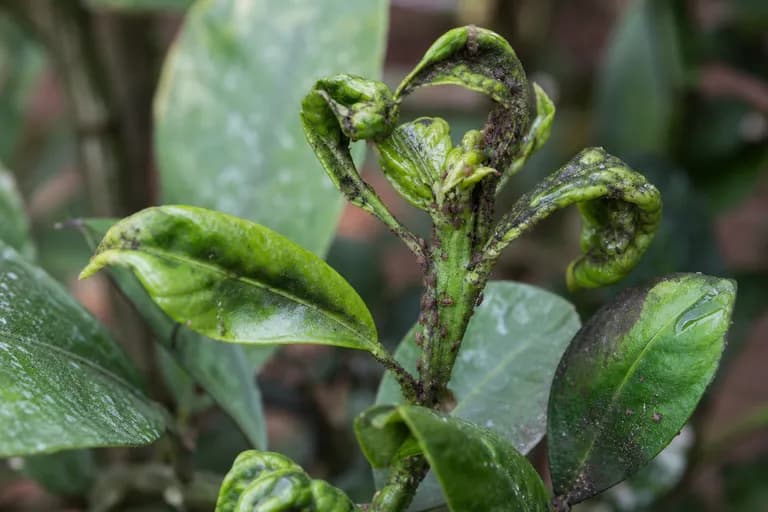
Pulgón marrón de los cítricos
PlagaColonias de pulgones marrones oscuros en los brotes tiernos, que causan rizado y deformación de las hojas. Producen abundante melaza, que favorece la negrilla. Pueden transmitir el virus de la tristeza de los cítricos.
Solución de problemas comunes
La falta de calor es el principal obstáculo para cultivar pomelos Ruby Red dulces, ya que el fruto necesita calor sostenido para convertir los ácidos en azúcares. Los árboles plantados en zonas marginales producen frutos comestibles, pero bastante más agrios que los de climas cálidos óptimos. El daño por viento en los frutos de piel fina también es una preocupación en lugares expuestos. Como todos los pomelos, Ruby Red contiene furanocumarinas que interactúan con muchos medicamentos. La quemadura solar en frutos expuestos puede prevenirse manteniendo una copa suficientemente densa.
Consejos de cultivo
- Compre un árbol Ruby Red injertado en un vivero cítrico de confianza en lugar de intentar cultivarlo desde semilla. Los pomelos obtenidos de semilla pueden tardar 7 a 10 años en fructificar y el fruto resultante no será la verdadera variedad Ruby Red. Los árboles injertados suelen fructificar en 3 a 5 años y ofrecen las características garantizadas de la variedad nombrada.
- Elija un lugar de plantación que reciba al menos 8 horas de sol directo al día. El pomelo es uno de los cítricos con mayores necesidades de calor, y la falta de luz solar es la principal razón por la que los árboles domésticos producen frutos de mala calidad o demasiado ácidos. Una pared orientada al sur o al suroeste que refleje calor adicional es ideal en climas marginales.
- Los pomelos necesitan, por encima de todo, un drenaje excelente. Plántelos sobre un pequeño caballón si su suelo es pesado y añada abundante arena gruesa y compost maduro antes de plantar. Las raíces encharcadas son la principal causa de muerte de los pomelos en los huertos domésticos.
- En climas donde las temperaturas invernales ocasionalmente bajan de cero, plante el pomelo junto a una pared de mampostería orientada al sur. La masa térmica del ladrillo o la piedra absorbe el calor diurno y lo libera por la noche, creando un microclima que puede mantener varios grados más de temperatura que el suelo abierto y ampliar el rango de cultivo exterior de los cítricos.
- Riegue en profundidad y con poca frecuencia en lugar de hacerlo poco a poco y con mucha frecuencia. Los pomelos desarrollan sistemas radiculares profundos y extensos cuando se riegan correctamente, lo que los hace más resistentes a la sequía y al calor. Un riego superficial frecuente crea raíces poco profundas, vulnerables al estrés térmico y a la sequía.
- Aplique un fertilizante específico para cítricos que contenga nitrógeno, fósforo, potasio y micronutrientes esenciales, incluidos hierro, zinc, manganeso y cobre. Los pomelos son muy exigentes y suelen desarrollar carencias de micronutrientes, especialmente clorosis férrica en suelos alcalinos. Acidifique los suelos de pH alto con aplicaciones de azufre para mejorar la disponibilidad de nutrientes.
- No pode en exceso salvo que sea absolutamente necesario. Los pomelos producen fruto en la copa exterior, y una poda excesiva elimina la madera fructífera y reduce la producción. Limite la poda a retirar ramas muertas, dañadas o cruzadas, y a eliminar los brotes que aparezcan por debajo de la unión del injerto.
- Sea consciente de las bien documentadas interacciones del pomelo con muchos medicamentos con receta. Los compuestos del pomelo inhiben la enzima hepática CYP3A4, que procesa numerosos fármacos, incluidos estatinas, bloqueadores de los canales de calcio e inmunosupresores. Si alguien en casa toma medicación, consulte con un farmacéutico antes de consumir con regularidad pomelo cultivado en casa.
- En regiones con veranos calurosos y secos, aplique a mediados del verano una pulverización de caolín blanco o de color claro sobre la superficie del fruto para reflejar el calor y evitar quemaduras solares. El pomelo quemado por el sol desarrolla manchas descoloridas y coriáceas en la piel, lo que reduce su valor comercial y acorta su vida útil.
- Deje que el pomelo madure completamente en el árbol en lugar de recogerlo pronto y madurarlo en interior. A diferencia de muchas frutas, el pomelo no sigue madurando ni gana dulzor después de la cosecha. El fruto recogido antes de estar completamente maduro siempre será más ácido y menos dulce que el madurado en el árbol, independientemente del tiempo que pase a temperatura ambiente.
Cultiva tu mejor Pomelo Ruby Red — y todo lo que la rodea.
Empieza un plan gratis hoy. Diseña tus bancales, coloca tu Pomelo Ruby Red y deja que PlotMyGarden gestione el momento, el espaciado, las asociaciones y los recordatorios de la semilla a la cesta.
Elige tu Pomelo Ruby Red
Rio Red
Una mutación mejorada de Ruby Red, con un color de pulpa aún más rojo y un rubor más intenso en la piel. Presenta mejor resistencia a enfermedades y una producción más constante que la original.
Star Ruby
El pomelo más intensamente pigmentado que existe, con pulpa casi burdeos. De piel fina y muy jugoso. Más sensible al frío que Ruby Red.
Ray Ruby
Una plántula hermana de Rio Red, con excelente color rojo en la pulpa y sabor dulce. Buenas cualidades comerciales y producción fiable.
Henderson
Una mutación de Ruby Red con buena coloración roja y mejor tolerancia al frío. Muy popular en el Valle del Río Grande de Texas por su rendimiento fiable.
Los pomelos Ruby Red ecológicos suelen venderse en supermercados a 1.50-3.00 $ por unidad, y un solo árbol maduro puede producir entre 200 y 500 frutos por temporada. Incluso en el extremo conservador, la cosecha anual de un árbol productivo supone un ahorro de 300-750 $ en la compra de fruta. A lo largo de la vida productiva del árbol, de más de 40 años, y teniendo en cuenta unos costes de cuidado moderados, un pomelo Ruby Red cultivado en casa representa uno de los árboles frutales con mayor retorno de inversión que un aficionado puede plantar en un clima adecuado.
Recetas rápidas
Pomelo Ruby Red gratinado con miel y cardamomo
8 minutosUna preparación sencilla y elegante que transforma el pomelo Ruby Red fresco en una delicia templada y caramelizada. El gratinado concentra los azúcares naturales del fruto, crea una ligera costra caramelizada y suaviza la acidez hasta convertirla en un dulzor rico y complejo. Sírvalo como pieza central del desayuno o como postre ligero.
6 ingredientes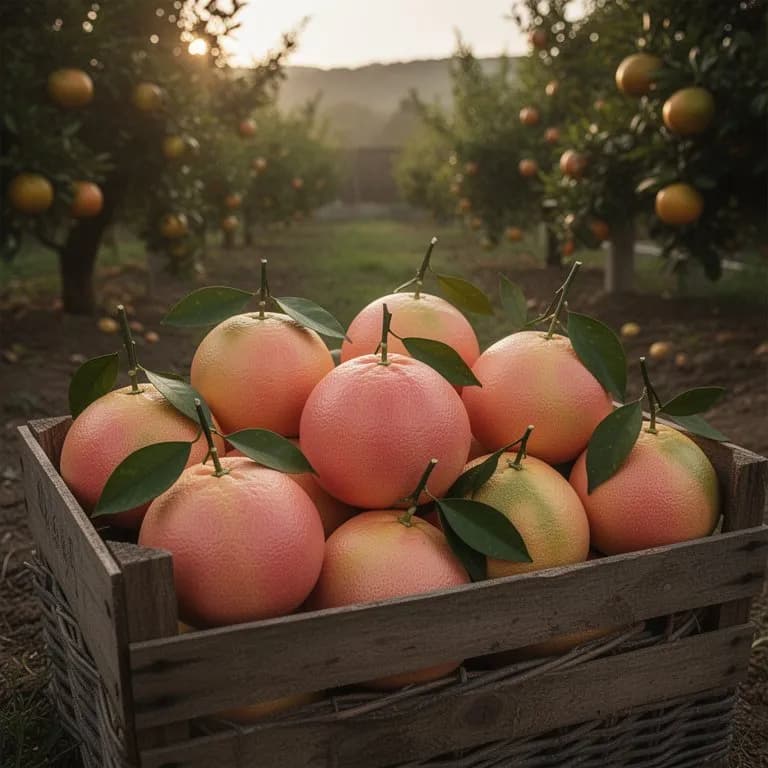
Ensalada de pomelo Ruby Red y aguacate
15 minutosUna ensalada vibrante, digna de restaurante, que combina los gajos dulces y ácidos de pomelo Ruby Red fresco con aguacate mantecoso, rúcula picante y una vinagreta ligera de miel y cítricos. El contraste de sabores y texturas la convierte en uno de los usos más satisfactorios del pomelo recién cosechado.
9 ingredientes
Spritzer de zumo de pomelo Ruby Red recién exprimido
5 minutosUna bebida refrescante y naturalmente hermosa que pone en valor el color sorprendente y el sabor complejo del pomelo Ruby Red recién exprimido. Su tono rosa claro y el equilibrio entre dulzor y acidez la convierten en una alternativa muy superior a cualquier bebida de pomelo embotellada.
5 ingredientesUsos culinarios
El pomelo Ruby Red es más dulce y menos amargo que las variedades blancas, por lo que resulta agradable partido por la mitad en el desayuno sin añadir azúcar. Su llamativo zumo rosado es ideal para cócteles, especialmente la clásica Paloma y el Sea Breeze. Los gajos aportan color a ensaladas con aguacate, jícama y menta. Gratinado con miel y canela, Ruby Red se convierte en un postre templado elegante. La ralladura aporta un sabor cítrico con tono rosado a repostería y glaseados.
Qué contiene
Beneficios para la salud
- Rico en licopeno, el antioxidante carotenoide que da al Ruby Red su color distintivo y que en estudios poblacionales se ha relacionado con un menor riesgo de cáncer de próstata, enfermedad cardiovascular y degeneración macular asociada a la edad
- Su elevado contenido de vitamina C, con más del 50% del valor diario por mitad de fruta, apoya la función del sistema inmunitario, favorece la síntesis de colágeno para la salud de la piel y las articulaciones, y mejora la absorción del hierro no hemo procedente de alimentos vegetales
- Contiene naringenina y naringina, flavonoides específicos del pomelo que en investigación clínica han demostrado mejorar la sensibilidad a la insulina, reducir marcadores de inflamación y apoyar un equilibrio saludable del colesterol
- Su alto contenido natural de agua (aprox. 88%) y su baja densidad calórica (42 calorías por 100 g) hacen del pomelo Ruby Red un alimento muy saciante para el control del peso y la hidratación
- Aporta potasio y magnesio, minerales que favorecen una regulación saludable de la presión arterial y ayudan a contrarrestar los efectos elevadores de sodio en la dieta
- La fibra soluble de pectina presente en los gajos de pomelo favorece la salud del microbioma intestinal, promueve la saciedad y puede ayudar a moderar los picos de glucosa posprandiales cuando se consume como parte de una comida equilibrada
De dónde viene Pomelo Ruby Red
El pomelo (Citrus × paradisi) es un híbrido cítrico de origen sorprendentemente reciente en comparación con la mayoría de las frutas cultivadas. Surgió de forma espontánea en Barbados a comienzos del siglo XVIII, probablemente como cruce natural entre la naranja dulce (Citrus sinensis) traída por exploradores españoles y el pomelo o pummelo (Citrus maxima), un gran cítrico de piel gruesa originario del sudeste asiático que había sido introducido en el Caribe. La primera descripción escrita del pomelo apareció en 1750, cuando el clérigo galés Griffith Hughes lo llamó el 'fruto prohibido' de Barbados en su historia natural de la isla. A comienzos del siglo XIX, el cultivo del pomelo se había extendido a Florida y el Caribe, aunque la fruta se consideraba más una rareza que un cultivo comercial. El cultivo serio en Estados Unidos comenzó a finales del siglo XIX en Florida, donde el clima cálido y húmedo resultó ideal para la producción de pomelo. La industria texana del pomelo se desarrolló más tarde, concentrada en el irrigado Valle del Río Grande, donde la combinación de días cálidos, noches frescas y suelos ricos en minerales produjo frutos de dulzor excepcional. La variedad Ruby Red que hoy domina la producción mundial fue descubierta en 1929 por A. E. Henninger en la finca Massie, cerca de Weslaco, Texas, como una mutación espontánea de yema que apareció en un pomelo rosado común. Al reconocer su potencial comercial, Henninger propagó la mutación y obtuvo la patente vegetal estadounidense n.º 1 en 1931, la primera patente vegetal jamás emitida bajo la recién aprobada Ley de Patentes Vegetales. El color de pulpa más intenso, su perfil de sabor más dulce y el atractivo rubor de la piel hicieron que fuera un éxito comercial inmediato, y pronto sustituyó a las variedades blancas en toda la industria. Mutaciones posteriores de Ruby Red dieron lugar a variantes aún más pigmentadas, como Star Ruby y Rio Red, que siguen desarrollándose. Hoy en día, el pomelo se produce comercialmente en Estados Unidos, Sudáfrica, Israel, China, México y en toda la cuenca mediterránea, y el Ruby Red de Texas sigue siendo el referente con el que se comparan todas las demás variedades.
Pomelo Ruby Red: ¿sabías que?
Datos fascinantes sobre Pomelo Ruby Red
El pomelo Ruby Red se descubrió en 1929 como una mutación espontánea de yema en un árbol de pomelo rosado que crecía en la finca Massie, en Weslaco, Texas. Fue el primer árbol frutal patentado en Estados Unidos y recibió la patente vegetal estadounidense n.º 1 en 1931.
Pomelo Ruby Red: preguntas frecuentes
¿Cuándo debo plantar Pomelo Ruby Red?
¿Cuáles son buenas plantas acompañantes para Pomelo Ruby Red?
¿En qué zonas de rusticidad puede crecer Pomelo Ruby Red?
¿Cuánto sol necesita Pomelo Ruby Red?
¿A qué distancia debo espaciar Pomelo Ruby Red?
¿Qué plagas y enfermedades afectan a Pomelo Ruby Red?
¿Cómo almaceno Pomelo Ruby Red después de la cosecha?
¿Cuáles son las mejores variedades de Pomelo Ruby Red para cultivar?
¿Qué suelo necesita Pomelo Ruby Red?
¿Cómo sé cuándo el pomelo Ruby Red está lo bastante maduro para recogerlo?
¿Por qué la pulpa de mi pomelo Ruby Red es pálida o blanca en lugar de rosada?
¿Puedo cultivar pomelo Ruby Red en un contenedor?
¿Mi pomelo necesita otro árbol para polinizarse?
¿Qué hace que mi pomelo caiga prematuramente?
Mi pomelo tiene una piel gruesa y esponjosa y poco zumo, ¿qué salió mal?
Acabas de leer la teoría. Ahora cultívala en piloto automático.
Todo lo que hace que Pomelo Ruby Red sea delicado — el momento, el espaciado, las asociaciones, la ventana de cosecha — es justo lo que PlotMyGarden resuelve por ti, para cada planta de tu huerto.
Un plan que conoce tu clima
Indica tu ubicación una vez. Recibe fechas de siembra, abonado y cosecha basadas en tu última helada real y el pronóstico en vivo — sin adivinar con un sobre genérico.
De la sección “Cuándo plantar”Planificador de bancales de arrastrar y soltar
Diseña bancales sobre una cuadrícula. Cada planta encaja con su espaciado correcto y ves toda la temporada antes de gastar un céntimo en semillas.
De la sección “Cultivo”Conflictos de asociación, detectados a tiempo
Más de 200 buenas y malas combinaciones comprobadas en vivo mientras plantas — para que un error que arruine la temporada nunca llegue a la tierra.
De la sección “Asociaciones”Recordatorios que sí vas a seguir
“Riega las judías.” “Recoge hoy antes de que se pase.” Oportunos, concretos y ligados a las plantas que de verdad cultivas.
De la sección “Cosecha”Escalonado, programado
¿Quieres cosechar seis semanas en vez de seis días? Reparte tus siembras automáticamente y te avisa cuando toca el siguiente lote.
De la sección “Cuándo plantar”Un registro que se vuelve más listo
Cada cosecha que registras le enseña tu huerto. El plan del año que viene parte de lo que de verdad funcionó en tu suelo, no en un manual.
De la sección “Resumen”Planta estos junto a Pomelo Ruby Red
Más Cítricos
Mantén Pomelo Ruby Red lejos de estos
Cultiva tu mejor Pomelo Ruby Red — y todo lo que la rodea.
Empieza un plan gratis hoy. Diseña tus bancales, coloca tu Pomelo Ruby Red y deja que PlotMyGarden gestione el momento, el espaciado, las asociaciones y los recordatorios de la semilla a la cesta.