Pomelo
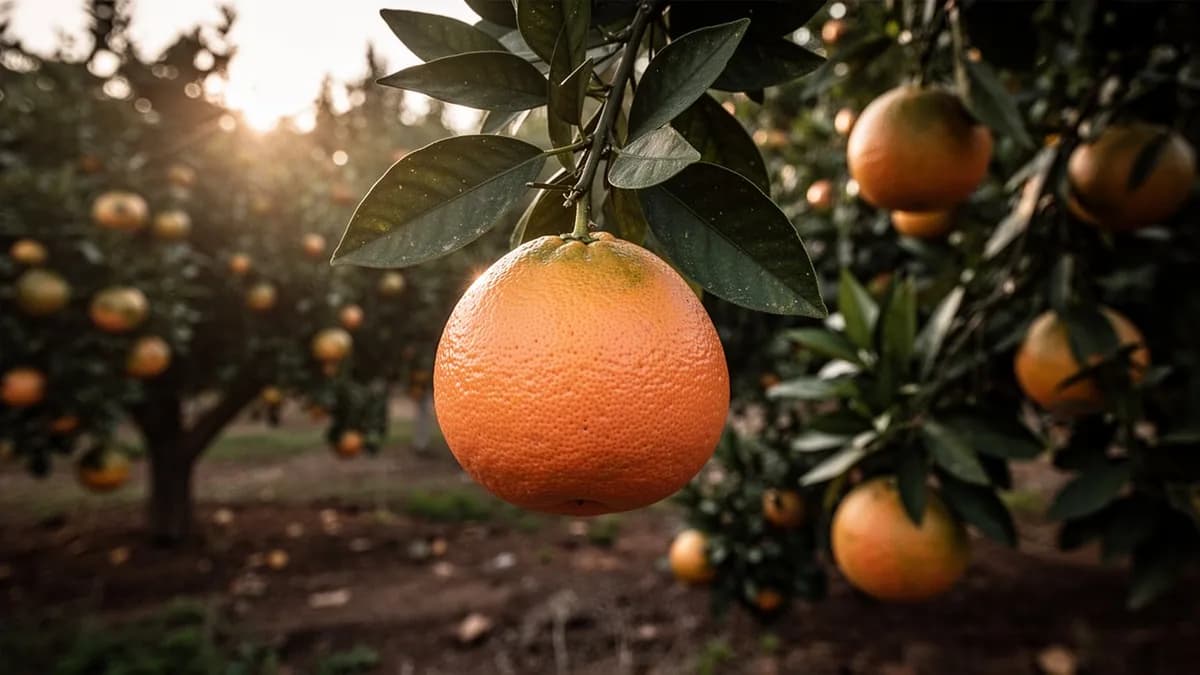
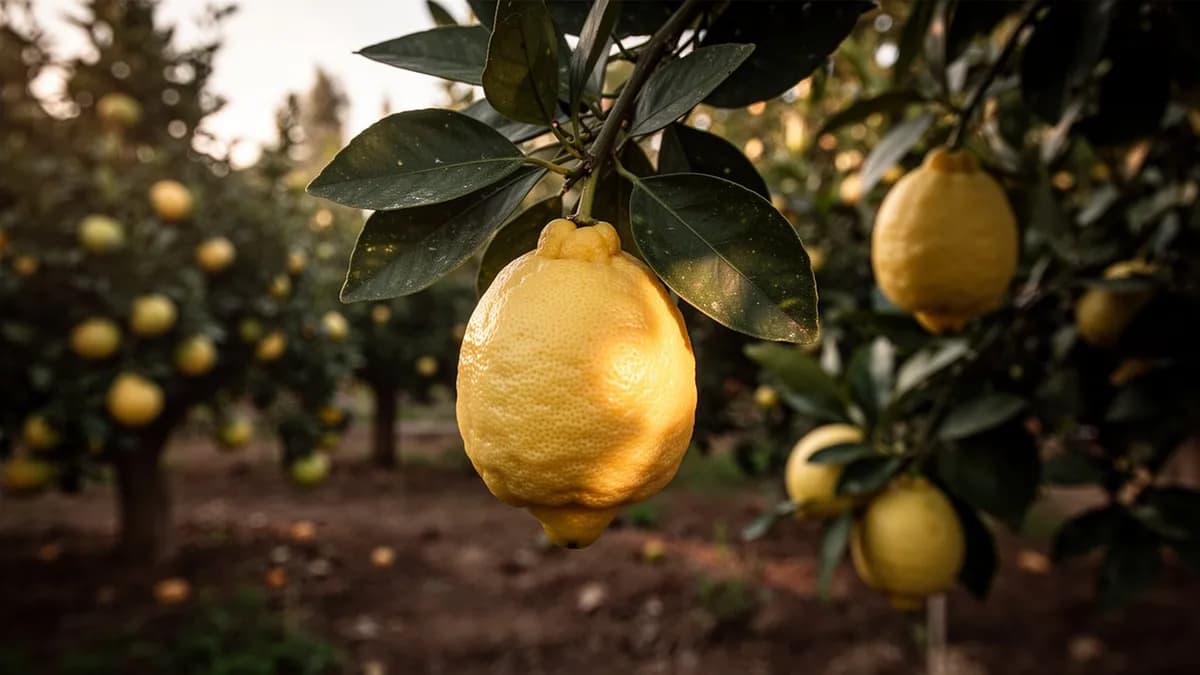
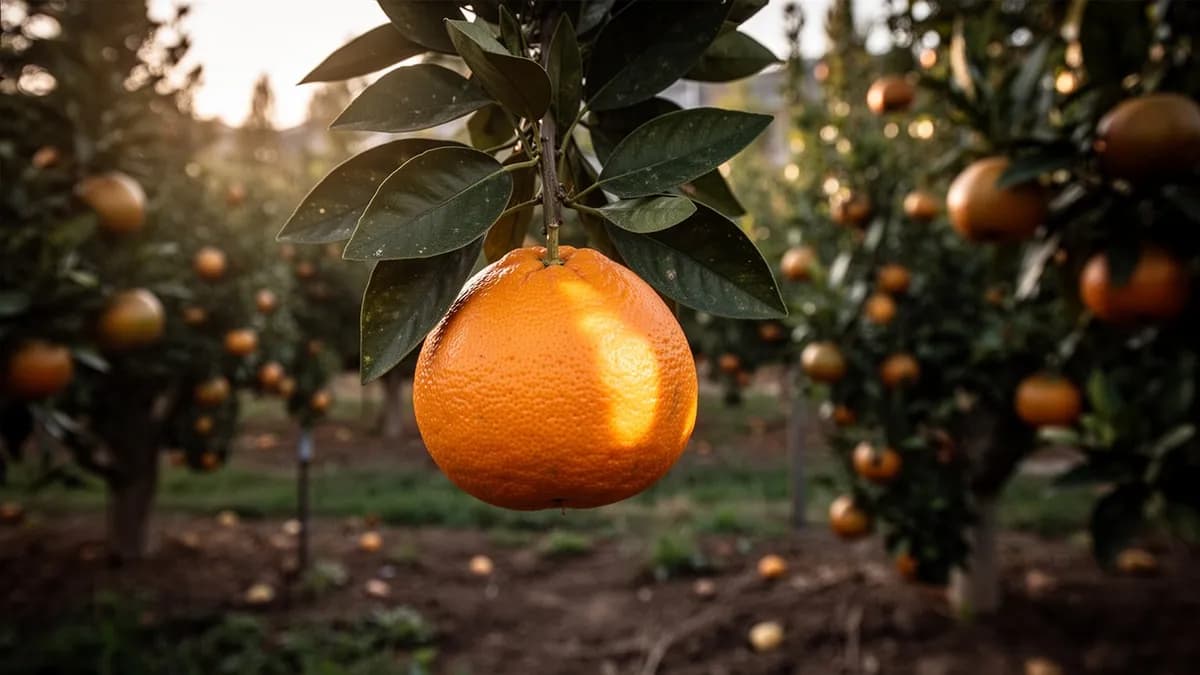
Un gran árbol cítrico que produce frutos agridulces que crecen en racimos como uvas, de ahí su nombre.





En esta páginaResumen
Conoce Pomelo
Un gran árbol cítrico que produce frutos agridulces que crecen en racimos como uvas, de ahí su nombre. El pomelo necesita más calor que cualquier otro cítrico común para desarrollar un sabor dulce, y requiere veranos largos y calurosos para obtener los mejores resultados. Ten en cuenta que el pomelo interactúa con muchos medicamentos con receta, así que consulta a tu médico antes de consumirlo.
Cuándo plantar Pomelo
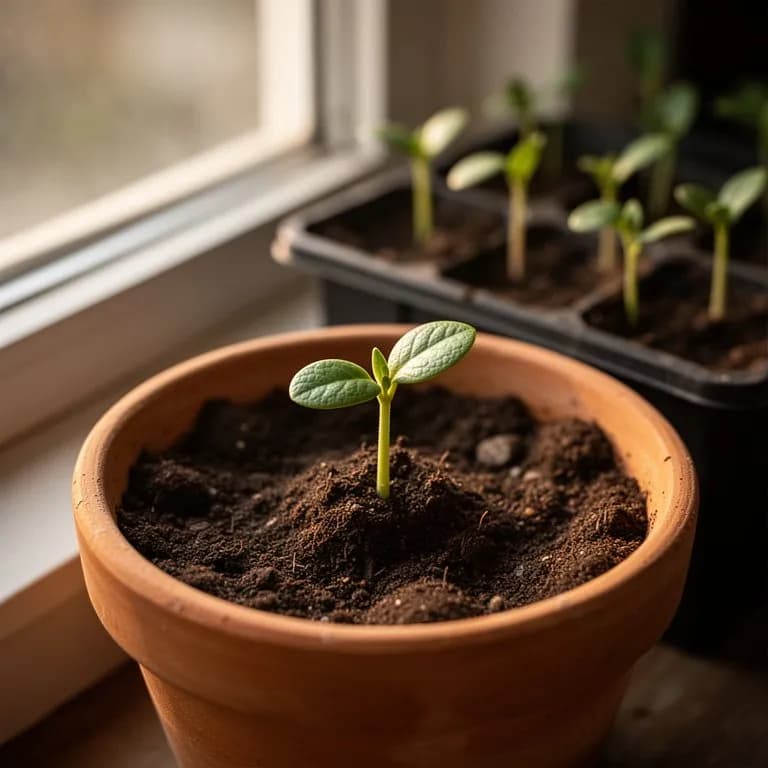
El pomelo puede cultivarse a partir de semilla, y las plántulas suelen producir frutos similares a los de la planta madre gracias a la embrionía nucelar. Sin embargo, los árboles nacidos de semilla pueden tardar entre ocho y quince años en dar fruto y crecer mucho. Para jardines domésticos, compra árboles injertados sobre portainjertos enanizantes como Flying Dragon para mantener un tamaño manejable. Los portainjertos estándar incluyen Naranja Agria y Mandarina Cleopatra. Para cultivarlo desde semilla, lava las semillas de un fruto maduro, plántalas a 2.5 cm de profundidad en un sustrato húmedo y mantén una temperatura de 24 a 29 °C. La germinación ocurre en dos a cuatro semanas.
Tu año de Pomelo
Ajustado a Zona 7 · temporada típica · la helada se va hacia el 2 abr y vuelve hacia el 1 nov
Planta Pomelo Mar – May y cosecha Ene – May, Nov – Dic. Consulta los métodos de plantación y elige tu clima para adaptar los periodos.
Cómo cultivar Pomelo
Los pomelos necesitan más calor que cualquier otro cítrico común y prosperan en las zonas USDA 9 a 12 con veranos largos y calurosos para desarrollar la dulzura adecuada. Planta árboles injertados a pleno sol con al menos diez horas de luz directa al día. Deja entre 4.5 y 6 metros entre árboles estándar, ya que el pomelo crece hasta convertirse en un árbol grande y vigoroso que puede alcanzar entre 6 y 9 metros de altura si no se poda. Coloca la unión del injerto tres centímetros por encima del nivel del suelo.
Riega profunda y constantemente, aportando entre 2.5 y 5 cm de agua por semana. Los pomelos son árboles muy exigentes en nutrientes y necesitan más alimento que la mayoría de los cítricos. El fruto permanece en el árbol durante meses y a menudo mejora su dulzor durante el invierno y hasta la primavera, así que la paciencia se recompensa con mejor sabor. Los árboles en zonas más frescas producen frutos más ácidos y menos dulces.
Abona cuatro veces al año con una fórmula cítrica alta en nitrógeno en enero, abril, junio y septiembre. Los pomelos responden bien a pulverizaciones foliares de micronutrientes que contengan zinc, manganeso e hierro. Pode para controlar la altura y mejorar la circulación del aire, eliminando los chupones vigorosos y los brotes internos. Son sensibles a las heladas y necesitan protección cuando la temperatura baja de -2 °C, especialmente los árboles jóvenes durante sus primeros cinco años.
Para Pomelo un bancal de 120 × 240 cm se queda corto
Cada Pomelo pide 360 cm de margen. El planificador guarda ese marco por ti — cada planta, cada bancal.
Los mejores vecinos de Pomelo
Planta cultivos de cobertura fijadores de nitrógeno como trébol carmesí, ballico anual o habas bajo los pomelos. Hierbas floridas como el eneldo, el hinojo y la milenrama atraen insectos depredadores beneficiosos que ayudan a controlar las plagas de los cítricos. Los capuchinos sirven como cultivo trampa para los pulgones. La consuelda actúa como acumuladora dinámica de nutrientes cuando se cultiva en la línea de goteo. Evita plantar pomelos cerca de nogales por la toxicidad de la juglona o junto a gramíneas competidoras que roban agua y nutrientes al sistema radicular superficial.
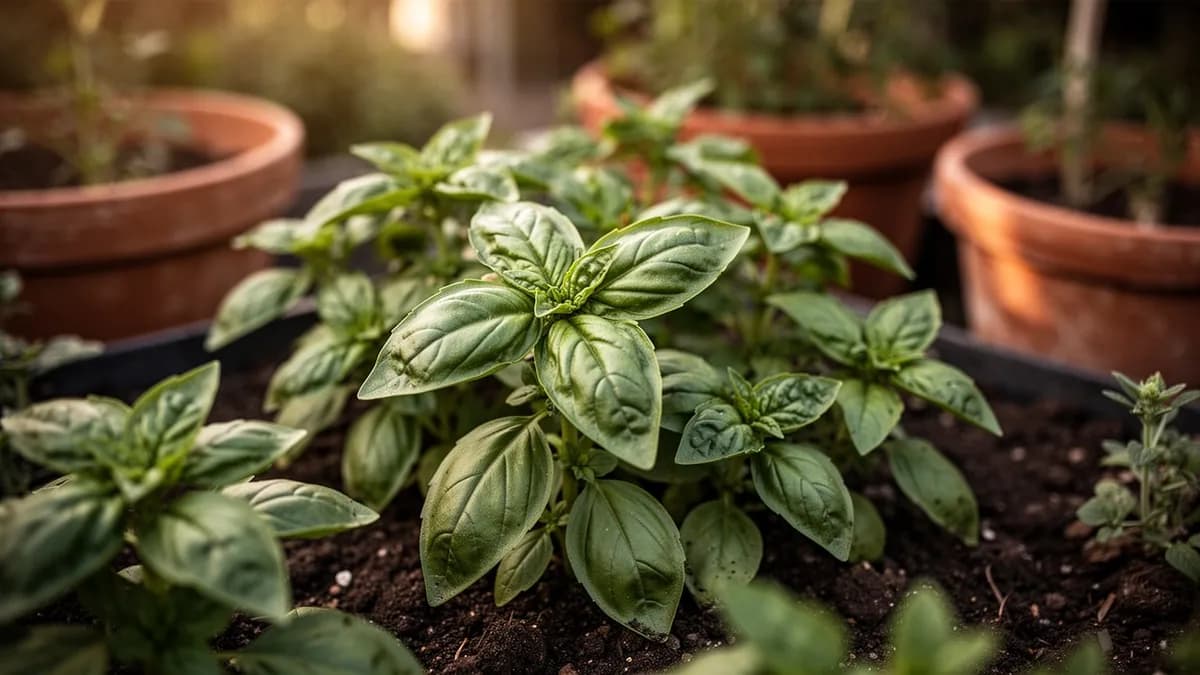
Albahaca va a su lado. Nogal no.
Saber de huerto de siempre, cotejado con la tabla real de Pomelo — prueba cualquier planta que cultives.
Prueba Pomelo en un bancal, aquí mismo
Un bancal real del planificador con Pomelo ya plantado. Toca una planta compañera para colocarla y mira cómo responde la comprobación de vecinos: verde para buenos vecinos, rojo si hay conflicto.


Guías de cultivo relacionadas
Abónalo bien
El pomelo exige un suelo bien drenado y no tolera el encharcamiento. Lo ideal es un franco arenoso con un pH de 6.0 a 7.0. Los suelos arcillosos pesados deben enmendarse o el árbol plantarse sobre un montículo elevado. Aplica cuatro veces al año un fertilizante cítrico alto en nitrógeno para sostener su crecimiento vigoroso y su gran carga de fruta. Complementa con potasio para mejorar la calidad del fruto y calcio para fortalecer las paredes celulares. Las pulverizaciones foliares de zinc y manganeso previenen carencias frecuentes de micronutrientes. Mantén de 7 a 10 cm de mantillo orgánico alrededor de la línea de goteo.
Temperatura ideal
Compatibilidad de zonas de rusticidad
De la semilla a la cosecha, etapa por etapa
Plantación y establecimiento
Los pomelos casi siempre se establecen a partir de material de vivero injertado, no de semilla. Los árboles nacidos de semilla pueden tardar entre 8 y 15 años en dar fruto y rara vez conservan las características exactas de la variedad. Tras la plantación, el árbol concentra su energía en desarrollar un sistema radicular fuerte antes de producir un crecimiento aéreo importante. Una cierta caída de hojas es normal durante el ajuste al trasplante.
Crecimiento vegetativo
El pomelo crece con vigor, produciendo varios brotes de crecimiento nuevo cada año. La copa desarrolla su forma característica, densa y amplia. Los pomelos están entre los cítricos de mayor tamaño y, si no se podan, pueden alcanzar entre 5 y 8 metros de altura. Los árboles jóvenes invierten la mayor parte de su energía en la copa y las raíces en lugar de en la fructificación.
Primera floración
Los pomelos injertados suelen florecer por primera vez entre 2 y 4 años después de plantarse, normalmente en primavera. Las flores aparecen en racimos en las axilas de las hojas y desprenden una fragancia intensa y dulce. El pomelo es en gran medida autofértil, pero la polinización cruzada ayuda a aumentar la producción. Algunos árboles pueden formar pequeños cultivos de prueba en el segundo o tercer año.
Desarrollo del fruto
Tras la caída de los pétalos, se forman pequeños frutos verdes que crecen durante 6 a 8 meses. El pomelo tiene uno de los periodos de desarrollo del fruto más largos de todos los cítricos. El fruto se forma en racimos que recuerdan a racimos de uvas, origen del nombre pomelo. El fruto se va engrosando lentamente y el color de la pulpa se desarrolla, mientras que las variedades rojas y rosas adquieren su pigmentación gracias al licopeno acumulado durante meses.
Maduración
Los pomelos maduran desde finales del otoño hasta la primavera, según la variedad y el clima, con la cosecha principal normalmente entre enero y marzo en el hemisferio norte. La cáscara pasa de verde a amarilla, aunque el fruto puede estar completamente maduro y seguir mostrando algo de verde en climas tropicales. A diferencia de muchas frutas, el pomelo mejora en sabor y dulzor cuanto más tiempo permanece en el árbol después de madurar.
Cosecha y poscosecha
Los pomelos maduros producen mucho, a menudo entre 200 y 400 frutos al año. Se cosechan cortando el pedúnculo con tijeras de poda afiladas en lugar de arrancarlos. Se conservan bien a temperatura ambiente durante 1 a 2 semanas y hasta 6 semanas en refrigeración. Un árbol maduro puede seguir produciendo durante 40 a 50 años con los cuidados adecuados.
Elige un árbol injertado sobre un portainjerto resistente a enfermedades, como naranja trifoliada o Swingle citrumelo. Planta en un suelo bien drenado y ligeramente ácido (pH 6.0-6.5), dejando la unión del injerto 15 cm por encima del nivel del suelo. Riega profundamente cada 5-7 días durante los tres primeros meses para establecer las raíces.
Cuidar Pomelo mes a mes
Qué hacer cada mes para tu Pomelo
Octubre
Mes actualReduce las aplicaciones de fertilizante y cambia a una fórmula con menos nitrógeno y más potasio para favorecer la maduración del fruto y la resistencia al frío. En zonas con inviernos frescos, empieza a vigilar las temperaturas nocturnas y prepara materiales de protección contra heladas.
Ten claro qué hacer en tu huerto, cada mes
Un correo al empezar cada mes: qué sembrar, plantar y hacer ahora mismo — para tu Pomelo y todo lo que crece alrededor. Más un breve curso inicial para esquivar los errores clásicos.
- Qué hacer ahora mismo
- Ajustado a tu temporada
- Curso inicial incluido
Cosechar Pomelo
El pomelo madura de noviembre a mayo, según el clima y la variedad, pero el fruto que permanece en el árbol durante el invierno y hasta la primavera desarrolla mucha más dulzura. Corta el fruto del árbol con tijeras de poda en lugar de arrancarlo. Comprueba el dulzor probando antes de cosechar toda la producción. La piel debe ser lisa, firme y sentirse pesada para su tamaño. El color externo varía según la variedad y no siempre indica la madurez. En climas cálidos, el pomelo maduro puede volver a reverdecer en el árbol sin perder calidad interna.
se supone que plantas al comenzar el periodo — indica tu fecha real
Cosecha Pomelo a tiempo y la planta sigue produciendo.
Almacenamiento y conservación
El pomelo se conserva excepcionalmente bien: dura de dos a tres semanas a temperatura ambiente y de seis a ocho semanas en el frigorífico. Su cáscara gruesa protege el fruto de la pérdida de humedad. El zumo congela bien hasta seis meses. Los gajos pueden envasarse en su propio jugo o en almíbar ligero. La ralladura de pomelo se seca muy bien para repostería y decoración de cócteles. La cáscara confitada de pomelo bañada en chocolate negro es una confitura clásica. La mermelada de pomelo resalta el carácter agridulce distintivo de la fruta.
Qué falla — y cómo solucionarlo
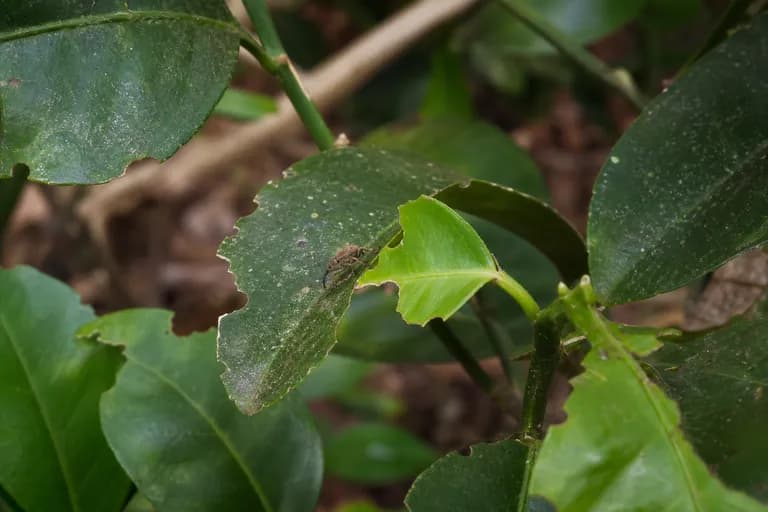
Picudo de las raíces de los cítricos
PlagaMuescas en los bordes de las hojas por la alimentación nocturna de los adultos. Las larvas se alimentan de las raíces bajo tierra, causando un declive lento, menor vigor y poca producción de fruta.
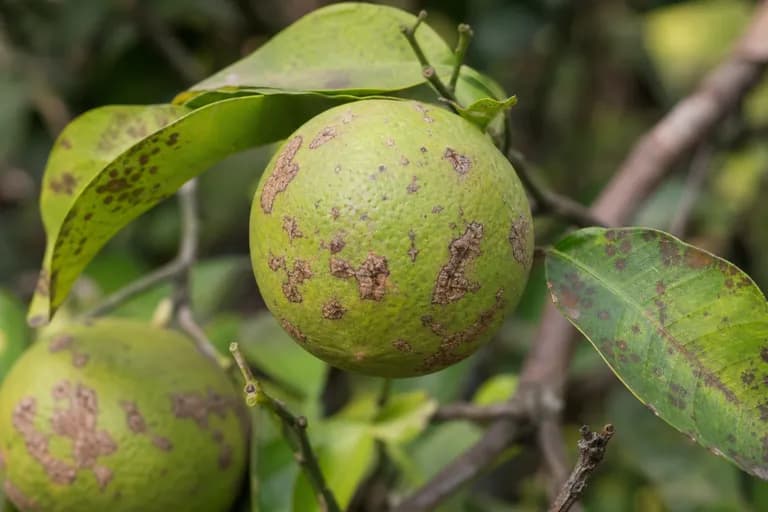
Melanosis
EnfermedadManchas marrones elevadas y ásperas en la cáscara del fruto y en las hojas, con aspecto de papel de lija. La causa el hongo Diaporthe citri, que se propaga desde la madera muerta con clima lluvioso.
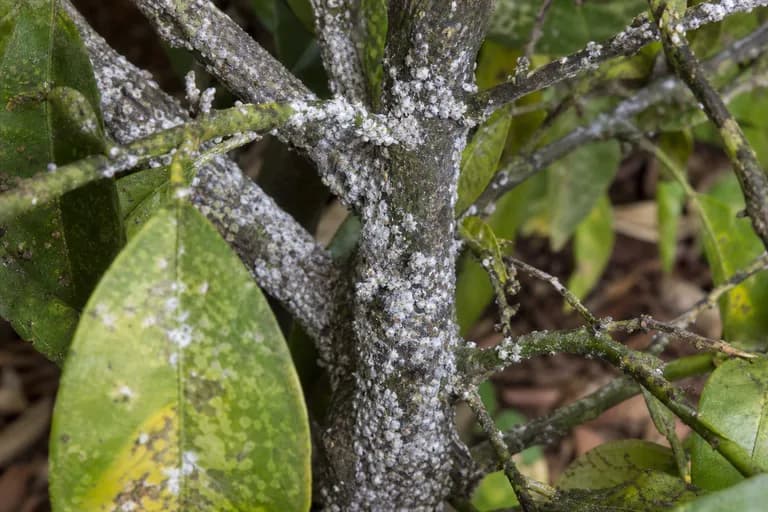
Cochinilla blanca de los cítricos
PlagaDensas incrustaciones blancas, parecidas a nieve, en el tronco y las ramas principales. Las infestaciones graves debilitan el árbol y reducen la producción durante varias temporadas.
Solución de problemas comunes
El pomelo cultivado en climas frescos produce frutos excesivamente ácidos y amargos por falta de unidades de calor. No hay solución salvo elegir una ubicación más cálida o cultivarlo en invernadero. La caída de frutos en primavera es normal, ya que el árbol aclara por sí mismo la carga hasta un nivel manejable. Las quemaduras en frutos expuestos aparecen cuando la cobertura de la copa es insuficiente. El problema más importante para los consumidores es la interacción del pomelo con más de 80 medicamentos con receta a través de las furanocumarinas, que inhiben la enzima CYP3A4. Consulta siempre a un profesional sanitario sobre interacciones medicamentosas.
Consejos de cultivo
- Compra siempre un pomelo injertado en un vivero de confianza en lugar de intentar cultivarlo desde semilla. Los árboles nacidos de semilla pueden tardar entre 8 y 15 años en producir fruta, pueden ser más espinosos y menos productivos, y no reproducirán de forma fiable las características de la variedad madre.
- El pomelo necesita más calor que cualquier otro cítrico cultivado comúnmente para desarrollar su dulzura característica y su pigmentación roja. En climas límite, planta junto a una pared orientada al sur que absorba y devuelva calor, o elige el microclima más cálido de tu parcela cerca de una superficie pavimentada o de una masa de agua.
- Planta en un suelo bien drenado y ligeramente ácido, con un pH de 6.0 a 6.5. Los pomelos son grandes y de raíz profunda en la madurez, así que prepara una zona de plantación amplia y muy enmendada en lugar de un hoyo estrecho. Los suelos arcillosos pesados deben mejorarse de forma importante con grava gruesa y compost antes de plantar.
- Riega profunda y constantemente durante la temporada de crecimiento. Los pomelos necesitan aproximadamente 50 mm de agua por semana, ya sea por lluvia o por riego, durante el crecimiento activo. El riego irregular durante el desarrollo del fruto es la causa principal de que la fruta se agriete, caiga la floración temprana y baje la calidad del zumo.
- Abona con un fertilizante granular o líquido específico para cítricos que incluya un espectro completo de micronutrientes, como hierro, zinc y manganeso. Aplícalo en tres o cuatro dosis repartidas desde finales del invierno hasta finales del verano y deja de abonar a comienzos del otoño para no estimular un crecimiento tierno vulnerable al frío.
- Pode lo mínimo posible: los pomelos son vigorosos por naturaleza y requieren mucha menos poda que los manzanos o los frutales de hueso. Centra la poda en eliminar madera muerta, ramas que se crucen o rocen, y cualquier brote que aparezca por debajo de la unión del injerto. La poda fuerte reduce la cosecha porque el pomelo fructifica en la madera del año anterior.
- Las variedades rojas y rosas necesitan pleno sol durante al menos 8 horas al día para desarrollar su color y dulzor característicos en la pulpa. Los frutos sombreados del interior de la copa serán bastante más pálidos y ácidos que los expuestos al sol. Aclara selectivamente la densidad de la copa cada pocos años para mejorar la entrada de luz.
- Vigila los árboles de otoño a primavera por la enfermedad del greening de los cítricos (HLB), una enfermedad bacteriana transmitida por el psílido asiático de los cítricos que está devastando el cultivo comercial de cítricos en todo el mundo. Los síntomas incluyen brotes amarillos, hojas moteadas y frutos pequeños, deformes y amargos. Actualmente no existe cura: compra material de vivero certificado libre de enfermedades y controla cuanto antes las poblaciones de psílidos.
- El pomelo puede permanecer en el árbol entre 2 y 4 meses después de alcanzar su plena madurez sin una caída importante de calidad: el árbol actúa como un frigorífico natural. Esta ventana de cosecha prolongada es una de las grandes ventajas de cultivar tu propio pomelo, ya que puedes recoger exactamente los que necesitas en lugar de enfrentarte a un exceso repentino.
- En climas fríos límite (zona USDA 9), protege los árboles de las heladas con manta térmica, guirnaldas navideñas entre la copa, o envolviendo el tronco con aislamiento para tuberías. Incluso unos pocos grados de protección pueden ser la diferencia entre un árbol sano y daños graves por frío.
Cultiva tu mejor Pomelo — y todo lo que la rodea.
Empieza un plan gratis hoy. Diseña tus bancales, coloca tu Pomelo y deja que PlotMyGarden gestione el momento, el espaciado, las asociaciones y los recordatorios de la semilla a la cesta.
Elige tu Pomelo
Ruby Red
Pulpa rosa intensa con un amargor mucho menor que el del pomelo blanco. Fruto estatal de Texas, descubierto como una mutación natural. Lo bastante dulce para comerlo sin azúcar.
Marsh (Blanco)
El pomelo blanco clásico, con pulpa amarillo pálido y un sabor agridulce vigorizante. Sin semillas y muy productivo. El estándar mundial para la producción de zumo.
Star Ruby
La pulpa más roja de cualquier variedad de pomelo, con el mayor contenido de licopeno. Más dulce y menos amarga que Ruby Red. De piel fina y excelente calidad de zumo.
Oro Blanco
Un híbrido de pomelo y pomelo chino con pulpa dulce, suave y prácticamente sin amargor. Tiene una cáscara más gruesa que el pomelo estándar. No contiene furanocumarinas que interactúen con medicamentos.
Rio Red
Un pomelo rojo mejorado de Texas, con un color más intenso que Ruby Red y una dulzura excelente. Gran resistencia a enfermedades y producción abundante.
Un solo pomelo maduro produce entre 200 y 400 frutos al año. Con precios habituales de supermercado de 1.50 a 3.00 dólares por pomelo ecológico, un árbol productivo entrega fruta por un valor anual de 300 a 1.200 dólares. Un árbol de vivero injertado cuesta entre 30 y 60 dólares y empieza a producir de forma notable en 3 a 4 años, por lo que se amortiza en una sola temporada de cosecha. Con una vida útil de 40 a 50 años, un pomelo bien cuidado representa un ahorro de por vida de 10.000 dólares o más frente a comprar fruta equivalente, además del ahorro en el sobreprecio que suele pagarse por el zumo de pomelo recién exprimido.
Recetas rápidas
Pomelo gratinado con miel y tomillo
10 minUna preparación sencilla y elegante que transforma un pomelo recién cosechado en un postre templado y caramelizado o en un desayuno impresionante. El gratinado suaviza el amargor y concentra los azúcares naturales, mientras que la miel y el tomillo fresco aportan complejidad floral. Sírvelo inmediatamente al salir del horno para lograr el máximo efecto.
5 ingredientesEnsalada de pomelo y aguacate
15 minUna ensalada vibrante, digna de restaurante, que combina la acidez brillante del pomelo en gajos con aguacate cremoso, rúcula picante y una vinagreta ligera de miel y cítricos. La combinación de sabores y texturas es extraordinaria, y se prepara en minutos con fruta recién cogida del árbol.
8 ingredientes
Paloma de zumo fresco de pomelo
5 minLa Paloma es el cóctel más popular de México, y su versión sin alcohol es igual de refrescante. Hecha solo con zumo de pomelo recién exprimido, un chorrito de lima, agua con gas y borde salado, esta bebida muestra la dulzura y la acidez complejas del pomelo de cultivo propio en su mejor versión.
7 ingredientesUsos culinarios
El pomelo se suele partir por la mitad y comer con una cuchara de pomelo en el desayuno. Su zumo da lugar a cócteles refrescantes como la Paloma y el Greyhound. Los gajos iluminan ensaladas con aguacate, gambas y mezclas de hojas verdes. La crema cuajada de pomelo, el pomelo gratinado con azúcar moreno y el sorbete de pomelo son postres elegantes. La ralladura aporta una nota agridulce y floral a la repostería y a los platos de marisco.
Qué contiene
Beneficios para la salud
- Rico en vitamina C, aporta más del 50 % de la ingesta diaria recomendada por fruto, lo que apoya de forma potente la función inmunitaria, mejora la absorción de hierro de alimentos vegetales y favorece la síntesis de colágeno para la salud de la piel y las articulaciones
- Contiene naringenina, un flavonoide que se encuentra casi exclusivamente en el pomelo y que en investigación clínica ha mostrado propiedades antiinflamatorias, mejor sensibilidad a la insulina y efectos protectores frente al síndrome metabólico
- Las variedades de pomelo rojo y rosa son una fuente dietética importante de licopeno, un antioxidante carotenoide que múltiples estudios a gran escala han asociado con un menor riesgo de cáncer de próstata, enfermedad cardiovascular y ciertos otros cánceres
- El consumo regular de pomelo se ha asociado en varios ensayos clínicos con niveles más bajos de colesterol LDL, atribuidos a los efectos combinados de la fibra de pectina, la naringenina y otros polifenoles sobre las vías del metabolismo del colesterol
- Con un índice glucémico de aproximadamente 25 y un alto contenido de agua, el pomelo favorece la saciedad y niveles estables de azúcar en sangre, por lo que es una de las frutas más recomendadas por dietistas para el control del peso y la prevención de la diabetes tipo 2
- Aporta cantidades significativas de potasio (135 mg por 100 g), un mineral esencial que favorece una presión arterial saludable al contrarrestar los efectos del sodio, apoyar el ritmo cardíaco y mantener una función muscular y nerviosa adecuada
De dónde viene Pomelo
El pomelo (Citrus × paradisi) es una de las historias agrícolas más singulares de la historia: un gran cultivo frutal mundial que no surgió de siglos de cultivo humano, sino como un híbrido natural espontáneo descubierto en estado silvestre. La fruta apareció en Barbados antes de mediados del siglo XVIII, como resultado de un cruce fortuito entre la naranja dulce (Citrus sinensis), introducida en América por exploradores portugueses, y el pomelo chino (Citrus maxima), un gran cítrico del sudeste asiático llevado a Barbados por el capitán de mar inglés Philip Shaddock alrededor de 1693. El primer registro escrito del pomelo aparece en 1750 en una historia natural de Barbados escrita por el botánico galés Griffith Hughes, quien lo llamó la "fruta prohibida", nombre que más tarde quedaría reflejado en su epíteto latino paradisi, que significa "del paraíso". Durante muchas décadas, la fruta siguió siendo una curiosidad caribeña, en gran medida eclipsada por cítricos más conocidos. El punto de inflexión llegó en 1823, cuando el conde Odette Philippe, un noble y cirujano francés que había servido bajo Napoleón Bonaparte, llevó semillas de pomelo a Safety Harbor, Florida, y estableció allí el primer huerto del territorio continental norteamericano. El clima de Florida resultó extraordinariamente adecuado para el cultivo del pomelo, y la producción comercial se expandió rápidamente a finales del siglo XIX. En la década de 1880, Florida enviaba pomelos a las ciudades del noreste, y la fruta empezó a transformarse de novedad regional a alimento básico del desayuno consumido en todo el país. A principios del siglo XX, la fiebre del pomelo llegó a Texas, donde los suelos profundos y el clima cálido del valle del Río Grande produjeron frutos excepcionales, y los agricultores iniciaron los programas sistemáticos de mejora que acabarían dando las variedades de pulpa roja tan apreciadas hoy. La moda de la "dieta del pomelo" en la década de 1930 y el giro general hacia desayunos más ligeros después de la Segunda Guerra Mundial convirtieron al pomelo en un alimento matutino icónico en Norteamérica y Europa. Hoy se cultiva comercialmente en regiones subtropicales y tropicales de todo el mundo, y Estados Unidos, China, Sudáfrica y México figuran entre los principales productores. La producción mundial supera los 9 millones de toneladas métricas al año.
Pomelo: ¿sabías que?
Datos fascinantes sobre Pomelo
El pomelo es una de las frutas importantes más jóvenes del mundo. Fue descrito por primera vez por el botánico galés Griffith Hughes en Barbados en 1750, lo que lo convierte en una incorporación reciente en comparación con cítricos antiguos como el cidro o el pomelo chino, cultivados durante más de 4.000 años.
Pomelo: preguntas frecuentes
¿Cuándo debo plantar Pomelo?
¿Cuáles son buenas plantas acompañantes para Pomelo?
¿En qué zonas de rusticidad puede crecer Pomelo?
¿Cuánto sol necesita Pomelo?
¿A qué distancia debo espaciar Pomelo?
¿Qué plagas y enfermedades afectan a Pomelo?
¿Cómo almaceno Pomelo después de la cosecha?
¿Cuáles son las mejores variedades de Pomelo para cultivar?
¿Qué suelo necesita Pomelo?
¿Cuánto tarda un pomelo en dar fruto?
¿Por qué mi pomelo es amargo y no dulce?
¿Se puede cultivar el pomelo en maceta?
¿Por qué mi pomelo no da fruto aunque florece?
¿Es cierto que el pomelo interactúa con medicamentos?
¿Cuál es la mejor variedad de pomelo para huertos domésticos?
Acabas de leer la teoría. Ahora cultívala en piloto automático.
Todo lo que hace que Pomelo sea delicado — el momento, el espaciado, las asociaciones, la ventana de cosecha — es justo lo que PlotMyGarden resuelve por ti, para cada planta de tu huerto.
Un plan que conoce tu clima
Indica tu ubicación una vez. Recibe fechas de siembra, abonado y cosecha basadas en tu última helada real y el pronóstico en vivo — sin adivinar con un sobre genérico.
De la sección “Cuándo plantar”Planificador de bancales de arrastrar y soltar
Diseña bancales sobre una cuadrícula. Cada planta encaja con su espaciado correcto y ves toda la temporada antes de gastar un céntimo en semillas.
De la sección “Cultivo”Conflictos de asociación, detectados a tiempo
Más de 200 buenas y malas combinaciones comprobadas en vivo mientras plantas — para que un error que arruine la temporada nunca llegue a la tierra.
De la sección “Asociaciones”Recordatorios que sí vas a seguir
“Riega las judías.” “Recoge hoy antes de que se pase.” Oportunos, concretos y ligados a las plantas que de verdad cultivas.
De la sección “Cosecha”Escalonado, programado
¿Quieres cosechar seis semanas en vez de seis días? Reparte tus siembras automáticamente y te avisa cuando toca el siguiente lote.
De la sección “Cuándo plantar”Un registro que se vuelve más listo
Cada cosecha que registras le enseña tu huerto. El plan del año que viene parte de lo que de verdad funcionó en tu suelo, no en un manual.
De la sección “Resumen”Planta estos junto a Pomelo
Más Cítricos
Mantén Pomelo lejos de estos
Cultiva tu mejor Pomelo — y todo lo que la rodea.
Empieza un plan gratis hoy. Diseña tus bancales, coloca tu Pomelo y deja que PlotMyGarden gestione el momento, el espaciado, las asociaciones y los recordatorios de la semilla a la cesta.