Straußfarn-Fiddlehead
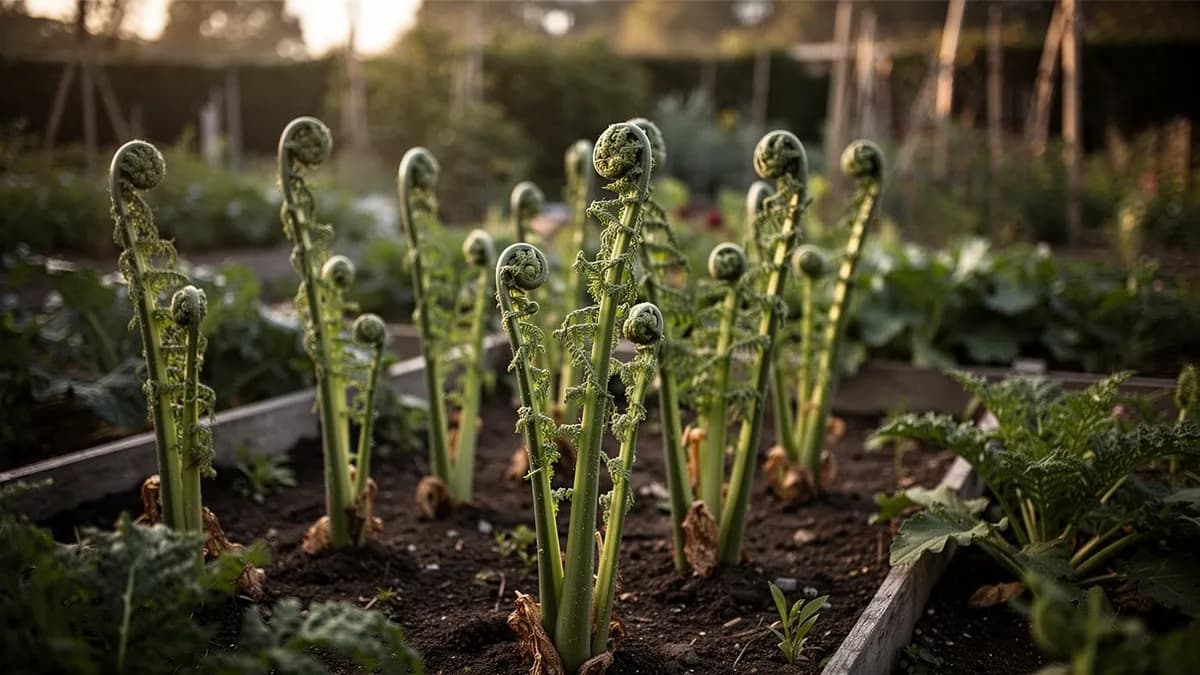
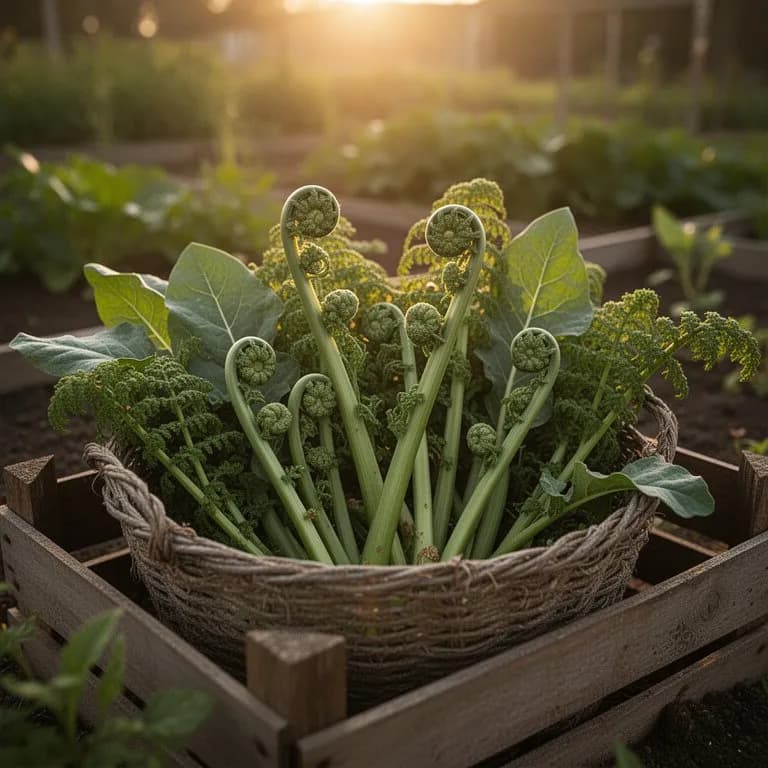
Die eng eingerollten, austreibenden Wedel des Straußfarns, die im zeitigen Frühling als eines der ersten Wildgemüse des Jahres geerntet werden.





Auf dieser SeiteÜberblick
Straußfarn-Fiddlehead im Überblick
Die eng eingerollten, austreibenden Wedel des Straußfarns, die im zeitigen Frühling als eines der ersten Wildgemüse des Jahres geerntet werden. Nur die Straußfarn-Art wird zum Verzehr empfohlen, und Fiddleheads müssen vor dem Verzehr immer gründlich gekocht werden. Mehrjährige Pflanzen benötigen feuchte, schattige Bedingungen und brauchen zwei bis drei Jahre zur Etablierung, bevor eine nachhaltige Ernte beginnen kann. Ernten Sie nicht mehr als die Hälfte der austreibenden Wedel pro Krone, um sicherzustellen, dass die Pflanze gesund und produktiv bleibt.
Wann Straußfarn-Fiddlehead pflanzen
Straußfarne werden aufgrund der Schwierigkeit und des Zeitaufwands selten aus Sporen gezogen. Stattdessen erfolgt die Vermehrung durch Kronenteilung oder das Umpflanzen von Ausläufern. Graben Sie etablierte Kronen im zeitigen Frühling vor dem Austrieb oder im Spätherbst nach dem Absterben der Wedel aus und teilen Sie sie. Jedes Teilstück sollte mindestens einen Wachstumspunkt und ein gesundes Wurzelsystem haben. Pflanzen Sie die Teilstücke sofort in der gleichen Tiefe ein, in der sie gewachsen sind, wässern Sie gründlich und mulchen Sie gut. Ausläufer, die an den Rändern der Kolonien erscheinen, können ebenfalls abgetrennt und umgepflanzt werden. Rechnen Sie mit zwei bis drei Jahren, bevor die Teilstücke groß genug für die Ernte sind.
Dein Straußfarn-Fiddlehead-Jahr
Abgestimmt auf Zone 7 · typische Saison · Frost geht um den 2. Apr. und kehrt um den 1. Nov. zurück
Straußfarn-Fiddlehead Mär – Apr pflanzen, Apr – Mai ernten. Beachte die Pflanzmethoden unten und wähle dein Klima für passende Zeiträume.
So baust du Straußfarn-Fiddlehead an
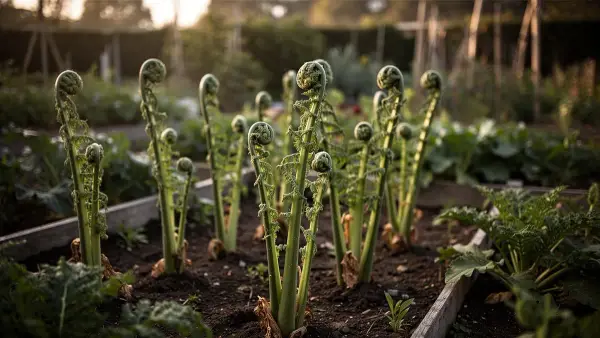
Straußfarn-Fiddleheads gedeihen in kühlen, feuchten Waldumgebungen mit gesprenkeltem bis vollem Schatten. Wählen Sie einen Pflanzplatz, der einem Waldboden ähnelt, wie die Nordseite eines Gebäudes oder unter Laubbäumen. Der Boden sollte reich an organischer Substanz und gleichmäßig feucht, aber nicht staunass sein. Pflanzen Sie ruhende Kronen oder Teilstücke im zeitigen Frühling oder Spätherbst mit einem Abstand von etwa 60 cm.
Einmal etabliert, benötigen Fiddleheads nur minimale Pflege neben der Aufrechterhaltung der Bodenfeuchtigkeit. Bringen Sie jeden Herbst eine dicke Schicht Laubmulch oder Kompost auf, um die natürliche Laubstreu nachzuahmen, von der sie abhängen. Vermeiden Sie das Bearbeiten in der Nähe der flachen Wurzelsysteme. Die Pflanzen breiten sich über unterirdische Ausläufer aus und bilden über mehrere Jahre allmählich große Kolonien.
Ernten Sie in den ersten zwei Jahren nach der Pflanzung keine Wedel, damit sich die Kolonie gut etablieren kann. Ab dem dritten Jahr ernten Sie nur, wenn die eng eingerollten Fiddleheads im zeitigen Frühling austreiben, typischerweise wenn sie fünf bis fünfzehn Zentimeter groß sind. Nehmen Sie niemals mehr als die Hälfte der Wedel einer einzelnen Krone, da die Pflanze die verbleibenden Wedel zur Photosynthese und Energiespeicherung für das folgende Jahr benötigt.
8 Pflanzen passen in ein Beet von 120 × 240 cm
Straußfarn-Fiddlehead braucht 60 cm Platz pro Pflanze. Der Planer hält diesen Abstand für dich ein — jede Pflanze, jedes Beet.
Passende Anbau-Ratgeber
Richtig düngen
Straußfarne bevorzugen reichen, humusreichen Boden mit einem leicht sauren bis neutralen pH-Wert von 5,5 bis 7,0. Reichern Sie die Pflanzflächen großzügig mit Kompost, Lauberde oder gut verrottetem Mist an. Der Boden sollte Feuchtigkeit speichern und dennoch ausreichend entwässern, um Kronenfäule zu verhindern. Bringen Sie jährlich im Herbst eine fünf bis zehn Zentimeter dicke Schicht organischen Mulch auf. Eine zusätzliche Düngung ist bei richtig aufbereitetem Boden selten nötig, aber eine leichte Aufbringung von ausgewogenem organischem Dünger im zeitigen Frühling kann die Wedelproduktion in mageren Böden fördern.
Ideale Temperatur
Winterhärtezone-Kompatibilität
Von der Saat zur Ernte, Schritt für Schritt
Winterruhe & Kronenruhe
Im Winter ruht die Straußfarnkrone unter der Bodenoberfläche, isoliert durch Laubstreu und Schnee. Dunkle, steife fertile Wedel aus dem Vorjahr stehen den ganzen kalten Monaten über aufrecht und setzen langsam Sporen frei. Unterirdisch speichert das Rhizom die während der vorherigen Vegetationsperiode angesammelte Energie und bereitet sich auf den explosiven Frühlingsaustrieb vor.
Fiddlehead-Austrieb
Wenn die Bodentemperaturen im zeitigen Frühling über 5 °C steigen, schieben sich eng eingerollte Krummstäbe durch den Boden, bedeckt mit papierartigen braunen Schuppen. Die klassische Fiddlehead-Form — die an die Schnecke einer Geige erinnert — hält nur 1–2 Wochen an, bevor sich die Wedel zu entfalten beginnen. Dies ist das einzige Erntefenster für die essbaren Fiddleheads.
Wedelentfaltung
Die eng eingerollten Fiddleheads entfalten sich rasch zu eleganten, federartigen Wedeln. Jeder Wedel entrollt sich von oben nach unten und enthüllt eine Reihe von Fiedern, die symmetrisch entlang der Rachis angeordnet sind. Die Pflanze produziert 6–8 sterile Wedel pro Krone, die unter idealen Bedingungen jeweils 90–180 cm groß werden.
Reifes Vasenstadium
Voll entfaltete Wedel bilden eine atemberaubende vasenförmige Rosette — die charakteristische Silhouette, die den deutschen Namen inspirierte und an die Feder eines Straußenschwanzes erinnert. Die leuchtend grünen sterilen Wedel erreichen ihre volle Höhe und wölben sich anmutig nach außen. Im Hochsommer treiben kürzere, steife fertile Wedel aus der Kronenmitte, anfangs grün, dann schokoladenbraun werdend.
Entwicklung der fertilen Wedel
Die dunklen, steifen fertilen Wedel in der Kronenmitte reifen und verhärten. Im Gegensatz zu den zarten sterilen Wedeln sind dies starre Strukturen mit eng eingerollten Fiedern, die Millionen von Sporen einschließen. Wenn der Herbst kommt, vergilben und fallen die grünen sterilen Wedel zusammen, aber die holzigen fertilen Wedel bleiben den Winter über aufrecht stehen.
Herbstruhe & Ausbreitung
Nach den ersten starken Frösten sterben die sterilen Wedel vollständig ab. Unterirdisch erweitert sich das Rhizomsystem aktiv durch Stolonen (unterirdische Ausläufer) und sendet neue Wachstumspunkte aus, die zu den Kronen des nächsten Jahres werden. Eine gesunde Pflanze kann sich pro Jahr 15–30 cm ausbreiten und bildet allmählich ausgedehnte Kolonien.
Lassen Sie die winterliche Laubstreu als natürliche Isolierung und Mulch liegen. Schneiden Sie die beständigen fertilen Wedel nicht zurück — sie schützen die Krone und verleihen dem Garten visuelles Winterinteresse.
Straußfarn-Fiddlehead Monat für Monat pflegen
Was du jeden Monat für deine Straußfarn-Fiddlehead tun solltest
Oktober
Aktueller MonatSterile Wedel fallen nach starken Frösten zusammen. Lassen Sie fertile Wedel stehen. Bedecken Sie die Kronen mit 5 cm Kompost oder Lauberde. Markieren Sie die Koloniegrenzen, wenn Sie Frühlingsteilungen planen. Räumen Sie zusammengefallene Wedel auf oder lassen Sie sie als natürlichen Mulch liegen.
Immer wissen, was jetzt im Garten zu tun ist
Eine E-Mail zum Monatsanfang: was du jetzt säen, pflanzen und anpacken solltest — für deine Straußfarn-Fiddlehead und alles, was drumherum wächst. Dazu ein kurzer Startkurs, der dich vor den klassischen Fehlern bewahrt.
- Was jetzt zu tun ist
- Passend zu deiner Saison
- Startkurs inklusive
Straußfarn-Fiddlehead ernten
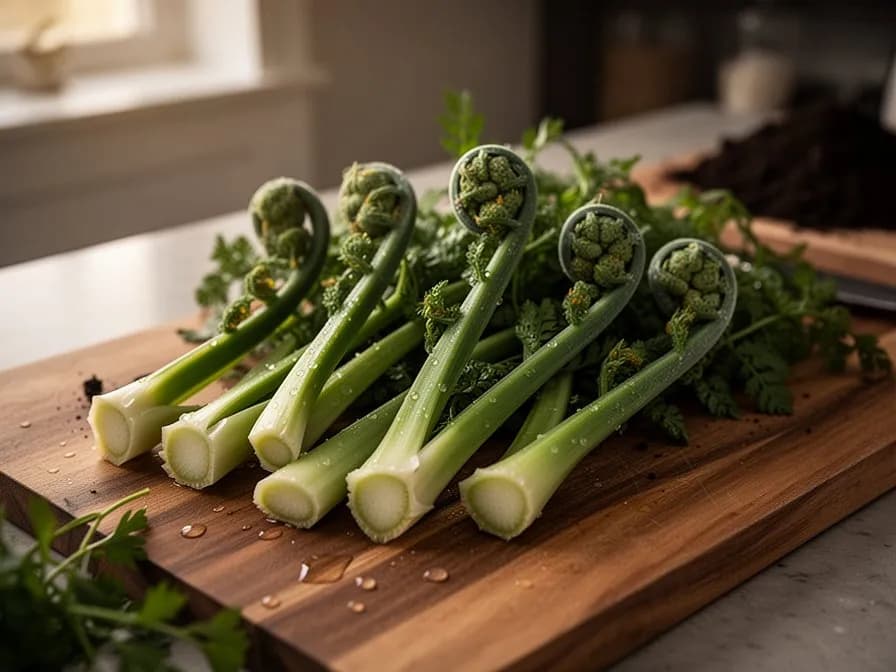
Ernten Sie Fiddleheads im zeitigen Frühling, wenn die eng eingerollten Wedel fünf bis fünfzehn Zentimeter groß und noch mit ihren papierartigen braunen Schuppen bedeckt sind. Brechen Sie sie auf Bodenhöhe mit einem sauberen Bruch ab. Entfernen Sie die braune, papierartige Hülle vor dem Kochen. Ernten Sie nur von gut etablierten Kolonien, die mindestens drei Jahre alt sind, und nehmen Sie niemals mehr als die Hälfte der Wedel einer einzelnen Krone. Das Erntefenster ist sehr kurz und dauert typischerweise nur ein bis zwei Wochen. Kochen Sie Fiddleheads vor dem Essen immer gründlich, indem Sie sie mindestens 15 Minuten kochen oder 10 bis 12 Minuten dämpfen.
angenommen, du pflanzt zu Beginn des Zeitraums — trage dein tatsächliches Datum ein
Ernte Straußfarn-Fiddlehead zügig, dann trägt die Pflanze weiter.
Lagerung & Konservierung
Frische Fiddleheads sind sehr verderblich und sollten innerhalb von zwei Tagen nach der Ernte verwendet werden. Lagern Sie sie ungewaschen in einem mit Küchenpapier ausgelegten Behälter im Kühlschrank. Für eine längere Konservierung blanchieren Sie gereinigte Fiddleheads zwei Minuten in kochendem Wasser und tauchen Sie sie dann in Eiswasser. Gut abtropfen lassen und in einer einzigen Schicht auf einem Backblech einfrieren, bevor Sie sie in Gefrierbeutel umfüllen, wo sie bis zu einem Jahr haltbar sind. Fiddleheads können auch in einer Essiglake für eine lagerstabile Konservierung eingelegt werden.
Was schiefgeht — und die Lösung
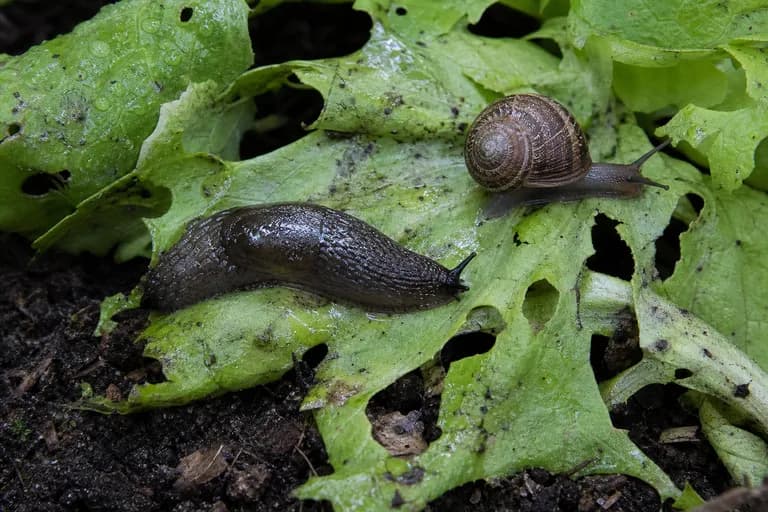
Schnecken und Nacktschnecken
SchädlingZerfranste Löcher in sich entrollenden Wedeln, Schleimspuren auf und um die Pflanzenkronen.
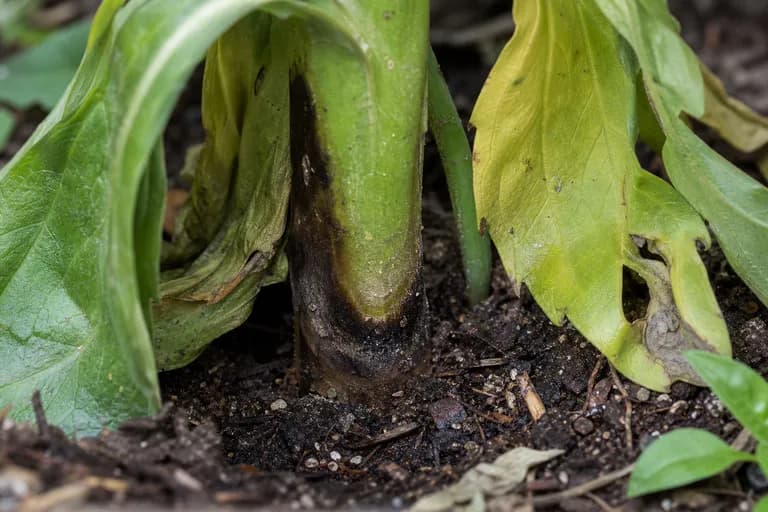
Kronenfäule
KrankheitWeiches, matschiges Kronengewebe mit üblem Geruch. Wedel treiben nicht aus oder welken sofort nach dem Entfalten.
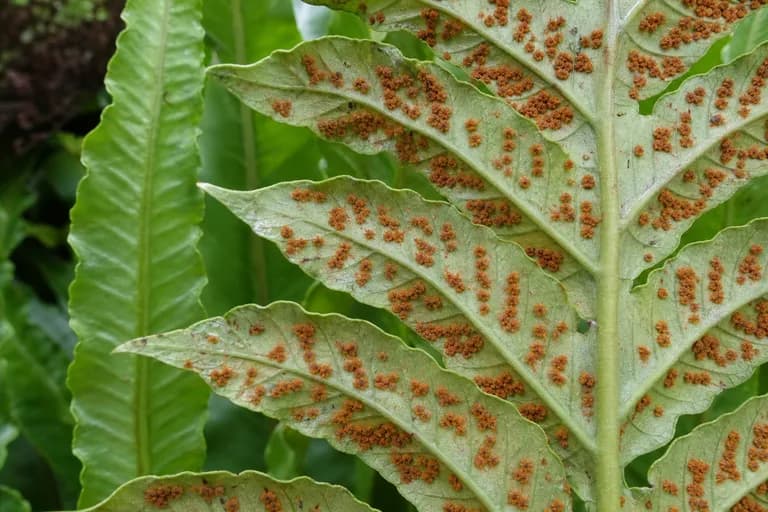
Rostpilz
KrankheitOrange-braune, pudrige Flecken auf den Unterseiten reifer Wedel im Sommer.
Fehlerbehebung bei häufigen Problemen
Das häufigste Problem bei Fiddlehead-Farnen ist unzureichende Feuchtigkeit, die dazu führt, dass Wedel während der Sommerhitze an den Rändern braun und brüchig werden. Übermäßiges Ernten ist ein weiteres häufiges Problem, das die Kronen schwächt und schließlich die Kolonie abtöten kann. Pflanzen können in den ersten zwei Jahren langsam wachsen und erfordern Geduld. An zu sonnigen Standorten verbrennen die Wedel und die Pflanzen kümmern. Schlechte Drainage führt zu Kronenfäule, besonders in schweren Lehmböden. Rehe fressen gelegentlich an den austreibenden Wedeln im zeitigen Frühling.
Anbautipps
- Schatten ist essenziell, nicht optional. Straußfarne sind Waldpflanzen, die natürlich unter Laubbaum-Kronendächern wachsen. Sie vertragen Morgensonne, benötigen aber Nachmittagsschatten, besonders in den Zonen 6–7. Volle Sonne verbrennt die Wedel innerhalb von Tagen, selbst bei ausreichend Wasser.
- Feuchtigkeit ist der einzelne wichtigste Faktor für den Erfolg. Straußfarne haben sich an Flussufern und Überschwemmungsgebieten entwickelt, wo der Boden gleichmäßig feucht ist. Im Garten sind starkes Mulchen (8–10 cm Lauberde oder gehäckselte Rinde) und regelmäßiges tiefes Wässern unerlässlich. Sie werden in trockenem Boden nicht gedeihen.
- Reichern Sie den Boden vor der Pflanzung mit organischer Substanz an. Arbeiten Sie großzügig Kompost, Lauberde und abgelagerten Mist ein, um den nährstoffreichen Schwemmboden ihres natürlichen Überschwemmungsgebiet-Lebensraums nachzuahmen. Leicht saurer bis neutraler pH-Wert (5,5–7,0) ist ideal.
- Pflanzen Sie wurzelnackte Kronen im zeitigen Frühling oder Herbst und setzen Sie den Kronenpunkt 2–3 cm unter die Bodenoberfläche. Pflanzen Sie die Kronen mit 60–90 cm Abstand — sie werden die Lücken über unterirdische Ausläufer innerhalb von 2–3 Jahren füllen.
- Haben Sie Geduld mit Neupflanzungen. Umgepflanzte Kronen produzieren oft kleine, spärliche Wedel im ersten Jahr, während sich das Wurzelsystem etabliert. Ernten Sie keine Fiddleheads bis zum dritten Jahr nach der Pflanzung, damit die Kolonie Kraft aufbauen kann.
- Praktizieren Sie immer nachhaltige Ernte. Nehmen Sie niemals mehr als 3 Fiddleheads pro Krone und lassen Sie kleinere oder schwächere Kronen ganz aus. Eine Krone, der alle Krummstäbe genommen werden, kann möglicherweise nicht genug Photosynthese betreiben, um zu überleben, und stirbt ab.
- Kontrollieren Sie die Ausbreitung proaktiv, wenn der Platz begrenzt ist. Straußfarne sind kräftige Kolonisierer, die sich aggressiv über unterirdische Stolonen ausbreiten. Installieren Sie eine Wurzelsperre (60 cm tief) oder pflanzen Sie in eingefasste Beete, wenn Sie nicht möchten, dass sie benachbarte Bereiche übernehmen.
- Lassen Sie die steifen braunen fertilen Wedel den Winter über stehen. Sie verleihen dem ruhenden Garten architektonisches Interesse, schützen die Krone vor Frost-Tau-Zyklen und setzen im Frühling Sporen frei, die an günstigen nahegelegenen Standorten neue Pflanzen etablieren können.
Bau deine beste Straußfarn-Fiddlehead an — und alles drumherum.
Starte heute kostenlos. Lege deine Beete an, setze deine Straußfarn-Fiddlehead ein und lass PlotMyGarden Timing, Abstände, Begleiter und Erinnerungen von der Saat bis zum Erntekorb übernehmen.
Finde deine Straußfarn-Fiddlehead
Standard-Straußfarn
Die häufigste Form in nördlichen Wäldern, die große, vasenförmige Wedel von bis zu anderthalb Metern Höhe mit zuverlässiger Fiddlehead-Produktion im Frühling hervorbringt.
Jumbo-Krone
Ausgewählte Zuchtlinie mit überdurchschnittlich großen Kronen, die dickere, fleischigere Fiddleheads produziert, die von Sammlern und Köchen bevorzugt werden.
The King
Eine wüchsige Sorte, die für die Produktion reichlicher Ausläufer und schnelle Kolonisierung bekannt ist – ideal für die Anlage großer Ernteflächen.
Frische Fiddleheads gehören zu den teuersten gesammelten Lebensmitteln auf dem Markt und werden während ihrer kurzen Frühlingssaison auf Bauernmärkten und in Feinkostläden für 30–65 € pro Kilogramm verkauft. Eine bescheidene Gartenkolonie von 20 Kronen (angelegt aus 5–8 € teuren wurzelnackten Pflanzen) kann jährlich 1–1,5 kg Fiddleheads produzieren, sobald sie ausgereift ist, was einem Marktwert von 30–90 € aus einer einmaligen Pflanzinvestition entspricht. Da sich die Kolonie jedes Jahr von selbst erweitert, wachsen Ihre Ernte und Ihre Ersparnisse ohne zusätzliche Kosten. Eingelegte Fiddleheads werden in Feinkostgeschäften für 10–15 € pro kleinem Glas verkauft.
Schnelle Rezepte
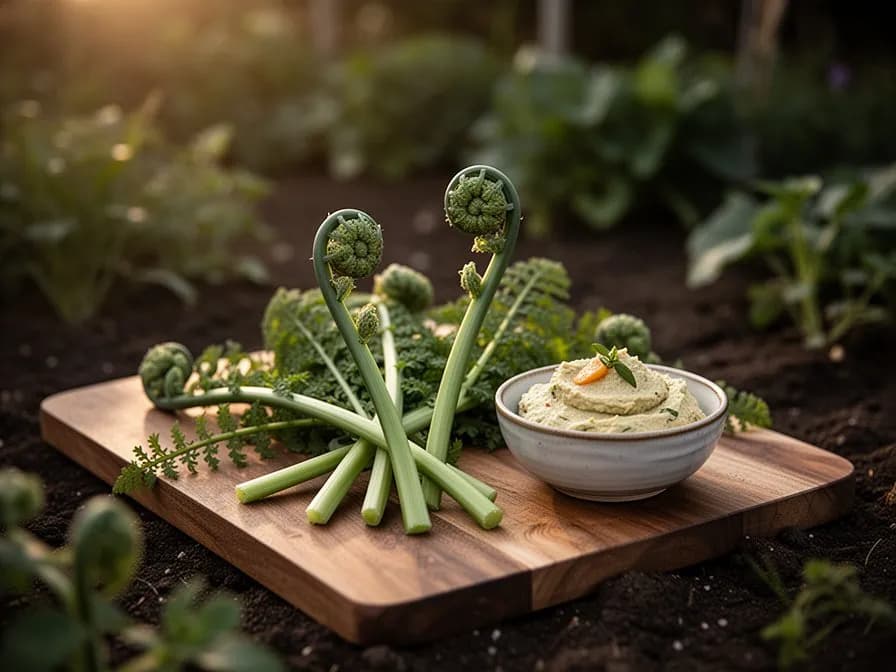
Klassische buttergebratene Fiddleheads
15 Min.Die einfachste und beliebteste Zubereitung — blanchierte Fiddleheads, in Butter mit Knoblauch angebraten, bis sie zart-knackig sind. Diese Methode hebt ihren einzigartigen Geschmack hervor, der irgendwo zwischen Spargel, grünen Bohnen und jungem Spinat mit einem angenehmen nussigen Unterton liegt.
6 ZutatenEingelegte Fiddleheads
30 Min.Eine würzig-knackige Konserve, die die flüchtige Fiddlehead-Saison im Frühling im Glas einfängt. Die Lake balanciert Säure mit einem Hauch Süße, und ganze Knoblauchzehen und Dill verleihen aromatische Tiefe. Sie halten sich monatelang im Kühlschrank und sind eine ausgezeichnete Ergänzung für Aufschnittplatten.
9 ZutatenFiddlehead-Morchel-Pasta
25 Min.Eine luxuriöse Frühlingspasta, die zwei der begehrtesten Wildlebensmittel der Saison vereint. Fiddleheads und Morcheln teilen dasselbe kurze Erntefenster und ergänzen sich wunderbar in einer leichten Sahnesauce über frischer Pasta.
9 ZutatenKulinarische Verwendung
Fiddleheads haben einen Geschmack, der an Spargel mit grasigen, nussigen Untertönen erinnert. Sie müssen vor dem Essen immer gründlich gekocht werden. In Butter mit Knoblauch angebraten ist die klassische Zubereitung. Sie harmonieren gut mit Zitrone, Sauce Hollandaise und Speck. Fiddleheads eignen sich hervorragend für Pastagerichte, Risotto, Pfannengerichte und Omeletts. Sie können als würziges Beilagenrelish eingelegt oder zu Frühlingssuppen und Quiches hinzugefügt werden.
Was drinsteckt
Gesundheitsvorteile
- Außergewöhnlich reich an Vitamin A (als Beta-Carotin), liefert über 70 % des Tageswertes pro 100 g — unterstützt die Augengesundheit, Immunfunktion und Hautzellenerneuerung.
- Reich an Omega-3-Fettsäuren im Vergleich zu anderen Gemüsesorten, trägt zur Herz-Kreislauf-Gesundheit bei und hilft, systemische Entzündungen zu reduzieren.
- Gute Quelle für Eisen und Mangan, unterstützt den Sauerstofftransport im Blut und enzymatische Prozesse, die für Knochengesundheit und Stoffwechsel entscheidend sind.
- Enthält bedeutende Ballaststoffe (3,7 g pro 100 g), fördert die Verdauungsregelmäßigkeit, ernährt nützliche Darmbakterien und unterstützt gesunde Cholesterinwerte.
- Liefert beachtliche Mengen an Vitamin C (29 % TW pro 100 g), ein essentielles Antioxidans, das die Kollagenproduktion unterstützt und die Eisenaufnahme aus pflanzlichen Lebensmitteln verbessert.
- Reich an Phosphor und Magnesium, beides essenziell für die Knochenmineralisierung, den Energiestoffwechsel und die ordnungsgemäße Nerven- und Muskelfunktion.
Woher Straußfarn-Fiddlehead stammt
Der Straußfarn (Matteuccia struthiopteris) ist in den gemäßigten Regionen der Nordhalbkugel beheimatet und kommt wild in Ostnordamerika von den Seeprovinzen Kanadas südlich bis Virginia und westlich bis zu den Großen Seen vor, ebenso wie in ganz Nordeuropa und bis nach Ostasien. Er gedeiht an Flussufern, Überschwemmungsgebieten und feuchten Waldrändern, wo nährstoffreicher Schwemmboden und gleichmäßige Feuchtigkeit ideale Wachstumsbedingungen schaffen. Der Artname 'struthiopteris' stammt von den griechischen Wörtern für 'Strauß' und 'Flügel' und beschreibt die elegante, federartige Anordnung seiner Wedel.
Indigene Völker des nordöstlichen Nordamerikas haben Fiddleheads seit Jahrtausenden als wichtiges Frühlingsnahrungsmittel geerntet. Für Nationen wie die Maliseet, Mi'kmaq, Penobscot und Abenaki markierte das Erscheinen der Fiddleheads das Ende der mageren Wintermonate und den Beginn des Frühlingsüberflusszyklus. Traditionelle Erntepraktiken betonten die Nachhaltigkeit — es wurden nur wenige Krummstäbe pro Krone genommen und die Erntestandorte rotiert — eine Weisheit, der moderne Sammler gut folgen sollten.
Europäische Siedler in den Seeprovinzen und Neuengland übernahmen das Fiddlehead-Sammeln schnell von den indigenen Gemeinschaften, und die Tradition wurde tief in der regionalen Esskultur verankert. Im 20. Jahrhundert wurden Fiddleheads zu einer gefeierten saisonalen Delikatesse, besonders in New Brunswick, Maine und Vermont. Die kommerzielle Ernte wuchs in den 1970er und 1980er Jahren erheblich, was zu Bedenken über die Übererntung wilder Populationen führte. Heute gibt es ein wachsendes Interesse am Anbau von Straußfarnen in Hausgärten und auf kleinen Höfen, um den Druck auf Wildbestände zu verringern und gleichzeitig die Nachfrage nach dieser vergänglichen Frühlingsdelikatesse zu decken.
Straußfarn-Fiddlehead: Schon gewusst?
Faszinierende Fakten über Straußfarn-Fiddlehead
Der Straußfarn (Matteuccia struthiopteris) ist die einzige Farnart, die in Nordamerika weithin als sicher und schmackhaft zum Essen gilt — viele andere Farnarten enthalten krebserregende Verbindungen, daher ist eine korrekte Bestimmung vor dem Sammeln wilder Fiddleheads absolut entscheidend.
Straußfarn-Fiddlehead: Fragen & Antworten
Wann sollte ich Straußfarn-Fiddlehead pflanzen?
In welchen Winterhärtezonen kann Straußfarn-Fiddlehead wachsen?
Wie viel Sonne braucht Straußfarn-Fiddlehead?
Welchen Abstand sollte ich zwischen Straußfarn-Fiddlehead lassen?
Welche Schädlinge und Krankheiten befallen Straußfarn-Fiddlehead?
Wie lagere ich Straußfarn-Fiddlehead nach der Ernte?
Was sind die besten Straußfarn-Fiddlehead-Sorten zum Anbauen?
Welchen Boden braucht Straußfarn-Fiddlehead?
Sind alle Farn-Fiddleheads sicher zum Essen?
Muss ich Fiddleheads vor dem Essen kochen?
Wie lange dauert es, bis eine Neupflanzung erntereife Fiddleheads produziert?
Werden sich Straußfarne in meinem Garten aggressiv ausbreiten?
Kann ich Straußfarne in voller Sonne anbauen?
Wie lagere und konserviere ich geerntete Fiddleheads?
Du hast die Theorie gelesen. Jetzt baue sie auf Autopilot an.
Alles, was Straußfarn-Fiddlehead knifflig macht — das Timing, die Abstände, die Begleiter, das Erntefenster — genau das übernimmt PlotMyGarden für dich, für jede Pflanze im Garten.
Ein Plan, der dein Wetter kennt
Standort einmal festlegen. Aussaat-, Dünge- und Erntedaten rund um deinen echten letzten Frosttermin und die Live-Vorhersage — kein Raten mehr nach Saattüte.
Aus dem Abschnitt „Pflanzzeit“Beetplaner per Drag & Drop
Beete auf einem Raster gestalten. Jede Pflanze rastet im richtigen Abstand ein, und du siehst die ganze Saison, bevor du einen Cent für Saatgut ausgibst.
Aus dem Abschnitt „Anbau“Begleiter-Konflikte früh erkannt
Über 200 gute und schlechte Kombinationen werden beim Pflanzen live geprüft — so landet ein saisonruinierender Fehler nie in der Erde.
Aus dem Abschnitt „Begleiter“Erinnerungen, nach denen du wirklich handelst
„Gieß die Bohnen.“ „Heute ernten, bevor's umschlägt.“ Pünktlich, konkret und auf deine echten Pflanzen bezogen.
Aus dem Abschnitt „Ernte“Staffel-Aussaat, geplant
Sechs Wochen ernten statt sechs Tage? Die App verteilt deine Aussaaten automatisch und erinnert dich, wenn der nächste Satz fällig ist.
Aus dem Abschnitt „Pflanzzeit“Ein Verlauf, der schlauer wird
Jede protokollierte Ernte bringt der App deinen Garten bei. Der Plan fürs nächste Jahr startet bei dem, was in deinem Boden wirklich funktioniert hat.
Aus dem Abschnitt „Überblick“Weitere Stängel & Stiele
Bau deine beste Straußfarn-Fiddlehead an — und alles drumherum.
Starte heute kostenlos. Lege deine Beete an, setze deine Straußfarn-Fiddlehead ein und lass PlotMyGarden Timing, Abstände, Begleiter und Erinnerungen von der Saat bis zum Erntekorb übernehmen.