Calibrachoa
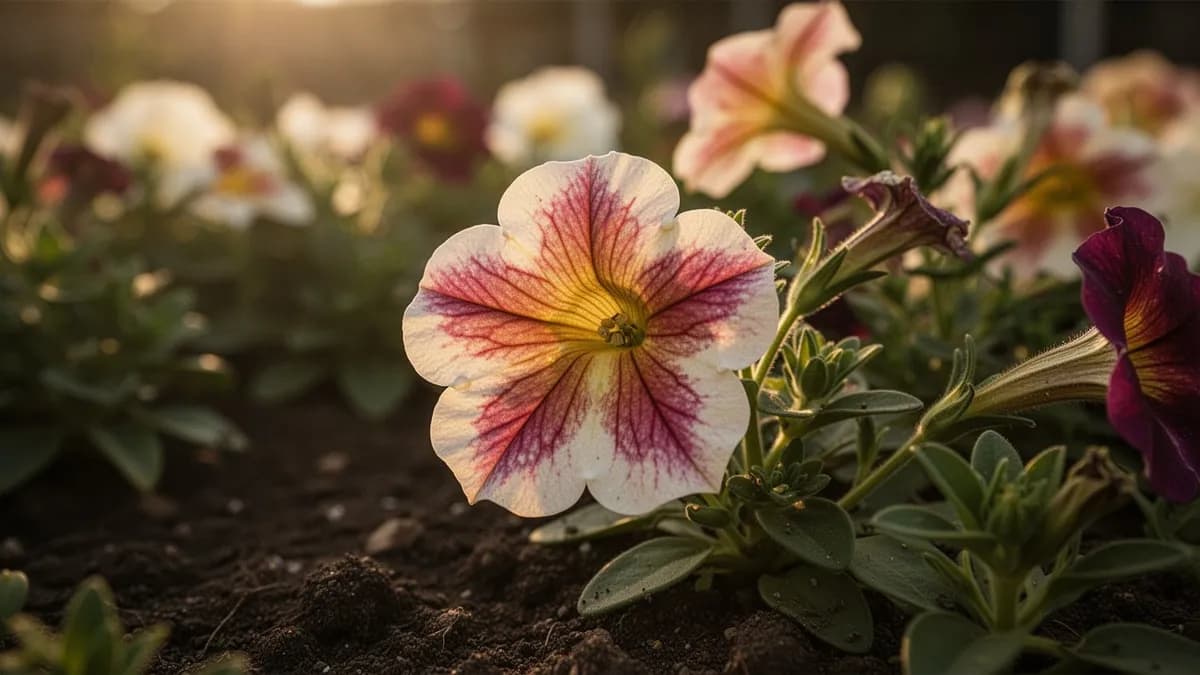
Un pariente miniatura de la petunia con abundancia de flores pequeñas en forma de campana que caen con belleza desde macetas y cestas colgantes.





En esta páginaResumen
Conoce Calibrachoa
Un pariente miniatura de la petunia con abundancia de flores pequeñas en forma de campana que caen con belleza desde macetas y cestas colgantes. La calibrachoa se limpia sola y florece de forma profusa sin necesidad de retirar flores marchitas, en una amplia gama de colores. Usa un sustrato ácido y fertilizante con hierro para evitar el amarilleo del follaje.
Cuándo plantar Calibrachoa
Casi todas las calibrachoas que se venden comercialmente son híbridos patentados propagados por esquejes, no por semillas. Las pocas variedades disponibles por semilla, como la serie Kabloom, deben iniciarse en interior entre diez y doce semanas antes de la última helada. Siembra las diminutas semillas peletizadas sobre la superficie de un sustrato ácido y húmedo para semilleros, sin cubrirlas. Las semillas germinan en diez a catorce días a 21-24 °C con humedad constante. La mayoría de los jardineros encuentran más práctico comprar trasplantes ya establecidos cada primavera.
Tu año de Calibrachoa
Ajustado a Zona 7 · temporada típica · la helada se va hacia el 2 abr y vuelve hacia el 1 nov
Planta Calibrachoa Abr – May y cosecha May – Oct. Consulta los métodos de plantación y elige tu clima para adaptar los periodos.
Cómo cultivar Calibrachoa
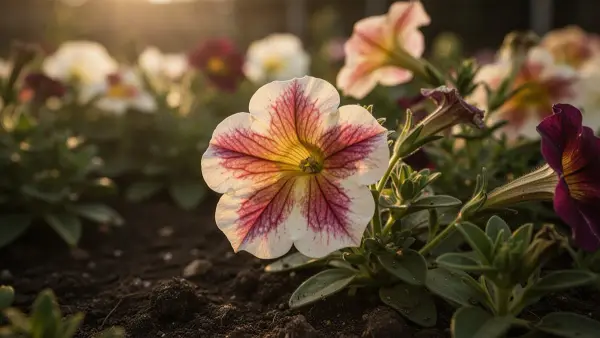
La calibrachoa casi siempre se compra como planta de vivero, ya que las variedades híbridas no salen fieles desde semilla y se propagan de forma vegetativa. Plántala al exterior después de que haya pasado todo riesgo de heladas, a pleno sol y con una separación de 20 a 30 cm. La calibrachoa es excelente en cestas colgantes, jardineras de ventana y macetas, donde su porte colgante puede desbordarse por los bordes.
Usa un sustrato ácido con un pH de 5.5 a 6.0, ya que la calibrachoa es muy propensa a la clorosis férrica en condiciones alcalinas. Mezcla turba o usa una mezcla para azaleas y camelias. Riega con regularidad, manteniendo el sustrato constantemente húmedo pero nunca encharcado. Las plantas en contenedor con tiempo caluroso pueden necesitar riego diario. Asegúrate de que las macetas drenen de forma excelente.
Abona cada una o dos semanas con un fertilizante líquido ácido que contenga hierro y otros micronutrientes. La calibrachoa es una planta exigente y perderá vigor sin nutrición regular. Las plantas se limpian solas y rara vez necesitan despuntar las flores marchitas. Si los tallos se alargan demasiado a mediados del verano, recórtalos en un tercio para fomentar un crecimiento fresco y más compacto. Con los cuidados adecuados, la calibrachoa florece de forma continua desde primavera hasta las heladas, produciendo cientos de flores pequeñas parecidas a la petunia durante la temporada.
36 plantas caben en un bancal de 120 × 240 cm
Cada Calibrachoa pide 25 cm de margen. El planificador guarda ese marco por ti — cada planta, cada bancal.
Los mejores vecinos de Calibrachoa
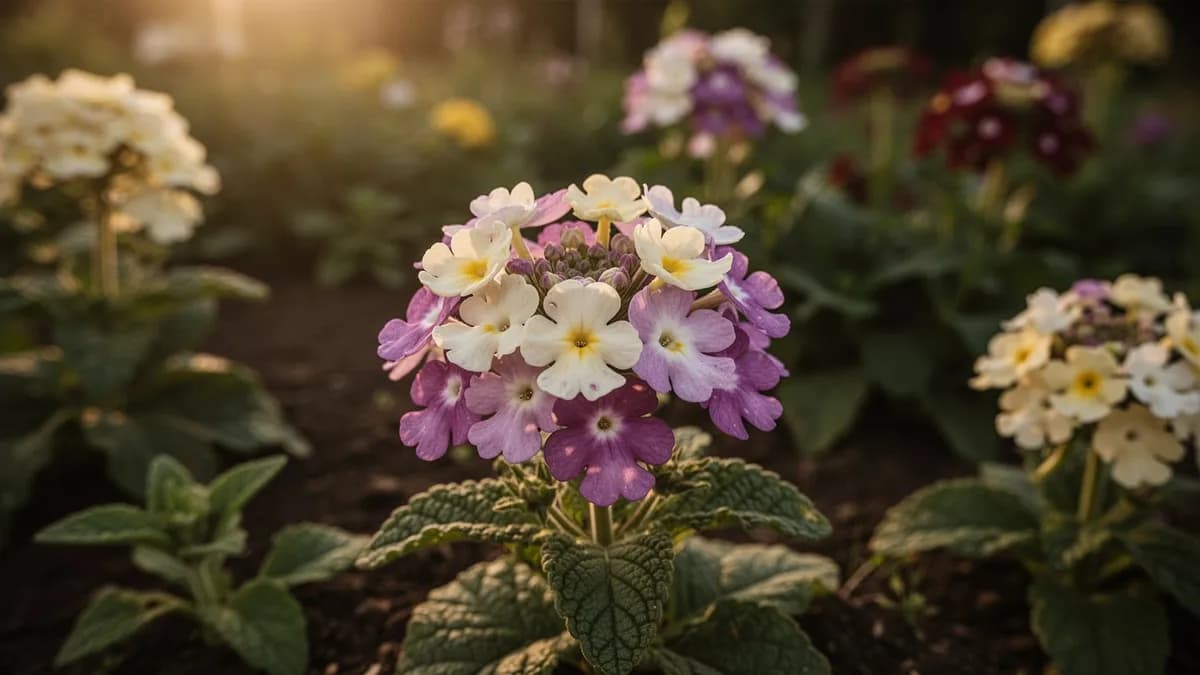
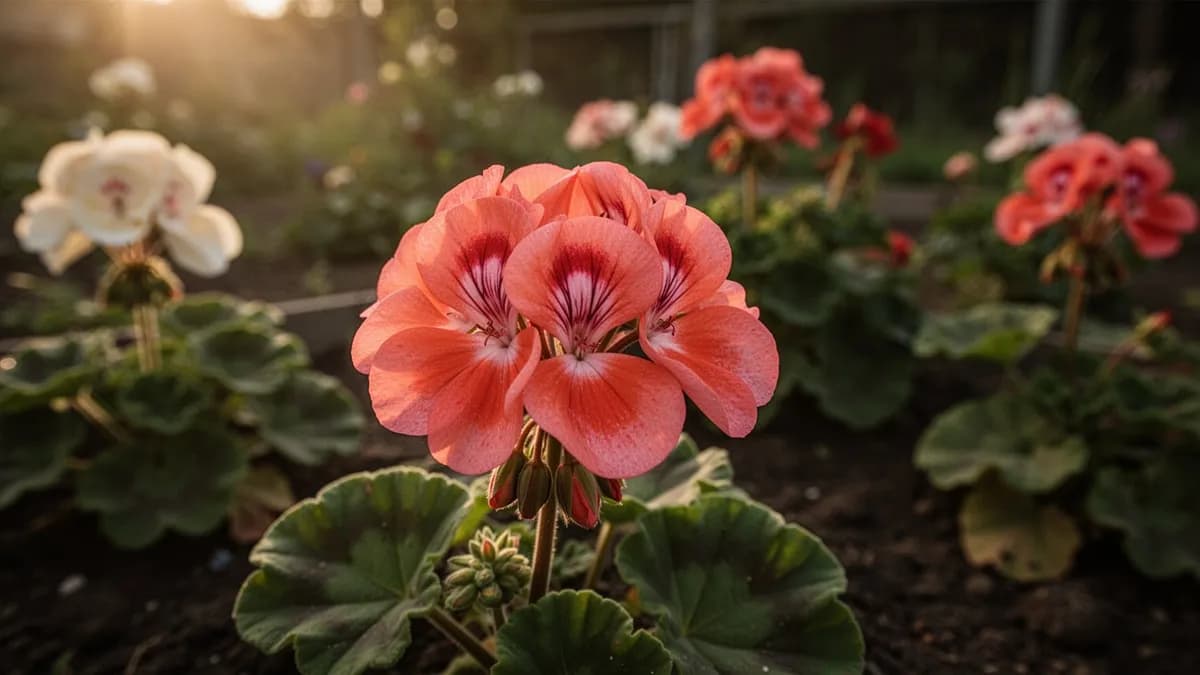
La calibrachoa es una compañera excelente para macetas, ya que cae por los bordes de las cestas mientras plantas erguidas como geranios, salvia o angelonia aportan altura. Combínala con batata ornamental colgante y verbena para lograr una cesta exuberante y desbordante. Va bien con petunias, aunque la calibrachoa suele rendir mejor que las petunias cuando llueve. Las flores pequeñas complementan las más grandes de otras plantas sin competir con ellas. Usa varios colores de calibrachoa juntos para crear una explosión de color similar a confeti.
Petunia va a su lado.
Saber de huerto de siempre, cotejado con la tabla real de Calibrachoa — prueba cualquier planta que cultives.
Prueba Calibrachoa en un bancal, aquí mismo
Un bancal real del planificador con Calibrachoa ya plantado. Toca una planta compañera para colocarla y mira cómo responde la comprobación de vecinos: verde para buenos vecinos, rojo si hay conflicto.


Guías de cultivo relacionadas
Abónalo bien
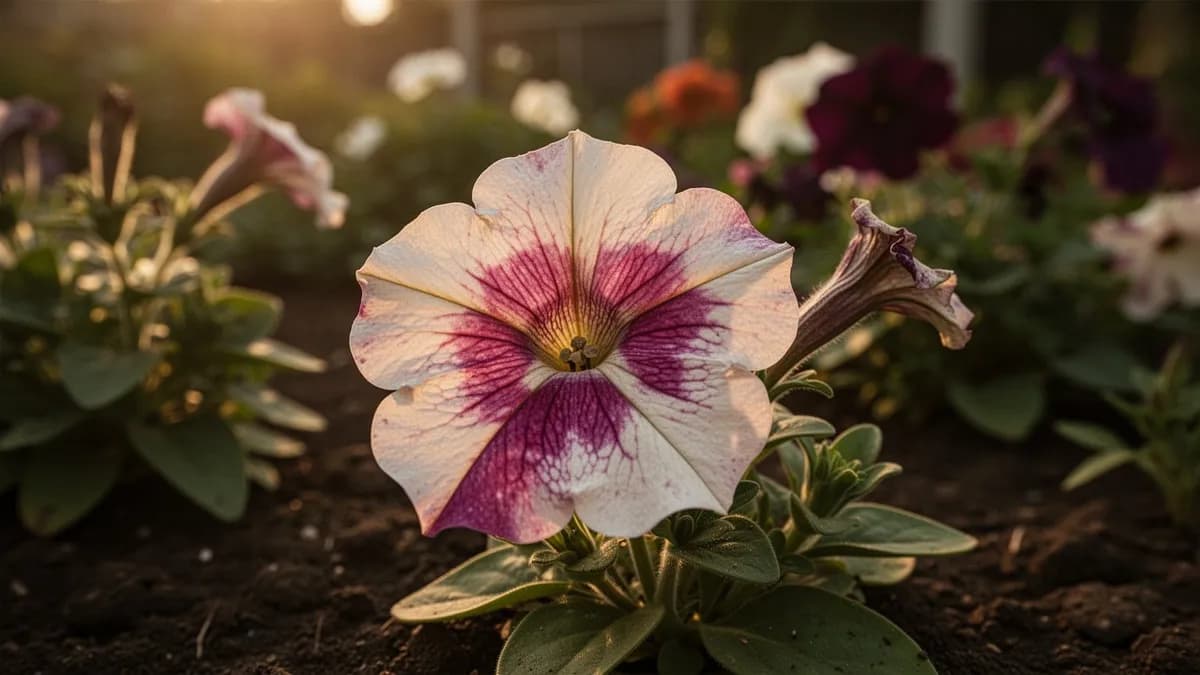
La calibrachoa necesita un sustrato ácido y bien drenado, con un pH de 5.5 a 6.0. Usa mezclas de cultivo a base de turba o sustratos para azaleas y camelias. La clorosis férrica es el principal problema nutricional, causada por suelo o agua alcalinos. Abona cada una o dos semanas con un fertilizante líquido ácido que incluya hierro, manganeso y otros micronutrientes. Puedes mezclar fertilizante granular de liberación lenta en el sustrato al plantar. Nunca dejes que las macetas queden con agua acumulada.
Temperatura ideal
Compatibilidad de zonas de rusticidad
De la semilla a la cosecha, etapa por etapa
Trasplante
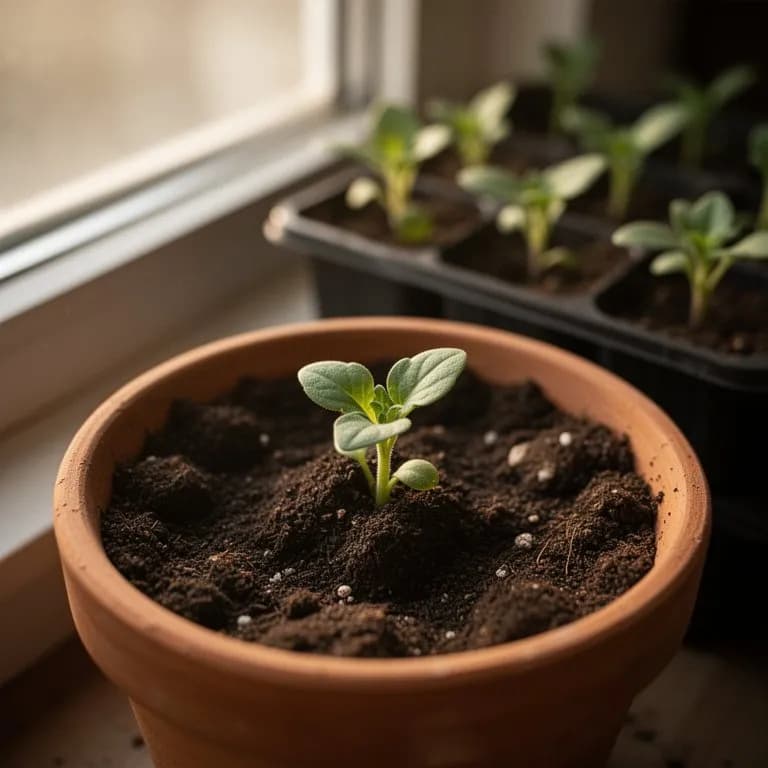
La calibrachoa casi siempre se cultiva a partir de trasplantes comprados o esquejes enraizados y no desde semilla, ya que los cultivares híbridos no salen fieles desde semilla y la germinación es muy baja. Planta los trasplantes en un sustrato ligeramente ácido y bien drenado después de la última helada, cuando las temperaturas nocturnas se mantengan por encima de 10 °C.
Establecimiento
El sistema radicular se expande en el suelo circundante y el crecimiento vegetativo se acelera. Los tallos empiezan a alargarse y ramificarse, formando el hábito de crecimiento en montículo y cascada que hace tan popular a la calibrachoa en contenedores. Se desarrollan pequeñas hojas a lo largo de cada tallo.
Formación de botones
Los botones florales aparecen en las puntas de los tallos que crecen activamente. El hábito de ramificación de la planta se intensifica y la forma general se vuelve más densa. La calibrachoa responde al fotoperiodo y el alargamiento del día desencadena una formación más intensa de botones.
Floración máxima
Las plantas entran en su espectacular periodo principal de floración y producen cientos de flores pequeñas en forma de trompeta en oleadas. Cada flor individual dura unos 5 días, pero los nuevos botones se abren de forma continua. Los tallos colgantes pueden alcanzar entre 30 y 60 cm de longitud, creando una caída floral muy vistosa.
Final de temporada y declive
A medida que bajan las temperaturas en otoño, la producción de flores se ralentiza poco a poco. La calibrachoa tolera heladas ligeras de hasta unos -2 °C, pero el frío sostenido la mata. En climas sin heladas, las plantas pueden persistir como perennes de vida corta.
Esquejes para pasar el invierno
Los esquejes enraizados que se mantienen en interior durante el invierno crecen lentamente con menos luz. Permanecen semidormidos pero vivos, conservando una pequeña roseta de follaje. Estas plantas sirven como material de partida para la siguiente temporada de crecimiento.
Usa una mezcla de cultivo de alta calidad, sin tierra, con perlita para lograr un drenaje excelente. La calibrachoa es muy propensa a la podredumbre de raíces en suelos pesados o encharcados. No entierres la corona más profundo de como estaba en la maceta de vivero.
Cuidar Calibrachoa mes a mes
Qué hacer cada mes para tu Calibrachoa
Octubre
Mes actualMete las plantas de exterior restantes en interior antes de la primera helada. Limpia las macetas agotadas y composta el sustrato viejo. Coloca las plantas invernadas en sus espacios interiores con iluminación suplementaria.
Ten claro qué hacer en tu huerto, cada mes
Un correo al empezar cada mes: qué sembrar, plantar y hacer ahora mismo — para tu Calibrachoa y todo lo que crece alrededor. Más un breve curso inicial para esquivar los errores clásicos.
- Qué hacer ahora mismo
- Ajustado a tu temporada
- Curso inicial incluido
Cosechar Calibrachoa
Las flores de calibrachoa son demasiado pequeñas para un corte tradicional, pero los tallos colgantes se pueden recortar y usar en pequeños jarrones de botón o como relleno en arreglos en miniatura. Las plantas se disfrutan mejor en sus macetas y cestas. No hace falta retirar flores marchitas, ya que la calibrachoa se limpia sola. Si las plantas se alargan demasiado o la floración disminuye a mediados del verano, recorta todos los tallos en un tercio para estimular una nueva oleada de flores en dos o tres semanas. Toma esquejes de tallo a finales del verano para enraizarlos y pasarlos el invierno.
se supone que plantas al comenzar el periodo — indica tu fecha real
Cosecha Calibrachoa a tiempo y la planta sigue produciendo.
Almacenamiento y conservación
La calibrachoa no es apta como flor cortada ni para secar. Para conservar tus variedades favoritas durante el invierno, toma esquejes de tallo de 8 a 10 cm a finales del verano. Enraíza en perlita o vermiculita húmeda bajo alta humedad y luego pásalos a maceta para cultivarlos en una ventana luminosa y fresca durante el invierno. Otra opción es llevar las macetas enteras al interior antes de las heladas y mantenerlas en un lugar soleado entre 13 y 18 °C. Reduce el riego durante el invierno. Devuelve las plantas al exterior después de la última helada primaveral.
Qué falla — y cómo solucionarlo
Clorosis férrica
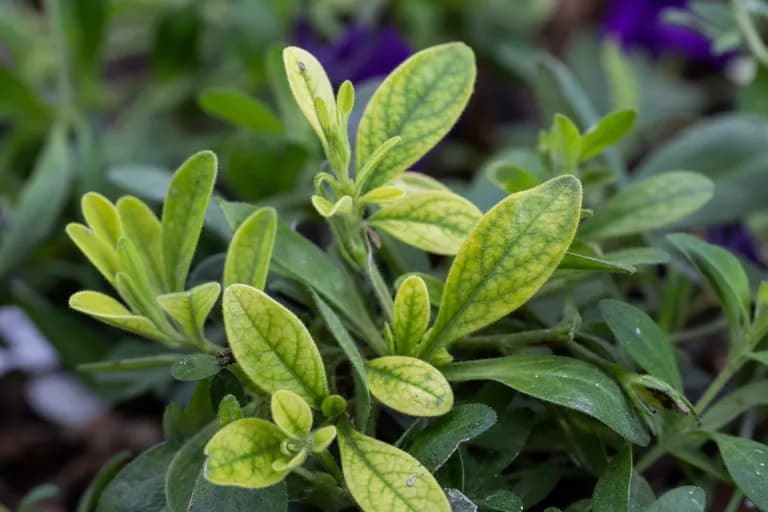
EnfermedadAmarilleo entre las nervaduras mientras estas permanecen verdes, empezando en las hojas más jóvenes. En casos graves, el follaje se blanquea y el crecimiento se frena.
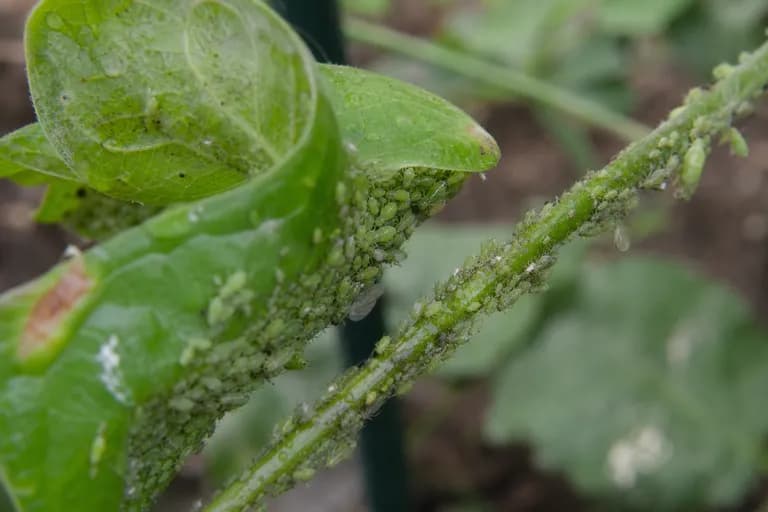
Pulgones
PlagaPequeños grupos de insectos en las puntas tiernas de los brotes y en los botones florales, melaza pegajosa en las hojas inferiores y brotes nuevos deformados.
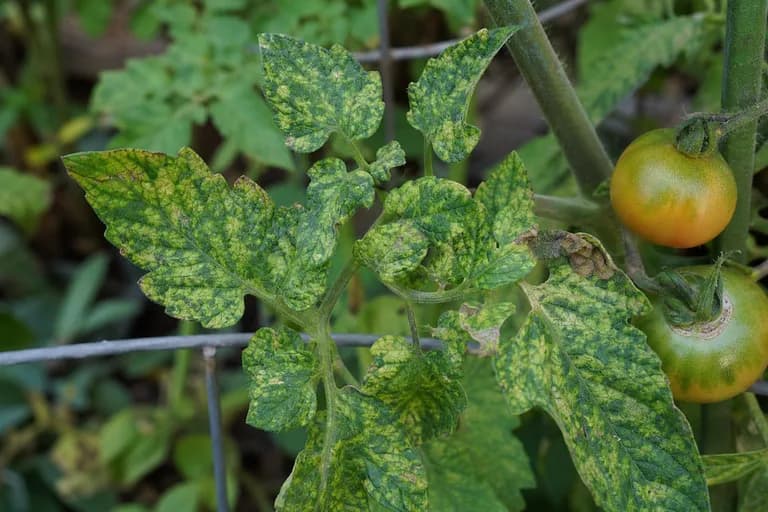
Virus del mosaico del tabaco
EnfermedadPatrones moteados amarillos y verdes en las hojas, crecimiento deformado, plantas raquíticas y menor floración.
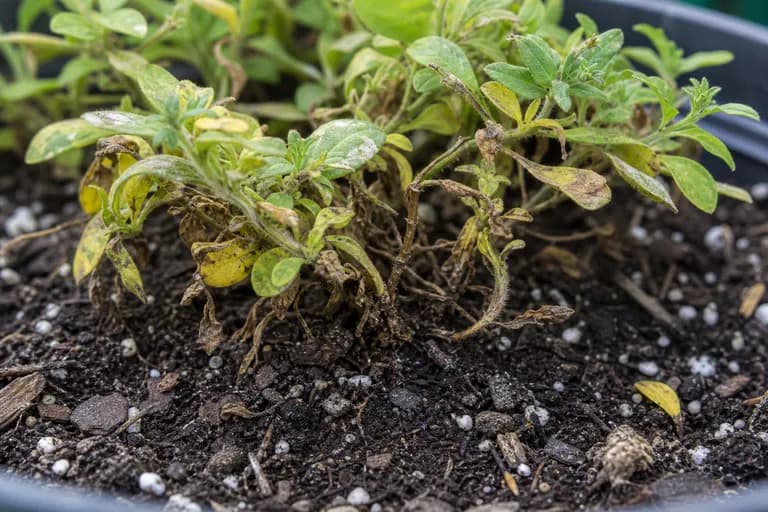
Podredumbre negra de la raíz
EnfermedadCrecimiento reducido, follaje amarillento y raíces marrón oscuro a negras al revisar. Las plantas decaen poco a poco pese a un riego correcto.
Solución de problemas comunes
La clorosis férrica por suelo o agua alcalinos es, con mucha diferencia, el problema más común, y provoca hojas amarillas y debilitamiento de la planta. Comprueba el pH del agua y usa fertilizante ácido. El exceso de riego y el mal drenaje causan podredumbre de raíces, especialmente en macetas sin agujeros de drenaje. El virus del mosaico del tabaco puede arruinar la calibrachoa. Evita manipular plantas después de tocar productos del tabaco. Con calor extremo, las plantas pueden agradecer sombra por la tarde. El crecimiento alargado a mitad de temporada se corrige fácilmente con una poda de recorte.
Consejos de cultivo
- Compra o enraíza plantas sanas en lugar de confiar en semilla, porque la mayoría de las variedades comerciales son híbridos propagados por esqueje.
- Usa siempre un sustrato ácido y muy drenante; en calibrachoa, la mala acidez suele verse primero como hojas amarillas con nervaduras verdes.
- Riega con frecuencia, pero deja que la superficie se seque ligeramente entre riegos para evitar la podredumbre de raíces.
- Si el crecimiento se vuelve largo y flojo a mitad de temporada, recorta un tercio de la planta para que vuelva a brotar con fuerza.
- En zonas muy calurosas, protégela del sol más duro de la tarde para mantener una floración constante.
- Toma esquejes a finales del verano si quieres conservar una variedad concreta sin tener que comprar una planta nueva.
Cultiva tu mejor Calibrachoa — y todo lo que la rodea.
Empieza un plan gratis hoy. Diseña tus bancales, coloca tu Calibrachoa y deja que PlotMyGarden gestione el momento, el espaciado, las asociaciones y los recordatorios de la semilla a la cesta.
Elige tu Calibrachoa
Serie Superbells
Una de las líneas de calibrachoa más populares, con vigor excepcional, resistencia a enfermedades y una enorme paleta de colores, incluidas variedades dobles únicas.
Serie Million Bells
La marca original de calibrachoa, con floración abundante en una amplia gama de colores sólidos y patrones bicolores sobre plantas elegantemente colgantes.
Serie Cabaret
Plantas compactas y bien ramificadas, con excelente rendimiento en el jardín y una amplia gama de colores, incluidos llamativos patrones rayados y estrellados.
Serie Can-Can
Presenta flores dobles únicas en forma de roseta, parecidas a pequeñas rosas, en una gama de colores cálidos y fríos.
Serie MiniFamous
Porte extra compacto, ideal para macetas pequeñas y plantaciones combinadas, con una larga temporada de floración y buena tolerancia al calor.
La calibrachoa puede ahorrar dinero si compras plantas madre o esquejes y los mantienes de una temporada a otra. En lugar de reemplazar cestas colgantes cada primavera, puedes enraizar esquejes a finales del verano y conservar tus variedades favoritas en interior. Para quienes compran muchas plantas de temporada, esta técnica reduce la necesidad de comprar trasplantes nuevos cada año y permite reutilizar macetas, tutores y sustrato fresco, siempre que el drenaje siga siendo excelente.
Recetas rápidas
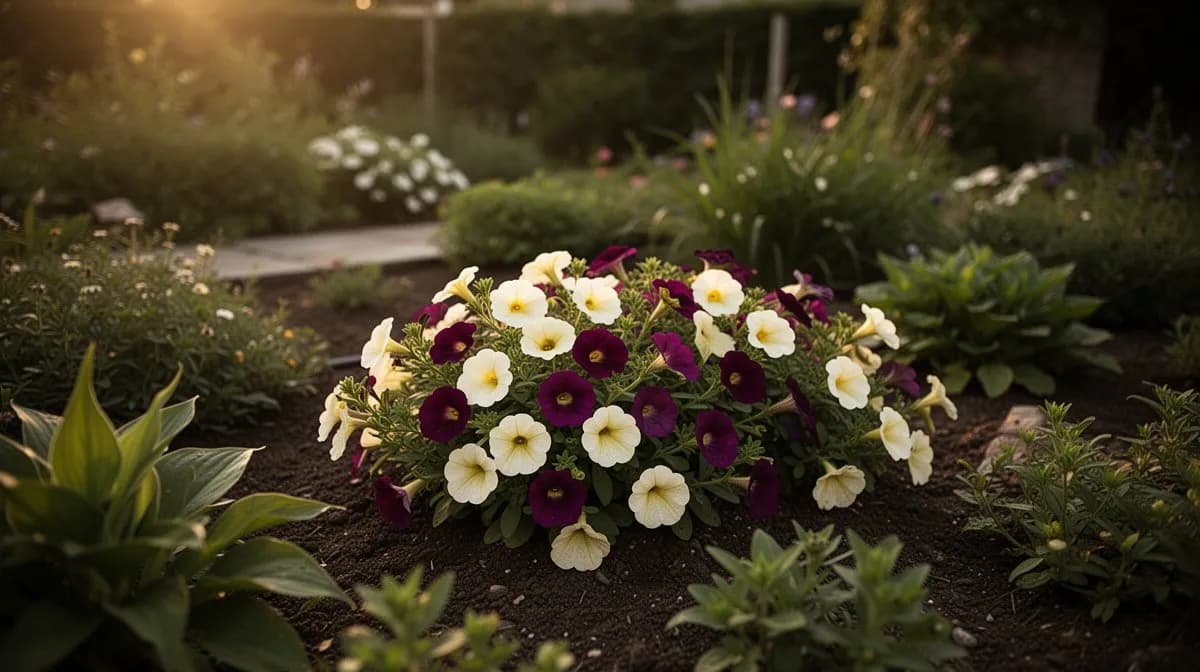
Tarrina colgante de calibrachoa y verbena
15 minutosUna composición rápida para maceta colgante con calibrachoa, verbena y una planta de porte vertical en el centro. No es una receta culinaria, sino una idea de plantación para lograr una cesta muy llena y colorida.
5 ingredientesJardinera de ventana de verano
20 minutosUna combinación sencilla para una jardinera de ventana soleada con colores continuos durante toda la estación. La calibrachoa aporta la cascada de flores y las acompañantes suman textura y altura.
5 ingredientes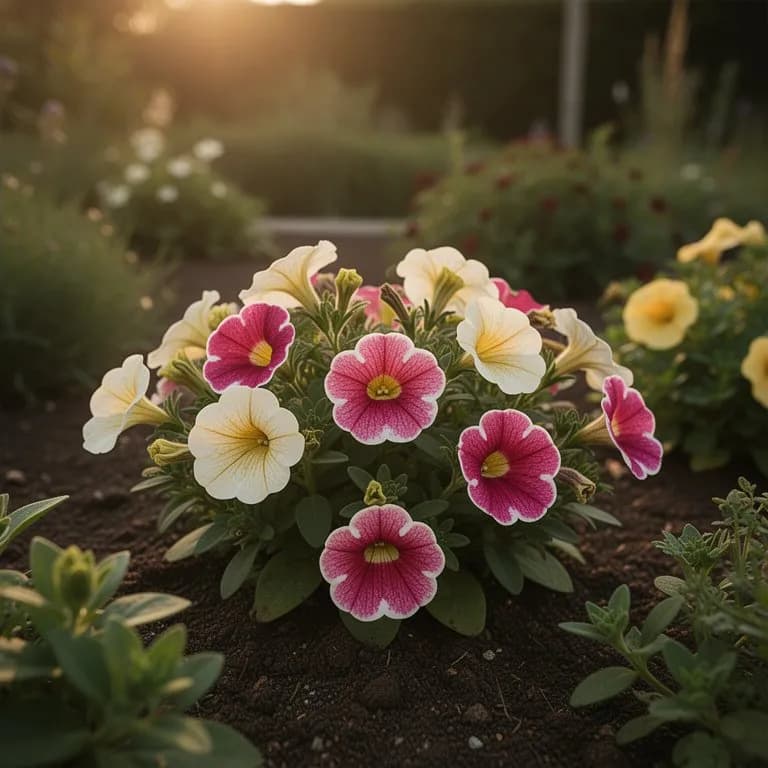
Maceta tropical mixta
25 minutosUna composición de patio muy florífera con calibrachoa mezclada con otras anuales de flor continua. El resultado es una maceta exuberante, perfecta para dar color de primavera a heladas.
5 ingredientesQué contiene
Beneficios para la salud
- La calibrachoa no se consume como alimento, por lo que no aporta beneficios nutricionales directos.
- Su valor principal para el bienestar es ornamental: aporta color prolongado y ayuda a crear espacios de jardín visualmente relajantes.
- No contiene cafeína ni se usa como planta alimenticia.
- A diferencia de muchas flores de temporada, su floración continua la hace muy útil para arreglos de contenedor de larga duración.
- No se considera tóxica de forma grave, pero no está pensada para el consumo humano ni animal.
- Mantener macetas sanas y bien drenadas reduce problemas de hongos y ayuda a que la planta se vea bien durante más tiempo.
De dónde viene Calibrachoa
Calibrachoa es un género de unas 28 especies de plantas con flor de la familia Solanaceae, originario del sur de Sudamérica, principalmente de Brasil, Uruguay, Paraguay y Argentina. El género fue descrito por primera vez en 1825 por el botánico francés Michel Felix Dunal, pero durante mucho tiempo las plantas se clasificaron dentro de Petunia por su gran parecido visual. No fue hasta 1985 cuando estudios citológicos detallados realizados por investigadores de la Universidad Federal de Pelotas, en Brasil, revelaron una diferencia crucial: las especies de calibrachoa tienen 18 cromosomas, mientras que las petunias verdaderas tienen 14. Esta incompatibilidad cromosómica significaba que ambos géneros no podían hibridarse con éxito, confirmando su estatus taxonómico separado. El nombre del género honra al botánico y farmacéutico mexicano del siglo XIX Antonio de la Cal y Bracho. En su hábitat nativo, las especies silvestres de calibrachoa crecen como perennes extendidas sobre afloramientos rocosos, suelos arenosos y márgenes de pastizal a distintas altitudes. La transformación de la calibrachoa, de una especie silvestre poco conocida a una de las plantas ornamentales de contenedor más populares del mundo, comenzó a principios de los años noventa, cuando el obtentor japonés Suntory Flowers desarrolló los primeros cultivares híbridos comerciales bajo la marca Million Bells. Estos híbridos ofrecían un porte compacto y colgante, floración abundante, flores autolimpiantes y una gama extraordinaria de colores antes no disponibles en petunias. Las plantas llegaron a los mercados norteamericano y europeo en 1992 y enseguida se convirtieron en una sensación en el mundo de las cestas colgantes y la jardinería en maceta. Hoy decenas de empresas de mejora producen series de calibrachoa como Superbells, Cabaret, Callie, MiniFamous y Kabloom, esta última una de las pocas variedades obtenidas por semilla. La calibrachoa se ha convertido en el segundo género de plantas de temporada más popular de Norteamérica después de las petunias y sigue ganando cuota de mercado cada año.
Calibrachoa: ¿sabías que?
Datos fascinantes sobre Calibrachoa
La calibrachoa se clasificó originalmente como una especie de Petunia hasta 1985, cuando los botánicos reclasificaron el género por diferencias cromosómicas: la calibrachoa tiene 18 cromosomas mientras que las petunias tienen 14.
Calibrachoa: preguntas frecuentes
¿Cuándo debo plantar Calibrachoa?
¿Cuáles son buenas plantas acompañantes para Calibrachoa?
¿En qué zonas de rusticidad puede crecer Calibrachoa?
¿Cuánto sol necesita Calibrachoa?
¿A qué distancia debo espaciar Calibrachoa?
¿Qué plagas y enfermedades afectan a Calibrachoa?
¿Cómo almaceno Calibrachoa después de la cosecha?
¿Cuáles son las mejores variedades de Calibrachoa para cultivar?
¿Qué suelo necesita Calibrachoa?
¿La calibrachoa necesita quitar flores marchitas?
¿Por qué mis hojas de calibrachoa se ponen amarillas?
¿Puedo cultivar calibrachoa dentro de casa todo el año?
¿La calibrachoa vuelve al año siguiente?
¿Qué diferencia hay entre calibrachoa y petunia?
Acabas de leer la teoría. Ahora cultívala en piloto automático.
Todo lo que hace que Calibrachoa sea delicado — el momento, el espaciado, las asociaciones, la ventana de cosecha — es justo lo que PlotMyGarden resuelve por ti, para cada planta de tu huerto.
Un plan que conoce tu clima
Indica tu ubicación una vez. Recibe fechas de siembra, abonado y cosecha basadas en tu última helada real y el pronóstico en vivo — sin adivinar con un sobre genérico.
De la sección “Cuándo plantar”Planificador de bancales de arrastrar y soltar
Diseña bancales sobre una cuadrícula. Cada planta encaja con su espaciado correcto y ves toda la temporada antes de gastar un céntimo en semillas.
De la sección “Cultivo”Conflictos de asociación, detectados a tiempo
Más de 200 buenas y malas combinaciones comprobadas en vivo mientras plantas — para que un error que arruine la temporada nunca llegue a la tierra.
De la sección “Asociaciones”Recordatorios que sí vas a seguir
“Riega las judías.” “Recoge hoy antes de que se pase.” Oportunos, concretos y ligados a las plantas que de verdad cultivas.
De la sección “Cosecha”Escalonado, programado
¿Quieres cosechar seis semanas en vez de seis días? Reparte tus siembras automáticamente y te avisa cuando toca el siguiente lote.
De la sección “Cuándo plantar”Un registro que se vuelve más listo
Cada cosecha que registras le enseña tu huerto. El plan del año que viene parte de lo que de verdad funcionó en tu suelo, no en un manual.
De la sección “Resumen”Planta estos junto a Calibrachoa
Más Anuales
Cultiva tu mejor Calibrachoa — y todo lo que la rodea.
Empieza un plan gratis hoy. Diseña tus bancales, coloca tu Calibrachoa y deja que PlotMyGarden gestione el momento, el espaciado, las asociaciones y los recordatorios de la semilla a la cesta.